
April 4, 2026
Sunreef 100 Power NEXT: Both Engine Specs, Side by Side
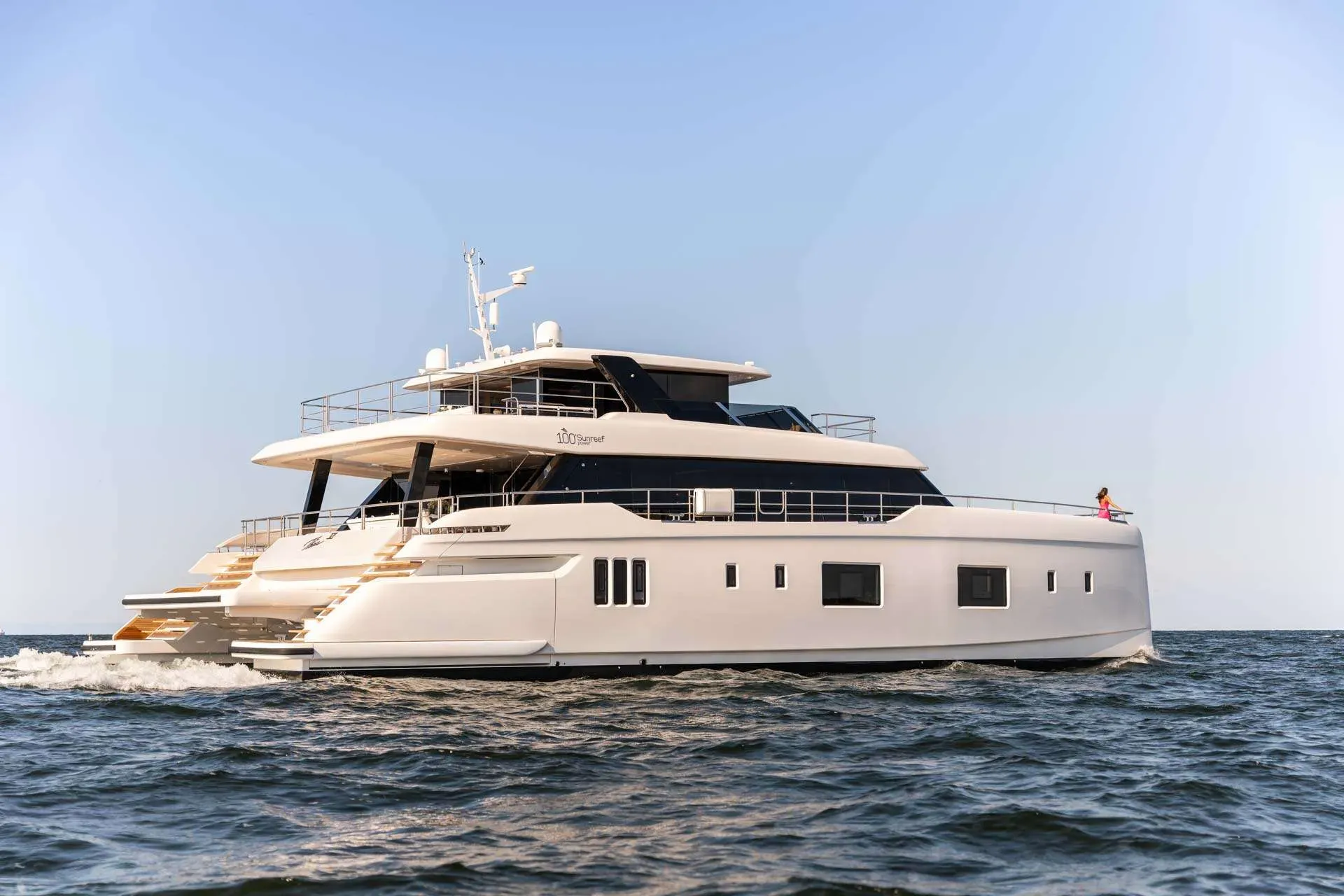
Two thousand six hundred horsepower in the classic, four hundred and eighty-four in the Eco. Sunreef publishes both, side by side, and it is…
Read the article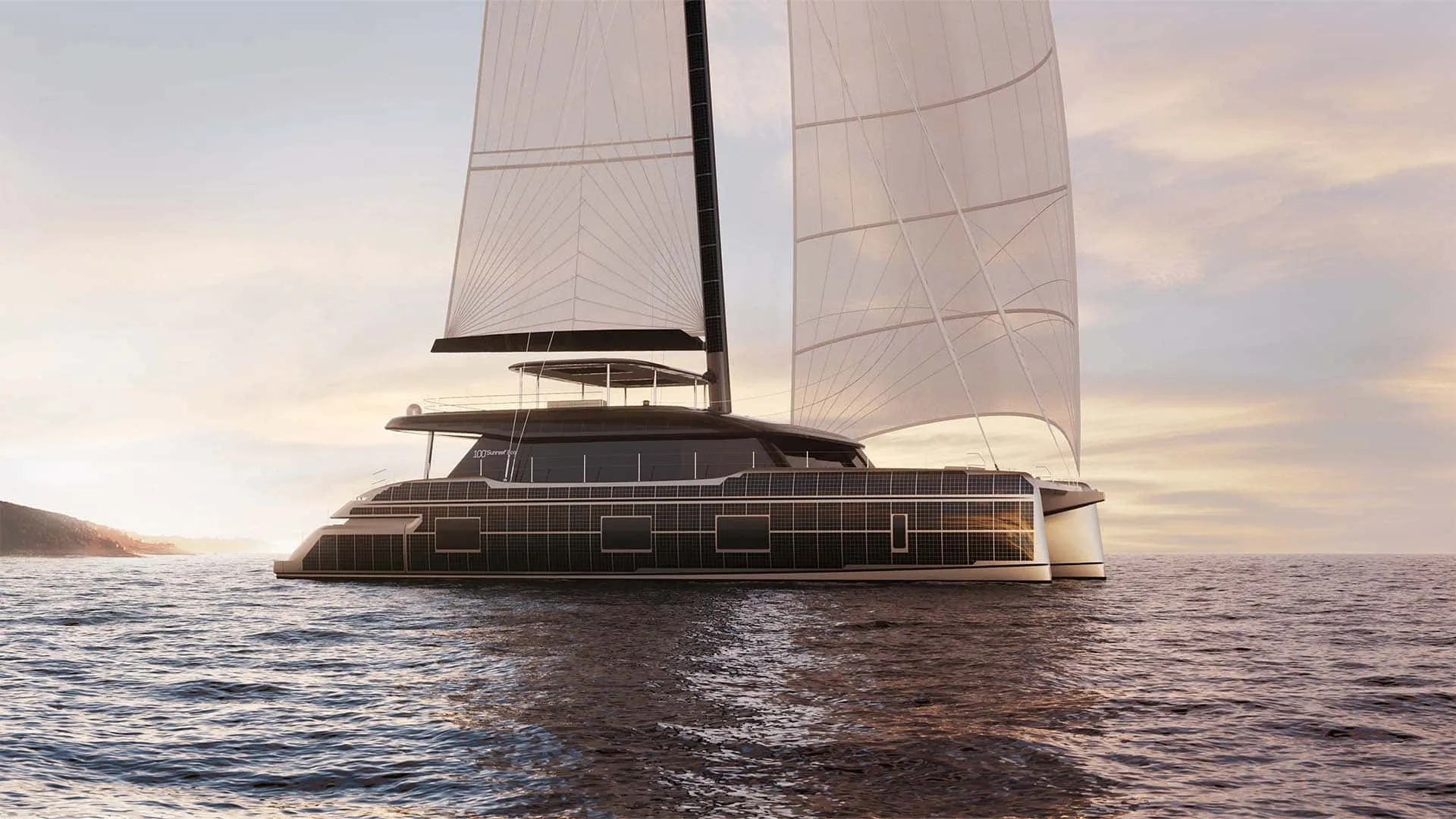
Anchoring for a week without a generator running used to mean giving up the boat you actually wanted. That's who Sunreef builds for: custom solar-electric catamarans from 50 to 100 feet, sail and power. Here is our expert assessment of the brand.

— Tony Smith
Founder, Minted Yachts
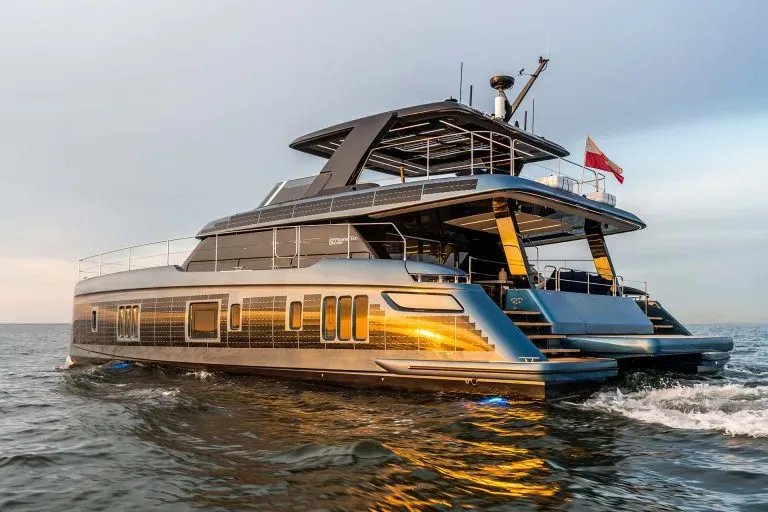
Sunreef is the rare yard that manufactures its own solar panels. That sounds like a detail until you see what it lets them do. Because the panels are designed in Gdansk and laminated into the composite structure rather than bolted to a roof, the array scales with the boat — and the shipyard can quote a classic diesel version and an Eco solar-electric version of the same hull off a single specification sheet. Nobody else is set up that way.
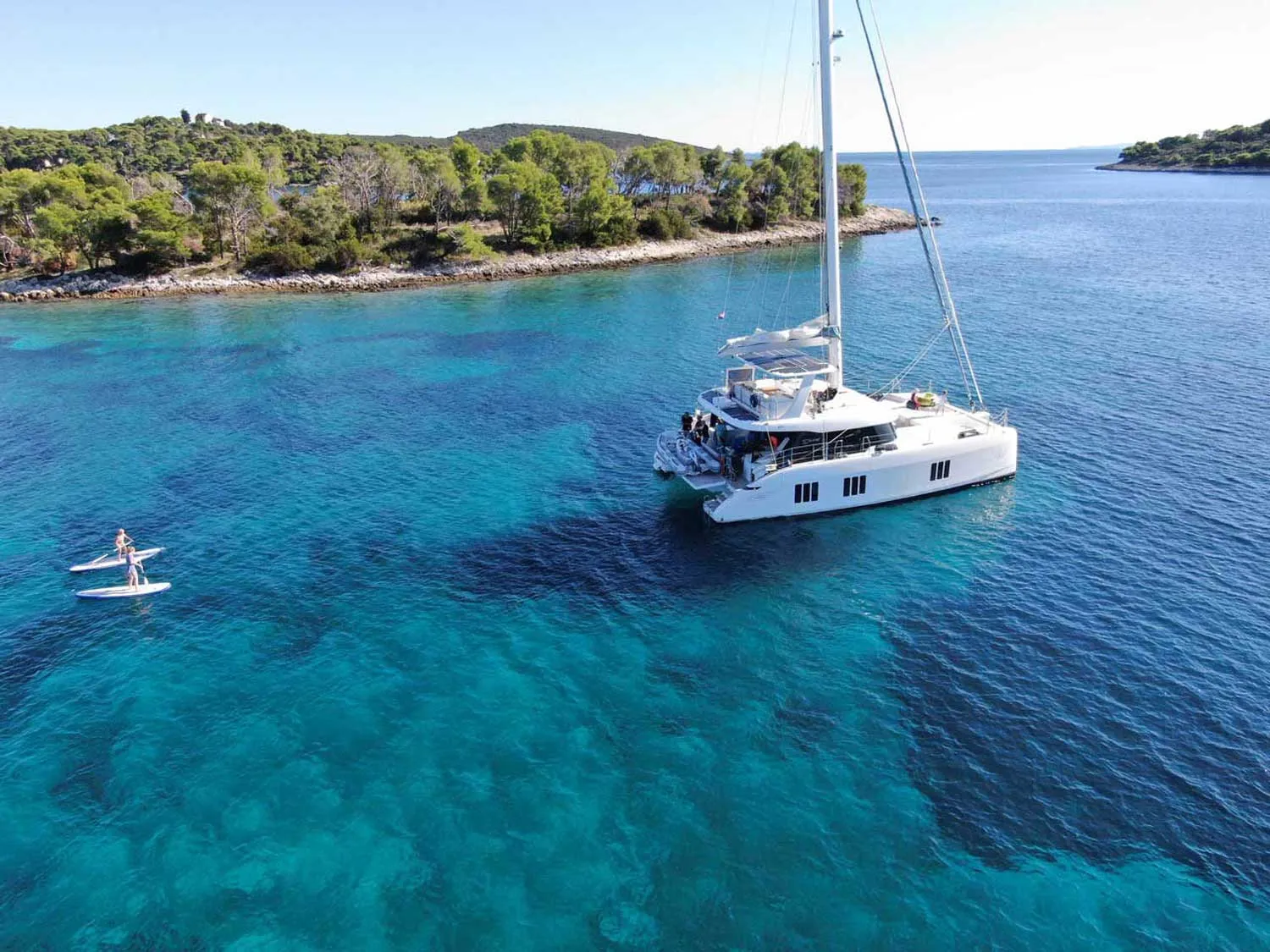
The fleet splits three ways. The sailing catamarans run 50 to 100 feet and use hydrogeneration from the propellers to charge while under way. The power catamarans put superyacht deck space on a shallow-draft platform — the 80 draws 1.7 metres. And the ULTIMA range solves the problem nobody else has bothered with: catamaran stability and draft in a hull narrow enough to take a normal berth.
My one caution is that a Sunreef is specified in the contract rather than off a brochure. Speed, displacement and draft are all conversations to have with the yard in writing before you sign, and they belong alongside the general arrangement. That is the nature of a custom build; the boats are built beautifully and the yard has delivered a lot of them.
Buy a Sunreef because you want a genuinely custom multihull with the best solar integration in the business. Just get every number you will rely on into the contract first.
Deep-dive specs and expert opinions on current Sunreef models. Don't see the Sunreef you're looking for? Reach out for new and pre-owned brokerage options.
Photo credit Sunreef.
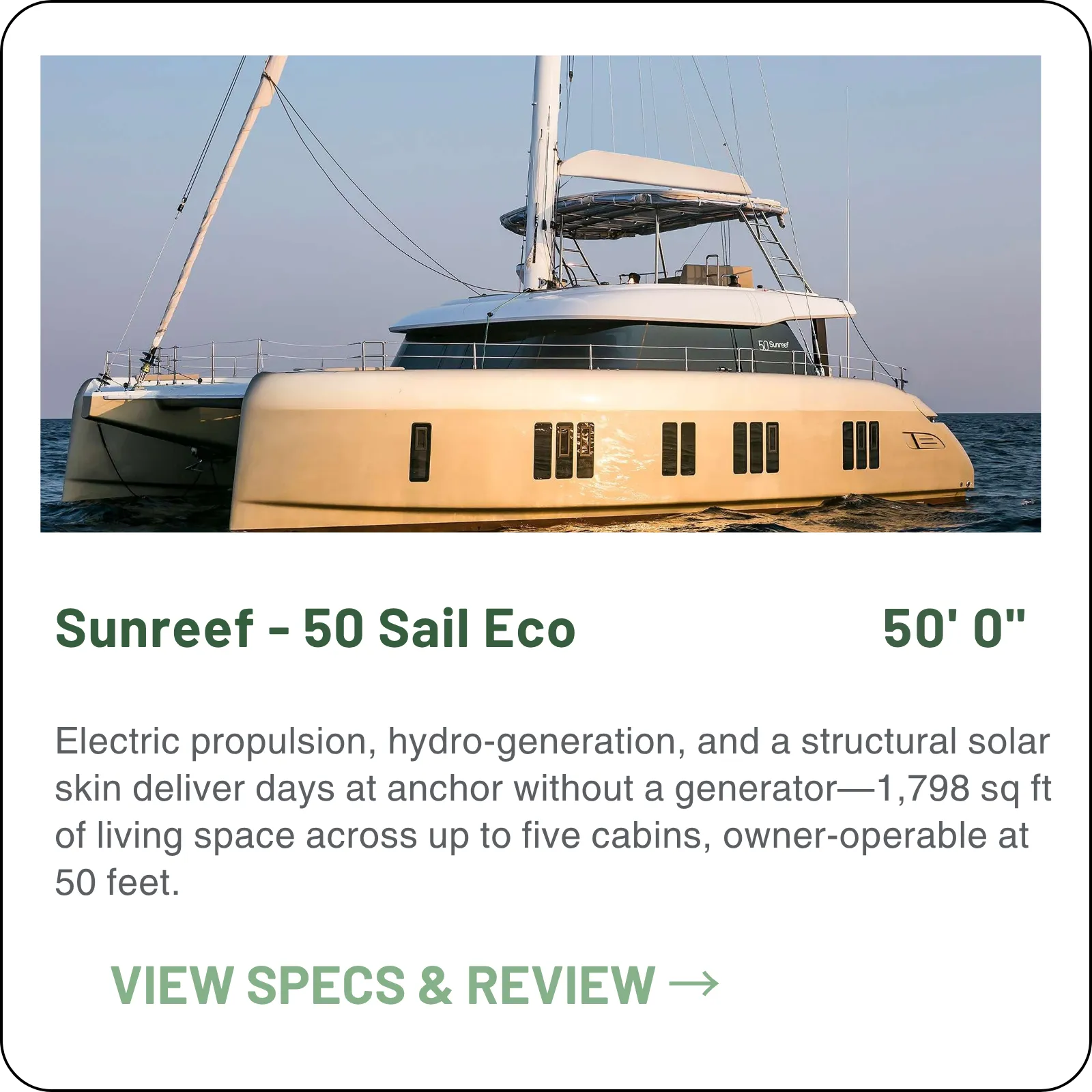
The entry point to the Sunreef range — 50 ft, 167 m² of living space, Eco-Option available.
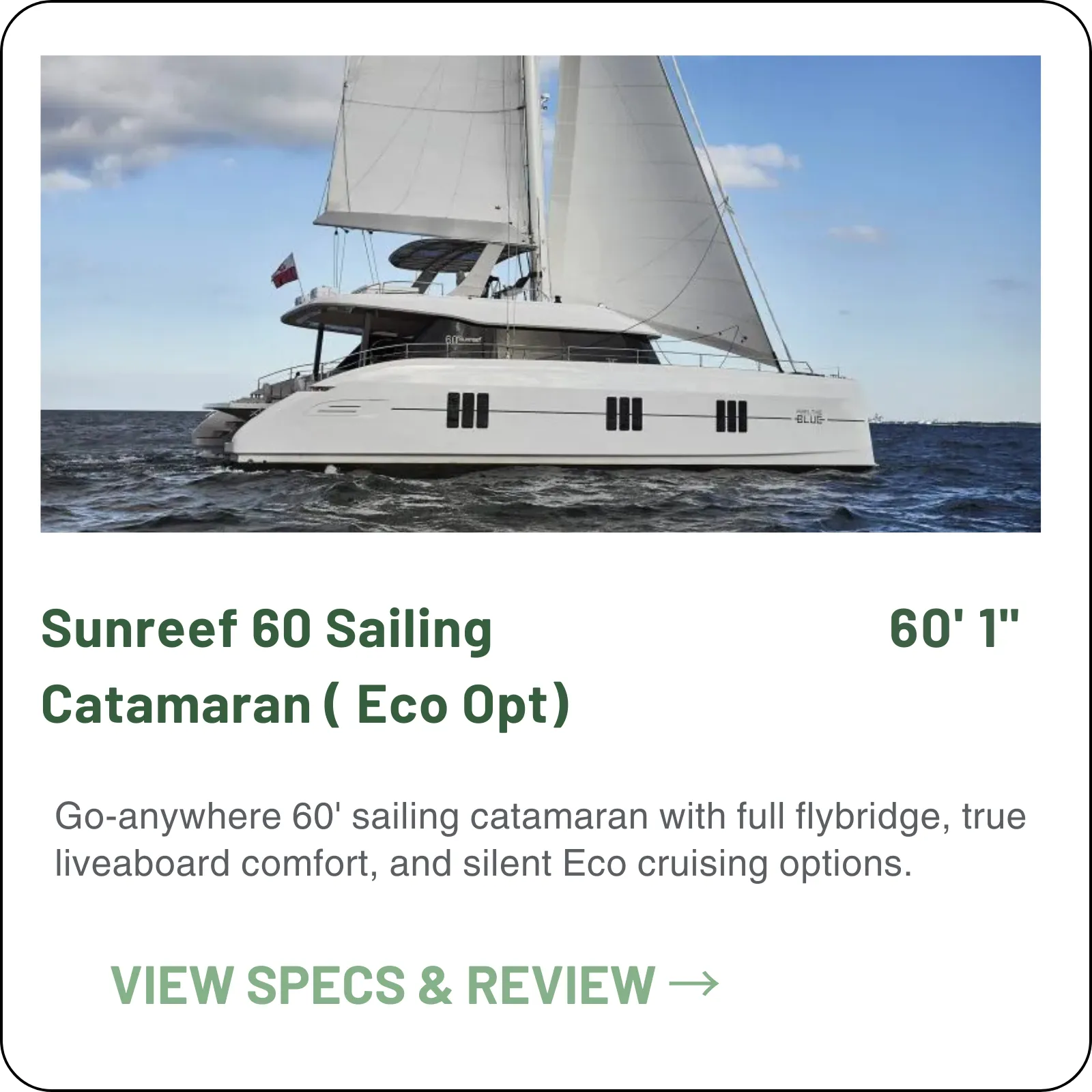
225 m² of living space on a 60-foot hull, restyled under Sunreef's NEXT programme.
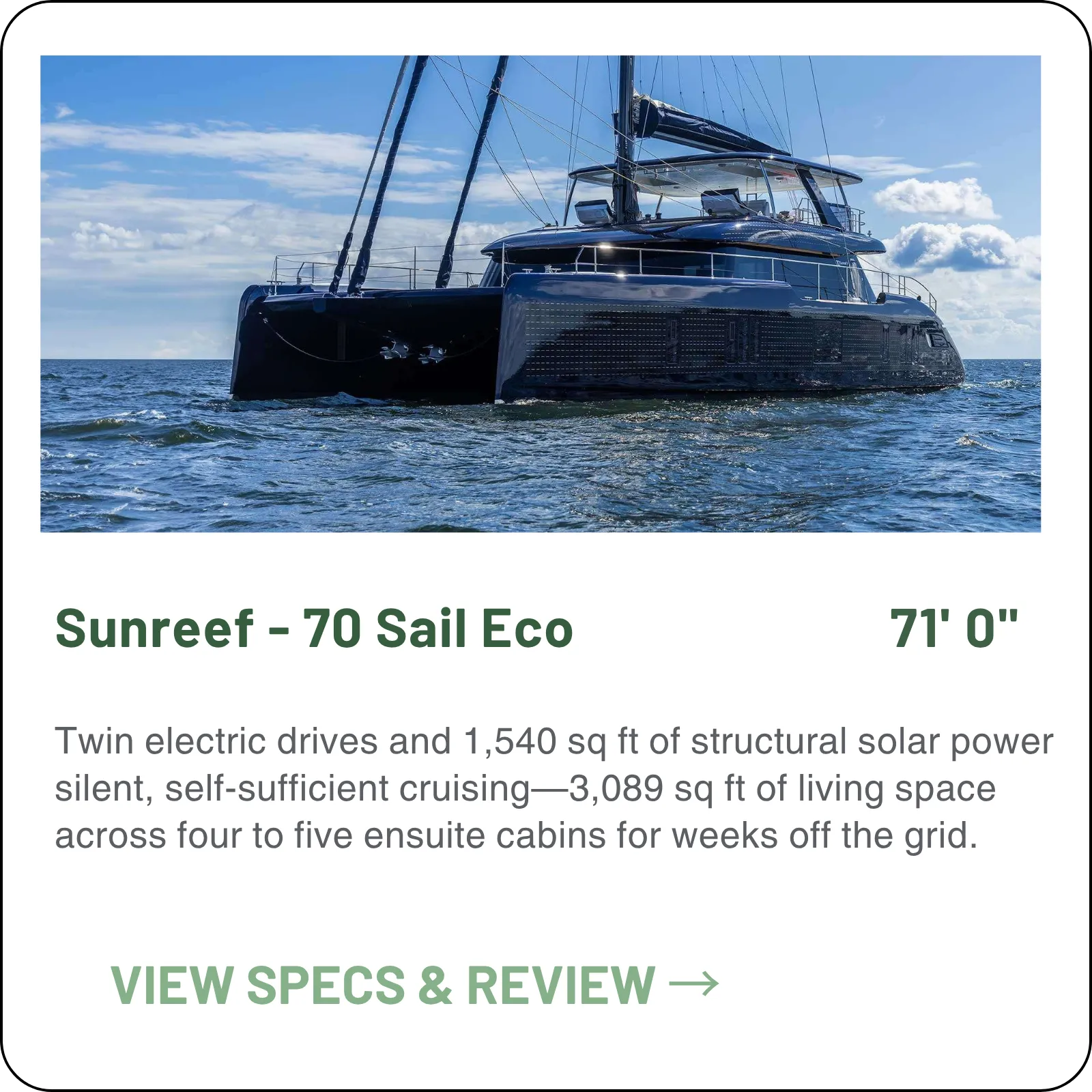
287 m² of living space, 160 m² mainsail, 1,600 l water — the range's blue-water middle.
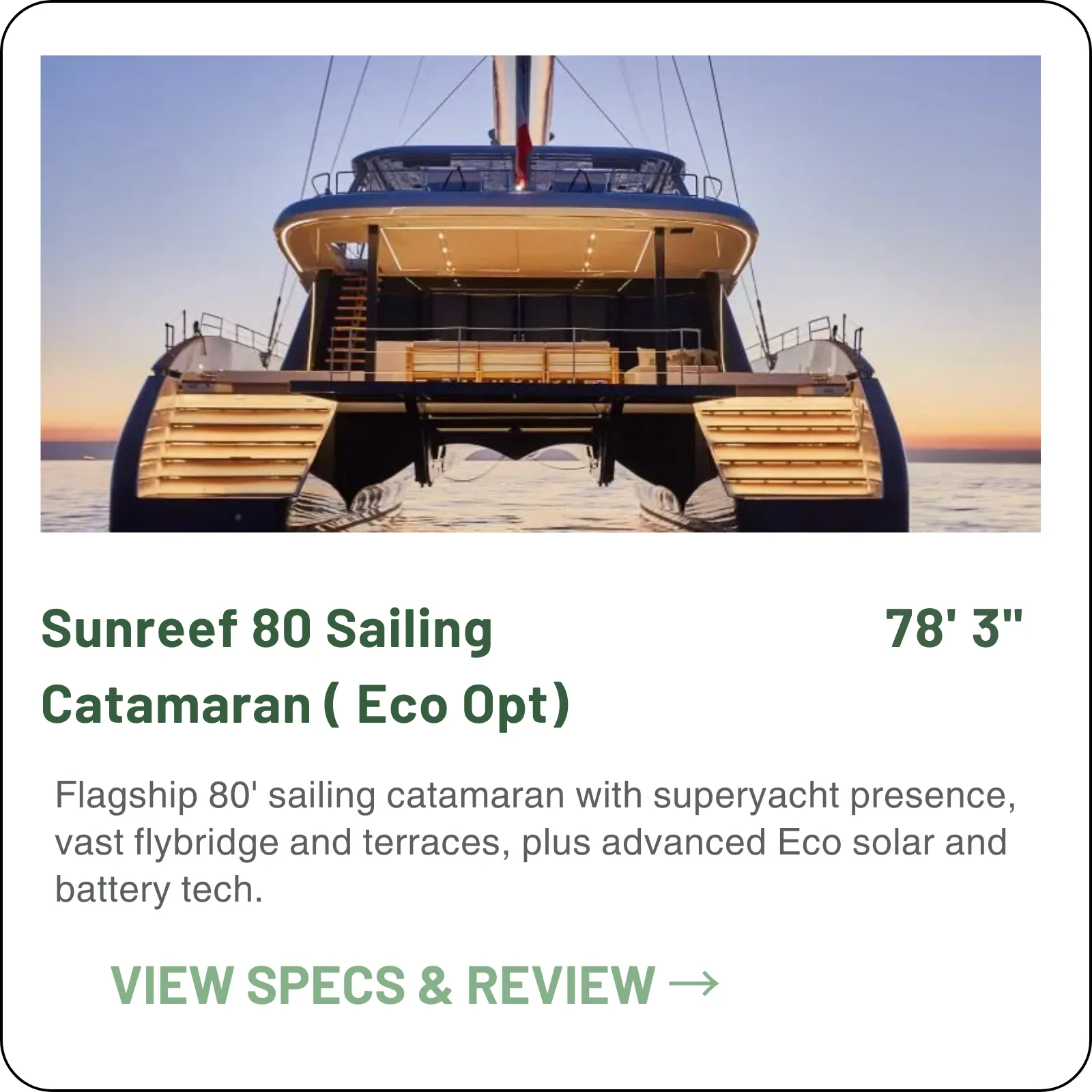
340 m² of living space and a 200 m² mainsail — Sunreef's flagship sailing platform.
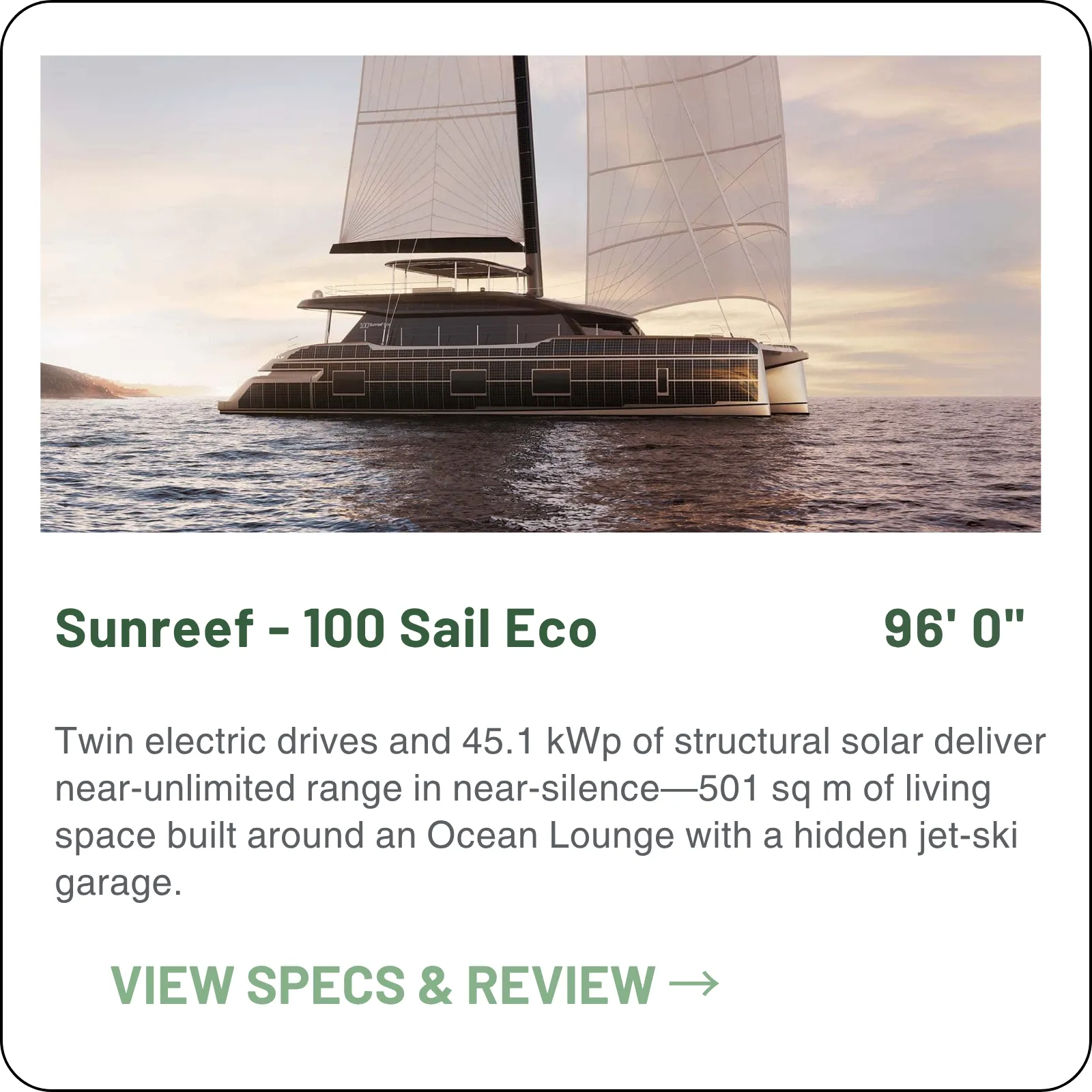
The only Sunreef with a published solar figure — up to 45.1 kWp and twin 180 kW motors.
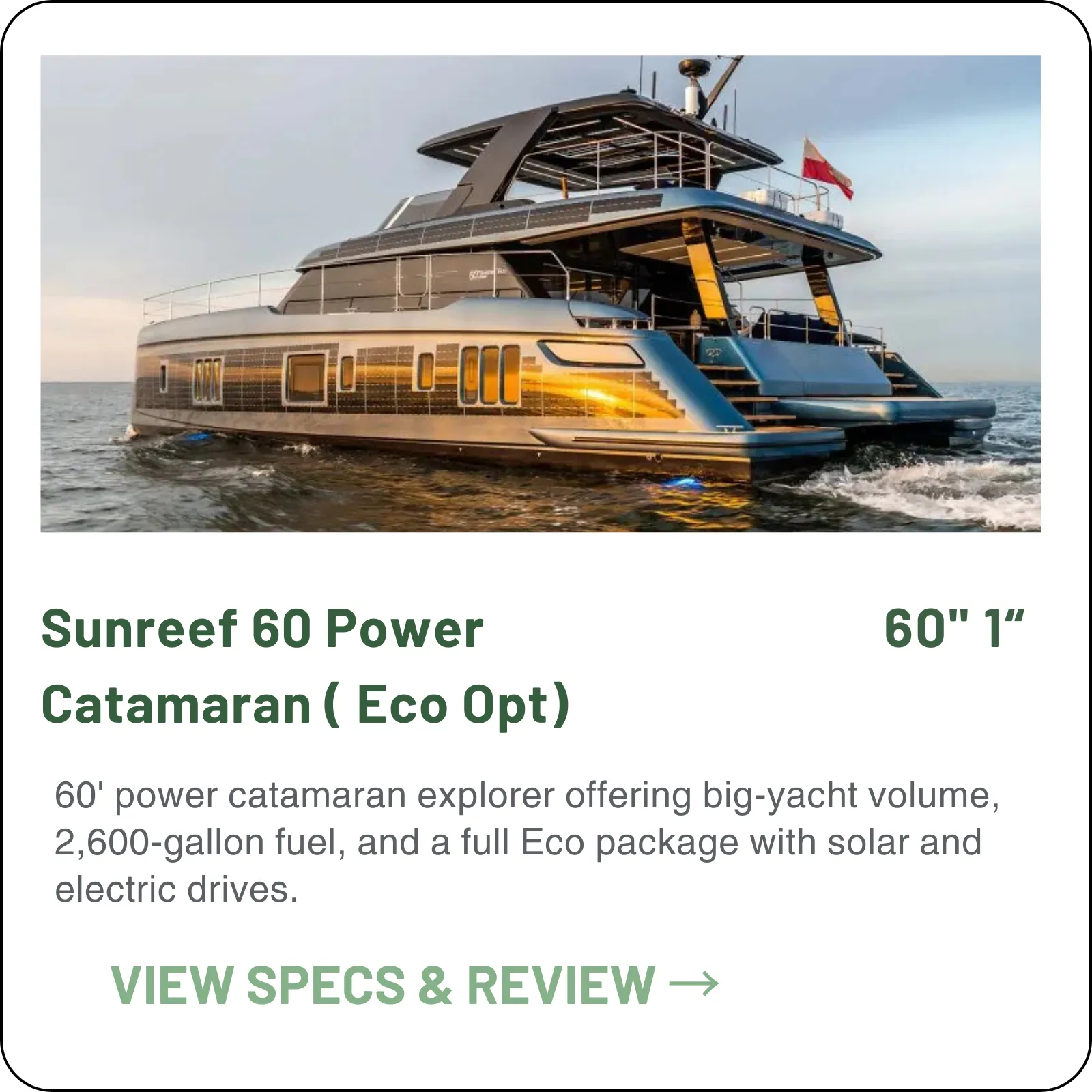
Up to 12 guests on a 60-foot power catamaran — the range's most-built hull.
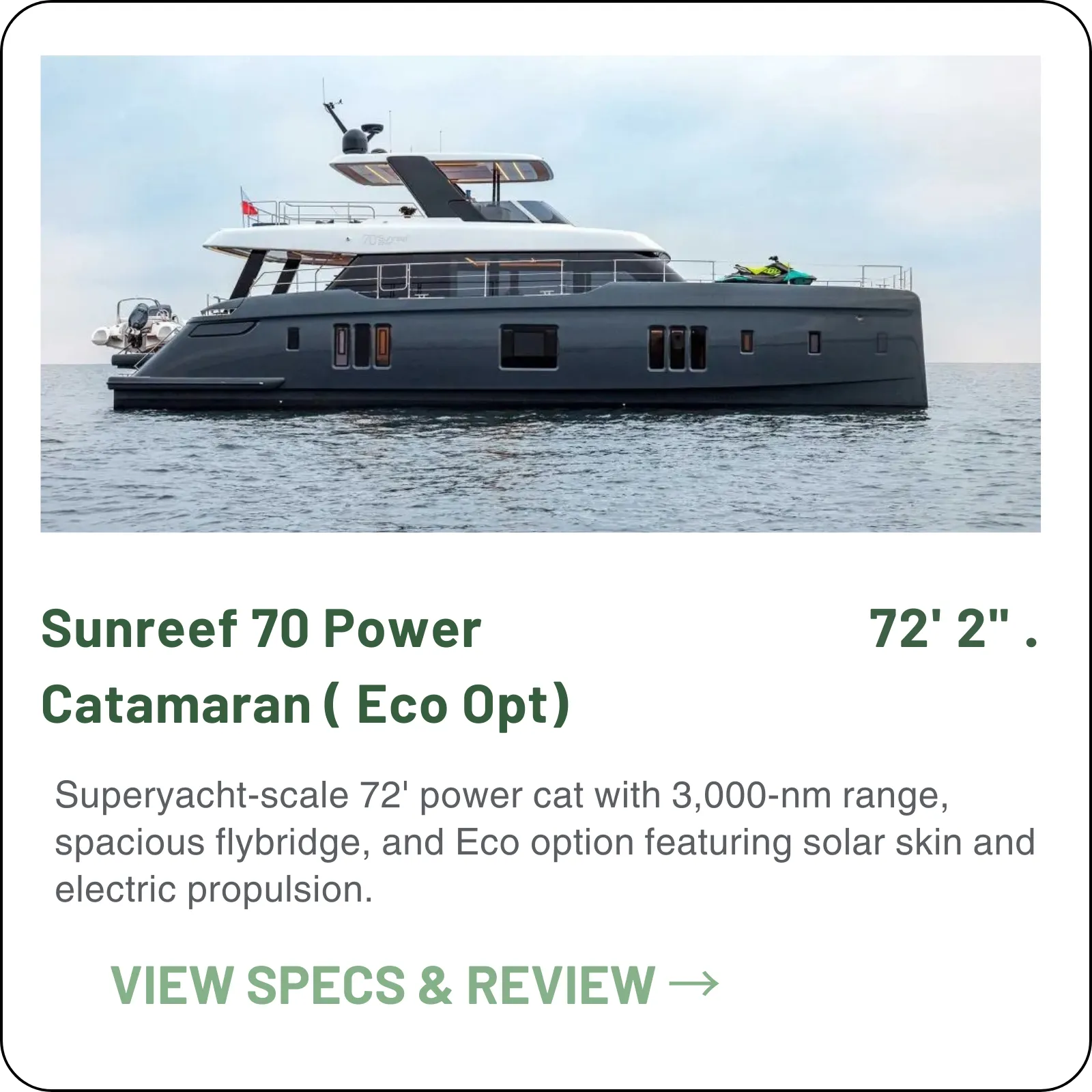
21.3 m, 1,600 l water and up to 8,000 l fuel — the power range's long-legged middle.
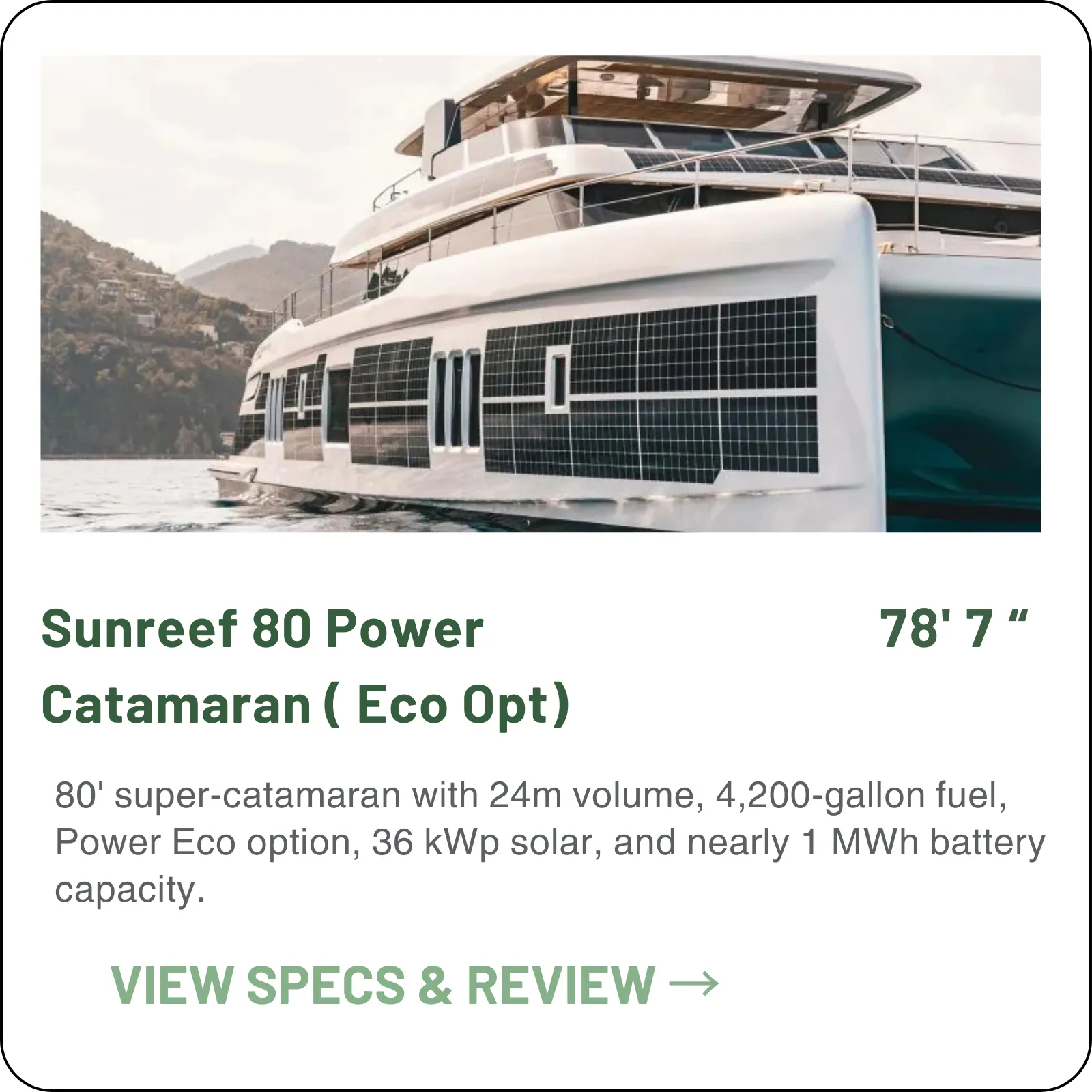
12 m beam, 1.7 m draft, up to 16,000 l fuel — the power range's flagship.
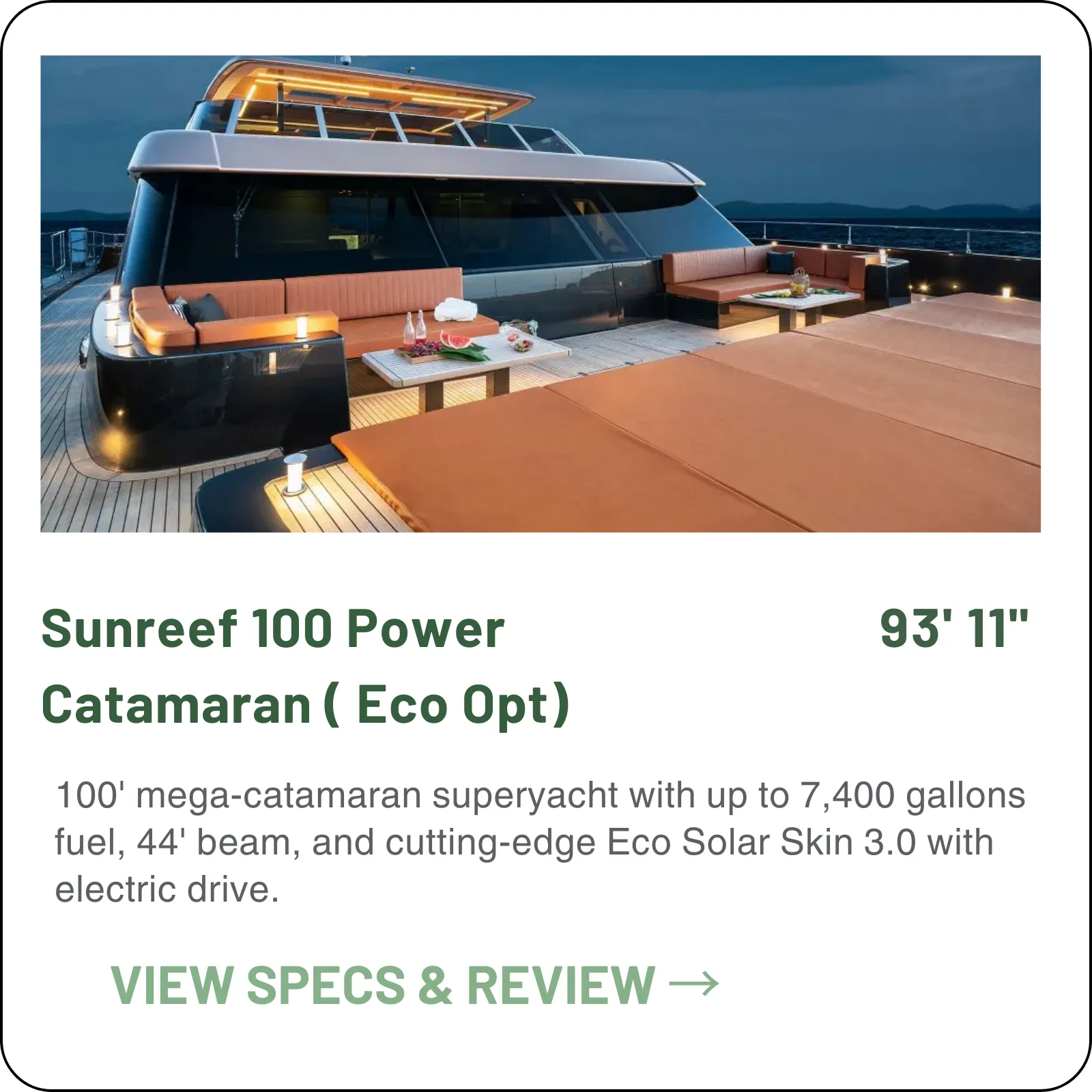
13.5 m beam and 28,000 l of fuel — Sunreef's largest power catamaran.
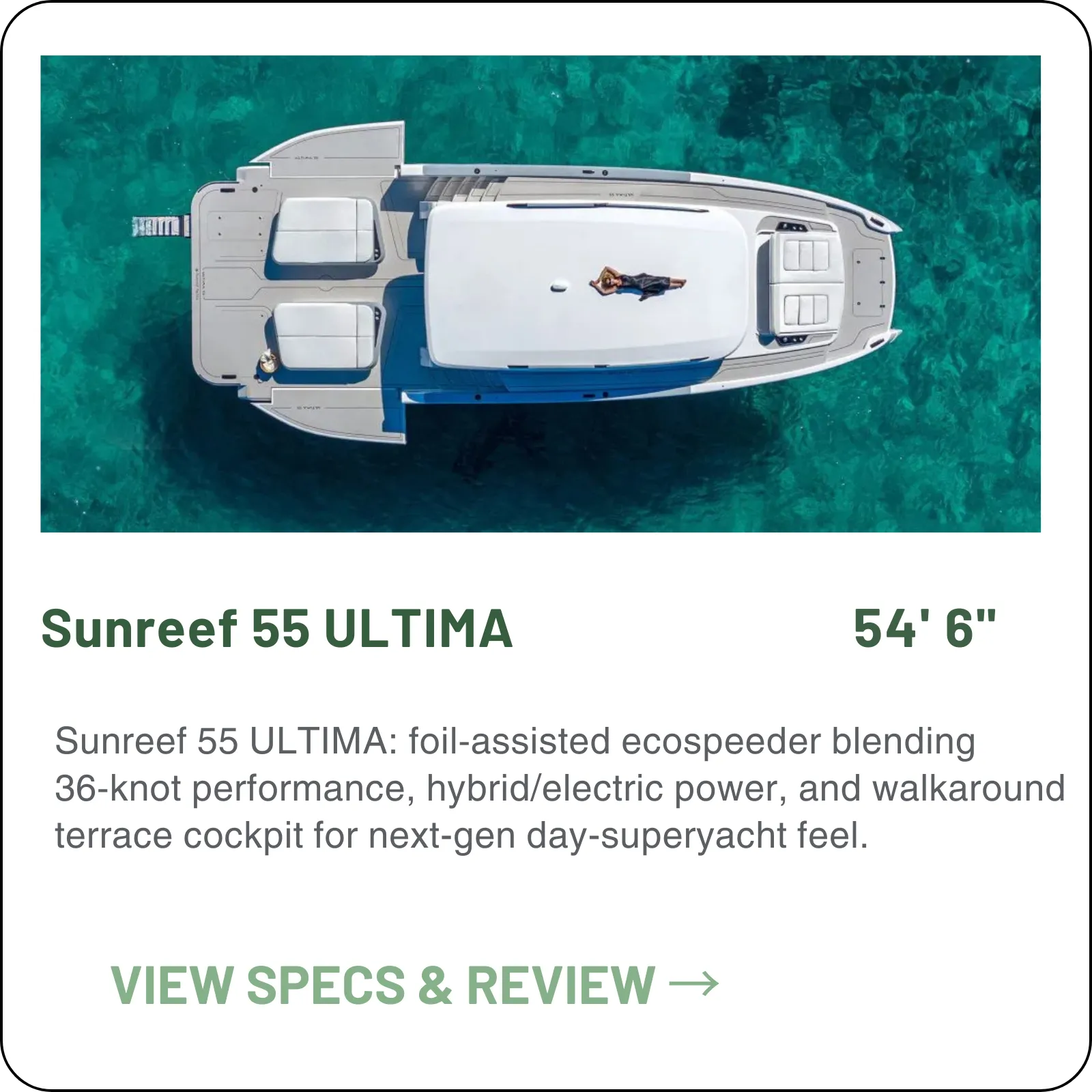
0.9 m draft, 5.6 m beam and a 220 kWh hybrid bank — a catamaran that berths like a monohull.
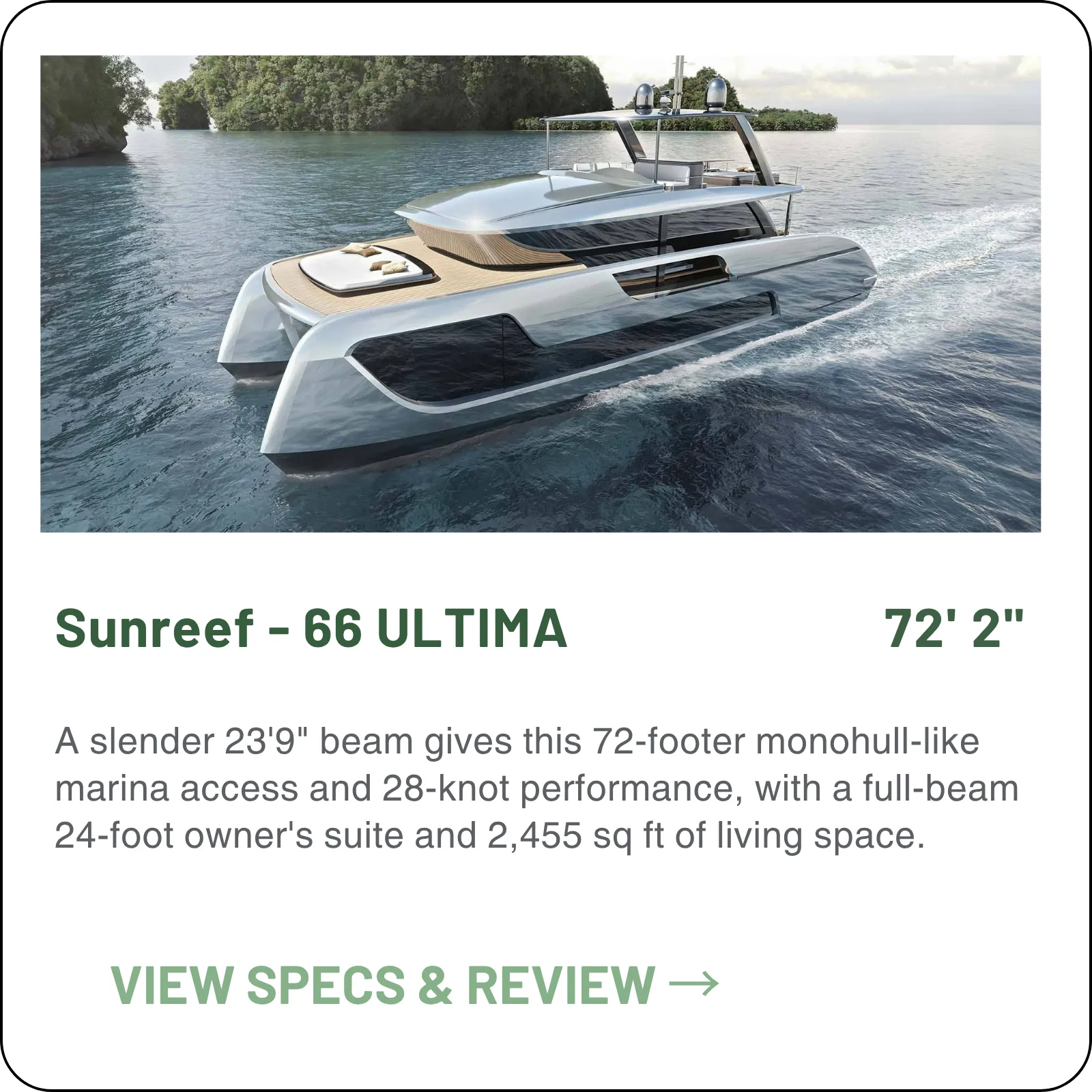
8 guests, 3 crew, 1.2 m draft — and narrow enough for a monohull berth.
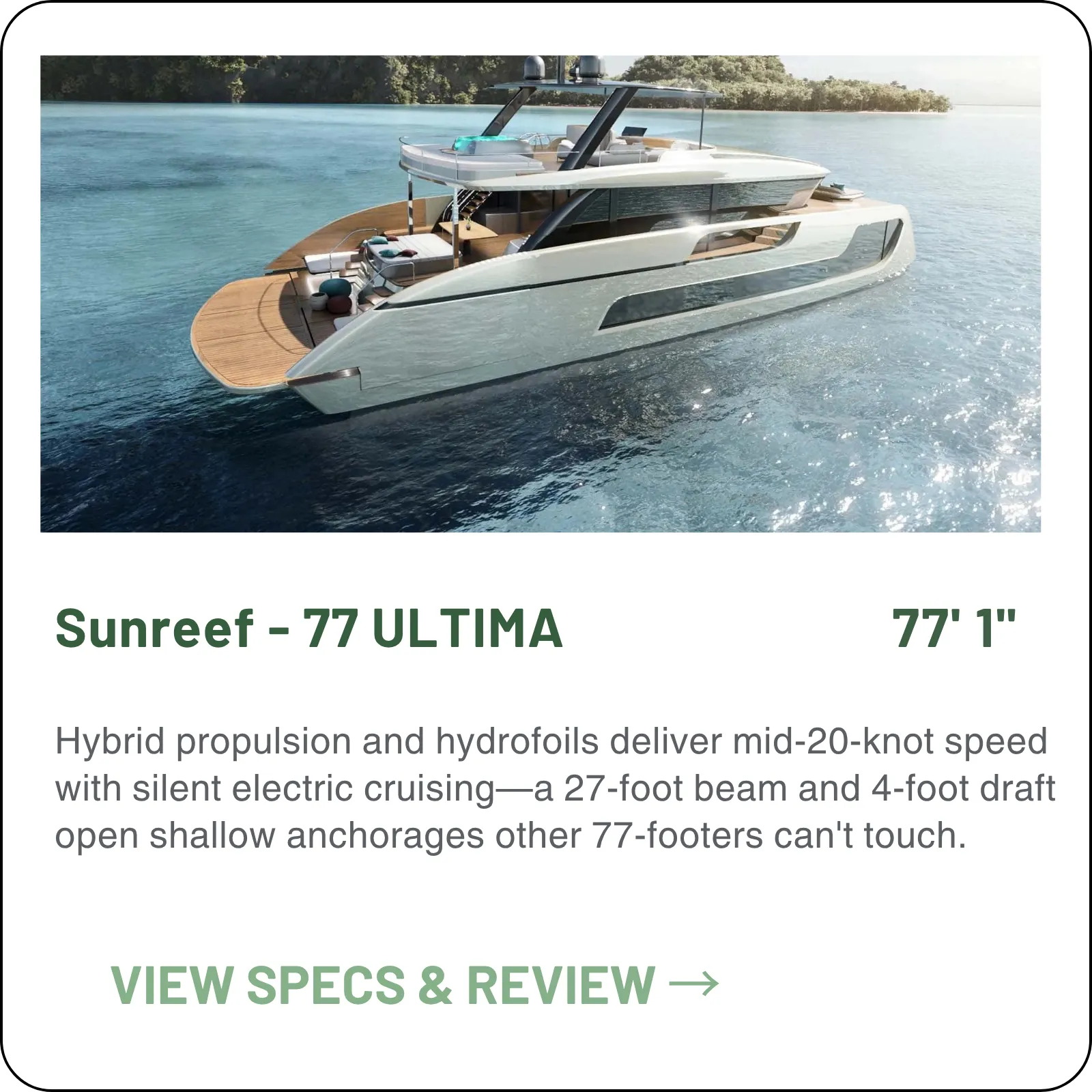
Up to 10 guests, 8.2 m beam, Volvo Penta IPS 950 — with a hydrofoil option.
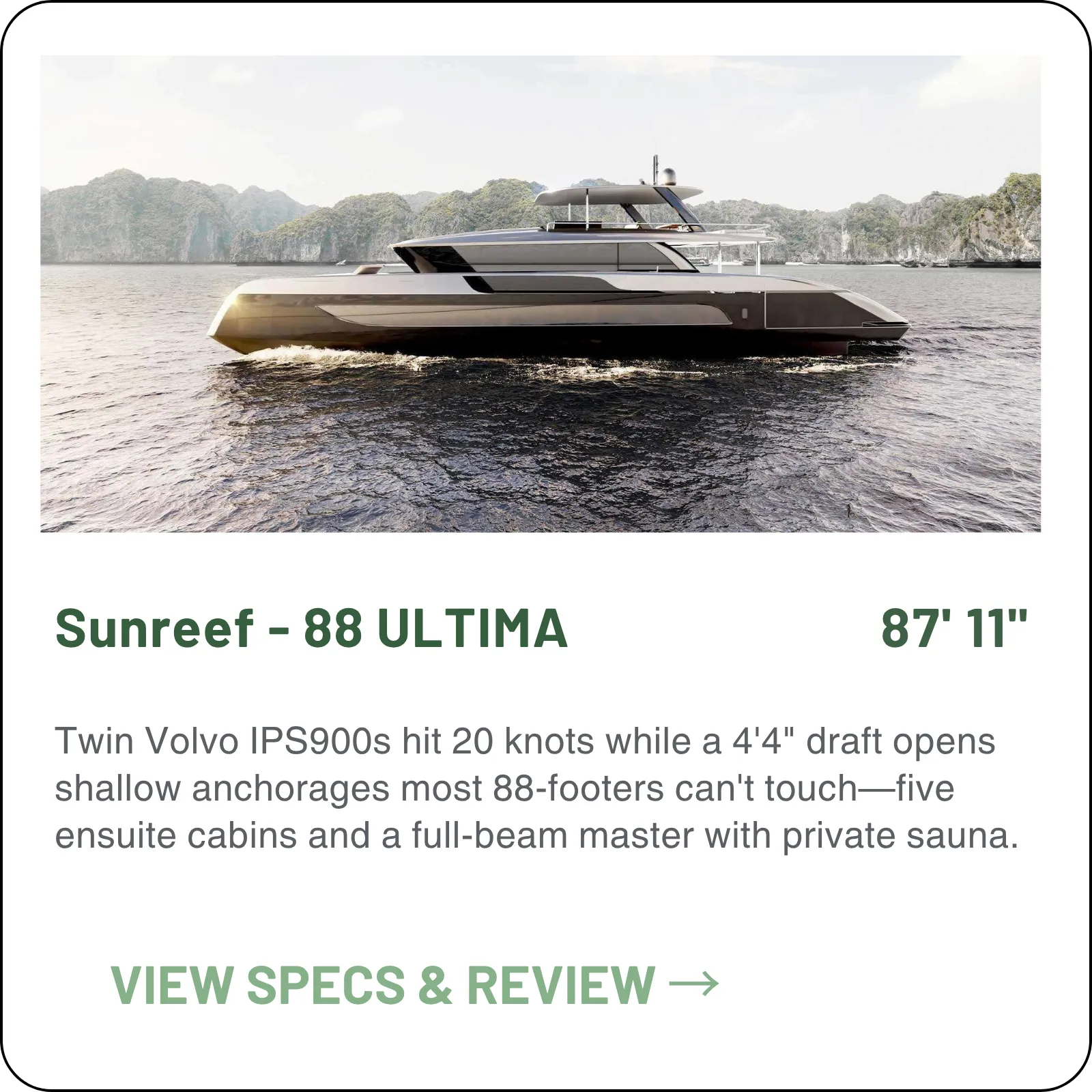
387 m² of living space inside 9.3 m of beam — the ULTIMA range's flagship.
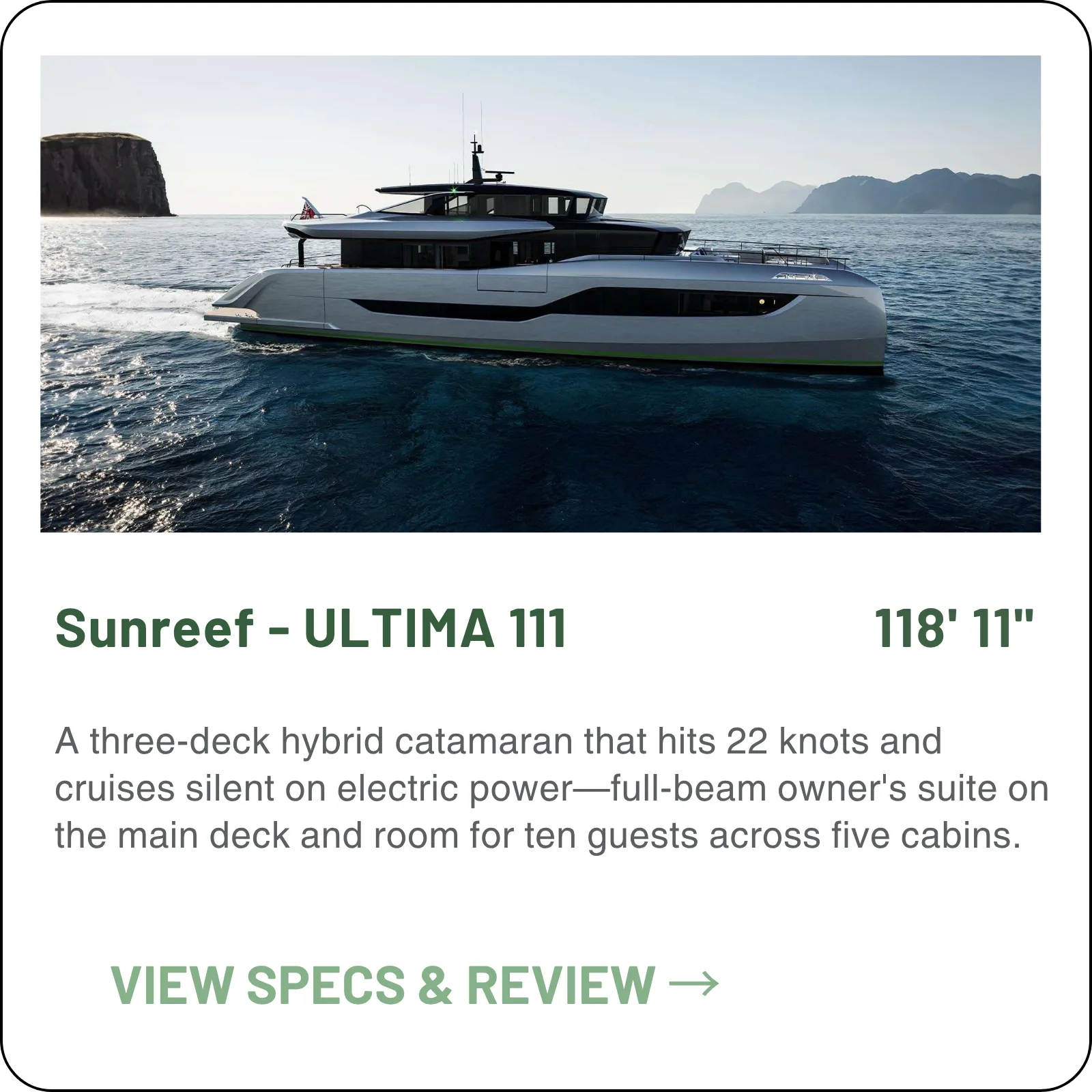
Withdrawn from Sunreef's published range — the historic specification, kept for reference.

Request other Brand or Model Information, with our Yacht Specs Direct, offer.
Videos courtesy of Sunreef.
Sunreef's published specification blocks cover dimensions, tankage, living space and engine packages, and on some models draft and guest count. For speed, cruise and range, ask the shipyard in writing before you commit to a build, and record observed figures at your intended rpm at sea trial. If a broker or a listing quotes you a precise Sunreef speed, ask which document it came from.
As many as you specify. Every hull is built to its owner's brief rather than to a fixed layout, so the cabin and head count is contract documentation rather than a brochure figure. Sunreef publishes a guest count on three models — up to 12 on the 60 Sunreef Power, 8 guests plus 3 crew on the ULTIMA 66, and up to 10 on the ULTIMA 77. Have the general arrangement drawn and signed before you commit.
The Eco version replaces the diesel engines with a solar-electric drivetrain; the classic version keeps them. Sunreef offers both from a single specification sheet on every model, and its own pages carry a tabbed spec block labelled ECO VERSION and CLASSIC VERSION. The hulls, beams and tankage are identical — the propulsion is what changes. On the 100 Sunreef Power, the yard publishes 2 × 1,300 hp classic against 2 × 242 hp Eco, which is the clearest statement anywhere of what that choice means.
Sunreef NEXT is the shipyard's current design generation, rolled out across the sailing and power ranges from 2025. It brings new superstructures, reworked saloons that open fore and aft into the cockpit and bow terrace, and flush flybridge layouts with options for spa pools and bars. Sunreef's own range pages now list most models with a NEXT suffix — the Sunreef 80 NEXT, the 60 Sunreef Power NEXT. The Sunreef 50 is the one model in the sailing range not yet restyled.
In Gdansk, Poland. Francis Lapp established the shipyard's production site and office there in 2002, and in 2003 the yard launched the Sunreef 74 CHE — the world's first oceangoing luxury catamaran with a flybridge. Design, engineering, composite work, joinery and solar panel manufacture are all carried out in-house at the Gdansk facility.
Yes. Sunreef designs and manufactures its solar panels in-house at its Gdansk shipyard, and laminates them into the composite structure rather than bolting a third-party array to the roof. The panels are flexible and can be mounted on hulls, biminis and masts as well as flat surfaces, and Sunreef describes them as the industry's lightest. The yard was also the first to integrate panels into curved carbon bimini roofs.
Sunreef publishes draft on three models: the 80 Sunreef Power at 1.7 m (5 ft 7 in), the ULTIMA 55 at 0.9 m (2 ft 11 in) and the ULTIMA 66 at 1.2 m (3 ft 11 in). Those are genuinely shallow for yachts of 78 ft, 55 ft and 72 ft. For any other model, request the draft figure in writing if shallow-water access is central to your plan.
Every buyer's mission is different. Tell us how you plan to use your vessel, and we'll give you the straight story on which models fit your life—and which don't.
Specific Model Details & Advice