
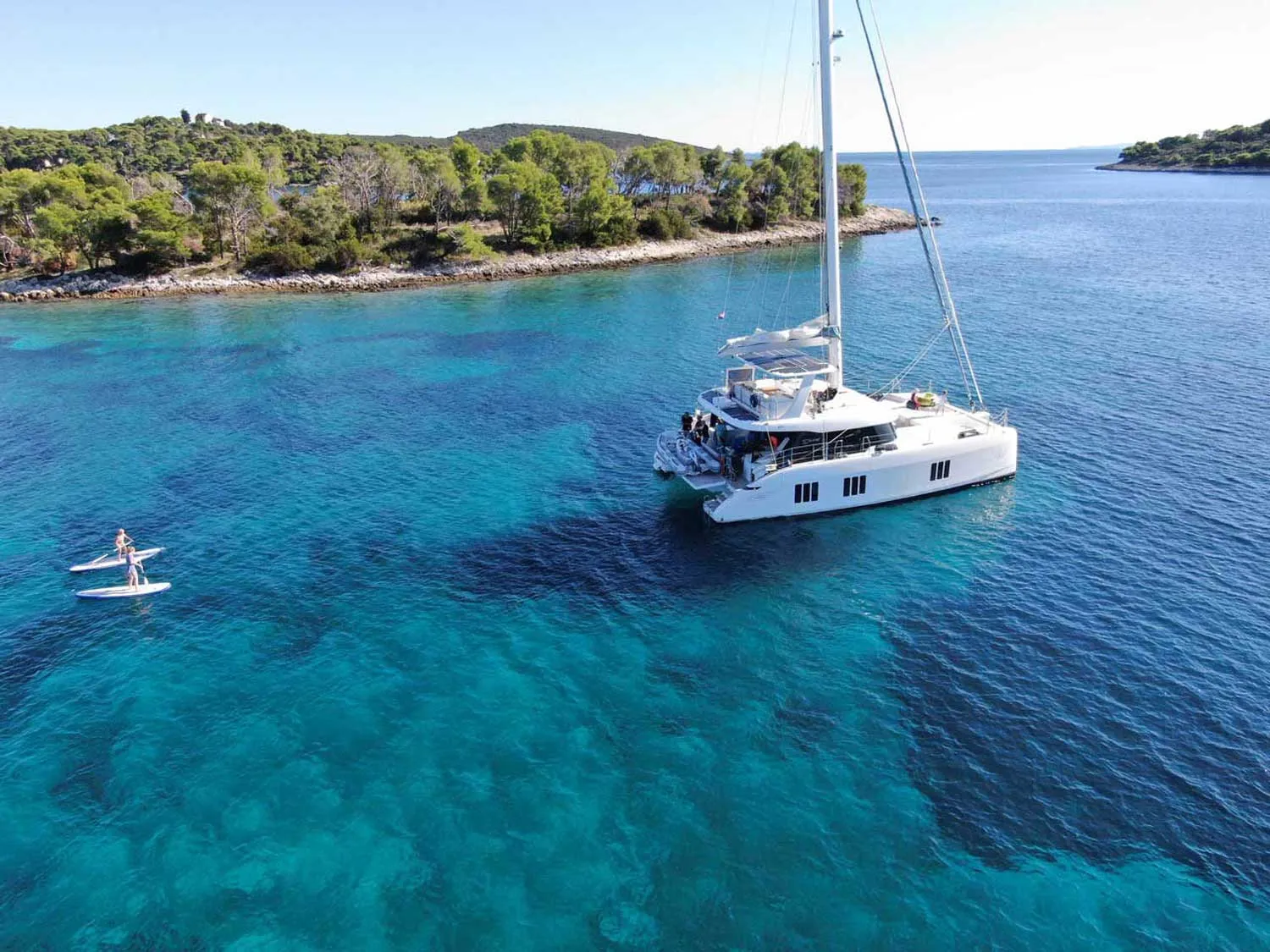
Sunreef 50 Sail NEXT: The Catamaran You Can Actually Run Yourself
Sunreef's smallest catamaran puts 167 m² of living space on a 15.2 m hull, thanks to an unusually wide 9.1 m beam — and it is the one you ha…
Read the articleExpert Review, Technical Specifications & Market Analysis
| Feature | Specifications |
|---|---|
| Overall Length | 15.2 m (50 ft) |
| Beam | 9.1 m (30 ft) |
| Engines | 2 × 80 hp (classic version) |
| Fuel Capacity | 1,000 l (264 US gal) |
| Water Capacity | 800 l (211 US gal) |
Source: Spec & Photos courtesy of Sunreef. Specs verified by Tony Smith, USCG 100 Ton Master, on August 11, 2026.
You want the silence and the shallow-water freedom of a big catamaran without stepping up to a crewed boat. The Sunreef 50 Sail NEXT is the smallest way in, with the Eco-Option on the order form.
Part of the Sunreef Sail NEXT series — see how owners step up through the lineup.

The 50 is the only boat in Sunreef's sailing range that has not been redrawn under the NEXT programme, and I do not think that is a strike against it. It is the one Sunreef you have a realistic chance of running yourself. Thirty feet of beam on a fifty-foot hull gives you the deck space of a much larger boat and the docking bill of a smaller one, and the 167 square metres of living space is the number that actually surprises people when they step aboard.
What you give up is the solar area. Physics is not on your side at this length — there is only so much roof. Treat the electric drive here as a quiet-harbour and short-hop system backed by the tanks, not as the off-grid promise you get further up the range. If silent indefinite anchoring is the whole reason you are buying, look at the 60 or the 70.
Buy this one because it is the most usable Sunreef, not because it is the greenest.
Video courtesy of Sunreef.
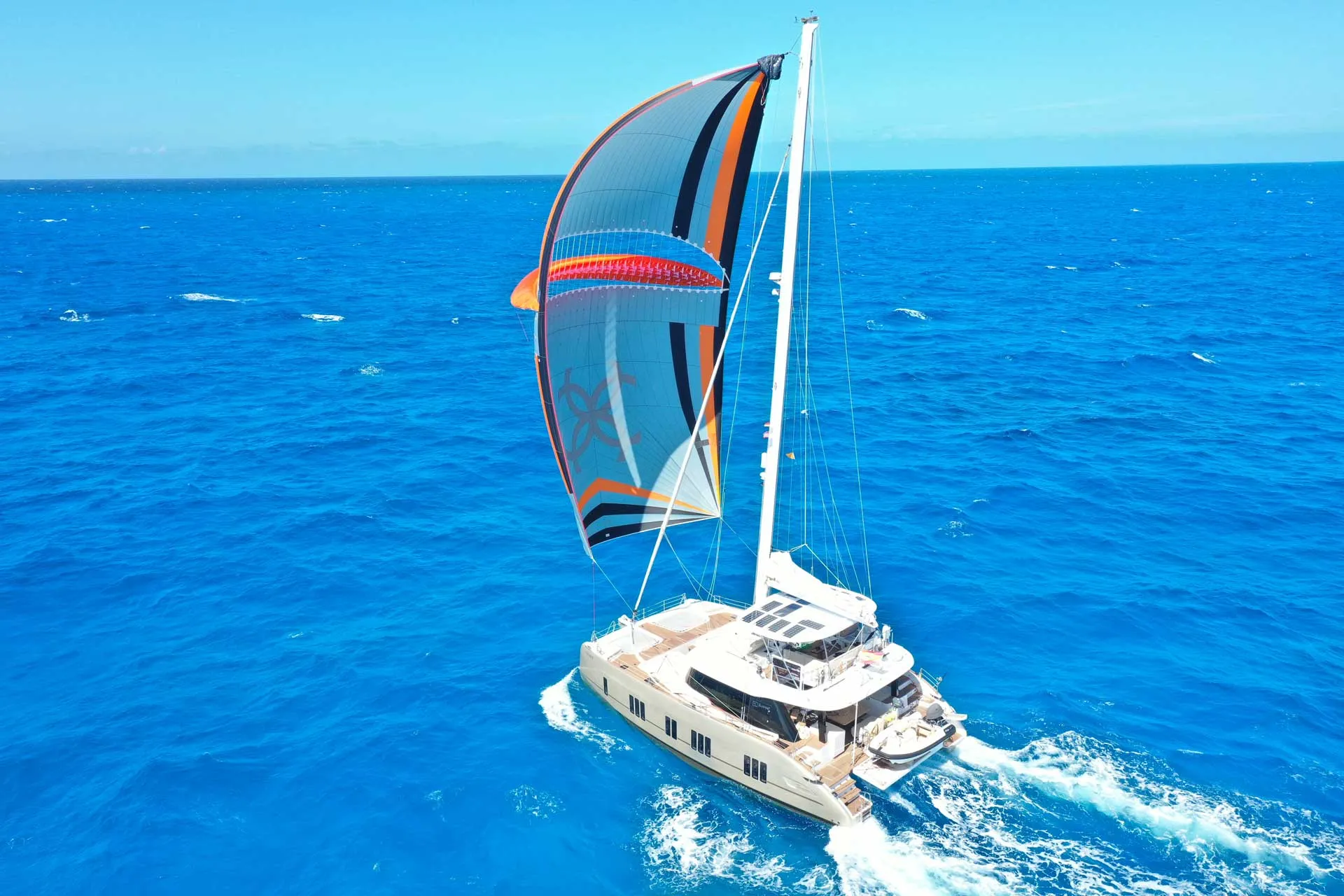
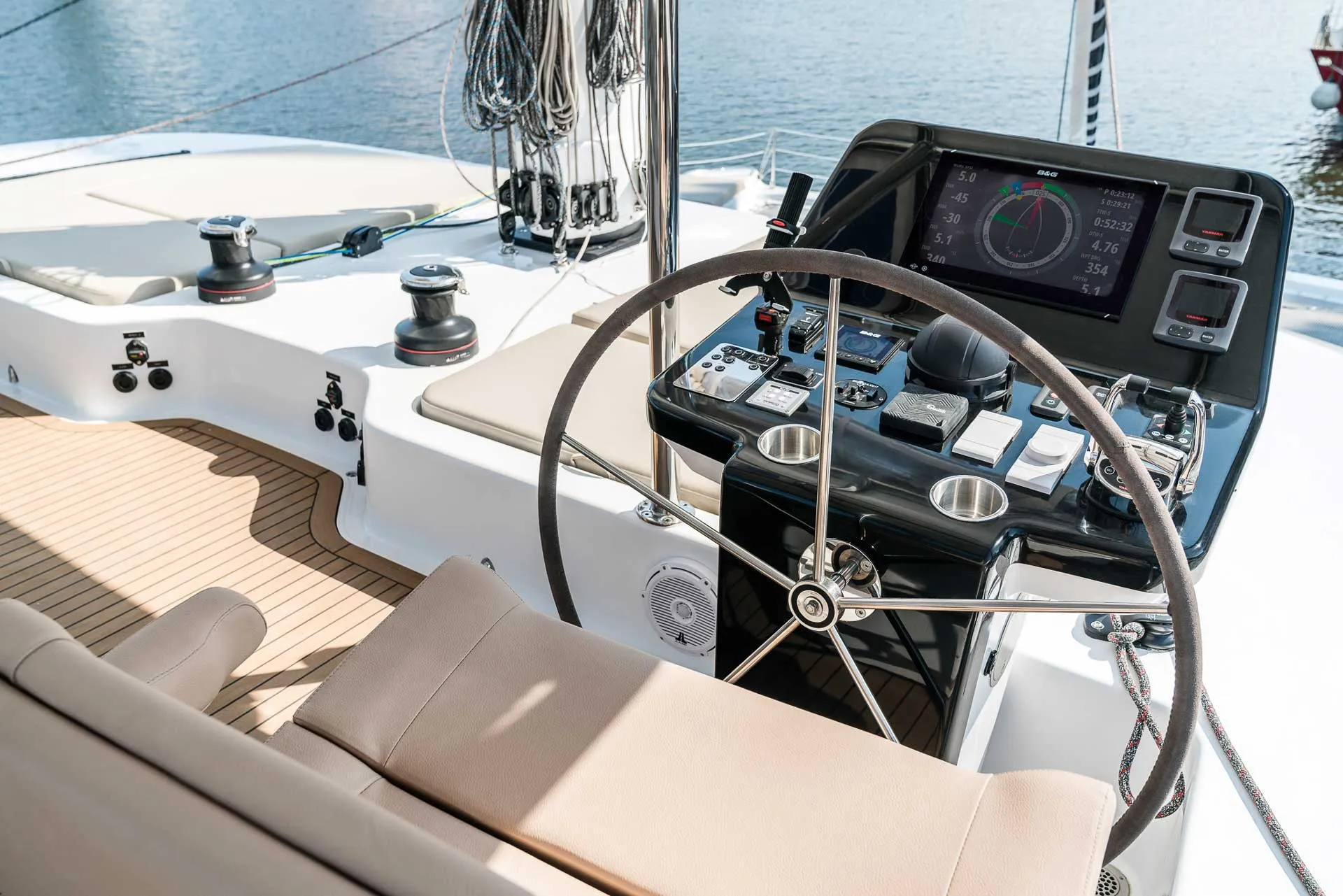
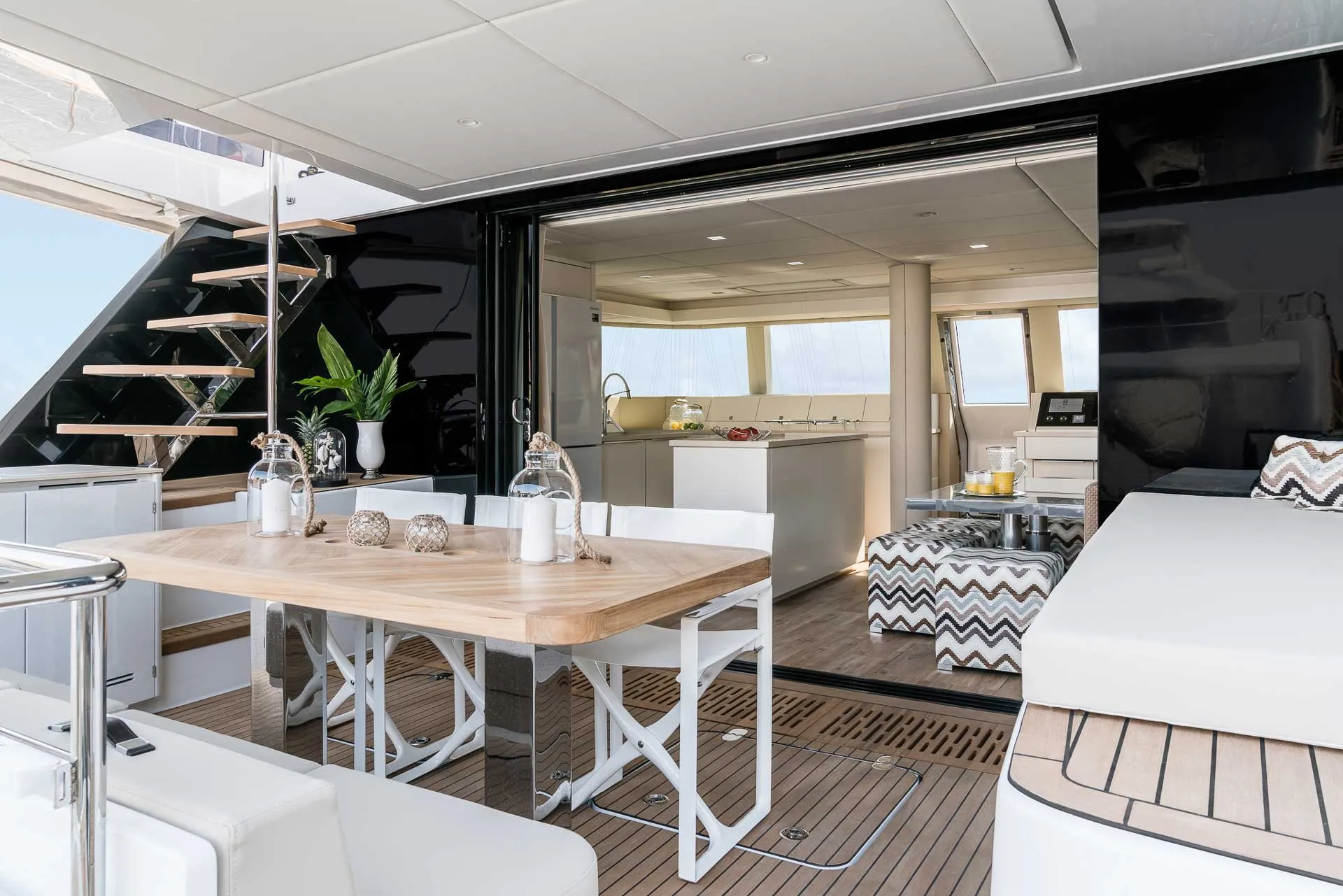
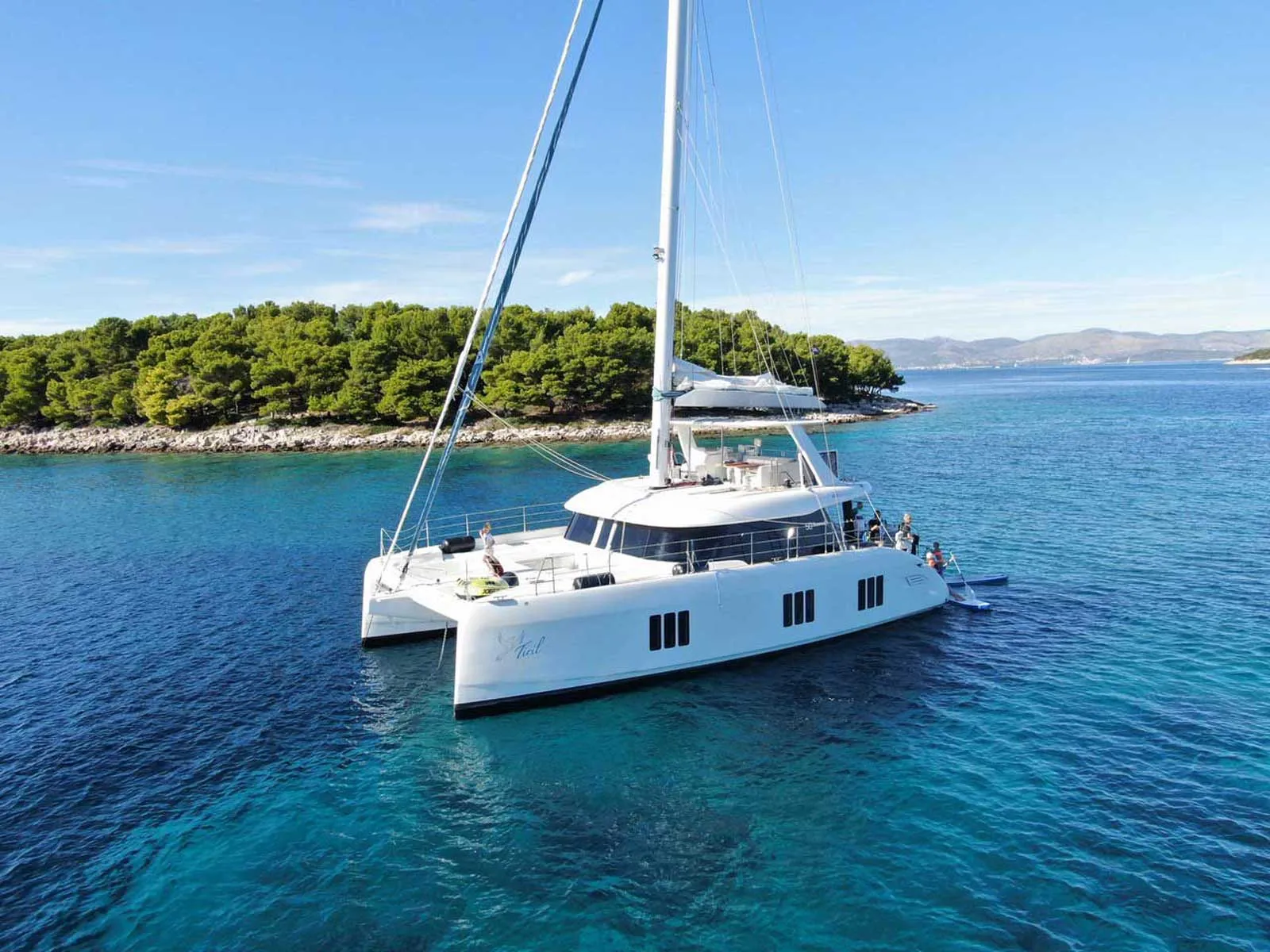
Photos courtesy of Sunreef.
The Sunreef 50 Sail NEXT is the smallest catamaran Sunreef builds, and the one most likely to be handled by an owner rather than a crew. Sunreef publishes an overall length of 15.2 m (50 ft) on a 9.1 m (30 ft) beam, which is an unusually wide platform for the length and is where the boat's 167 m² of living space comes from.
The rig is a 80 m² mainsail with a 79 m² genoa. Tankage is 800 l of water and 1,000 l of fuel.
The 50 is the one model in the sailing range that Sunreef has not yet restyled under its NEXT design programme — the range page lists it simply as "Sunreef 50" where the 60, 70, 80 and 100 all carry the NEXT suffix.
The classic version runs 2 × 80 hp diesels. The Eco version replaces them with electric motors fed by a battery bank, with hydrogeneration recovering power from the propellers under sail and solar panels topping the bank up at anchor. Get the motor output and the battery capacity for the 50 in writing.
If shallow-water access is central to your plan, ask Sunreef for the draft figure in writing before you sign — on a boat this beamy it is the number that decides which anchorages you can use.
Sunreef builds every catamaran to order, so the 50's interior is a starting point rather than a fixed layout. The published living space is 167 m², spread across the two hulls, the saloon and the cockpit.
The wide 9.1 m beam is what makes the volume work. On a conventional 50-foot monohull the saloon is a corridor; here it is a room with sightlines out both sides. Hull layouts are chosen at order — owners typically take a full-hull master on one side and guest cabins on the other, or three or four symmetrical cabins if the boat will see charter use.
The cabin and head count is set by the build rather than by a brochure page. Get the layout drawn and signed before you commit.
The 50 Eco sits at the bottom of Sunreef's sailing range and at the top of the production catamaran market it competes against. Boats from the volume yards at this length are built to a price and a repeatable layout; the Sunreef is built to order in Gdansk, in-house, with the same engineering department that draws the 100.
That is the trade. You pay for bespoke work and you wait for it. What you get is a boat nobody else has and a solar-electric drivetrain the volume builders are still treating as an option package.
Within the Sunreef range itself the 50 is the value proposition — the one that does not assume a professional crew.
Buy the 50 Sail NEXT if you want a genuinely custom catamaran and you intend to be the one driving it. It is the most owner-operable boat Sunreef makes, and the beam-to-length ratio gives you living space that embarrasses monohulls twenty feet longer.
Look further up the range if silent, indefinite anchoring is the point of the purchase. Solar output scales with roof area, and the 50 does not have the surfaces the 70 and 80 do.
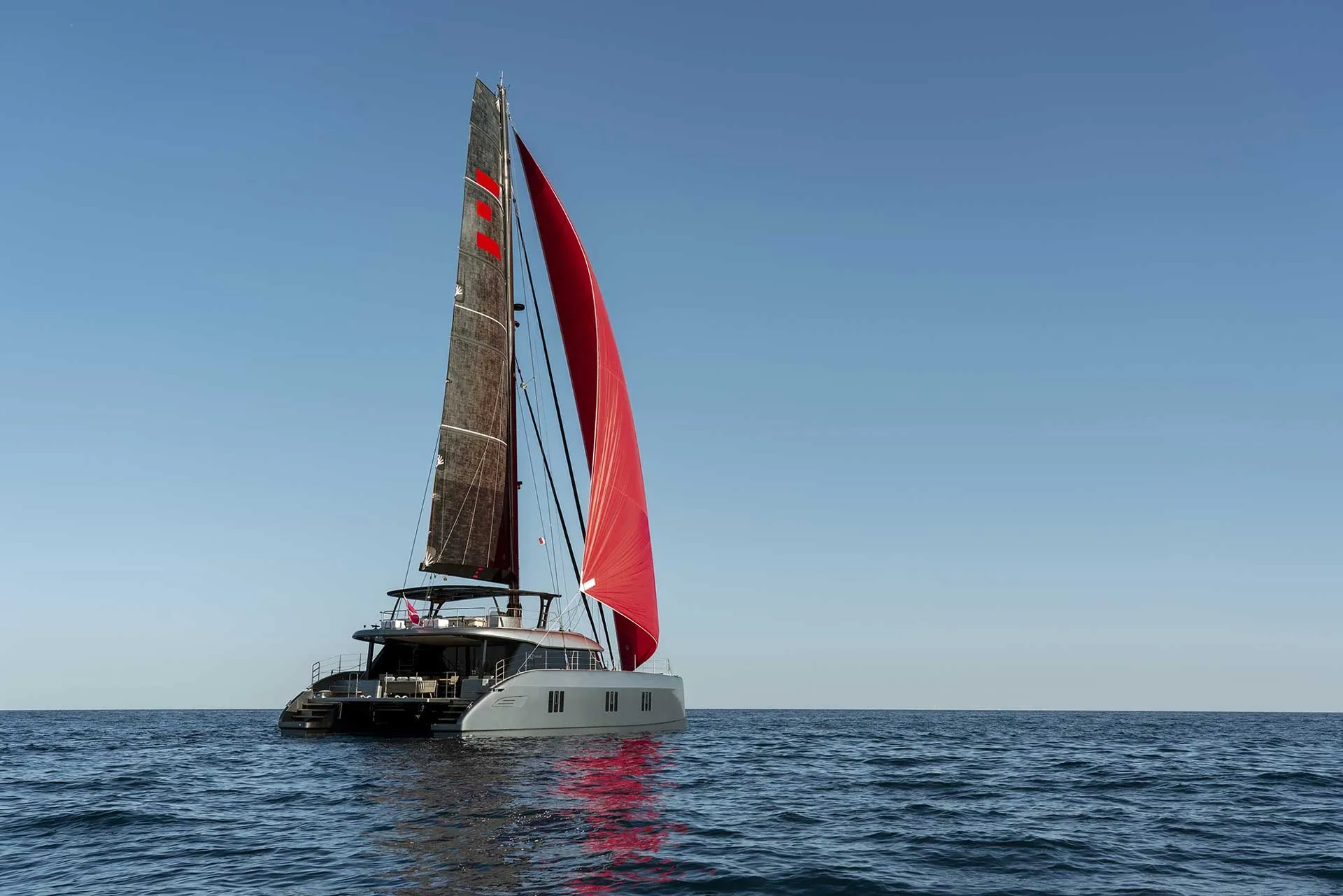
An 80 m² mainsail and a 79 m² genoa, per Sunreef's own specification. That is a modest rig for the length, consistent with a boat designed for comfortable cruising rather than performance sailing. The classic version's auxiliary engines are 2 × 80 hp; the Eco version replaces them with electric motors — get the output figure in writing.
167 m², which Sunreef publishes on its own specification block for the model. That volume comes from an unusually wide 9.1 m (30 ft) beam on a 15.2 m (50 ft) hull — a beam-to-length ratio that gives the boat the deck space of something considerably longer while keeping the berthing cost of a 50-footer.