
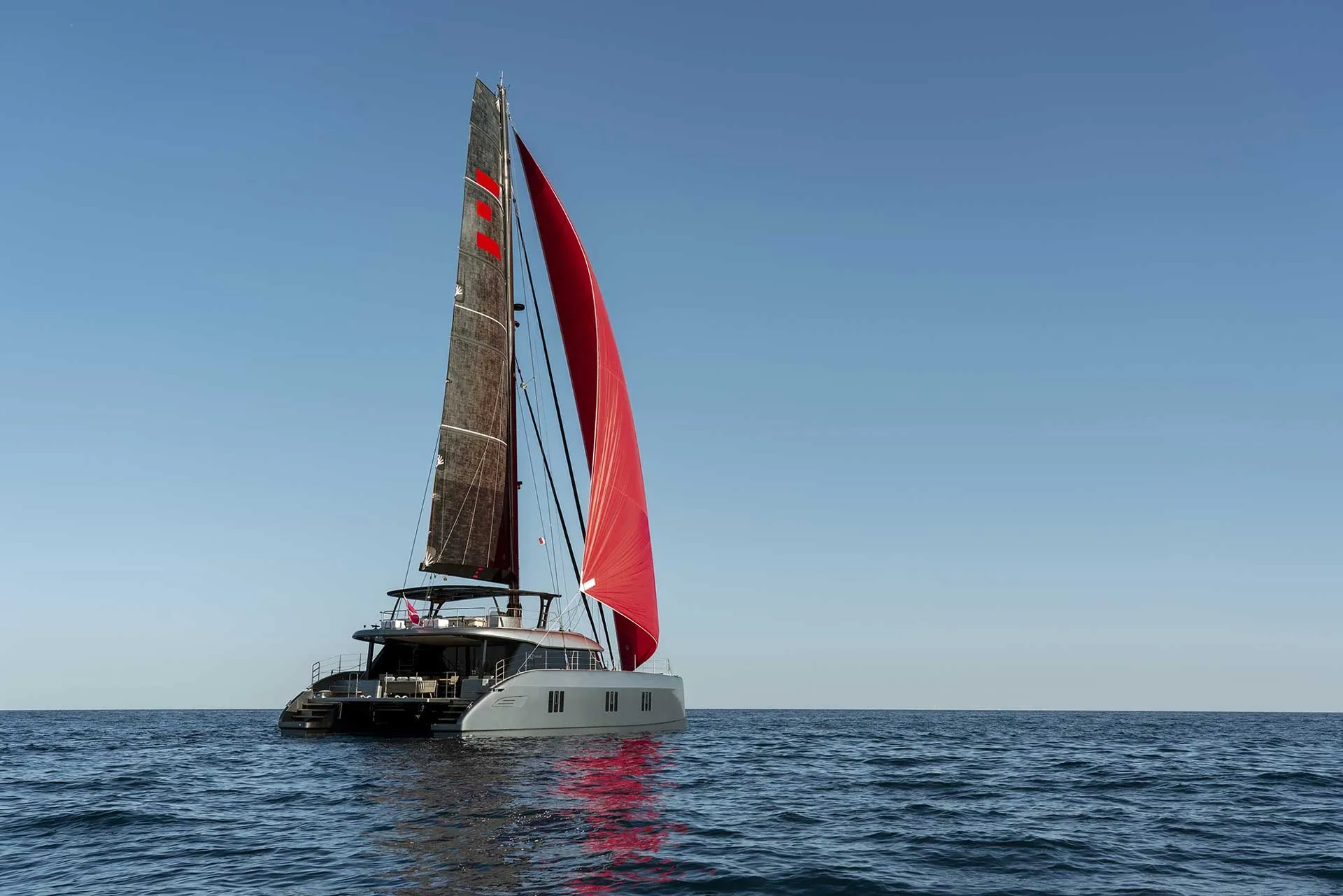
Sunreef 60 Sail NEXT: Where the Solar Case Stops Being a Brochure Line
At 60 feet the solar argument stops being a brochure line. 225 m² of living space, a 110 m² mainsail, and enough deck area to keep a battery…
Read the articleExpert Review, Technical Specifications & Market Analysis
| Feature | Specifications |
|---|---|
| Overall Length | 18.4 m (60 ft 4 in) |
| Beam | 10.20 m (33 ft 6 in) |
| Engines | 2 × 135 hp (classic version) |
| Fuel Capacity | 1,000–1,750 l (264–462 US gal) |
| Water Capacity | 800 l (211 US gal) |
Source: Spec & Photos courtesy of Sunreef. Specs verified by Tony Smith, USCG 100 Ton Master, on August 11, 2026.
You want to anchor for a week without a generator running and without giving up the space that made you choose a catamaran. The Sunreef 60 Sail NEXT with the Eco-Option is where that starts to work properly.
Part of the Sunreef Sail NEXT series — see how owners step up through the lineup.

The 60 is the first boat in the range where the solar promise stops being a brochure line. There is enough roof, bimini and hull surface here to keep a battery bank moving in tropical latitudes, and enough beam — 10.2 metres — to carry the systems without eating the accommodation. Two hundred and twenty-five square metres of living space on a sixty-foot boat is a genuinely large number.
The thing I would push on is tankage. Sunreef quotes fuel from 1,000 to 1,750 litres depending on how the boat is specified, which is a wide spread on a boat this size, and it tells you the Eco drivetrain is doing more or less work depending on the build. Pin that down early. The difference between the two ends of that range is the difference between a boat that motors when it has to and a boat that motors when it wants to.
CE category A, in-house build, fully bespoke interior. This is the size where Sunreef's argument gets convincing.
Video courtesy of Sunreef.
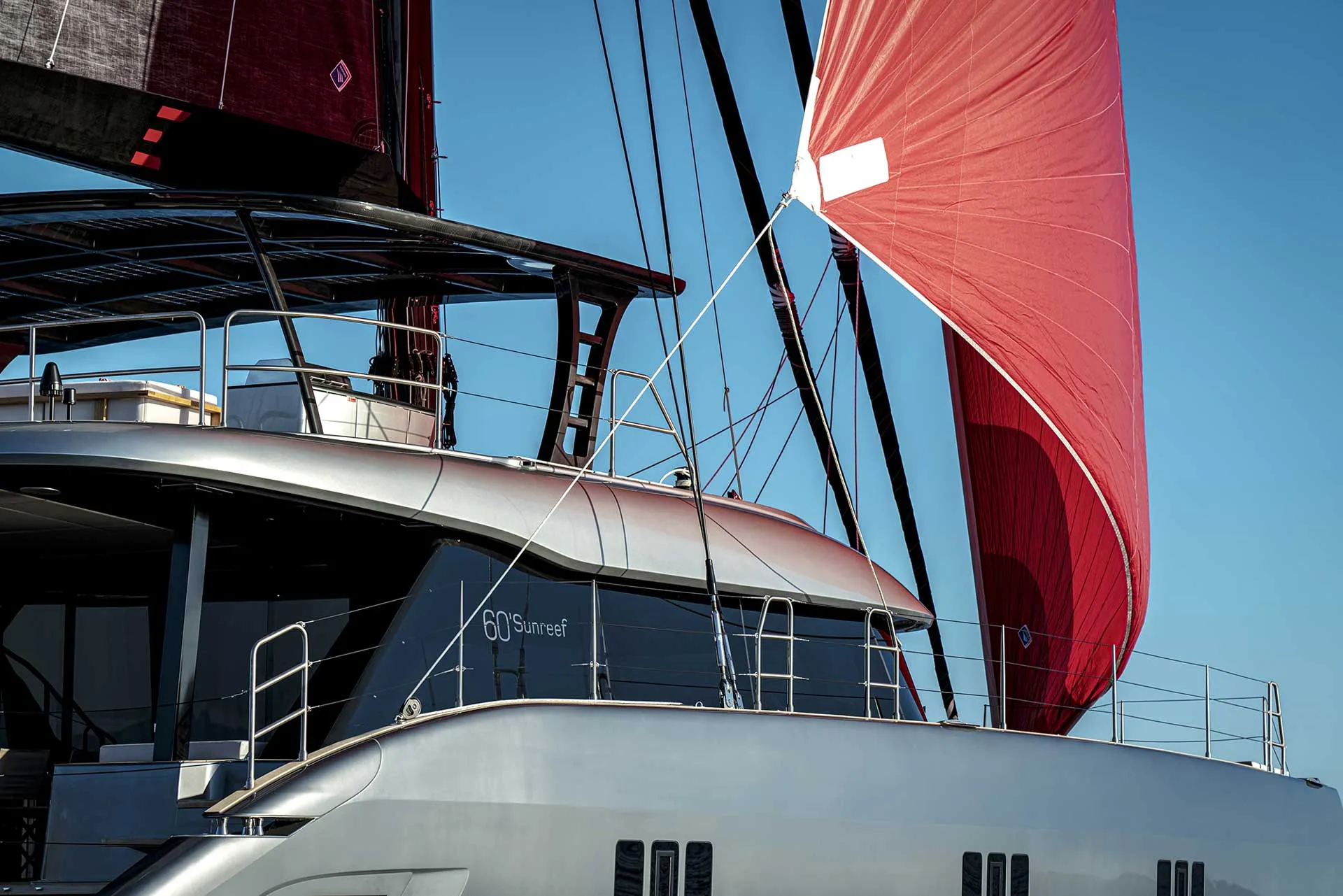
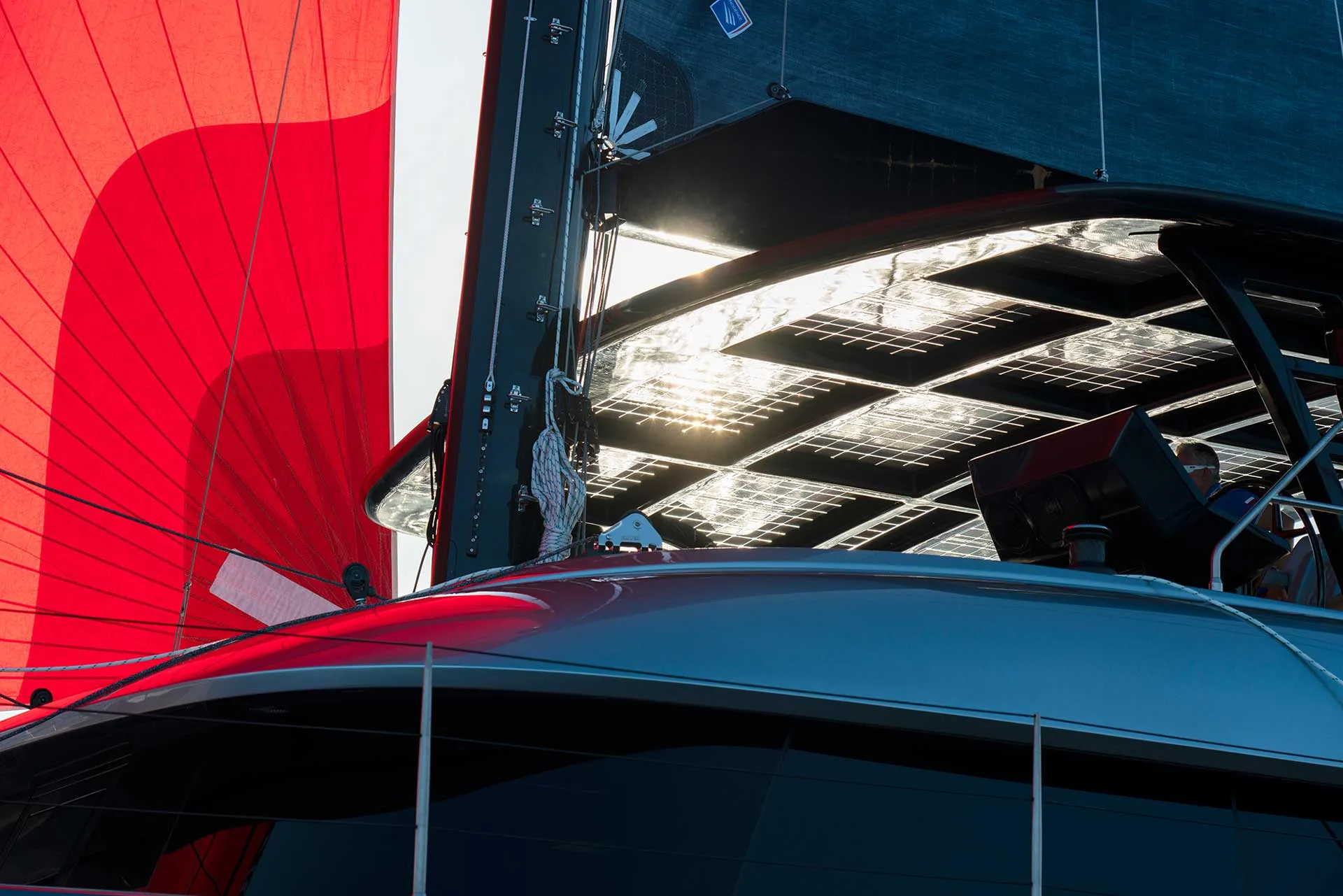
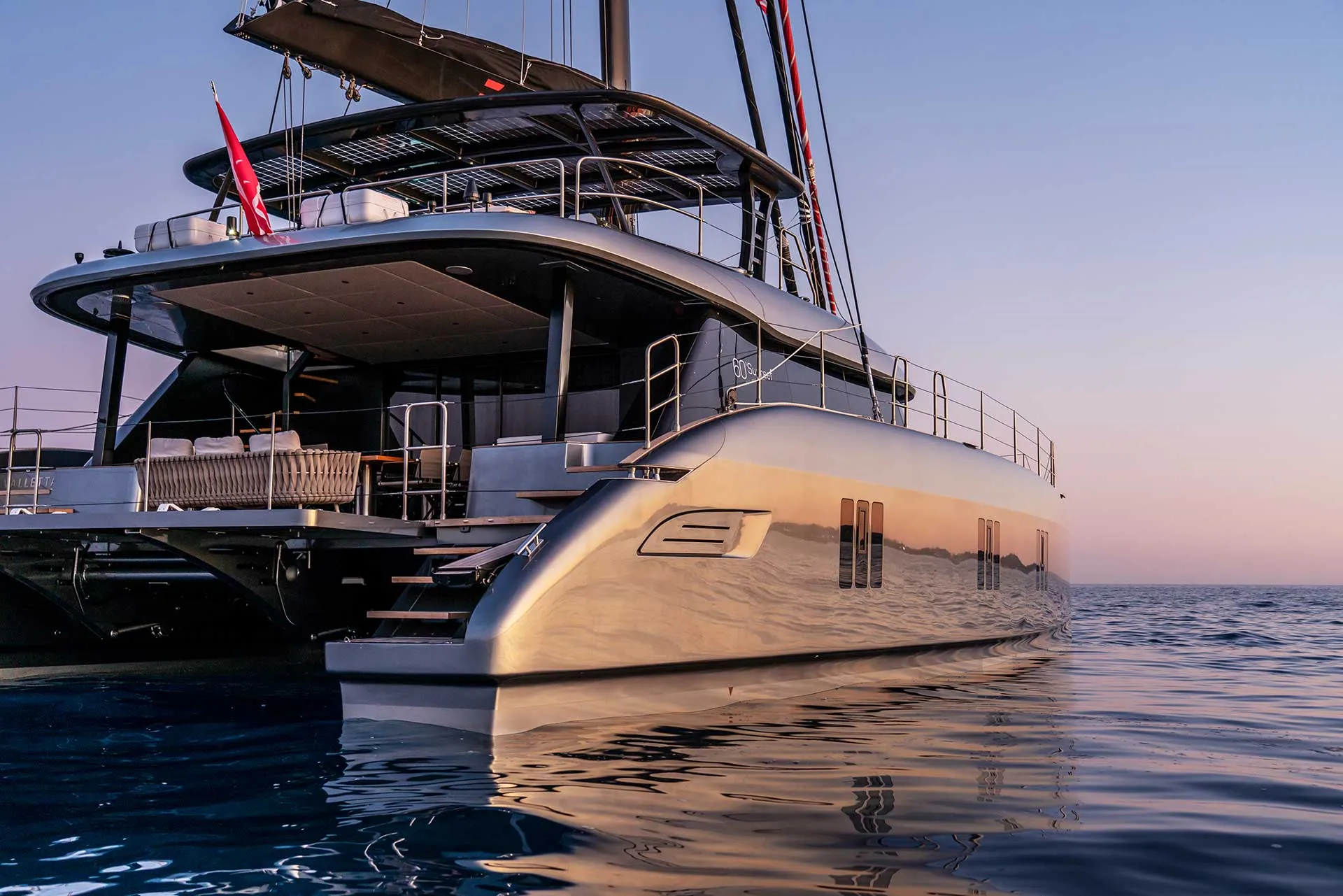
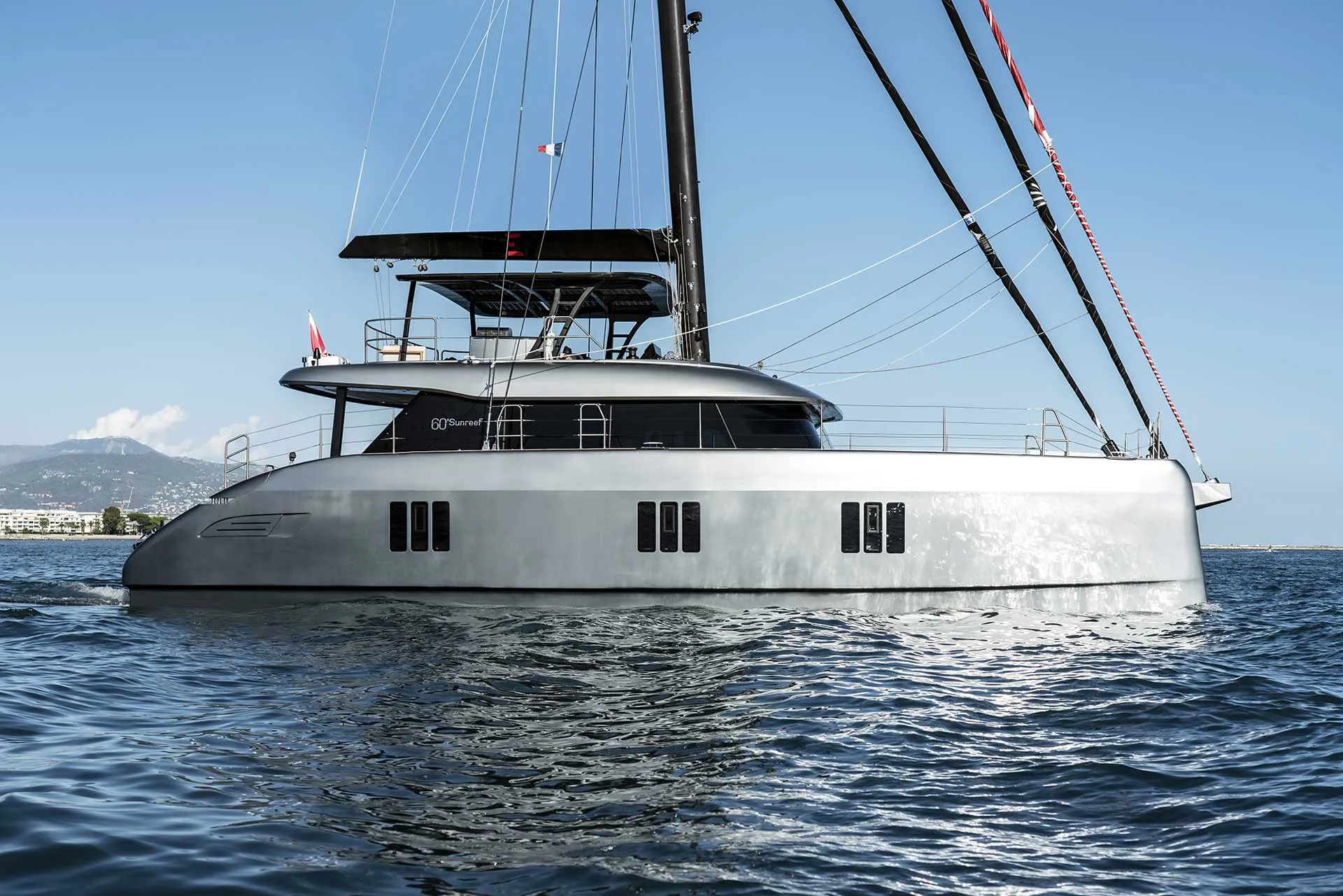
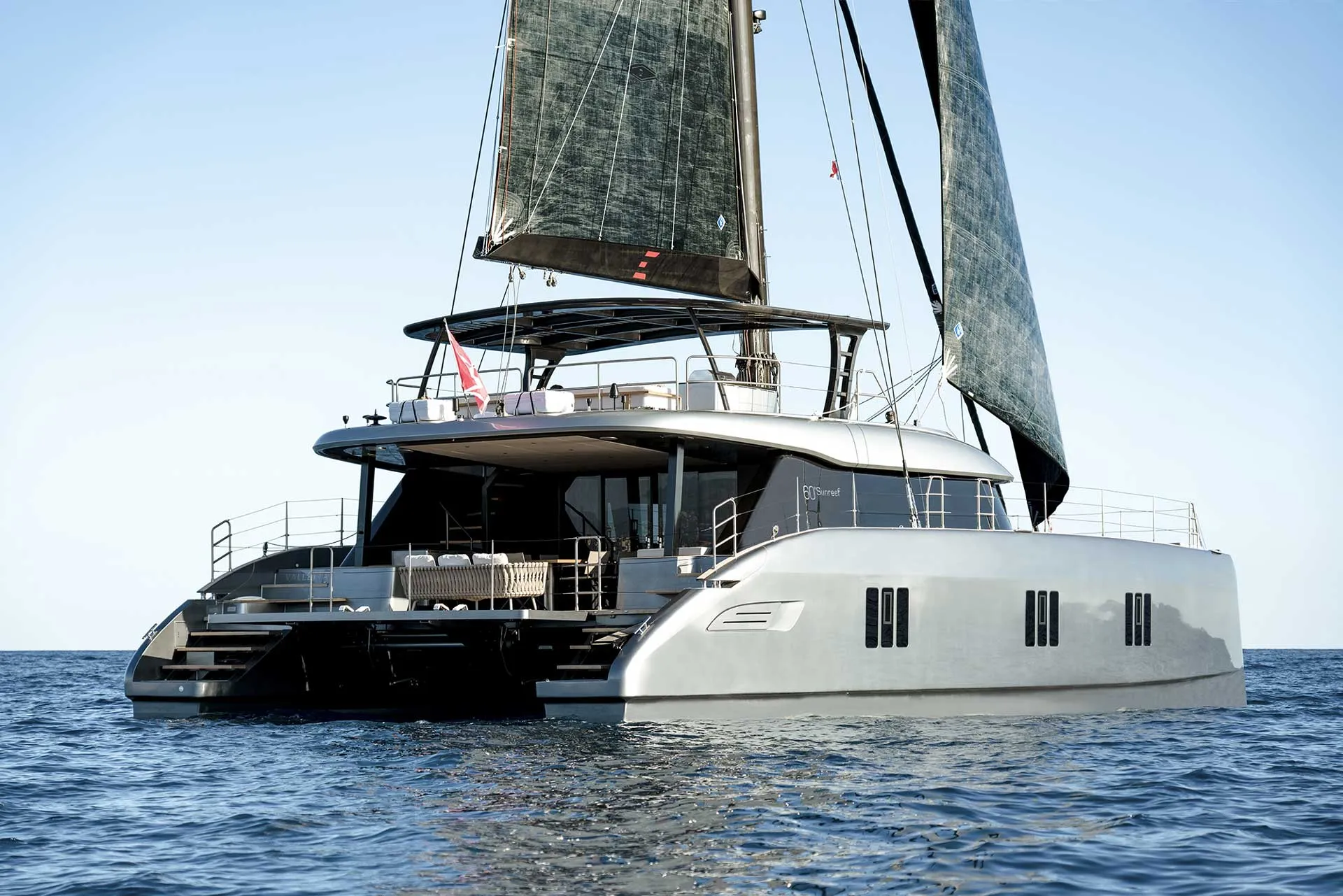
Photos courtesy of Sunreef.
The Sunreef 60 Sail NEXT is the second boat in Sunreef's sailing range and the first at a size where the solar-electric package has real surface area to work with. Sunreef publishes 18.4 m (60 ft 4 in) overall on a 10.20 m (33 ft 6 in) beam, CE design category A, and 225 m² of living space.
The rig is a 110 m² mainsail with an 85 m² genoa. Water capacity is 800 l; fuel is specified between 1,000 l and 1,750 l depending on the build. Naval architecture and design are both in-house at Sunreef.
Sunreef's range page lists this boat as the "Sunreef 60 NEXT", the yard's current design generation — a new superstructure and saloon concept rolled out across the sailing and power ranges from 2025.
The classic version runs 2 × 135 hp diesels. The Eco version substitutes electric motors with a lithium battery bank, hydrogeneration from the propellers under sail, and Sunreef's own composite-integrated solar panels — panels the yard designs and manufactures in-house and describes as the industry's lightest.
Ask for the draft figure in writing if your cruising ground is shallow, and record observed speed and consumption at your intended rpm at sea trial.
Two hundred and twenty-five square metres of living space is the number that sells this boat, and the 10.2 m beam is what delivers it. The saloon runs the full width of the bridgedeck with sightlines out both sides, and the NEXT redesign opens it further into the cockpit.
Every Sunreef is built to order, so the hull layout is yours to draw. Owners typically take a full-beam or full-hull master with the guest cabins opposite; charter-minded builds go symmetrical. Crew accommodation is separate where the layout calls for it.
On a bespoke build the general arrangement is contract documentation rather than a brochure page. Have it signed off before contract.
At 60 feet the Sunreef competes with the largest production catamarans and the smallest semi-custom ones, and it is firmly the latter. Everything is built in-house in Gdansk: hulls, joinery, and the solar panels themselves.
The Eco package is the differentiator. Most builders at this length offer electric propulsion as a bolt-on from a third-party supplier. Sunreef engineers the panels, the battery integration and the hydrogeneration as one system, which is why it can quote the same boat in classic and Eco form off a single specification sheet.
Against the 60 Sunreef Power, the sail boat trades outright volume and speed for range under sail and lower running costs.
Buy the 60 Sail NEXT if you want serious catamaran volume with a genuine shot at generator-free anchoring, and you are prepared to specify the boat rather than pick one off a lineup. It is the smallest Sunreef where the sustainability case stands on its own numbers.
Step up to the 70 if you want the same argument with more solar area and a bigger rig. Step across to the 60 Power if you would rather have the flybridge and the volume than the rig.
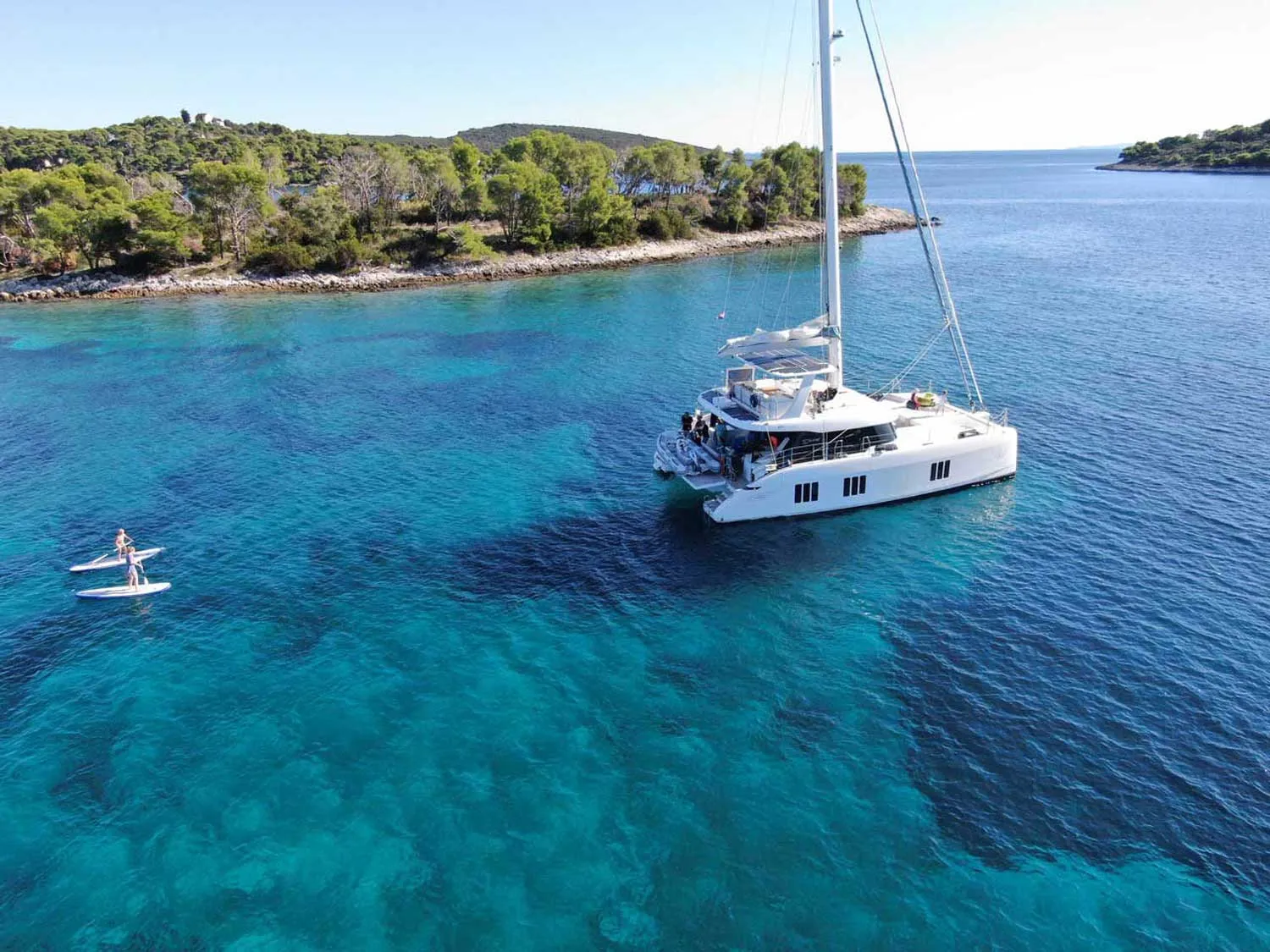
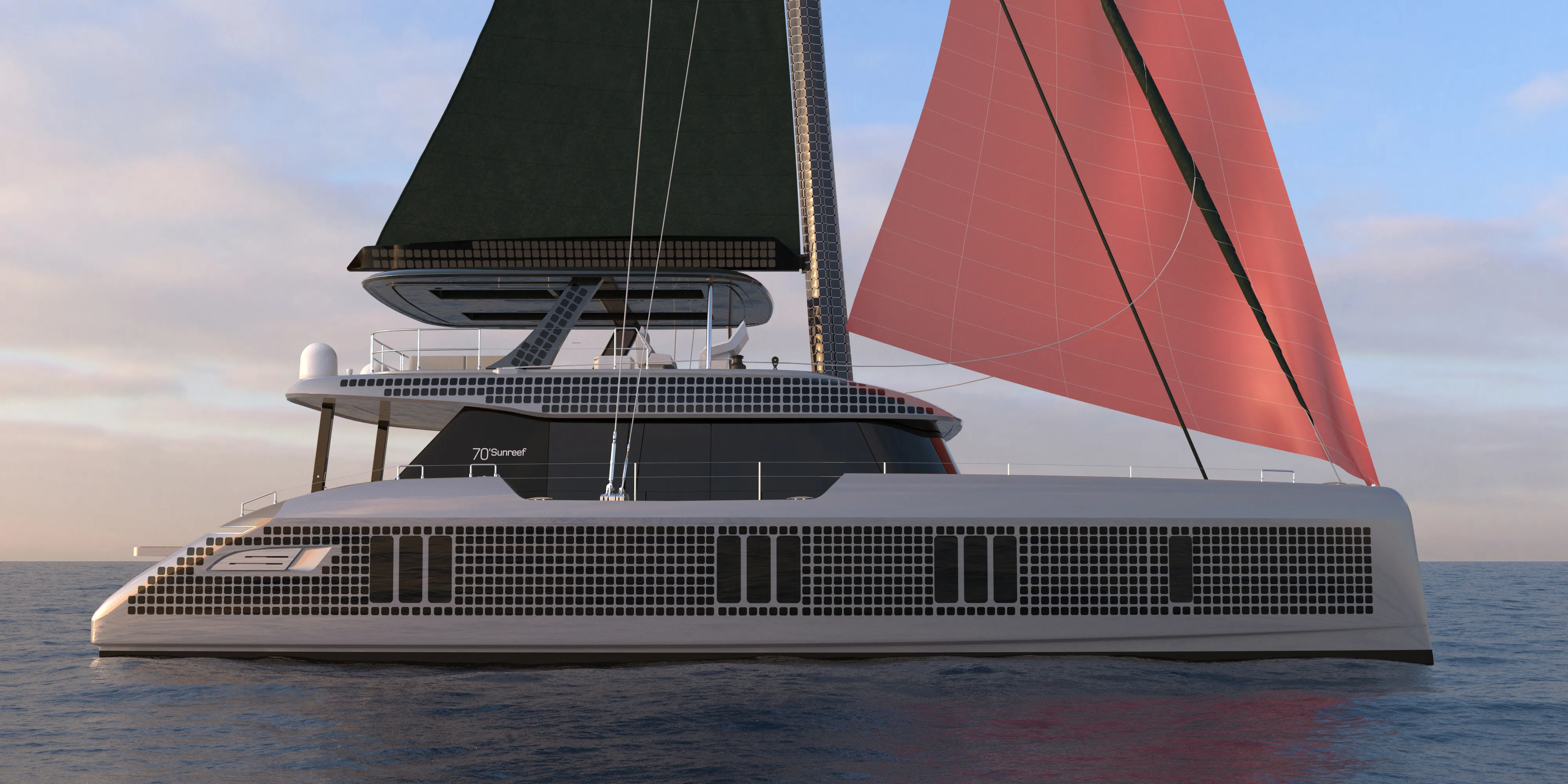
Between 1,000 l and 1,750 l (264–462 US gal), depending on how the boat is specified. That is a wide spread for a 60-foot sailing catamaran and it tells you how much work the Eco drivetrain is being asked to do on a given build. Water capacity is fixed at 800 l (211 US gal). Pin the fuel specification down early — it is set at contract.
225 m², published by Sunreef on the model's own page, on an 18.4 m (60 ft 4 in) hull with a 10.20 m (33 ft 6 in) beam. The boat is certified to CE design category A. The interior is drawn to each owner's brief, so the cabin and head count is set in the contract.