
March 29, 2026
Sunreef 80 Sail NEXT Review: When Silence Becomes the Loudest Statement
The boat that built Sunreef's reputation in electric sailing: 340 m² of living space, a 200 m² mainsail, and the deck area for an array that…
Read the articleExpert Review, Technical Specifications & Market Analysis
| Feature | Specifications |
|---|---|
| Overall Length | 23.87 m (78 ft 4 in) |
| Beam | 11.53 m (37 ft 9 in) |
| Engines | 2 × 249–280 hp (classic version) |
| Fuel Capacity | 2,400–6,000 l (634–1,585 US gal) |
| Water Capacity | 1,600 l (423 US gal) |
Source: Spec & Photos courtesy of Sunreef. Specs verified by Tony Smith, USCG 100 Ton Master, on August 11, 2026.
You have done the diesel circuit and you want the next boat to be quiet. The Sunreef 80 Sail NEXT is the yard's most-built large sailing catamaran and the one where the Eco-Option makes the strongest case.
Part of the Sunreef Sail NEXT series — see how owners step up through the lineup.

The 80 is the boat that made Sunreef's reputation in the Eco range, and the numbers explain why. Three hundred and forty square metres of living space, a two-hundred-square-metre mainsail, and enough coachroof, bimini and hull surface for a solar array that genuinely runs a boat at anchor. It is the sweet spot where the sustainability argument and the accommodation argument stop competing with each other.
Where I would be careful is the fuel specification. Sunreef quotes 2,400 to 6,000 litres, which is a two-and-a-half-times spread. Boats at the top of that range are being built to motor a long way, and that is a legitimate choice — but it is not the boat the Eco badge is selling. Decide which one you are buying.
The NEXT restyle gave this hull a new superstructure and a much better cockpit-to-saloon flow. If you are comparing an older 80 against a current one, that is the difference you are looking at.
Video courtesy of Sunreef.
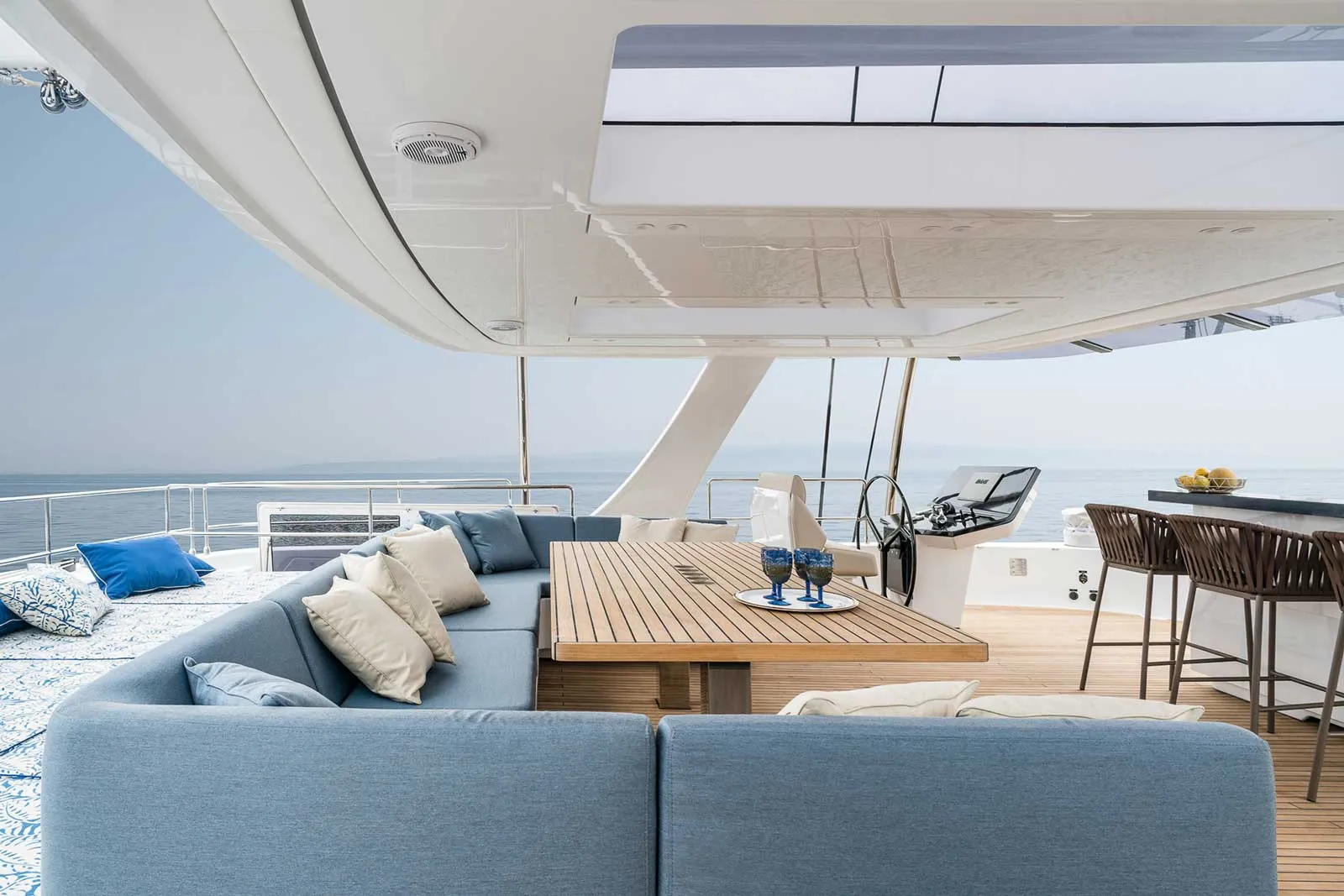
Photos courtesy of Sunreef.
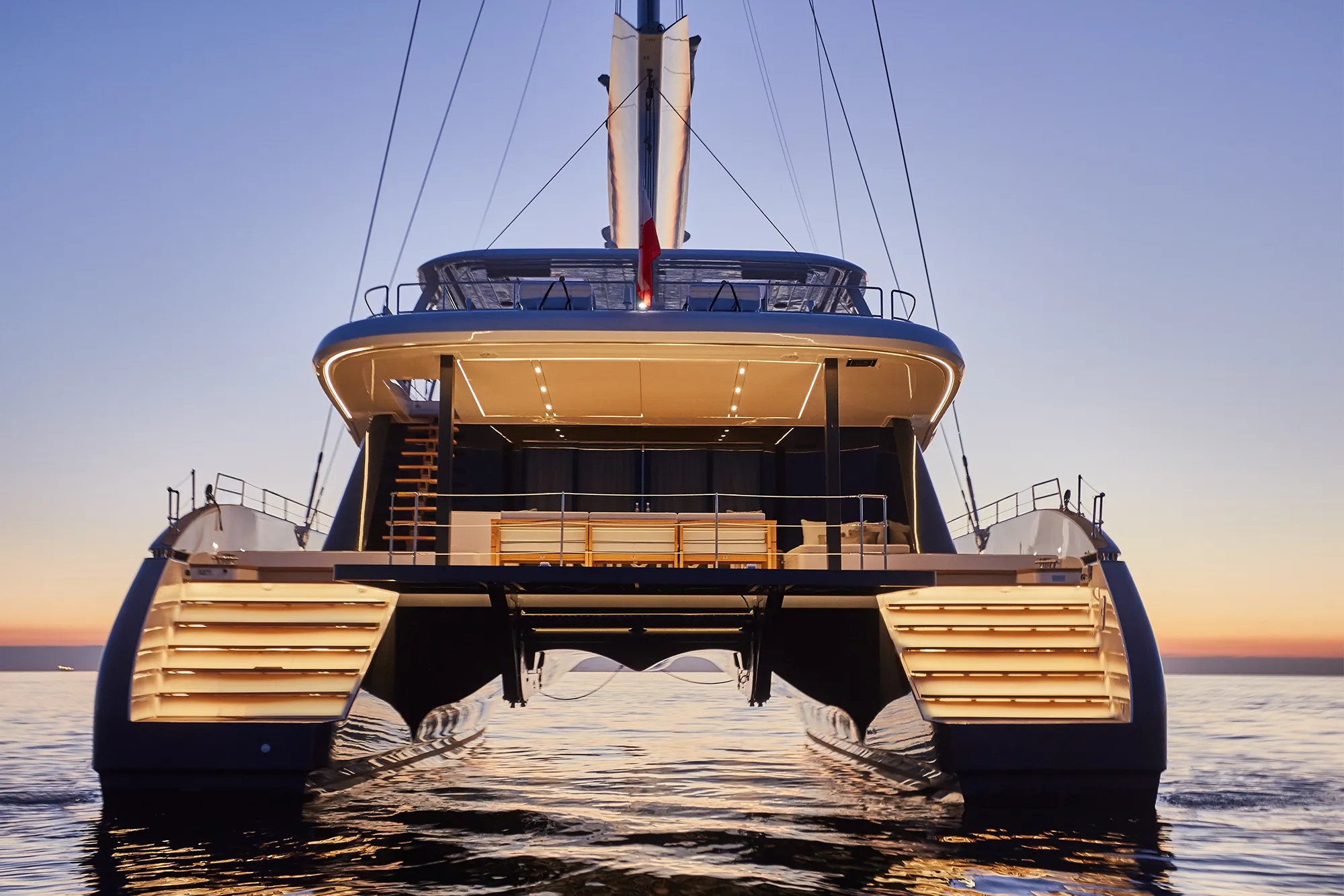
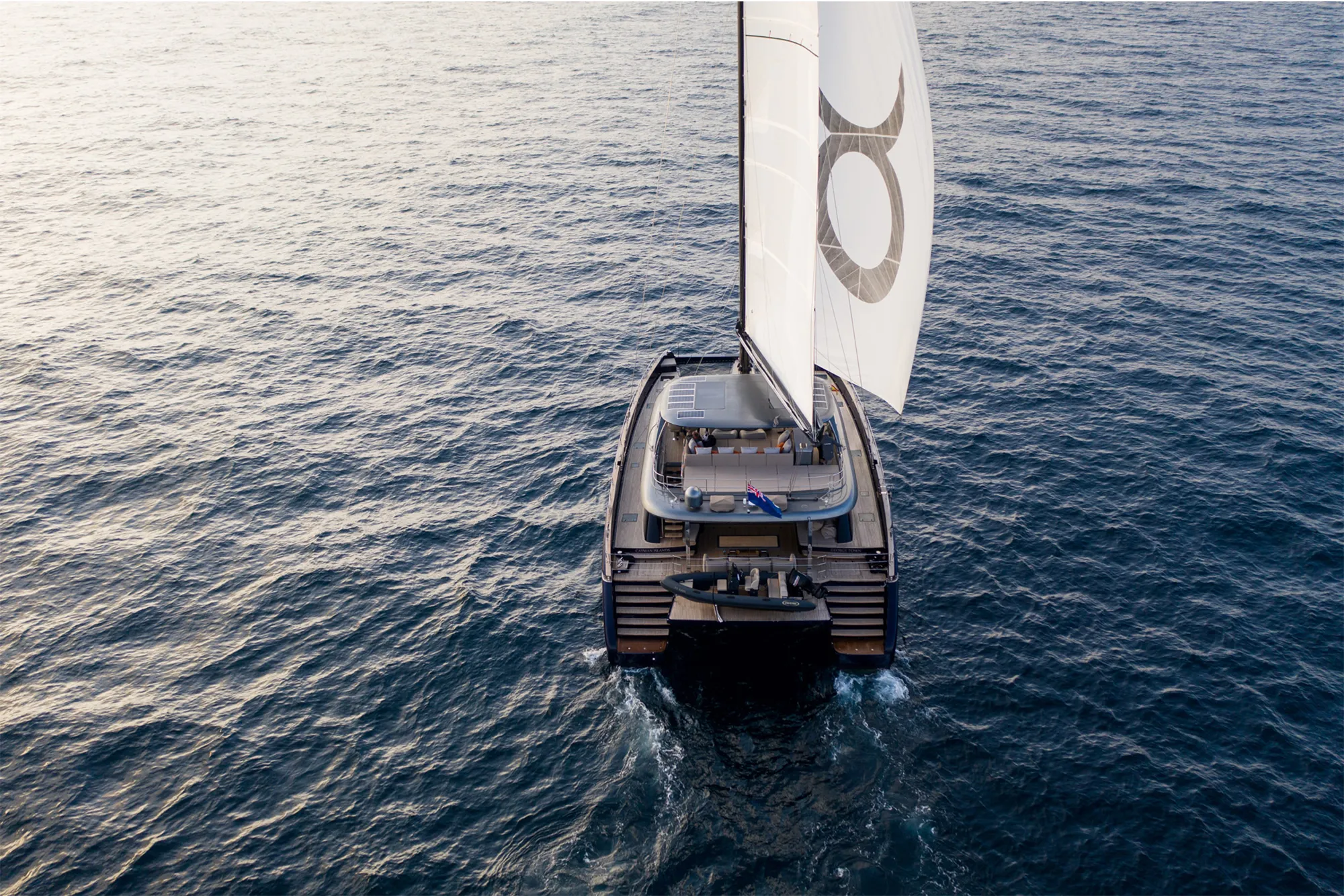
The Sunreef 80 Sail NEXT is the largest catamaran in the yard's core sailing range and the one most closely associated with its electric programme. Sunreef publishes 23.87 m (78 ft 4 in) overall on an 11.53 m (37 ft 9 in) beam, CE design category A, and 340 m² of living space.
The rig is a 200 m² mainsail with a 155 m² genoa. Water capacity is 1,600 l; fuel is specified between 2,400 l and 6,000 l depending on the build.
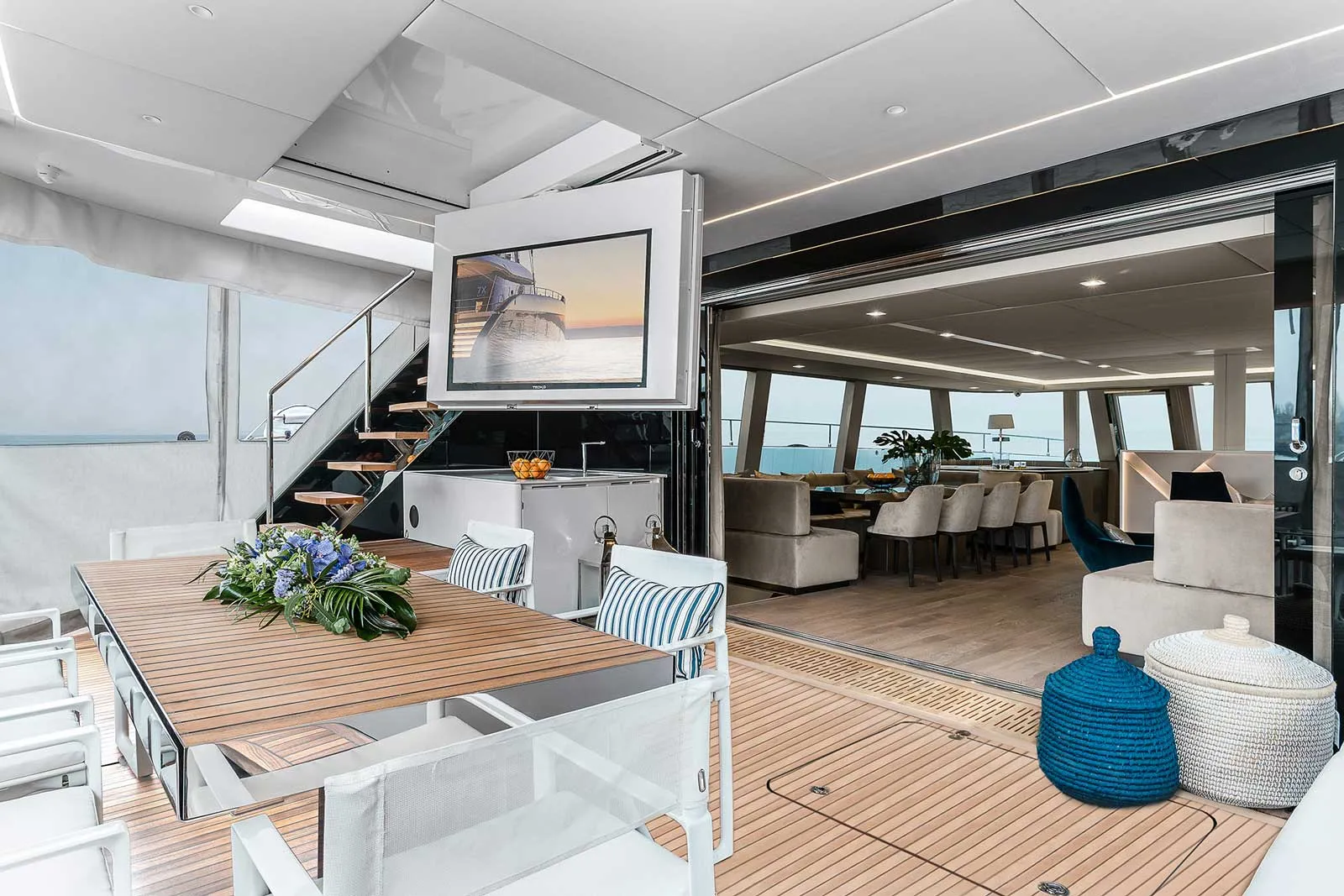
Sunreef's range page lists the boat as the "Sunreef 80 NEXT" — the hull carries the yard's current superstructure concept, with a shortened coachroof, an extended aft cockpit and a saloon plan that opens both fore and aft.
Classic builds run 2 × 249 hp to 2 × 280 hp diesels. Eco builds carry electric motors with a lithium battery bank, charged by Sunreef's own composite-integrated solar skin, by hydrogeneration from the propellers under sail, and by generators where the owner specifies them.
On a boat with 200 m² of mainsail and this much deck area, the two charging systems reinforce each other: the boat generates while it sails and tops up while it sits.
Request the draft figure in writing, and record observed speed and consumption at your intended rpm at sea trial.
Three hundred and forty square metres of living space, spread across two hulls, a full-beam saloon and a cockpit the NEXT redesign extended aft. The bridgedeck is set high enough to keep the underside clear of the sea, which is what makes the saloon usable on passage rather than only at anchor.
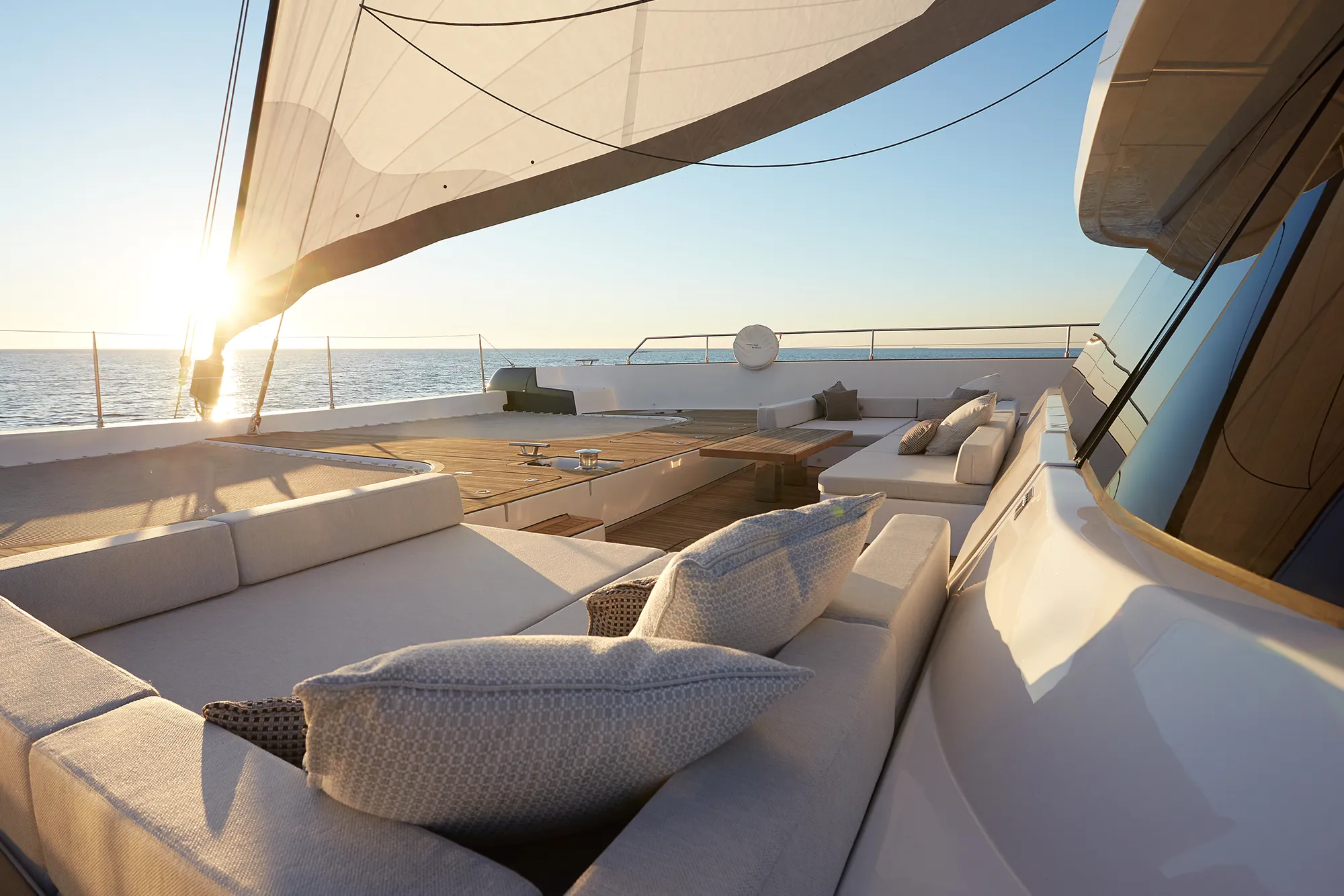
The forward deck is specified either as traditional trampolines or as a cushioned bow terrace. Trampolines are lighter and let air through; the terrace is a second lounging space. Both are offered.
Layouts are drawn per owner — most carry a full-hull master with guest cabins opposite and separate crew access. The general arrangement is contract documentation, so have it drawn and signed before you commit.
At 80 feet the Sunreef sits among the largest sailing catamarans built in series anywhere, and it has more delivered hulls behind it than most of its rivals. The vertical integration is the pitch: Sunreef designs and manufactures its own solar panels and integrates them into the composite structure rather than bolting a third-party array to the roof.
Against the 100 Sail NEXT the 80 gives up length and volume but stays within a size that a smaller crew can handle. Against the 80 Sunreef Power it trades the flybridge and the big diesels for a rig that pays into the battery bank.
This is the reference boat in the electric sailing catamaran market.
Buy the 80 Sail NEXT if you want the strongest version of Sunreef's off-grid argument in a sailing hull, and you are running the boat with crew. It has the deck area for a serious solar array and the sail plan to make hydrogeneration meaningful.
Step up to the 100 Sail NEXT if you want the yard's largest sailing platform and the published solar figure that comes with it. Step across to the 80 Power if the flybridge and interior volume matter more than the rig.
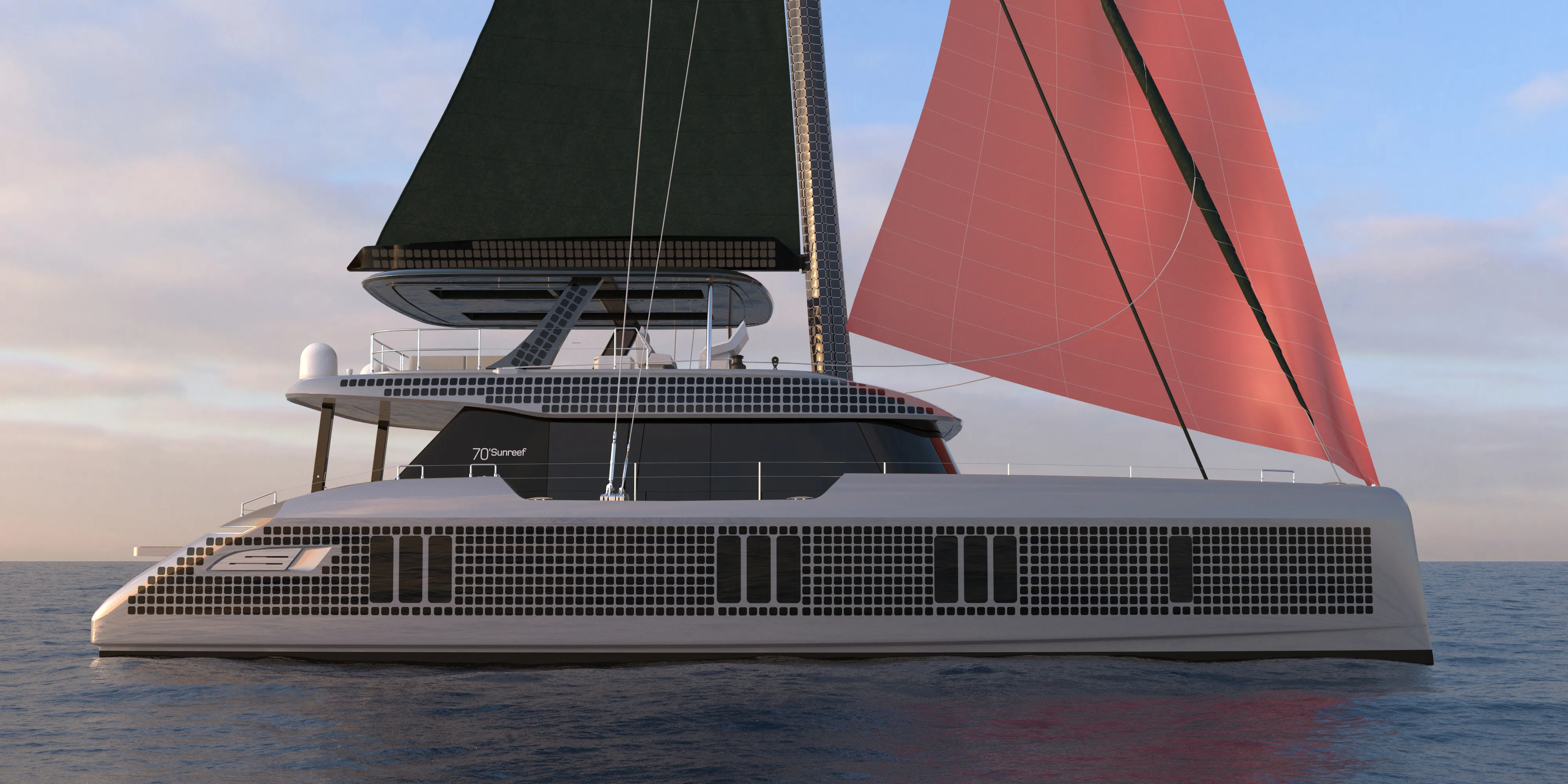
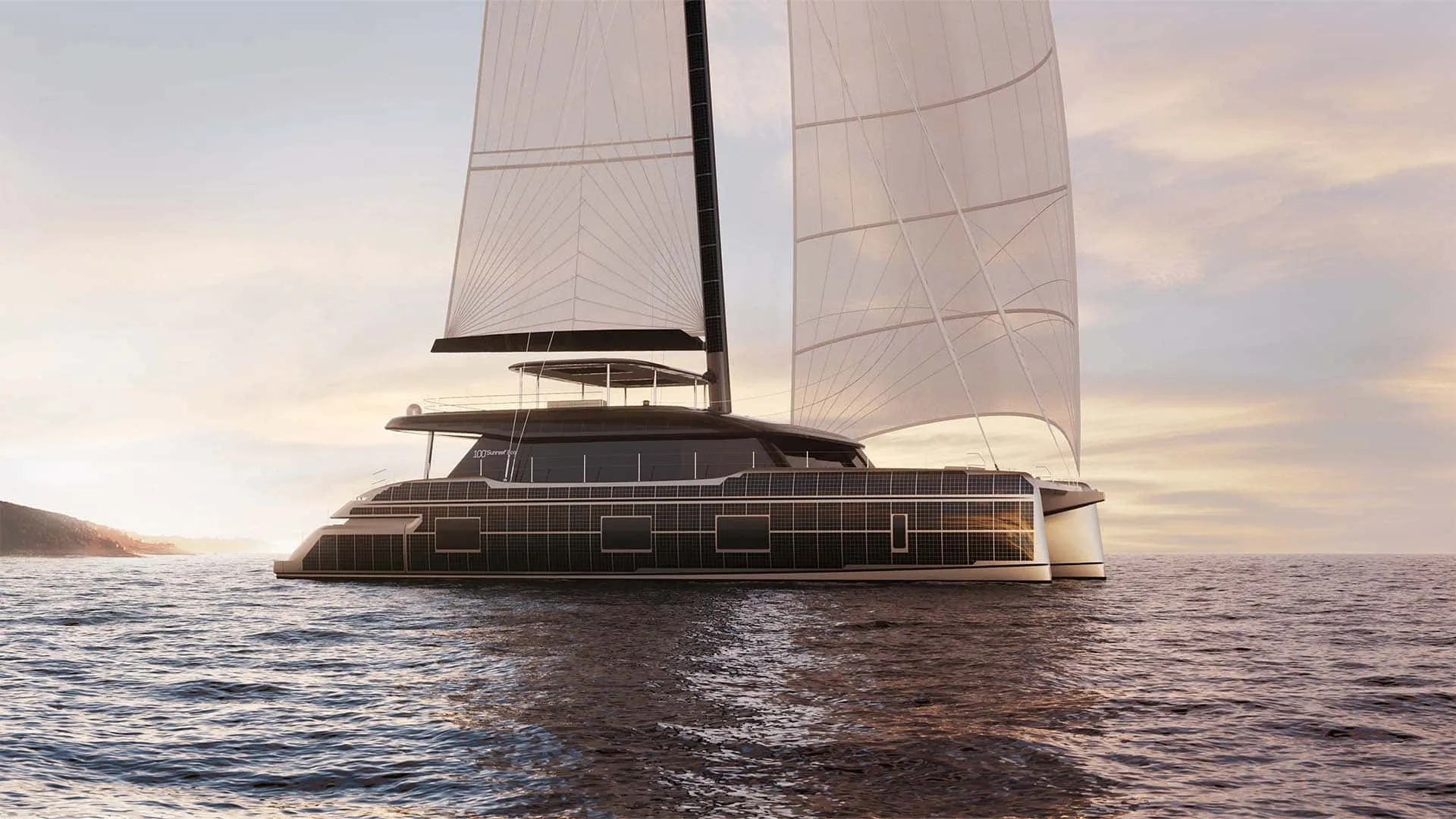
23.87 m (78 ft 4 in) overall on an 11.53 m (37 ft 9 in) beam, with 340 m² of published living space and CE design category A. The rig is a 200 m² mainsail with a 155 m² genoa. Sunreef lists the boat as the Sunreef 80 NEXT, carrying the yard's current superstructure design with a shortened coachroof and an extended aft cockpit.
Sunreef offers the forward deck either as traditional trampolines or as a cushioned bow terrace. Trampolines are lighter and let air and water through, which suits owners who intend to sail the boat hard. The terrace turns the bow into a second lounging area with more shelter and privacy. Both are offered on the same hull, so the choice is about how you plan to use the boat.