
August 22, 2026
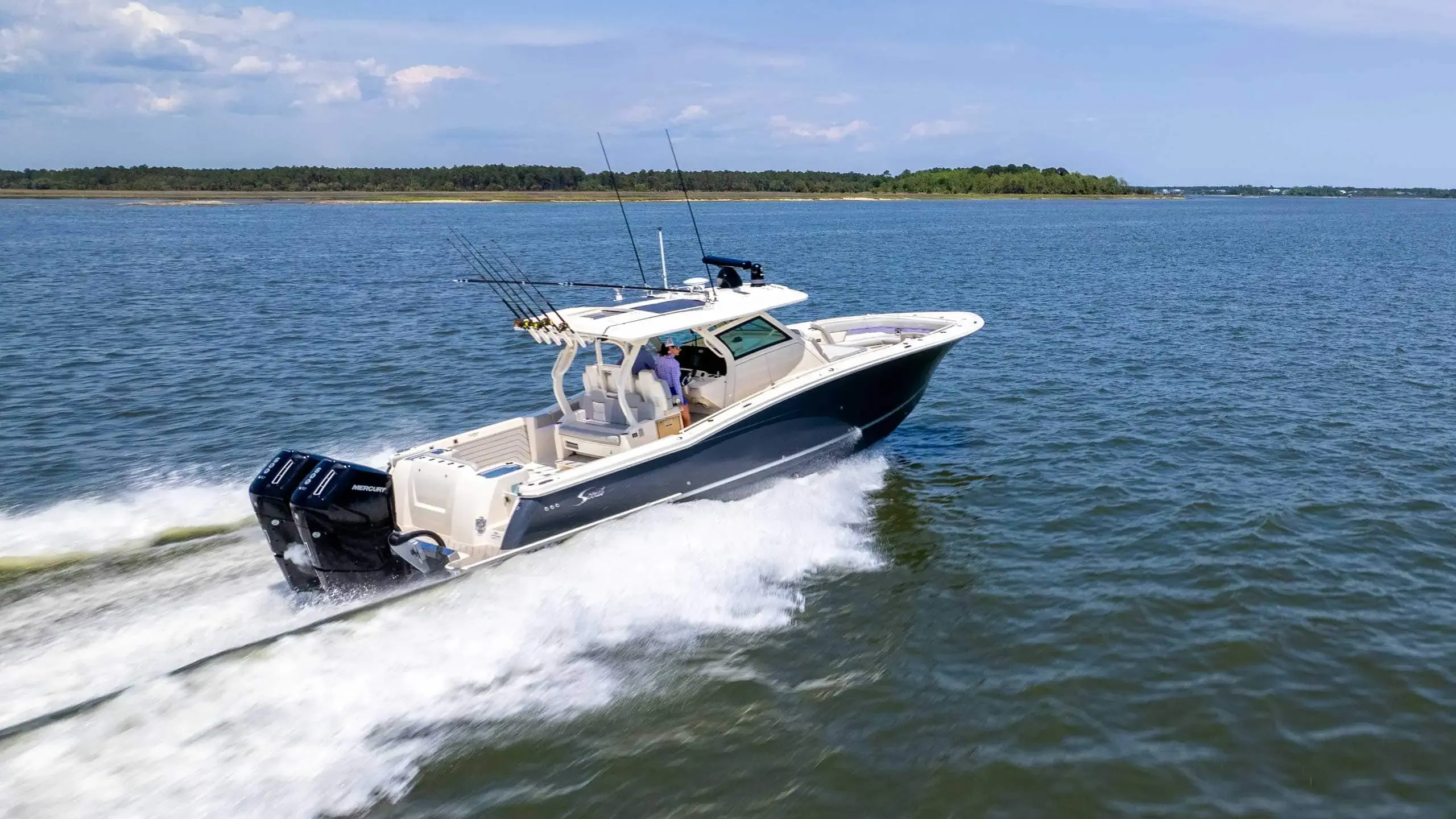
Scout 400 LXF Li-Ion - Same Hull, Same Dry Weight, No Diesel Tank
The Scout 400 LXF Li-Ion is the 39'7" 400 LXF with the diesel generator taken out and a 48V lithium-ion system put in its place. Scout publi…
Read the article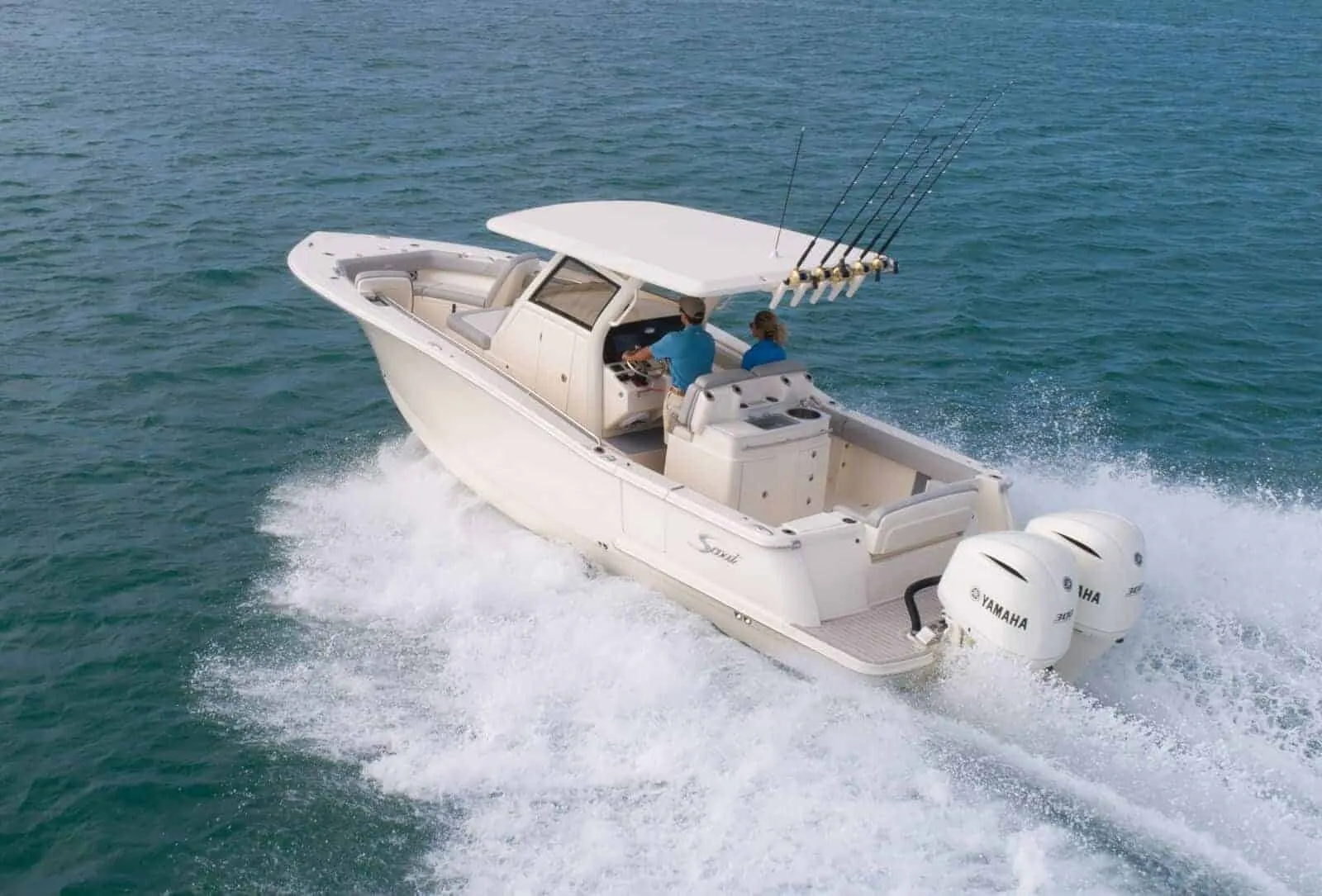
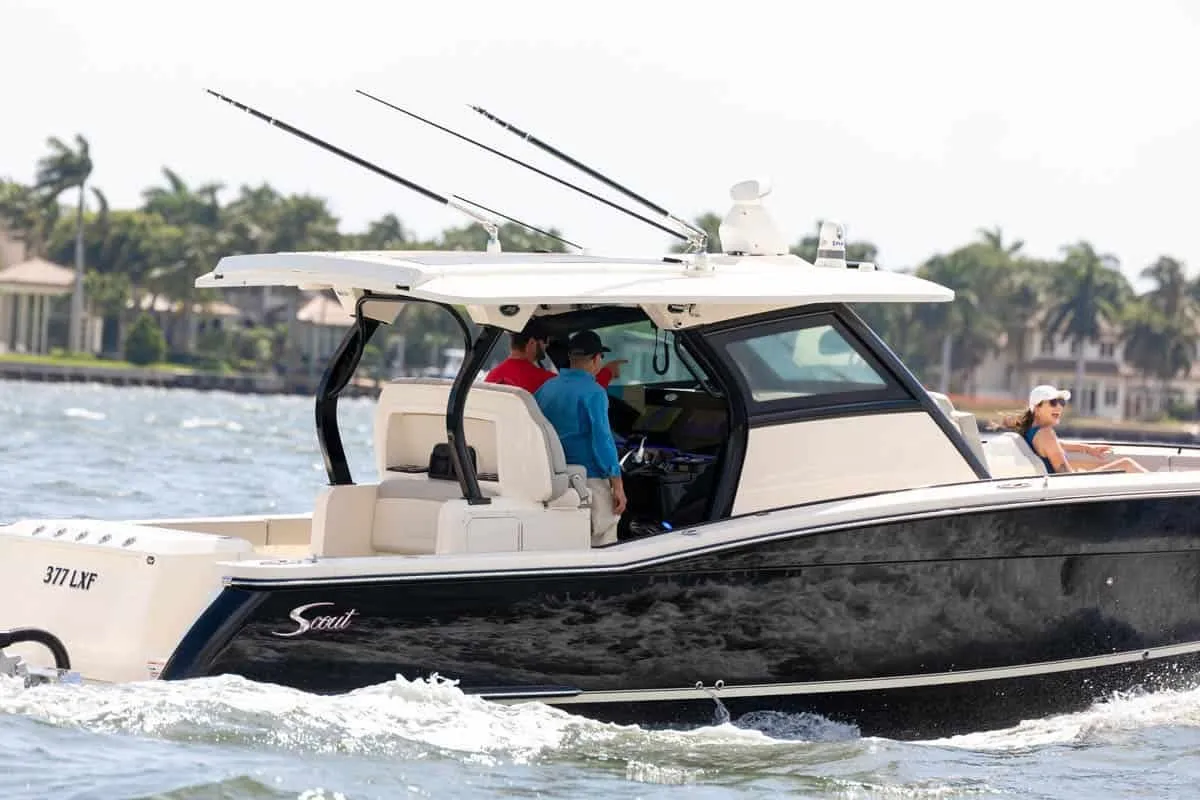
You want the boat that still feels composed when the wind gets up on the way home, and you want to run it yourself — no captain, no crew. Scout has built to that standard in Summerville, South Carolina for more than thirty years, every hull hand-laid.

— Tony Smith
Founder, Minted Yachts
Scout is the builder I point people to when they have shopped the big center-console names and come away feeling like they were buying a brochure. Walk one and you notice the things that cost money and do not photograph: finished bilges, the undersides of hatches finished as well as the tops, hardware that lines up. That is a hand-laid boat built by people who expect to see it again at a rendezvous.
The construction story is not marketing. Going to epoxy infusion at 33 feet and up, and adding carbon fiber from the 377 on, is an expensive decision a family-owned yard did not have to make. What you feel for it is a boat that carries a lot of horsepower without the soft, heavy ride that usually comes with a big center console — and a hull that stays quiet when you are working across a chop instead of running with it.
What I will tell you plainly: if a cruise number and a range figure matter to your buying decision, plan on a sea trial with the exact engine package you intend to order. Scout publishes construction detail, full specification blocks and tested performance bulletins package by package across the LXF line — read the bulletin for your package, then let the sea trial confirm it. That is true of most of this segment, and it is how I would buy the boat.
Deep-dive specs and expert opinions on current Scout Boats models. Don't see the Scout Boats you're looking for? Reach out for new and pre-owned brokerage options.
Photo credit Scout Boats.
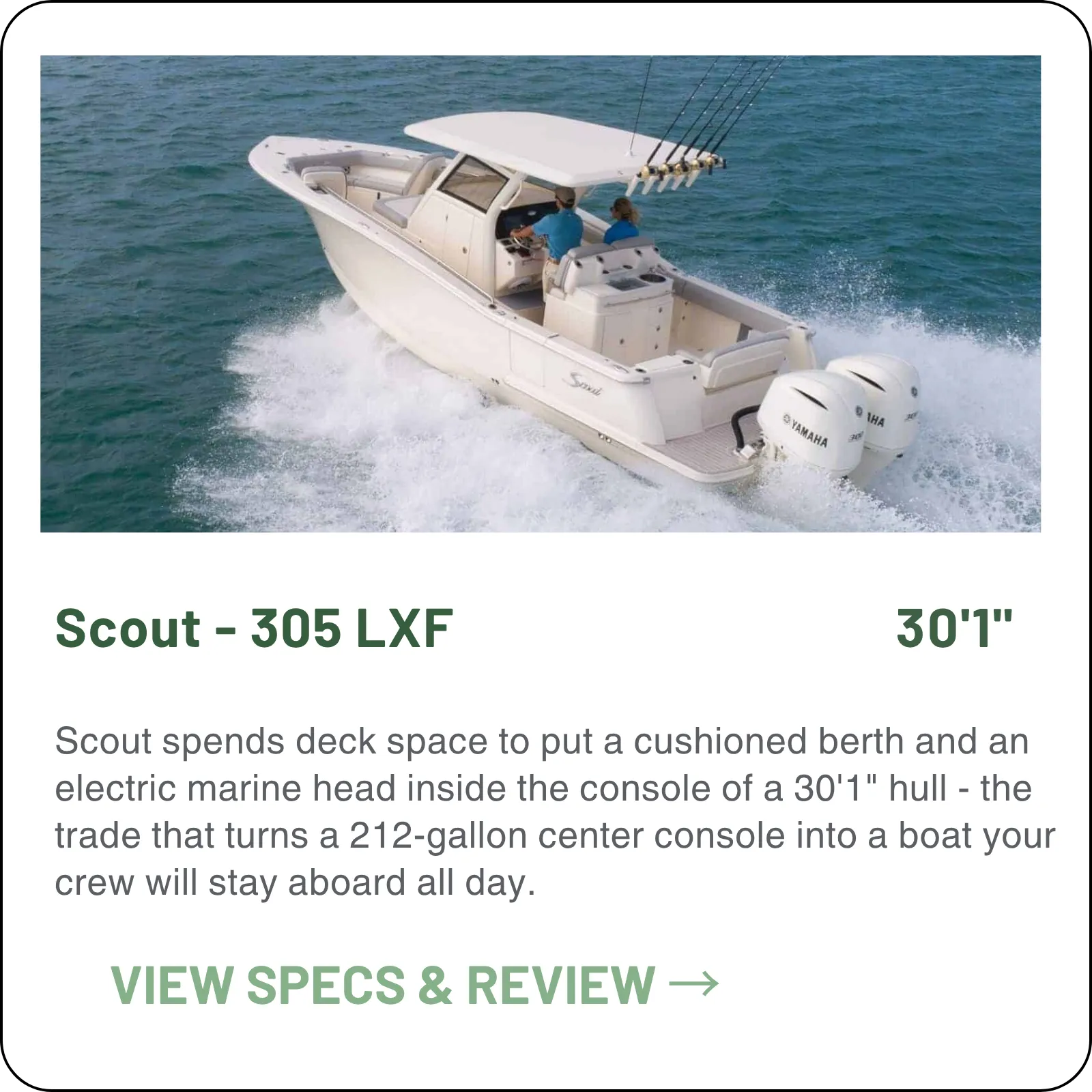
Scout spends deck space to put a cushioned berth and an electric marine head inside the console of a 30'1" hull - the trade that turns a 212-gallon center console into a boat your crew will stay aboard all day.
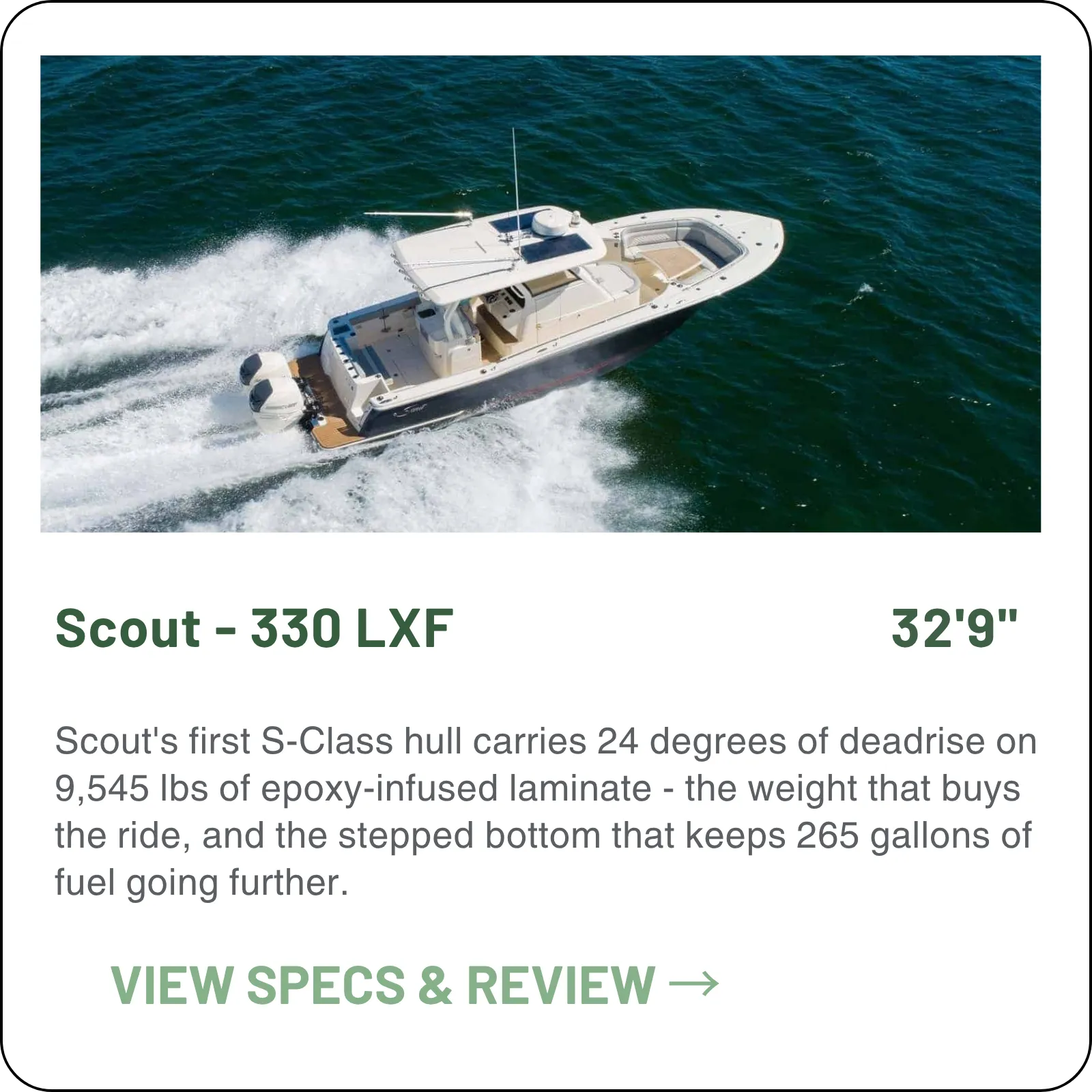
Scout's first S-Class hull carries 24 degrees of deadrise on 9,545 lbs of epoxy-infused laminate - the weight that buys the ride, and the stepped bottom that keeps 265 gallons of fuel going further.
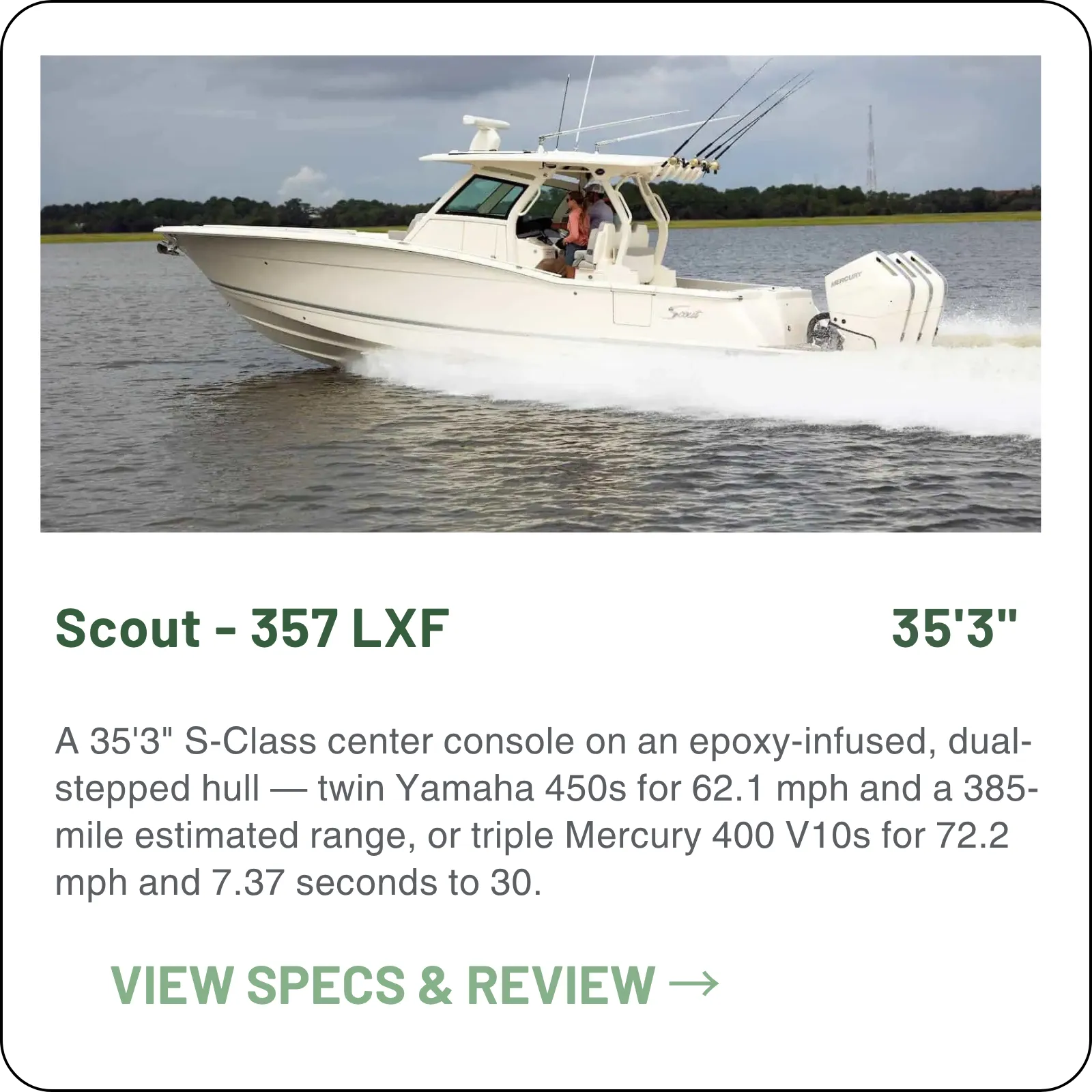
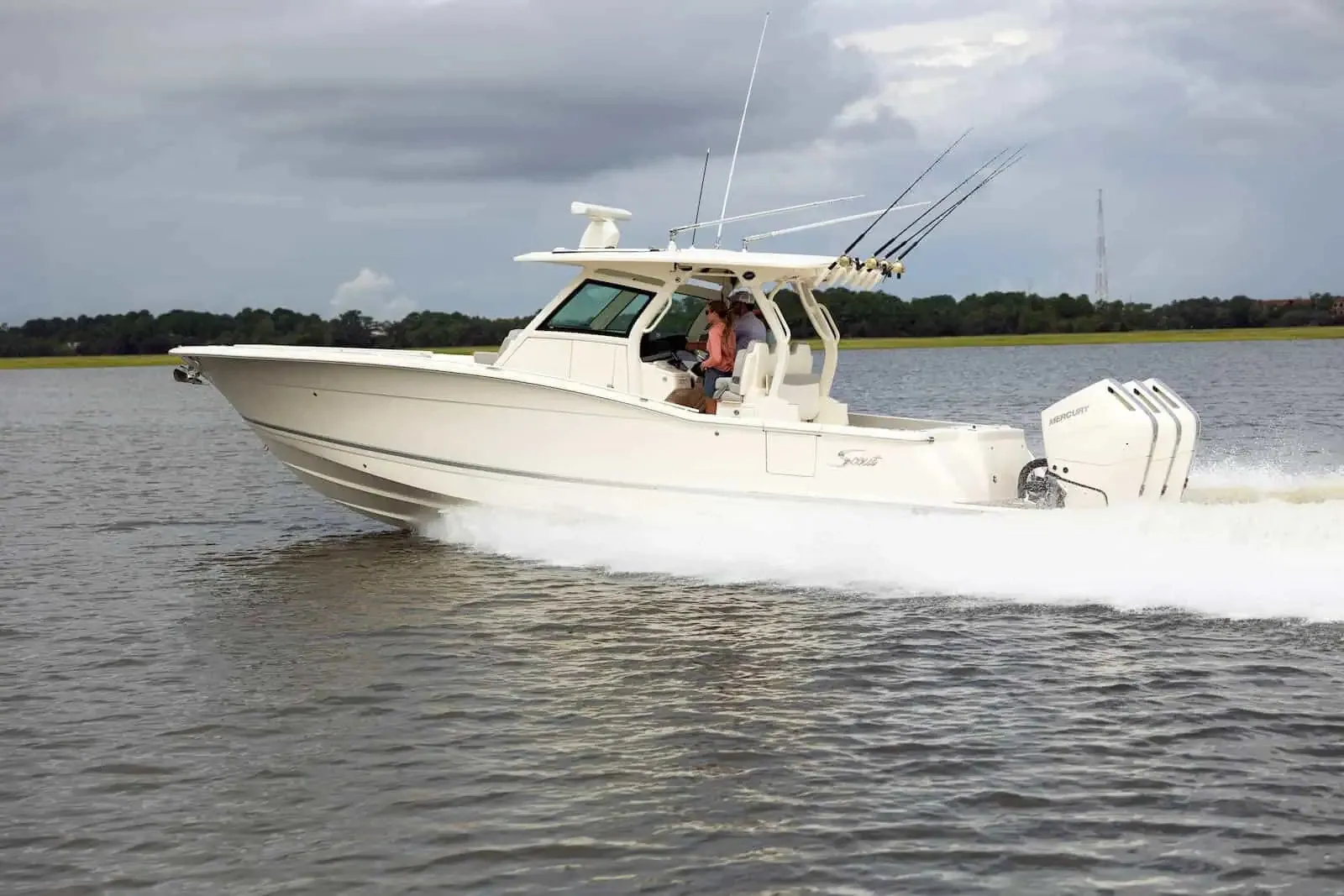
A 35'3" S-Class center console on an epoxy-infused, dual-stepped hull — twin Yamaha 450s for 62.1 mph and a 385-mile estimated range, or triple Mercury 400 V10s for 72.2 mph and 7.37 seconds to 30.
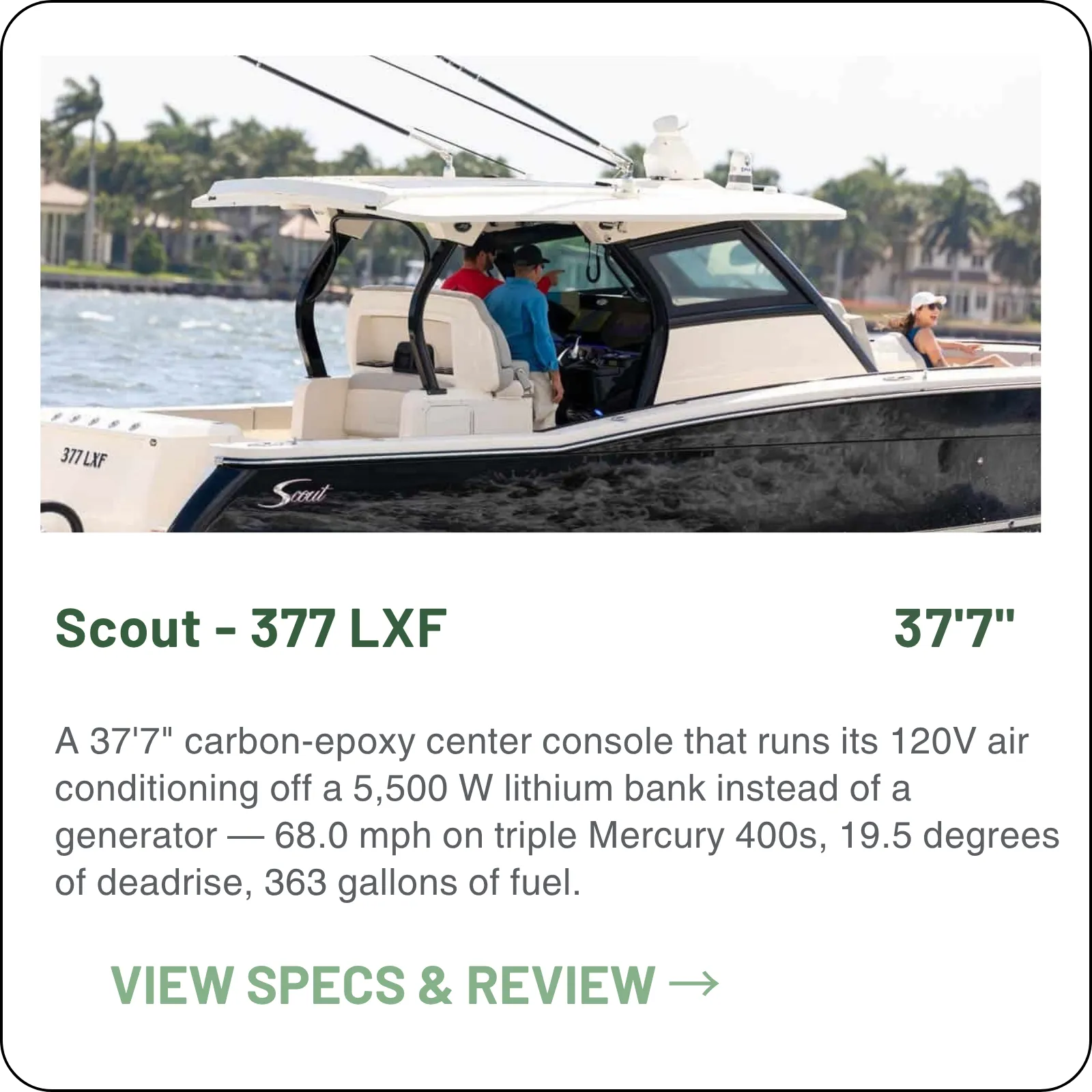
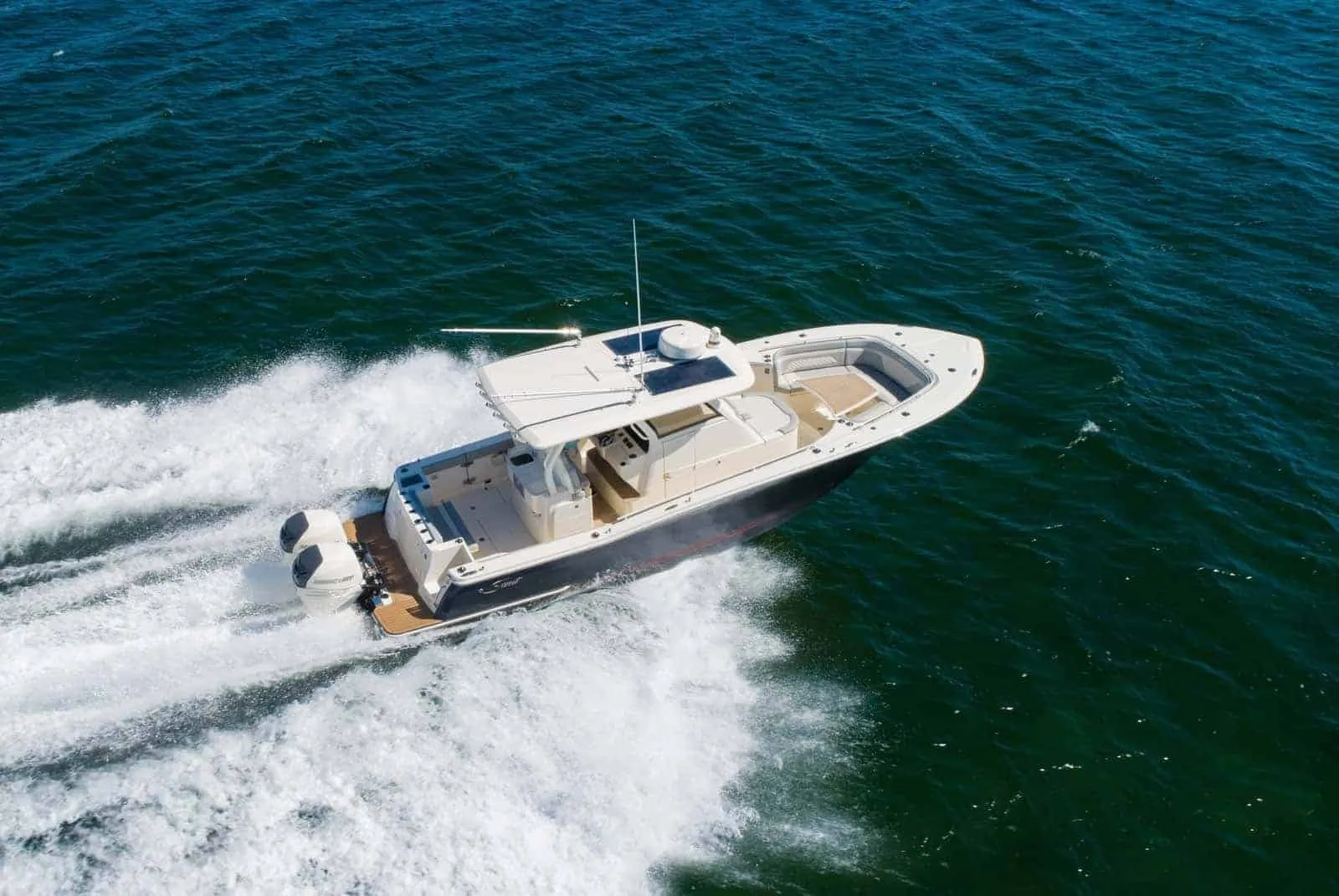
A 37'7" carbon-epoxy center console that runs its 120V air conditioning off a 5,500 W lithium bank instead of a generator — 68.0 mph on triple Mercury 400s, 19.5 degrees of deadrise, 363 gallons of fuel.
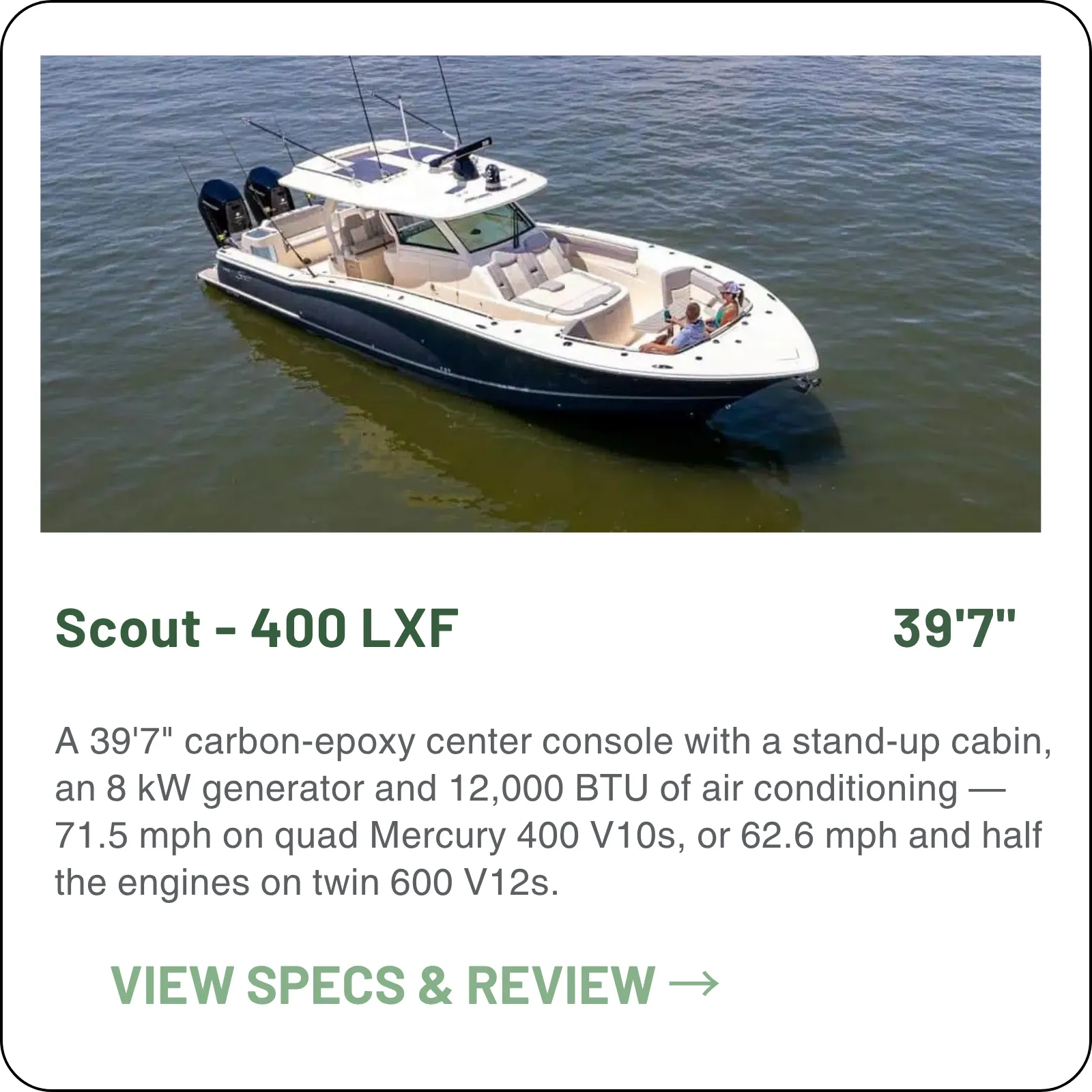
A 39'7" carbon-epoxy center console with a stand-up cabin, an 8 kW generator and 12,000 BTU of air conditioning — 71.5 mph on quad Mercury 400 V10s, or 62.6 mph and half the engines on twin 600 V12s.
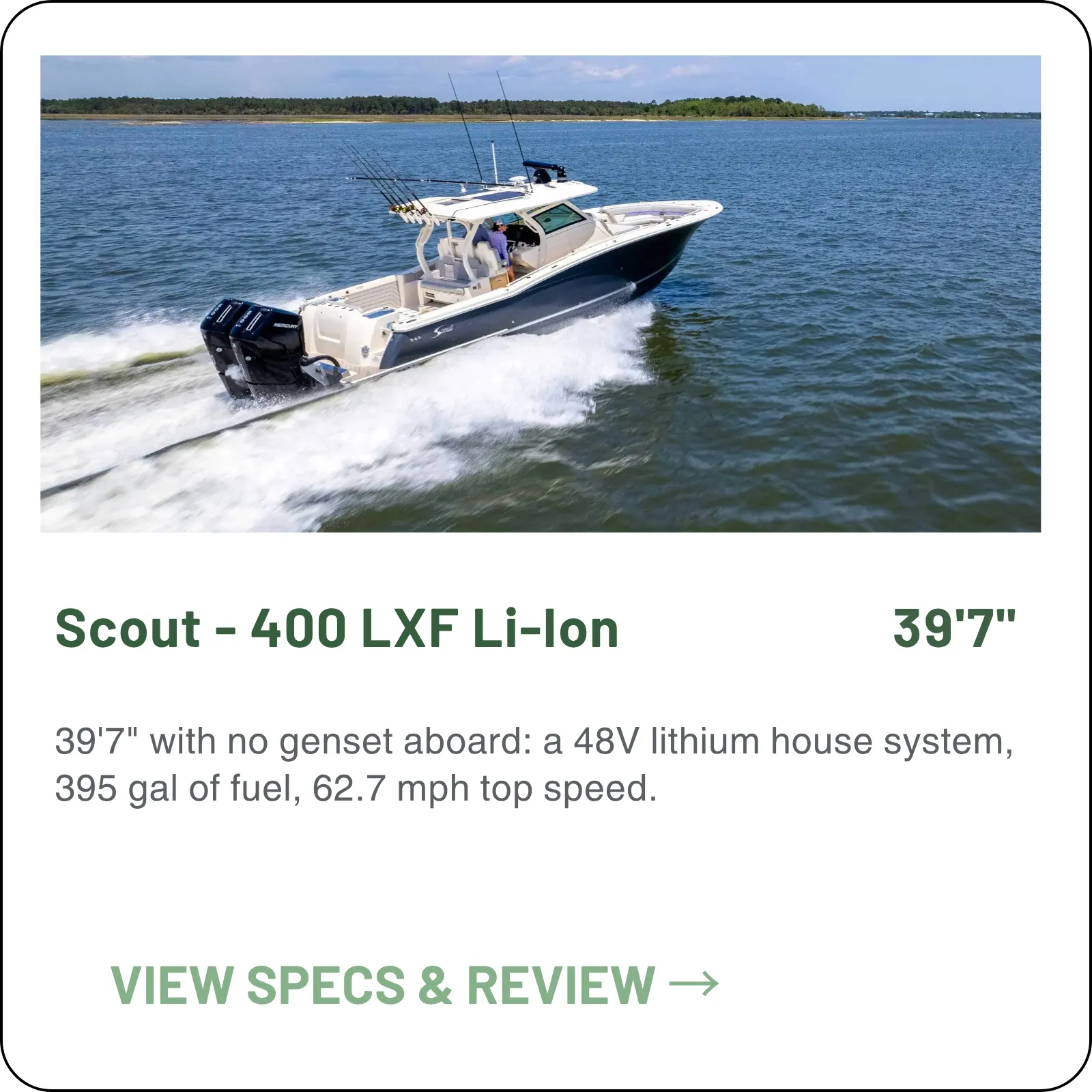
39'7" with no genset aboard: a 48V lithium house system, 395 gal of fuel, 62.7 mph top speed.
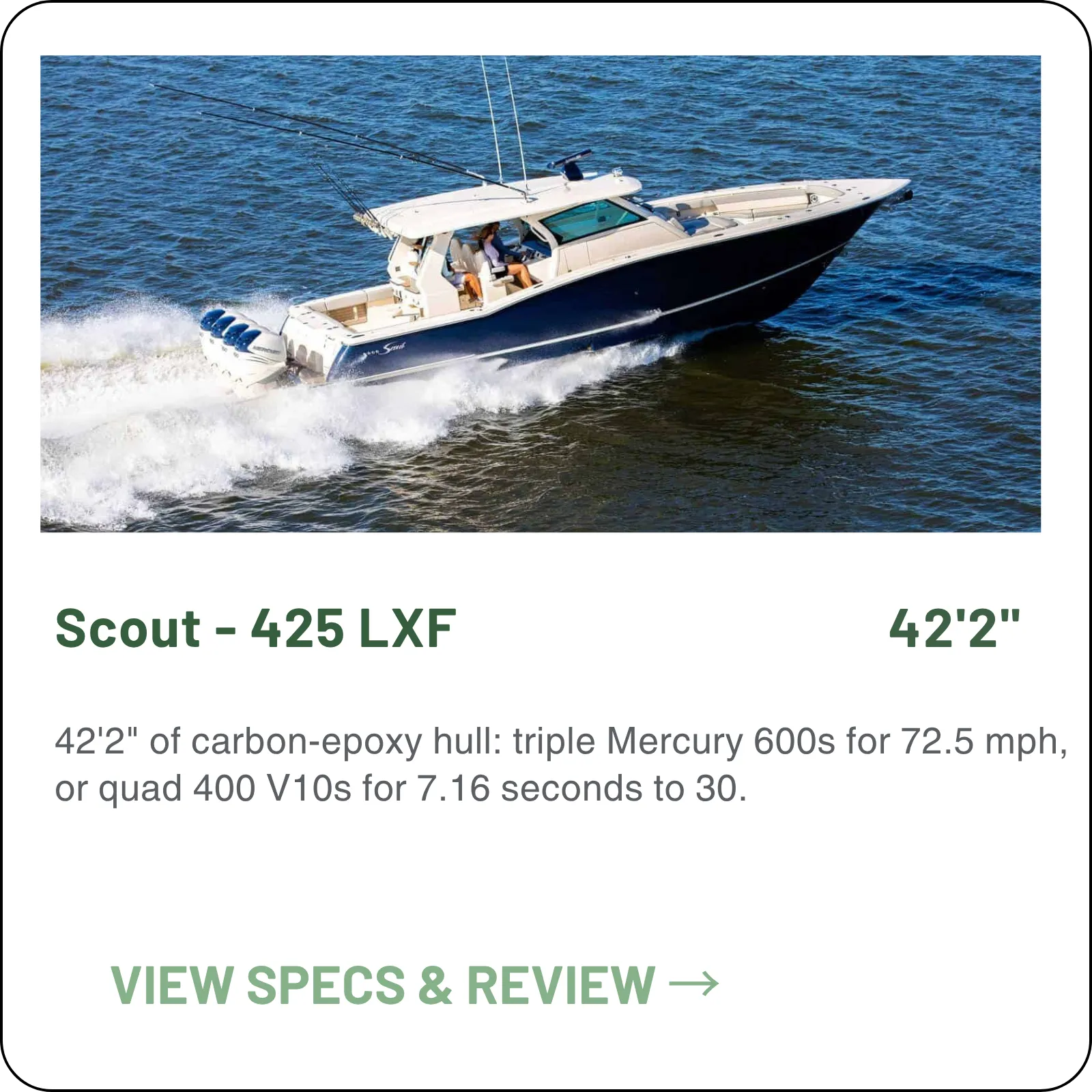
42'2" of carbon-epoxy hull: triple Mercury 600s for 72.5 mph, or quad 400 V10s for 7.16 seconds to 30.
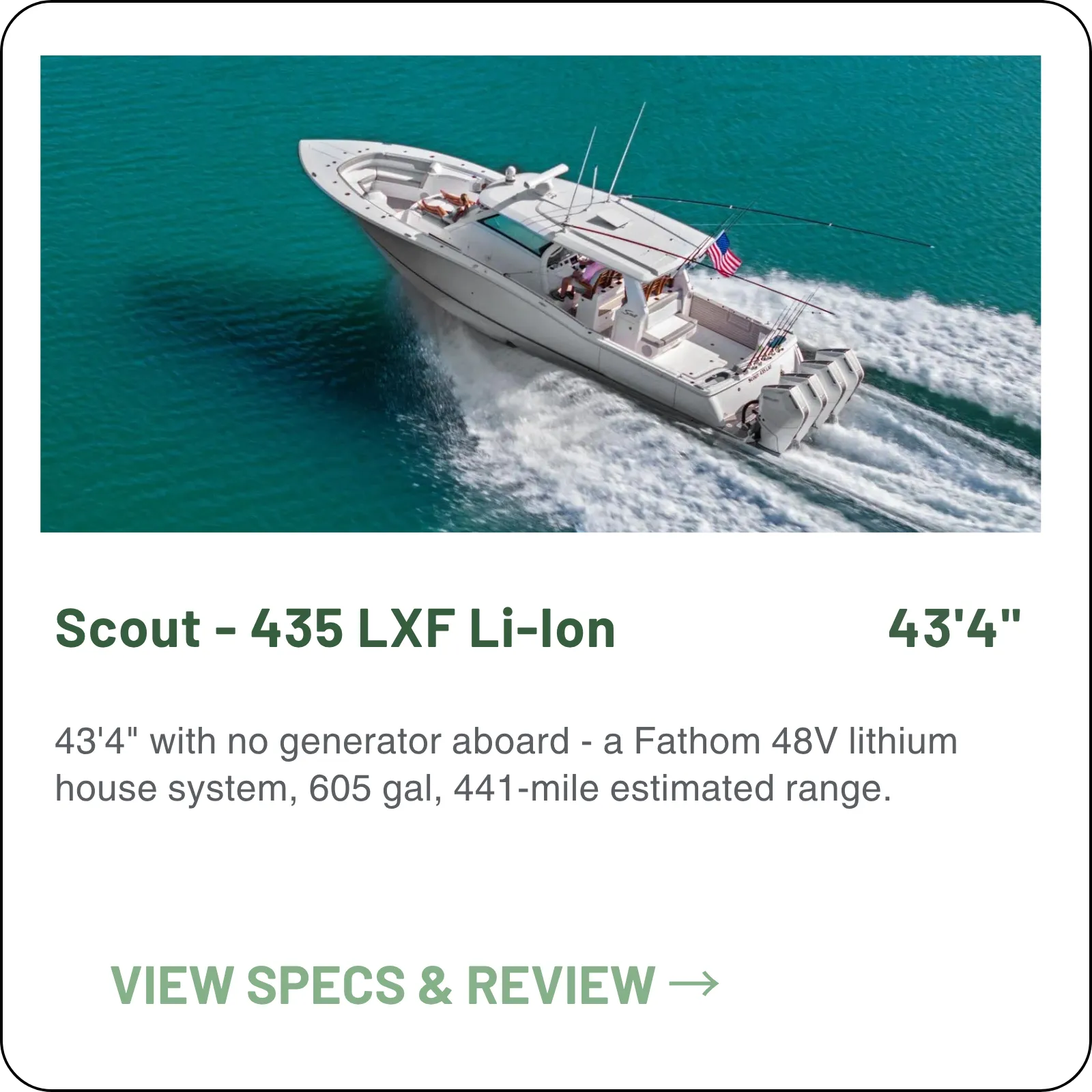
43'4" with no generator aboard - a Fathom 48V lithium house system, 605 gal, 441-mile estimated range.
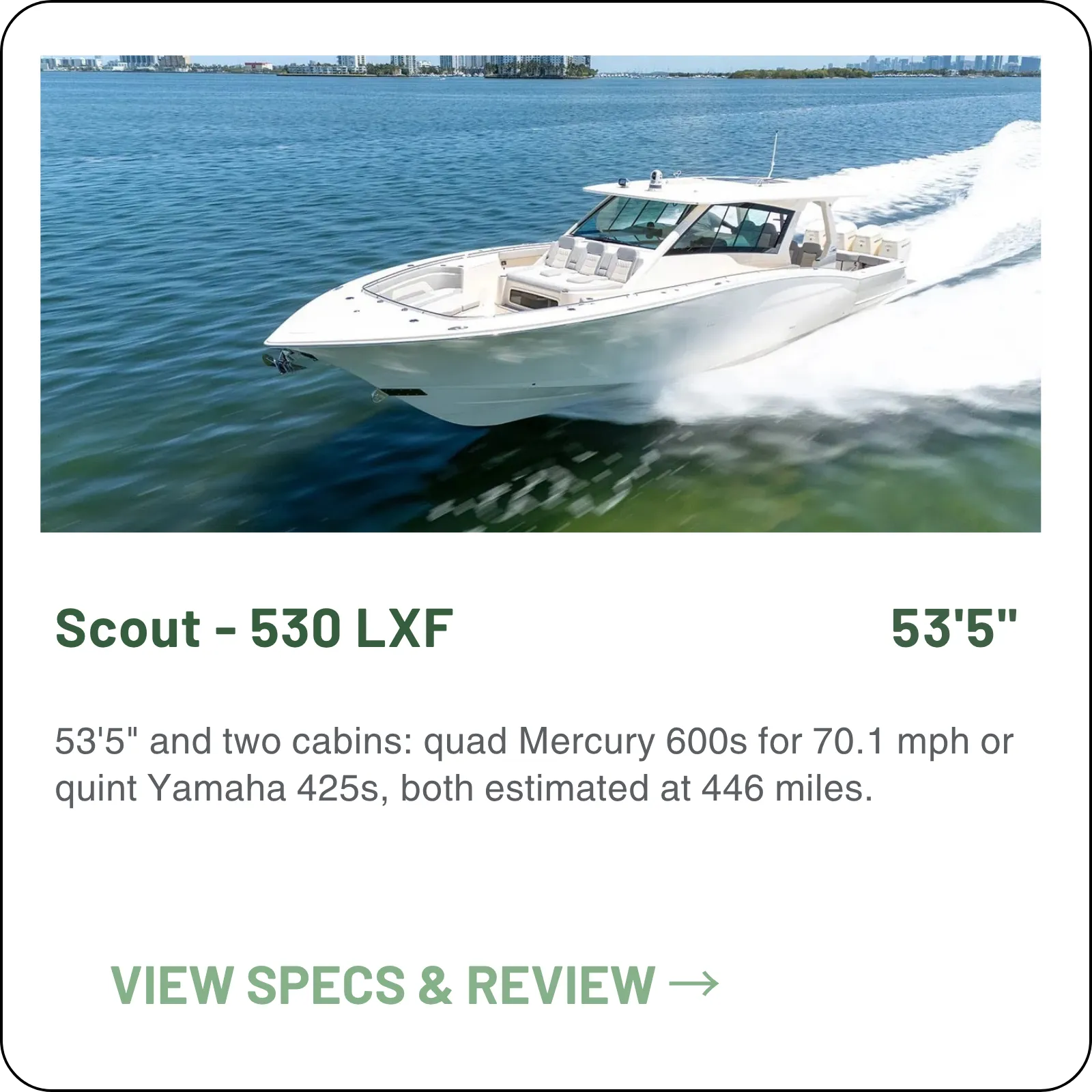
53'5" and two cabins: quad Mercury 600s for 70.1 mph or quint Yamaha 425s, both estimated at 446 miles.
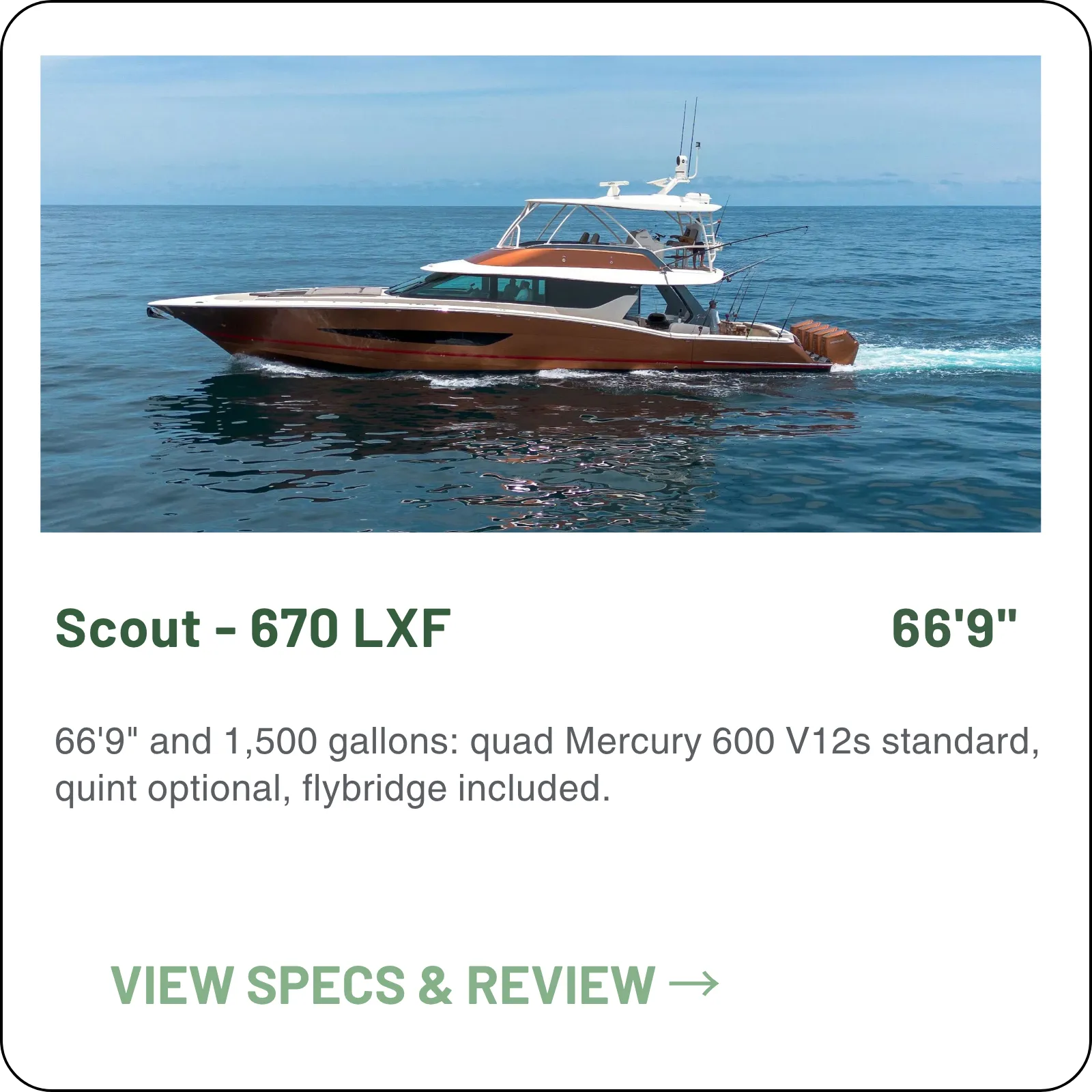
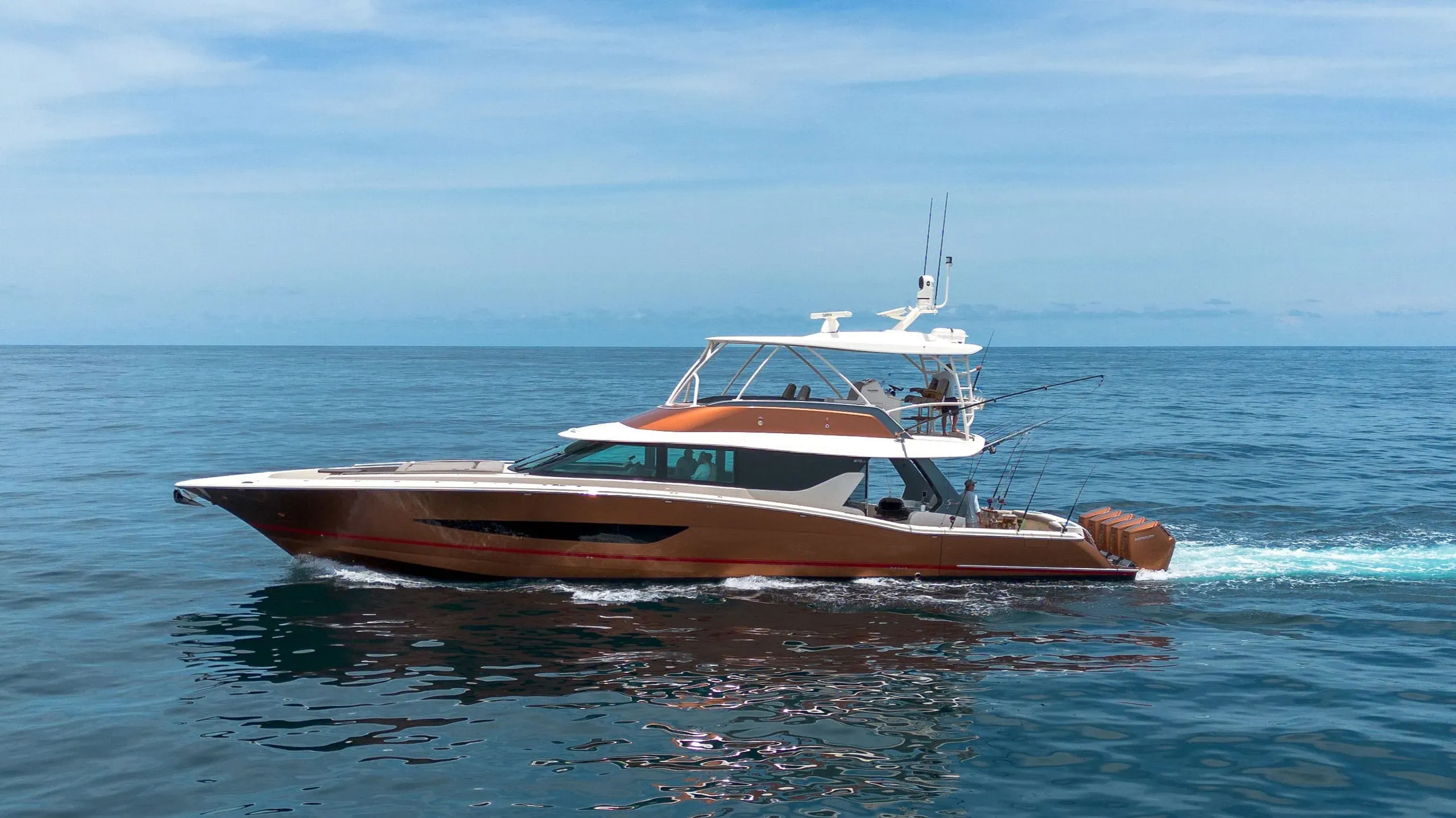
66'9" and 1,500 gallons: quad Mercury 600 V12s standard, quint optional, flybridge included.
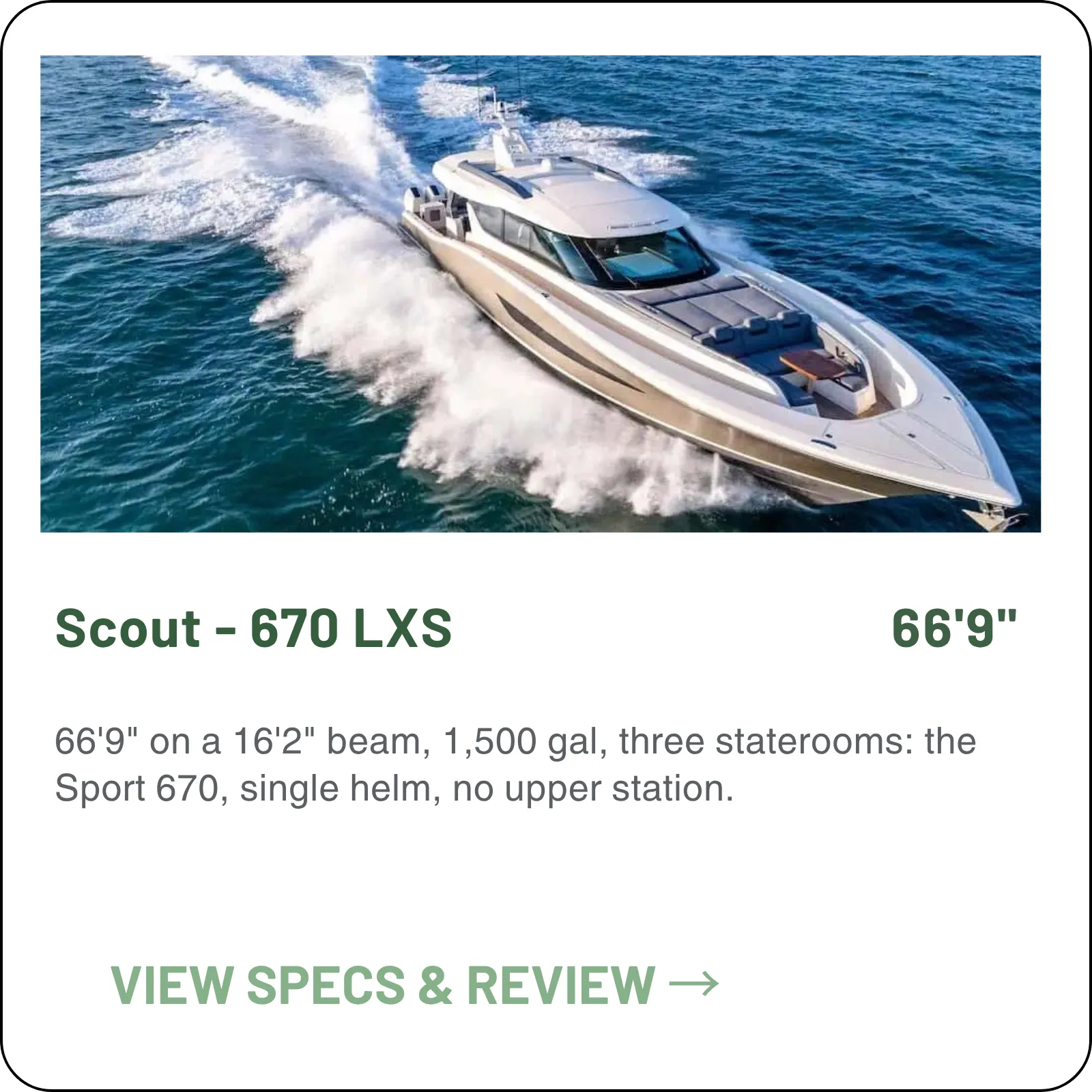
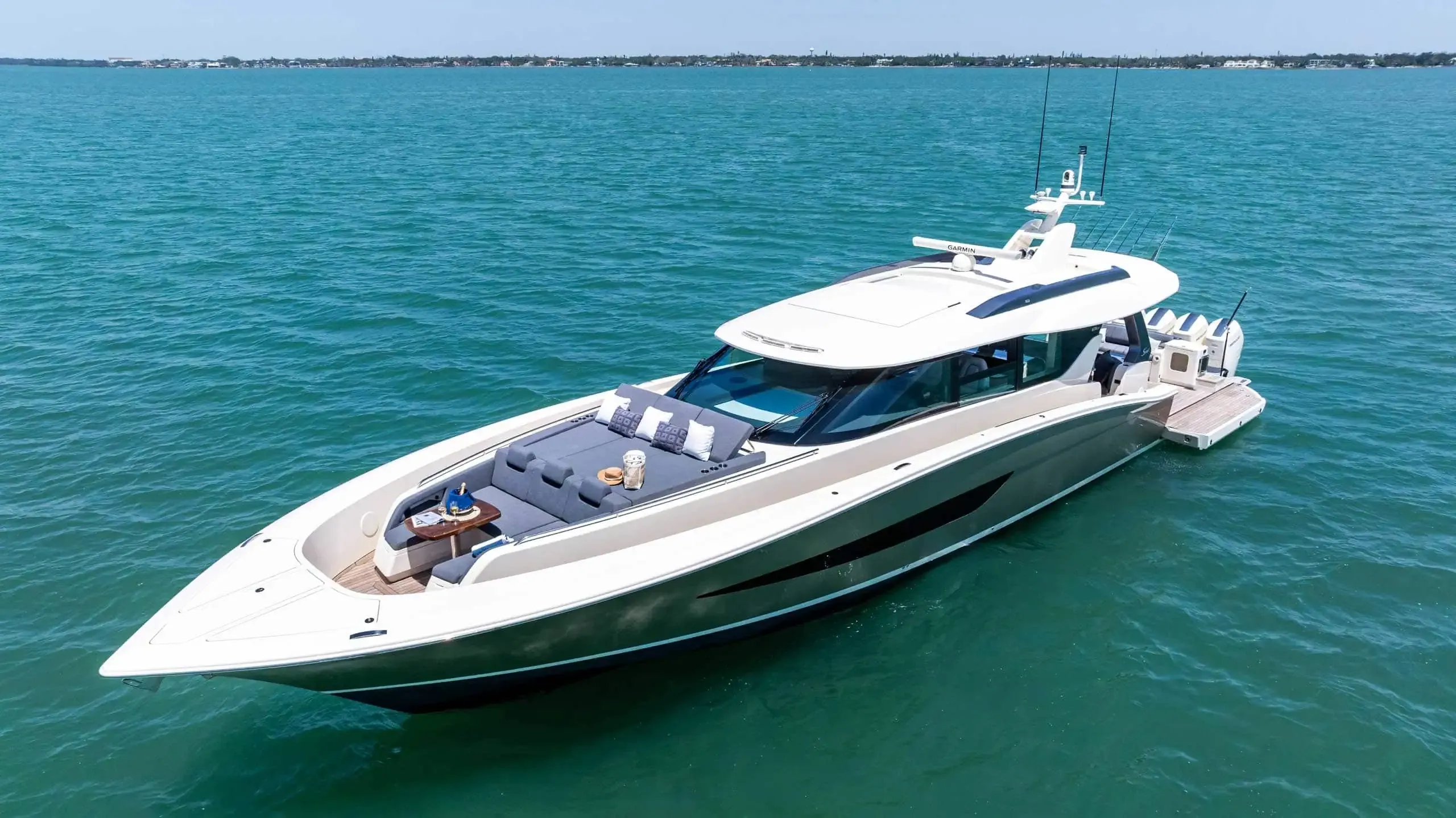
66'9" on a 16'2" beam, 1,500 gal, three staterooms: the Sport 670, single helm, no upper station.

Request other Brand or Model Information, with our Yacht Specs Direct, offer.
Videos courtesy of Scout Boats.
Every buyer's mission is different. Tell us how you plan to use your vessel, and we'll give you the straight story on which models fit your life—and which don't.
Specific Model Details & Advice