
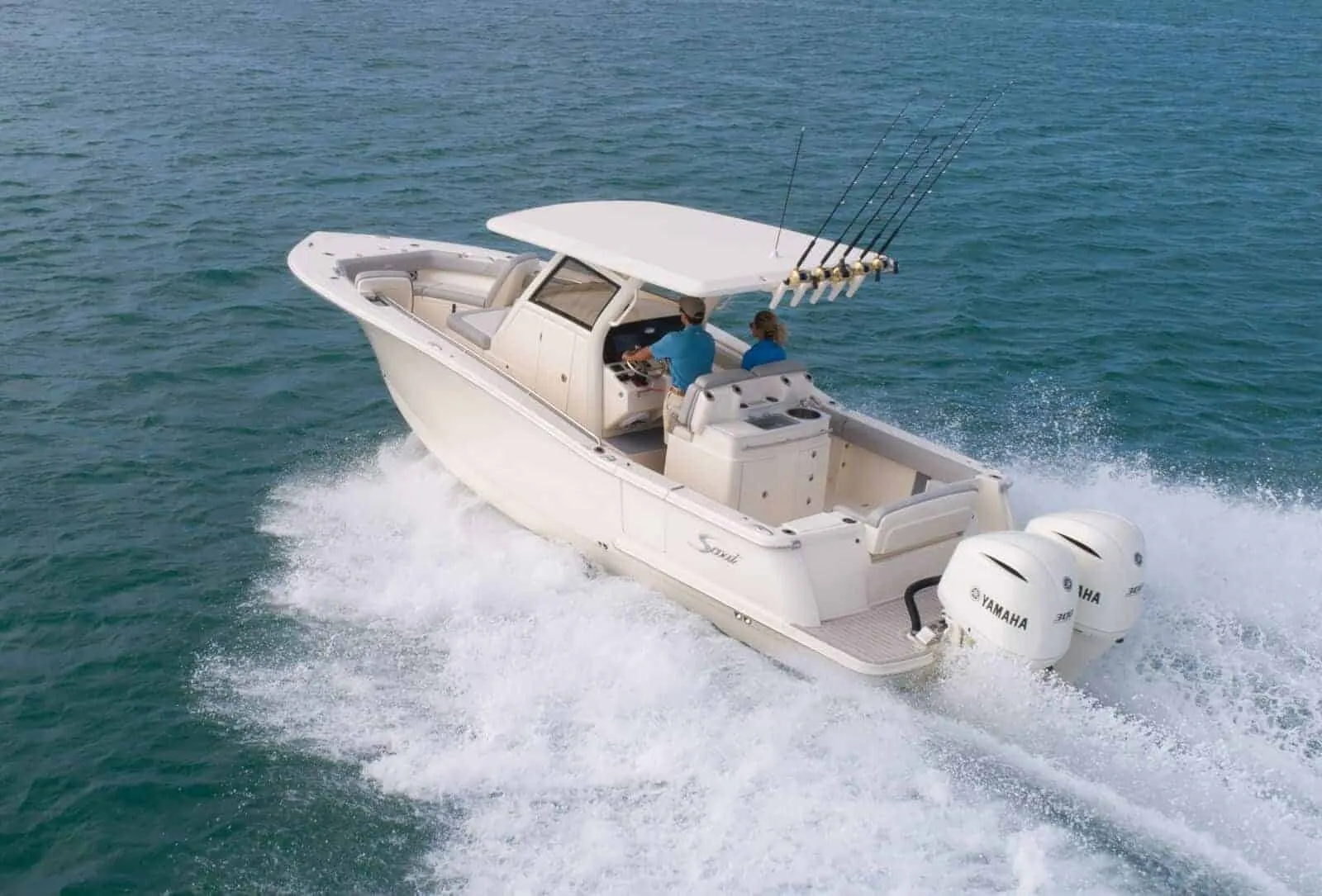
August 20, 2026
Why the Scout 305 LXF Puts a Berth Where Other 30-Footers Put Storage
The Scout 305 LXF is a 30'1" center console with a 9'10" beam, 20-degree deadrise and 212 gallons of fuel, built around a cushioned console …
Read the articleExpert Review, Technical Specifications & Market Analysis
| Feature | Specifications |
|---|---|
| Overall Length | 30'1" |
| Beam | 9'10" |
| Draft | 1'8.5" |
| Displacement | 6,870 lbs |
| Engines | Twin Outboard (2 x 300-400 HP) |
| Fuel Capacity | 212 gal |
| Water Capacity | 12.5 gal |
| Cabins / Heads | 1 Cabin / 1 Head |
| Max Speed | 60.5 mph @ 5,800 RPM (twin Yamaha 300s, Scout performance bulletin) |
| Cruise Speed | 28.8 mph best fuel economy (twin Yamaha 300s). Scout publishes no cruise figure for packages it has not bulletined |
Source: Spec & Photos courtesy of Scout. Specs verified by Tony Smith, USCG 100 Ton Master, on August 20, 2026.
A 30'1" center console with a real berth and an electric head below the helm - and 800 horsepower worth of transom behind it.
Part of the Scout LXF series — see how owners step up through the lineup.

The 305 LXF is the boat I point people toward when they tell me they want to fish offshore but their honest use case is four days of family cruising for every one day of blue water. Most 30-foot center consoles make you choose. Scout put a cushioned berth, an electric head and an optional air conditioner inside the console instead, and the result is that nobody in your crew is dreading the ride home. That single design decision does more for how often a boat gets used than any horsepower figure I can quote you.
What I like about how Scout goes about this is that the company will put its name to numbers. There is a performance bulletin for every engine package, and on the twin Yamaha 300s it reads 60.5 mph at 5,800 rpm, on plane in 6.6 seconds, best economy at 28.8 mph. Scout publishes an estimated 417-mile range on that package and calls it an estimate right there in the footnote. I would rather hand a buyer a builder's tested sheet with an honest caveat than a broker's confident round number. Standard Seakeeper Ride in the advertised configuration is the other thing worth noticing on a 30-footer that has to run an inlet.
Where I want you clear-eyed: this is a 20-degree deadrise hull with 12.5 gallons of fresh water. It is a superb all-day boat that will overnight, not a weekender for four. If you want the sharper 24-degree entry, the bigger tanks and the stepped, epoxy-infused hull, that is the 330 LXF and it is a different conversation about slip, budget and how you actually run. Come tell me how many miles you do offshore in a typical season and I will tell you which of the two I would buy.
Video courtesy of Scout.
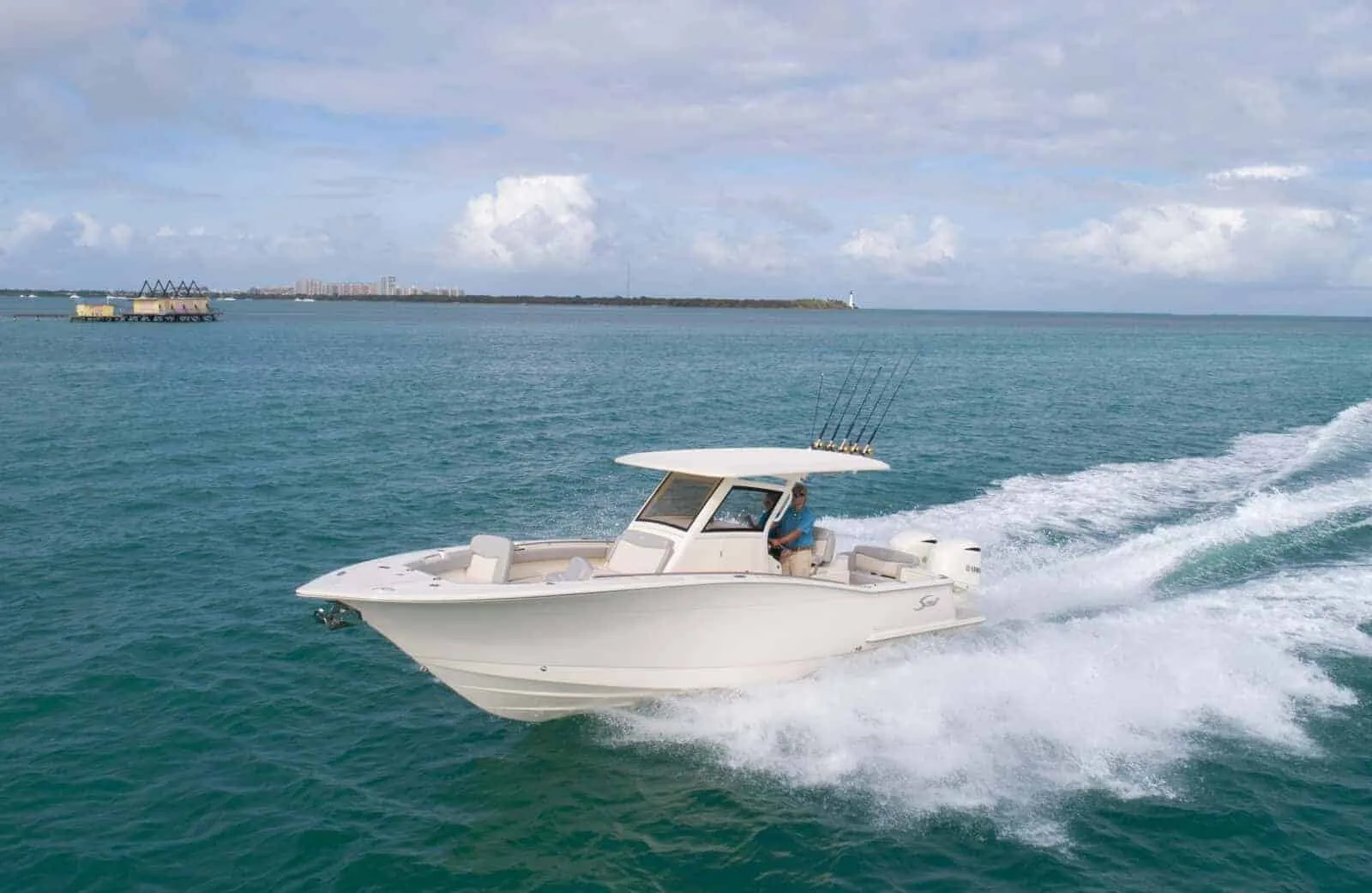
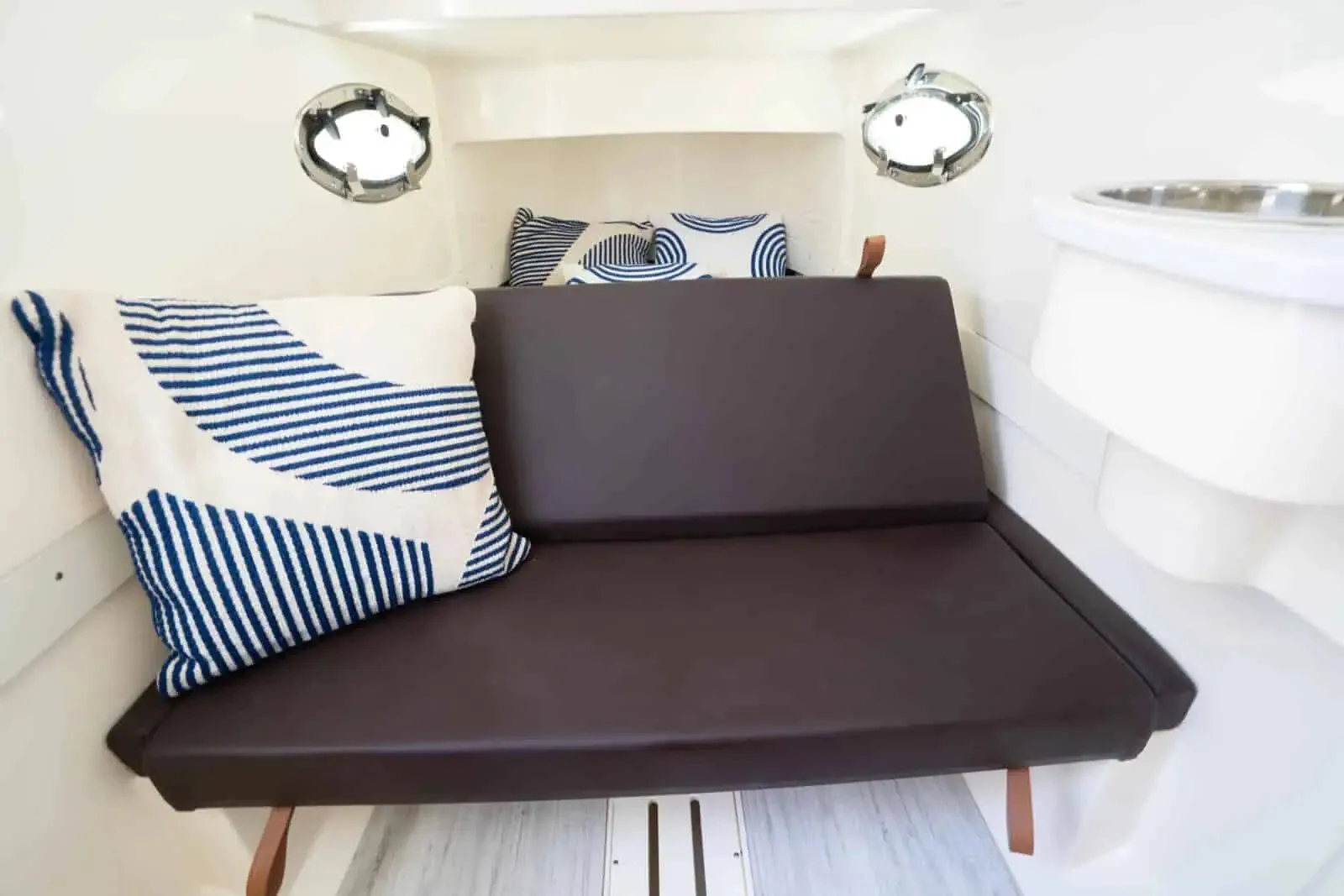
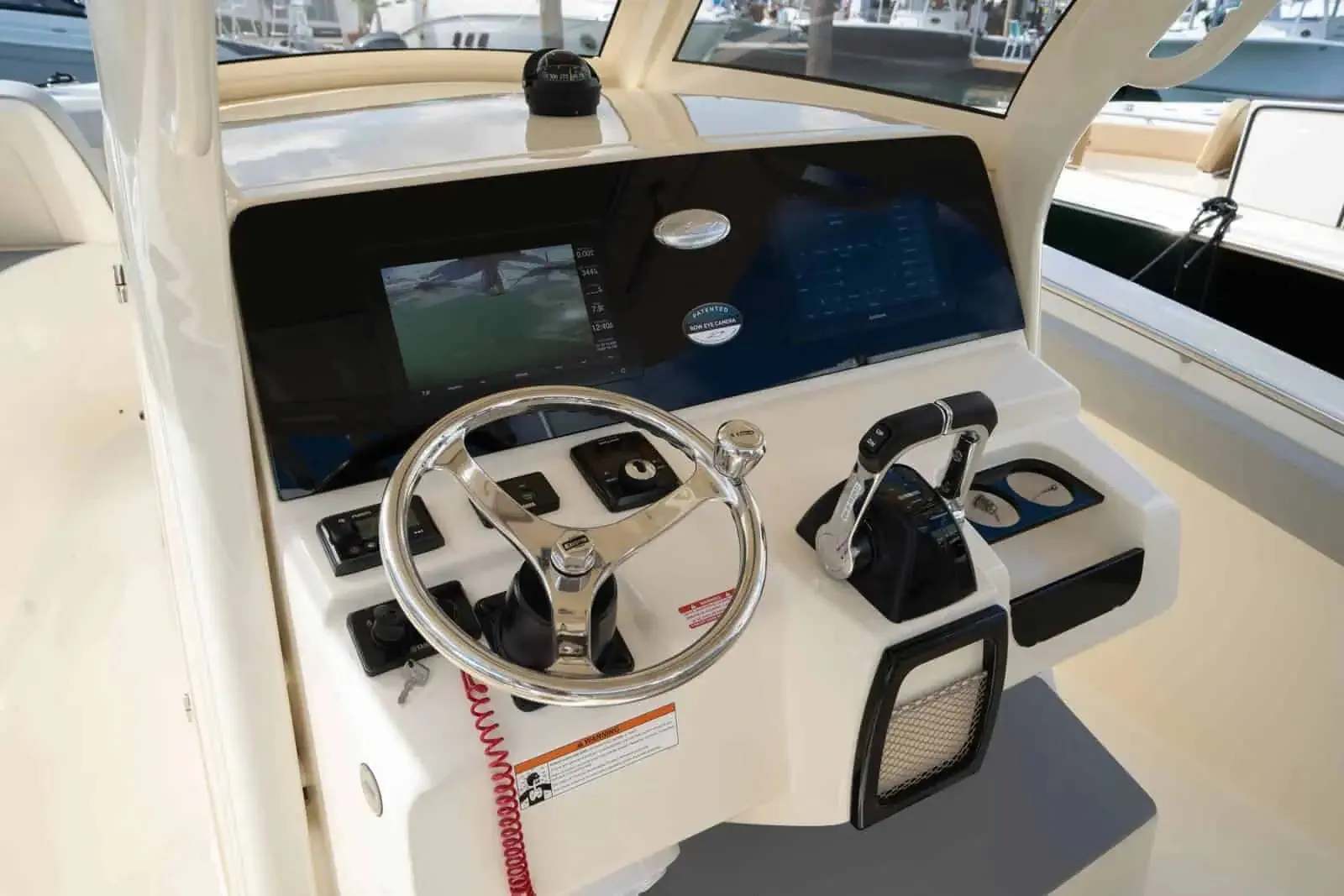
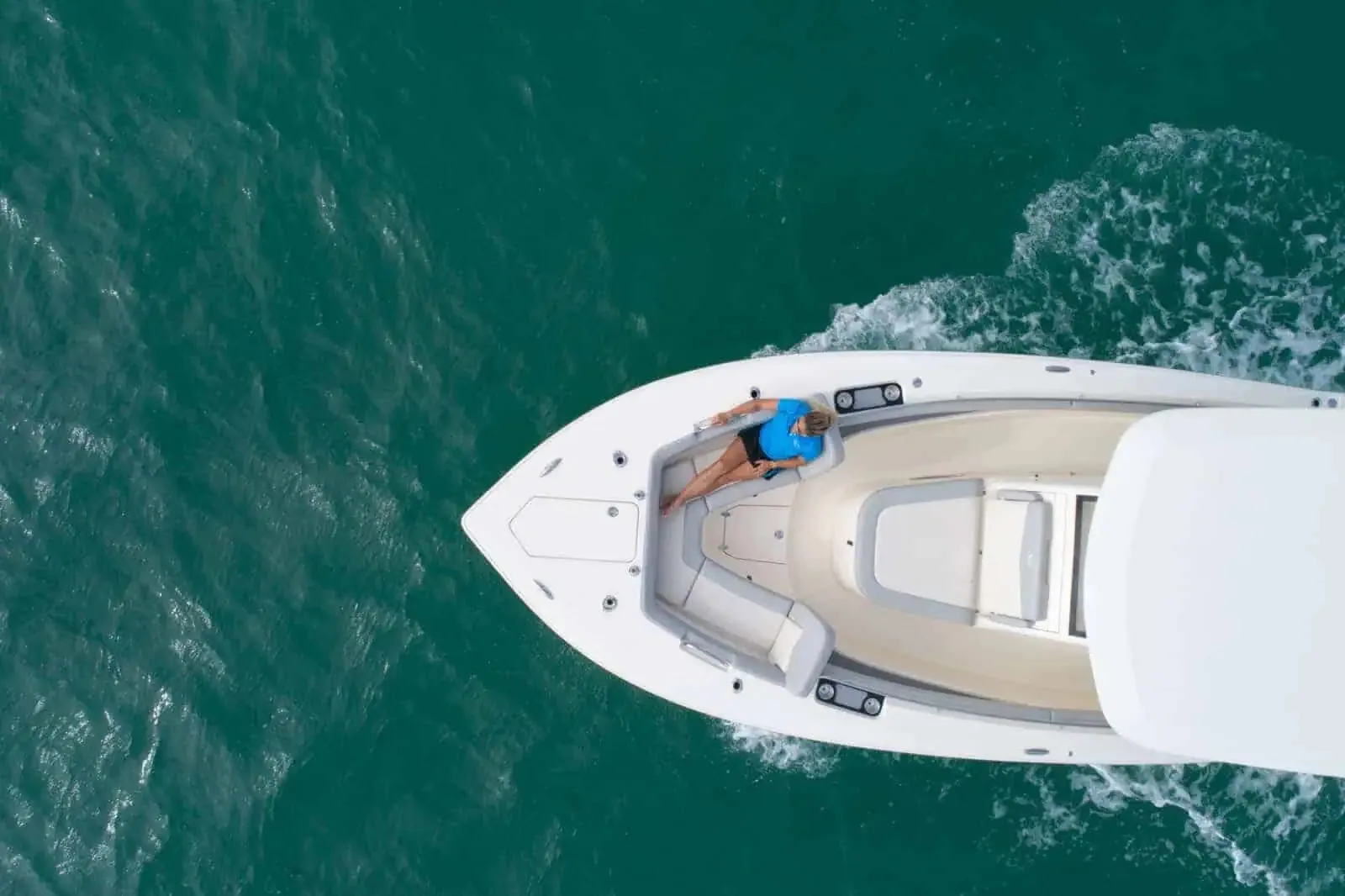
Photos courtesy of Scout.
The Scout 305 LXF is a 30'1" luxury center console built around an inner console berth - a fully cushioned sleeping space with overhead lighting, a starboard storage closet and an electric marine head, plumbed to a 10-gallon holding tank with overboard discharge and dockside pump-out. Scout offers 110V air conditioning with an inverter as an option on top of it, and describes the 305 LXF as the only 30-footer in its class with a console berth below and optional air conditioning.
Above deck the standard boat is unusually complete for the size: a fully walkable transom swim platform finished in Esthec, a side boarding door, a Garmin 8612 display with acrylic bezel at the helm, Scout's patented bow anchor camera feeding that same screen, a removable bow table, a six-speaker sound system and key-fob power on and off. Scout's advertised starting configuration includes standard Seakeeper Ride.
The hull carries 20 degrees of transom deadrise on a 9'10" beam and weighs 6,870 lbs dry without engines. Fuel capacity is 212 gallons; fresh water is 12.5 gallons. Scout builds the 305 LXF at its Summerville, South Carolina plant and the boat is NMMA and Yacht Certified.
Scout rates the 305 LXF hull to a maximum of 800 hp (597 kW) and publishes a recommended cruising rating of 500 hp (373 kW). It publishes individual tested performance bulletins for twin Yamaha 300s, twin Mercury 300s, twin Yamaha 350s, twin Mercury 350 V10s, and twin Mercury 400s with Seakeeper.
On the twin Yamaha F300 bulletin (15 x 21p props), Scout records a top speed of 60.5 mph at 5,800 rpm, a time to plane of 6.60 seconds, 0-30 mph in 7.05 seconds, and best fuel economy at 28.8 mph (3,000 rpm). Scout publishes an estimated range of 417 miles on that package and footnotes it as an estimate based on fuel consumption at optimal cruising speeds and sea conditions.
The running surface carries 20 degrees of transom deadrise - moderate for the class, four degrees flatter than the 330 LXF above it. Draft is approximately 20.5" and bridge clearance to the hardtop is approximately 8'.
The defining interior space on the 305 LXF is inside the console. Scout finishes it as a small cabin rather than a crawl space: a fully cushioned berth, overhead lights, a starboard storage closet for brushes and gear, and an electric marine head with a 10-gallon holding tank, overboard discharge and dockside pump-out. 110V air conditioning with an inverter is available as an option.
On deck, forward bow seating has underside storage and takes a removable bow table. The deluxe leaning post carries a baitwell, tackle drawers, cup holders, a sink, trash can, cutting board, a 35-quart slide-out cooler, tool storage and rod holders. A side boarding door and a fully walkable Esthec transom swim platform make boarding and swimming straightforward.
Fresh water capacity is 12.5 gallons and the holding tank is 10 gallons - the practical limit on how long the boat stays comfortable for more than a day out.
The 305 LXF sits at the entry point of Scout's LXF center console line, below the 330 LXF and the S-Class models above it. Its position in the wider 30-foot center console market rests on one structural choice: an inner console berth and electric head where most competitors at this length put stowage or a portable head.
Buyers cross-shopping the 305 LXF are typically looking at other 30-to-33-foot offshore center consoles and, in some cases, at small express cruisers that offer a cabin at the cost of the fishing platform. The 305 LXF is aimed squarely between those two - a boat that fishes seriously but does not ask the family to accept a day-boat's facilities.
Scout is family owned and has built in Summerville, South Carolina since 1989. It leads its own materials with hand-laid construction, use of carbon fiber and epoxy on select models, and strength-to-weight results, and the 305 LXF is NMMA and Yacht Certified.
The 305 LXF suits the owner-operator whose season is mostly family days with real offshore runs mixed in. If you want a boat one person can dock and run, that will take four people twenty-plus miles offshore in the morning and pull up to a waterfront restaurant that evening without anyone dreading the trip home, this is the layout that makes that work.
It is a strong fit if the console berth and the electric head are what unlock the boat for your crew, if 20 degrees of deadrise matches the water you actually run, and if a 212-gallon tank covers your typical day.
It is the wrong boat if you fish tournaments and need maximum open cockpit for four anglers working a spread - the console that sleeps someone is a console that takes deck. It is also the wrong boat if you want a genuine weekender for four: 12.5 gallons of fresh water and a 10-gallon holding tank will tell you so before the seakeeping does. Buyers who need the sharper entry, the bigger tanks and the stepped epoxy-infused hull should be looking one step up at the 330 LXF.
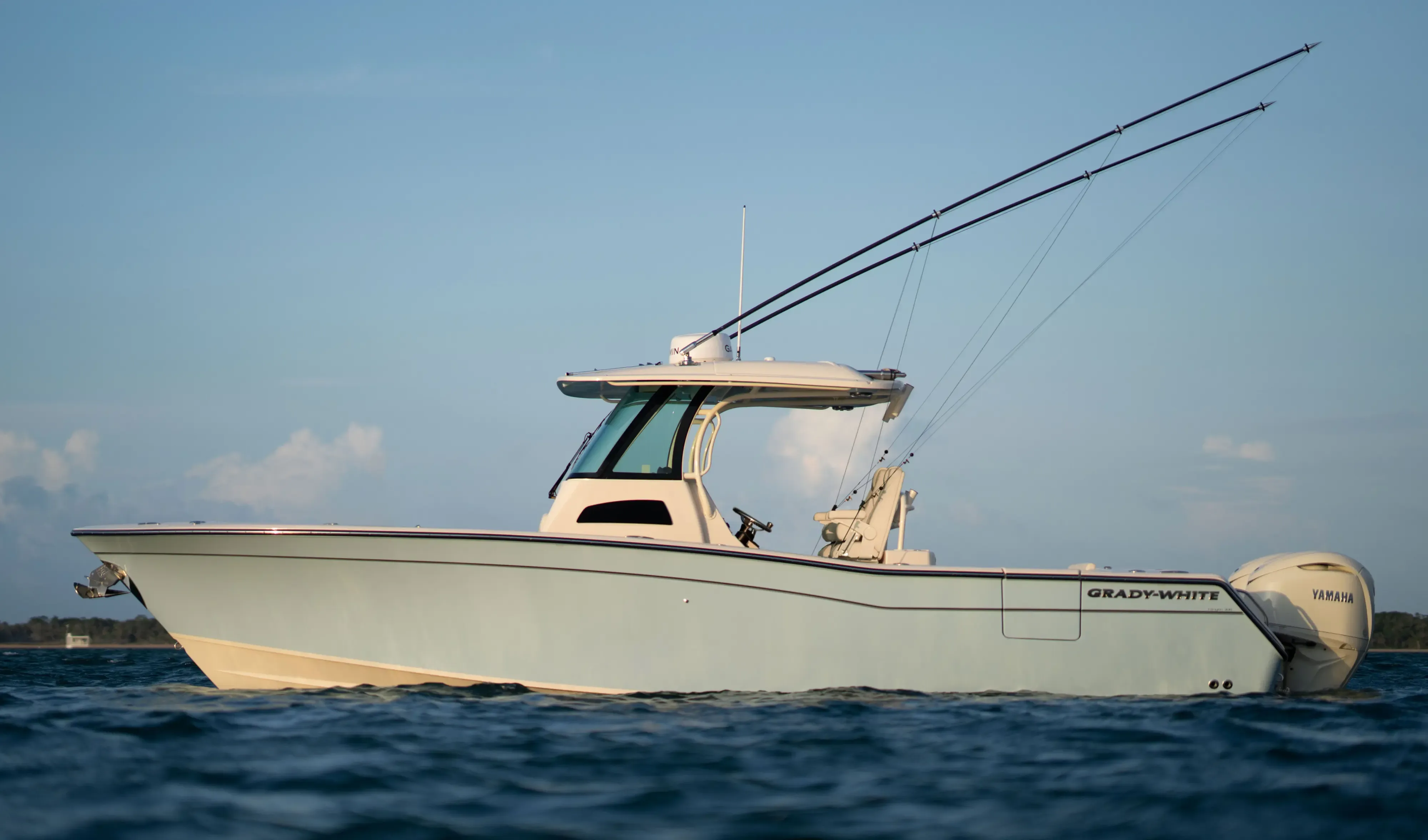
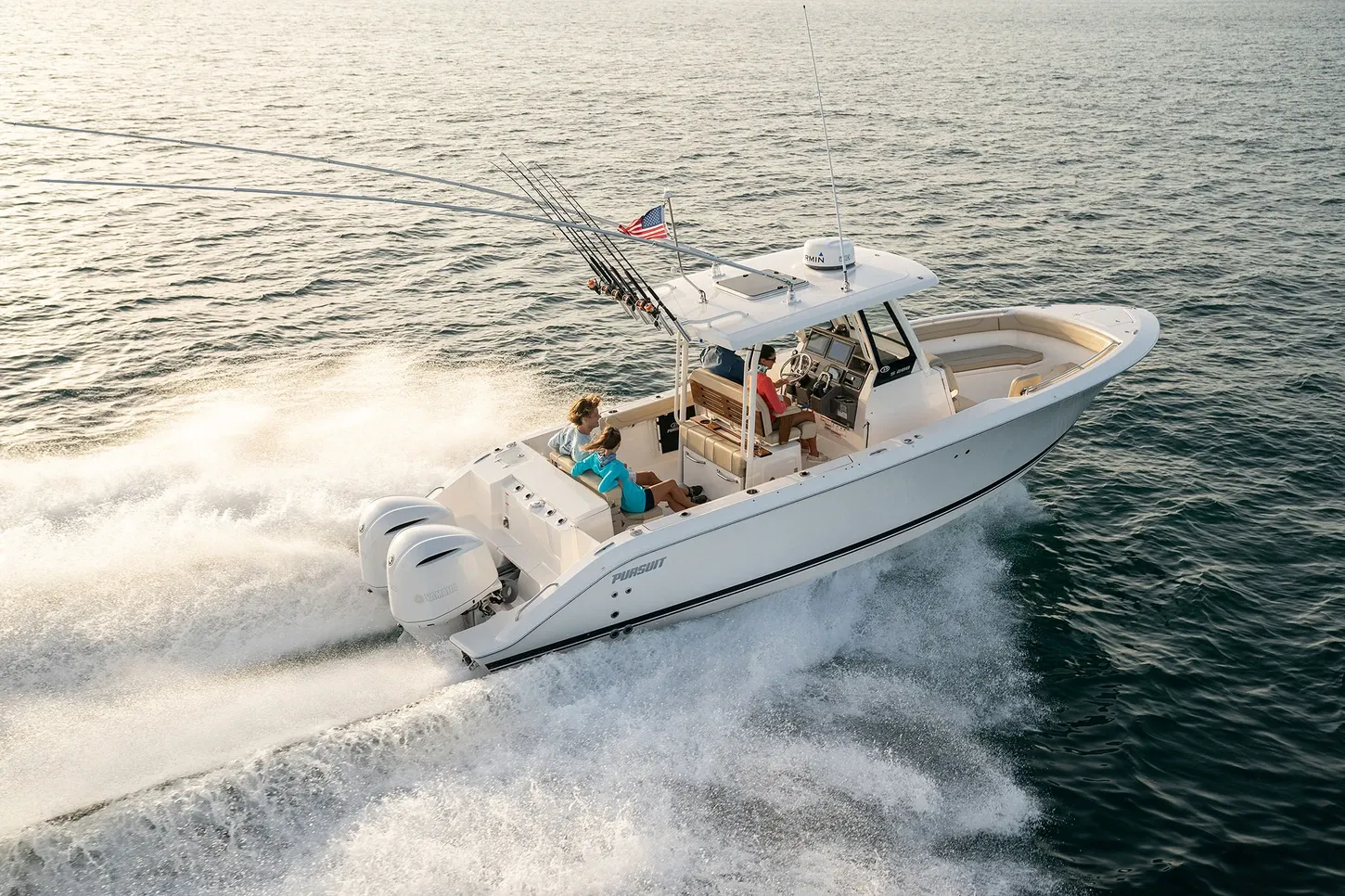
Scout's own performance bulletin for twin Yamaha F300s on 15 x 21p props records a top speed of 60.5 mph at 5,800 rpm, a time to plane of 6.60 seconds and 0-30 mph in 7.05 seconds. Best fuel economy on that sheet falls at 28.8 mph. Those figures belong to that engine package and no other.
Scout publishes separate bulletins for twin Mercury 300s, twin Yamaha 350s, twin Mercury 350 V10s and twin Mercury 400s with Seakeeper. If a listing quotes you a figure for an engine combination outside that list, ask where it came from.
No — Scout calls it an inner console berth rather than a cabin, and that distinction is honest. Inside the console you get a fully cushioned berth, overhead lights, a starboard storage closet and an electric marine head plumbed to a 10-gallon holding tank with overboard discharge and dockside pump-out. 110V air conditioning with an inverter is on the option list.
What sets the real limit is not the berth but the plumbing. Fresh water capacity is 12.5 gallons. That is day-boat tankage inside a hull that can overnight, and it decides how long two people stay comfortable aboard long before the seakeeping does.
800 horsepower maximum, against a published recommended cruising rating of 500 horsepower. The twin 300s in Scout's own performance bulletin sit between those two numbers, which is worth knowing before you assume the top of the rating is the intended boat.
Scout publishes tested bulletins for twin Yamaha 300s, twin Mercury 300s, twin Yamaha 350s, twin Mercury 350 V10s and twin Mercury 400s with Seakeeper. Draft is approximately 20.5 inches and bridge clearance to the hardtop approximately 8 feet. The hull is NMMA and Yacht Certified and Scout builds it in Summerville, South Carolina.
No. Scout's 305 LXF page and model flyer make no epoxy-infusion claim and no stepped-hull claim for this model — those belong to the 330 LXF and the boats above it. What Scout states at brand level is 100% hand-laid construction, with carbon fiber and epoxy used on select models.
The running surface carries 20 degrees of transom deadrise, four degrees flatter than the 24 degrees Scout designs into the 330 LXF one step up, and the hull weighs 6,870 pounds dry without engines. If the laminate is what you are shopping, the 330 LXF is where Scout's construction story changes.