
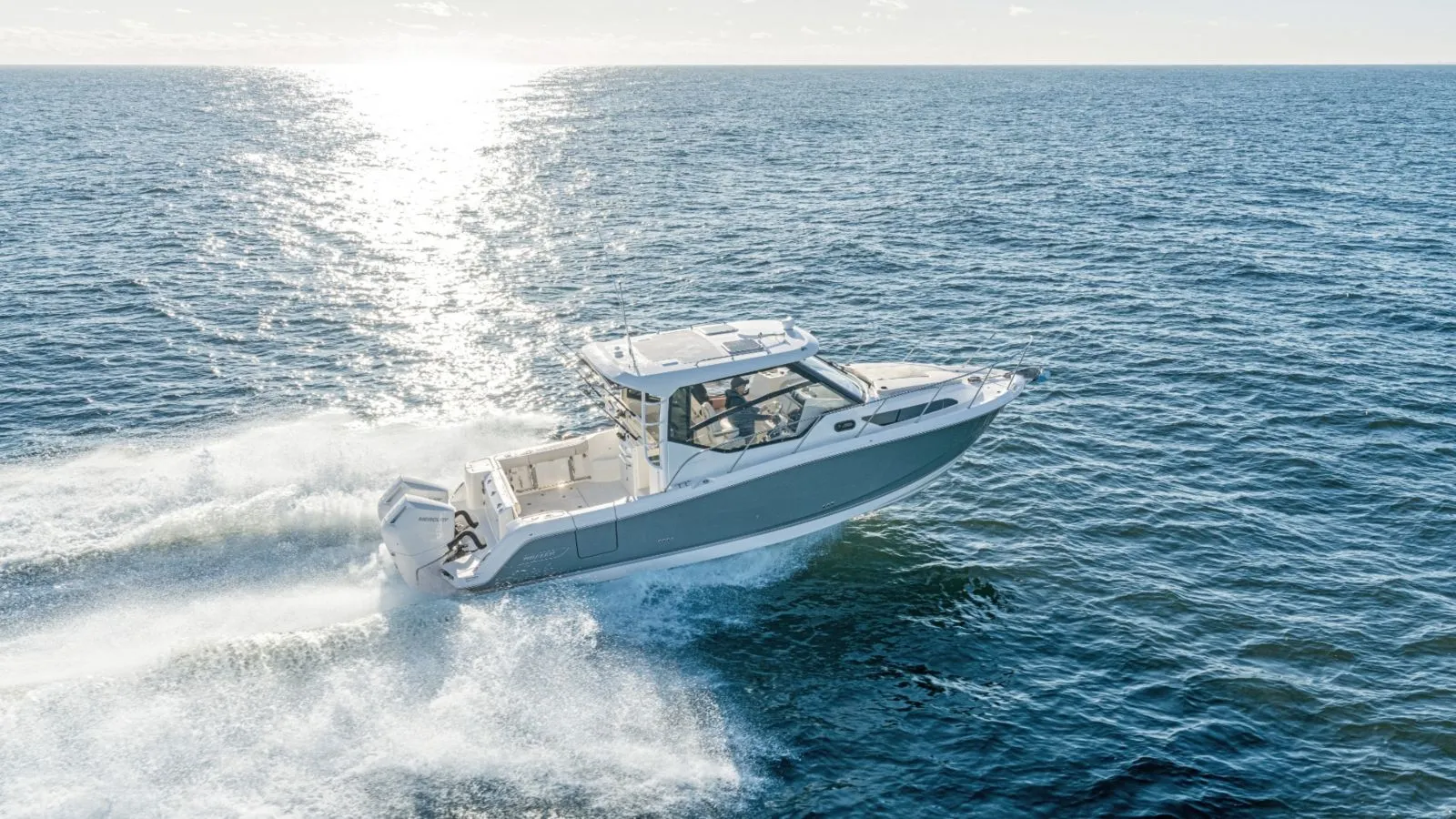
The 32-Footer That Doesn't Compromise: Boston Whaler 325 Conquest
The Boston Whaler 325 Conquest marries a redesigned hull and true overnight cabin with a fishing-focused cockpit, delivering express-cruiser…
Read the articleExpert Review, Technical Specifications & Market Analysis
| Feature | Specifications |
|---|---|
| Overall Length | 32' 3" |
| Beam | 10' 8" |
| Draft | 26" |
| Displacement | 10,500 lbs |
| Engines | Standard: Dual 300-HP Mercury Verados (600 HP minimum); Optional: dual Verados to 850 HP maximum rated |
| Fuel Capacity | 300 gallons |
| Water Capacity | 46 gallons |
| Cabins / Heads | Cabin sleeps 4+: convertible V-berth dining/sleeping area plus mid double berth; 1 VacuFlush head with holding tank, dockside pump-out (12 gal) |
| Max Speed | 55.8 mph (with Twin 400 V10 Verados) |
| Cruise Speed | Approx. 31.3 mph @ 4,000 RPM (with Twin Mercury 300 V8 AMS) |
Source: Spec & Photos courtesy of Boston Whaler. Specs verified by Tony Smith, USCG 100 Ton Master, on August 10, 2026.
Part of the Boston Whaler Conquest series — see how owners step up through the lineup.

The 325 Conquest represents Boston Whaler's most successful attempt at building a true dual-purpose boat in this size range. The redesigned Unibond hull delivers a noticeably softer ride than the previous generation, and the build quality remains best-in-class. The cockpit layout is genuinely clever, not just marketing spin. The Summer Kitchen option is worth the money if you entertain. The standard twin 300s are adequate, but the 400s are the better long-term choice for resale and performance.
This boat is for the owner who actually uses their boat, not the one who talks about it. If you fish twice a year and cruise once a month, buy a cruiser. If you fish every weekend and never overnight, buy a center console. But if you're the owner who fishes Saturday, cruises Sunday, and occasionally spends a few nights aboard, the 325 Conquest is one of the few boats in this class that genuinely handles all three missions without compromise. The convertible seating isn't a gimmick. The cabin isn't an afterthought. The fishing cockpit isn't sacrificed for comfort.
Resale on Boston Whalers in this size range remains strong, typically holding 60 to 65 percent of original value after five years in normal market conditions. Maintenance costs are predictable. Mercury Verado support is excellent. The Unibond construction means you're not dealing with hull blisters or delamination issues that plague other brands. Expect to spend $8,000 to $12,000 annually on routine maintenance, plus fuel and slip fees. Insurance runs $4,000 to $6,000 depending on location and coverage. This is not a cheap boat to own, but it's a predictable one..
Video courtesy of Boston Whaler.
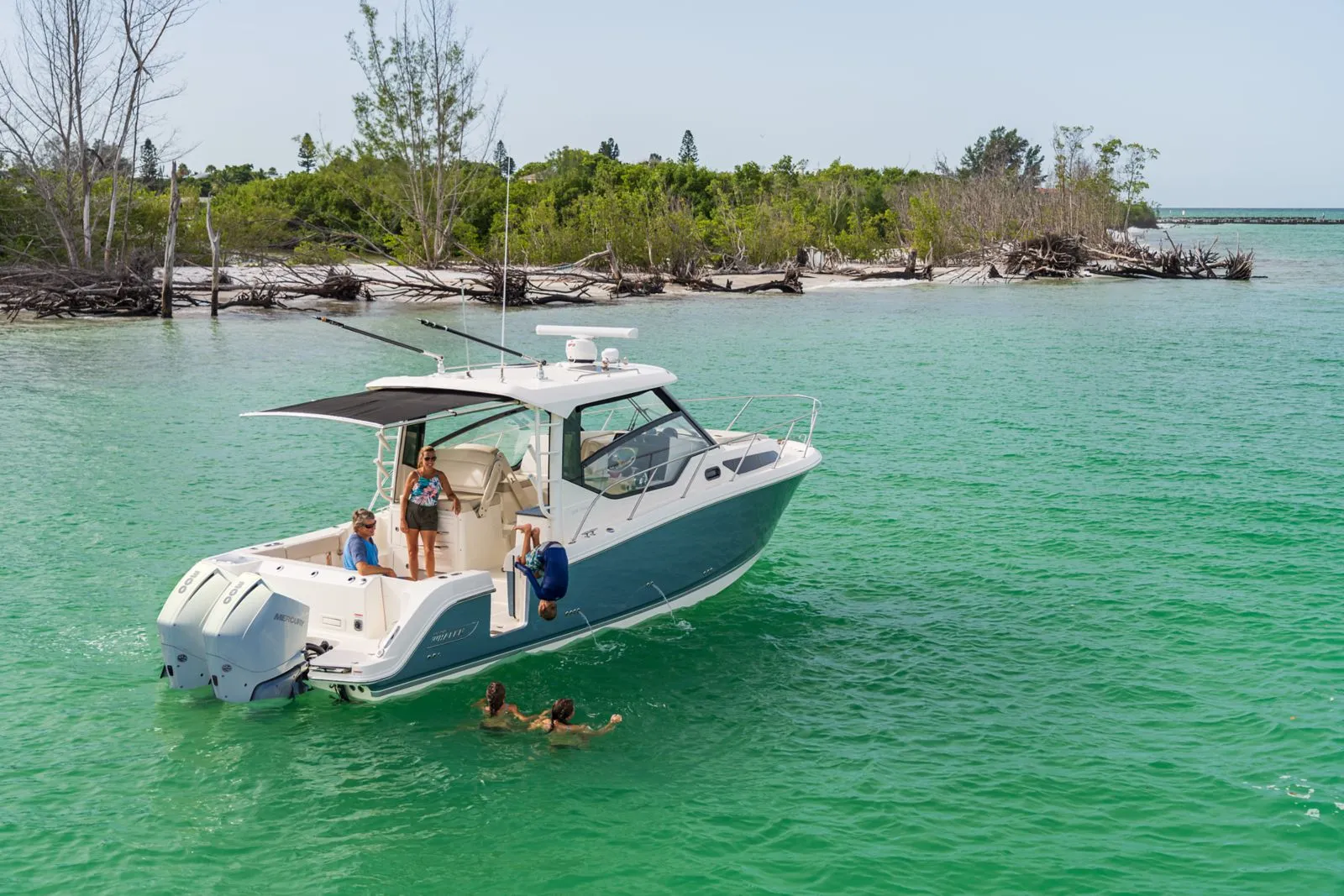
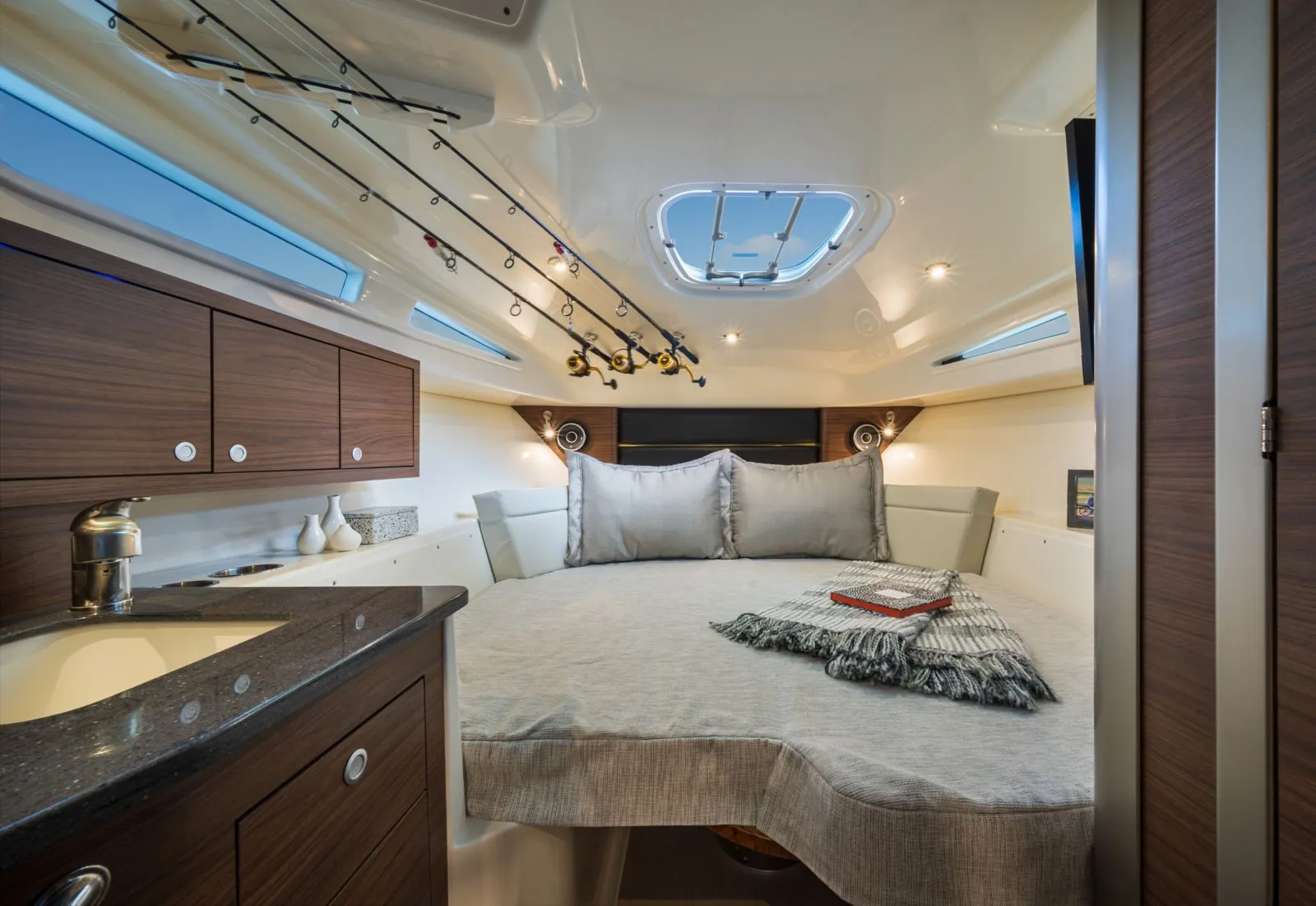
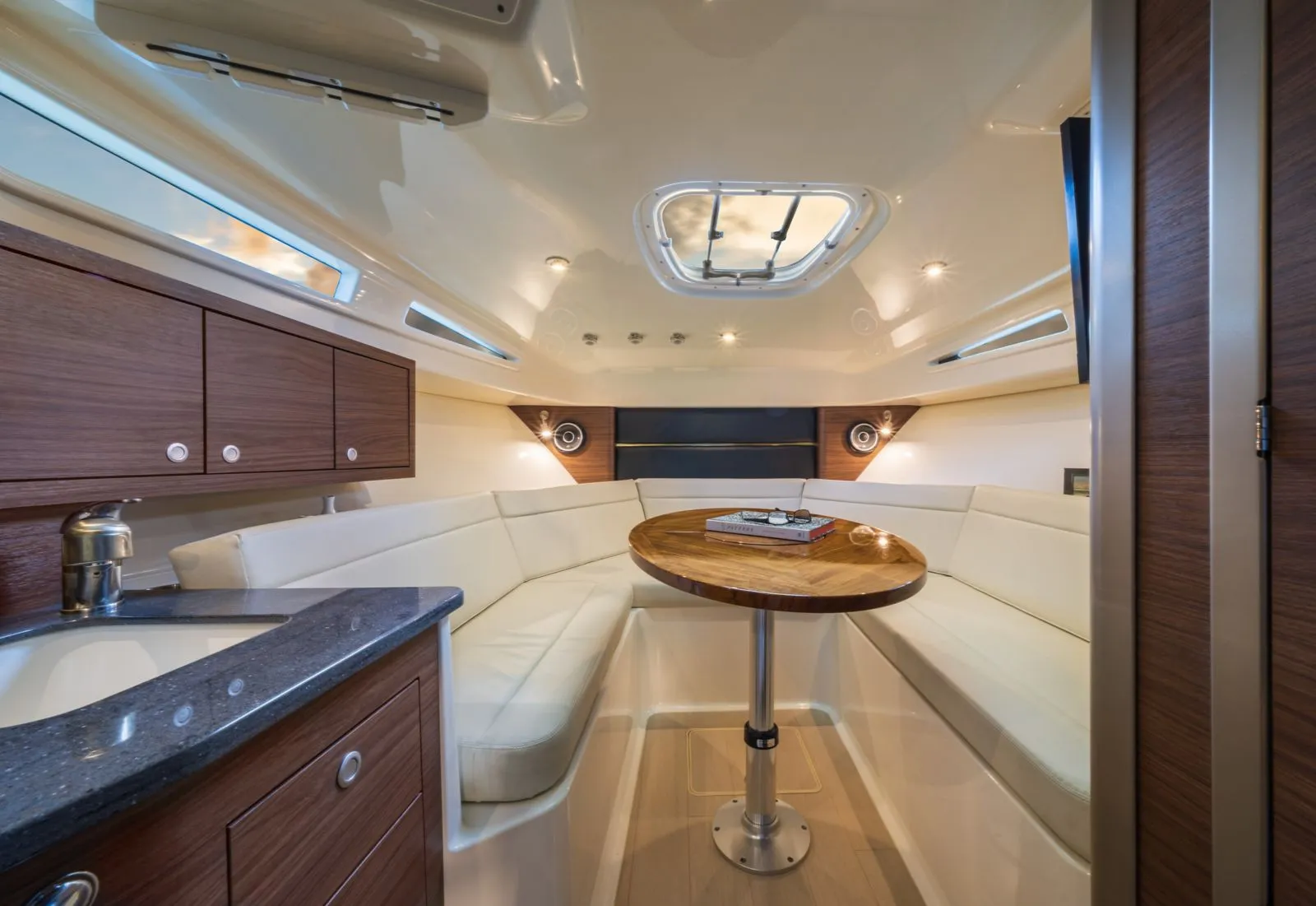
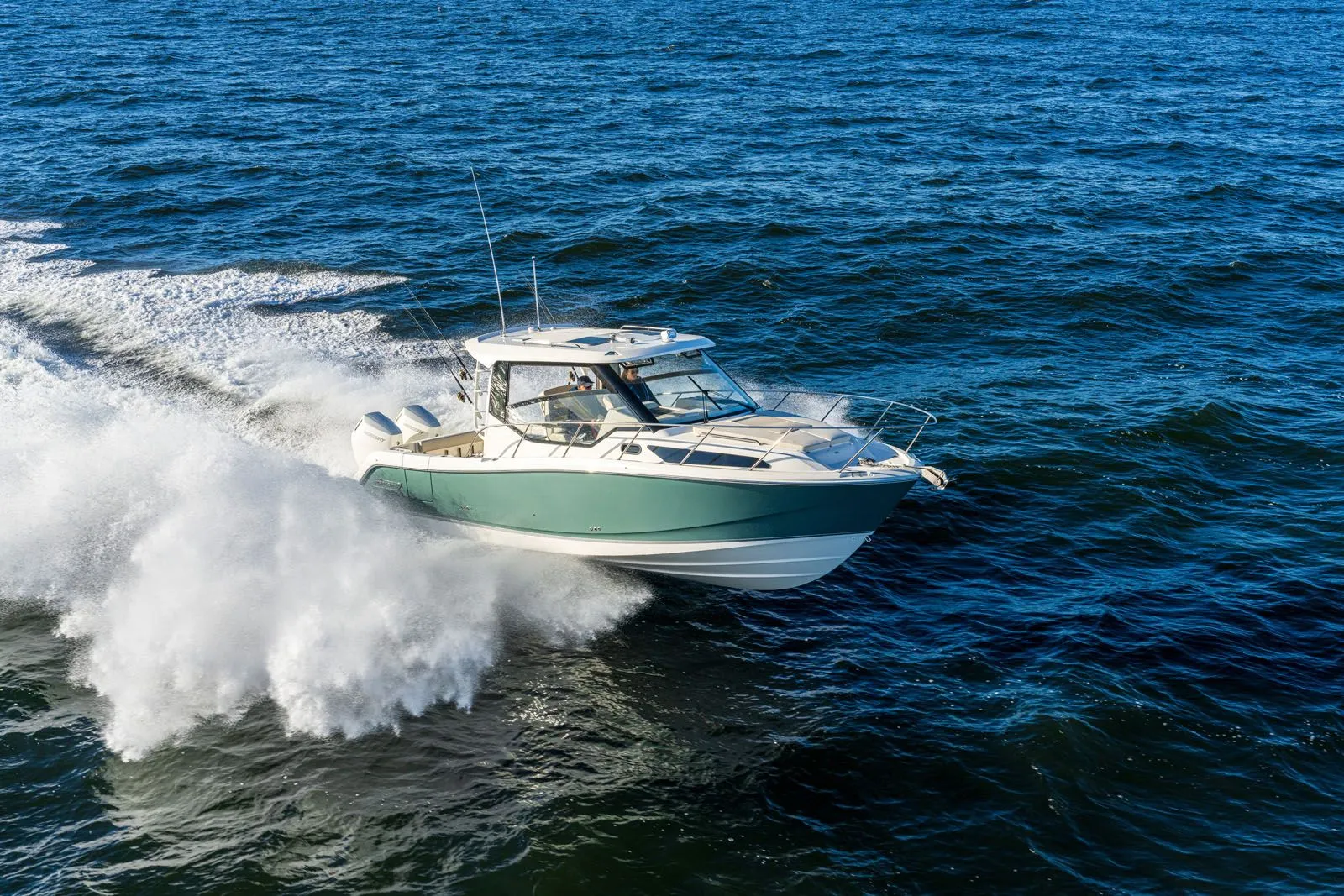
Photos courtesy of Boston Whaler.
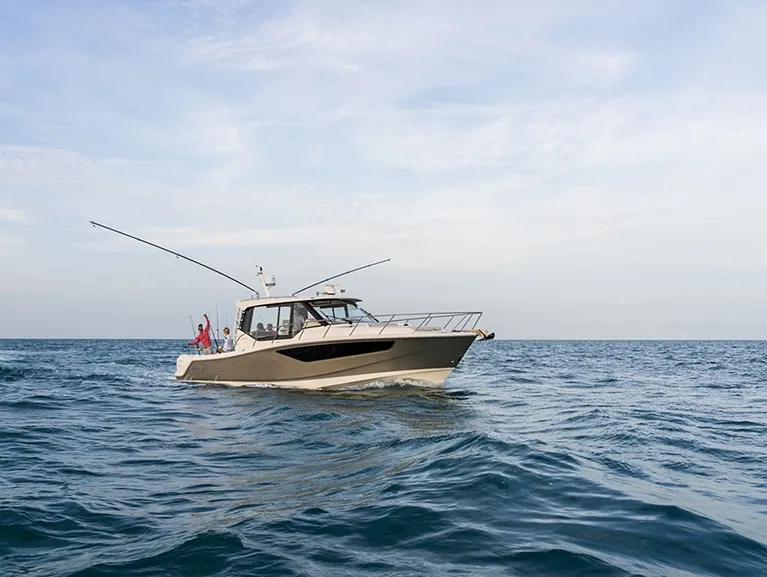
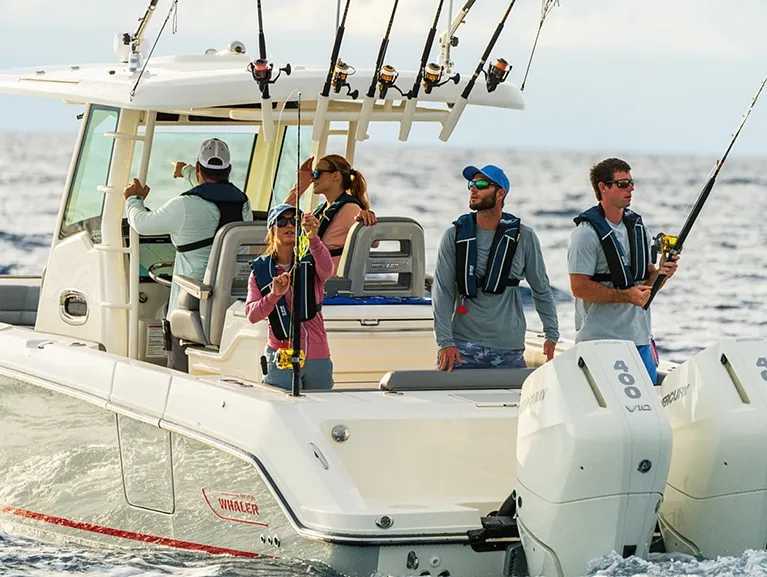
Yes, with the right tow vehicle and an oversize permit. The 325 Conquest is 32 feet 3 inches long with a 10 foot 8 inch beam and 10,500 pounds dry, which puts it beyond standard highway width and into permit territory in most states. Loaded it weighs 14,290 pounds, so size your tow rating against that figure rather than the dry one.
Most owners keep it in a slip or on a lift and trailer only for seasonal moves. Once you are on the water, the 26-inch draft is the useful number: it lets a cabin boat this size work shallow bays and inlets a deeper cruiser has to route around. Among the models with berths, only the 350 Realm at 24.5 inches draws less.
Four or more. The 325 Conquest has a convertible V-berth forward and a mid double berth, plus a VacuFlush head. Water capacity is 46 gallons and the waste tank holds 12 gallons — more waste capacity than the 330 Outrage, which reflects that this boat is meant to be slept on rather than day-run.
Four adults will find it tight beyond a couple of nights. Two adults and two kids is the realistic configuration, and it works well. Plan around the 46 gallons of water, because that is what limits showers. For a step up in accommodation without leaving the Conquest line, the 405 Conquest adds a private master stateroom, a mid-berth for three, and 90 gallons of water.
The 325 Conquest is a dual-purpose cabin cruiser: 32 feet 3 inches long, 10 feet 8 inches of beam, sleeping four or more with a convertible V-berth, a mid double berth and a VacuFlush head. It carries 300 gallons of fuel, 46 gallons of water, and up to 14 people, and rates from 600 to 850 horsepower.
It is aimed at the buyer who wants to fish on Saturday and take the family out overnight on Sunday without owning two boats. Dry weight is 10,500 pounds and 14,290 pounds loaded. Transom height is 25 inches, lower than the 30 inches used across most of the range. If you never sleep aboard, the 330 Outrage gives you the same fuel and horsepower in an open console.
With twin Mercury 400 V10s the 325 Conquest has been recorded at 55.8 mph. On twin 300 V8s, cruise sits at 31.3 mph at 4,000 RPM. Treat both as engine-package results rather than factory claims.
That is quick for a cabin boat of this size, and it comes from a relatively light hull: 10,500 pounds dry and 14,290 pounds loaded. The rating runs 600 to 850 horsepower, so twin 400s sit near the top of it. For most owners the cruise number matters more than the top end — 31.3 mph gets you offshore and back inside a morning, which is exactly what a dual-purpose boat is supposed to do.
Boston Whaler rates the 325 Conquest from 600 to 850 horsepower, the same band as the 330 Outrage on a boat that is 10,500 pounds dry rather than 9,800. Twin 300 V8s meet the minimum and return a 31.3 mph cruise at 4,000 RPM; twin 400 V10s have been recorded at 55.8 mph.
Twins are the norm here, which keeps the transom uncluttered and the service schedule predictable. The extra horsepower mostly buys hole shot with a loaded boat. At 14,290 pounds with fuel, water, people and gear aboard there is a lot to lift onto plane, and the difference shows on a family day far more than on an empty test run. Transom height is 25 inches.
It handles more than its size suggests. The 325 Conquest is 32 feet 3 inches with a 10 foot 8 inch beam and 14,290 pounds loaded, and the foam-filled construction Boston Whaler has used since 1958 means the hull is unsinkable by design. The brand's sawn-in-half 13-footer demonstration is its own long-running proof of that.
The cabin changes the calculation on a rough day more than any hull number does. Somewhere dry to put a passenger who has had enough is worth a great deal. The honest limit is length: a 32-foot boat gets moved around by a sea a 40-footer ignores, so pick your days. If you regularly run long offshore legs into a building forecast, step up to the 405 Conquest at 41 feet 4 inches.