
August 20, 2026
What the Scout 330 LXF's Epoxy-Infused Stepped Hull Actually Buys You
The Scout 330 LXF is a 32'9" S-Class center console with a 10'6" beam, 24-degree deadrise and 265 gallons of fuel, built on an epoxy-infused…
Read the articleExpert Review, Technical Specifications & Market Analysis
| Feature | Specifications |
|---|---|
| Overall Length | 32'9" |
| Beam | 10'6" |
| Draft | 2'7" |
| Displacement | 9,545 lbs |
| Engines | Twin Outboard (2 x 300-425 HP) |
| Fuel Capacity | 265 gal |
| Water Capacity | 22 gal |
| Cabins / Heads | 1 Cabin / 1 Head |
| Max Speed | 55.2 mph @ 6,000 RPM (twin Mercury Verado 300s, Scout performance bulletin) |
| Cruise Speed | 39.4 mph best fuel efficiency (twin Mercury Verado 300s) |
Source: Spec & Photos courtesy of Scout. Specs verified by Tony Smith, USCG 100 Ton Master, on August 20, 2026.
Scout's first S-Class hull: 24 degrees of deadrise, an epoxy-infused stepped bottom and 265 gallons of fuel in 32'9".
Part of the Scout LXF series — see how owners step up through the lineup.

The 330 LXF is where the Scout argument gets interesting, because at 33 feet the builder stops competing on layout and starts competing on how the hull is made. Epoxy infusion and a dual-stepped running surface are not cosmetic. Twenty-four degrees of deadrise carried on 9,545 pounds of dry hull is what makes a boat this size ride the way owners hope a boat this size will ride, and the step is what keeps that weight from costing you at the fuel dock. Scout's own bulletin puts best fuel efficiency at 39.4 mph on twin Mercury 300s - that is not a hull that wants to be babied at 25 mph.
The standard equipment list is the part buyers underestimate. Heated helm seats standard, a full-windshield patented hardtop, a leaning post that is a genuine work station, an electric marine head plumbed properly with overboard discharge and dockside pump-out. On plenty of 33-footers half of that is an option package, and by the time you have specced it you are looking at a different boat than the one you priced.
My caution is the same one I give on every center console at this size, and it is about water and draft, not about the hull. Twenty-two gallons of fresh water sets your comfortable range aboard, and 31 inches of draft is real - check it against your home water at dead low before you fall in love. If those two numbers work for where you keep a boat, the 330 LXF is one of the most complete offshore center consoles I can put a buyer on at this length. Come tell me where you run and how often, and I will be straight with you about whether the 305 LXF does the same job for less boat.
Come tell me where you run and how often - TS@MintedYachts.com, +1 (404) 805-9819.
Video courtesy of Scout.
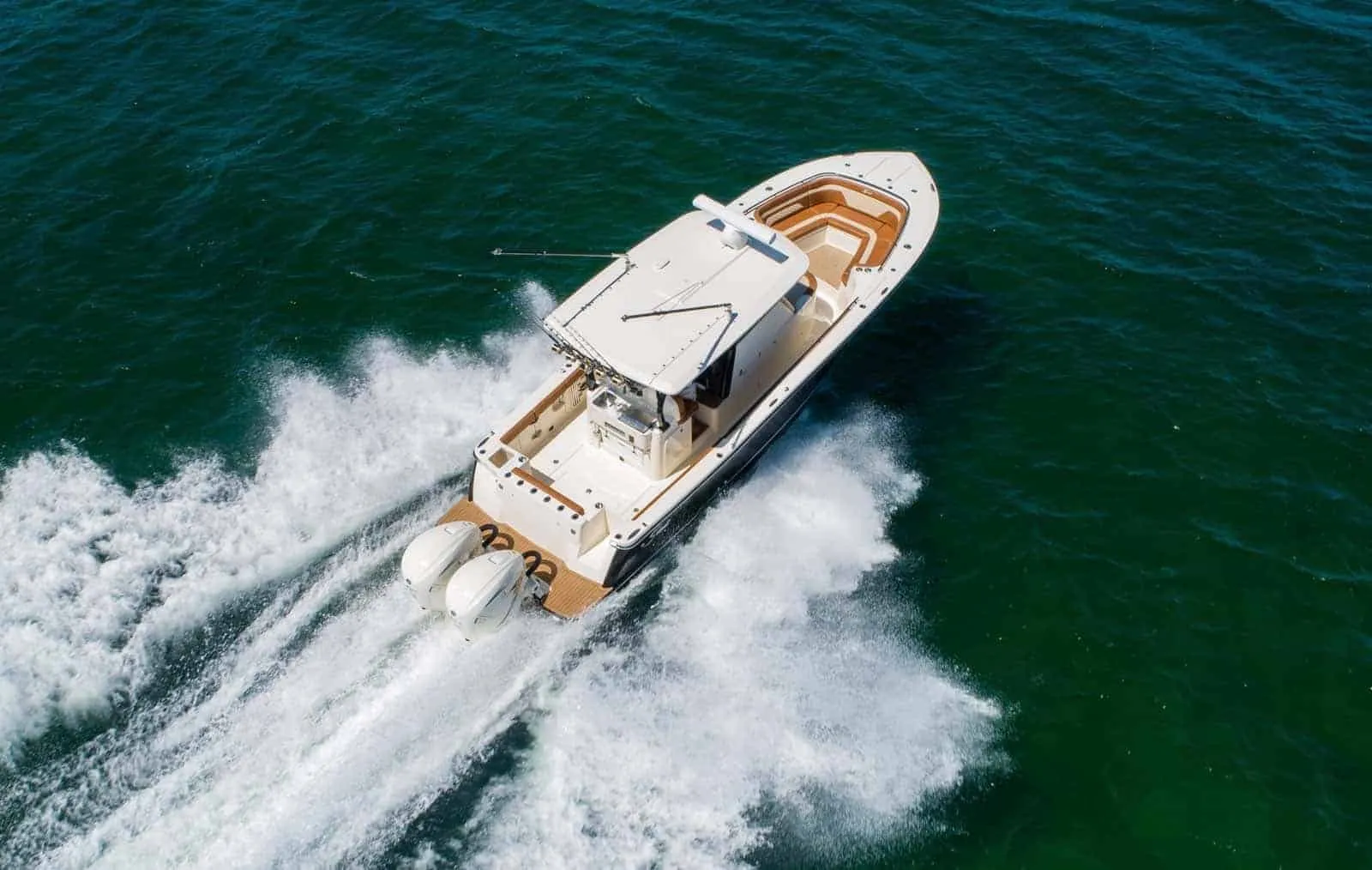
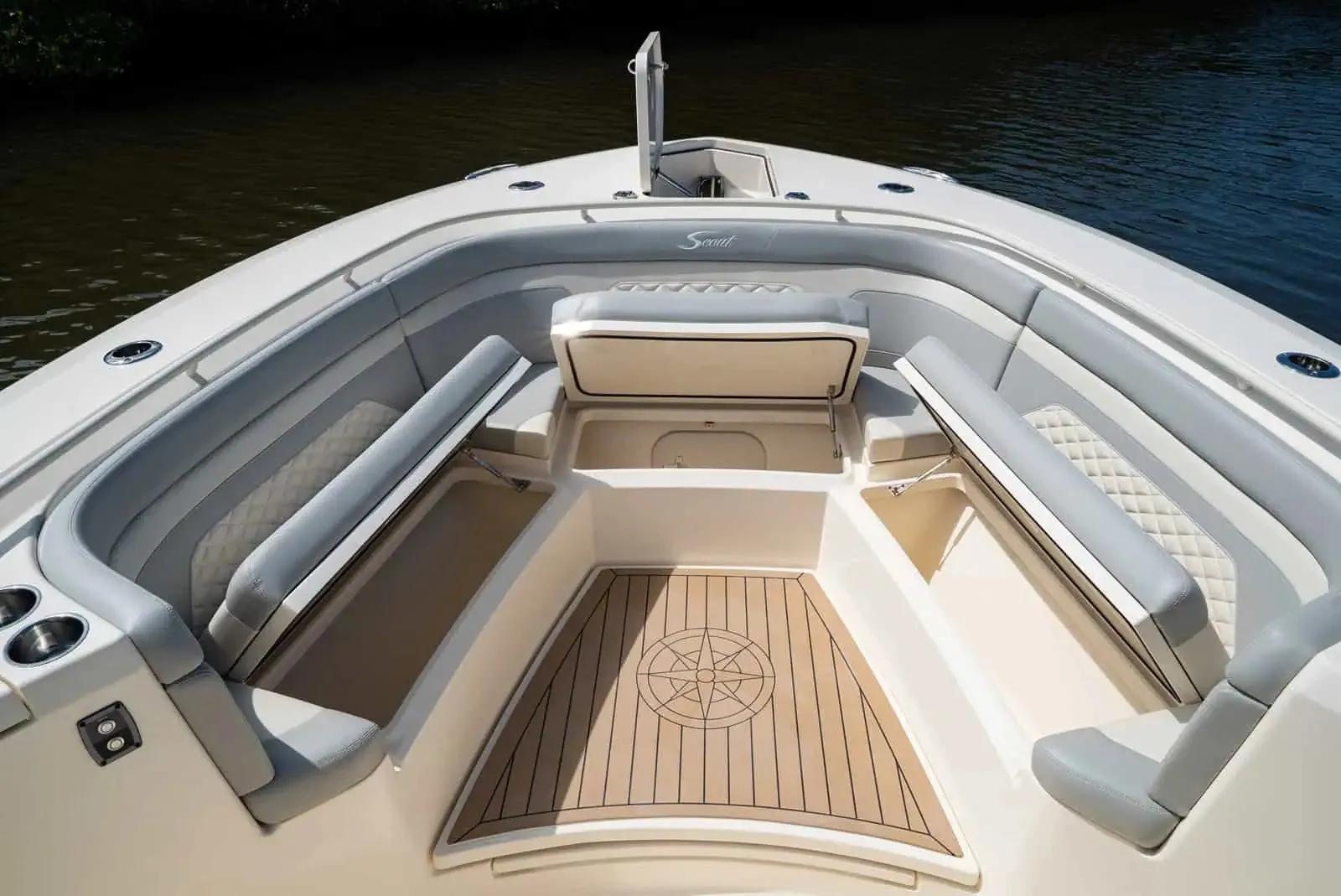
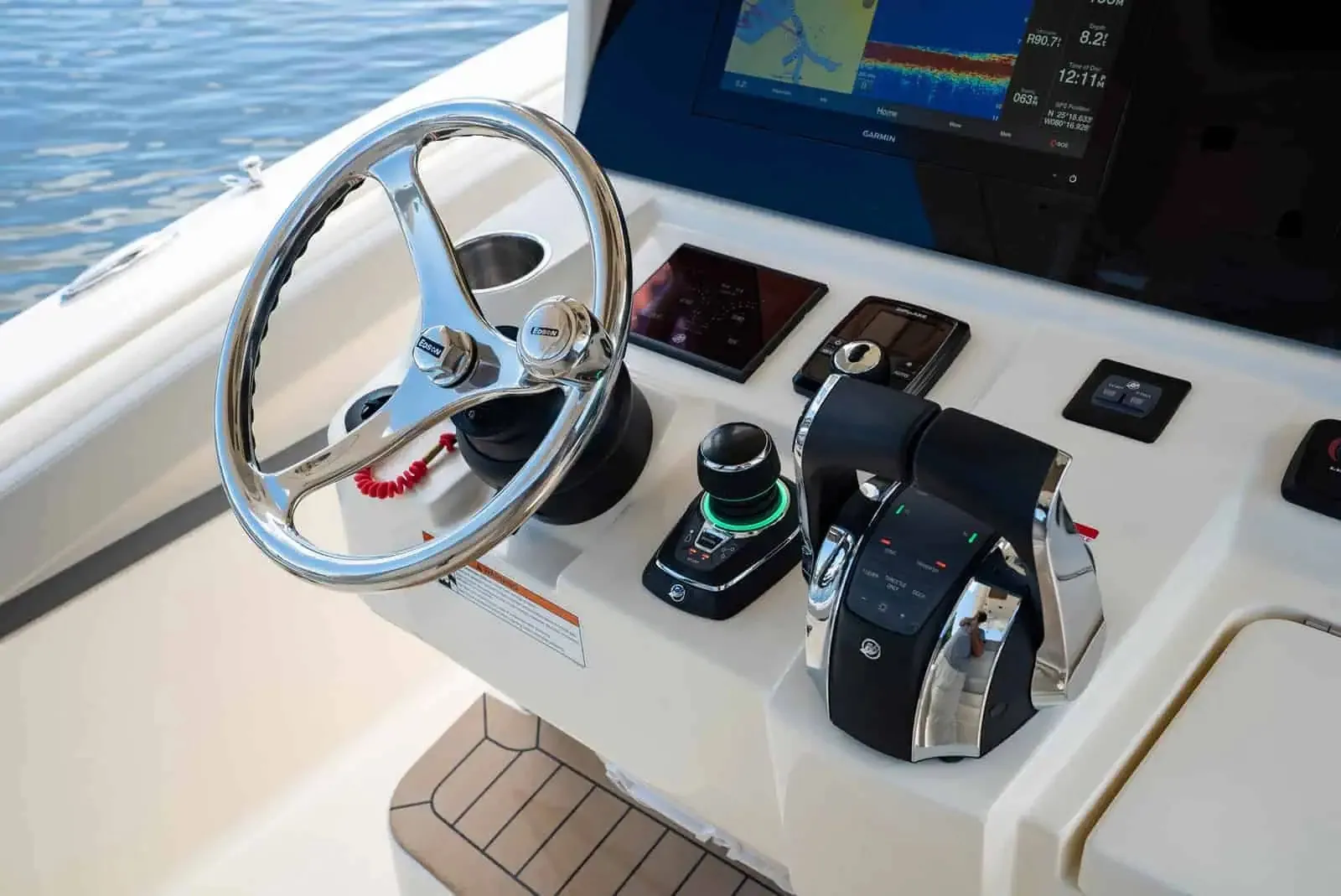
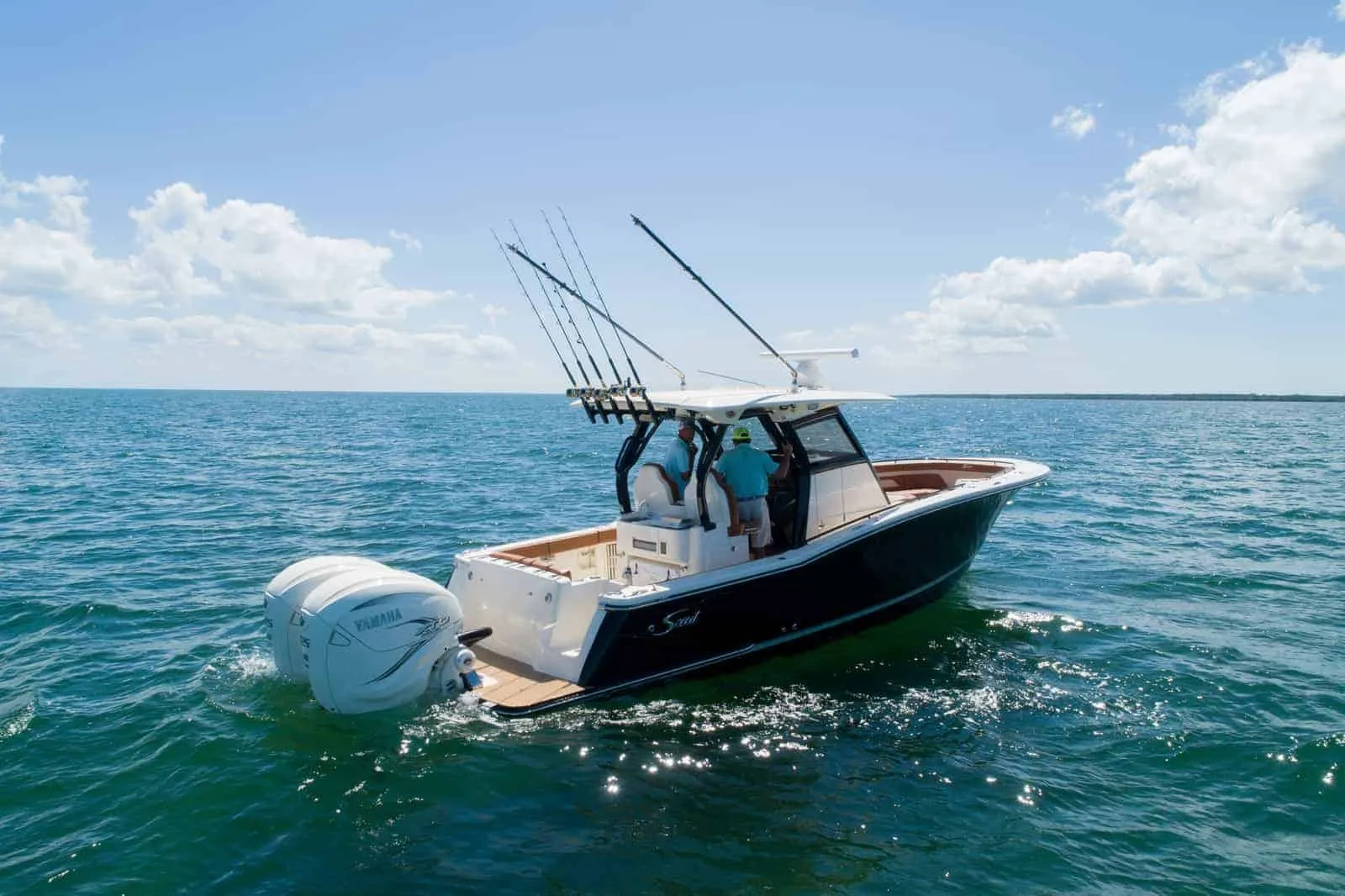
Photos courtesy of Scout.
The Scout 330 LXF is a 32'9" S-Class center console - Scout's own designation for its luxury models 33 feet and up. Scout builds it with epoxy infusion construction and what the company calls dual Scout Stepped Hull Technology, and gives it 24 degrees of transom deadrise on a 10'6" beam at 9,545 lbs dry without engines.
Standard equipment runs deeper than the class norm. The powder-coated patented T-top hardtop comes with a full windshield, six rocket launchers and LED rope lighting. The leaning post carries three tackle drawers to port, a trash unit to starboard, a 65-quart slide-out aft cooler, a sink, countertop, cutting board and a fiberglass cooler box, with twin bucket helm seats and an armrest box. Helm seats are heated as standard.
Inside the console is a berth with overhead lighting and an electric marine head plumbed to a 12-gallon holding tank with overboard discharge and dockside pump-out. Fuel capacity is 265 gallons and fresh water is 22 gallons. Options include a Zipwake interceptor system, a Seakeeper 2 DC version, outriggers, retractable rocket launchers and a built-in vessel sink. The 330 LXF is NMMA and Yacht Certified.
Scout rates the 330 LXF hull to a maximum of 900 hp (671 kW) and publishes a recommended cruising rating of 600 hp (448 kW). Tested performance bulletins are published for twin Yamaha 300s, twin Mercury 300s, twin Mercury 300s with Seakeeper, twin Mercury 400 V10s, and twin Yamaha 425s.
On the twin Mercury Verado 300 bulletin (20p Rev 4 props), Scout records a top speed of 55.2 mph at 6,000 rpm, 0-20 mph in 4.7 seconds, 0-30 mph in 7.6 seconds, and best fuel efficiency at 39.4 mph. Scout publishes an estimated range of 424 miles on that package and footnotes it as an estimate based on fuel consumption at optimal cruising speeds and sea conditions.
The hull runs 24 degrees of transom deadrise and Scout's dual stepped hull design, with the epoxy-infused laminate accounting for the 9,545 lb dry weight. Draft is approximately 31" and bridge clearance to the T-top is approximately 9'8". The highest-output package Scout publishes a bulletin for is twin Yamaha 425s.
Inside the console the 330 LXF carries a berth with overhead lighting, a starboard console storage closet, and an electric marine head with a 12-gallon holding tank, overboard discharge and dockside pump-out. A built-in vessel sink is on the options list.
The cockpit is organised around the leaning post, which is a working station in standard trim: three tackle drawers to port, a trash unit to starboard, a 65-quart slide-out aft cooler, a sink with countertop, a cutting board on the starboard countertop, a fiberglass cooler box, and twin bucket helm seats with an armrest box. Optional configurations swap the cutting board and sandwich refrigerator arrangement. Helm seats are heated as standard.
Overhead, the powder-coated patented T-top hardtop carries a full windshield, six rocket launchers and LED rope lighting. Forward bow seating has underside storage and a removable teak bow table is available. Fresh water capacity is 22 gallons.
The 330 LXF is the first boat in Scout's S-Class - the company's designation for its luxury models 33 feet and up - and it is the model where Scout's construction argument moves from equipment to laminate. Epoxy infusion and the dual stepped hull are the differentiators Scout leads with at this length, and they place the 330 LXF against the premium end of the 33-foot offshore center console market rather than the volume builders.
Buyers looking at this hull are generally comparing it with other 33-foot offshore center consoles from established American builders, weighing construction method, deadrise, fuel capacity and how complete the standard boat is before options.
Scout is family owned, builds in Summerville, South Carolina, and has been in business since 1989. The 330 LXF is NMMA and Yacht Certified.
The 330 LXF fits the owner-operator who runs offshore in genuine conditions and wants a construction story he can verify rather than take on faith. If you have run a conventional deep-vee 33-footer and want to know what an epoxy-infused, dual-stepped hull changes, this is the boat that answers it - and at 32'9" on a 10'6" beam it stays within reach of an owner who docks his own boat.
It is a strong fit if 24 degrees of deadrise matches your water, if a 265-gallon tank covers the runs you make, and if you value a standard-equipment list that already includes a full-windshield hardtop, heated helm seats and a properly plumbed electric head.
It is the wrong boat if your home channel will not take 31 inches at low tide, or if you need a genuine weekender - 22 gallons of fresh water and a console berth are honest about their limits. Buyers who do not need the S-Class laminate or the sharper entry should look at the 305 LXF, which does much of the same job in a smaller, lighter package.
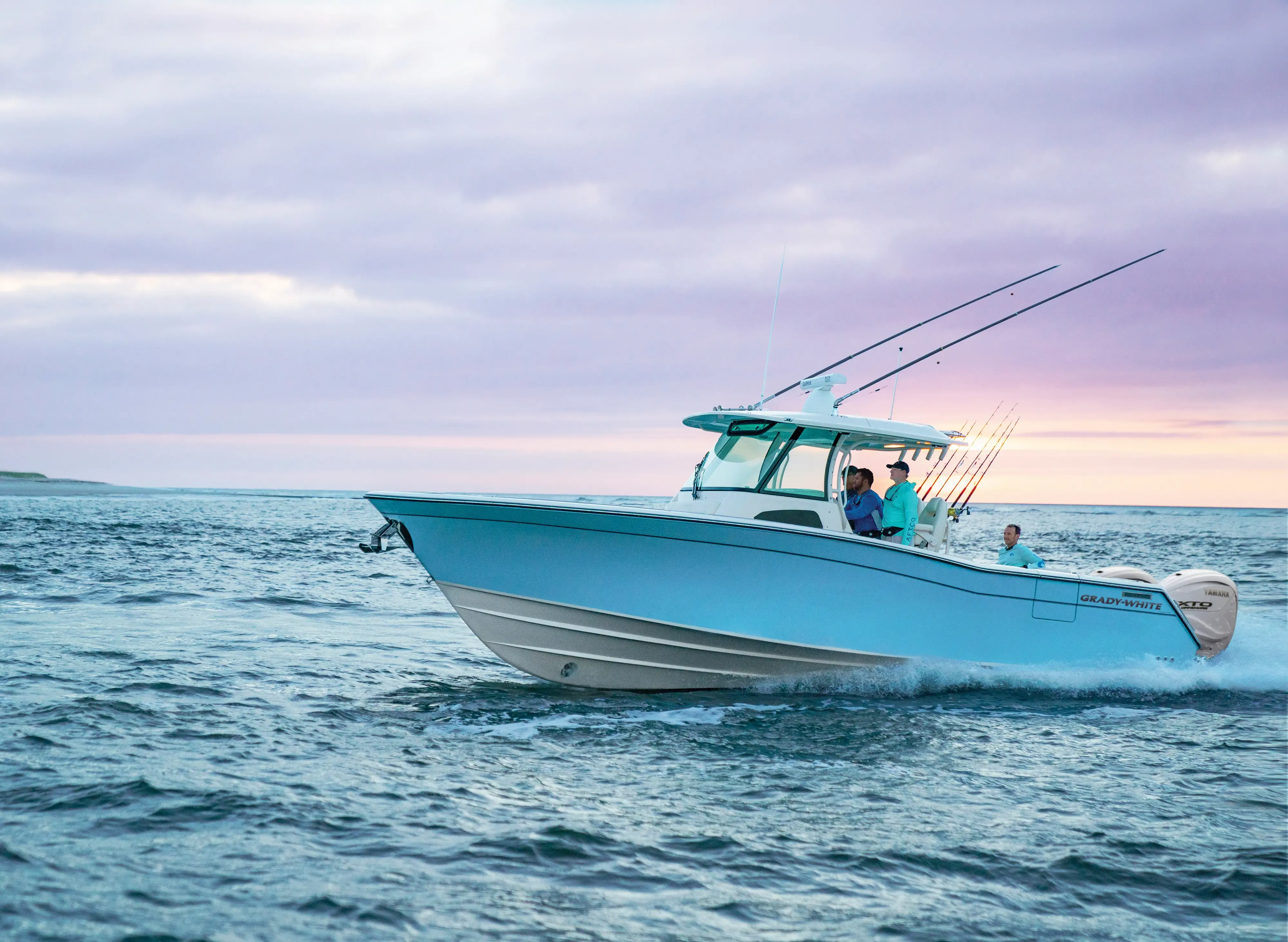
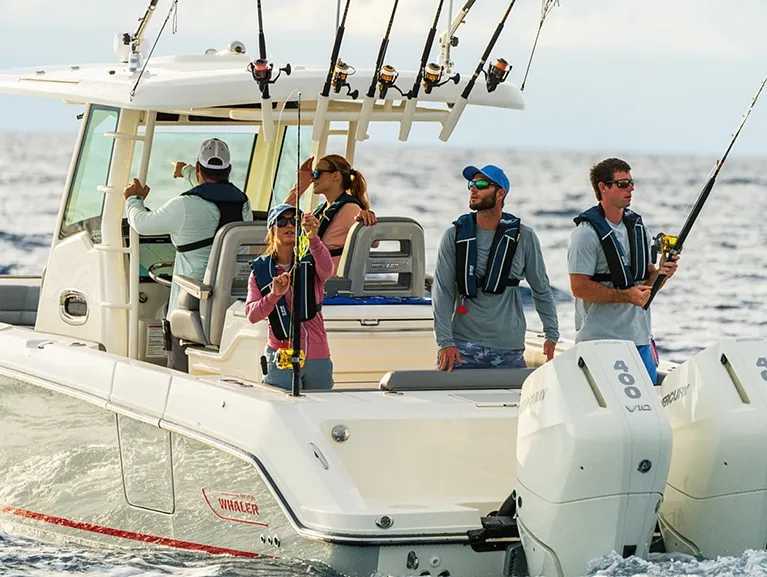
Scout's performance bulletin for twin Mercury Verado 300s on 20p Rev 4 props records a top speed of 55.2 mph at 6,000 rpm, 0-20 mph in 4.7 seconds and 0-30 mph in 7.6 seconds, with best fuel efficiency at 39.4 mph. Scout publishes an estimated 424-mile range on that package and footnotes it as an estimate dependent on cruising speed and sea conditions — a planning figure rather than a promise.
Bulletins also exist for twin Yamaha 300s, twin Mercury 300s with Seakeeper, twin Mercury 400 V10s and twin Yamaha 425s. Each set of numbers belongs only to its own package.
A berth with overhead lighting, a starboard storage closet and an electric marine head plumbed to a 12-gallon holding tank with overboard discharge and dockside pump-out. A built-in vessel sink is on the option list. It is a berth rather than a stateroom, and the honest constraint is water: 22 gallons aboard sets how long the boat stays comfortable more than the berth does.
Above deck the leaning post is a working station in standard trim — three tackle drawers to port, a trash unit to starboard, a 65-quart slide-out aft cooler, a sink and countertop, a cutting board and a fiberglass cooler box — with heated helm seats standard.
Scout rates the hull to 900 horsepower and publishes a recommended cruising rating of 600 horsepower. Worth knowing before you spec it: the highest-output package Scout publishes a tested bulletin for is twin Yamaha 425s.
Two other numbers deserve the same attention. Draft is approximately 31 inches and bridge clearance to the T-top approximately 9 feet 8 inches. Check both against your home channel at dead low and against your bridge before horsepower becomes the question that matters.
Yes. The 330 LXF is the first boat in Scout's S-Class — the company's own designation for its luxury models 33 feet and up — and it is where the construction changes. Scout builds this hull with epoxy infusion and what it calls dual Scout Stepped Hull Technology, and publishes a dry weight of 9,545 pounds without engines.
That laminate is what lets the boat carry 24 degrees of transom deadrise on a 10'6" beam, against the 20 degrees on the 305 LXF below it. The 357 LXF uses the same epoxy-infused E-glass; from 37 feet up Scout switches to a carbon fiber and E-glass hybrid.