
March 19, 2026
The Grady-White 336 Canyon: Your Offshore Command Center
Purpose-built for the owner-operator, the Grady-White 336 Canyon pairs a SeaV2 hull that slices offshore chop with tournament-grade fishabil…
Read the articleExpert Review, Technical Specifications & Market Analysis
| Feature | Specifications |
|---|---|
| Overall Length | 33' 6" |
| Beam | 11' 7" |
| Draft | 26" (hull draft) |
| Displacement | 10,100 lbs (w/o engines) |
| Engines | Twin Yamaha XTO Offshore 450 / triple Yamaha 350 four-stroke; 1,050 hp maximum |
| Fuel Capacity | 361 US gallons |
| Water Capacity | 35 US gallons |
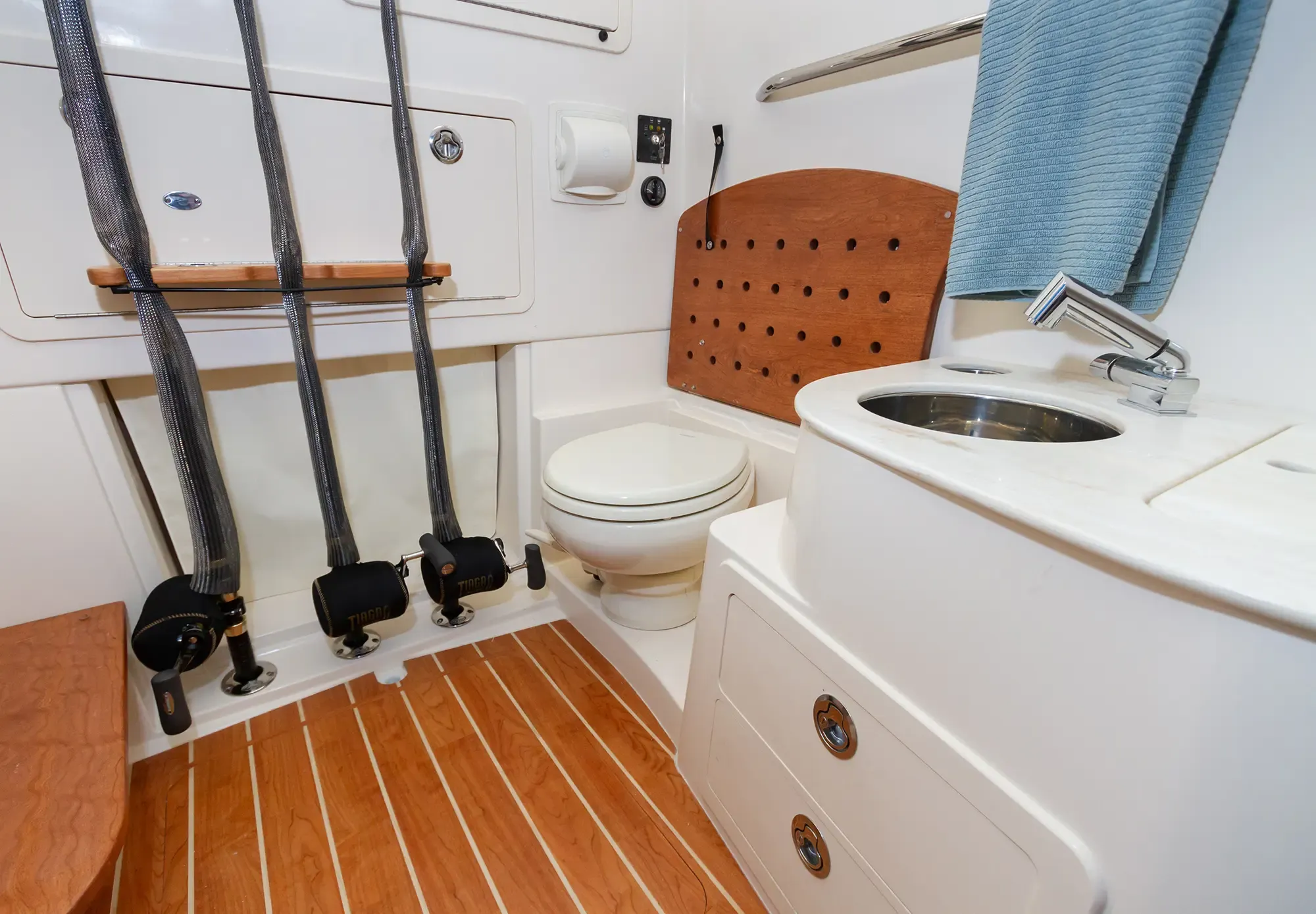
| Cabins / Heads | No cabin — cushioned berth forward in the console; lockable console head with stand-up room, shower, sink and VacuFlush head; 10-gallon holding tank |
| Max Speed | 53.9 mph (twin Yamaha XTO 450s); 58.8 mph (triple Yamaha 350s) |
| Cruise Speed | 31.5 mph @ 3,400 RPM (with triple Yamaha 350s) |
Source: Spec & Photos courtesy of Grady White. Specs verified by Tony Smith, USCG 100 Ton Master, on August 10, 2026.
Part of the Grady White Canyon series — see how owners step up through the lineup.

The Canyon 336 is one of the most honest boats in the 33-foot center console segment. Grady-White doesn't chase trends or try to be the fastest or the flashiest. They build boats that work. The SeaV2 hull is proven, the construction is methodical, and the attention to detail in the fishability features shows they understand the mission. The 11'7" beam is the real differentiator here. It gives you stability, space, and confidence offshore that narrower hulls simply can't match.
This boat is for the owner-operator who fishes 30-50 days a year and wants a platform that doesn't require a captain or a full-time crew. It's not for the buyer who wants a floating lounge or a boat that looks good on social media. It's for the angler who runs hard, fishes harder, and expects the boat to be ready every time. If you're comparing this to a 35-foot express with inboards, you're missing the point. The 336 is simpler, more reliable, and more capable in the hands of a competent operator.
Resale is strong because the market knows what these boats are. They hold value, they last, and they don't depreciate like the competition. Maintenance is straightforward with Yamaha outboards. You're not dealing with complex inboard systems or proprietary parts. If you're serious about offshore fishing and you want a boat that works as hard as you do, the 336 is worth the investment. Just don't expect it to win any beauty contests at the dock.
Video courtesy of Grady White.
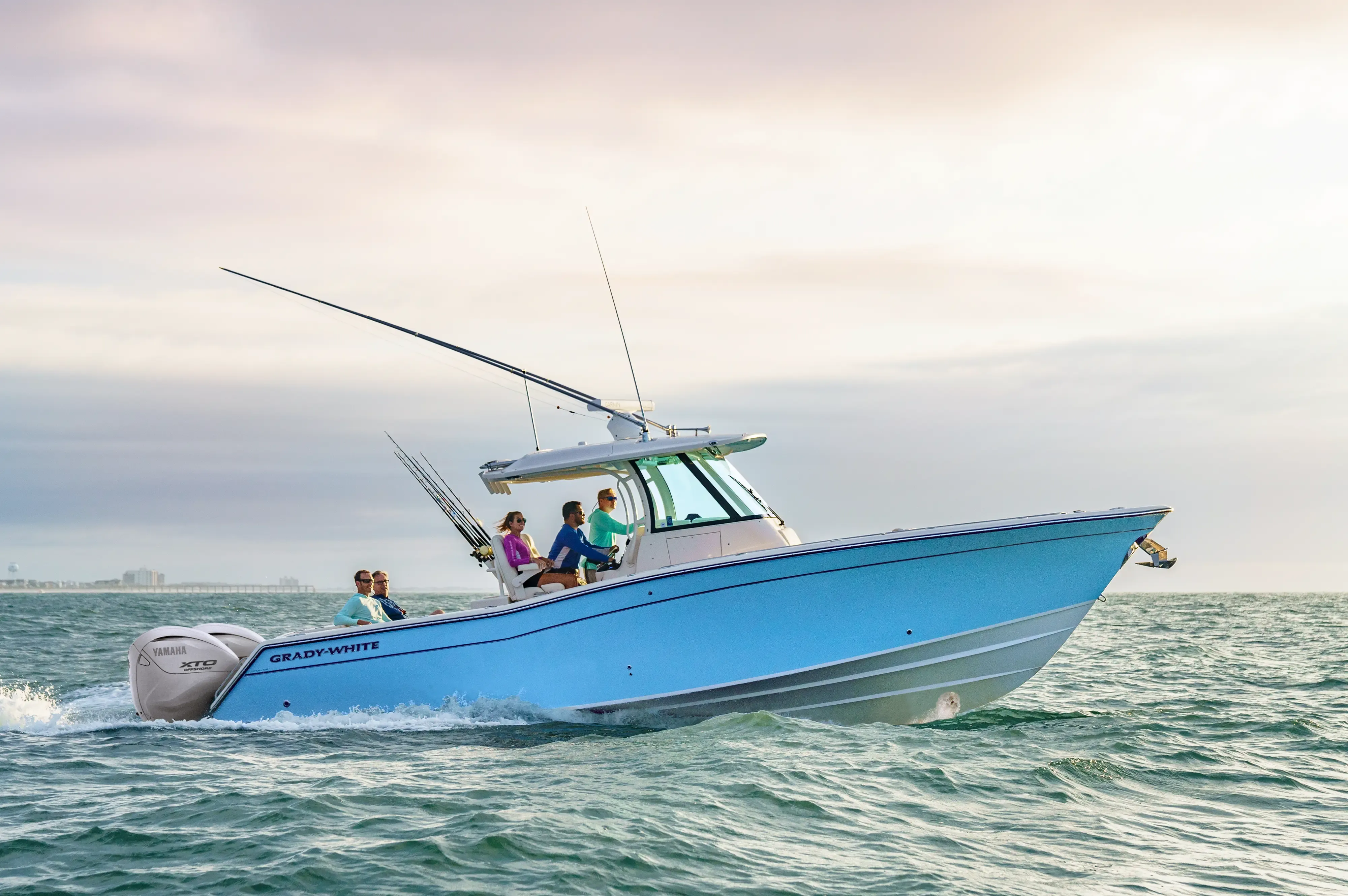
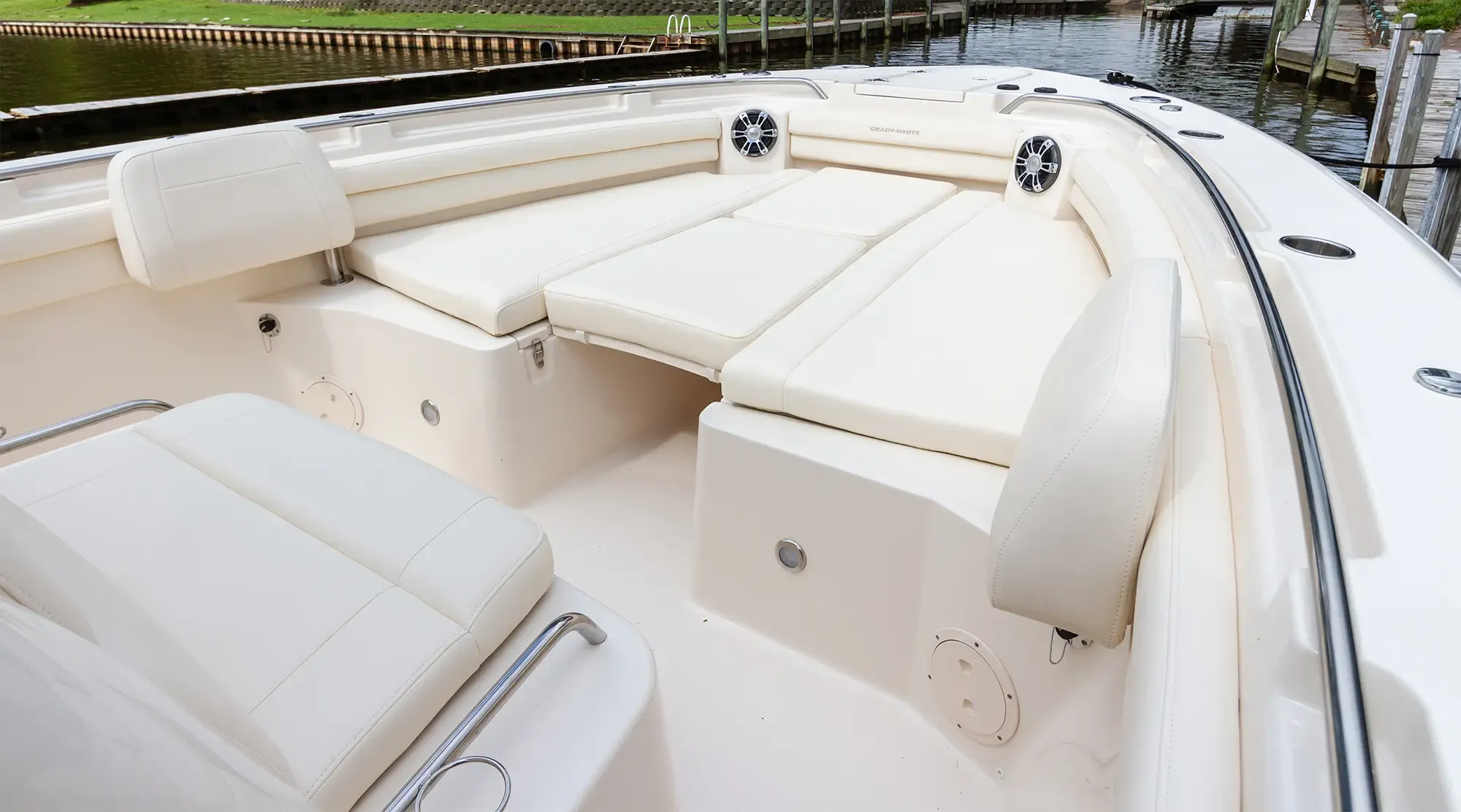
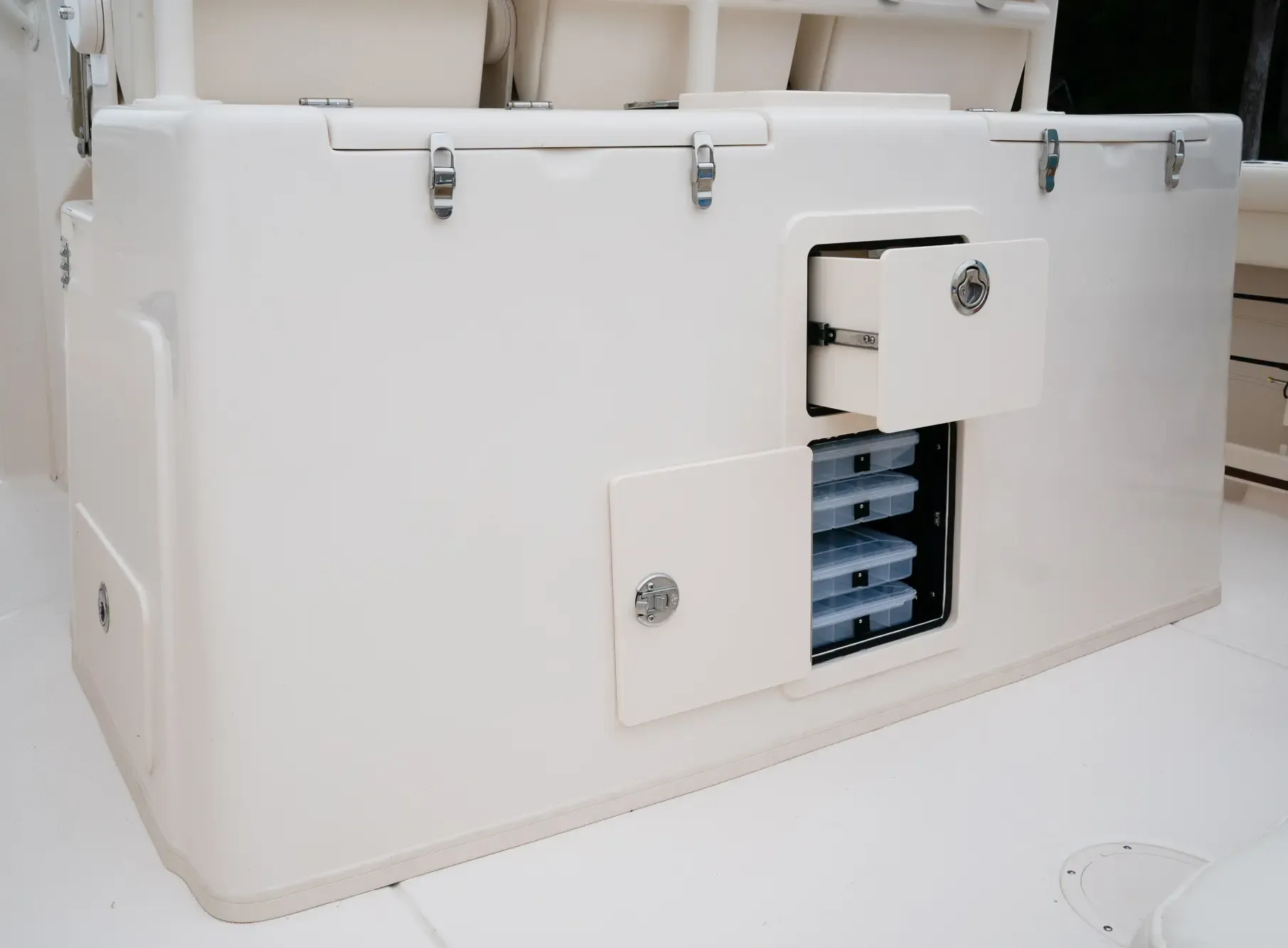
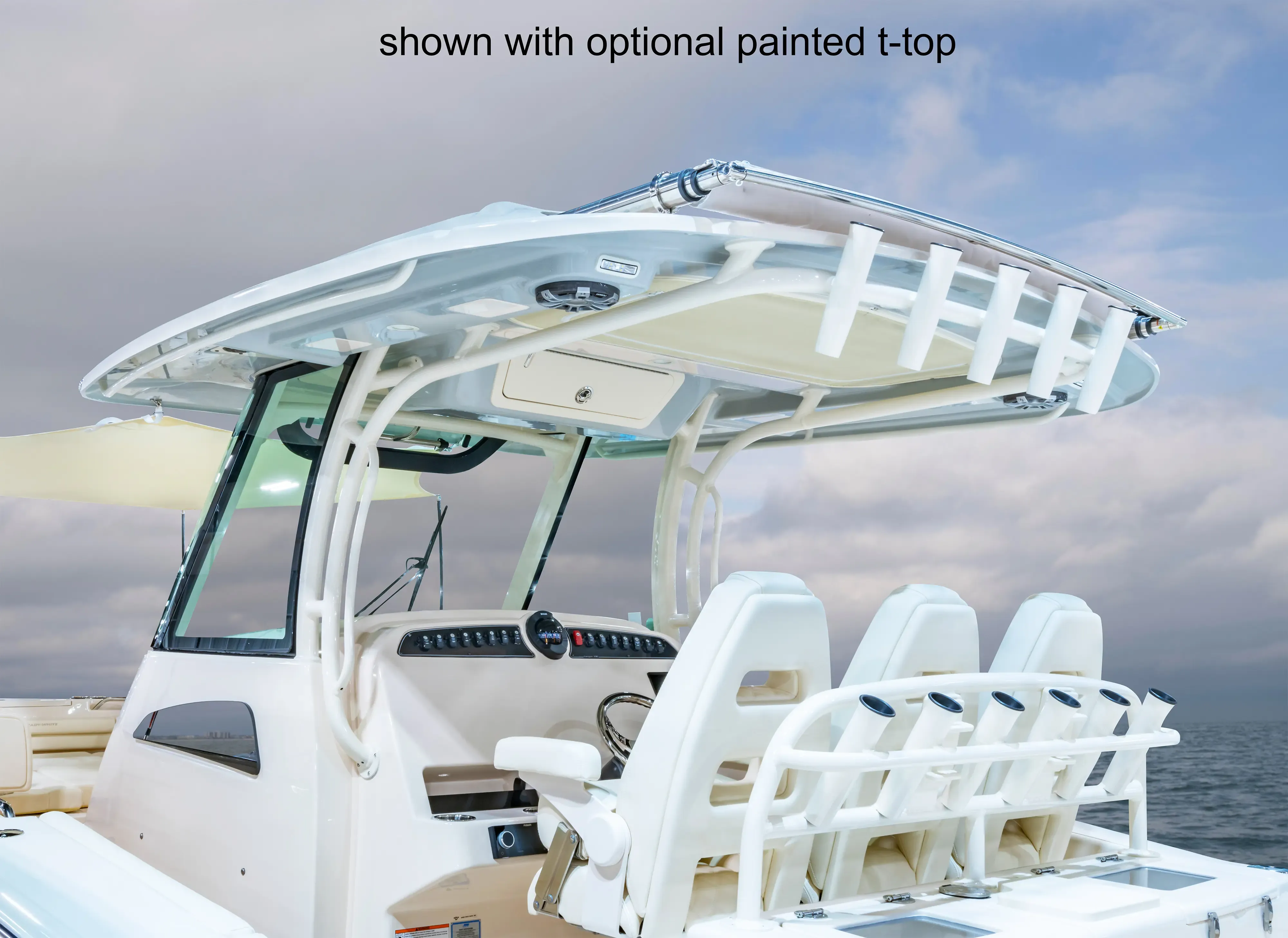
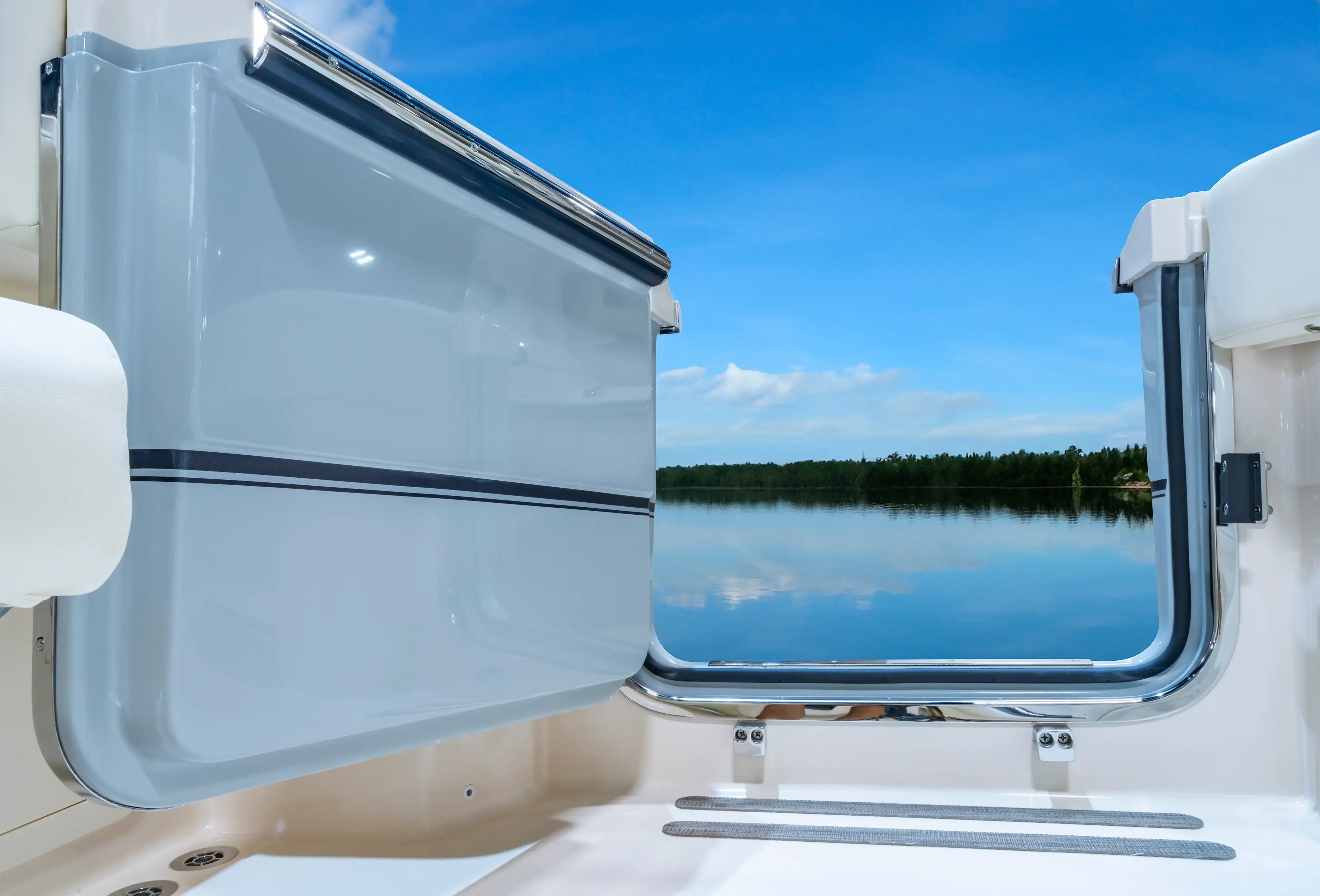
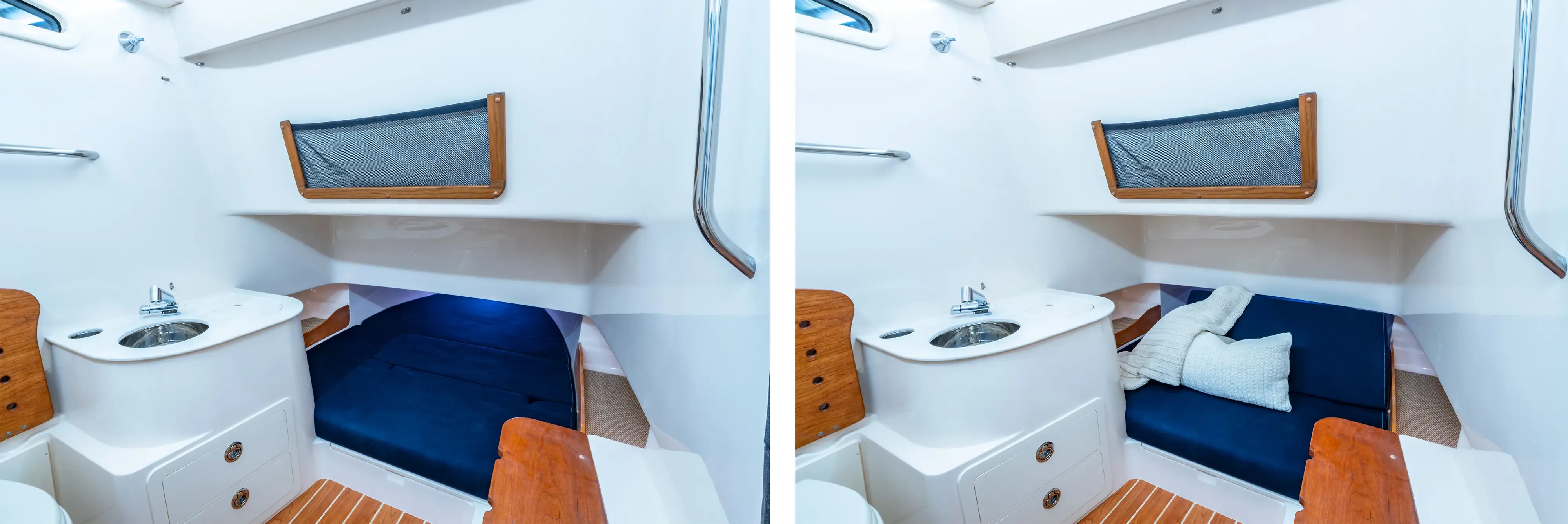
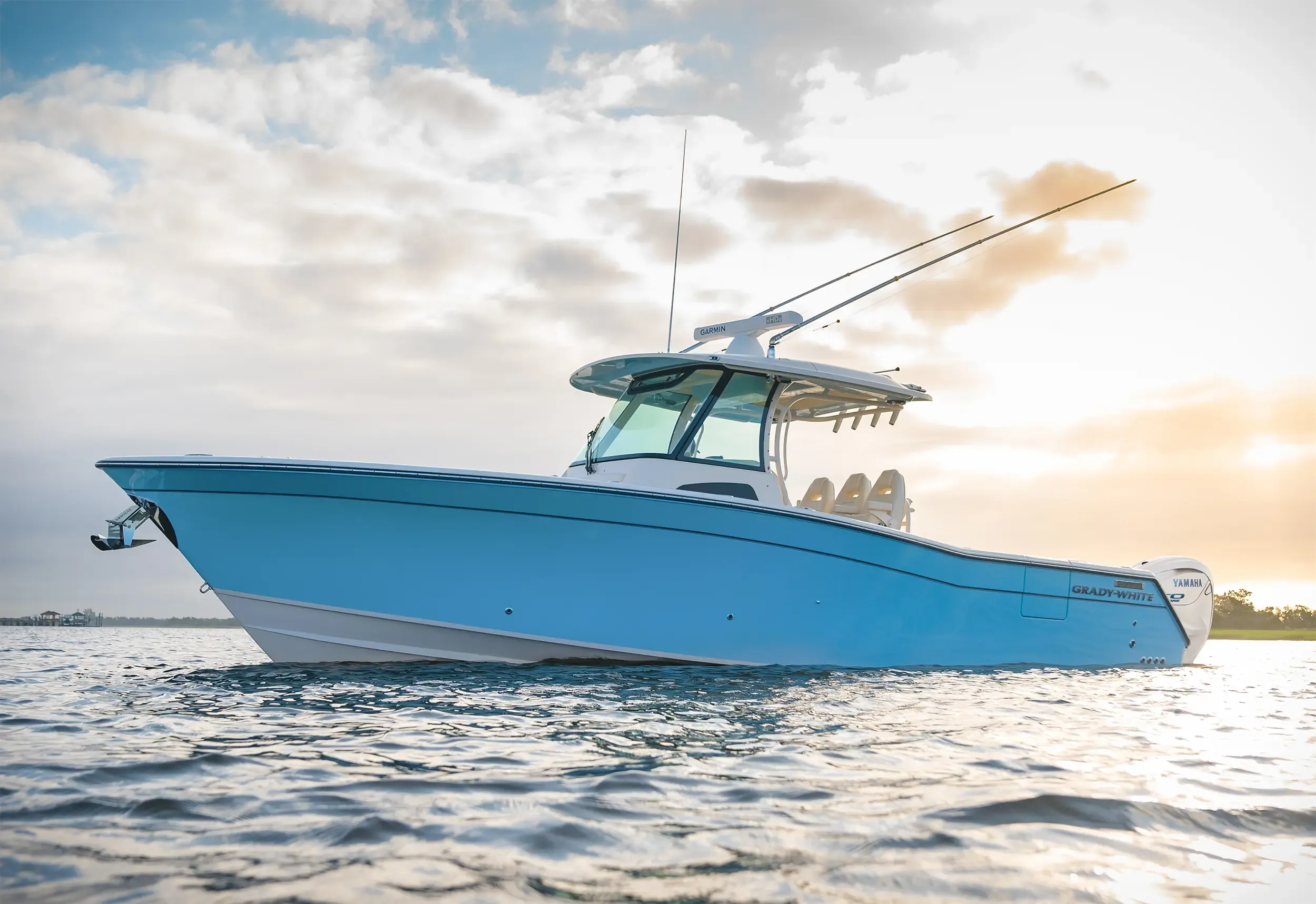
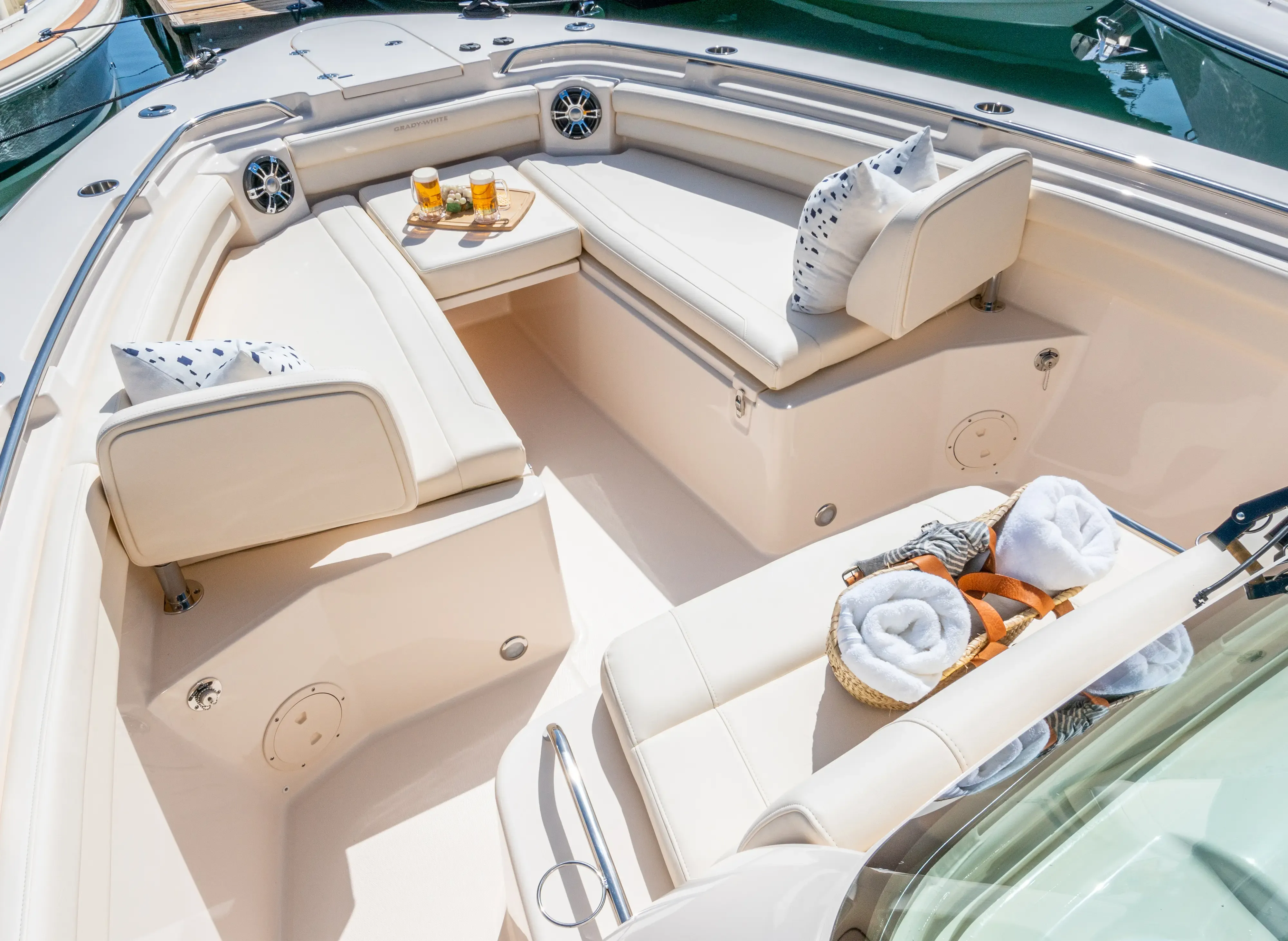
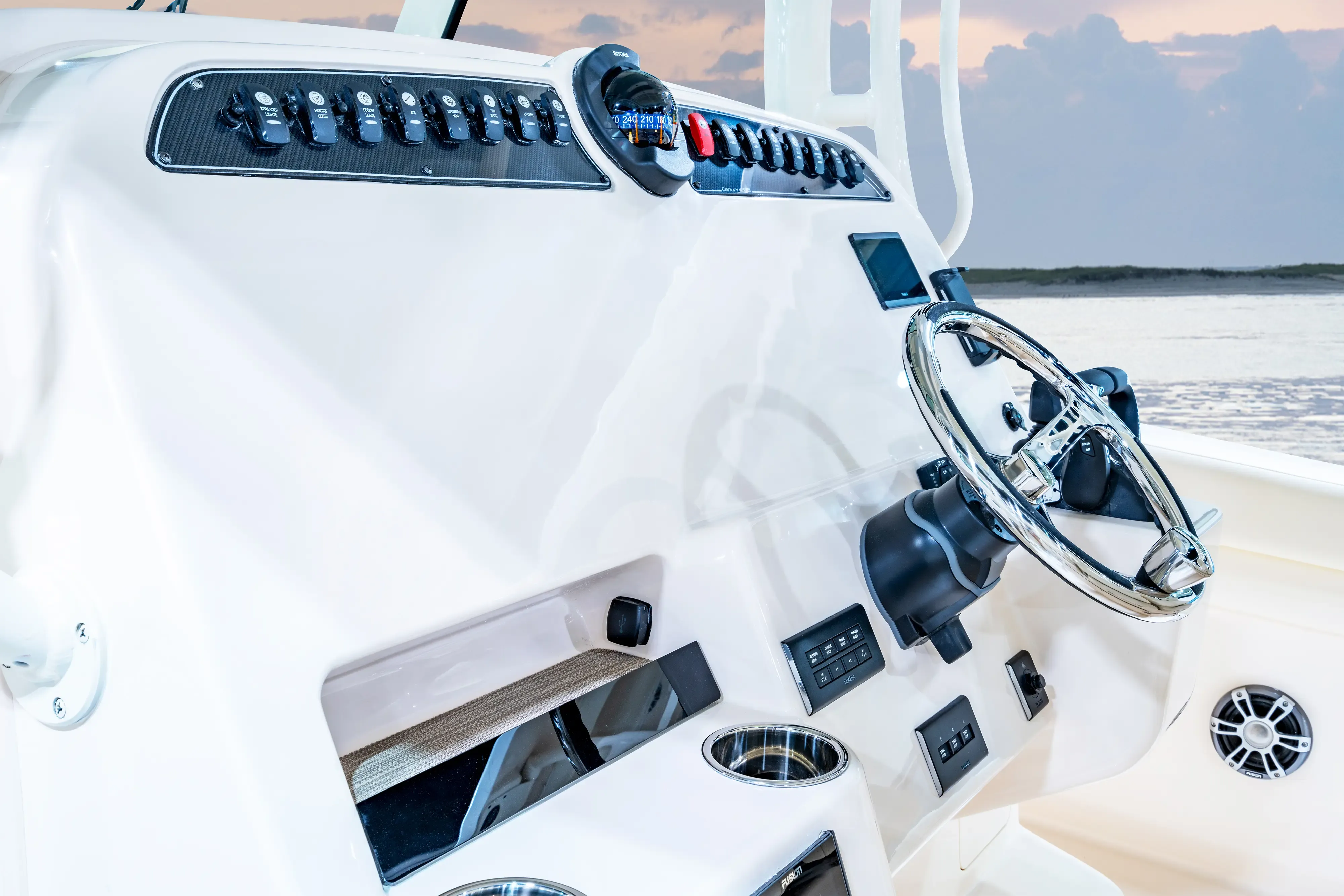
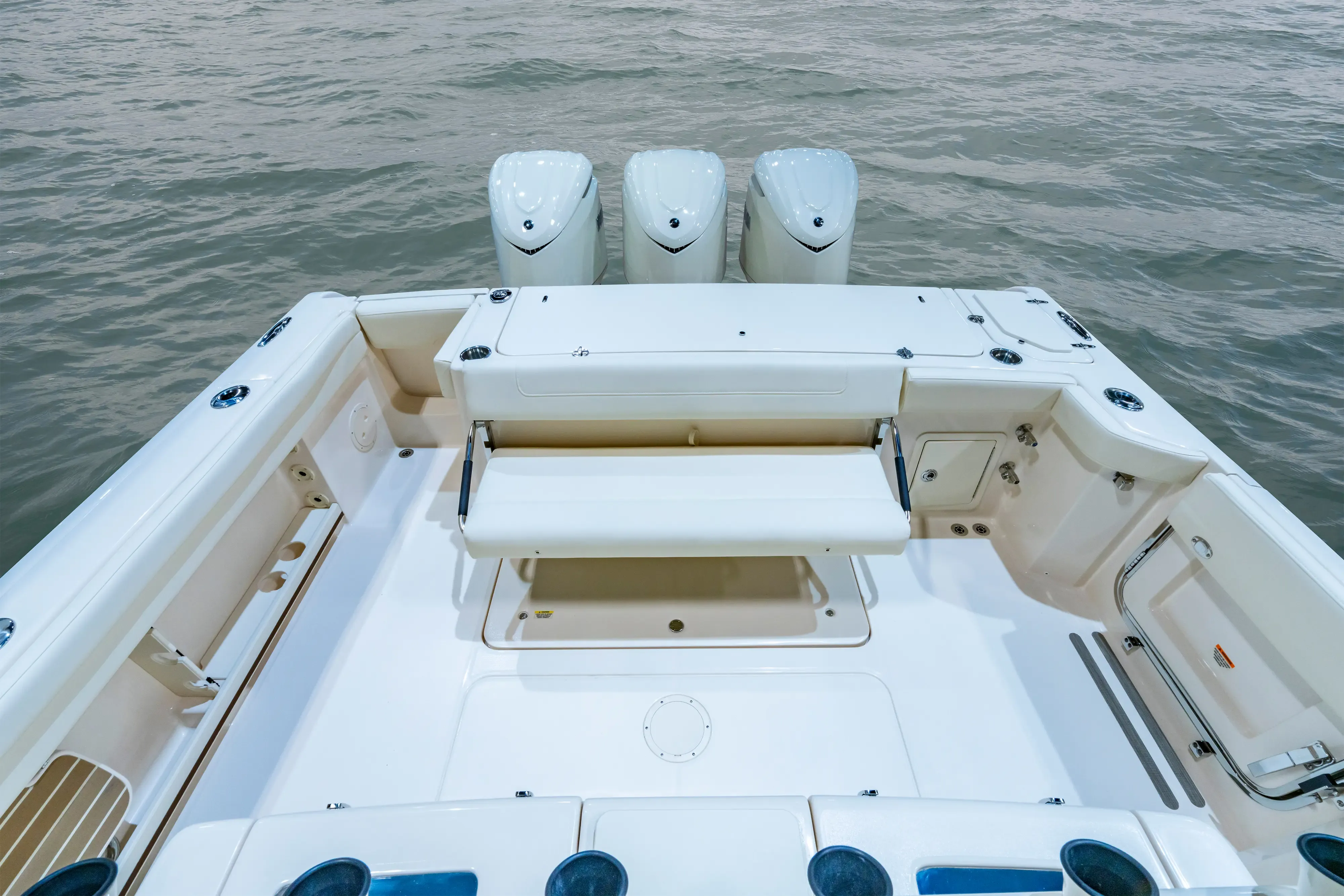
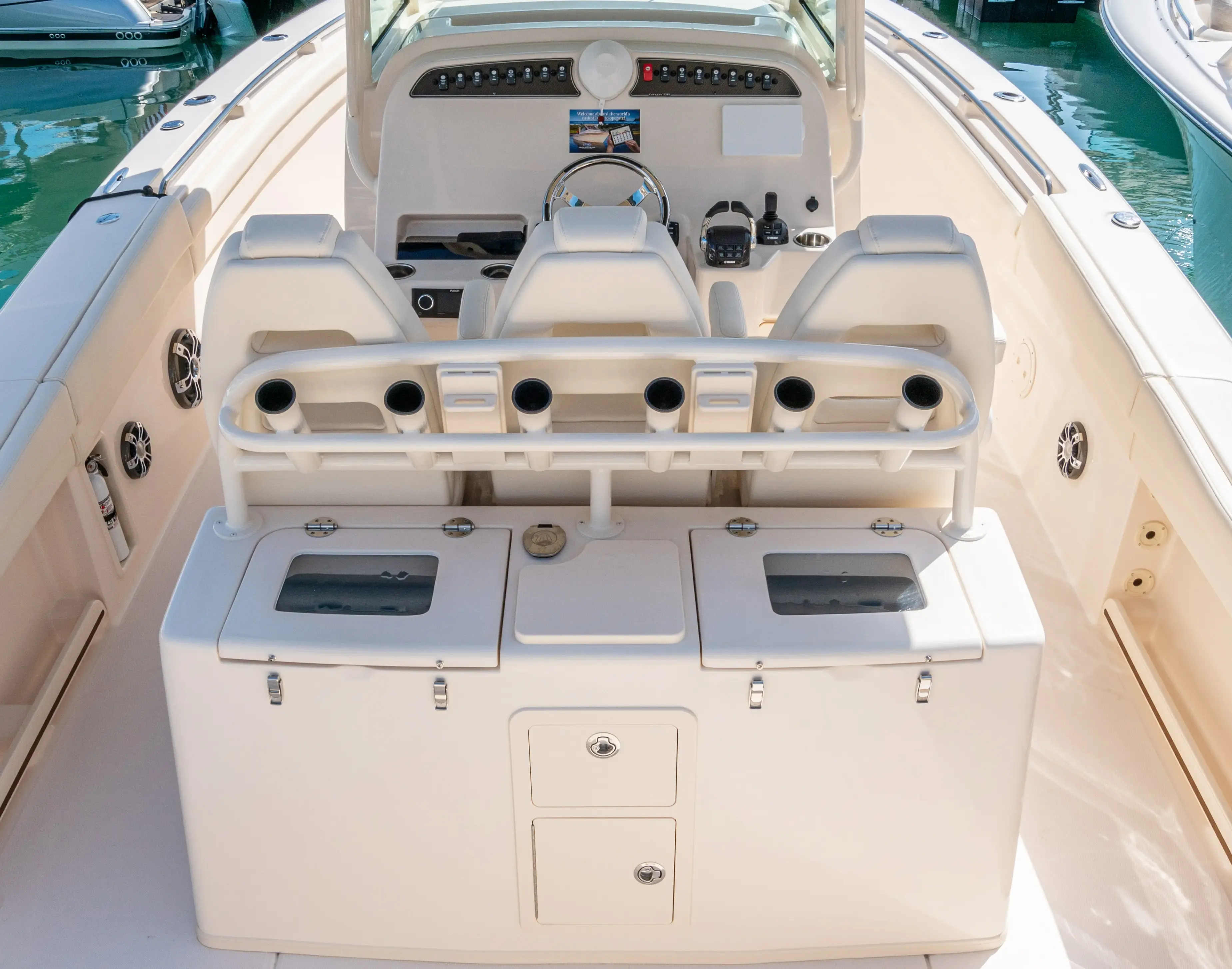
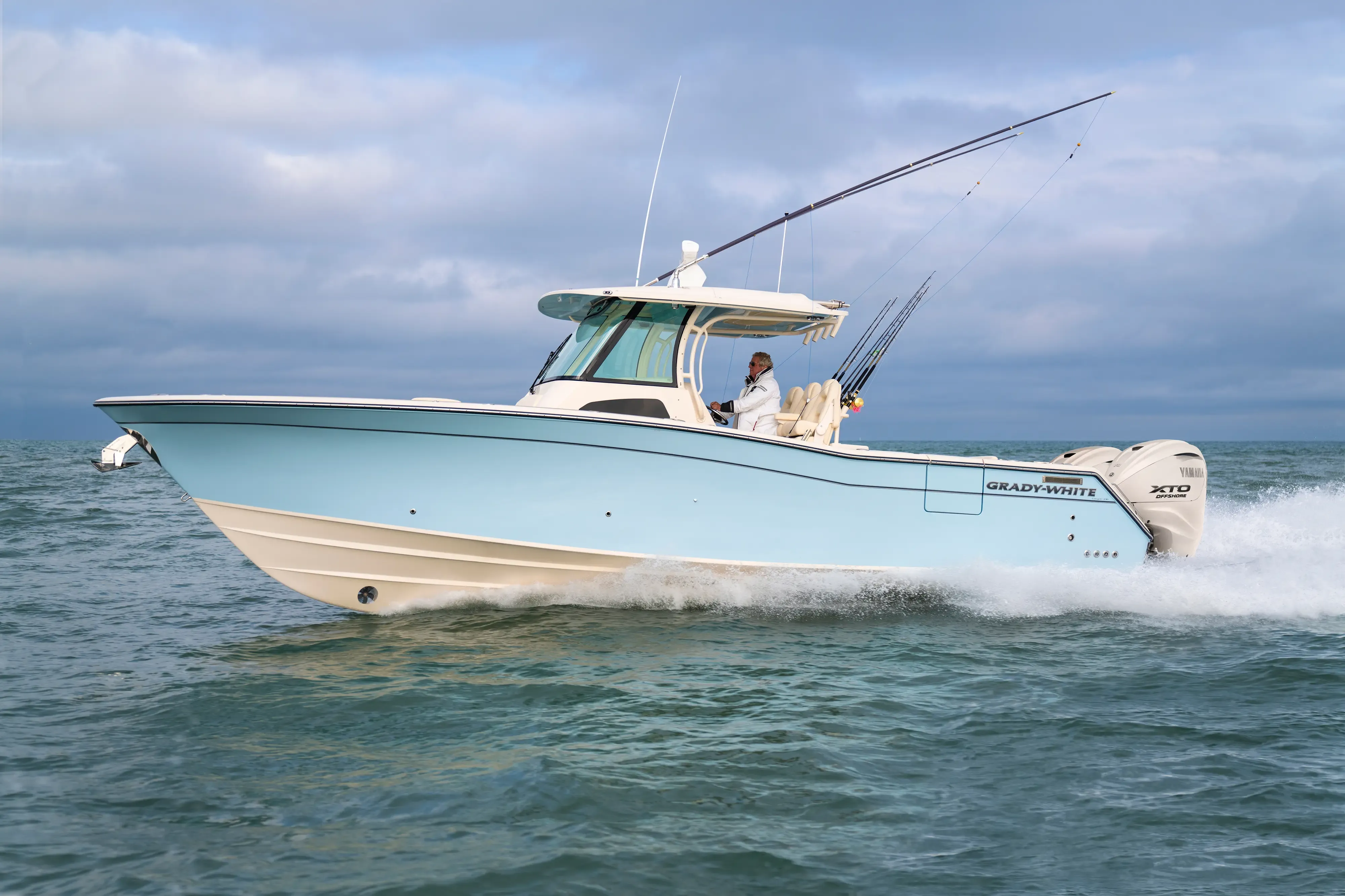
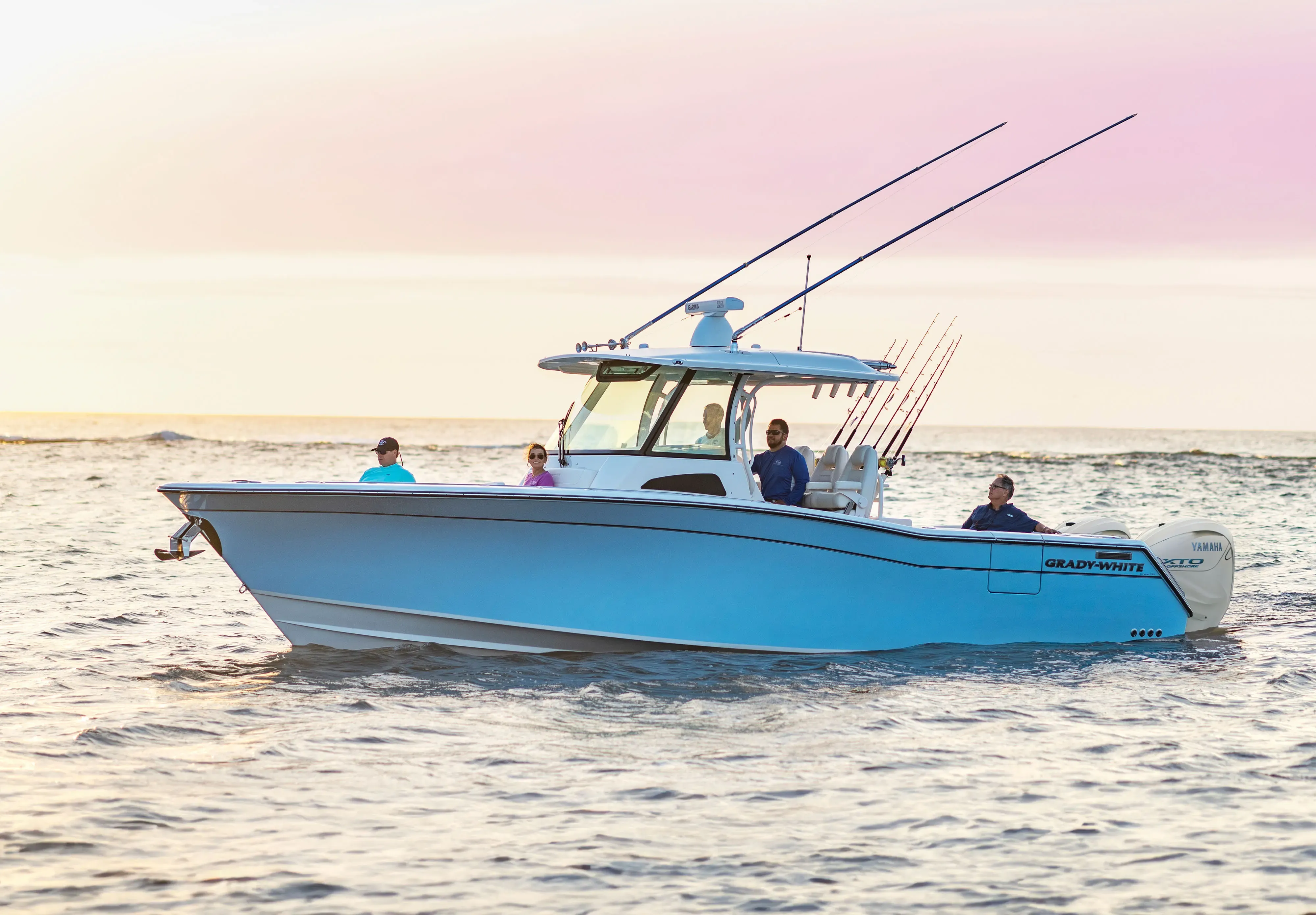
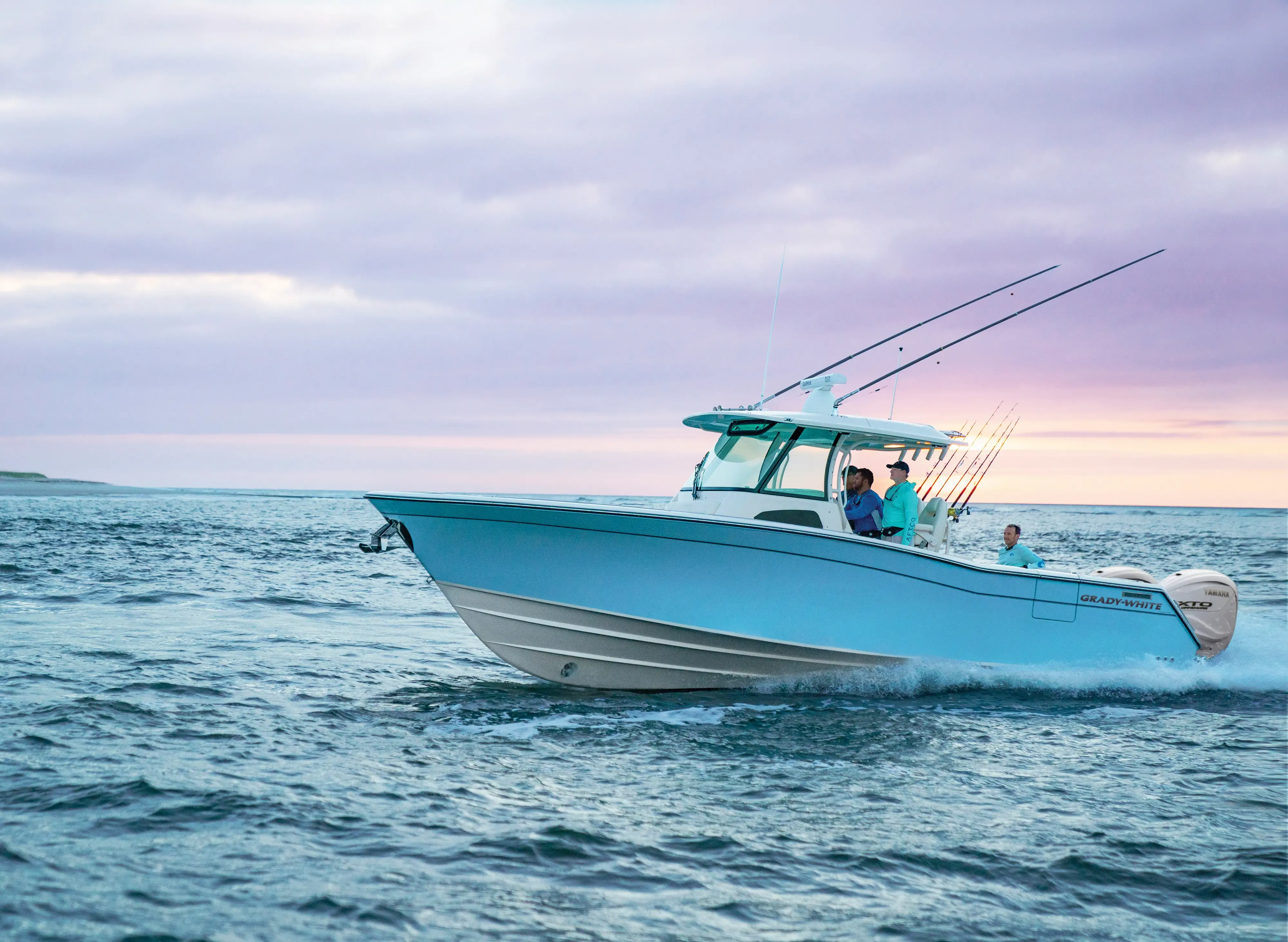
Photos courtesy of Grady White.
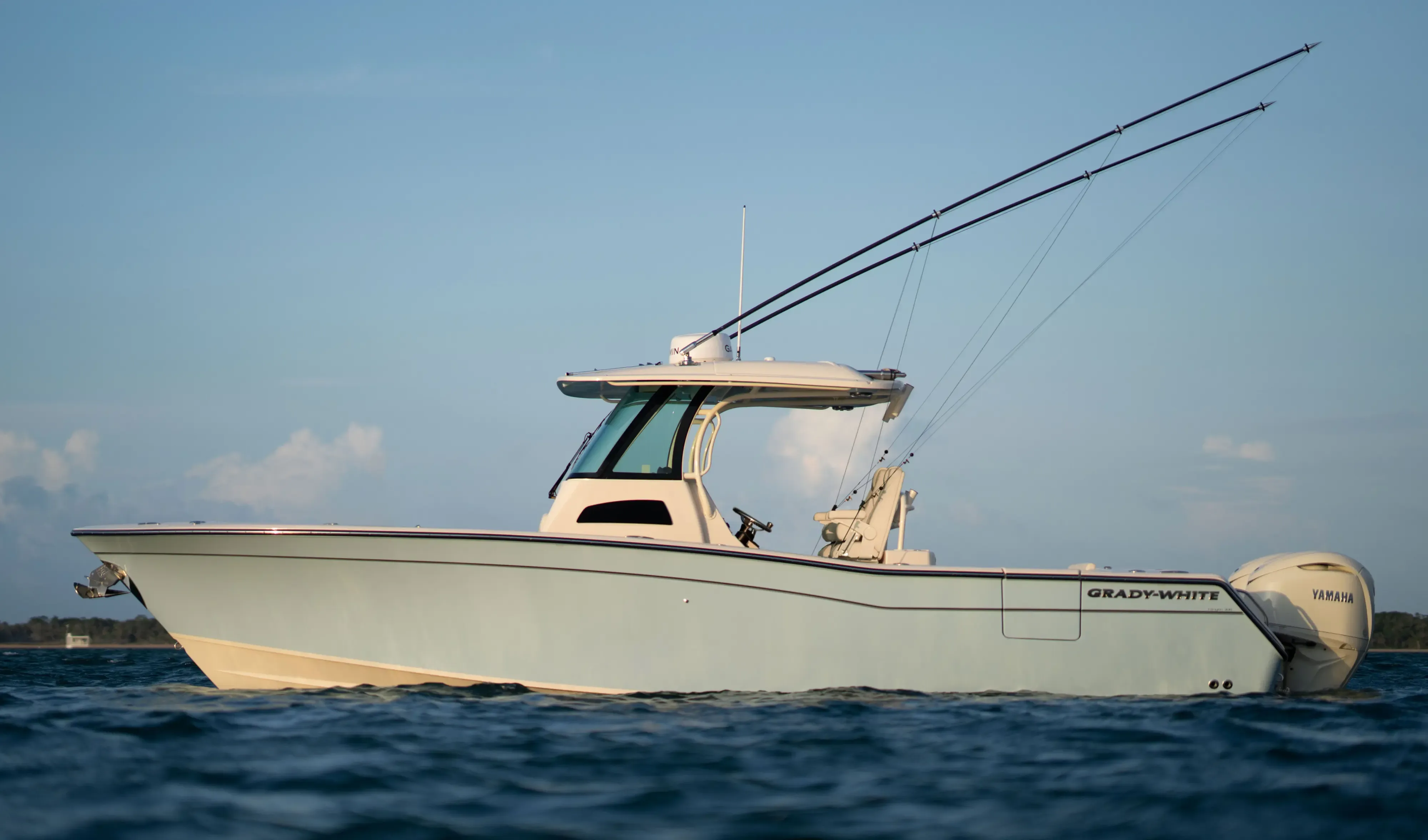
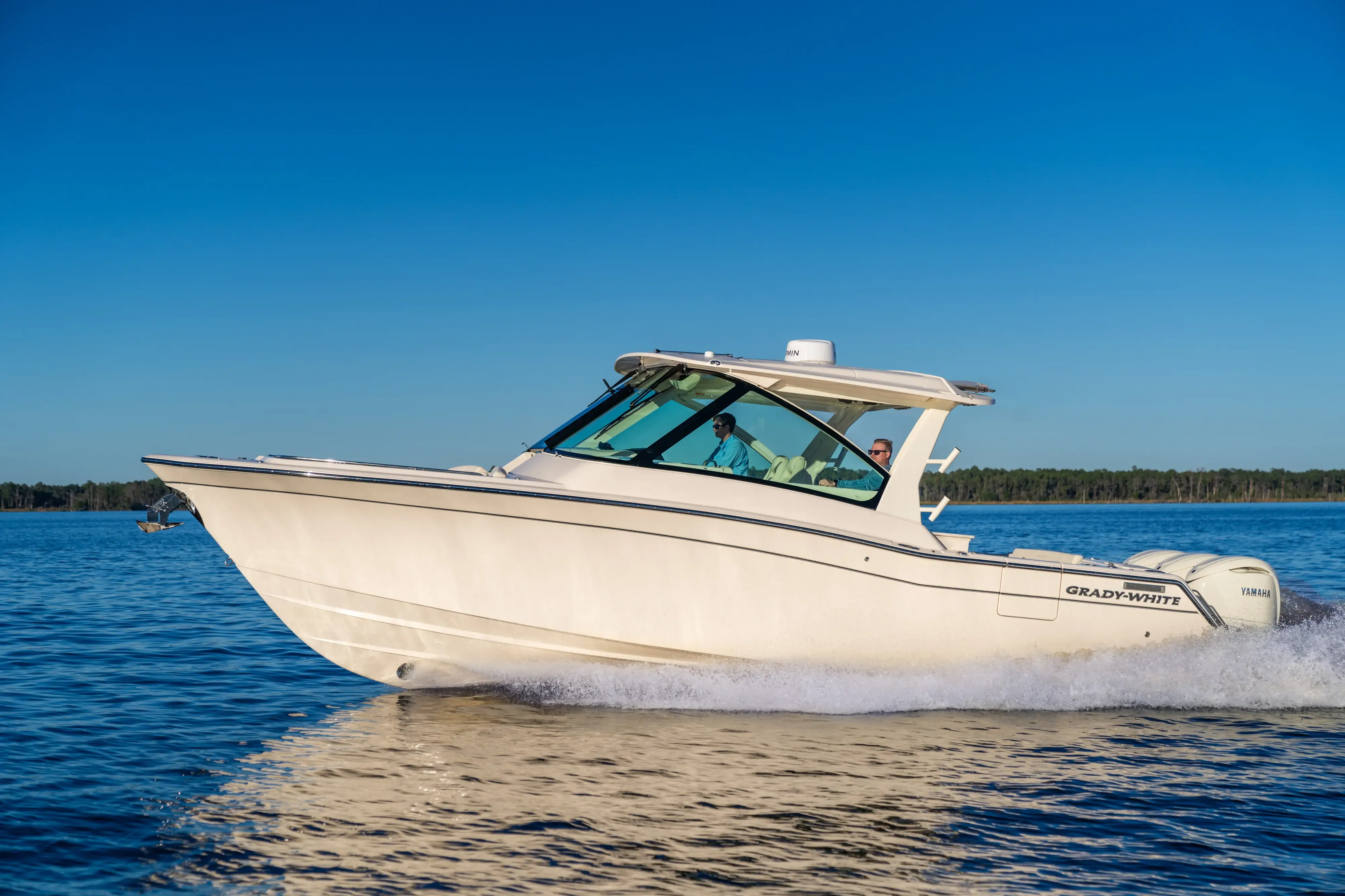
The Canyon 336 carries 361 gallons of fuel as standard, plus a 35-gallon freshwater tank. At its optimum cruise of 31.5 mph the triple Yamaha 350 package returns 1.27 miles per gallon.
The published numbers support straightforward arithmetic: 361 gallons at 1.27 mpg is roughly 458 statute miles of theoretical range, before you subtract the reserve any sensible offshore owner keeps. Treat that as a ceiling rather than a plan, and confirm observed burn at your own load on a sea trial.
Yes — it is the most capable offshore boat of the four Grady-White models we review. It runs 33'6" on an 11'7" beam, carries 361 gallons of fuel, takes up to 1,050 horsepower, and sits on Grady-White's SeaV2® continuously variable-deadrise hull with 20 degrees of transom deadrise.
The beam is the part buyers underrate. An extra foot across compared with the Canyon 306 is what lets four or five anglers work a fish around the boat instead of shuffling out of each other's way, and it is the main reason to accept the extra weight and fuel burn.
Not properly. The Canyon 336 has a cushioned berth forward inside the console, which is somewhere to get out of the sun or put a child down for an hour — it is not a cabin, and two adults will not spend a comfortable night in it.
The console also holds a lockable head with stand-up room, a shower, a sink, a VacuFlush head and a 10-gallon holding tank. If overnighting matters, the Freedom 345 is the boat in this size range with an actual cabin: a port stateroom with an electrically operated sliding berth, a bench seat and a closet, plus a separate enclosed head.
The Canyon 336 runs 58.8 mph at 5,950 RPM on triple Yamaha 350s, and 53.9 mph at 6,000 RPM on twin Yamaha XTO 450s. Optimum cruise on the triples is 31.5 mph at 3,400 RPM, burning 24.8 gallons an hour.
Grady-White publishes these in miles per hour, not knots. Note that the twin XTO 450 package cruises at 29.0 mph on 22.6 gph — slightly slower and slightly thriftier than the triples, and with one less engine to buy and service.