
March 27, 2026
The Grady White 306 Canyon: Where Serious Fishing Meets Real Comfort
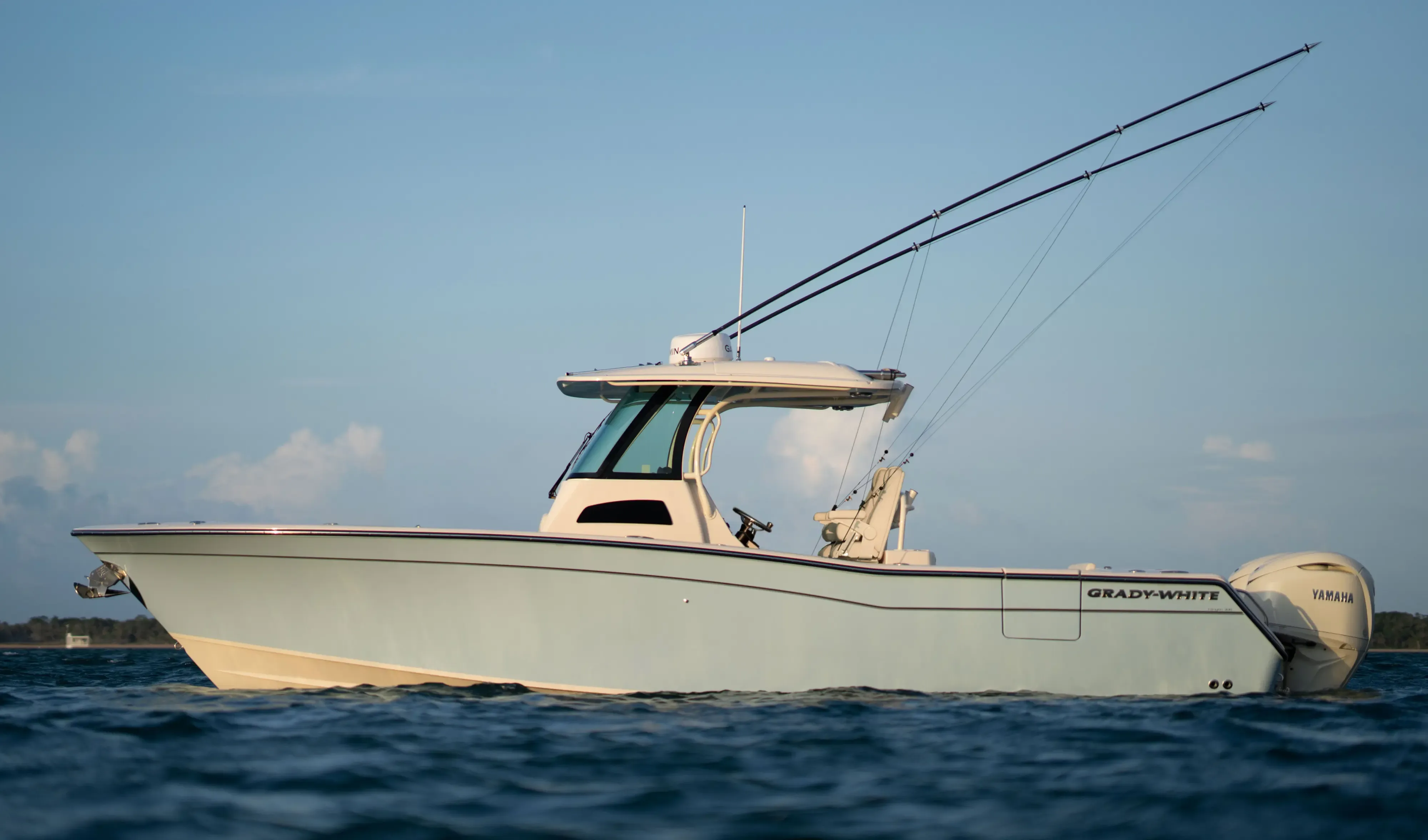
Grady White 306 Canyon marries SeaV2 offshore ride and serious fishability with family-friendly comfort - stand-up head, 47-gal livewell, ro…
Read the articleThe center consoles — open offshore fishing boats from 30'6" to 33'6", rated 700 to 1,050 horsepower
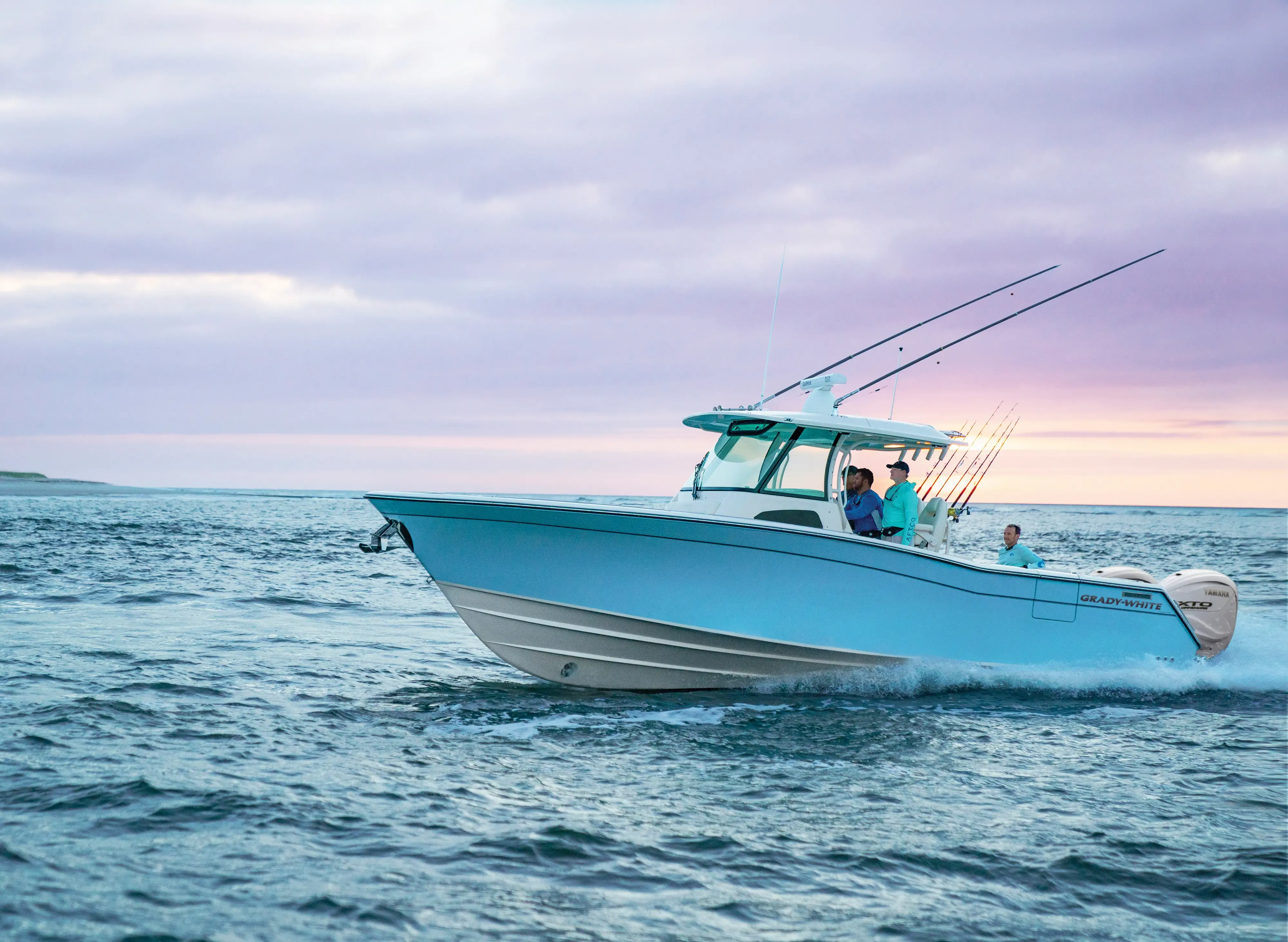
You want to clear the inlet before light, run offshore into a building chop, fish a full day, and come home without the boat having beaten you up. That is what the Canyon line is arranged around: open center consoles on Grady-White's SeaV2® variable-deadrise hull, with the helm in the middle where you drive from it rather than sit in it, and a working deck kept clear from bow to transom.
Canyon is the fishing side of the range. The Freedom dual consoles take a similar hull form and wrap a windshield and a second console around it, for owners who split their weekends between fishing and cruising. Canyon does not make that trade — the console holds the head and, on the larger hulls, a berth, and everything else is deck you can work a fish around.
We review two in depth: the Canyon 306 at 30'6" and the Canyon 336 at 33'6". Grady-White builds the Canyon range from the 266 up to the 456, so these two sit inside a much longer line — they are simply where most owner-operators land.
Every Grady-White Canyon model we review in depth, in the order owners step up through the series.
Photo credit Grady-White.
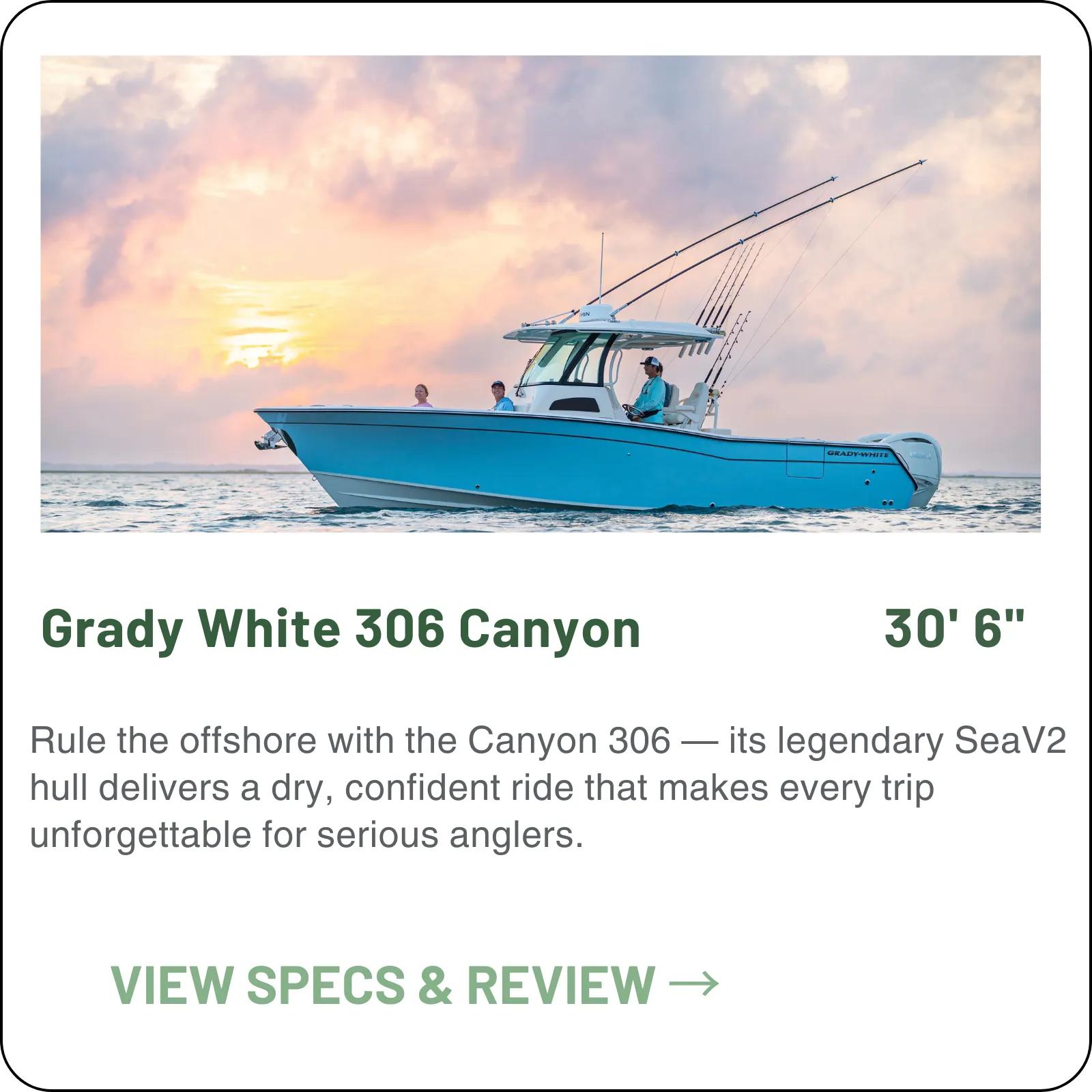
The 306 is the Canyon most owners still run themselves — 30'6" on a 10'7" beam, 21 inches of draft, 290 gallons of fuel, and twin Yamaha 350s worth 56.2 mph under a hull rated to 700 horsepower.
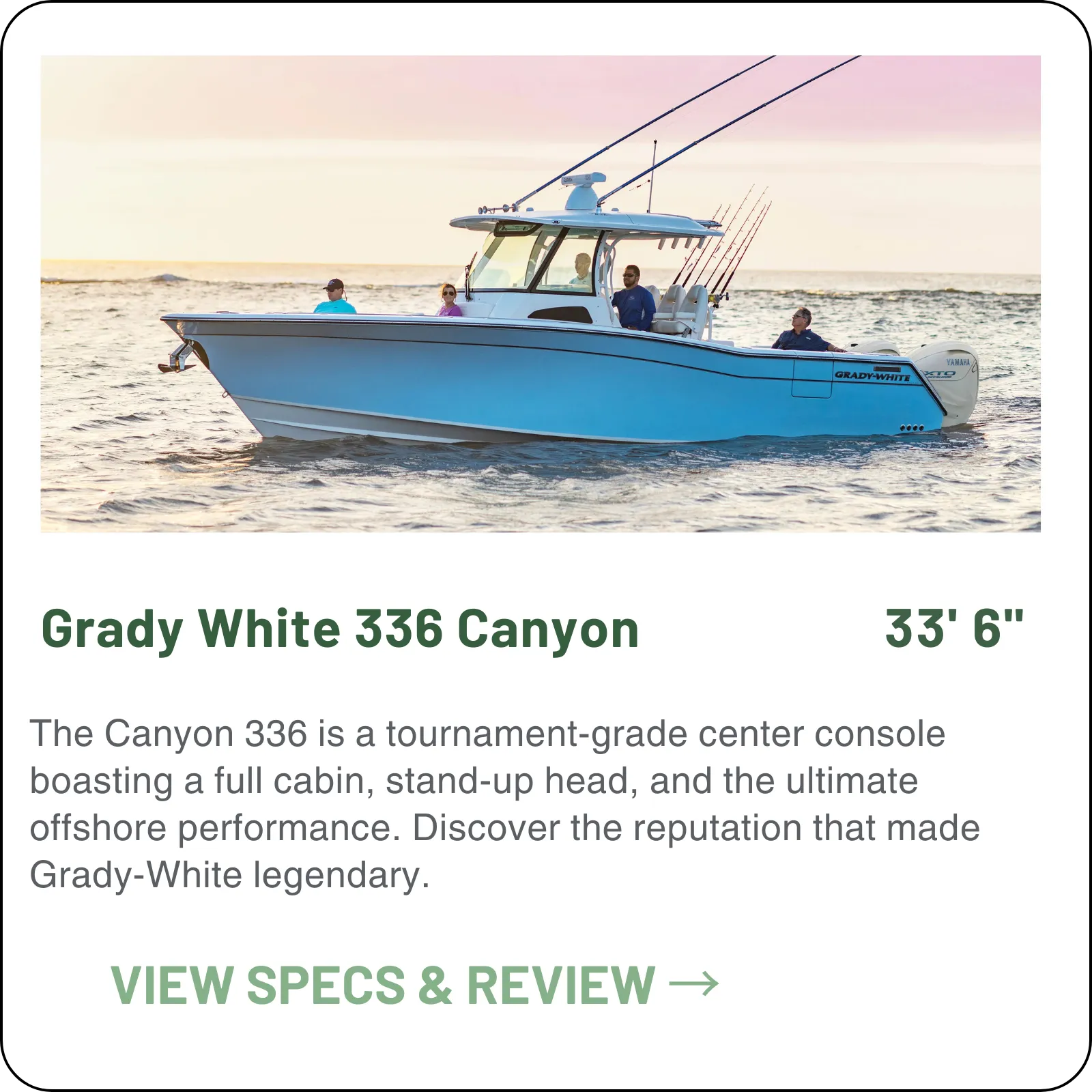
Grady-White's tournament boat without the tournament crew — 33'6" on an 11'7" beam, 361 gallons of fuel, a 1,050-horsepower ceiling, and 58.8 mph on triple Yamaha 350s.

Don't see the Canyon model you're after — or a brand-new launch? Request specs through Yacht Specs Direct.
The 306 is the smaller boat but not the lesser one. It runs 30'6" on a 10'7" beam, draws 21 inches, carries 290 gallons of fuel and weighs 7,220 lbs without engines. Rated to 700 horsepower, it makes 50.5 mph on twin Yamaha 300s and 56.2 mph on twin 350s, with an optimum cruise of 31.2 mph at 3,600 RPM burning 18.8 gallons an hour. There is no cabin: the head lives inside the console, with stand-up room, a shower and a sink.
The 336 changes category rather than just size. It is 33'6" on an 11'7" beam, draws 26 inches, carries 361 gallons and weighs 10,100 lbs dry. The power ceiling jumps to 1,050 horsepower, which is what buys the triple Yamaha 350 package — 58.8 mph flat out and 31.5 mph at 3,400 RPM. The console gains a cushioned berth forward, and the head gains a VacuFlush and a 10-gallon holding tank.
Read the step honestly and it is a straight trade. Moving up buys 71 more gallons of fuel, a foot of beam to work a fish around, and somewhere for someone to lie down. It costs five inches of draft, nearly 3,000 lbs, and a third engine's worth of fuel burn — 24.8 gph at cruise against the 306's 18.8. If you fish inshore as often as offshore, that draft figure will matter to you more often than the horsepower will.

The 306 is the one I put most people on, and it is not a budget recommendation. Twenty-one inches of draft on a boat that will run 56 mph and hold 290 gallons is a genuinely unusual combination — you can cross a bar on the way out and still be forty miles offshore by eight in the morning. The 336 is the better tournament boat and I would not argue with anyone who buys one, but plenty of the buyers I meet are choosing it for the third engine rather than for anything they actually do with the boat.
Here is the argument against me, and it is a real one. If you routinely fish four or five people well offshore, the 336's extra foot of beam stops being a number and becomes the difference between working a fish around the boat and everyone shuffling out of the way. And 361 gallons against 290 is the kind of margin you only appreciate on the day the weather turns and you would rather not do arithmetic. Be honest about your worst day rather than your average one, because beam and fuel capacity are the two things you cannot add later.
Videos courtesy of Grady-White.
Yes — that is precisely what the line is built for. Every Canyon is an open center console on Grady-White's SeaV2® continuously variable-deadrise hull, with the helm amidships and a clear working deck from bow to transom, and the two models we review carry 290 and 361 gallons of fuel respectively.
The Canyon is the fishing side of the Grady-White range. The Freedom dual consoles use a similar hull form but add a windshield and a second console, which trades some of that walk-around deck for a drier helm and forward-facing seating.
The 336 is the bigger, heavier, more powerful boat and the 306 is the shallower, thriftier one. The 306 is 30'6" on a 10'7" beam, draws 21 inches, holds 290 gallons and is rated to 700 horsepower. The 336 is 33'6" on an 11'7" beam, draws 26 inches, holds 361 gallons and is rated to 1,050.
In use the differences that matter are beam and burn. The extra foot across the 336 is what lets four or five anglers work a fish around the boat. The extra engine costs you at the pump: 24.8 gph at cruise against 18.8. Top speeds are closer than the horsepower gap suggests — 58.8 mph against 56.2.
Grady-White builds seven Canyon center consoles: the 266, 271, 306, 326, 336, 386 and the 456, which at 45 feet is the largest boat the company has ever built.
We review two of them in depth here — the 306 and the 336 — because that pair is where most owner-operators land, and because they bracket the point where the range changes character from a boat you run yourself to a boat you crew. If you are looking at a Canyon outside this pair, ask and we will pull the specs for you.
Tell us how you plan to use the boat — guests, range, crew or no crew — and we'll give you the straight story on where in the Canyon series you belong, new or brokerage.
Explore All Grady-White ModelsOr reach Tony directly: TS@MintedYachts.com · +1 (404) 805-9819