
March 27, 2026
The Grady White 306 Canyon: Where Serious Fishing Meets Real Comfort
Grady White 306 Canyon marries SeaV2 offshore ride and serious fishability with family-friendly comfort - stand-up head, 47-gal livewell, ro…
Read the article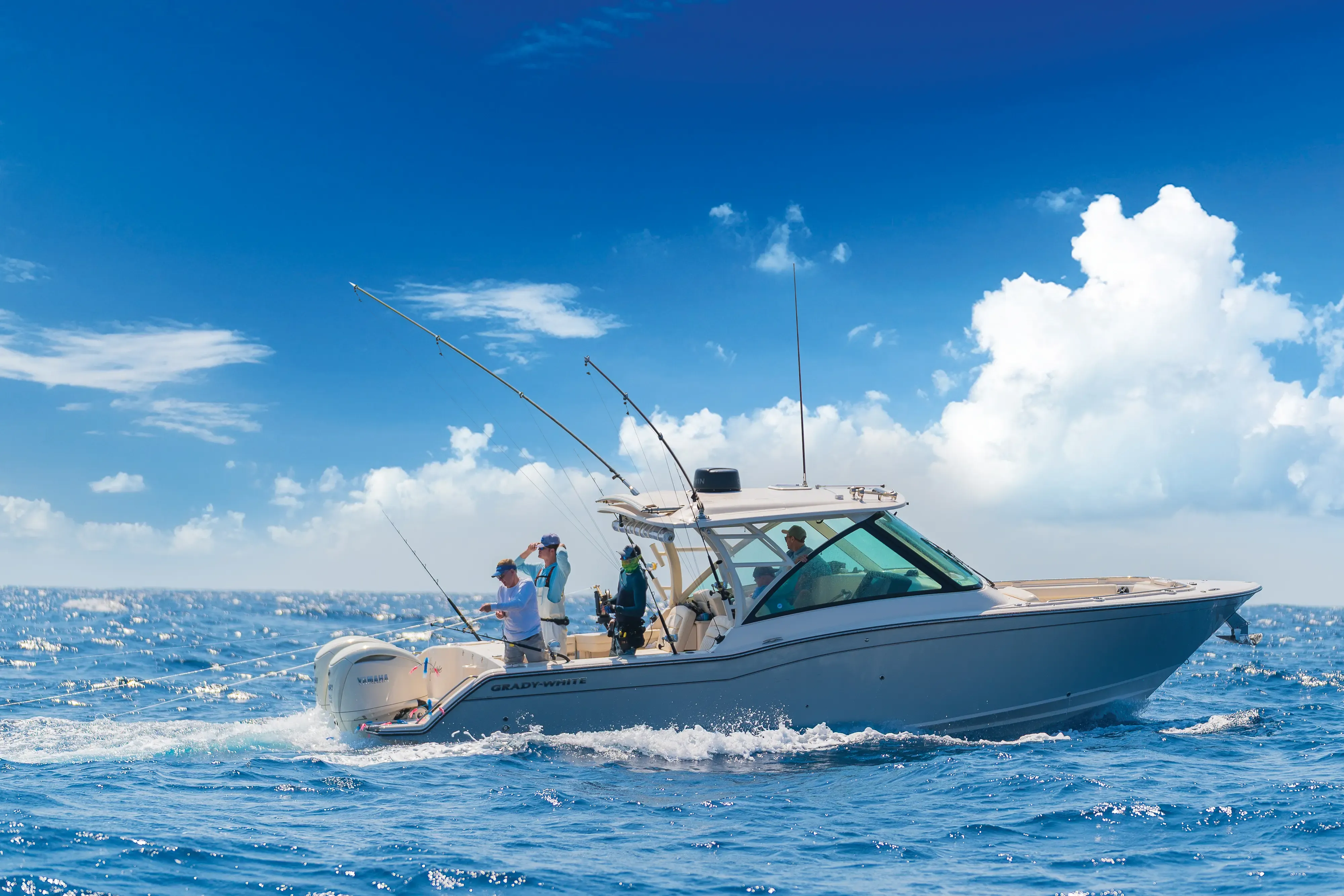
You want a boat that still feels right in year ten — offshore-capable, dry in a chop, and worth real money when you sell it. That is what Grady-White has built in Greenville, North Carolina since 1959. Here is our expert assessment of the brand.

— Tony Smith
Founder, Minted Yachts
If you asked me to name the thing Grady-White actually sells, it would not be the hull or the horsepower — it is the resale. These boats hold their value better than almost anything else in the segment, and the reason is boring: build quality is consistent, parts and service stay straightforward, and the model line changes slowly enough that a five-year-old boat does not look obsolete next to a new one. That is worth real money on the day you sell.
Here is the claim you can argue with. I think the Canyon 306 is the best boat in this range for most people, and it is not the one most people walk in asking for. Twenty-one inches of draft, 290 gallons of fuel, 56.2 mph on twin Yamaha 350s and a hull rated to 700 horsepower — you can run a bar at low tide and still be well offshore inside the hour. Buyers tend to fixate on the 336 and its 1,050-horsepower ceiling, and the 336 is a superb tournament boat, but a third engine is a third engine to buy, to fuel and to service.
I will give the other side its due, because it is a real argument and not a courtesy. If you regularly fish four or five people a long way out, the 336's extra foot of beam and 71 extra gallons stop being numbers and become the reason the day works at all. And in the Freedom line, if you genuinely intend to sleep aboard, the 345's cabin is the only one of the two that will let you — the 325's console berth is somewhere to get out of the sun, not somewhere to spend a night.
Deep-dive specs and expert opinions on current Grady-White models. Don't see the Grady-White you're looking for? Reach out for new and pre-owned brokerage options.
Photo credit Grady-White.
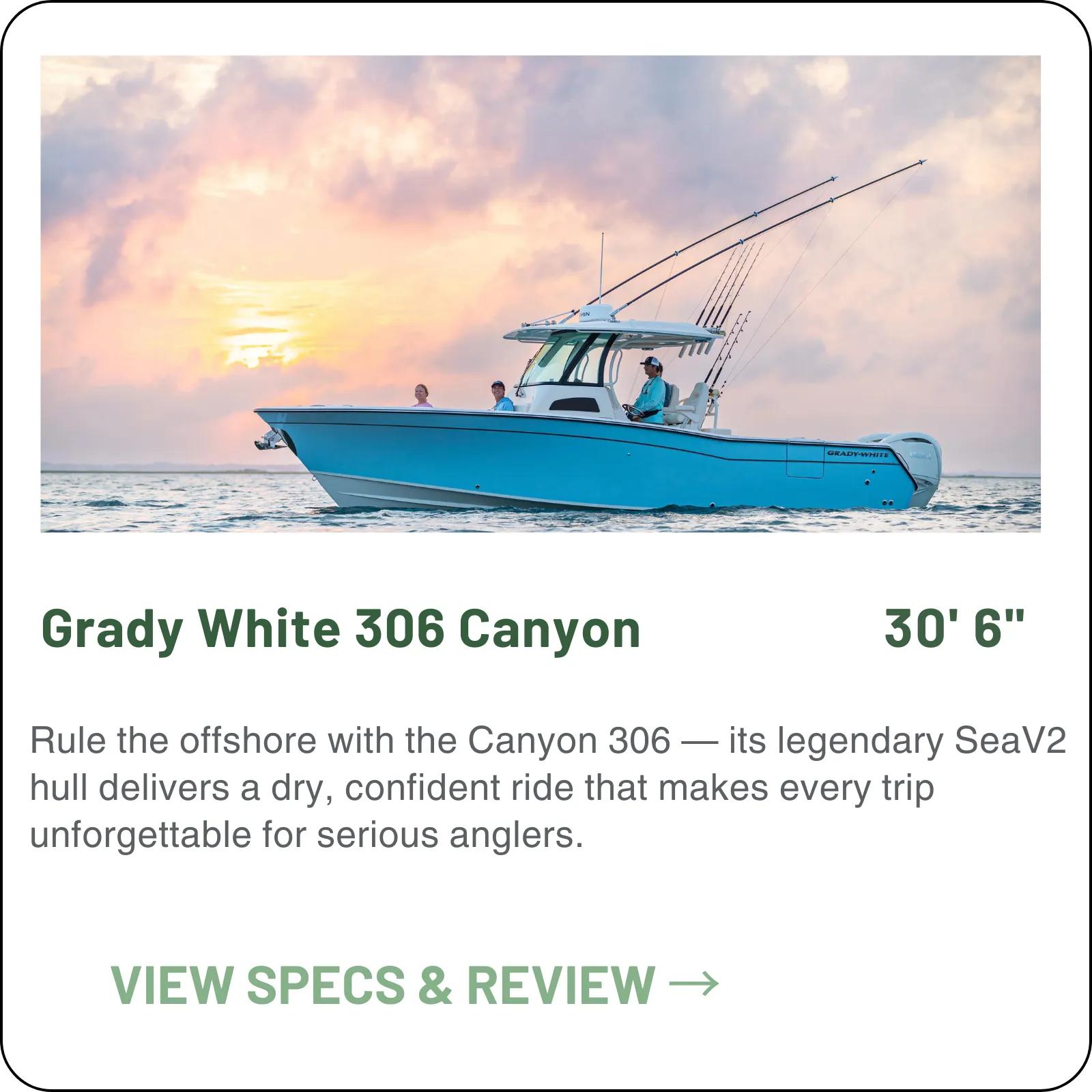
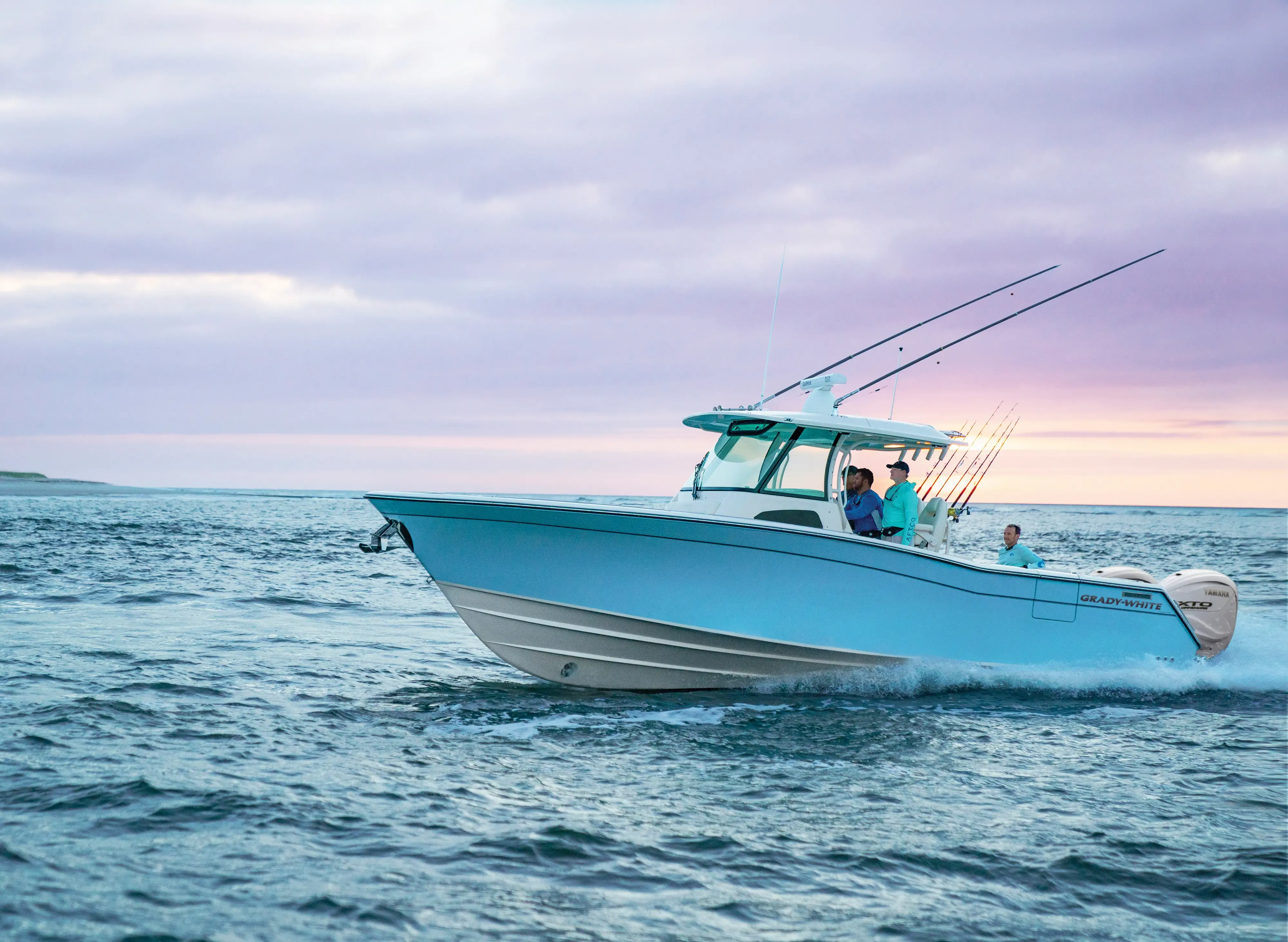
The 306 is the Canyon most owners still run themselves — 30'6" on a 10'7" beam, 21 inches of draft, 290 gallons of fuel, and twin Yamaha 350s worth 56.2 mph under a hull rated to 700 horsepower.
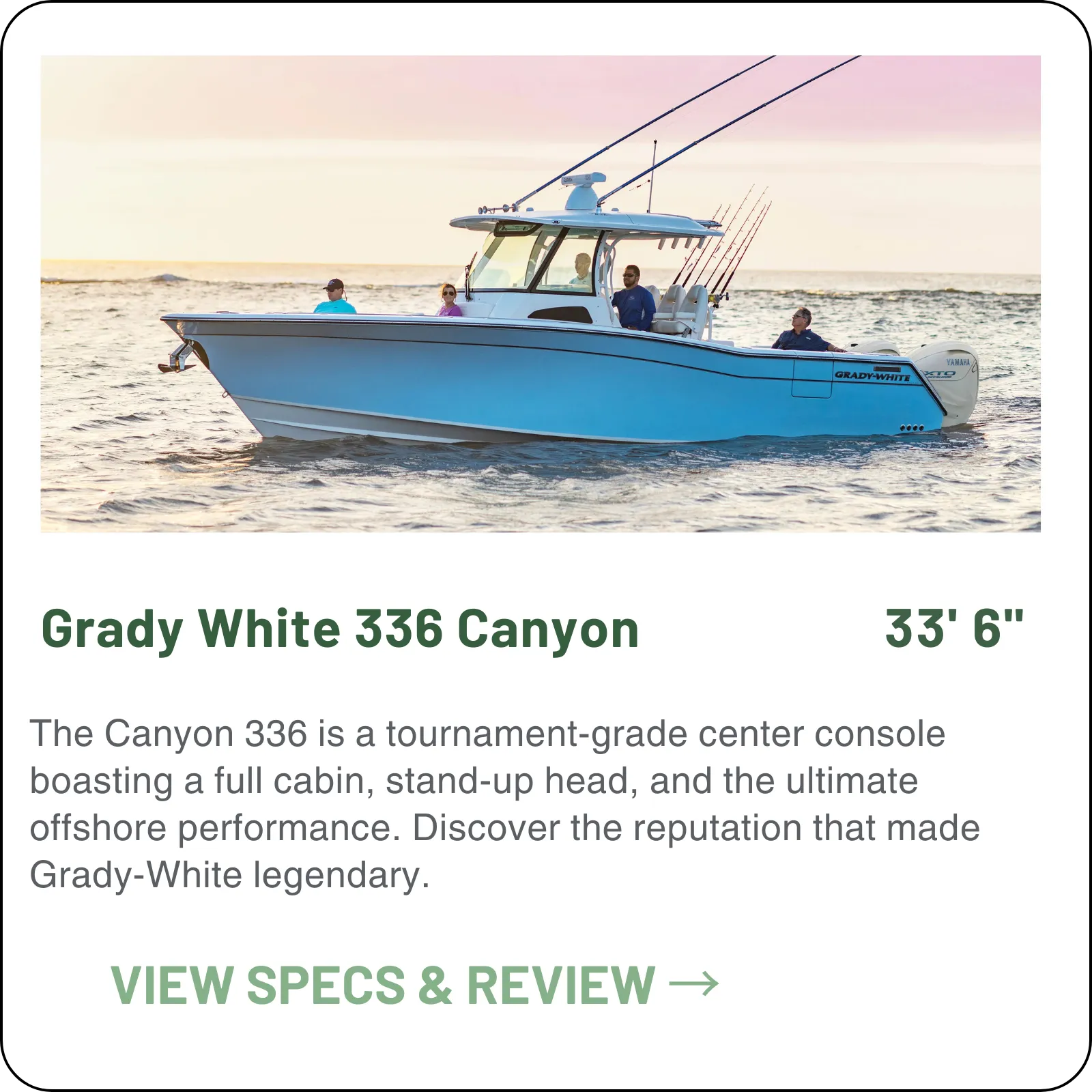
Grady-White's tournament boat without the tournament crew — 33'6" on an 11'7" beam, 361 gallons of fuel, a 1,050-horsepower ceiling, and 58.8 mph on triple Yamaha 350s.
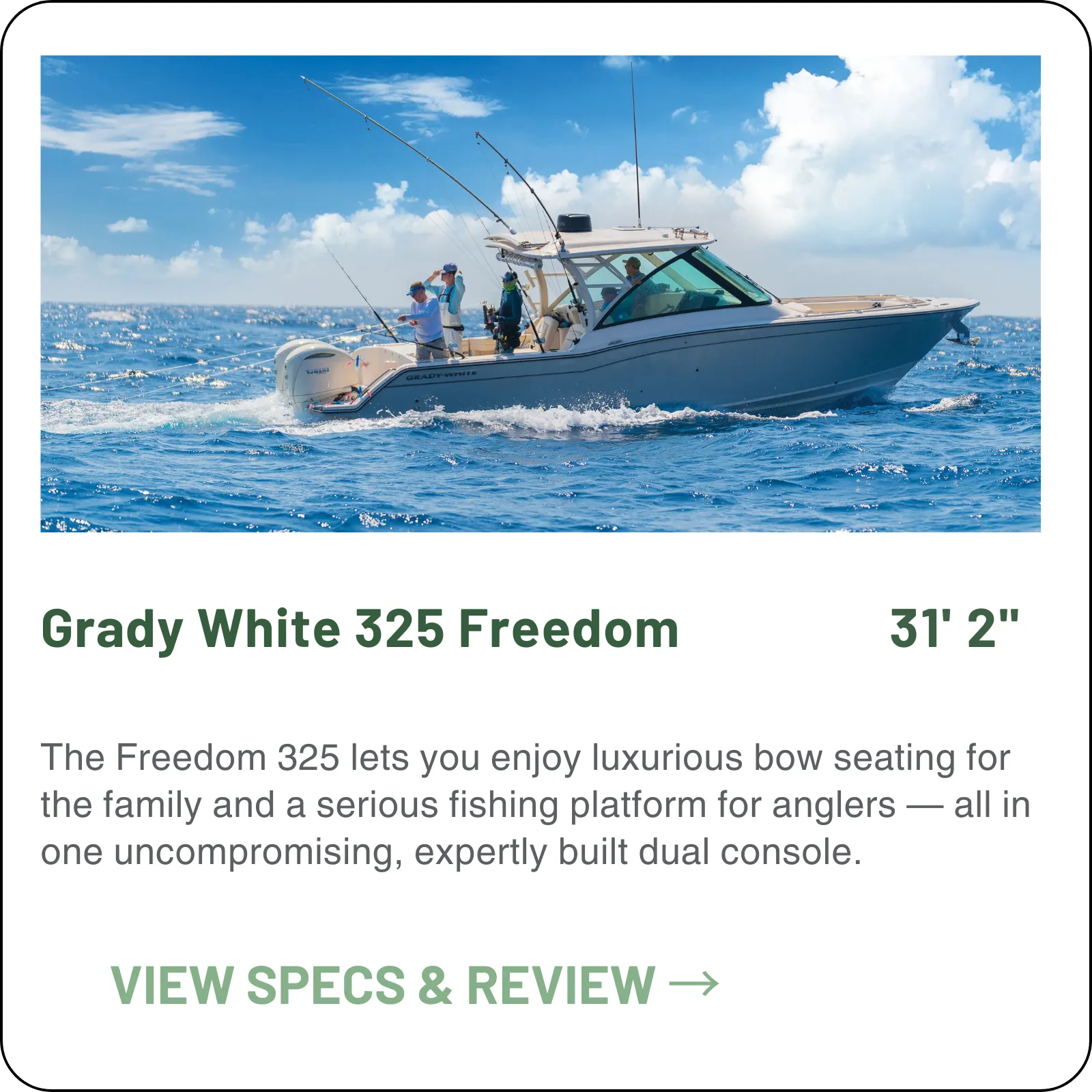
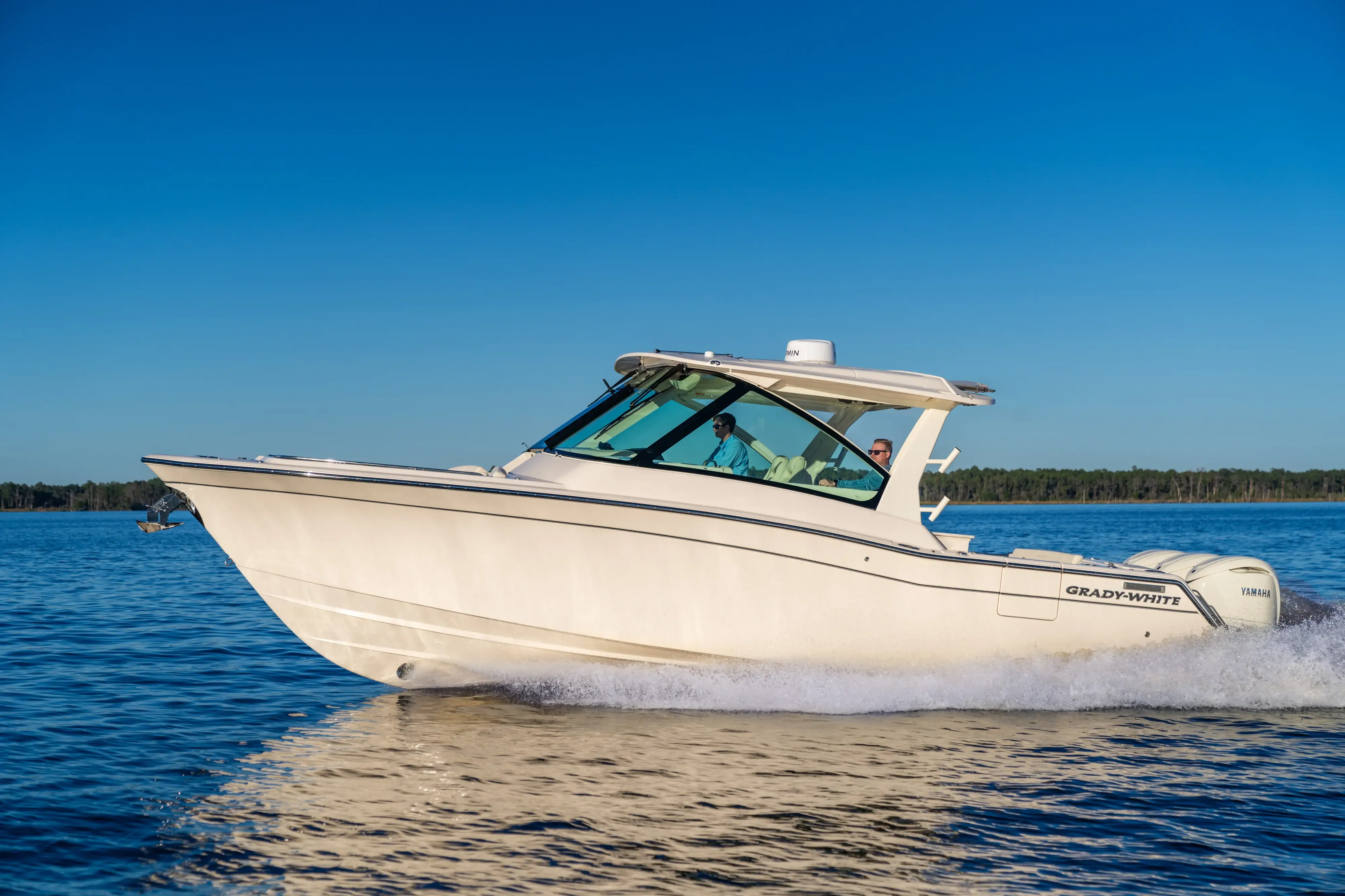
The dual console that still fishes — 31'2" on a 10'9" beam, 24 inches of draft, 288 gallons of fuel, and 53.9 mph on twin Yamaha 350s, with a berth in one console and a head in the other.
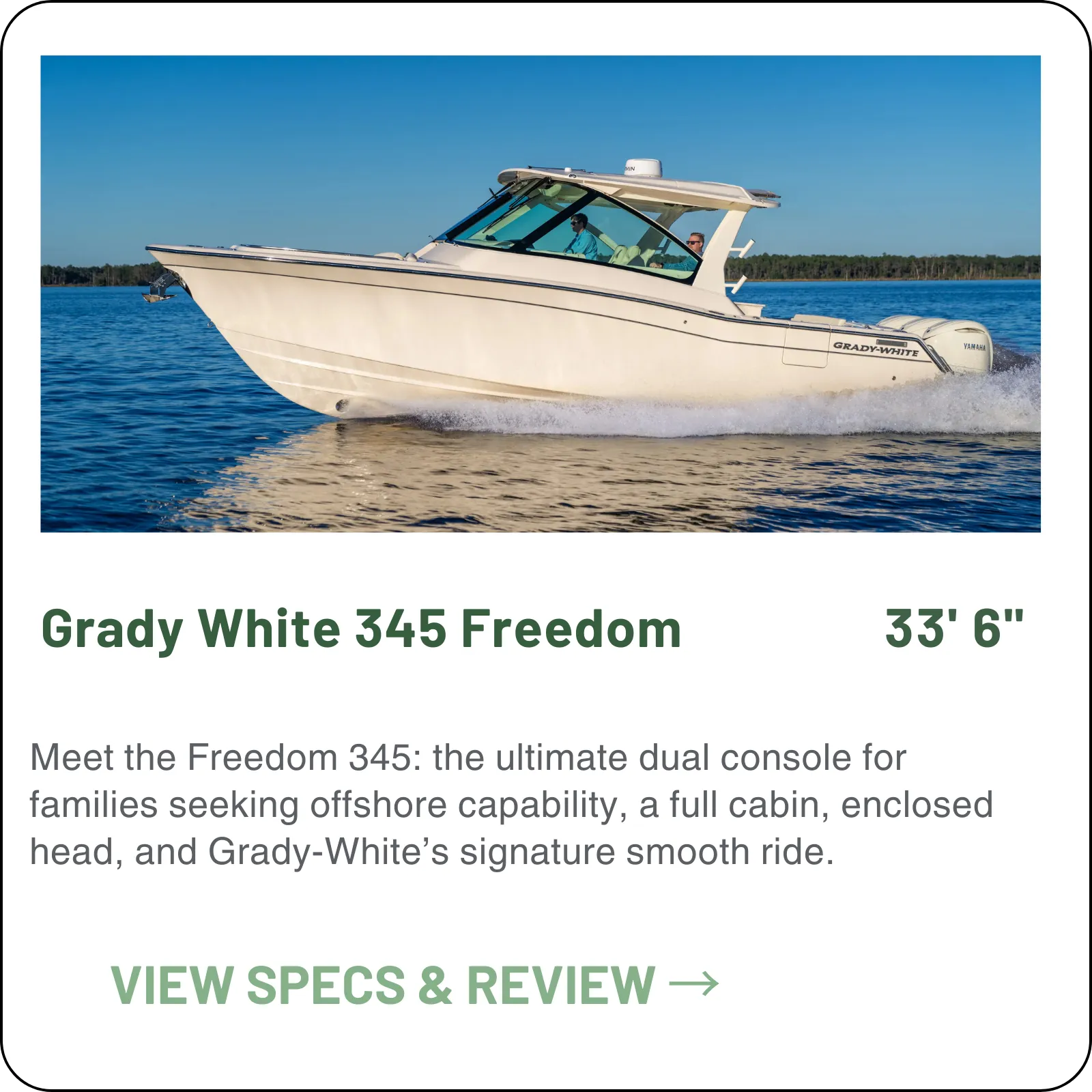
The biggest Freedom we review — 33'6" on an 11'7" beam, a port cabin with a sliding berth and an enclosed head, 300 gallons of fuel, and 56.2 mph on triple Yamaha 350s.

Request other Brand or Model Information, with our Yacht Specs Direct, offer.
Videos courtesy of Grady-White.
SeaV2® is Grady-White's continuously variable-deadrise hull, introduced in the 1980s and still the basis of the range. Rather than holding one deadrise angle, the V changes progressively from bow to transom — sharp forward to cut chop, flatter aft for stability and lift.
The four models we review carry 19.5 to 20 degrees of transom deadrise. In practice that is what buyers are describing when they call these boats dry and soft-riding in a head sea.
Grady-White boats are built in Greenville, North Carolina, where the company has been since it was founded in 1959 by Glen Grady and Don White. It still runs from the same city, and the plant that anchors the modern company opened there in 1972.
The company has stayed deliberately mid-sized. Eddie Smith, who bought the business in 1968 at 26 and led it for decades, put it plainly: "I never wanted to be the biggest. I wanted to be the best."
On one of the four models we review, yes — the Freedom 345, which has a port cabin with an electrically operated sliding berth, a bench seat and a closet, plus a separate enclosed head.
The other three are day boats with berths rather than cabins. The Freedom 325 has a cushioned berth in its starboard console; the Canyon 336 has one forward in its console; the Canyon 306 has none, just a lockable console head with a shower. Grady-White does build cabin boats — the Express 340 and 370 — which we have not reviewed yet.
Because the things that erode resale elsewhere move slowly here. Build quality is consistent year to year, parts and service stay straightforward, and the model line changes gradually enough that a five-year-old boat does not look obsolete parked next to a new one.
Reputation reinforces it. Grady-White won the first J.D. Power award ever given in the marine industry, in 2008, and customer-satisfaction recognition has followed the brand since. None of that is a guarantee on any individual boat, but across the segment it is the most consistent resale story we deal with.
Every buyer's mission is different. Tell us how you plan to use your vessel, and we'll give you the straight story on which models fit your life—and which don't.
Specific Model Details & Advice