
March 27, 2026
The Grady White 306 Canyon: Where Serious Fishing Meets Real Comfort
Grady White 306 Canyon marries SeaV2 offshore ride and serious fishability with family-friendly comfort - stand-up head, 47-gal livewell, ro…
Read the articleExpert Review, Technical Specifications & Market Analysis
| Feature | Specifications |
|---|---|
| Overall Length | 30' 6" |
| Beam | 10' 7" |
| Draft | 21" (hull draft) |
| Displacement | 7,220 lbs (w/o engines) |
| Engines | Twin Yamaha 300 four-stroke (standard) / twin Yamaha 350 (optional); 700 hp maximum |
| Fuel Capacity | 290 US gallons |
| Water Capacity | 32 US gallons |
| Cabins / Heads | No cabin — lockable console head with stand-up room, shower, sink and electric-flush marine head; 7.5-gallon holding tank |
| Max Speed | 50.5 mph (twin Yamaha 300s); 56.2 mph (twin Yamaha 350s) |
| Cruise Speed | 31.2 mph @ 3,600 RPM (with twin Yamaha 350s) |
Source: Spec & Photos courtesy of Grady White. Specs verified by Tony Smith, USCG 100 Ton Master, on August 10, 2026.
Part of the Grady White Canyon series — see how owners step up through the lineup.

The 306 Canyon is what happens when a builder stops chasing trends and focuses on what actually works. Grady White has been refining this platform for years, and it shows. The SeaV2 hull isn't new, but it's still the benchmark for ride quality in this size range. The build quality is top-tier. Hand-laid fiberglass, composite stringers, stainless steel through-hulls. This boat is engineered to last 20 years, not five.
This boat is for the serious recreational angler who also values family time. If you fish 30 days a year and cruise another 20, the 306 makes sense. If you're a tournament guy who needs every inch of cockpit space and doesn't care about a head, look at a pure fishing rig. If you're a cruiser who fishes twice a season, buy a dual console. The 306 sits in the middle and does both jobs better than most boats that claim versatility.
Resale on Grady Whites is strong, and the 306 Canyon holds value better than most 30-footers. Maintenance is straightforward if you stay on top of it. Yamaha outboards are reliable, and the hull construction means you're not dealing with core rot or stringer issues down the line. Expect to pay a premium upfront, but you'll get most of it back when you sell. This is a boat you keep for a decade, not a stepping stone you flip in three years..
Video courtesy of Grady White.
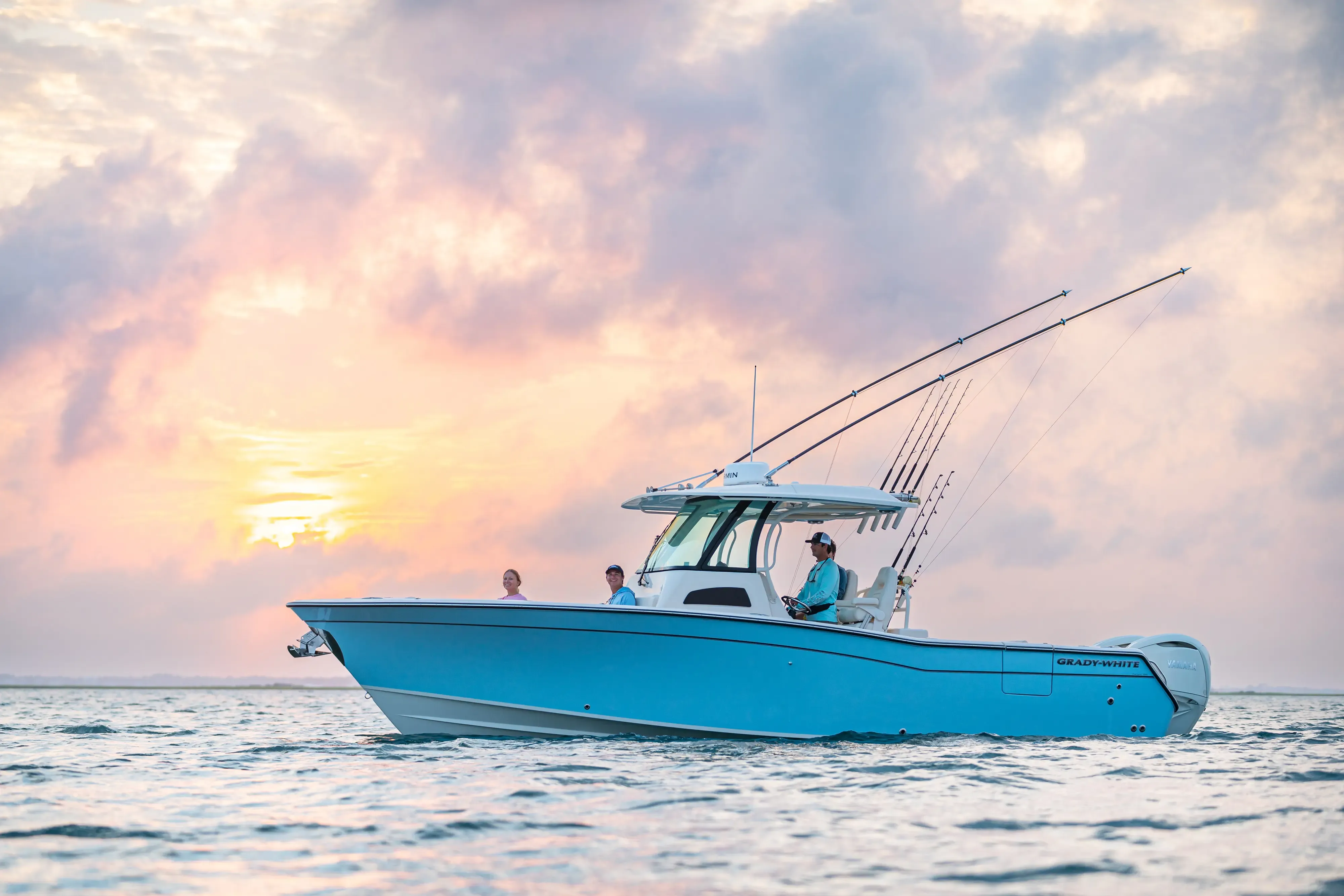
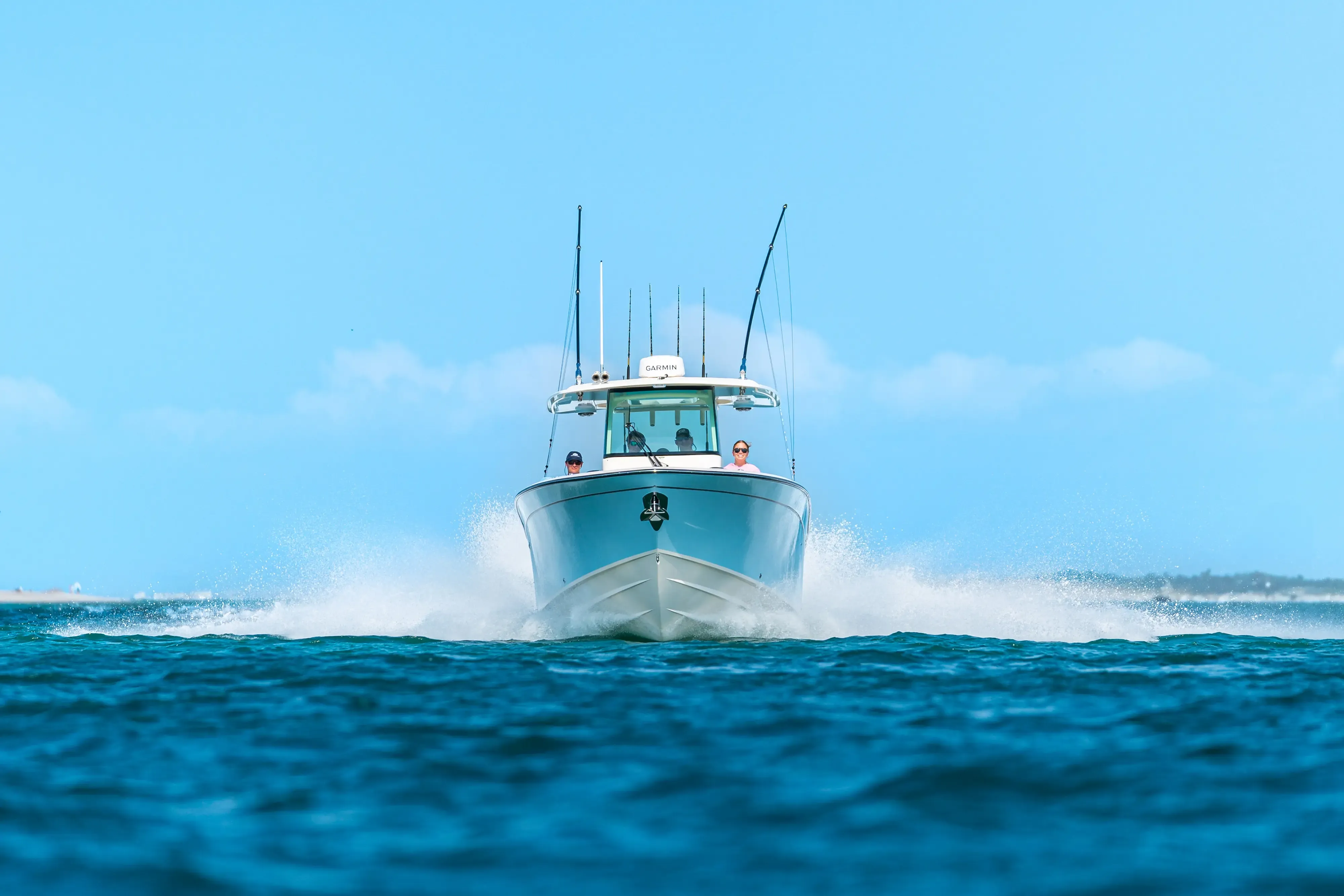
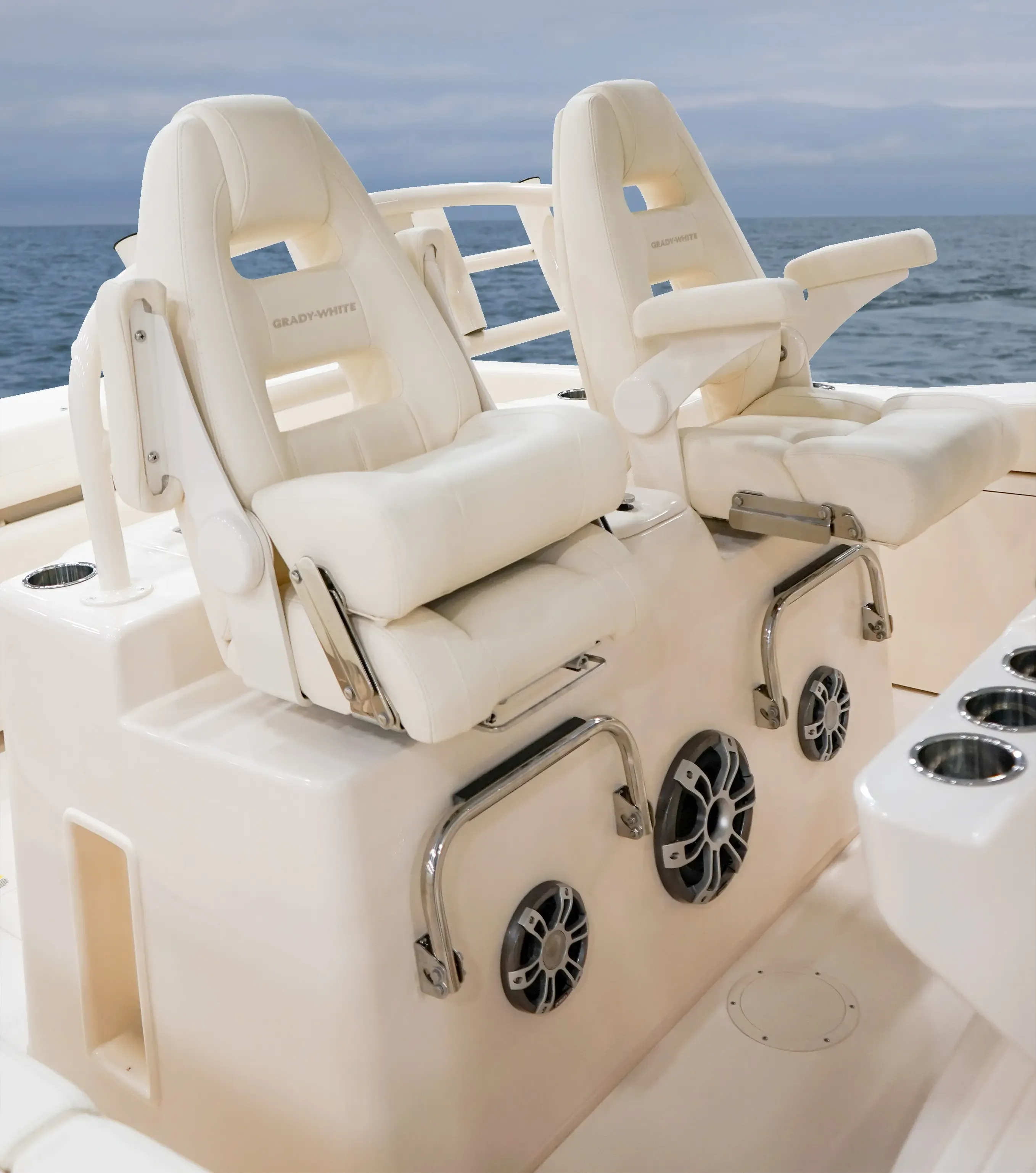
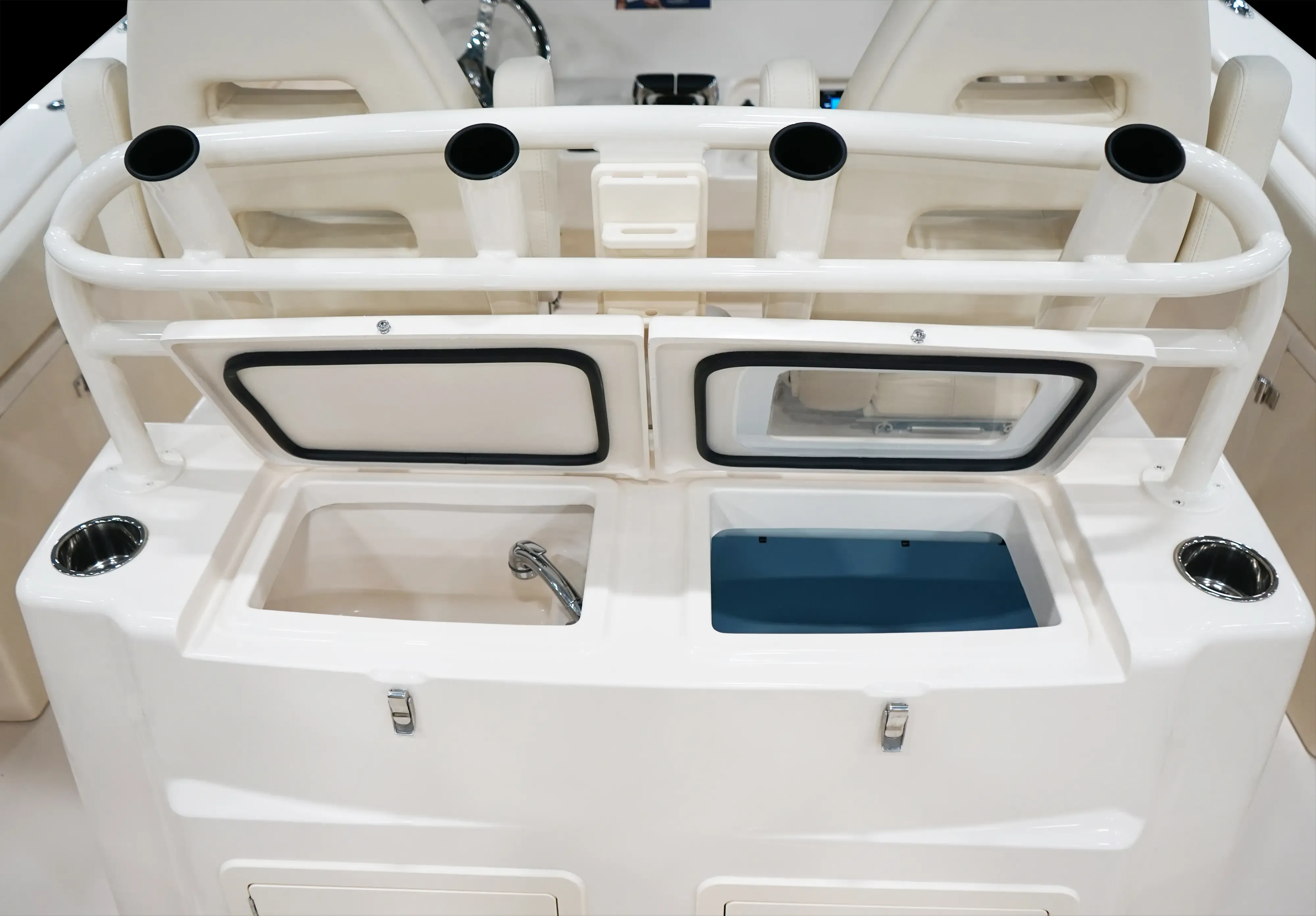
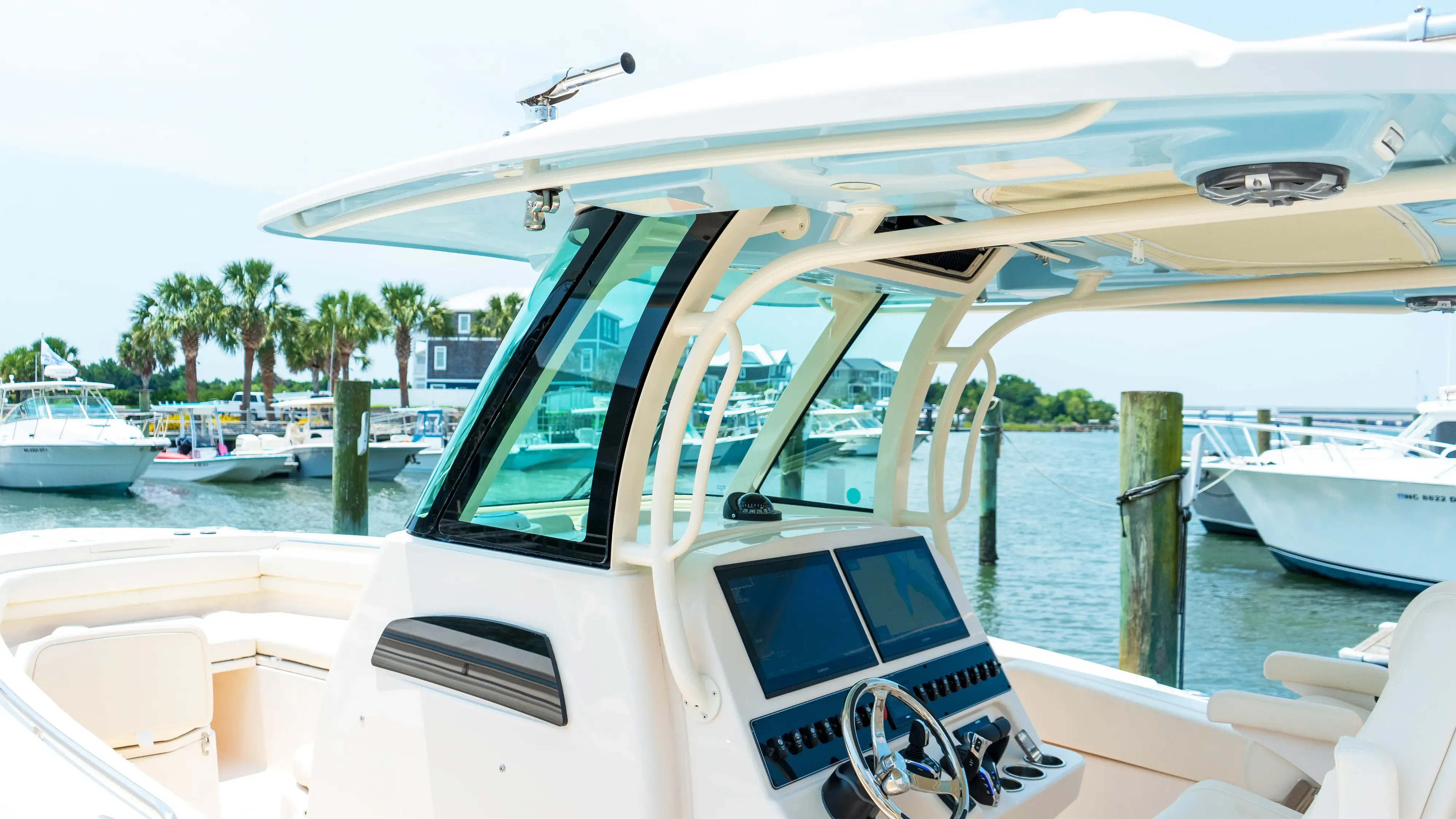
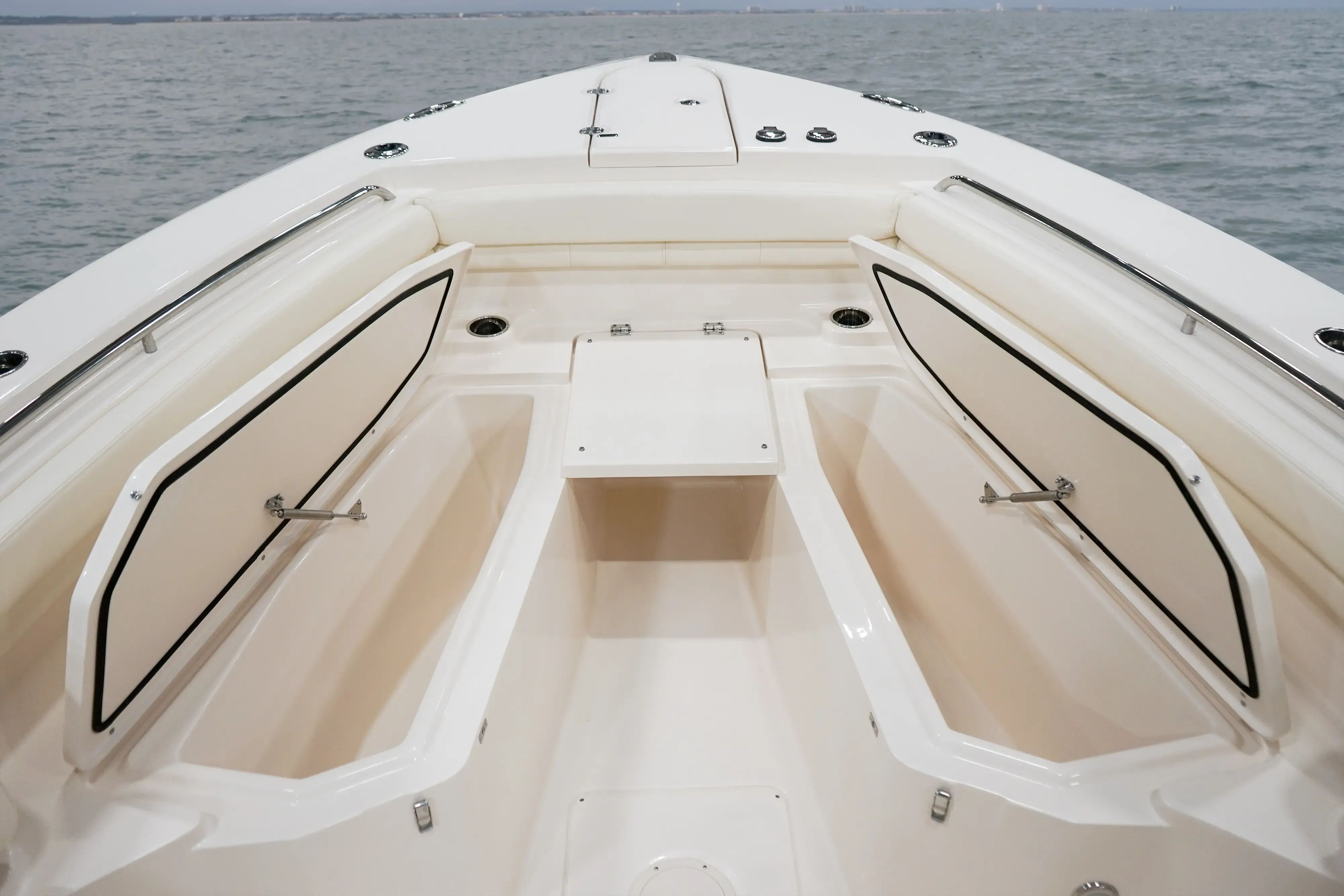
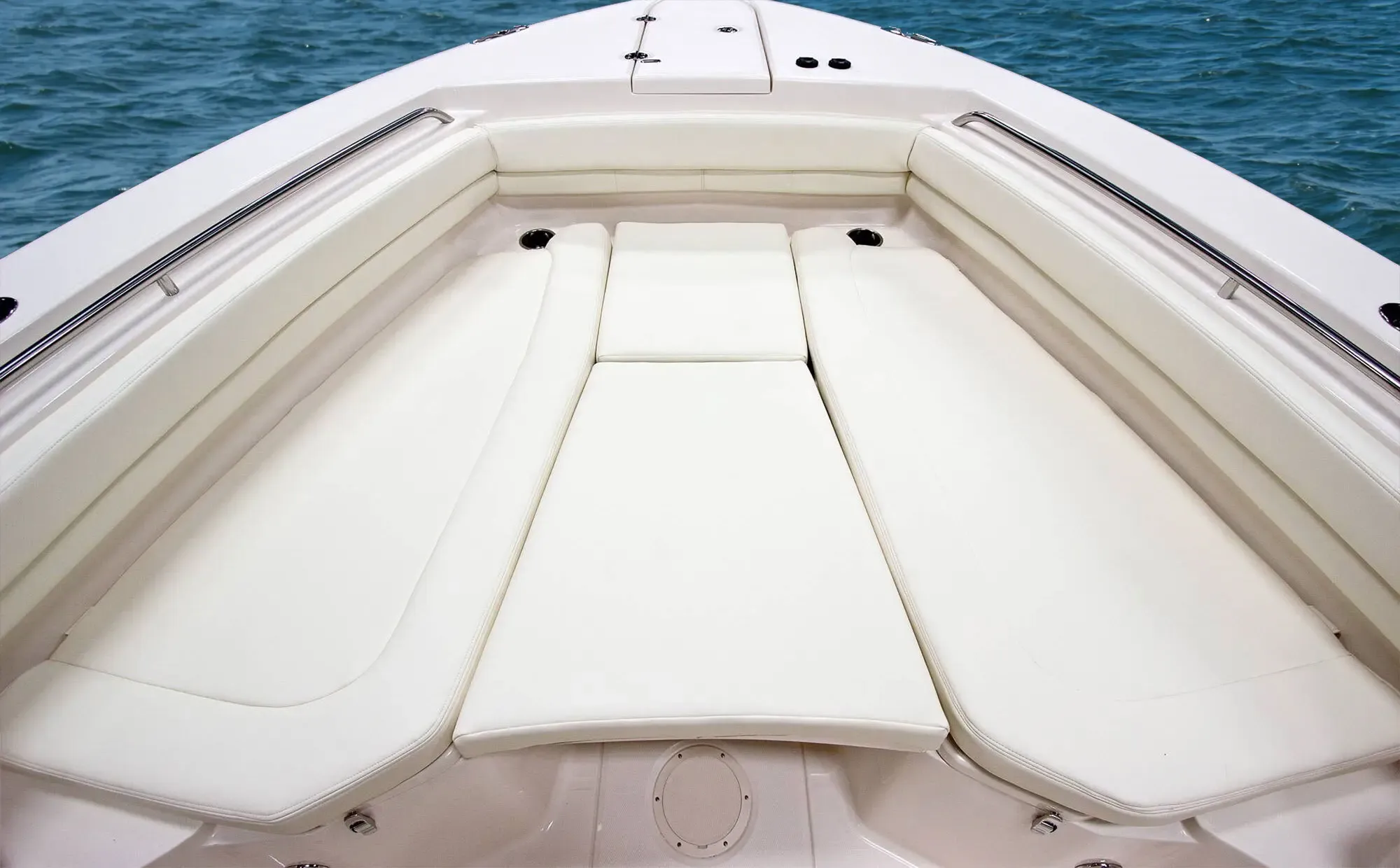
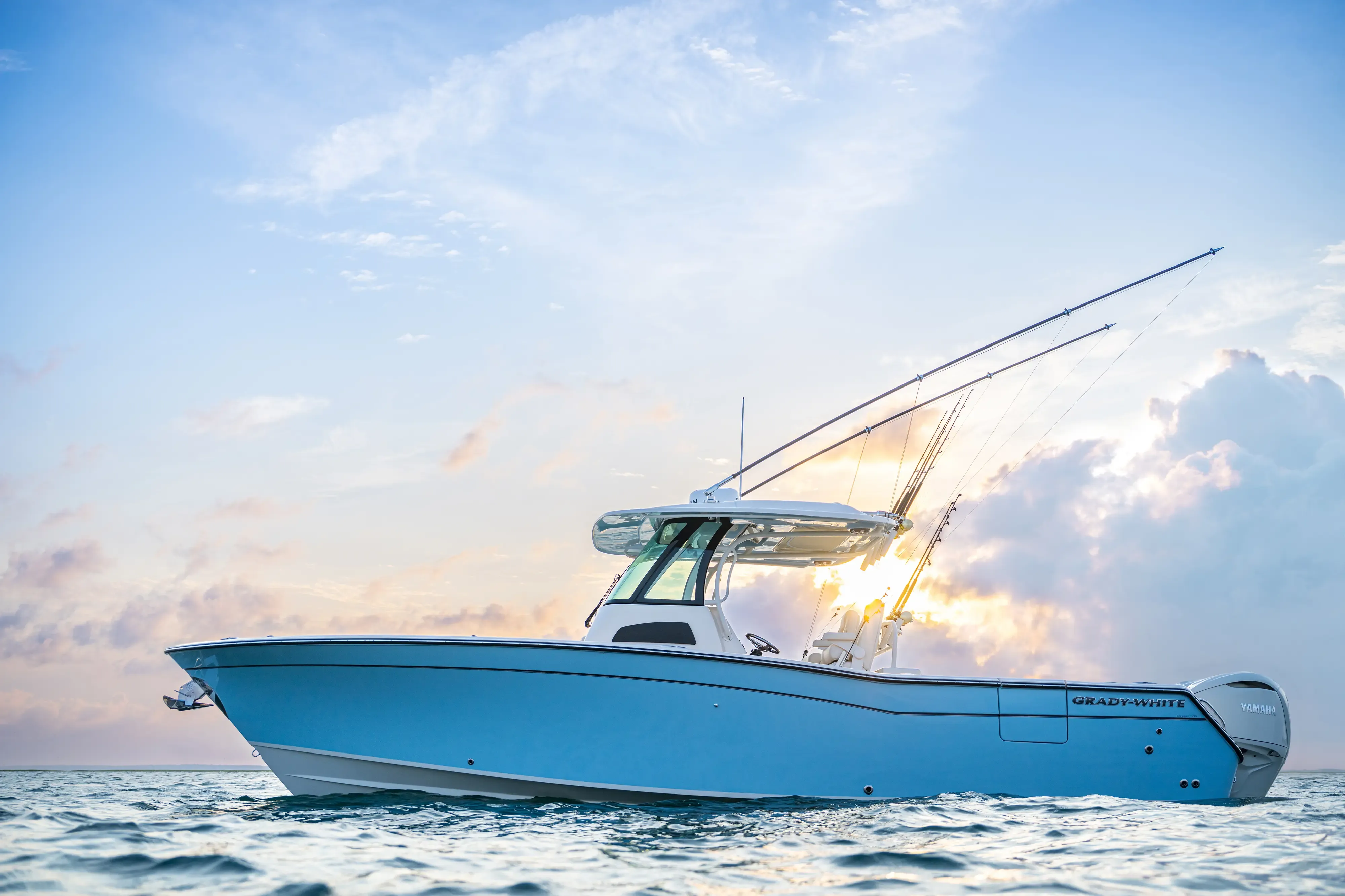
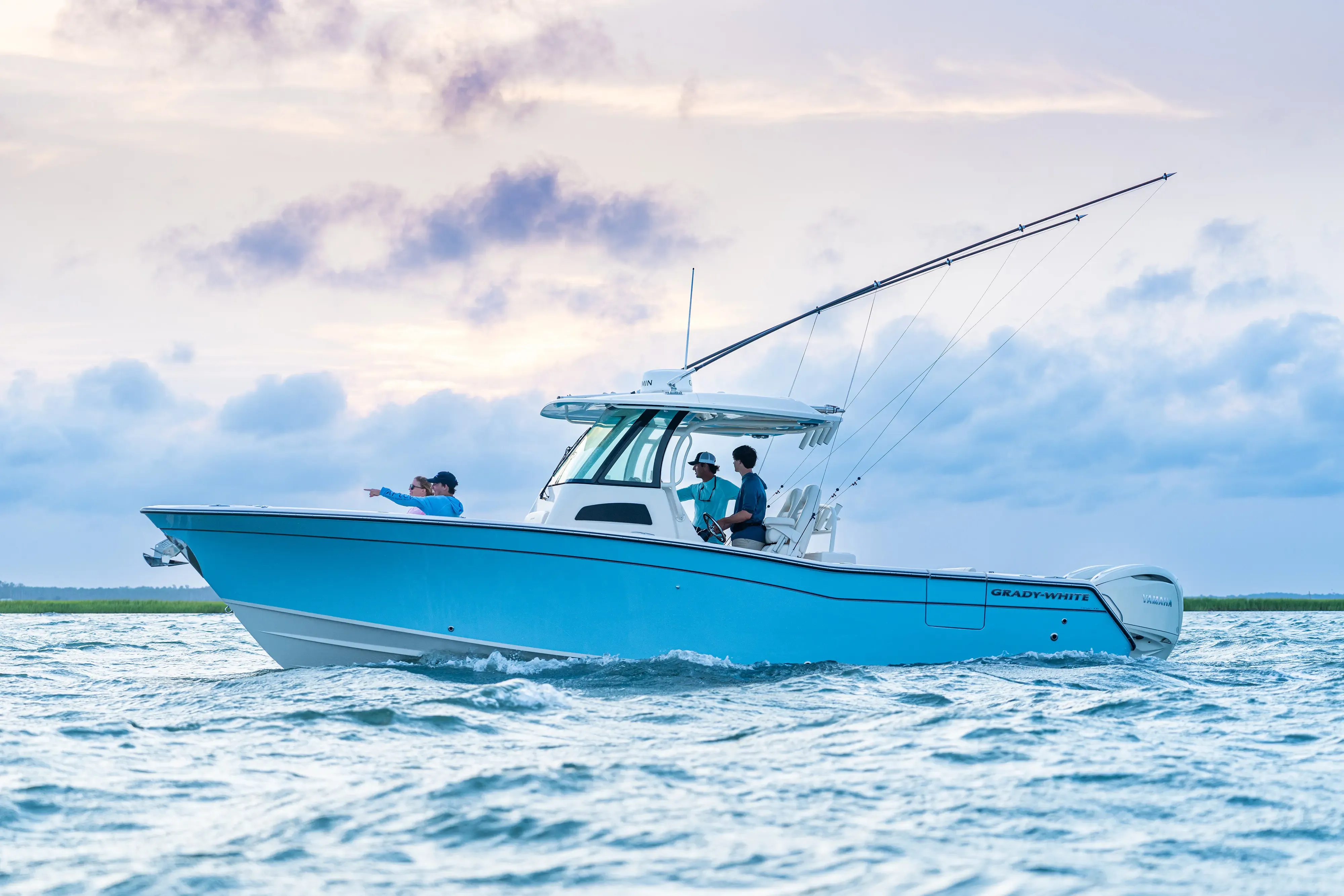
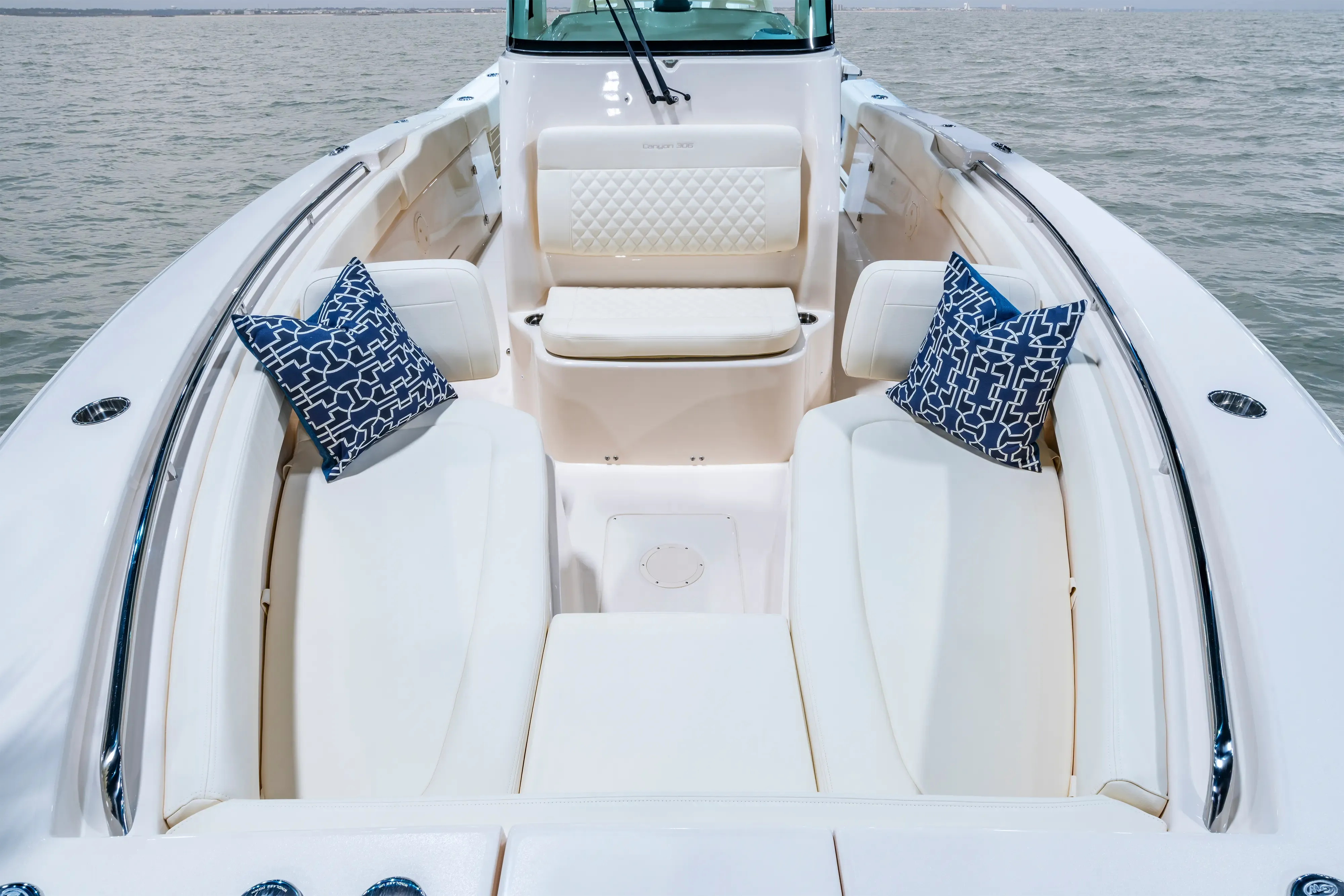
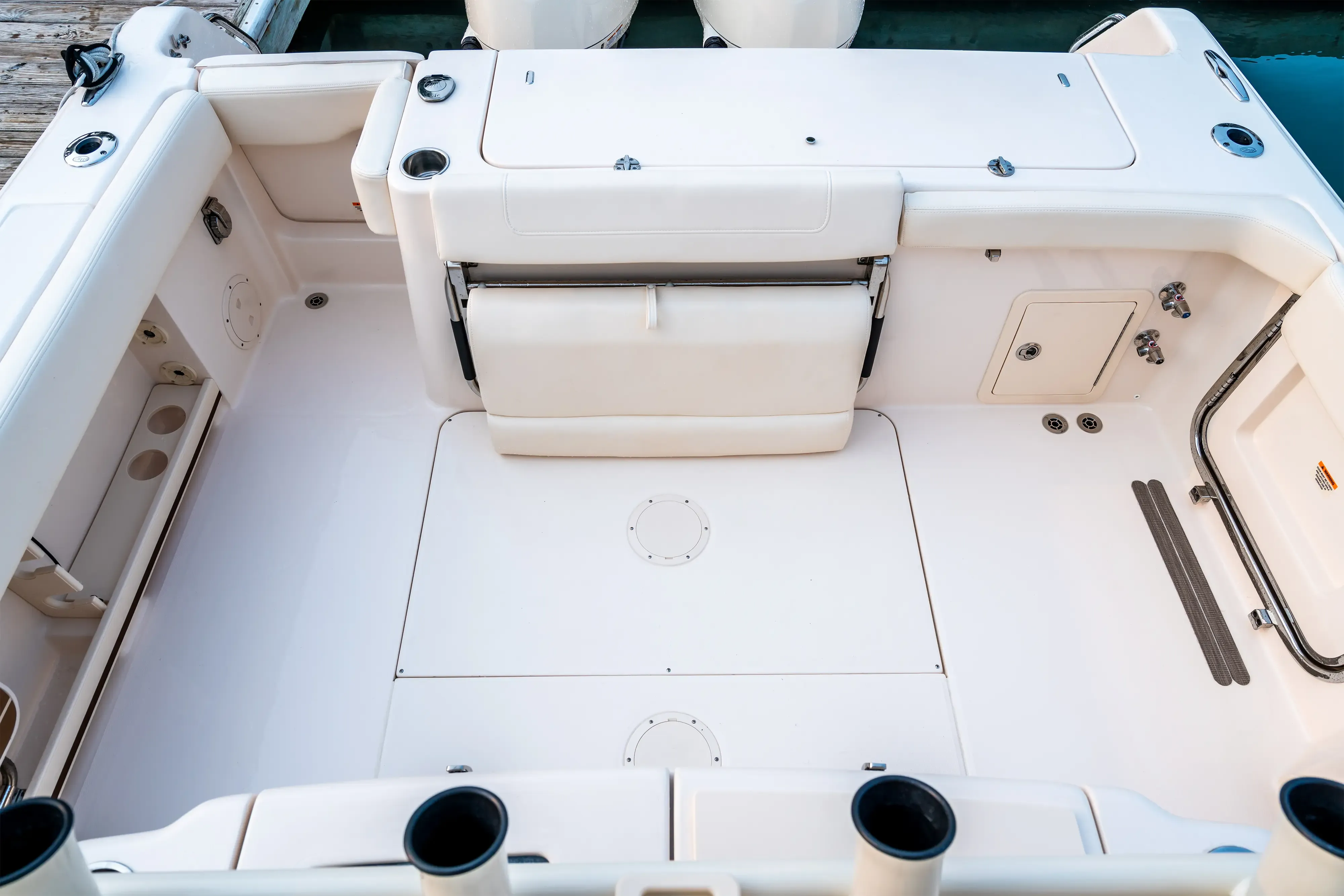
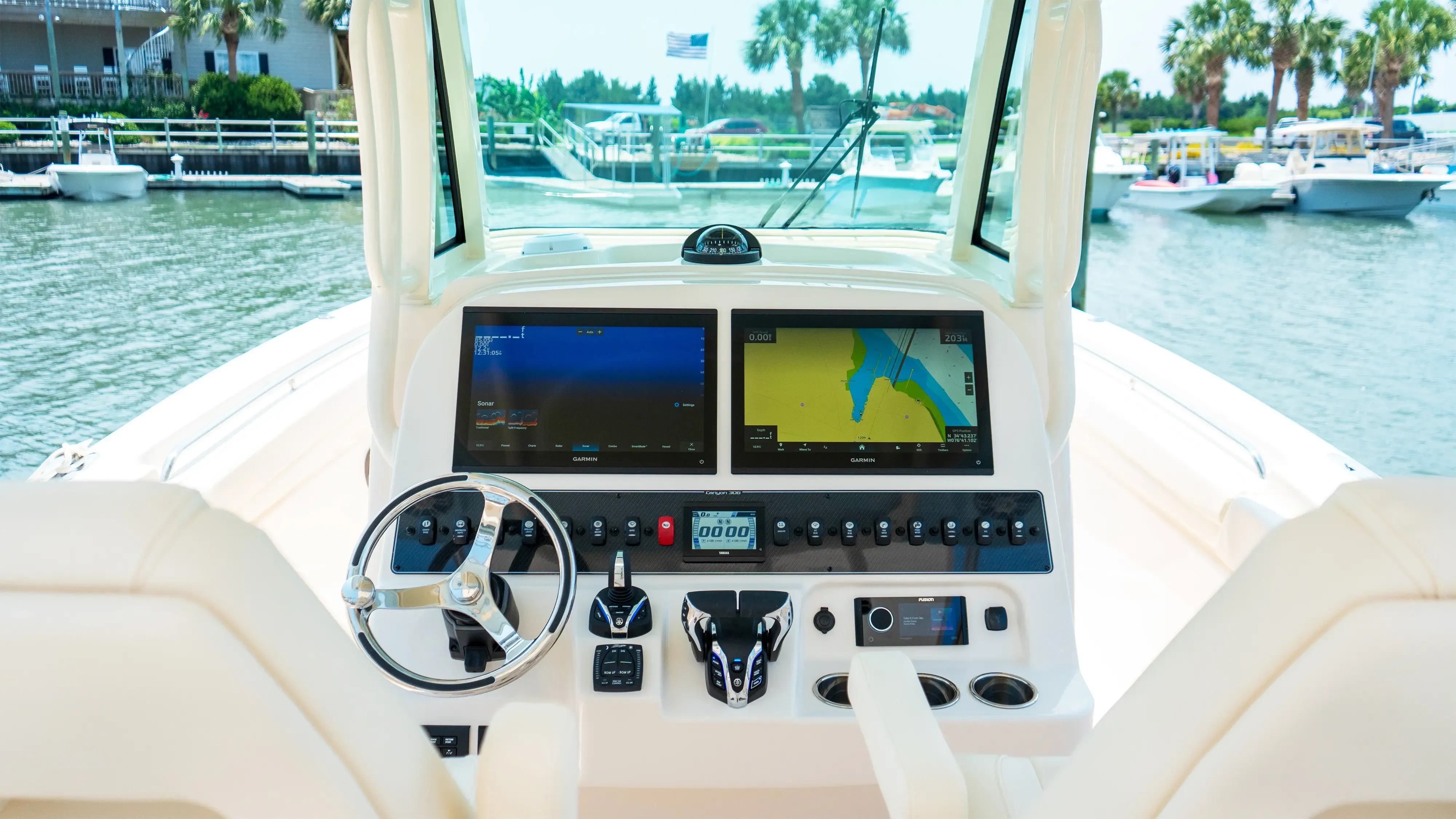
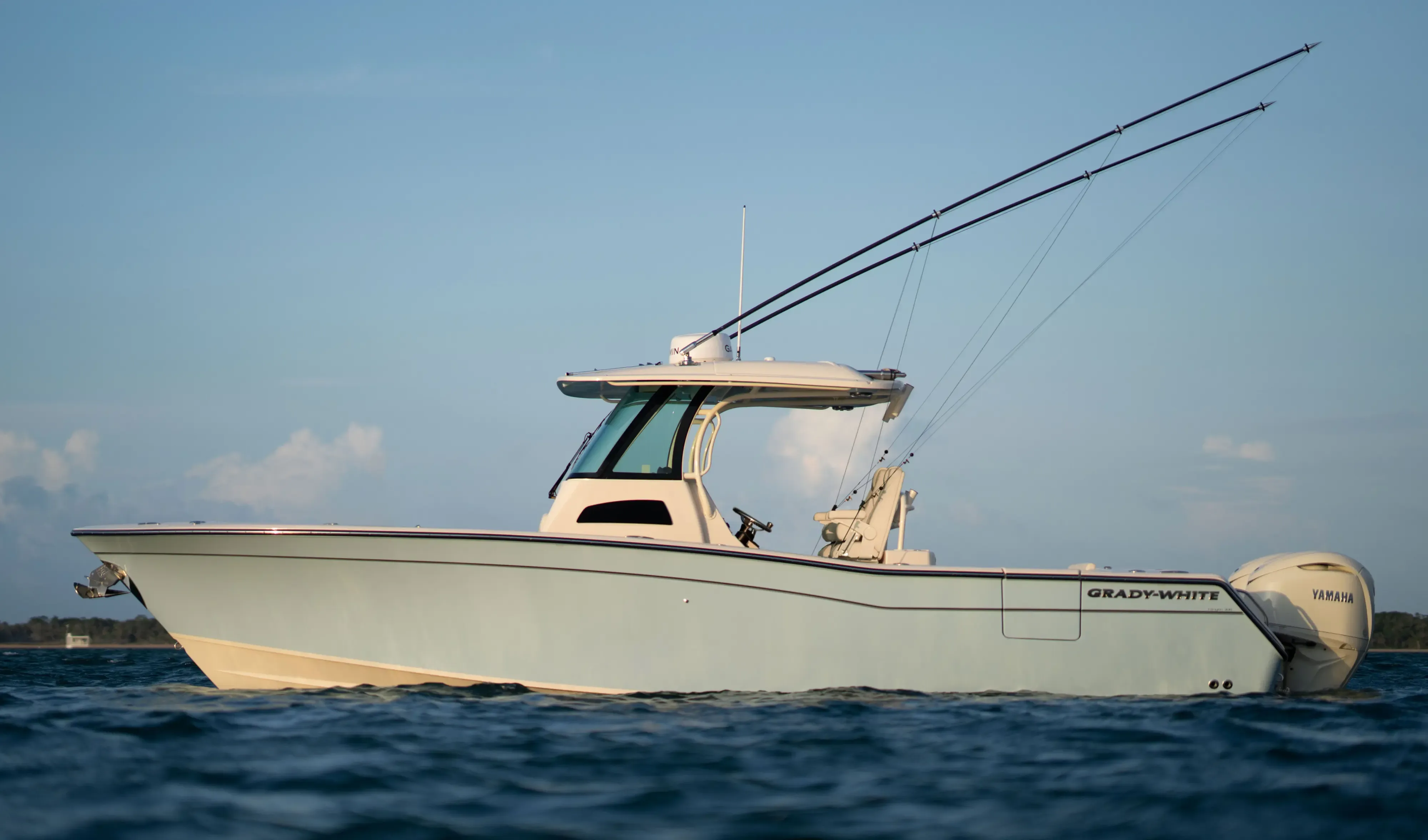
Photos courtesy of Grady White.
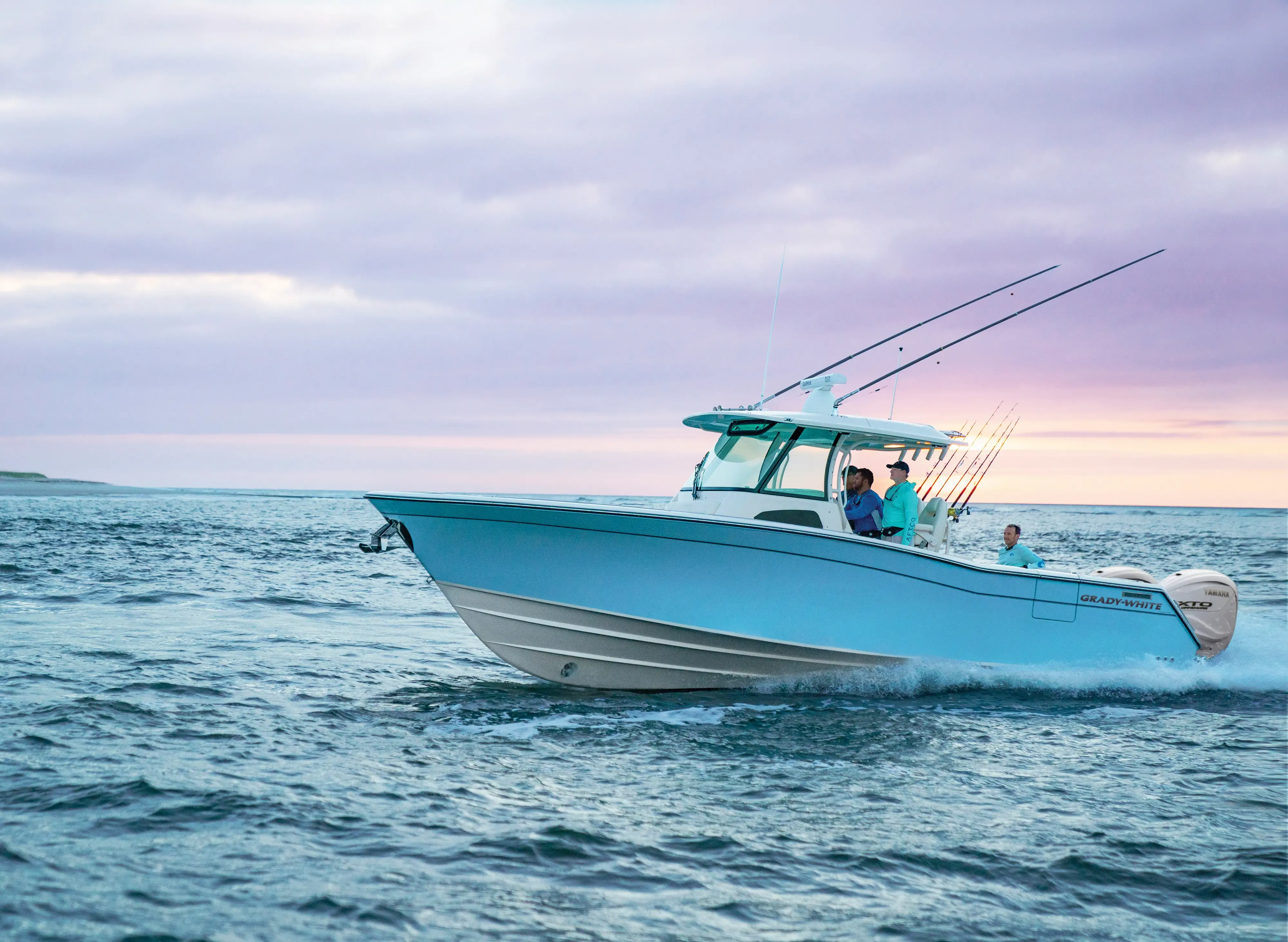
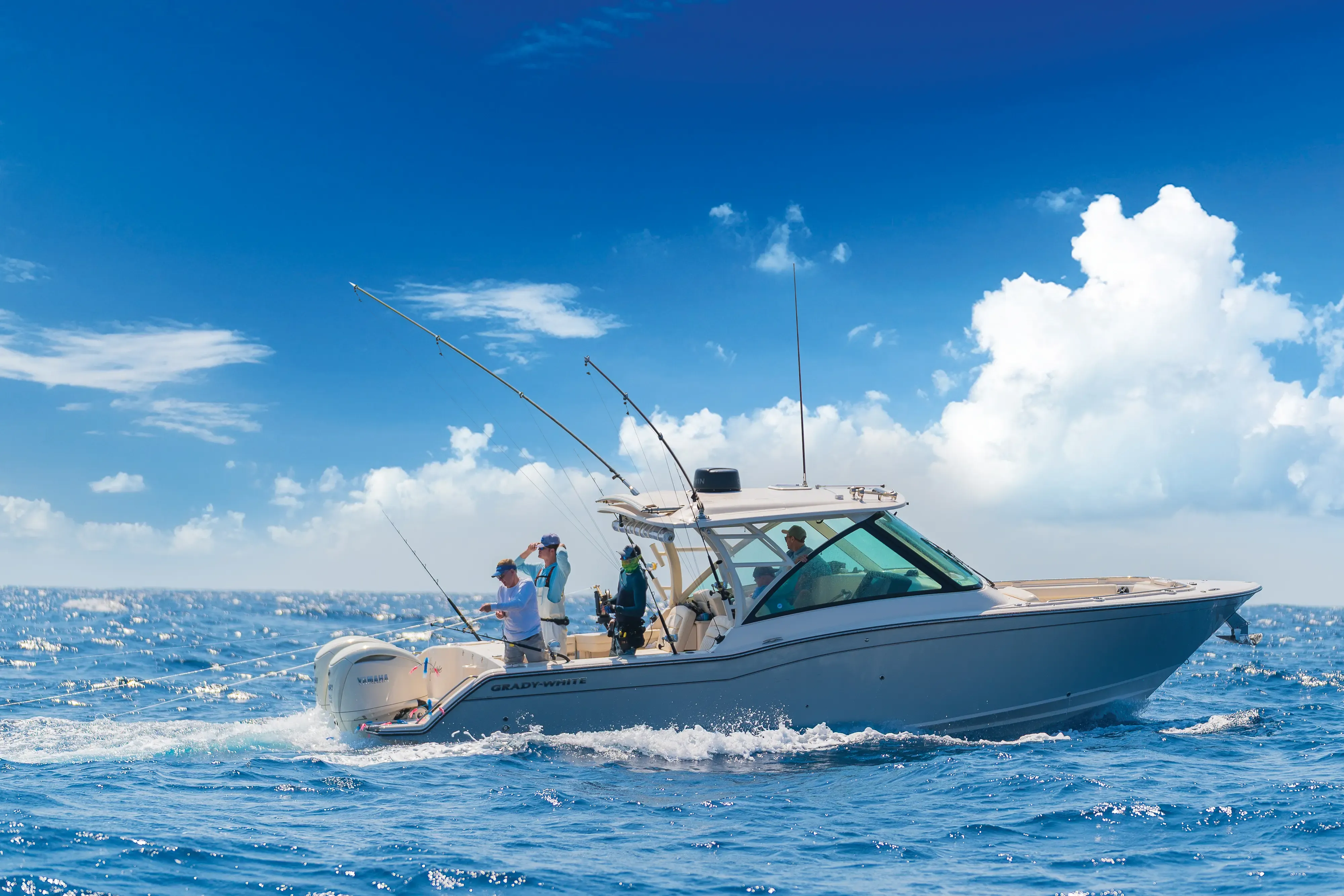
The Canyon 306 draws 21 inches at the hull, which is the shallowest of the four Grady-White models we review and one of the shallower figures in the 30-foot offshore class.
That number is why we recommend this boat as often as we do. Twenty-one inches lets you cross a bar or work a shallow inlet on the way out, and you still have a hull rated to 700 horsepower and 290 gallons of fuel for the run offshore. The Canyon 336 draws 26 inches by comparison — five more inches decides a lot of tide tables.
The Canyon 306 runs 56.2 mph at 6,000 RPM on twin Yamaha 350s, and 50.5 mph at 5,900 RPM on the standard twin Yamaha 300s. Its optimum cruise on the 350s is 31.2 mph at 3,600 RPM, burning 18.8 gallons an hour for 1.66 miles per gallon.
Those are Grady-White's own published figures, and the yard quotes them in miles per hour rather than knots. The gap between the two engine packages is smaller than the horsepower difference suggests — about 6 mph at the top end, and almost nothing at cruise, where the 300s return 30.2 mph on 18.3 gph.
Buy the 306 if you fish inshore as often as offshore, run the boat yourself, and want the lower running cost — 21 inches of draft, 7,220 lbs dry and 18.8 gph at cruise. Buy the 336 if you regularly fish four or five people a long way out.
The step up costs five inches of draft, nearly 3,000 lbs and a third engine's worth of fuel burn: 24.8 gph at cruise against the 306's 18.8. What it buys is a foot more beam to work a fish around, 71 more gallons of fuel, and a 1,050-horsepower ceiling instead of 700. Both are genuinely capable offshore; the honest question is how many people are usually aboard.
Yes. The Canyon 306 has a lockable console head with stand-up room, a shower, a sink, an electric-flush marine head and a 7.5-gallon holding tank. There is no cabin — this is an open center console, and the head is built into the console itself.
That is the normal arrangement for the class and it works well for day fishing with mixed company aboard. If you want somewhere for someone to actually lie down, the Canyon 336 adds a cushioned berth forward in its console, and the Freedom 345 has a proper cabin.