
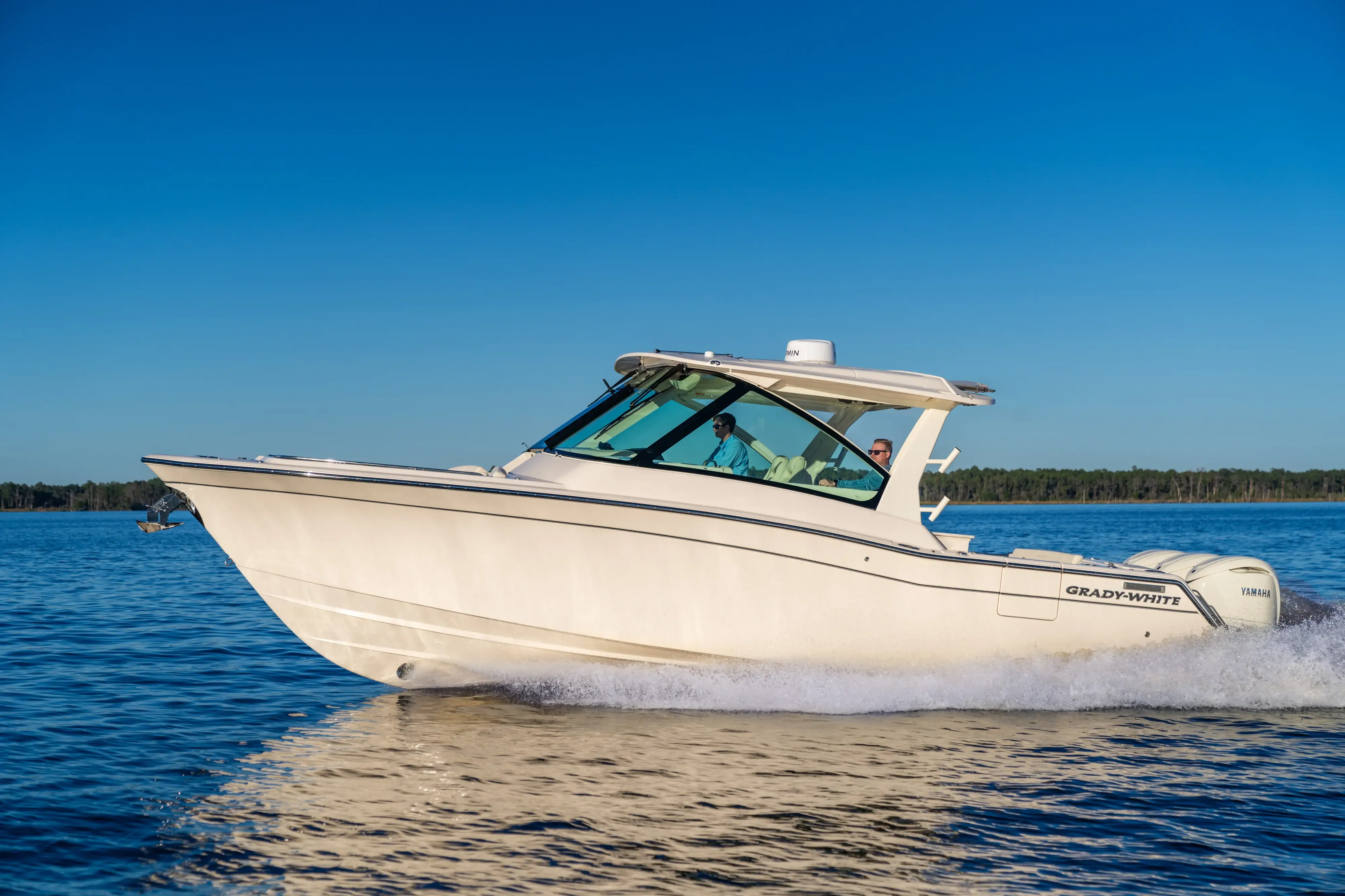
Grady-White Freedom 345: The Dual Console That Doesn't Compromise
Grady-White Freedom 345 blends tournament-capable fishing and yacht-level comfort in a 34' dual-console package, SeaV2 hull, twin 450s, 300 …
Read the articleExpert Review, Technical Specifications & Market Analysis
| Feature | Specifications |
|---|---|
| Overall Length | 33' 6" |
| Beam | 11' 7" |
| Draft | 27" (hull draft) |
| Displacement | 12,510 lbs (w/o engines) |
| Engines | Twin Yamaha XTO Offshore 450 / triple Yamaha 350 four-stroke; 1,050 hp maximum |
| Fuel Capacity | 300 US gallons |
| Water Capacity | 32 US gallons |
| Cabins / Heads | Port cabin with electrically operated sliding berth, bench seat and closet; enclosed head with sink, storage and VacuFlush head |
| Max Speed | 52.2 mph (twin Yamaha XTO 450s); 56.2 mph (triple Yamaha 350s) |
| Cruise Speed | 29.9 mph @ 3,900 RPM (with twin Yamaha XTO 450s) |
Source: Spec & Photos courtesy of Grady White. Specs verified by Tony Smith, USCG 100 Ton Master, on August 10, 2026.
Part of the Grady White Freedom series — see how owners step up through the lineup.

The Freedom 345 represents Grady-White's commitment to building boats that don't force you to choose between fishing and comfort. The SeaV² hull is proven, the build quality is exceptional, and the attention to detail in the cabin layout shows they understand how people actually use these boats. The twin Yamaha XTO 450 setup delivers reliable power, and the ride quality in 3- to 4-foot seas is noticeably better than most competitors.
This boat is for the owner who fishes 20 days a year and cruises 30 more. If you're a tournament angler who needs maximum fishability and nothing else, you'll find the cabin consoles intrusive. If you're a casual cruiser who rarely fishes, you're paying for features you won't use. But if you're in the middle—someone who wants a serious fishing platform that can also host family and friends in comfort—the 345 hits the mark.
Resale on Grady-White boats is strong, but expect to spend $5,000 to $8,000 annually on maintenance, insurance, and slip fees. Fuel costs add up quickly with twin 450s, so budget accordingly. The boat will hold value better than most competitors, but only if you keep it serviced and don't defer maintenance. This is a long-term ownership play, not a flip..
Video courtesy of Grady White.
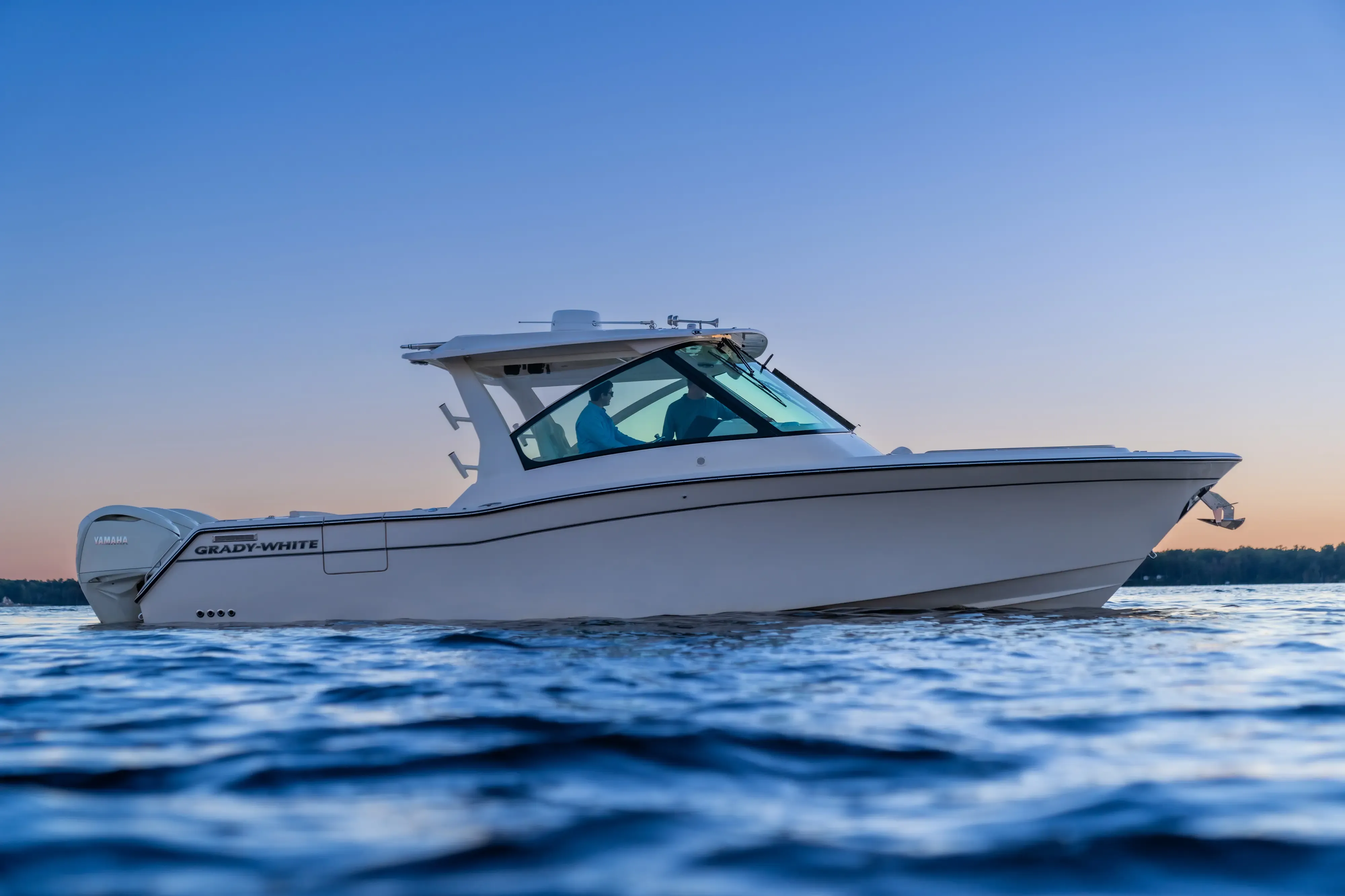
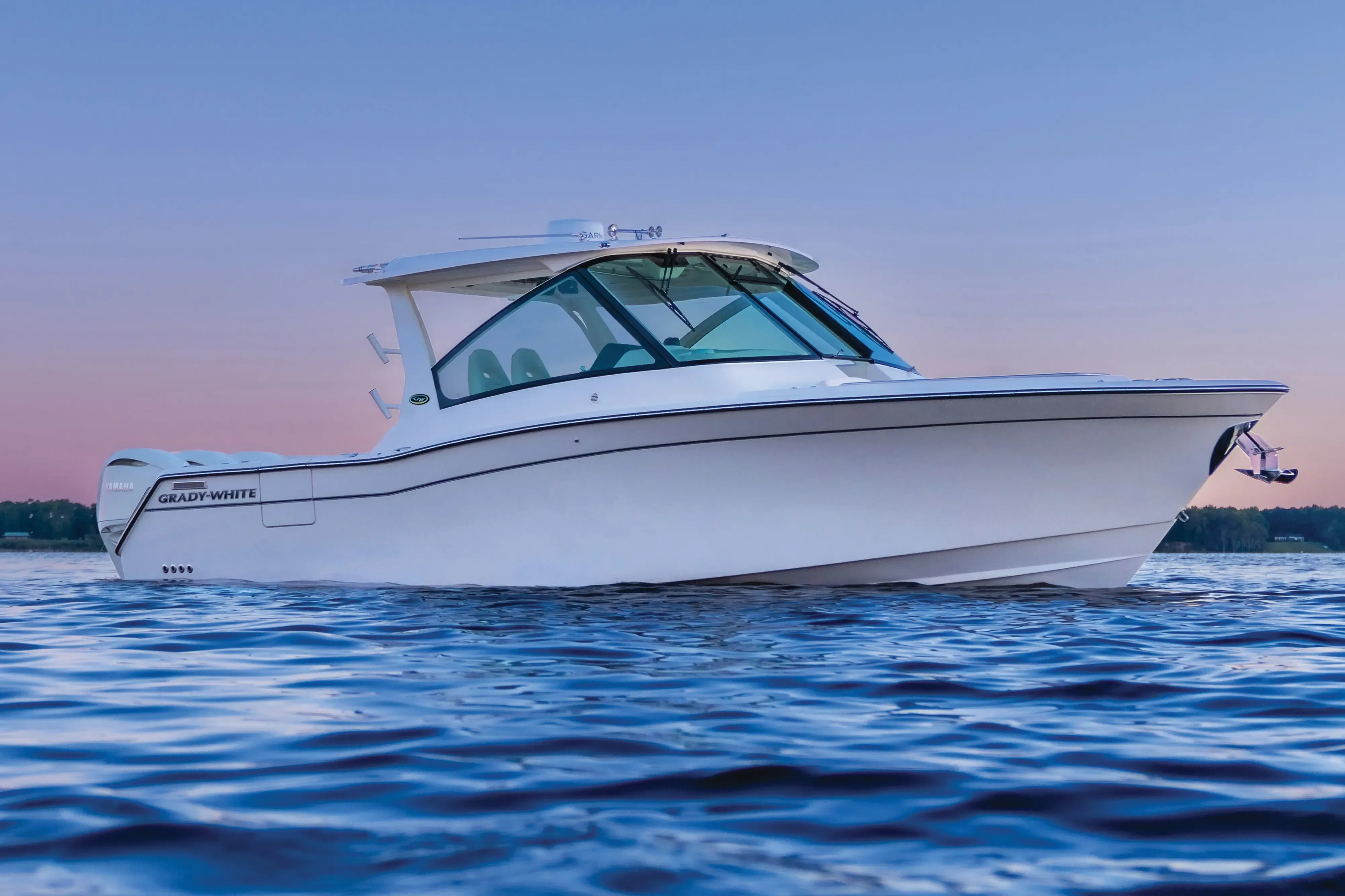
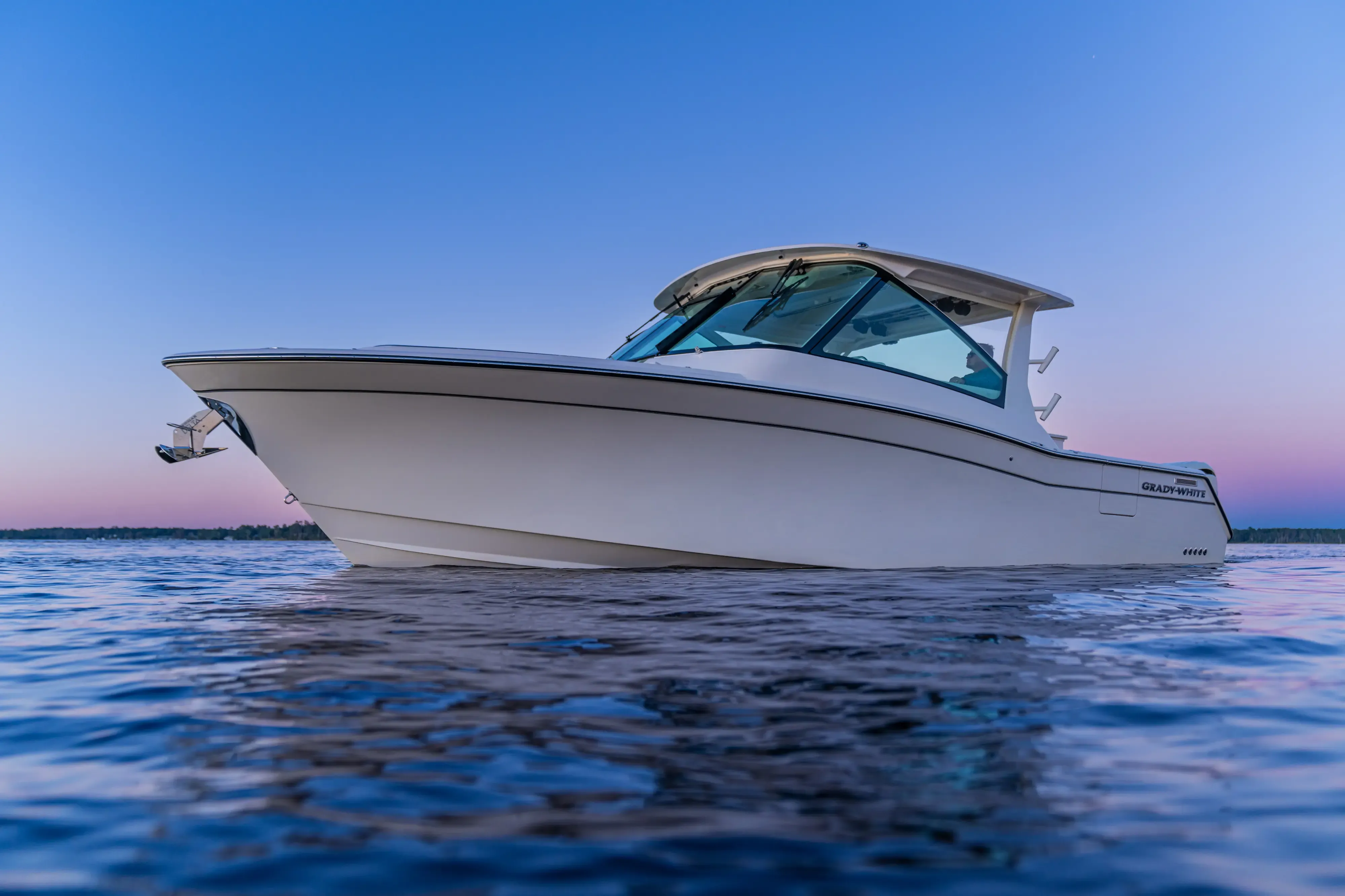
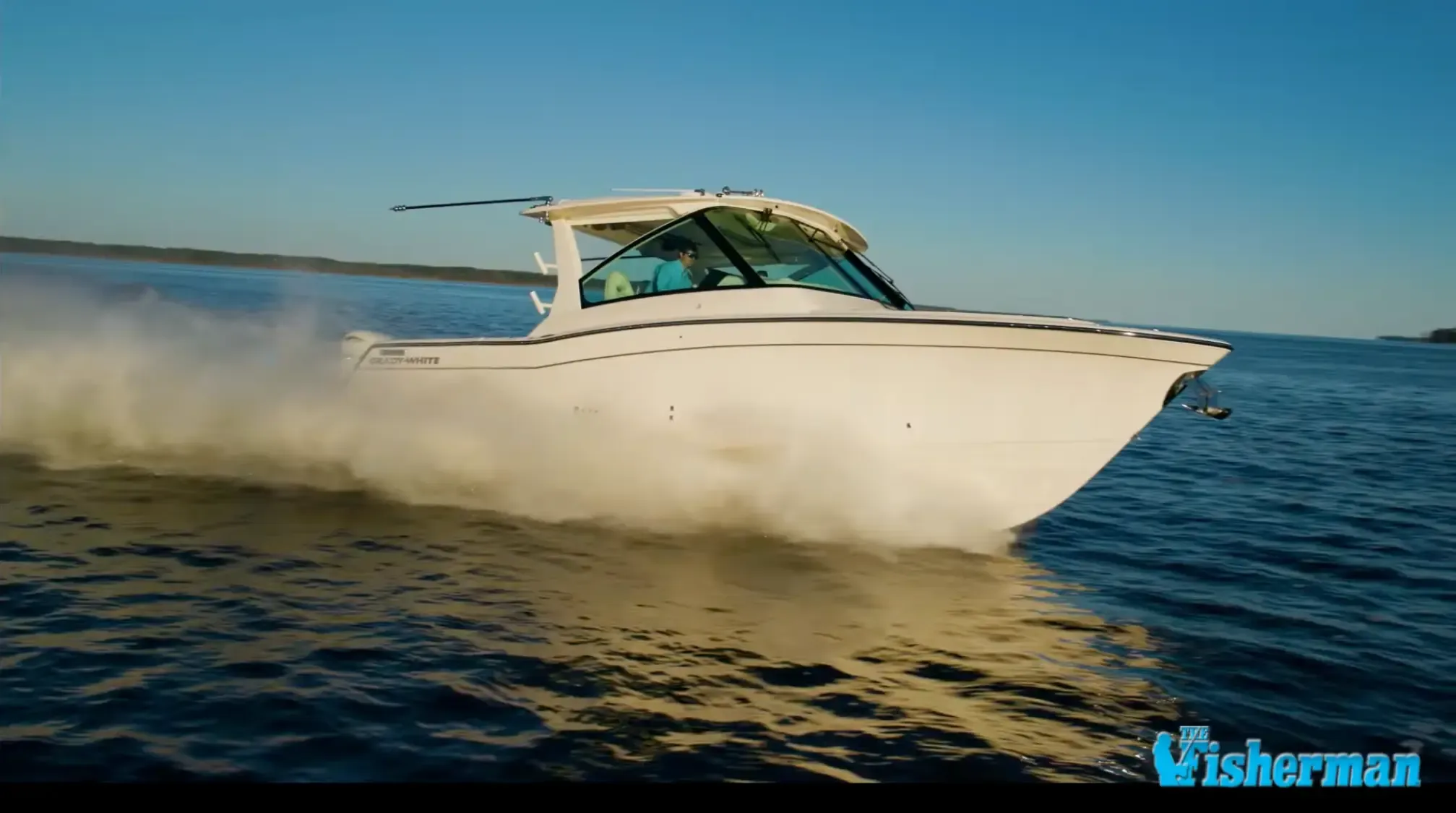
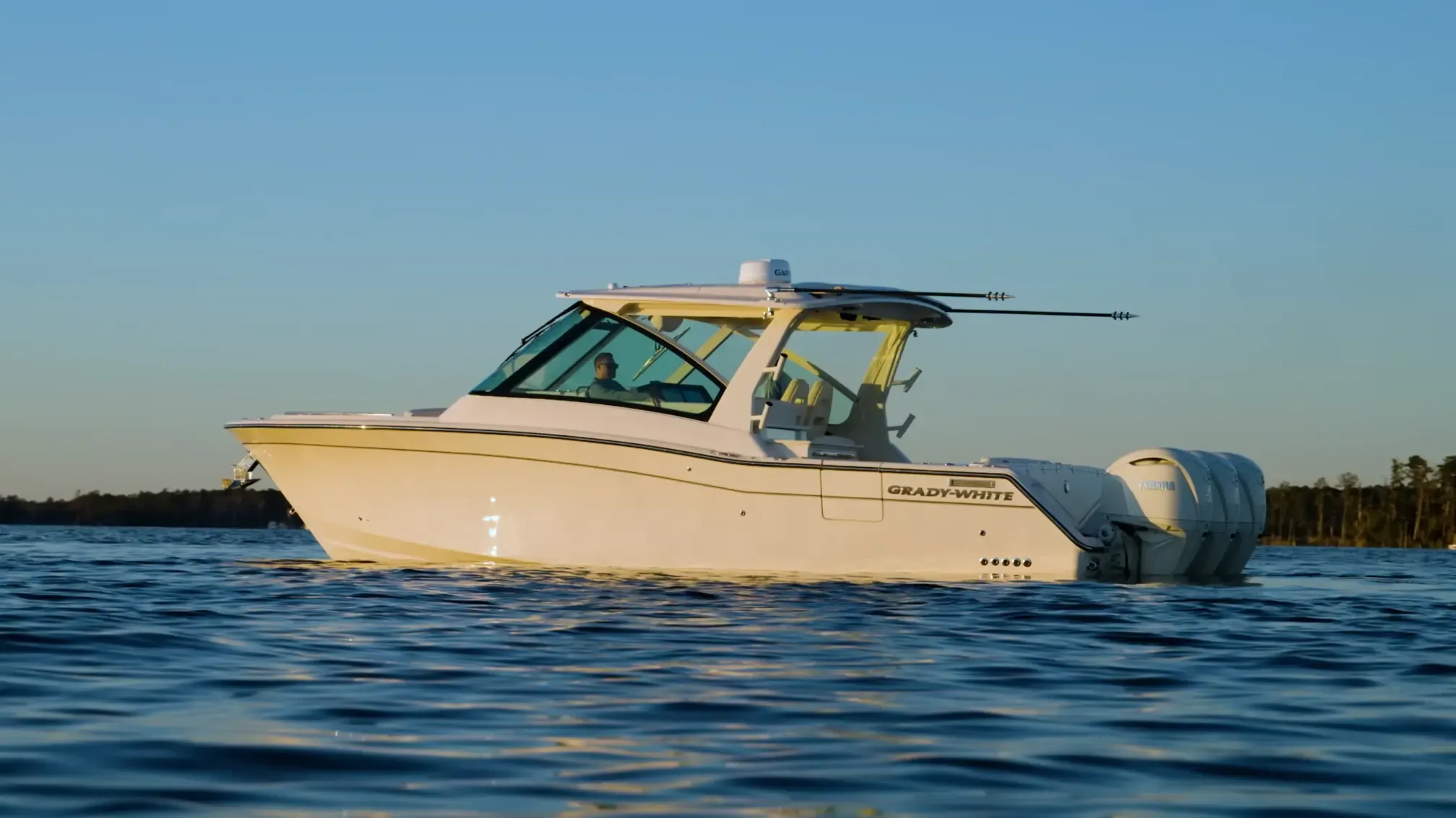
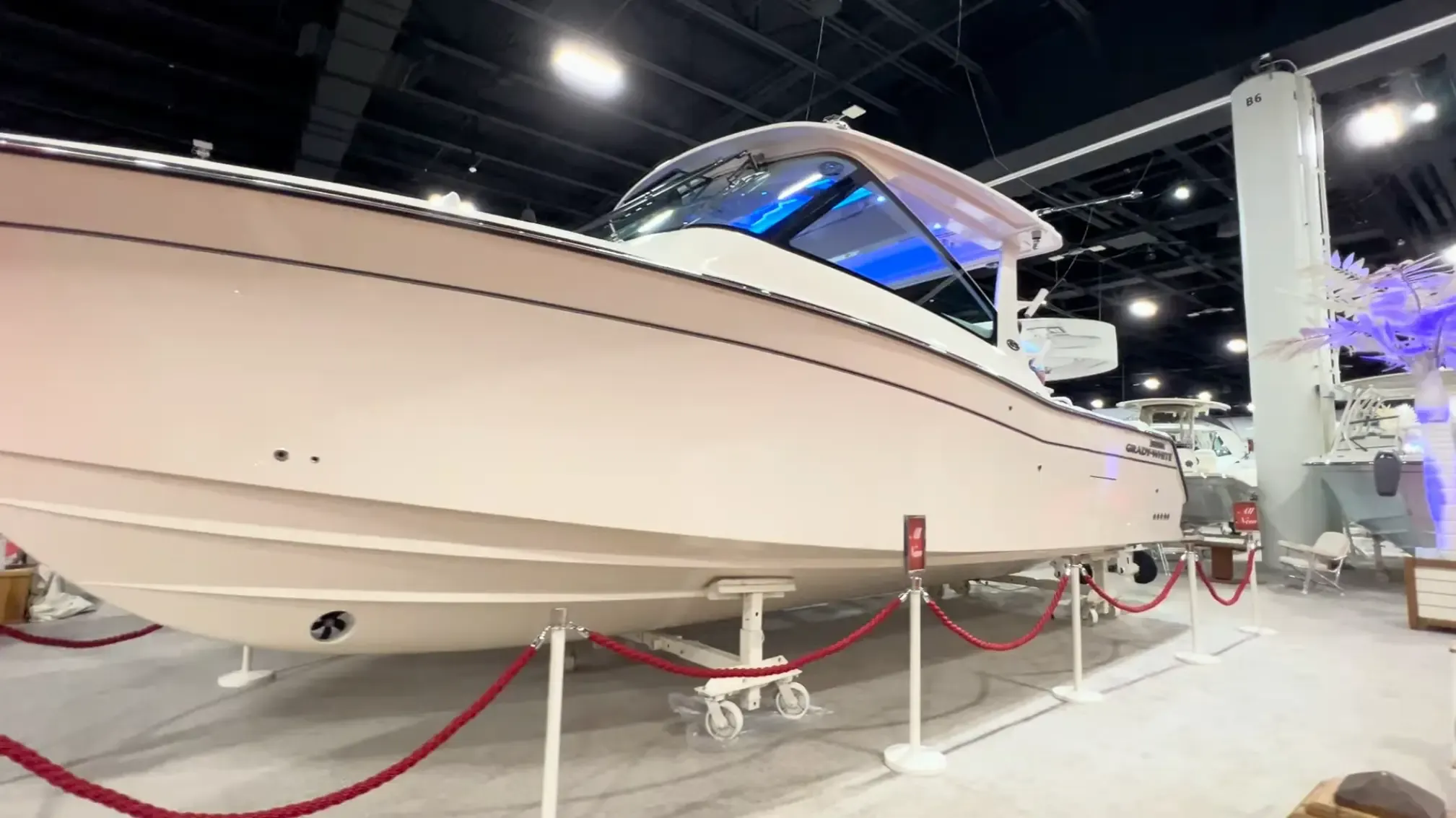
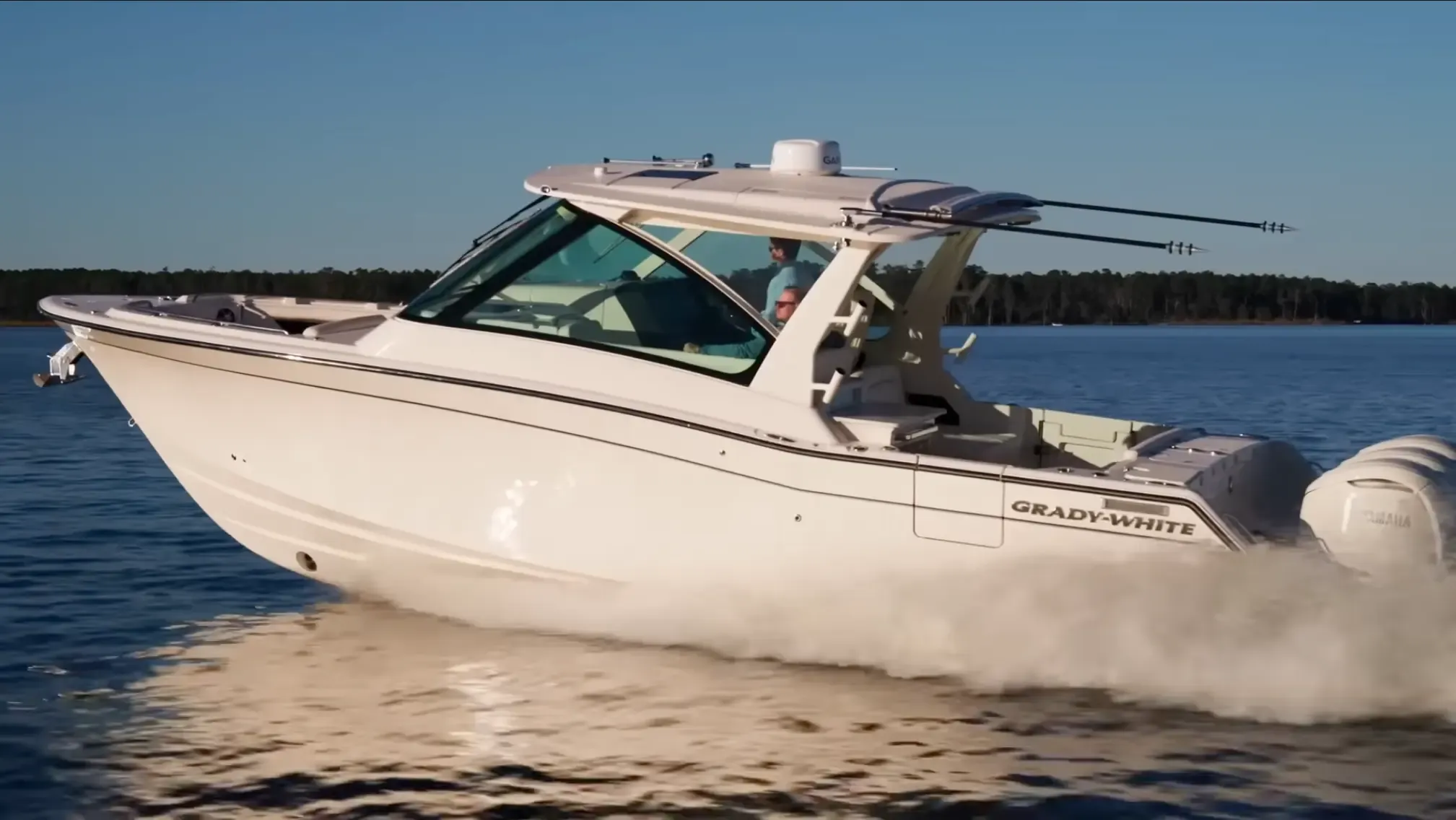
Photos courtesy of Grady White.
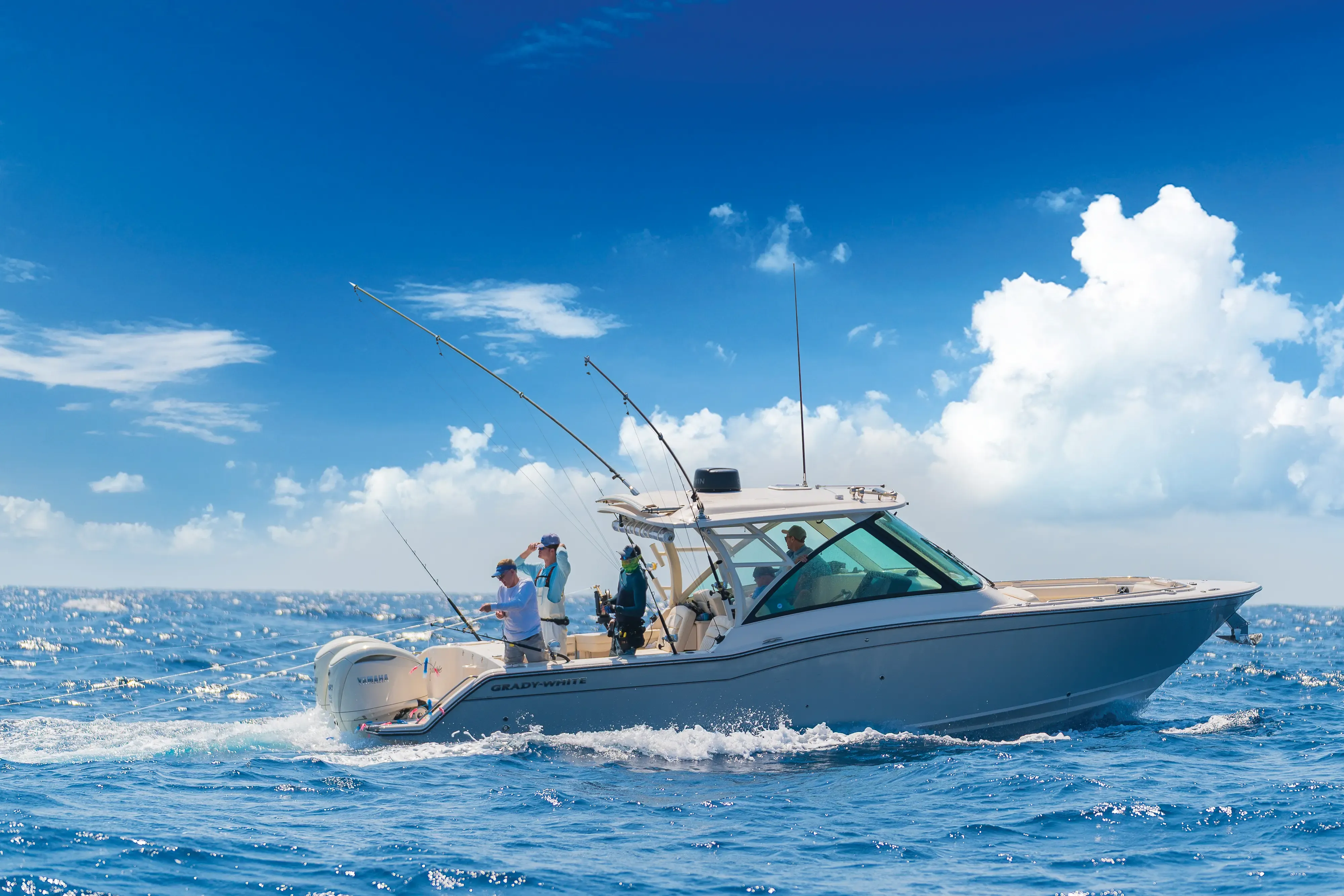
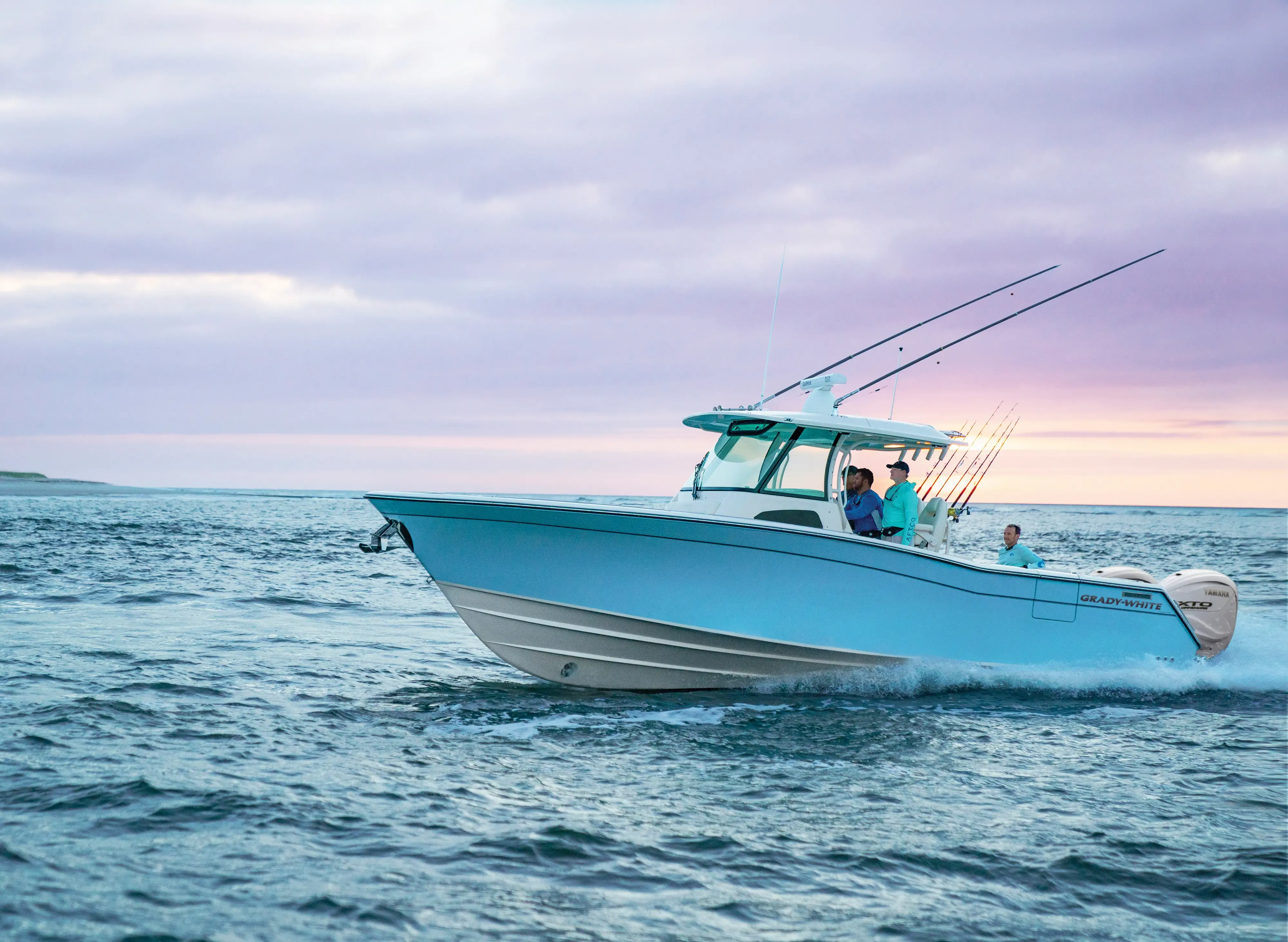
Buy the 345 if you are going to sleep aboard or regularly carry a full crew; buy the Freedom 325 if you want the lower running cost and the shallower draft. That one question — will you actually overnight? — separates these two boats more cleanly than any other number.
The 345 adds a real cabin, a foot of length, ten inches of beam and a 1,050-horsepower ceiling. It costs three inches of draft (27" against 24"), 3,210 lbs, and roughly eight more gallons an hour at cruise — 28.3 against 20.7. Across a season of forty-mile runs, that fuel difference is not a rounding error.
The Freedom 345 runs 56.2 mph at 6,100 RPM on triple Yamaha 350s, and 52.2 mph at 6,100 RPM on twin Yamaha XTO 450s. Optimum cruise on the XTO 450s is 29.9 mph at 3,900 RPM, burning 28.3 gallons an hour.
Grady-White publishes these in miles per hour. The triple 350 package is both faster and marginally more efficient at cruise — 30.5 mph at 3,600 RPM on 27.7 gph, for 1.10 mpg against the twins' 1.06.
Grady-White offers the Freedom 345 with twin Yamaha XTO Offshore 450s or triple Yamaha 350 four-strokes, up to a maximum of 1,050 horsepower. There is no twin-300 package on this hull.
That maximum is worth noting against the boat's weight: at 12,510 lbs without engines the 345 is 3,210 lbs heavier than the Freedom 325, which is why it is rated to 1,050 horsepower where the 325 stops at 700. The triples are the faster and slightly more efficient choice at cruise; the twins are two engines to buy, fuel and service rather than three.
Yes. The Freedom 345 has a port cabin with an electrically operated sliding berth, a bench seat and a closet, plus a separate enclosed head with a sink and storage. It is the only one of the four Grady-White models we review with accommodation that two adults can genuinely use overnight.
This is the single clearest difference between the 345 and the Freedom 325 below it. The 325 splits a berth and a head between its two consoles, which is fine for getting out of the sun or changing in private, but it is not a cabin.