
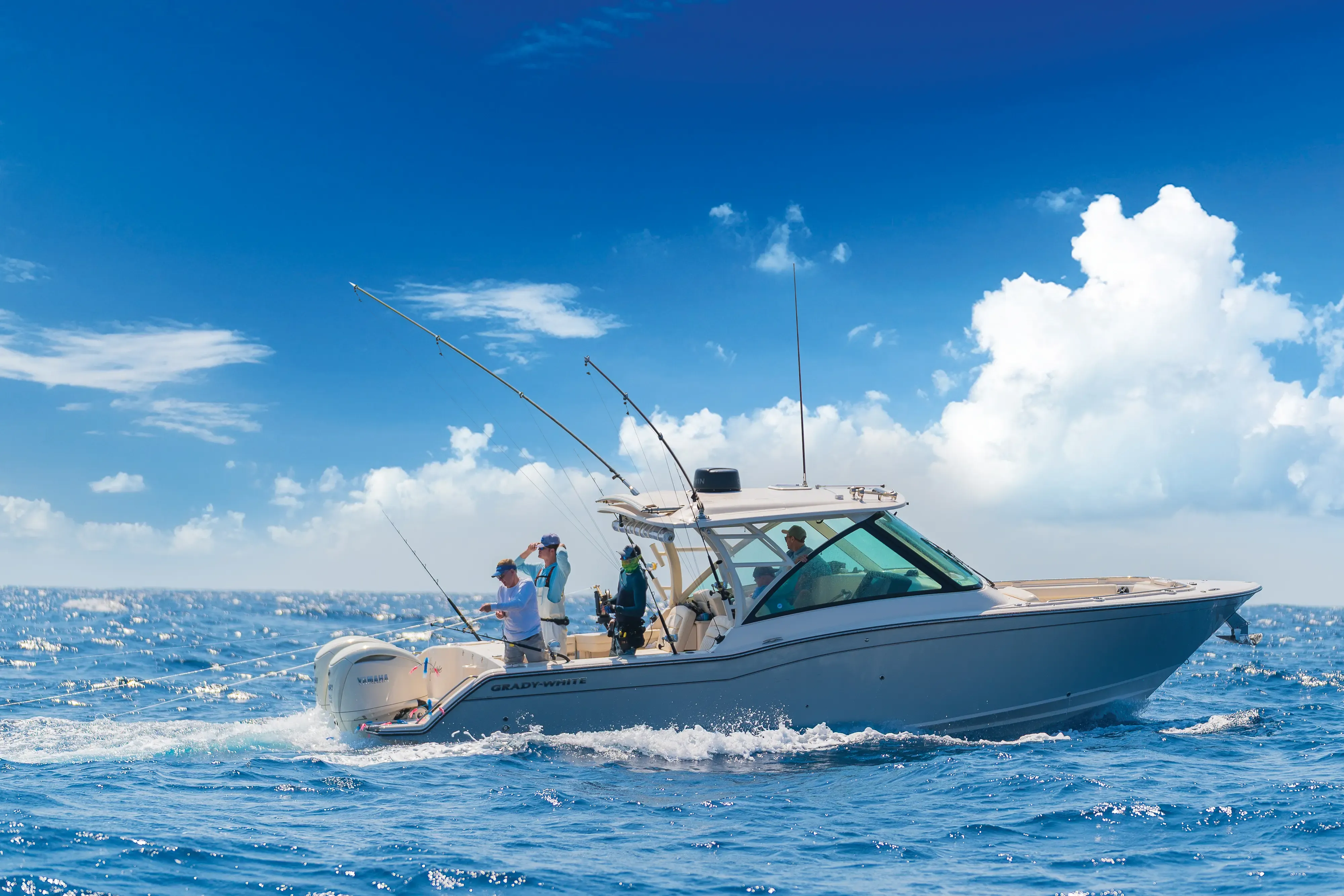
The Grady White 325 Freedom: When 32 Feet Feels Like 40
Versatile and spacious, the Grady White 325 Freedom packs yacht-level comfort and tournament-grade fishing into a 32-foot dual console—SeaV2…
Read the articleExpert Review, Technical Specifications & Market Analysis
| Feature | Specifications |
|---|---|
| Overall Length | 31' 2" |
| Beam | 10' 9" |
| Draft | 24" (hull draft) |
| Displacement | 9,300 lbs (w/o engines) |
| Engines | Twin Yamaha 300 four-stroke (standard) / twin Yamaha 350 (optional); 700 hp maximum |
| Fuel Capacity | 288 US gallons |
| Water Capacity | 30 US gallons |
| Cabins / Heads | No cabin — starboard console with cushioned berth; port console with VacuFlush head, sink and 10-gallon holding tank |
| Max Speed | 48.5 mph (twin Yamaha 300s); 53.9 mph (twin Yamaha 350s) |
| Cruise Speed | 30.2 mph @ 3,700 RPM (with twin Yamaha 350s) |
Source: Spec & Photos courtesy of Grady White. Specs verified by Tony Smith, USCG 100 Ton Master, on August 10, 2026.
Part of the Grady White Freedom series — see how owners step up through the lineup.

The 325 Freedom is Grady-White executing what they do best: building a boat that works every day for 20 years. The SeaV2 hull is proven. The construction is overbuilt by modern standards. The layout prioritizes function over flash. This is a boat that doesn't ask you to choose between fishing and family cruising because it handles both without compromise. The AV2 hardtop, the lockable consoles, and the self-bailing cockpit are details that matter when you're using the boat 50 days a year rather than showing it off at the dock.
This boat is for the owner who understands that beam and weight are features, not liabilities. The 325 Freedom is stable at rest, confident in a beam sea, and capable of handling conditions that send lighter boats back to the dock. It's not the fastest option in the segment. It's not the cheapest. It's the one that will still be running when the competition is on its third owner and second repower. If you're the type who keeps boats for a decade and measures value in reliability rather than resale, the 325 Freedom makes sense.
The market reality is straightforward. Grady-White resale values are among the highest in the industry because the boats are built to last and owners don't want to sell them. Maintenance costs are predictable. Parts availability is excellent. The Yamaha four-strokes are bulletproof. Budget $15,000-$20,000 annually for slip fees, insurance, maintenance, and storage, plus fuel based on usage. If you're running 100 hours per year, total ownership cost is approximately $30,000-$35,000 annually. That's the price of access to a boat that will run for decades without major issues..
Video courtesy of Grady White.
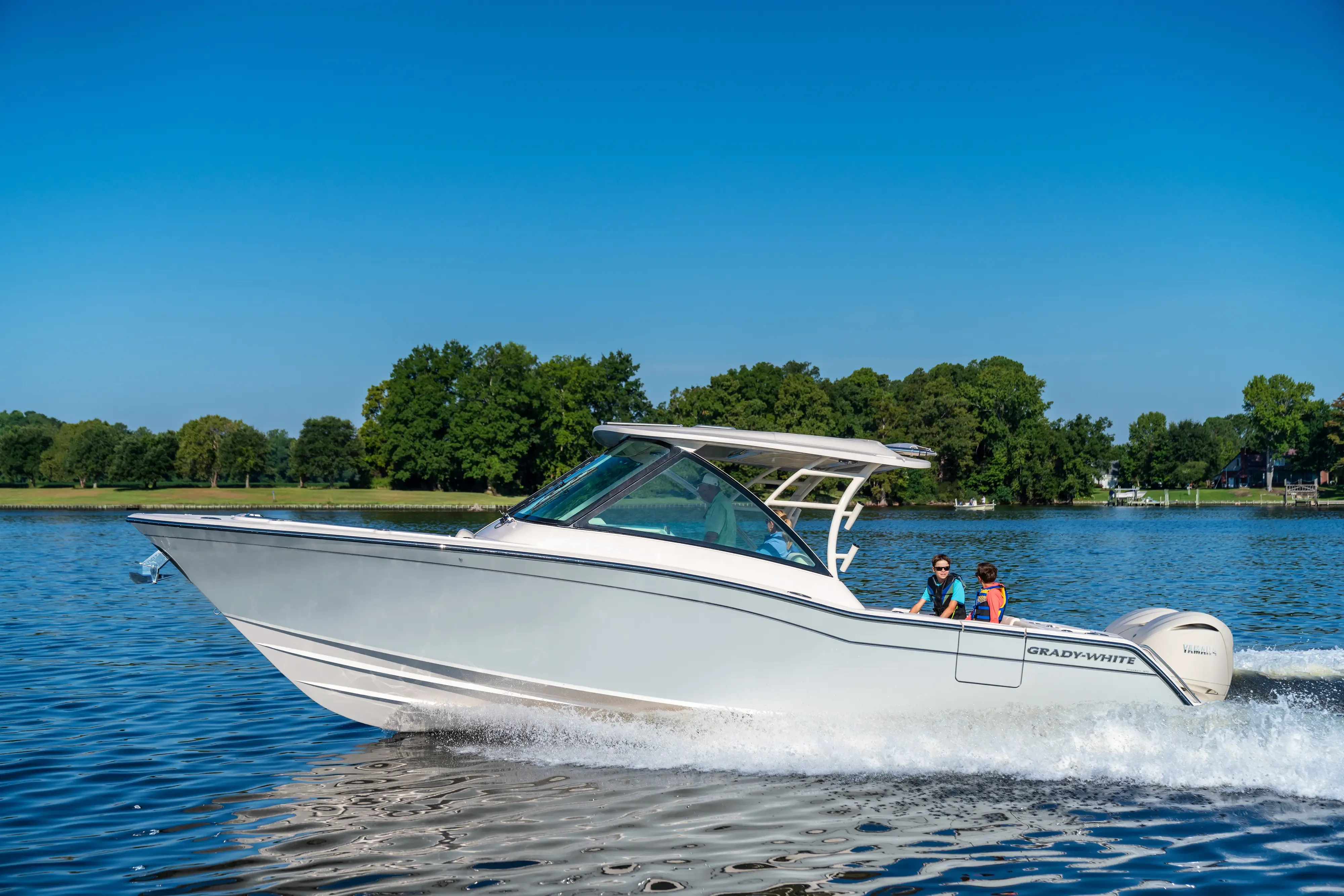
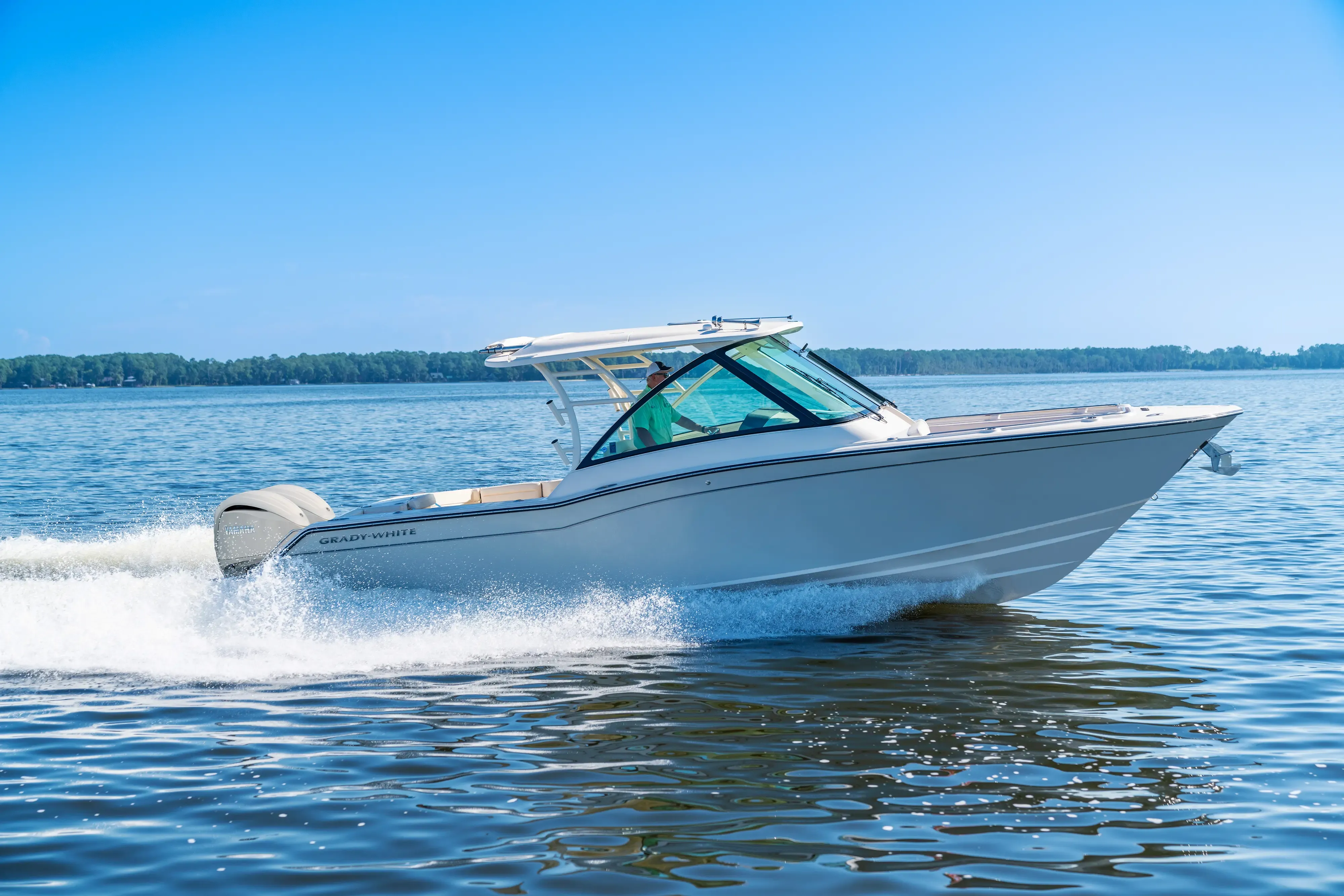
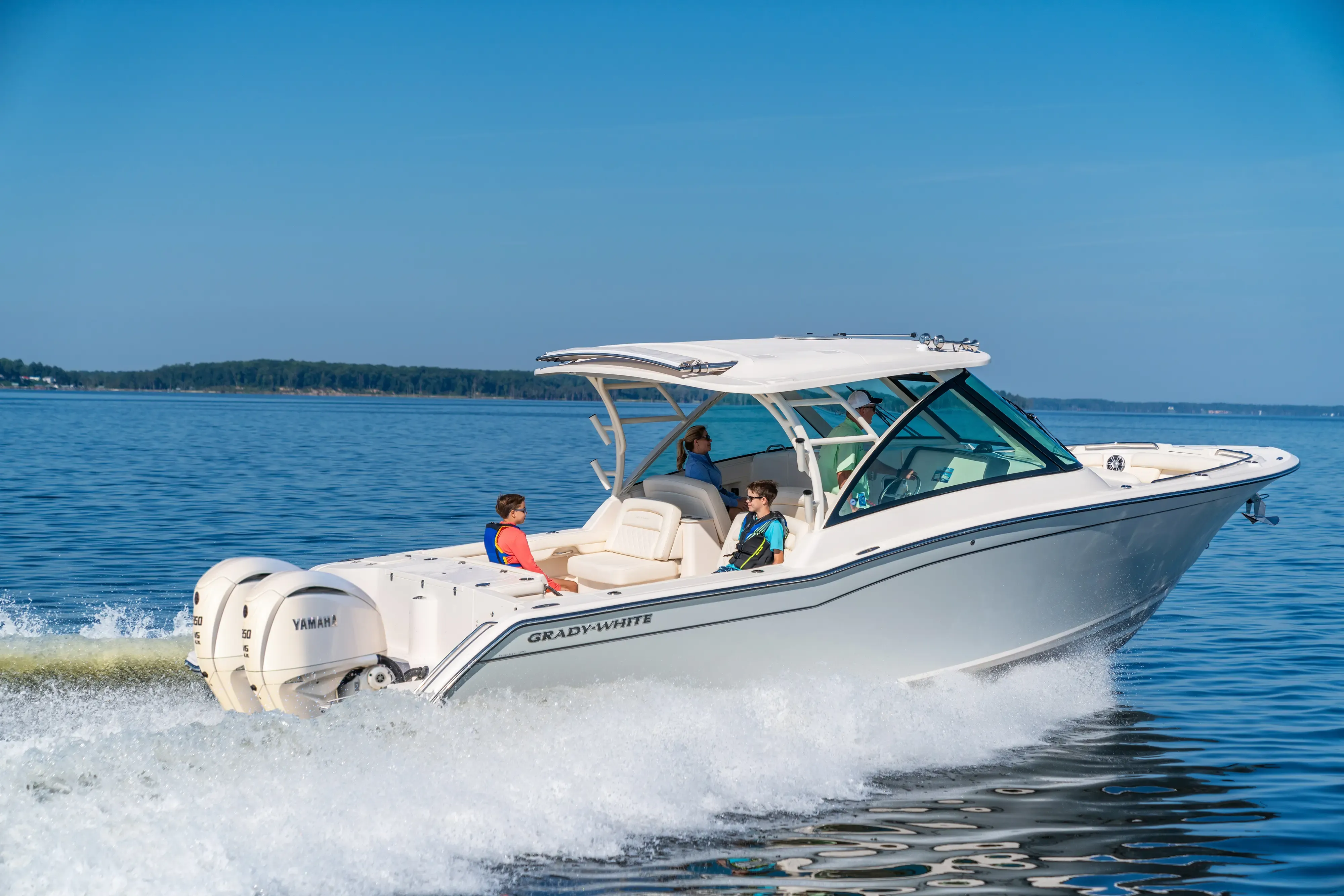
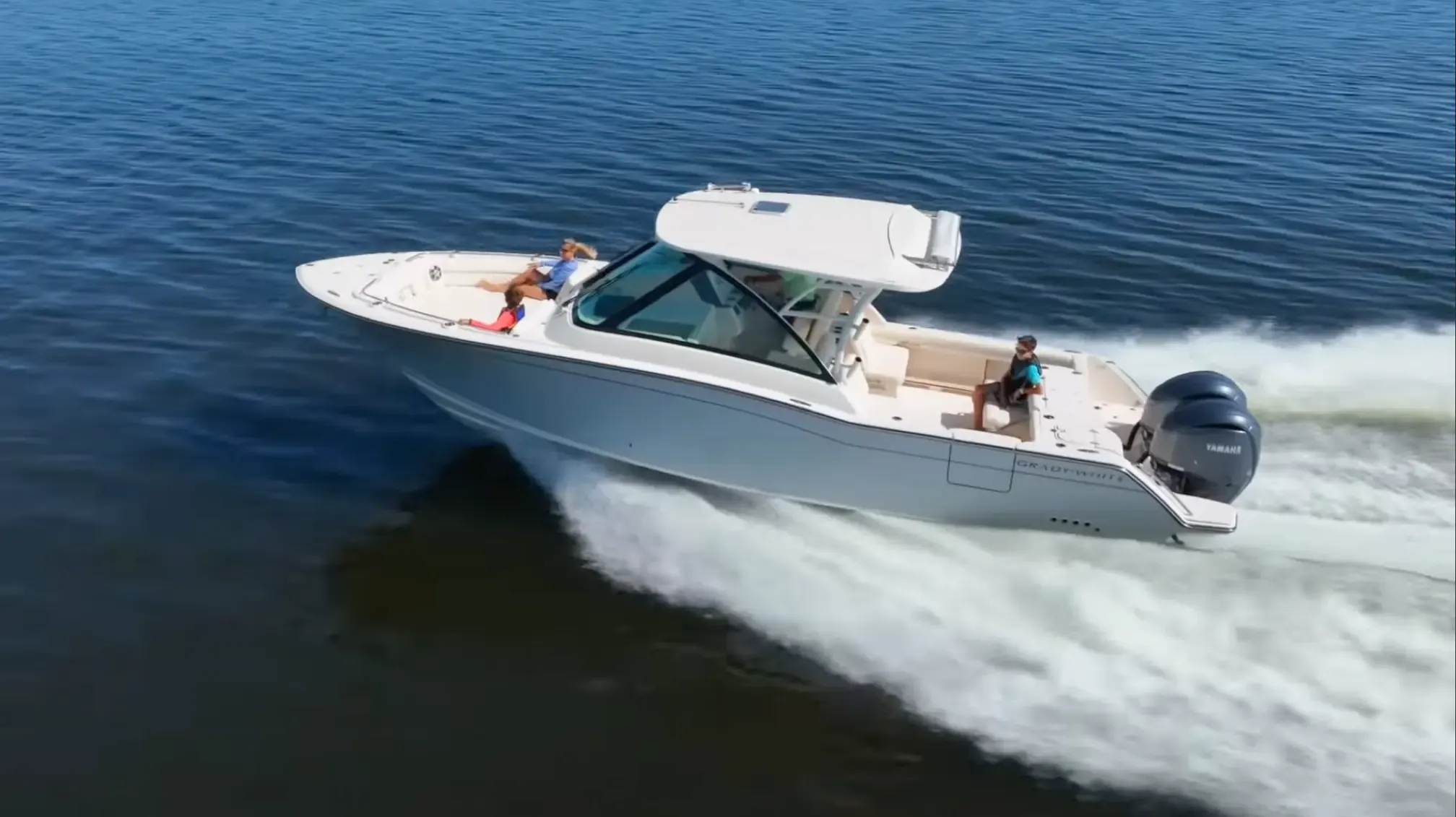
Photos courtesy of Grady White.
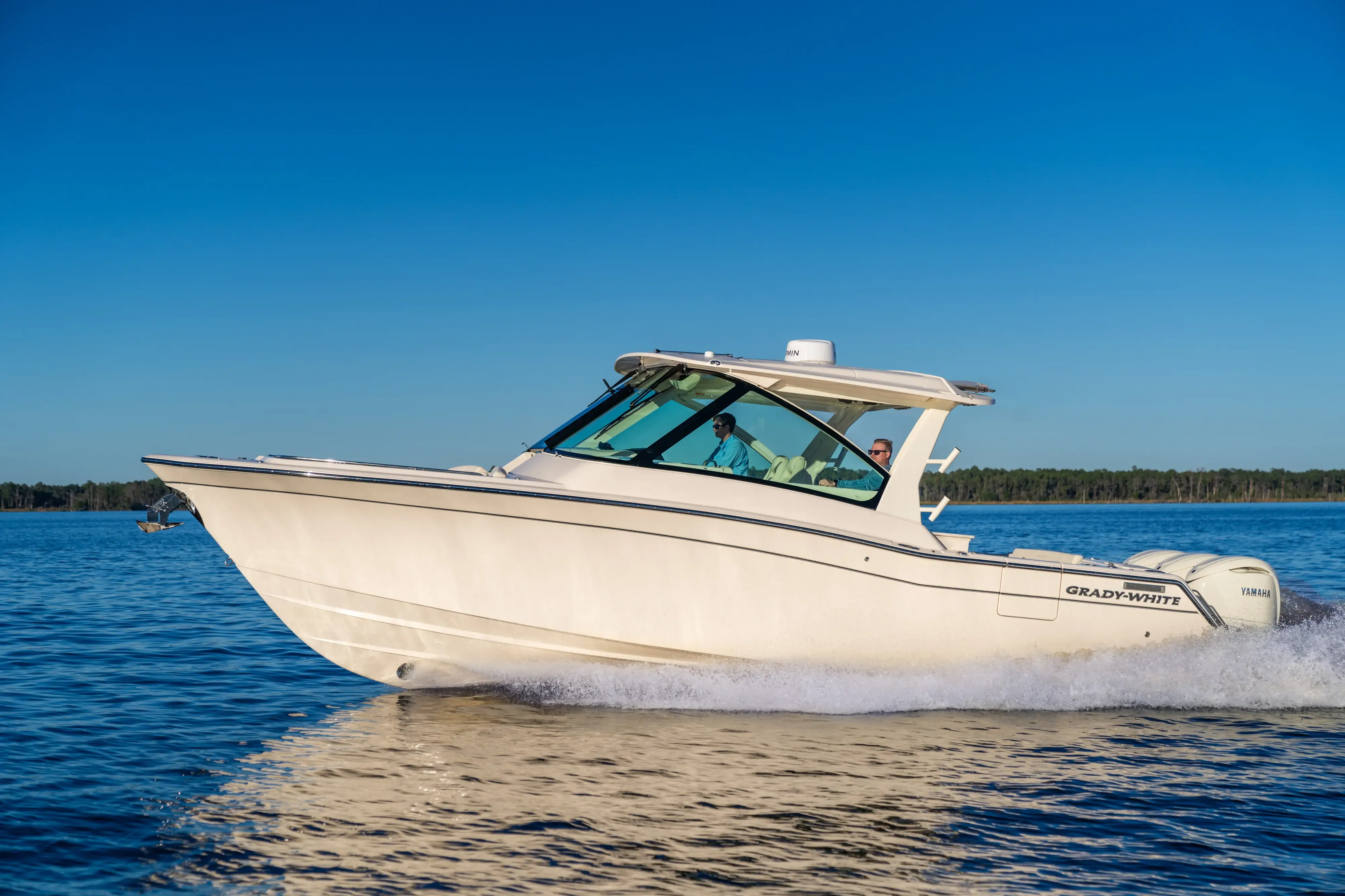
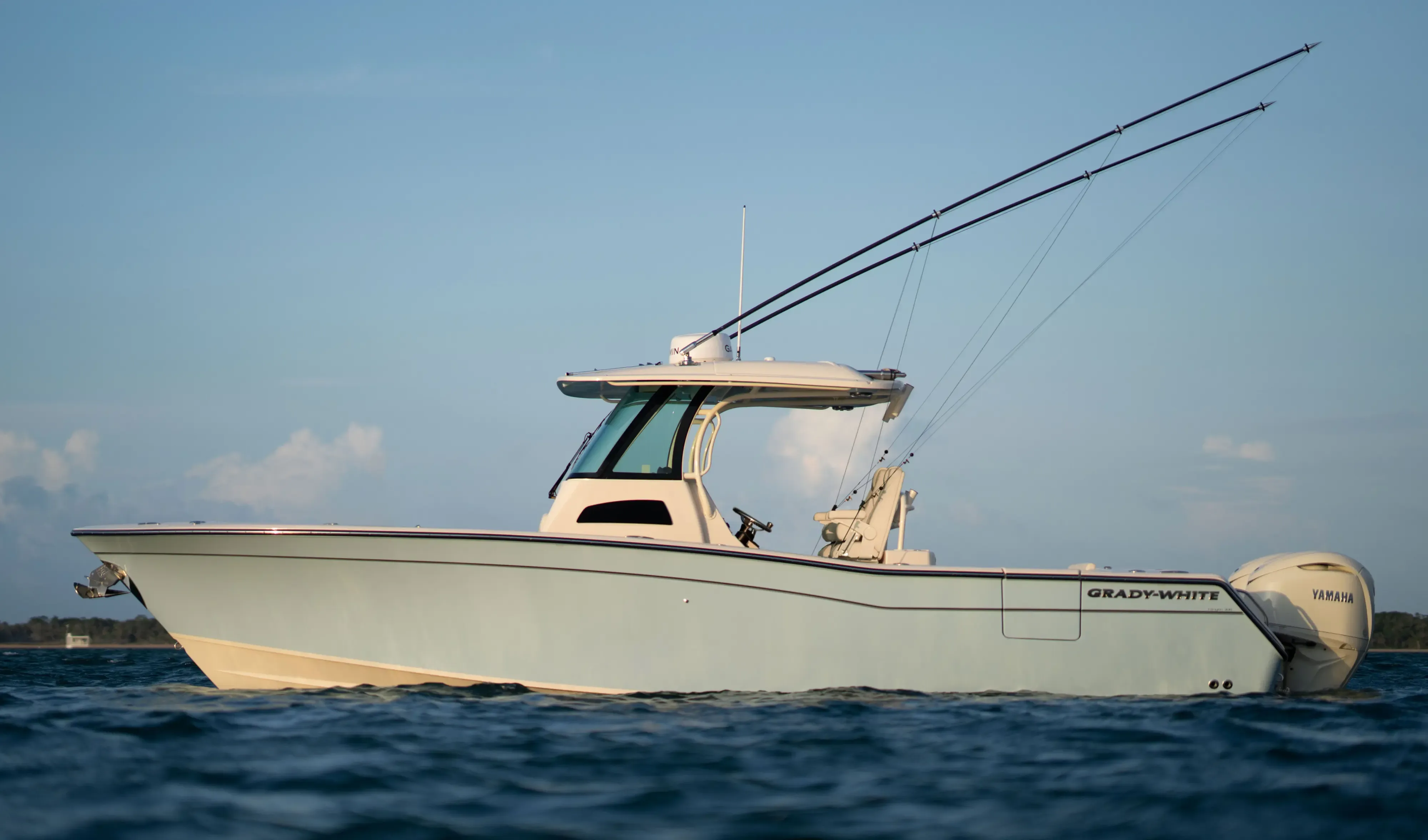
The Freedom 325 runs 53.9 mph at 6,000 RPM on twin Yamaha 350s, and 48.5 mph at 5,900 RPM on the standard twin Yamaha 300s. Optimum cruise on the 350s is 30.2 mph at 3,700 RPM, burning 20.7 gallons an hour for 1.46 miles per gallon.
These are Grady-White's published figures in miles per hour. The twin 300s are actually the more efficient package at cruise — 29.3 mph on 19.0 gph, for 1.54 mpg — so the 350s buy top-end speed rather than economy.
Buy the Freedom 325 if the family comes along as often as the fishing rods do; buy the Canyon 306 if fishing is the point and everything else is a bonus. They are close in size — 31'2" against 30'6" — so this is a layout decision, not a size one.
The Canyon gives you a clear deck you can work a fish all the way around, plus three inches less draft (21" against 24") and a lighter boat at 7,220 lbs against 9,300. The Freedom gives you a windshield, forward-facing seating, a berth in one console and a head in the other, and a bow that is comfortable at anchor rather than just a casting platform.
Yes, and they are split between the two consoles. The starboard console holds a cushioned berth; the port console holds a VacuFlush head with a sink and a 10-gallon holding tank. There is no separate cabin.
That is the classic dual-console arrangement and it suits the boat's job — a day boat that fishes in the morning and cruises in the afternoon, with somewhere private to change and somewhere shaded to lie down. If you intend to sleep aboard, step up to the Freedom 345, which has a proper port cabin and an enclosed head.
It depends which number you are asked for. Grady-White publishes 31'2" as the centerline length without swim platforms or engines, and 33'1" as the overall length with the swim platforms counted.
The 31'2" figure is the one we use in the spec table, for consistency with the rest of the range. The 33'1" figure is the one that matters when you price a slip, book a lift or measure a garage — marinas charge on overall length, and almost two feet of difference can move you into the next pricing bracket.