
August 20, 2026
Scout 400 LXF — A Center Console You Can Stand Up Inside
The Scout 400 LXF is a 39'7" carbon-epoxy center console with 6'4" of standing headroom in the cabin, an enclosed shower and head, an 8 kW g…
Read the articleExpert Review, Technical Specifications & Market Analysis
| Feature | Specifications |
|---|---|
| Overall Length | 39'7" |
| Beam | 12'1" |
| Draft | 2'3" |
| Displacement | 14,940 lbs |
| Engines | Quad Mercury 400 V10 (4 x 400 HP) or Twin Mercury 600 (2 x 600 HP) |
| Fuel Capacity | 395 gal |
| Water Capacity | 51 gal |
| Cabins / Heads | 1 Cabin / 1 Head |
| Max Speed | 71.5 mph @ 6,357 RPM (quad Mercury 400 V10s); 62.6 mph @ 6,406 RPM (twin Mercury 600 V12s) |
| Cruise Speed | 41.1 mph @ 4,000 RPM at 0.88 mpg (quad Mercury 400 V10s); 32.6 mph @ 4,000 RPM at 0.90 mpg (twin Mercury 600 V12s) |
Source: Spec & Photos courtesy of Scout. Specs verified by Tony Smith, USCG 100 Ton Master, on August 20, 2026.
A center console you stand up inside: 6'4" of cabin headroom, an enclosed shower and 12,000 BTU of air conditioning in 39'7".
Part of the Scout LXF series — see how owners step up through the lineup.

Most 40-foot center consoles hand you a head you tolerate and somewhere to change out of a wet shirt. The 400 LXF hands you 6 feet 4 inches of standing room in the cabin, 6 feet 3 in the head, an enclosed shower, a galley sink with a cooktop and a microwave, and a 12,000 BTU air conditioner running off an 8 kW generator that Scout fits as delivered. That is the whole argument for this boat, and it is why I would put it in front of a buyer who thinks they need to move up to an express cruiser to get their family aboard. You may not. You may just need this one.
The engine decision is much less close than it is on the 377. Quad Mercury 400 V10s give you 71.5 mph and 7.31 seconds to 30. Twin Mercury 600 V12s give you 62.6 mph and 7.88 seconds. Nine miles per hour is a real difference, and the quads are the faster boat by any measure you care to run. But four engines is four sets of props, four service intervals and a busy transom to fish around, and the twins actually post a marginally better number at the efficiency peak. I would not talk anyone out of either. I would ask them how often they genuinely use the last nine miles per hour, and then let the answer decide.
The option I would push hardest is the saddle tanks. Fifty-seven gallons a side takes you from 395 to 509 gallons and moves Scout's published estimated range from 355 miles to 458. That is the difference between planning a crossing around a fuel stop and not thinking about it.
Video courtesy of Scout.
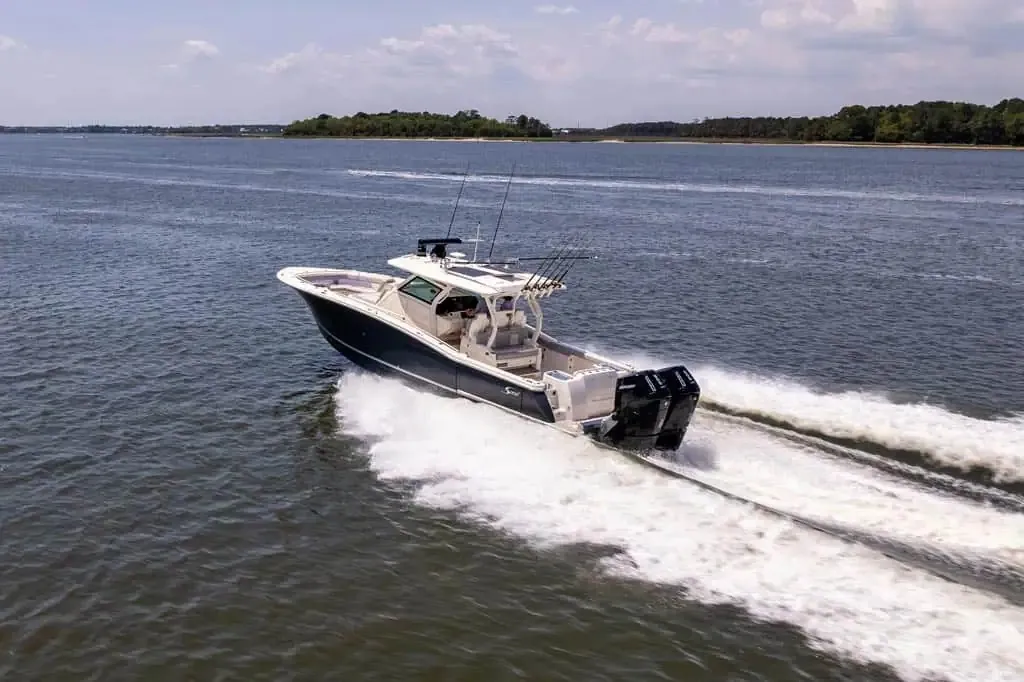
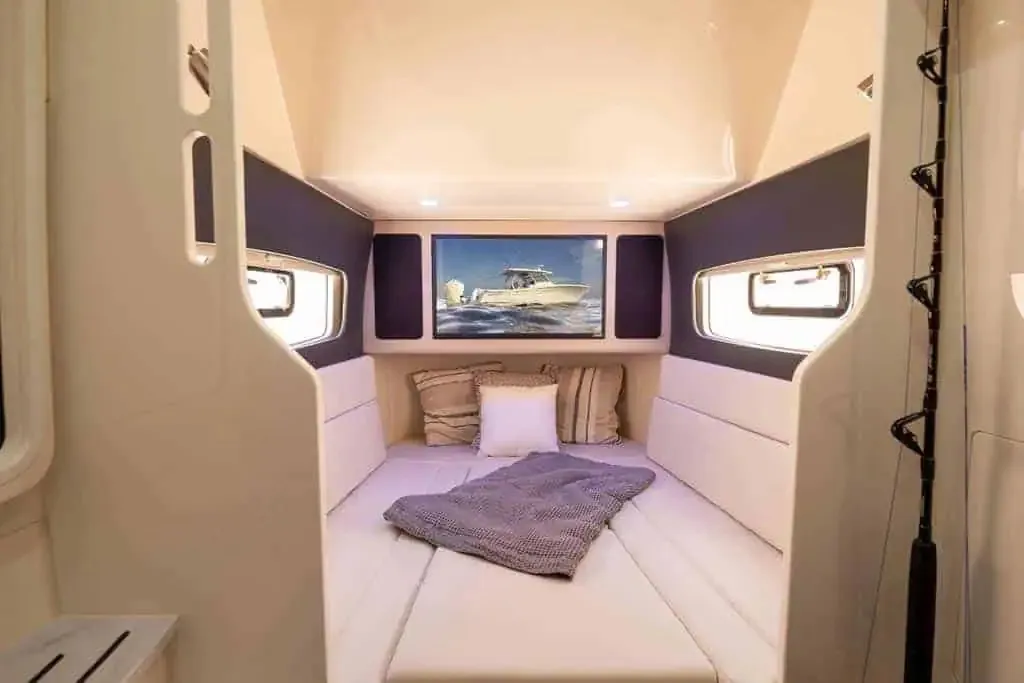
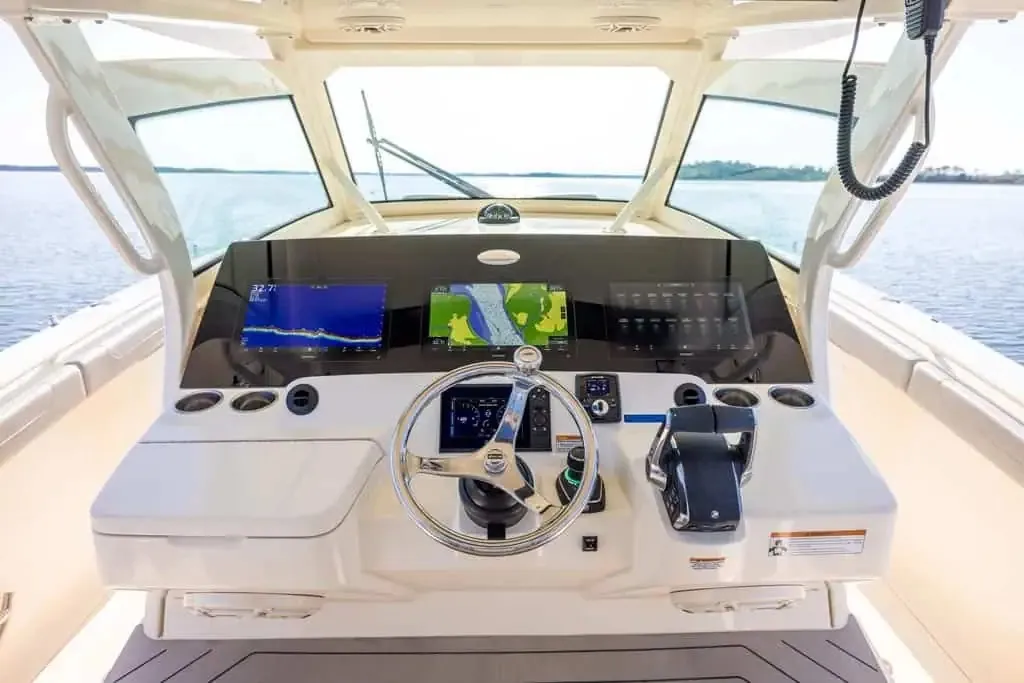
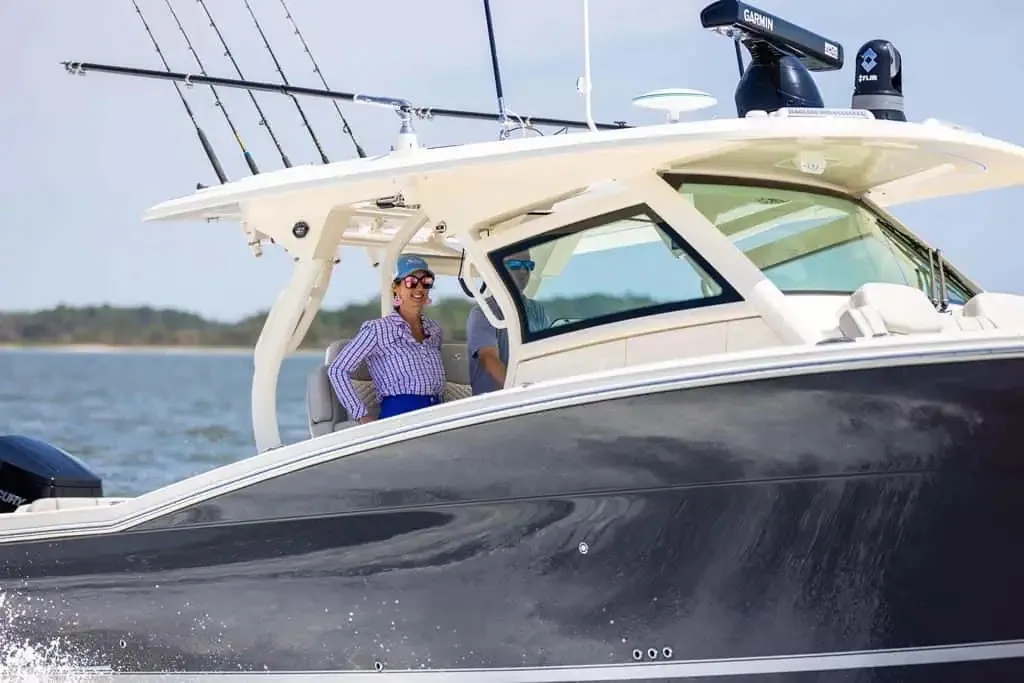
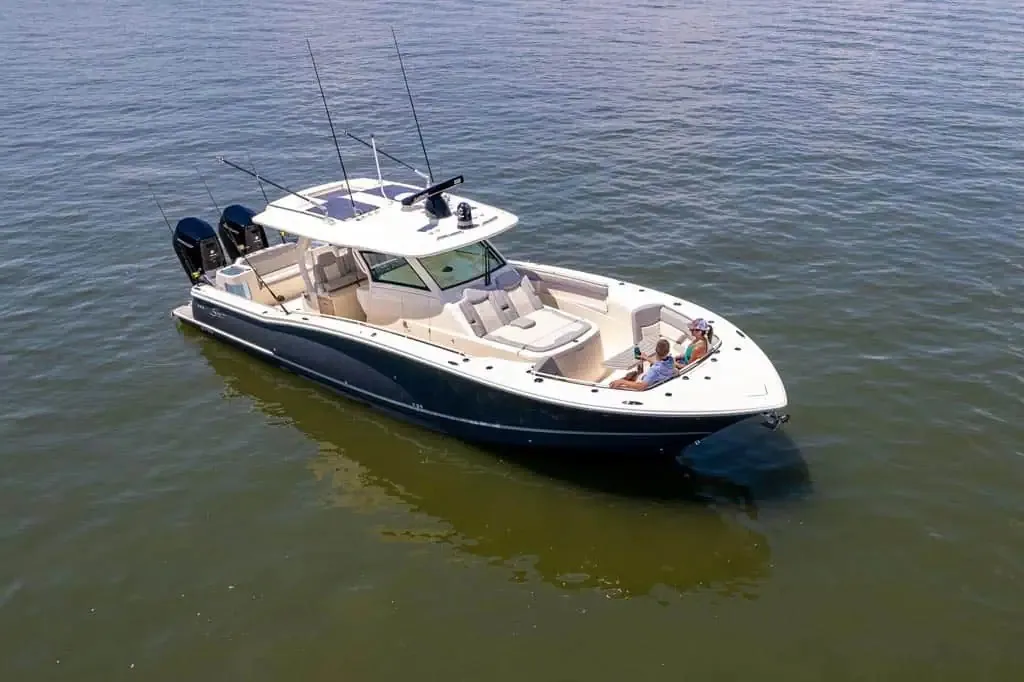
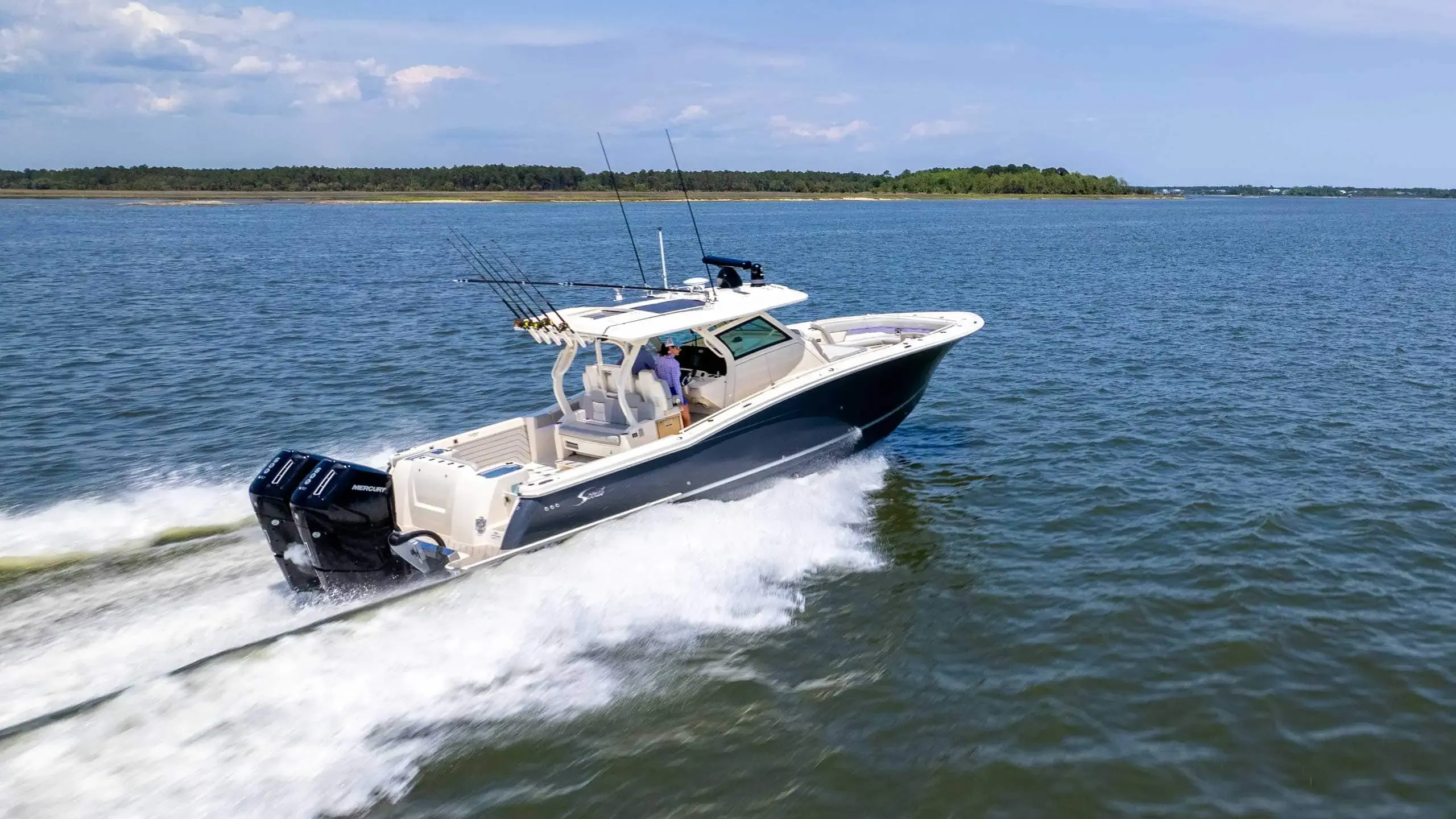
Photos courtesy of Scout.
The Scout 400 LXF is a 39'7" S-Class center console built in Carbon Epoxy Construction - carbon fiber and E-glass as the primary material in the epoxy infusion - over Scout's double stepped bottom. It carries 22 degrees of transom deadrise on a 12'1" beam at 14,940 lbs dry without engines, and 17,460 lbs with twin Mercury 600s fitted, the only rigged dry weight Scout publishes anywhere in this part of the range. Draft is approximately 27" and maximum rated power is 1,700 hp.
Fuel is 395 gallons as standard and 509 gallons with optional saddle tanks at 57 gallons per side. The boat also carries an 8 kW generator on its own 18-gallon diesel tank, a 12,000 BTU air conditioner, C-Zone digital switching, a Seakeeper 3 DC, three AGM house batteries, two 50-amp chargers and 50-amp shore power - all standard.
Deck capacity matches the length: 92.5-gallon aft fish boxes port and starboard with overboard diaphragm discharge, 66 gallons of baitwell in two aerated 33-gallon wells in the stern seat, ten flush-mount gunnel rod holders, five transom rod holders, a full transom walk-thru platform with an Armstrong dive ladder, a port-side beach platform and a midship mechanical room. The 400 LXF is NMMA and Yacht Certified.
Scout rates the 400 LXF to 1,700 hp. Two tested bulletins exist, both run with a Seakeeper aboard, and they describe genuinely different boats.
Quad Mercury 400 V10s (27p Rev X, tested at 19,280 lbs) reach 71.5 mph at 6,357 rpm, 0-20 mph in 4.77 seconds and 0-30 mph in 7.31 seconds, with 0.90 mpg at 34.5 mph (3,500 rpm). Twin Mercury 600 V12s (29p, tested at 18,000 lbs) reach 62.6 mph at 6,406 rpm, 0-20 mph in 5.14 seconds and 0-30 mph in 7.88 seconds, with 0.90 mpg at 32.6 mph. Scout publishes an estimated range of 355 miles on the standard tank and 458 miles with the saddle tanks, footnoted as estimates based on fuel consumption at optimal cruising speeds and sea conditions.
One caution on the paperwork: both bulletins predate the current model year and list 430 gallons of fuel and a 1,600 hp ceiling, while the current model page and flyer list 395 gallons standard, 509 with saddle tanks, and 1,700 hp. Confirm the tank figure on the build sheet for your model year.
The cabin is the reason this boat exists. Scout publishes 6'4" of standing room in the cabin, 6'3" in the head and a 6'5" sleeping length on a convertible queen berth. The head is fully enclosed with a shower, toilet, glass vessel sink and a mirrored vanity cabinet, and the galley carries a sink, a single-burner glass cooktop, a microwave and a drawer refrigerator. A 12,000 BTU air conditioner runs off the standard 8 kW generator.
Finish detail is deliberate: a Corian berth table, port and starboard windows with privacy shades, LED accent lighting, a 32" LED TV, AC outlets in both the head and the berth, and five vertical rod holders inside the cabin. Waste goes to a 16-gallon holding tank with overboard discharge.
Fresh water is 51 gallons. On deck, 180-degree bow seating with backrests and storage boxes and a forward console double sun deck lounge carry the family half of the day.
The 400 LXF is the largest LXF that still reads as an owner-operated walkaround, with the 425 LXF, the 435 LXF Li-Ion, the 530 and the 670 above it. It sits in Scout's carbon band - the published laminate comparison puts the epoxy-infused carbon hybrid used from 37 feet up at approximately 1.7 lbs per square foot, against approximately 2.4 for the epoxy-infused E-glass of the 33-to-35-foot models.
Its real cross-shop is wider than the center console category. With a stand-up cabin, an enclosed shower, a generator and air conditioning aboard as delivered, the 400 LXF competes for buyers who would otherwise move to an express cruiser to get their family accommodated - and it does that without giving up the fish boxes, the baitwells or the walkaround deck. Scout also lists an upper helm flybridge as an option, which is unusual at this length.
Scout is family owned, has built in Summerville, South Carolina since 1989, and the 400 LXF is NMMA and Yacht Certified.
The 400 LXF is for the buyer who has been told the only way to get a real head, a shower and air conditioning is to give up the fishing boat. You do not have to. If your crew includes people who need somewhere comfortable to go when the run gets long, and you still want 92.5-gallon fish boxes and a walkaround deck, this is the hull that does both jobs.
It is a strong fit if your slip and lift take a 12'1" beam and 17,460 lbs, if 22 degrees of deadrise matches your water, and if you have decided on power. Quad Mercury 400 V10s are the faster boat by nearly nine mph; twin 600 V12s halve the engine count for 62.6 mph. Think hard about the saddle tanks - 57 gallons a side moves Scout's published estimate from 355 miles to 458.
It is the wrong boat if you want the simplest possible systems package - there is a diesel generator aboard with its own tank and service interval. Buyers who want that deleted should look at the 400 LXF Li-Ion - the identical hull, dimensions and tanks with the generator replaced by a 48-volt lithium bank charged off the Mercurys - or at the smaller 377 LXF, which does the same thing at 37'7".
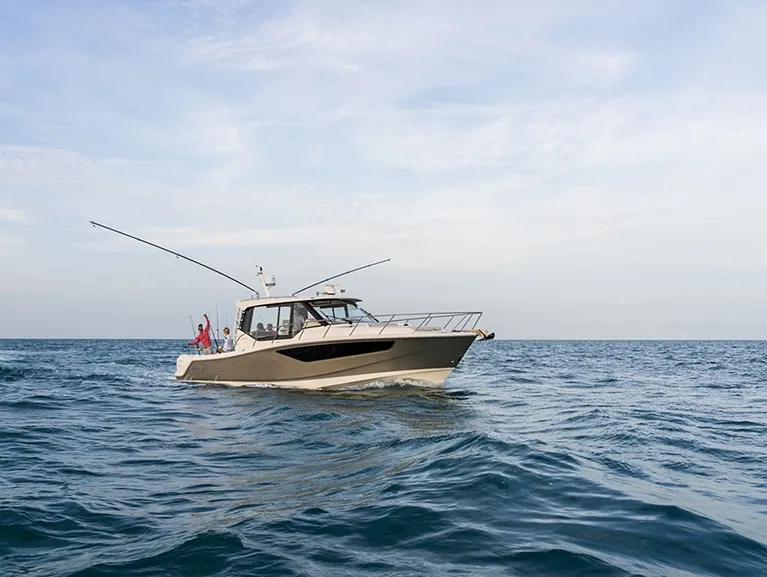
Yes. Scout publishes 6 feet 4 inches of standing room in the cabin and 6 feet 3 inches in the head, with a convertible queen berth at a 6-foot-5-inch sleeping length. The head is fully enclosed with a shower, toilet, glass vessel sink and mirrored vanity cabinet, and the galley carries a sink, a single-burner glass cooktop, a microwave and a drawer refrigerator.
A 12,000 BTU air conditioner runs off the standard 8 kW generator. Fresh water is 51 gallons and waste goes to a 16-gallon holding tank — a genuine step beyond the console berths further down the LXF range.
92.5-gallon aft fish boxes port and starboard, with overboard diaphragm discharge, plus 66 gallons of baitwell in two aerated 33-gallon wells built into the stern seat. Ten flush-mount gunnel rod holders and five transom rod holders are standard.
Hardtop rocket launchers are on the option list in four-launcher, six-launcher, kingfish and retractable forms. Deck access is a full transom walk-through platform with an Armstrong dive ladder, a port-side beach platform and a midship mechanical room — fishing capacity that matches the length rather than being surrendered to the cabin.
Scout publishes an estimated 355 miles on the standard 395-gallon tank and 458 miles with the optional saddle tanks, which add 57 gallons a side for 509 gallons total. Both figures are footnoted as estimates based on fuel consumption at optimal cruising speeds and sea conditions.
If tank size decides your purchase, confirm the capacity on the build sheet for your model year.
The two published packages are nearly nine miles an hour apart, so the answer depends on which one you order. Quad Mercury 400 V10s on 27p Rev X props, tested at 19,280 pounds with a Seakeeper aboard, reach 71.5 mph at 6,357 rpm, with 0-20 mph in 4.77 seconds and 0-30 mph in 7.31.
Twin Mercury 600 V12s on 29p props, tested at 18,000 pounds, reach 62.6 mph at 6,406 rpm with 0-20 mph in 5.14 seconds and 0-30 mph in 7.88. Both post 0.90 mpg at their best cruise rows — 34.5 mph on the quads, 32.6 mph on the twins.