
August 22, 2026
Scout 670 LXS - The 66'9" Scout That Leaves the Flybridge Off
Scout's 670 LXS is the Sport configuration of its 66'9" flagship hull: carbon-epoxy structure on a 16'2" beam with 1,500 gallons of fuel, th…
Read the articleExpert Review, Technical Specifications & Market Analysis
| Feature | Specifications |
|---|---|
| Overall Length | 66'9" |
| Beam | 16'2" |
| Draft | 3'5" |
| Engines | Quad or Quint Mercury 600 V12 (4 or 5 x 600 HP), up to 3,000 HP |
| Fuel Capacity | 1,500 gal |
| Water Capacity | 118 gal |
| Cabins / Heads | 3 Cabins / 2 Heads |
| Max Speed | Approximately 60 mph (Scout published approximate top speed; no performance bulletin issued) |
| Cruise Speed | Approximately 40 mph fast cruise (Scout published approximate figure; no performance bulletin issued) |
Source: Spec & Photos courtesy of Scout. Specs verified by Tony Smith, USCG 100 Ton Master, on August 21, 2026.
One 66'9" hull, two configurations: the 670 LXS is the Sport version - a clean hardtop and a single helm where the 670 LXF carries the upper-station flybridge.
Part of the Scout LX series — see how owners step up through the lineup.

I have had two people this year ask me to explain the difference between the 670 LXF and the 670 LXS, and both had already read both pages on Scout's site. I do not blame them. The two boats share the spec table, the performance figures and the engine options - four or five Mercury 600s on either boat - so horsepower will not tell them apart. Scout settles it in one line on the order sheet: Sport version, no upper station. Fishing version, includes flybridge. Everything else is the same 66'9" hull.
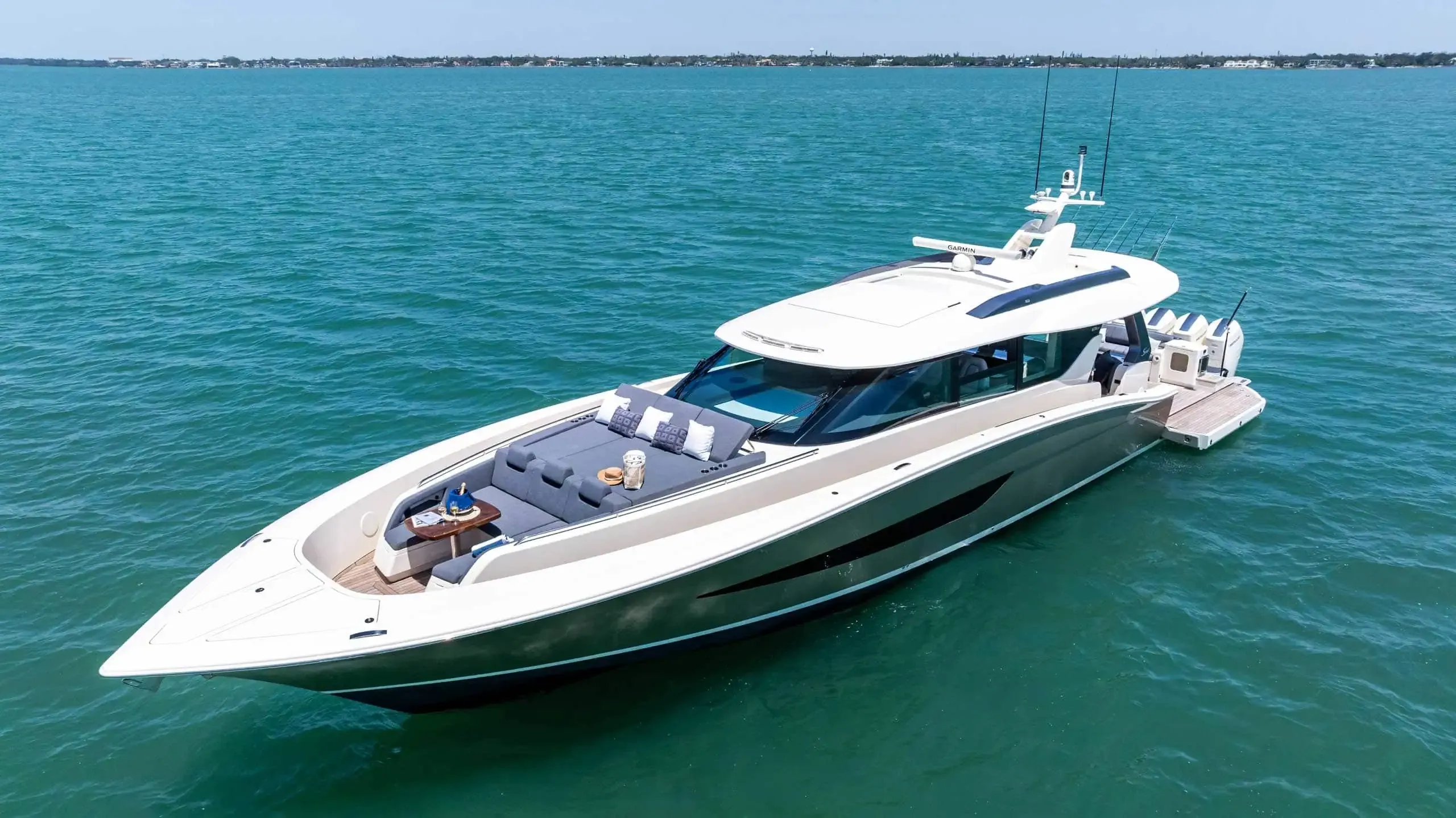
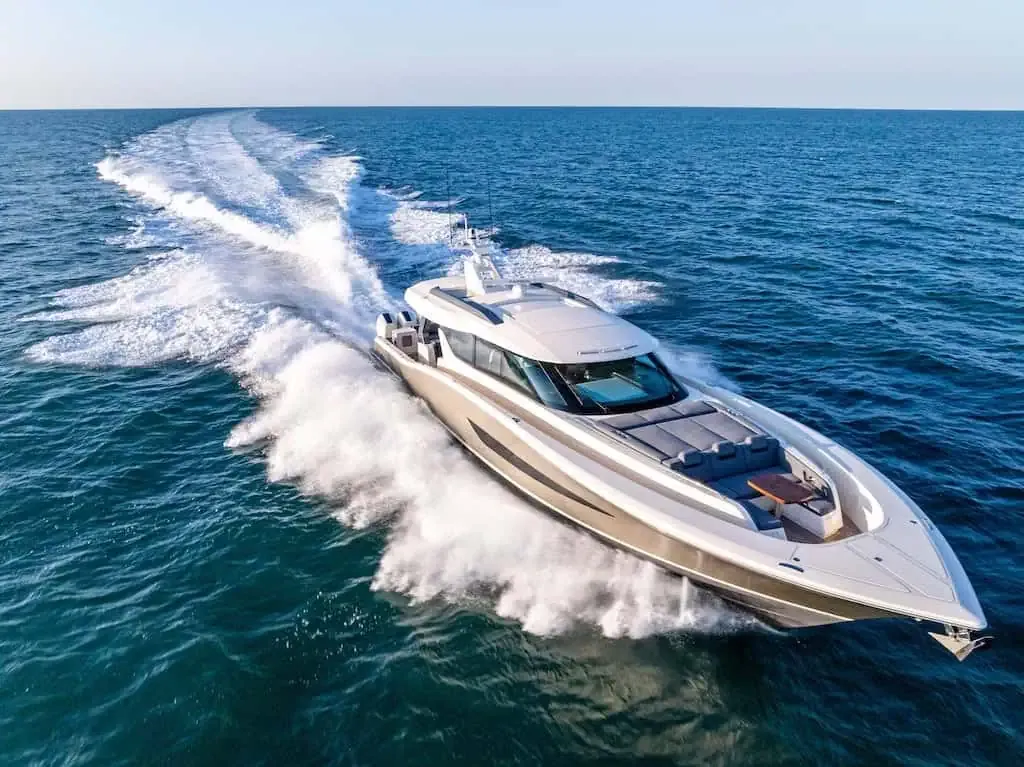
Here is how I frame it. The LXS is the one you buy when the boat is the destination rather than the vehicle. Take the flybridge off and you get a cleaner hardtop, one less level to climb, a single helm to keep current, and the social spaces where people actually use them - a main-deck atrium with the galley in it and an aft window that drops out of the way so the cockpit and the saloon become one room, a breezeway with a bar top and swivel stools, and a bow lounge you can lie flat on. That is the Harrison Eidsgaard side of the partnership showing through: a yacht layout wearing outboards, not a big center console with cabins added. The transom says the same thing - the LXS starts with baitwells around a centre couch, and the tuna-tube sportfish transom is what you add, not what you subtract.
The part I would push you on is the numbers. The speeds you see are builder projections, and Scout gives two versions of them - upper 50s and 450 miles on the flyer, roughly 60 mph and 500 miles on the website. Fair enough on a model still taking reservations, but it means the sea trial is doing more work than usual here. Do not skip it, treat any quoted cruise economy as derived rather than tested, and get the draft and the rigged weight confirmed in writing on the build sheet - the flyer lists the draft at 37 inches and the model page at 41.
Video courtesy of Scout.
Photos courtesy of Scout.
The Scout 670 LXS is a 66'9" outboard-powered yacht designed in partnership with the superyacht design studio Harrison Eidsgaard, and the longest model Scout lists. LXS is the Sport configuration of the 67 LX Series hull, and Scout's own flyer states the difference in one line on the model-selection page: the Sport version has no upper station, the Fishing version includes the flybridge. Below that line the two share a 16'2" beam, 1,500 usable gallons of fuel, 118 gallons of water, a 184-gallon diesel tank, a 59-gallon black water tank, a 3,000 hp ceiling and the same choice of four or five Mercury V-12 600s.
The carbon goes further here than anywhere else in the range. Scout lists a carbon fiber epoxy infused hull, carbon fiber and fiberglass infused stringers, a carbon fiber and fiberglass infused deck, and a carbon fiber epoxy infused hardtop frame support - structure, deck and hardtop in the same laminate family rather than the hull alone.
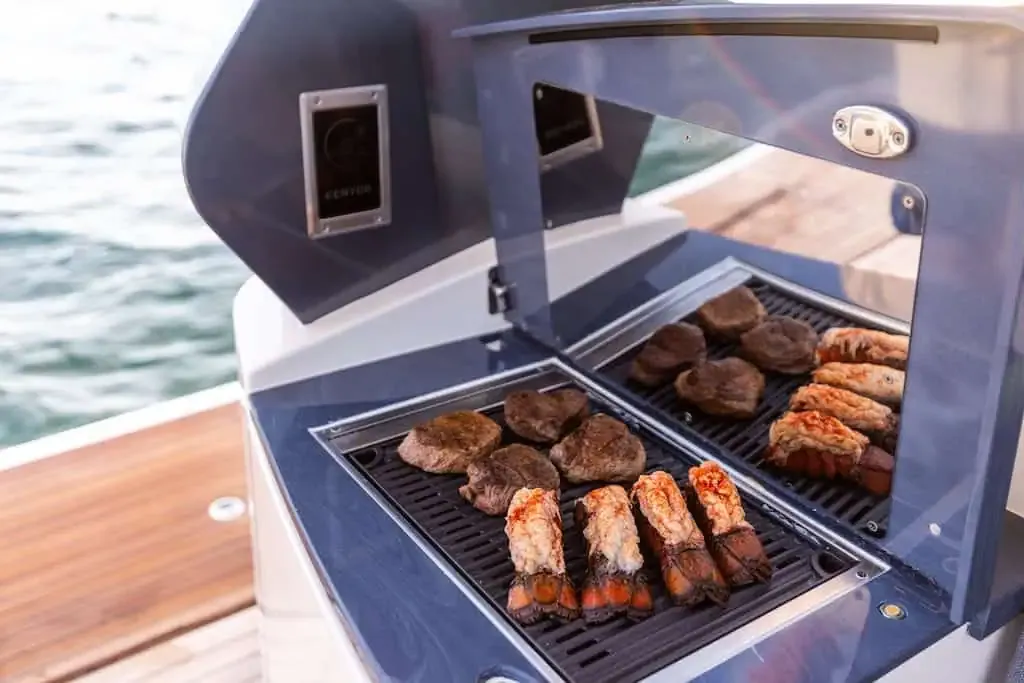
The systems are yacht systems. A Kohler 24 kW diesel generator on its own 184-gallon tank runs two Dometic variable-speed chillers totalling 48,000 BTU. There are two powered 50-amp shore cords, separate AGM 12V and 24V battery banks, a Fireboy automatic suppression system in the systems room, Zipwake trim tab control, a Maxwell windlass with an 88 lb Vetus Maxwell anchor on 500 feet of line and 50 feet of chain, retractable fresh and raw water hose reels, and real teak decking through the cockpit and breezeway as standard. Two hydraulic fold-down beach platform doors take the beam from 16'2" to 19'6" when they are open.
Every performance figure Scout attaches to the 670 LXS is the builder's own projection, so read the numbers as planning figures. The current model page states that the boat is powered with four or five Mercury V-12 600 hp engines, producing up to 3,000 hp, with a top speed of approximately 60 mph, a fast cruise of 40 mph and a range of approximately 500 miles. The LX Series flyer, writing specifically about the LXS, projects five Mercury V-12 600s for 3,000 hp, a top speed in the upper 50s, the same 40 mph fast cruise and a range of approximately 450 miles. Plan off the conservative pair; a sea trial with the engine count you intend to order is what settles it.
One thing the engines do not do is separate this boat from its sibling: four or five Mercury 600s is a configuration choice on the 670 LXF exactly as it is here, to the same 3,000 hp ceiling. The quint package is specified with joystick piloting, Skyhook, Mercury autopilot and active trim.
For a planning figure, divide the flyer's own two numbers: 1,500 usable gallons against approximately 450 miles is roughly a third of a mile per gallon, and range estimates normally hold a reserve back, so real economy should run somewhat better. Get the rigged weight for your configuration in writing before you size a lift or a slip. A Seakeeper 14 is standard per the flyer's stability panel, with a Seakeeper 18 optional.
Three staterooms and two heads, and unusually for a boat this new, Scout publishes the standing heights instead of leaving them out. Every standing area in the cabin is at least 6'7", and the upper interior atrium has 7 feet of standing headroom.
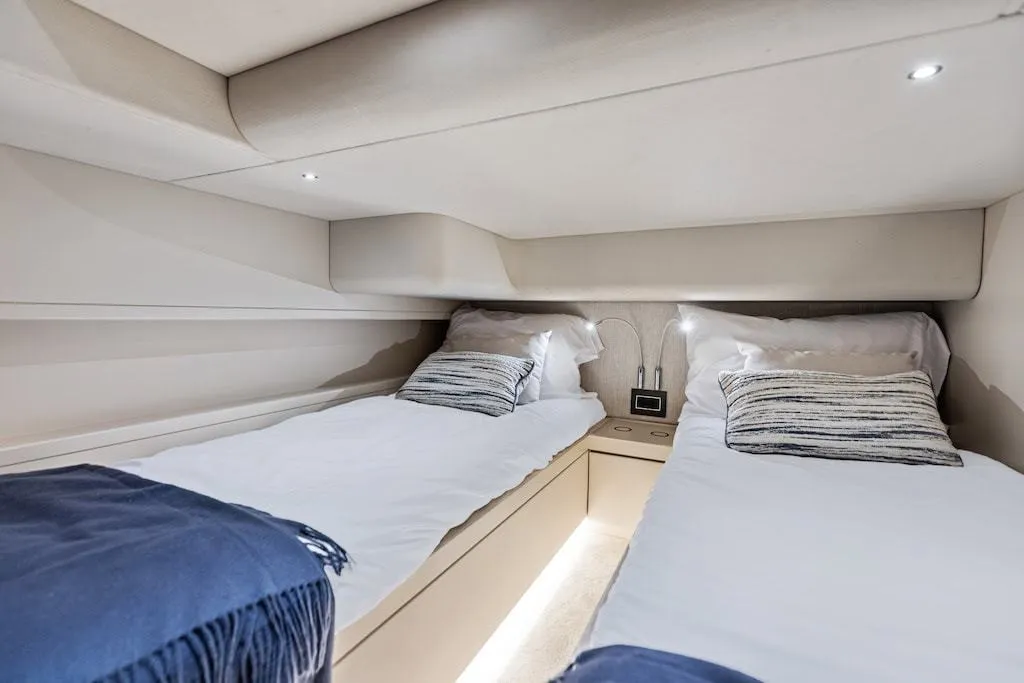
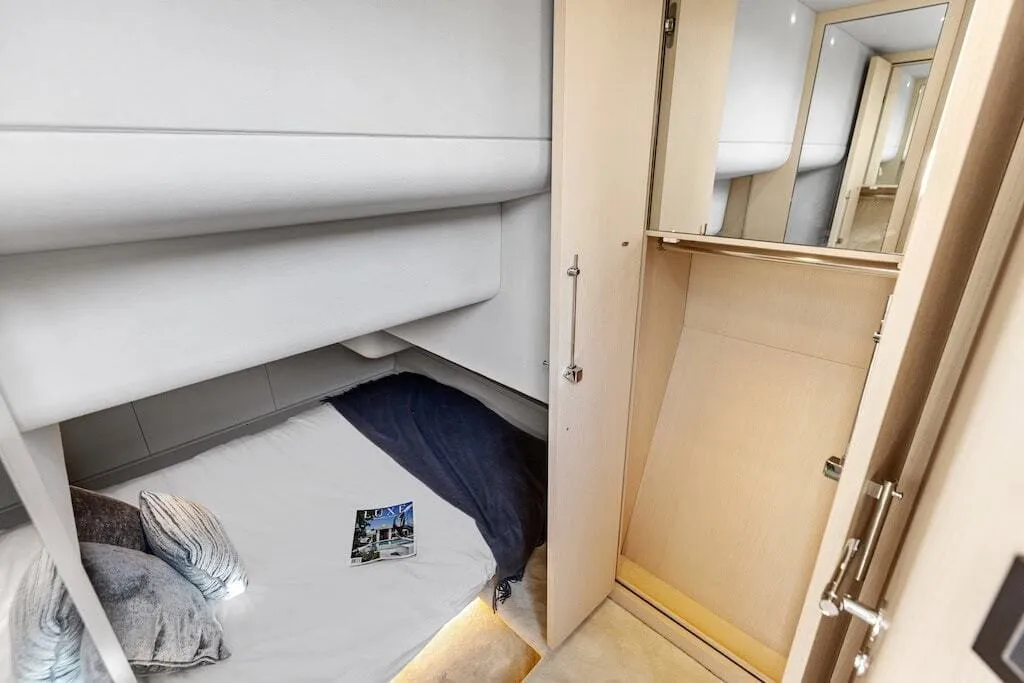
The master takes a single queen berth on a powered hydraulic actuated bed with storage underneath and a pull-out drawer below that, plus a lighted hanging closet, a full length mirror, four 110V outlets, magnetic bedside charging pads and en-suite access to the day head and a separate shower. The aft VIP is a double berth behind a lockable door with its own standup area and en-suite access to a separate head and shower. The third cabin is an aft crew stateroom with twin berths, a standup area and a lockable door of its own. Every berth arrives made up, and the lower cabin area is carpeted throughout.
The galley is on the main deck, in the upper atrium rather than below: a two-burner induction stovetop with an exhaust vent, a convection oven and microwave, two Jennair drawer refrigerators and a Jennair drawer freezer, a 15" round hot and cold sink, and a 6'8" aft window that drops electrically to open the atrium into the cockpit. Seating is a wraparound couch for five with storage in it and under it, around an electrically actuated high/low dining table.
The lower salon is the quiet room: a 7'2" couch over storage, a flush-mounted 32" smart TV, a Garmin 943 MFD with full vessel controls, a Vitrifrigo drawer refrigerator/freezer and panoramic overhead glass with an electric shade. Fresh water is 118 gallons against a 59-gallon black water tank.
The 670 LXS sits at the top of Scout's range with exactly one boat beside it. Scout's own site splits the top of the lineup into the LX Series, which is the two 670s, and the LXF line, which tops out at the 530 LXF at 53'5". Measured against that 530, the 670 LXS is 13'4" longer, carries 625 more gallons of fuel, adds a third stateroom and a second head, and lifts the horsepower ceiling from 2,400 to 3,000.
Its real competition is its own twin. The two 670s share the hull, the beam, the tankage, the engine options and the published performance figures. What separates them is the upper station: Scout calls the LXF the ultimate fishing version of the 67 LX Series, built around its upper-station flybridge, and the LXS its Luxury Sport Model. On the LXS the hardtop stays clean, reached by a concealed ladder and a Lewmar hatch, and the second social level is inside: the 7-foot atrium rather than an upper helm. Scout's standard Garmin layout follows suit with a single starboard-side helm.
The order sheet does the same thing. The LXS's standard transom is a versatile 20/60/20 arrangement, port and starboard baitwells around integrated centre couch seating. Scout's sportfish transom - 30/40/30 with large pressurised baitwells, a five-tube tuna tube system and the mounting required for a fighting chair - is the option here rather than the starting point.
Scout's model page says it is currently taking reservations for this model rather than quoting availability. Scout is family owned and has built in Summerville, South Carolina since 1989.
The 670 LXS suits the owner who has outgrown a center console but does not want a sportfish, and whose day is a fast run out, a long afternoon at anchor and a fast run home. You get three staterooms with lockable doors on two of them, two heads with separate showers, at least 6'7" of standing headroom everywhere in the cabin and 7 feet in the atrium, a main-deck galley, and 48,000 BTU of air conditioning off a 24 kW generator - none of it at the cost of the walkaround deck or the beach platforms.
It is the right boat if you want the sport configuration specifically, because that is the only thing you are really choosing between the two 670s. No upper station means no second helm to climb to, a cleaner hardtop, and the social spaces stacked on two levels instead of three: the atrium with its drop-down aft window, the breezeway with a 6'5" bar top and two swivel stools, and a bow with a 50 square foot sun lounge. It still fishes - 60-gallon in-floor fish boxes, 30-gallon baitwells port and starboard, six gunnel rod holders and nine at the transom - but here the fishing is standard equipment rather than the organising idea.
Check three things before you commit. Your slip and lift have to take 66'9" and a 16'2" beam, and the beach platform doors open that beam to 19'6". Four or five outboards means four or five service intervals and a transom that has to stay reachable. And the speed and range figures are the builder's projections, so plan the sea trial and get the rigged weight for your configuration in writing.
If the upper station is the point of the boat for you, buy the 670 LXF instead. It is the same hull, so nothing else about the decision changes.
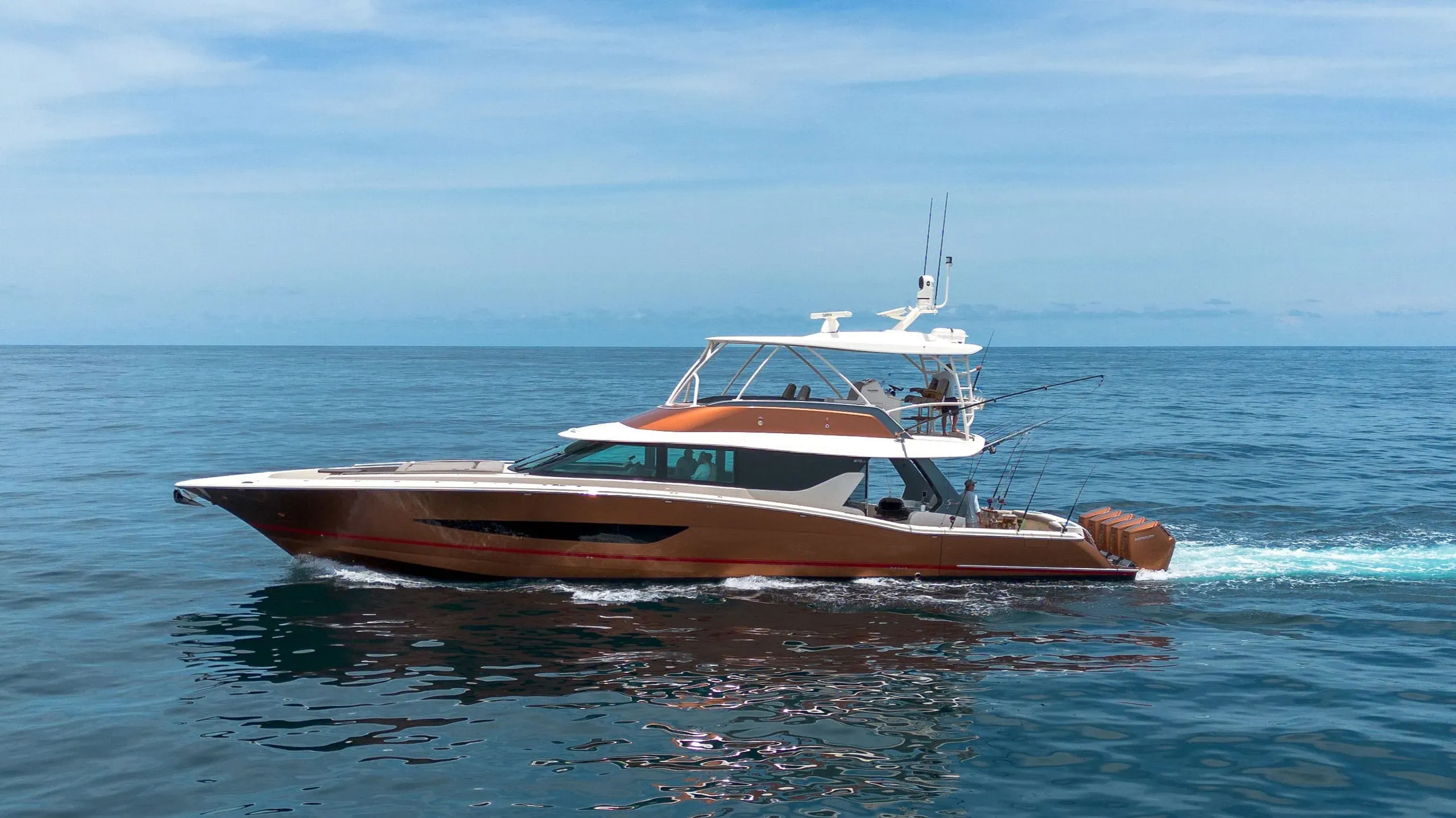
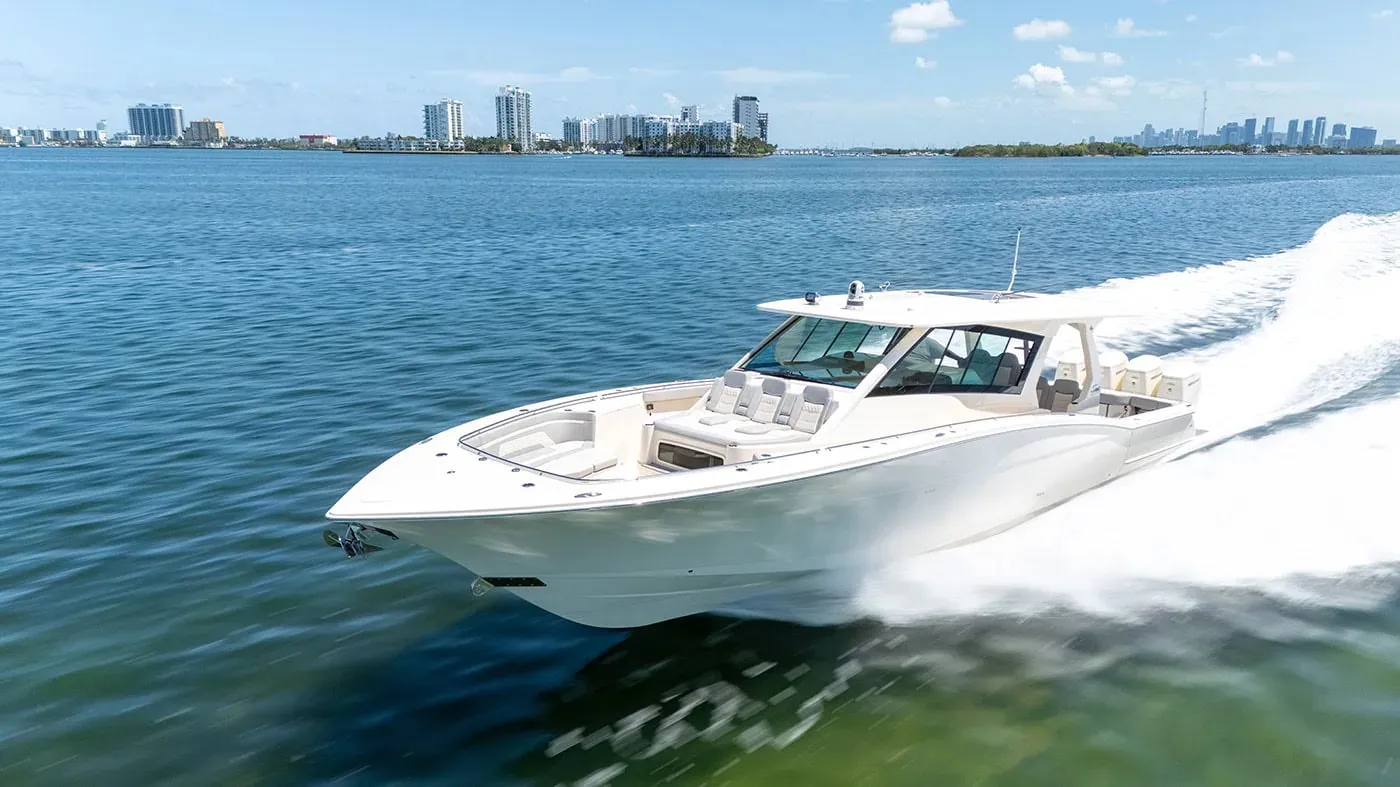
Decide whether you want the flybridge, because on Scout's own equipment list that is the entire question. The two entries under Model Selection read Sport Version, no upper station, and Fishing Version, includes flybridge. The LXS is the first of those. Everything else Scout publishes is the same on both — 66'9" length, 16'2" beam, 1,500 gallons, three staterooms, four or five Mercury 600 V12s to 3,000 hp, the carbon-fiber epoxy-infused hull, and the identical speed and range wording.
So the trade is real but narrow. The flybridge on the 670 LXF buys a second helm, a fishing vantage point and the twin electric teaser reels Scout offers only with it. Deleting it takes structure and windage off the top of a 67-foot boat, which is a handling and a docking argument as much as a styling one. The published figures will not decide this for you — they are the same on both — so stand on both boats on the same day.
Yes, and it is a diesel one on an otherwise gasoline boat. Standard equipment is a Kohler 24 kW diesel generator fed from a dedicated 184-gallon diesel tank with its own deck fill, alongside 1,500 gallons of gasoline for the outboards plumbed port and starboard to a single tank. It runs a Dometic HVAC system rated at 48,000 BTU across two variable-speed-capacity air chillers, zoned room by room.
That is the opposite direction from Scout's 37-to-43-footers, where the 377 LXF, 400 LXF Li-Ion and 435 LXF Li-Ion all delete the genset and run their air conditioning off lithium. At three staterooms and 48,000 BTU the hotel load is a different problem. Practically it means two fuel systems, two fill points and a generator service schedule, and all three belong in your running-cost estimate.
Two sets of figures, from two Scout documents. The current model page says the boat is powered with four or five Mercury V-12 600s producing up to 3,000 hp, for a top speed of approximately 60 mph, a fast cruise of approximately 40 mph and a range of approximately 500 miles. The earlier 67 LX Series flyer says the LXS will be powered with five Mercury 600s for a projected top speed in the upper 50s, an approximate fast cruise of 40 mph and a range of approximately 450 miles.
Both are the builder's own estimates, and the flyer labels its own as projections. On a boat carrying 1,500 gallons, insist on a sea trial with the engine count you actually intend to order, and treat any quoted mpg as derived arithmetic rather than a tested figure.
Three staterooms, plus a lower salon and an upper interior atrium. The master carries a single queen berth with a standup area, a powered hydraulically actuated bed over a storage area, an underbed pull-out drawer, a lighted hanging closet, a full-length mirror and en-suite access to the day head and a separate shower. Aft of it sits a VIP with a double berth, a standup area and a lockable door, and a crew stateroom with twin berths, its own standup area and its own lockable door. All three get bedside reading lights, magnetic charging pads, carbon monoxide detectors and in-room zoned climate control.
The headroom figures are the ones to write down: every standing area is at least 6'7", and the upper atrium runs 7'. Fresh water is 118 gallons against 59 gallons of black water. Scout publishes these as 67 LX Series figures rather than model-specific ones, so they apply equally to the 670 LXF.