Scout 670 LXF

Expert Review, Technical Specifications & Market Analysis

The Essentials

FeatureSpecifications
Overall Length66'9"
Beam16'2"
Draft3'5"
EnginesQuad or Quint Mercury 600 V12 (4 or 5 x 600 HP); up to 3,000 HP maximum
Fuel Capacity1,500 gal
Water Capacity118 gal
Cabins / Heads3 Cabins / 2 Heads
Max SpeedApproximately 60 mph (Scout published approximate top speed; no performance bulletin issued)
Cruise SpeedApproximately 40 mph fast cruise (Scout published approximate figure; no performance bulletin issued)

Source: Spec & Photos courtesy of Scout. Specs verified by Tony Smith, USCG 100 Ton Master, on August 21, 2026.

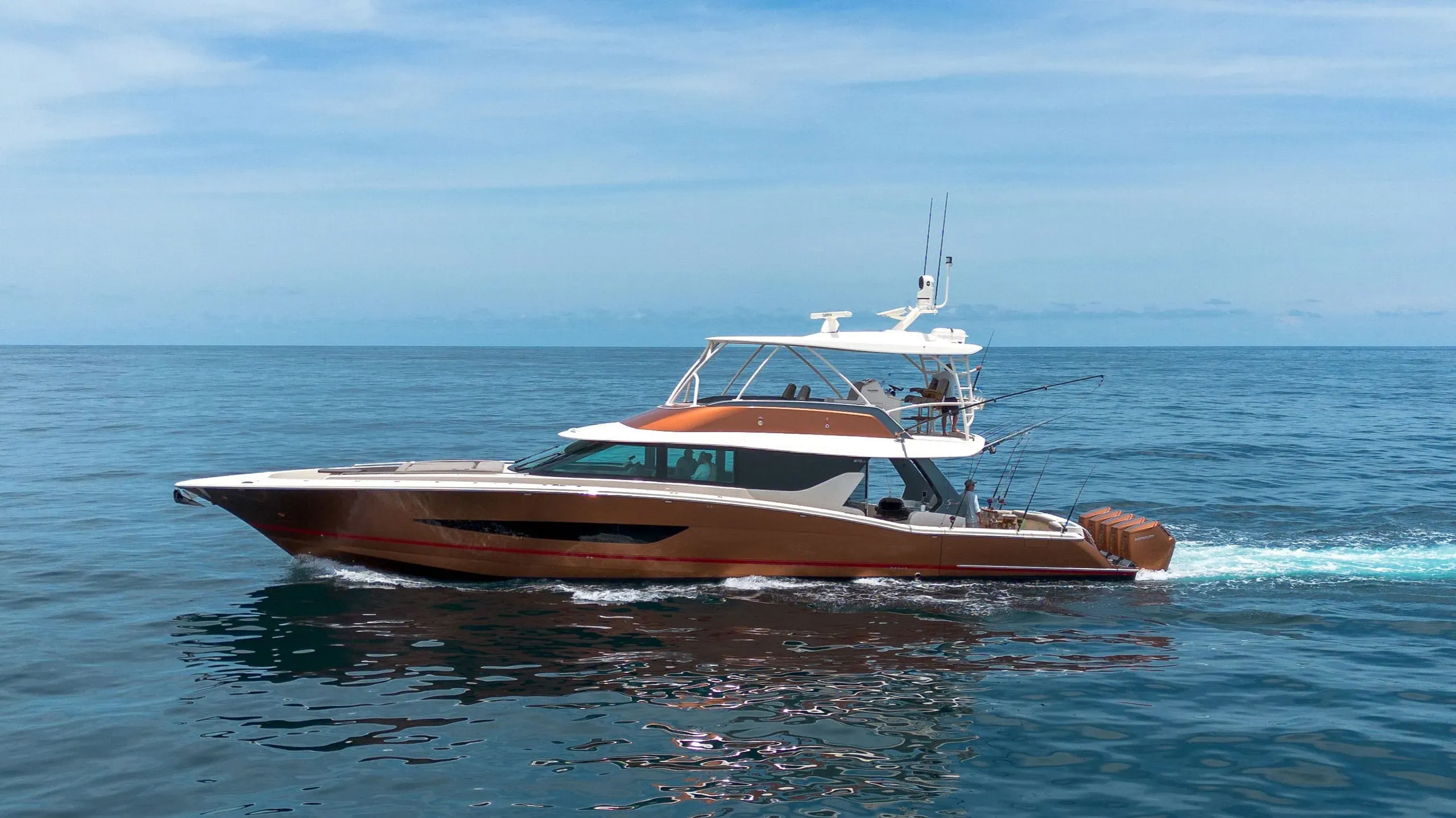
Same 66'9" hull as the 670 LXS Sport, one hard difference: Scout's own model-selection sheet gives the Fishing Version a flybridge and the Sport Version no upper station at all.

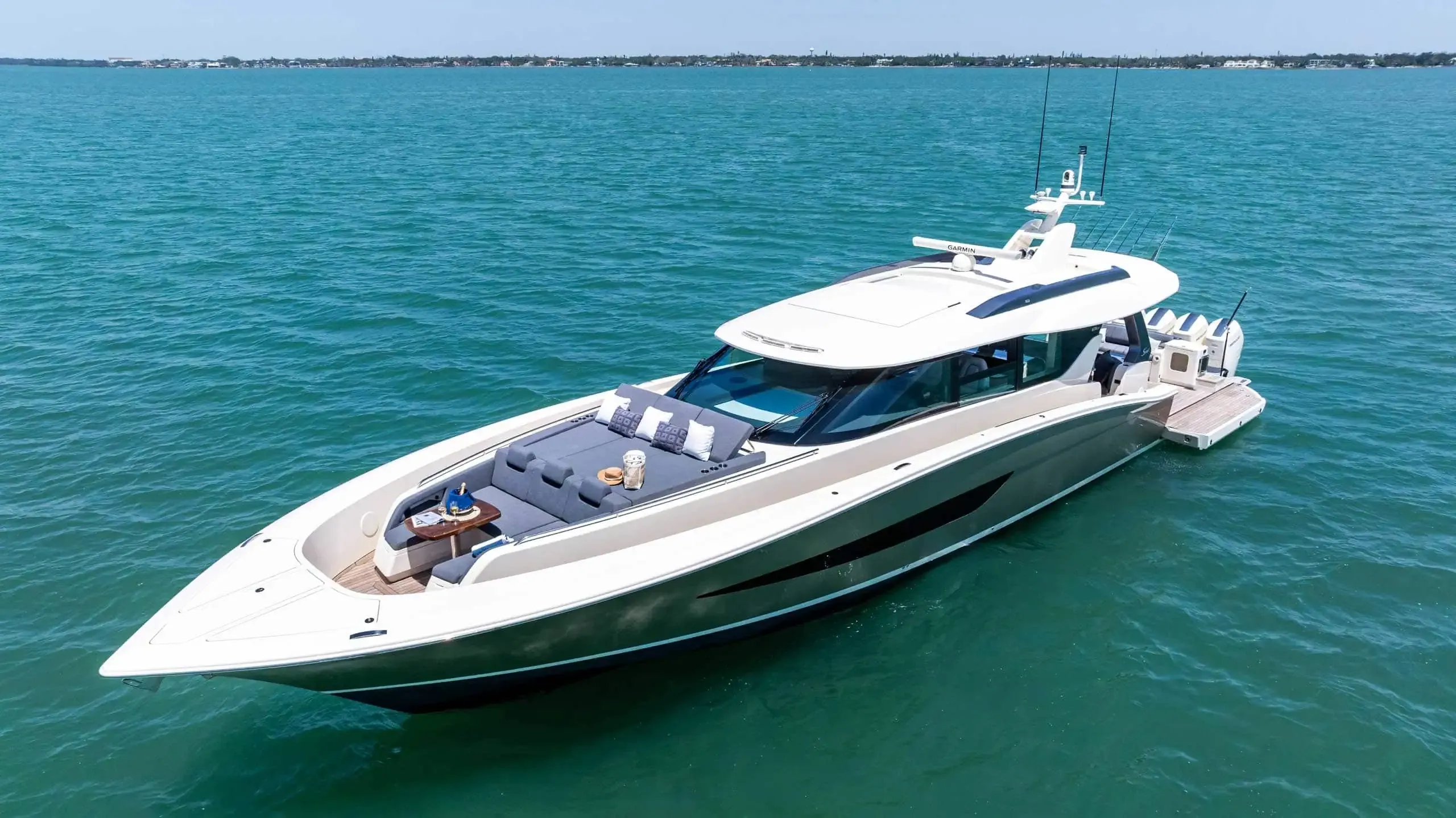
Scout 670 LXF exterior

Quick Verdict

  • The flybridge is what makes it an LXF. Scout's model-selection sheet lists "Fishing Version - Includes Flybridge" against "Sport Version - No Upper Station" on the same 66'9" hull, and the twin electric 24V teaser reels are listed as available only with the flybridge.
  • Scout states the boat is powered with four or five Mercury V-12 600 hp engines, up to 3,000 hp. Four is standard on the flyer's equipment sheet and the quint is an option - on this hull as on the 670 LXS, engine count is a configuration choice, not the model difference.
  • Approximately 60 mph top, 40 mph fast cruise and approximately 500 miles of range are the manufacturer's own estimates - planning numbers to verify at a sea trial with your intended engine count.
  • Get the rigged weight for your configuration in writing before you size a lift or a slip - on a 66'9" hull rated to 3,000 hp, that figure matters more than any other on the sheet.
  • 1,500 usable gallons of gasoline plus a separate 184-gallon diesel tank for the Kohler 24 kW generator. Roughly a third of a mile per gallon at the published range, and that is with the tank run dry.
  • Three staterooms with all standing areas at least 6'7", a 7' atrium, two heads with separate showers, a Seakeeper 14 and two Dometic 48,000 BTU chillers - all standard, on 118 gallons of water and a 59-gallon black tank.
Tony Smith, Founder of Minted Yachts

Our Take

Scout has been climbing for years and the 670 is where the climb lands. What I want you to understand about this boat is that the LXF badge is not a trim level, it is a structural decision. Scout builds one 66'9" hull and then asks you a single question at the order desk: upper station or no upper station. Say yes and you have an LXF; say no and you have an LXS. Everything else on the two spec panels is the same - same beam, same 1,500 gallons, same 3,000 horsepower ceiling, same three staterooms. I have never seen a builder draw the line between two flagship models quite this cleanly, and it means you can stop comparing spec sheets and start asking yourself how you actually fish.

If you fish from the top, this is the one, and the option sheet backs that up rather than just implying it. The teaser reels are only offered with the flybridge. The fighting chair requires the Sportfish transom with its five tuna tubes and walk-through gates. The outriggers go to 22 feet as standard carbon and 26 feet if you upgrade. Meanwhile the cockpit already has two sixty-gallon fish boxes, two thirty-gallon pressurized wells and fifteen rod holders before you tick anything. That is a real sportfisher, and the fact that three cabins and an induction galley are underneath it does not make it less of one.

Here is where I will be straight with you. The top speed, the cruise and the range on this page are the builder's approximations - fair enough for a model still taking reservations, but I am not letting a client size a lift or plan an offshore leg off an approximation. Before you sign, get the rigged weight for your exact engine count in writing, and go stand on that flybridge. Both of those answers matter more than anything on the page.

Watch Our Scout 670 LXF Reviews

Official Scout Premiere: Inside the Scout 670 LXF

Video courtesy of Scout.

Scout 670 LXF Overview

The Scout 670 LXF is the fishing version of Scout's 66'9" 670 LX Series - the same hull as the 670 LXS Sport, ordered with the upper station the Sport does not get. Scout's own model-selection sheet reads "Fishing Version - Includes Flybridge" against "Sport Version - No Upper Station," and that one line is the reason the two models exist separately. Scout describes the boat as designed in partnership with the superyacht design studio Harrison Eidsgaard.

The hull is carbon fiber epoxy infused, with carbon fiber and fiberglass infused into the stringer grid and the deck and the hardtop frame support built the same way. Beam is 16'2", and 19'6" with the hydraulic cockpit beach platform doors folded down. Draft is approximately 41". Fuel is 1,500 usable gallons of gasoline plus a separate 184-gallon diesel tank feeding a Kohler 24 kW generator, with 118 gallons of fresh water and a 59-gallon black tank.

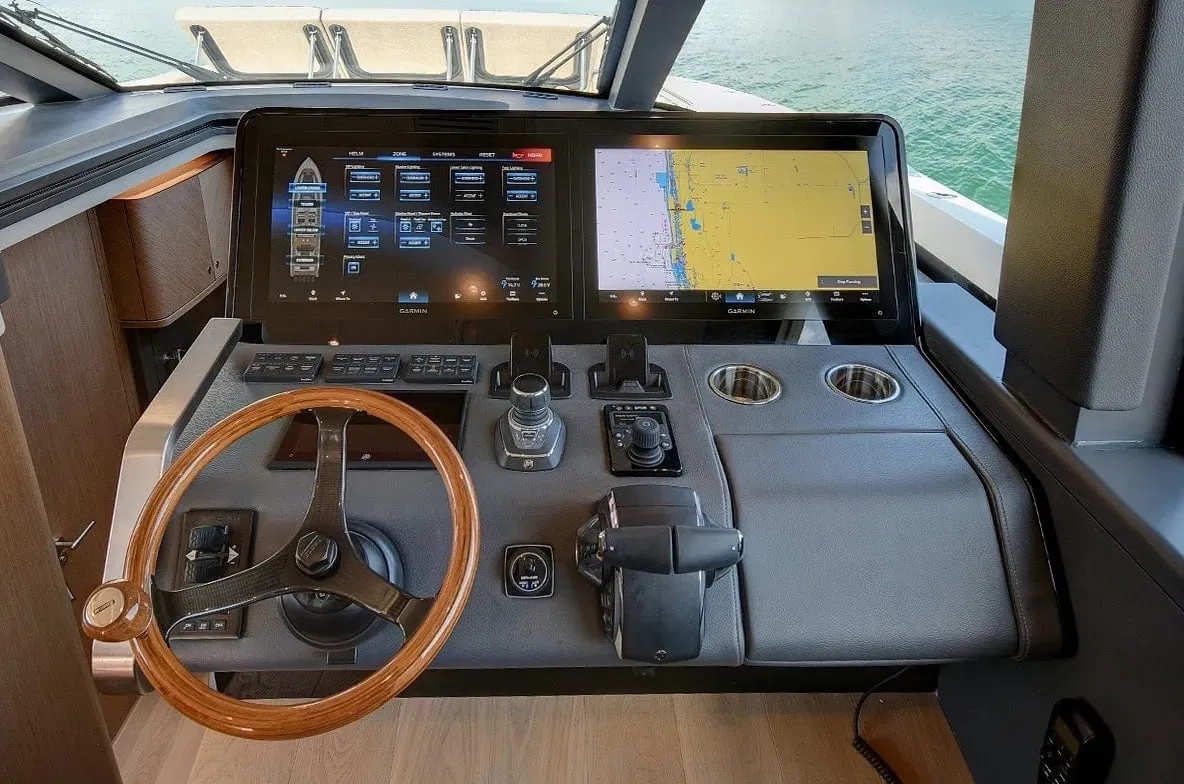
Scout states the 670 LXF is powered with four or five Mercury V-12 600 hp engines, producing up to 3,000 hp. Four is the standard package on the flyer's equipment sheet and the quint is an option, but both counts are available on this boat - the engine number is a configuration choice, not what makes it an LXF. The standard systems list is long: a Seakeeper 14, two Dometic 48,000 BTU variable-speed air chillers, Mercury joystick piloting and autopilot, Zipwake trim tab control, AGM 12V and 24V battery banks, Fireboy suppression in the systems room, twin Garmin 22" displays at the helm, and real teak in the cockpit and breezeway. Scout builds it in Summerville, South Carolina.

Performance & Handling

Scout publishes three performance figures for the 670 LXF: a top speed of approximately 60 mph, a fast cruise of 40 mph, and a range of approximately 500 miles. All three are the manufacturer's own approximations - planning numbers, not test results - so let a sea trial with your intended engine count do the verifying.

Get the rigged weight for your configuration in writing as well, before you commit a lift, a slip or a haulout to it. On a 66'9" hull rated to 3,000 hp, that figure does more work than anything else on the sheet.

The engine decision is quad or quint Mercury 600 V12s - 2,400 hp against 3,000 - and Scout publishes the same top speed, cruise and range either way. What is documented is the baseline: the flyer's standard equipment list reads "Mercury V12 600hp Outboard Engines (4)" and the quint appears under optional equipment. Engine count does not separate this boat from the 670 LXS - four or five is a configuration choice on either hull.

One piece of arithmetic worth doing: approximately 500 miles on 1,500 usable gallons is roughly a third of a mile per gallon, and that is with the tank run to empty. Plan real legs off two-thirds of the tank.

Interior & Accommodations

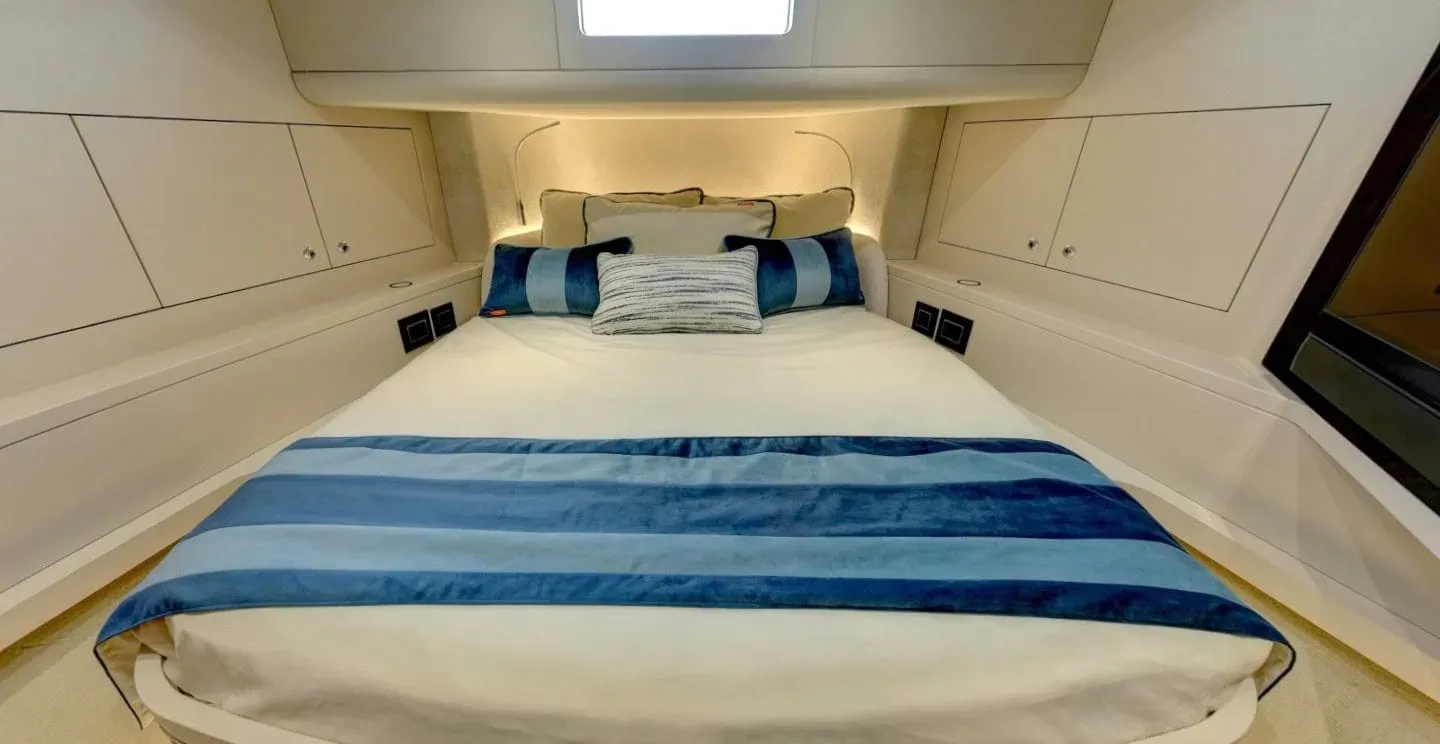
Three staterooms below, and no crawling to reach any of them: Scout specifies all standing areas at a minimum of 6'7", and the upper interior atrium at 7'. The master carries a queen on a hydraulically actuated base with storage underneath, plus a lighted hanging closet, a full-length mirror, a flush-mounted 32" smart TV, a Garmin TD50 vessel-control screen, zoned HVAC, an emergency escape hatch and en-suite access to a day head and a separate shower. The aft VIP is a double with a lockable door and its own en-suite access to a separate head and shower. The third cabin is a crew stateroom with twin berths, a lockable door, underbed storage and its own charging and reading lights. Every berth ships made up, mattress pad through pillow.

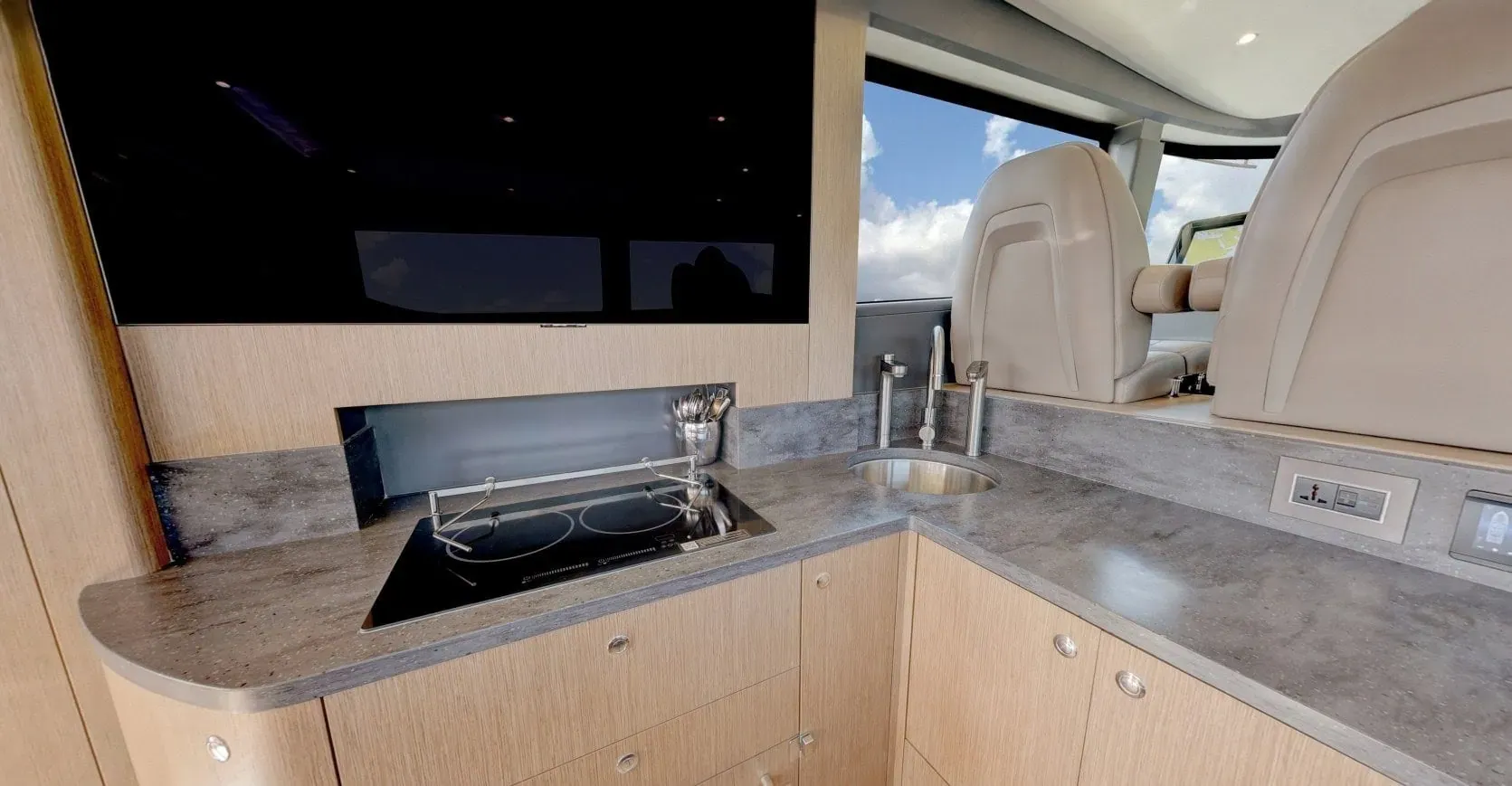
The lower salon runs a 7'2" couch over storage, a second 32" TV, a Garmin 943 MFD with full vessel controls, a Vitrifrigo drawer refrigerator-freezer and a panoramic overhead with an electric shade. The enclosed atrium above it is the real galley: a two-burner induction cooktop under an exhaust vent, a convection oven and microwave combination, two Jennair drawer refrigerators and a drawer freezer, a 15" hot and cold sink, an electrically actuated hi-lo dining table and a 6'8" aft window that drops on a switch. Between atrium and cockpit, the mid-deck breezeway adds a 6'5" bar top, two 360-degree swivel bar stools and wraparound seating for five.

Two numbers set the practical limits. Fresh water is 118 gallons and the black tank is 59 - modest for three staterooms and two heads, and the figures to plan pump-outs around. Interiors come as three packages: Salt, Coral and Neptune.

Market Position

At 66'9" the 670 LXF sits at the top of Scout's LXF line, above the 530 LXF at 53'5". That is a jump of more than thirteen feet, from 875 gallons of fuel to 1,500 and from two cabins to three, with nothing in between. If you have been shopping the 530 as the ceiling of the range, the ceiling moved.

Its nearest relation is the boat it shares a hull with. The 670 LXS is the Sport version: identical 66'9" length, 16'2" beam, 1,500-gallon fuel capacity and 3,000 hp maximum. Scout prints the same "four (4) or five (5) Mercury V-12 600 HP engines" sentence and the same speed, cruise and range figures on both pages, so the engine count does not separate them either. One thing does: Scout's model-selection sheet lists "Fishing Version - Includes Flybridge" against "Sport Version - No Upper Station," and the phrase "upper station" does not appear on the LXS page at all. The choice is a flybridge and how you intend to fish - not a hull, not a length, not a tank, not an engine count.

Against the wider market, buyers at this size are cross-shopping the large American outboard sportfishers and, at the top of the budget, small diesel convertibles. What settles it is usually the service network behind the engines, whether you want a tower or a flybridge over the cockpit, and whether a 16'2" beam that becomes 19'6" with the beach doors deployed fits your slip and your lift.

Two practical notes. Scout's model page invites reservations rather than pointing at inventory, so the timeline is a build slot. And the Sportfish transom - the 30/40/30 layout with five tuna tubes, full-width bolsters and walk-through gates - is the transom required for a fighting chair, so that decision happens at the order desk and not afterwards.


Who the 670 LXF Is For

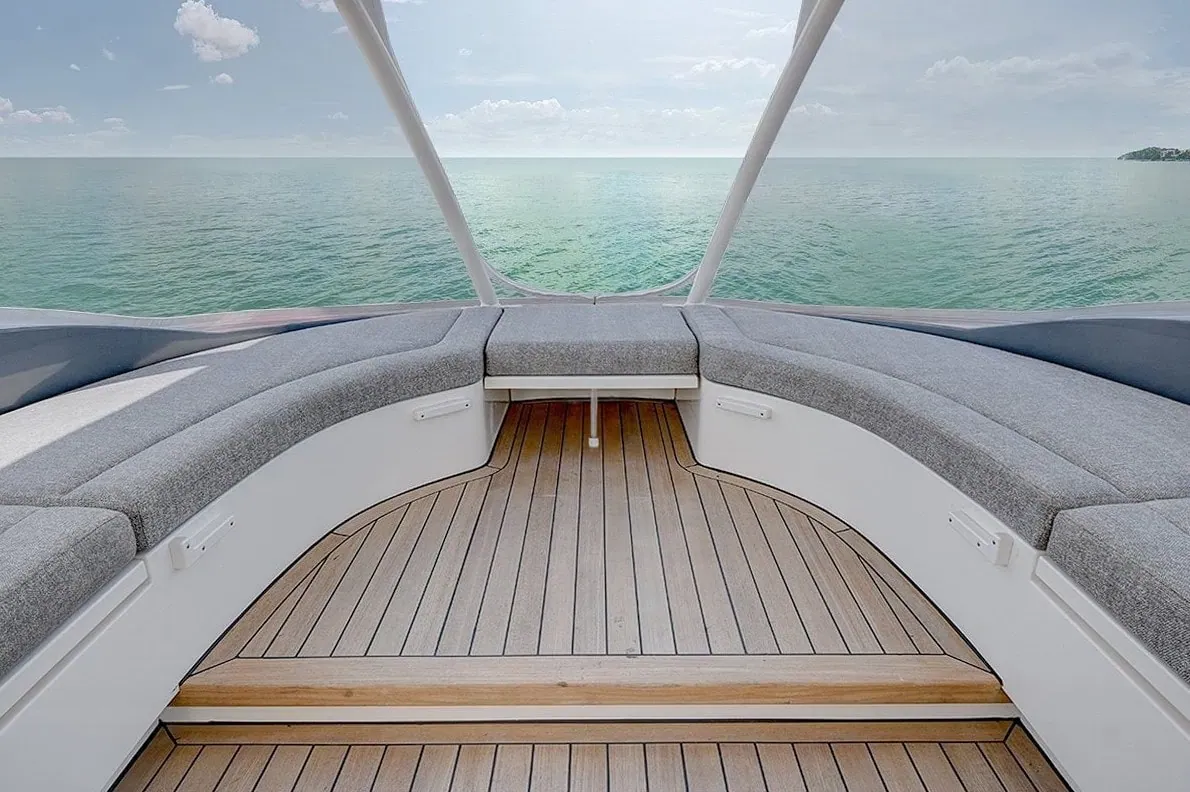
The 670 LXF is for the owner who wants a genuine offshore fishing platform at a size where most builders would have sold him a convertible, and who wants the second station that comes with it. Standard cockpit equipment is not decorative: two 60-gallon in-floor fish boxes, port and starboard 30-gallon baitwells with see-through windows on Hooker Electric pumps, six flush-mount gunnel rod holders and nine in the transom, twelve recessed stainless cleats bow to stern, gaff and brush storage built into three hardtop legs and three more to starboard, and a hydraulic full-cockpit beach platform that folds the transom doors down to a 19'6" beam.

It fits if you fish from the top. The flybridge is the version-defining feature, and the twin electric 24V teaser reel setup on the option sheet is listed as available only with it. Outriggers run to 22-foot Rupp carbon poles with a 26-foot Marsh Tacky upgrade, and the fighting chair needs the Sportfish transom. Build the fishing package first and the accommodation follows; it does not work the other way round.

It fits equally if the boat has to do double duty. Three staterooms with 6'7" minimum standing headroom, two heads with separate showers, a full induction galley in a climate-controlled atrium, a Seakeeper 14 and 96,000 BTU of air conditioning off a 24 kW genset means nobody aboard is roughing it while you fish.

It is the wrong boat if you need tested performance figures before you sign - the speed, cruise and range on the page are the builder's approximations, and the verifying happens at your sea trial. It is also wrong if you do not want a diesel system aboard a gasoline boat - there is a separate 184-gallon diesel tank and a generator with its own service interval. And if you want this hull without the flybridge, that boat is the 670 LXS.

Scout 670 LXF Articles & Guides

Compare With

Frequently Asked Questions

How much power does the Scout 670 LXF take, and how fast is it?

Four or five Mercury V-12 600 hp outboards, up to 3,000 horsepower — Scout states that on the model page and repeats 3,000 in the spec strip. Four are the standard rig on the 67 LX Series equipment list, with the quint Mercury 600 Verado package with joystick and Skyhook as the option. Engine count is not what separates this boat from the 670 LXS: both pages carry that sentence word for word.

On speed, the figures are the builder's own estimates. The page gives approximately 60 mph top, an approximate fast cruise of 40 mph and a range of approximately 500 miles; the earlier 67 LX Series flyer projects a top speed in the upper 50s and about 450 miles. Treat them as planning numbers, and let a sea trial with the engine count you intend to order do the verifying.

What is the difference between the Scout 670 LXF and the 670 LXS?

The upper station. Scout builds one 66'9" hull and sells it in two configurations, and its own equipment list settles it under a heading called Model Selection with exactly two entries: Fishing Version, includes flybridge, or Sport Version, no upper station. This is the fishing version. Scout's page for it says the same thing in prose — the ultimate fishing version within the 67 LX Series, complete with an upper station flybridge for the discerning offshore fisherman.

Nothing else in the published specifications separates the two. Both are 66'9" on a 16'2" beam, 1,500 gallons of gasoline, 184 gallons of diesel, 118 gallons of water, three staterooms, a carbon-fiber epoxy-infused hull, and four or five Mercury 600 hp V12s to a 3,000 horsepower ceiling. Both name the superyacht studio Harrison Eidsgaard, and Scout calls each of them its premier flagship. If a listing tells you the 670 LXS is the faster boat or the bigger one, ask which published figure says so.

How is the Scout 670 LXF's cockpit set up for fishing?

Two 60-gallon in-floor fish boxes, 30-gallon baitwells port and starboard with see-through front windows and Hooker electric livewell pumps, twelve flush-mounted stainless rod holders from bow to stern and nine more across the transom — all standard. The full cockpit beach platform doors fold down hydraulically to take the beam from 16'2" to 19'6", and there are transom walk-throughs port and starboard onto a beam-to-beam flush engine platform.

The transom itself is a decision, not a given. Scout's standard is a 20/60/20 layout — baitwells port and starboard around an integrated centre couch with storage beneath. The alternative is the sportfish 30/40/30 transom: large pressurised baitwells each side, an integrated tuna tube system for five, and full-width bolsters with walk-through gates. Scout requires that second transom if you want the fighting chair, so the two options have to be ordered together.

Does the Scout 670 LXF have a flybridge?

Yes — the flybridge is what makes it the LXF rather than the LXS. Scout names an upper station flybridge in the first sentence of the model page, and on the 67 LX Series equipment list the flybridge is the fishing version's defining item rather than a box you tick on either boat. The 670 LXS is the same hull specified the other way, and the phrase upper station does not appear on its page at all.

One knock-on to settle at the order desk: Scout offers the twin electric 24-volt teaser reel setup only with the flybridge. And if you are working out what clears your bridge or what your lift will take, get the air draft and the rigged weight for your configuration from your dealer in writing.