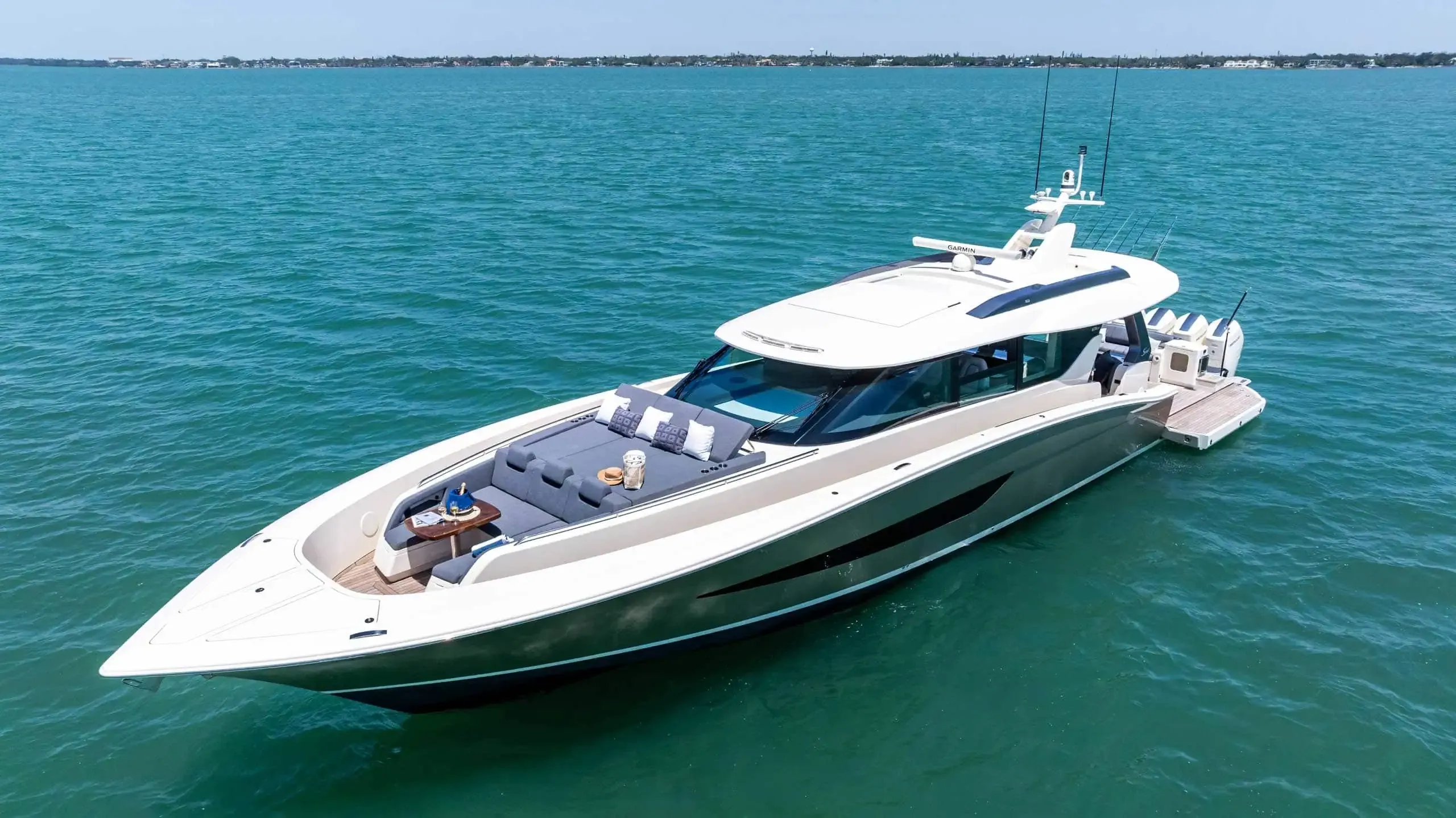
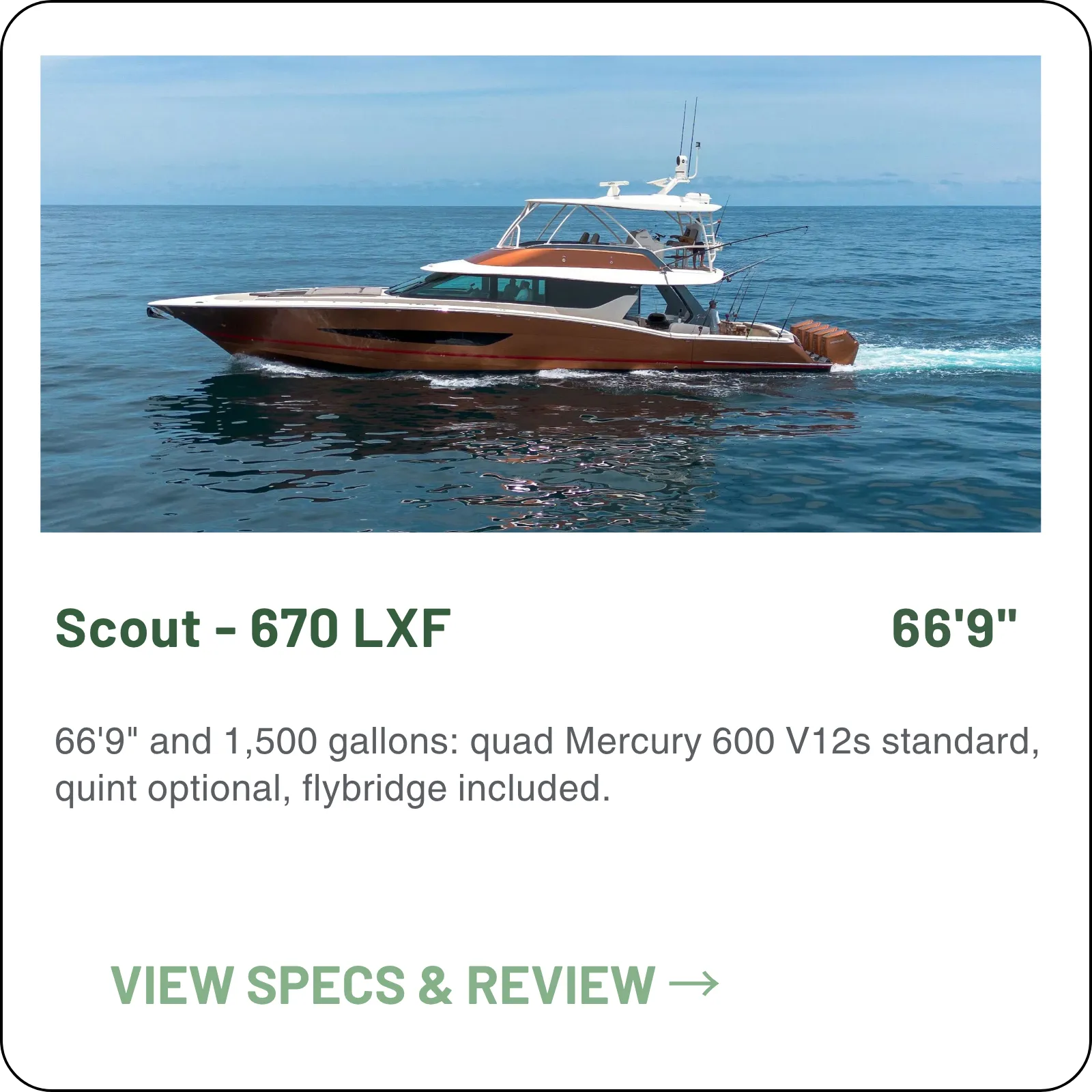
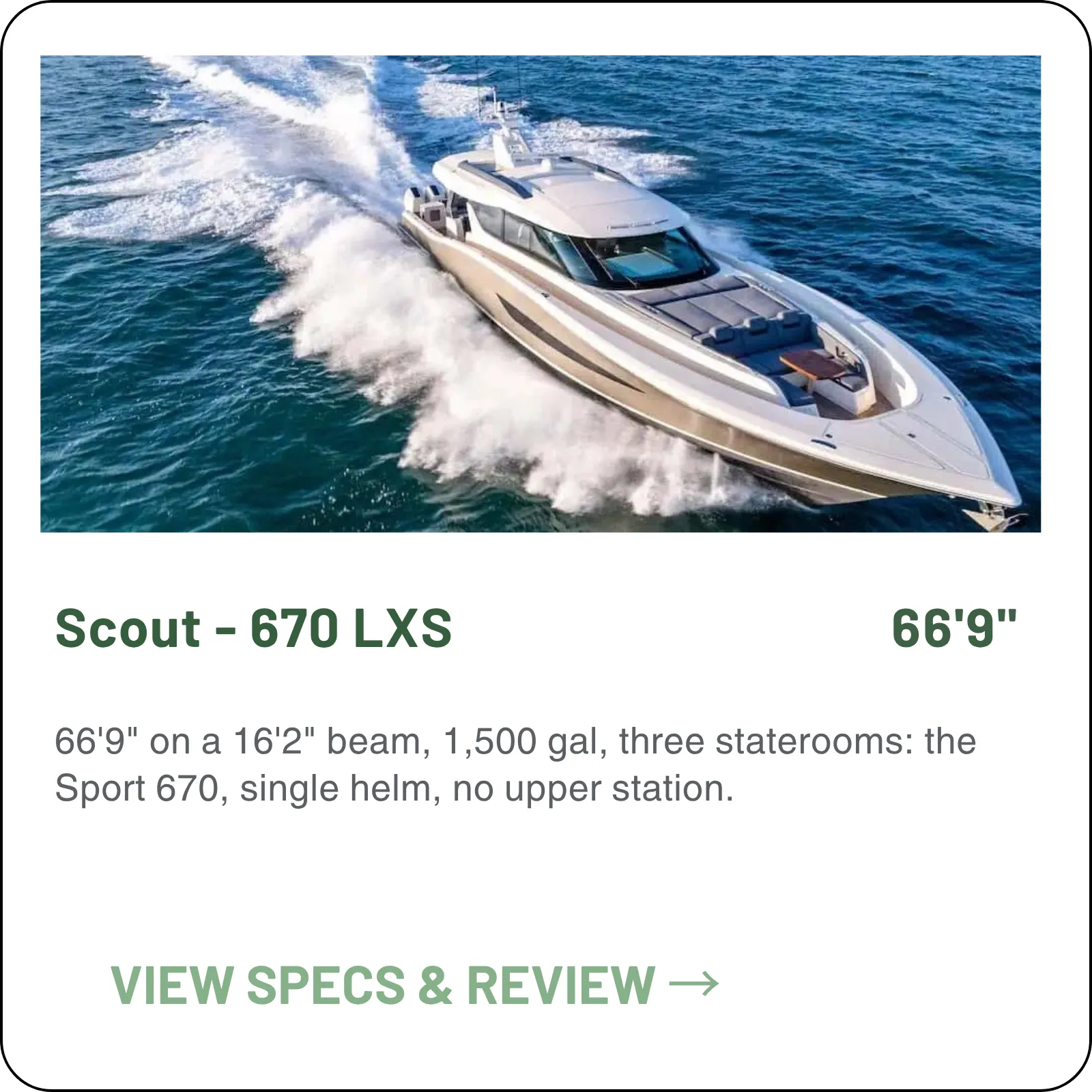
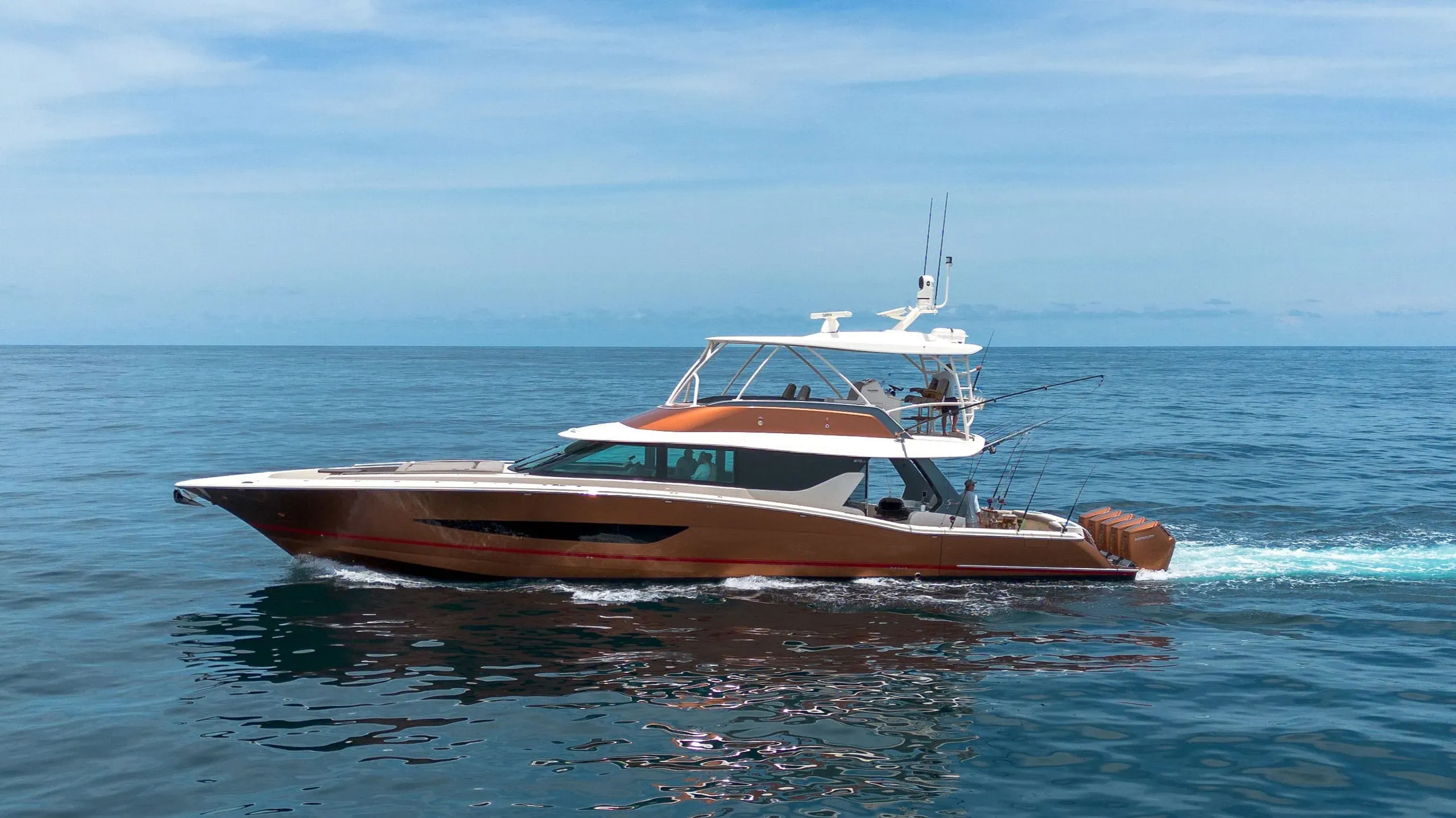
Two boats, one hull, and the only decision Scout actually asks you to make is whether you want the flybridge. Start there and let the rest follow, because it is not a small thing. An upper station on a 67-foot outboard boat changes where you fish from, where you dock from, what you can see, and what the boat is carrying up high. Ask to stand on one before you order it, and ask to stand on the boat without it the same day.
What I will not let slide is the numbers. On these two boats every figure comes with the word approximately attached — approximately 60 mph, approximately 40 mph fast cruise, approximately 500 miles on the model pages, with the flyer projecting upper 50s and 450. On a boat carrying 1,500 gallons and up to five 600-horsepower engines, the gap between 450 and 500 miles is a real afternoon. Get a sea trial with your engine count, and do not let a broker quote you either figure as tested.
The second thing is the diesel. This is an outboard boat with 184 gallons of diesel aboard to feed a 24 kW generator running 48,000 BTU of air conditioning across two variable-speed chillers. Scout has spent the last few years going the other way on its 37-to-43-footers — the [377 LXF](/scout/377-lxf), the [400 LXF Li-Ion](/scout/400-lxf-li-ion) and the [435 LXF Li-Ion](/scout/435-lxf-li-ion) all run their air conditioning off lithium with no genset aboard. At 67 feet it turns back, and it should: three staterooms and a full hotel load is not a day-boat problem. Just be clear that you are buying two fuel systems, two fill points and a genset service schedule along with the boat.
And a small one worth catching before you order the lift and the slip: the model pages say 41 inches of draft and the series flyer says 37, so settle the draft — and the rigged weight for your engine count — in writing on your build sheet.
— Tony Smith, Founder, Minted Yachts