
August 20, 2026
Scout 377 LXF — The Center Console That Left the Generator Ashore
The Scout 377 LXF is a 37'7" S-Class center console built on carbon fiber and E-glass in an epoxy infusion, with 363 gallons of fuel, 61 gal…
Read the articleExpert Review, Technical Specifications & Market Analysis
| Feature | Specifications |
|---|---|
| Overall Length | 37'7" |
| Beam | 11'5" |
| Draft | 2'2" |
| Displacement | 14,120 lbs |
| Engines | Triple Mercury V10 400 (3 x 400 HP) |
| Fuel Capacity | 363 gal |
| Water Capacity | 61 gal |
| Cabins / Heads | 1 Cabin / 1 Head |
| Max Speed | 68.0 mph @ 6,411 RPM (triple Mercury 400 V10s); 67.9 mph @ 6,417 RPM (twin Mercury 600 V12s) |
| Cruise Speed | 39.6 mph best efficiency (triple Mercury 400 V10s); 44.4 mph @ 4,500 RPM (twin Mercury 600 V12s) |
Source: Spec & Photos courtesy of Scout. Specs verified by Tony Smith, USCG 100 Ton Master, on August 20, 2026.
37'7" of carbon-epoxy hull that runs 120V air conditioning and heat off a 5,500-watt lithium bank - with no generator aboard.
Part of the Scout LXF series — see how owners step up through the lineup.

The generator is the part of a big center console nobody talks about until it fails, and then it is the only thing anyone talks about. Scout's answer on the 377 is to delete it. A 5,500-watt, 400-amp-hour lithium bank with proper battery management runs the 120V air conditioning and heat in the cabin and at the helm, and there is no diesel tank aboard to fill or genset to service. I think this is the single most consequential decision on the boat, and it is the one I would go test in person: sit in that cabin at anchor on a July afternoon with the air on and listen to what is not running.
The engine choice here is genuinely close, which is unusual. Triple Mercury V10 400s hit 68.0 mph and Scout's estimated range of 358 miles. Twin V12 600s hit 67.9 mph and 354 miles. A tenth of a mile per hour and four miles apart. What actually differs is where each one likes to sit: the triples find their efficiency peak at 39.6 mph, the twins at 44.4 mph. So if your normal run is a long one at a fast cruise, the twins are quietly the better tool — and you have two engines to look after instead of three. If you want a third motor between you and a long tow home, take the triples and do not apologise for it.
One thing I want buyers to notice, because it is easy to miss on a spec sheet. This hull carries 19.5 degrees of deadrise at the transom, where the 357 LXF and the 400 LXF both carry 22. It is a different boat with a different priority — flatter aft for stability and efficiency. You will feel it. Run the 377 in a chop before you decide whether that trade suits the water you fish.
Video courtesy of Scout.
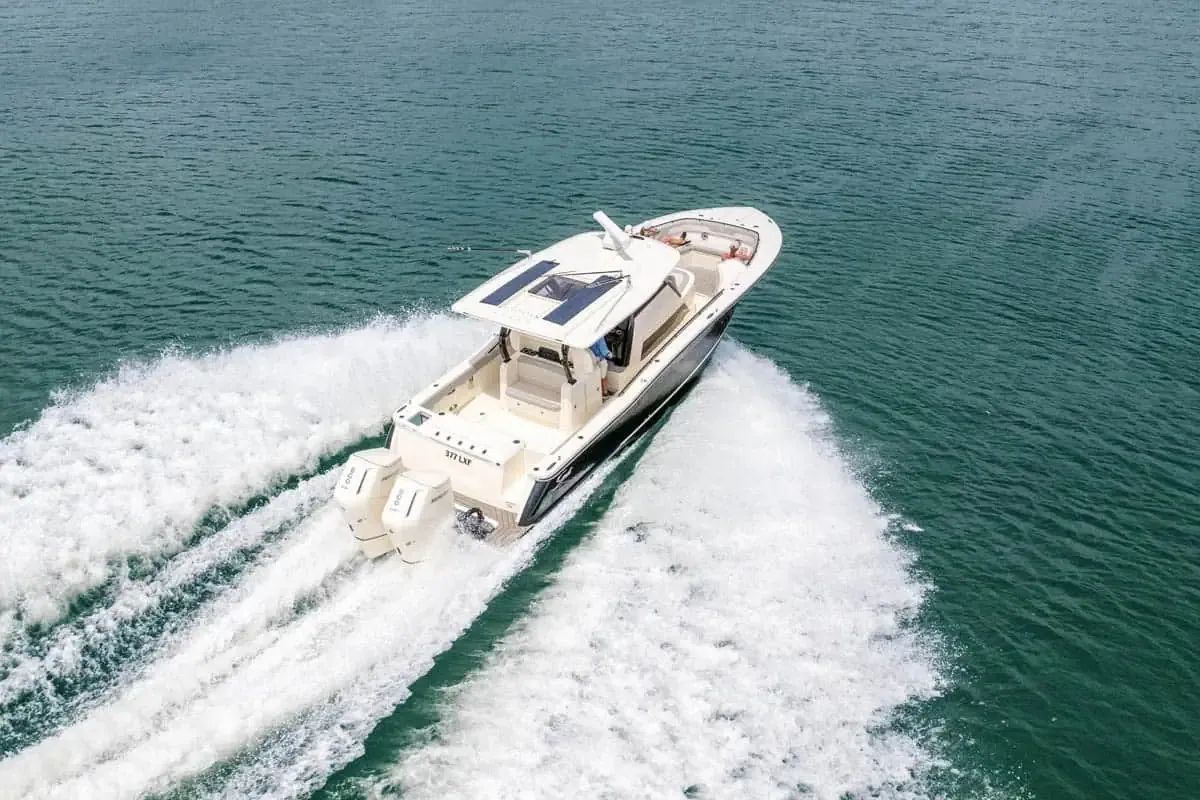
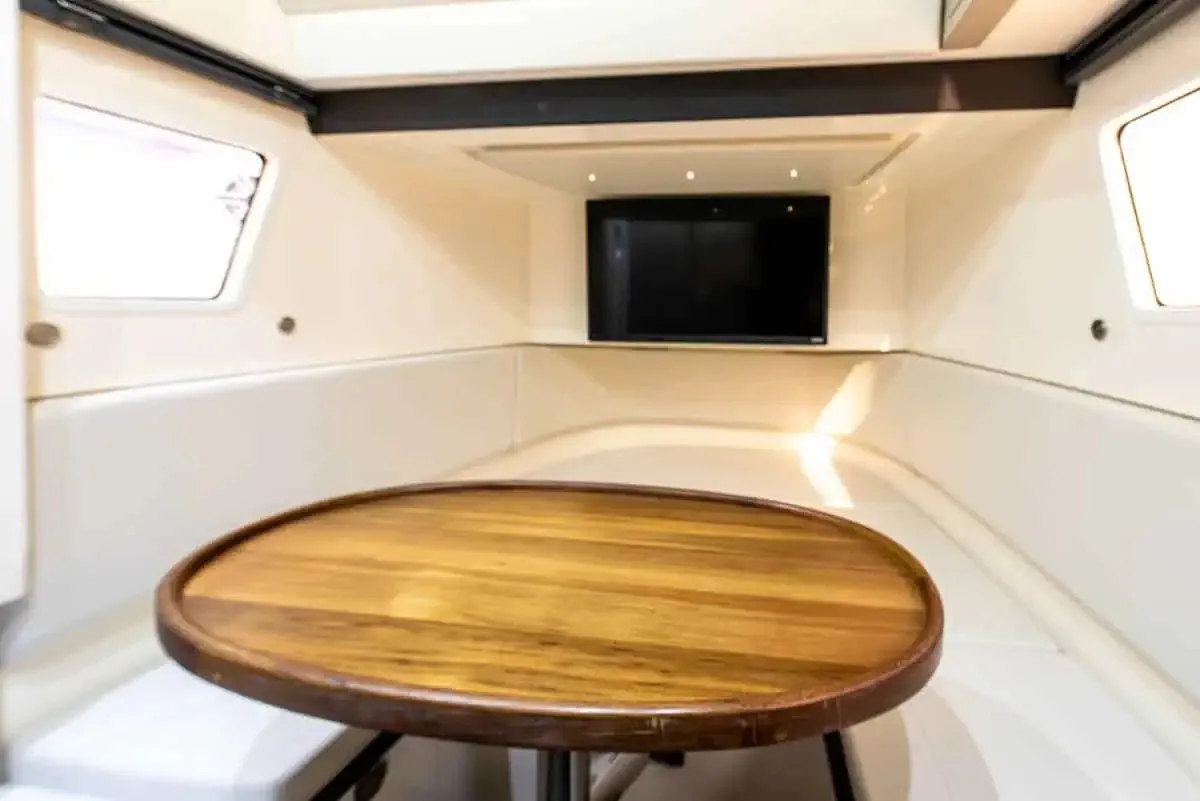
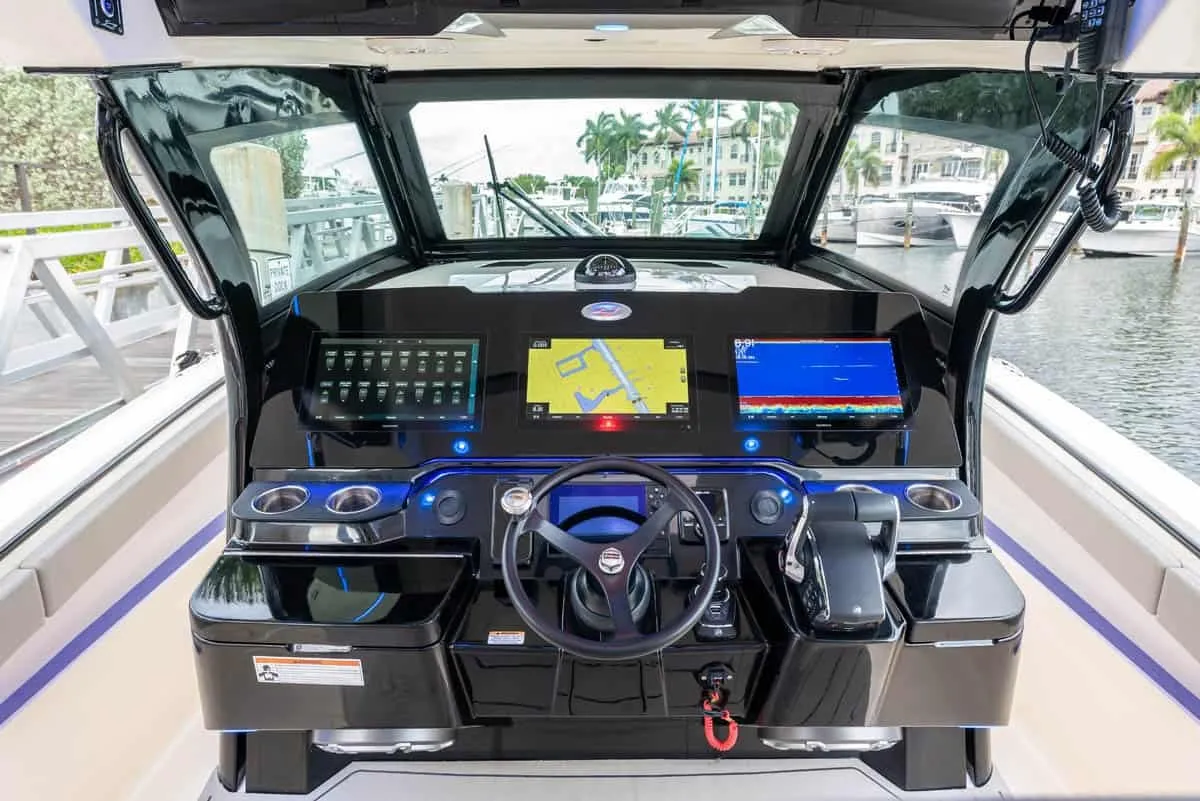
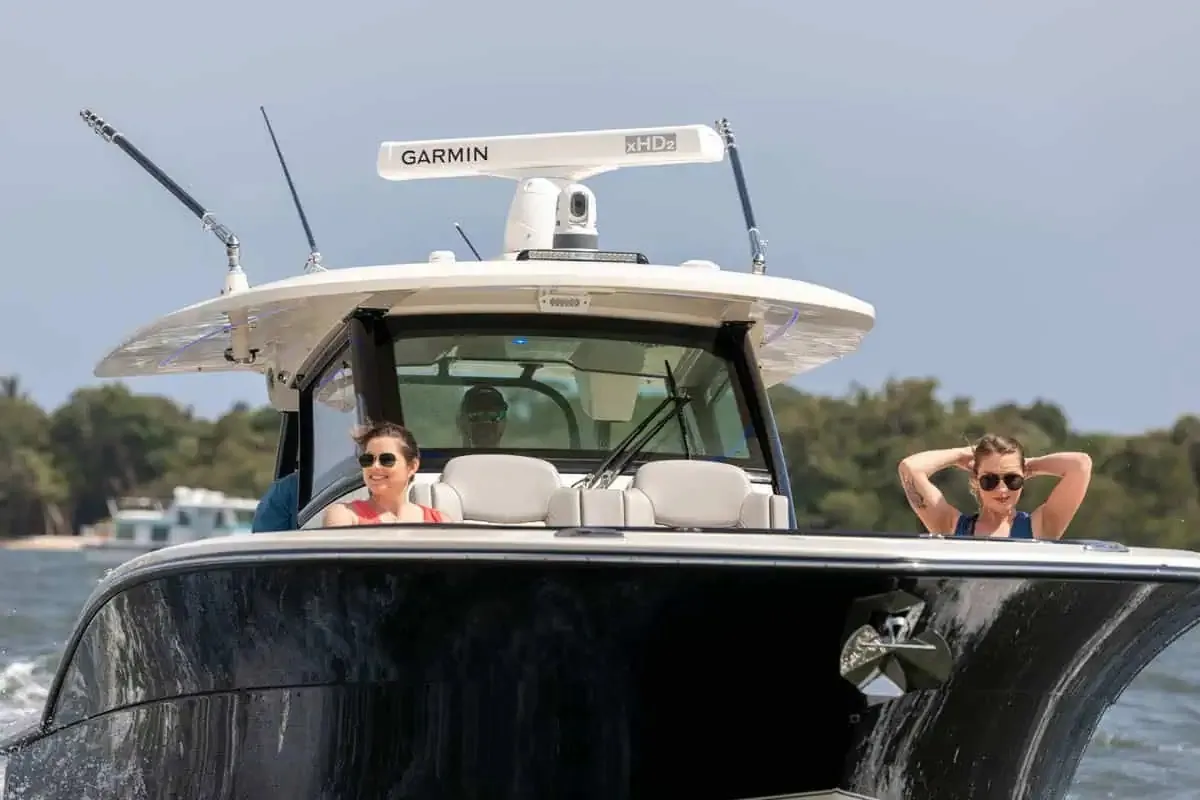
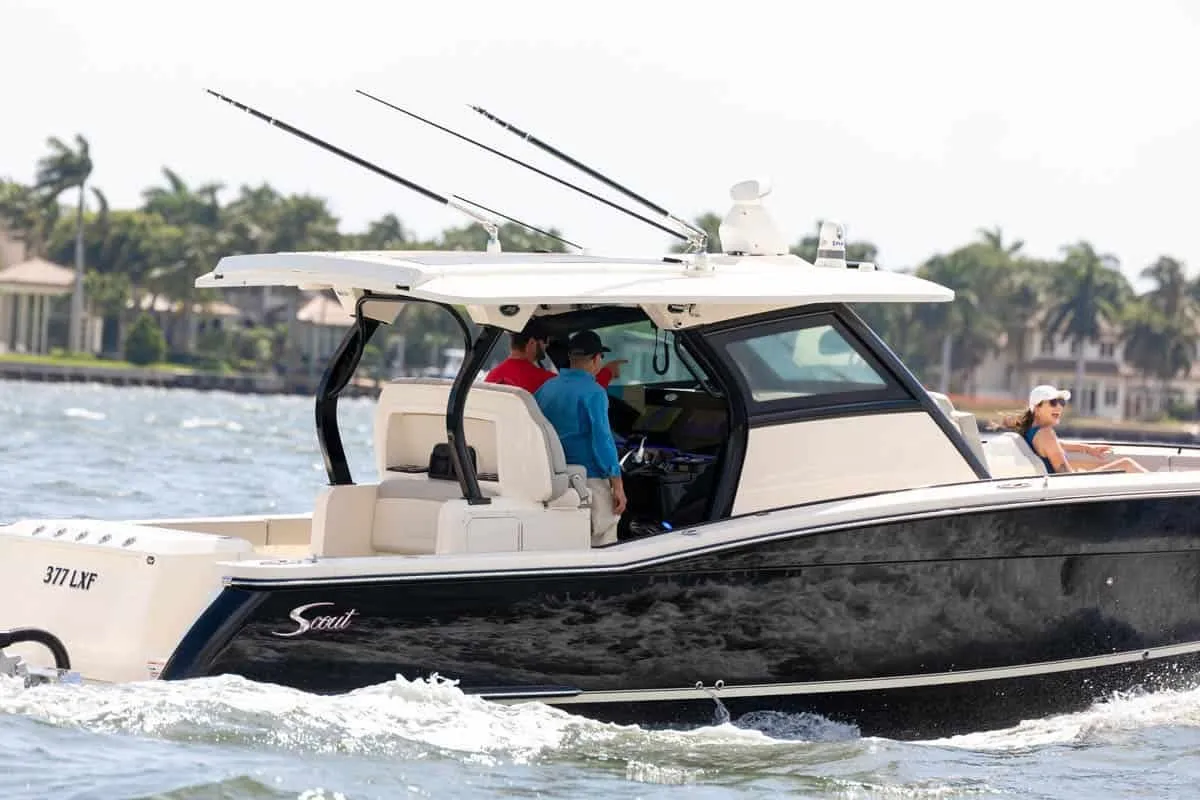
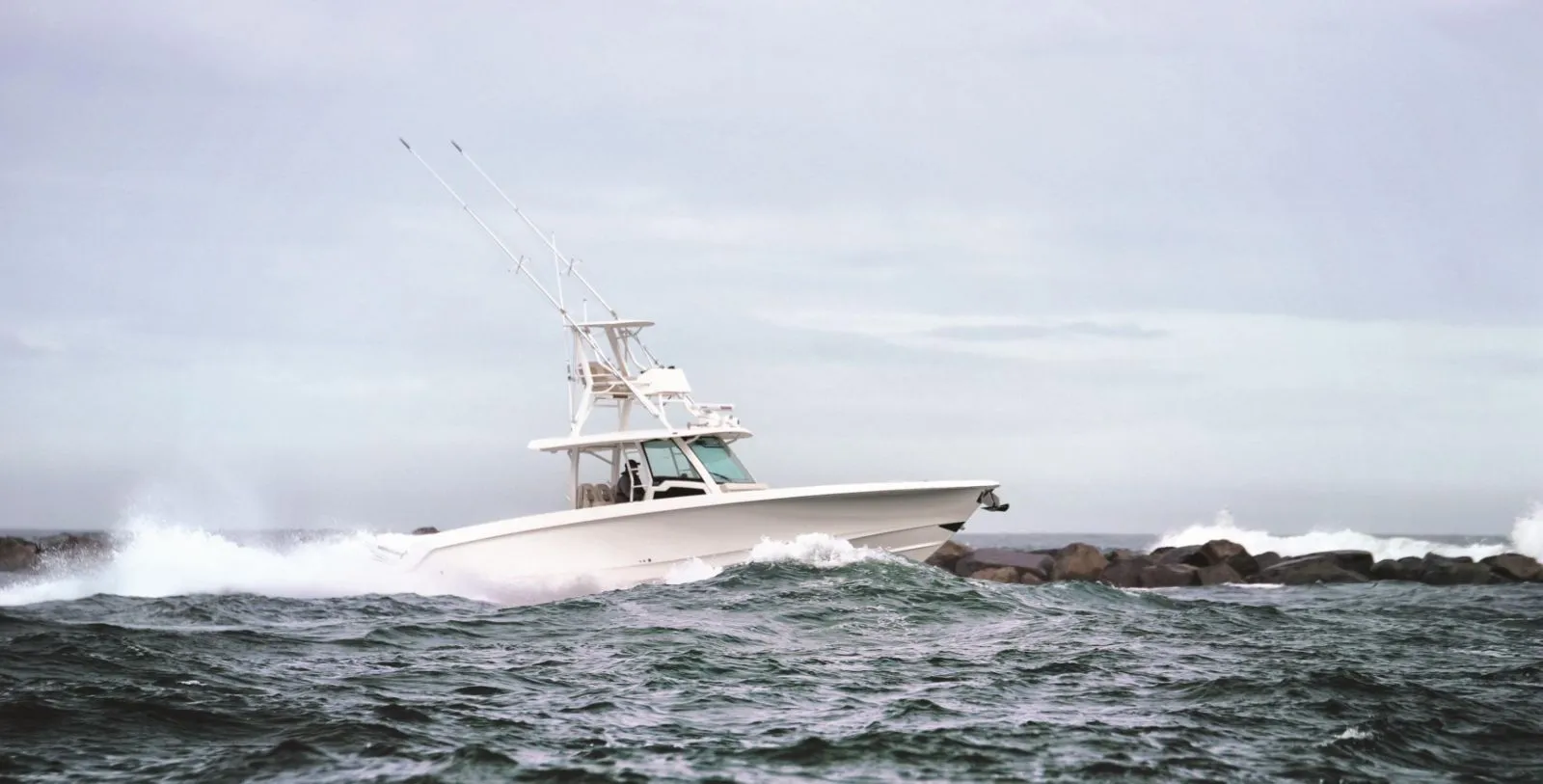
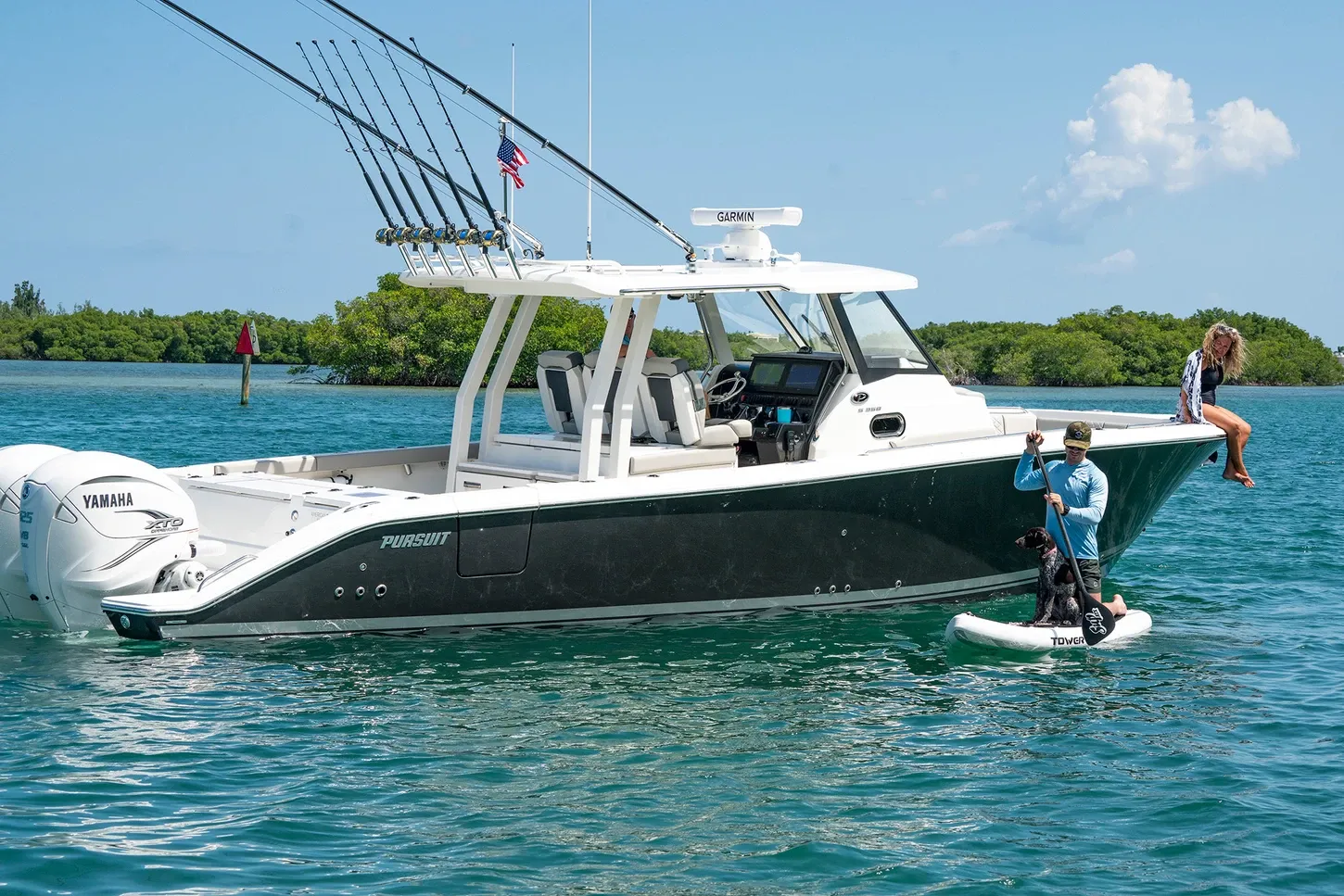
Photos courtesy of Scout.
The Scout 377 LXF is a 37'7" S-Class center console and the smallest hull Scout builds in Carbon Epoxy Construction - carbon fiber and E-glass as the primary material in the epoxy infusion - over its dual stepped bottom. It carries 19.5 degrees of transom deadrise on an 11'5" beam at 14,120 lbs dry without engines, holds 363 gallons of fuel and 61 gallons of fresh water, draws approximately 26", and is rated to 1,350 hp.
Its defining system is electrical. A single 5,500-watt, 400-amp-hour lithium-ion battery with a battery management system runs 120V air conditioning and heat in the cabin and at the helm, and Scout states plainly that no generator is necessary. C-Zone digital switching, 50-amp shore power with a 50-foot cord and a 50-amp house and engine charger complete the architecture.
On deck the standard boat carries a fully walkable swim platform with a starboard walk-thru, an Armstrong ladder, a port-side swing-in boarding door with its own ladder, an aerated 30-gallon port transom baitwell, port and starboard aft floor fishboxes, twelve flush-mount gunnel rod holders, five transom rod holders, Zipwake and a 50-gallon washdown tank. The 377 LXF is NMMA and Yacht Certified.
Scout rates the 377 LXF to a maximum of 1,350 hp. Two tested bulletins exist, both with a Seakeeper aboard, and they finish 0.1 mph apart.
Triple Mercury V10 Verado 400s (25p/27p/25p, tested at 17,750 lbs) reach 68.0 mph at 6,411 rpm, 0-20 mph in 5.82 seconds and 0-30 mph in 9.07 seconds, with best cruise economy of 0.99 mpg at 39.6 mph and an estimated range of 358 miles. Twin Mercury V12 Verado 600s (33p, tested at 15,077 lbs) reach 67.9 mph at 6,417 rpm, 0-20 mph in 5.73 seconds and 0-30 mph in 8.4 seconds, with best cruise economy of 0.98 mpg at 44.4 mph and an estimated range of 354 miles. Scout footnotes both ranges as estimates based on fuel consumption at optimal cruising speeds and sea conditions.
The hull runs 19.5 degrees of transom deadrise, deliberately flatter than the 22 degrees Scout publishes for both the 357 LXF and the 400 LXF - a different priority aft.
Below the console the 377 LXF has a cabin rather than a berth compartment: a double berth, port and starboard windows, a skylight, overhead lights, a 32" smart TV, a microwave and 120V air conditioning and heat. The head is enclosed and finished with a porcelain vessel sink on a Corian vanity with mirror and a marine head with electric overboard discharge, and a 6-gallon hot water heater feeds a rain shower head.
Fresh water is 61 gallons - roughly two and a half times what Scout gives the 357 LXF - and the holding tank is 11.5 gallons. That water capacity, not the berth, is what makes the cabin usable for more than changing clothes.
On deck the forward console double sun deck lounge has cushions, armrests and underside storage, bow seating is integrated with stowage beneath, and the leaning post can be specified with a refrigerator, trash unit or rope locker. A summer kitchen with grill, sink and cutting board is optional.
The 377 LXF is where Scout's construction changes materially. Its published laminate comparison assigns epoxy-infused E-glass at approximately 2.4 lbs per square foot to models from 33 to 35 feet, and the epoxy-infused carbon hybrid at approximately 1.7 lbs per square foot to models from 37 feet up. The 377 is the first boat over that threshold, and its 19.5-degree bottom and generator-free house system make it the most distinct hull in the middle of the LXF range.
Buyers looking here are typically comparing 37-to-39-foot offshore center consoles and asking two questions: what the carbon laminate actually buys them, and whether a lithium house bank can replace a genset for the way they use a boat at anchor.
Scout is family owned, has built in Summerville, South Carolina since 1989, and the 377 LXF is NMMA and Yacht Certified.
The 377 LXF fits the owner who spends real time stopped - anchored off a sandbar, drifting a rip, sitting out weather - and does not want a diesel generator running to stay comfortable. If the part of the day you most want to fix is the noise and the service schedule that come with shore-grade power offshore, this hull is built around that answer.
It is a strong fit if 363 gallons covers your runs, if 61 gallons of fresh water and an enclosed head with a rain shower are what your crew has been missing, and if you would rather manage a battery bank than a genset. The engine decision is unusually forgiving: both published packages top out within 0.1 mph of each other, so the real choice is between the twins' 44.4 mph efficiency peak and a third engine aboard.
It is the wrong boat if you want the sharper 22-degree entry the 357 LXF and 400 LXF carry, or if you need to stand up below deck - that is the 400 LXF. Confirm the rigged weight for your configuration before you commit to a lift — the published 14,120 lbs is without engines.
Carbon fiber and E-glass together, as the primary material in an epoxy infusion — Scout calls it Carbon Epoxy Construction, and the 377 LXF is the smallest hull it builds that way. Scout's own published laminate comparison puts that hybrid at approximately 1.7 pounds per square foot and applies it from 37 feet up.
By the same comparison, the epoxy-infused E-glass on its 33-to-35-foot models runs approximately 2.4 pounds per square foot and a traditional chopper-gun layup approximately 4.2. Dry weight without engines is 14,120 pounds — confirm the rigged figure for your configuration before committing to a lift.
Because Scout drew it that way on purpose — 19.5 degrees of transom deadrise here against 22 degrees on both the 357 LXF and the 400 LXF. It is a different priority aft: flatter for stability and efficiency, at the cost of some cushion in a head sea.
That is a difference you feel rather than read, so run the 377 in a chop before you decide whether the trade suits the water you fish. The hull is 37'7" on an 11'5" beam, drawing approximately 26 inches.
The two packages Scout publishes finish 0.1 mph apart at the top. Triple Mercury V10 Verado 400s, tested at 17,750 pounds with a Seakeeper aboard, reach 68.0 mph at 6,411 rpm with 0-20 mph in 5.82 seconds and 0-30 mph in 9.07. Twin Mercury V12 Verado 600s, tested at 15,077 pounds, reach 67.9 mph at 6,417 rpm with 0-20 mph in 5.73 seconds and 0-30 mph in 8.4.
What separates them is cruise character. Best economy is 0.99 mpg at 39.6 mph on the triples and 0.98 mpg at 44.4 mph on the twins, for published estimated ranges of 358 and 354 miles.
No. Scout runs the 120V air conditioning and heat — in the cabin and at the helm — off a single 5,500-watt, 400-amp-hour lithium-ion battery with a battery management system, and states plainly that no generator is necessary. There is no genset aboard and no diesel tank to fill.
The rest of the architecture is C-Zone digital switching, 50-amp shore power with a 50-foot cord, and a 50-amp house and engine charger. The 400 LXF above it takes the opposite approach with a standard 8 kW generator — and Scout now builds that same 39'7" hull both ways, as the 400 LXF Li-Ion, so the fork is a choice you make rather than a length you have to accept.