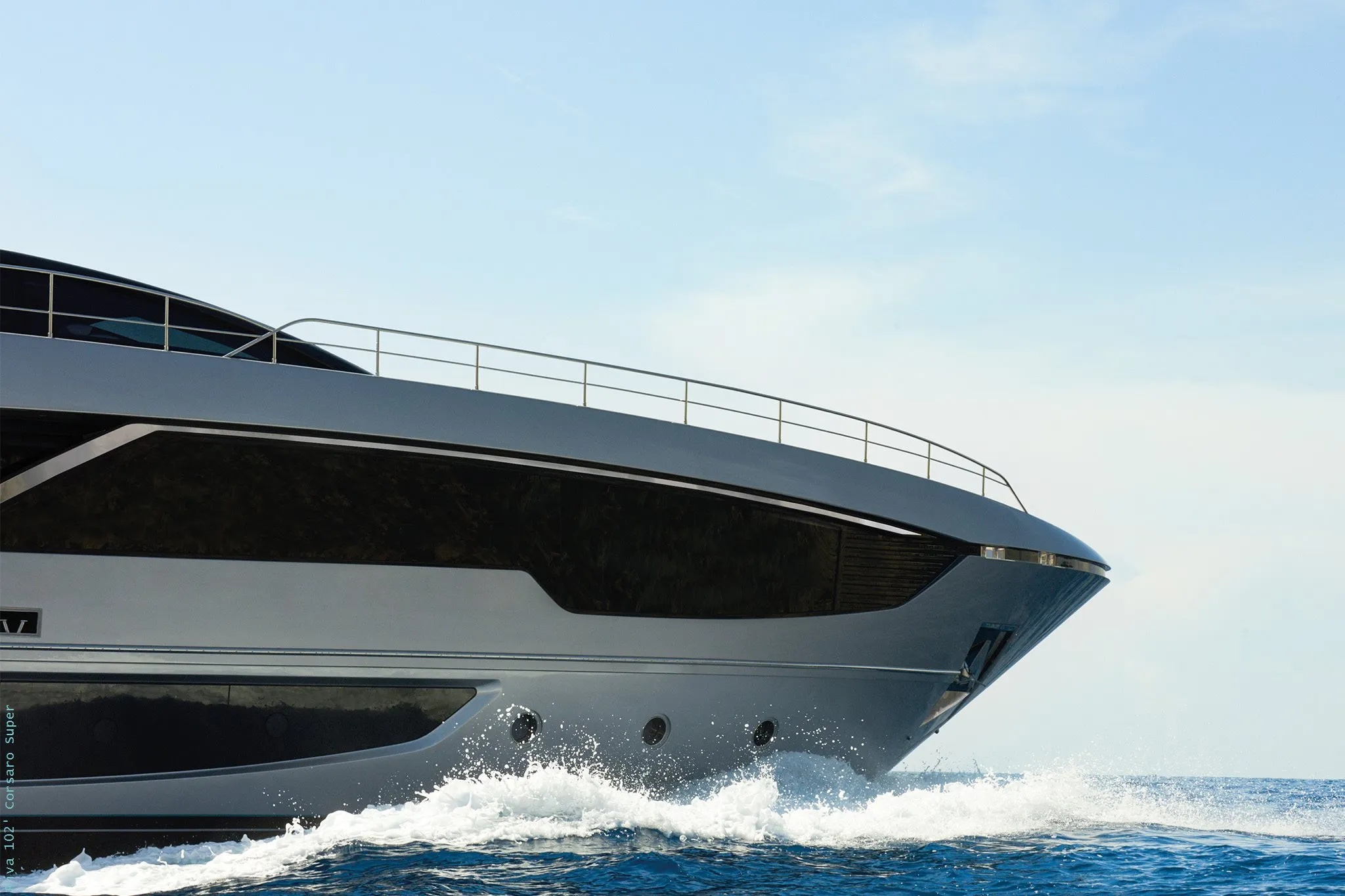
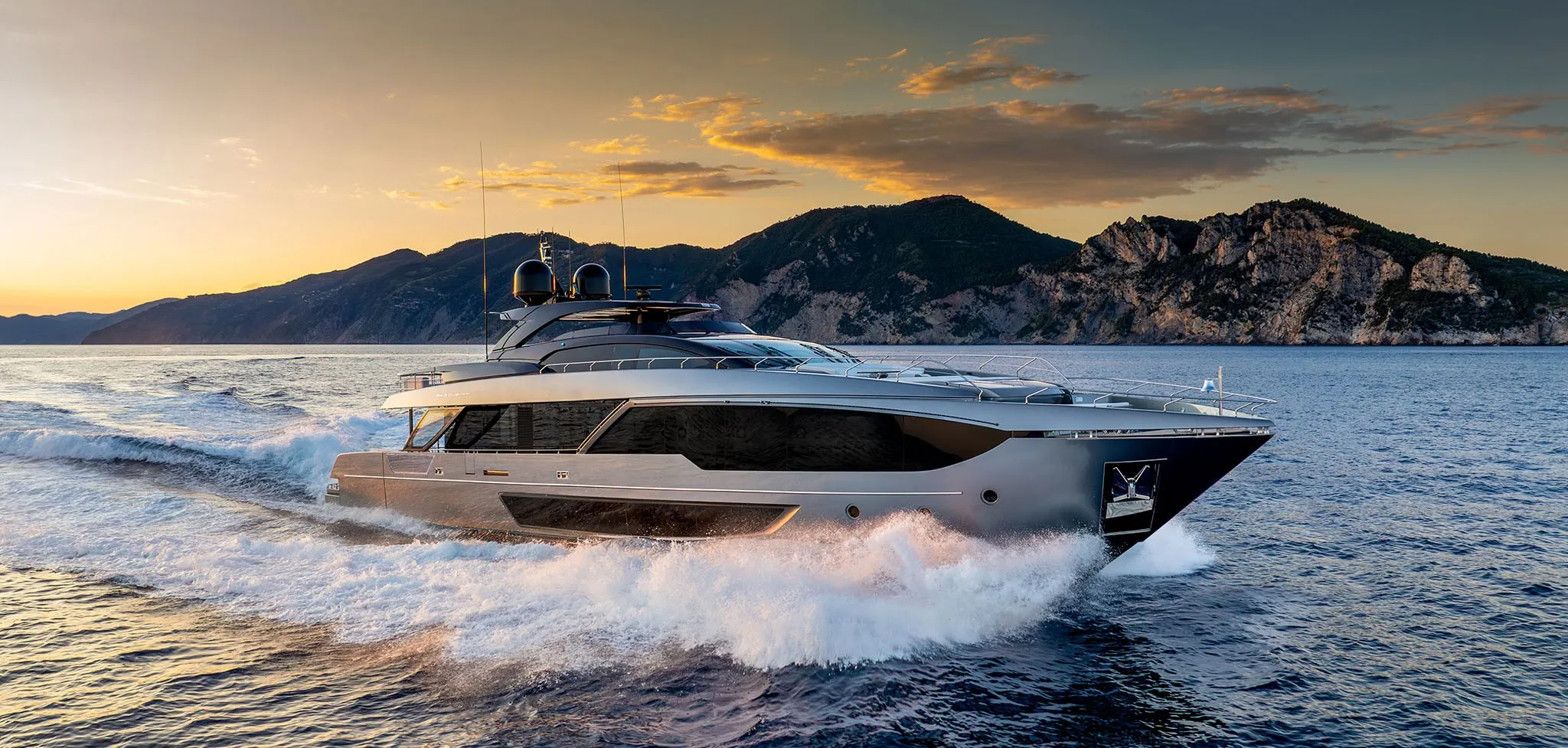
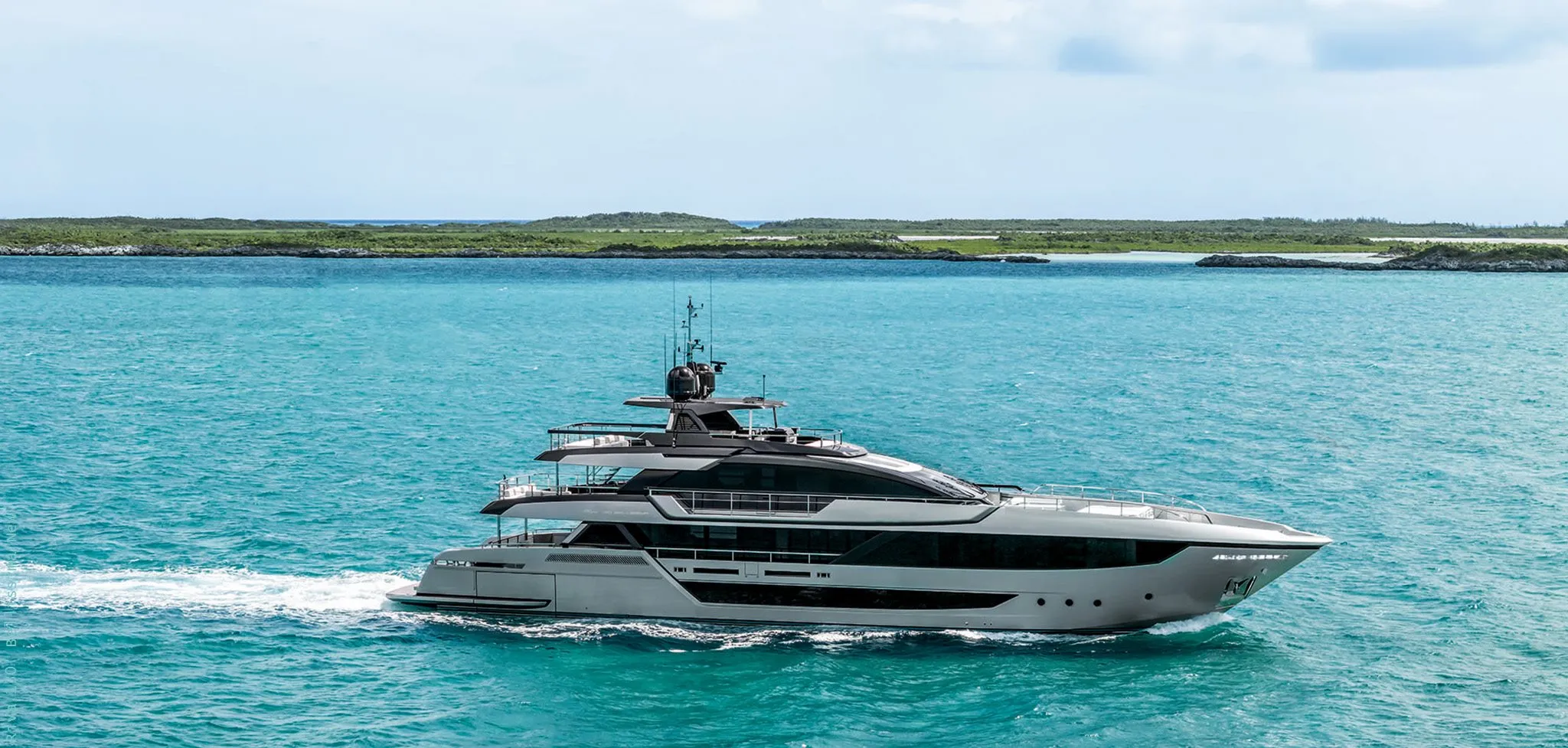
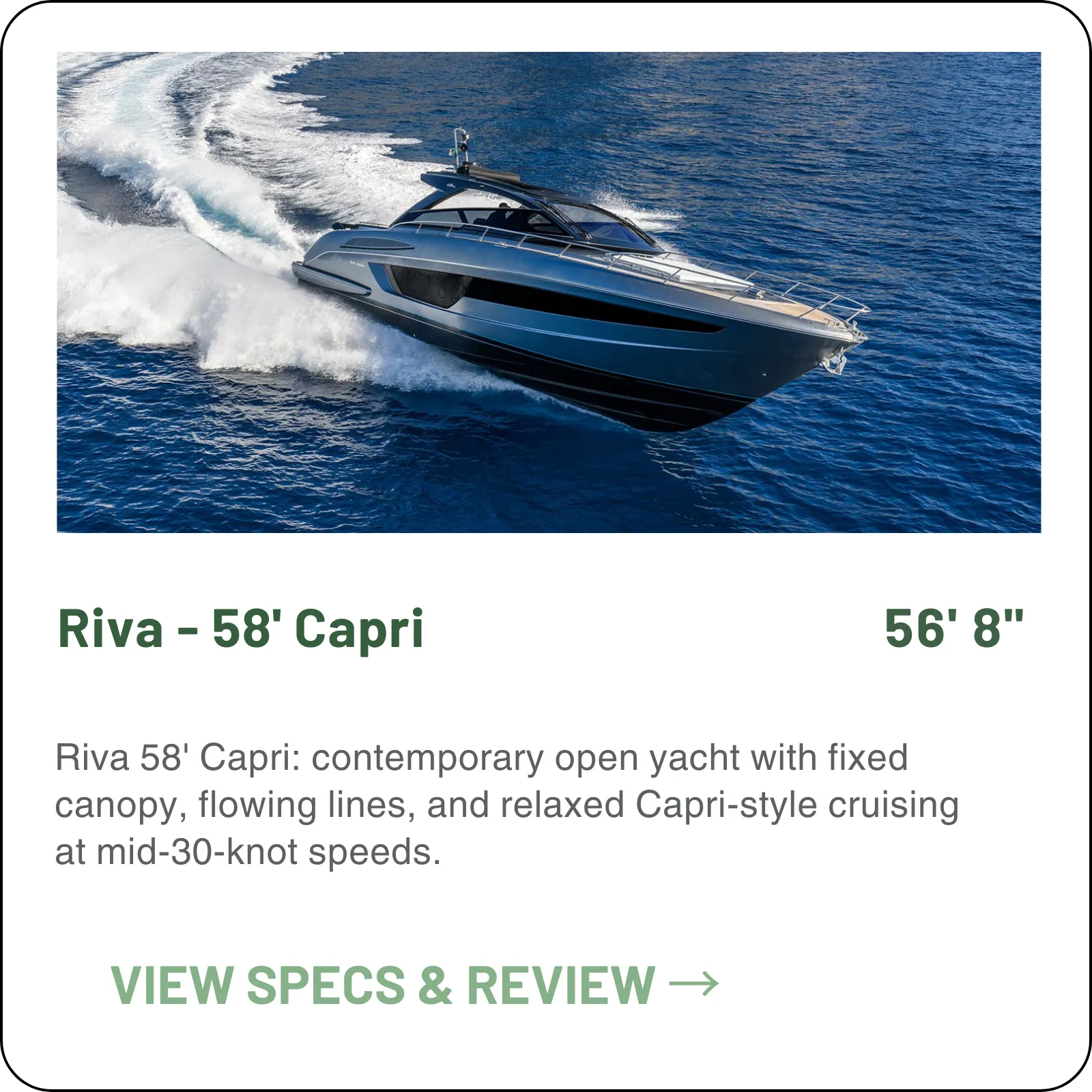
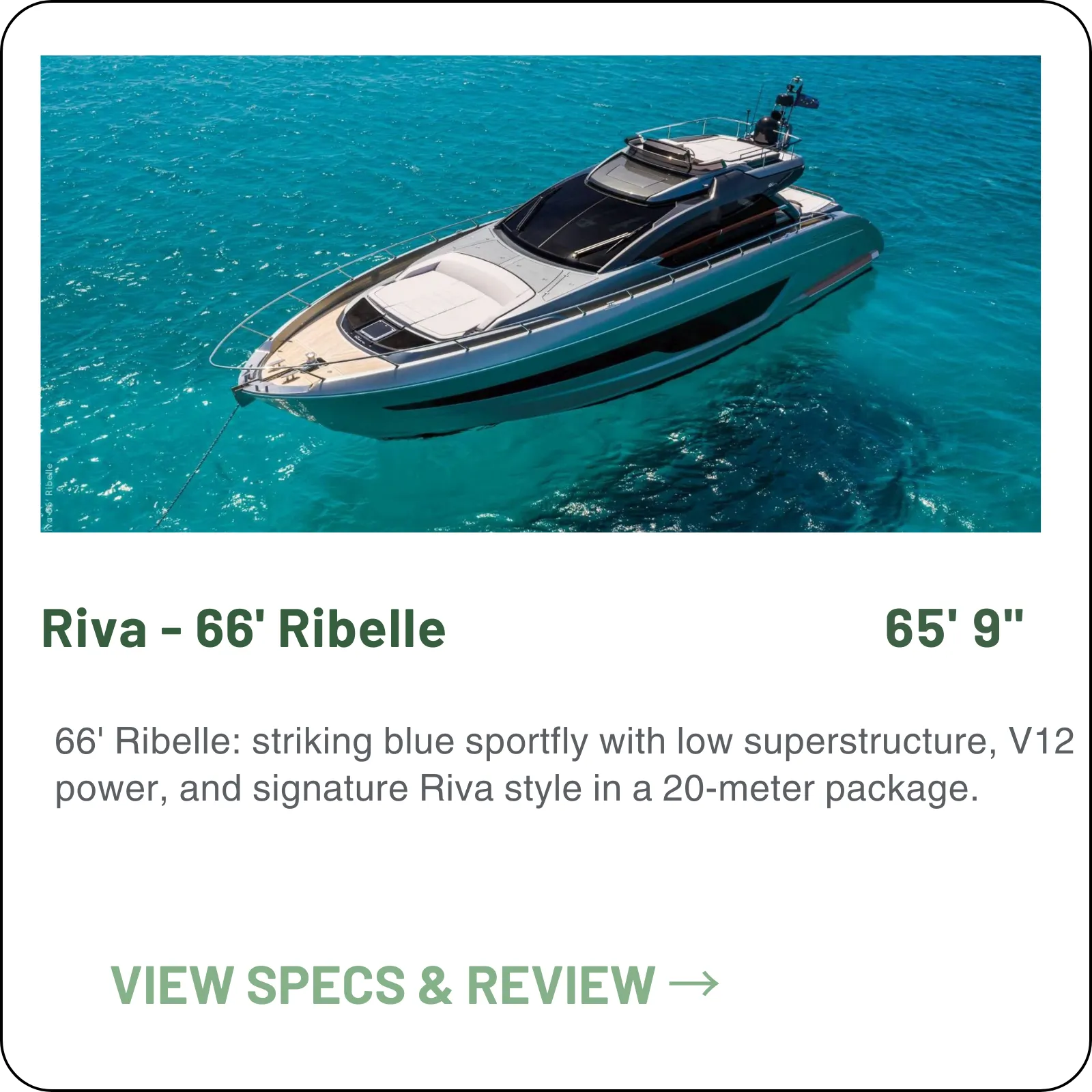
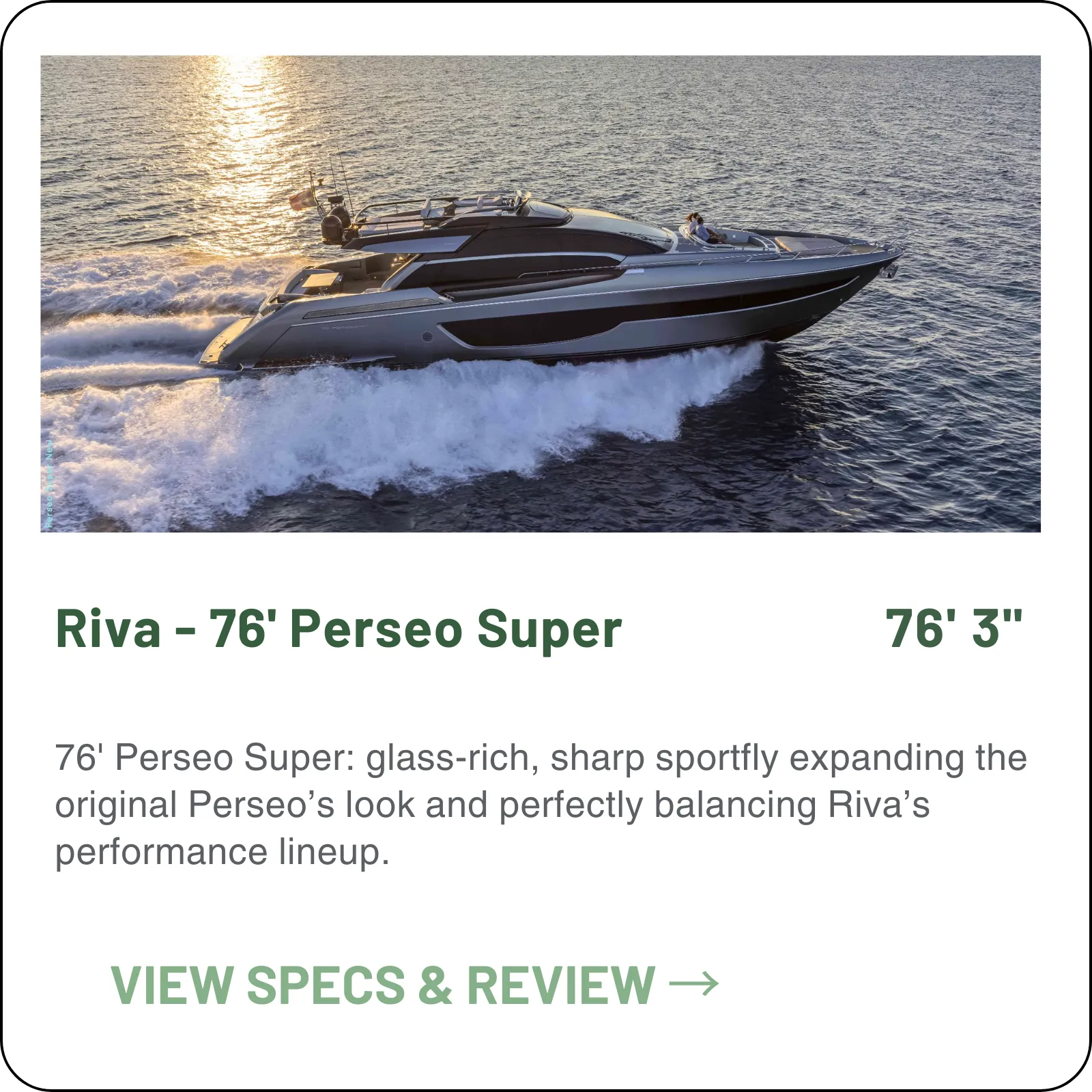
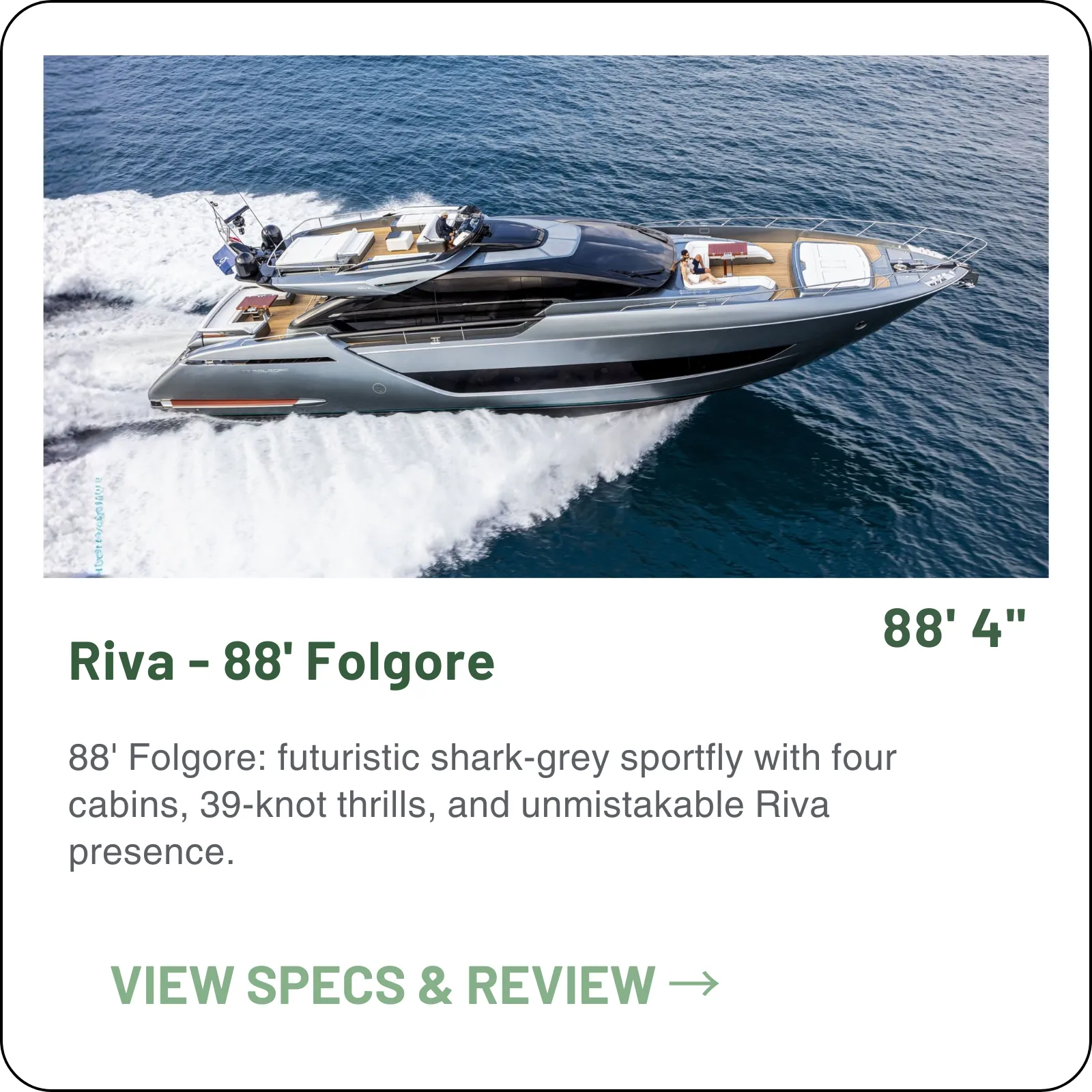
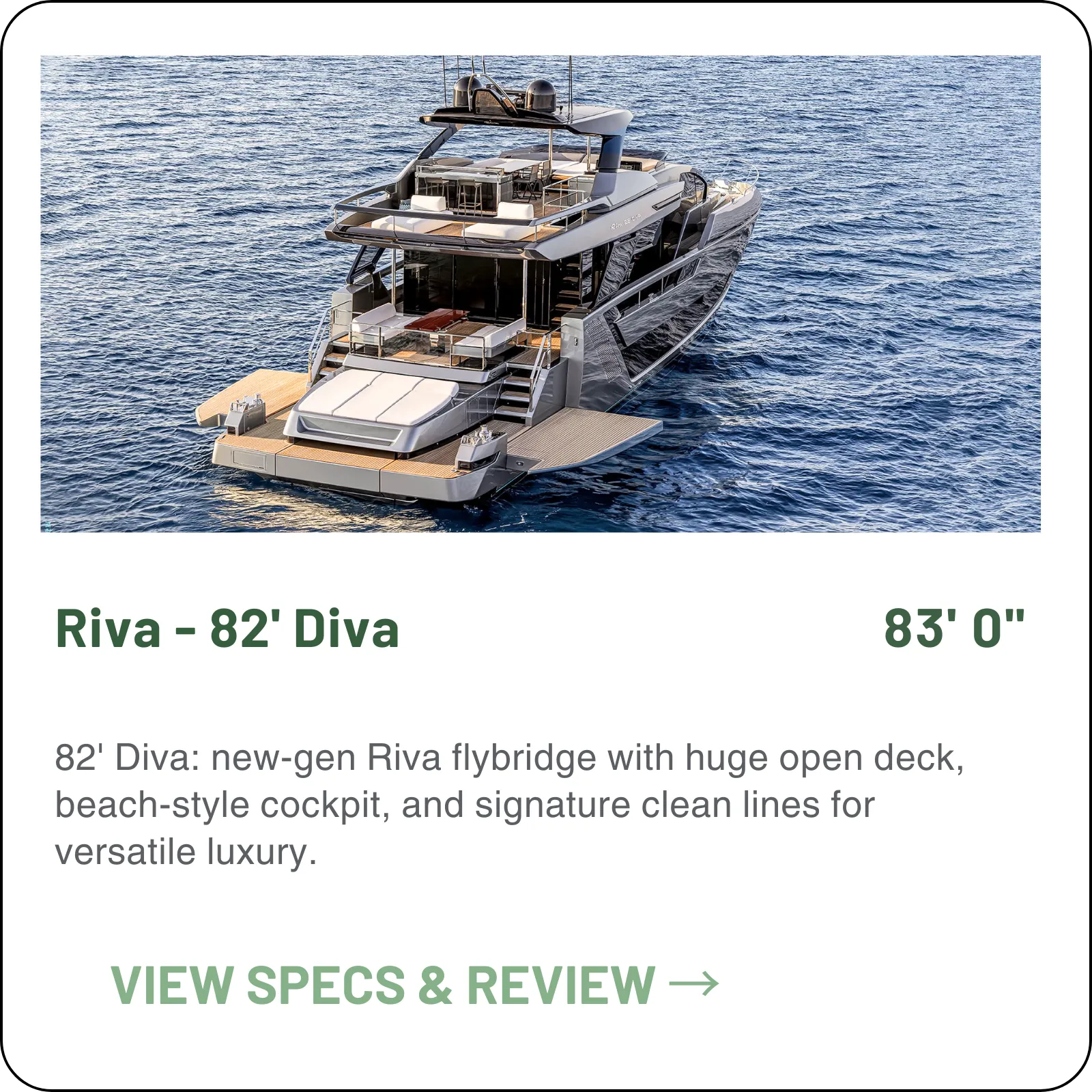
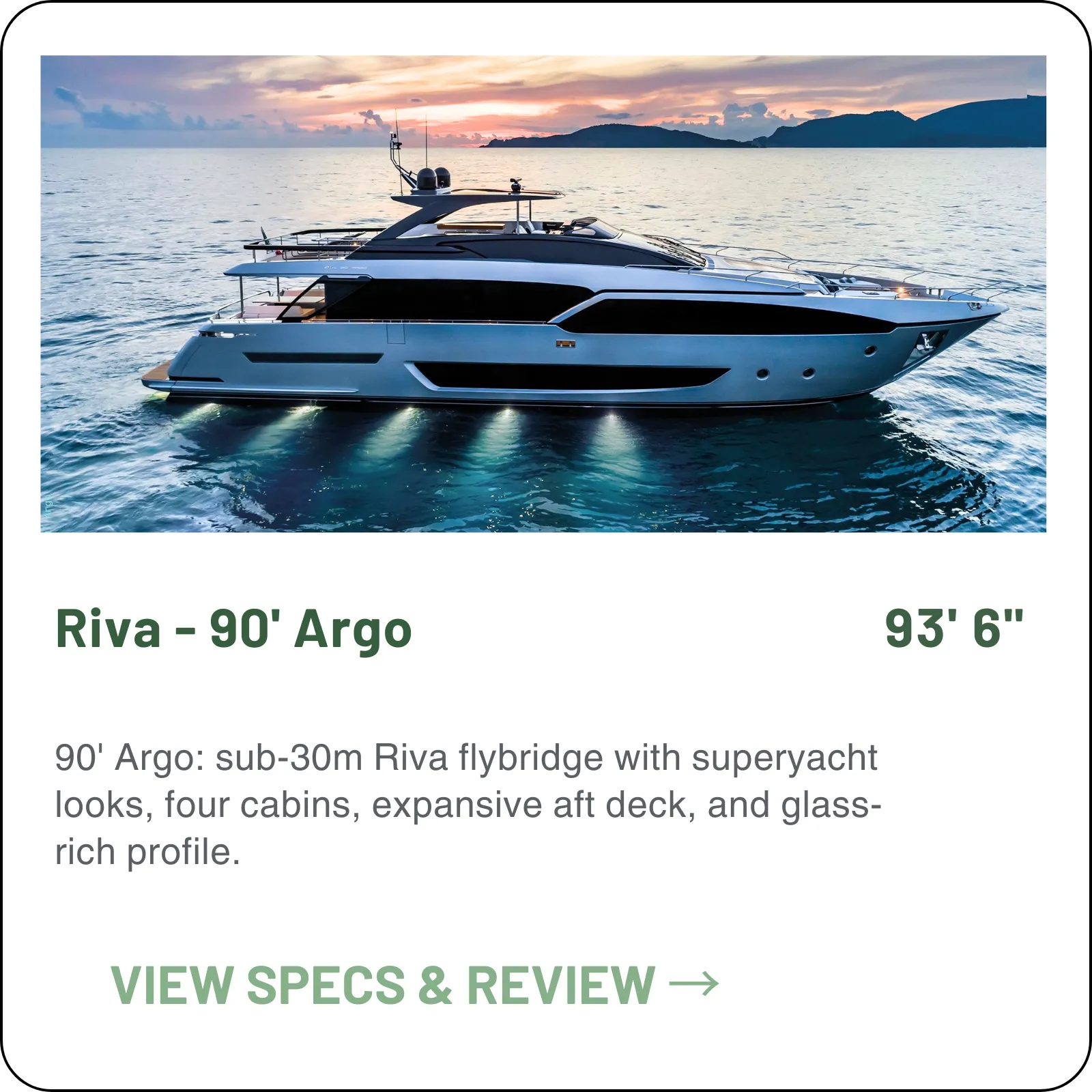
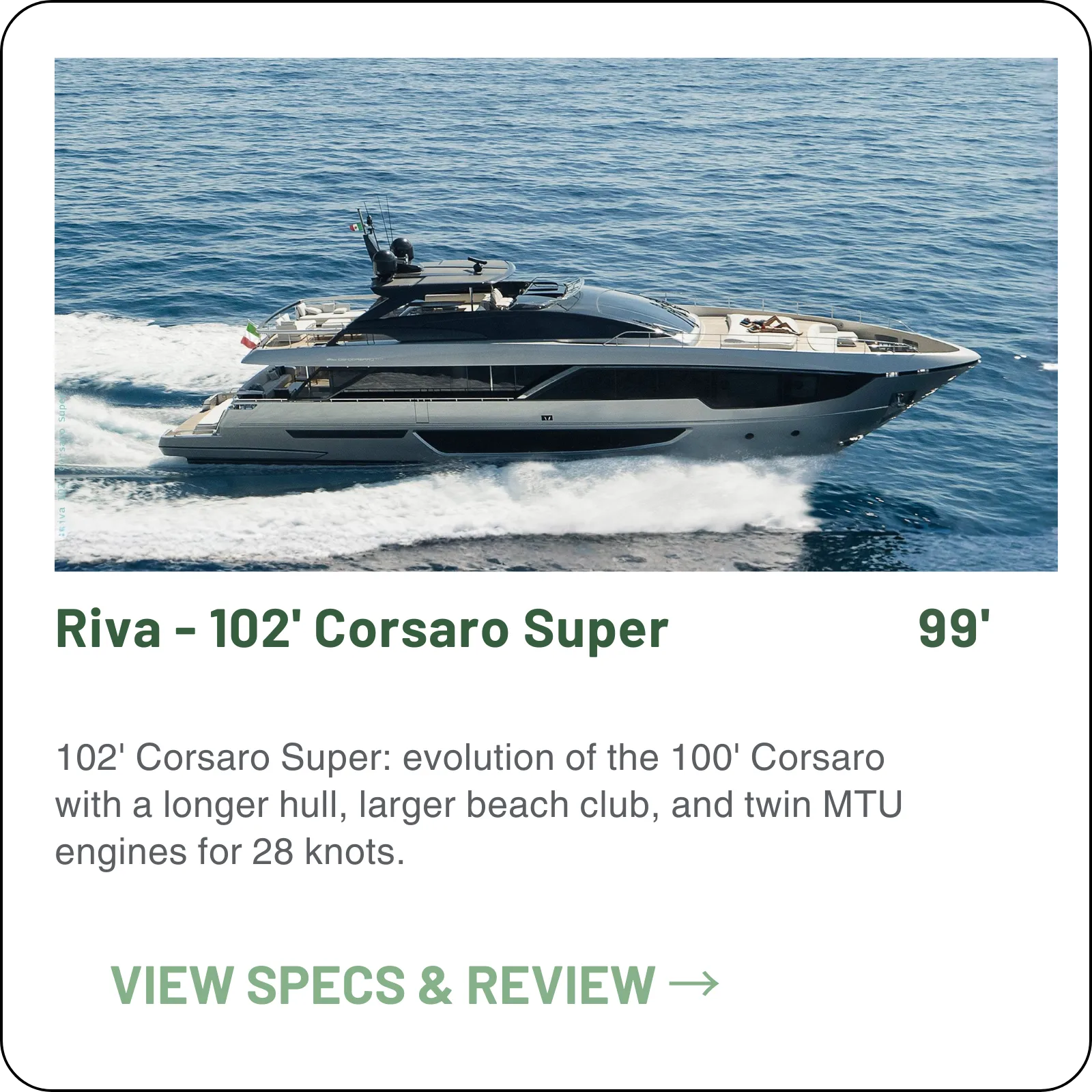
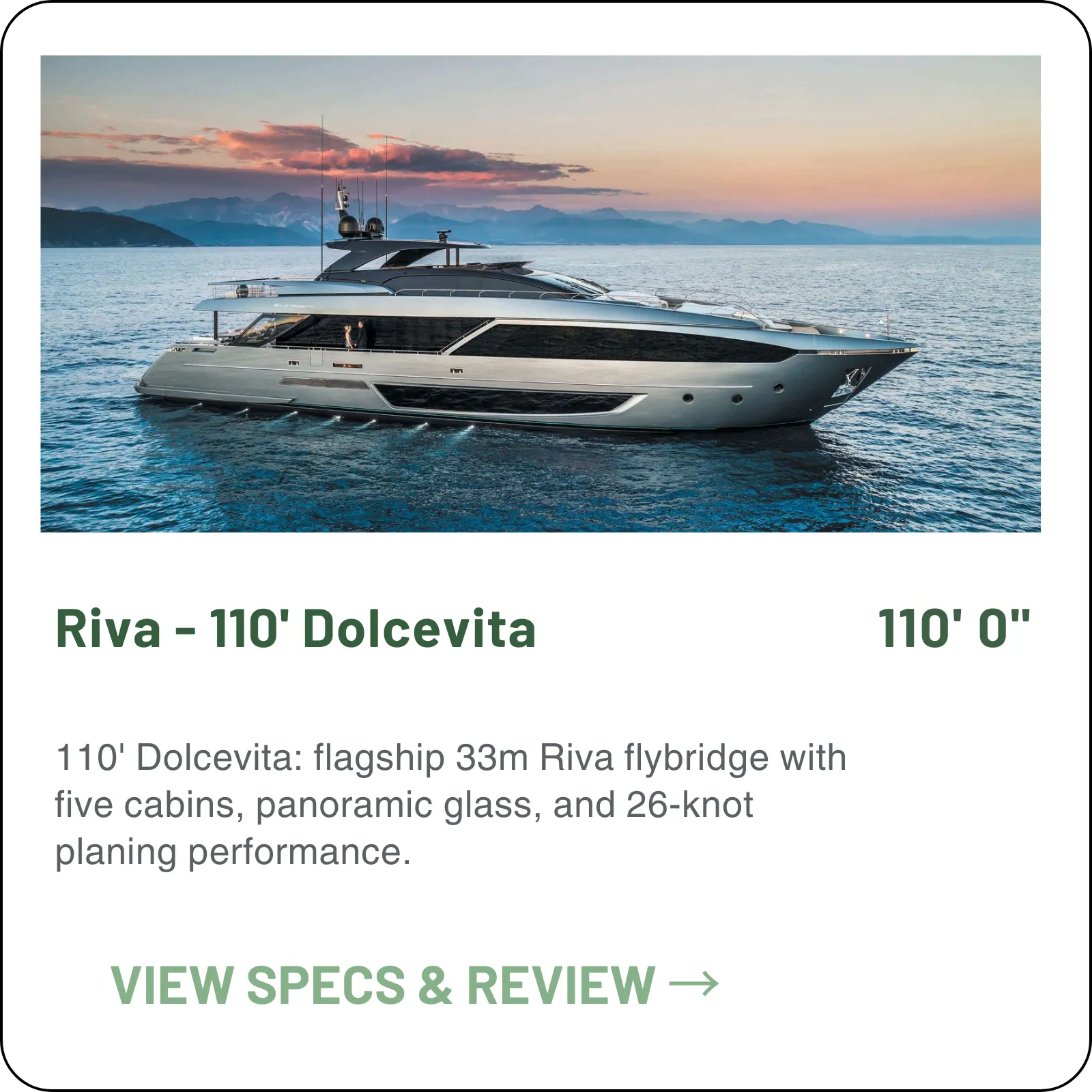
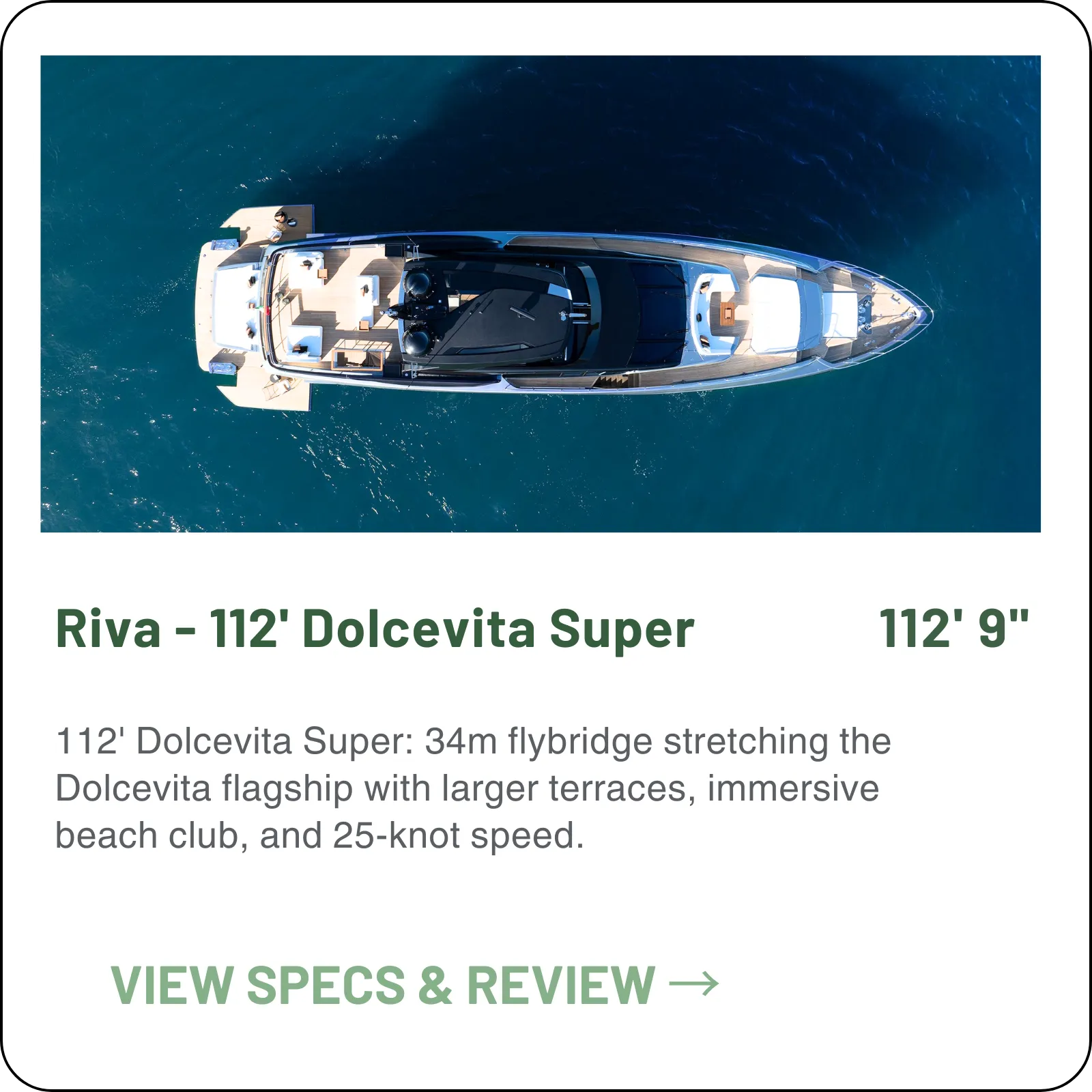
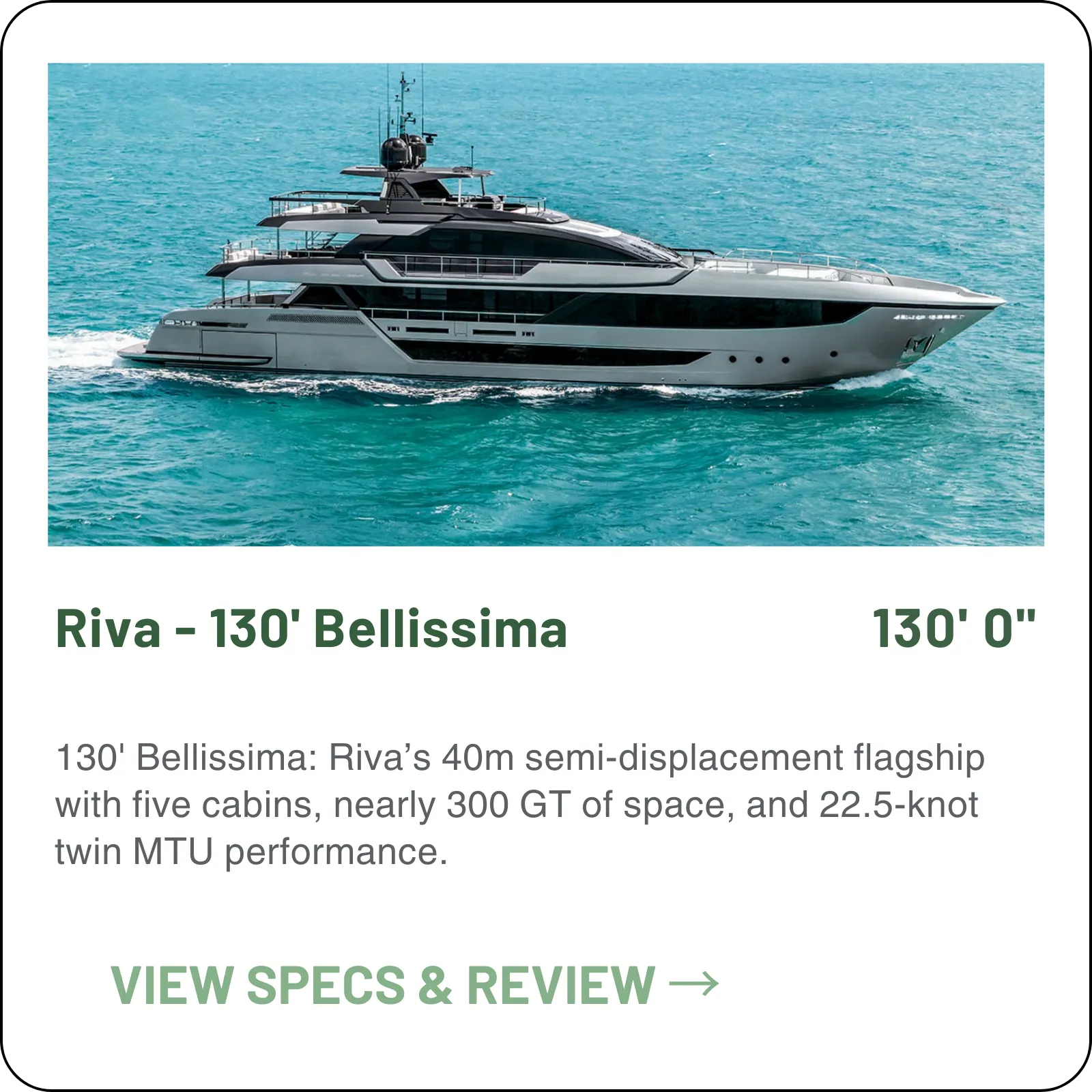
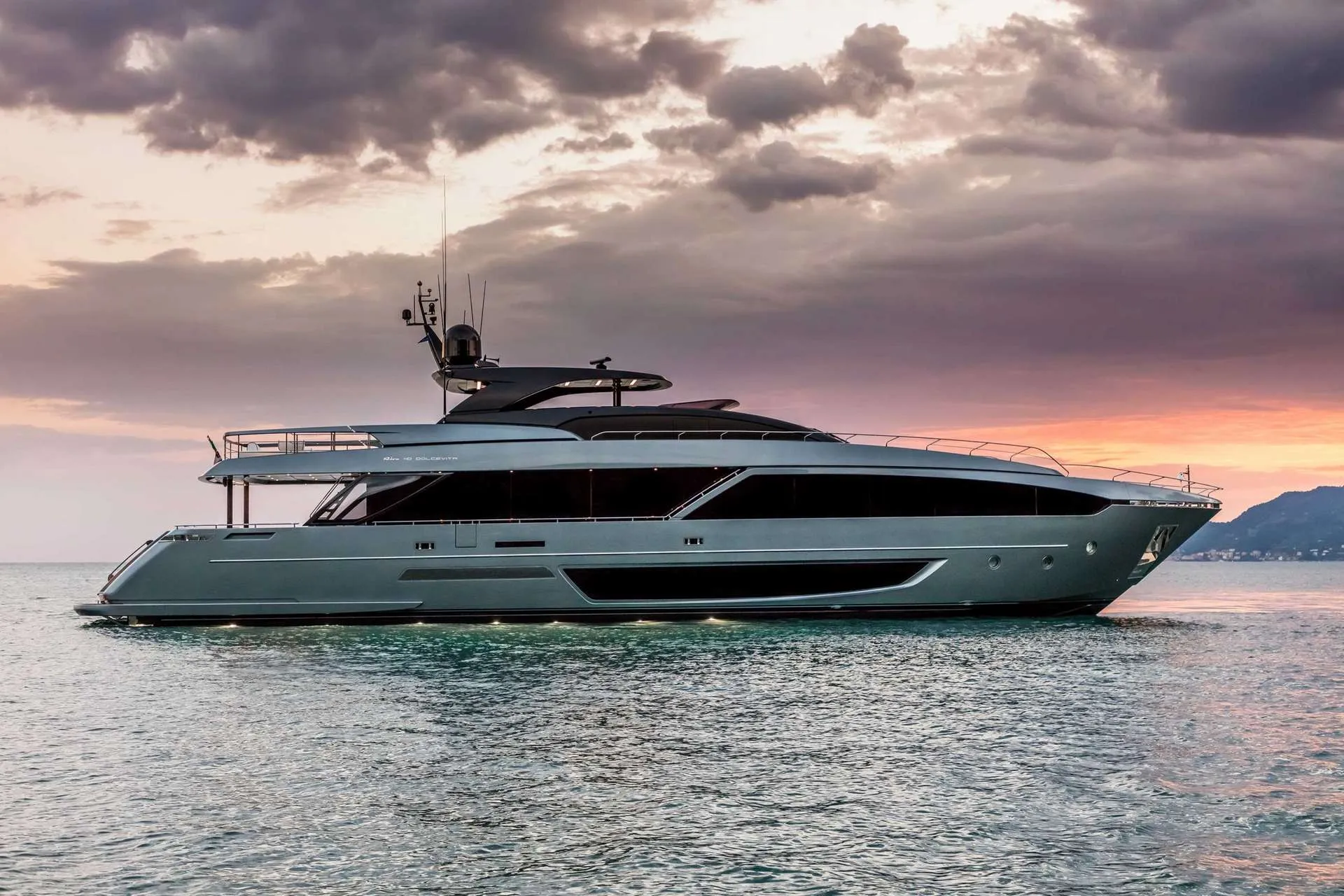
Riva is the easiest brand on this site to buy for the wrong reason, and the easiest to verify once you decide to buy for the right one.
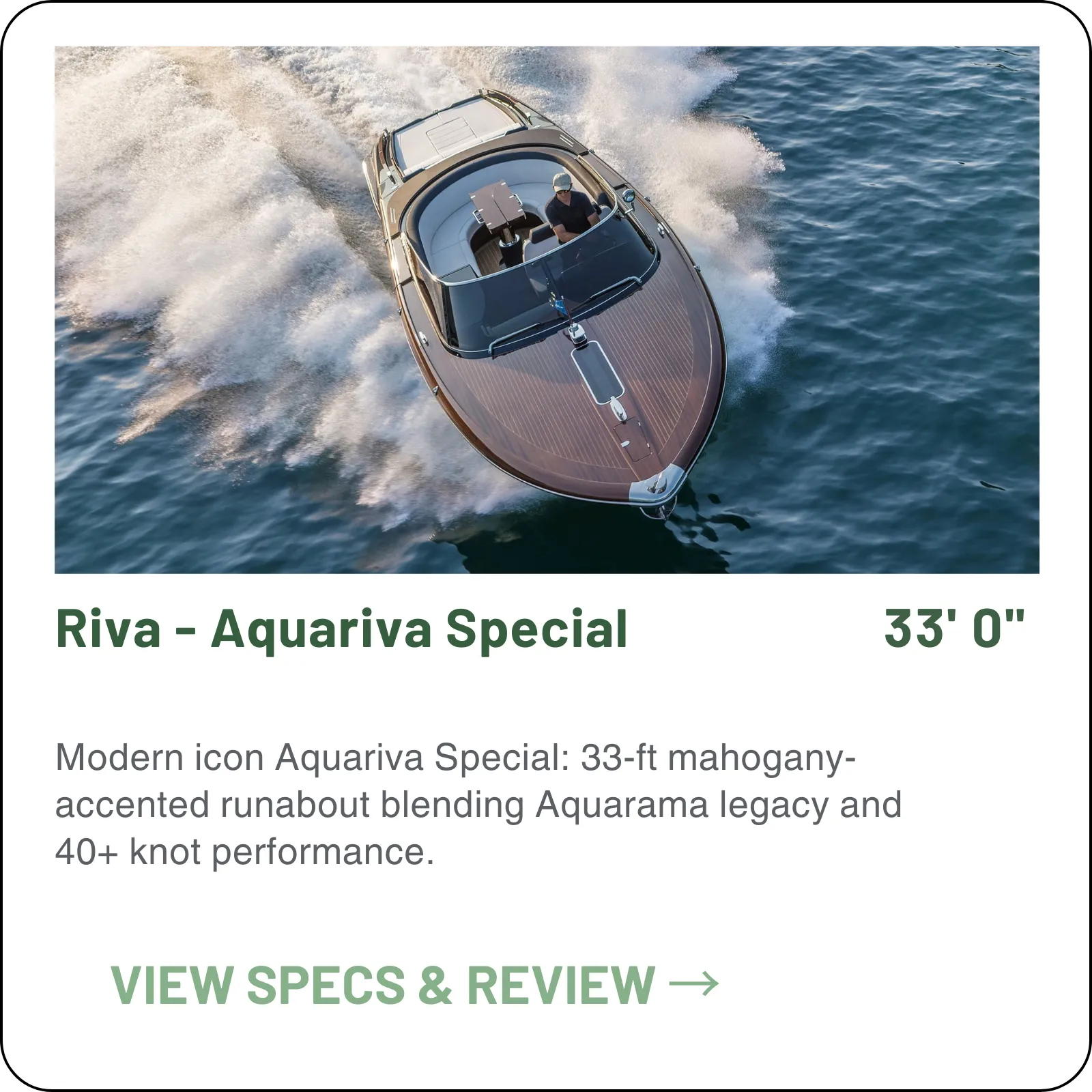
The wrong reason is the badge. There is nothing shameful about wanting a boat that looks like a Riva — the Aquariva Special exists precisely because that want is legitimate and about sixty years old. But the range spans a 33-foot day boat with one engine option and a 131-foot flagship that needs four crew cabins, and the badge is the only thing those two share. Decide what you are actually going to do on the water first, then pick the range: Open if you drive it yourself, Sportfly if you want speed with a proper upper deck, Flybridge if you need people to live aboard without queuing for a bathroom.
The right reason is that Riva documents its boats better than almost anyone. Its technical block gives you length, beam, draft, laden and unladen displacement, tankage, cabins, crew cabins, bathrooms — and then max speed, cruise speed and range at that cruise, separately for every engine option it sells. In both metric and imperial, so nobody has to convert anything. That is rarer than it should be. When I tell you the 76' Perseo Super does 315 nautical miles on either engine package, or that the 90' Argo's cheapest engine has the longest range of the three, those are Riva's numbers, not my arithmetic.
Two things to get in writing before you sign. Fuel burn: plan around Riva's range numbers and get observed consumption at cruise from the dealer, on the engine package you are actually buying. And the paperwork on the 110' Dolcevita, which the yard has retired — a retired boat is still a boat you can buy, but its figures are the record from when the model was current, so verify the hull in front of you against its own delivery specification rather than a factory sheet.