April 22, 2026
The Ferretti 720: When 74 Feet Feels Like 80
Ferretti 720: a 74-foot flybridge that feels like an 80-footer, four full cabins, separate crew quarters, smarter glazing and a sliding gall…
Read the articleExpert Review, Technical Specifications & Market Analysis
| Feature | Specifications |
|---|---|
| Overall Length | 73' 10" (22.5 m) |
| Beam | 18' 4" (5.60 m) |
| Draft | 5' 11" (1.8 m) |
| Displacement | 105,822 lbs (48,000 kg) |
| Engines | Twin MAN V8 1200 (standard) / Twin MAN V12 1400 (optional) |
| Fuel Capacity | 1,215 US gal (4,600 L) |
| Water Capacity | 264 US gal (1,000 L) |
| Cabins / Heads | 4 (Guest) + 1 Crew |
| Max Speed | 32 knots (optional) / 28 knots (standard) |
| Cruise Speed | 28 knots (optional) / 24 knots (standard) |
Source: Spec & Photos courtesy of Ferretti. Specs verified by Tony Smith, USCG 100 Ton Master, on August 10, 2026.
Part of the Ferretti Flybridge series — see how owners step up through the lineup.

I don't know the QUICK VERDICT from Task 3.

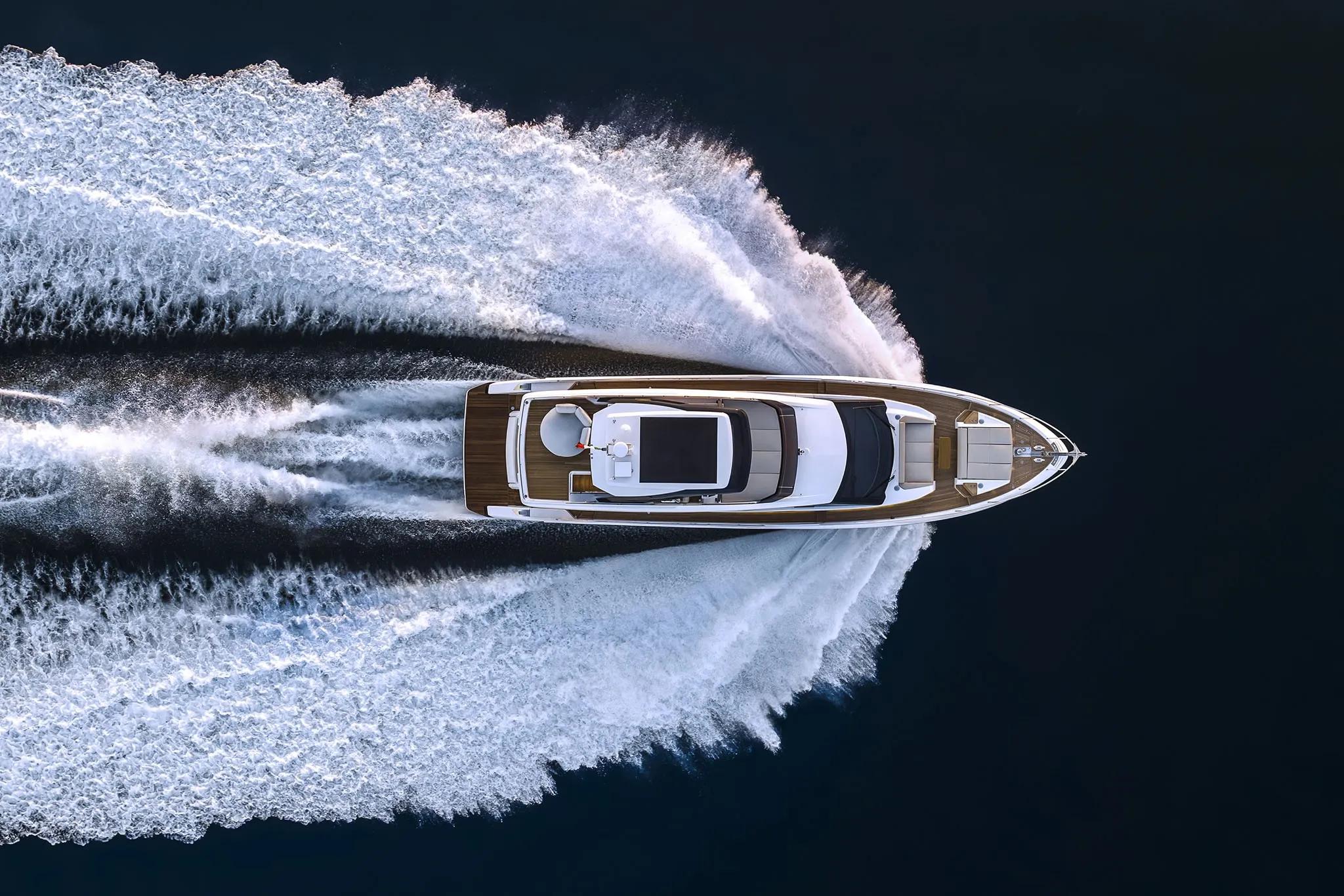
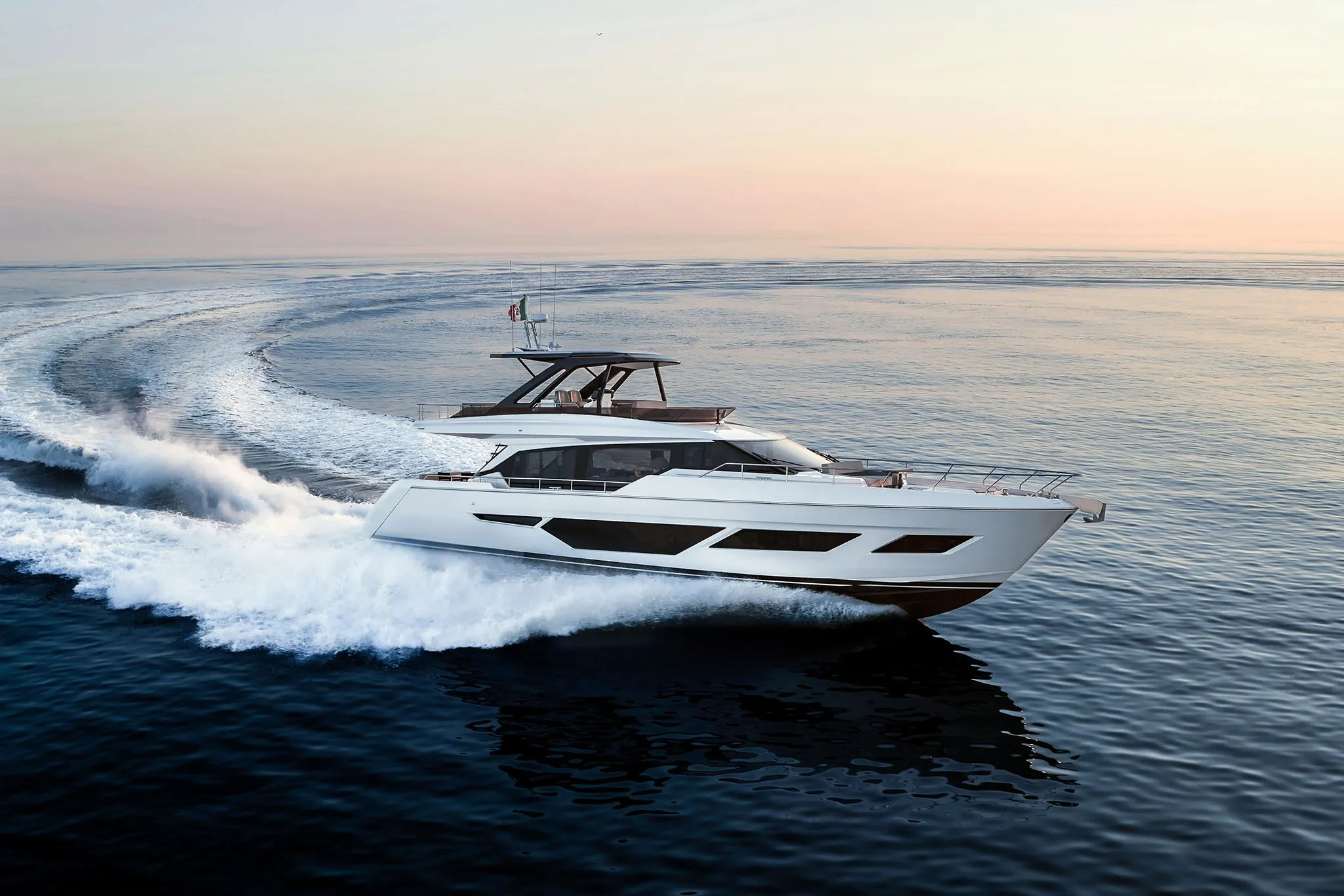
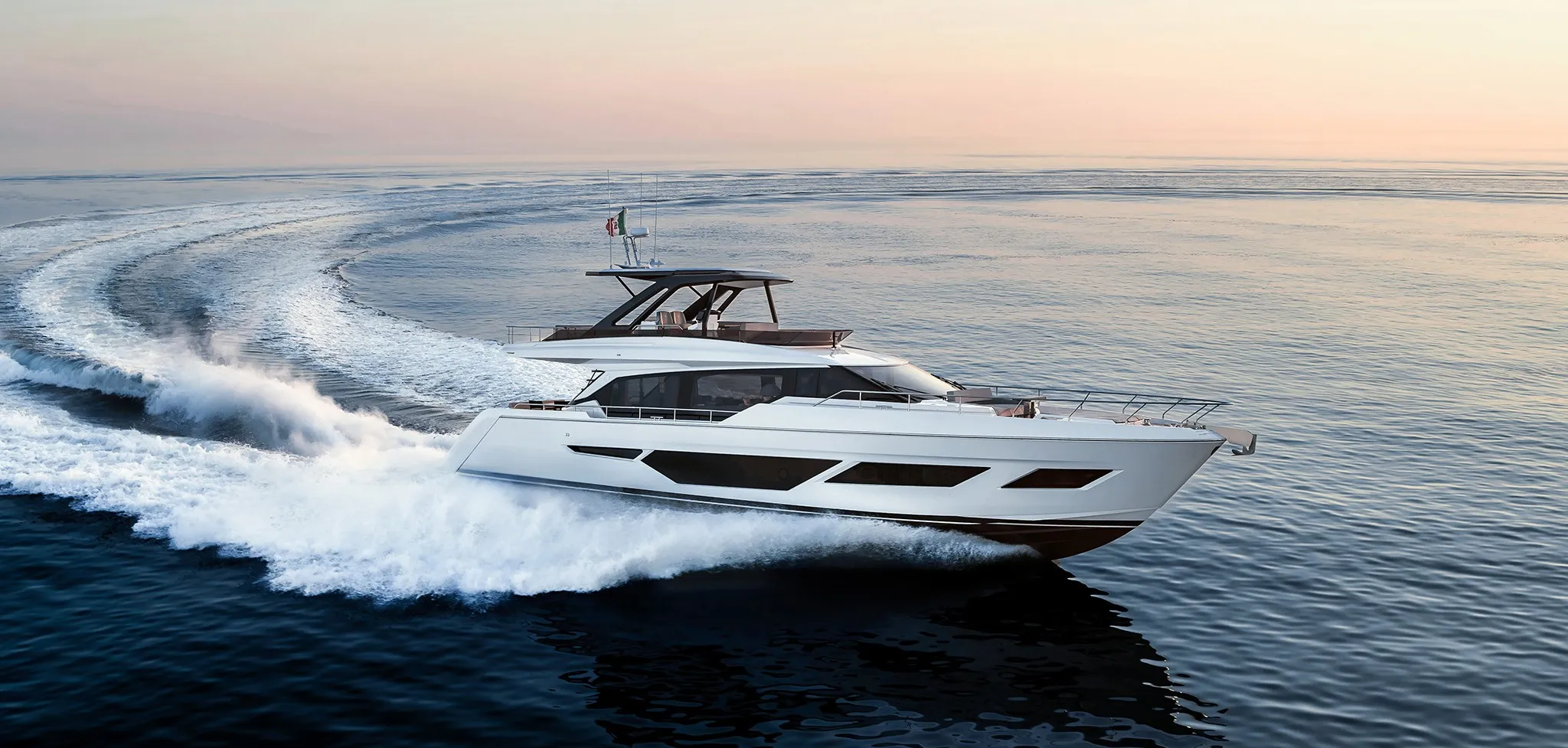
The sun is low over the Ligurian coast, and you're three hours into a run from Portofino to Saint-Tropez. The twin MAN V12s are humming at 28 knots, the Seakeeper has flattened the chop to a whisper, and your guests are on the flybridge, oblivious to the fact that you'll be at anchor before dinner. This is the Ferretti 720 at work—a 73-footer that delivers the space and finish of an 80-footer, the handling of a sports yacht, and the range to make spontaneous weekends across the Med a standing invitation, not a logistical puzzle.
The Ferretti 720 sits at the inflection point where owner-operated yachts meet crewed vessels. It's large enough to justify professional help but intuitive enough that an experienced owner can handle weekend trips solo. That duality defines everything about this yacht, from its four-cabin layout to its 32-knot top speed.
Who It's For
The 720 is built for the owner who has outgrown 60-footers but isn't ready to surrender the helm. You've done the overnights, you know your way around a chart plotter, and you want a yacht that rewards competence without punishing mistakes. This is not a first boat. It's the boat you buy when you know exactly what you need: enough space to host eight guests comfortably, enough speed to outrun weather, and enough finish to make every arrival feel like an event.
Ferretti designed the 720 for the Mediterranean circuit—Cannes to Capri, Ibiza to Sardinia—but it translates beautifully to the Bahamas, New England summers, or the Pacific Northwest. The 1,215-gallon fuel capacity is the number to plan against; Ferretti publishes no range figure, so get real-world consumption from a boat you have run before you count on any particular leg. It isn't expedition-grade tankage, but it's enough to make you dangerous.
The 720 competes directly with the Azimut 72, Princess Y72, and Sunseeker 76 Yacht. What sets it apart is Ferretti's commitment to volume without bulk. The 720 feels bigger than its 73-foot LOA suggests, thanks to an 18-foot, 4-inch beam and a layout that prioritizes flow over flash.
Design & Layout
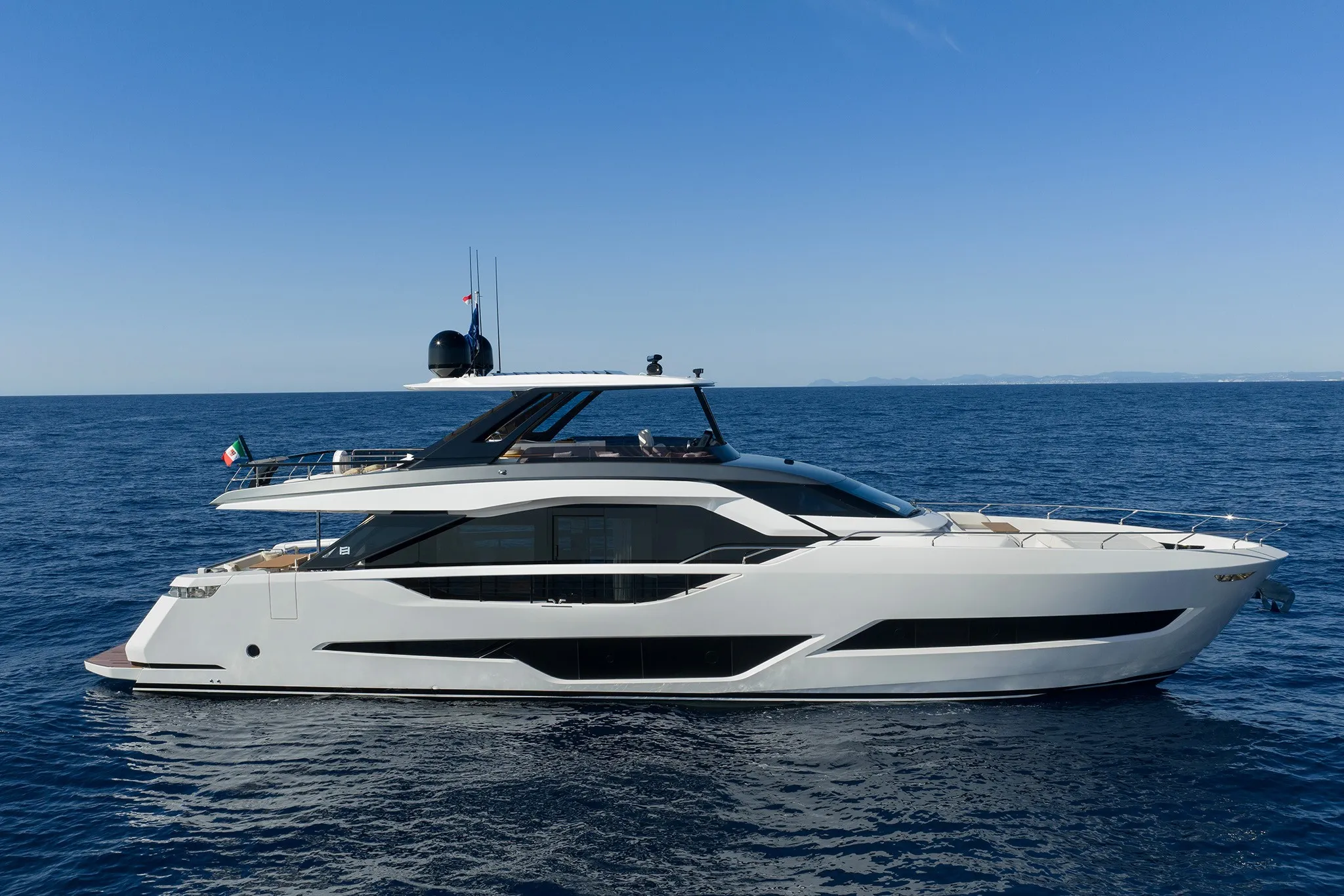
Filippo Salvetti's exterior design is a study in restraint. The 720 doesn't shout. It doesn't need to. The profile is clean, confident, and unmistakably Ferretti—sharp angles at the bow, a low-slung flybridge, and enough glass to flood the interior with light. The optional metallic hull finish is a subtle nod to Azimut, but the execution is pure Ferretti: elegant, not aggressive.
The real story is on deck. The foredeck has been completely reimagined, with deep seating that converts to sunpads, teak decking that wraps the lounge, and stainless cupholders that feel like jewelry. It's the kind of space that makes you rethink your morning coffee routine. The cockpit is equally versatile, with room for a dining table, a bar, or freestanding furniture. The hydraulic swim platform is wide, deep, and equipped with a fold-out transom seat that emerges like a secret handshake.
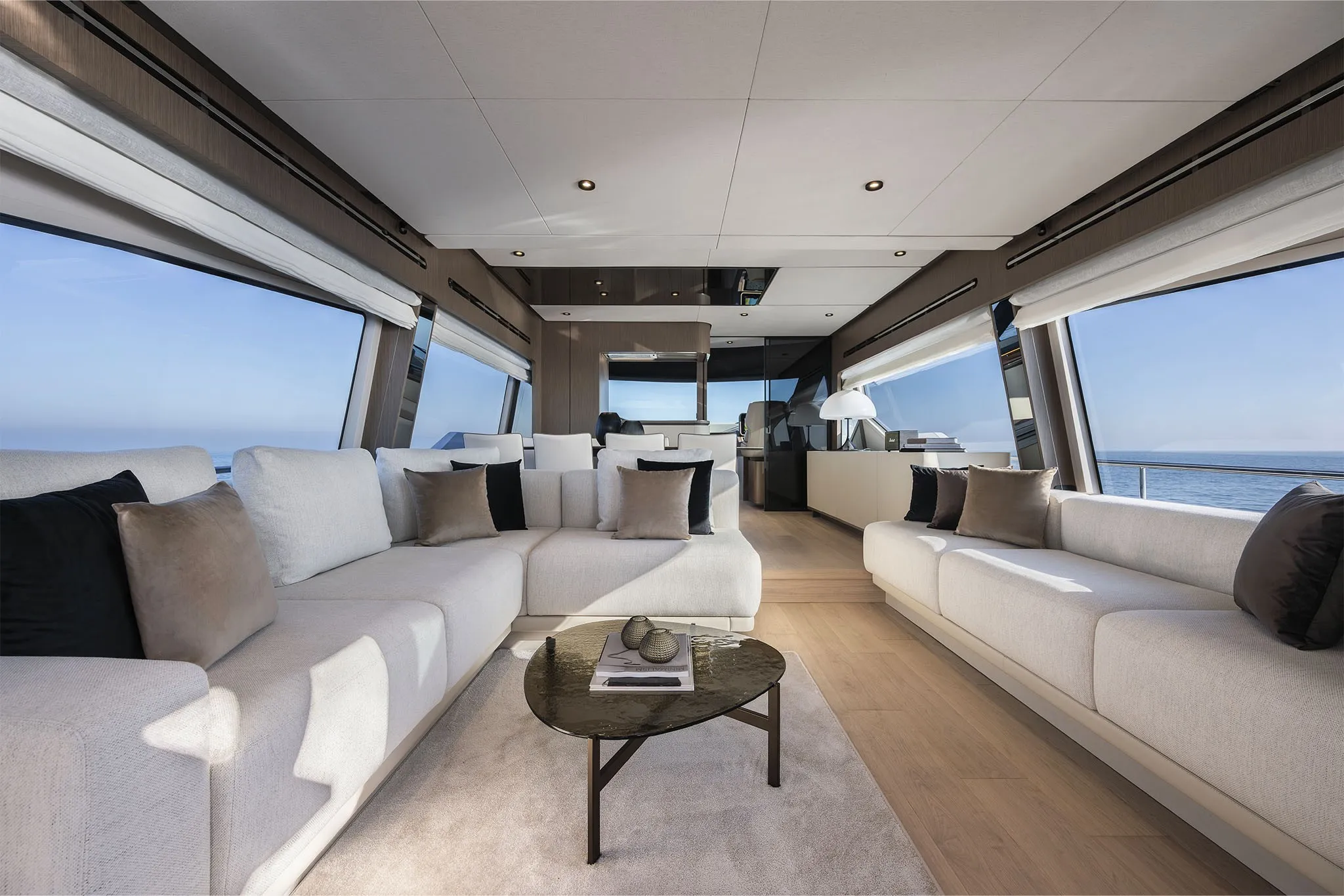
Inside, the salon is a masterclass in proportion. The window line stretches forward, visually doubling the space. The aft lounge merges with the cockpit via retractable glass doors, creating a single 40-foot entertaining zone. The dining area sits forward, elevated slightly to accommodate headroom for the master suite below. Opposite the galley, a long section of cabinetry adds storage without cluttering sightlines.
Ferretti offers two interior moods: Classic, with earthy tones and walnut veneers, and Contemporary, with bleached woods and fabrics inspired by the sea. Both are executed with the kind of attention to detail that makes you pause—leather drawer fronts, smoked glass closet doors, and textured bulkheads that add depth without weight. The master suite is full-beam, with a sofa, dressing table, and hull-side glass that frames the water like a painting. The VIP cabin sits forward, while two twin cabins flank the stairwell, sharing a day head. The crew cabin is aft, with direct access to the engine room and cockpit.
The flybridge is 41 square meters of usable space, with seating pushed forward under the hardtop and a massive sunpad aft. The wet bar is positioned between the two zones, with options for a grill, ice maker, and fridge. Ferretti offers three hardtop configurations: fixed glass, a vinyl sunroof, or an architectural fin design with sections that flatten or open at the touch of a button. The fin is the move.
Performance & Handling
The 720 is available with two engine packages: twin 1,200-hp MAN V8s (28 knots top speed, 24 knots cruise) or twin 1,400-hp MAN V12s (32 knots top, 28 knots cruise). The V12s add 18 inches of length and significant weight, but the engine room was designed to accommodate them from the outset. Access is excellent, headroom is reasonable, and servicing should be straightforward.
The V12-powered 720 tested by Power & Motoryacht hit exactly 32 knots in calm conditions off Cannes. The hull is a moderate-deadrise planing design, with carefully calculated weight distribution that keeps the yacht planted at all speeds. The Xenta electro-hydraulic steering delivers precise feedback without being twitchy. The optional Seakeeper gyroscopic stabilizer and Humphree trim tabs work in concert to flatten the ride, even in following seas.
The sweet spot for passagemaking is 22 to 24 knots, where noise levels drop and the boat settles into its most comfortable gait. Push it to 28 knots for shorter hops, and you'll still arrive fresh. The 720 doesn't feel like a 101,000-pound yacht. It feels like a sports car that happens to sleep eight.
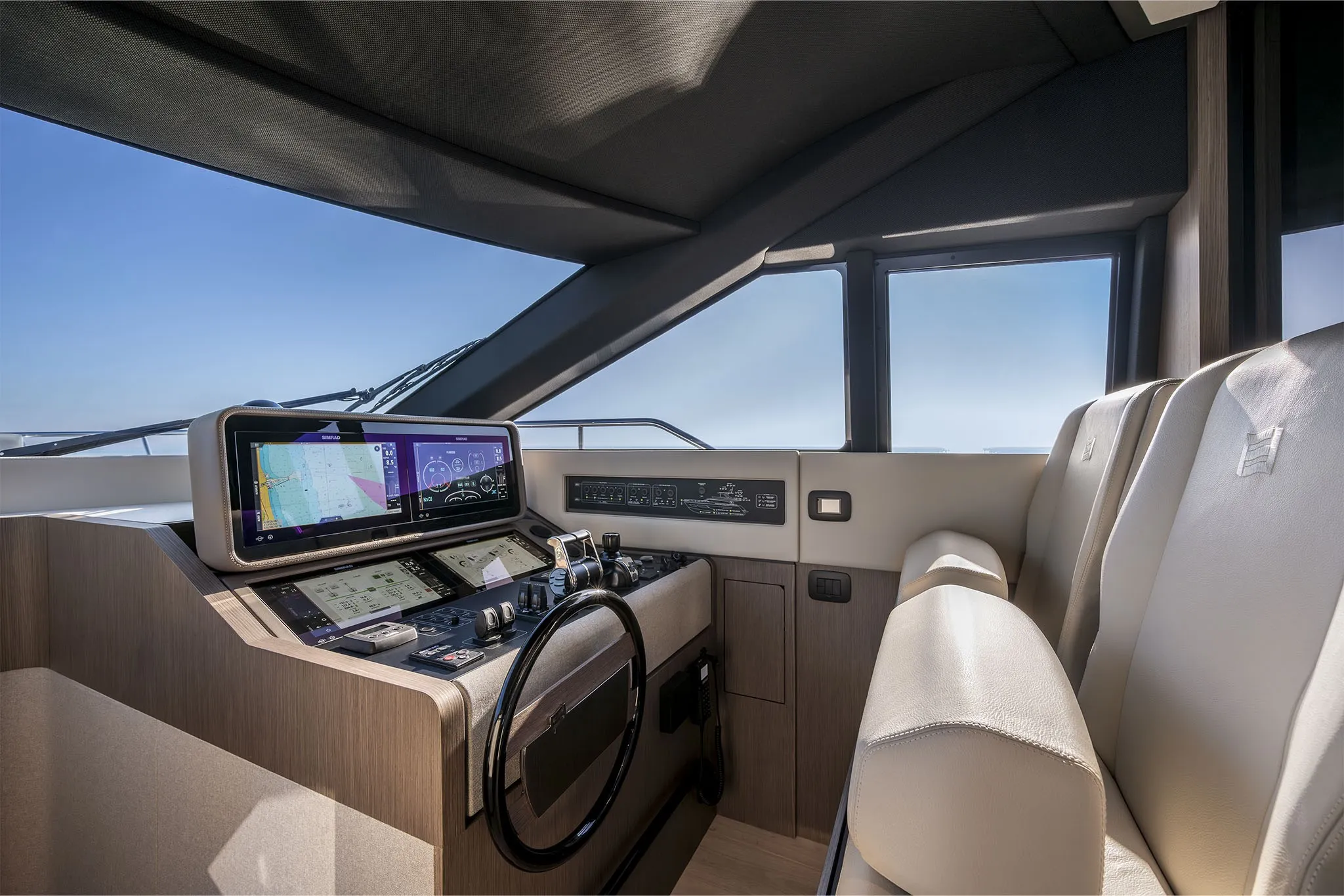
The lower helm is comprehensive, with two heads-up displays for navigation and two more for systems monitoring. The flybridge helm integrates into the forward seating, with space for two MFD screens and a Poltrona Frau pilot chair. Ferretti expects most owners to drive from the flybridge, and the setup reflects that priority.
The Ownership Conversation
The 720 sits at the boundary between owner-operated and crewed yachts, which means your ownership costs depend entirely on how you use it. Run it yourself on weekends, and you're looking at $80,000 to $100,000 annually for slip fees, insurance, maintenance, and fuel. Add a rotating crew for longer trips, and that number climbs to $120,000 to $150,000. Full-time crew pushes you north of $200,000, but at that point, you're buying freedom, not just a yacht.
The 720's fuel capacity makes it a strong candidate for owner-operators who want to explore without constantly calculating fuel stops. The layout is intuitive, the systems are well-integrated, and the side-deck door off the galley means you can provision or handle lines without disturbing guests in the salon. The crew cabin is sized for two, which is enough for a captain and mate on longer trips.
Ferretti's build quality is a known quantity. The 720 uses resin-infused fiberglass lamination, a carbon flybridge to lower the center of gravity, and upgraded mooring systems with larger anchors and heavier chains. The finish is meticulous, from the teak decks to the smoked glass accents. This is a yacht that will hold its value if you maintain it properly.
The 720 competes in a crowded segment, but it differentiates itself through volume, finish, and performance. The Azimut 72 is sharper and more aggressive. The Princess Y72 is more traditionally British. The Sunseeker 76 is bigger and more luxurious. The Ferretti 720 splits the difference, offering Italian elegance, 30-knot capability, and enough space to make you forget you're on a 73-footer.
Where to Start
Explore full specifications at [www.YachtSpecsDirect.com](https://www.yachtspecsdirect.com).
Browse available Ferretti inventory at [www.mintedyachts.com/ferretti](https://www.mintedyachts.com/ferretti).
Video courtesy of Ferretti.


Photos courtesy of Ferretti.
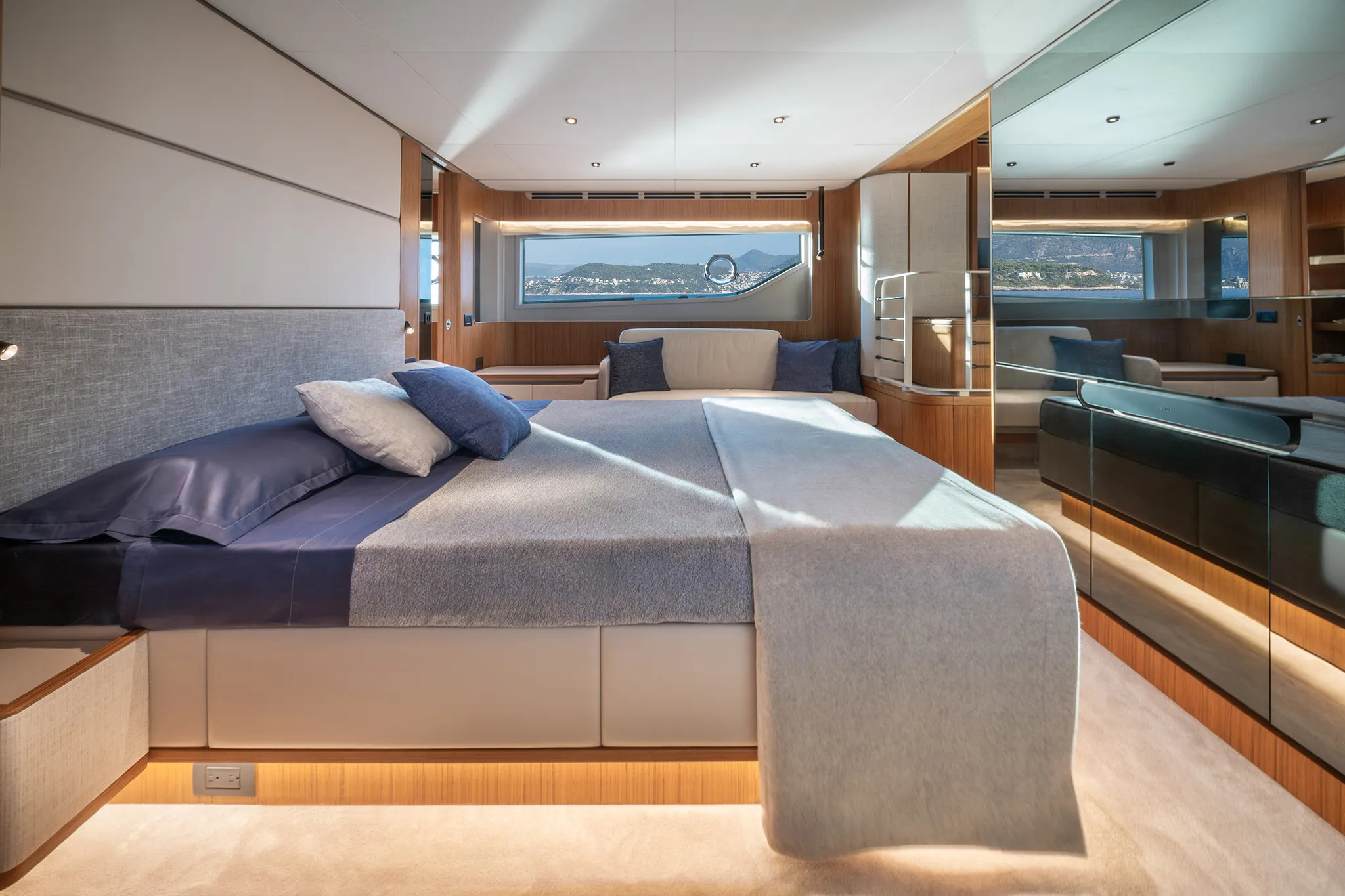
Two interior moods, both drawn by the Italian studio IDEAEITALIA: Classic, built on soft harmonic tones and light contrasts, and Contemporary, which uses cooler tones and stronger colour.
This is a genuine choice offered across nearly the whole Ferretti range rather than a 720-specific option, and it is worth seeing both in person. Photography flatters the Contemporary scheme; the Classic tends to wear better in a boat you will own for years.
The Ferretti 720 reaches 32 knots with the optional MAN V12 1400s and cruises at 28. On the standard MAN V8 1200s it makes 28 knots with a 24-knot cruise.
That matches the 670 below it despite eight more feet and seven more tonnes, which tells you the 720's hull is doing real work. It is one of the newest designs in the Flybridge range.
Yes. The 720 is one of three models Ferretti currently flags as new in its Flybridge range, alongside the 800 and the 940.
It replaces an earlier 720 in the line-up and carries the current design language: 73'10" LOA on an 18'4" beam, 48 tonnes unladen, and the choice of Classic or Contemporary interior moods by IDEAEITALIA that runs across the range.
The 800 is six feet longer and carries three crew berths against the 720's one — that is the difference that changes how you own the boat.
Both carry four guest cabins and both do around 31-32 knots on their optional engines. But the 720 is built for an owner who drives, and the 800 is built for an owner with a captain and a stew living aboard. Decide which of those you are before you compare price.
Four guest cabins and one crew berth. That crew number is the spec to notice: at 73'10" the 720 offers four guest cabins but accommodation for only a single crew member.
Ferretti clearly still expects an owner-driver here, with day help rather than a live-aboard captain and stew. If you want a full crewed operation, the 800 carries three crew — more than the larger 860 or 940 do.