
August 17, 2026
The Azimut Fly 72 and the Case for Carbon-Fiber Flybridge Cruising
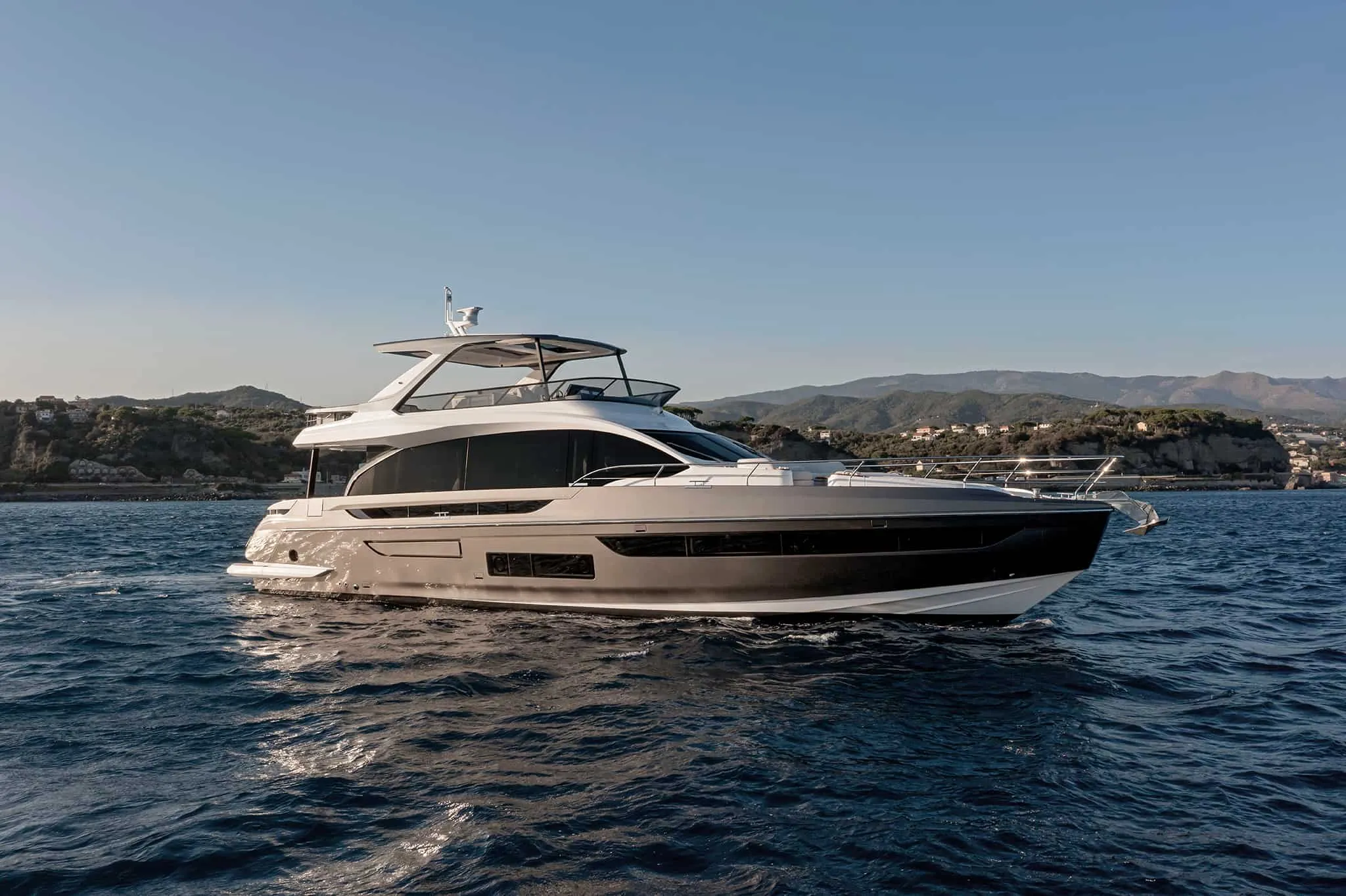
Azimut Fly 72 marries carbon-fiber superstructure (30% lighter) with a cavernous flybridge and 451nm range, delivering owner-operable perfor…
Read the articleExpert Review, Technical Specifications & Market Analysis
| Feature | Specifications |
|---|---|
| Overall Length | 74' 5" |
| Beam | 18' 5" |
| Draft | 6' 0" |
| Displacement | 117,593 lbs |
| Engines | 2 x MAN CR V12 (1,400 hp) |
| Fuel Capacity | 1,373 gal |
| Water Capacity | 290 gal |
| Cabins / Heads | 4 Cabins + 1 Crew / 4 Heads |
| Max Speed | 32 knots |
| Cruise Speed | 26 knots |
Source: Spec & Photos courtesy of Azimut. Specs verified by Tony Smith, USCG 100 Ton Master, on August 17, 2026.
You want a serious flybridge yacht that still runs like a sport boat. The Fly 72 pairs V12 power with a carbon-topped 74-footer.
Part of the Azimut Fly series — see how owners step up through the lineup.

The Fly 72 represents Azimut's most mature engineering effort in the flybridge segment. The carbon-fiber superstructure is not a gimmick—it's a legitimate weight-saving measure that improves handling and fuel efficiency. The MAN V12 engines are proven, the hull shape is conservative in the best way, and the systems integration is clean. The active trim control from Humphree is a smart inclusion that pays dividends in real-world fuel consumption. This is a well-sorted boat from a builder that has figured out how to scale production without sacrificing quality.
The ideal buyer is an experienced owner-operator or someone stepping up from a 60-footer who wants more space without the complexity of an 80-footer. This is not the boat for a first-time buyer who wants turnkey simplicity. The asymmetrical layout requires you to think about how you'll actually use the boat—crew or no crew, open galley or enclosed. If you're coming from a center-console background or a smaller express cruiser, the Fly 72 might feel like too much boat. But if you've owned a 55 to 65-footer and you know what you're doing, this is a logical next step.
Resale on the Fly series is strong, and the 72 should hold value better than most Italian builders in this range. Maintenance costs are manageable if you stay on top of the schedule, and the MAN engines are well-supported in the U.S. The biggest risk is over-optioning the boat at purchase—stick to the essentials and you'll be fine. The second risk is underestimating operating costs if you're planning to run full-time crew. Budget honestly for that before you sign, and make sure you're comfortable with the number.
Video courtesy of Azimut.
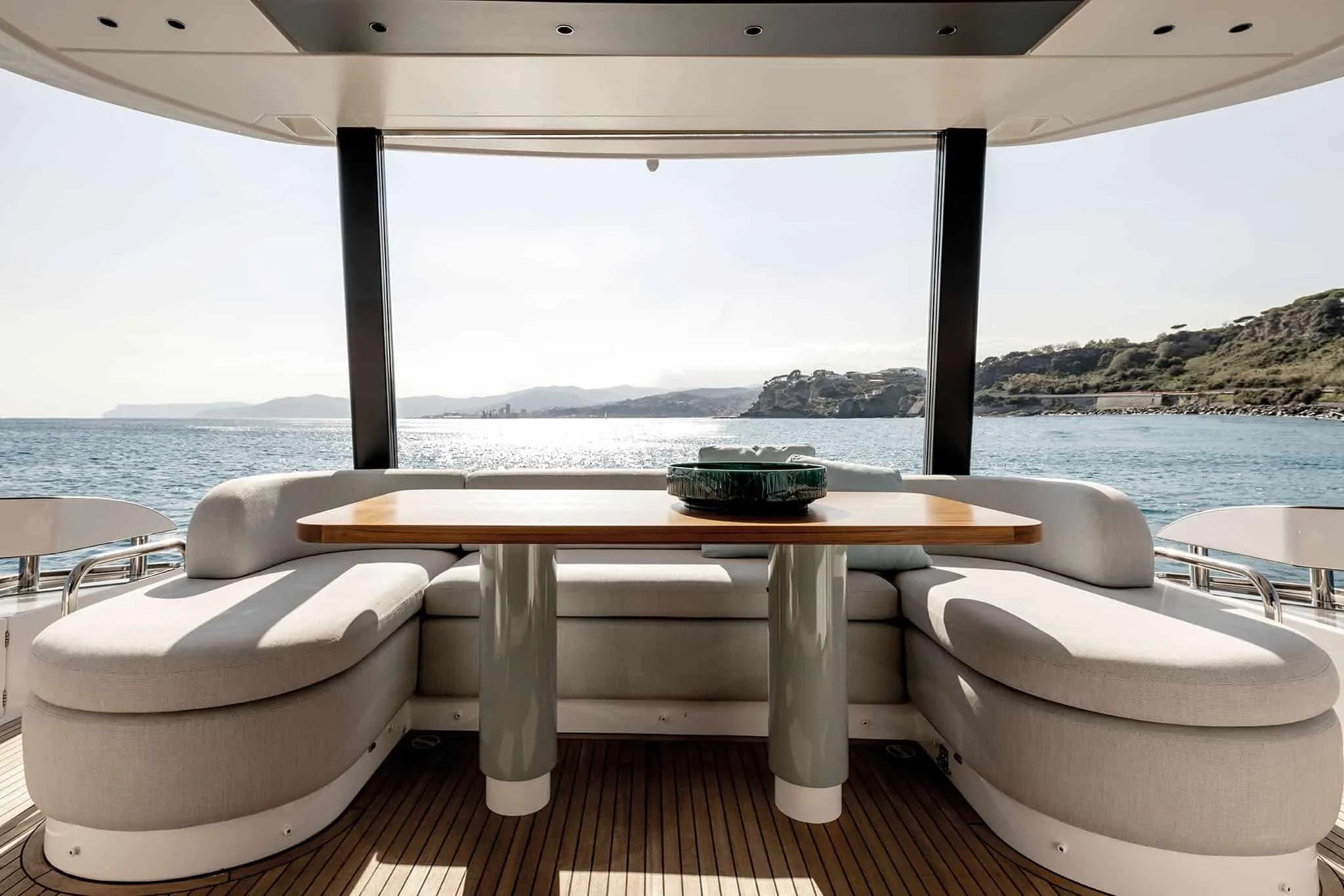
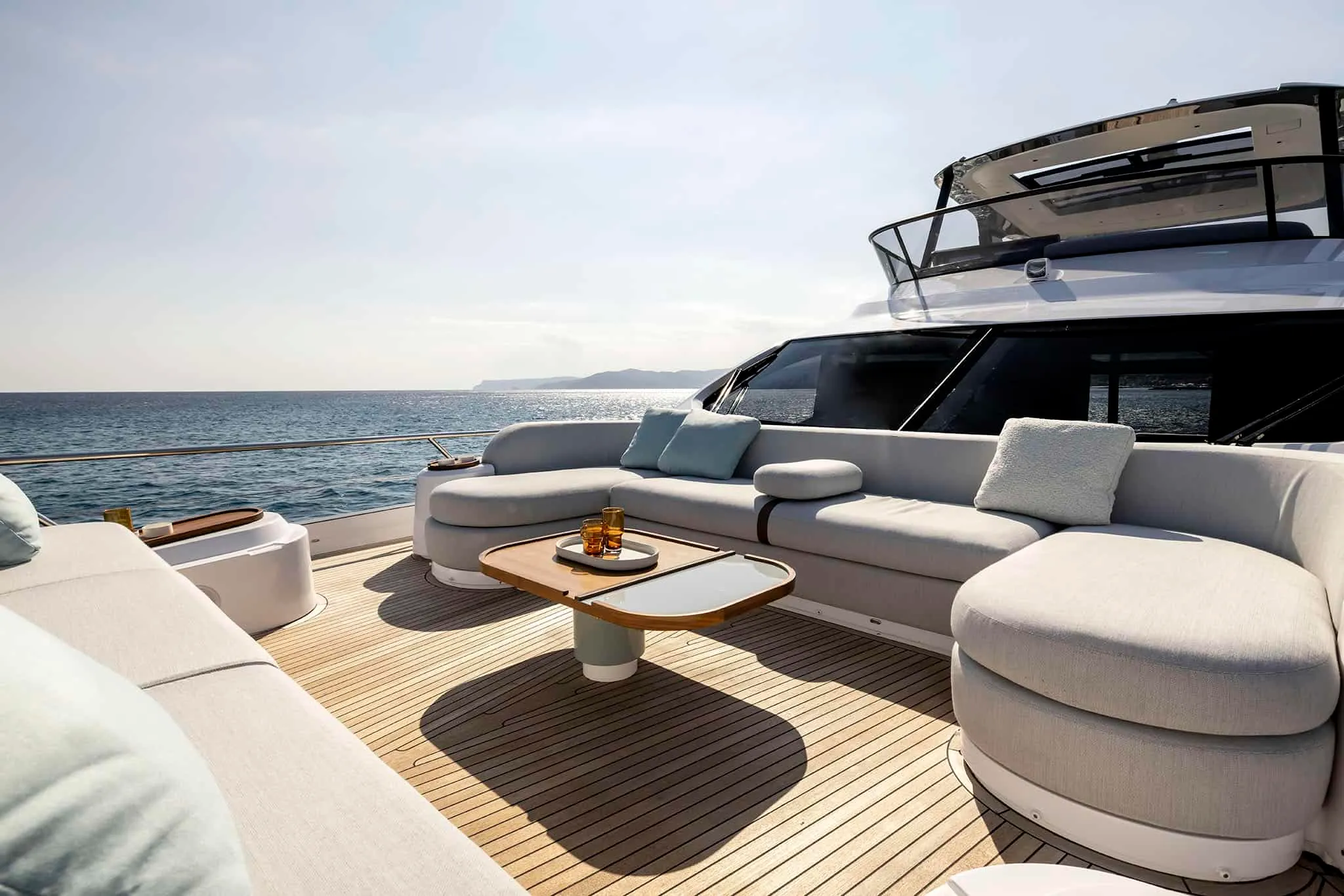
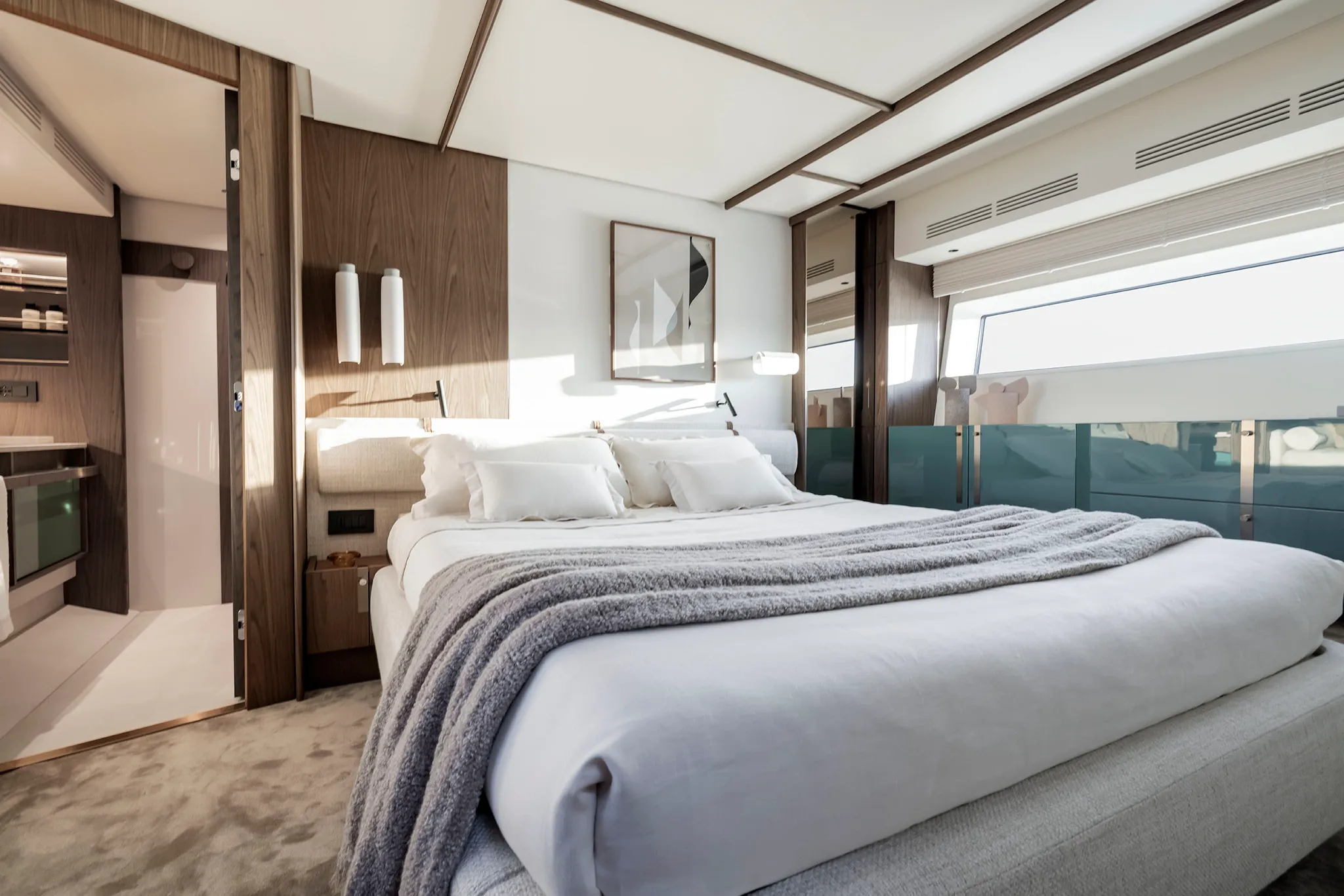
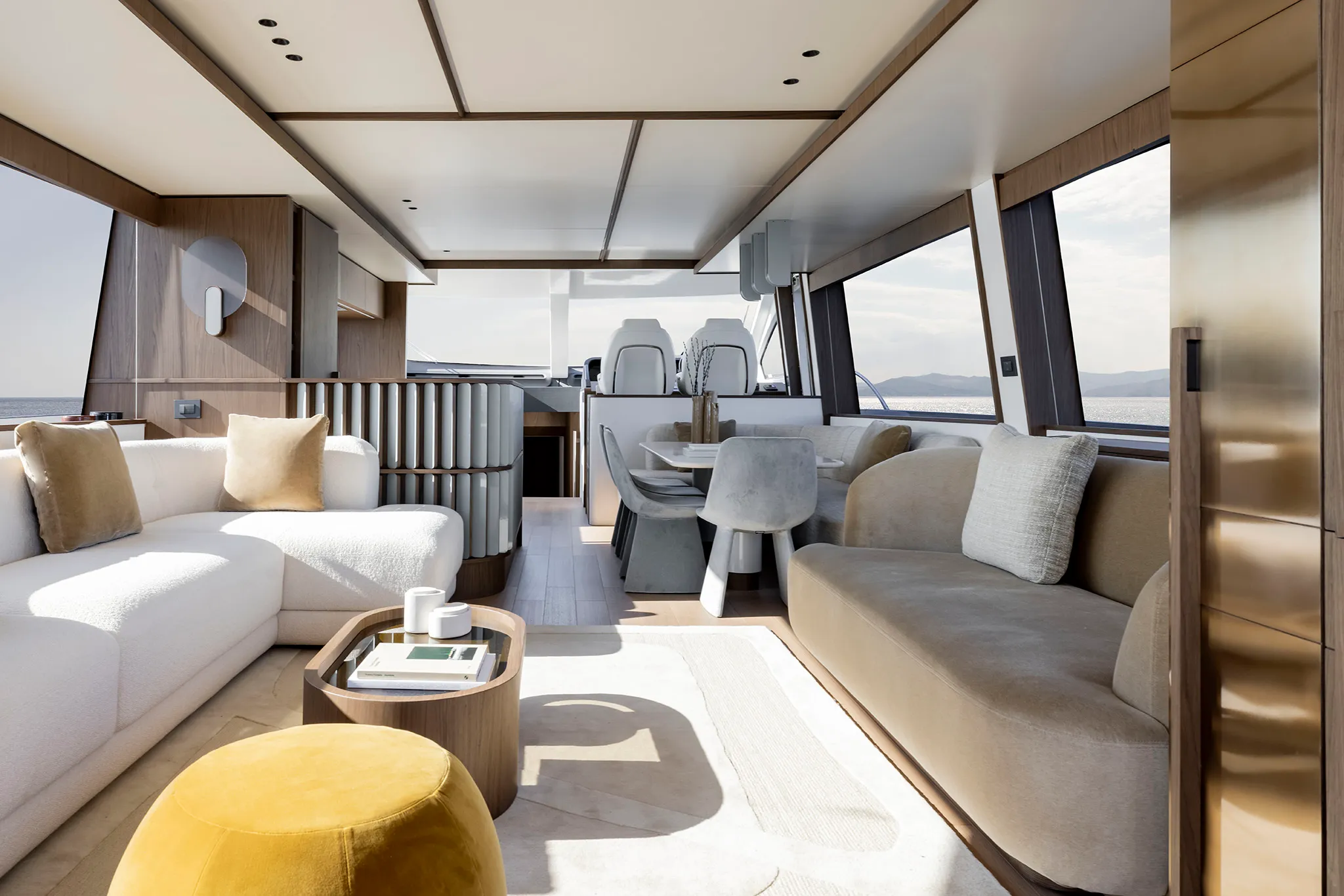
Photos courtesy of Azimut.
The Fly 72 runs 74'5" overall on an 18'5" beam and 6'0" draft, with 1,373 gallons of fuel and 290 gallons of water aboard.
It sits in the upper half of the Fly series, built in carbon fiber and GRP, with four guest cabins and the series' glass-heavy styling.
Twin 1,400 hp V12 diesels drive a published 32-knot maximum and 26-knot cruise at test load. The yard also publishes independently witnessed sea-trial consumption figures for this hull — transparency few builders match at this size.
Full-load displacement is 117,593 lbs, on a planing hull running 15 degrees of deadrise aft and 20 amidships.
Four cabins and four heads plus a crew cabin — eight guest berths and two crew. It is the size where the Fly series moves from family boat to small crewed yacht.
The flybridge spans helm, dining and sun space, with the main-deck saloon opening wide to the cockpit below.
The Fly 72 sits between the Fly 68 and the Fly 78 — the step into V12 power and 70-foot volumes without the running scale of the series' biggest hulls.
It shares its design language with the top of the series while remaining a yacht a small crew runs easily.
Buy the Fly 72 if you cruise with family and friends in numbers — four cabins, four heads, and deck space across three levels.
Step down to the Fly 68 if four cabins in a simpler package cover the brief; step up to the Fly 78 for triple-pod handling and more separation between guests and crew.
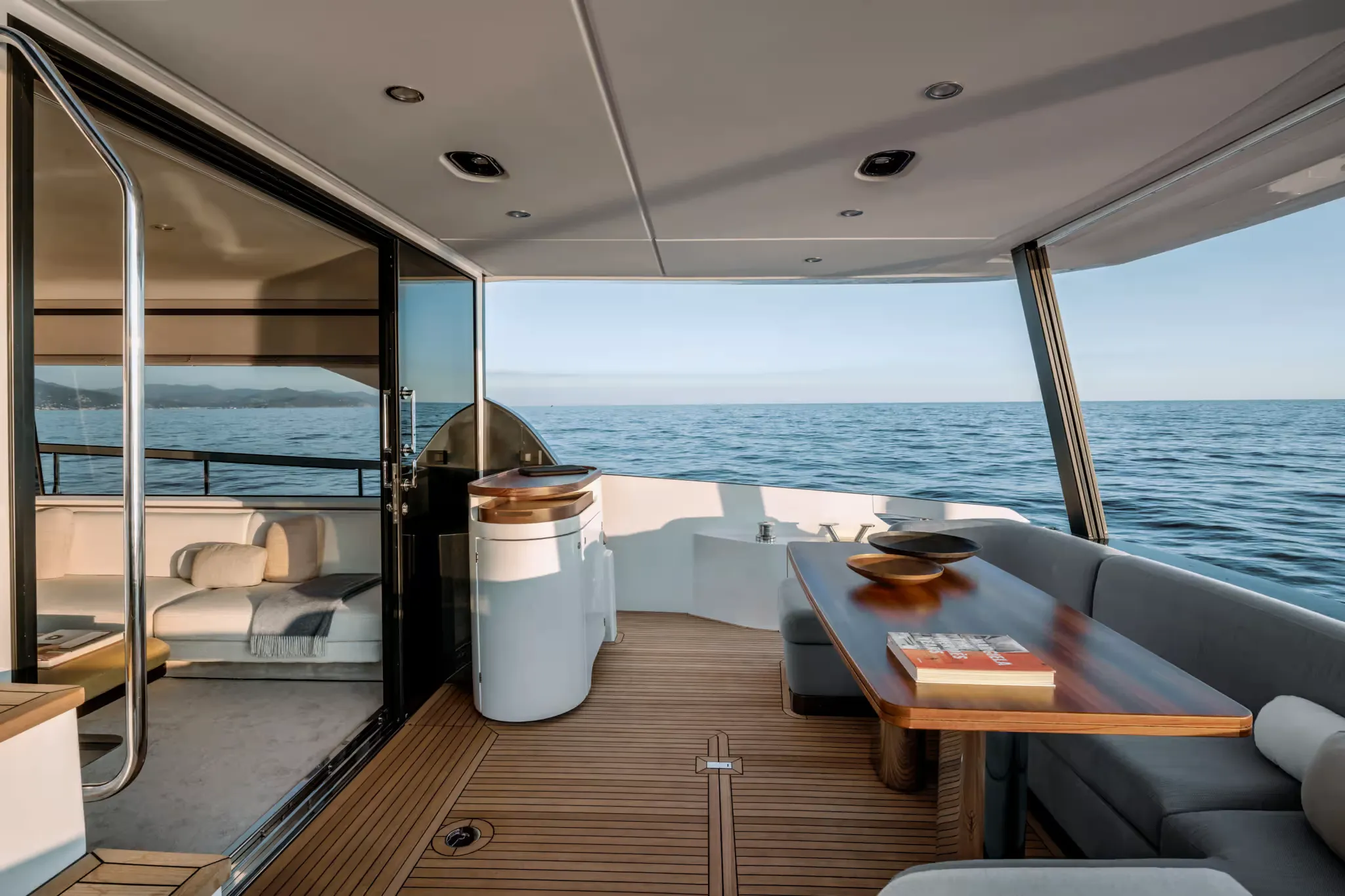
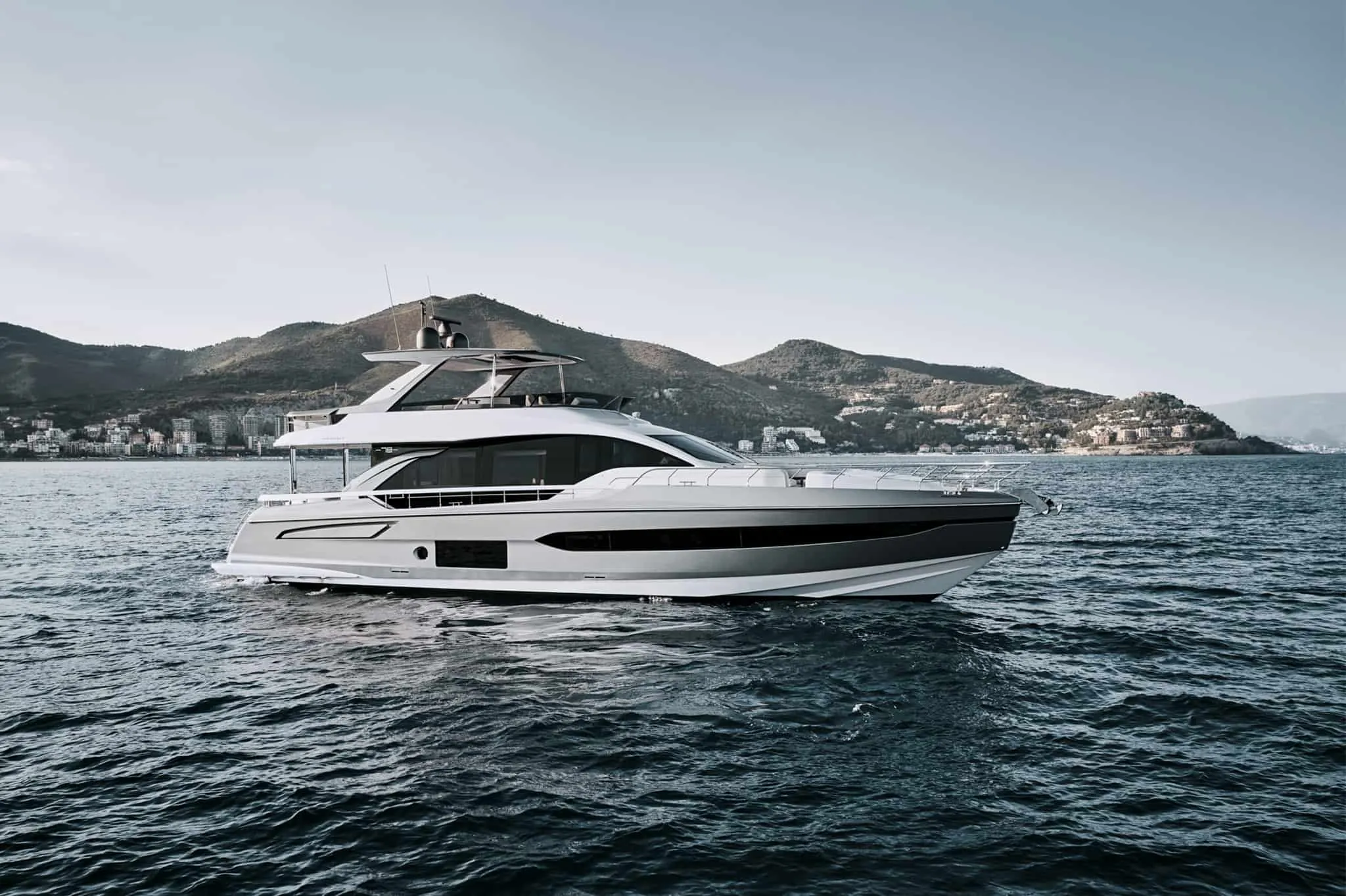
A published 32 knots flat out and 26 knots at cruise, from twin 1,400-hp MAN V12s. That is sport-yacht pace on a 74-foot flybridge — the same engine family MAN fits to far larger yachts.
It sits right at the boundary. Many owners run a 72 with a single mate, and the four-cabin-plus-crew layout supports either arrangement. If this is your first boat over 70 feet, plan on professional help for the first season.
1,373 gallons of fuel and 290 gallons of water — a tank sized for serious coastal legs at its 26-knot cruise.
Four cabins and four heads plus a crew cabin — the full family-and-guests layout, with the crew berth that longer trips at this size start to justify.
74'5" overall with an 18'5" beam and a 6'0" draft, displacing 117,593 pounds at full load.
Azimut lays up the Fly 72's superstructure in carbon fiber, cutting weight where it hurts most — up high. Less weight aloft means less roll and better efficiency, and it is how the boat carries a 74-footer's volume without the top-heaviness.