
March 4, 2026
The Azimut Fly 68 Delivers Italian Design Without the Italian Drama
The Azimut Fly 68 lets owner-operators run a 70-foot yacht like a weekend 55-footer: IPS joystick pods for effortless docking, a 30-ft flybr…
Read the articleExpert Review, Technical Specifications & Market Analysis
| Feature | Specifications |
|---|---|
| Overall Length | 68' 10" |
| Beam | 17' 2" |
| Draft | 5' 3" |
| Displacement | 43.7 t (96,407 lbs) |
| Engines | 2x Volvo Penta IPS 1350 (1000 HP) |
| Fuel Capacity | 3,700 L (977 US Gal) |
| Water Capacity | 1,000 L (264 US Gal) |
| Cabins / Heads | 4 Cabins + 1 Crew / 3 Heads |
| Max Speed | Up to 32 kn |
| Cruise Speed | 27 kn |
Source: Spec & Photos courtesy of Azimut. Specs verified by Tony Smith, USCG 100 Ton Master, on August 8, 2026.
Four cabins, 32 knots and a flybridge that seats the whole party. The Fly 68 is where Azimut's Fly series steps up to full family-cruiser scale.
Part of the Azimut Fly series — see how owners step up through the lineup.

The Fly 68 represents Azimut's clearest answer to the owner-operator market in the 70-foot range. The IPS installation is clean and well-integrated. The carbon fiber work is legitimate, not cosmetic. The hull performs predictably in the 20-to-30-knot range, which is where most owners actually run their boats. The Garmin system integration is thorough enough to give you real remote monitoring capability. This is a production yacht built to a standard, not a custom masterpiece, but the standard is high and the execution is consistent.
This yacht is for the experienced boater who knows exactly what they want and doesn't need hand-holding. If you've owned boats in the 50-to-60-foot range and you're ready to move up without adding crew complexity, the Fly 68 makes sense. If you're new to yachting or you prefer to have a captain handle operations, there are better options. The layout flexibility is a real advantage, particularly the Lanterna galley option, which solves the open-plan fatigue problem without sacrificing light or flow. The aft galley version works well for owners who entertain frequently and want seamless cockpit access.
Resale will depend heavily on layout choice and maintenance records. The IPS system has strong dealer support in South Florida, which matters for long-term ownership. Expect annual operating costs around $80,000 to $100,000 if you're owner-operated, closer to $250,000 if you add crew. The fuel burn is manageable for weekend use but becomes a real line item if you're running long distances regularly. The Fly 68 holds value better than some Italian builders in this range, but it's not a Princess or a Sunseeker in terms of resale liquidity. Plan to own it for five to seven years to make the economics work..
Video courtesy of Azimut.
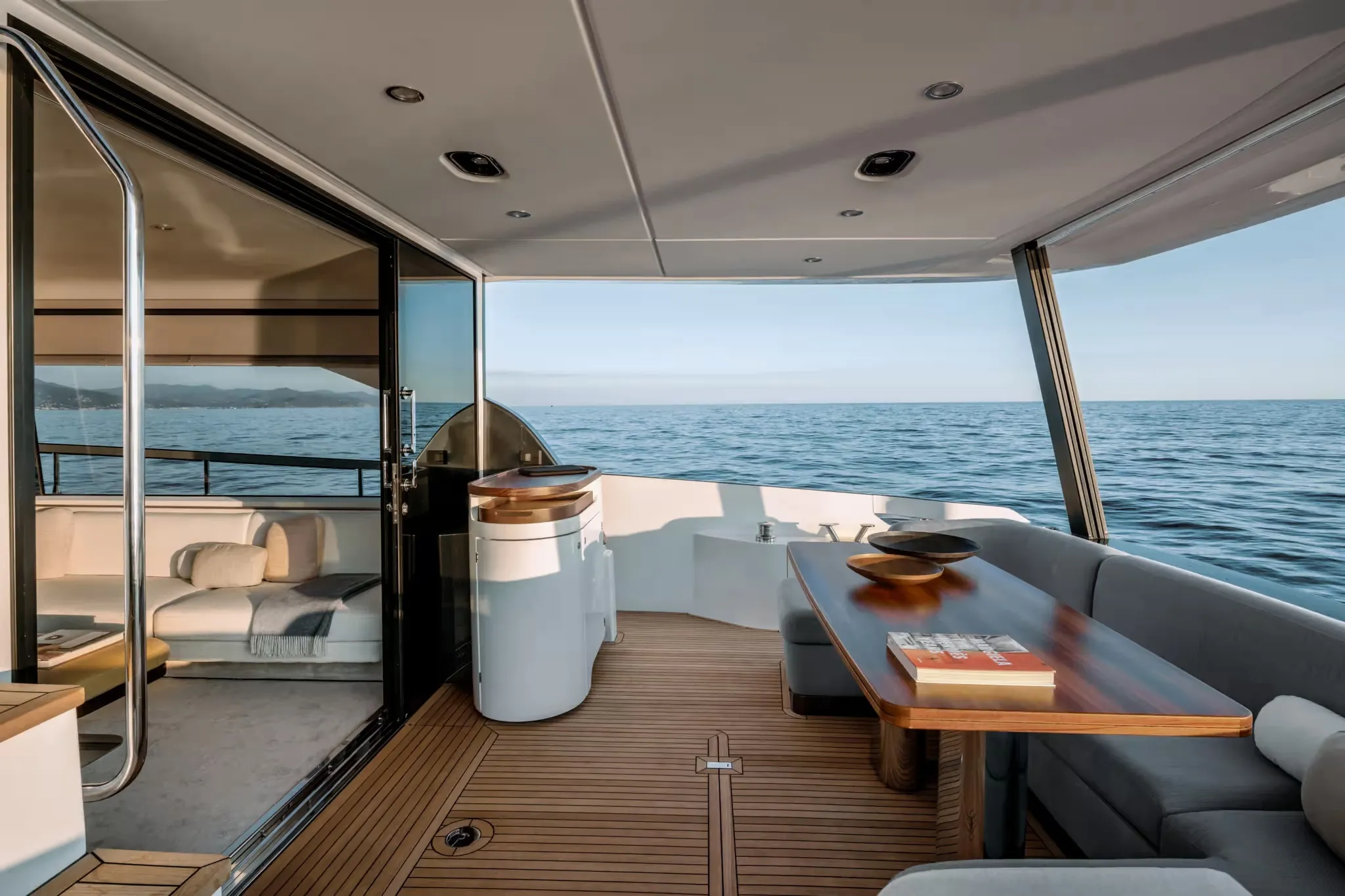
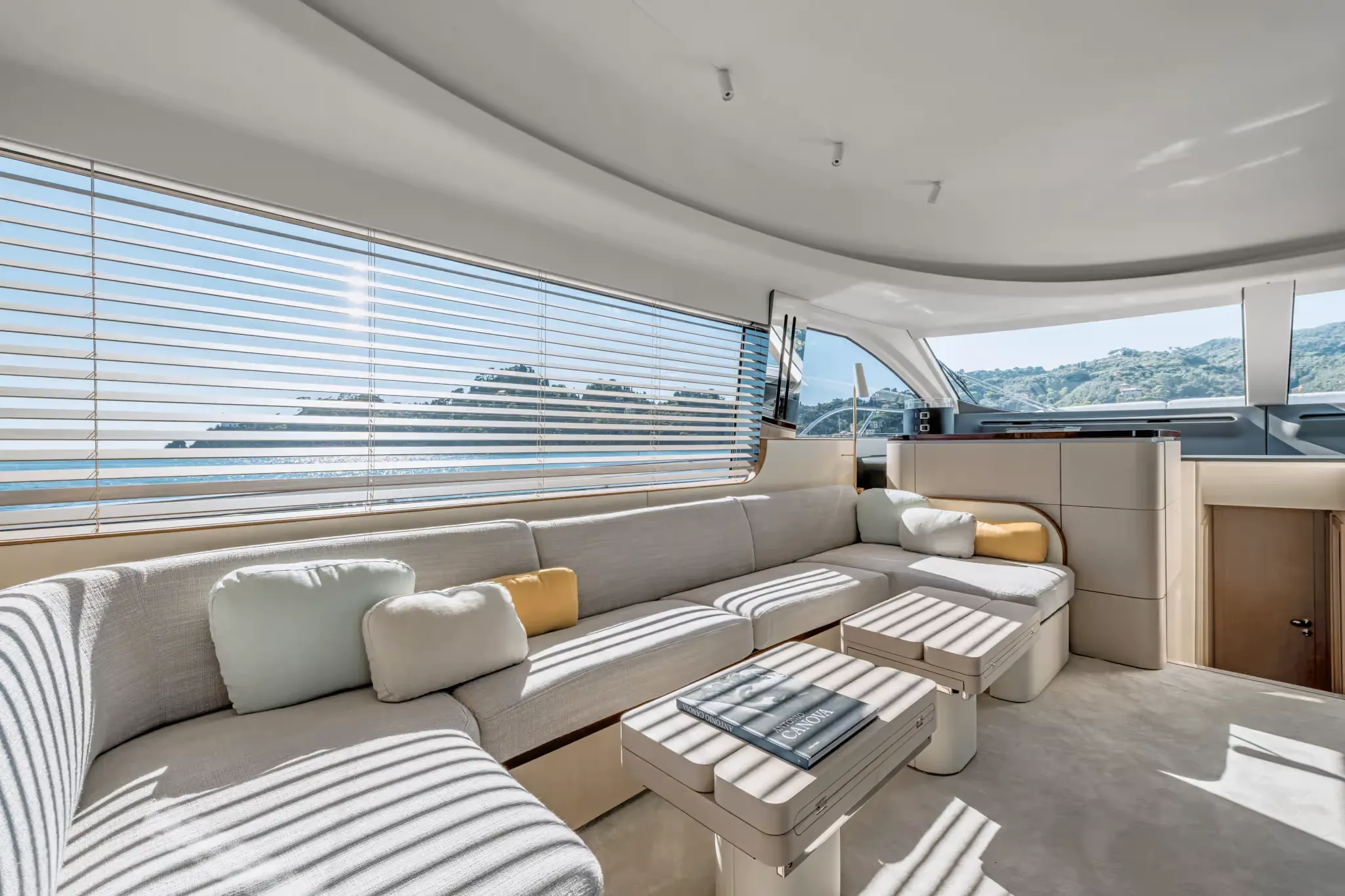
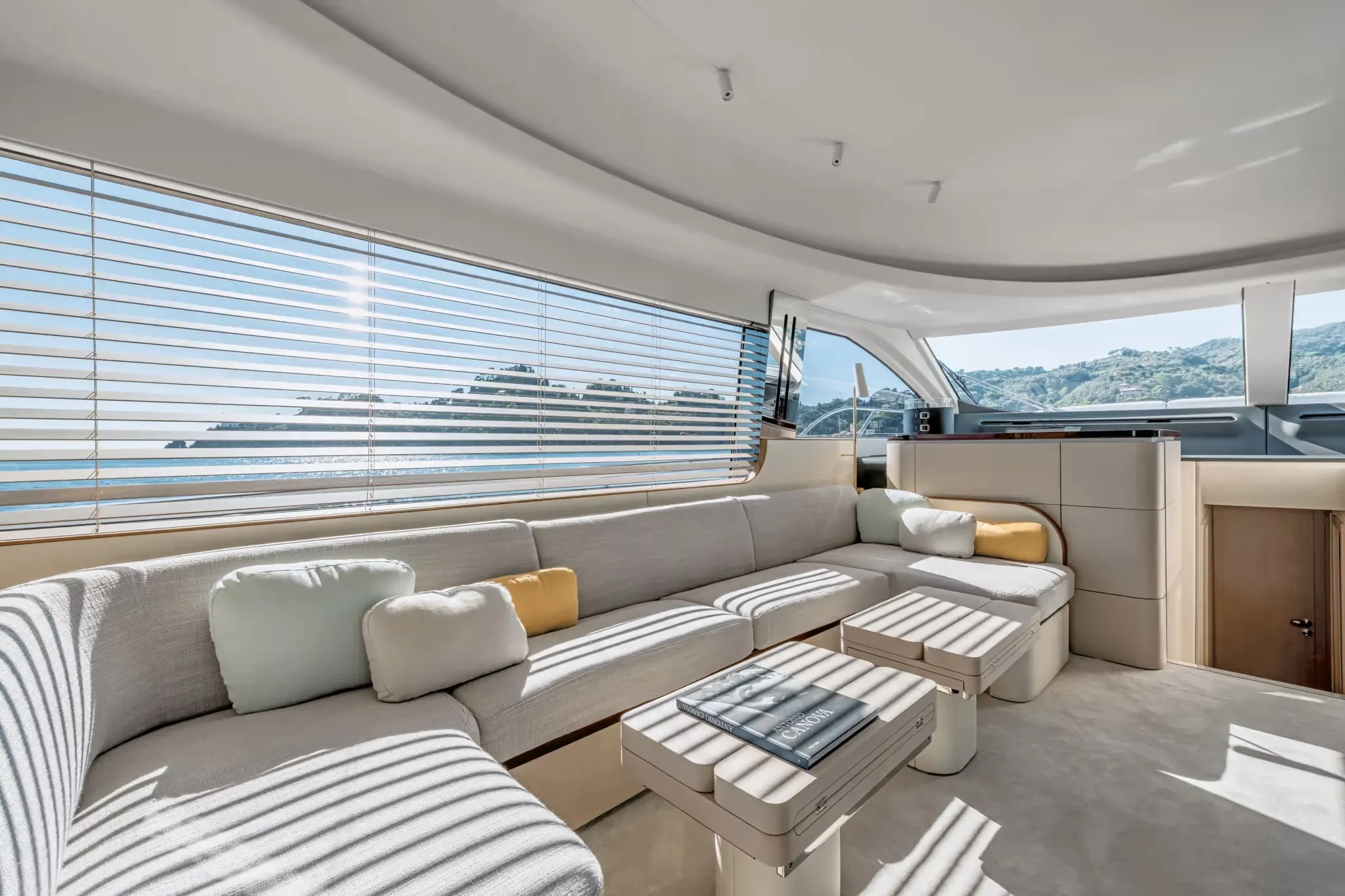
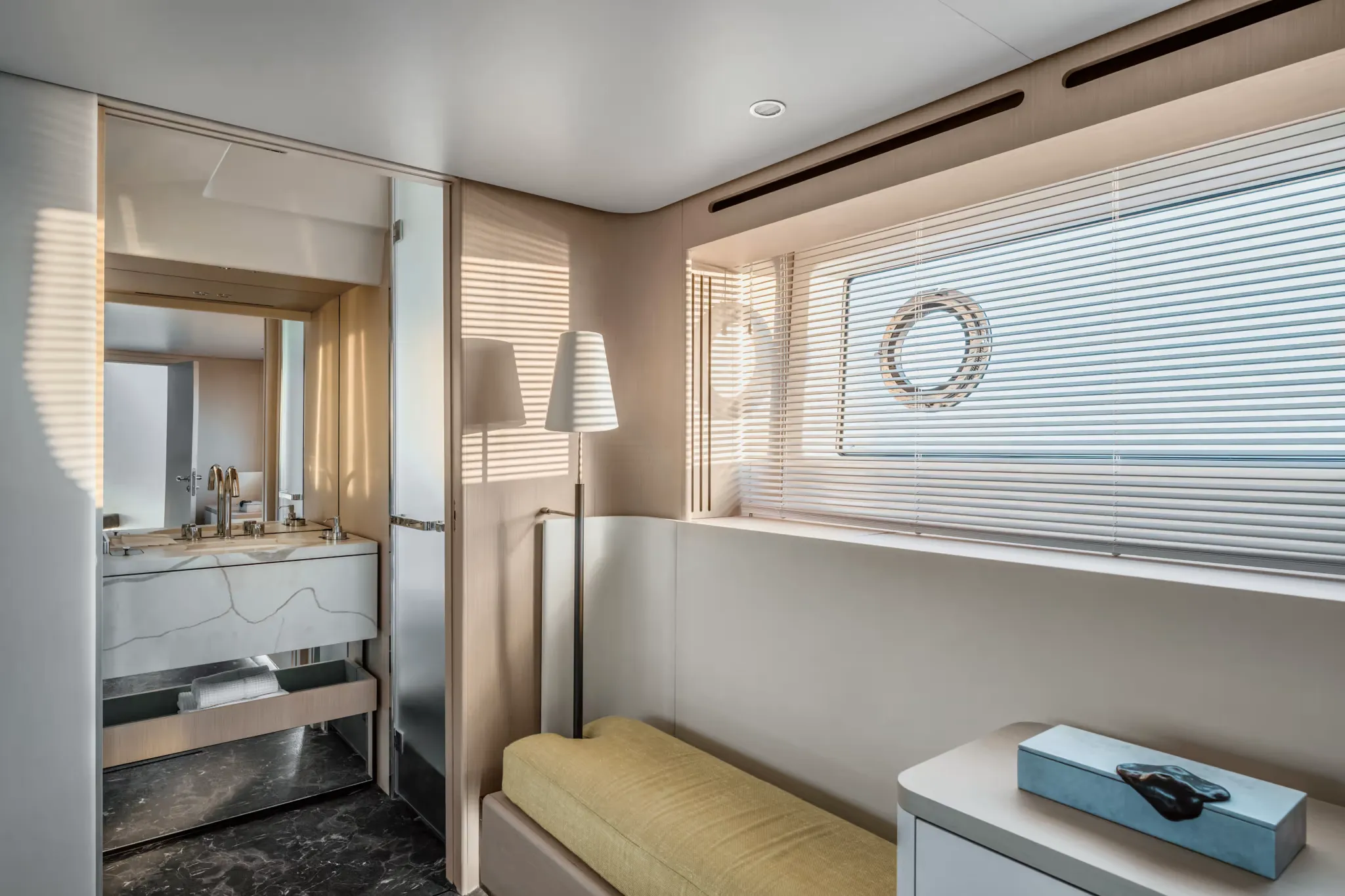
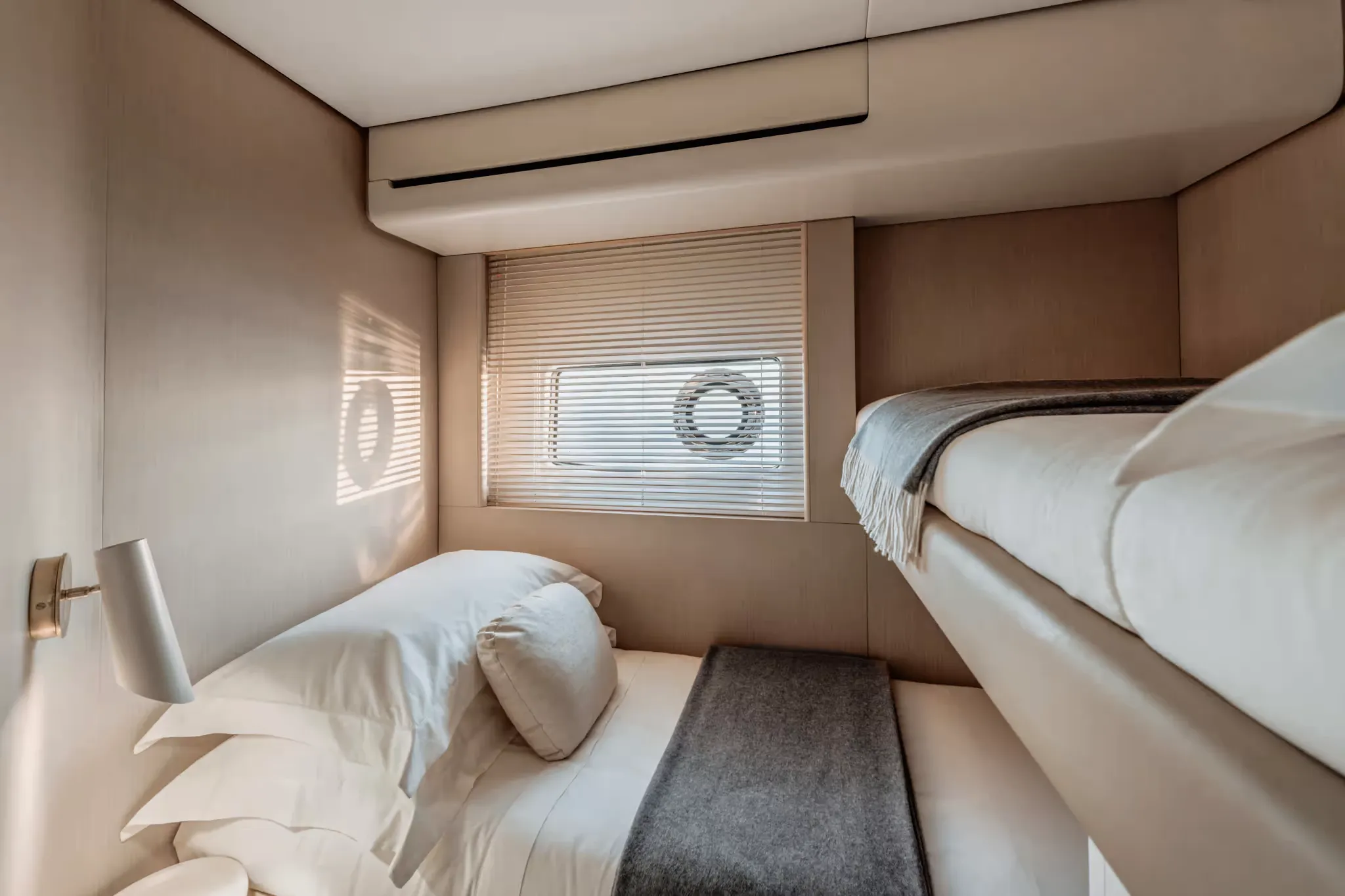
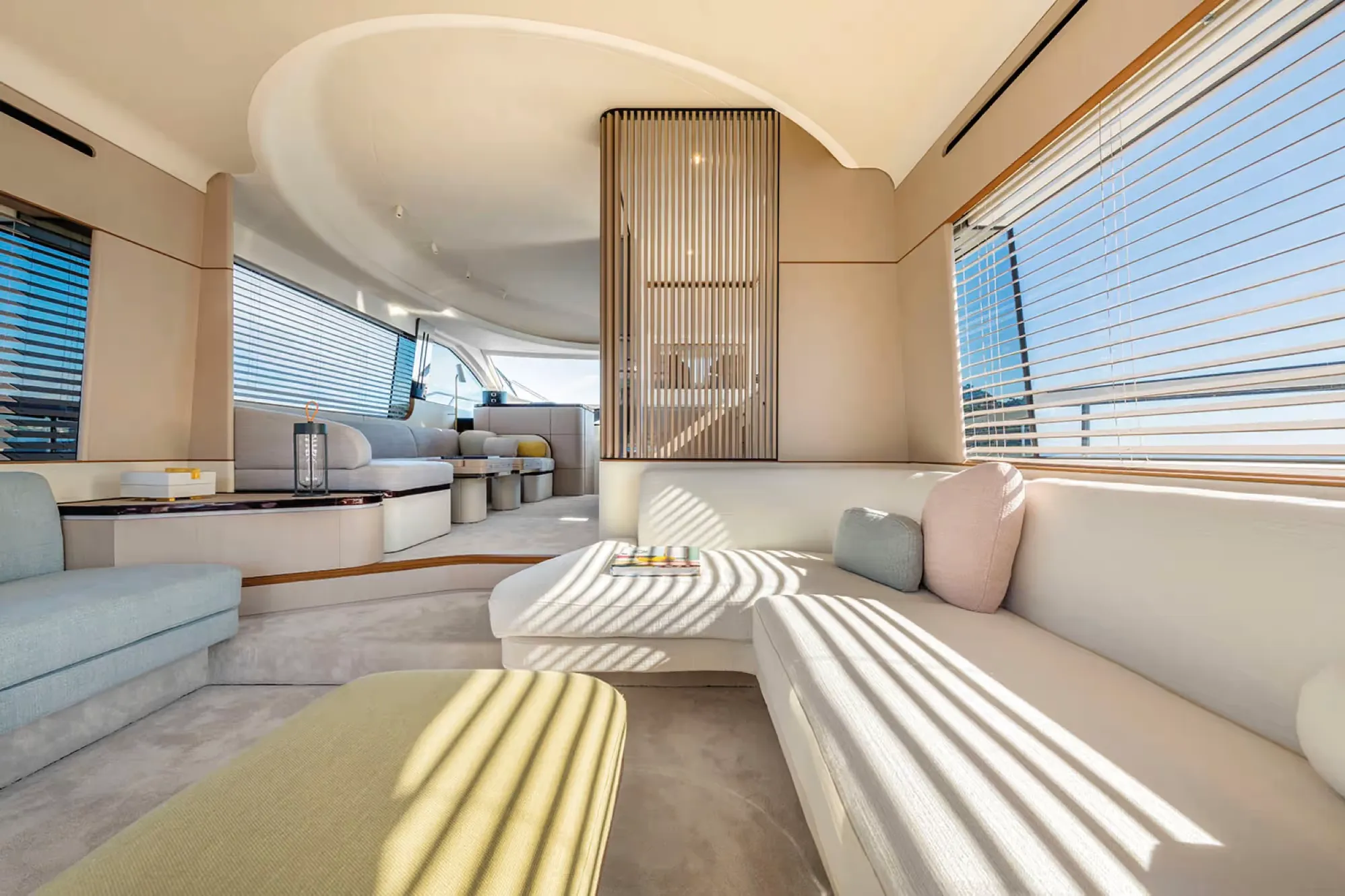
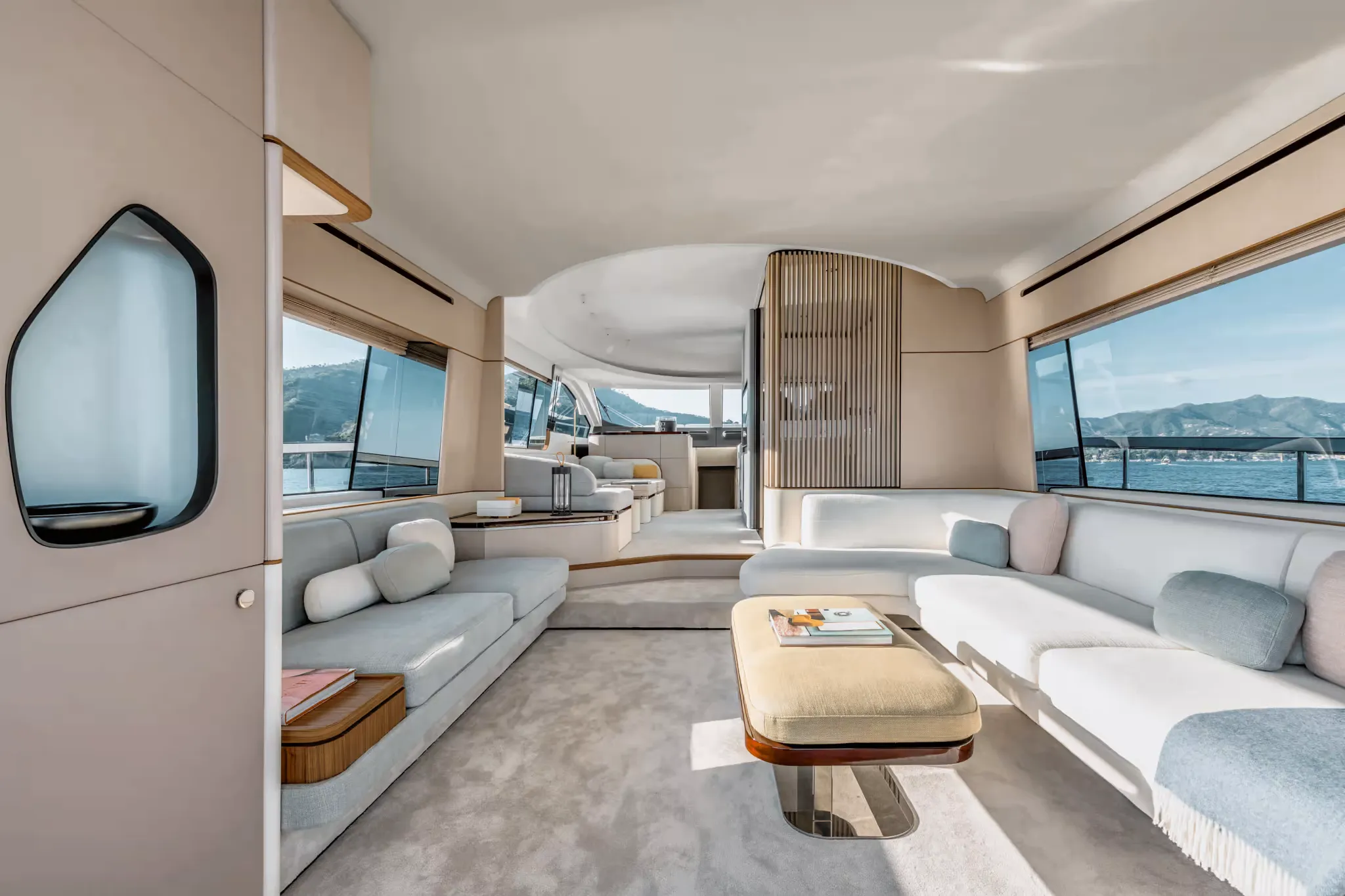
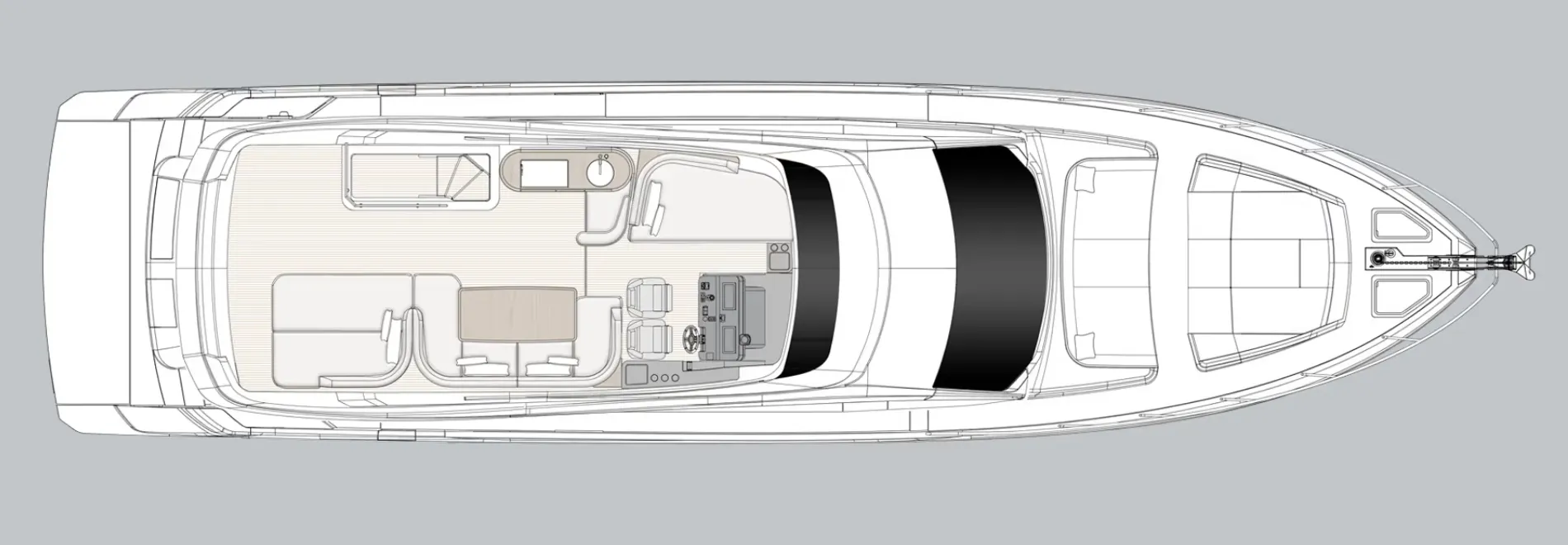
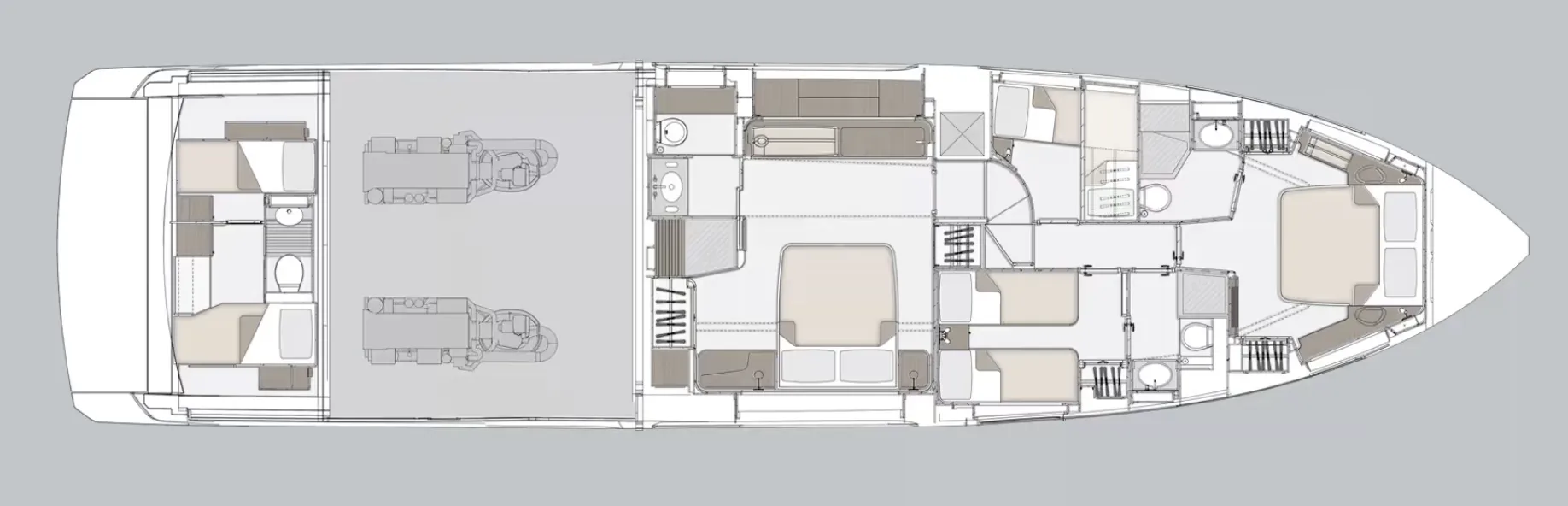
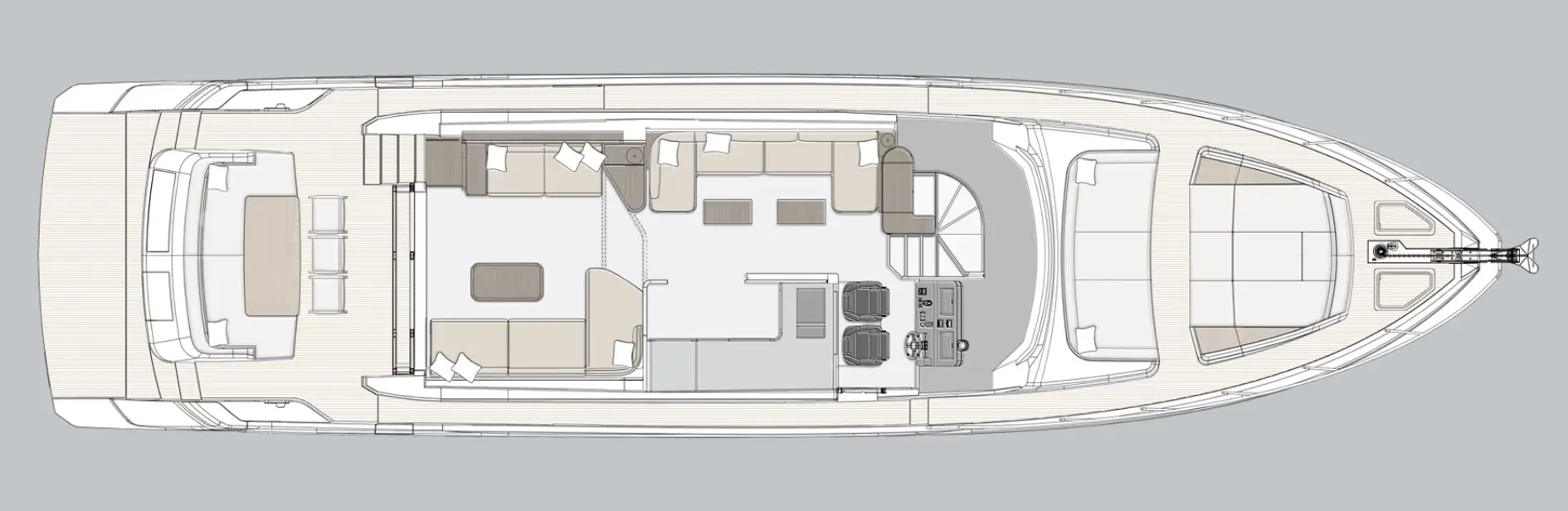
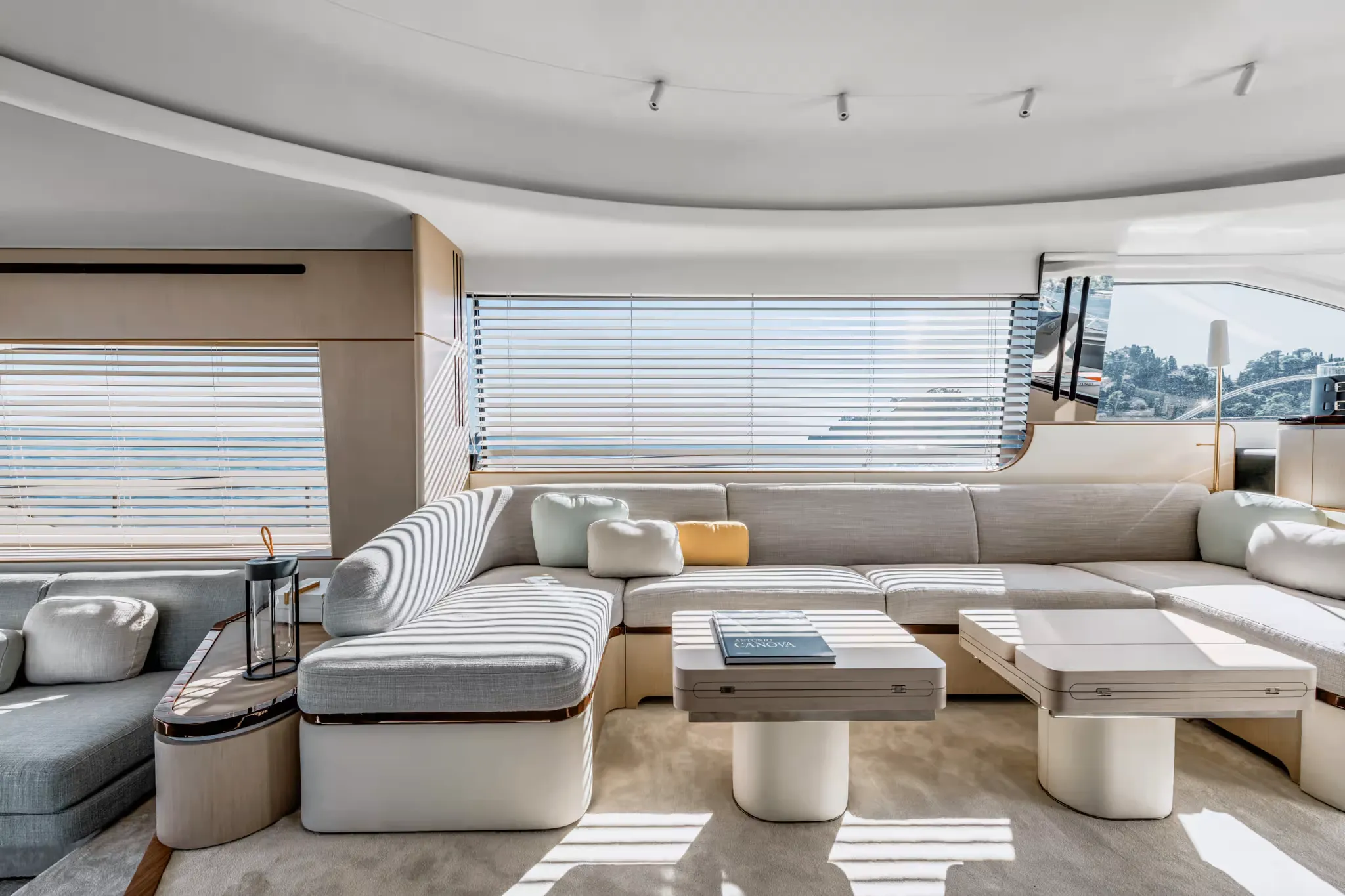
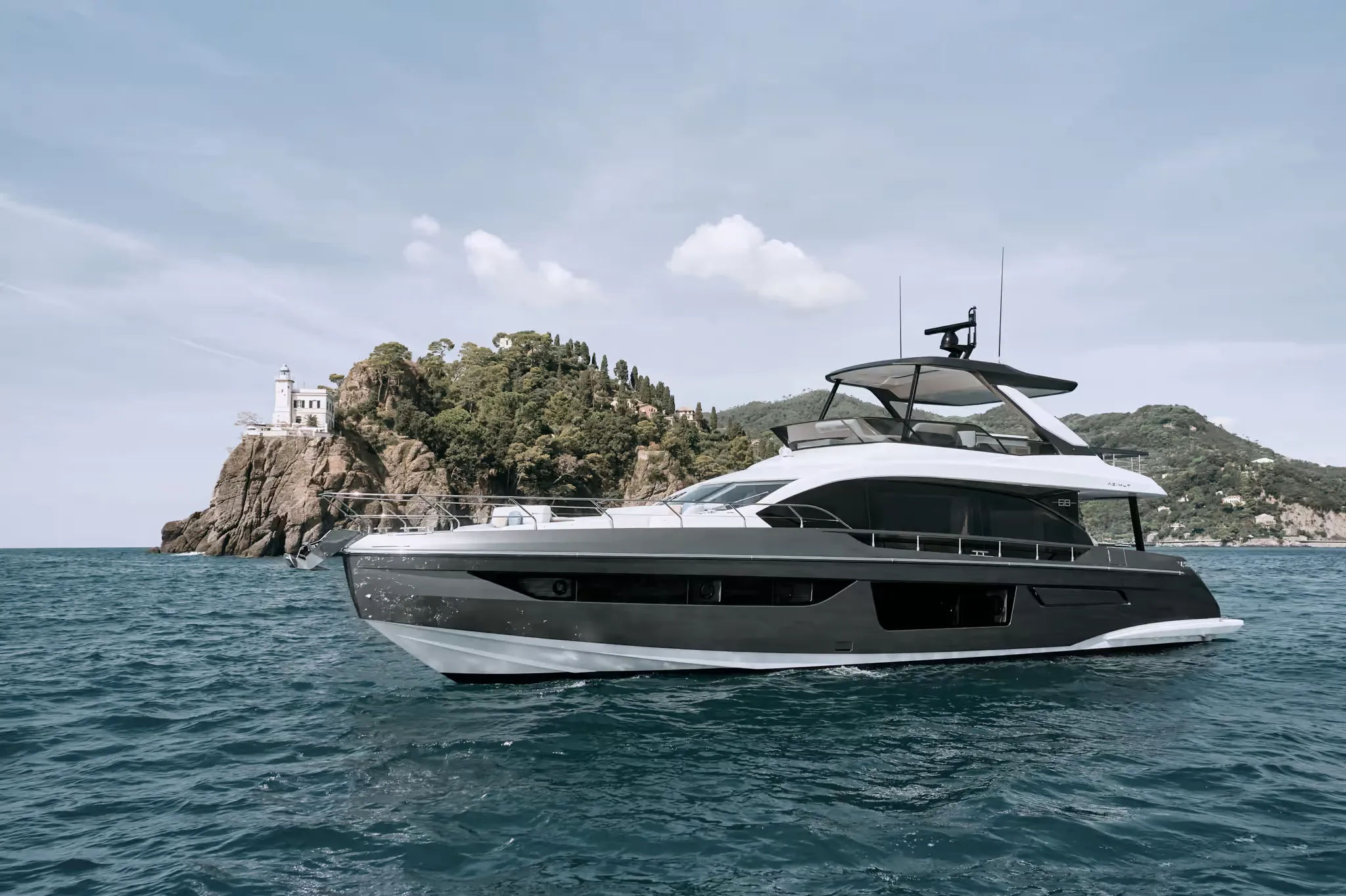
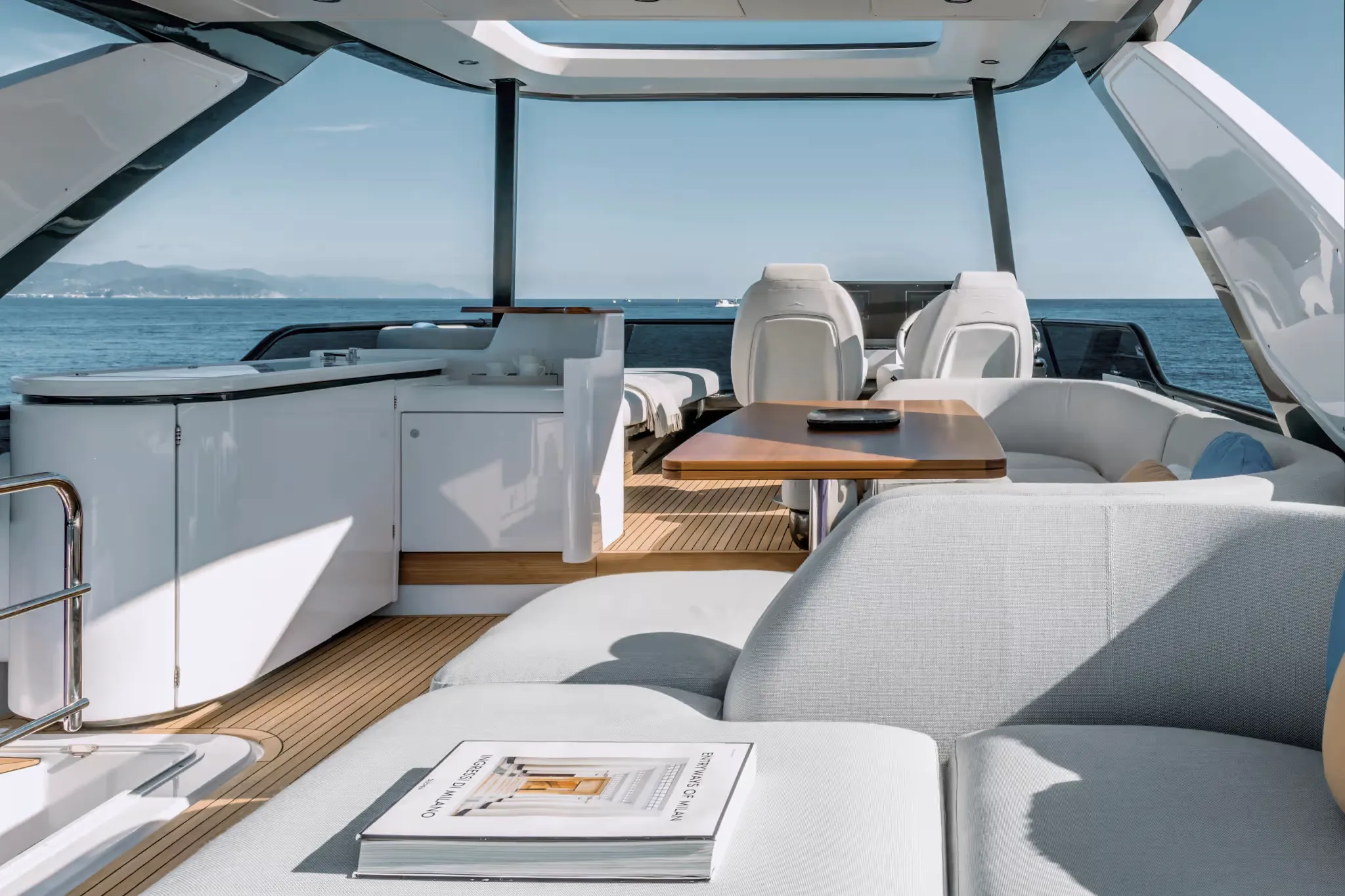
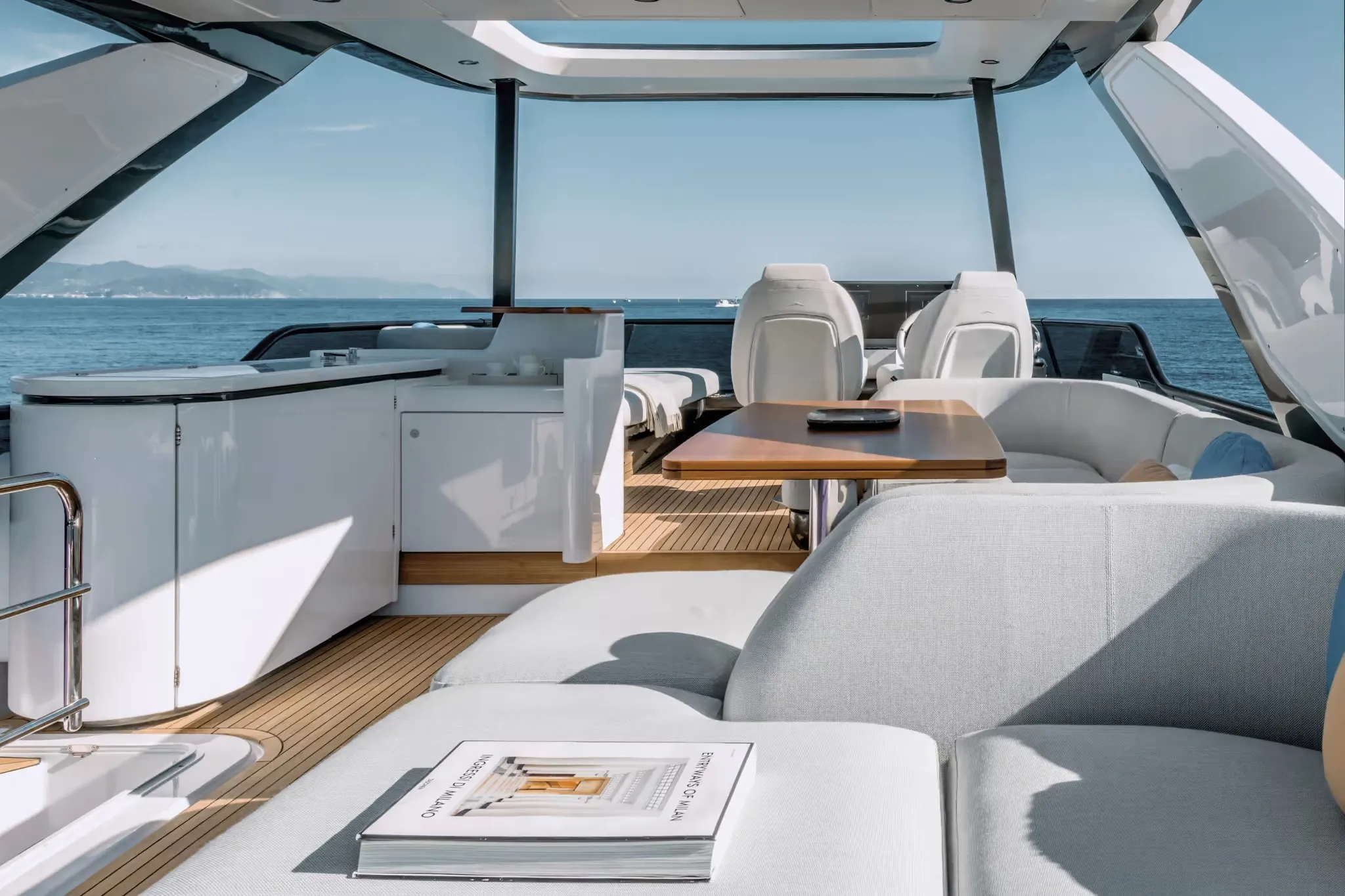
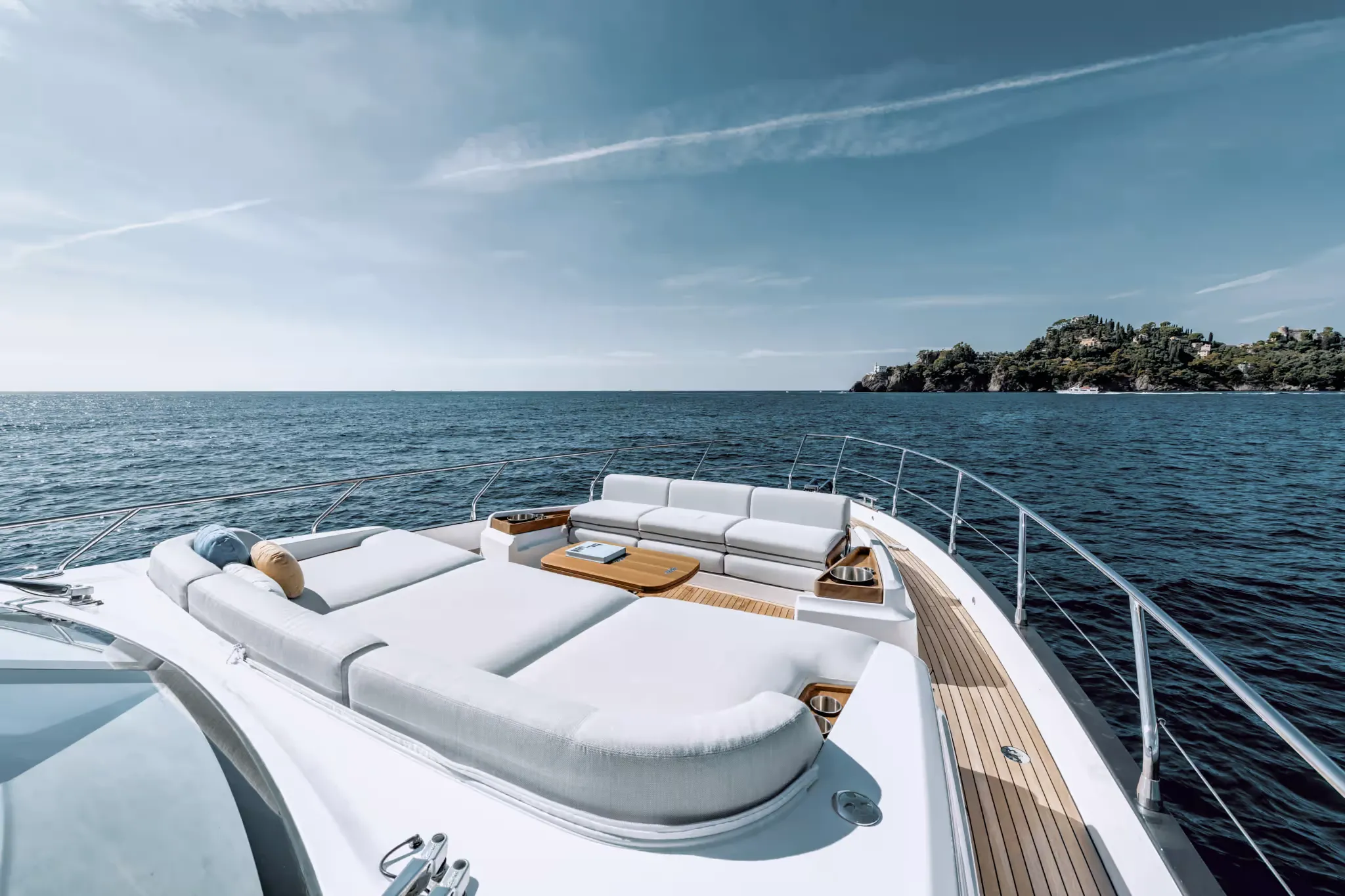
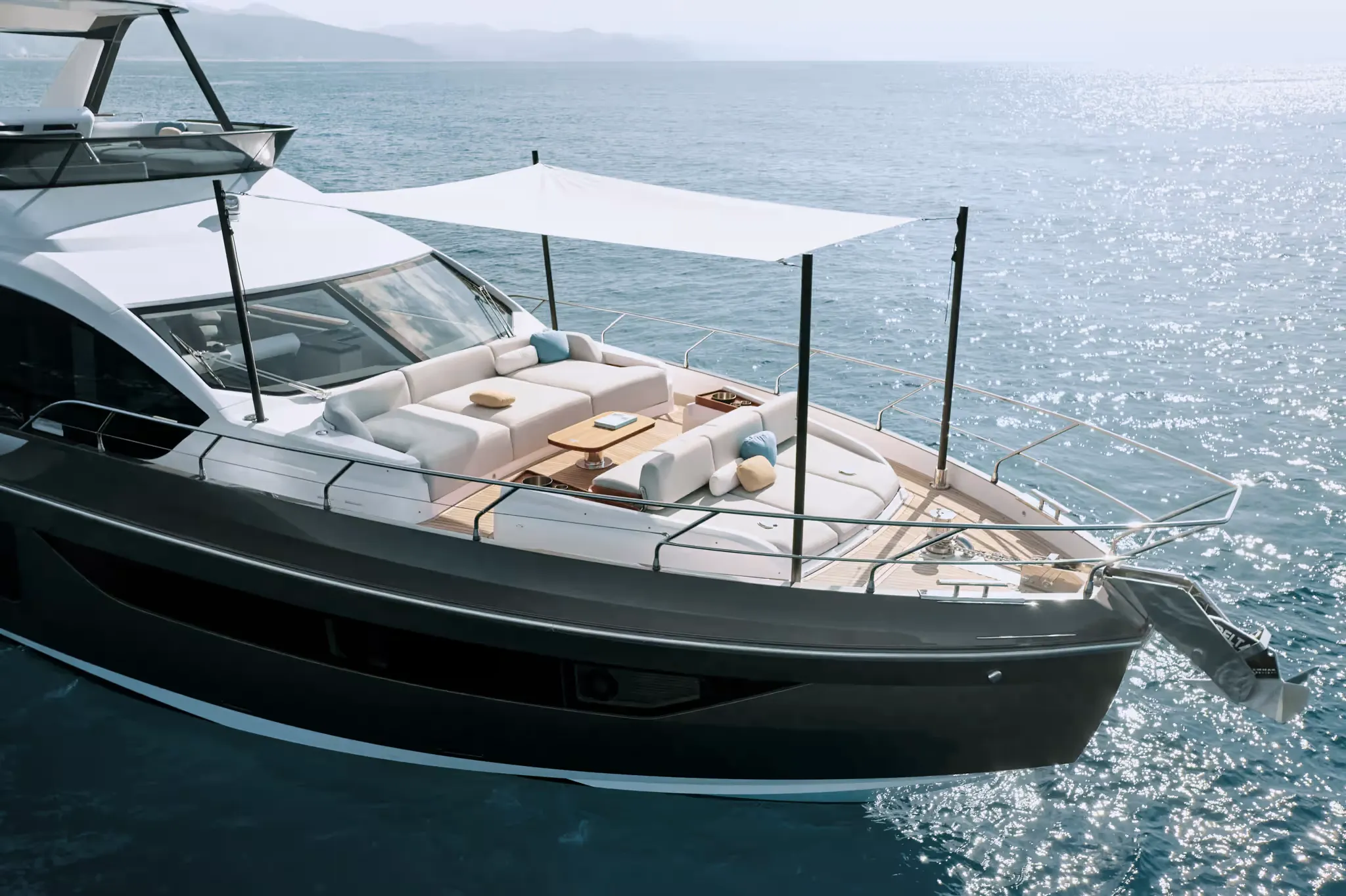
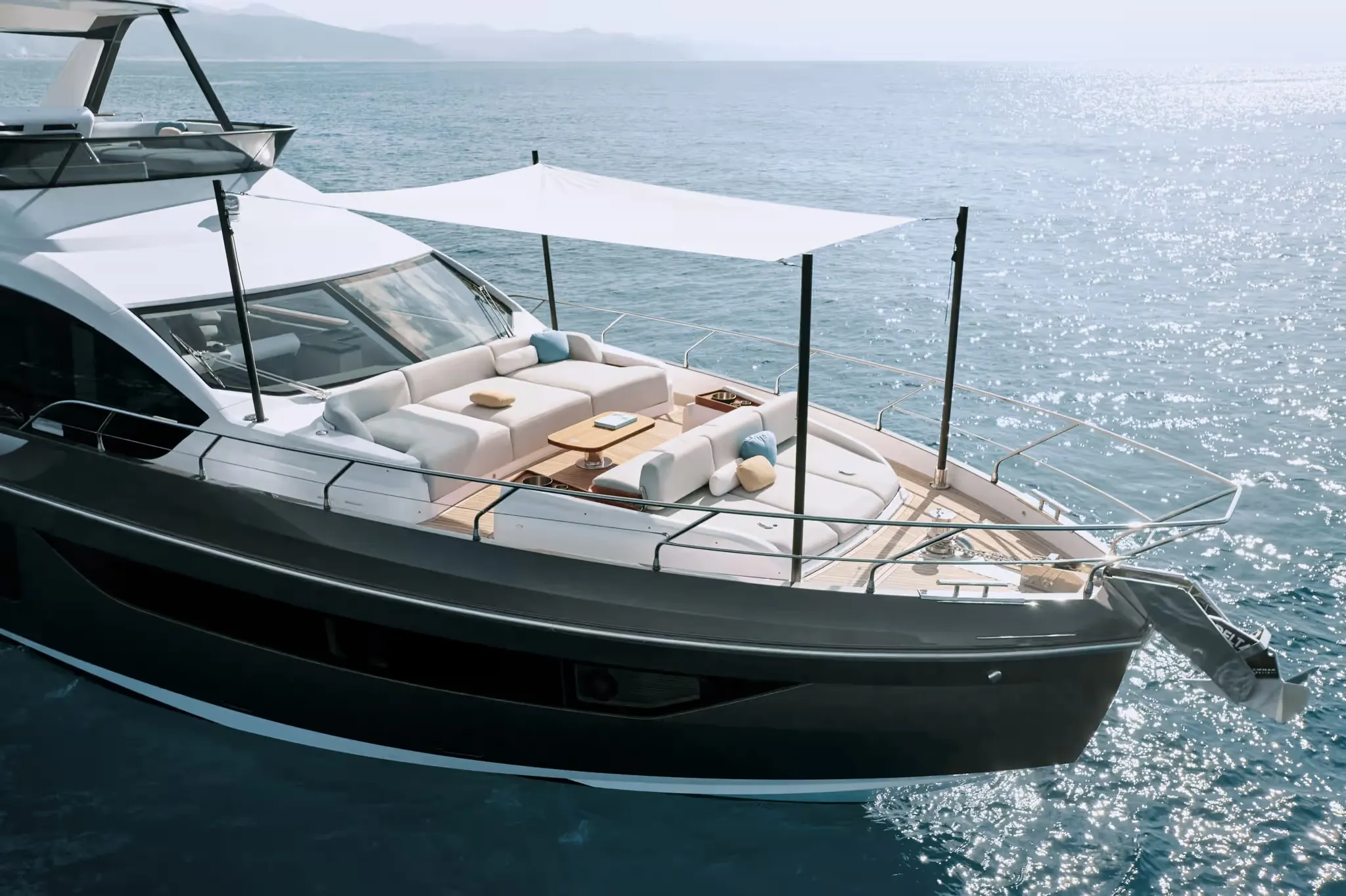
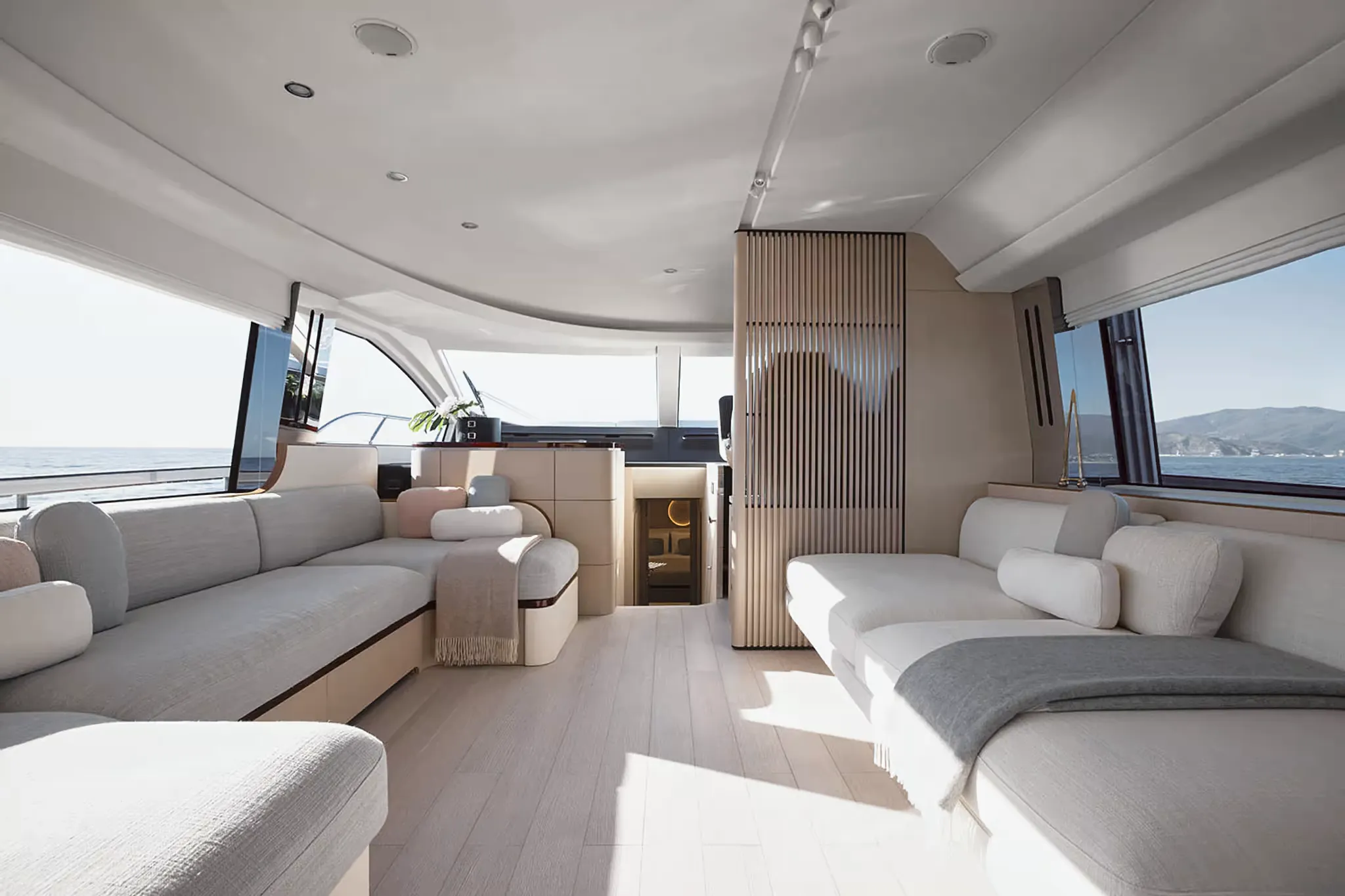
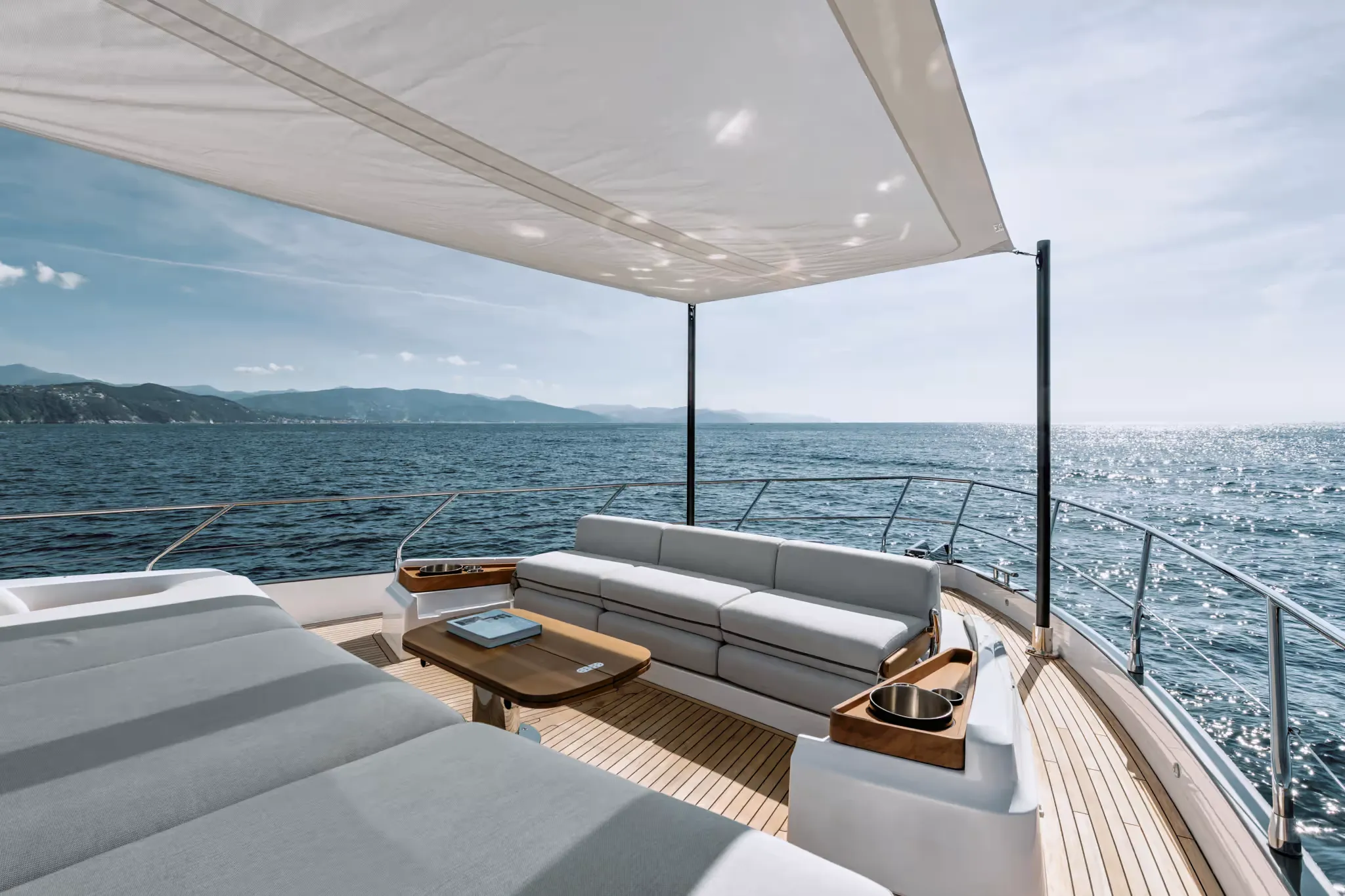
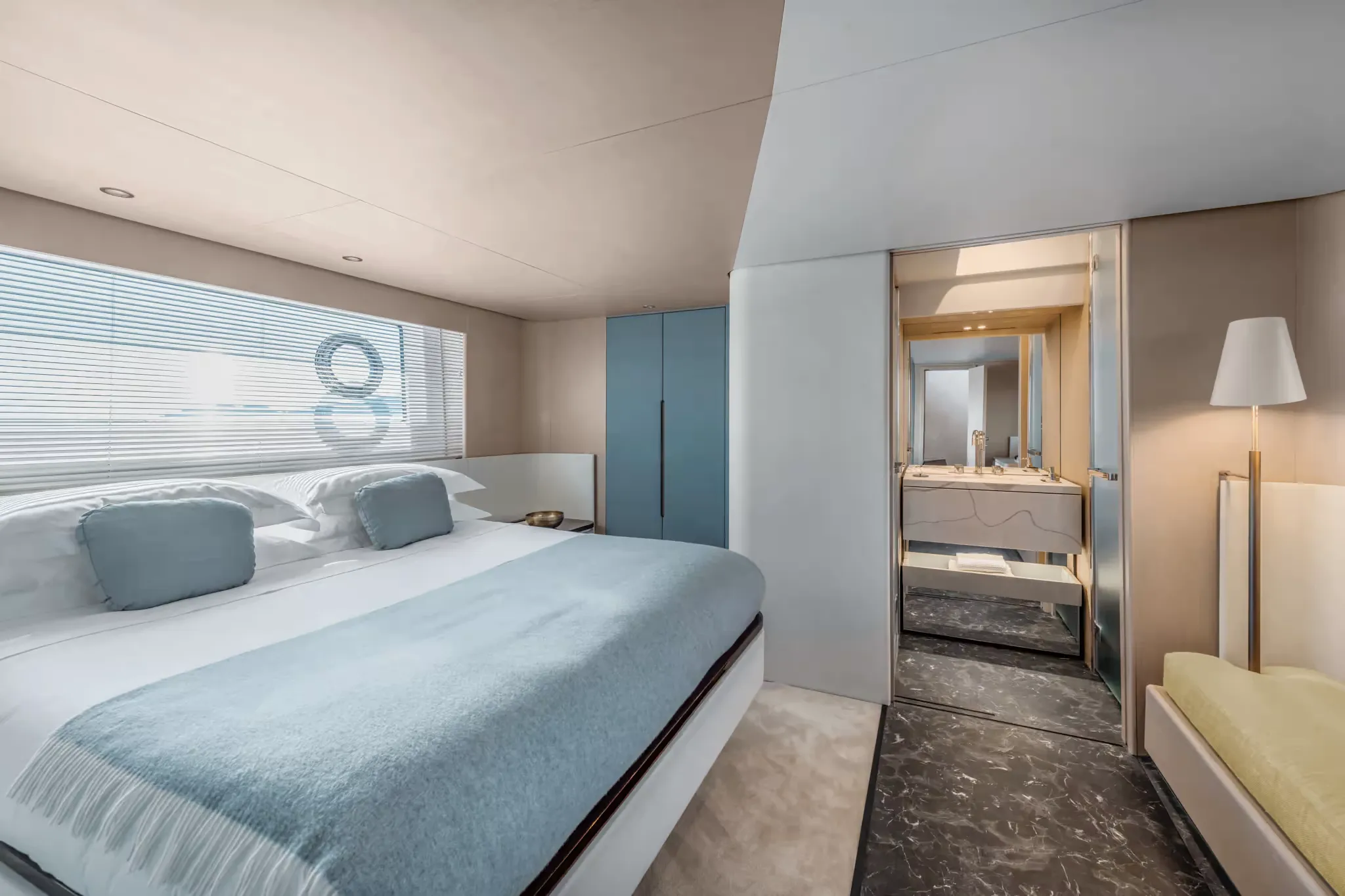
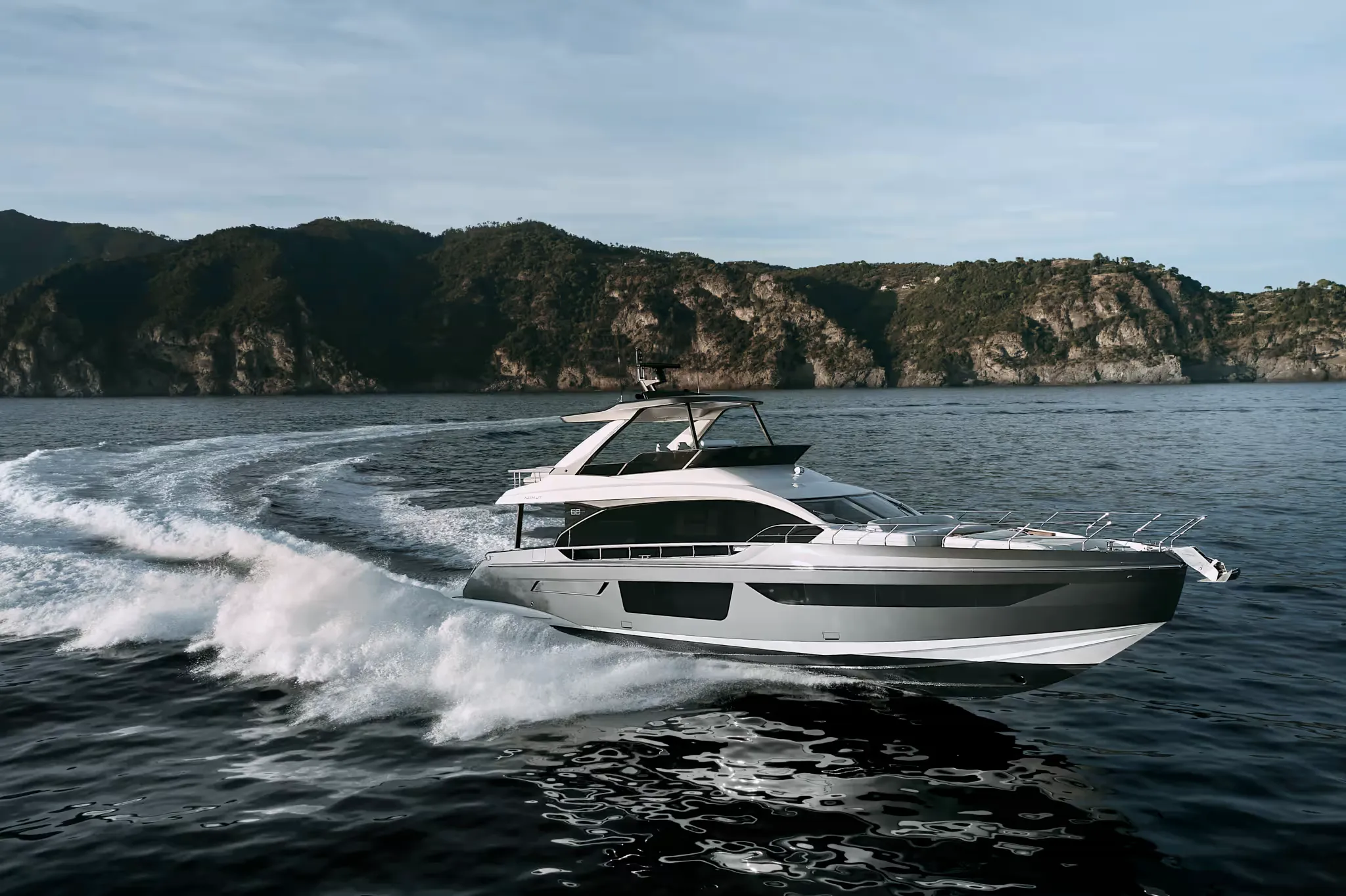
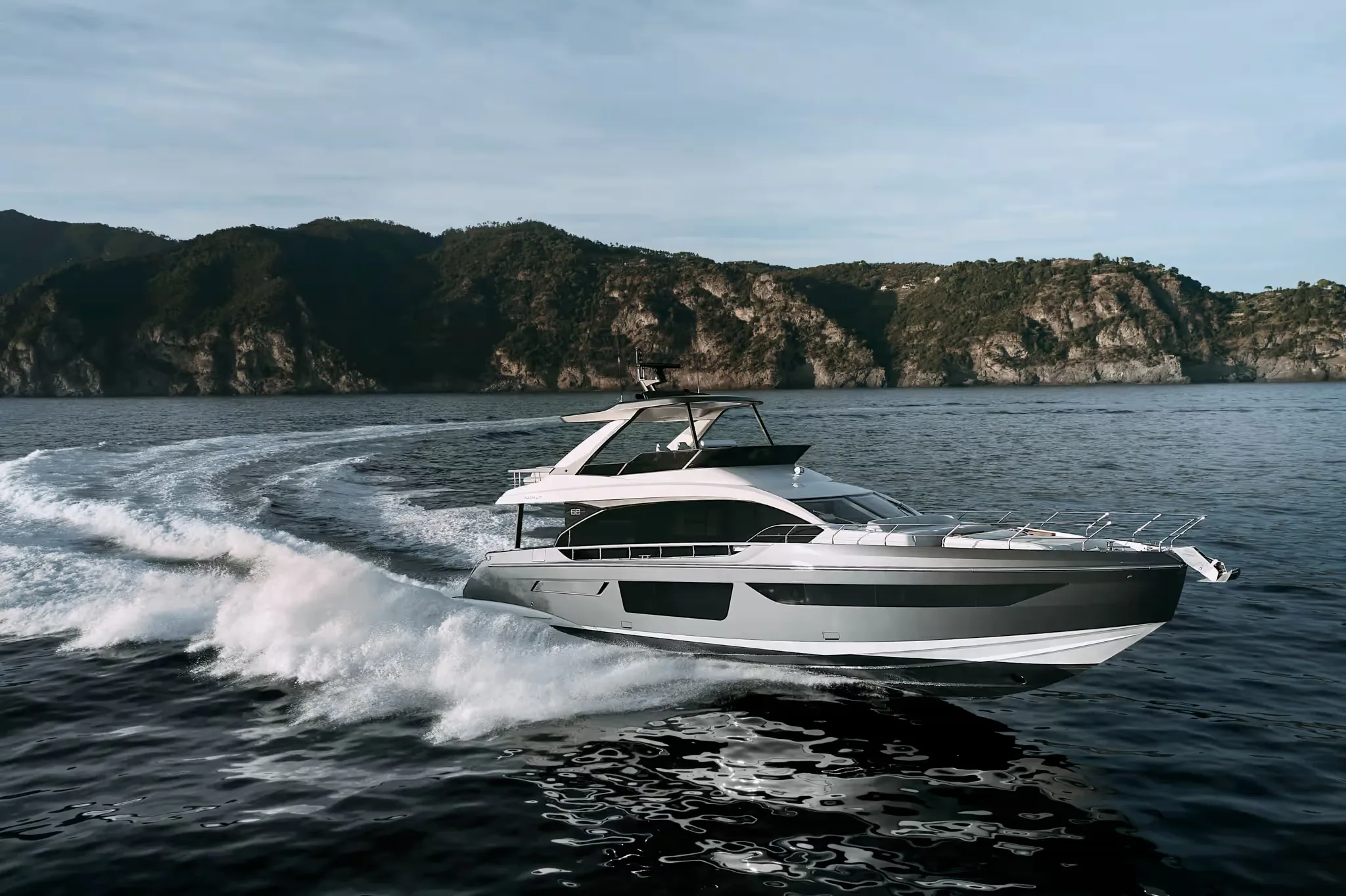
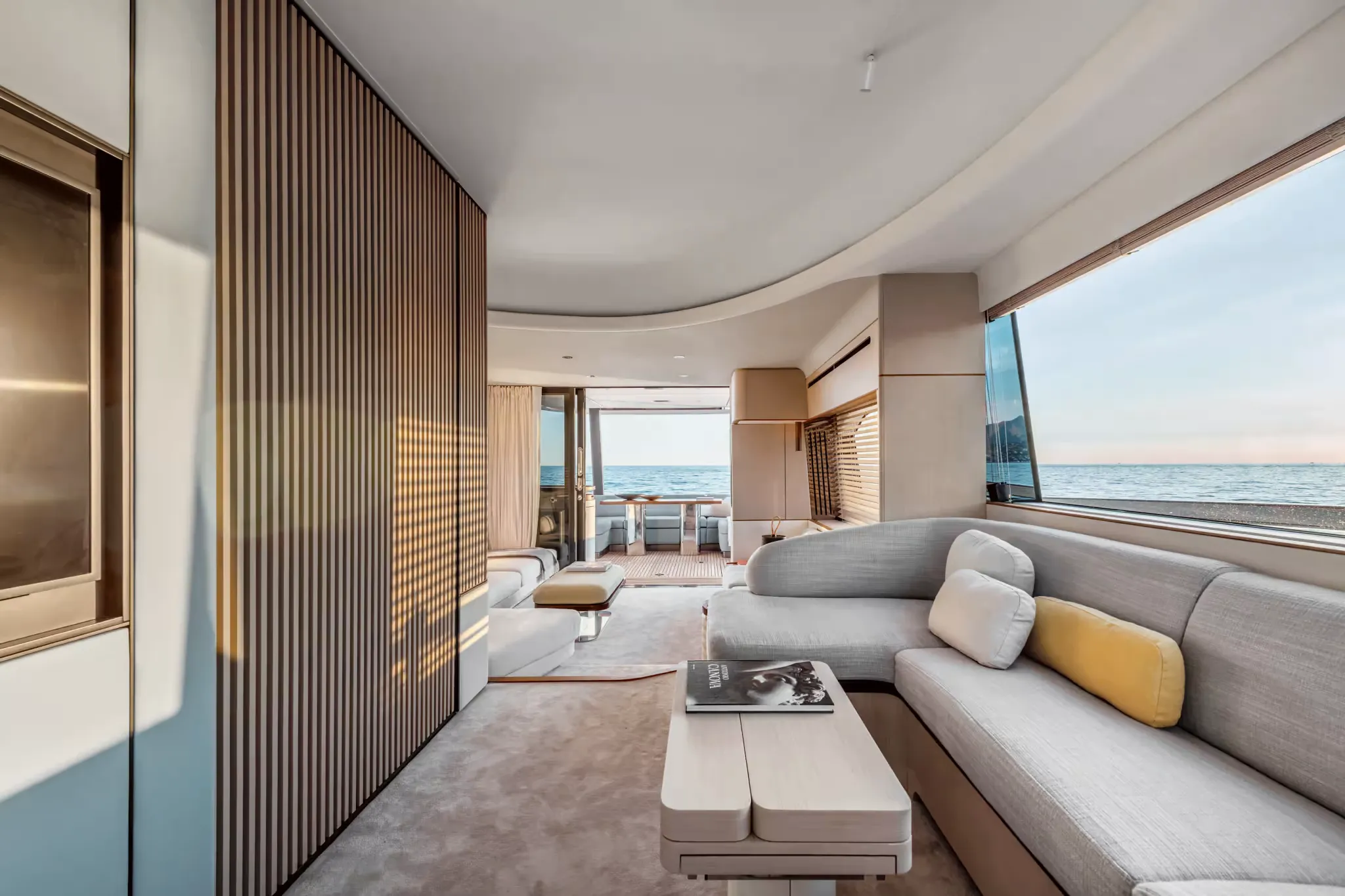
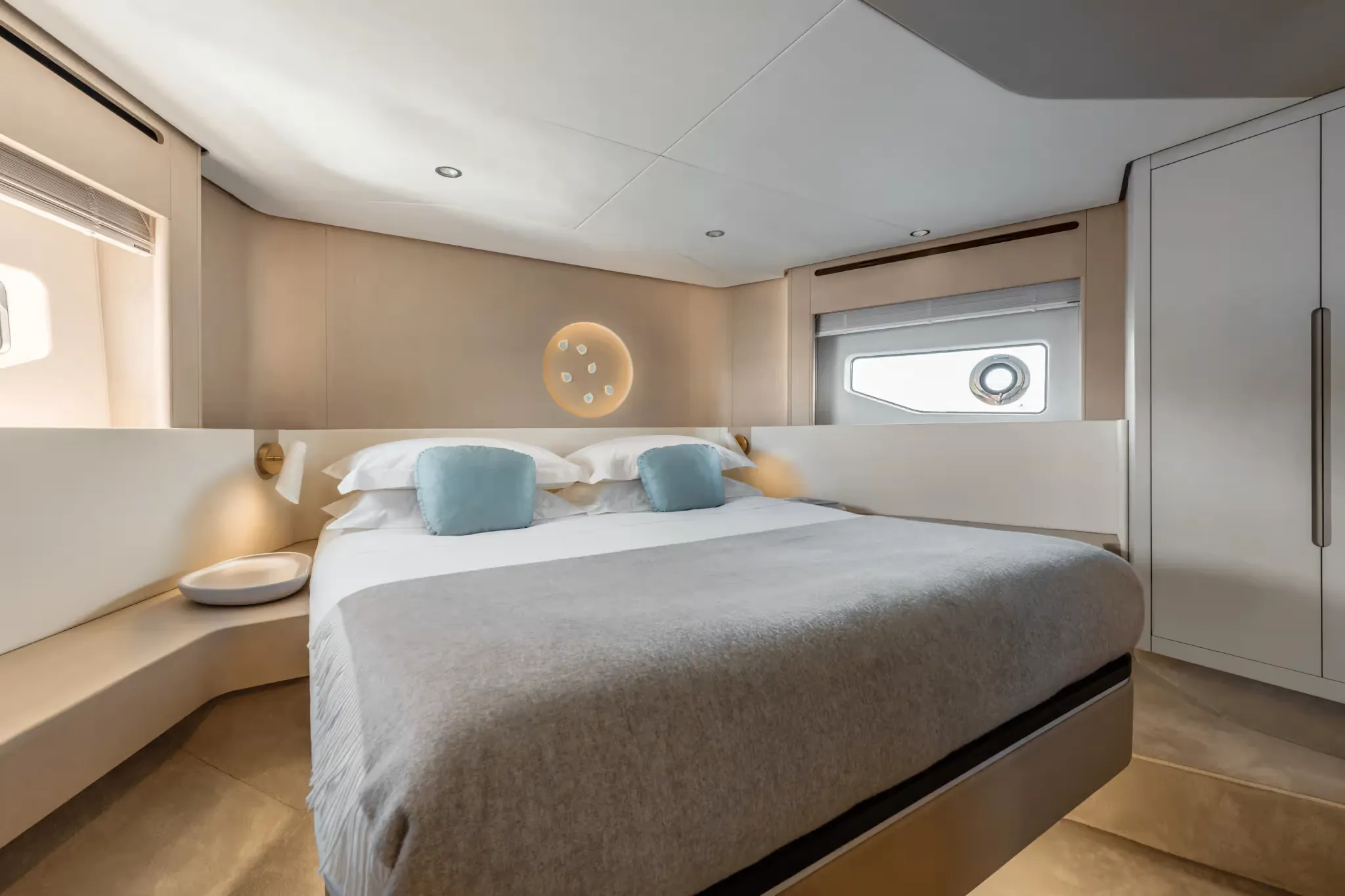
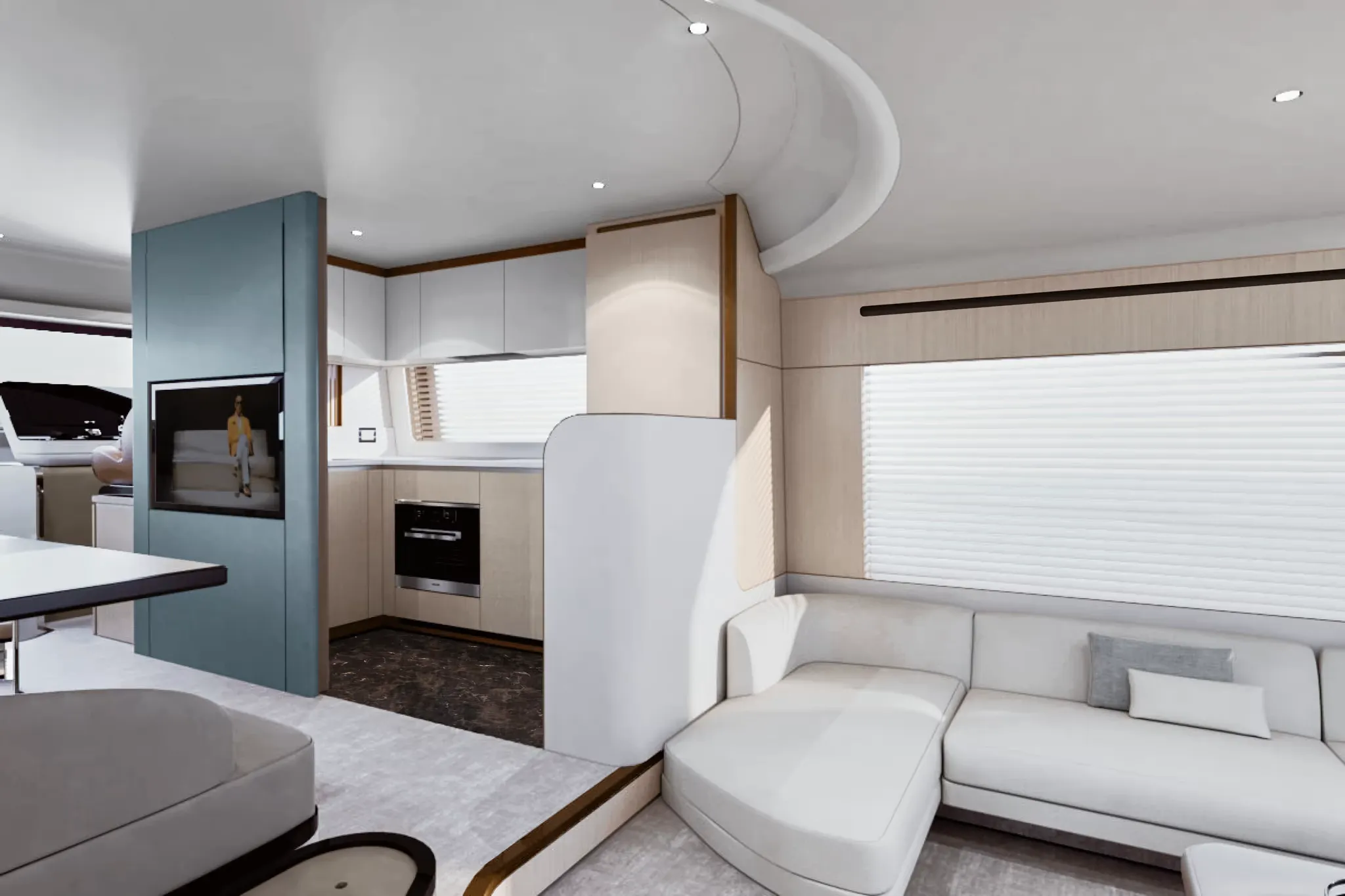
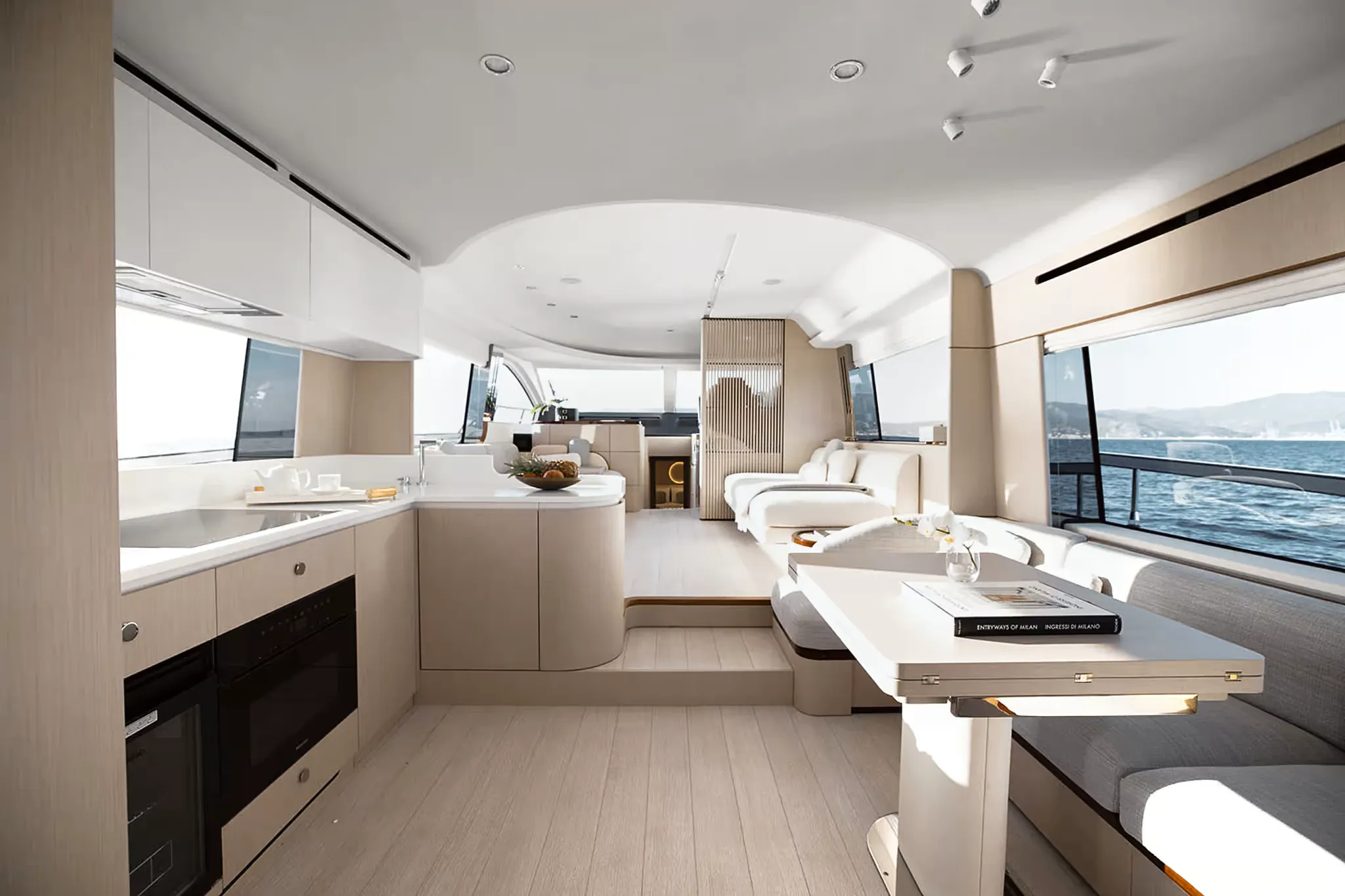
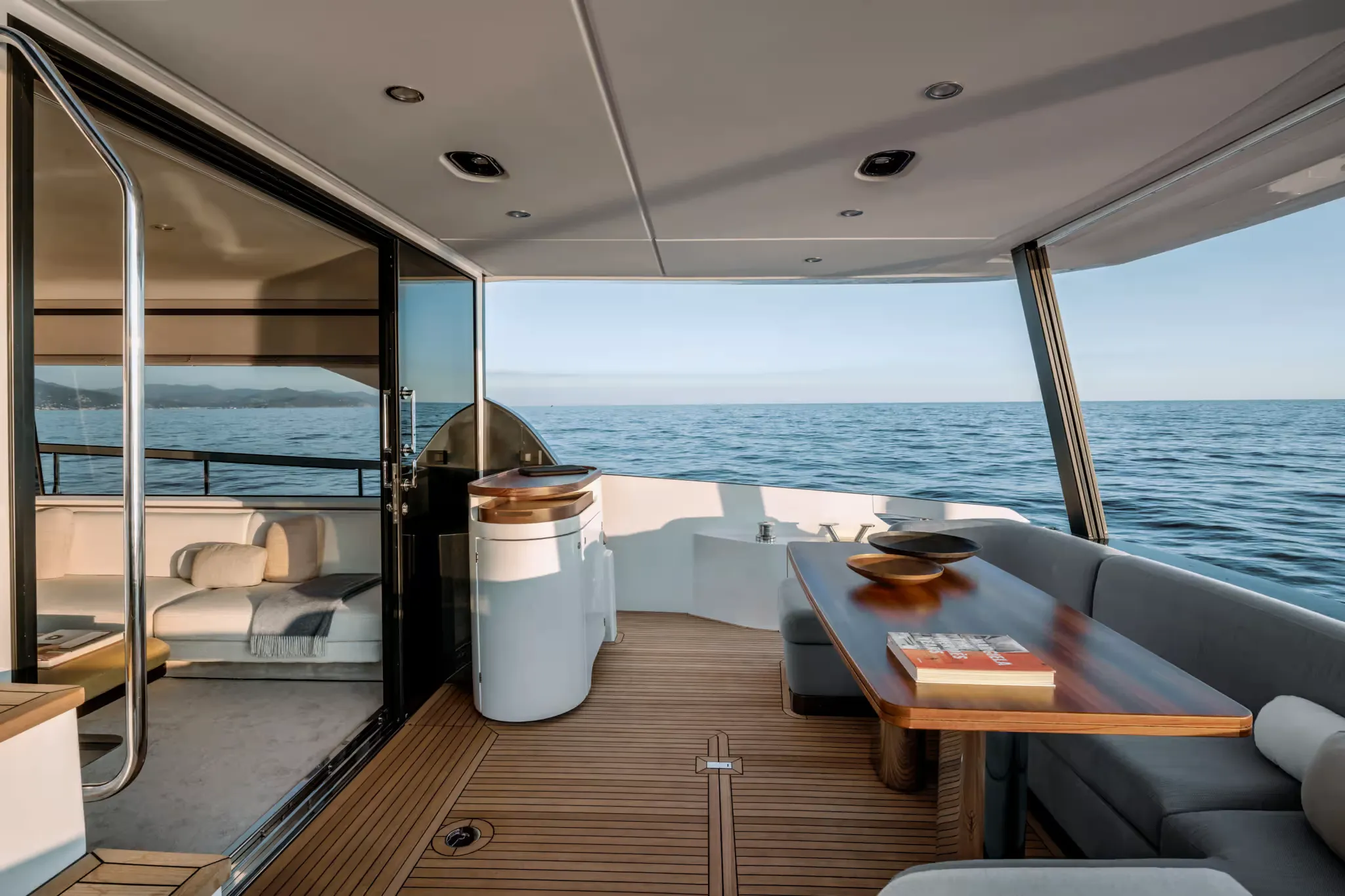
Photos courtesy of Azimut.
The Fly 68 moves the Fly series into four-cabin territory: 68'10" overall, 17'2" beam, 96,407 lbs at full load, with quarters for crew.
Construction is GRP with a carbon fiber superstructure — Azimut says Carbon Tech trims structural weight up top by as much as 30%, which is how a hull this size carries this much accommodation. Alberto Mancini drew the exterior; Achille Salvagni Architetti did the interior.
Twin Volvo Penta IPS 1350 pods, 1,000 hp each, deliver a published 32-knot maximum and 27-knot cruise from 977 gallons of fuel.
Azimut credits the pod installation and optimized waterlines with 15-20% lower fuel burn and CO2 output than a traditional shaft-drive equivalent — and the pods bring joystick docking to a 69-footer in the bargain.
Four cabins and three heads, plus crew quarters, put the Fly 68 firmly in take-everyone territory — two families or four couples travel without compromise.
Salvagni's interior carries the same natural-materials language as his other Azimut work, and the flybridge remains the boat's real living room.
The Fly 68 is the point where the Fly series stops assuming an owner at the helm every day and starts making room for help: four cabins, crew quarters, nearly 100,000 lbs of yacht.
Against its bigger sister, it offers much of the Fly 82's accommodation on a hull 13 feet shorter and simpler to berth.
Buy the Fly 68 if you cruise with family or several guest couples and want genuine four-cabin space with pod-drive handling.
Step down to the Fly 60 if three cabins cover the list; step up to the Fly 82 for five heads, a second crew cabin and the fold-out Deck2Deck terrace.
The Fly 68 sits at the sweet spot where the boat is still yours to run but the costs start behaving like a small yacht program:
Cost figures are Minted Yachts editorial estimates for typical U.S. Southeast ownership; your marina, usage, insurance profile, and spec will move these numbers. Read how we source and verify, or ask us for numbers specific to your situation.
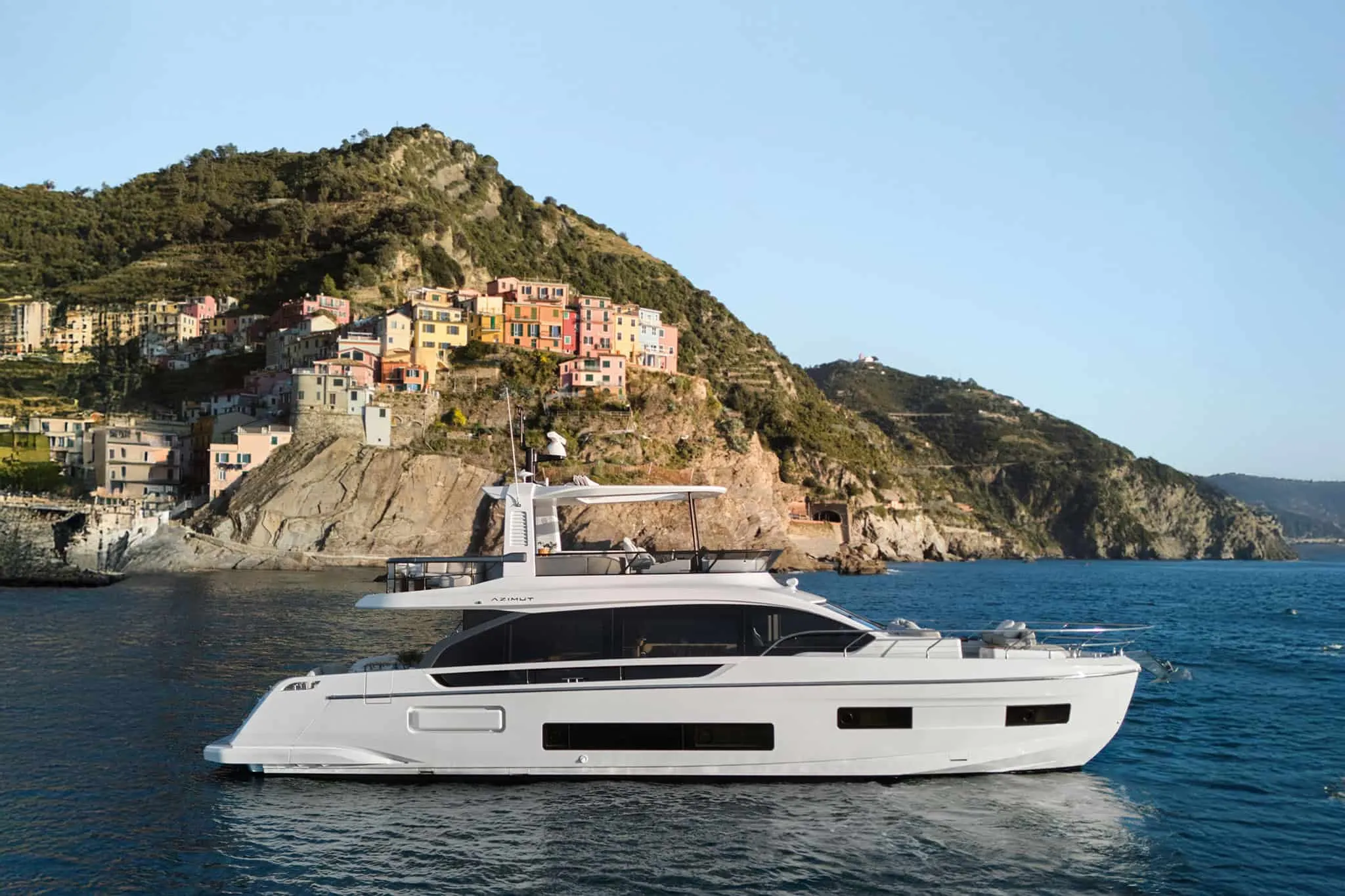
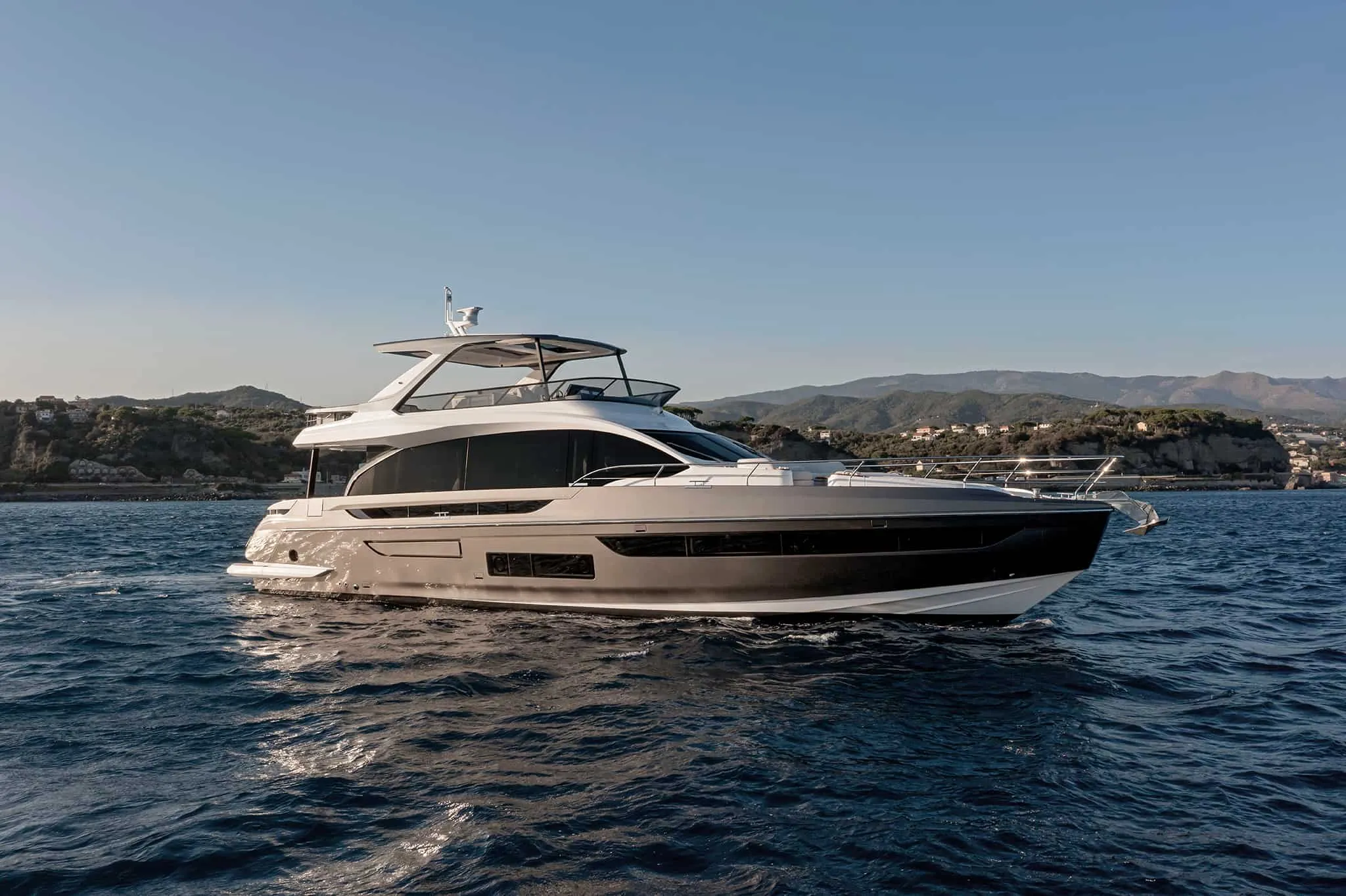
The Azimut Fly 68 measures 68 feet 10 inches overall with a 17-foot 2-inch beam, a 5-foot 3-inch draft, and displacement of about 96,400 pounds. Fuel capacity is 977 gallons and water capacity is 264 gallons.
The Fly 68 offers four full guest cabins and three heads, plus dedicated crew quarters. That gives owners the flexibility to run the boat themselves now and add a captain later without sacrificing a guest stateroom — rare in the sub-70-foot class.
Yes. IPS joystick docking, a helm designed for short-handed running, and four guest cabins plus separate crew quarters mean the Fly 68 works both ways: run it yourself on weekends, or bring a captain aboard for longer passages without changing how the boat lives.
The Azimut Fly 68 tops out around 32 knots and cruises efficiently at 27 knots, powered by twin Volvo Penta IPS 1350 pods producing 1,000 hp each. The pod drives also give it joystick docking that straight-shaft competitors in this class cannot match.
Twin Volvo Penta IPS 1350 pod drives, each producing 1,000 hp. The forward-facing propellers improve efficiency at cruise, and the integrated joystick control makes docking a 68-footer manageable for an experienced owner-operator without professional crew.
The flybridge spans more than 30 feet with a full wet bar and dining for eight, making it the primary living space of the boat rather than a secondary helm station. It is one of the largest flybridges available on a 68-foot yacht.