
August 17, 2026
The Azimut Fly 78: When 78 Feet Feels Like 90
Azimut's Fly 78 delivers 78 feet of true yacht living - carbon fiber superstructure, triple IPS and a forward galley with separated crew qua…
Read the articleExpert Review, Technical Specifications & Market Analysis
| Feature | Specifications |
|---|---|
| Overall Length | 77' 7" |
| Beam | 18' 10" |
| Draft | 5' 10" |
| Displacement | 127,690 lbs |
| Engines | 3 x Volvo Penta IPS 1200 (900 hp); optional 3 x IPS 1350 (1,000 hp) |
| Fuel Capacity | 1,321 gal |
| Water Capacity | 291 gal |
| Cabins / Heads | 4 Cabins + 1 Crew / 4 Heads |
| Max Speed | 33 knots |
| Cruise Speed | 26 knots |
Source: Spec & Photos courtesy of Azimut. Specs verified by Tony Smith, USCG 100 Ton Master, on August 17, 2026.
You want Grande-scale living with sport-yacht handling. The Fly 78 tops the Fly series' pod-drive hulls with 33 knots on triple power.
Part of the Azimut Fly series — see how owners step up through the lineup.

Azimut made the right call with the carbon fiber superstructure and triple IPS configuration. The weight savings translate directly into usable volume below deck and better stability underway. The build quality on these boats is consistent. I've seen five-year-old Fly 78s that still present well, and the carbon tech holds up better than traditional fiberglass in the Florida sun. The separated crew quarters are the real differentiator. That forward galley and bow crew cabin setup is something you usually don't see until you're at 85 feet.
This boat works for the experienced owner who wants to run it themselves on weekends but has the option to bring in a captain for longer trips. It's not a first-time buyer's yacht. The systems are complex, the fuel burn is significant, and you need to understand what you're getting into operationally. But if you've owned a 60-footer and you're ready for more range and volume without going full superyacht, this is the right step. The owner-operator with occasional crew support is the sweet spot.
Resale on these boats has been stable. The Fly series holds value better than Azimut's S line, and the 78 specifically benefits from the carbon tech story. Buyers understand what they're paying for. Maintenance costs are predictable if you stay on top of the IPS service intervals. Budget honestly for annual upkeep before crew, and you won't get surprised. The market for used Fly 78s is active. When a good one comes up, it moves within 90 days
Video courtesy of Azimut.
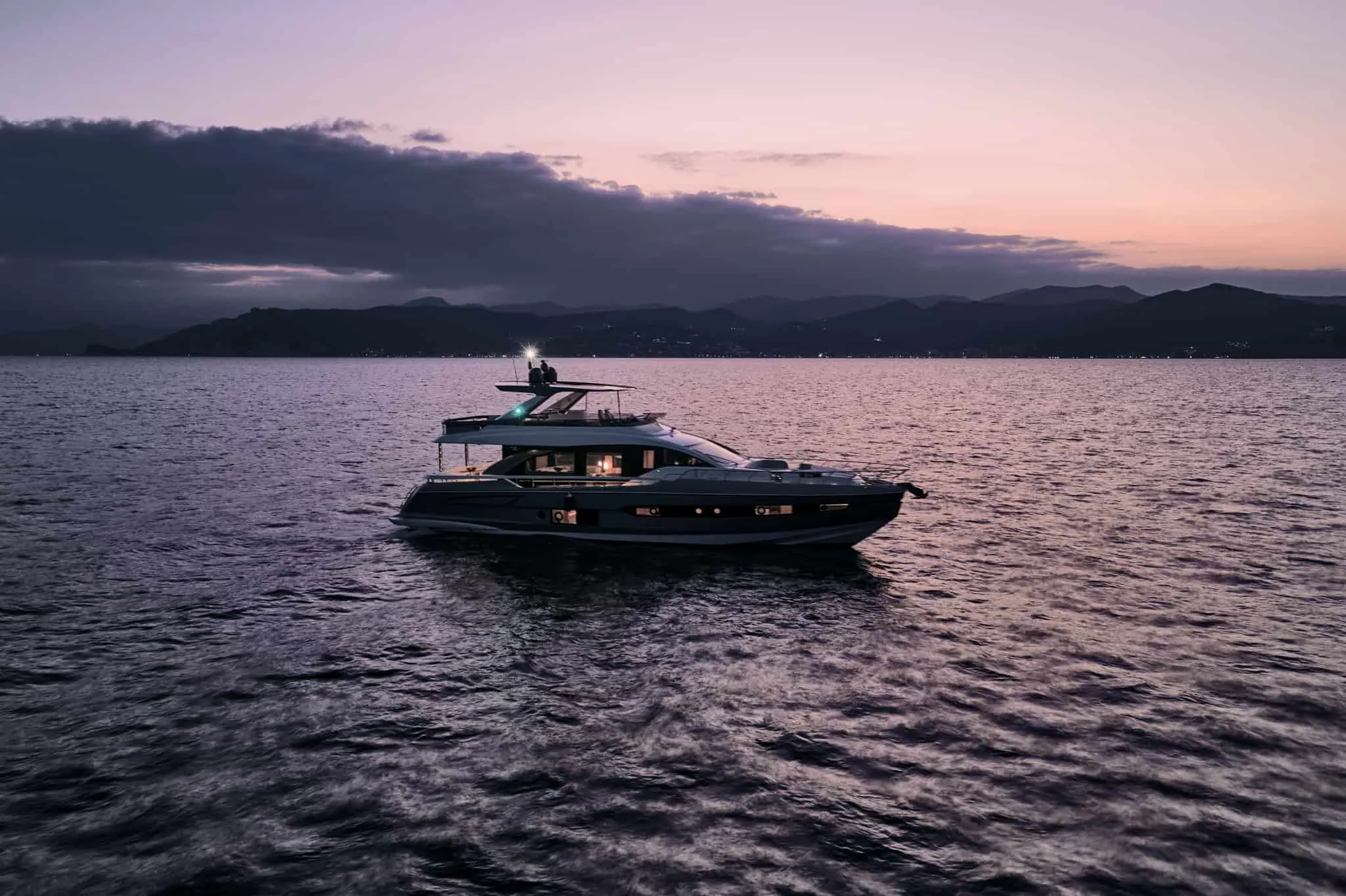
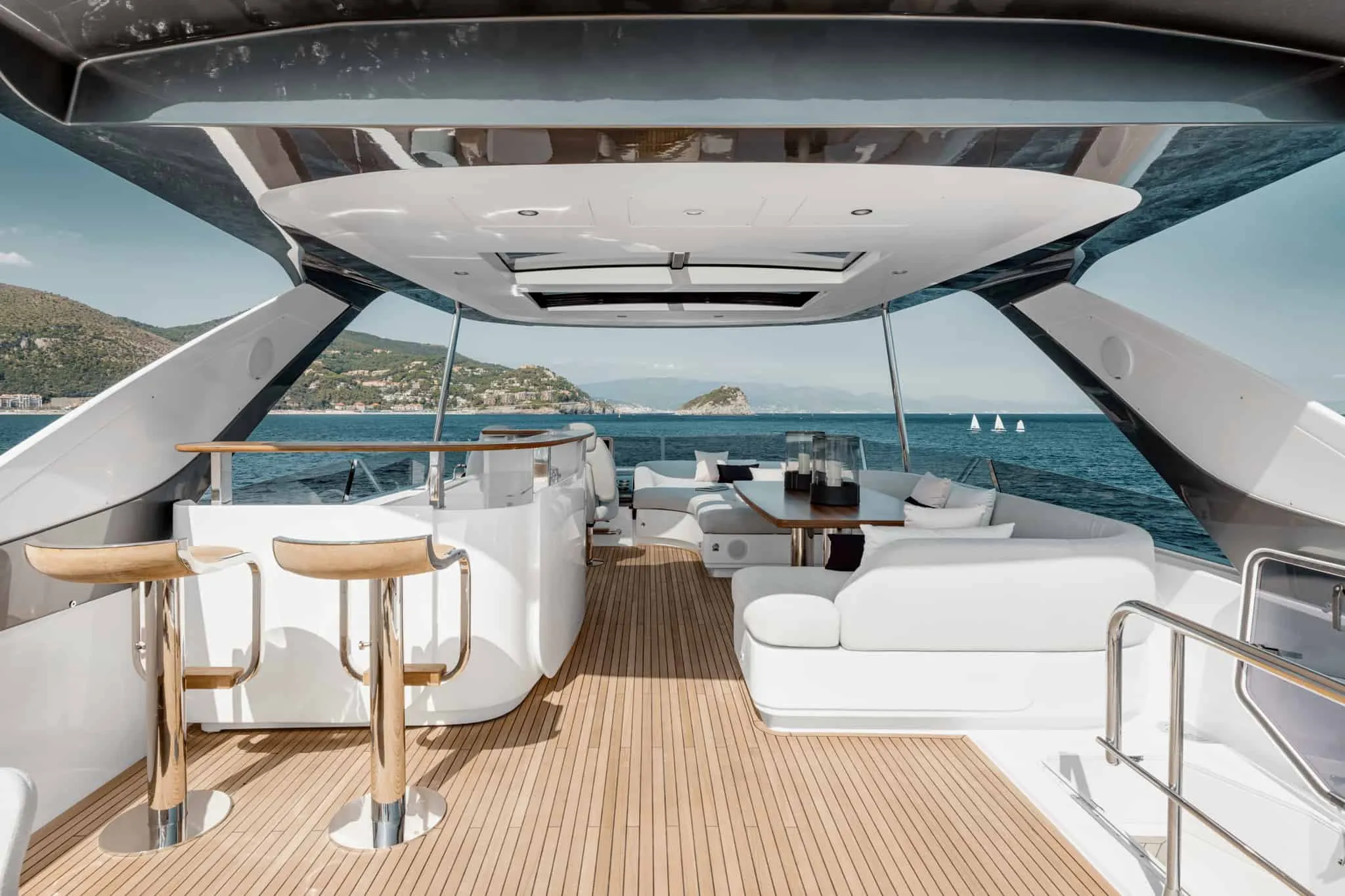
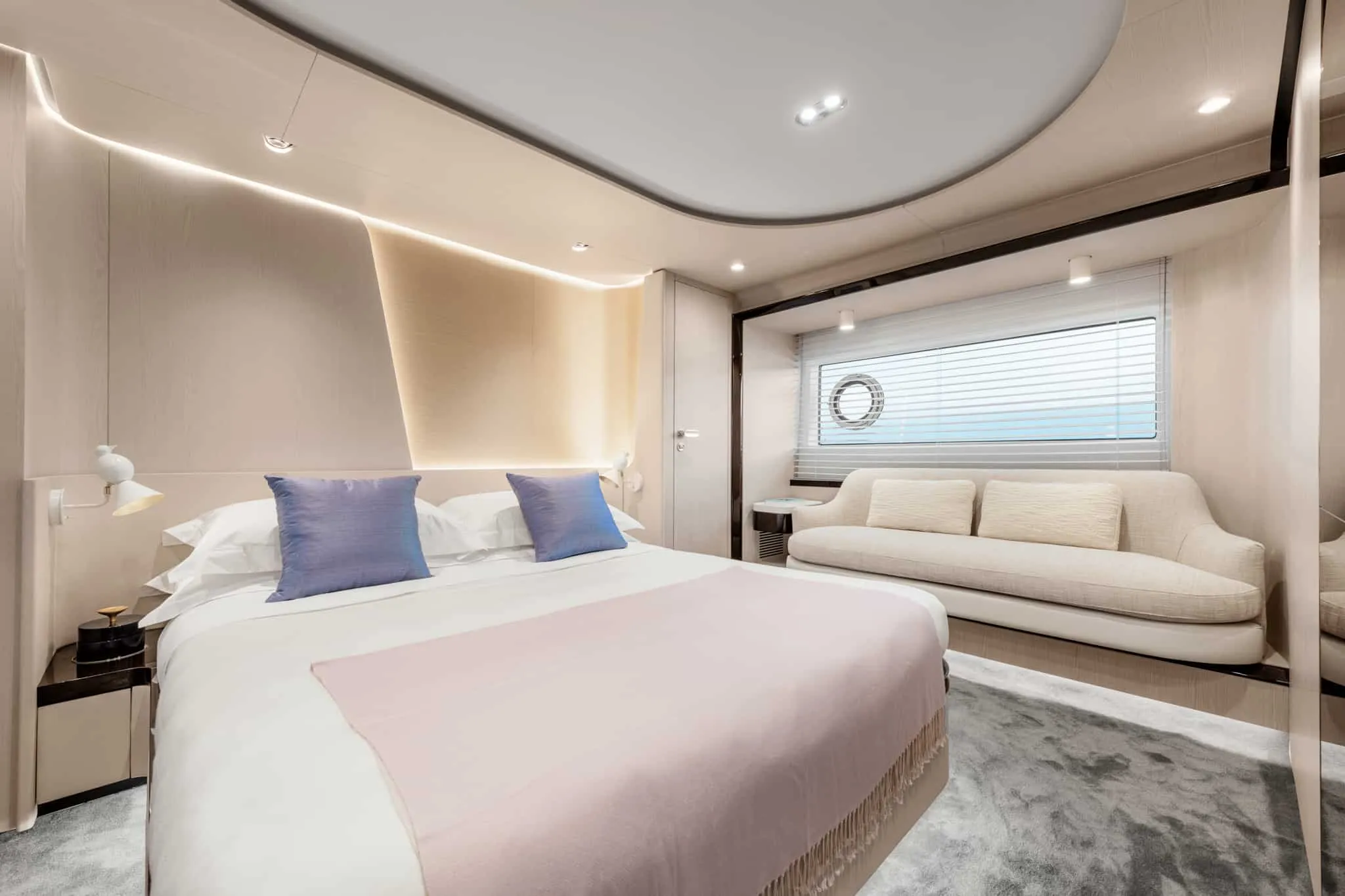
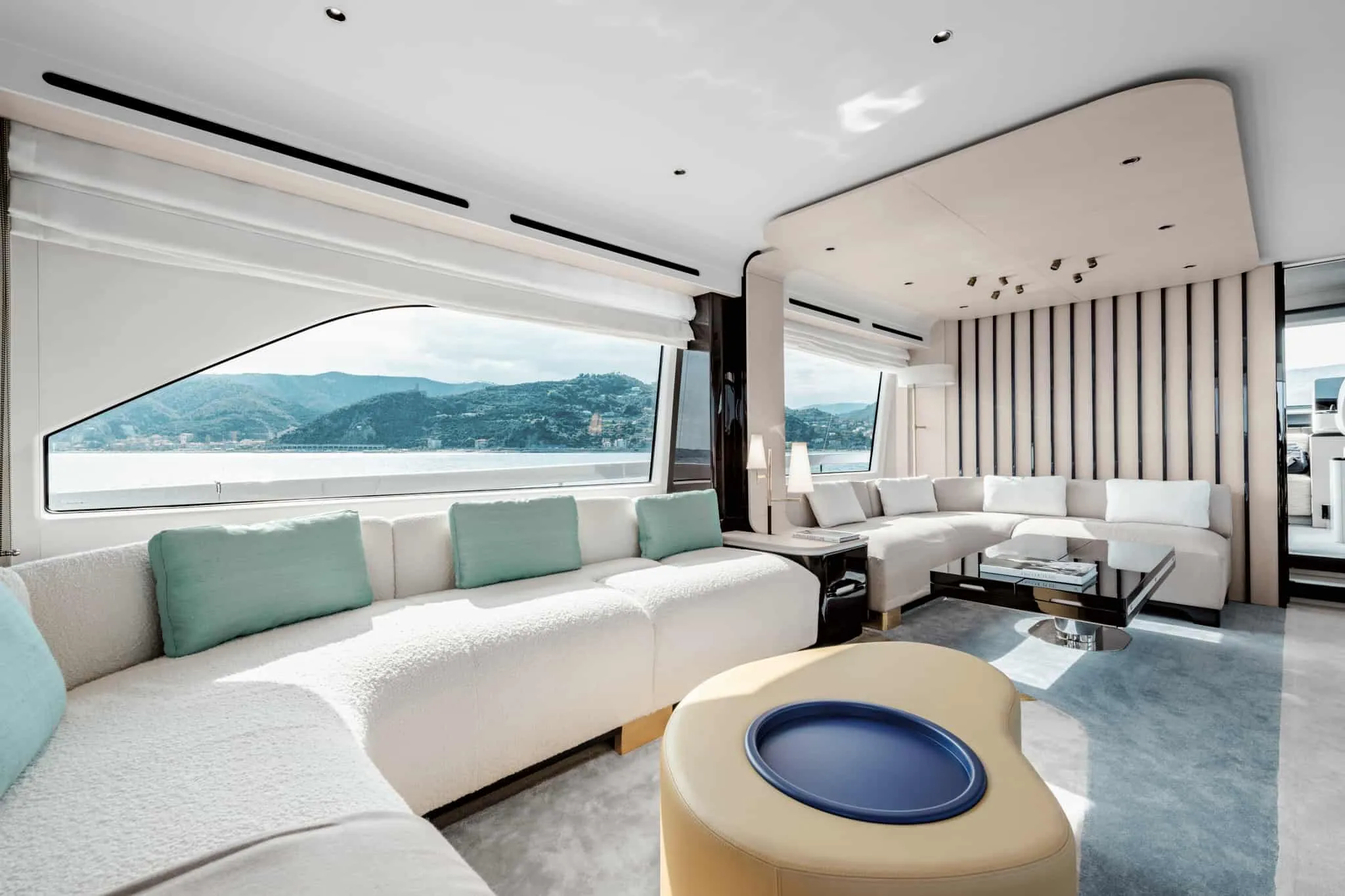
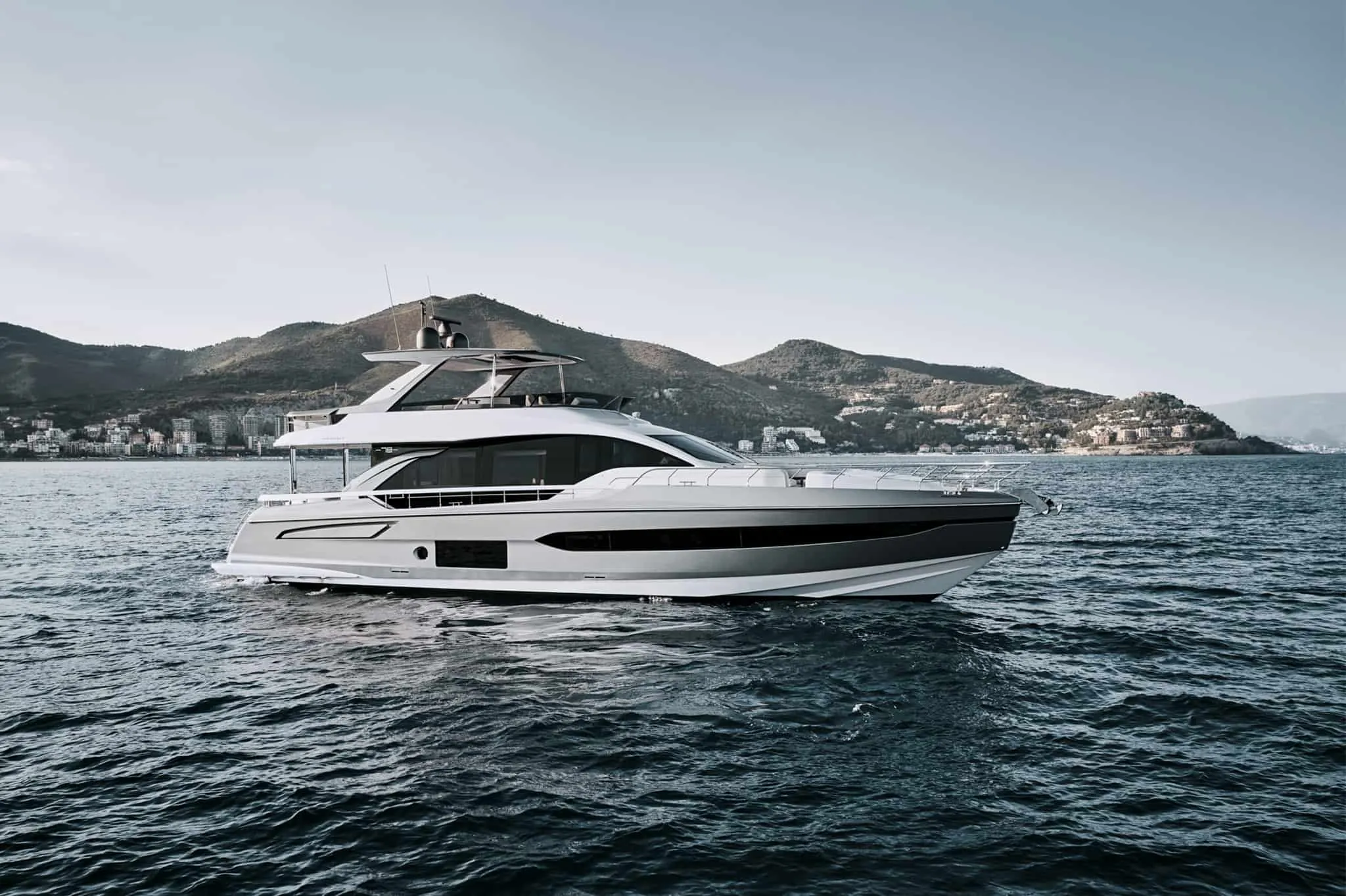
Photos courtesy of Azimut.
The Fly 78 measures 77'7" overall on an 18'10" beam and 5'10" draft, carrying 1,321 gallons of fuel and 291 gallons of water.
Triple pod propulsion — unusual at this size — compacts the machinery space, and the yard publishes verified sea-trial consumption figures for the hull.
Three 900 hp pod drives are standard with 1,000 hp units optional, for a published 33-knot maximum and 26-knot cruise. Pods give a 78-footer close-quarters manners that shafts cannot.
Full-load displacement is 127,690 lbs on a planing hull with 16.3 degrees of aft deadrise, with the superstructure in carbon fiber.
Four cabins, four heads, eight guest berths and two crew berths. The compact triple-pod machinery space returns volume to the accommodation deck.
Guest and crew circulation stay separate, so the boat runs with staff aboard without the household feeling it.
The Fly 78 sits at the top of the Fly series' pod-drive hulls — the bridge between the volume Fly models and the crewed world of the S and Grande collections above.
Within Azimut's range it courts the same buyer as the S8: flybridge living space against the S8's sport profile.
Buy the Fly 78 if you want the most yacht the pod-drive Fly hulls offer — long-season cruising, four cabins full, crew aboard but family in charge.
Step down to the Fly 72 if V12 shafts and a slightly smaller footprint suit; step up to the Grande 26M when a wide-body master and full crew operation become the point.
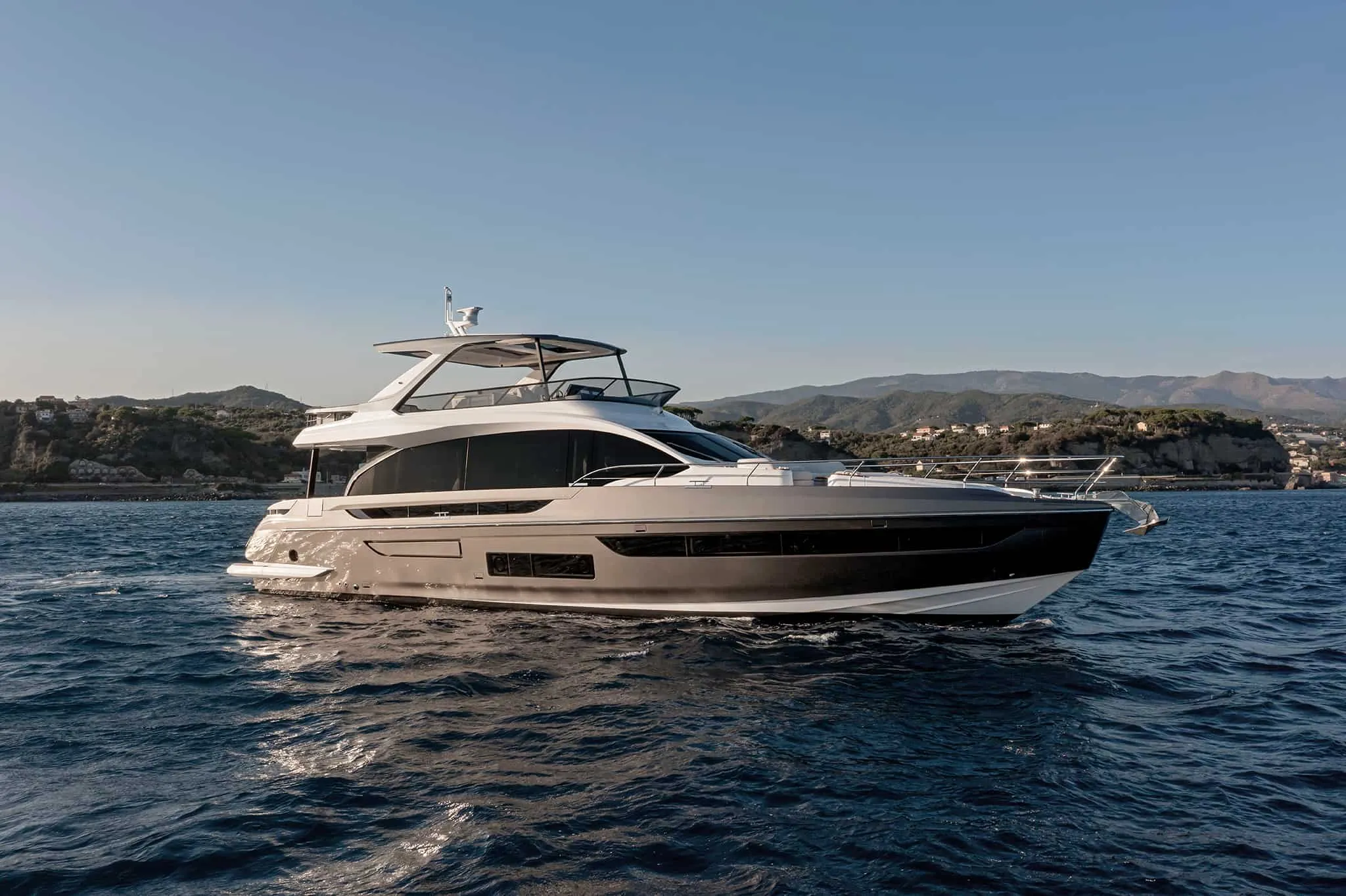
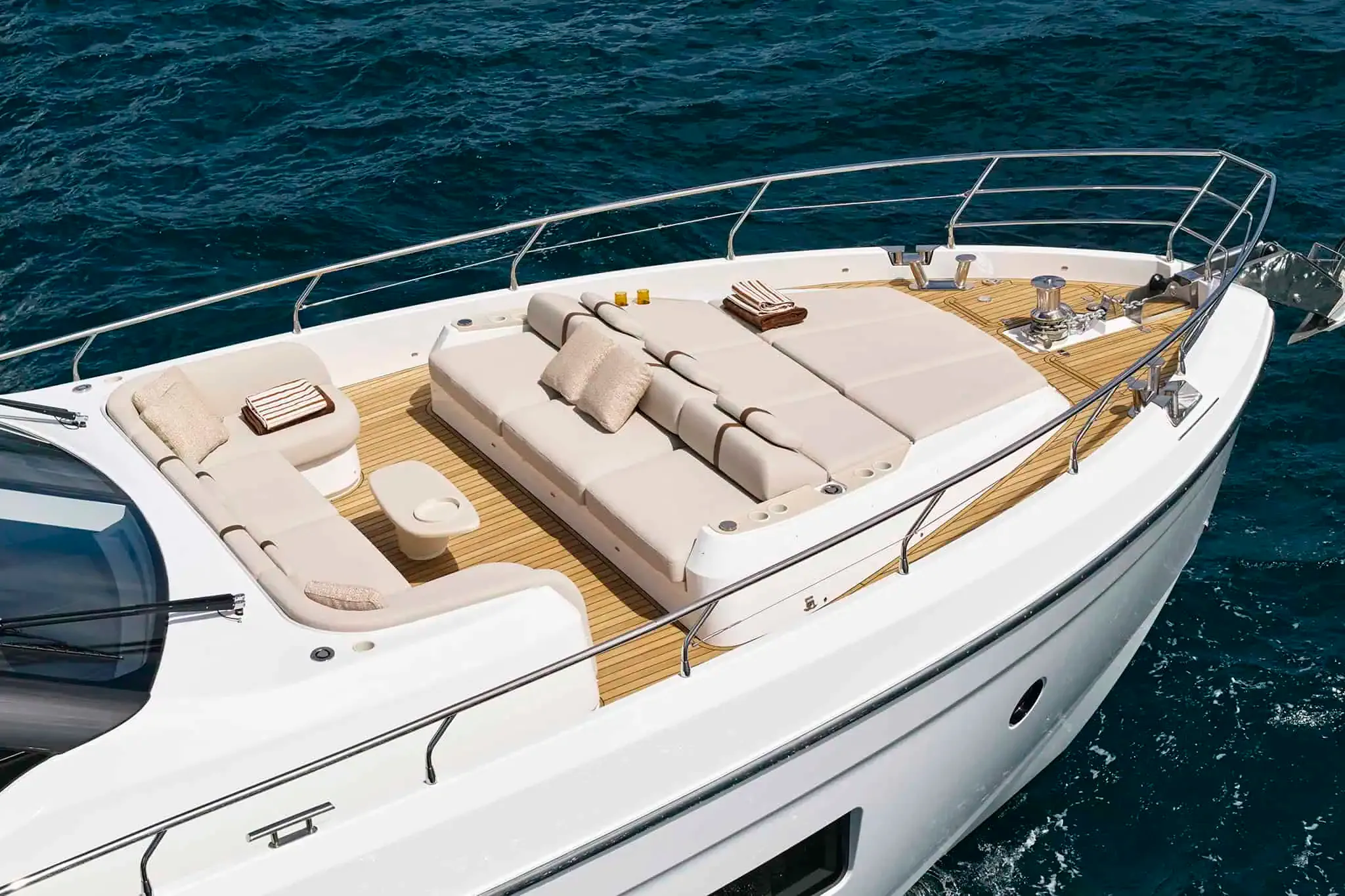
A published 33-knot maximum and 26-knot cruise on triple Volvo Penta IPS pods — 900-hp IPS 1200s standard, 1,000-hp IPS 1350s optional. Triple pods on a 78-footer buy both pace and composed docking manners.
Three pods instead of two big shaft drives keep the draft shallow and the handling precise, and they give the 78 its 33-knot published top end. It is the same recipe as Azimut's S series sport yachts, applied to the largest pod-driven Fly.
Four cabins and four heads plus crew quarters, with guest and crew circulation separated — the flow you expect on a crewed yacht, arriving a size earlier.
77'7" overall with an 18'10" beam and a 5'10" draft, displacing 127,690 pounds at full load. Note the draft: under six feet on a 78-foot yacht keeps Bahamas itineraries realistic.
Most owners run the Fly 78 with at least one professional aboard. It remains manageable for a highly experienced owner-operator, but the four-cabin guest load usually decides it: host at this scale and you will want help.
1,321 gallons of fuel and 291 gallons of water — enough for long coastal legs between fills at cruise.