
March 12, 2026
The Azimut Fly 82: When 81 Feet Feels Like a Superyacht
Azimut Fly 82 compresses superyacht space into owner-operated ease: carbon-fiber superstructure cutting topside weight, triple Volvo Penta I…
Read the articleExpert Review, Technical Specifications & Market Analysis
| Feature | Specifications |
|---|---|
| Overall Length | 81' 4" |
| Beam | 19' 3" |
| Draft | 5' 7" |
| Displacement | 63.2 t (139,330 lbs) Full Load |
| Engines | 3x Volvo Penta IPS 1200 (900 hp) / Opt: 3x IPS 1350 (1000 hp) |
| Fuel Capacity | 5,700 L (1,506 US Gal) |
| Water Capacity | 1,100 L (291 US Gal) |
| Cabins / Heads | 4 Cabins + 2 Crew / 5 Heads + 1 Crew |
| Max Speed | Up to 32 kn |
| Cruise Speed | Up to 25 kn |
Source: Spec & Photos courtesy of Azimut. Specs verified by Tony Smith, USCG 100 Ton Master, on August 8, 2026.
You want superyacht presence without giving up the family flybridge formula. The Fly 82 answers with four cabins, five heads and a transom that unfolds into a terrace over the water.
Part of the Azimut Fly series — see how owners step up through the lineup.

Azimut made the right call with triple IPS on the Fly 82. The redundancy matters more than the speed, and the fuel efficiency is real. Lloyd's Register witnessed the sea trials, which means the 375-nautical-mile range at 21 knots isn't marketing fiction. The Carbon Tech construction is proven technology at this point, not an experiment. The weight savings show up in handling, especially in a beam sea where the reduced roll momentum makes a noticeable difference. The hull is a Pierluigi Ausonio design with a 16.3-degree deadrise, which is the right compromise between offshore capability and planing efficiency.
This boat is built for the owner who wants four guest cabins and dedicated crew quarters without stepping up to a 100-footer. The Deck2Deck system is the differentiator in this segment. It's not a gimmick. It's a hydraulic transom that creates 200 square feet of usable space at the waterline, which changes how you use the stern. If you're comparing this to a Ferretti 850 or a Princess Y80, the Fly 82 wins on layout and efficiency. The Ferretti has more traditional styling, and the Princess has a slightly larger flybridge, but neither offers the Deck2Deck system or the fuel efficiency of triple IPS.
Resale on Azimut's Fly series has been strong, with three-year-old Fly 78 models holding 68 to 72 percent of MSRP. The Fly 82 is too new for resale data, but the fundamentals are solid. Maintenance costs on triple IPS run higher than twin shafts because you have three lower units instead of two, but the fuel savings offset the difference if you run more than 100 hours per year. Budget $350,000 to $450,000 annually for full-time crew, insurance, slip fees, and maintenance. That's the real number, not the optimistic version.
Video courtesy of Azimut.
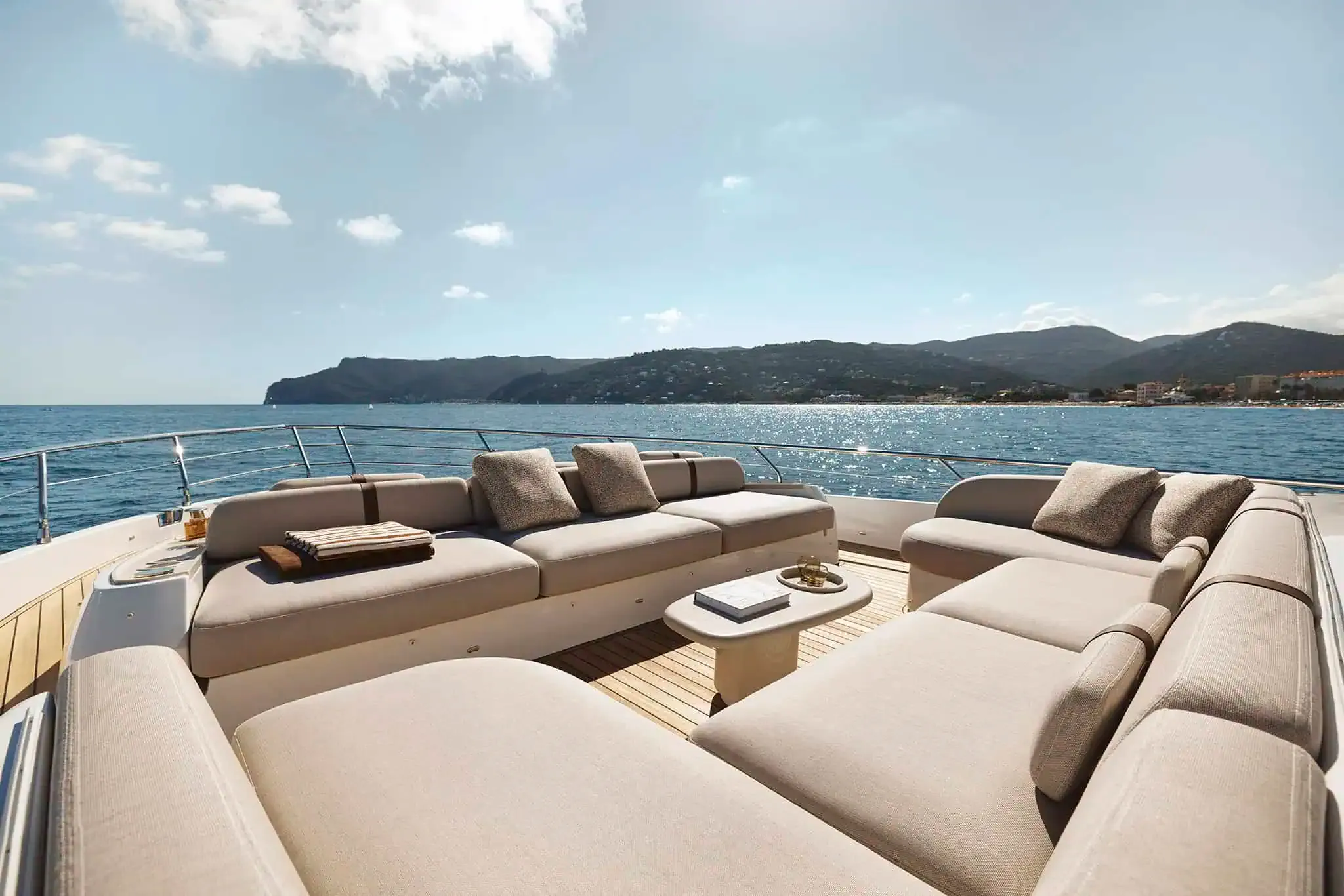
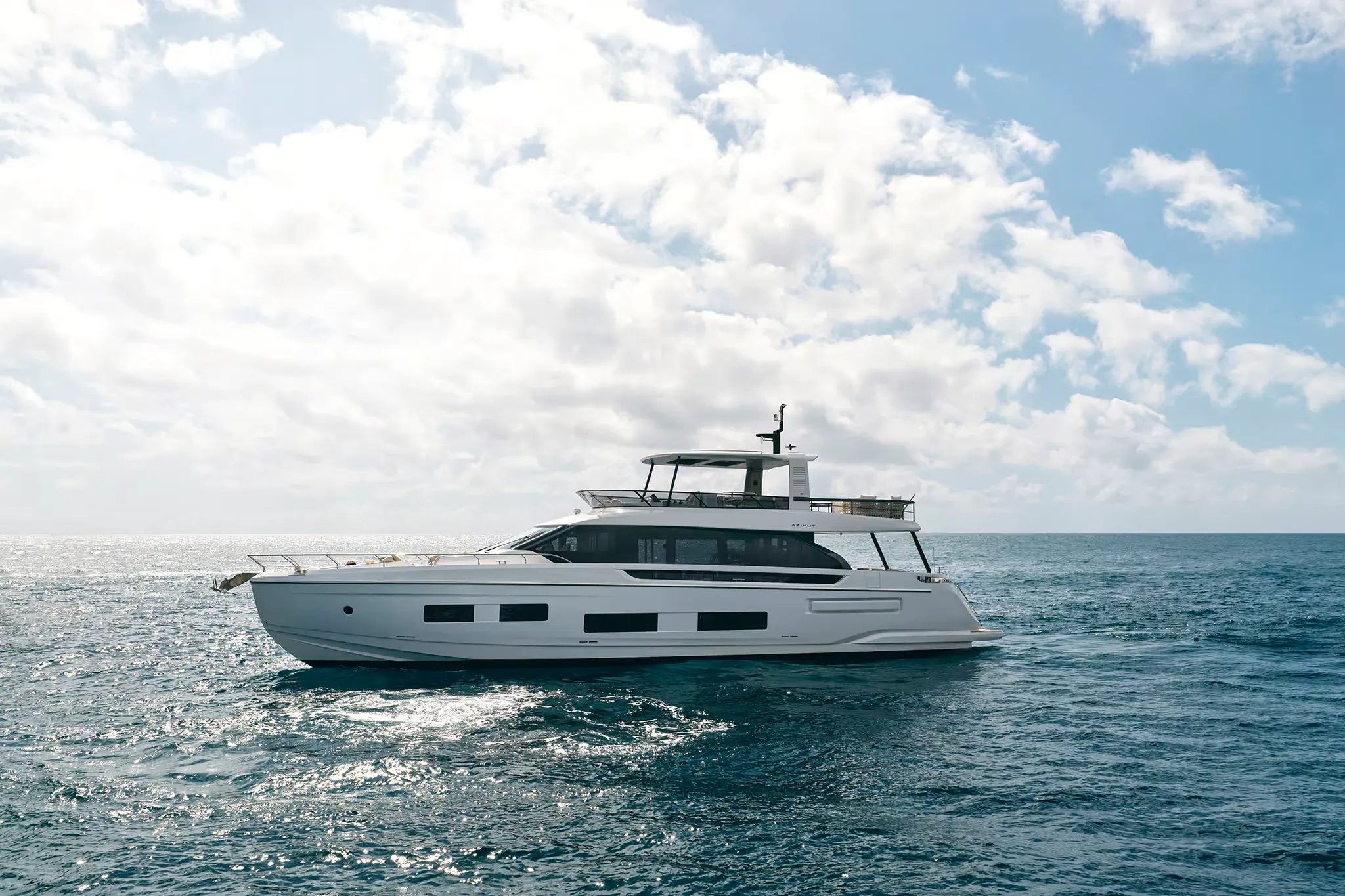
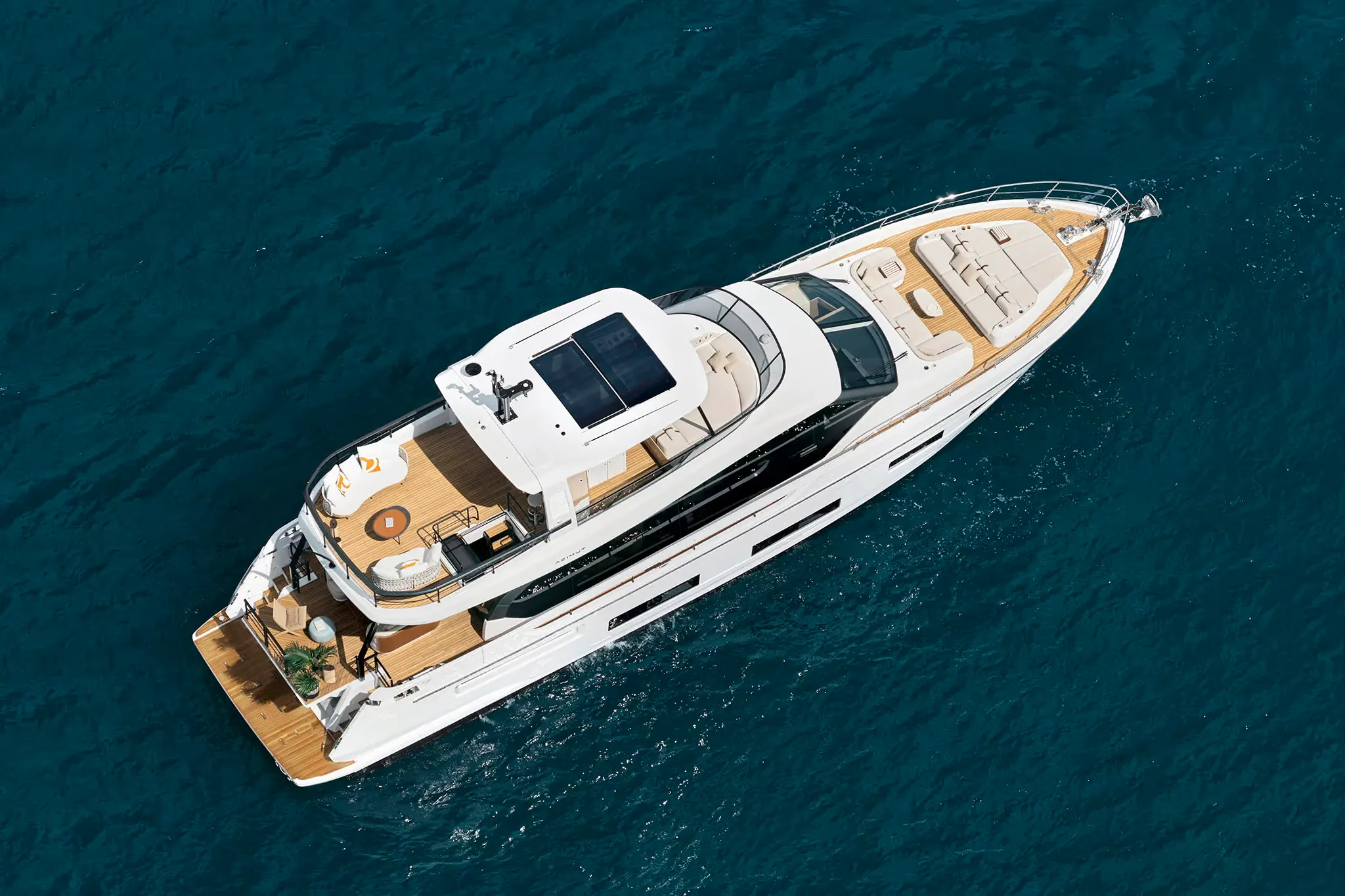
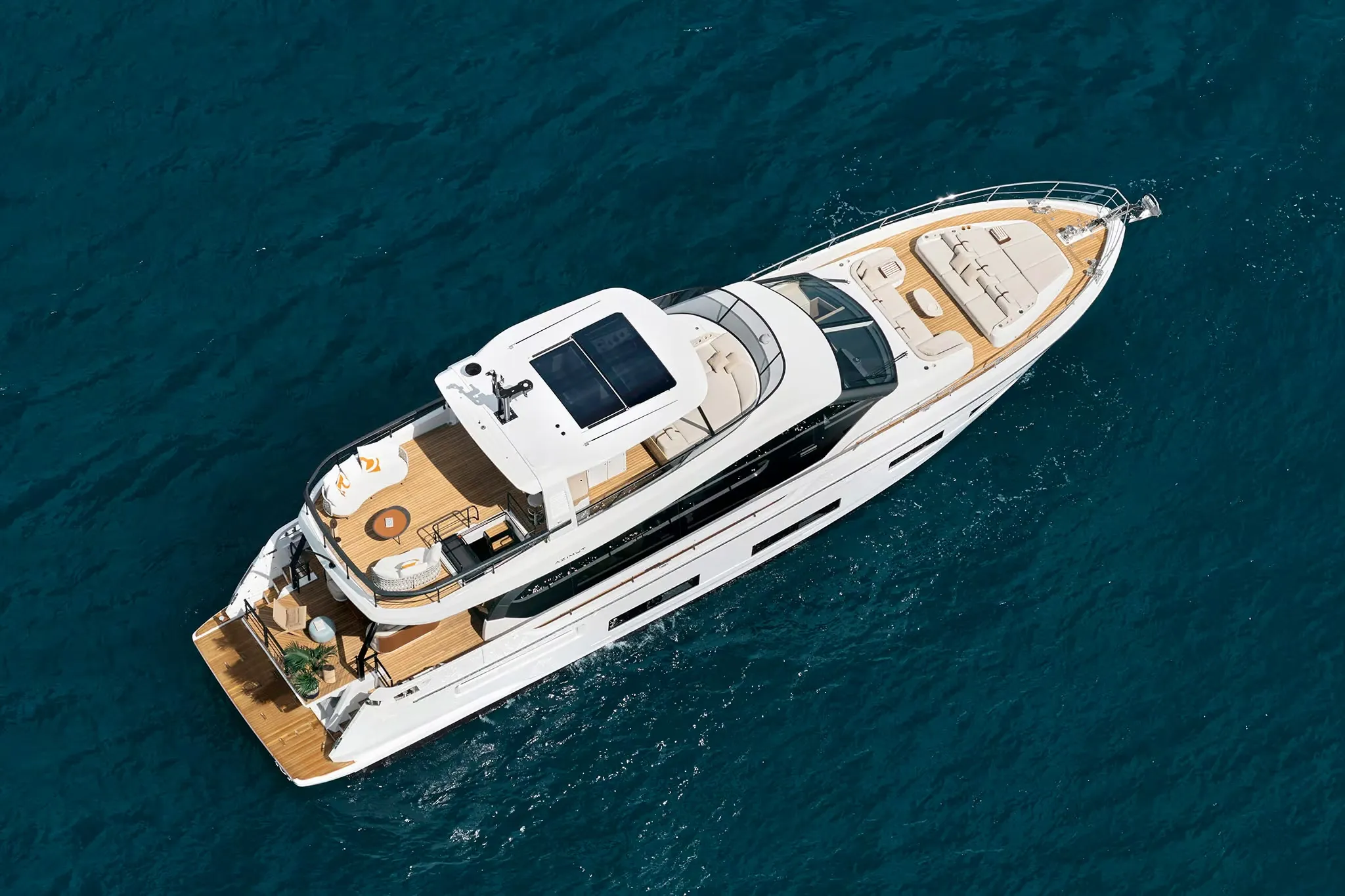
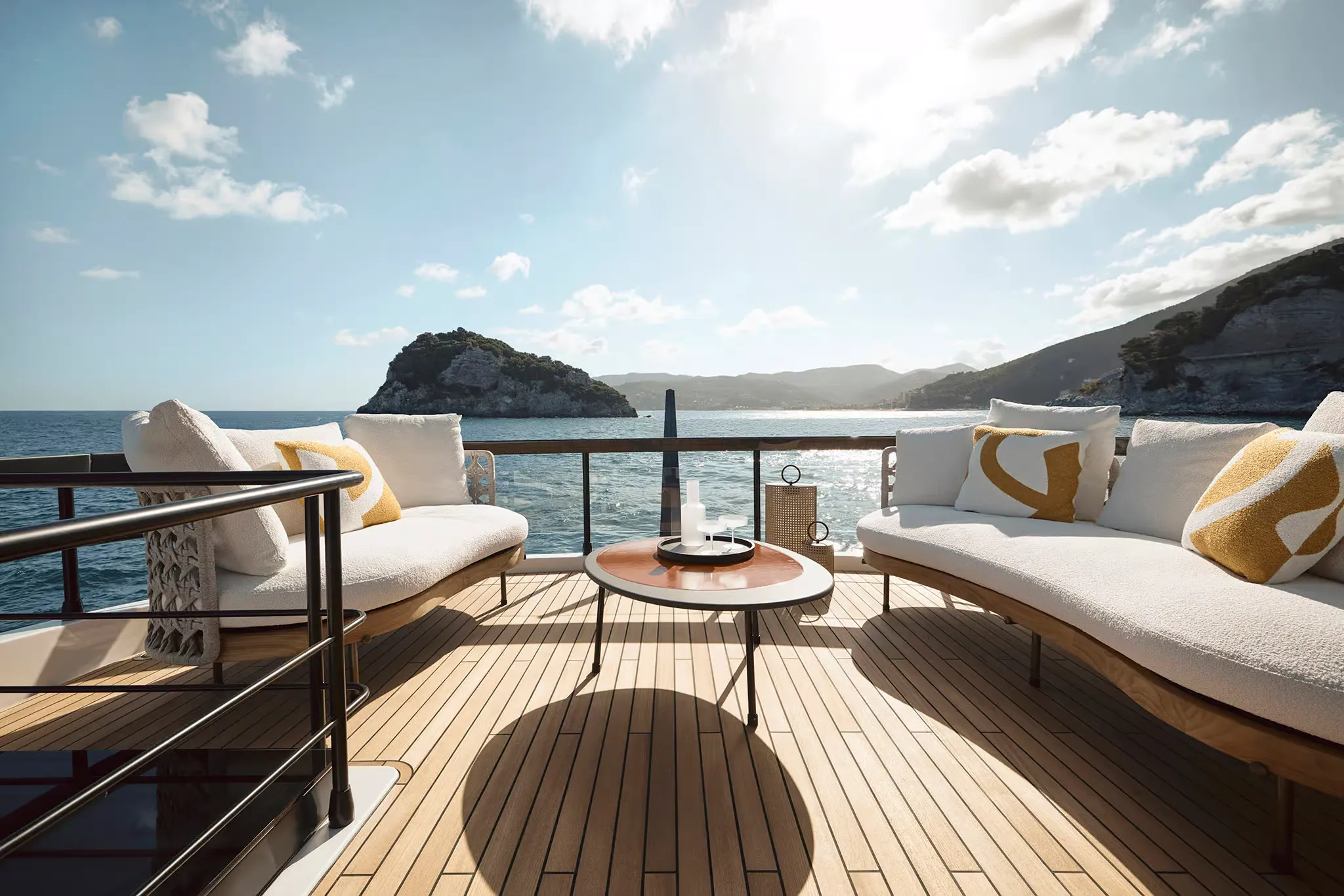
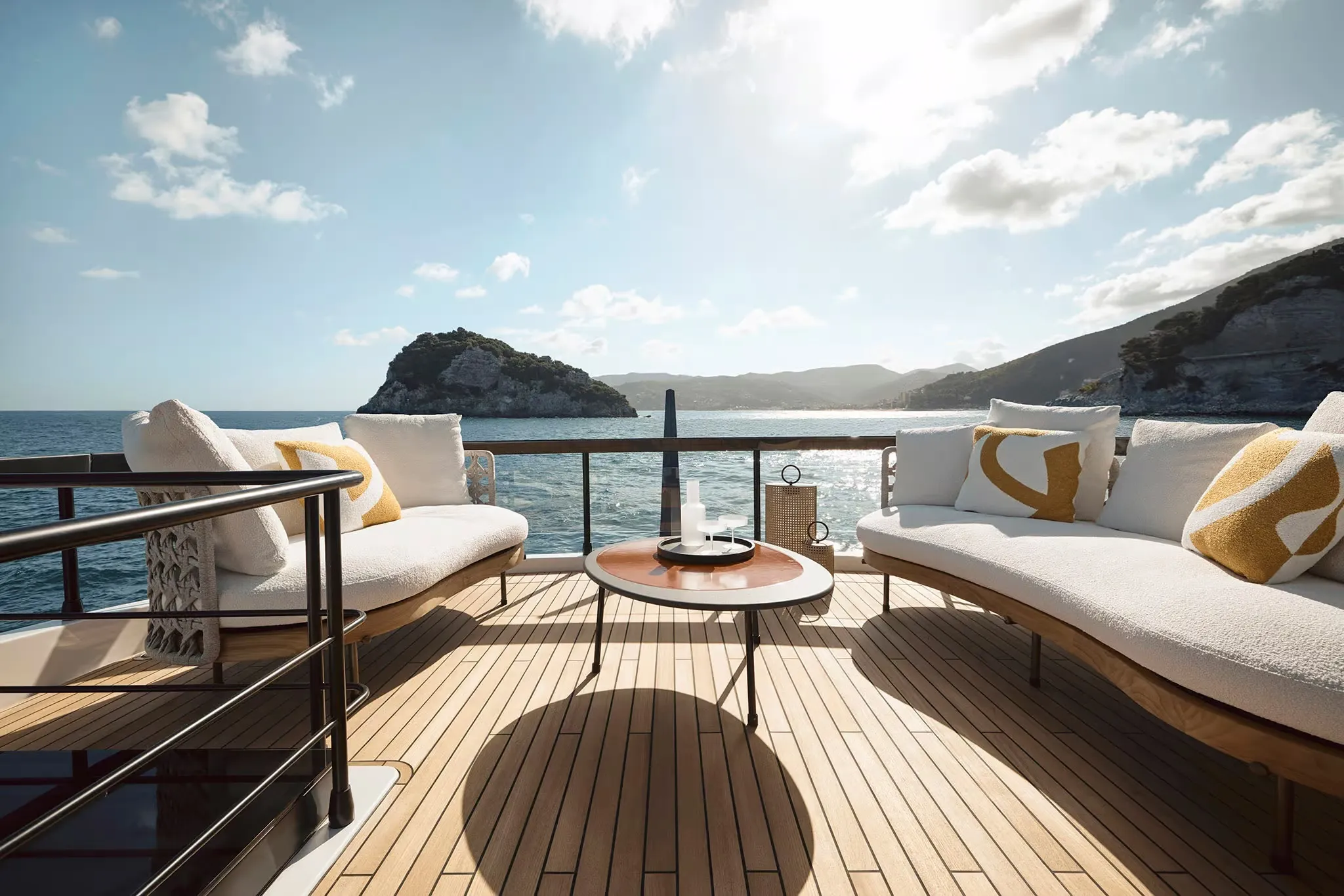
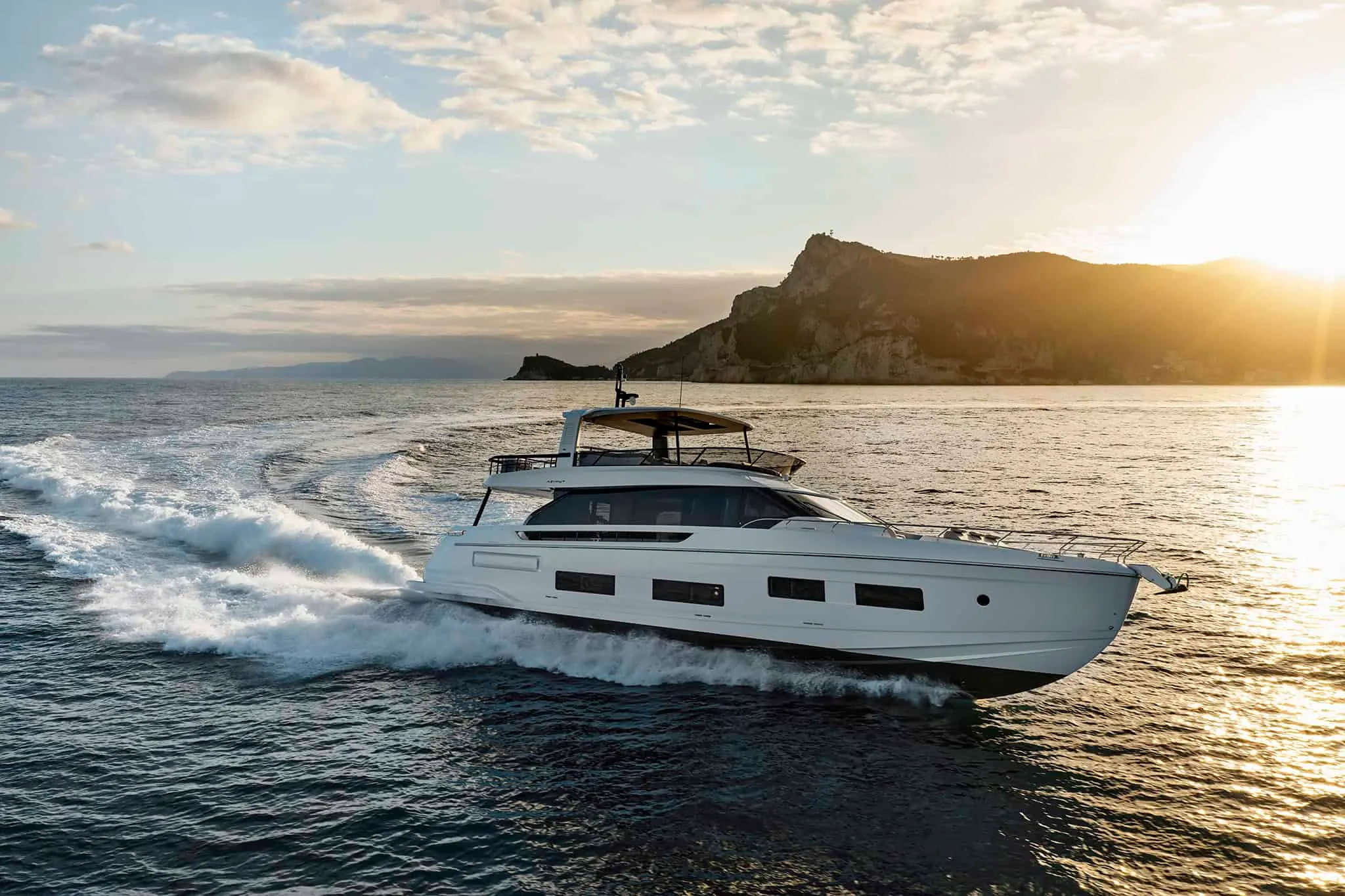
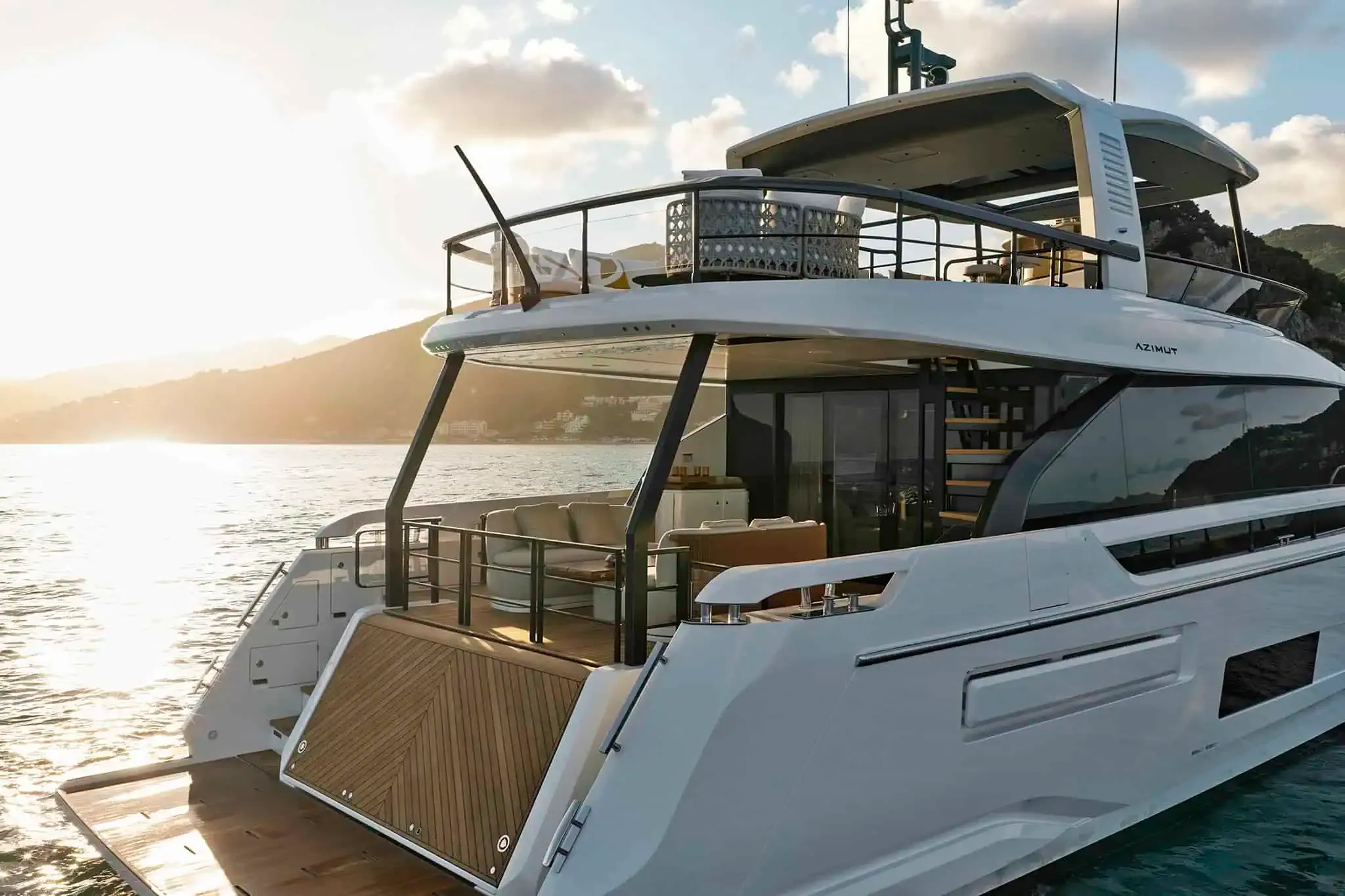
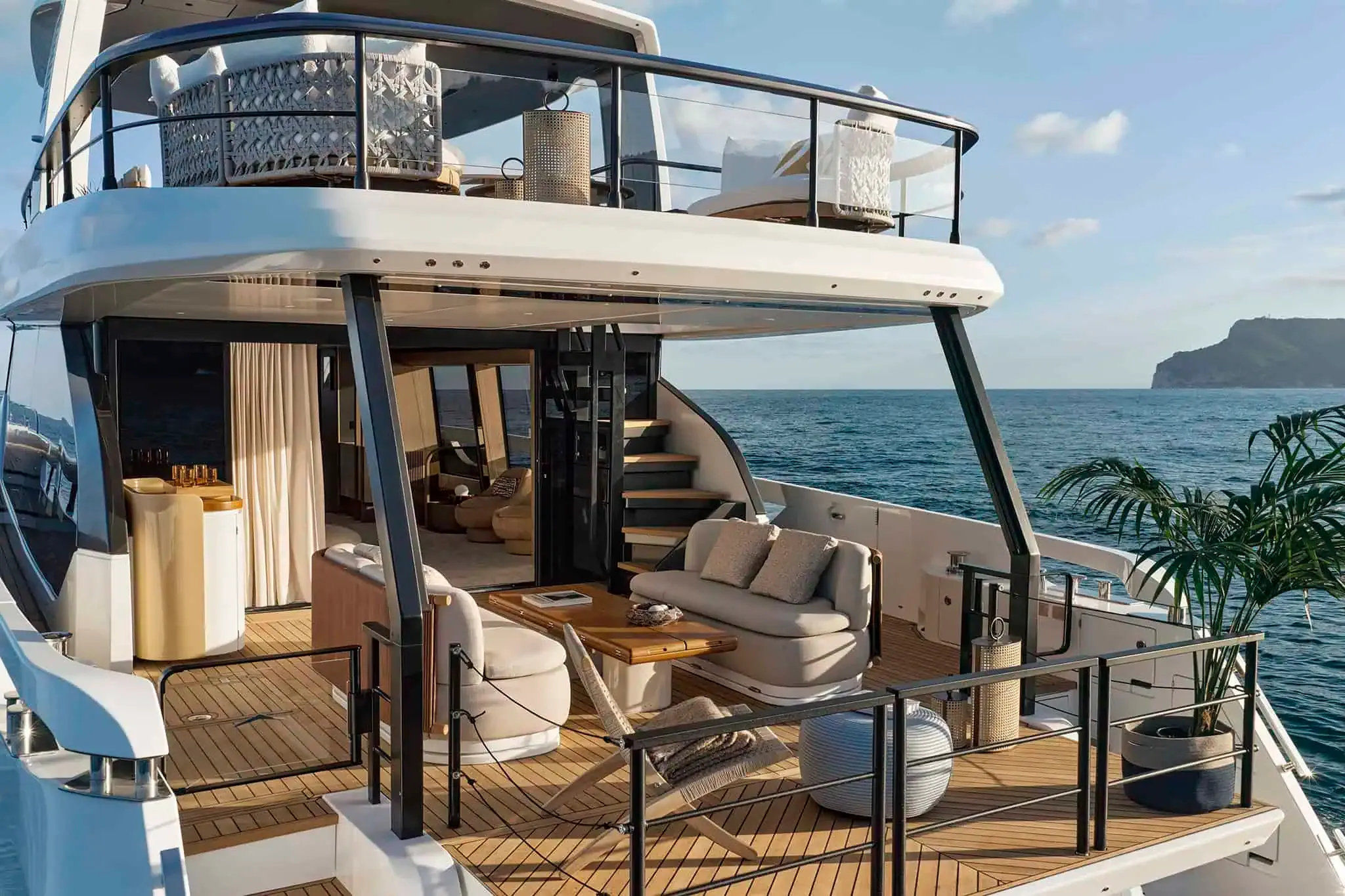
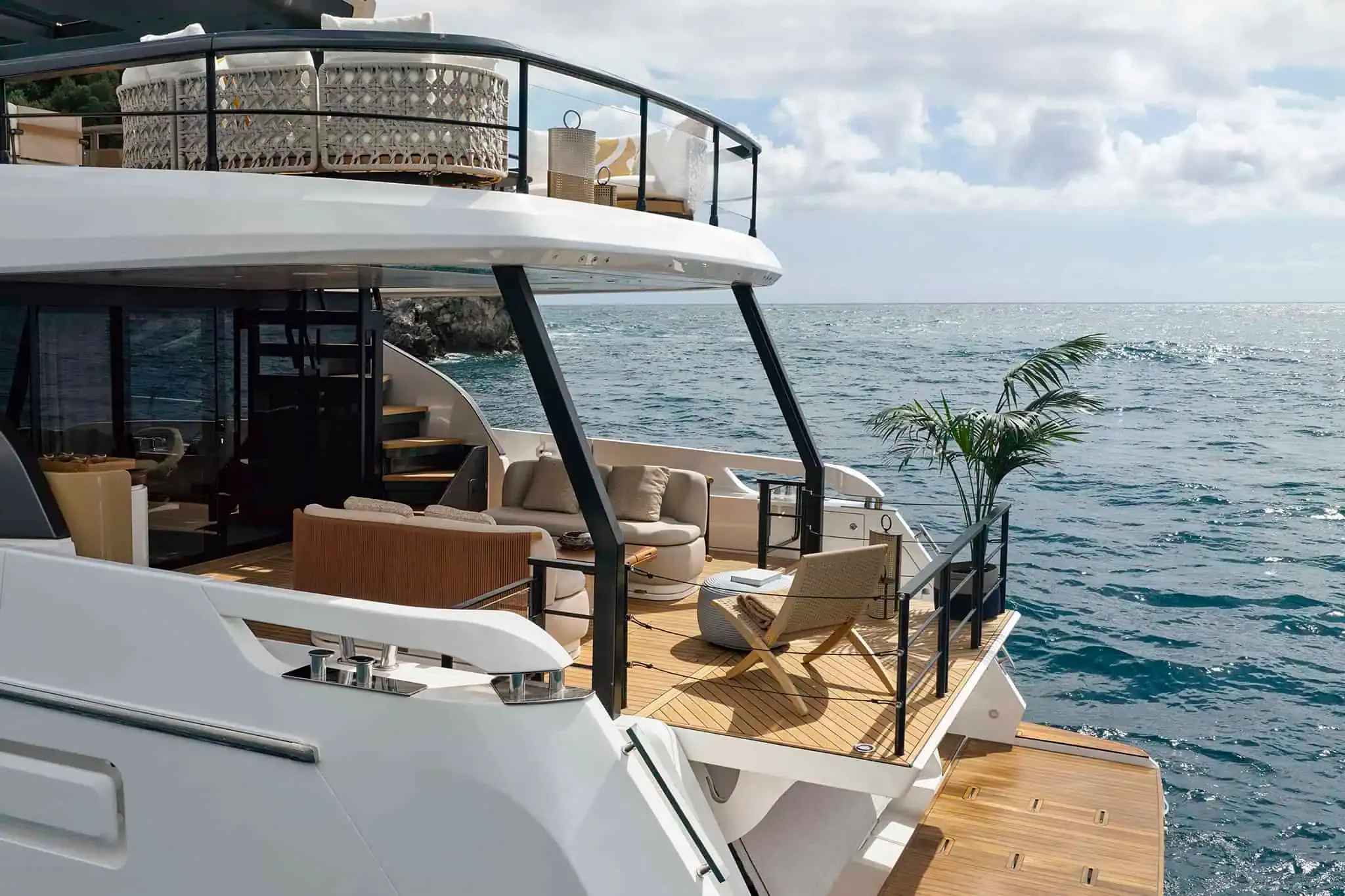
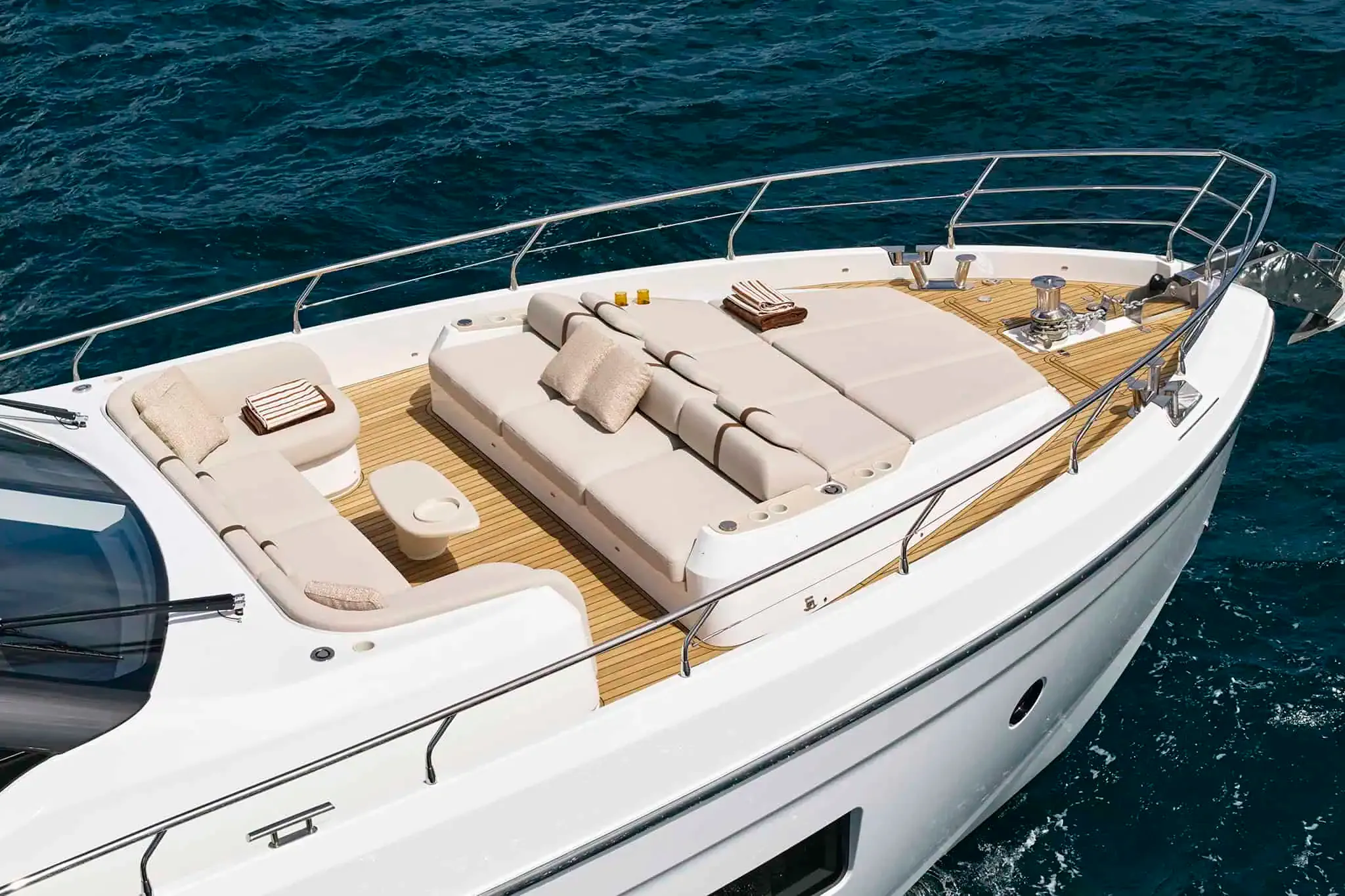
Photos courtesy of Azimut.
The Fly 82 brings superyacht scale to Azimut's flybridge series: 81'4" overall, 19'3" beam, 139,330 lbs at full load, in GRP and carbon fiber. Alberto Mancini shaped the exterior; Fabio Fantolino styled the interior.
The signature is the Deck2Deck terrace — the transom rises, the cockpit opens, and the aft deck becomes a terrace standing directly over the water.
Triple Volvo Penta IPS 1200 pods at 900 hp each are standard, with 1,000 hp IPS 1350s optional. Azimut publishes up to 32 knots flat out and 25 knots at cruise, on 1,506 gallons of fuel.
The yard credits the triple-pod layout, optimized waterlines and carbon construction with a 20-30% fuel and CO2 saving over an equivalent shaft-drive hull across the main speed range.
Four cabins and five heads for the owner's party, plus two crew cabins — a head count that means no queues with every berth filled.
Fabio Fantolino's interior gives the 82 a character of its own within the series, and the flybridge and Deck2Deck cockpit terrace hand guests two distinct places to gather.
The Fly 82 is where the Fly series overlaps true superyacht territory — five heads, two crew cabins, a fold-out terrace — while keeping the family-flybridge DNA of its smaller sisters.
Within Azimut's range it sits just below the Grande series; the Grande 26M adds a fifth stateroom and MAN V12 pod power four feet further up.
Buy the Fly 82 if you run with crew, entertain at anchor and want the terrace-on-the-water moment without moving up to the Grande series.
If a fifth stateroom is the requirement, the Grande 26M is the logical next step; if a lower, faster profile appeals on similar length, look at the S8.
The Fly 82 straddles the owner-operator line, and its budget does the same — bigger numbers than a 70-footer, but still a boat, not a program:
Cost figures are Minted Yachts editorial estimates for typical U.S. Southeast ownership; your marina, usage, insurance profile, and spec will move these numbers. Read how we source and verify, or ask us for numbers specific to your situation.
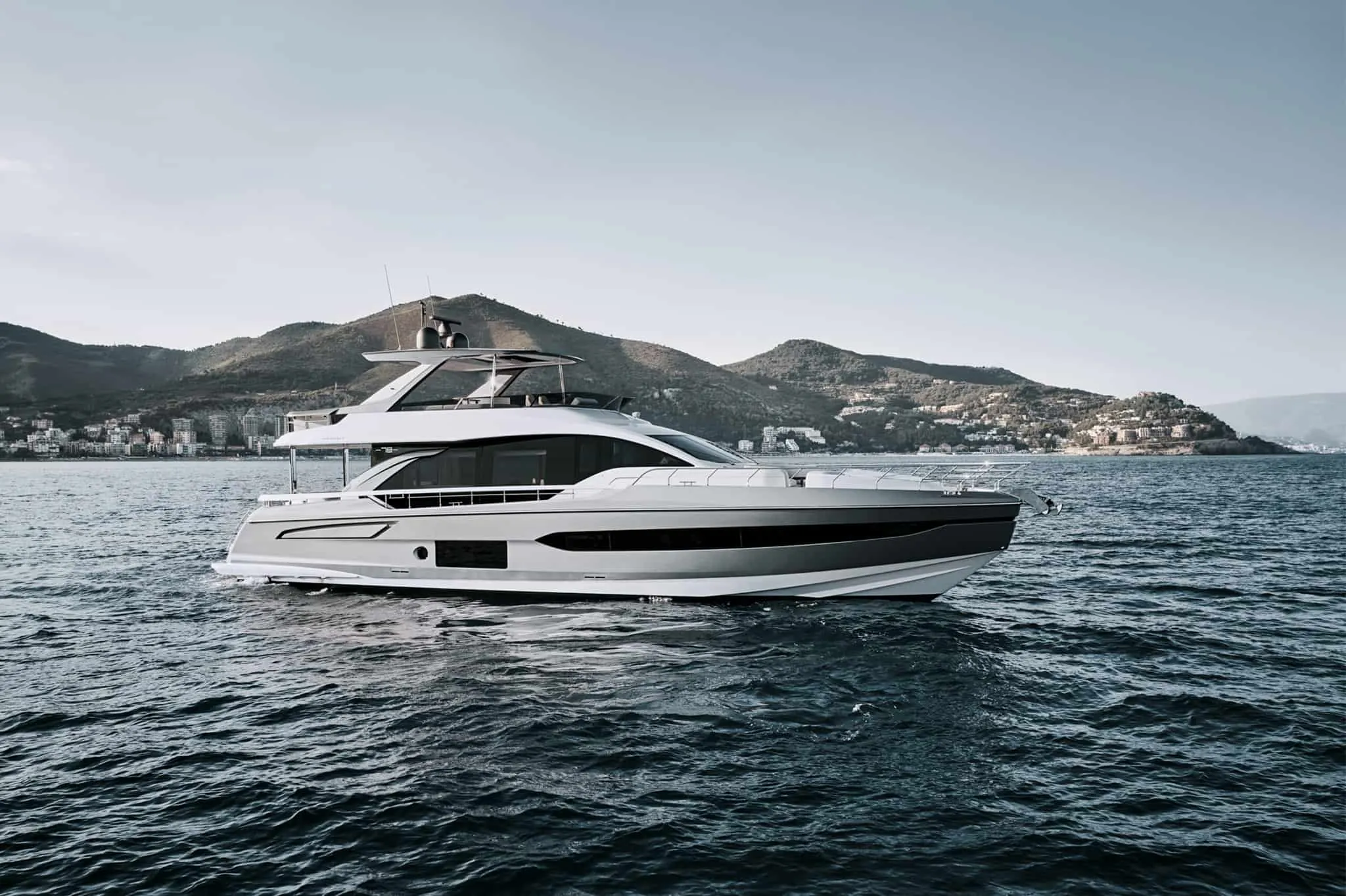
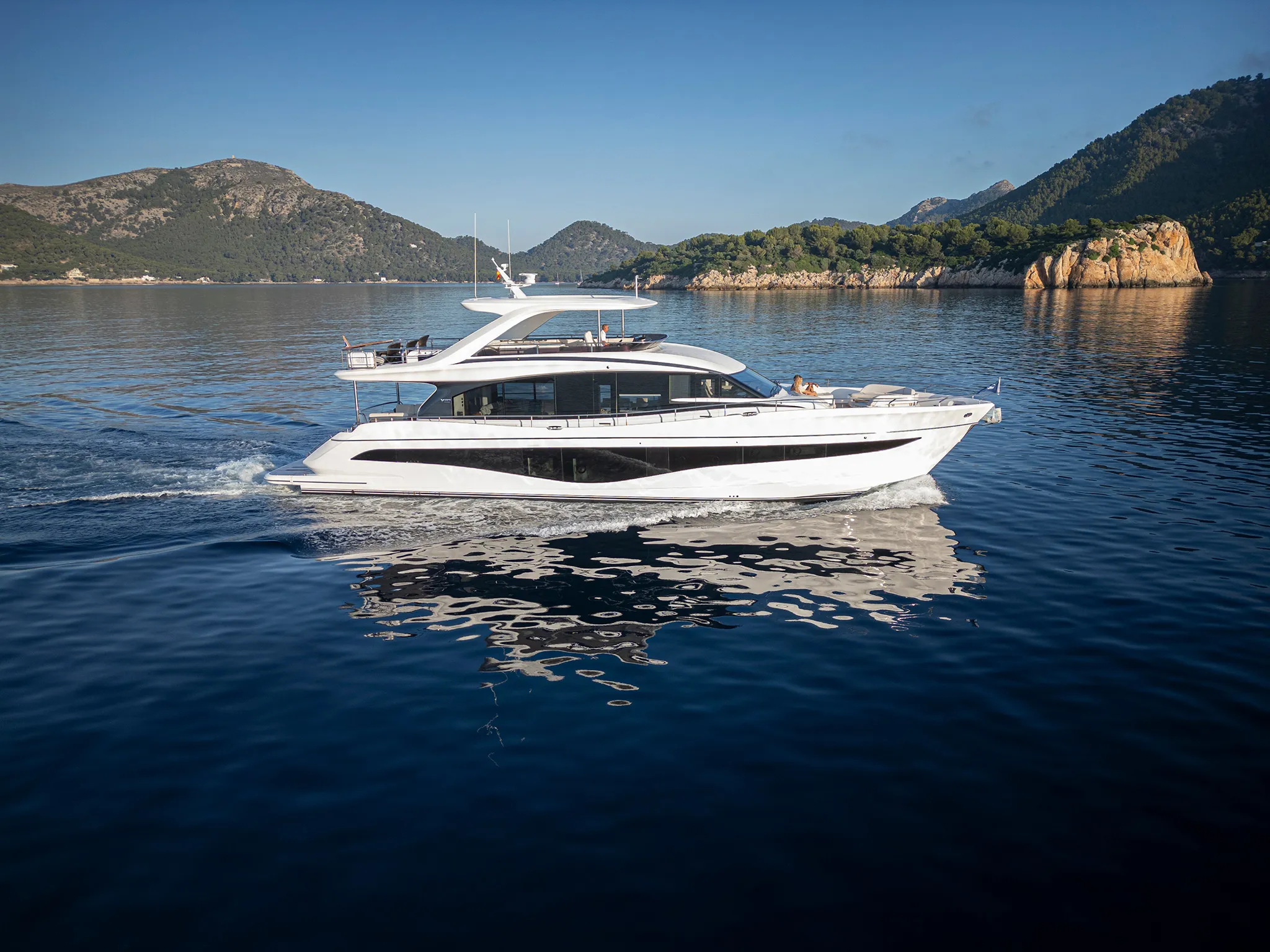
Deck2Deck is a hydraulic transom system that unfolds into roughly 400 square feet of water-level outdoor living space. Neither the Sunseeker 88 nor the Princess Y85 offers an equivalent feature at this price point — it is the Fly 82's defining party trick.
Eight guests in four cabins with five heads, including a full-beam owner's suite spanning the 19-foot beam with direct transom access, plus quarters for two crew. The layout flexes between owner-operated weekends and fully crewed charters.
Yes. Triple IPS 1200 pod propulsion combined with a carbon fiber superstructure delivers 20 to 30 percent better fuel economy than comparable shaft-drive yachts in the 80-to-85-foot class — a difference you feel on every Bahamas run and every fuel bill.
The Fly 82 reaches up to 32 knots and cruises at up to 25 knots with triple Volvo Penta IPS 1200 pods (900 hp each); triple IPS 1350s (1,000 hp) are optional. Pod drives plus the carbon superstructure yield 20 to 30 percent better fuel efficiency than shaft-drive competitors.
The Fly 82 measures 81 feet 4 inches overall with a 19-foot 3-inch beam, a 5-foot 7-inch draft, and full-load displacement of about 139,300 pounds. It carries 1,506 gallons of fuel and 291 gallons of water.
It sits deliberately on the line. IPS joystick control and a manageable flybridge helm keep it within reach of a confident owner-operator, while quarters for two crew support a captain-run program. Most competitors this size force you to choose; the Fly 82 does not.