
August 29, 2026
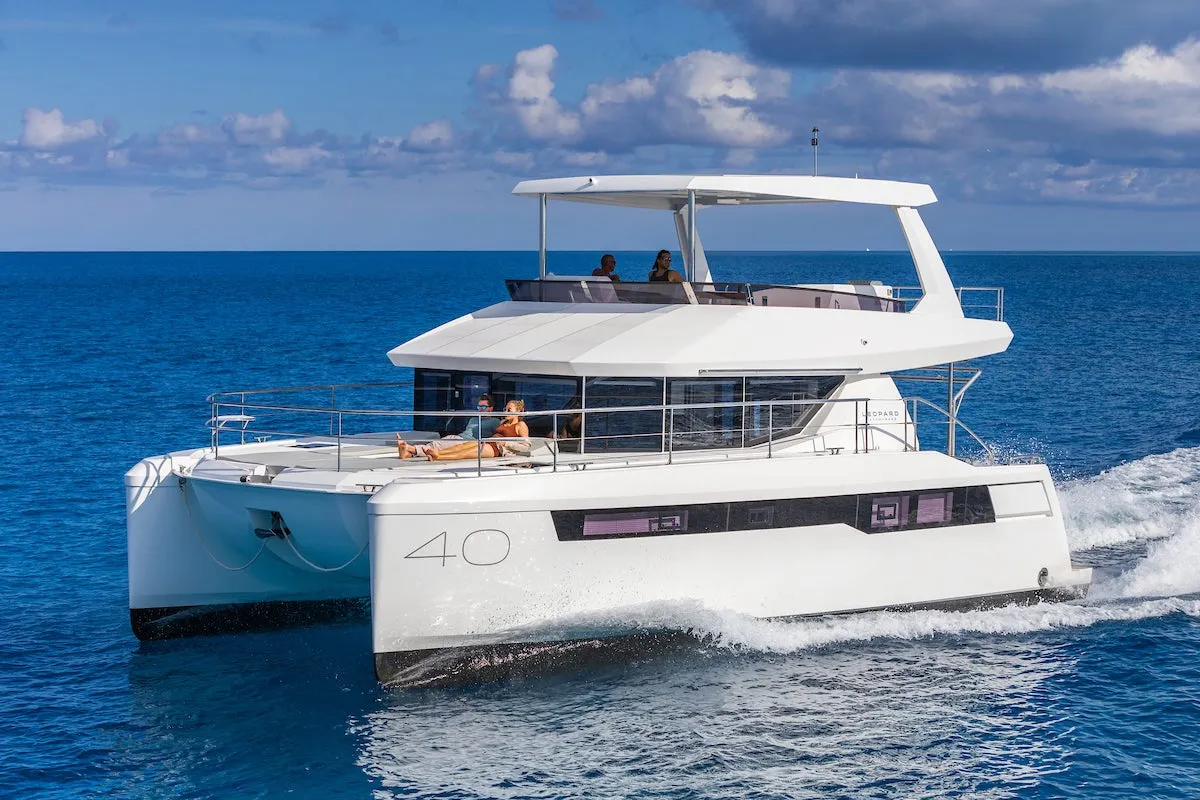
The Leopard 40 Powercat: Your Weekender Just Got Wider
With a 21-foot-8-inch beam, a shallow 3-foot-7-inch draft, three island-bed cabins and a choice of three Yanmar packages, the Leopard 40 Pow…
Read the article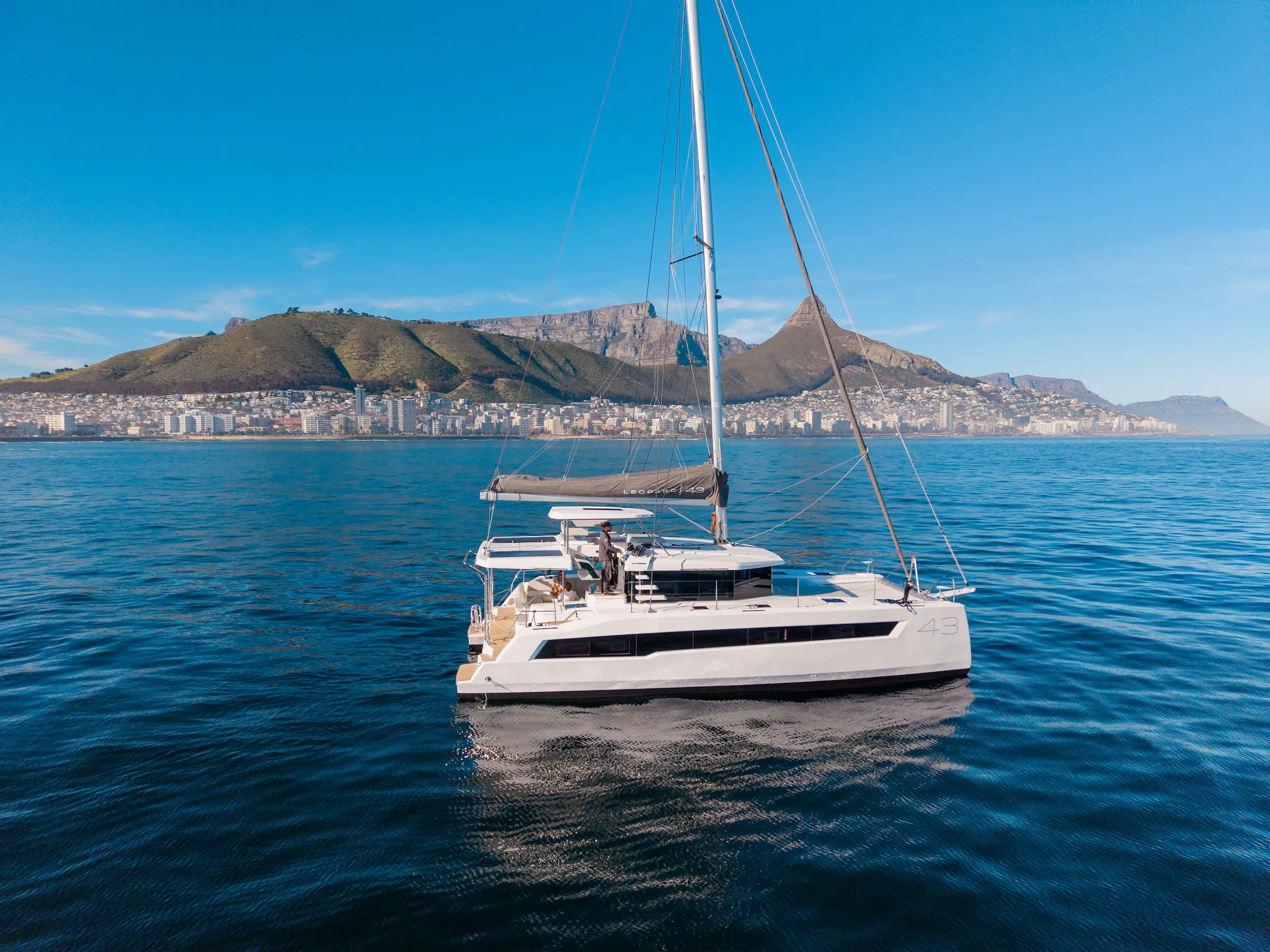
You want catamaran space and a boat two people can still handle at the end of a long passage. That is who Leopard builds for: sailing and power catamarans from 40 to 52 feet, built in Cape Town. Here is our expert assessment of the brand.

— Tony Smith
Founder, Minted Yachts
Leopard is the brand I point people to when the plan is real cruising and the crew is two.
What separates these boats from the rest of the production catamaran market is where you stand to run them. The helm is in the cockpit — not up on a flybridge, not tucked behind a bulkhead — laid out so one person can work the boat while everyone else stays in the same conversation. That reads like a styling choice until the third night of a passage, when the person on watch is not alone in a plexiglass box. The stepped hulls and the overlapping genoa on the sailing boats are the other half of it: these cats keep moving in light air instead of leaving you reaching for the ignition.
The range is small, and that is a feature. Six boats, 40 to 52 feet, three under sail and three under power, with the deck philosophy carried across all of them. If you have sailed a Leopard 43 you already know your way around a 53 Powercat, and that is worth something both when you step up and when you sell.
Two things to be honest about. Beam is what decides where these boats live — 21'8" to 26'9" across the range — and a marina with a slip that wide is not the same as a marina with a slip you want to pay for. And the layouts are Leopard's, chosen from a list at order rather than drawn to your brief; if you want the arrangement your own way, this is not the yard for it. Settle your layout and your loaded displacement before you sign, and the rest of the ownership tends to be uneventful — which is the entire point of buying a boat with 3,500 hulls behind it.
Deep-dive specs and expert opinions on current Leopard Catamarans models. Don't see the Leopard Catamarans you're looking for? Reach out for new and pre-owned brokerage options.
Photo credit Leopard Catamarans.
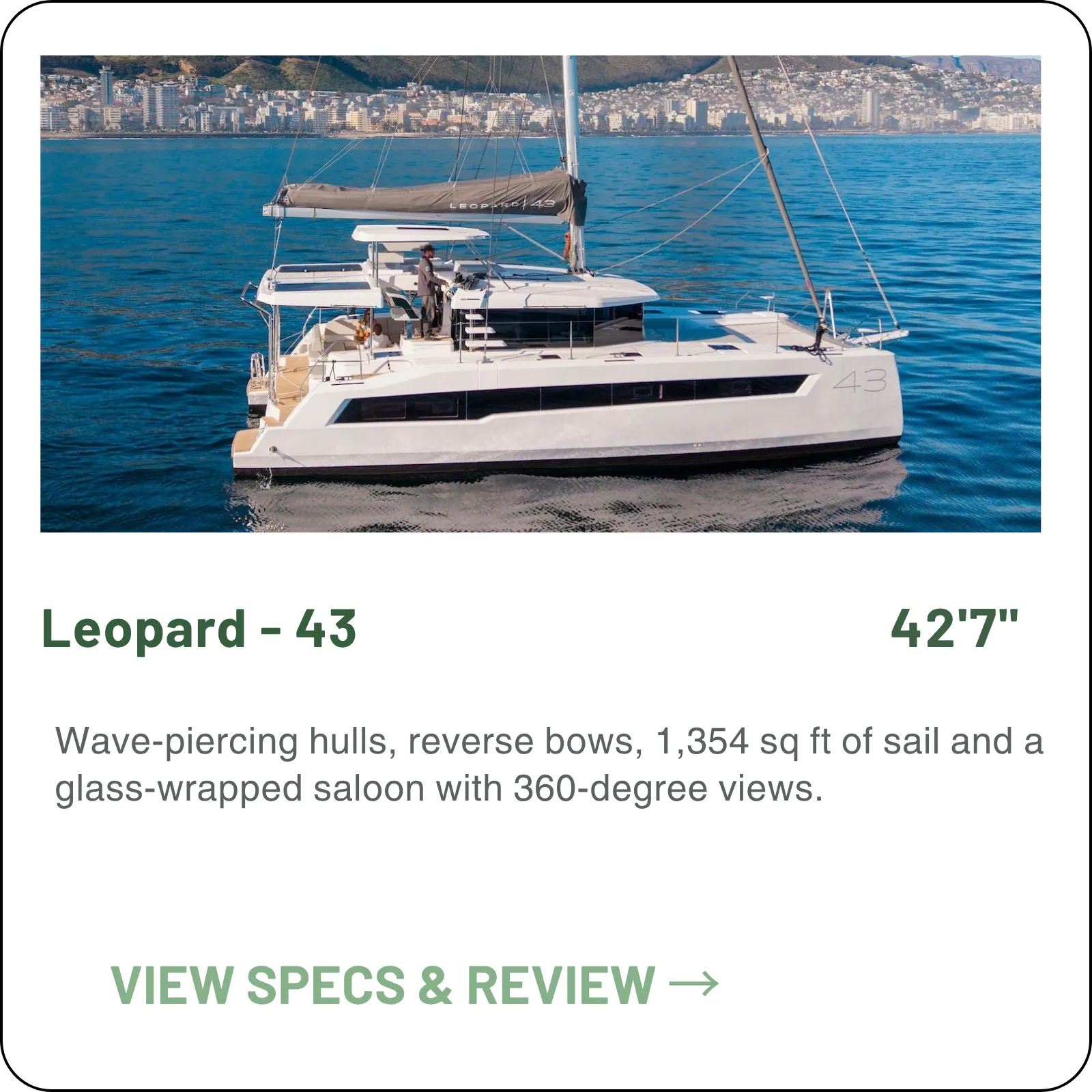
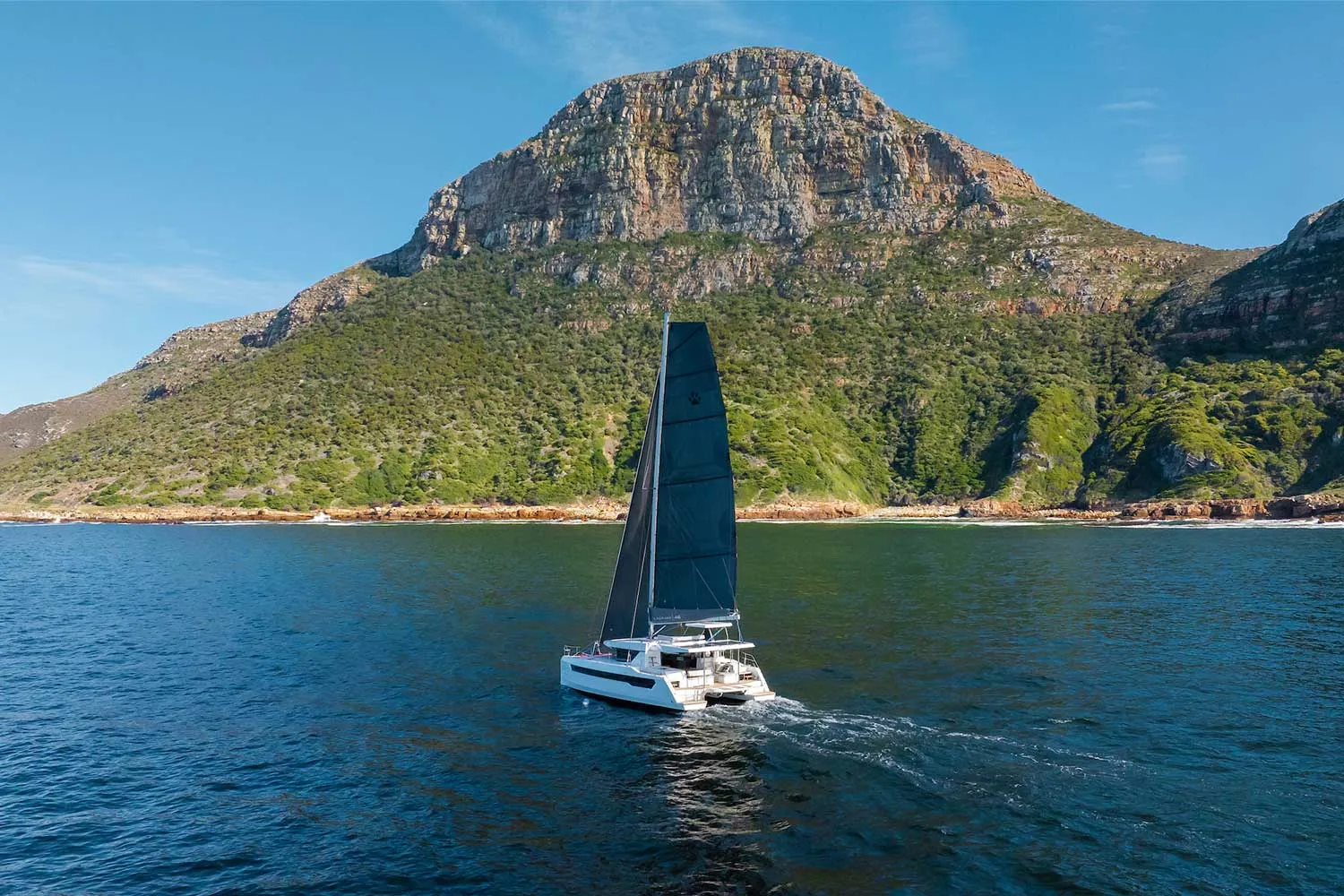
Wave-piercing hulls, reverse bows, 1,354 sq ft of sail and a glass-wrapped saloon with 360-degree views.
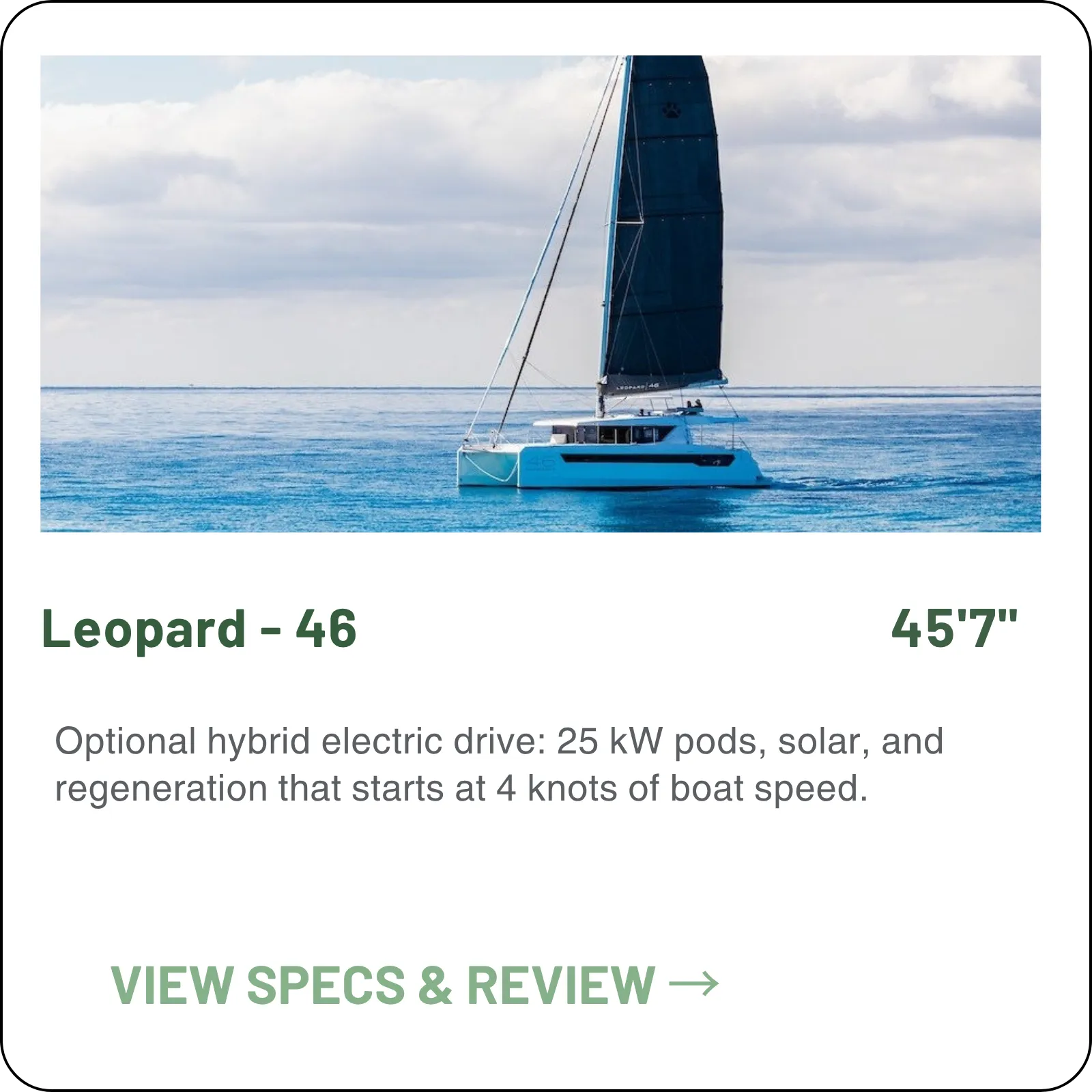
Optional hybrid electric drive: 25 kW pods, solar, and regeneration that starts at 4 knots of boat speed.
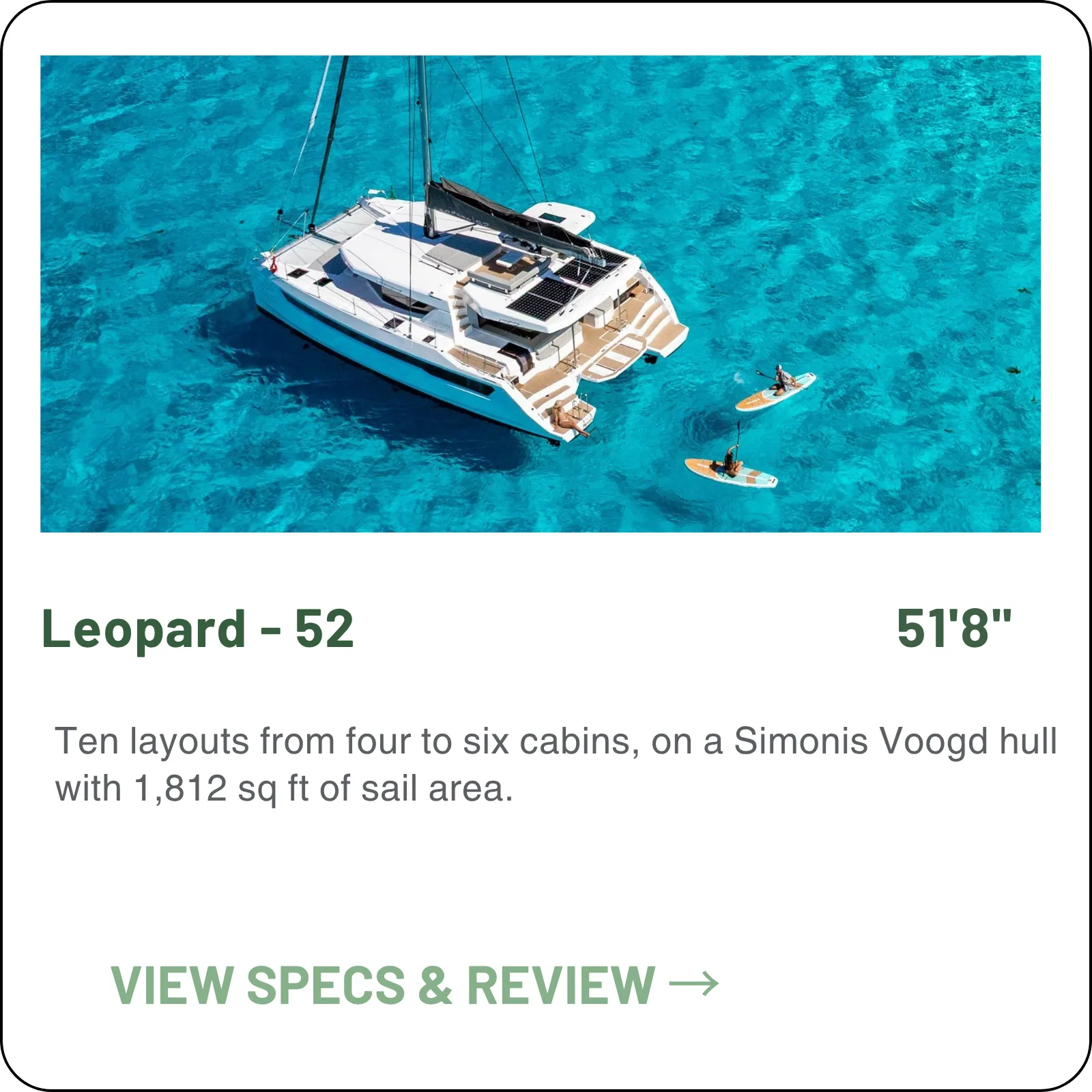
Ten layouts from four to six cabins, on a Simonis Voogd hull with 1,812 sq ft of sail area.
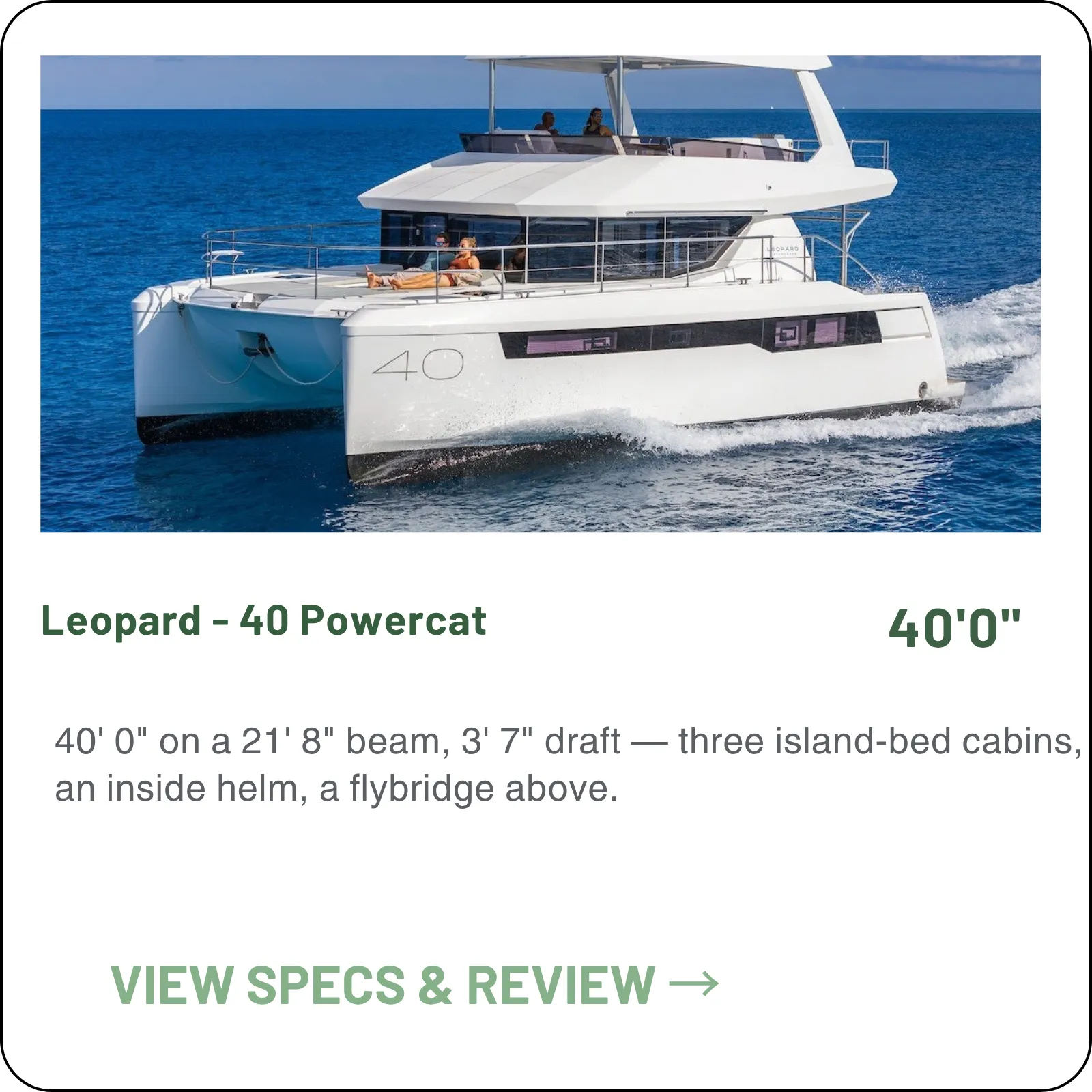
40' 0" on a 21' 8" beam, 3' 7" draft — three island-bed cabins, an inside helm, a flybridge above.
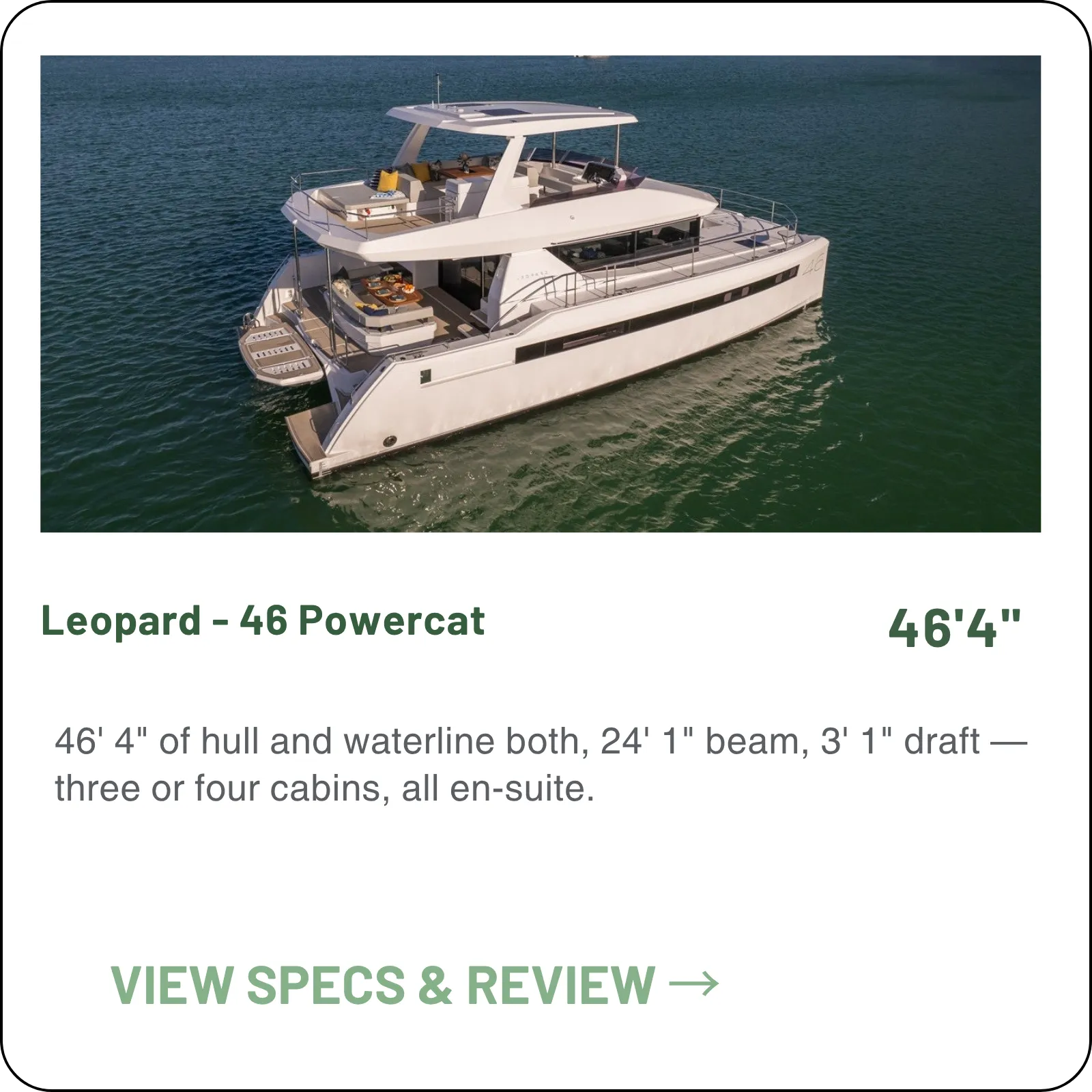
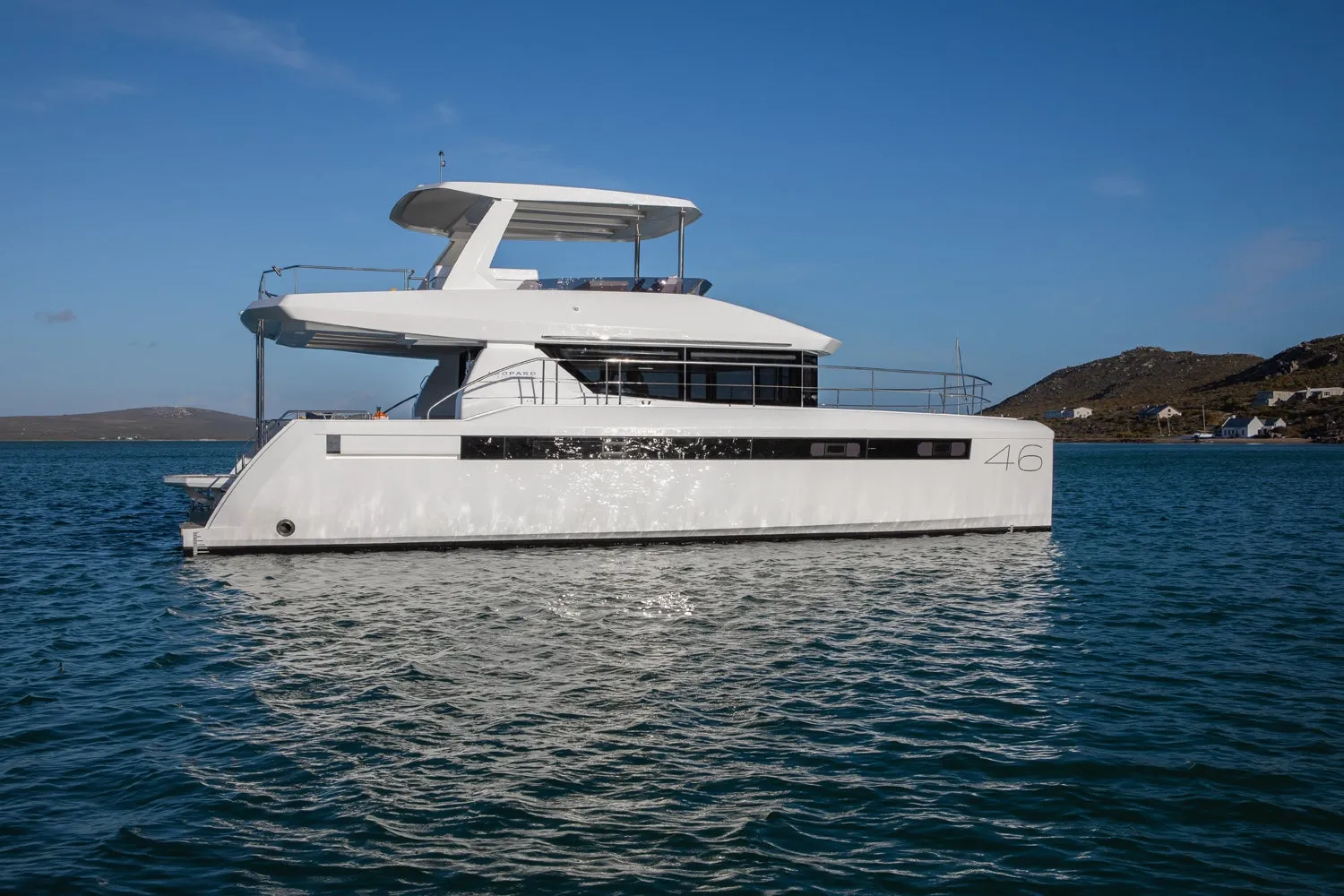
46' 4" of hull and waterline both, 24' 1" beam, 3' 1" draft — three or four cabins, all en-suite.
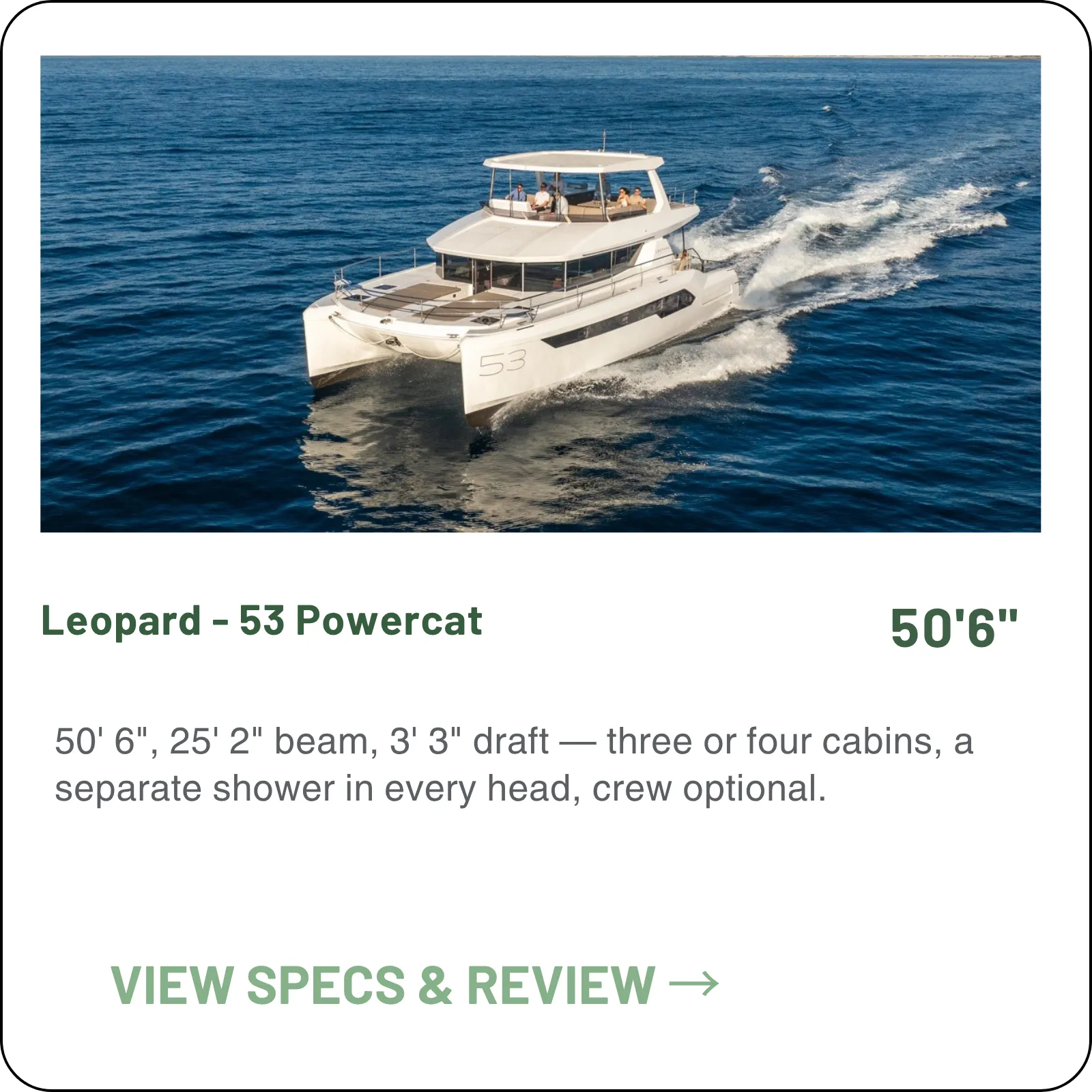
50' 6", 25' 2" beam, 3' 3" draft — three or four cabins, a separate shower in every head, crew optional.

Request other Brand or Model Information, with our Yacht Specs Direct, offer.
Videos courtesy of Leopard Catamarans.
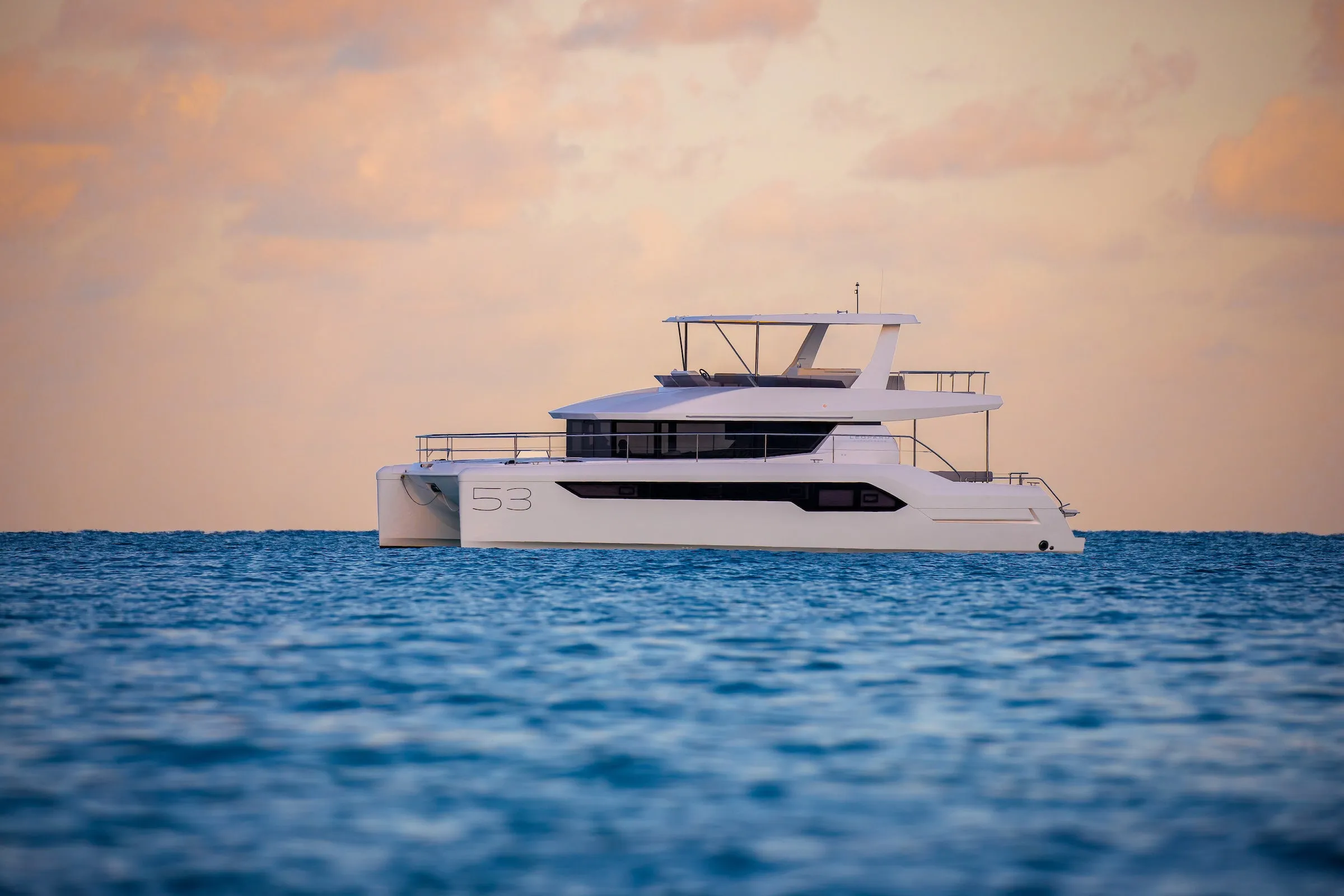
Start with how you want to arrive. The sailing range — the 43, 46 and 52 — is drawn around passages a couple can make short-handed, with stepped hulls, an overlapping genoa and 1,354 to 1,812 sq ft of sail. The Powercats — the 40, 46 and 53 — trade the rig for twin Yanmar diesels and a flybridge, and quote 23 to 24 knots maximum with 15 to 17 knots cruising.
Draft is the other deciding number, and it separates the two lines cleanly. The sailing boats draw 5 ft 2 in to 5 ft 7 in; every Powercat draws a little over three feet, from 3 ft 1 in on the 46 Powercat to 3 ft 7 in on the 40. If your cruising map is the Bahamas or the Keys, that difference is most of the argument.
What does not change between the lines is the deck philosophy, so a Leopard owner stepping from one to the other finds the boat already familiar.
On every current model, yes. The helm station sits in the protected cockpit rather than up on a flybridge or behind a bulkhead, laid out so one person can work the boat while everyone else stays in the same conversation, and the sailing boats are rigged for offshore singlehanded work.
Only the 53 Powercat offers crew quarters at all, and they are optional rather than assumed — you can buy the boat without staffing it and add the accommodation later. The real constraint is beam rather than crew: 21 ft 8 in to 26 ft 9 in across the range, which decides where the boat can berth and how it handles in a crosswind. Measure your home slip before you choose a size.
Six, in two lines. The sailing catamarans are the 43 at 42 ft 7 in, the 46 at 45 ft 7 in and the 52 at 51 ft 8 in. The Powercats are the 40 at 40 ft 0 in, the 46 Powercat at 46 ft 4 in and the 53 Powercat at 50 ft 6 in.
Note that the sailing 46 and the 46 Powercat are separate hulls, not two versions of one platform — they share a number and a 24 ft 1 in beam and nothing else. Earlier boats such as the 42 and the 45 appear in Leopard's own copy as the predecessors the current models replaced, so a 42 or a 45 comes to you as a brokerage purchase rather than a new-build order.
In Cape Town, South Africa. The Leopard name dates to 1997, and more than 3,500 sailing and power catamarans have been delivered since, across 26 model designs.
The hulls are drawn by Simonis Voogd Yacht Design, and that continuity is why the range feels related rather than assembled from a catalogue: stepped hulls, an overlapping genoa on the sailing boats, a helm station in the cockpit and a davit system meant to be worked single-handed appear across every model. All Leopard catamarans are NMMA and CE certified.
Every buyer's mission is different. Tell us how you plan to use your vessel, and we'll give you the straight story on which models fit your life—and which don't.
Specific Model Details & Advice