
August 29, 2026
The Leopard 52: A Sailing Catamaran Built for the Long Game
Built for long-term liveaboard cruising, the Leopard 52 pairs offshore-ready infusion-molded construction with ten flexible layouts, strong …
Read the articleExpert Review, Technical Specifications & Market Analysis
| Feature | Specifications |
|---|---|
| Overall Length | 51'8" |
| Beam | 26'9" |
| Draft | 5'7" |
| Displacement | 45,232 lbs |
| Engines | Twin Yanmar (2 x 57 HP) — standard (2 x 80 HP or electric drive optional) |
| Fuel Capacity | 238 gal |
| Water Capacity | 185 gal |
| Cabins / Heads | 4-6 Cabins |
| Max Speed | - |
| Cruise Speed | - |
Source: Spec & Photos courtesy of Leopard Catamarans.
Ten layouts is not a spec-sheet flourish — it is what lets one 52-footer be a two-person liveaboard, a family boat with a utility room for the washer, or a six-cabin charter platform. The Leopard 52 gives you that choice on a Simonis Voogd hull with 17% more upwind sail area than the Leopard 50.
Part of the Leopard Catamarans Sailing series — see how owners step up through the lineup.

Ten layouts is the specification that should shape how you shop this boat. On most catamarans the options list is where owners spend their attention and the layout is close to a default; on the 52 it is the other way round. Four cabins with a workshop, five with utility rooms fore and aft, six for a charter operation — these are genuinely different boats sharing a hull, and the one you order is the one you live with. Work out how many people are aboard in an average week rather than a peak one, and then choose.
What makes the choice worth having is that the sailing underneath it is serious. Simonis Voogd drew this hull for performance and ease of handling, and the rig upgrade over the Leopard 50 — a taller mast, a longer boom, 17 percent more upwind sail area across 1,812 square feet — is aimed at owners who intend to cross oceans rather than hop islands. The lowered boom is the detail I would point out at a boat show. It puts the stack-pack within reach, which is what shortening sail shorthanded after dark actually depends on.
Two things to take into the contract. If you are considering the Electric Thrust System, work your real energy budget first, air conditioning included, and find out how hard the 24 kW range extender has to run in your worst week. And get the loaded displacement in writing, because passage planning on a 51'8" catamaran should start from the boat you will own rather than the one on the brochure. Do that, and the 52 is a boat you can stay out on for years.
Video courtesy of Leopard Catamarans.
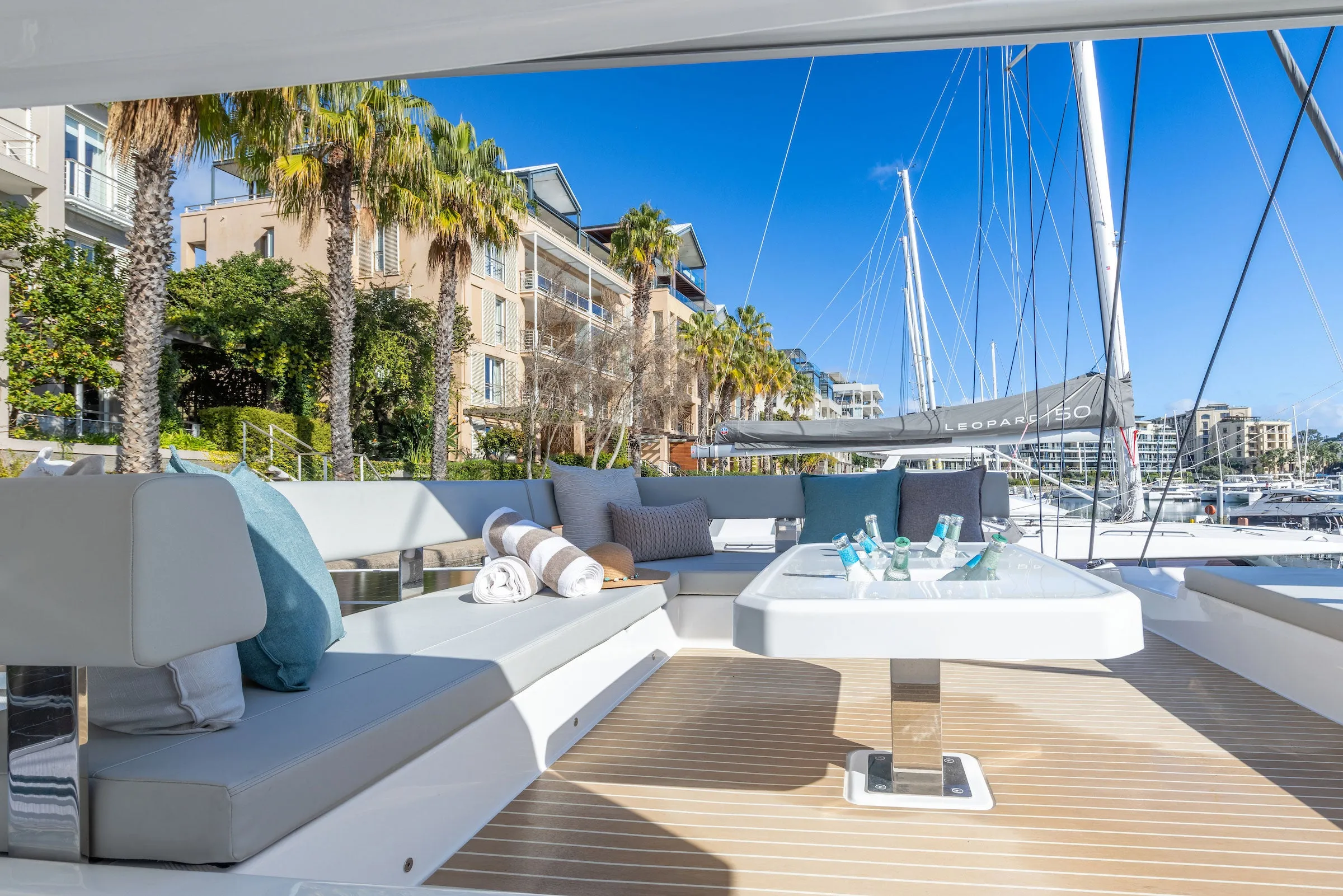
Photos courtesy of Leopard Catamarans.
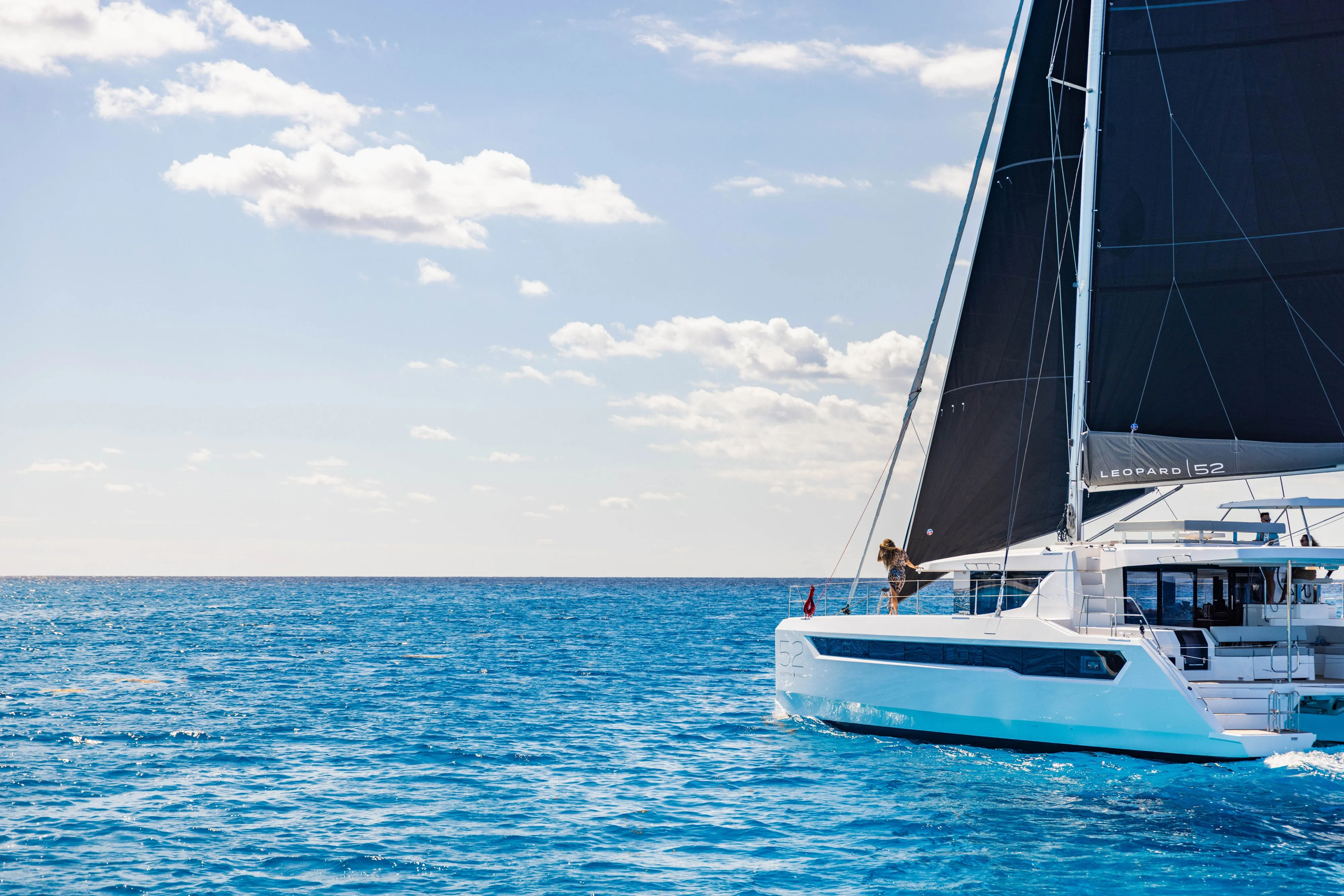
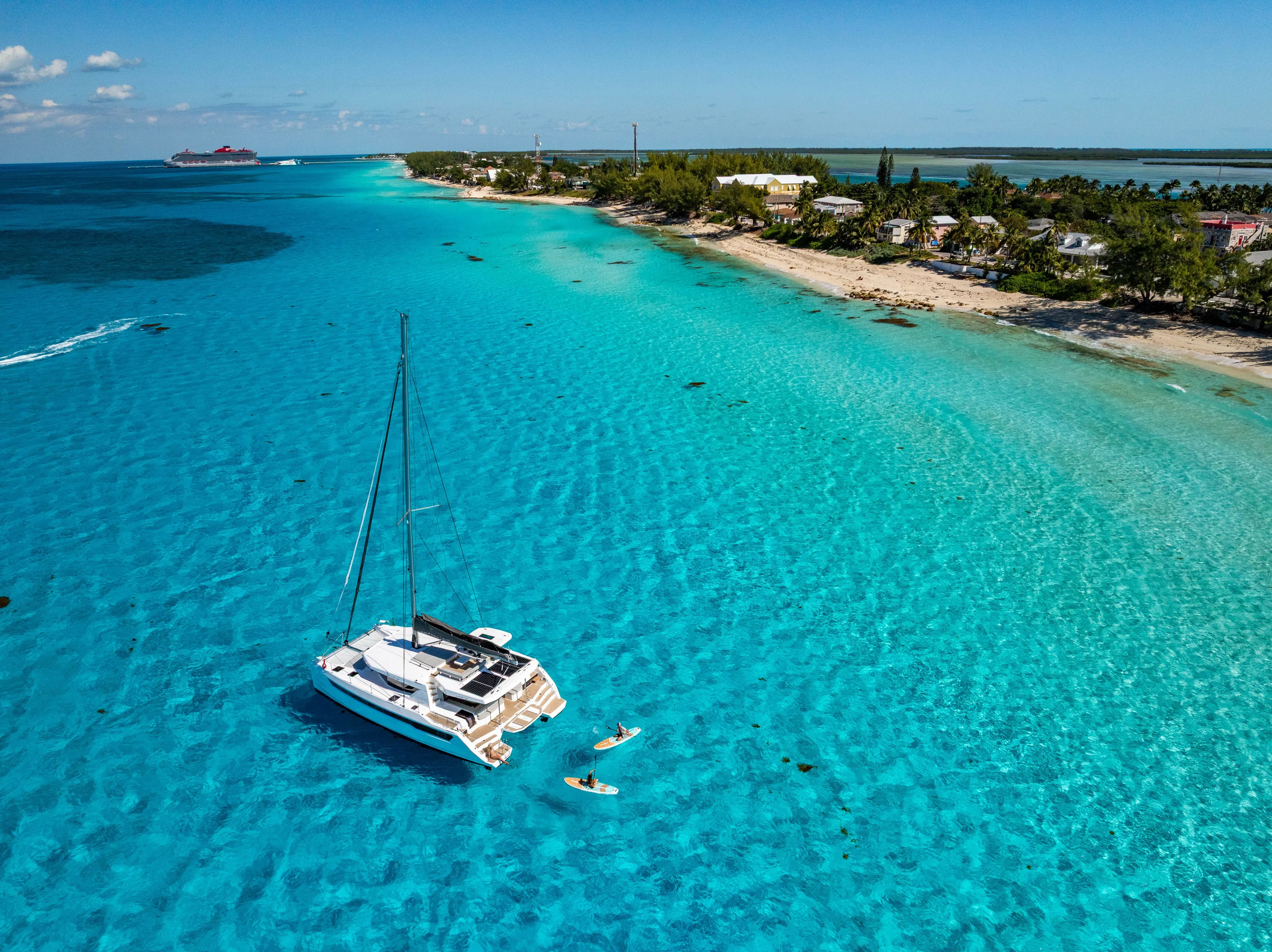
The Leopard 52 is a sailing catamaran of 51'8" (15.75 m) overall — 51'10" with the lifting platform — on a 26'9" (8.16 m) beam, drawing 5'7" (1.7 m), with a waterline length of 50'3" and a displacement of 45,232 lbs. She follows the Leopard 50 and is built for blue-water passagemaking and long-term liveaboard use, on advanced composite infusion construction with a one-piece hull mould and a reverse deck mould.
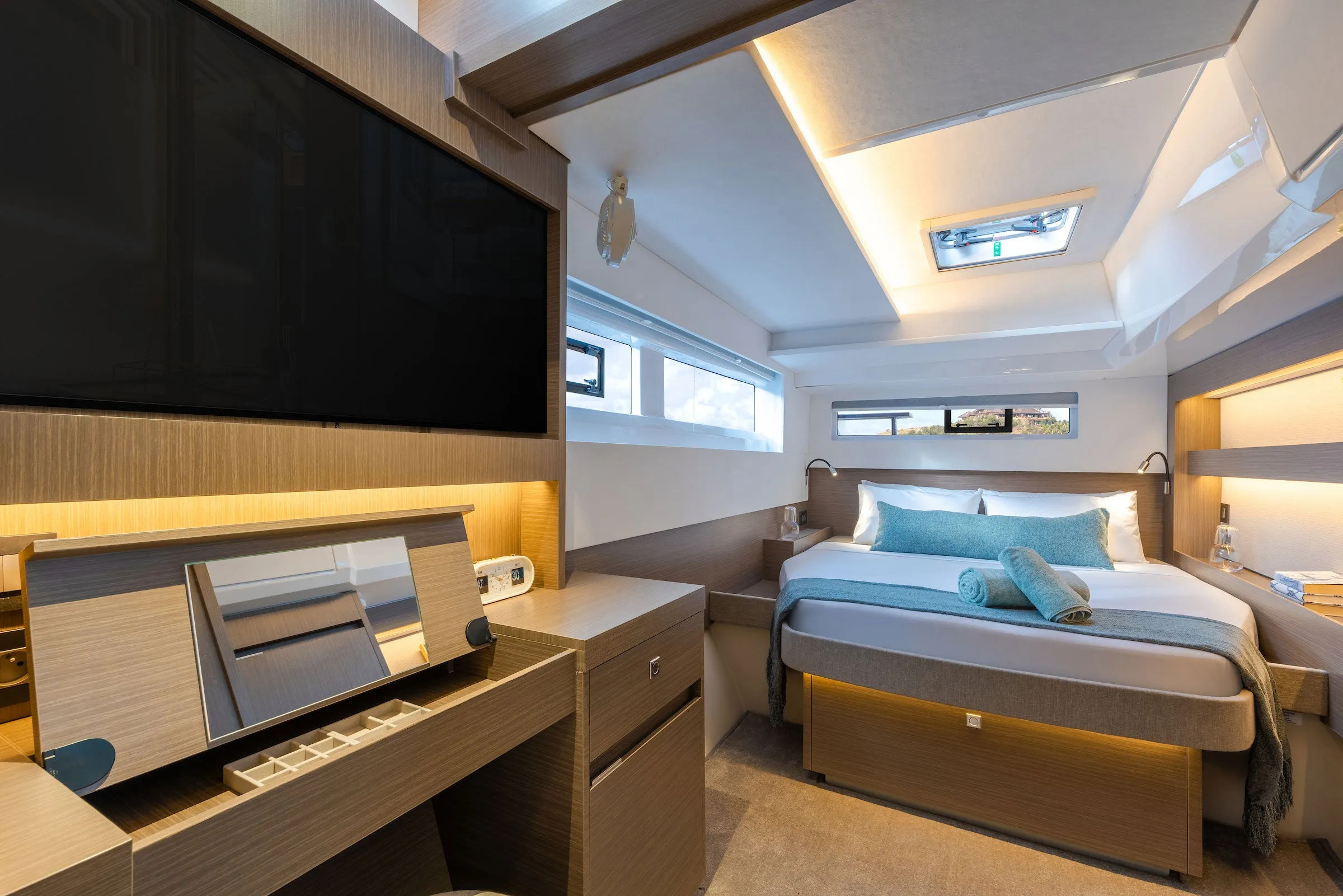
Ten layout configurations are offered, running from four cabins through six, with forward and aft utility rooms, a port owner's cabin and a skipper cabin among the variations. Tankage is 238 gal of fuel — 56 gal more than the Leopard 46 carries — and 185 gal of water, with a 61 gal holding tank. All Leopard catamarans are NMMA and CE certified.
Naval architects Simonis Voogd drew the 52 for performance and ease of handling, and the rig reflects it. Total sail area is 1,812 sq ft, and a taller mast with a longer boom gives 17% more upwind sail area than the Leopard 50. The boom also sits lower, which puts the stack-pack within reach and makes sail handling safer. Performance sail options include a square-top mainsail and a Code 0. Stepped hulls and an overlapping genoa are what keep the boat agile rather than merely large.
Standard auxiliary power is twin Yanmar 57 hp diesels, with 80 hp versions optional. Electric drives are the third option: Leopard's Electric Thrust System pairs two 25 kW electric drives with two 27 kW lithium batteries carrying integrated fire suppression, a 24 kW range-extending genset and regeneration under sail, monitored by touchscreen at the nav station and the helm. A built-in roof platform takes up to 1,600W of flush-mounted solar wired straight into the house bank. The protected helm station puts every line aft, the upgraded twin-seat helm keeps visibility and the social spaces within reach, and Raymarine touchscreen navigation, digital switching and system monitoring are standard.
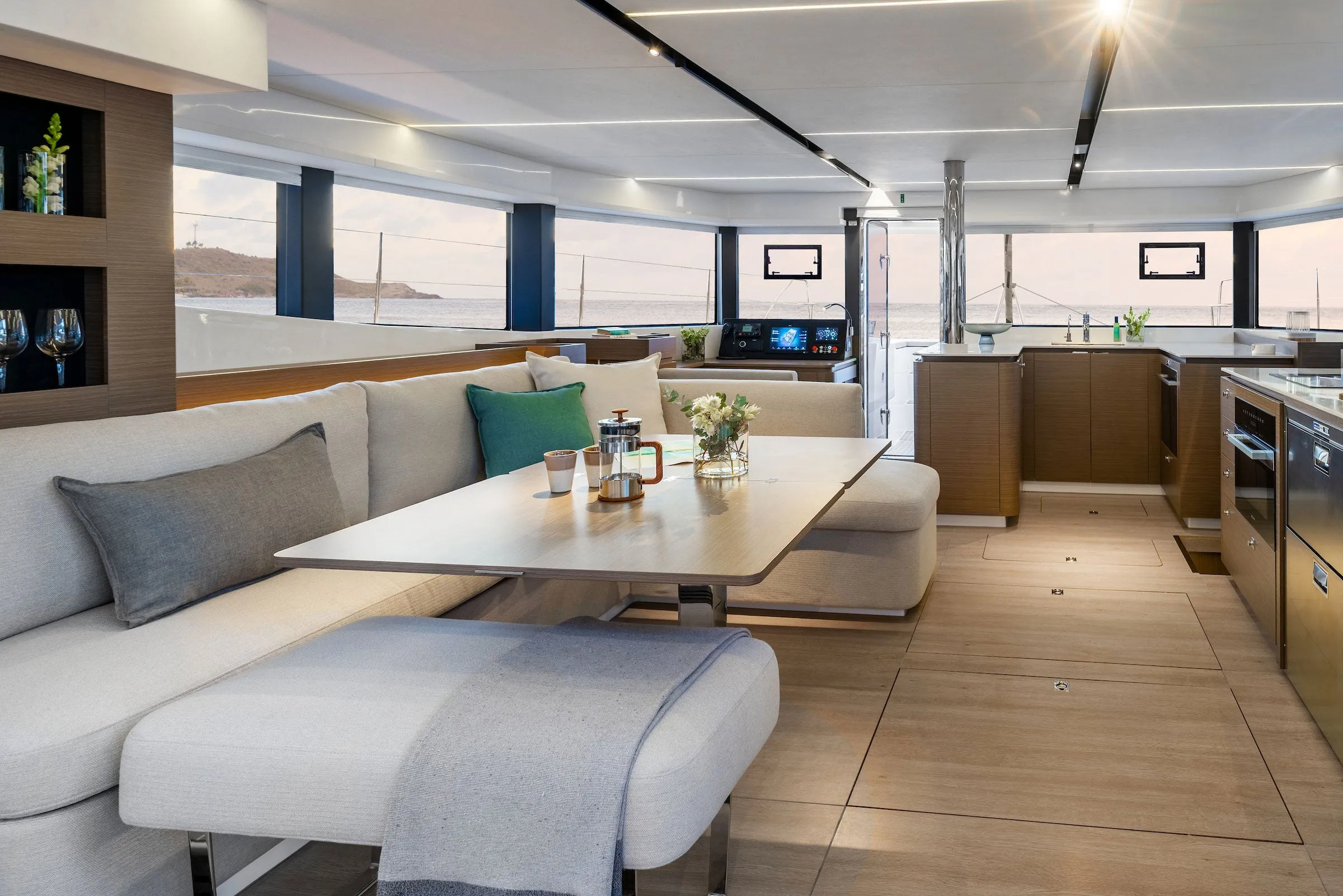
There is 438 sq ft of integrated indoor-outdoor living space, and the stackable sliding saloon doors are what unlock it — open them and the saloon and aft cockpit become one room. A forward watertight door gives safe foredeck access and real cross-ventilation, and panoramic wraparound windows keep the saloon light from every angle.
The interior is a clear step up from the 50: premium materials, indirect lighting, soft upholstery and oak flooring with rounded corners. The galley faces forward with full-size appliances, and the options list runs to a dishwasher, a wine fridge and an induction cooktop. Socially the boat is arranged in zones — a built-in chaise longue and configurable tables in the aft cockpit, sunbeds in the forward cockpit, an elevated coachroof lounge beside the helm for company underway, and a saloon table that converts from coffee height to a full dining setup. An optional grill at the swim platform keeps open-air cooking out of the traffic.
The 52 is the flagship of the Leopard sailing range, above the 45'7" Leopard 46 and the 42'7" Leopard 43, and it carries the brand's full systems catalogue: ten layouts, the Electric Thrust System, 1,600W of solar and 238 gal of fuel. Its direct cross-shops are the Lagoon 51 Iconic at 51'2" and the Fountaine Pajot FP51 at 52'2", both within inches on length and both offering four to six cabins.
Where those two lead with interior volume and finish, the Leopard's case is configurability and passagemaking intent: the layout matrix genuinely covers the couple, the family and the charter operator, and the rig upgrade over the 50 is aimed at owners who intend to cross oceans rather than hop islands. Leopard has delivered over 3,000 catamarans worldwide and the 52 is in service across 22 global cruising destinations — the kind of fleet depth that shows up later as parts availability.
The 52 is for owners who intend to stay out: months at a time, ocean passages, a boat that has to be a home as well as a yacht. If you are deciding between a boat you visit and a boat you live on, this is squarely the second.
Spend your time on the layout matrix rather than the options list. With ten configurations, the difference between the right boat and the wrong one is usually a utility room, not a piece of equipment — and whether you take the aft utility room or a sixth cabin is not a decision you revisit later. If you are considering the Electric Thrust System, work the energy budget against your real house load, air conditioning included, before you settle how hard the 24 kW range extender will be working. And confirm the loaded displacement at contract so your passage planning starts from the boat you will actually own. If this is more boat than two of you want to handle shorthanded, the Leopard 46 does the same job at 45'7".
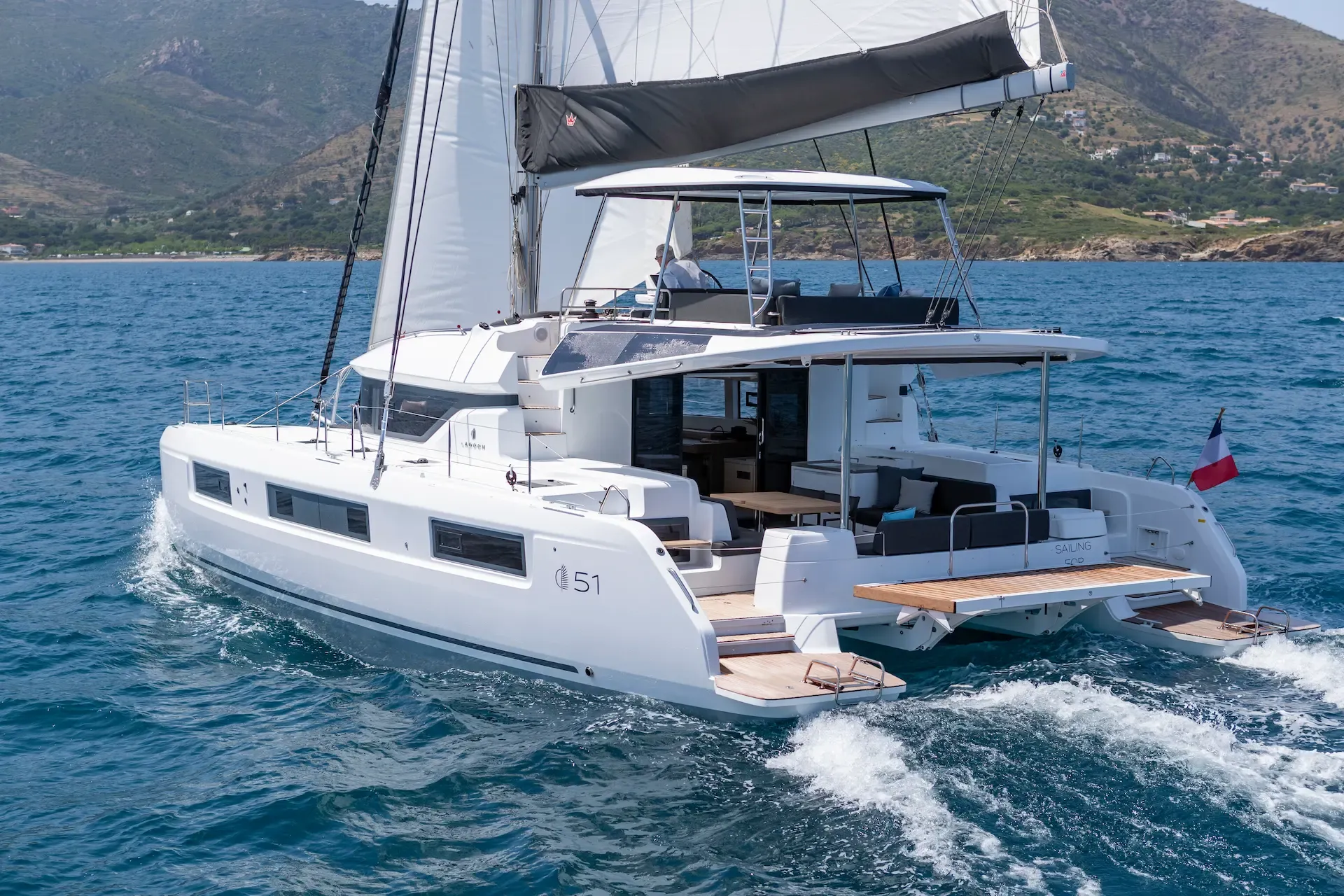
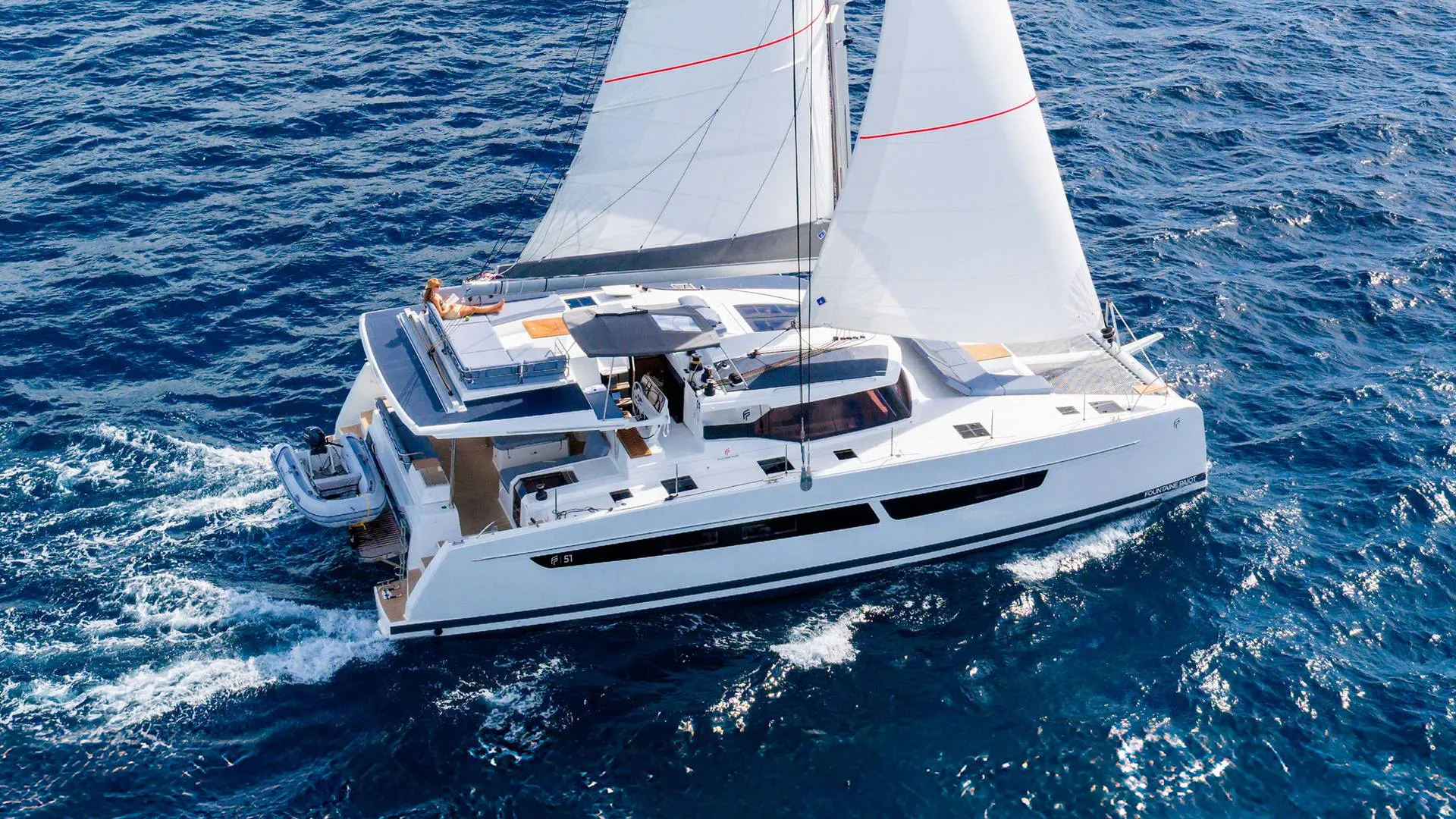
51 ft 8 in overall, or 51 ft 10 in with the lifting platform, on a 26 ft 9 in beam, drawing 5 ft 7 in, with a 50 ft 3 in waterline and a displacement of 45,232 lbs. Tankage is 238 gallons of fuel, 185 gallons of water and a 61 gallon holding tank.
Beam is the number to check first. At 26 ft 9 in the beam is what decides where this boat can live, and a marina that has a slip that wide is not the same as a marina that has one you want to pay for. Measure your home berth before you commit.
Leopard offers an Electric Thrust System as an alternative to the diesels: two 25 kW electric drives, two 27 kW lithium batteries and a 24 kW range extender, with up to 1,600W of solar on the coachroof.
The conventional options are twin Yanmar 57 hp diesels as standard or twin 80 hp diesels as an upgrade. Work the energy budget against your real house load before choosing, and settle which package you are buying in the contract.
Total sail area is 1,812 sq ft on a hull drawn by Simonis Voogd Yacht Design, and upwind sail area is up 17 percent on the Leopard 50.
That is the largest sail plan in the current Leopard sailing range, against 1,512 sq ft on the 46 and 1,354 sq ft on the 43. The boat is built for blue water passagemaking and long-term liveaboard comfort, and the rig is sized to keep it moving when the breeze is light.
Ten, running from four to six cabins. That is not a spec-sheet flourish — it is what lets one 52-footer be a two-person liveaboard with a utility room for the washer, a family boat, or a six-cabin platform, without changing hulls.
Indoor and outdoor living space totals 438 sq ft. Decide the configuration before you order rather than after, because on this boat the layout is the specification that matters most.