
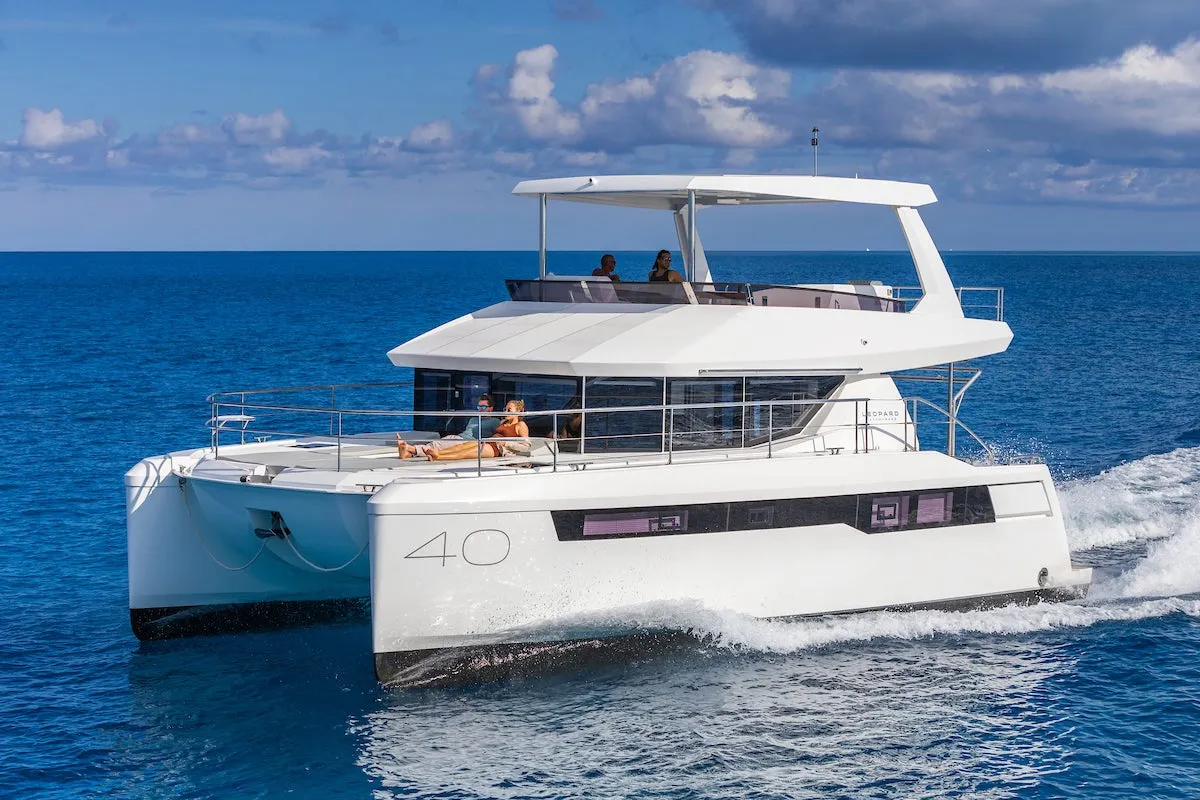
August 29, 2026
The Leopard 40 Powercat: Your Weekender Just Got Wider
With a 21-foot-8-inch beam, a shallow 3-foot-7-inch draft, three island-bed cabins and a choice of three Yanmar packages, the Leopard 40 Pow…
Read the articleExpert Review, Technical Specifications & Market Analysis
| Feature | Specifications |
|---|---|
| Overall Length | 40'0" |
| Beam | 21'8" |
| Draft | 3'7" |
| Displacement | 30,488 lbs |
| Engines | Twin Yanmar 4LV (2 x 250 HP) — standard (2 x 320 HP / 2 x 370 HP optional) |
| Fuel Capacity | 370 gal |
| Water Capacity | 169 gal |
| Cabins / Heads | 3 Cabins / 2 Heads |
| Max Speed | 23 knots |
| Cruise Speed | 15 knots |
Source: Spec & Photos courtesy of Leopard Catamarans.
You want catamaran space and a boat you can still run yourself on a Friday afternoon. The Leopard 40 Powercat is the smallest hull in the Powercat range: 40' 0" on a 21' 8" beam, drawing 3' 7".
Part of the Leopard Catamarans Power series — see how owners step up through the lineup.

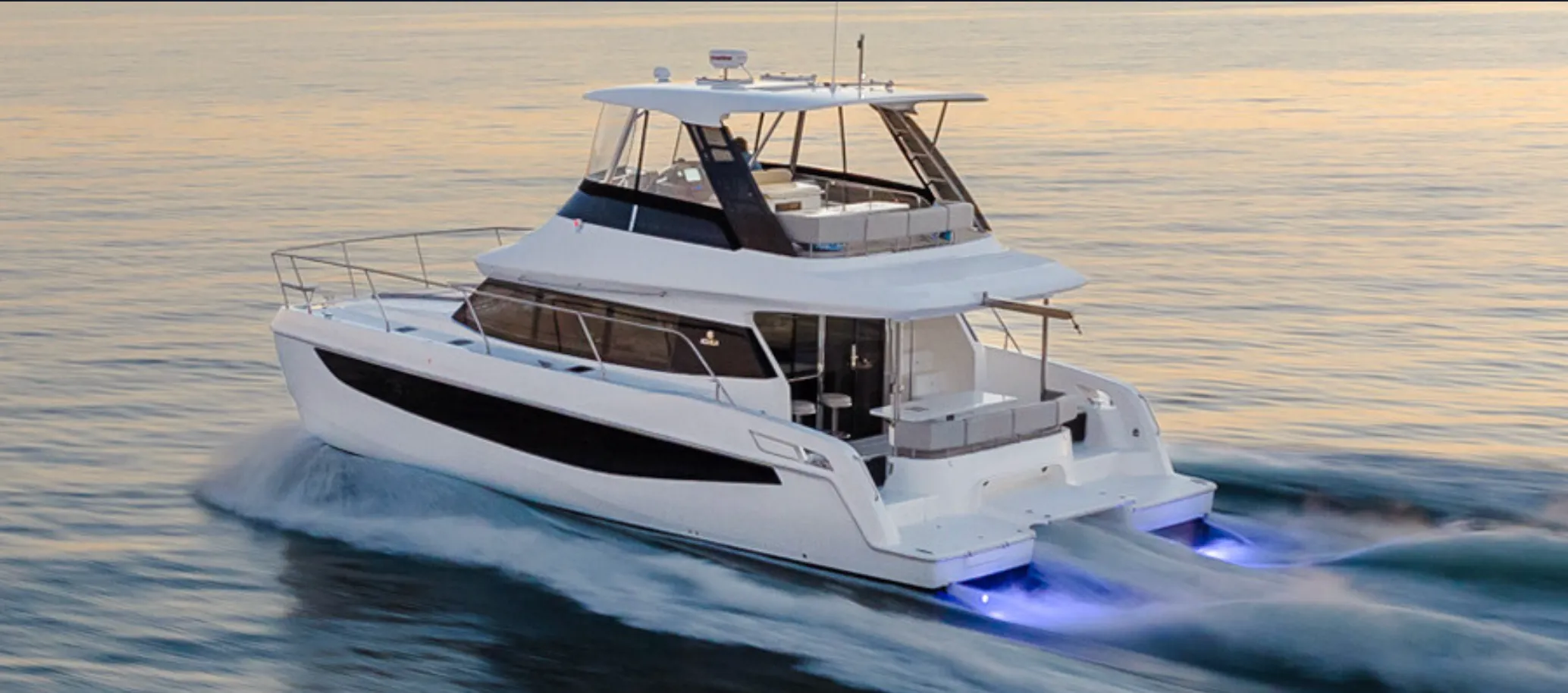
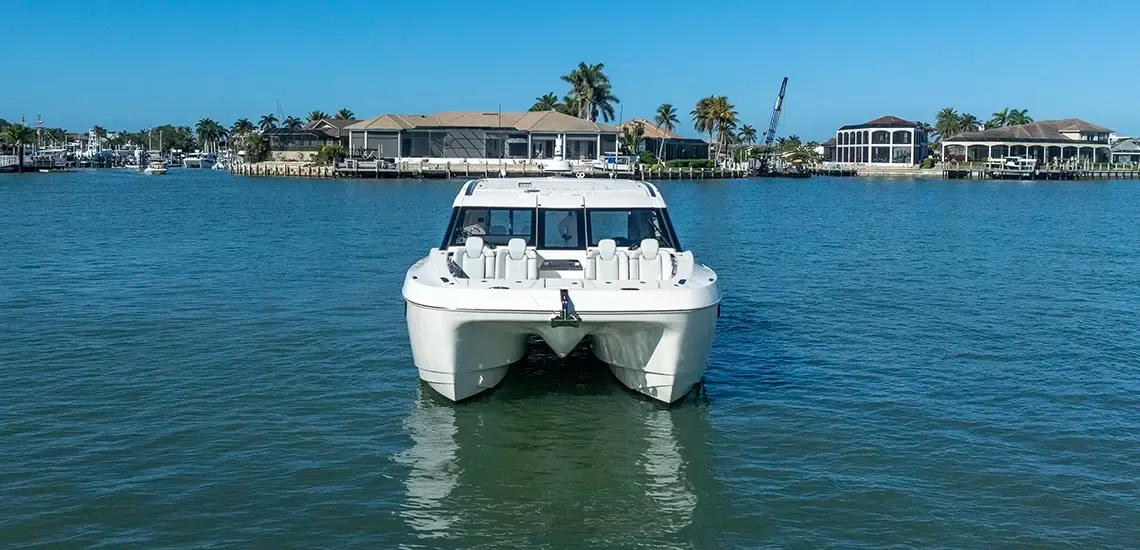
The 40 Powercat is the boat in this range I would put in front of somebody stepping off a 35-foot center console or a 40-foot express cruiser. Twenty-one feet eight inches of beam under a forty-foot hull is the whole argument: three cabins with proper island beds you can get into from either side, a main deck drawn on one level, and a flybridge above it, on a boat you can still dock yourself on a Friday evening without an audience.
The interior helm is the detail I would look for on the walkthrough, and it is easy to miss at a boat show. It gives whoever is driving a peripheral view of the water from under cover, which means the person at the wheel stays in the room with everybody else instead of sitting out in the weather while the trip happens without them. The other one worth noticing is where the machinery lives. The two technical spaces sit aft, isolated from the accommodation and reached only from outside, so engine noise and engine access both stay clear of the living space.
Two things to settle before you sign. Draft is 3 feet 7 inches, and on a boat this size that number decides where you can go, so check it against your home berth and the anchorages you actually use before anything else. And choose the engine package deliberately: there are three on this hull, Leopard publishes performance curves for each, and you should read those curves at the weight you will genuinely cruise at rather than the light-ship figure. Get observed burn at your intended rpm in writing at sea trial and work your own arithmetic off 370 gallons.
Video courtesy of Leopard Catamarans.
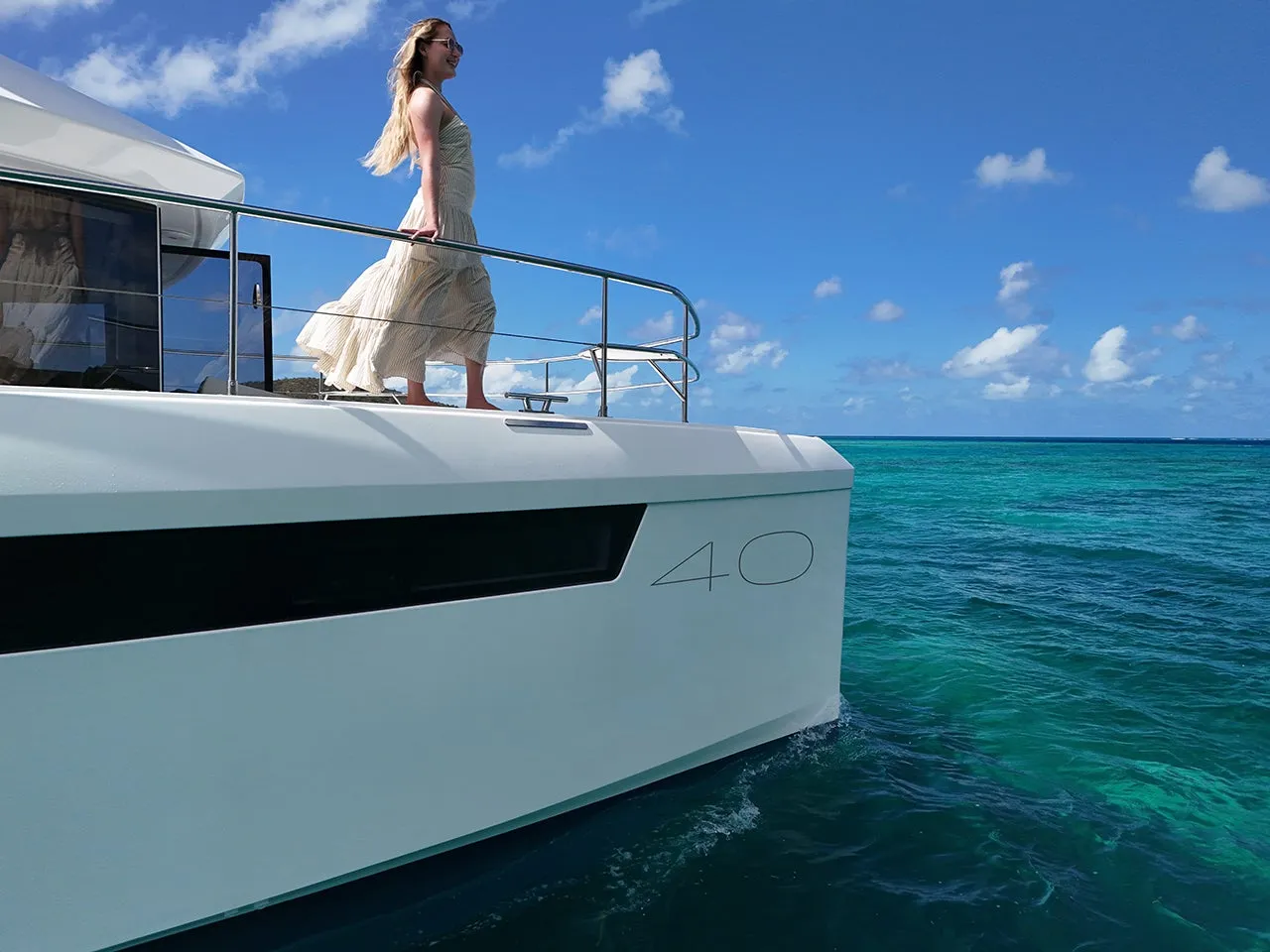
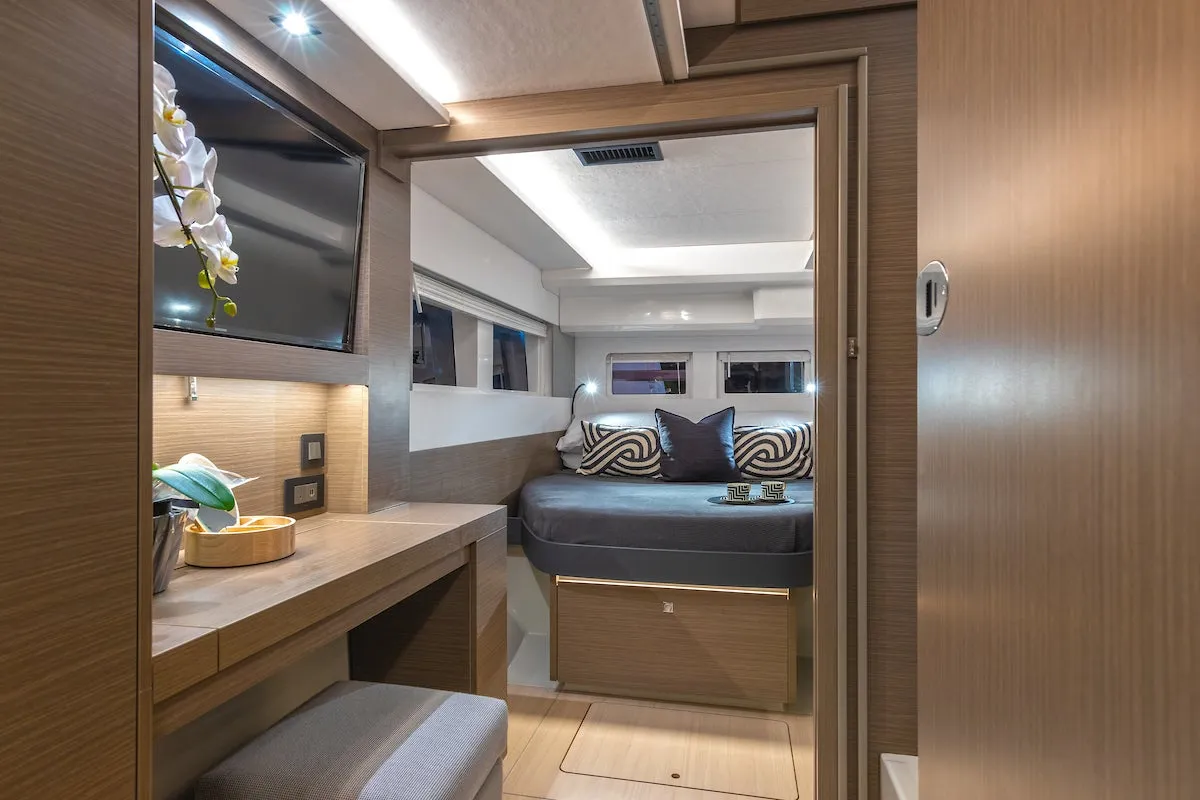
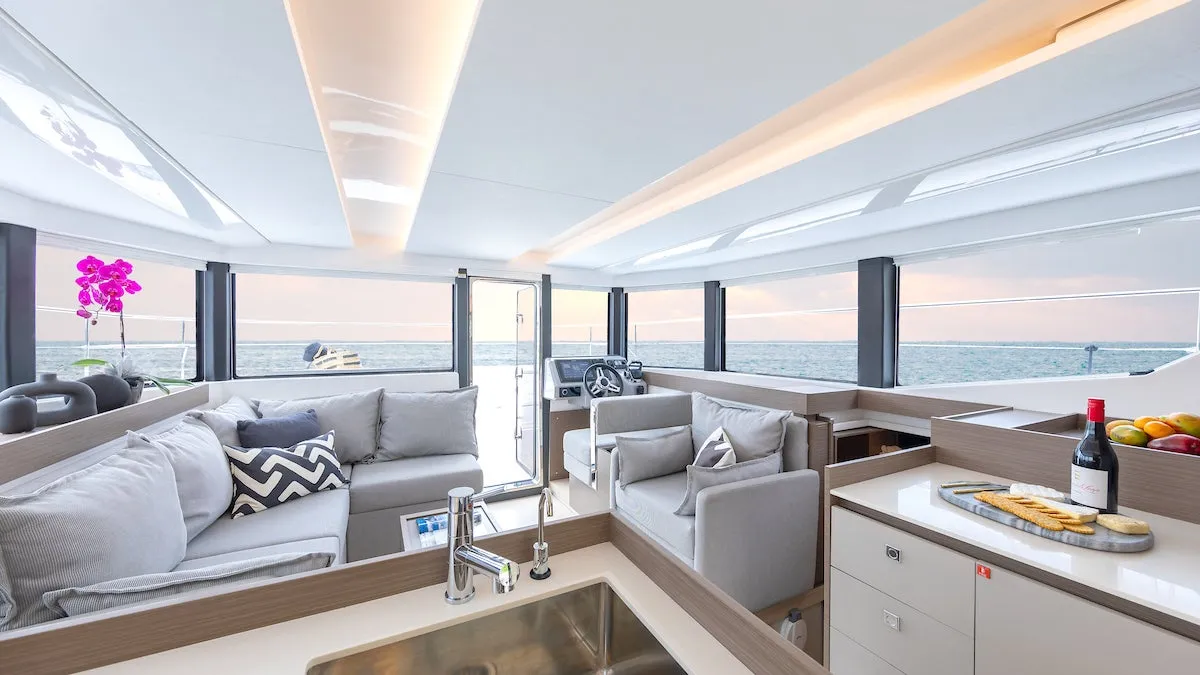
Photos courtesy of Leopard Catamarans.
The Leopard 40 Powercat is the smallest hull in the Powercat range, launched in Cape Town in December 2022. It measures 40' 0" overall on a 39' 7" waterline and a 21' 8" beam, draws 3' 7", and displaces 30,488 lbs with a 12,410 lb load carrying capacity. Fuel is 370 US gallons, fresh water 169, holding tank 42. The boat is NMMA and CE certified.
Standard power is twin Yanmar 4LV diesels at 2 x 250 hp, with 2 x 320 hp and 2 x 370 hp packages available. The specification quotes 23 knots maximum and 15 knots cruising.
The layout is three cabins, all with island beds, on a main deck drawn as a single level: the saloon forward, an L-shaped galley with a full-size fridge, and an interior helm station with a peripheral view of the water from under cover. The roof above it integrates the flybridge. The two technical spaces sit aft, isolated from the accommodation and reached only from outside.
Twin Yanmar 4LV 250 hp diesels are the standard fit, with 8LV packages at 2 x 320 hp and 2 x 370 hp. The specification quotes 23 knots maximum and 15 knots cruising, while Leopard's own description of the boat quotes 17 knots cruising and over 20 knots at the top end — figures that move with the engine package. Establish which package is fitted to any boat you drive, and settle the performance you are buying in the contract rather than on the brochure.
Leopard publishes performance curves for all three packages: speed against engine rpm, fuel burn per hour, fuel used per mile and range against speed, worked up from trial runs on the first hull in Cape Town in November 2022 and plotted on the full 370-gallon tank. Read them at the weight you will actually run. The curves are drawn at 36,940 lbs trial condition, 39,317 lbs half load and 43,168 lbs full load, against a 30,488 lb figure on the specification and a 12,410 lb load capacity. Get observed burn at your intended rpm in writing at sea trial and work your own numbers off 370 gallons.
Draft is 3' 7". On a boat this size that is the number that decides where you can go, and it is worth checking against your home berth and the anchorages you actually use before anything else.
The main deck is drawn on one level, so there are no steps between the saloon, the galley and the helm. The saloon sits forward and becomes the gathering space; the L-shaped galley runs along one side with a full-size fridge, open to the seating rather than shut into a corridor.
The interior helm station is the detail that separates this boat from an open express cruiser. It gives a peripheral view of the water from under cover, so whoever is driving stays in the room with everybody else instead of sitting out in the weather. The roof above it integrates the flybridge.
Sunbathing areas are reached either along the side decks or straight out of the saloon through the front door, which keeps foredeck traffic away from the helm.
Below, three cabins each take a generous island bed with a hull-side view and storage throughout — an owner cabin and two guest cabins, served by an owner head and a guest head.
The two technical spaces sit aft, isolated from the accommodation and reachable only from outside, so machinery noise and engine access both stay out of the living space.
At 40 feet this boat is competing for someone who has looked at a 40-foot express cruiser or a small flybridge monohull and wants the beam instead. 21' 8" across a 40-foot hull is the whole argument: three private cabins, a single-level main deck and a flybridge on a boat one person can handle.
The Aquila 42 Yacht is the closest direct rival, a flybridge power catamaran two feet longer. The Aquila 42 Coupe is the same length without the upper deck, and worth driving if the flybridge is not the thing you are buying.
Inside the range, the 46 Powercat adds a four-cabin option, a separate engine room entered from the deck and roughly 100 more gallons of fuel; the 53 Powercat moves into optional crew quarters and weeks-at-a-time cruising. The 40 is the one you buy to run yourself.
Buy the Leopard 40 Powercat if you want a catamaran for long weekends and short cruises that does not need a captain. Three cabins sleep two couples and a spare pair in comfort, the single-level main deck keeps everyone in the same room, and the inside helm means weather does not end the day.
It fits shallow cruising grounds. A 3' 7" draft opens the thin water of the Bahamas, the Keys and the Intracoastal to a 40-foot boat with three island-bed cabins in it.
It fits an owner who wants to choose their own performance. Three engine packages sit on the same hull and Leopard publishes the curves for each, so you can decide what you are paying for before you sign.
Step up to the 46 Powercat if you want the four-cabin option and an engine room reached from the deck. Step up to the 53 Powercat if you intend to stay aboard for weeks. Stay here if the point is a boat you dock yourself on a Friday evening.
Three, each with an island berth, and two heads. Leopard's own layout viewer shows an owner cabin plus two hull cabins, with an owner head and a guest head.
At 40 ft 0 in on a 21 ft 8 in beam this is the smallest boat in the Powercat range, and it is drawn for a couple or a small family who want catamaran space without hiring help to run it.
The specification quotes 23 knots maximum and 15 knots cruising.
Three engine packages are offered on this hull — twin Yanmar 4LV 250 hp diesels as standard, with 320 hp and 370 hp options — so agree which package you are buying, and get observed speed and fuel burn at your intended rpm in writing at sea trial. Leopard publishes performance curves covering all three packages, worked up from a trial run in Cape Town, plotted at trial, half load and full load weights; read them at the weight you will actually cruise at.
370 gallons of fuel, 169 gallons of water and a 42 gallon holding tank.
Get observed burn at your intended rpm in writing at sea trial and work your own passage numbers off the 370 gallons, allowing for the reserve you actually want to arrive with. Leopard's own performance curves plot range at full tank capacity, so read them alongside your trial figures rather than instead of them.
3 ft 7 in, on a 21 ft 8 in beam and a 39 ft 7 in waterline. That combination is what puts a boat this size on the Bahamas banks and in the shallow end of the Keys rather than tied to a deep-water marina.
Displacement is 30,488 lbs with a 12,410 lb load carrying capacity, and the boat is NMMA and CE certified.