
August 29, 2026
The Leopard 46 Powercat: Coastal Freedom Without the Crew
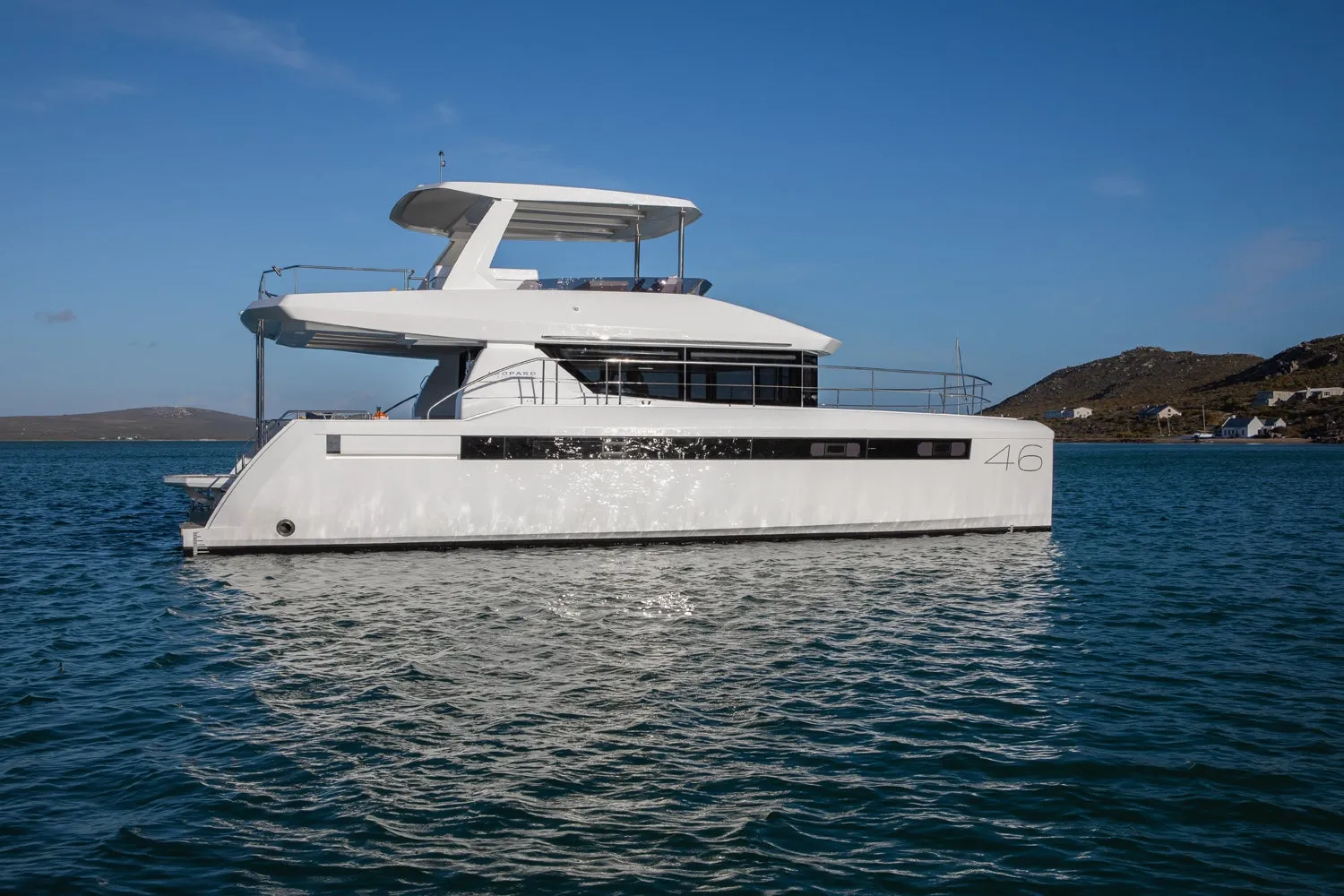
Leopard 46 Powercat: owner-operated coastal freedom - 24 ft 1 in of beam, a 3 ft 1 in draft that's the shallowest in the Powercat range, and…
Read the articleExpert Review, Technical Specifications & Market Analysis
| Feature | Specifications |
|---|---|
| Overall Length | 46'4" |
| Beam | 24'1" |
| Draft | 3'1" |
| Displacement | 36,945 lbs |
| Engines | Twin Yanmar 4LV (2 x 250 HP) — standard (2 x 320 HP / 2 x 370 HP optional) |
| Fuel Capacity | 475 gal |
| Water Capacity | 185 gal |
| Cabins / Heads | 3-4 Cabins / 3-4 Heads |
| Max Speed | 23.5 knots |
| Cruise Speed | 16 knots |
Source: Spec & Photos courtesy of Leopard Catamarans.
You want a catamaran you can cruise without hiring help. The Leopard 46 Powercat puts 24' 1" of beam and a sealed, deck-access engine room on a 46-foot hull whose waterline runs its full length.
Part of the Leopard Catamarans Power series — see how owners step up through the lineup.

The 46 Powercat is where this range starts to support real distance without adding staff. Twenty-four feet one inch of beam on a forty-six-foot hull gives you a saloon and a flybridge that a monohull of the same length simply cannot draw, and it does it on a 3-foot-1-inch draft — the shallowest of the three Powercats, and six inches less than the 40 despite being six feet longer. If your cruising is Bahamian or Floridian, that combination is the argument.
The feature I would walk twice is the engine room. It is sealed off from the accommodation and entered through a large deck hatch with a step ladder, which sounds like a detail and is not. It means engine noise stays out of the saloon and the cabins, and it means a routine morning check does not involve lifting a cabin sole or waking a guest. On a boat drawn to be run by its owner, that is the difference between doing the checks and skipping them.
Below, take the three-cabin layout unless you genuinely need the fourth double. The owner's suite gains a walk-in closet, a desk and a double vanity, and every cabin has its own en-suite head either way, which is usually the specification that decides whether four people still like each other after a fortnight. On the water, know that Leopard's performance curves for this hull are CFD and NAVCAD predictions rather than trial figures, and the sheet prints its own tolerance: five percent variation in all speeds is possible at the design stage. Get observed burn at your intended rpm in writing at sea trial and work your arithmetic off 475 gallons.
Video courtesy of Leopard Catamarans.
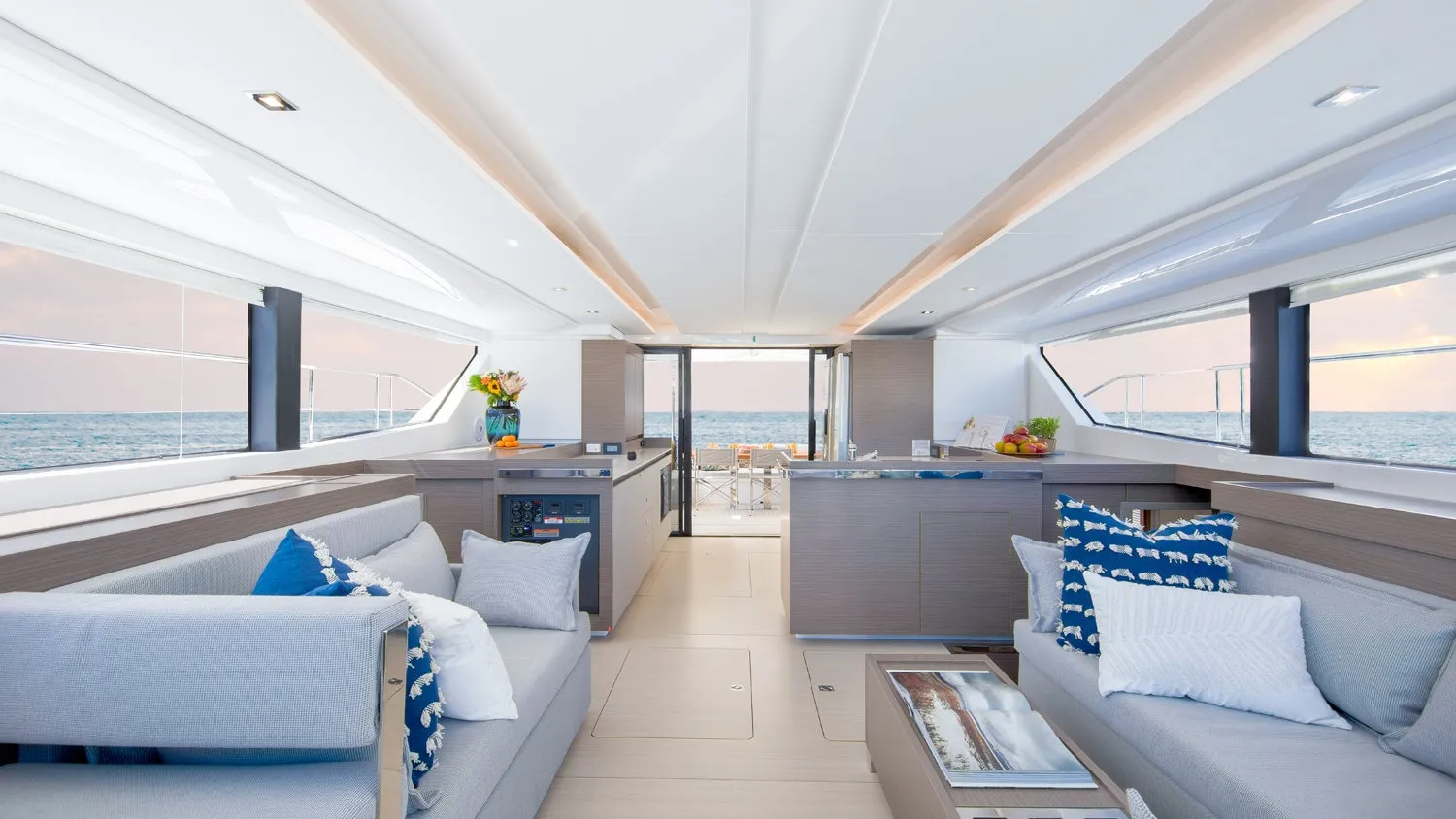
Photos courtesy of Leopard Catamarans.
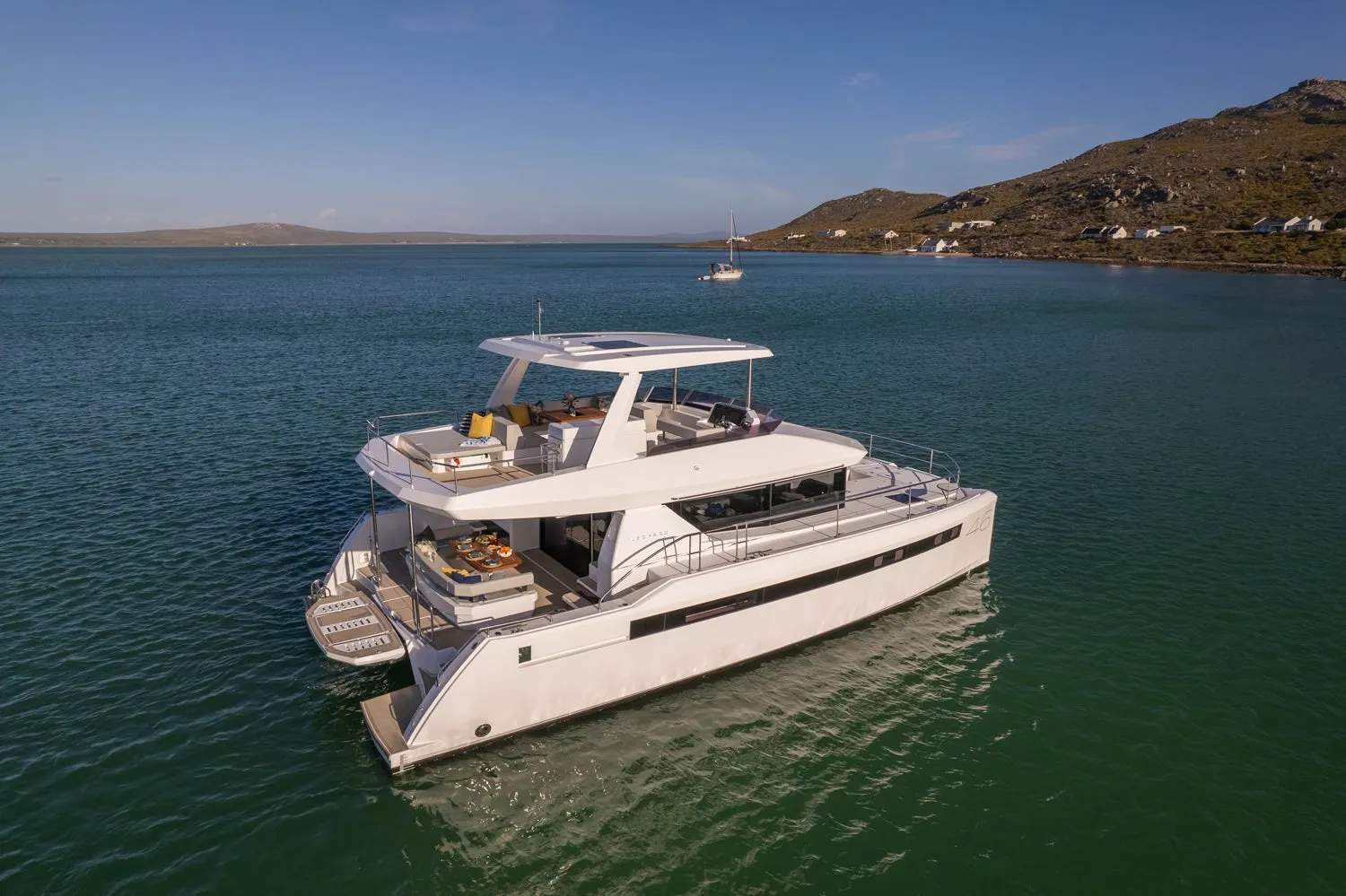
The Leopard 46 Powercat sits in the middle of the Powercat range. It measures 46' 4" overall on a 24' 1" beam, draws 3' 1", and displaces 36,945 lbs with a 10,679 lb load carrying capacity. Fuel is 475 US gallons, fresh water 185, holding tank 42. The boat is NMMA and CE certified.
The waterline length is also 46' 4": the hull runs its full length in the water. Of the three Powercats it is the only one drawn that way, and at 3' 1" it is also the shallowest of the three.
Standard power is twin Yanmar 4LV diesels at 2 x 250 hp, with 2 x 320 hp and 2 x 370 hp available. The specification quotes 23.5 knots maximum and 16 knots cruising.
Accommodation is three or four cabins, every one with its own en-suite head. In the three-cabin layout the owner's suite takes a walk-in closet, a desk and a double vanity. The engine room is a separate, sealed compartment reached through a large deck hatch with a step ladder, and all major systems live in it.
Twin Yanmar 4LV 250 hp diesels are standard, with 8LV packages at 2 x 320 hp and 2 x 370 hp. The specification quotes 23.5 knots maximum and 16 knots cruising.
Leopard publishes performance curves for all three packages — speed against rpm, fuel burn per hour, and range against speed. For this hull they are CFD and NAVCAD predictions rather than trial figures, and Leopard prints the tolerance on the sheet: 5% variation in all speeds is possible at the design stage. Treat them as the shape of the boat's performance and confirm the numbers on the water. Get observed burn at your intended rpm in writing at sea trial and work your own arithmetic off 475 gallons.
The curves are drawn at 38,696 lbs light ship, 43,440 lbs half load and 48,598 lbs full load, against a 36,945 lb specification figure and a 10,679 lb load capacity. Read the curve at the weight you will actually cruise at, not the one on the brochure.
Draft is 3' 1", the shallowest in the Powercat range. Against the 40 Powercat's 3' 7" that is six inches of extra cruising ground on a boat six feet longer.
The engine room is worth a paragraph of its own because it changes how the boat is owned. It is sealed from the accommodation, so engine noise stays out of the saloon and cabins, and it is entered through a large deck hatch with a step ladder rather than through a cabin sole — which means routine checks do not involve moving furniture or waking anyone up.
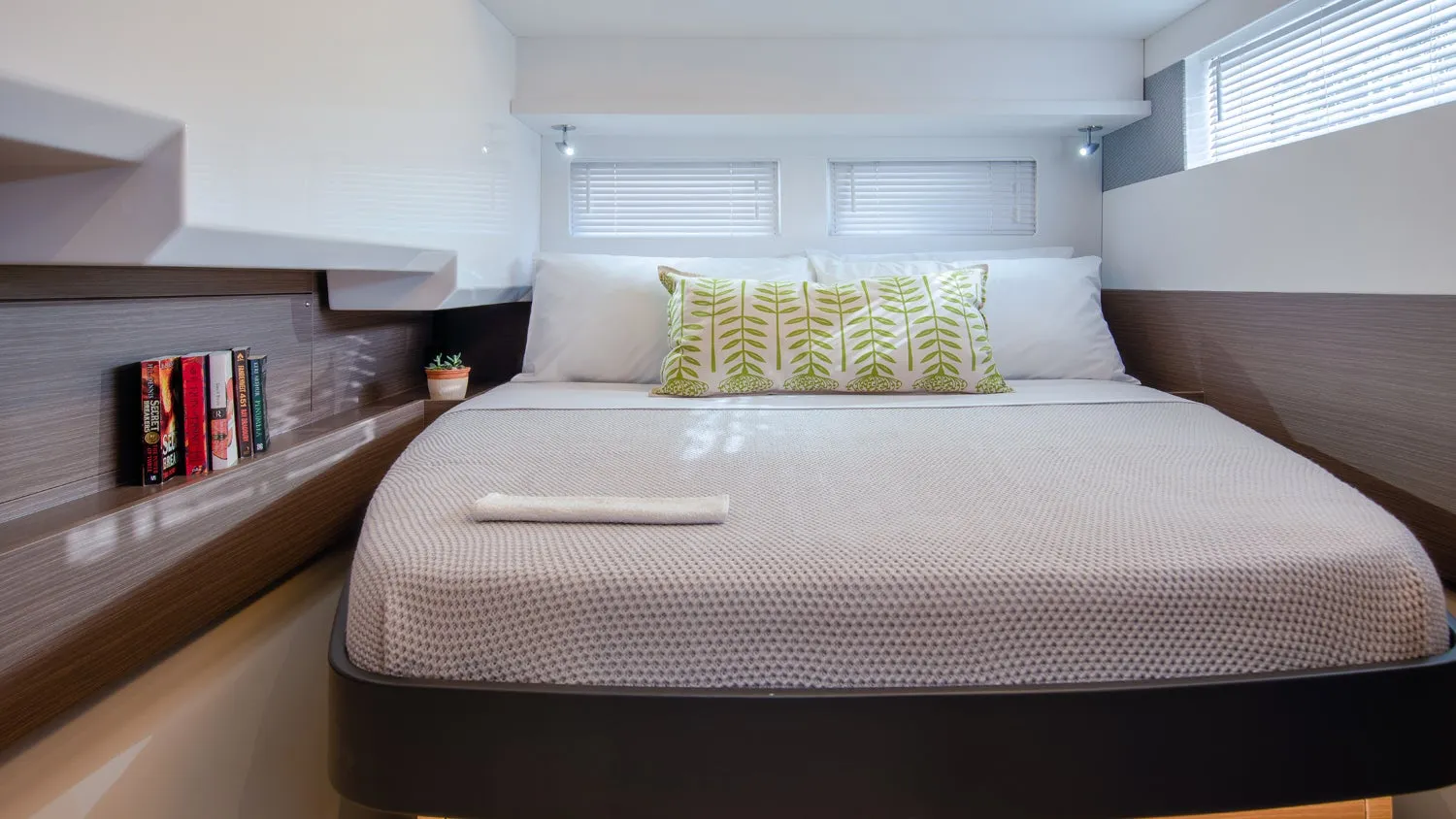
Private quarters come as three or four cabins, and every one has its own en-suite head. The three-cabin layout spends the difference on an owner's suite with a walk-in closet, a desk and a double vanity; the four-cabin layout trades that for a fourth double. Cabins are drawn with generous floor space and wide bunks reachable from either side, so nobody climbs over anybody to get out.
Lighting is specified rather than assumed: recessed LED task lighting, and cabin lighting arranged to avoid glare and dark spots. The primary suite head has a vanity mirror with a semi-translucent perimeter strip and concealed lighting behind it.
The Galley Serving Area is the layout idea worth walking. It sits at the aft end of the saloon as an extra counter for food and drink preparation, with lockers for crockery, food and drinks, so the boat can serve the cockpit without anybody working across the middle of the saloon.
Glazing does a lot of the interior work. The hull side window is a full-length rectangle, with different portlight configurations available; the coach roof windows are vertical, which is what lets the forward cockpit door fit properly, and all of them are flat toughened glass for optical clarity.
The engine room is sealed off from the living space entirely and entered from the deck through a large hatch with a step ladder. All major systems are housed in there, which keeps both noise and service access out of the accommodation.
The 46 Powercat is aimed at the owner-operator who wants a boat big enough to cruise for a fortnight and simple enough to run without crew. The pitch is deck area: 24' 1" of beam on a 46-foot hull gives a saloon and a flybridge that a monohull of the same length cannot draw, and it does it on a 3' 1" draft.
The Aquila 46 Yacht is the direct rival, a flybridge power catamaran of the same length. The Aquila 46 Coupe is the single-level version of that hull and worth a look if you would rather have the volume below than the deck above.
Inside the range, the 40 Powercat is the same idea one size down, with three cabins and no four-cabin option. The 53 Powercat adds optional crew quarters, a separate shower in every head and about 90 more gallons of fuel. The 46 is the size at which this range starts to support real distance without adding staff.
Buy the Leopard 46 Powercat if you want to cruise for weeks at a time and still be the one driving. The systems are laid out to be reached — the engine room is entered from the deck, not through a cabin — and the boat is drawn around an owner who does their own routine checks.
It fits a family or two couples equally well. Three cabins with an owner's suite that has a walk-in closet, a desk and a double vanity, or four cabins when the extra double matters more than the closet. Every cabin has its own head either way, which is usually the specification that decides whether people enjoy a two-week trip.
It fits shallow water. A 3' 1" draft is the shallowest in the Powercat range and puts most Bahamian and Florida cruising grounds inside reach.
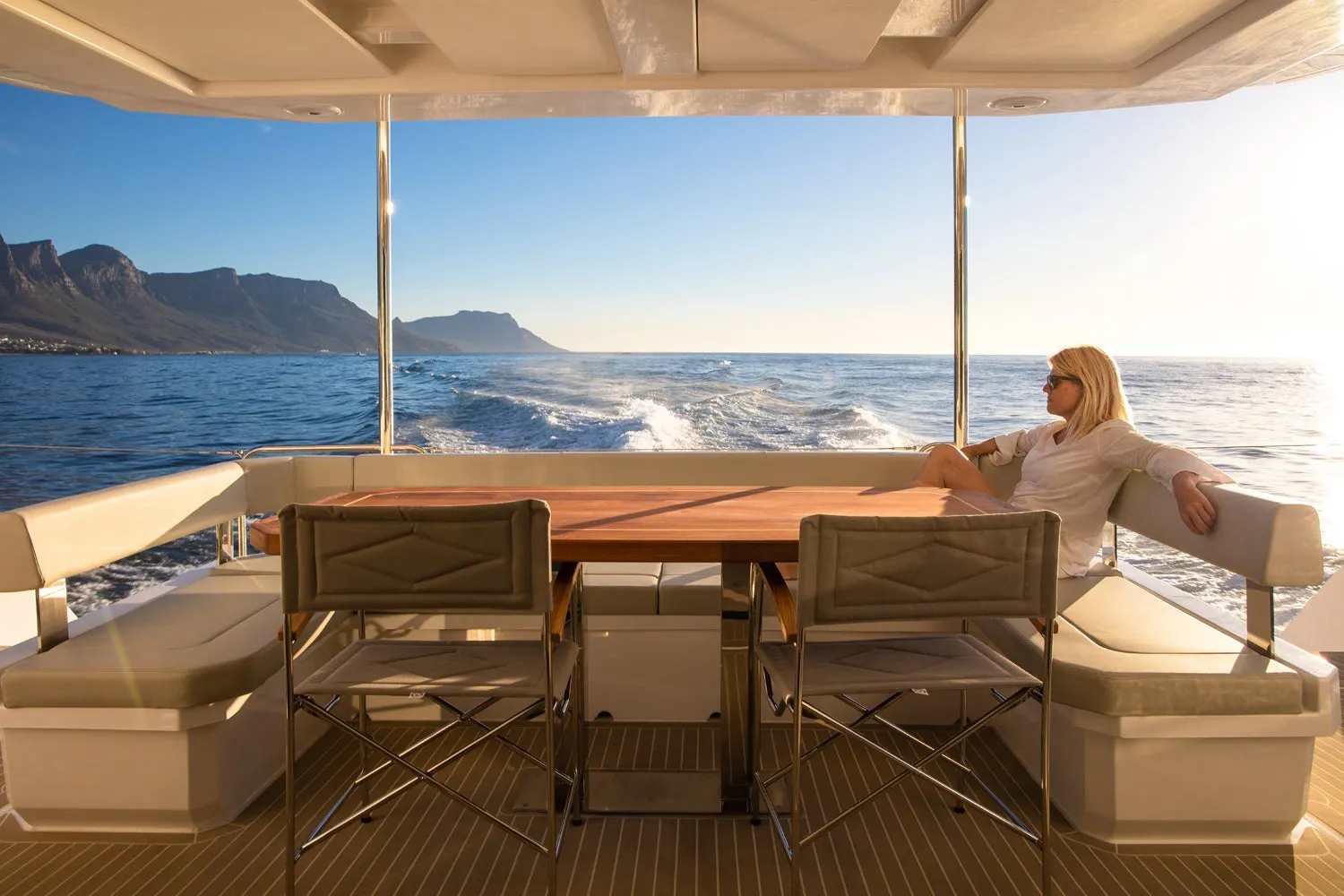
It fits someone who entertains at anchor. The Galley Serving Area at the aft end of the saloon means drinks and food reach the cockpit without the cook leaving the party.
Step down to the 40 Powercat if a three-cabin weekender is the honest use case and the berth is tight. Step up to the 53 Powercat if you want crew quarters and separate showers. Either way, layouts are chosen from Leopard's own three- and four-cabin arrangements rather than drawn to a brief, so decide which one you want before you order.
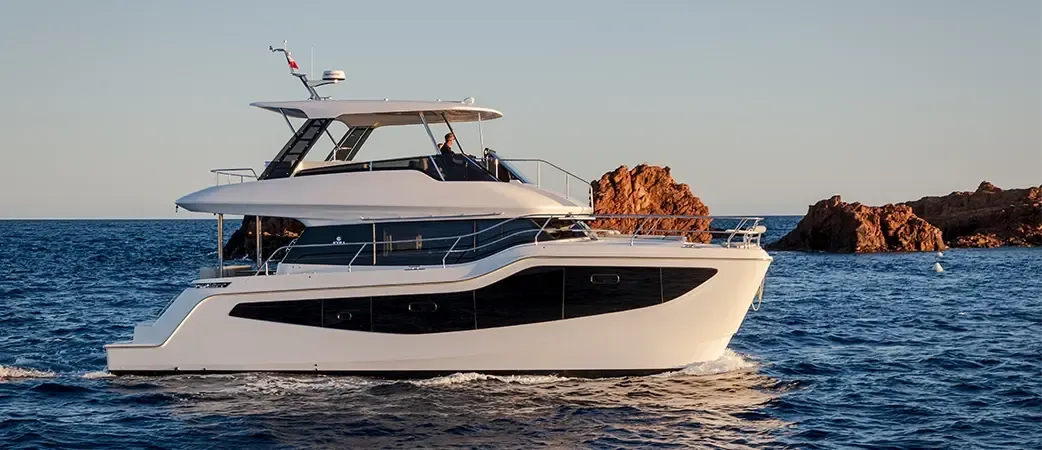
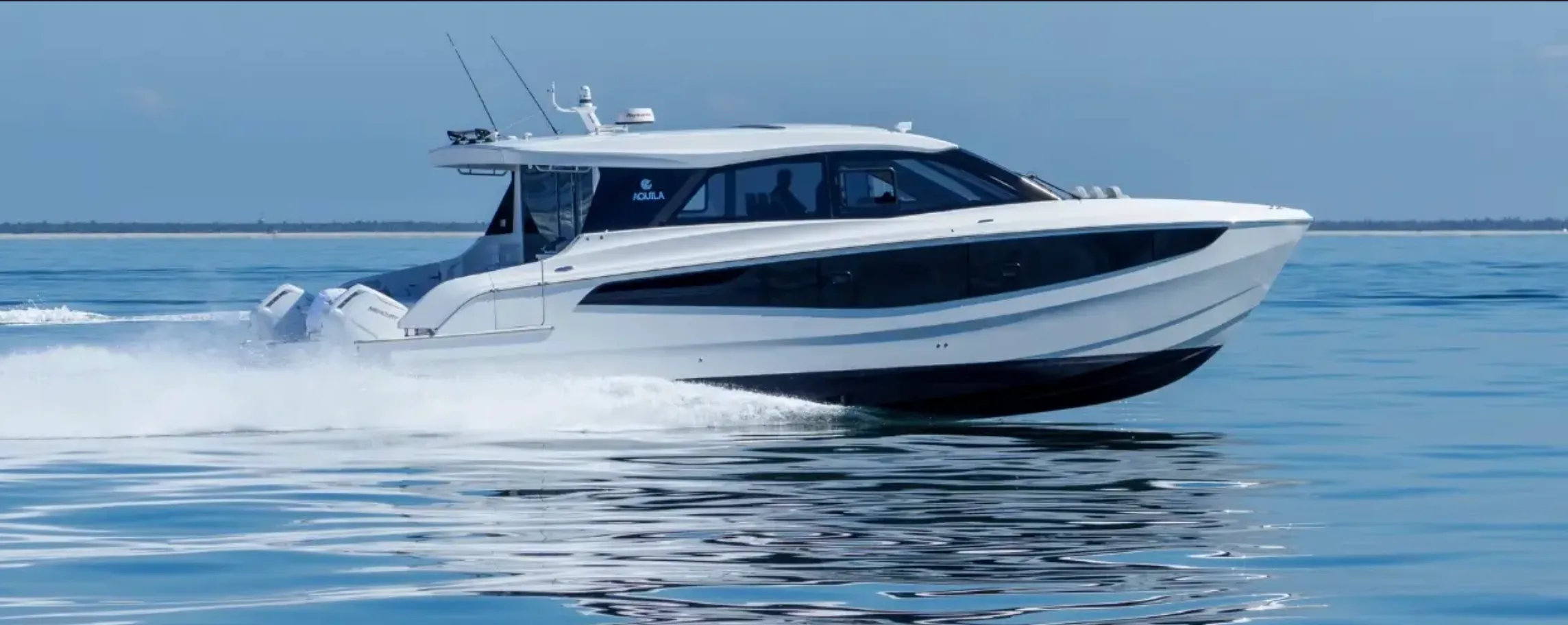
No. They are separate hulls that share a number in their names.
The 46 Powercat is a motor catamaran: 46 ft 4 in overall, 24 ft 1 in beam, 3 ft 1 in draft, 475 gallons of fuel, twin Yanmar 4LV 250 hp diesels as standard, 23.5 knots maximum and 16 knots cruising, three or four cabins all en-suite.
The Leopard 46 is a sailing catamaran: 45 ft 7 in overall on the same 24 ft 1 in beam, but drawing 5 ft 5 in, carrying 1,512 sq ft of sail, 182 gallons of fuel, and twin 45 hp auxiliaries with a hybrid electric drive available. Compare each on its own specification and never carry a figure from one to the other.
Three or four cabins, and every cabin has its own en-suite head. Leopard builds the hull both ways, so the three-cabin version gives more of the boat to the owner and the four-cabin version maximises accommodation.
The engine room is a full-sized compartment sealed off from the living space and reached from the deck, so engine access never runs through the accommodation.
3 ft 1 in — the shallowest of the three Leopard Powercats, against 3 ft 3 in on the 53 and 3 ft 7 in on the 40.
It is also the only one of the three whose waterline runs the full length of the hull: Leopard publishes 46 ft 4 in for both length overall and length at waterline. Displacement is 36,945 lbs with a 10,679 lb load carrying capacity, and tankage is 475 gallons of fuel, 185 gallons of water and a 42 gallon holding tank.
The specification quotes 23.5 knots maximum and 16 knots cruising.
Three engine packages are offered — twin Yanmar 4LV 250 hp diesels as standard, with 320 hp and 370 hp options — so settle which one you are buying in the contract and get observed speed and burn at your intended rpm in writing at sea trial. Leopard's own curve sheets for this hull are marked preliminary and drawn from CFD and propulsion predictions rather than a completed sea trial, with a stated 5 percent variation possible in all speeds, so your own trial numbers are the ones to plan on.