
August 29, 2026
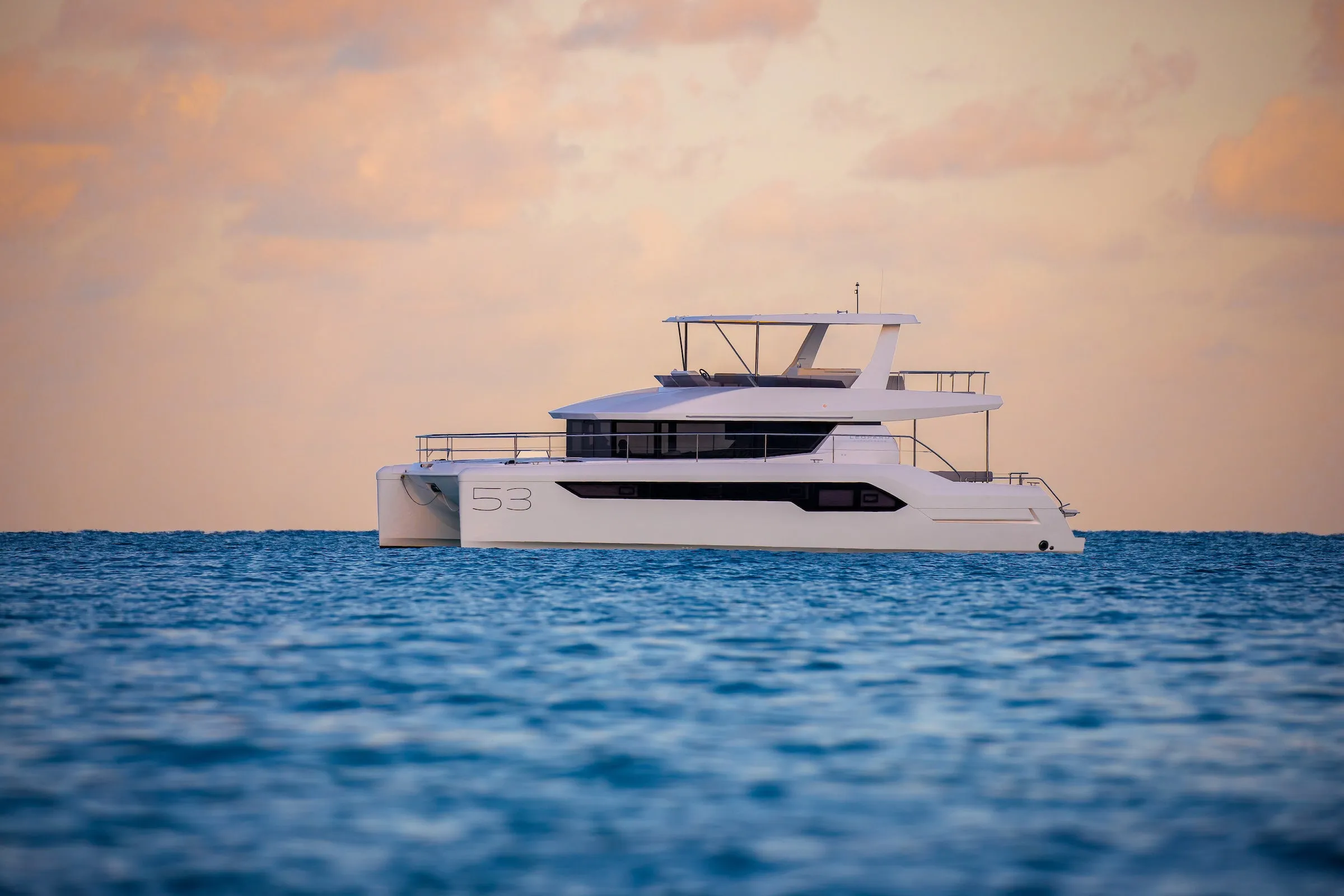
The Leopard 53 Powercat: Your Floating Headquarters
The Leopard 53 Powercat is a proven bluewater platform: 141 delivered and Multihull of the Year in 2020, en-suite cabins with separate showe…
Read the articleExpert Review, Technical Specifications & Market Analysis
| Feature | Specifications |
|---|---|
| Overall Length | 50'6" |
| Beam | 25'2" |
| Draft | 3'3" |
| Displacement | 47,203 lbs |
| Engines | Twin Yanmar 8LV (2 x 370 HP) |
| Fuel Capacity | 562 gal |
| Water Capacity | 185 gal |
| Cabins / Heads | 3-4 Cabins / 3-4 Heads + Crew |
| Max Speed | 24 knots |
| Cruise Speed | 17 knots |
Source: Spec & Photos courtesy of Leopard Catamarans.
You want to spend a month aboard without hiring a crew. The Leopard 53 Powercat is the biggest hull in the Powercat range: 50' 6" on a 25' 2" beam, three or four cabins with a separate shower in every head, and crew quarters if you want them.
Part of the Leopard Catamarans Power series — see how owners step up through the lineup.

The 53 Powercat is the one in this range you buy when the plan is weeks aboard rather than weekends. Five hundred and sixty-two gallons of fuel, 185 of water, and three or four cabins with a separate shower in every head is a specification written for distance and for guests who stay. On a fifty-foot boat, a separate shower rather than a wet head is usually what decides whether four couples still like each other in week two.
The 2026 refresh is a rework of a proven hull rather than a new boat, and Leopard spent it in sensible places. The flybridge does the most work: a wet bar with a sink, a grill and a fridge, sunpads that convert to lounges, better helm ergonomics and a stairway redrawn to make the climb safer. That turns a driving station into the place people actually spend the evening. The aft cockpit is now a choice — modular Alfresco furniture or a fixed layout — and which one suits you depends entirely on whether you are the sort of owner who rearranges a space or leaves it alone.
Two things for the contract. Leopard plots this boat's range on a nett usable fuel capacity of 523 gallons rather than the 562 on the specification, so plan passages off 523 and nobody gets a surprise halfway across. And look at the single-engine curve on the performance sheet before you need it, because knowing what this boat does on one engine is worth an afternoon now rather than an education later. Crew quarters are optional rather than assumed, which is the right way round: buy the boat without staffing it, and add the accommodation if the cruising gets ambitious.
Video courtesy of Leopard Catamarans.
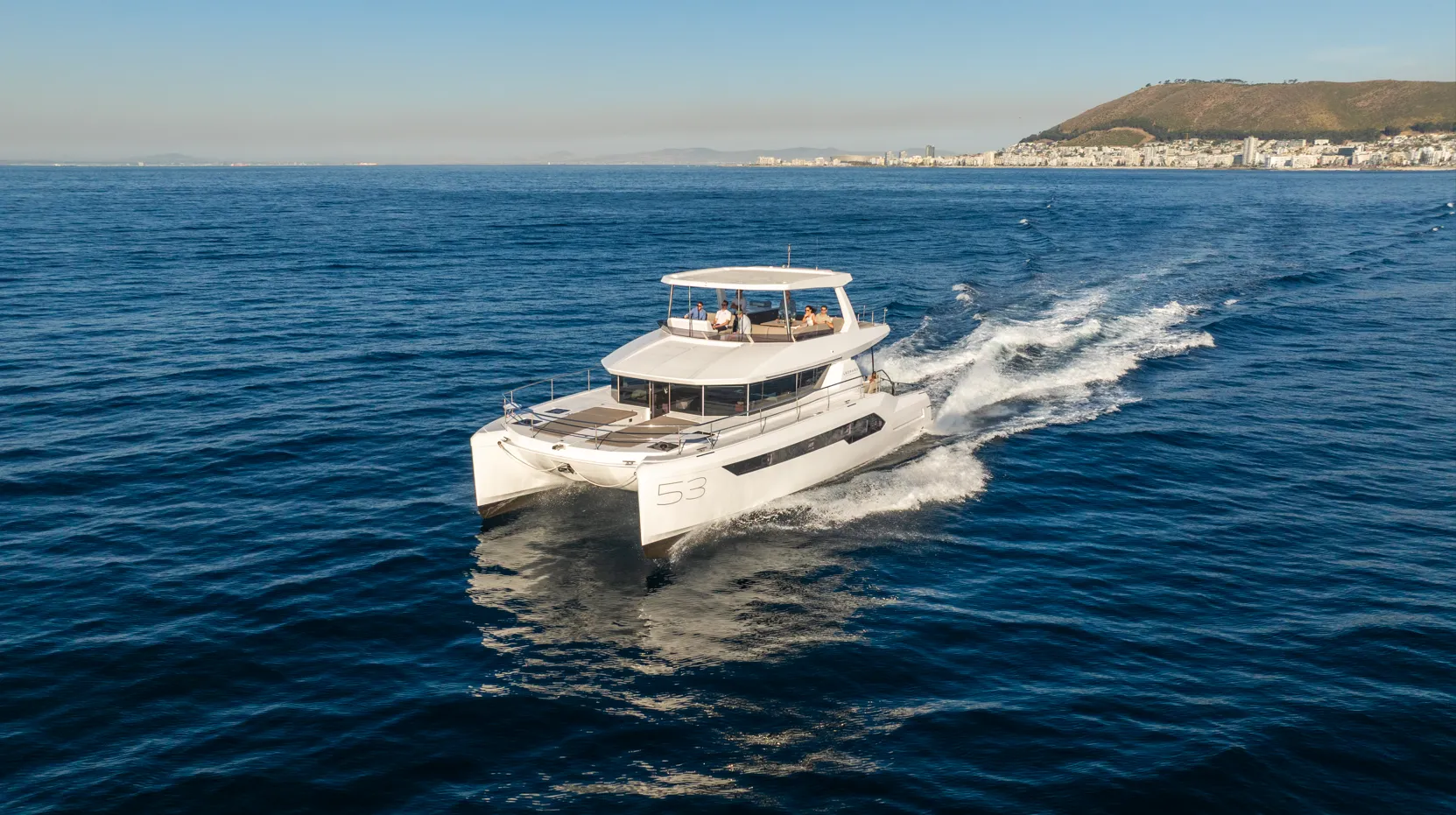
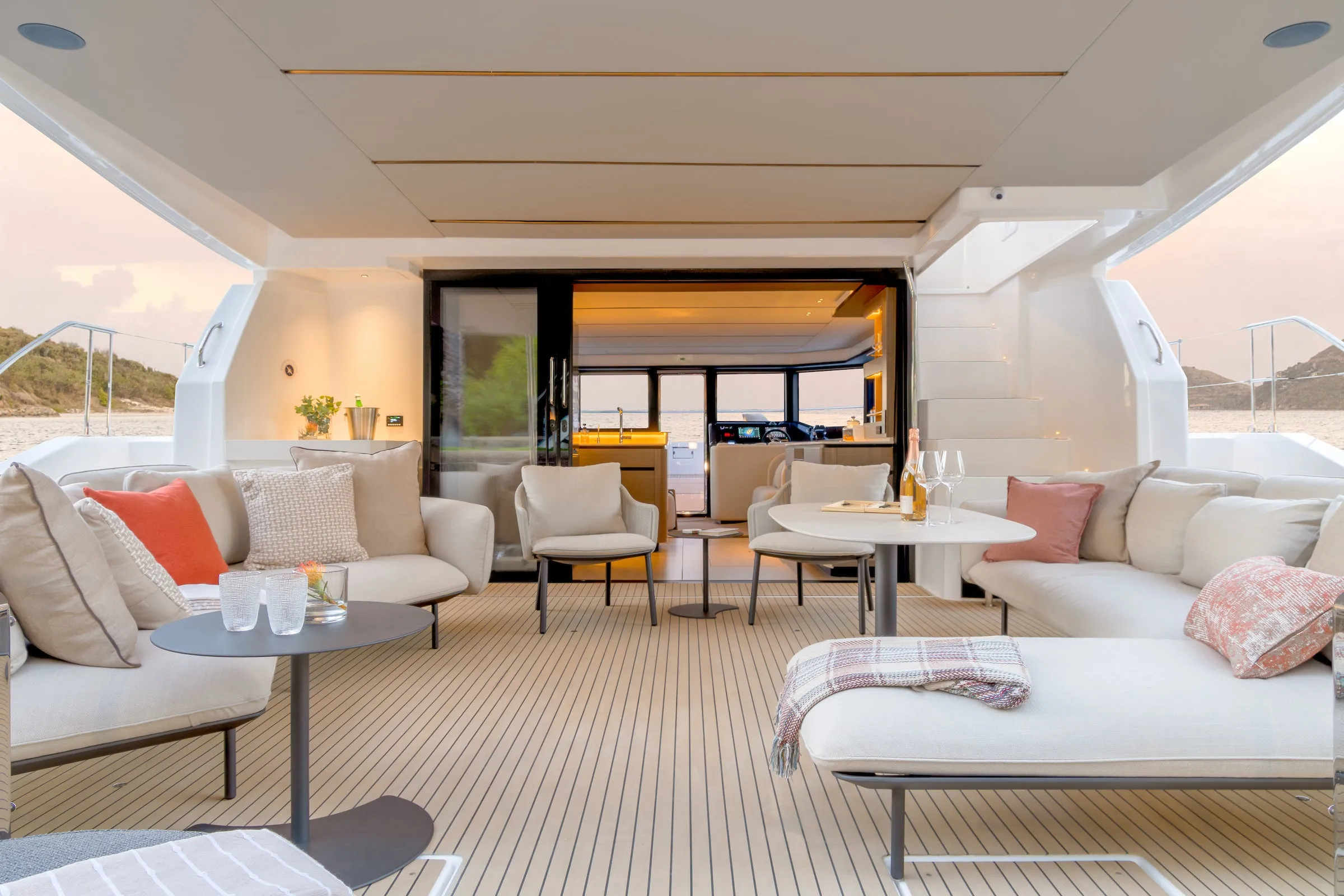
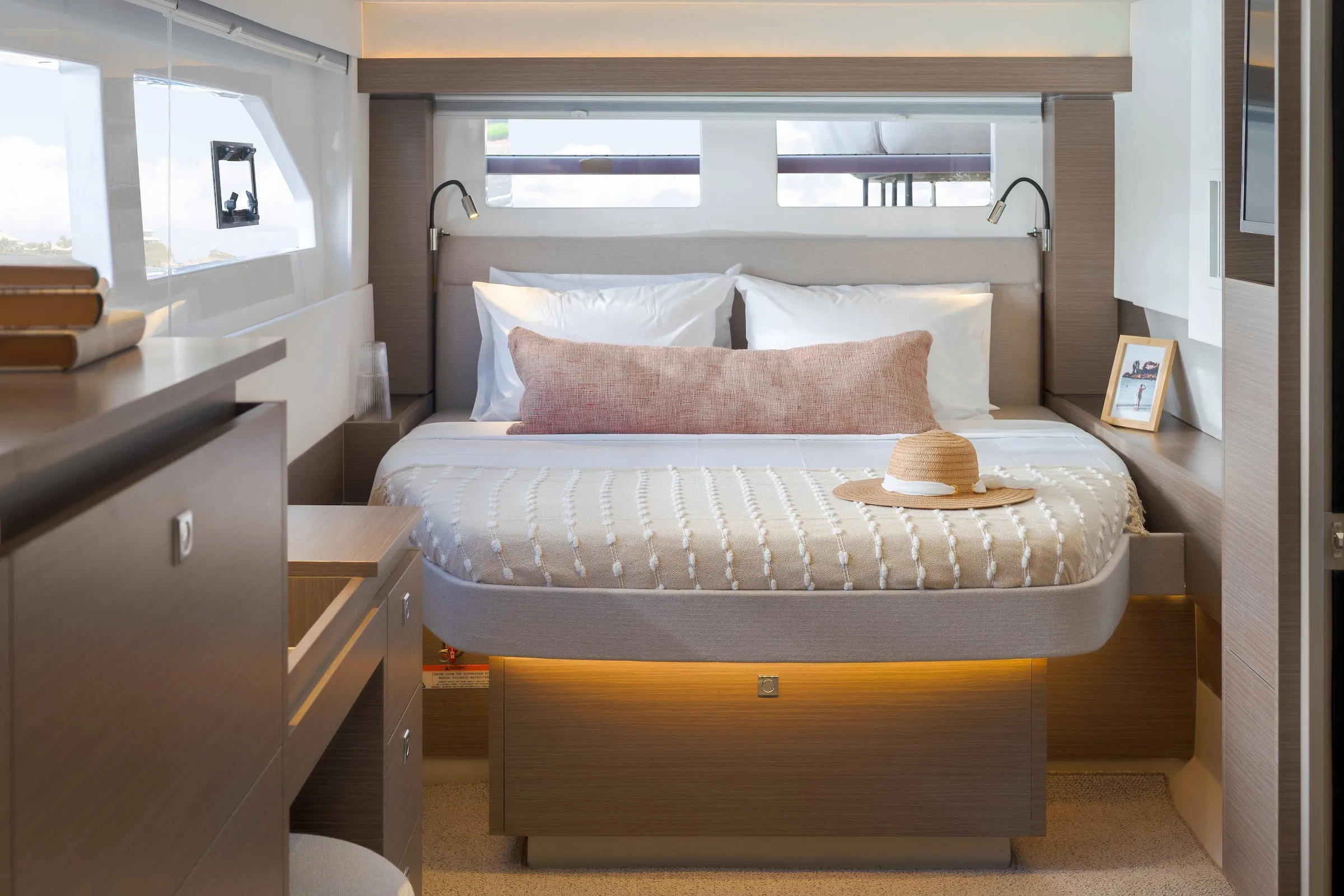
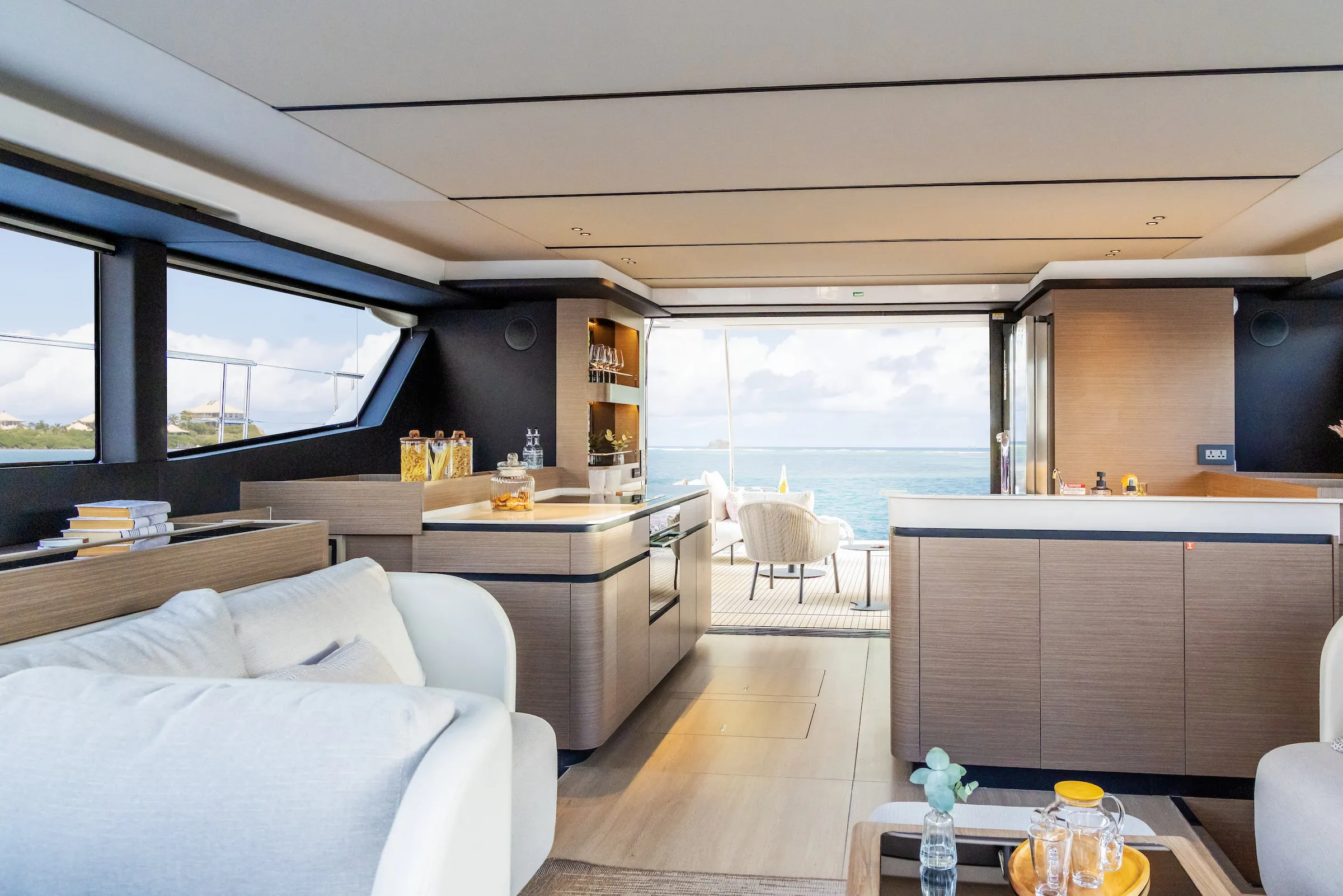
Photos courtesy of Leopard Catamarans.
The Leopard 53 Powercat is the largest of the three Powercats. It measures 50' 6" overall on a 50' 0" waterline and a 25' 2" beam, draws 3' 3", and displaces 47,203 lbs with a 13,490 lb load carrying capacity. Fuel is 562 US gallons, fresh water 185, holding tank 42. The boat is NMMA and CE certified.
Power is twin Yanmar 8LV diesels at 2 x 370 hp — one package rather than a menu — and the specification quotes 24 knots maximum and 17 knots cruising.
141 have been delivered and the design took Multihull of the Year in 2020. The 2026 boat is a reworked version of that hull rather than a new one: the changes are to the aft cockpit, the flybridge, the saloon and the galley.
Accommodation is three or four cabins with optional crew quarters, and every cabin has an en-suite head with a separate shower. The engine room is a sealed compartment housing all major systems, closed off from the living space.
Twin Yanmar 8LV diesels at 2 x 370 hp are the only package on this hull, which makes the performance easier to pin down than on the smaller Powercats. The specification quotes 24 knots maximum and 17 knots cruising.
Leopard publishes performance curves worked up from trial data on two boats, one trialled in October 2019 and one in February 2020, covering speed against rpm, fuel burn per hour, fuel used per mile and range against speed. Two details on those sheets are worth taking into the contract. First, range is plotted on a nett usable fuel capacity of 523 US gallons rather than the 562-gallon tank figure, so do your own passage arithmetic off 523. Second, there is a single-engine curve alongside the twin-engine ones, which tells you what the boat does on one engine — a number worth knowing before the day you need it.
The curves are drawn at 49,510 lbs trial condition, 55,192 lbs half load and 59,634 lbs full load, against a 47,203 lb specification figure and a 13,490 lb load capacity. Read them at the weight you will actually cruise at, and get observed burn at your intended rpm in writing at sea trial.
Draft is 3' 3" on a fifty-foot boat. That combination — 25' 2" of beam and a little over three feet of draft — is why this hull ends up anchored in the Exumas rather than tied to a deep-water marina.
Accommodation comes as three or four cabins with optional crew quarters. Every private cabin has an en-suite head with a separate shower rather than a wet head, which is usually the specification that decides whether four couples still like each other after two weeks.
The 2026 saloon is a genuine rework. The seating layout is redrawn, the dining area is modernised and expandable, the windows are enlarged for more natural light, storage is rebuilt into the cabinetry, and integrated LED lighting is fitted throughout. The galley behind it gets a new layout, generous storage and a full suite of appliances, and it opens to the cockpit through Lewmar glass stackable doors.
The aft cockpit is now a choice rather than a fixed plan. The Alfresco option uses modular furniture you can rearrange; the traditional option keeps fixed furniture. Either way the seating ergonomics are redrawn, the lounging areas extended, storage hidden under the seats and in floor hatches, the lighting modernised, and the walk-through transom and platform access made easier to use. An optional electric lifting platform serves as both a tender station and a swim deck.
The flybridge is where the refresh does the most work. Seating is more spacious, the helm station has modernised controls and better visibility, sunpad areas convert to lounges, and the wet bar module now takes a sink, a grill and a fridge — which is what turns a flybridge from a driving station into the place people spend the evening. Storage compartments are laid out for gear, finishes and upholstery are upgraded, lighting is built into the seating and the structure for use after dark, and the stairway has been redrawn to make the climb safer.
The engine room stays sealed off from the living space with all major systems inside it, so none of that noise reaches the saloon.
At 50' 6" with a 25' 2" beam and a 3' 3" draft, the 53 Powercat competes with 50- to 55-foot flybridge monohulls that draw considerably more and carry a fraction of the deck area. The owner it is drawn for wants to cross to the Bahamas, stay a month, and come back without ever hiring a captain.
The Aquila 50 Yacht is the closest power catamaran on length and the Aquila 54 Yacht sits just above it. The Horizon PC52 arrives at the same length from a semi-custom direction, and that is the real choice on the table: a production boat with 141 hulls of history behind it, or one drawn closer to your own brief.
Inside the range, the 46 Powercat gives up the optional crew quarters, the separate showers and about 90 gallons of fuel, and gains a shallower draft and a smaller berth. The 53 is the one that carries the tankage and the head count for long trips with a full boat.
Buy the Leopard 53 Powercat if the plan is weeks aboard rather than weekends. 562 gallons of fuel, 185 gallons of water, and three or four cabins with a separate shower in every head is a specification written for distance and for guests who stay.
It fits owners who host. The 2026 flybridge takes a wet bar with a sink, a grill and a fridge, convertible sunpads and a redesigned table, and the aft cockpit can be ordered with modular Alfresco furniture or a fixed layout depending on how you actually use the space.
It fits people who want a boat with a track record. 141 have been delivered and the design won Multihull of the Year in 2020, so the systems, the layout and the sea manners have been tested by a lot of owners before you.
It fits an owner-operator who might want help occasionally. Crew quarters are optional rather than assumed, so you can buy the boat without staffing it and add the accommodation later if the cruising gets ambitious.
It does not fit a buyer who wants the arrangement drawn to their own brief — the layouts here are Leopard's three- and four-cabin plans, chosen at order. And if the honest use case is long weekends within a day of the marina, the 46 Powercat is the more manageable boat.
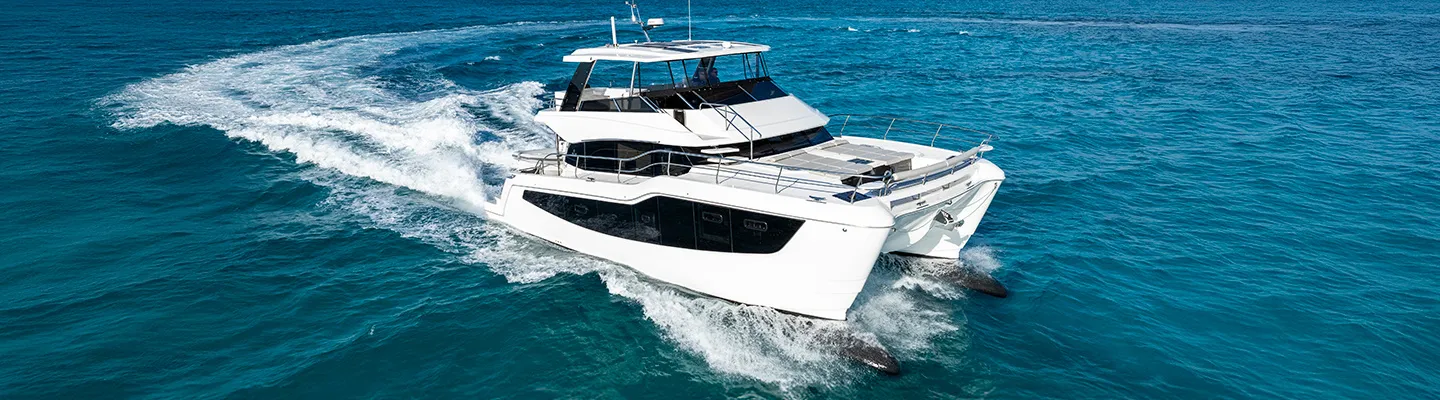
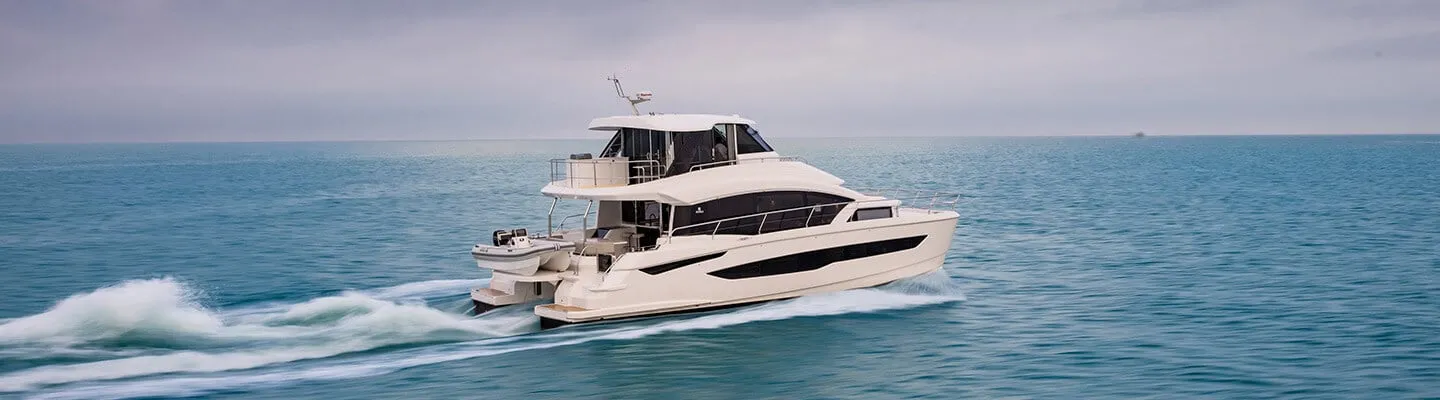
Three or four, with optional crew quarters. Every private cabin has an en-suite head with a separate shower rather than a wet head, which is usually the specification that decides whether four couples still like each other after two weeks.
Tankage supports the same brief: 562 gallons of fuel, 185 gallons of water and a 42 gallon holding tank on a boat measuring 50 ft 6 in overall with a 13,490 lb load carrying capacity.
Yes. Crew quarters are optional rather than assumed on this boat, so you can buy it without staffing it and add the accommodation later if the cruising gets ambitious.
What makes that realistic is the draft and the systems layout: 3 ft 3 in on a 50 ft 6 in hull with a 25 ft 2 in beam, and an engine room sealed as a single compartment holding all the major systems away from the living space. If the honest use case is long weekends within a day of the marina, the 46 Powercat is the more manageable boat.
The deck and interior, not the platform. The aft cockpit, flybridge, saloon and galley were reworked; the hull, the twin Yanmar 8LV 370 hp engines and the tankage carry over unchanged.
The flybridge gains more spacious seating, modernised helm controls and better visibility, sunpads that convert to lounges, and a wet bar module taking a sink, a grill and a fridge. The saloon gets a redrawn seating layout, an expandable dining area, enlarged windows and integrated LED lighting, with a new galley layout behind it opening to the cockpit through glass stackable doors. The aft cockpit becomes a choice: modular Alfresco furniture you can rearrange, or a fixed traditional layout.
The specification quotes 24 knots maximum and 17 knots cruising, on twin Yanmar 8LV 370 hp diesels — one package rather than a menu, which makes the performance easier to pin down than on the smaller Powercats.
One detail from Leopard's own curve sheets is worth taking into the contract: range is plotted on a net usable fuel capacity of 523 gallons rather than the 562 gallon tank figure, so do your passage arithmetic off 523. The curves are drawn at 49,510 lbs trial condition, 55,192 lbs half load and 59,634 lbs full load, so read them at the weight you will actually cruise at, and get observed burn at your intended rpm in writing at sea trial. There is also a single-engine curve alongside the twin-engine ones, which tells you what the boat does on one engine — worth knowing before the day you need it.