

March 25, 2026
The Aquila 50 Yacht: When Catamaran Engineering Meets Real-World Cruising
Featuring a full-beam, no-stairs master on the main deck, Category A offshore certification, shallow 4'2" draft and Volvo reliability, the A…
Read the articleExpert Review, Technical Specifications & Market Analysis
| Feature | Specifications |
|---|---|
| Overall Length | 52' 2" |
| Beam | 25' 6" |
| Draft | 4' 2" |
| Displacement | 23,013 KG / 50,735 LB |
| Engines | 2x Volvo Penta D6 380 HP |
| Fuel Capacity | 1,964 L / 518 GAL |
| Water Capacity | 800 L / 212 GAL |
| Cabins / Heads | 3 / 3 + utility room |
| Max Speed | 22 knots |
| Cruise Speed | 18-19 knots |
Source: Spec & Photos courtesy of Aquila. Specs verified by Tony Smith, USCG 100 Ton Master, on August 9, 2026.
Part of the Aquila Yacht series — see how owners step up through the lineup.

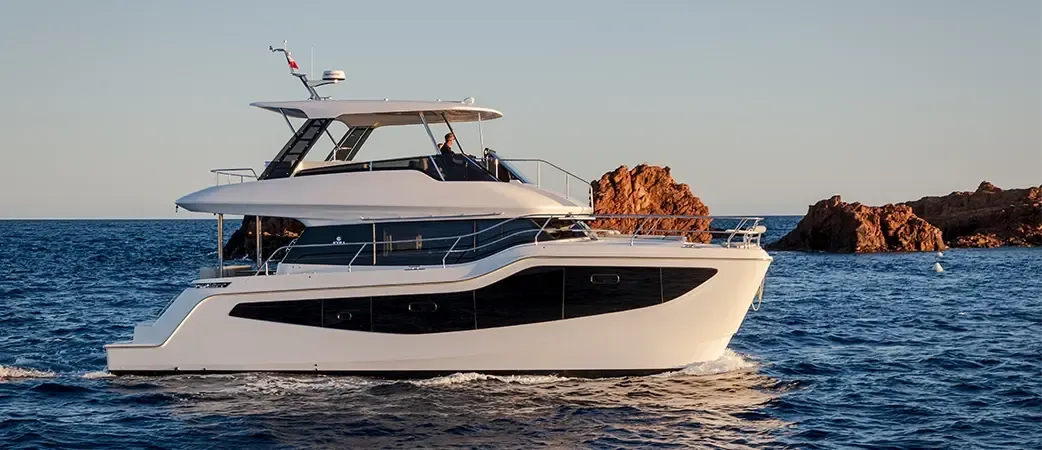
The Aquila 50 represents a mature approach to catamaran design. The build quality is solid without being overbuilt, the systems are straightforward, and the Volvo powerplants are about as reliable as you'll find in this segment. The 25'6" beam is carried forward effectively, which translates to interior volume that punches above the boat's length. The optional utility room is a smart touch that adds real flexibility for long-term cruising or charter use.
This boat is for the owner who plans to run it themselves. If you're looking for a captain-driven yacht with Italian styling and 28-knot cruise, keep looking. But if you want a capable offshore platform that you can handle with your partner, that sips fuel at 18 knots, and that offers a layout designed for actual living rather than showroom appeal, the Aquila 50 is one of the best values in the 50-foot catamaran market. It's not flashy. It's functional. That matters more after the first season.
Resale on Aquila cats has been strong, particularly in Florida and Caribbean markets where the brand has solid dealer support. Expect to hold 70-75% of purchase price after three years with proper maintenance. Operating costs will run around 10% of purchase price annually, which is in line with the segment. The shallow draft and twin-engine redundancy make insurance more favorable than comparable monohulls. This is a boat you can own for five to seven years without taking a bath on depreciation..
Video courtesy of Aquila.
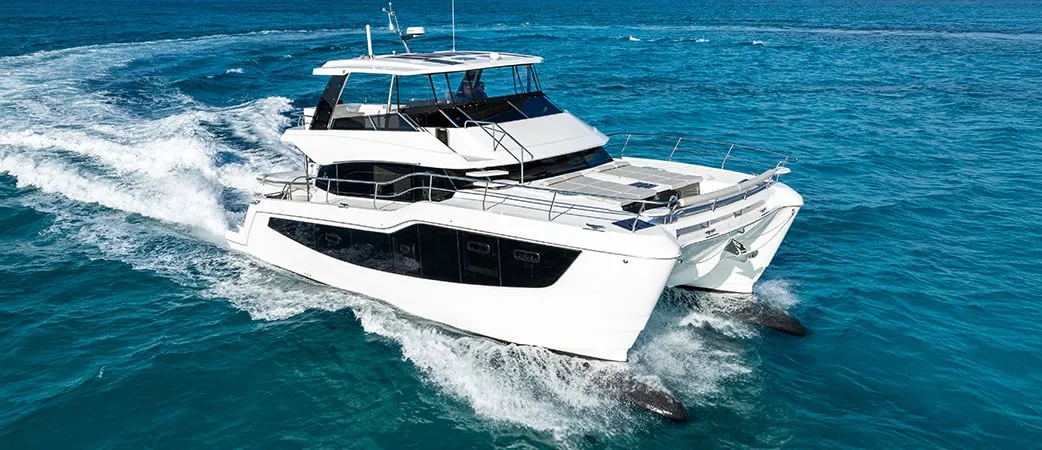
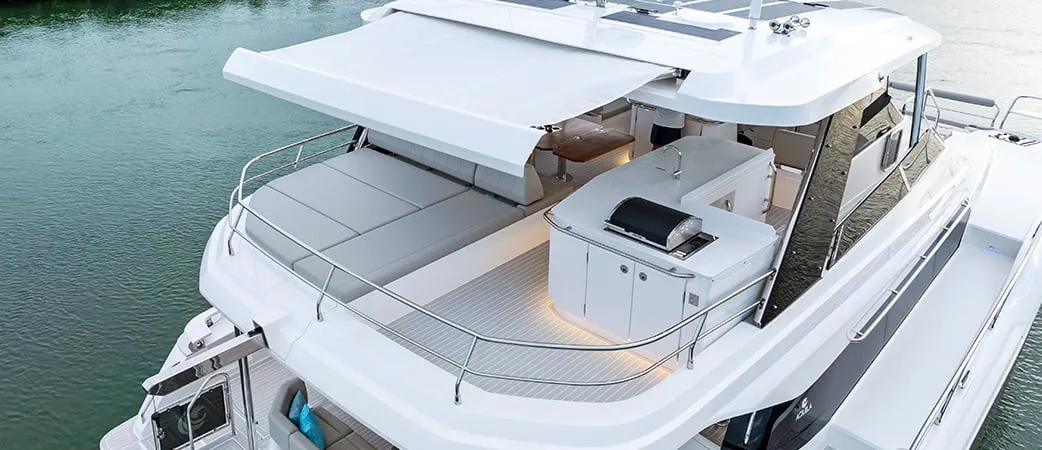
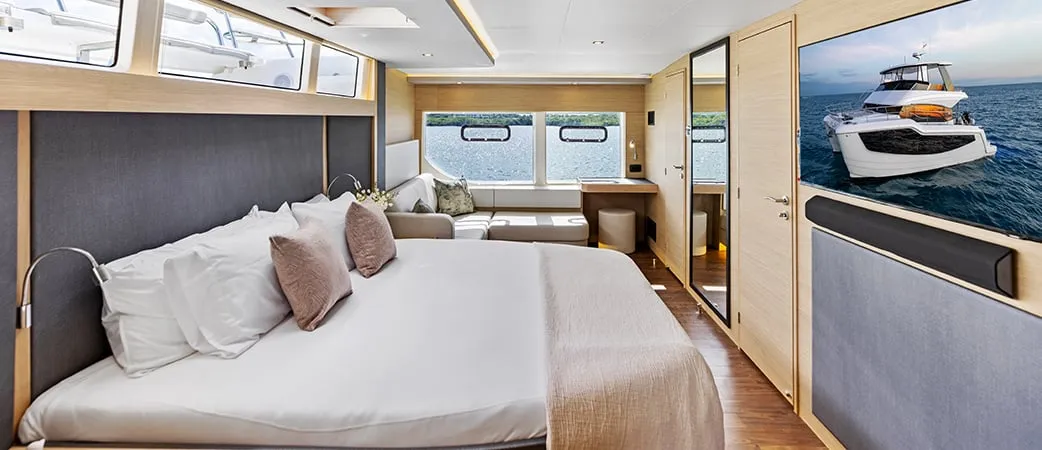
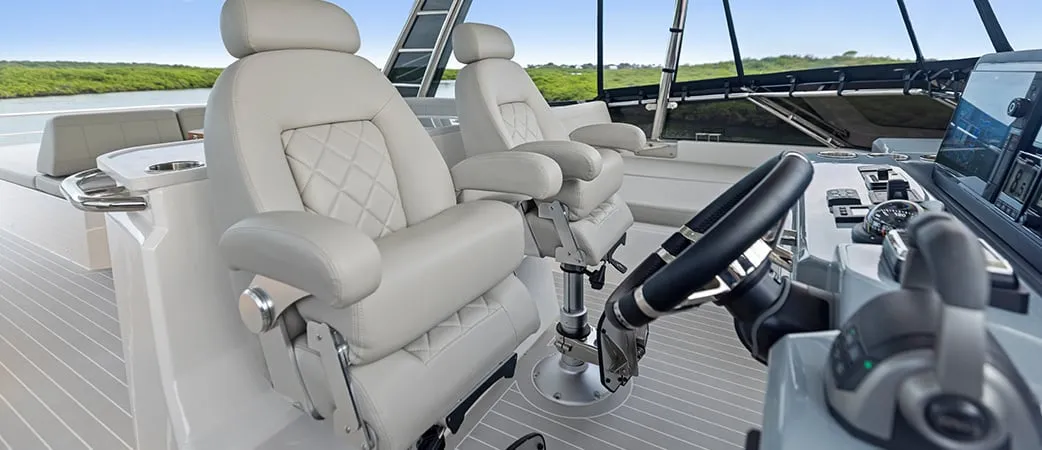
Photos courtesy of Aquila.

Three, with an optional utility room that can be configured as a fourth cabin, crew quarters, or serious storage. The headline is the master: full-beam, on the main deck, with an en-suite head larger than most guest bathrooms ashore. The two guest cabins sit in the hulls with private heads. Water capacity is 212 gallons. That utility room is the flexible piece — it is what makes the 50 work for a long charter season or a family that cruises for weeks at a stretch.
New boats land in the $1.2 to $1.4 million range depending on options, and annual operating costs run roughly 10 percent of purchase price — call it $120,000 to $140,000 covering insurance, dockage, maintenance, fuel, and haul-outs. Keeping her in South Florida adds another $30,000 to $40,000 for a decent slip. The resale side is the good news: well-maintained boats have been holding 70 to 75 percent of purchase price after three years. Sea trials and private showings run out of Fort Lauderdale.
It is an owner's suite that spans the entire 25-foot 6-inch beam and sits on the main deck — no stairs, no companionway, no ducking. That is a genuine advantage over the Leopard 50 and the Fountaine Pajot Saona 47, both of which put the owner's suite down a set of steps. The en-suite head is larger than most guest bathrooms on land. If you are past the age where climbing out of a hull at two in the morning sounds like fun, this layout sells itself.
Two feet of length hides a real difference in mission. The 50 Yacht is 52 feet 2 inches, three cabins plus a utility room, 518 gallons of fuel, 212 gallons of water, and an 18-to-19-knot cruise. The Aquila 54 Yacht runs 54 feet 2 inches, 581 gallons of fuel, 264 gallons of water, and up to five cabins. Both use twin Volvo Penta D6 380s as standard power. Choose the 50 for a couple who cruise hard; choose the 54 when the guest list is permanent.
Roughly 300 nautical miles at an 18-to-19-knot cruise, from 518 gallons of fuel. That is Miami to the Abacos with reserves, and it matters more than the 22-knot top end. At cruise the twin Volvo Penta D6 380s are working well inside their comfort zone, which is where both efficiency and engine life come from. Add a 4-foot 2-inch draft and you can also choose anchorages that deeper boats have to run straight past.
Yes, and that is the point of the boat. Twin Volvo Penta D6 380-hp diesels give you independent thrust for docking, the systems are deliberately straightforward, and the full-beam master sits on the main deck so nobody is negotiating stairs at three in the morning. Owners routinely run her two-handed on Bahamas legs. The 25-foot 6-inch beam asks for a little planning at the fuel dock, but the catamaran platform is far more forgiving in a crosswind than a monohull of the same length.