
August 28, 2026
Sunseeker Superhawk 55 vs Predator 55: Same Engines, 5,773 lbs Apart
Sunseeker builds two 56-foot performance boats on the same 16' 2" beam with the same twin Volvo Penta IPS 950 and the same 476 gallons of fu…
Read the articleExpert Review, Technical Specifications & Market Analysis
| Feature | Specifications |
|---|---|
| Overall Length | 56' 2" |
| Beam | 16' 2" |
| Draft | 4' 8" |
| Displacement | 57,500 lbs |
| Engines | Twin Volvo Penta IPS 950 (2 x 725 HP) |
| Fuel Capacity | 476 gal |
| Water Capacity | 114 gal |
| Cabins / Heads | 2 Cabins / 2 Heads |
| Max Speed | 38 knots |
Source: Spec & Photos courtesy of Sunseeker. Specs verified by Tony Smith, USCG 100 Ton Master, on August 27, 2026.
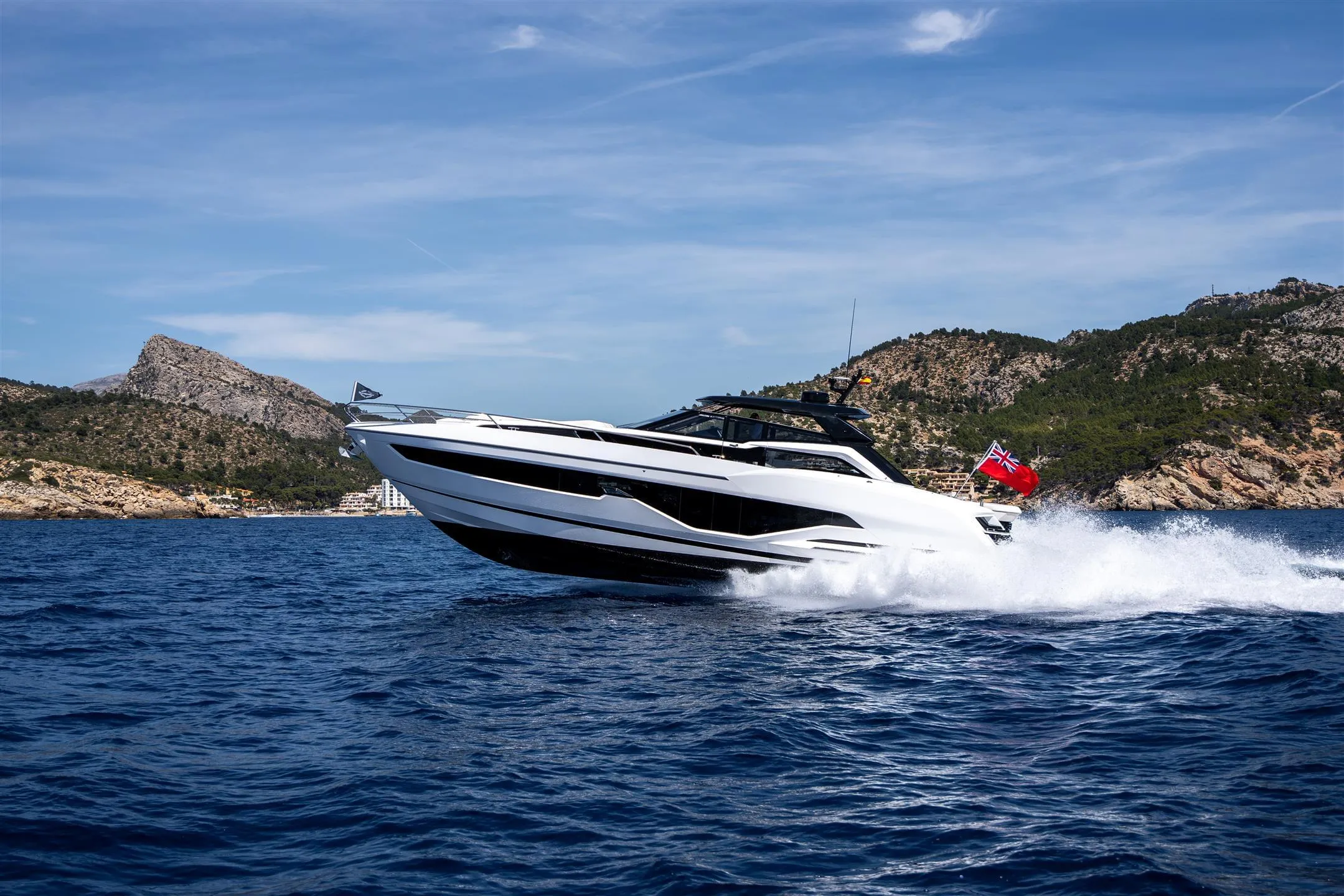
Sunseeker put an old name back on a new hull. The Superhawk 55 is the lightest and fastest of the four boats it builds under 60 feet - 57,500 lbs at half load, up to 38 knots - and the only one of them that does not offer you a third cabin.
Part of the Sunseeker Superhawk series — see how owners step up through the lineup.

Superhawk is a name Sunseeker has carried before and has now put back into the range, and I like that they gave it to this boat rather than a bigger one. Line the Superhawk 55 up next to the Predator 55 on the dock and you would struggle to separate them: one inch apart in length overall, identical 16' 2" beam, identical twin Volvo Penta IPS 950, identical 476 gallons of fuel and 114 of water. Then you look at the two numbers that matter and the boats stop being twins. The Superhawk sits at 57,500 lbs at half load against 63,273, and it draws 4' 8" against 4' 10".
That 5,773 lbs is the entire argument. It buys two knots at the top end - 38 against 36 - and it is why the Superhawk is fixed at two cabins and two heads while the Predator will sell you a third cabin and take six guests. Sunseeker did not build a lighter boat by accident; they built a boat that does one job and did not hedge it. The galley is down in an open lobby rather than up on the main deck, so the main deck is helm, cockpit and a big wet bar and not much else. That is either exactly what you want or the wrong boat entirely, and there is no middle position to negotiate toward.
The thing I would tell you to do is a sea trial on both in the same week, in the same water, loaded the way you actually go out. Sunseeker quotes a maximum of 38 knots for this hull. Get observed burn at your normal cruising rpm, in writing, on the day, and do your own arithmetic against the 476 gallons under the floor. Two knots of top end is a headline. What the boat does at the rpm you will actually sit at is the number you will live with.
Video courtesy of Sunseeker.
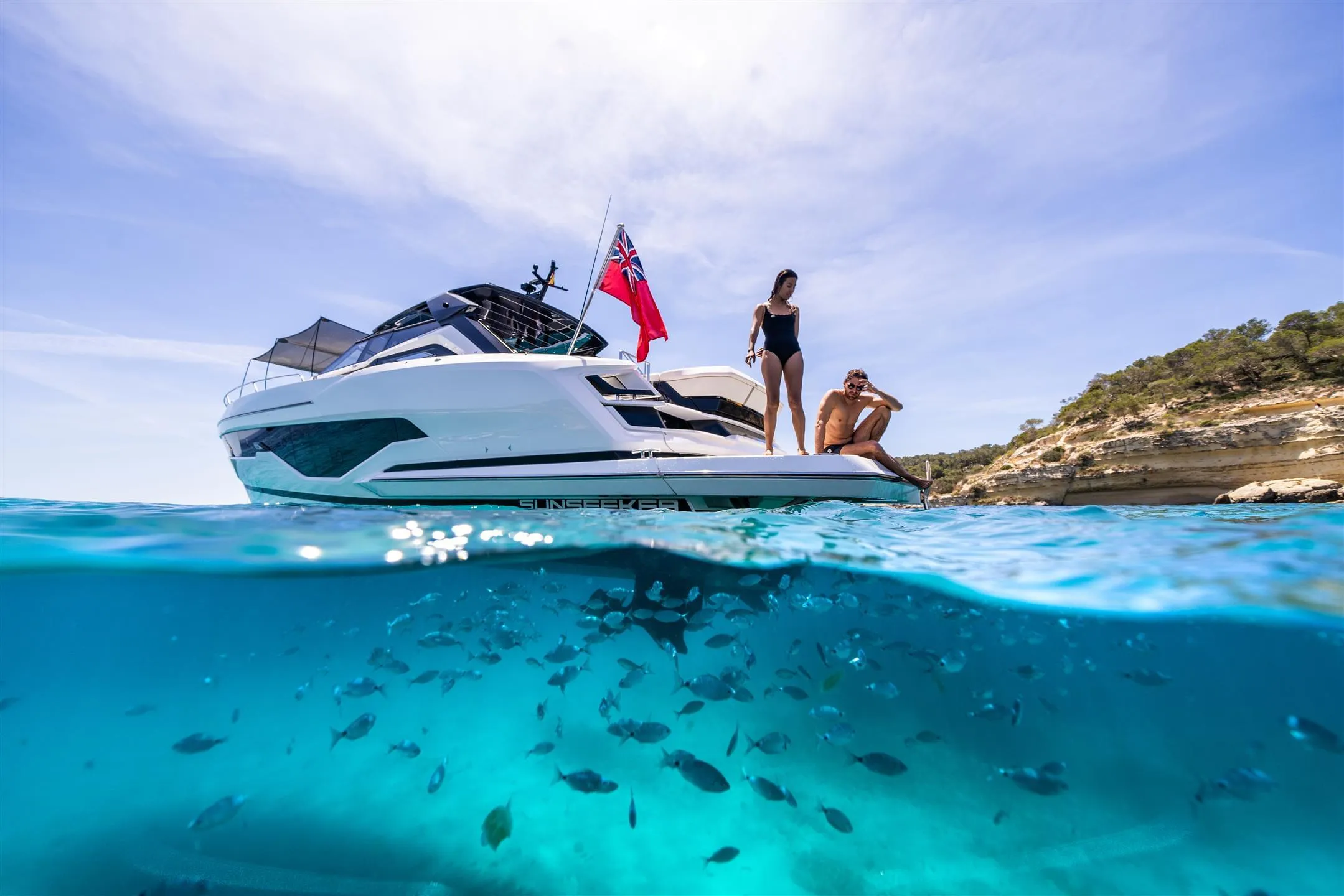
Photos courtesy of Sunseeker.
The Superhawk 55 is Sunseeker's two-cabin performance boat, built at Poole and measuring 56' 2" overall on a 16' 2" beam. Sunseeker says the hull form was designed specifically around the IPS propulsion system rather than adapted to it, and the standard fit is twin Volvo Penta D11 IPS 950, rated 2 x 725 HP, driving pods. Top speed is up to 38 knots. Half-load displacement is 57,500 lbs and draft is 4' 8" at full load.
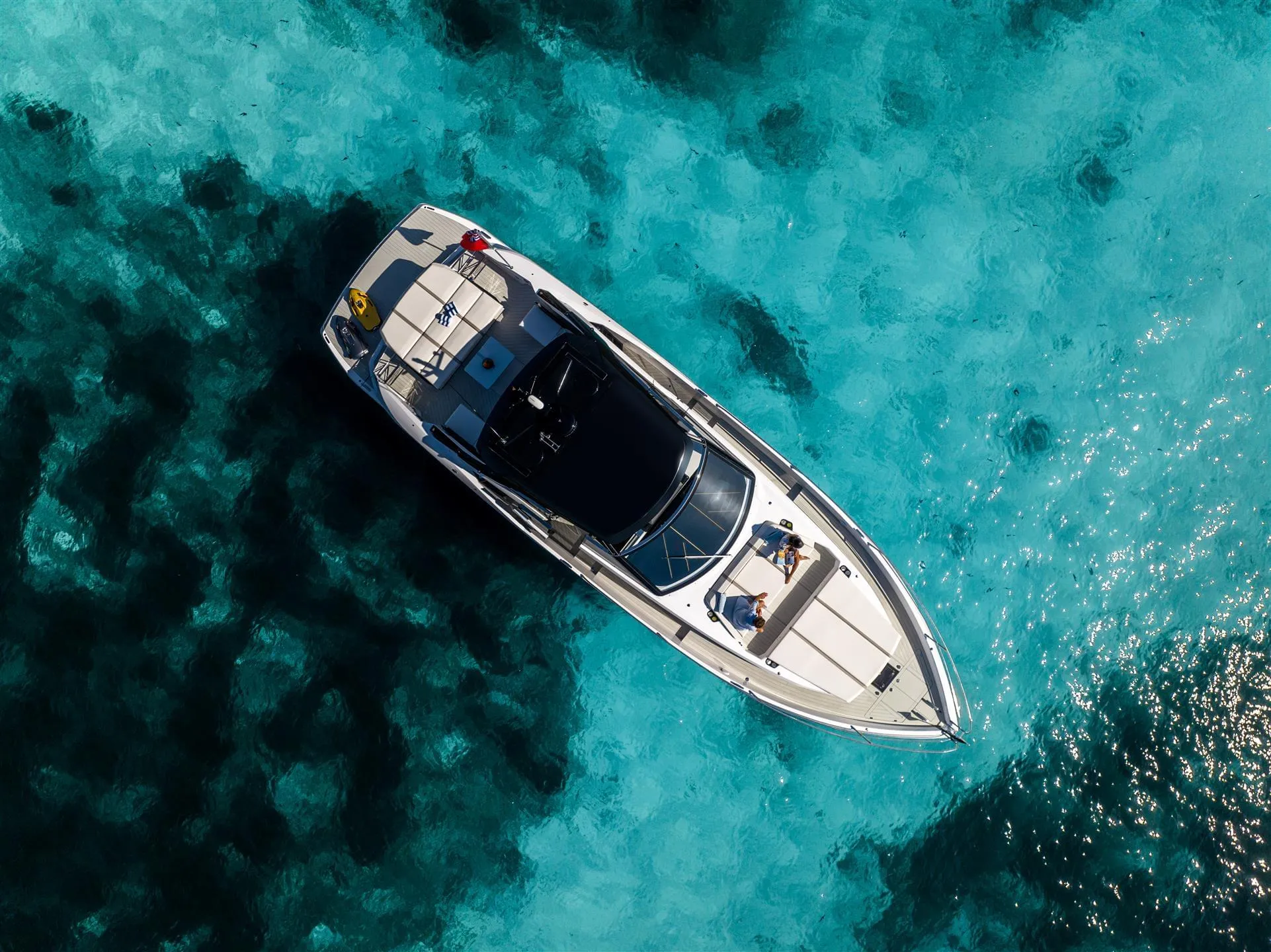
Above deck the layout is uncomplicated on purpose. The aft cockpit is built around a large central wet bar, with several furniture configurations offered so the deck can be set up for eating, for sunbathing, or for standing around the bar. There is no flybridge and no second helm - everything happens on one level, and the boat is styled accordingly.
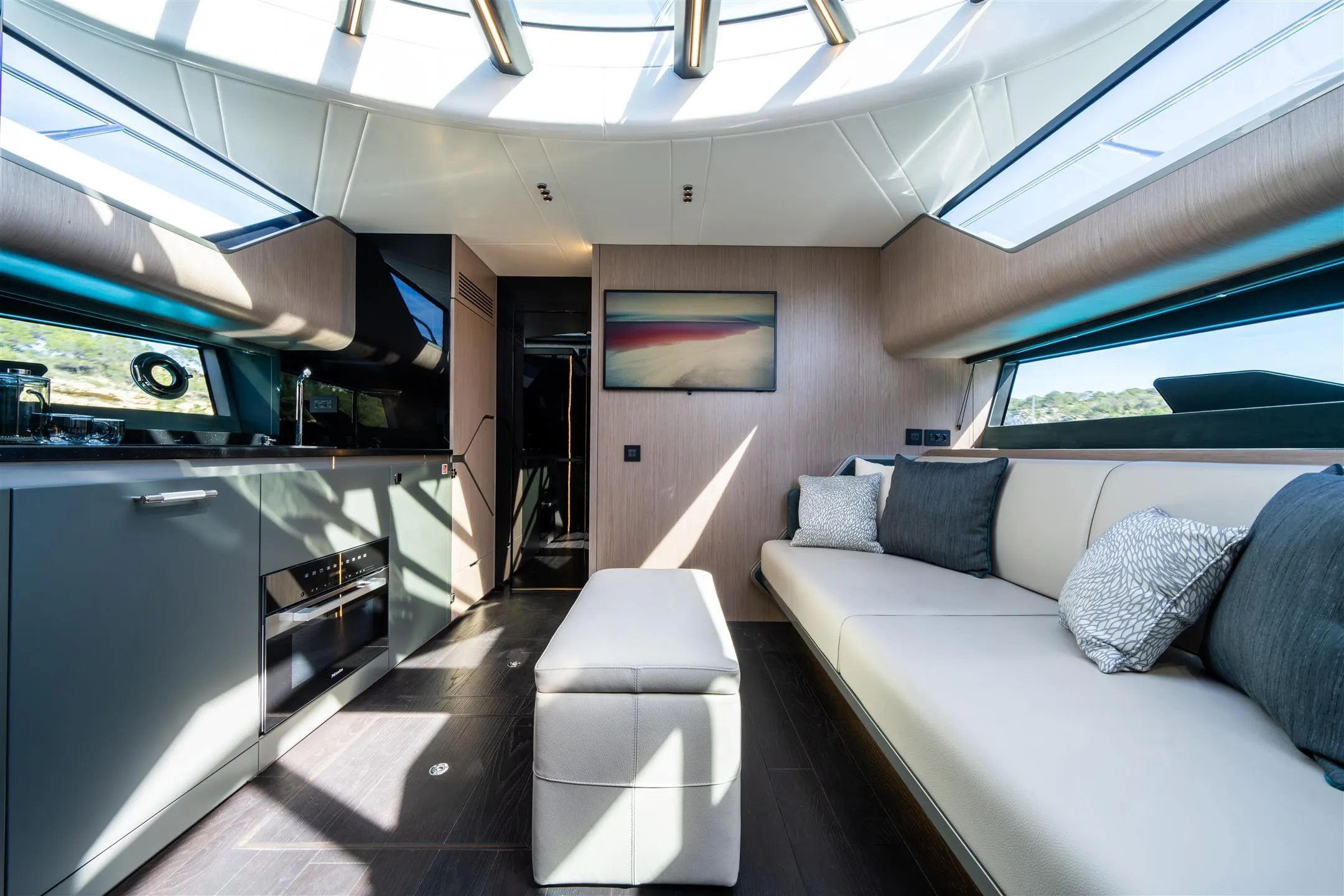
Steps lead down from the main deck to an open-plan lobby and galley. This is the decision that separates the Superhawk from most of its Sunseeker stablemates: the galley is below, not up in the saloon, which is part of why the main deck stays as open as it does and part of why the boat weighs what it weighs. Overhead there is an expansive screen with electrically operated blinds, so the lower lobby is lit from above and can be shaded when you want it dark.
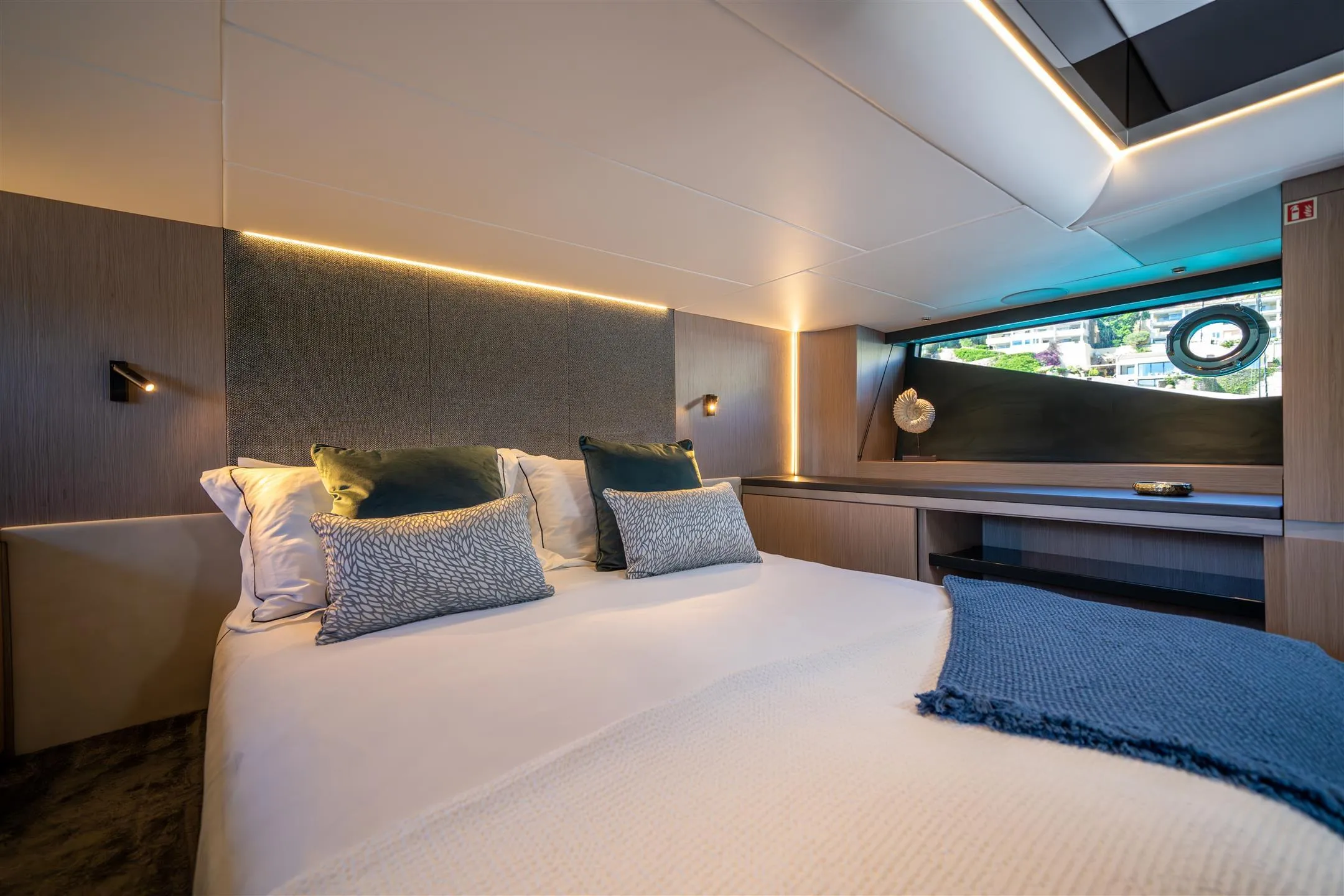
Accommodation is two cabins and two en-suites. Forward is a VIP cabin with its own en-suite, upholstered side units, a wardrobe to port and a large bed. Aft is the master, with sliding berths that make up either a double or two singles, a generous en-suite, and black lacquer panelling. Sunseeker offers several interior styling palettes across the boat.
Tankage is 476 gallons of fuel and 114 gallons of fresh water, both US. Generators are listed at 11 kW at 50 Hz and 11.5 kW at 60 Hz.
Sunseeker quotes up to 38 knots for the Superhawk 55. Your own cruising numbers take fifteen minutes on the day: run the boat at the rpm you actually intend to cruise at, ask the dealer for observed burn at that rpm in writing, and do your own arithmetic against the 476 gallons the boat carries. Anyone who quotes you a range for this hull from memory is guessing.
The 38 knots is worth understanding as a consequence rather than a headline. The Superhawk shares its engine package with the Predator 55 - twin Volvo Penta IPS 950, 2 x 725 HP, pods on both - and shares its 16' 2" beam and its 476 gallons of fuel. The difference is that the Superhawk carries 57,500 lbs at half load against the Predator's 63,273. Same power, 5,773 lbs less boat, two more knots. That is not marketing; it is arithmetic you can check on both specification sheets.
The other number that follows from the lighter build is draft: 4' 8" at full load, two inches less than the Predator 55. On a boat that will spend its life in shallow anchorages and thin inlets, two inches is not nothing, though it is not the reason to buy the boat either.
Sunseeker's own copy makes a point of the hull being drawn for IPS rather than converted to it, and the practical read of that is low-speed handling: joystick docking and the manoeuvring behaviour pods give you, on a hull that was designed to sit on them. Judge that on the day, in a crosswind, in a berth the width of the one you actually keep.
Two cabins, two en-suites, and no option to add a third. That is the defining interior fact about the Superhawk 55 and it is the clearest signal of what the boat is for.
The forward cabin is the VIP: its own en-suite, a large bed, upholstered side units and a wardrobe unit to port. Aft is the master, and the detail worth noticing is that its berths slide - you can make up a double or two singles from the same cabin, which is more useful than it sounds if the boat is going to carry adult friends as often as it carries a couple. It has a generous en-suite of its own and is framed in black lacquer panelling, which is the most deliberately dramatic room on the boat.
The galley is down, in an open-plan lobby at the bottom of the steps from the main deck, lit by LED and by an expansive overhead screen with electrically operated blinds so you can close the light out when you want to. Putting the galley below rather than in the saloon is the structural choice behind almost everything else here: it keeps the main deck open, it keeps the weight low, and it is why the main deck reads as cockpit-and-helm rather than as a saloon with a kitchen in it.
The cockpit itself is organised around a large central wet bar with several furniture configurations available, so the aft deck can be specified for dining, for lounging or for standing room around the bar. Sunseeker offers different styling palettes throughout the interior, with curved wood and lacquer finishes and recessed lighting as the standard vocabulary.
If you want a boat that sleeps six, this is not it. The Predator 55 on the same beam will do that. This one sleeps four properly and gives the space back to the deck.
The Superhawk 55's closest competitor is parked in the next slip at the same dealership. The Predator 55 is one inch longer, sits on the identical 16' 2" beam, runs the identical twin Volvo Penta IPS 950 and carries the identical 476 gallons of fuel and 114 of water. Both are two-heads boats. The differences are the ones you can check: 57,500 lbs against 63,273 at half load, 4' 8" of draft against 4' 10", 38 knots against 36, and two cabins fixed against two with a third optional.
Read that list and the positioning is obvious. The Predator 55 is the one that puts the galley on the main deck, adds a retractable roof over the saloon and will sleep six. The Superhawk is the one that gives the weight back. Neither is the better boat and Sunseeker is not pretending otherwise - it kept both in the range and gave the Superhawk its own name rather than calling it a lightweight Predator.
Outside Poole, the boats a buyer at this length is genuinely cross-shopping are the Italian sport coupes and the other British option. The Pershing 5X at 54' 2" is the sharpest-edged of them and the most single-minded about performance. The Riva 58' Capri at 56' 8" is almost exactly the same length and sells on finish and on the name above the door. Both are worth walking before you commit, because the three boats answer the same brief in visibly different accents.
Where the Superhawk argues its case is the combination: a hull drawn around IPS from the start, pod handling at the dock, the highest published top speed of any Sunseeker under 60 feet, and a two-cabin discipline that does not apologise for itself.
This boat fits an owner-driver with a small crowd. Two cabins, two en-suites, four people sleeping properly, and a main deck laid out around a wet bar and a helm rather than a saloon. If your weekends are a couple plus another couple, or a family with two children, the accommodation is right and the deck is where you will actually live.
It fits people who care about the top end. 38 knots is the highest published maximum of any boat Sunseeker builds under 60 feet, and it comes from the same twin Volvo Penta IPS 950 the Predator 55 uses - the Superhawk simply carries 5,773 lbs less at half load. If two knots and a lighter feel on the wheel matter to you, that is a real, checkable reason to choose this hull.
It fits shallow water slightly better than its sibling. 4' 8" at full load against 4' 10" is not a transformation, but it is on the right side of the line, and the pods give you the low-speed control to use it.
It does not fit anyone who needs six berths. There is no third-cabin option on this boat, full stop - the Predator 55 is where that conversation goes. It does not fit anyone who wants the galley in the saloon, because here it is down in the lower lobby and that is not a layout choice you can specify away. And it does not fit a buyer who wants a second helm or an upper deck: there is no flybridge on this hull, and if that is the requirement you are looking at the 65 Sport Yacht or a Manhattan instead.
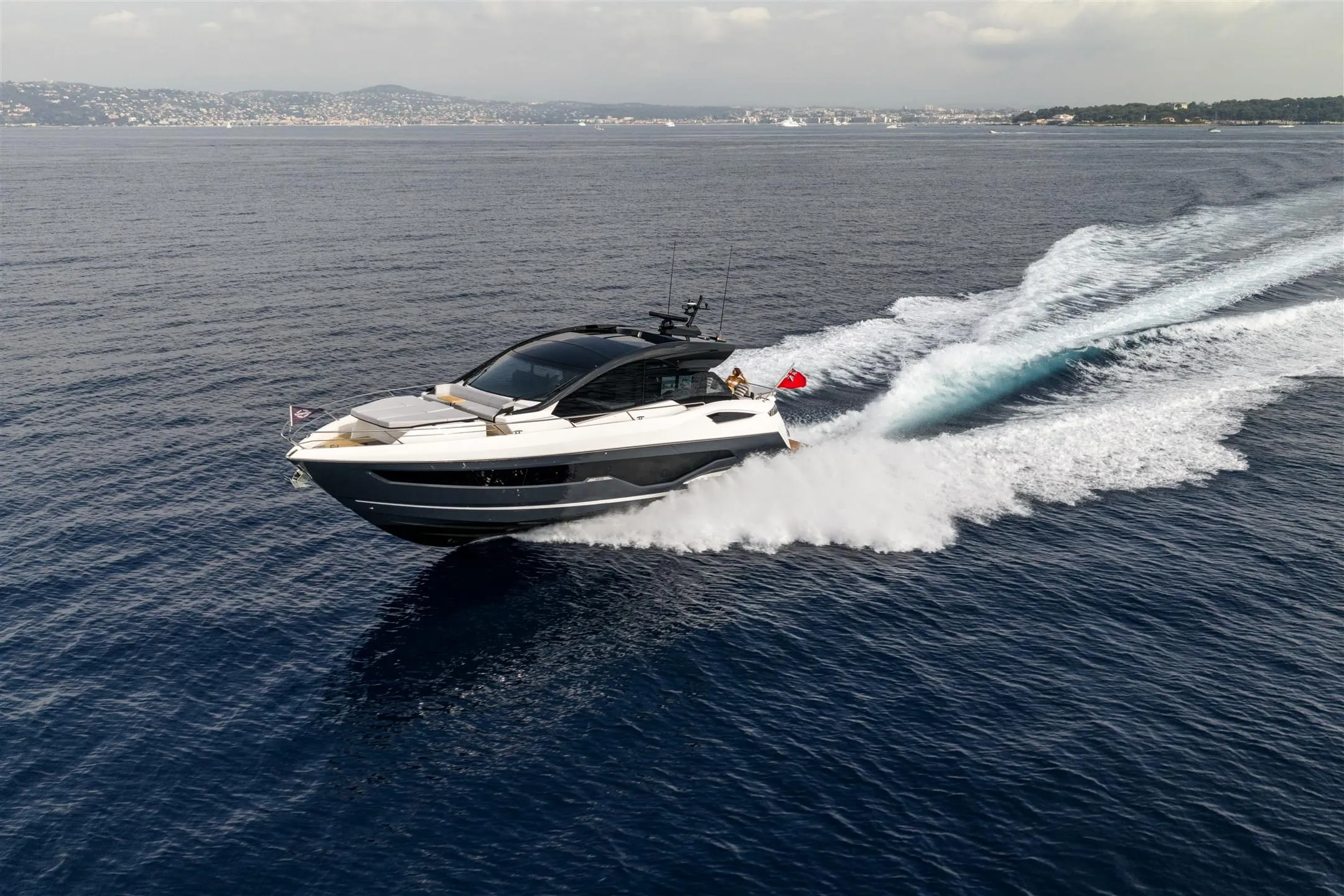
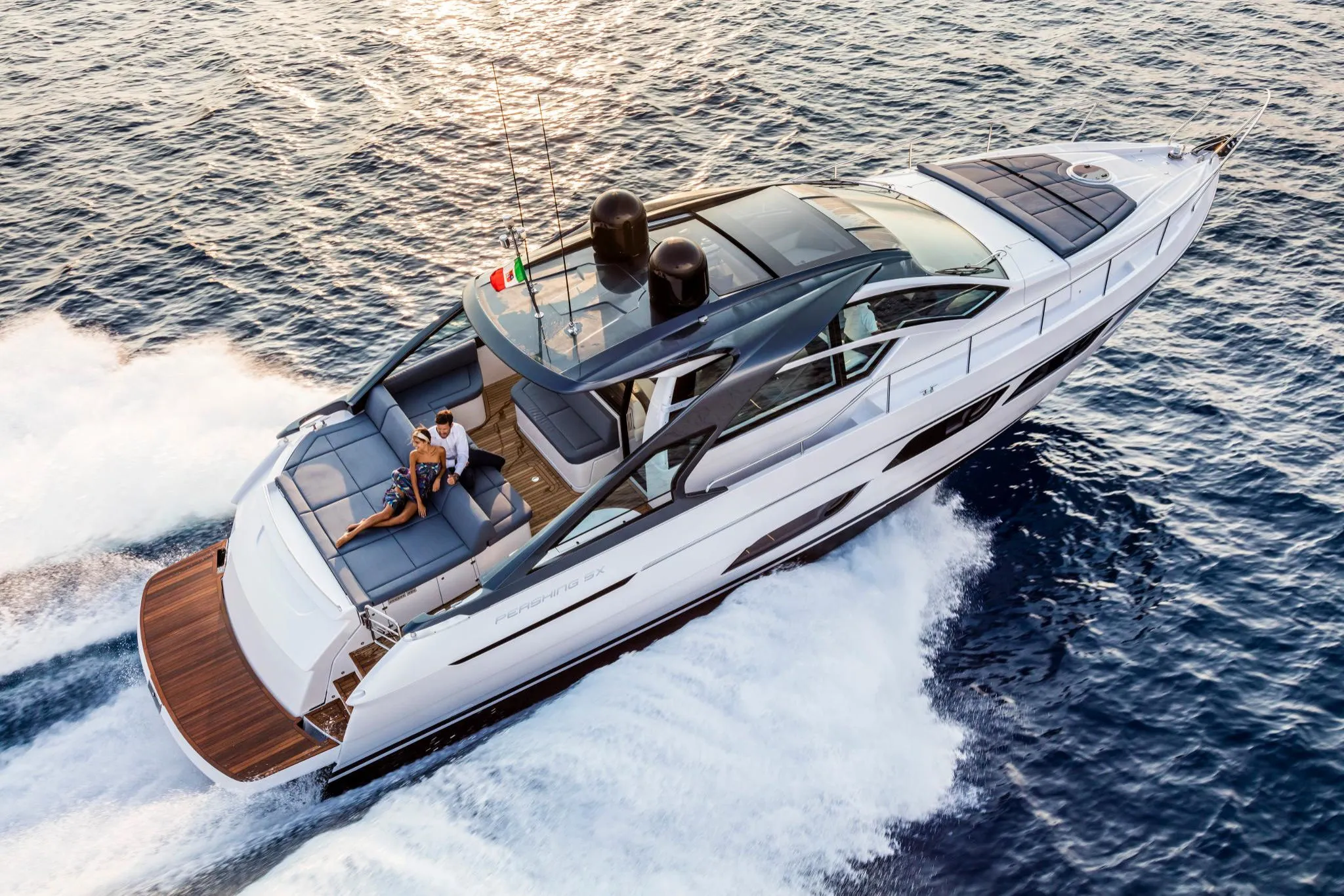
They are one inch apart in length overall and share a 16' 2" beam, the same twin Volvo Penta IPS 950 at 2 x 725 HP, the same 476 gallons of fuel, the same 114 gallons of water and the same two heads. Four figures differ: the Superhawk is 57,500 lbs at half load against 63,273, draws 4' 8" against 4' 10", is published at 38 knots against 36, and is fixed at two cabins where the Predator offers an optional third.
So the decision is about people, not performance. If your normal weekend is four aboard and you would rather have deck than berths, take the Superhawk - it is lighter, faster and honest about what it is. If you will ever need six berths, or you want the galley up on the main deck connected to the cockpit bar, or the retractable glass and carbon fibre sunroof is what you keep thinking about, take the Predator 55 and accept the two knots.
Twin Volvo Penta D11 IPS 950, rated 2 x 725 HP, driving pods. Sunseeker says the hull form was designed specifically around the IPS propulsion system rather than adapted to it.
In practice that means joystick docking and pod manoeuvring behaviour on a 56-foot boat. It is the part of a sea trial worth taking most seriously: take the boat into a berth the width of the one you keep, with wind on the beam, and judge it there rather than at 38 knots. Generators are listed at 11 kW at 50 Hz and 11.5 kW at 60 Hz.
Two cabins and two en-suites, and there is no third-cabin option at any specification. Forward is a VIP cabin with its own en-suite, a large bed, upholstered side units and a wardrobe to port. Aft is the master, with sliding berths that make up either a double or two singles, a generous en-suite of its own and black lacquer panelling.
The galley is down in an open-plan lower lobby rather than up in the saloon, which is part of why the main deck stays open and part of why the boat weighs 57,500 lbs at half load. If you need six berths, the Sunseeker Predator 55 on the same beam is the boat that offers an optional third cabin.
Sunseeker publishes a maximum of up to 38 knots for the Superhawk 55, from twin Volvo Penta IPS 950 rated 2 x 725 HP on pod drives. That is the highest published figure of any Sunseeker under 60 feet.
Do not take a cruise figure from a third-party database. At sea trial, run the boat at the rpm you actually intend to cruise at and ask for observed burn at that rpm in writing, then do your own arithmetic against the 476 gallons of fuel it carries.