Sunseeker Predator 55

Expert Review, Technical Specifications & Market Analysis

The Essentials

FeatureSpecifications
Overall Length56' 3"
Beam16' 2"
Draft4' 10"
Displacement63,273 lbs
EnginesTwin Volvo Penta IPS 950 (2 x 725 HP)
Fuel Capacity476 gal
Water Capacity114 gal
Cabins / Heads2-3 Cabins / 2 Heads
Max Speed36 knots

Source: Spec & Photos courtesy of Sunseeker. Specs verified by Tony Smith, USCG 100 Ton Master, on August 27, 2026.

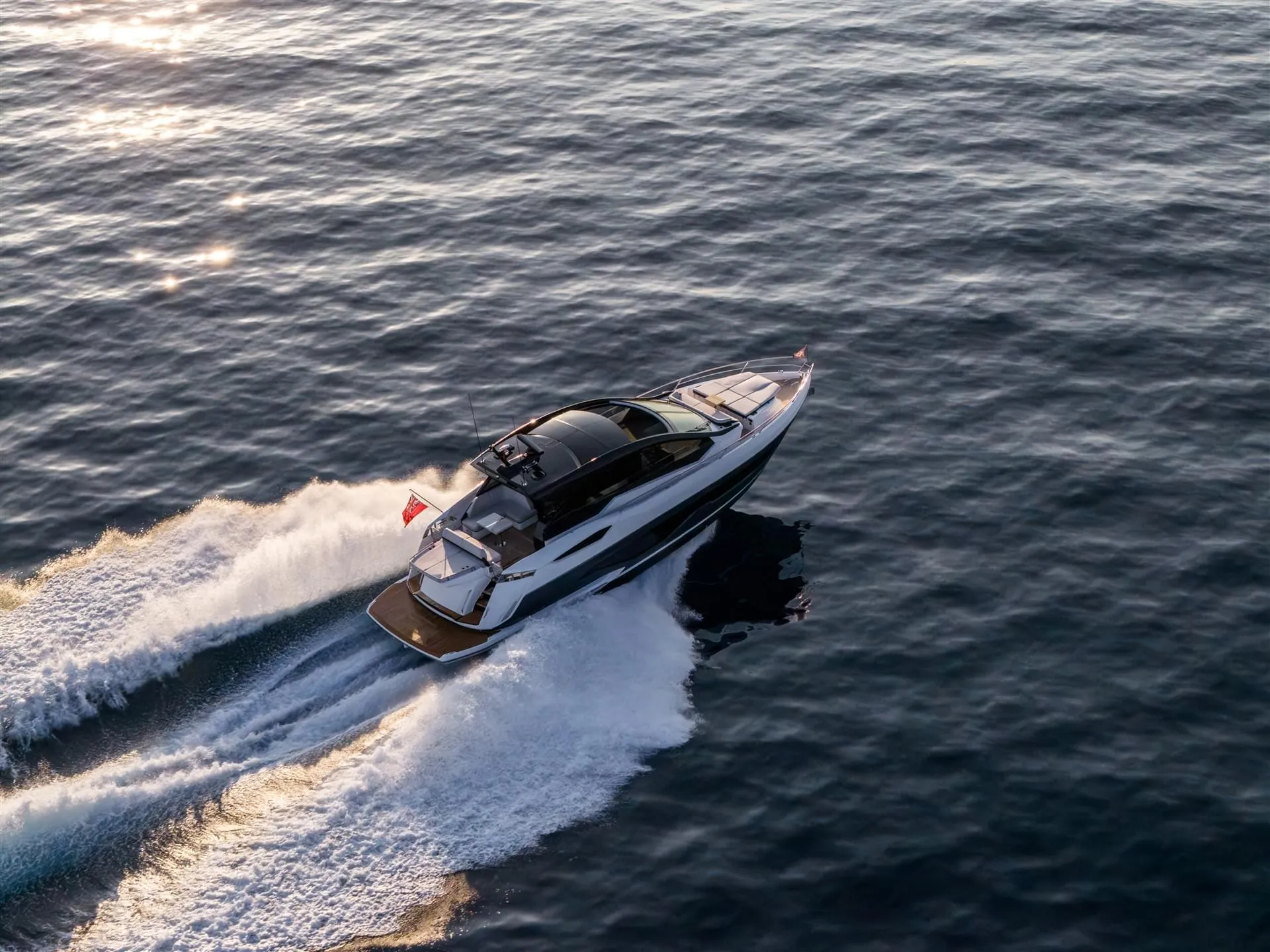
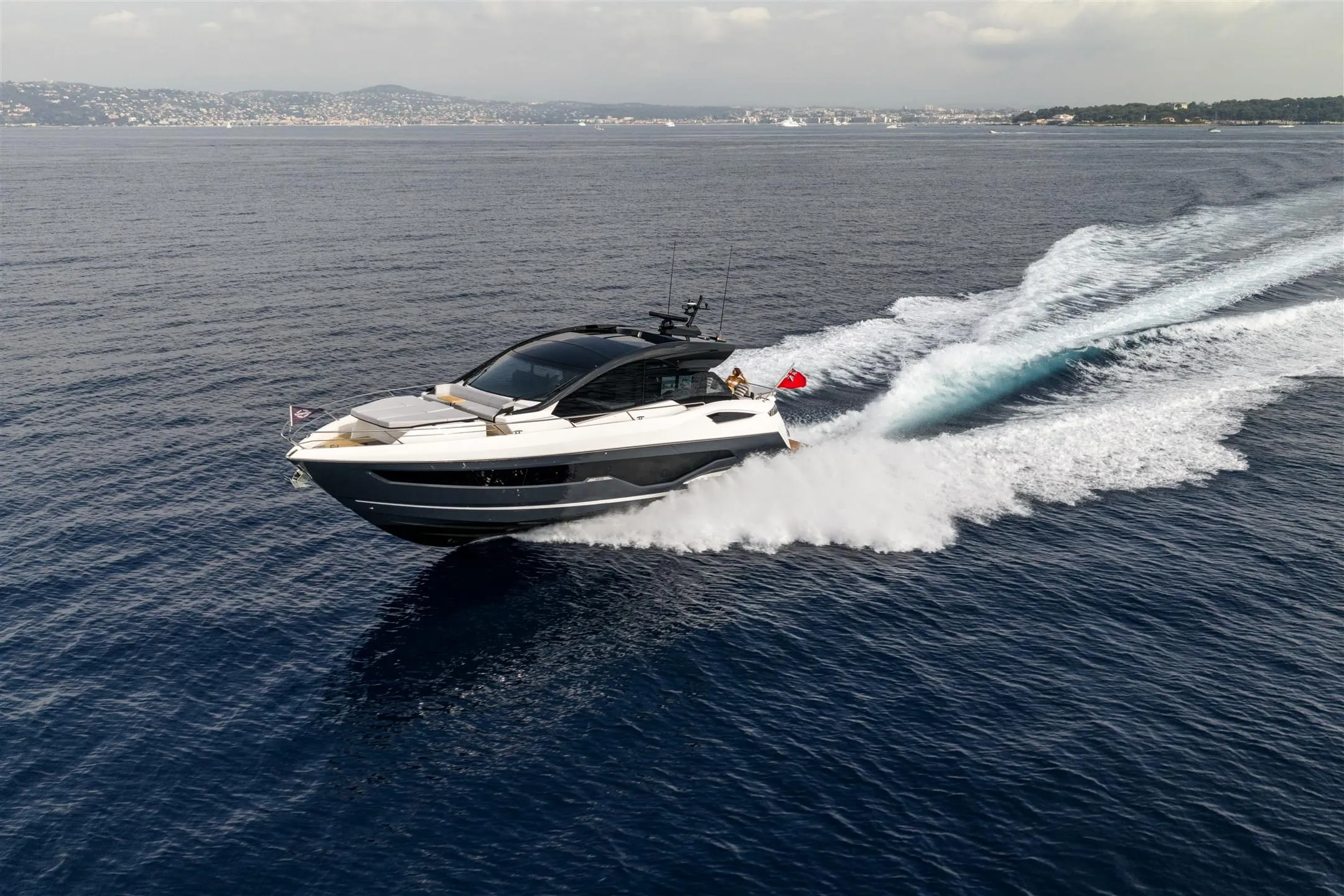
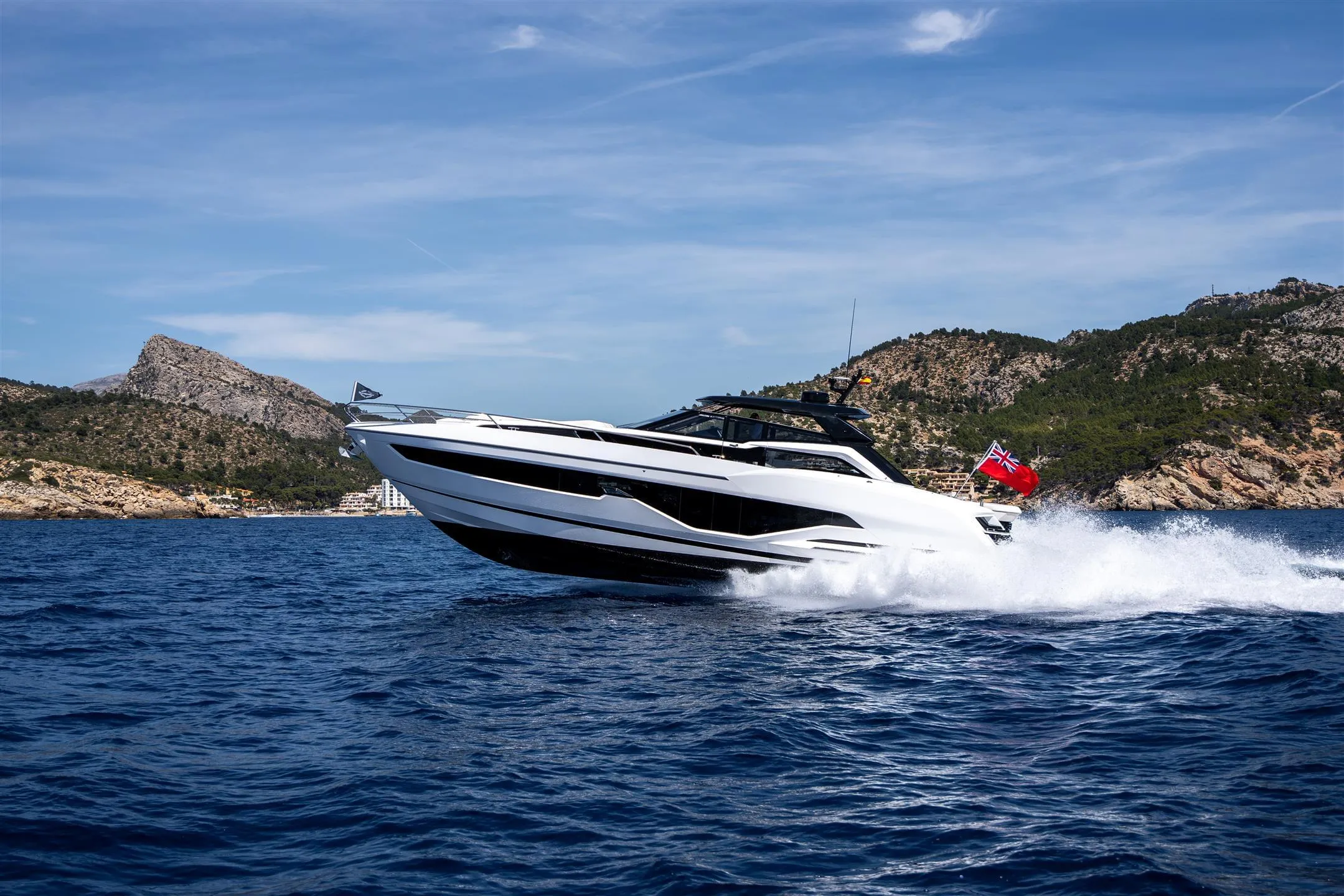
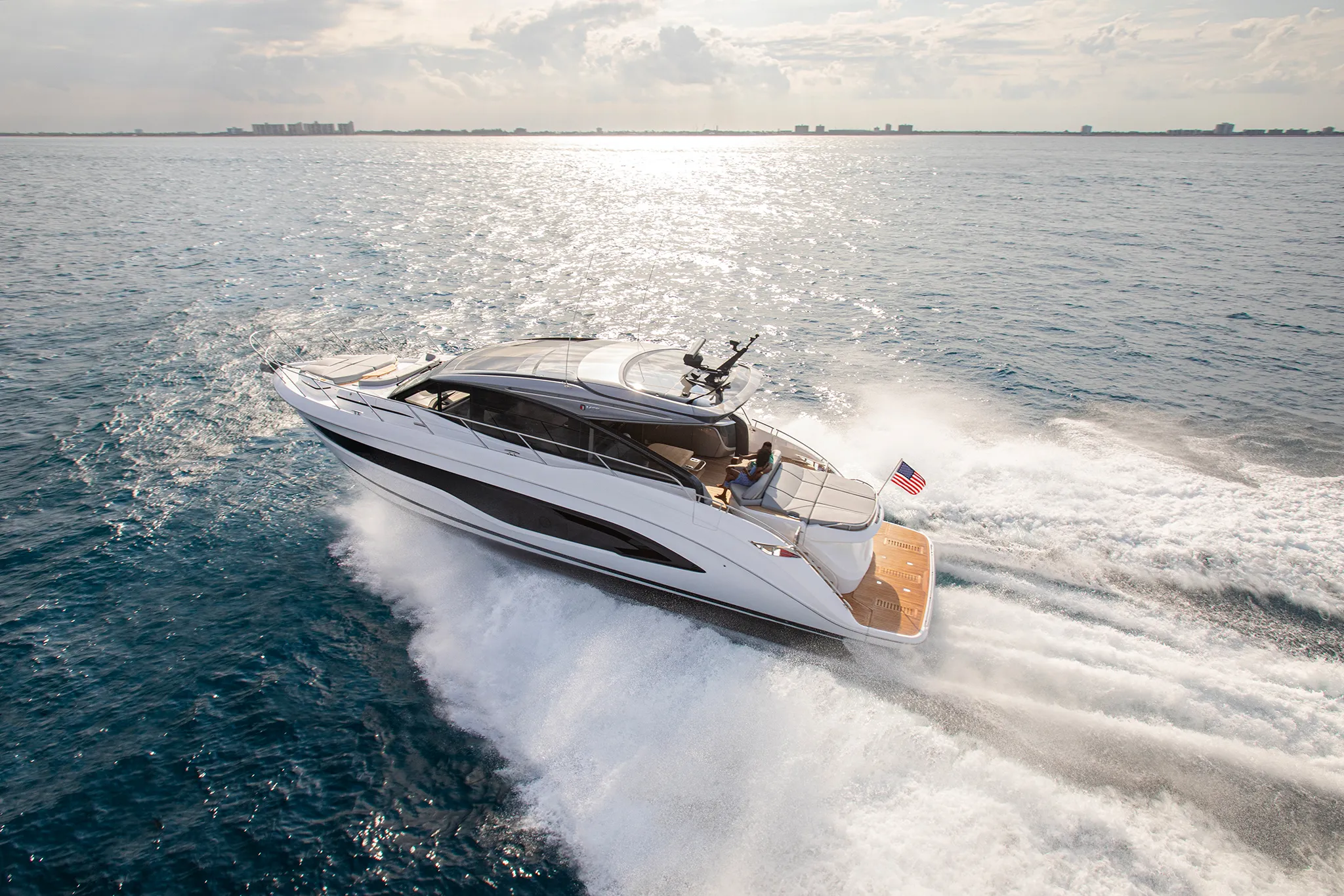
The Predator 55 is the flexible one of Sunseeker's two 56-footers: a main-deck galley, a roof over the saloon that slides away at the touch of a button, and an optional third cabin that takes it to six guests. It carries 63,273 lbs at half load to do all that.

Sunseeker Predator 55 exterior

Quick Verdict

  • Same beam, same engines, same tanks as the Superhawk 55: 16' 2", twin Volvo Penta IPS 950 at 2 x 725 HP, 476 gallons of fuel, 114 of water. The Predator carries 5,773 lbs more at half load - 63,273 against 57,500 - and is published at 36 knots against 38.
  • What the weight buys: an L-shaped galley up on the main deck connected to the cockpit wet bar, a full-beam owner's cabin, and a retractable glass and carbon fibre sunroof over the saloon that slides aft electrically from the helm console.
  • Cabins are 2 with a 3rd optional and heads stay at 2. The optional third cabin is a twin with its own en-suite and takes the boat to six guests. Chosen once, at order.
  • Alternative specification moves the galley down and puts a sofa and rise-and-fall television in its place - useful to know, but it is also the point at which the Superhawk 55 becomes the more honest choice.
  • Get observed burn at your intended rpm in writing at sea trial and work your own numbers off 476 gallons.
Tony Smith, Founder of Minted Yachts

Our Take

There are two Sunseeker 56-footers and they are one inch apart. Same 16' 2" beam, same twin Volvo Penta IPS 950 at 2 x 725 HP, same 476 gallons of fuel, same 114 of water, same two heads. Everything a broker would put on a comparison sheet matches. The Predator 55 is the heavier of the two - 63,273 lbs at half load against the Superhawk's 57,500 - and it is heavier for reasons you can point at, which is the best kind of weight there is.

What it bought is flexibility. The galley is up on the main deck in an L, and its side units connect to the linear cockpit wet bar so that with the patio door open to port the saloon and cockpit become one room. Overhead is a retractable glass and carbon fibre sunroof that glides aft electrically from the helm console. And below, the standard boat has two cabins, a lower saloon to starboard and a storage or utility room - but that room can be specified as a twin cabin with its own en-suite, which takes the boat to six guests. Sunseeker will also move the whole galley downstairs and put a sofa and a rise-and-fall television where it was. That is three genuinely different boats out of one hull, and you choose once.

So the decision against the Superhawk 55 is not about which is better. It is about whether you will ever use the third cabin and whether you want the cook in the party. If the answer to both is no, the lighter boat is faster, draws two inches less and is honest about being a four-berth machine. If the answer to either is yes, this is the boat and the two knots is what you give up in speed. Either way, go and get observed burn at your intended cruising rpm in writing at sea trial, and work your own range against the 476 gallons under the floor.

Watch Our Sunseeker Predator 55 Reviews

Official Sunseeker Premiere: Inside the Sunseeker Predator 55

Video courtesy of Sunseeker.

Sunseeker Predator 55 Overview

The Sunseeker Predator 55 is 56' 3" overall on a 16' 2" beam, built at Poole, and powered by twin Volvo Penta IPS 950 rated 2 x 725 HP on pods. Top speed is up to 36 knots. Half-load displacement is 63,273 lbs and draft is 4' 10" at full load. Fuel is 476 US gallons and fresh water 114.

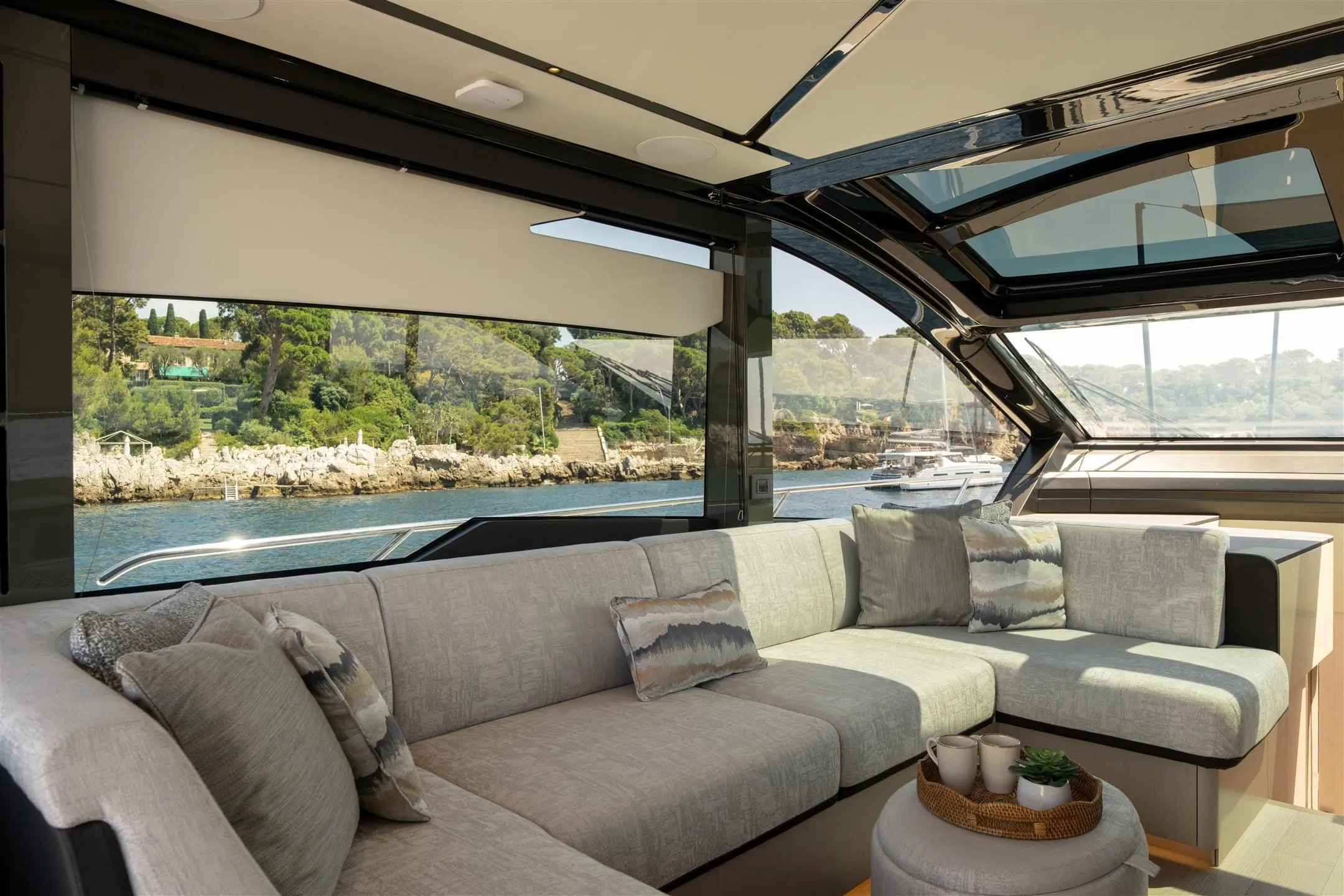
The main deck is the point of the boat. It is single level, running a generous saloon into an L-shaped galley whose side units connect directly with the linear cockpit wet bar - open the patio door to port and the inside and the outside are one continuous space. Expansive glazing keeps the sight lines unbroken, and forward of the sofa sit twin bolstered seats at Sunseeker's current-generation helm station.

Above that is the feature the boat is best known for: a retractable glass and carbon fibre sunroof over the saloon, electrically operated, which glides aft at the touch of a button from the helm console. It sits beneath a sweeping double-curved single-piece windshield, so the whole forward superstructure reads as one surface.

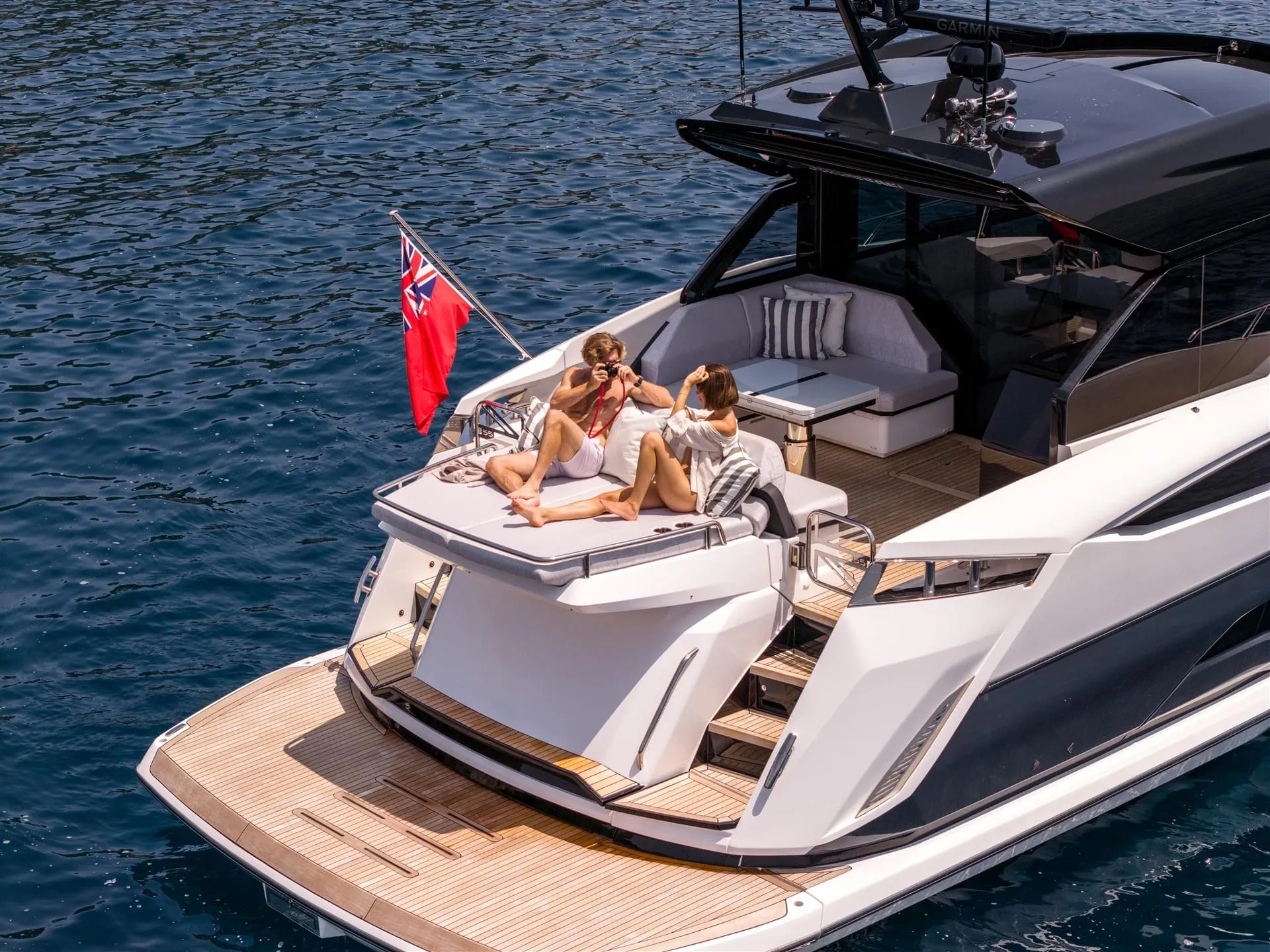
The aft cockpit seating can be repositioned to meet fixed seating and a table amidships, with room for six and an electrical sun canopy over it. A large sunpad sits over the tender garage with adjustable headrest bolsters. Sunseeker has given the stern its own design language here - angular aft fairleads integrated into the hull, scalloped stainless steel engine vents standing vertically outboard, low-level LED deck lighting, and a fixed transom traverse that connects port to starboard even when the bathing platform is lowered.

Below deck the standard arrangement is two cabins, a lower saloon to starboard and a storage or optional utility room. Cabins are listed as 2, with 3 optional; en-suites and day head, 2.


Performance & Handling

Sunseeker quotes up to 36 knots for the Predator 55. Build your cruising numbers at the sea trial: run the boat at the rpm you actually intend to cruise at, get observed burn at that rpm from the dealer in writing, and do the range arithmetic yourself against 476 gallons. It is a fifteen-minute job and it replaces a guess with a fact.

The interesting performance story on this boat is comparative. The Superhawk 55 is one inch shorter, sits on the same 16' 2" beam, runs the same twin Volvo Penta IPS 950 at 2 x 725 HP, and carries the same 476 gallons. Its half-load displacement is 57,500 lbs against the Predator's 63,273 - a difference of 5,773 lbs - and its published maximum is 38 knots against 36. Same power, less boat, two more knots. If top end is your first priority, that comparison answers itself and you should read it honestly rather than hope the Predator makes it up somewhere else.

What the Predator's extra weight is doing is easy to point at: a main-deck galley and saloon, the retractable glass and carbon fibre sunroof with its structure, a full-beam owner's cabin, and the option of a third cabin below. Those are not incidental pounds.

Draft is 4' 10" at full load, two inches more than the Superhawk. Propulsion is pods, so low-speed work is joystick-driven - and that is the part of the trial worth taking seriously. Dock it in a crosswind, in a slip the width of the one you keep, before you form an opinion about handling from the way it feels at 30 knots.

Interior & Accommodations

The Predator 55's interior is unusually configurable for a boat of this length, and the choices are made once at order.

In the standard arrangement the galley is up. It runs in an L off the main-deck saloon, and its side units connect with the linear cockpit wet bar so that with the port patio door open, whoever is cooking is part of what is happening outside. Sight lines run uninterrupted through expansive glazing, and twin bolstered seats sit at the helm station forward.

The first alternative moves the galley down. In that specification the main-deck galley is replaced by a sofa and a rise-and-fall television, the lower galley takes the place of the lower saloon and the storage or utility room, and the main deck becomes a pure saloon. The second alternative uses that same lower space as a twin cabin with its own en-suite - which is how a two-cabin boat becomes accommodation for six guests. Cabins are listed as 2 with 3 optional; heads stay at 2 in every configuration.

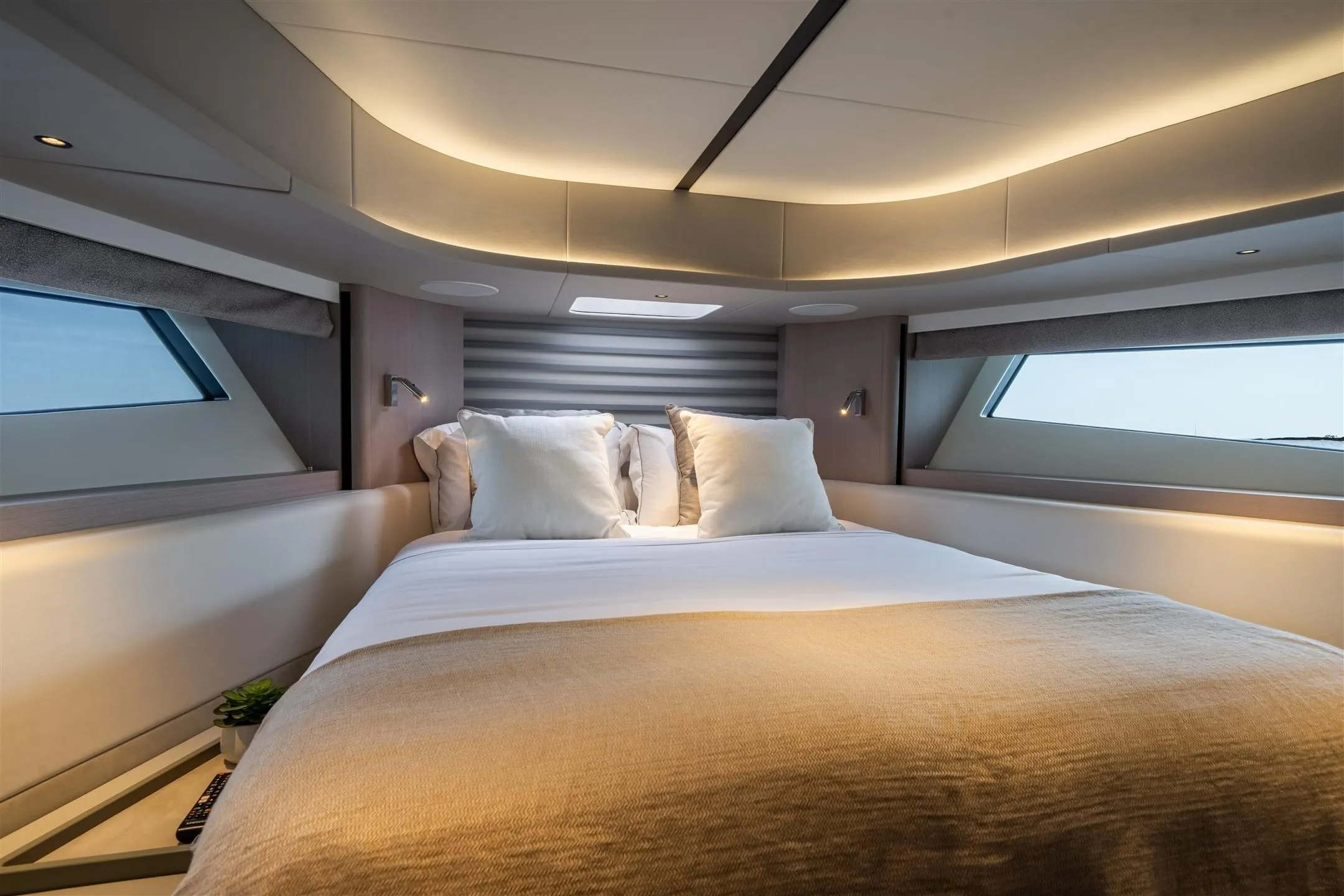
The owner's cabin is full beam. Entering the lobby there is a full-height wardrobe to starboard and an extensive en-suite to port; the large double sits centrally with sofa seating, a sideboard and a second wardrobe outboard, and a dedicated vanity unit and television positioned centrally. The forward cabin is equally spacious with its own en-suite and substantial storage. Sunseeker has raised headroom in both, and says the emphasis on interior volume was made with long-distance cruising in mind.

Overhead in the saloon, the retractable glass and carbon fibre sunroof opens the space to the sky on a button from the helm console. On a 56-foot boat that is the difference between a saloon you sit in and one you sit under.

Market Position

The Predator 55's most important competitor is its own stablemate. The Superhawk 55 is one inch shorter, identical in beam at 16' 2", identical in engines at twin Volvo Penta IPS 950, identical in tankage at 476 gallons of fuel and 114 of water, and identical in heads at 2. It is 5,773 lbs lighter at half load, draws two inches less, runs two knots faster, and is fixed at two cabins with the galley below.

So Sunseeker has split the 56-foot slot cleanly rather than fudged it. The Superhawk is the performance-first answer with four berths. The Predator is the flexible one: main-deck galley, retractable roof, full-beam owner's cabin, and a third cabin available for six guests. A buyer who wants both is going to have to decide which they want more, and the honest answer usually falls out of how many people are aboard on a normal weekend rather than how the boats feel on a trial.

Outside the range, the cross-shops at this size are the British and Italian sport cruisers. The Princess V55 at 58' 5" is the direct domestic rival and the one most buyers will drive on the same day. The Azimut Seadeck 6 at 56' 7" comes at the same length from a different direction, with a hybrid-oriented platform and a strongly indoor-outdoor deck philosophy of its own. Both are worth an afternoon.

Where the Predator 55 argues is in the deck. A galley that serves the cockpit bar through an open patio door, a roof that disappears from the helm, and a stern designed as a piece rather than as a place to put fairleads - that combination is what the boat is selling, and it is what you should be assessing when you step aboard.

Who the Predator 55 Is For

This boat fits an owner who entertains on the main deck. The whole layout is built around one idea: with the port patio door open, the L-shaped galley, its side units, the linear cockpit wet bar and the saloon become a single room, and the retractable glass and carbon fibre sunroof opens the top of it. If your boating is six or eight people around a table at anchor rather than four people going somewhere fast, this is the correct Sunseeker at this length.

It fits a family that might grow into six berths. The storage or utility room below can be specified as a twin cabin with en-suite, taking cabins from two to three - and unlike a lot of optional cabins on 56-foot boats, this one has its own bathroom. Decide it at order, because it is not a refit.

It fits someone who wants the cook included. If you would rather the galley were down and out of the way, Sunseeker will do that too and give you a sofa and a rise-and-fall television in its place - but then you are specifying away the boat's main argument, and you should ask yourself whether the Superhawk 55 is the honest answer instead.

It does not fit a buyer whose first question is top speed. The Superhawk 55 runs the same engines on the same beam, weighs 5,773 lbs less at half load and is published at 38 knots against this boat's 36. That gap will not close.

It does not fit anyone who needs an upper helm or a flybridge - there is none on this hull. And if you plan a season around a cruise figure, plan on collecting your own: observed burn at your intended rpm, in writing at the trial, worked against 476 gallons.

Sunseeker Predator 55 Articles & Guides

Compare With

Frequently Asked Questions

What is the difference between the Sunseeker Predator 55 and the Superhawk 55?

They share a 16' 2" beam, twin Volvo Penta IPS 950 engines at 2 x 725 HP on pods, 476 gallons of fuel, 114 gallons of fresh water and two heads, and they are one inch apart in length overall.

What differs is weight and what the weight bought. The Predator 55 carries 63,273 lbs at half load against the Superhawk's 57,500 - a difference of 5,773 lbs - draws 4' 10" against 4' 8", and is published at 36 knots against 38. In return the Predator has an L-shaped galley up on the main deck connected to the cockpit wet bar, a full-beam owner's cabin, a retractable glass and carbon fibre sunroof over the saloon, and an optional third cabin with its own en-suite. The Superhawk has none of those and puts its galley below.

What is the retractable sunroof on the Sunseeker Predator 55?

A retractable glass and carbon fibre sunroof over the saloon, electrically operated, which glides aft at the touch of a button from the helm console. It sits beneath a sweeping double-curved single-piece windshield, so the forward superstructure reads as one surface.

On a boat with a single-level main deck, that roof is what turns the saloon from an enclosed room into an open one. Whether it matters to you is not a specification question - stand under it open and closed on the same afternoon and you will know.

Can the Sunseeker Predator 55 sleep six?

Yes, as an option. The standard arrangement is two cabins with a lower saloon to starboard and a storage or optional utility room. That space can instead be specified as a twin cabin with its own en-suite, which takes the boat to three cabins and accommodation for six guests. Heads stay at two in every configuration.

Sunseeker also offers a version that moves the main-deck galley below - the lower galley then replaces the lower saloon and storage room, and a sofa with a rise-and-fall television takes the galley's place upstairs. All of these are order-time decisions, not later refits.

Should I specify the Predator 55 with the galley up or down?

The standard boat puts an L-shaped galley on the main deck, with its side units connecting to the linear cockpit wet bar so that with the patio door open to port the saloon and cockpit run together. That layout is the boat's main argument, and if you entertain on the main deck it is the reason to buy a Predator 55 rather than a Superhawk 55.

The alternative moves the galley below and replaces it with a sofa and a rise-and-fall television. That gives you a pure saloon upstairs, but it also uses the lower space that would otherwise become the optional third cabin, and it specifies away the feature the boat is built around. If a lower galley is genuinely what you want, be honest about whether the lighter, faster Superhawk 55 is the better answer to the same instinct.