
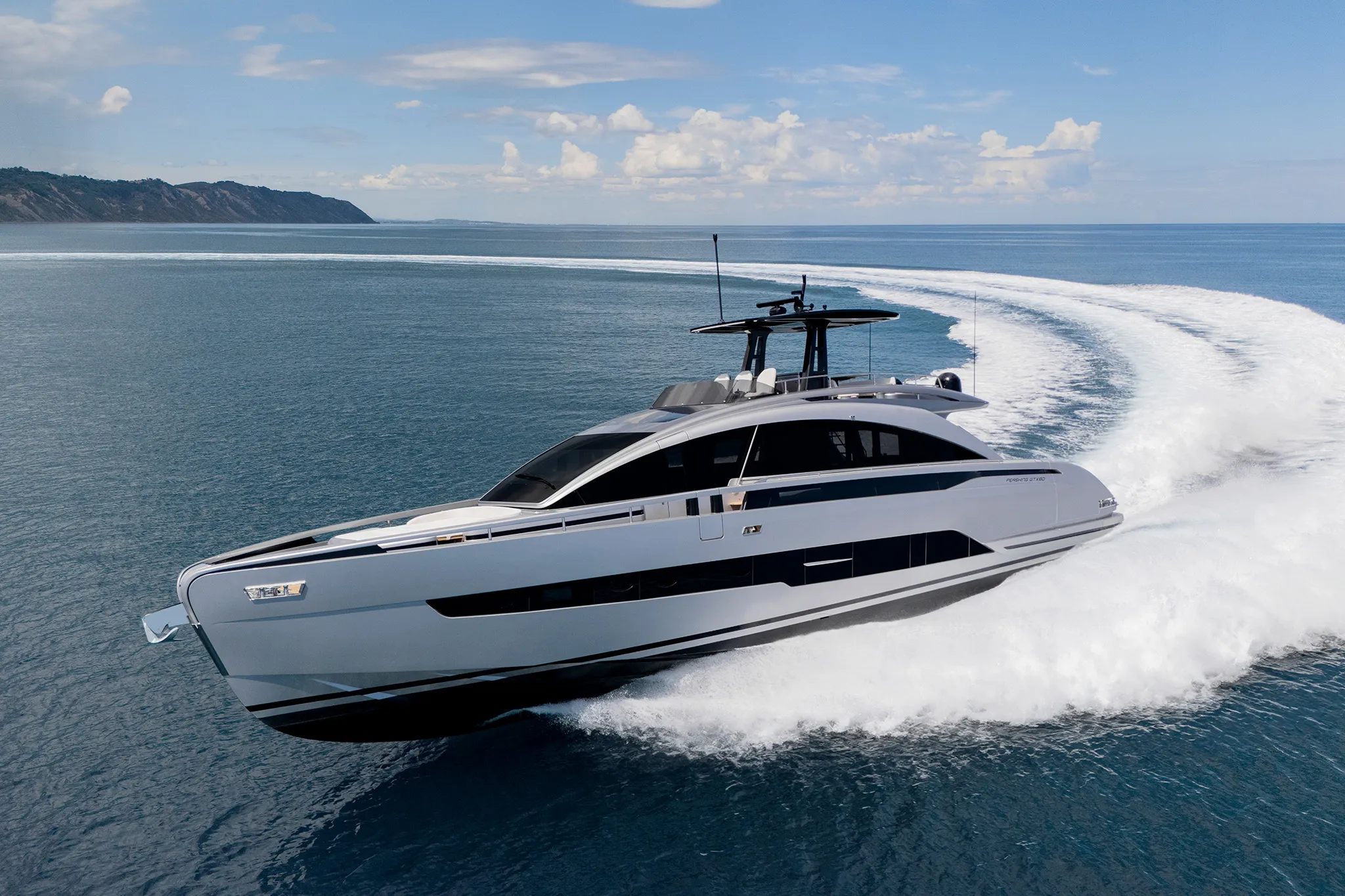
The Pershing GTX80: When 34 Knots Meets Real-World Cruising
The Pershing GTX80 blends 34-knot performance with a galley-up 79' layout and triple IPS redundancy, owner-operated comfort with 300-nm rang…
Read the articleExpert Review, Technical Specifications & Market Analysis
| Feature | Specifications |
|---|---|
| Overall Length | 78' 8" |
| Beam | 19' 0" |
| Draft | 6' 3" |
| Displacement | 52 t (114,640 lbs) unladen |
| Engines | 3 x Volvo Penta D13 IPS1350 (1,000 mhp each) |
| Fuel Capacity | 5,200 L (1,374 US Gal) |
| Water Capacity | 1,300 L (343 US Gal) |
| Cabins / Heads | 4 Cabins + 2 Crew |
| Max Speed | 34 knots |
| Cruise Speed | 28 knots |
Source: Spec & Photos courtesy of Pershing Yachts. Specs verified by Tony Smith, USCG 100 Ton Master, on August 10, 2026.
Part of the Pershing Yachts GTX series — see how owners step up through the lineup.

The GTX80 is the Pershing I would point an owner-operator at first, and the reason is the drive package rather than the top speed. Three Volvo Penta D13 IPS1350s, 1,000 mhp a side, for a published 34-knot maximum and a 28-knot cruise off 1,374 gallons. What the pods actually buy you is joystick control on a 78'8" boat carrying 19 feet of beam, which changes who is allowed to bring her onto a dock on a windy afternoon. The galley-up main deck is the other half of the argument: the living space stays on one level, and the 247-square-foot carbon-fibre sundeck works as a second saloon rather than a sunpad.
Read the range against the speed it is quoted at. Three hundred nautical miles at 28 knots is a fast boat's number, and it describes an afternoon's hop with a sensible margin, not a crossing. If your plan involves overnight passages, price that in now rather than after you have fallen for the sundeck. The second thing to be straight about is the accommodation. Four cabins plus two crew is the standard arrangement, and the crew space is sized for a captain and one stew, not for a rotation. This is a boat built for an owner who wants to be involved.
Two things to get in writing before you commit. Take observed fuel burn at your intended cruise off the sea trial and have it written down — any figure more granular than tankage and range at cruise is somebody's estimate. And ask for the cabin and head arrangement of the specific hull you are being offered on paper, not from the range brochure. When you are ready to run one, come to us and we will set the trial up on a representative boat.
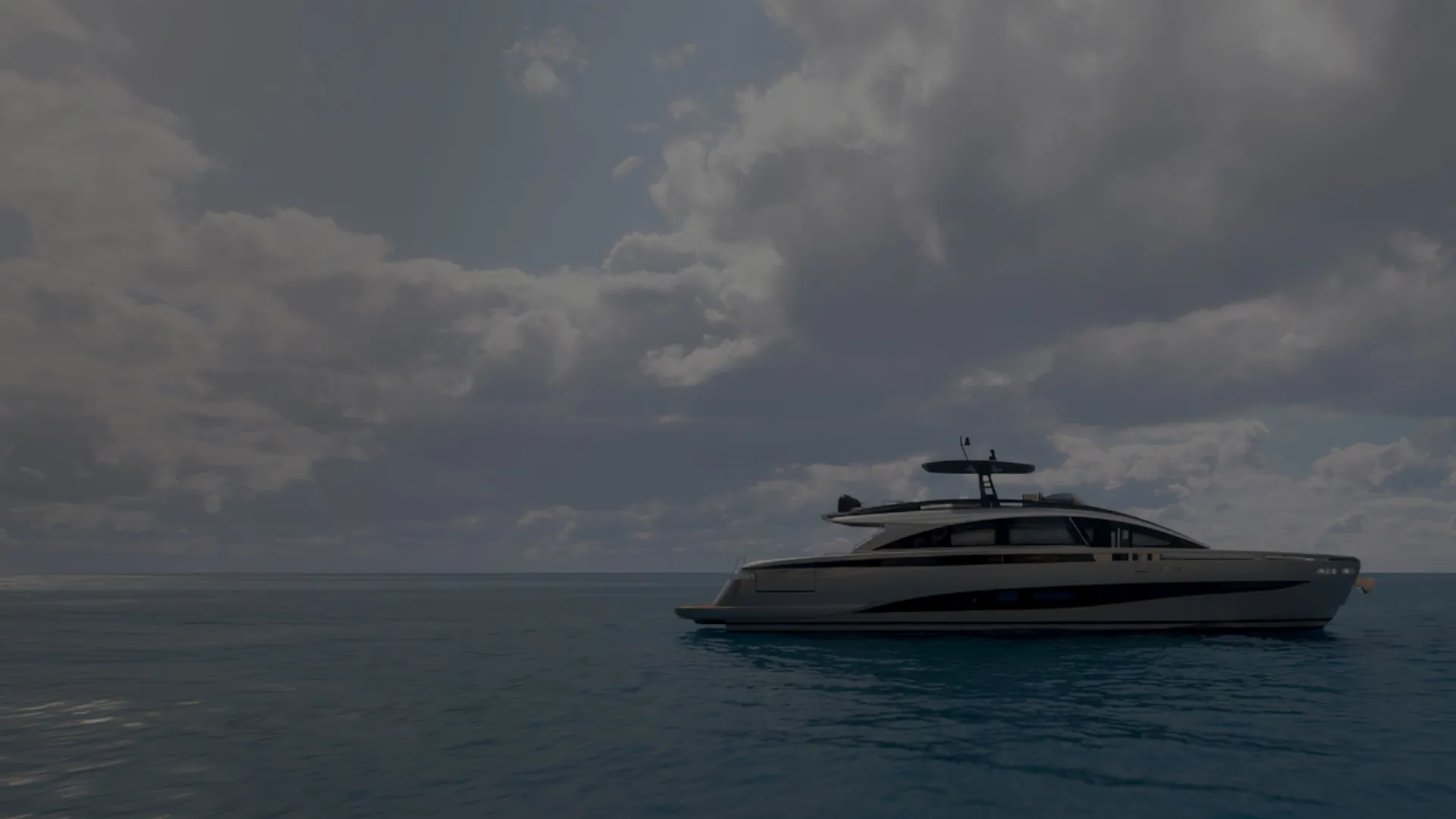
Video courtesy of Pershing Yachts.
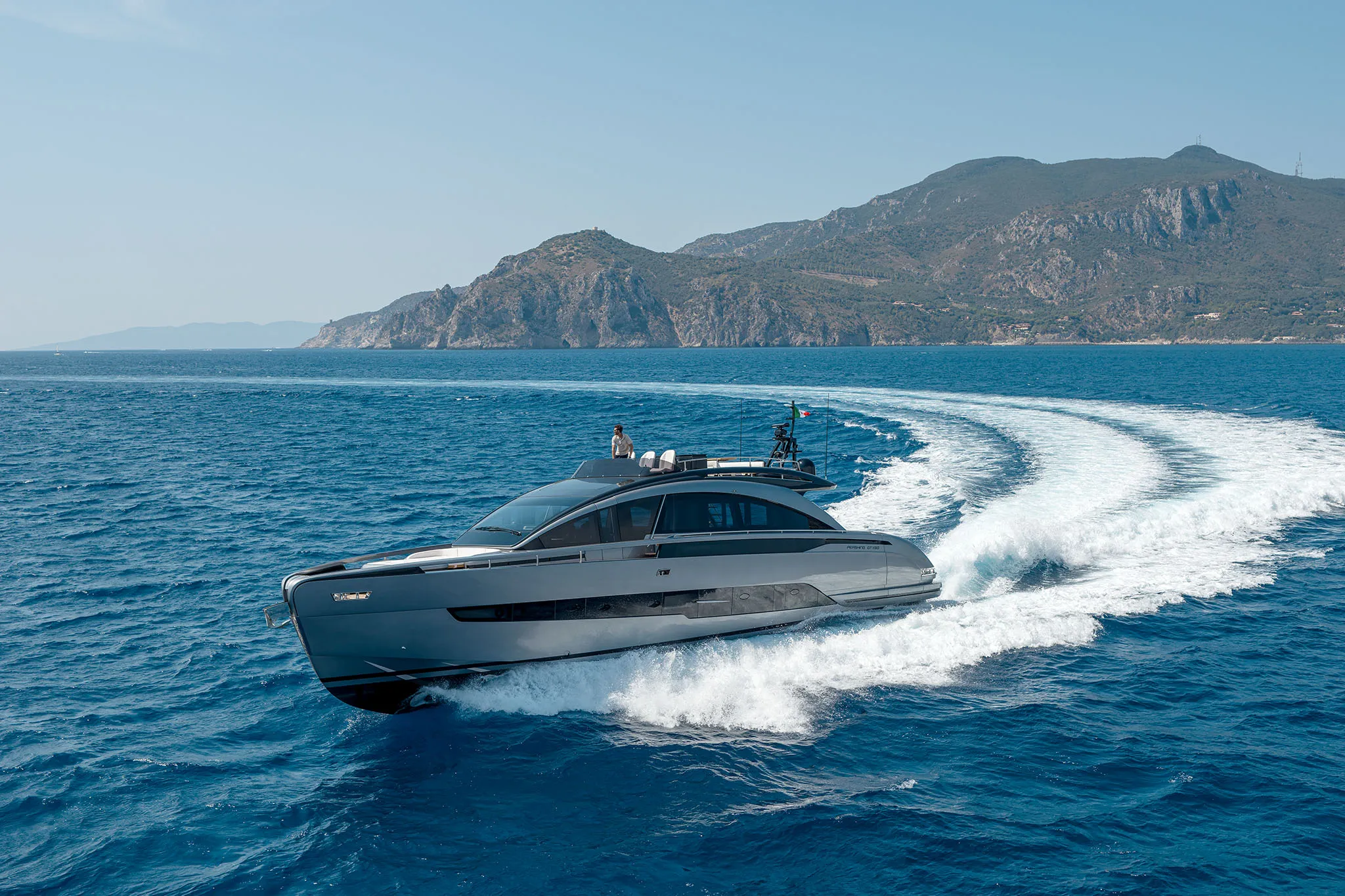
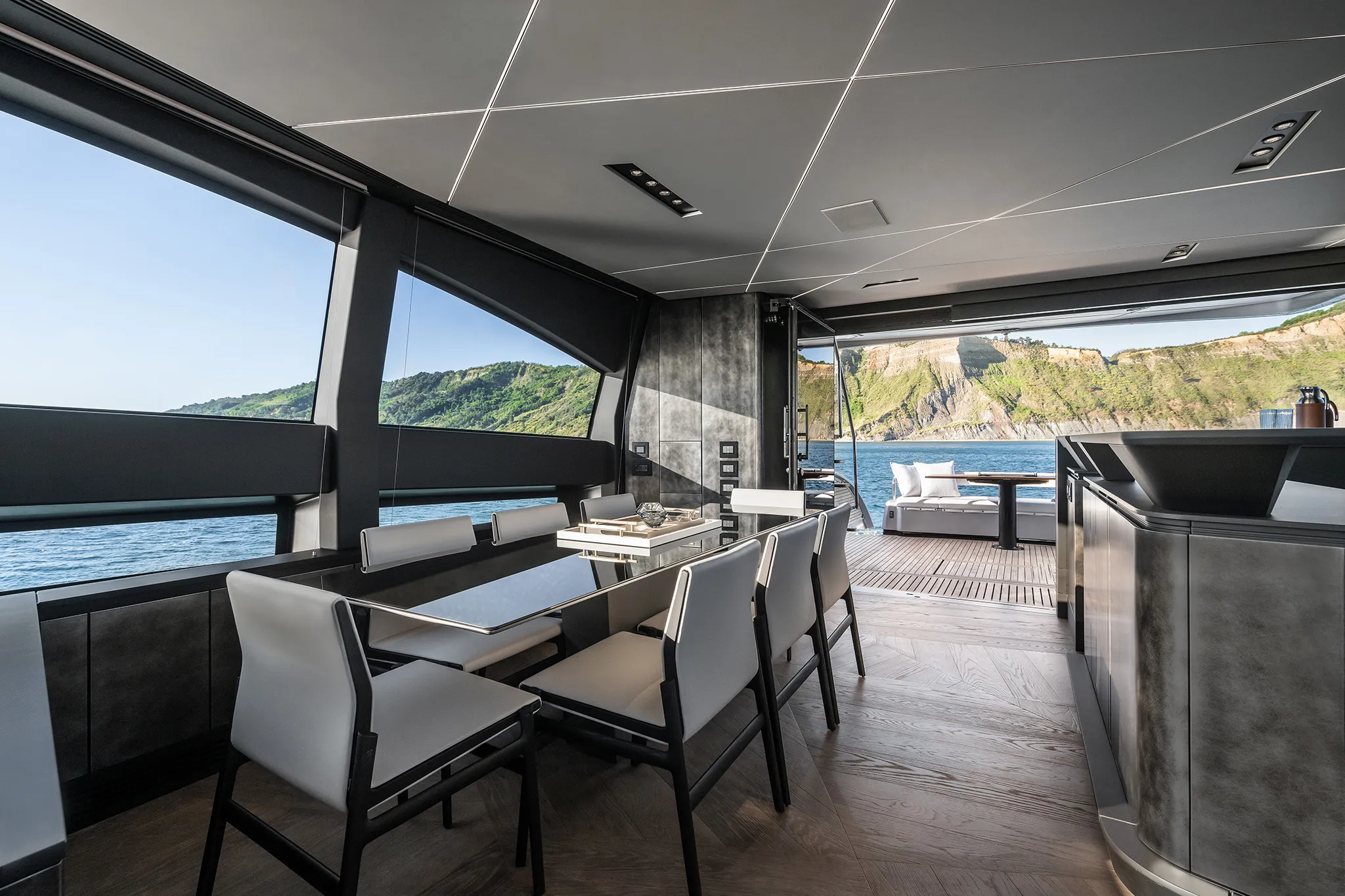
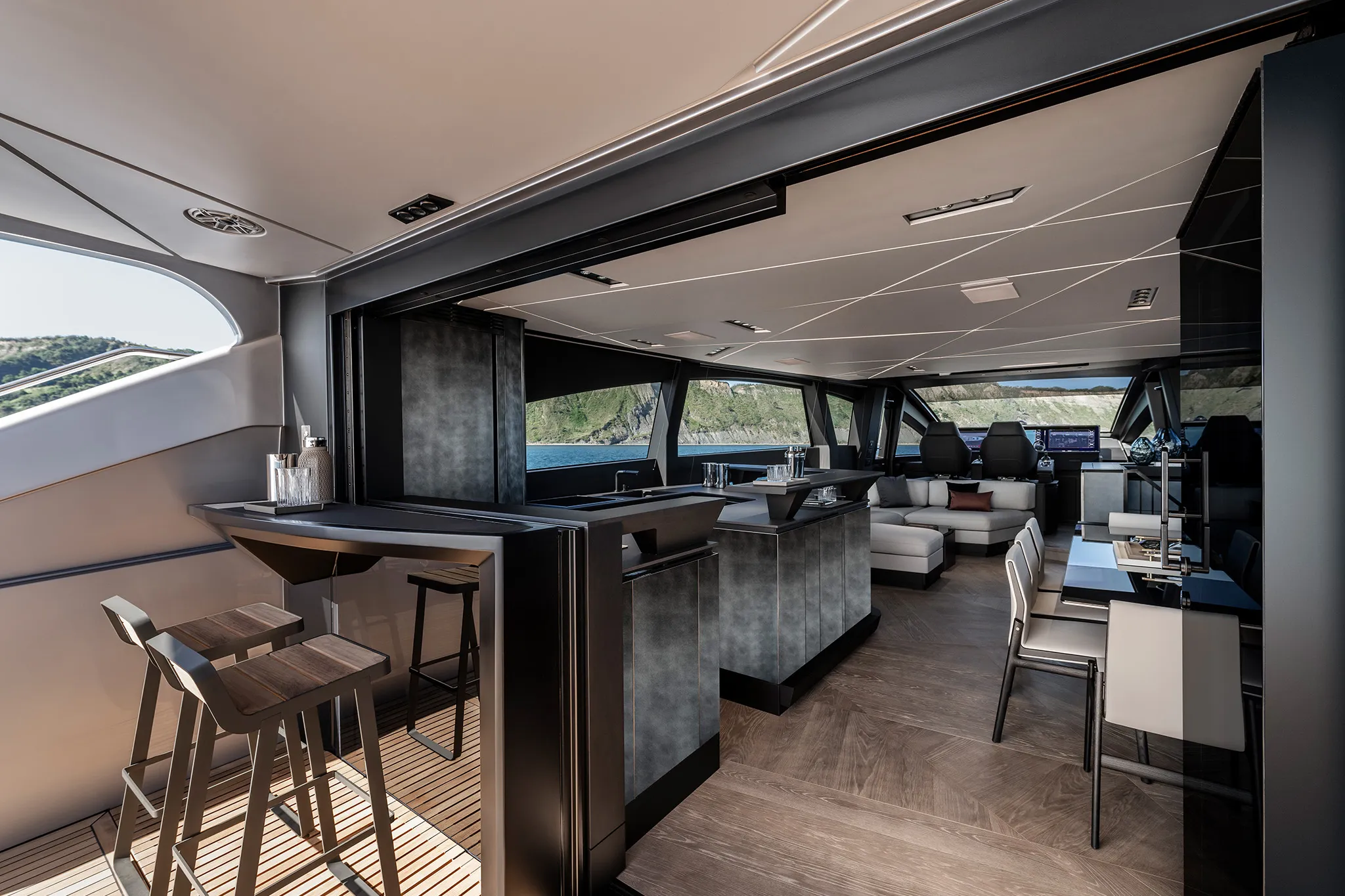
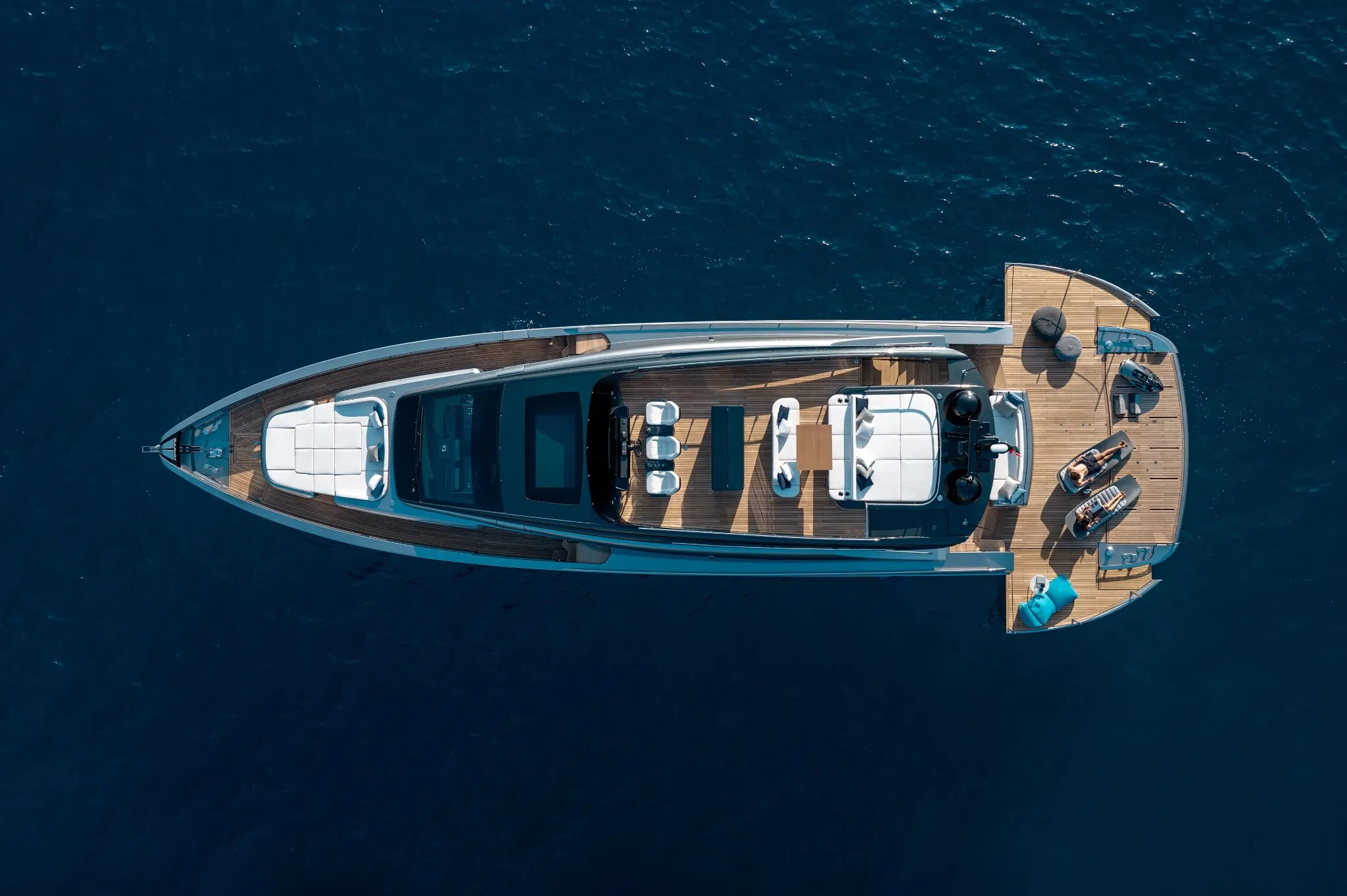
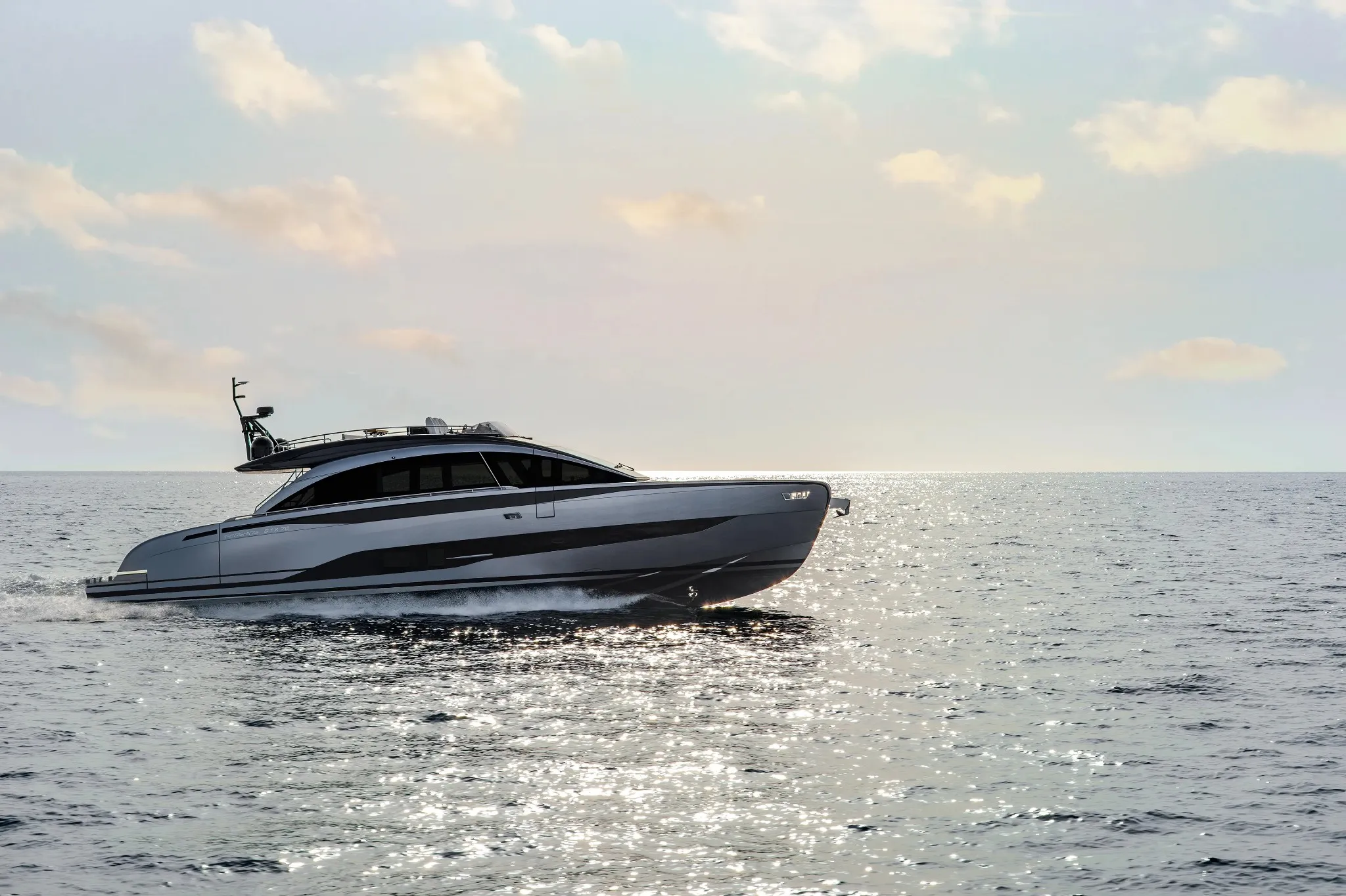
Photos courtesy of Pershing Yachts.
Yes, and it is the Pershing we most often recommend to owners who intend to drive themselves. Triple IPS pods bring joystick control that makes a 78'8" yacht manageable single-handed at the dock, and the standard layout still includes two crew cabins if you want help aboard.
The galley-up main deck matters here too: it puts the cooking and the living on the same level as the helm, which is how an owner-operated boat actually gets used.
Pershing publishes a 34-knot top speed and a 28-knot cruise for the GTX80, from three Volvo Penta D13 IPS1350 pod drives at 1,000 mhp each.
That is deliberately not the fastest thing Pershing builds — the 8X at the same sort of size runs 48 knots. What the GTX80 buys with the difference is pod redundancy, a galley-up main deck and far more usable deck space.
Three Volvo Penta D13 IPS1350 pod drives, rated 1,000 mhp each. Pershing lists no alternative engine package for this model.
Triple pods are the specification that defines this boat. You get joystick docking, a shallower installation than shafts, and — most importantly — redundancy: lose one engine and you still have two. For an owner crossing to the Bahamas without a chase boat, that is a materially different risk profile from a twin surface-drive yacht.
300 nautical miles at its 28-knot cruise, from 1,374 US gallons (5,200 litres) of fuel.
In practical terms that is roughly eleven hours of running, or a Florida-to-Bahamas crossing with a comfortable reserve. It is the same published range as the 7X, but the GTX80 covers it at 28 knots rather than 42, so it burns considerably less fuel getting there.