
August 18, 2026
The Pershing GTX70: When 36 Knots Comes With a Beach Club
Pershing's compact Sport Utility Yacht puts 71 feet on three Volvo D13 IPS1200 pods - 2,700 hp all in, a published 36-knot top end and a 30-…
Read the articleThe Sport Utility Yachts — 71'5" to 115'11" on pods and waterjets, with beach clubs and fold-out terraces
You want the speed, but not at the price of everywhere your family actually spends the day. That is the trade the GTX Series exists to refuse.
Pershing calls these Sport Utility Yachts, and the phrase is doing real work. Instead of surface drives and a 48-knot top end, the GTX boats run pod drives or waterjets and settle for a cruise in the high twenties or low thirties. What they buy with that is deck: side terraces that swing down over the water, two-level beach clubs, carbon sundecks with a second helm, and interior volume the X Generation does not pretend to offer. The GTX70, GTX80, GTX90 and GTX116 are four sizes of the same argument.
Every Pershing Yachts GTX model we review in depth, in the order owners step up through the series.
Photo credit Pershing Yachts.
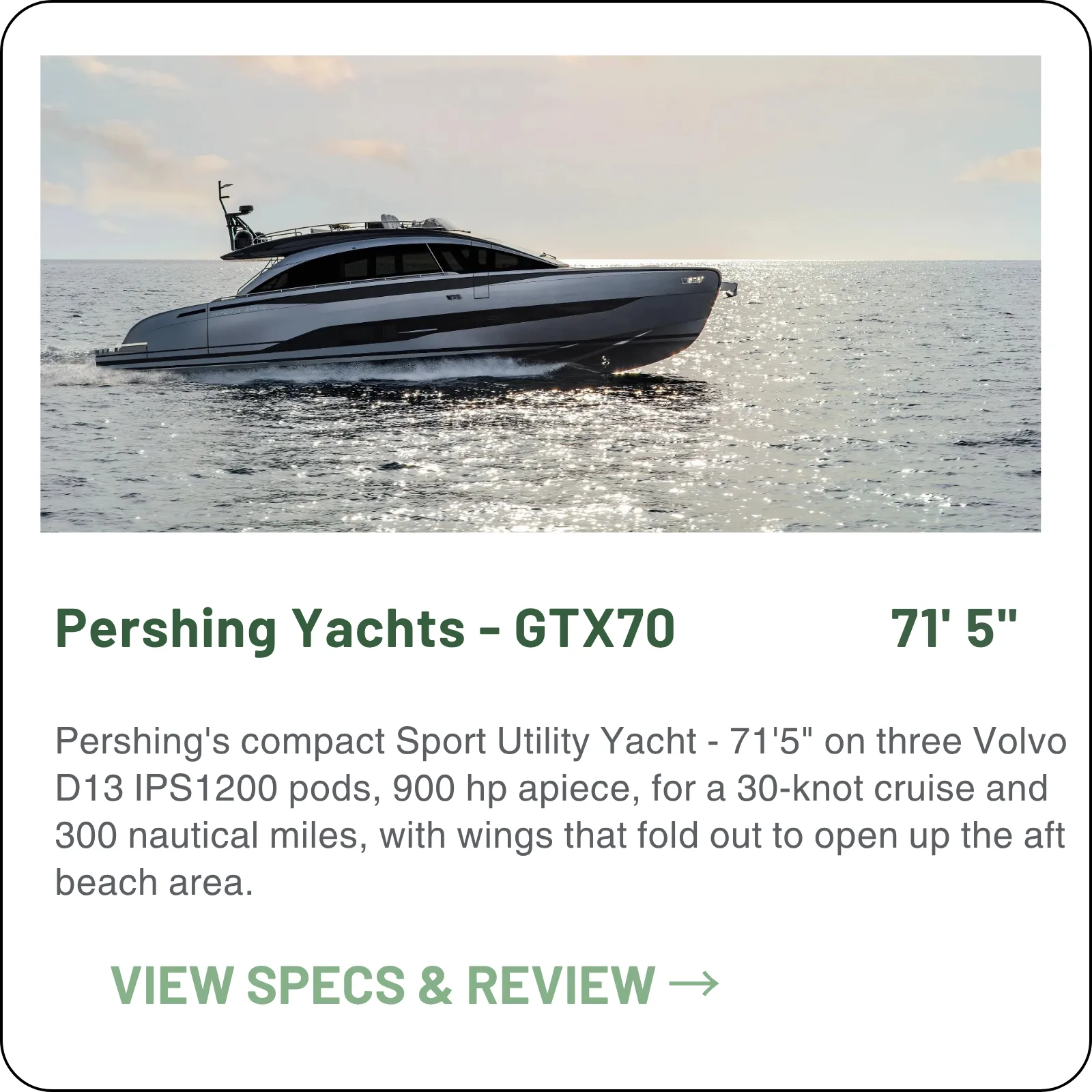
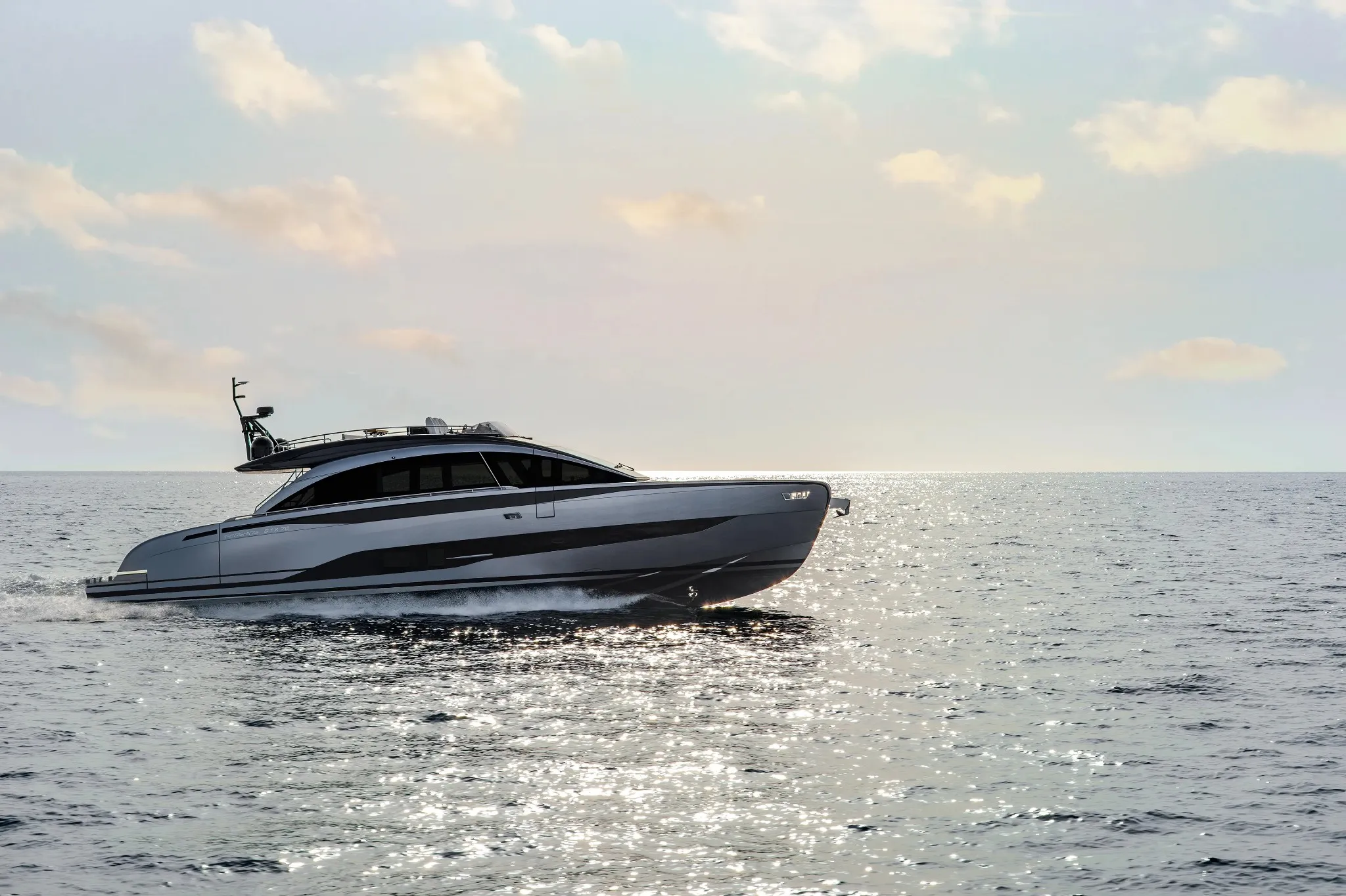
Pershing's compact Sport Utility Yacht - 71'5" on three Volvo D13 IPS1200 pods, 900 hp apiece, for a 30-knot cruise and 300 nautical miles, with wings that fold out to open up the aft beach area.
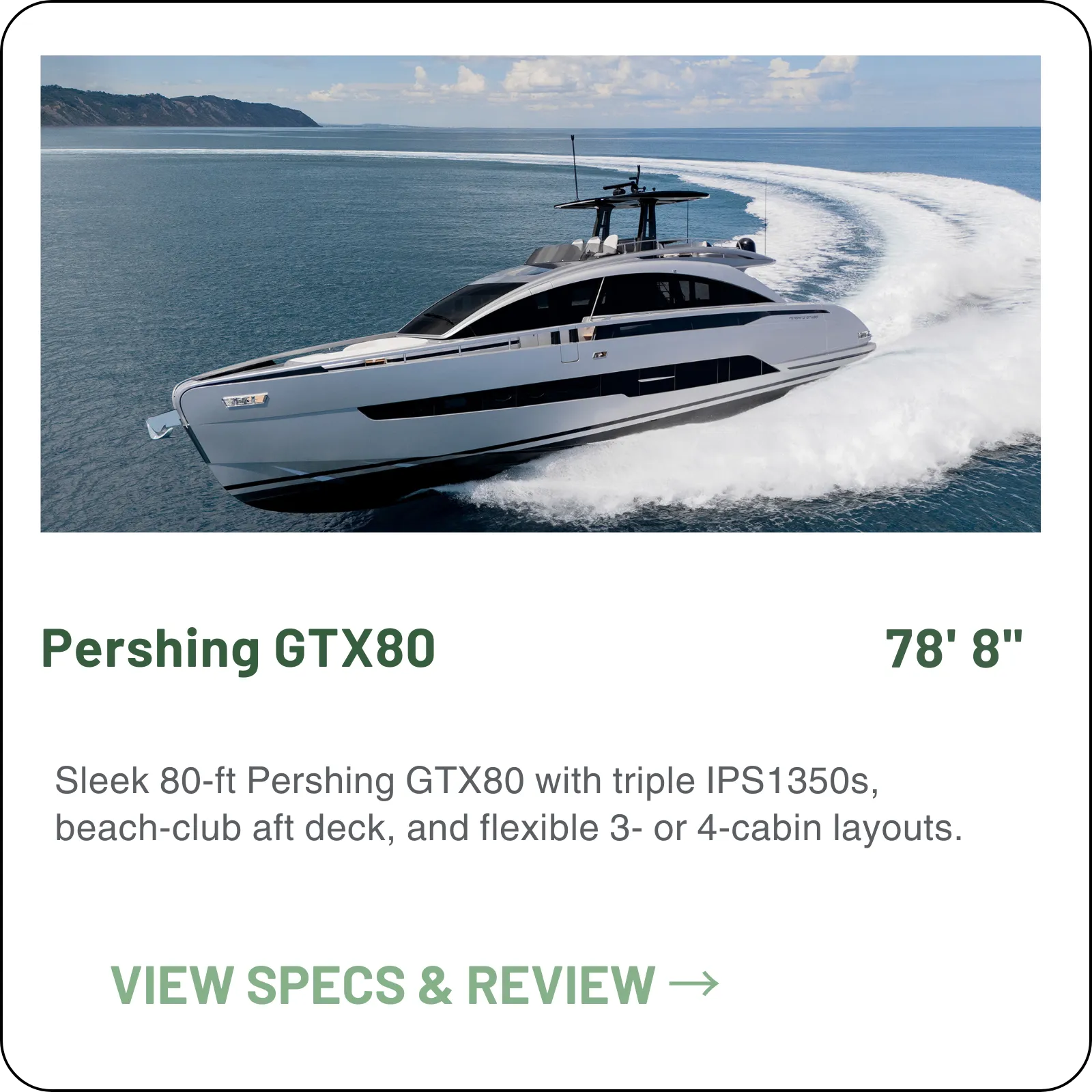
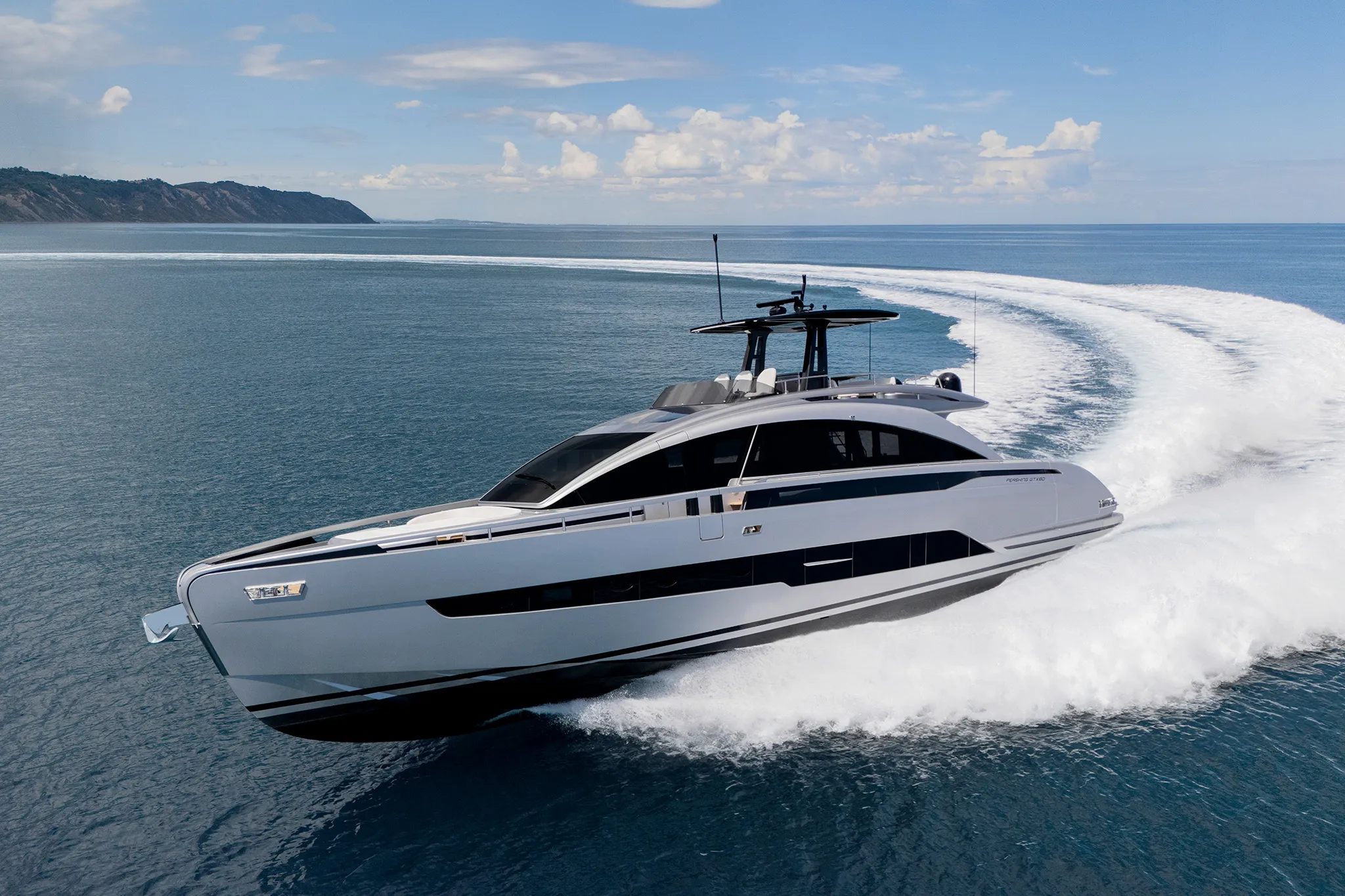
The Pershing built for how Americans actually cruise — 78'8" on triple Volvo IPS pods, a 28-knot cruise with 300 miles of range, galley-up living and a 23-square-metre carbon sundeck.
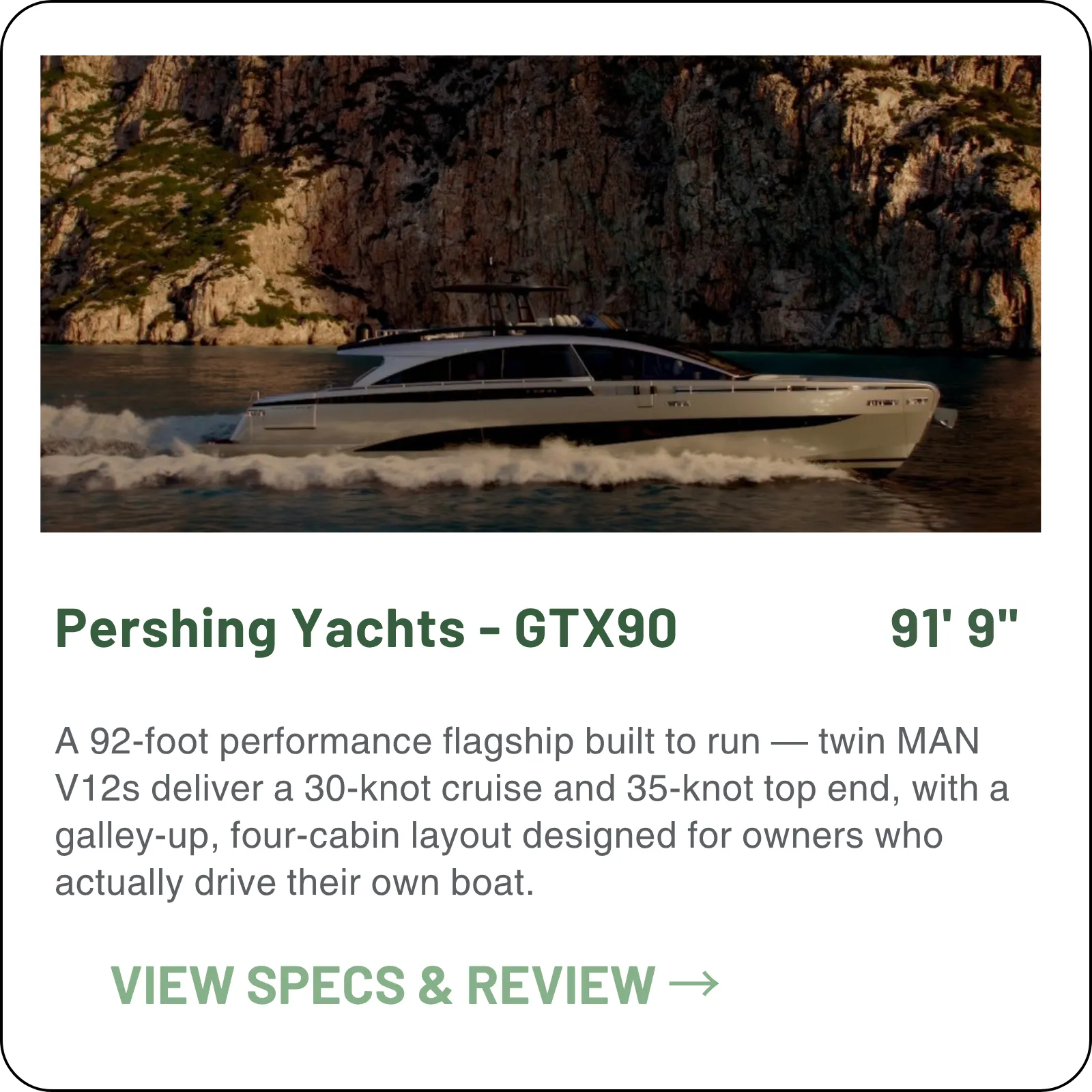
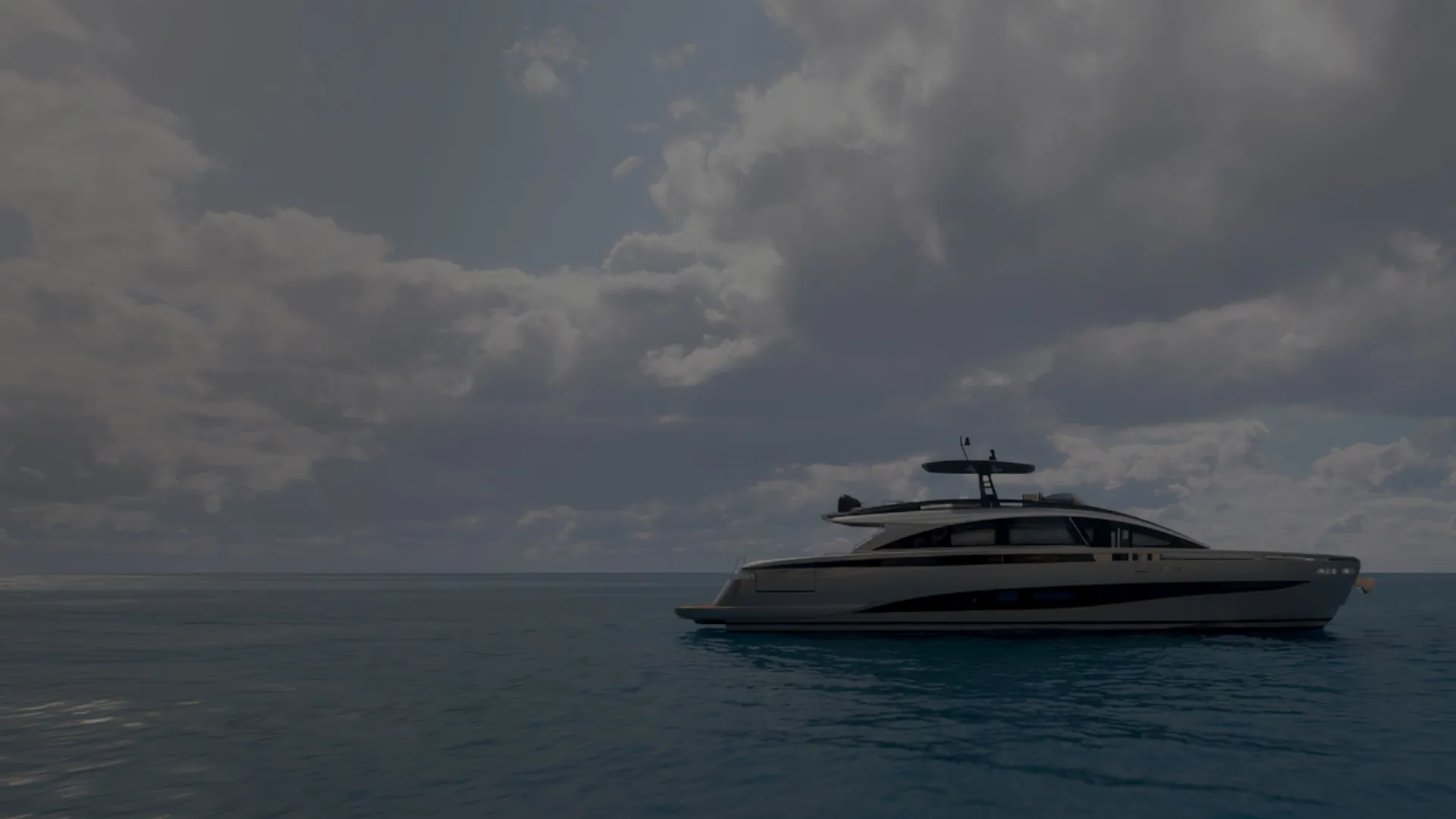
The newest Sport Utility Yacht in the GTX range — 91'9" on twin MAN V12 2200s and Castoldi waterjets, a 30-knot cruise, four cabins and a 355-square-foot sportsbridge.
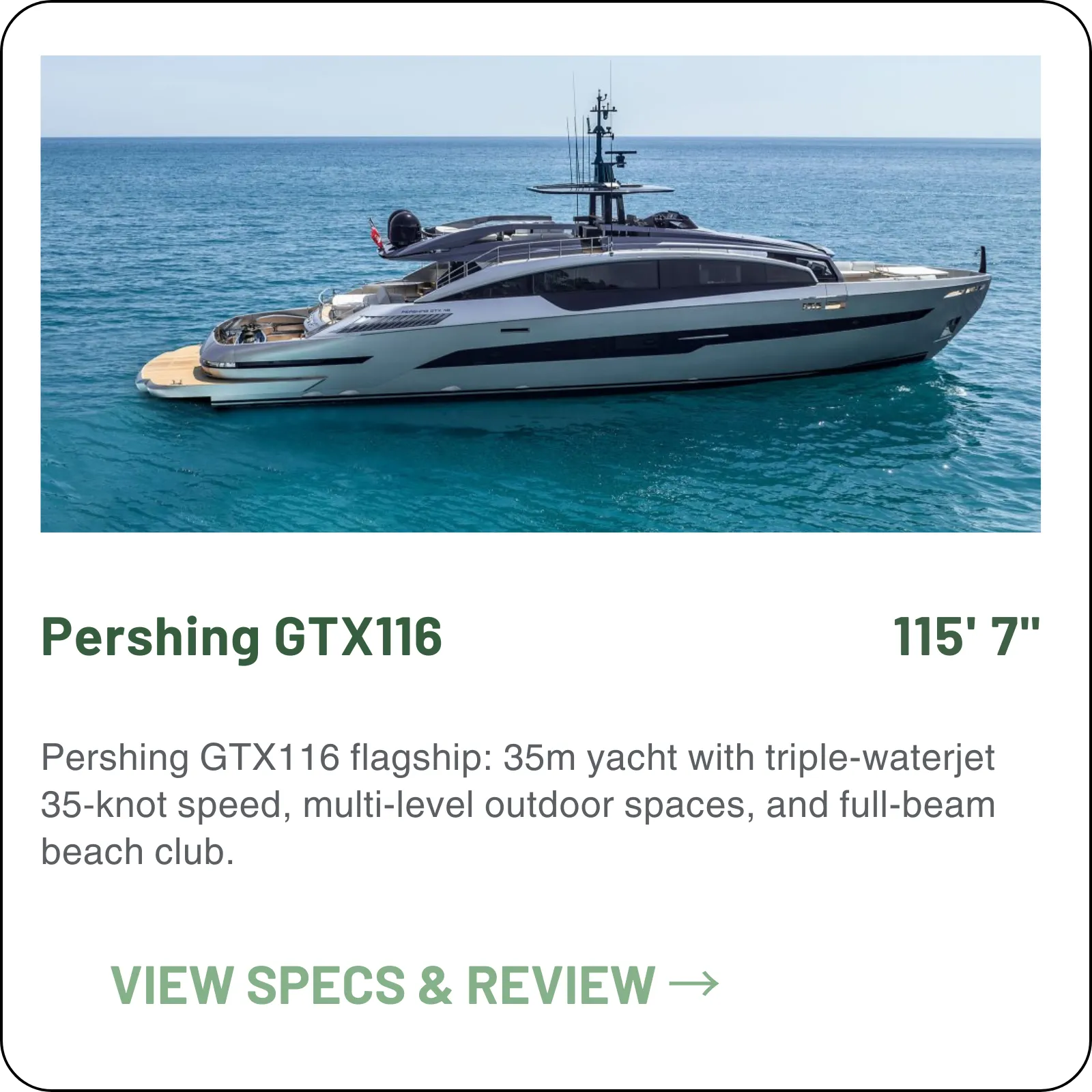
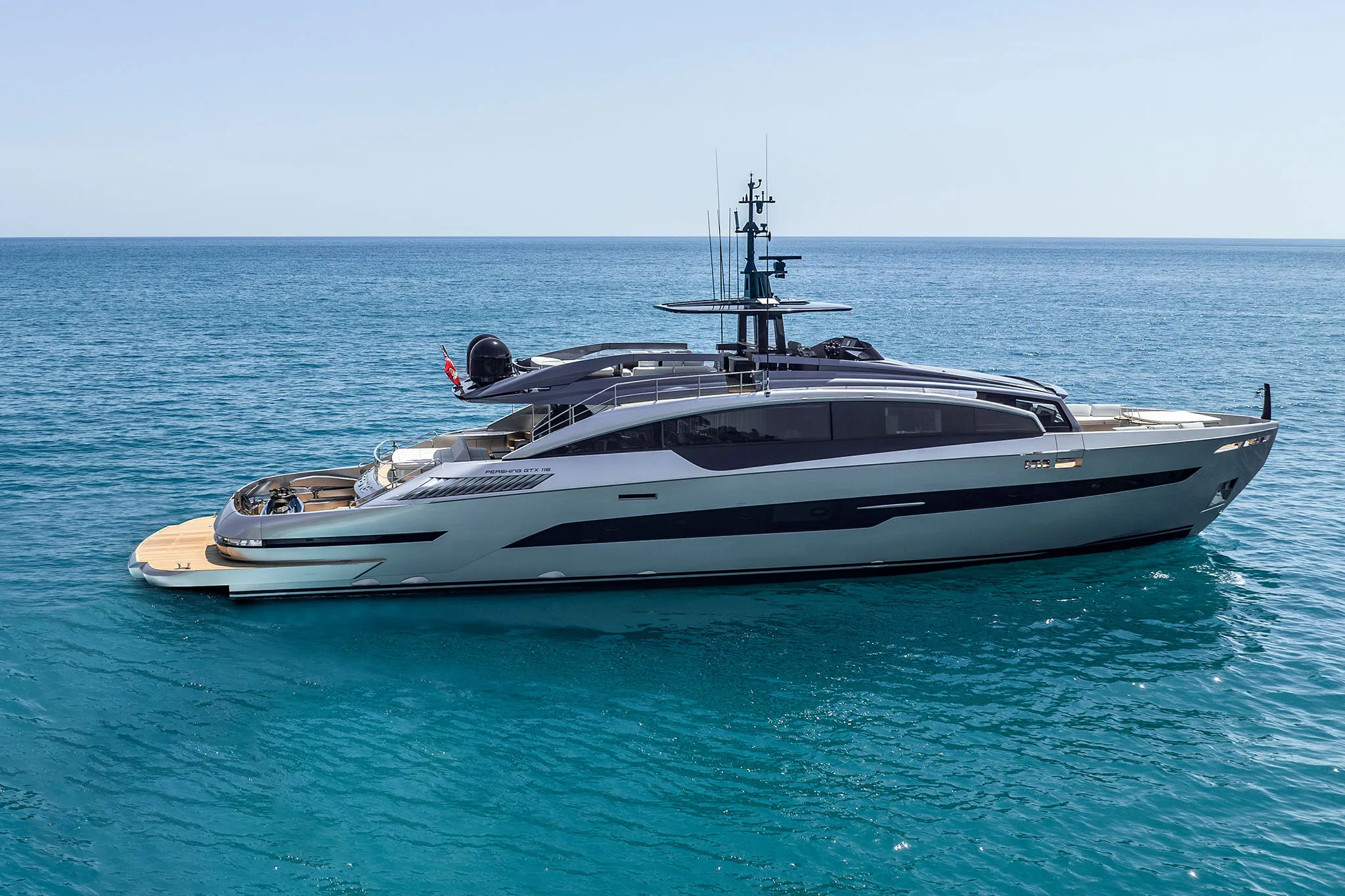
Pershing's flagship for owners who refuse to trade speed for space — 115'11" on triple MAN V12s and Kamewa waterjets, 34 knots flat out, five cabins, and 165 square metres of connected outdoor deck.

Don't see the GTX model you're after — or a brand-new launch? Request specs through Yacht Specs Direct.
The GTX70 is what Pershing calls the compact SUY. It runs 71'5" on a 17'9" beam at 99,208 lbs unladen, on three Volvo Penta D13 IPS1200 pods at 900 hp each — 2,700 hp in total — for 36 knots flat out, a 30-knot cruise and 300 nautical miles at that speed. Three cabins plus a crew cabin, sixteen people aboard, 1,110 gallons of fuel, and wings that open out to extend the beach area aft. One figure to check before you assume the shorter boat is the shallower one: the GTX70 draws 6'8", five inches more than the GTX80.
The GTX80 is the most American in how it is set up. It runs 78'8" on a 19' beam and 52 tonnes unladen, powered by three Volvo Penta D13 IPS1350 pods at 1,000 mhp each for 34 knots flat out and a 28-knot cruise with 300 nautical miles of range. Four cabins plus two crew, a galley-up main deck, and a 23-square-metre carbon-fibre sundeck. Triple pods also mean redundancy, which matters more than two knots of top speed if you are crossing to the Bahamas without a chase boat.
The GTX90 is the newest boat in the range — the first hull launched in July 2026. At 91'9" on a 6.89-metre (22'7") beam it moves to twin MAN V12 2200s at 2,200 hp each with Castoldi TurboDrive waterjets, for a 35-knot top speed and a 30-knot cruise; Pershing still lists those figures as preliminary. Four cabins with four en-suite heads, two double crew cabins, a sportsbridge Pershing says is 43% larger than the class average, and a double garage for a tender and a jet ski.
The GTX116 is the one that reads as a superyacht. It is 115'11" on a 25'4" beam at 130 tonnes unladen, on three MAN V12s — 1,800 mhp standard, 2,000 mhp optional — driving Kamewa waterjets for 34 knots and a 29-knot cruise, with 400 nautical miles at cruise and 800 at an economical 10 knots. Five cabins, six heads, three crew cabins, and 165 square metres of connected outdoor deck. The draft is the surprise: 4'10" on a 35-metre yacht, which is what waterjets buy you.

The GTX80 is the boat I point most American buyers at, and I want to be specific about why. Triple IPS gives you redundancy that a surface-drive boat cannot, the joystick makes it genuinely owner-operable at 79 feet, and 300 nautical miles at a 28-knot cruise covers the runs most people actually make. It is the least dramatic boat Pershing builds and the easiest to own.
The GTX116 is the one that surprised me. A 35-metre yacht that draws four foot ten changes which anchorages are available to you, and that is worth more in the Bahamas and the Med than the fifteen knots it gives up to a 9X. If you are choosing between a GTX116 and a displacement yacht of the same length, you are really choosing between deck space and interior volume, and Pershing has been honest about which side it is on.
On the GTX90 I would wait for delivered numbers. Pershing's own spec sheet still says preliminary, the first hull only launched in July 2026, and the yard's website contradicts its own press releases on the engine rating. None of that makes it a bad boat — it makes it a boat you should sea-trial rather than buy off a brochure.
Videos courtesy of Pershing Yachts.
Sport Utility Yacht is Pershing's own name for the GTX Series — boats that keep the brand's performance character but spend it on deck space and volume rather than outright speed. They run pod drives or waterjets instead of surface drives, and cruise in the high twenties or low thirties.
In practice that means side terraces that swing down over the water, multi-level beach clubs, carbon sundecks with a second helm, and interior volume the X Generation does not attempt.
Choose the GTX80 if you intend to drive yourself — triple pods, joystick control and 300 nautical miles at a 28-knot cruise make it the easiest of the three to own. Choose the GTX116 if you want superyacht accommodation with a 4'10" draft.
The GTX90 sits between them and is the newest, launched in July 2026. Pershing still lists its performance as preliminary data, so we would sea-trial that one before committing.
Propulsion and priorities. The X Generation uses surface drives and runs 42 to 50 knots; the GTX Series uses pods or waterjets and runs 34 to 35 knots, spending the difference on deck area, cabins and shallower draft.
A concrete comparison: the 8X and the GTX80 are within five feet of each other, but the 8X does 48 knots on surface drives while the GTX80 does 34 on triple pods with a galley-up main deck and pod redundancy.
Tell us how you plan to use the boat — guests, range, crew or no crew — and we'll give you the straight story on where in the GTX series you belong, new or brokerage.
Explore All Pershing Yachts ModelsOr reach Tony directly: TS@MintedYachts.com · +1 (404) 805-9819