
November 26, 2026
Beneteau First 44: What Stepping Up From a First 36 Buys You
Moving from a mid-30s First to the First 44 buys two heads, a salon table for six and water ballast. It also brings more weight, more draft …
Read the articleSailboats
The performance sailboats, First 30 to First 60, 30'8" to 62'2", plus the race-tuned First 36 SE
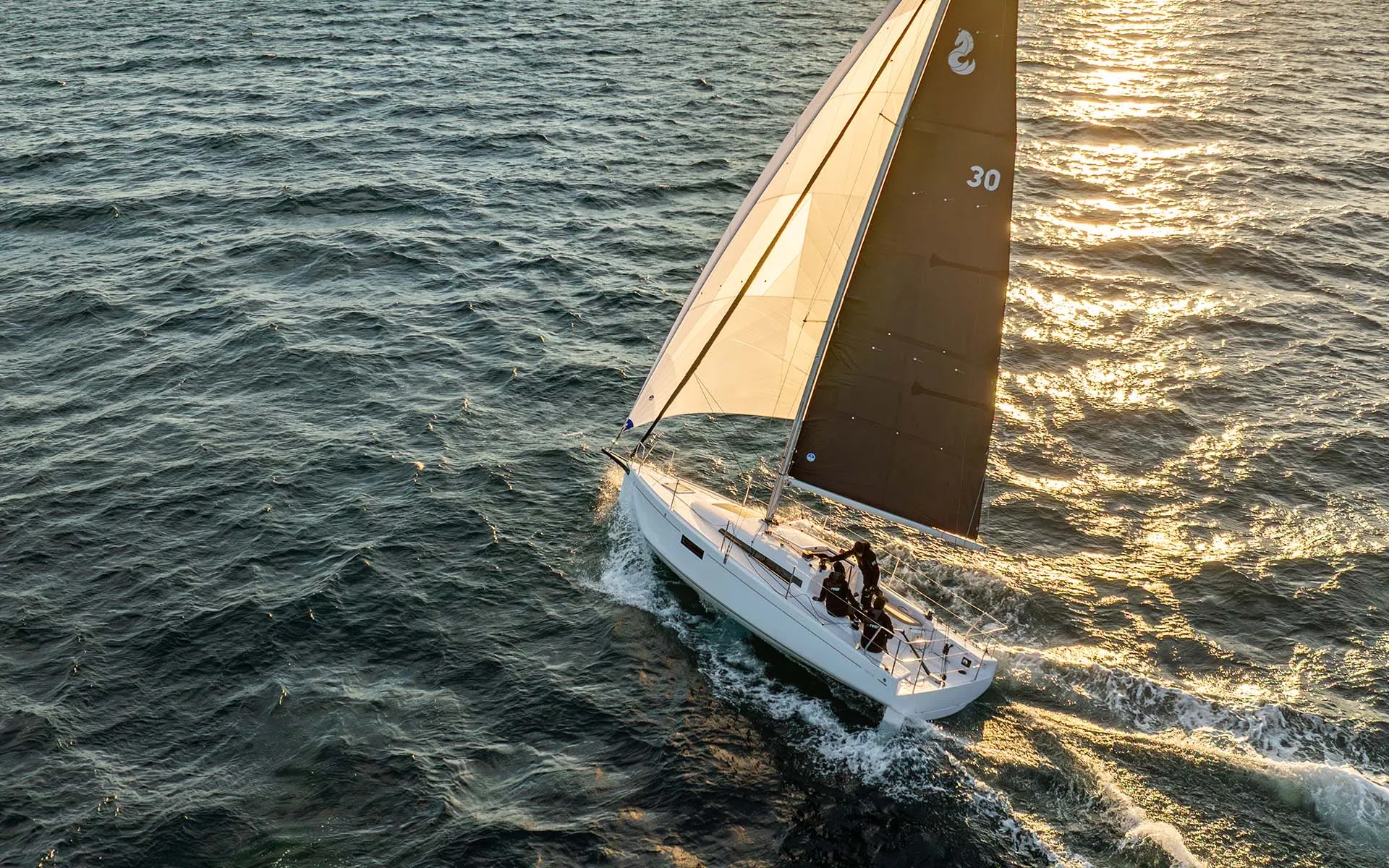
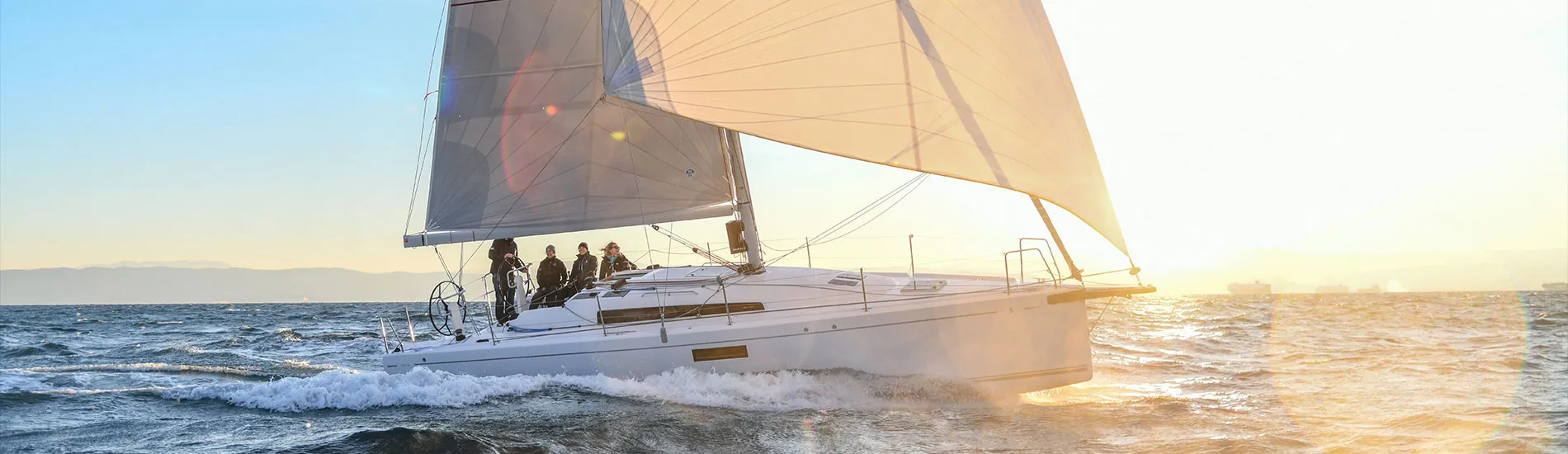

Plenty of sailors want one boat that wins a Wednesday-night race and still takes the family away for a week. Most cruisers give up the first job and most race boats give up the second. Beneteau's First line is built for that middle ground: the builder describes 40 years of First heritage, designed for sailors who enjoy club racing as much as cruising.
Beneteau's other big sailing lines are built around cruising. The Oceanis is the builder's range of long-distance, blue water cruisers, and the Oceanis Yacht takes that cruising philosophy further. A First puts the sailing first. The smaller boats here are drawn by Samuel Manuard and sold on planing, while the First 44, 53 and 60 come from Biscontini Yacht Design and carry their speed into bigger, more comfortable hulls.
This page covers six boats. The First 36 SE sits with them for now, although Beneteau lists it in its separate First SE (Seascape Edition) line. Beneteau also builds the First 14, First 24 and First 36 Spirit, and the First 14 SE, 18 SE and 24 SE, which are not reviewed here yet.
Every Beneteau First model we review in depth, in the order owners step up through the series.
Photo credit Beneteau.
Beneteau First 3030'8" (9.35 m) LOAView specs & reviewManuard-drawn planing cruiser: 6,700 lbs dry, twin rudders, two cabins for four, a race or cruise cockpit.
Beneteau First 3636'0" (10.97 m) LOAView specs & reviewEuropean Yacht of the Year 2023. Starts planing in 14 knots of wind, three double cabins, six winches, 10,580 lbs dry.
Beneteau First 36 SE39'4" (11.98 m) LOAView specs & reviewPlaning ORC racer: 400 kg lighter than the First 36, tiller steering, carbon stairs and fiddles, three cabins kept.
Beneteau First 4448'1" (14.65 m) LOAView specs & reviewBiscontini-designed performance cruiser: three cabins, two heads, twin 80-gallon water ballast tanks, up to 57 HP.
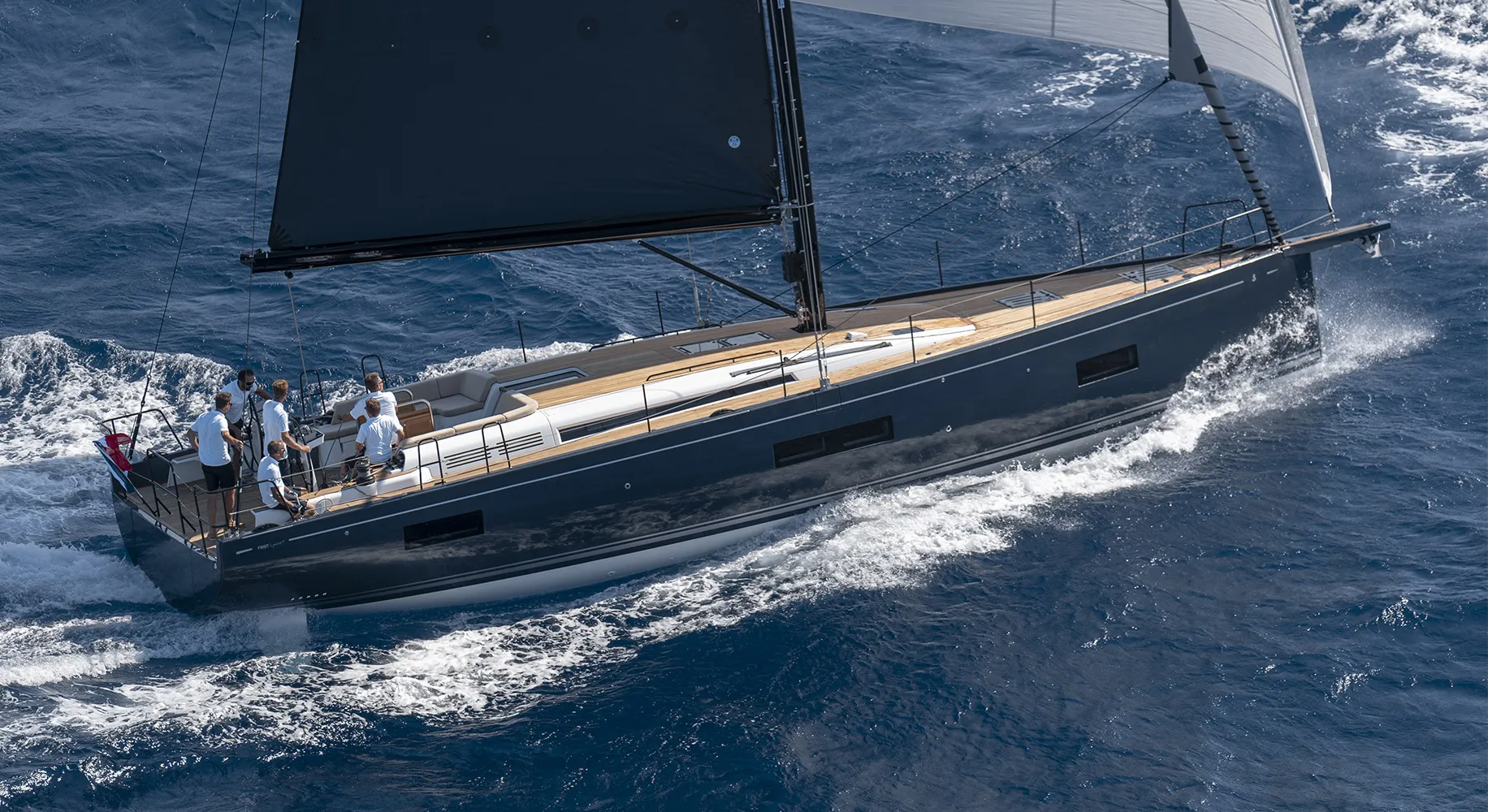 Beneteau First 5356'2" (17.12 m) LOAView specs & review
Biscontini-drawn performance cruiser: twin rudders, three keel options, 3 cabins, 8 ft tender garage, 106 gal fuel, 190 gal water.
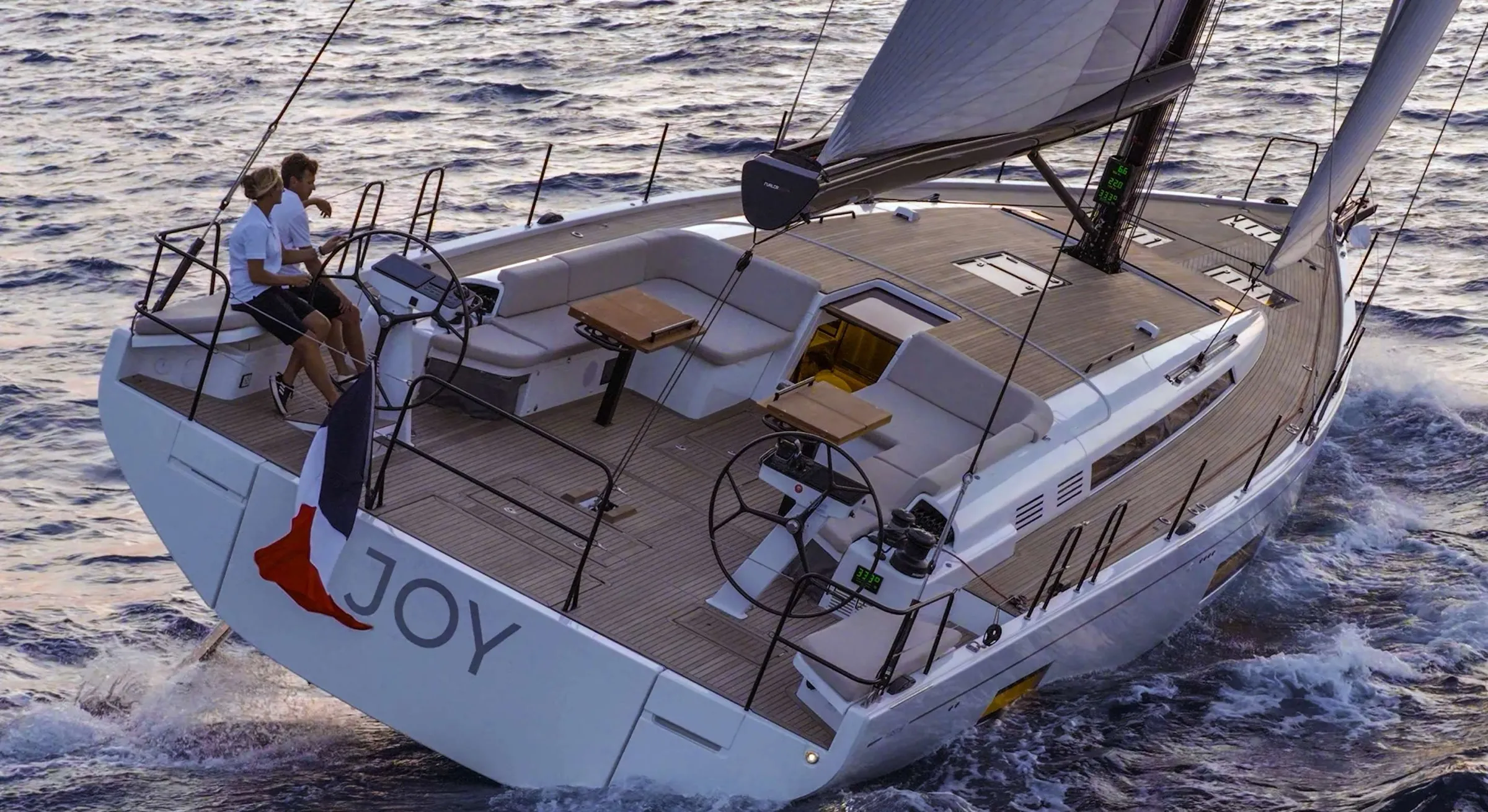 Beneteau First 6062'2" (18.95 m) LOAView specs & review
The largest First ever built: Biscontini lines, a walk-around Winch Island, max. 150 HP and 3 cabins / 3 heads.

Don't see the First model you're after — or a brand-new launch? Request specs through Yacht Specs Direct.
First 30. At 30'8" and 6,700 lbs dry, this is the way into planing under sail. Beneteau calls it the modern successor to the legendary 1977 First 30 and the start of a new category, the planing cruiser. You get two cabins for four sailors, a proper marine head, 1.85 m (6.0 ft) of standing height in the galley and twin rudders, with a choice of a cruising cockpit or a racing one with a mainsail traveller. What you give up is space and range: the tanks hold 10.5 gallons of fuel and 26.4 of water, and the auxiliary tops out at 14 HP.
First 36. Stepping up to 36'0" and a 12'6" beam buys a third cabin, each with a full-sized double berth, plus a full-sized navigation table that doubles as a home office. Beneteau built it for joy in planing and says it starts to plane in 14 knots of wind. It was European Yacht of the Year 2023 and is set up for short-handed sailing, with six winches and a raised wheel beside the mainsail winch. The cost shows at the dock: the builder lists a minimum draft of 7'5" (2.25 m), against 5'6" (1.68 m) on the First 30.
First 36 SE. Same three-cabin layout, a different purpose. Beneteau took the First 36, made it 400 kg (881 pounds) lighter, swapped the wheels for a tiller and tuned it for competitive ORC racing with Samuel Manuard and Maurizio Cossutti. Hull, deck, bulkheads and interior parts are fully cored and vacuum-infused, the companionway stairs and fiddles are carbon, and removable crew bags replace wooden lockers. Overall length is 39'4" and the minimum draft 6'4" (1.95 m). A racer gains a great deal here; a cruising family gives up some of the warmth below.
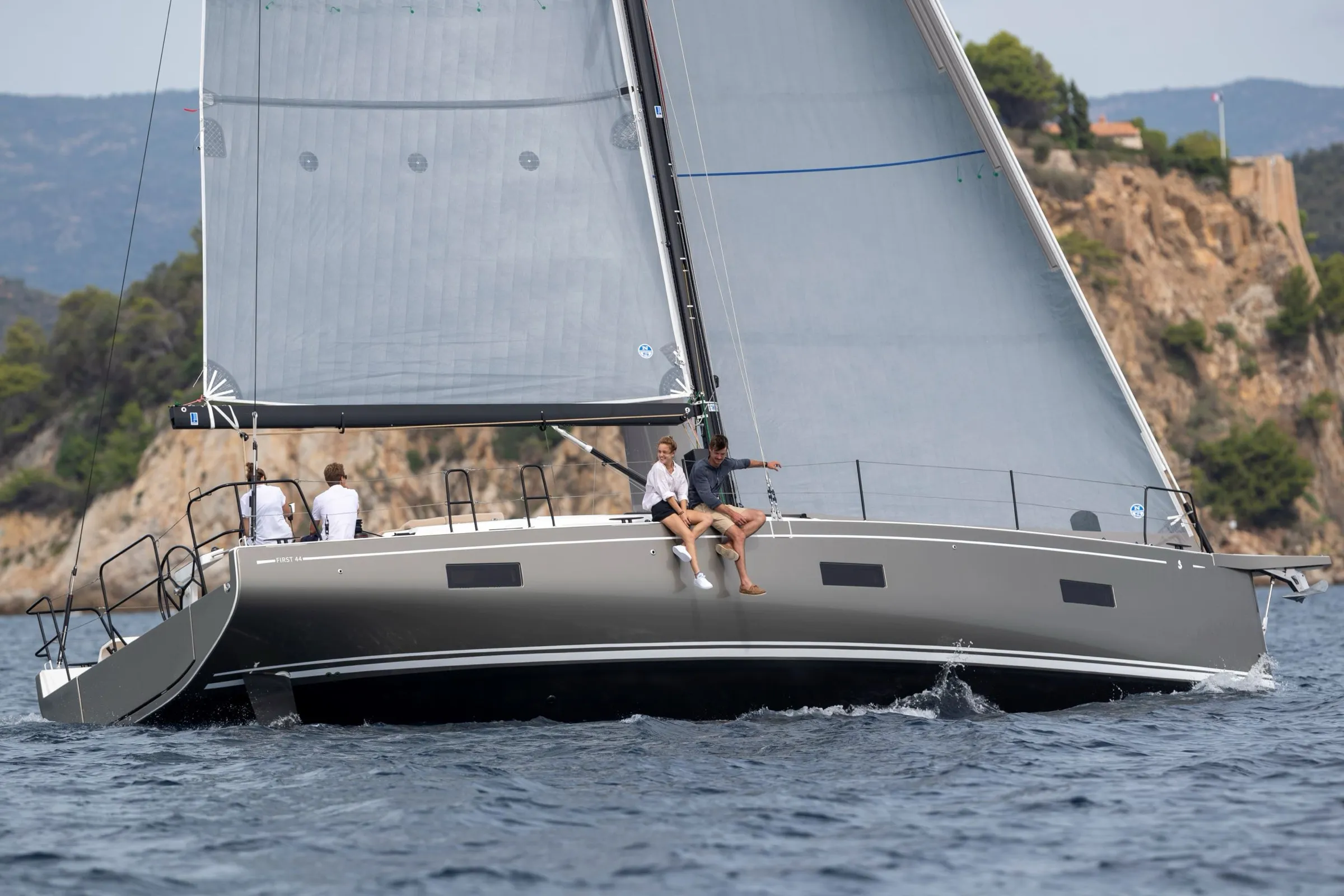
First 44. Here the line moves from the planing boats to a bigger performance cruiser. Beneteau positions it as the natural link between the First 36 and First 53. At 48'1" and 23,142 lbs, it offers three cabins and two heads, a six-seater salon table and two deck layouts. Its signature is twin 80-gallon water ballast tanks switched electronically from the helm stations. Tankage rises to 53 gallons of fuel and 98 of water, with up to 57 HP. Draft runs from 7'1" to 8'6" depending on keel.
First 53. A 56'2" high-performance cruiser with a 16'5" beam, three keel configurations and twin rudders. The step up buys real cruising comfort: an 8 foot tender stows in a garage behind the lifting transom, the master cabin has a 5'3" wide island bed, and you choose three cabins with two heads or three with three. Fuel and water grow to 106 and 190 gallons, and engines go up to 110 HP. The trade is depth, with drafts listed from 8'2" to 9'11".
First 60. The largest First ever built, at 62'2" and 49,105 lbs dry. Three cabins and three heads, a full-beam galley and an owner's cabin with a walk-around, forward-facing bed. On deck, a walk-around Winch Island gathers all the running rigging, a captive mainsheet winch and a Park Avenue boom make the big main manageable, and Beneteau says no other yacht in her size range has purpose-built cockpit zones for relaxing, dining and sailing. It carries 132 gallons of fuel and 227 of water and takes up to 150 HP. Bridge clearance is 93'2", which matters on any waterway with fixed bridges.

"Buy the First that matches how you actually sail, not how you sail in your head."
I've walked Beneteau's factories and watched how they handle their resins and their quality control, and the First line is where that care shows up under sail. For most couples and small families who want to go fast and still sleep well, I'd point them at the First 36. Three real double cabins, planing in a moderate breeze and a boat set up for two people to handle. The First 30 suits the sailor who wants that planing feeling in a smaller, simpler package and is happy with two cabins. The 36 SE I'd sell only to someone who is going to race it under ORC. It is the same hull made lighter and stripped for the course, and the tiller and crew bags are honest about that.
The bigger three are a different conversation. The First 44 is the one I'd look at for a couple who want to cover distance quickly short-handed, because water ballast at the push of a button is a serious tool. The First 53 is the family boat of the group, with a tender garage and a choice of heads. The First 60 is for an owner who wants a big, fast yacht that is still laid out to be sailed rather than just driven. With any of the larger ones, check your home marina and your bridges before you fall in love: the drafts and the rig heights are what they are. And Beneteau's dealer network means the boat will have support wherever you take it.
Videos courtesy of Beneteau.
The First 60 has three cabins and three heads, with a walk-around, forward-facing bed in the owner's cabin. The First 53 offers three cabins with two or three heads, the First 44 three cabins and two heads, and the First 36 three cabins with full-sized doubles. The First 30 sleeps four sailors in two cabins.
The First 36 SE is a race-focused version of the First 36. Beneteau made it 400 kg (881 pounds) lighter, replaced the wheels with a tiller, added carbon companionway stairs and fiddles, and tuned it for competitive ORC racing. It keeps the three-cabin layout. Choose the SE to race; choose the standard 36 to cruise in more comfort.
Of the Firsts reviewed here, the First 30 lists the lowest minimum draft, 5'6" (1.68 m). The First 36 SE lists a minimum of 6'4" (1.95 m) and the First 36 7'5" (2.25 m). From the First 44 up, minimum drafts start at 7'1" and the First 53 and 60 begin above 8 feet, so check your channel first.
Beneteau sells the First 30, First 36 and First 36 SE on planing. It presents the First 30 as a new category, the planing cruiser, says the First 36 starts to plane in 14 knots of wind, and calls the First 36 SE a planing racer. The First 44, 53 and 60 are larger performance cruisers from Biscontini Yacht Design.
Both. Beneteau designs the First range for sailors who enjoy club racing as much as cruising. The First 36 SE leans hardest toward racing, while the First 53 and First 60 carry tender storage and three-head layouts for long stays aboard. The First 30 and First 36 sit in between, quick enough to race and roomy enough to cruise.
Tell us how you plan to use the boat — guests, range, crew or no crew — and we'll give you the straight story on where in the First series you belong, new or brokerage.
Explore All Beneteau ModelsOr reach Tony directly: TS@MintedYachts.com · +1 (404) 805-9819