
November 26, 2026
Beneteau First 53: A Cruiser Built for Fast Offshore Passages
For owners who count a season in miles, the First 53 and the Oceanis 52 come from the same designer and answer different questions. Here is …
Read the articleExpert Review, Technical Specifications & Market Analysis
| Feature | Specifications |
|---|---|
| Overall Length | 56'2" (17.12 m) |
| Beam | 16'5" (5 m) |
| Draft | 8'2" - 9'11" (2.50 - 3.02 m) |
| Displacement | 34,380 lbs (15,599 kg) |
| Engines | Max. 110 HP |
| Fuel Capacity | 106 gal (400 L) |
| Water Capacity | 190 gal (720 L) |
| Cabins / Heads | 3 Cabins / 2 or 3 Heads |
Source: Spec & Photos courtesy of Beneteau. Specs verified by Tony Smith, USCG 100 Ton Master, on November 26, 2026.
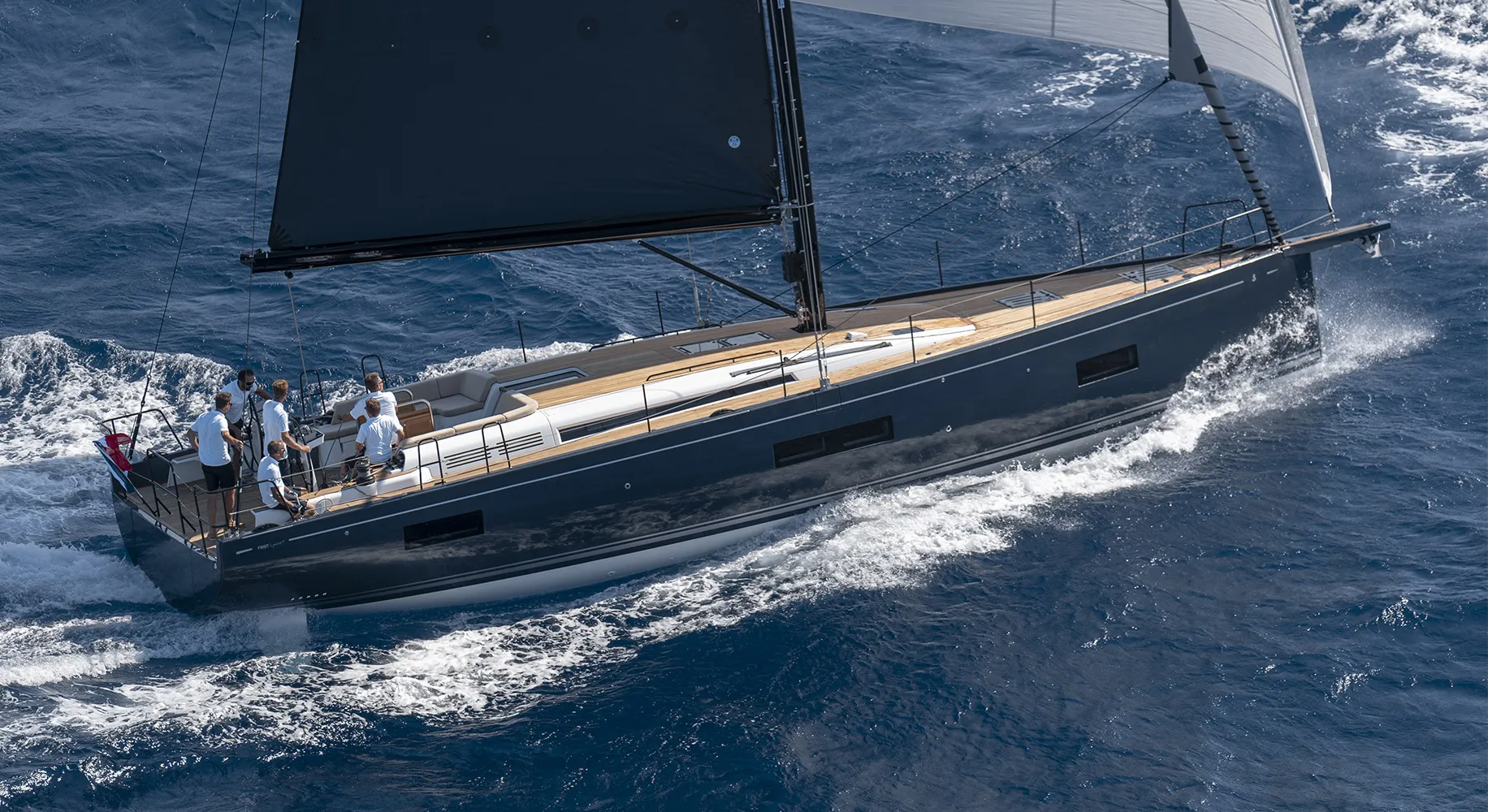
You want to cover real distance under sail and step off rested. Beneteau built the First 53 as a high-performance cruiser for that owner, with three cabins below and a garage for the tender.
Part of the Beneteau First series — see how owners step up through the lineup.

"Beneteau gives you a lot of boat for the money, and on the First 53 a lot of that boat is about sailing."
I've been to the Beneteau stands at Cannes and at Fort Lauderdale, and I've visited their factories. I've seen their quality control firsthand, down to how they do their resins. They buy in quantity, thousands of engines at a time, and that buying power is a big reason they come in as a competitive option against boats from smaller yards. Across both their power and sail boats, they are a pleasure to work with.
My read on the First 53 is simple: buy it if you plan to cover ground. Biscontini gave it twin rudders and a hull balanced around its sail plan, and the low coachroof tells you nobody was trying to squeeze in a fifth cabin. If you'd rather have the extra berths and the big cockpit, the Oceanis 52 is the honest answer.
The last thing I'd point to is what stands behind the boat. Beneteau has a really nice service network and a fairly professional global support team. On a boat you intend to take a long way from home, that matters more than any line on the spec sheet.
Video courtesy of Beneteau.
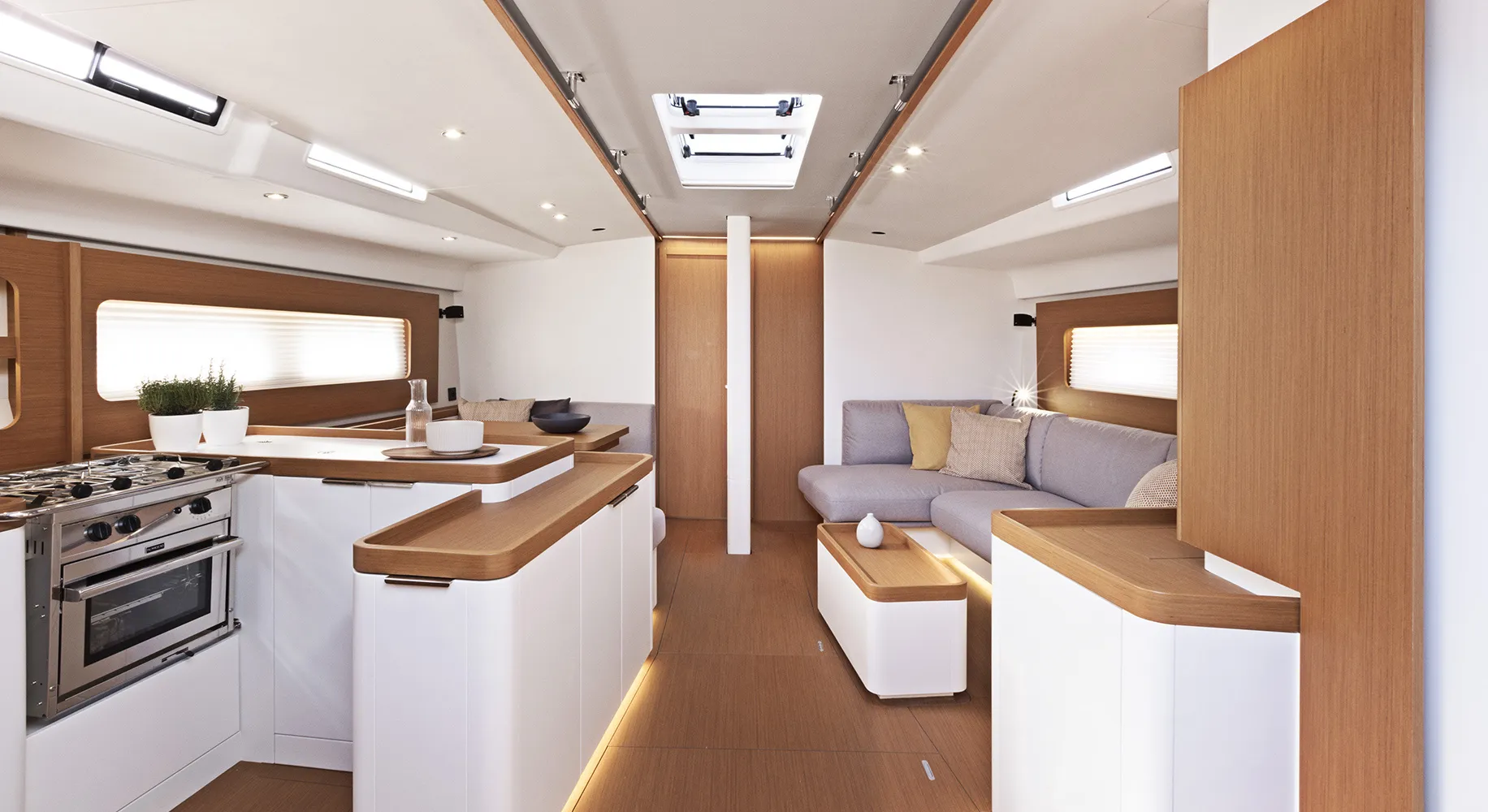
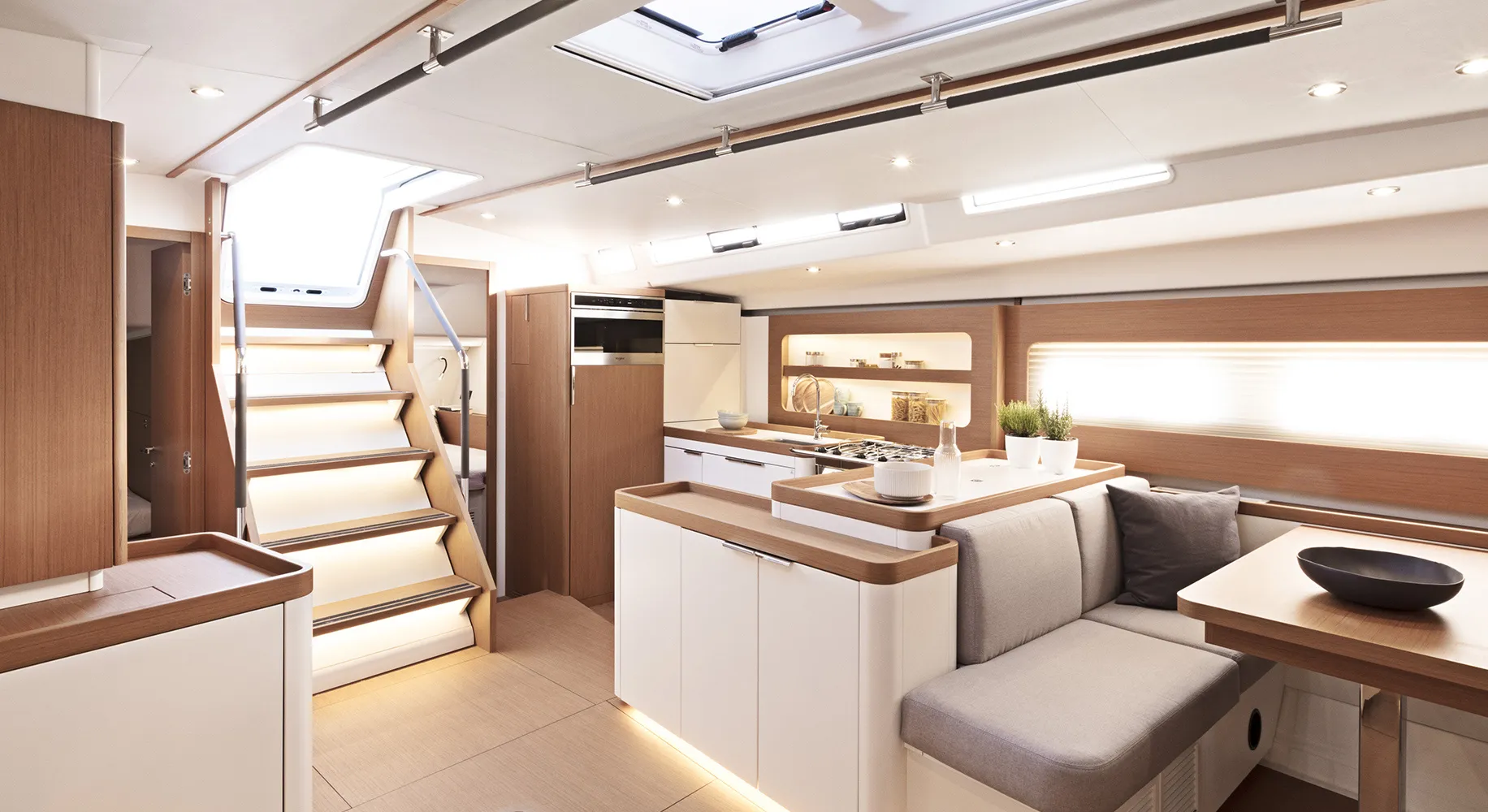
Photos courtesy of Beneteau.
Long passages reward a boat that keeps moving when the breeze is light and stays settled when it builds. Beneteau designed the First 53 as a high-performance cruiser for exactly that owner and spent two years developing it, with naval architecture by Biscontini Yacht Design and the interior and deck by Lorenzo Argento.
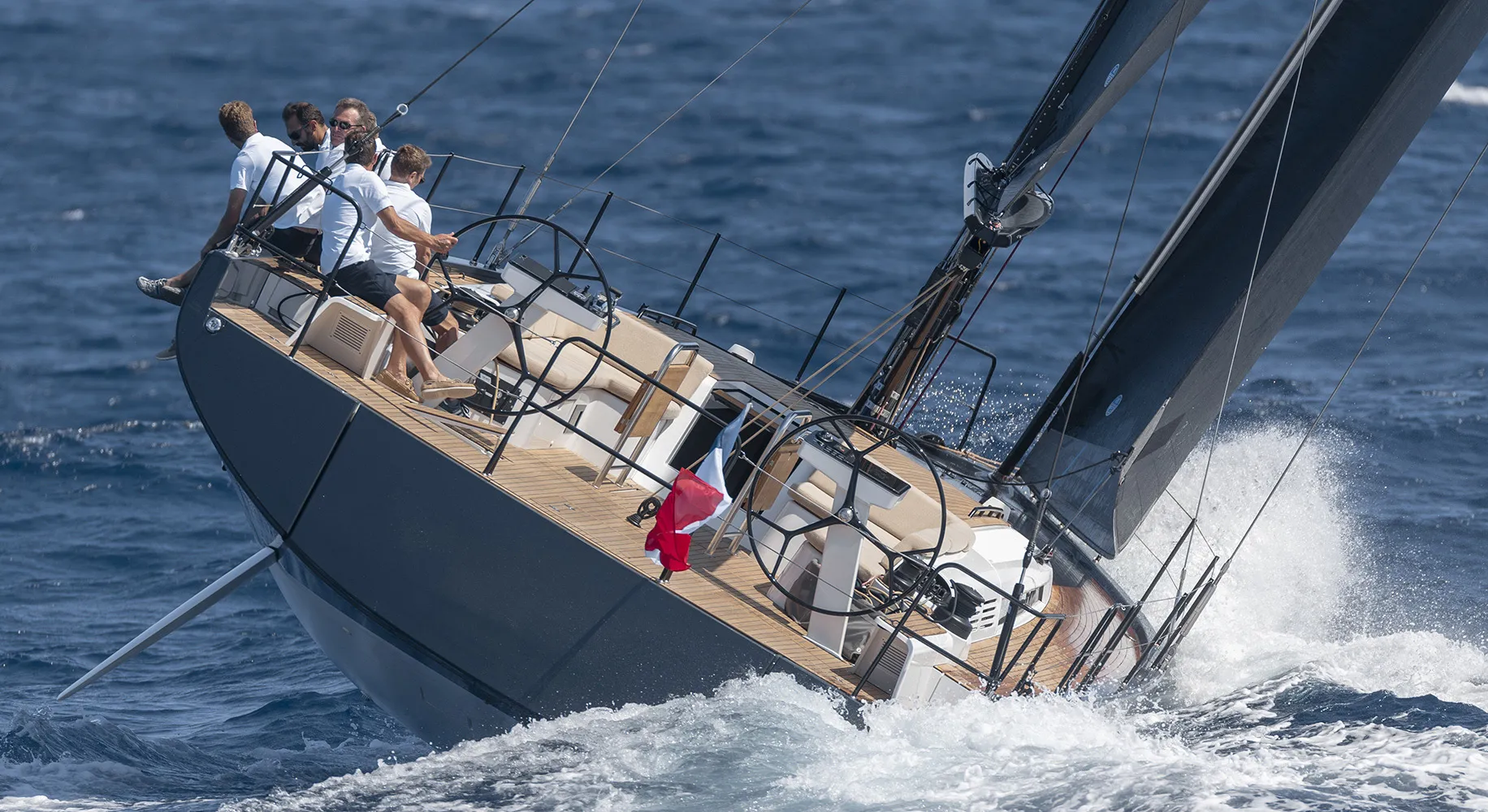
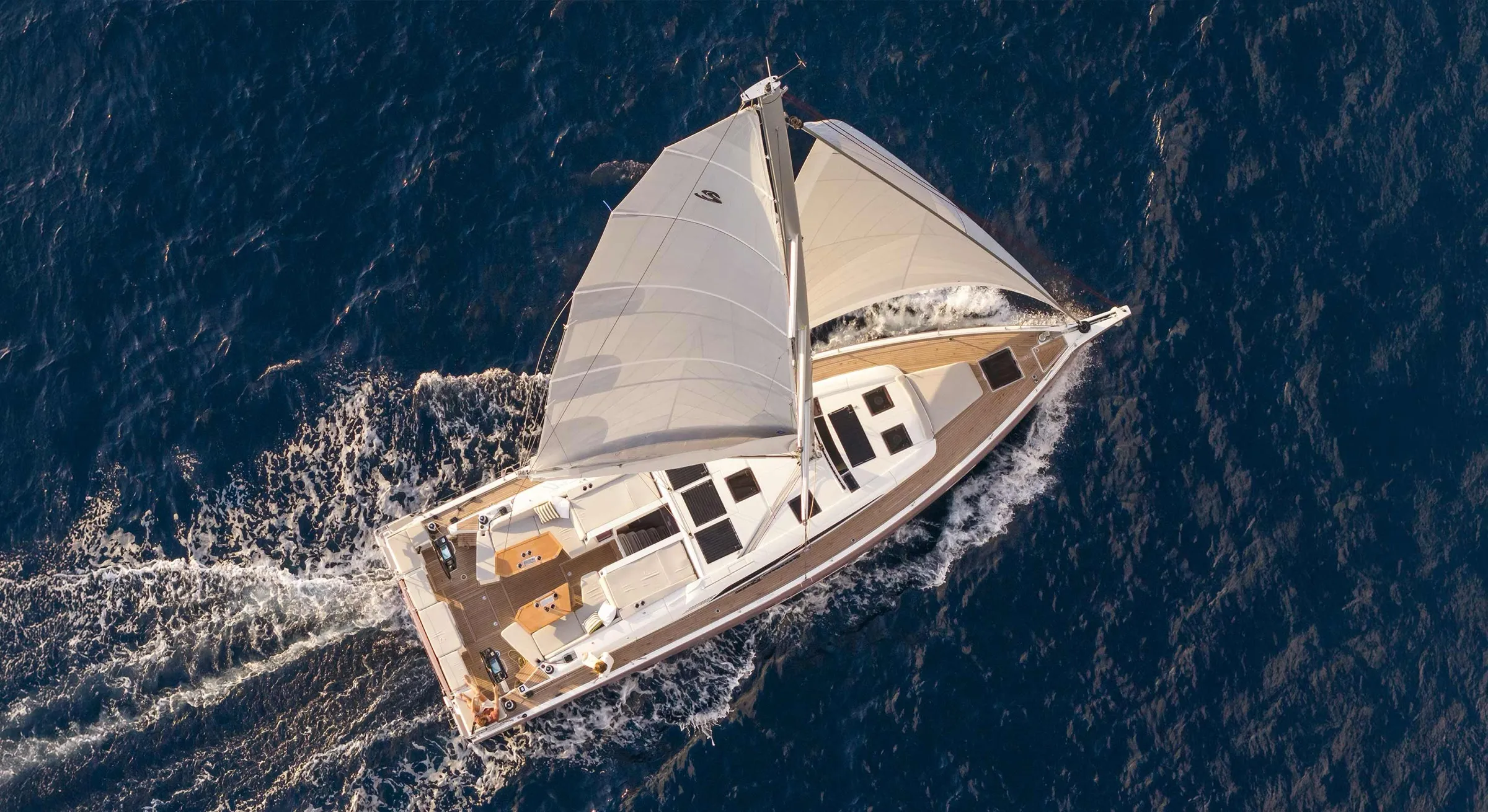
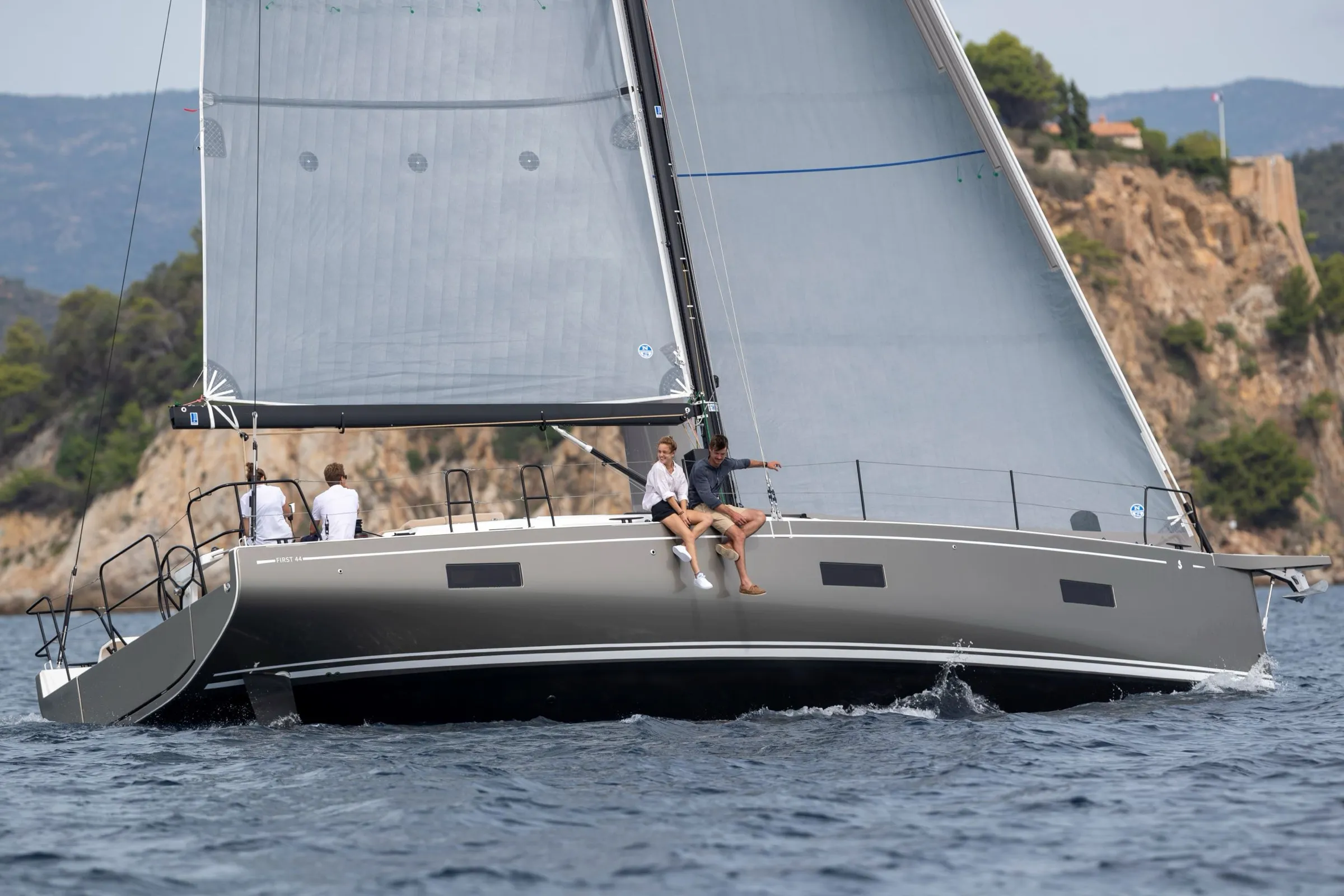
The profile tells you the intent: a gentle reverse sheer, a low-slung coachroof, and maximum beam carried further aft over twin rudders. Beneteau's own emphasis is balance, with the center of buoyancy aligned on the center of effort.
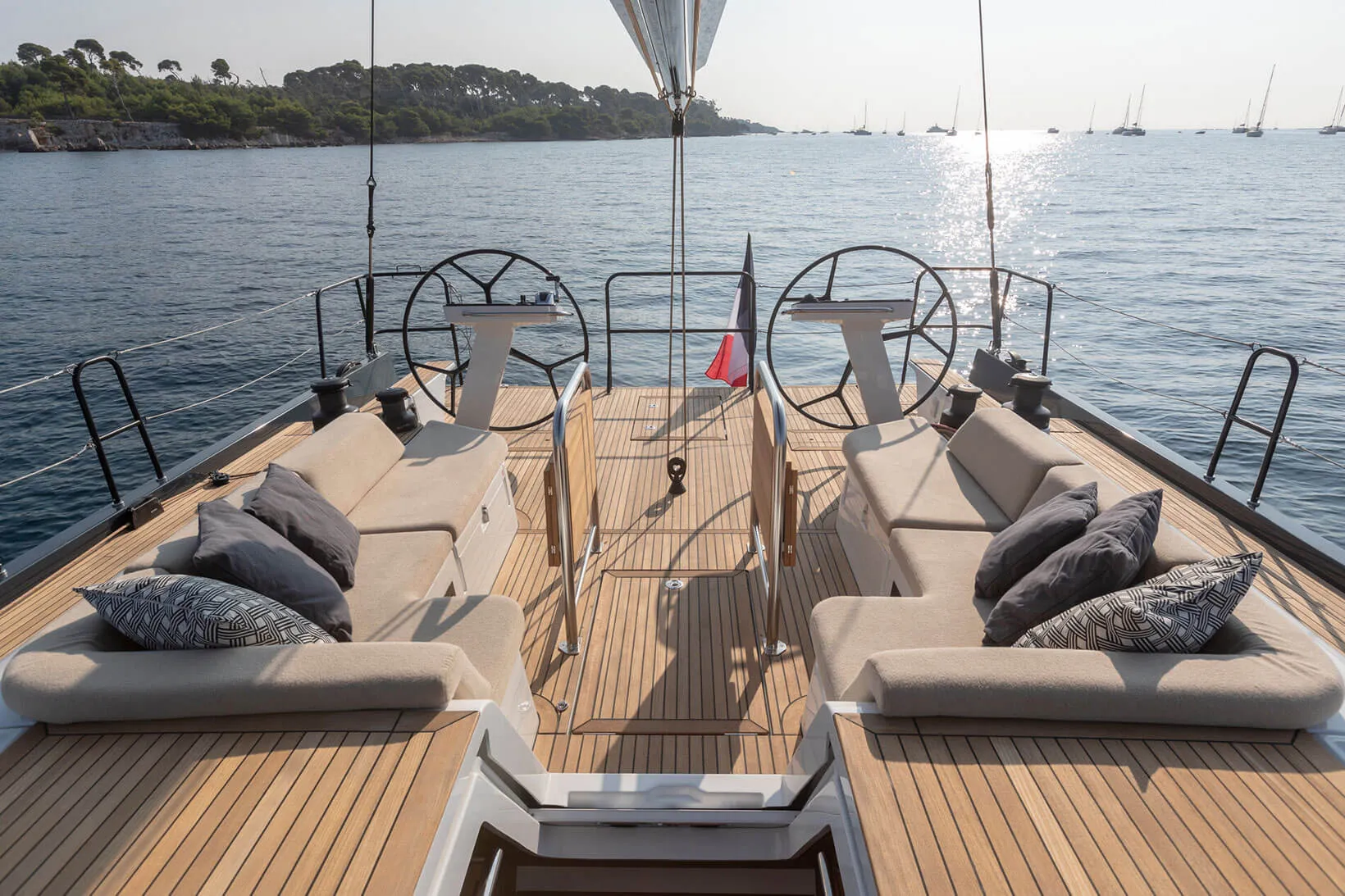
For the days you stop, the transom lifts and converts to a swim platform, and behind it sits a garage that takes an 8 foot tender. The dinghy stays inside the boat while you are on passage.
An owner who plans to sail more hours than motor should look first at the rig and the foils. The First 53 carries a performance mast and high-end deck gear, and comes with three keel configurations, from 8'2" (2.5 m) at the shallowest to 9'11" (3.02 m) at the deepest. The deep keel suits a boat that lives offshore; the shallow one opens more harbors at the end of the trip.
When the wind drops, you have tankage to lean on: 106 gallons (400 L) of fuel and 190 gallons (720 L) of water, enough to skip a few fuel docks along a coast. Beneteau rates the hull for a maximum of 110 HP and does not name a fitted engine.
Plan any inland leg around the 85' (25.88 m) bridge clearance. The CE certification reads A10 / B12 / C14, so the boat is certified for open-ocean use.
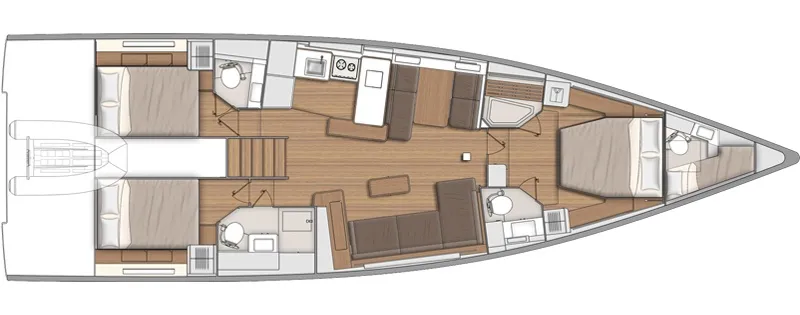
Coming below after a night watch, you want a bunk that is easy to reach. The First 53 offers three cabins in two versions, one with two heads and one with a head for every cabin. The master has a 5'3" wide island bed, and the two aft cabins each have a double berth.
The saloon pairs white lacquered bulkheads with warm moulded wood. Its extendable dinner table seats up to six, which is the right size for the owner and guests on a passage.
Up top, the lifting transom and tender garage keep the aft deck clear, and the swim platform it opens becomes the way into the water at anchor.
Within the First line, Beneteau positions the First 44 as the natural link between the First 36 and the First 53, and calls the First 60 the largest First ever built. At 56'2" the 53 sits between the 44 at 48'1" and the 60 at 62'2". The line also includes the First 14, First 24 and First 36 Spirit, which are not reviewed here yet.
The decision many buyers face runs across the range, to the Oceanis 52. Both are Biscontini designs with the same 110 HP maximum. The Oceanis is the cruiser, at 53'5" with a furling mast and self-tacking jib as standard, a layout of up to five cabins, and a draft from 6'4". The First 53 is the longer and heavier boat, and it carries twice the fuel and more water.
The First 53 suits an owner and a small crew who plan real passages and enjoy sailing the boat well. It gives owner and guests three cabins, keeps the tender out of the way, and has the tanks to stretch the distance between ports.
If you want more berths, a bigger cockpit for entertaining or easier sail handling, look at the Oceanis 52. If this is more boat than you want to handle, the First 44 keeps three cabins in a smaller hull; if you want more, the First 60 is the step up.
Yes. Behind the lifting transom, which converts to a swim platform, the First 53 has a tender garage that takes an 8 foot tender. That keeps the dinghy inside the boat on passage instead of on deck, and the open transom gives an easy way into the water at anchor.
Biscontini Yacht Design did the naval architecture of the First 53, and Lorenzo Argento designed the interior and deck. Beneteau says the boat took two years to develop, and the result has a gentle reverse sheer, a low-slung coachroof and twin rudders with maximum beam carried further aft.
Draft depends on the keel. Beneteau offers three keel configurations, and lists draft from a minimum of 8'2" (2.5 m) to a maximum of 9'11" (3.02 m). Buyers who plan to use shallow harbors should choose the keel before finalizing the rest of the order. Bridge clearance is listed as 85' (25.88 m).
The First 53 has three cabins, offered with either two heads or three heads. The master cabin has a 5'3" wide island bed, and the two aft cabins each have a double berth. The saloon finish pairs white lacquered bulkheads with warm moulded wood.
The First 53 is the performance choice and the Oceanis 52 the cruising one. The First is longer at 56'2" against 53'5" and carries 106 gallons of fuel against 53. The Oceanis offers up to five cabins, a bigger cockpit and a furling mast with self-tacking jib as standard. Both share a 110 HP engine maximum.
Beneteau describes the First 53 as a high-performance cruiser. It pairs a performance mast, high-end deck gear, twin rudders and a choice of three keels with a three-cabin interior, an extendable table for up to six and a tender garage, so it is set up for owners who want to sail fast and still live aboard comfortably.