
November 26, 2026
Beneteau First 30: Speed or Space at 30 Feet
The First 30 is Beneteau's planing cruiser for sailors who want speed in a small boat. Who it suits, and when the cruising Oceanis 30.1 is t…
Read the articleExpert Review, Technical Specifications & Market Analysis
| Feature | Specifications |
|---|---|
| Overall Length | 30'8" (9.35 m) |
| Beam | 9'9" (2.99 m) |
| Draft | 5'6" - 6'6" (1.68 - 1.98 m) |
| Displacement | 6,700 lbs (3,040 kg) |
| Engines | Max. 14 HP |
| Fuel Capacity | 10.5 gal (40 L) |
| Water Capacity | 26.4 gal (100 L) |
| Cabins / Heads | 2 Cabins |
Source: Spec & Photos courtesy of Beneteau. Specs verified by Tony Smith, USCG 100 Ton Master, on November 26, 2026.
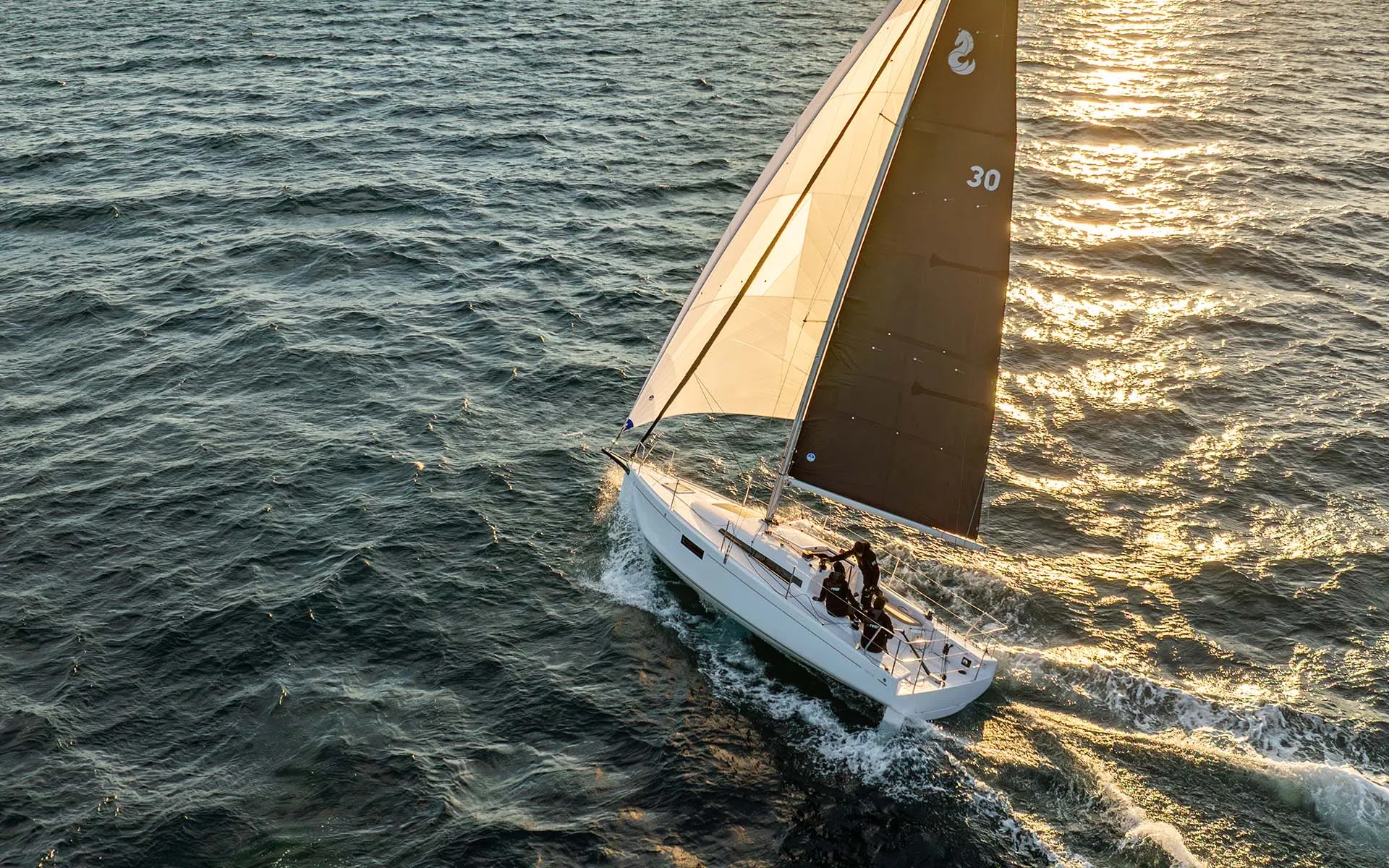
You want a 30-footer that planes in a breeze and still sleeps four in two cabins. The First 30 is Beneteau's answer, and the boat to weigh against the cruising Oceanis 30.1.
Part of the Beneteau First series — see how owners step up through the lineup.

"The First 30 is the boat I'd point a sailor toward when the speed matters more than the fridge."
I've walked Beneteau's factories and watched how they run their quality control and handle their resins, and I've spent a lot of time on their stands at Cannes and Fort Lauderdale. That's background worth having on a light boat that's built to be pushed. A 30-footer meant to plane asks a lot of its structure, and Beneteau gave that job to Pure Design & Engineering and put twin rudders under the stern.
Who I'd sell it to: sailors who already know what they're doing, who want to club race and still go somewhere for the weekend, and who'll live with small tanks and an optional fridge to get the performance. If your idea of a good day is a long lunch at anchor, the Oceanis 30.1 is the kinder boat and I'll tell you so. Either way, there's a lot of boat for the money in a Beneteau, and their service network and global support team are there when something needs attention. On a small boat that support counts for more than people expect.
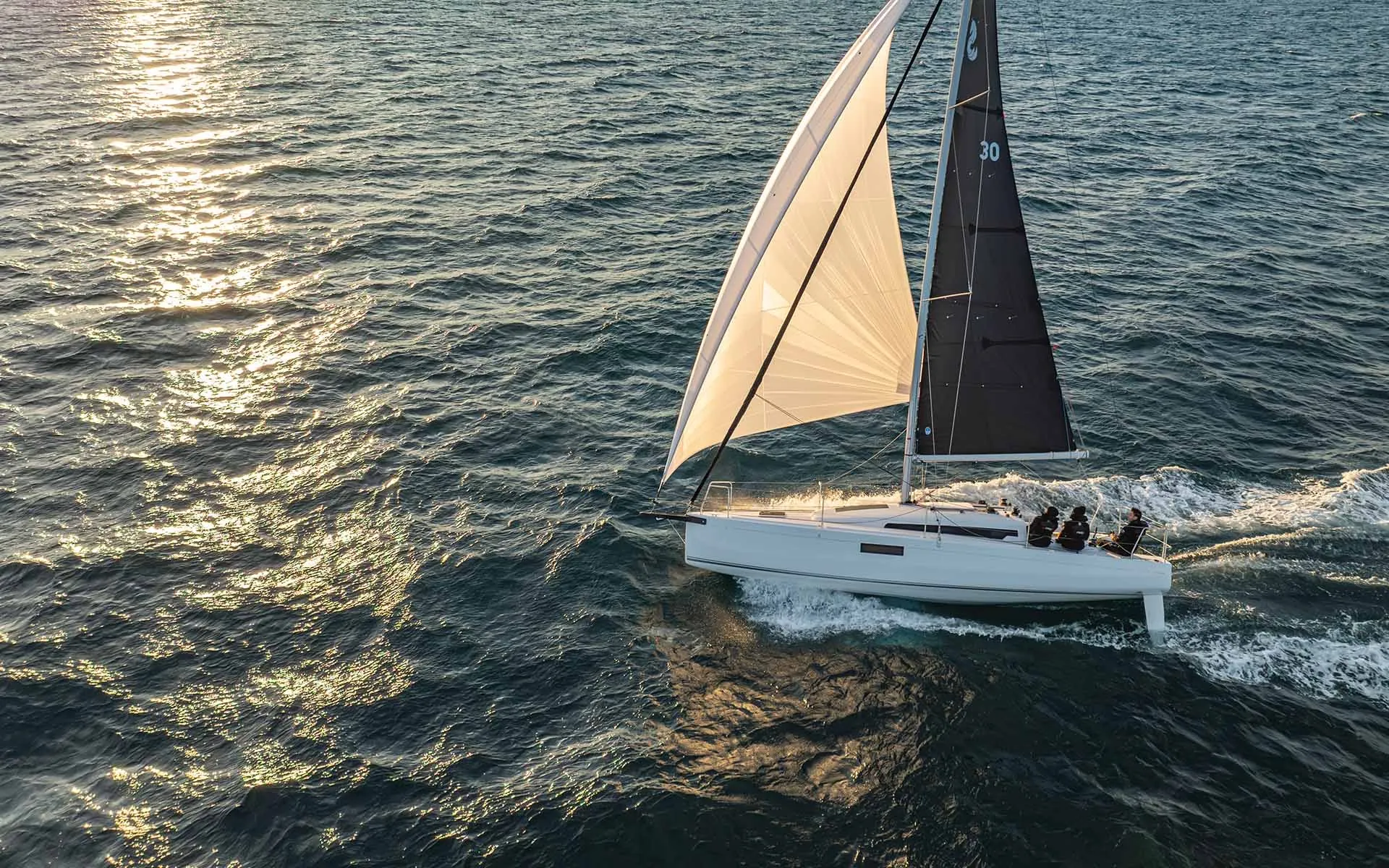
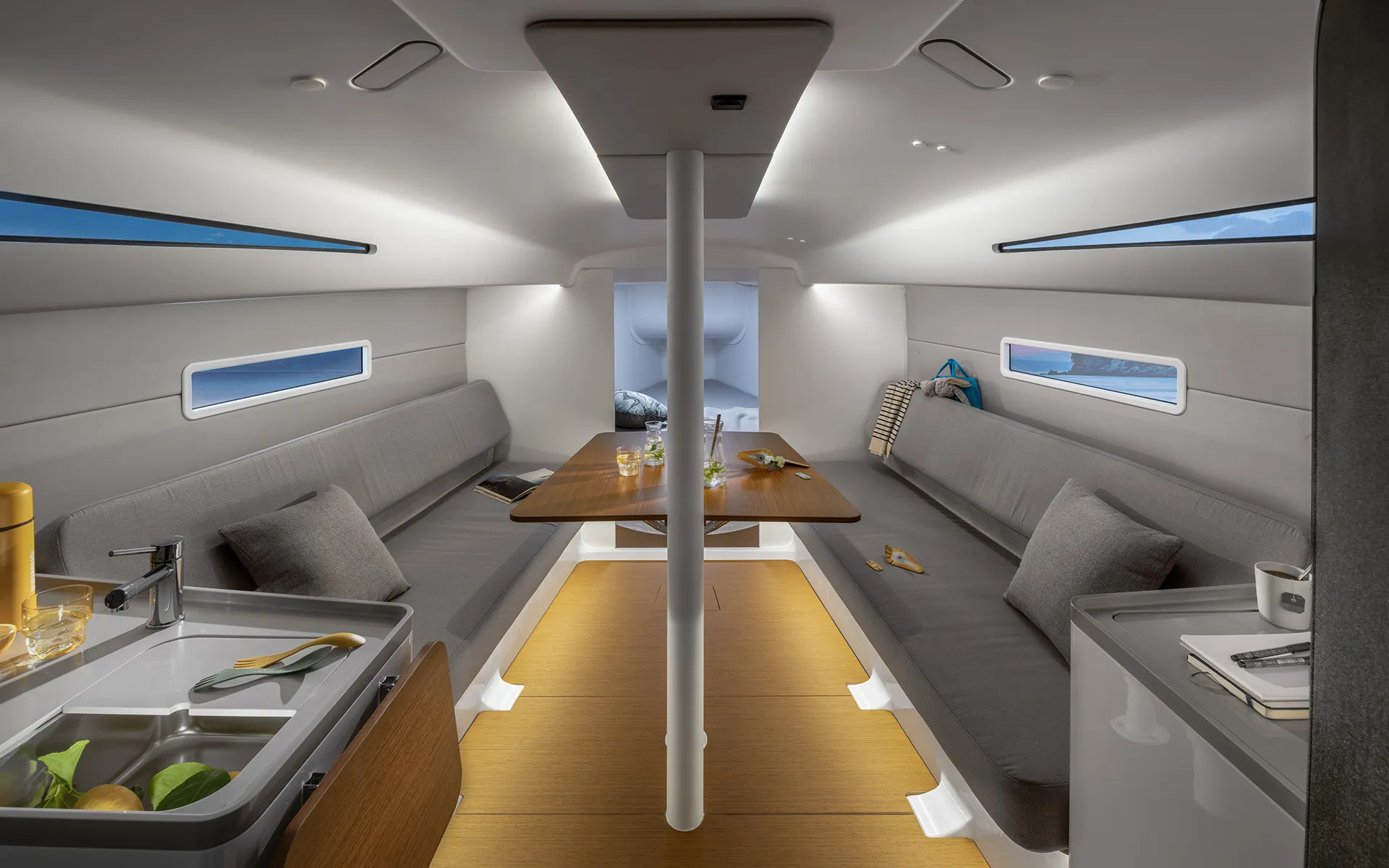
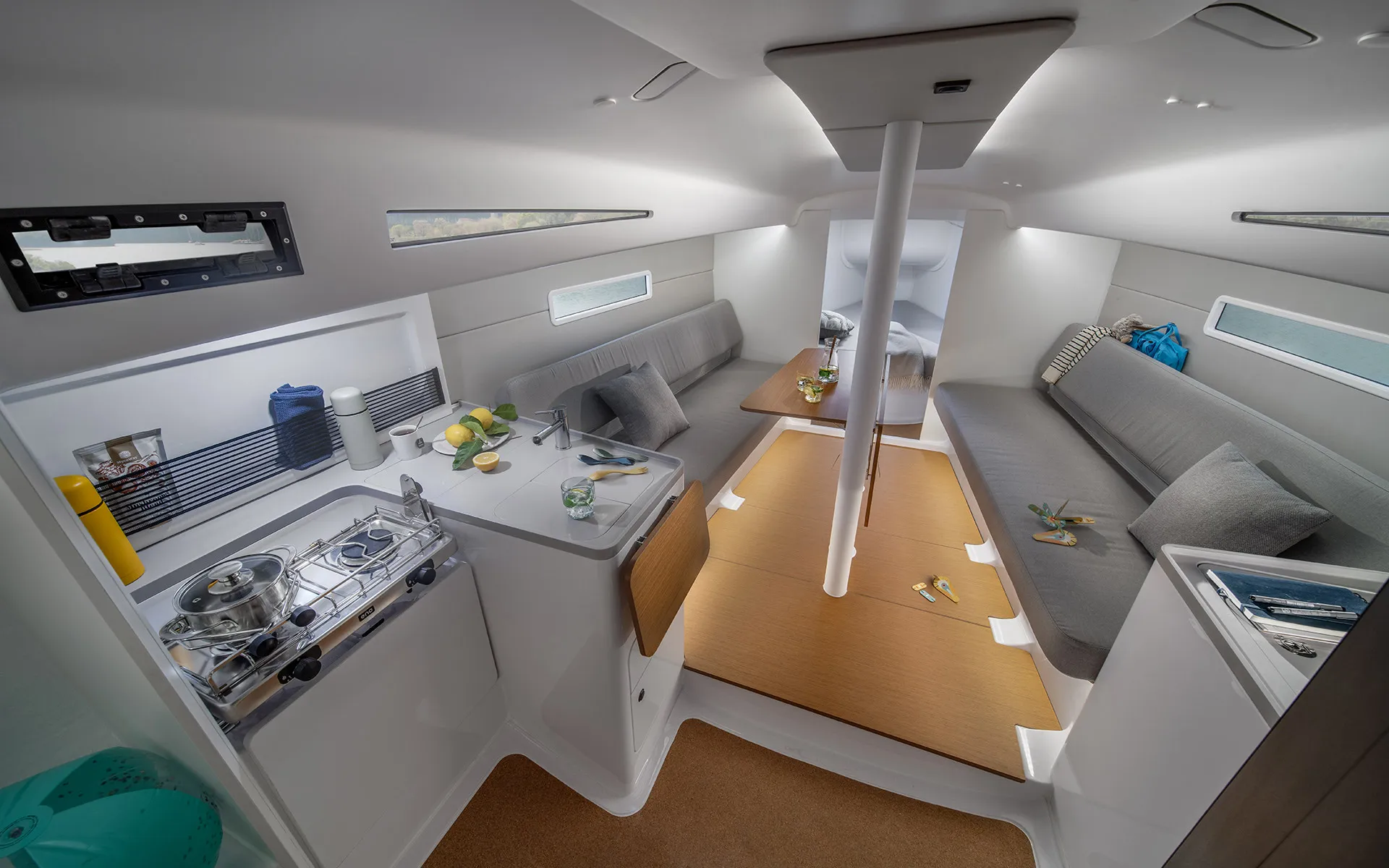
Photos courtesy of Beneteau.
For a sailor who wants a small boat that pays back every bit of trimming, the First 30 is a direct line to Beneteau's racing side. Beneteau calls it the modern successor to its 1977 First 30, and presents it as the start of a new category of sailboat, the planing cruiser.
The people behind it are a performance team. Samuel Manuard is the naval architect and Lorenzo Argento did the design, with SITO on the interior and Pure Design & Engineering on the structure. Beneteau and Seascape shared the innovation and research, and Seascape is also the name behind the builder's First SE (Seascape Edition) boats.
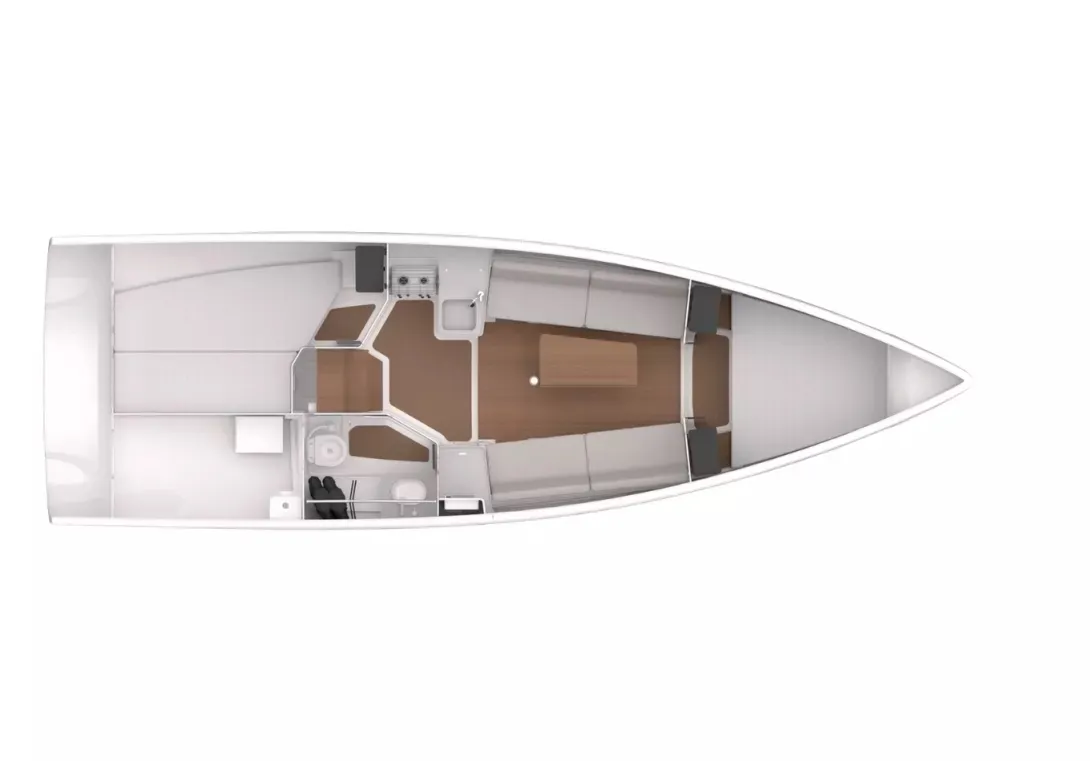
Below deck it stays a cruiser, with two cabins for four sailors and a proper marine head. Beneteau also points to the boat's ocean-grade Class A certification, unusual to see claimed at this length.
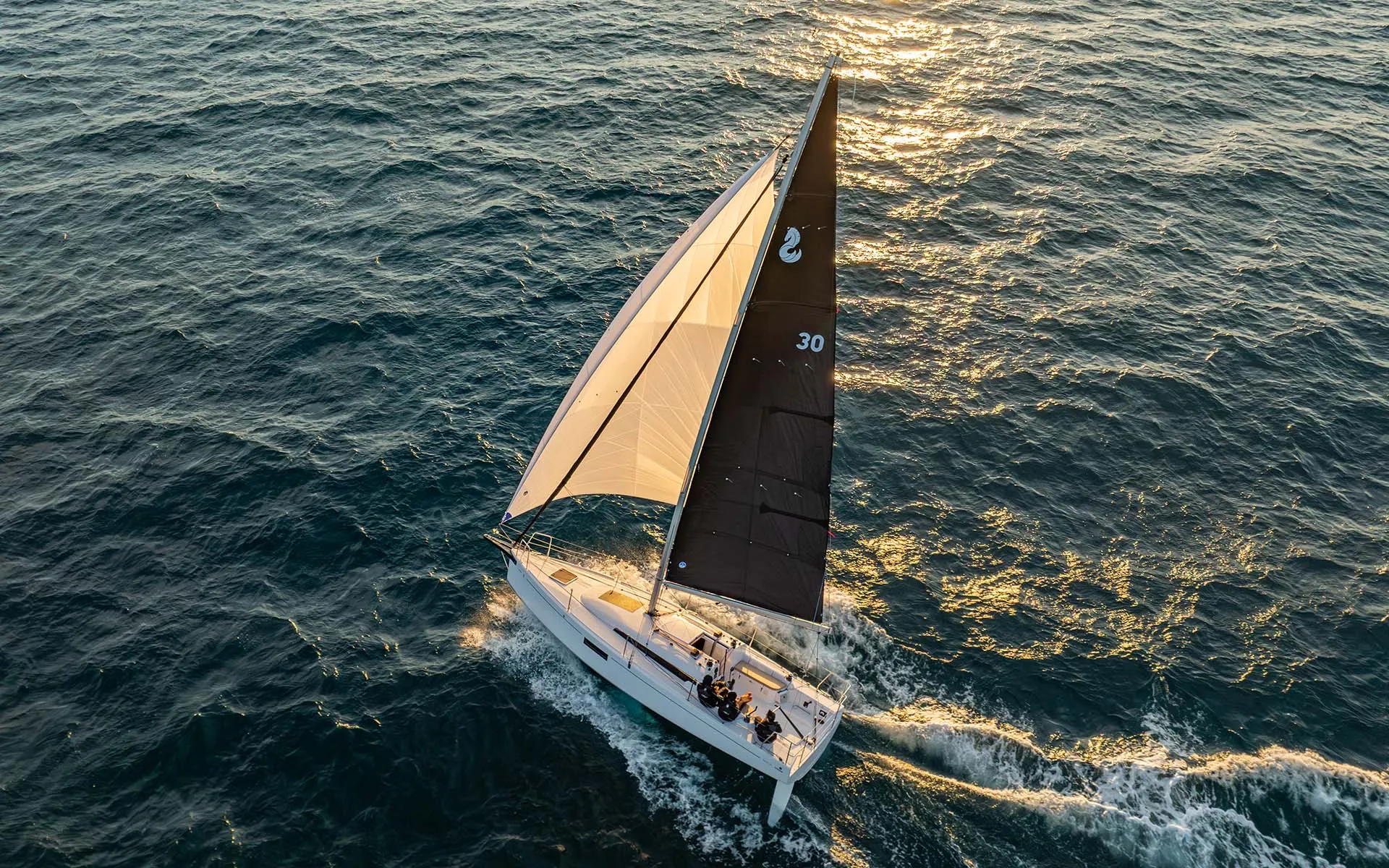
Speed is the reason to choose this boat, and Beneteau is specific about when it arrives: planing, it says, is a daily joy in at least medium wind strength. In lighter air you are sailing a boat that weighs 6,700 lbs (3,040 kg) dry, and Beneteau credits its modern design, solid construction and twin rudders for its stability and safety.
The engine is an auxiliary in the true sense. The boat takes a maximum of 14 HP, and with 10.5 gal (40 L) of fuel aboard, motoring is for leaving and returning to the berth rather than covering distance.
Draft is listed from 5'6" (1.68 m) at minimum to 6'6" (1.98 m) at maximum, so confirm which a given boat has before you pick a mooring. Owners who pass under fixed bridges will want the listed bridge clearance of 48'3" (14.7 m).
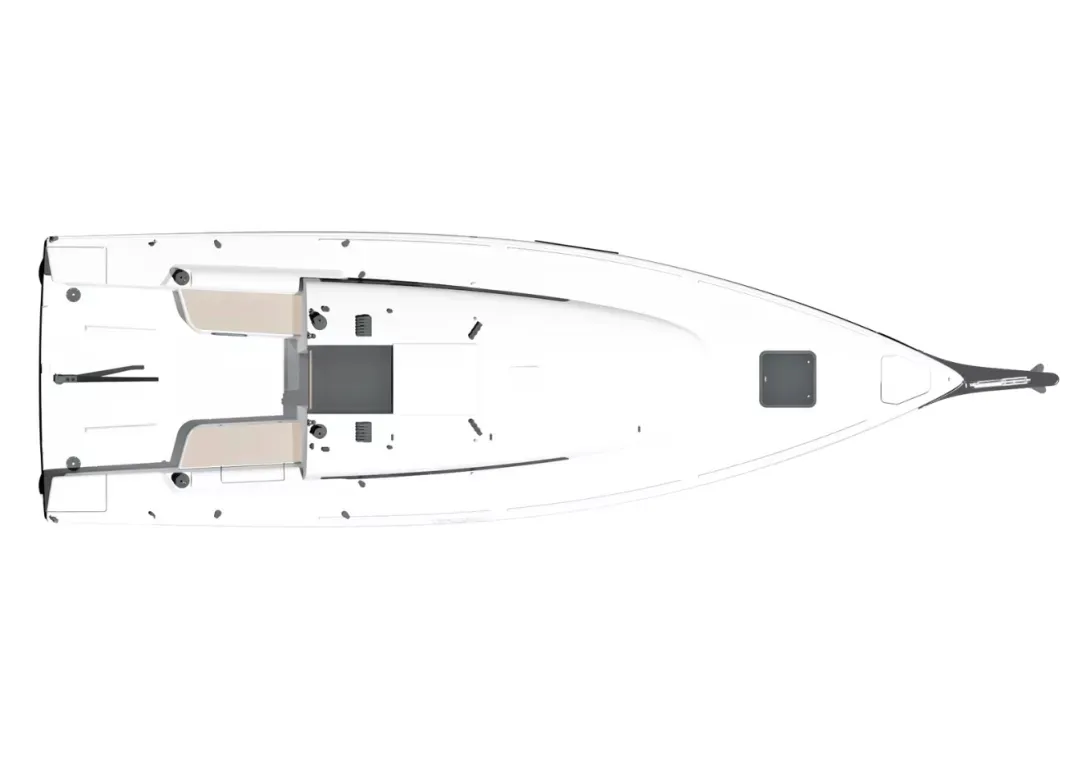
Four sailors sleep aboard in two cabins, and the head is a proper marine one. In the galley you get 1.85 m (6.0 ft) of standing height and a gimbaled stove that keeps working when the boat heels; a fridge is on the options list. Water tankage is 26.4 gal (100 L), so a cruising crew will be filling up often.
On deck, your first decision is the cockpit. One layout is drawn for day sailors and cruisers. The racing layout adds a mainsail traveller with a direct and fine-tuning mainsheet system, which is what a crew on a start line wants under their hands.
The boat comes equipped with Seanapps, Beneteau's app for connecting to the boat, monitoring it and ordering services.
Among Beneteau's sailboats, First is the range for sailors who enjoy club racing as much as cruising, and it runs from 14'1" up to 62'2". Alongside the First 30 it includes the First 36, First 44, First 53 and First 60, as well as the First 14, First 24 and First 36 Spirit, which are not reviewed here yet.
The Beneteau to weigh it against sits in a different line: the Oceanis 30.1, at 31'3" on a 9'10" beam, from the range Beneteau describes as its long-distance, blue water cruisers. The footprint is close. The brief is not: one is built around speed, the other around room and easy handling.
Buy the First 30 if you already sail, want a boat that planes and rewards good trim, and are content with small tanks and a compact galley in exchange. The racing cockpit makes it a genuine club racer, and the two cabins mean the same boat can take you away for a weekend.
Look at the Oceanis 30.1 if your weekends lean toward anchoring and cooking aboard: it has a 20 US gal refrigerator and an oven, a self-tacking jib on a single winch, and cockpit benches for six. If you want more room and are staying with performance, the First 36, at 36'0", is the larger First to look at.
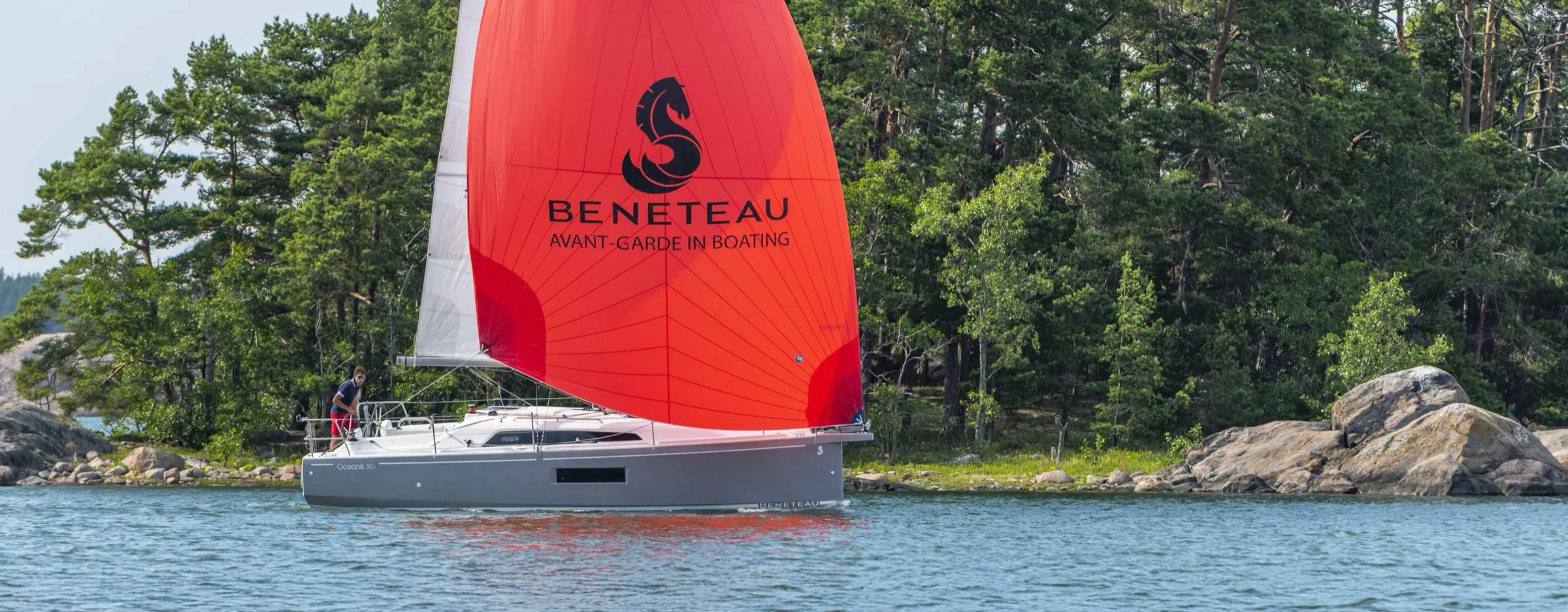

It is built to do both. Beneteau offers two cockpit layouts: one for day sailors and cruisers, and one for racers that adds a mainsail traveller with a direct and fine-tuning mainsheet system. Below deck it keeps two cabins for four sailors, a galley with a gimbaled stove and a proper marine head.
Four. Beneteau lays the First 30 out with accommodation for four sailors in two cabins, together with a proper marine head and a galley that gives 1.85 m (6.0 ft) of standing height. The galley stove is gimbaled so it can be used under way, and a fridge is available as an option.
Beneteau lists a maximum engine power of 14 HP, with a 10.5 gal (40 L) fuel tank and 26.4 gal (100 L) of water. The small tanks suit an auxiliary used for leaving and returning to the berth, which is how a performance sailor tends to use the engine. Plan on topping up water often when cruising.
Yes, that is what it was designed for. Beneteau presents the First 30 as a planing cruiser and describes planing as a daily joy in at least medium wind strength. It credits the boat's modern design, solid construction and twin rudders for its stability and safety when it is sailed hard.
Buy the First 30 if speed and sail trim are what you enjoy, and the Oceanis 30.1 if you want room aboard and easy handling. The Oceanis offers 6.5 ft of headspace, a 20 US gal refrigerator, an oven and a self-tacking jib. The First 30 is built as a planing cruiser with twin rudders and a racing cockpit option.
Beneteau lists a minimum draft of 5'6" (1.68 m) and a maximum of 6'6" (1.98 m). Confirm which a particular boat has before you choose a marina berth or a cruising ground, since the difference matters in shallow water. Bridge clearance is listed as 48'3" (14.7 m).
Samuel Manuard is the naval architect and Lorenzo Argento did the design. SITO designed the interior, Pure Design & Engineering handled the structural engineering, and Beneteau worked with Seascape on innovation and research. Beneteau presents the boat as the modern successor to its 1977 First 30.