
November 26, 2026
Beneteau First 36: The Weekend Racer-Cruiser and What It Asks
The First 36 is built for sailors who race some weekends and cruise the rest. What it gives a couple or small crew, and what they trade for …
Read the articleExpert Review, Technical Specifications & Market Analysis
| Feature | Specifications |
|---|---|
| Overall Length | 36'0" (10.97 m) |
| Beam | 12'6" (3.8 m) |
| Draft | 7'5" (2.25 m) |
| Displacement | 10,580 lbs (4,800 kg) |
| Engines | 29 HP |
| Fuel Capacity | To Confirm |
| Water Capacity | To Confirm |
| Cabins / Heads | 3 Cabins |
Source: Spec & Photos courtesy of Beneteau. Specs verified by Tony Smith, USCG 100 Ton Master, on November 26, 2026.
You want one boat that can start a club race on Saturday and still be a comfortable place to sleep on Sunday night. The First 36 was drawn to plane, sail short-handed and berth a crew in three double cabins.
Part of the Beneteau First series — see how owners step up through the lineup.

"There's a lot of boat for the money when you buy a Beneteau."
I've been to Beneteau's factories, and I've walked their boats at the shows in Cannes and in Fort Lauderdale. They are a pleasure to work with across the board, sail as much as power. I've watched their quality control and how they handle their resins, and on a vacuum-infused hull like this one, that is the work you can't see once the boat is finished.
Beneteau is an industry powerhouse. They buy in quantity, which keeps them a competitive option on price, and they back it with a service network and a global support team that is professional to deal with. For a boat you intend to push on race days and then take cruising, having that support behind you is a real part of what you are buying.
Video courtesy of Beneteau.
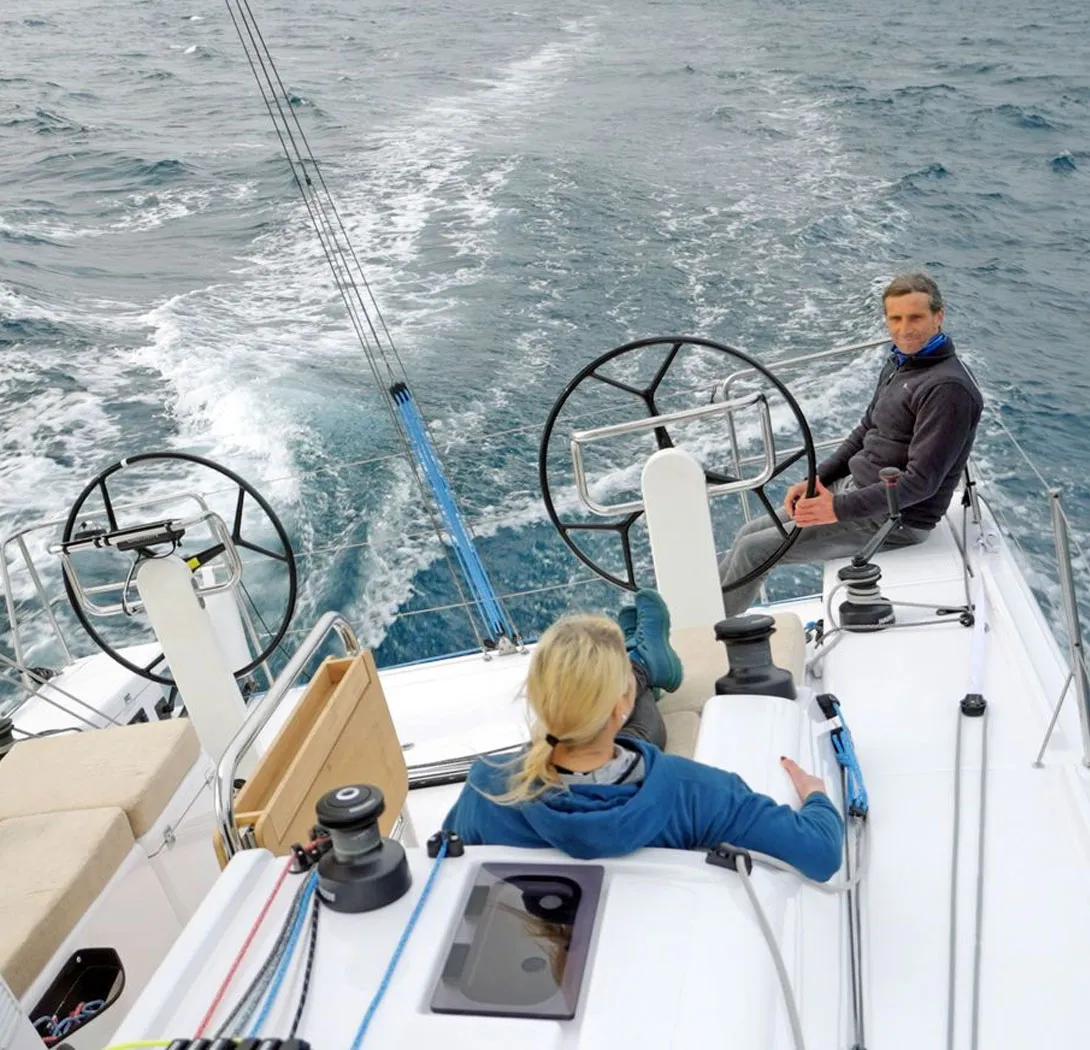
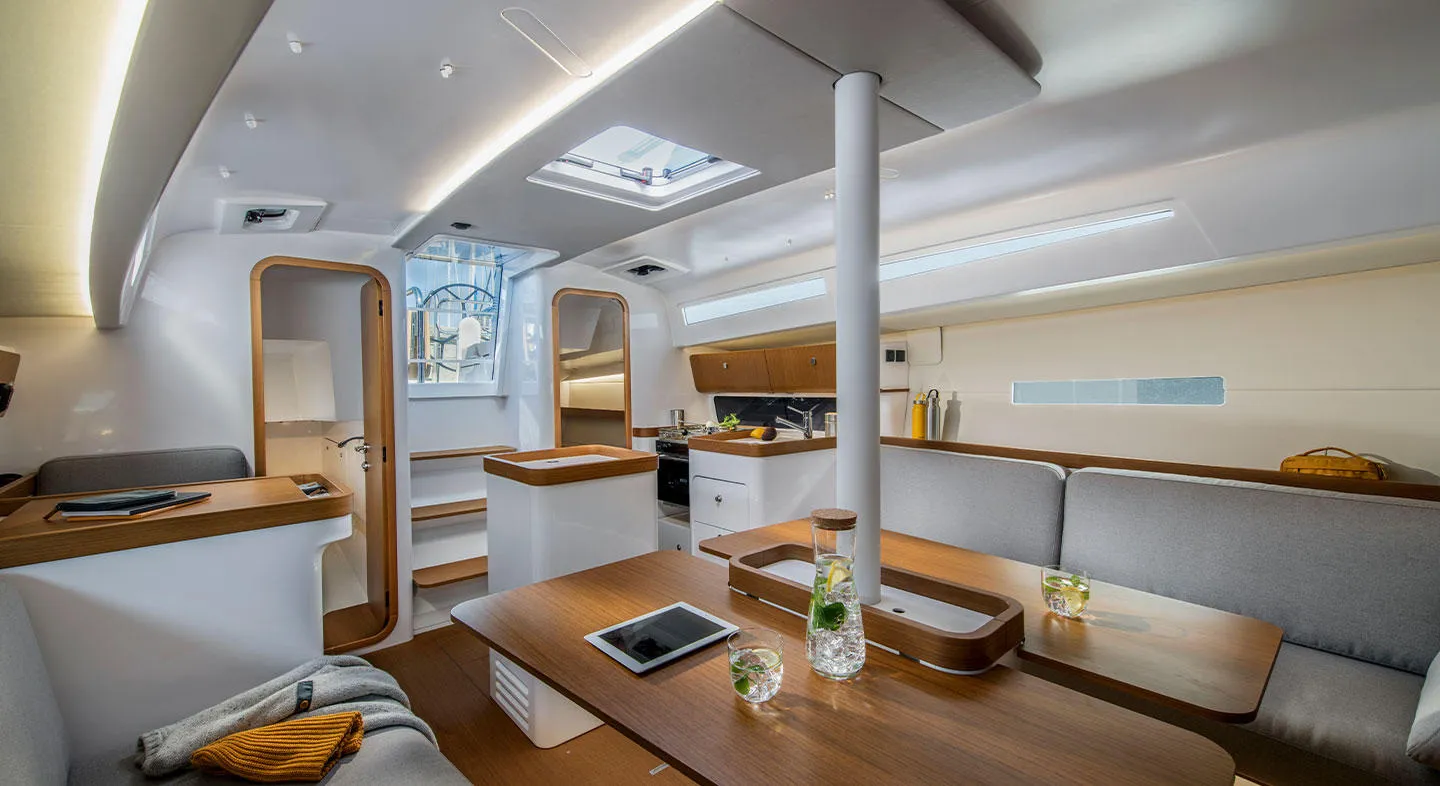
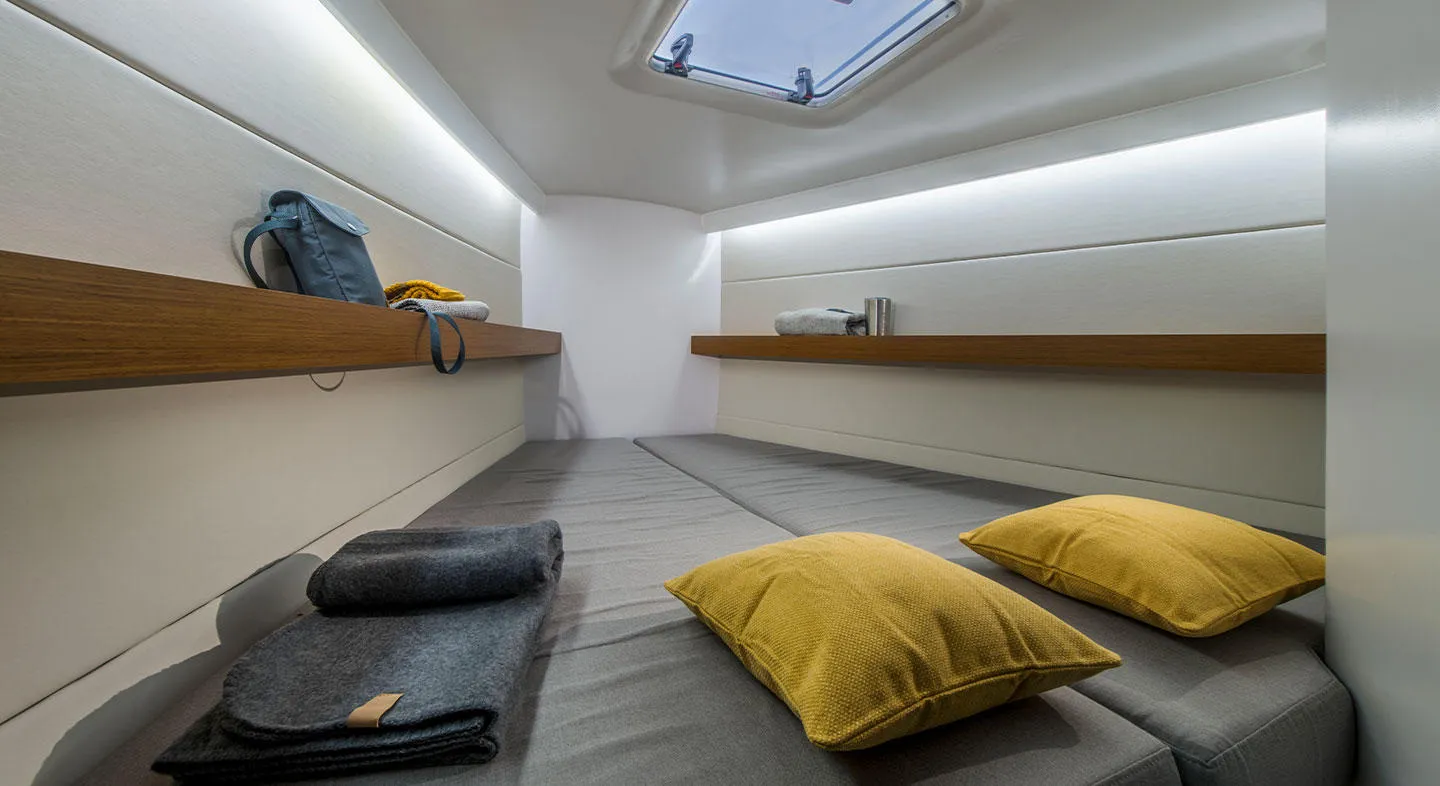
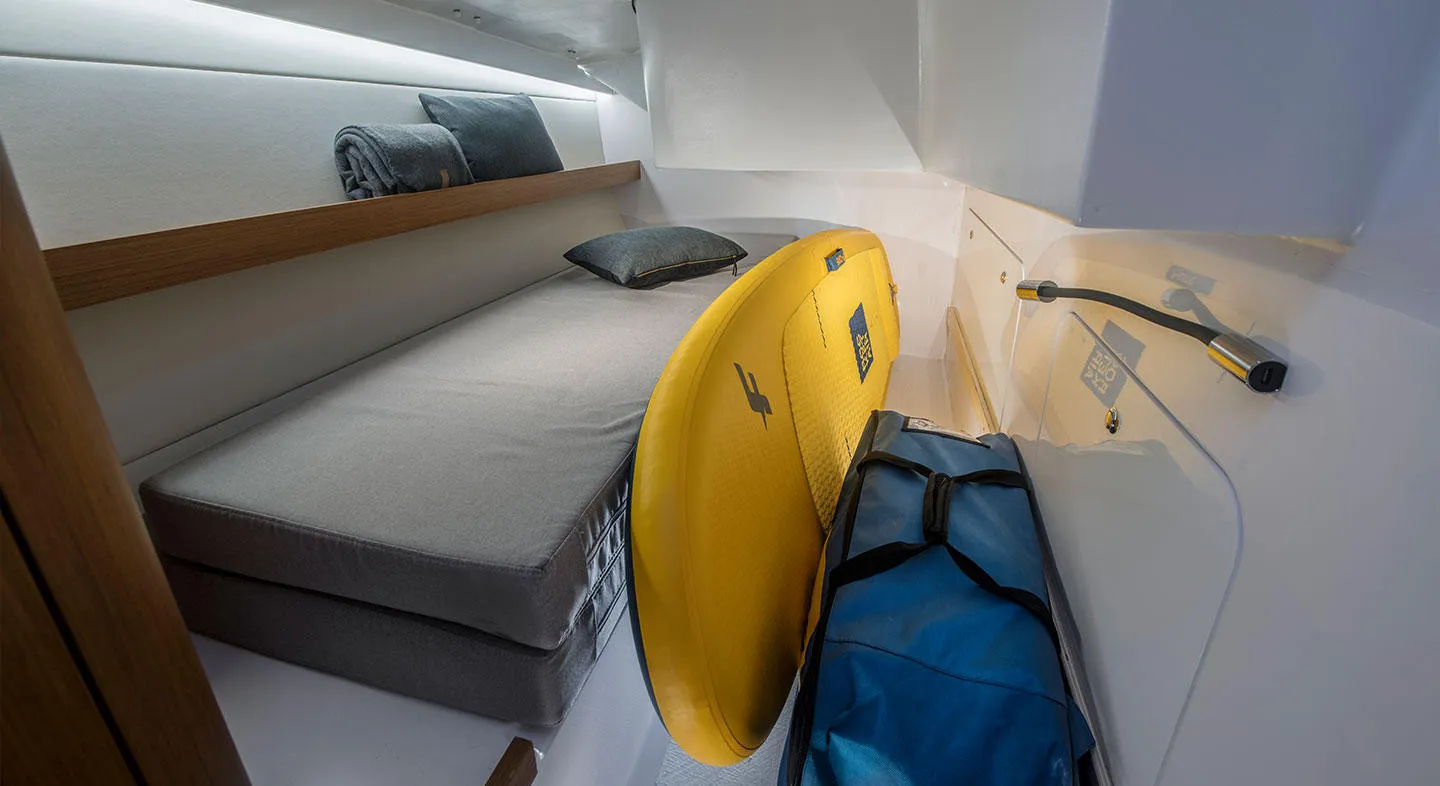
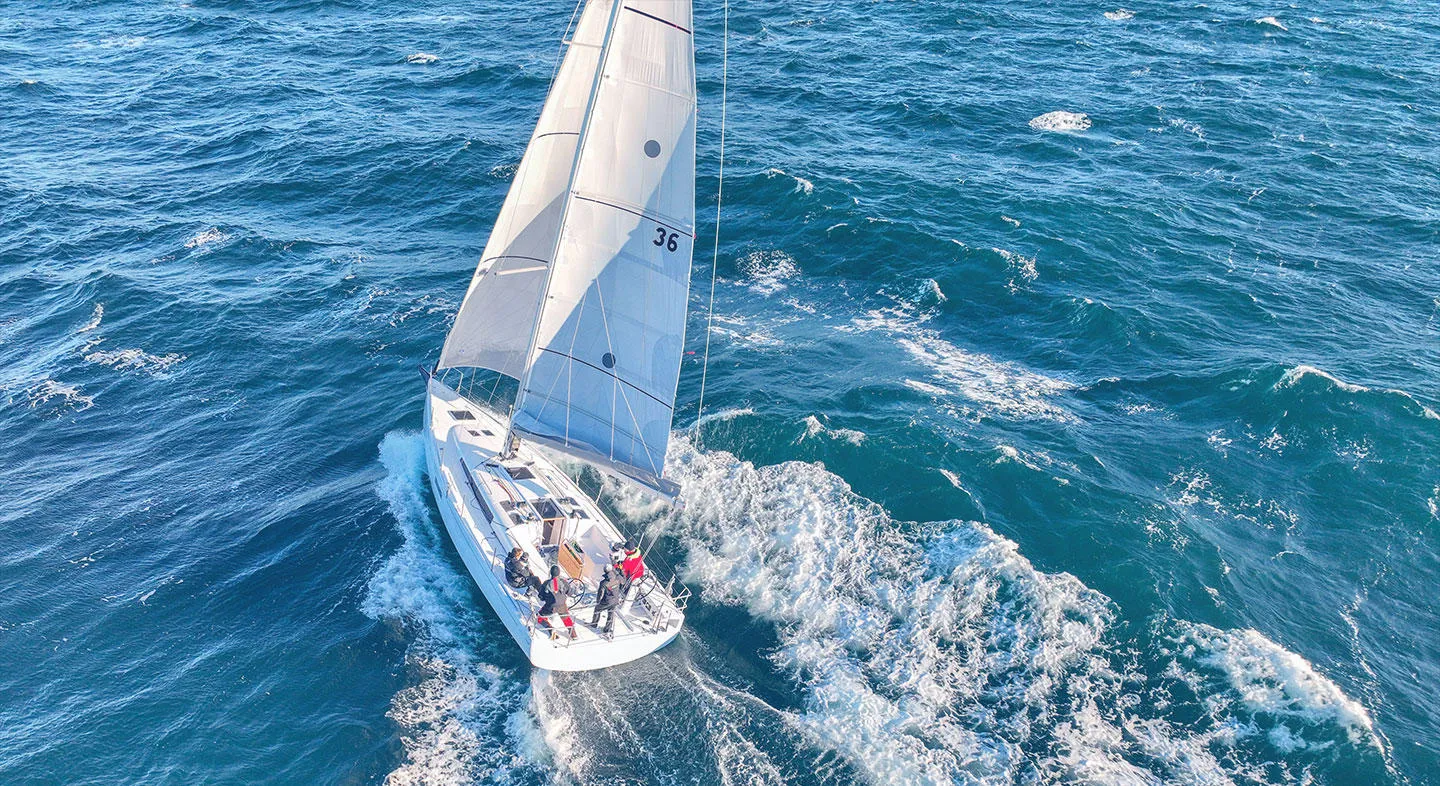
Photos courtesy of Beneteau.
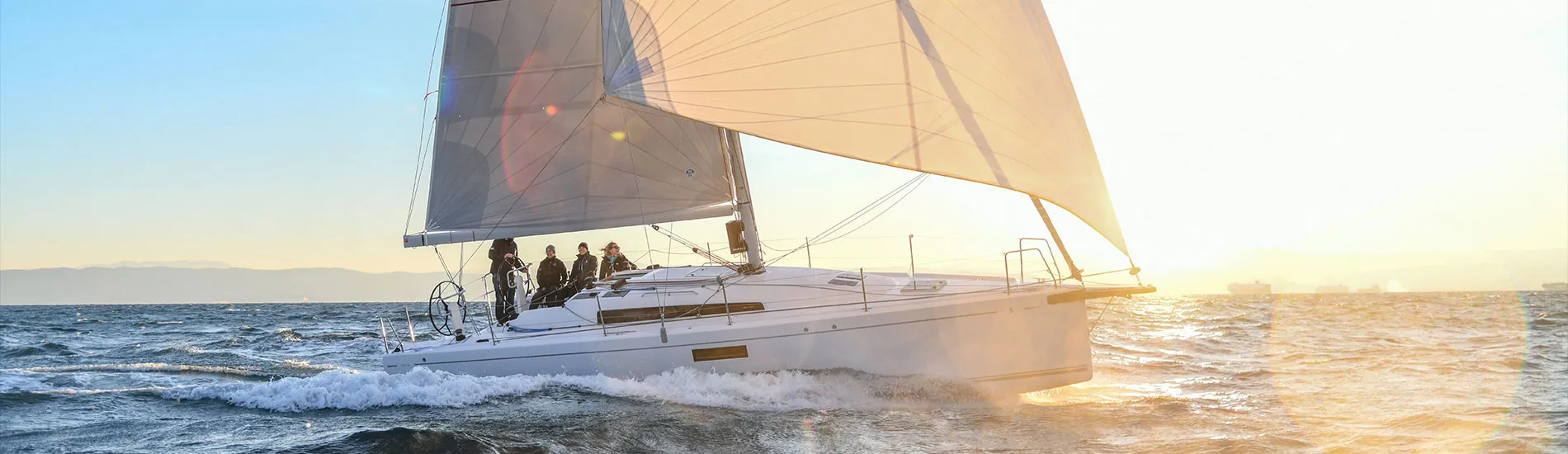
Sailors who race on weekends usually end up owning a boat that is either quick and spartan or comfortable and slow. Beneteau built the First 36 to close that gap, and in its own words for one simple reason: joy in planing. The builder calls her the first mainstream planing cruiser, and she was named European Yacht of the Year 2023.
The team behind her also drew the First 30: naval architect Samuel Manuard, design by Lorenzo Argento, and structural engineering by Pure Design & Engineering. Construction is vacuum-infused.
For anyone weighing size against space, Beneteau puts her living volume at about the same as its own First 40.7, a boat the builder calls legendary.
A racing crew wants to know when the boat comes alive. Beneteau's answer is that the First 36 starts to plane in 14 knots of wind, and that once she does, double-digit boat speeds are easy to achieve.
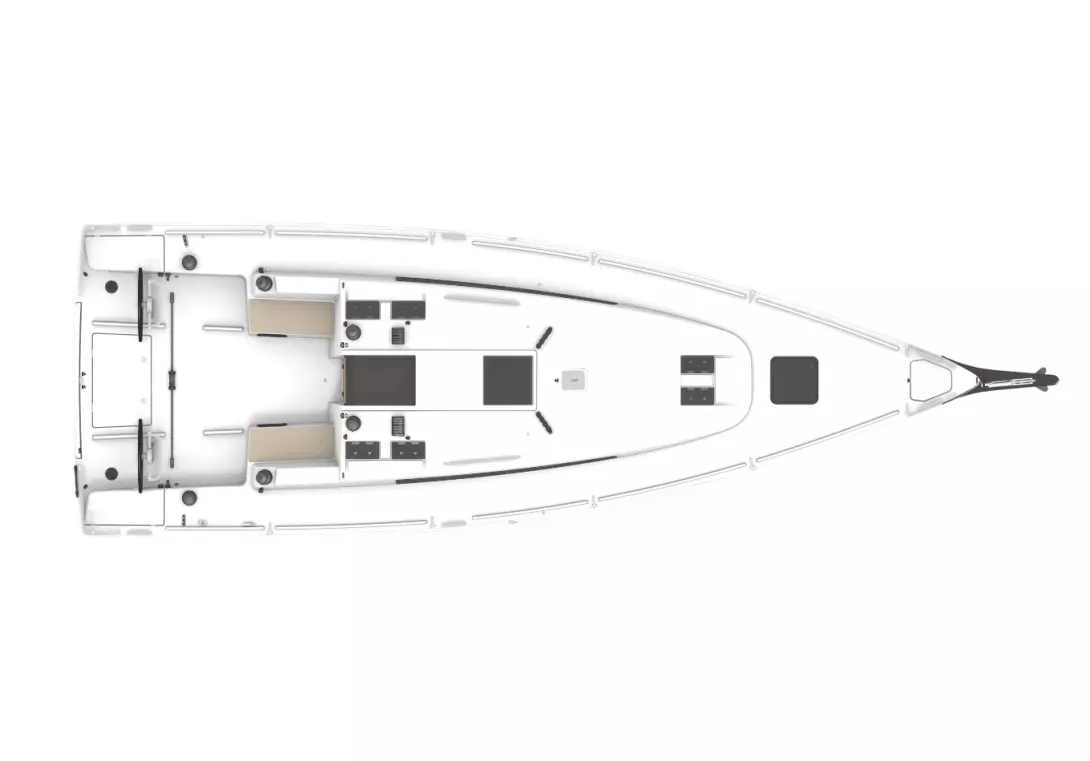
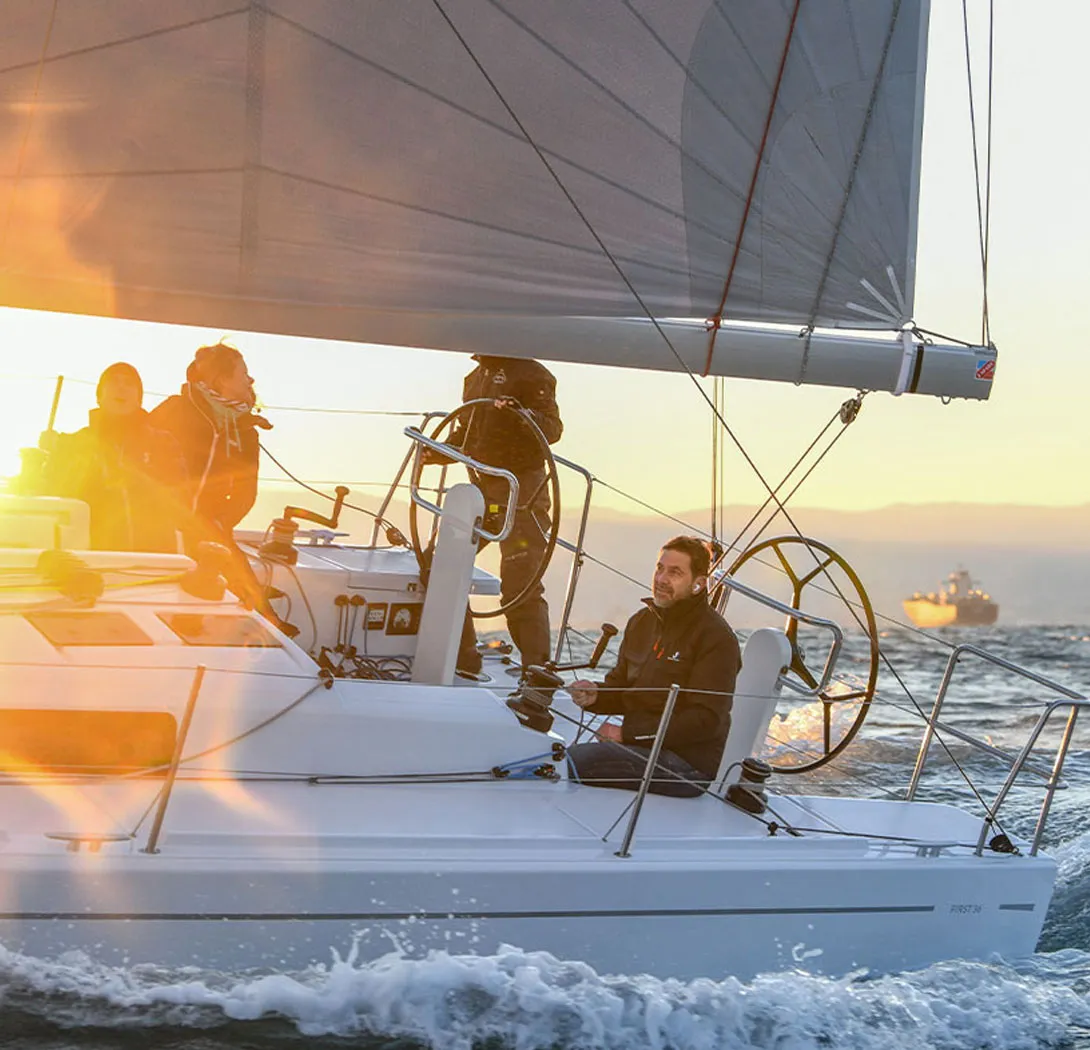
A small crew gets a deck drawn around it. Race-grade rudder blades and an ergonomic steering system sit with a raised wheel position that gives the helmsman direct access to the mainsail winch, so the person driving can also work the main. Beneteau placed the six winches after testing the deck gear on mock-ups and on a full-scale testbed sailboat, and describes the boat as optimized for short-handed sailing.
Plan your harbors around the keel. With a minimum draft of 7'5" (2.25 m), she is shut out of some of the shallow anchorages a cruising-first boat would reach.
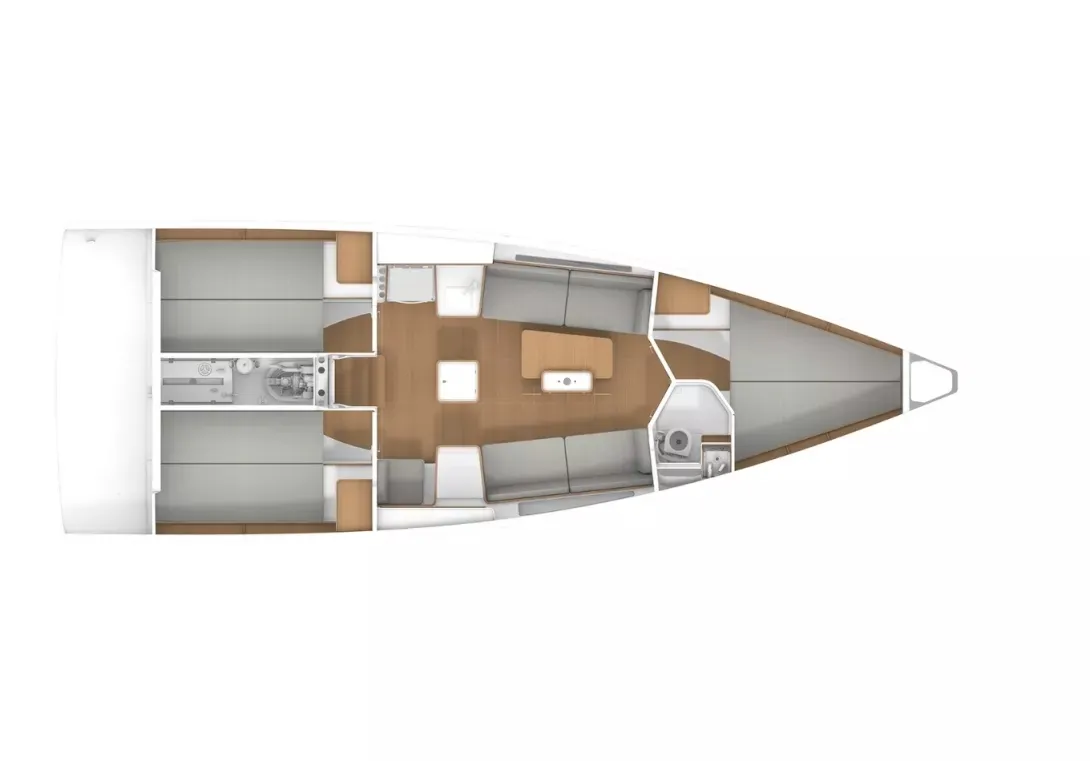
On the weekends you are not racing, the boat has to work as a place to live. Owner and guests have three cabins, each with an easily accessible full-sized double berth, so the crew that raced on Saturday can sleep in proper doubles that night.
The galley is built around a large central fridge with a removable cutting board. A full-sized navigation table is laid out to double as a home office, which makes a Friday departure easier to justify.
Up top, the cockpit table seats a crew of six, and an ultralight swim platform at the stern puts you in the water at anchor.
Beneteau's First line runs from 14'1" to 62'2", and the First 36 sits between the First 30 and the First 44 in size. The First 30, at 30'8", is the smaller planing cruiser from the same design team, with accommodation for four in two cabins. Beneteau describes the First 44 as the natural link between the First 36 and the First 53. The builder also lists a First 36 Spirit in the line, which is not reviewed here.
The First 36 SE takes the same three-cabin boat toward the race course: a tiller in place of wheels, carbon companionway stairs and fiddles, and 400 kg (881 pounds) less weight, optimized for competitive ORC racing. For sailors who do not race at all, Beneteau's Oceanis range is its line of long-distance, blue water cruisers.
Buy the First 36 if your sailing calendar is split: club races or short-handed events some weekends, and a cruise with a partner or friends the rest of the time. She suits a couple who can sail her between them, and a small crew who want real berths once the racing is done.
Pick the First 36 SE if results matter more than comfort and you are happy with removable crew bags in place of wooden lockers. Look at an Oceanis if you rarely race, or if your cruising grounds are too shallow for a deep keel.

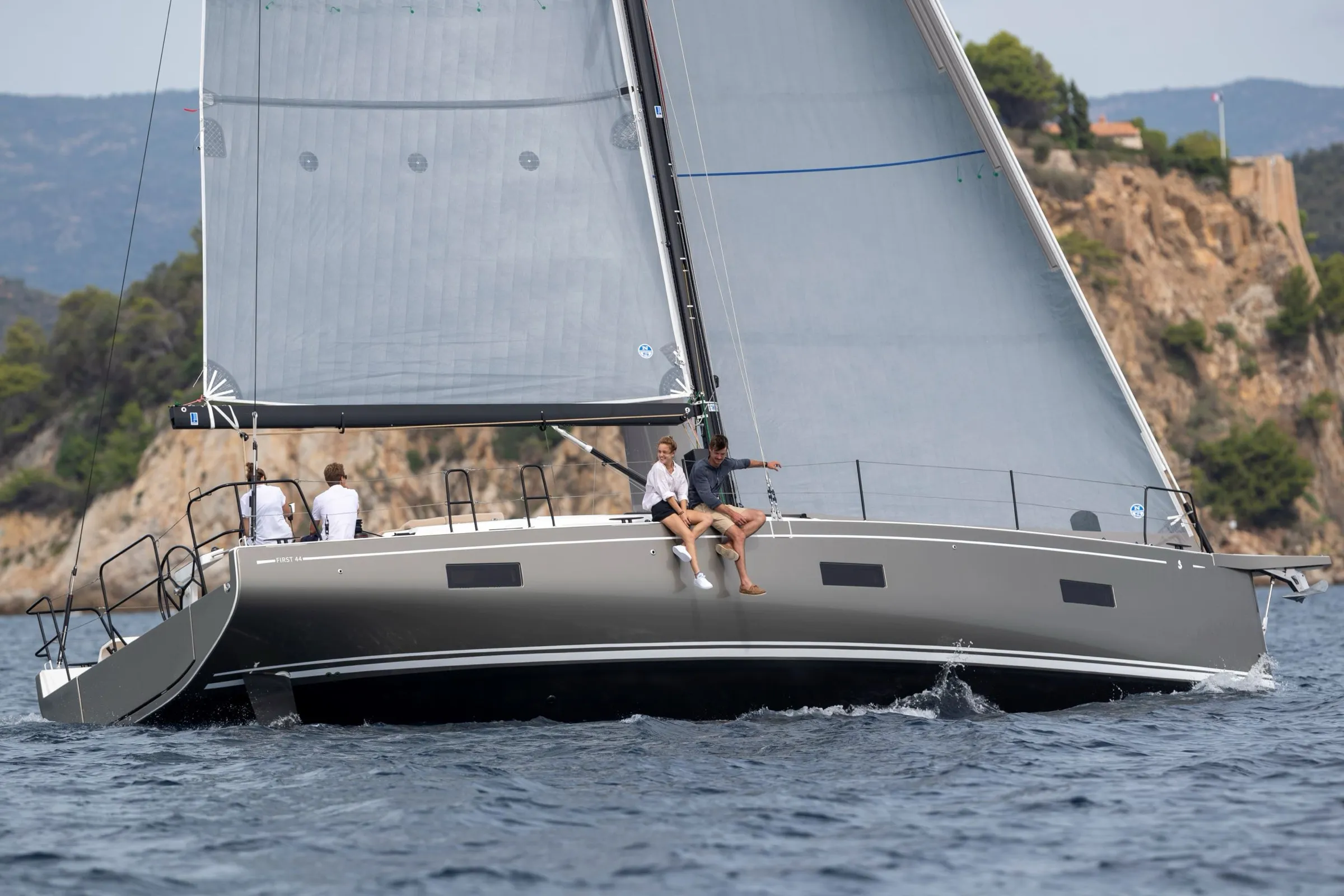
The naval architect is Samuel Manuard, the design is by Lorenzo Argento, and the structural engineering is by Pure Design & Engineering. The hull is vacuum-infused. The same three names appear on Beneteau's First 30. The First 36 was named European Yacht of the Year 2023.
The First 36 has three cabins, and Beneteau says each has an easily accessible full-sized double berth. That gives owner and guests proper double berths rather than narrow bunks, which is what lets a race crew or a cruising party sleep aboard in comfort. The cockpit table is big enough for a crew of six.
The First 36 draws a minimum of 7'5" (2.25 m), by Beneteau's figures. That is a deep keel for cruising grounds with shallow anchorages or channels, so buyers should check their home waters and planned cruising areas against it before committing to the boat.
The First 36 SE is the race-focused version. Beneteau says it is 400 kg (881 pounds) lighter than the standard First 36, swaps the steering wheels for a tiller, and is optimized for competitive ORC racing. It keeps the three-cabin layout but uses removable crew bags instead of wooden lockers, and carbon companionway stairs and fiddles instead of wood.
Beneteau says the First 36 starts to plane in 14 knots of wind. Once she is planing, the builder says double-digit boat speeds are easy to achieve. Sailors in breezy waters will see those days most often.Beneteau states that the boat was built for one simple reason: joy in planing.
Beneteau describes the First 36 as optimized for short-handed sailing. The raised wheel position gives the helmsman direct access to the mainsail winch, and the six winches were positioned after testing on mock-ups and a full-scale testbed sailboat. That deck layout is aimed at a couple or a small crew rather than a full race team.
It is built to be both. Beneteau calls the First 36 the first mainstream planing cruiser and describes it as optimized for short-handed sailing, with race-grade rudder blades and six winches. Below deck it has three cabins with full-sized double berths, a navigation table that works as a home office, and a large central fridge in the galley.