
August 29, 2026
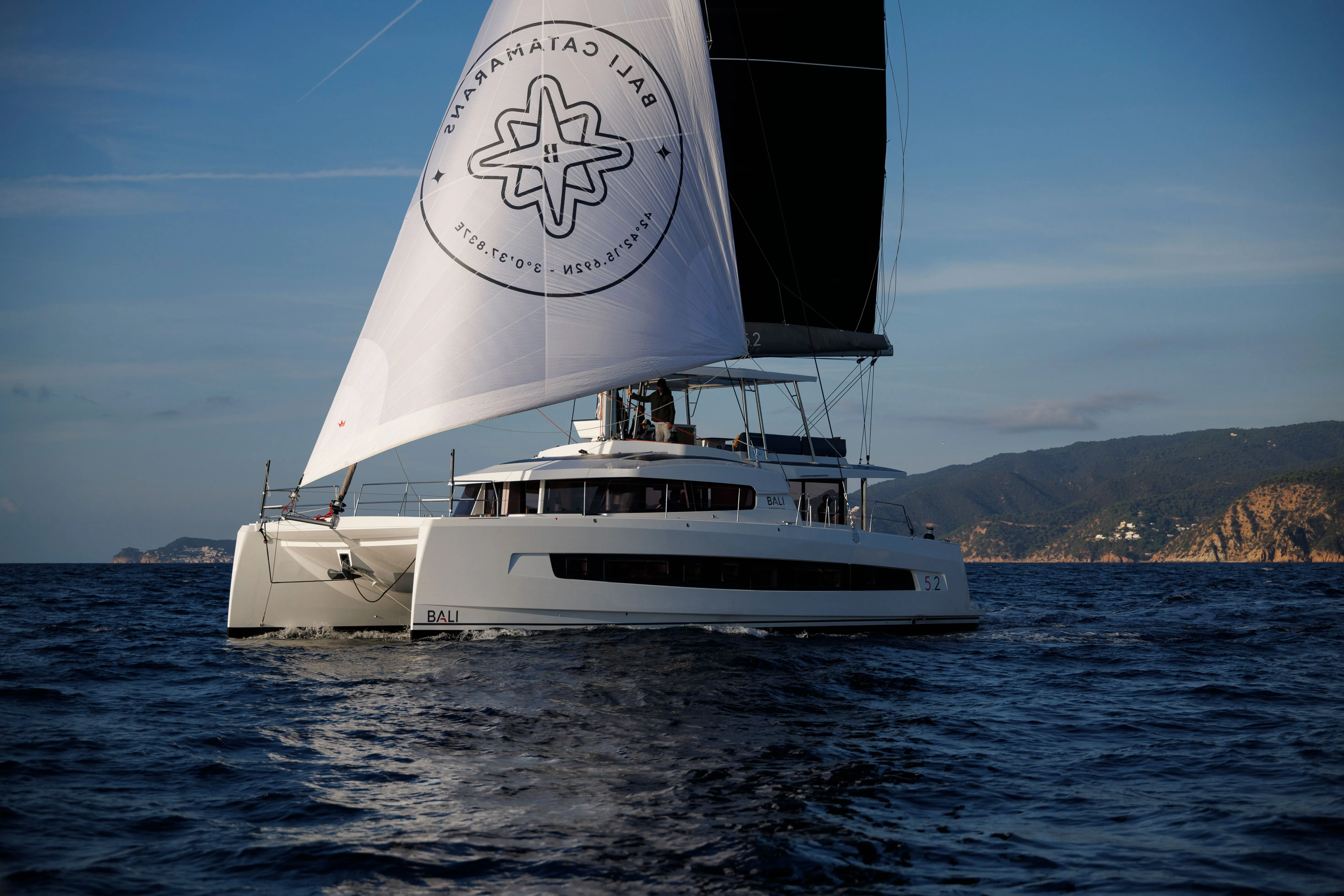
The Bali 5.2: Six Cabins, Six Heads, One Open Deck
The Bali 5.2 offers three to six cabins with a private head for every one, up to sixteen berths, 1,241 sq ft of usable deck and a 48-volt li…
Read the articleThe full Bali range - 39'7" to 73'11", rigid foredecks and the Bali door, two to six cabins
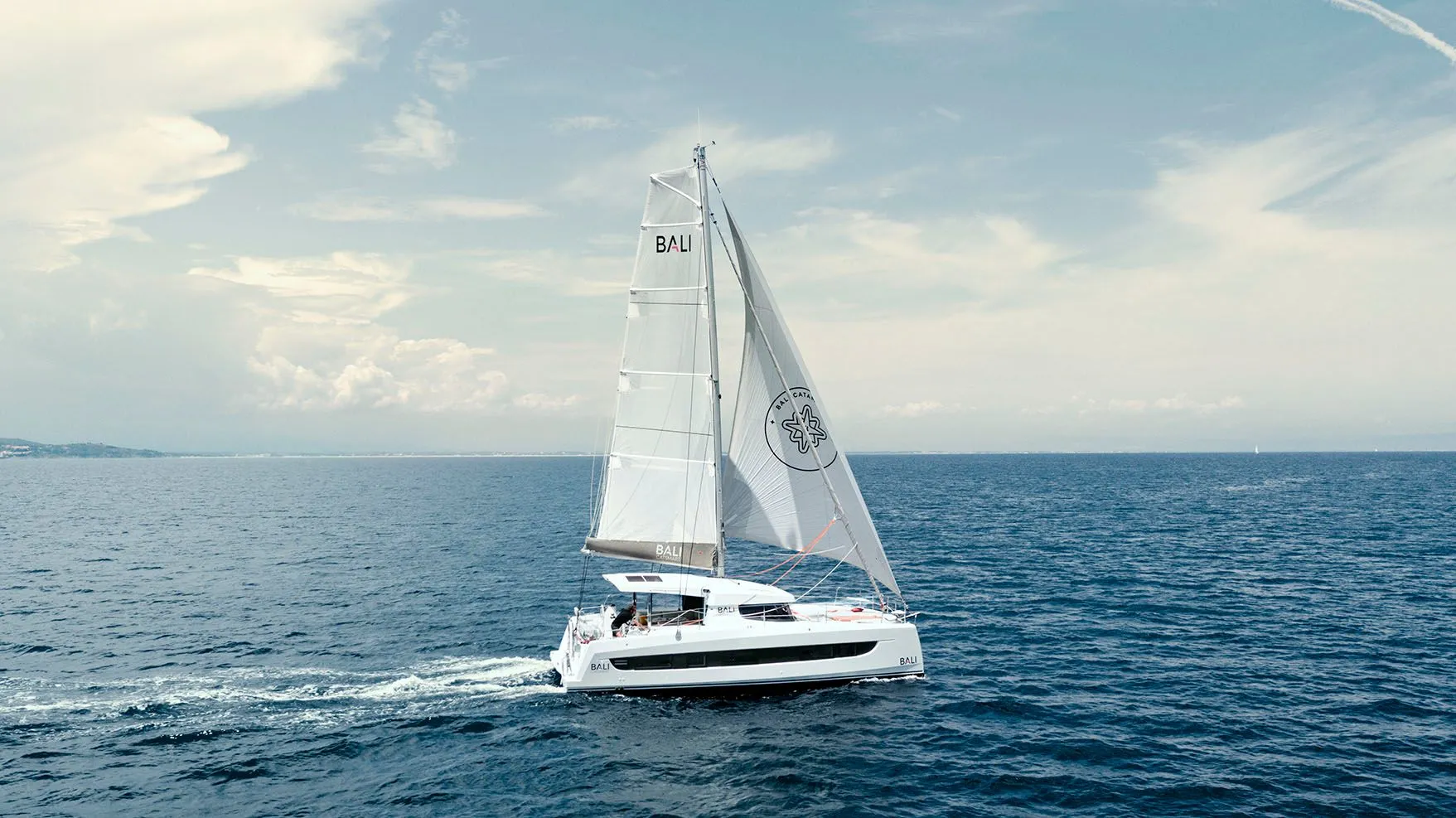
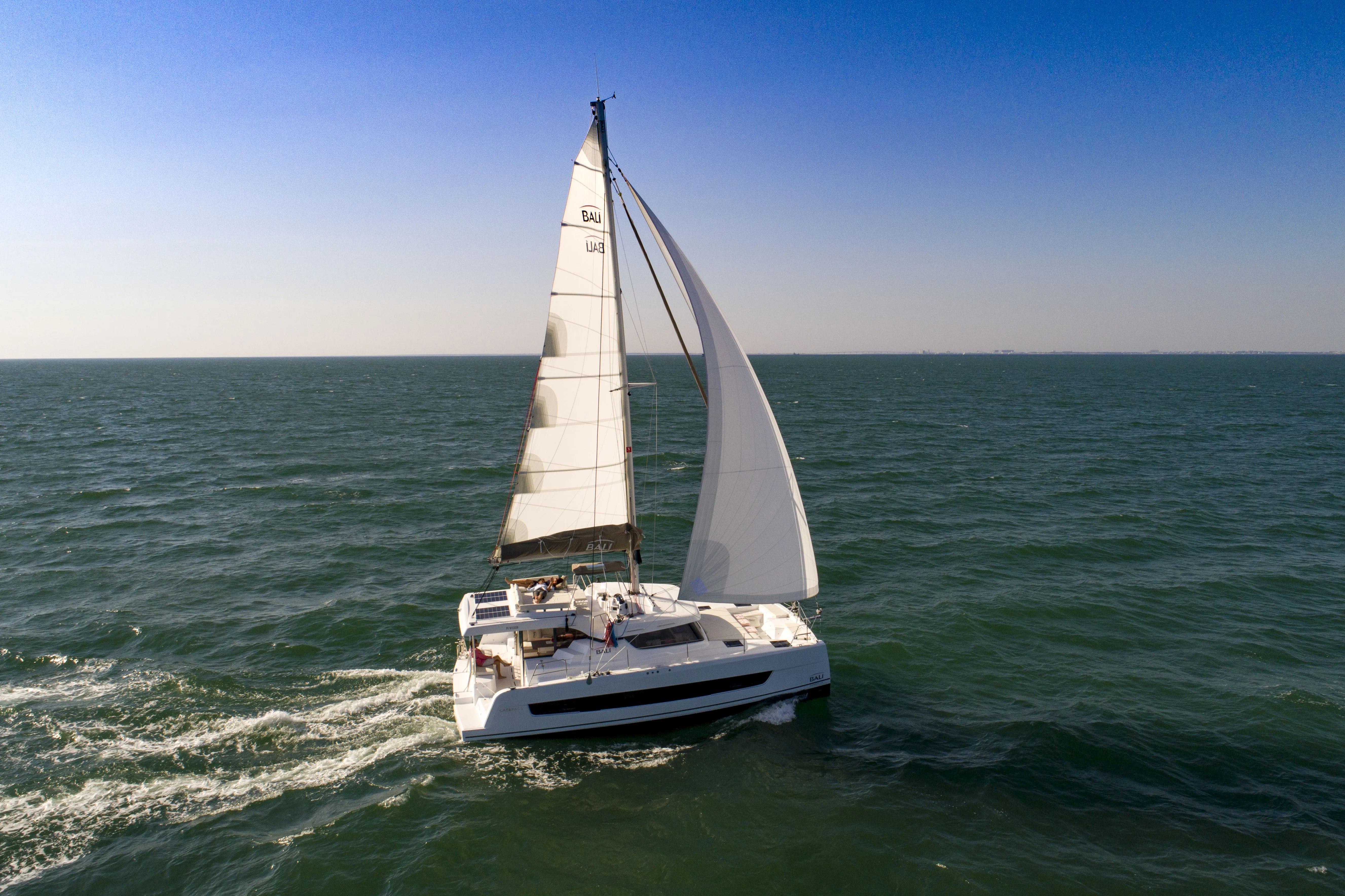
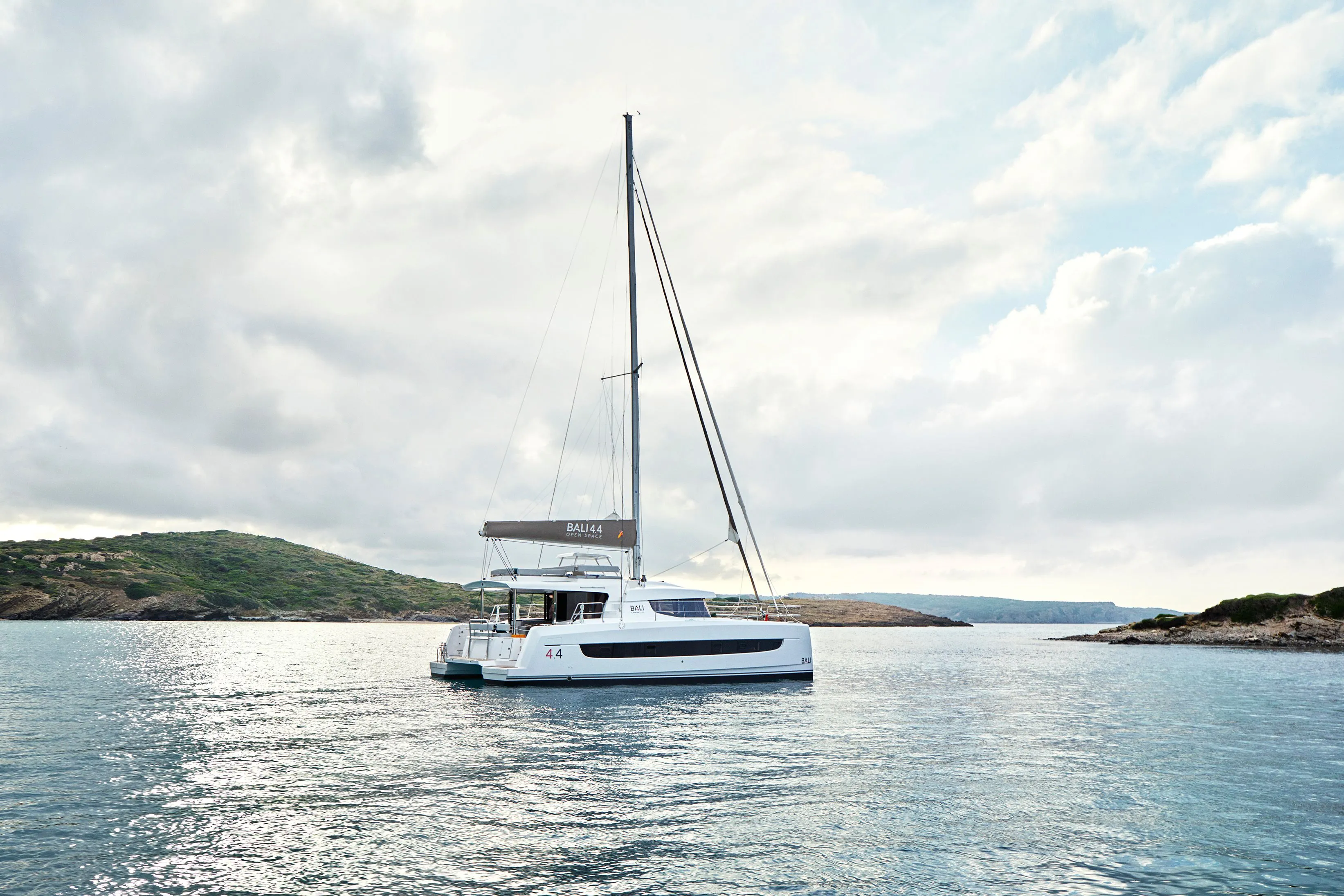
The decision inside this range is not really about length. It is about how many separate places you want people to be able to sit when the boat is at anchor and there are eight of you aboard.
Every Bali is built on the same two ideas: a rigid moulded foredeck in place of netting, so the bow is a lounge rather than a walkway, and an up-and-over aft door that merges saloon and cockpit into one room on one level. What changes as you move up the range is how many of those spaces there are, whether you can reach the foredeck from inside, and how many cabins get a head of their own.
The line runs from the Catsmart at 39'7", which two people can own and run without help, to the 7.0 at 73'11" with an owner's hull and dedicated crew quarters.
Every Bali Catamarans Cruising model we review in depth, in the order owners step up through the series.
Photo credit Bali Catamarans.
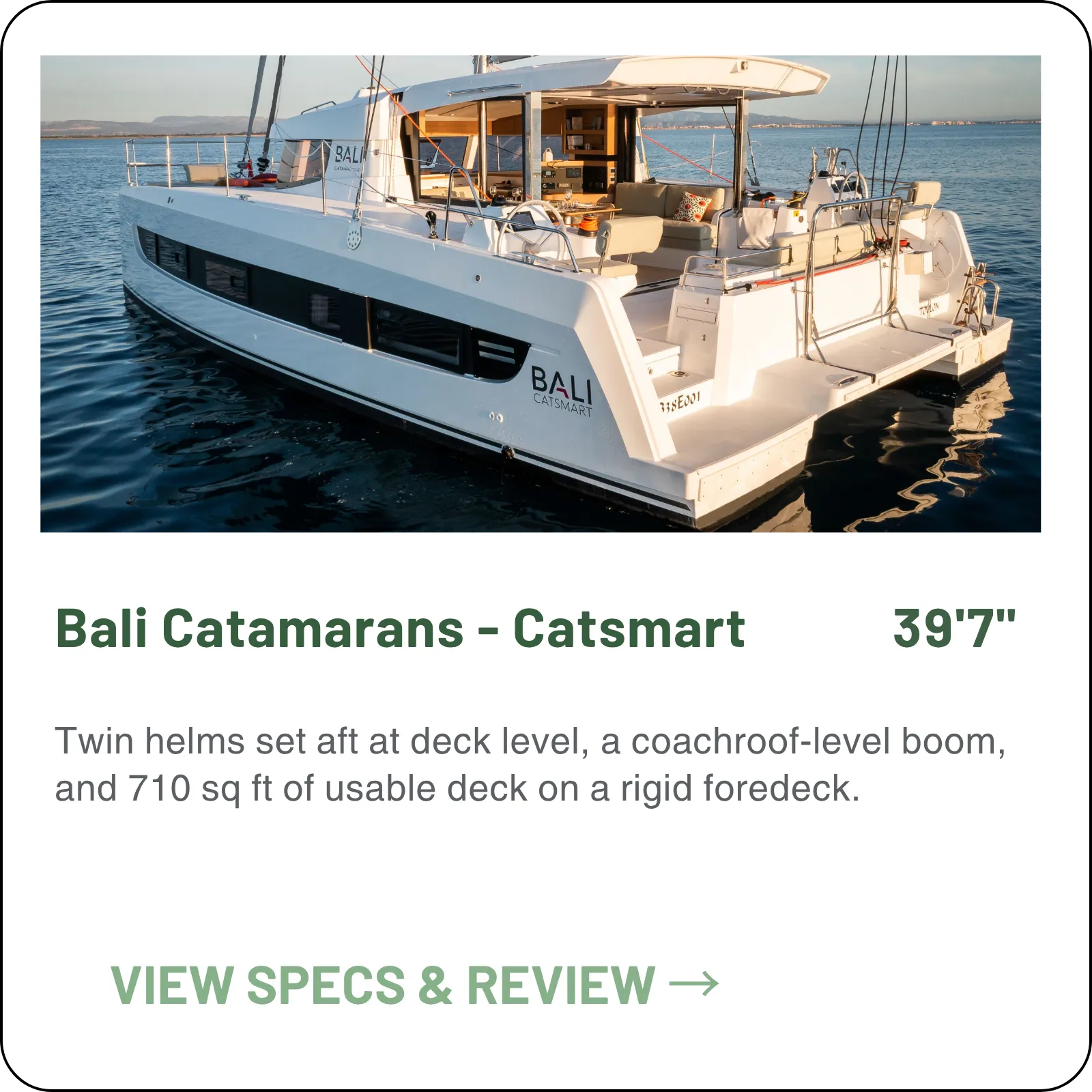
Twin helms set aft at deck level, a coachroof-level boom, and 710 sq ft of usable deck on a rigid foredeck.
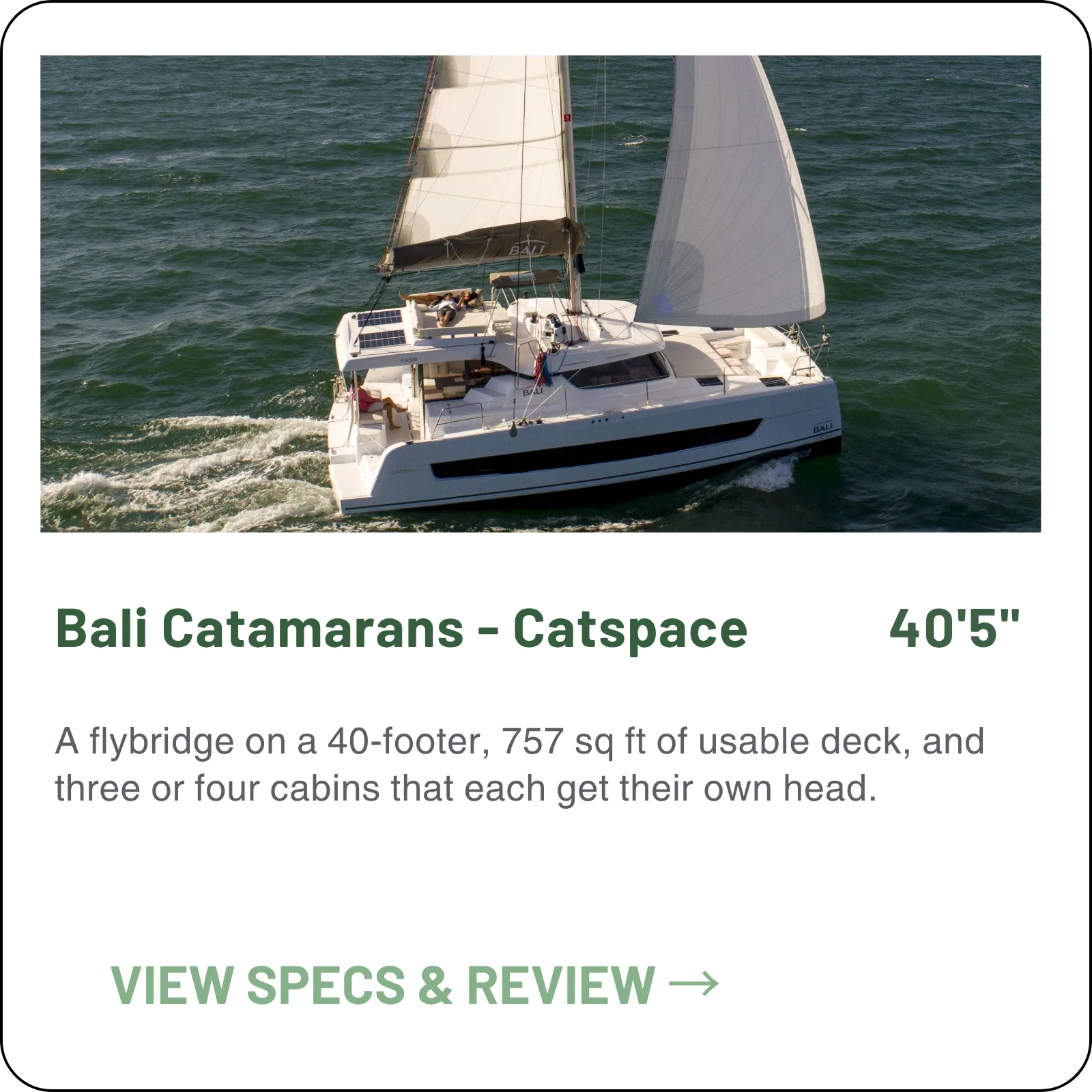
A flybridge on a 40-footer, 757 sq ft of usable deck, and three or four cabins that each get their own head.
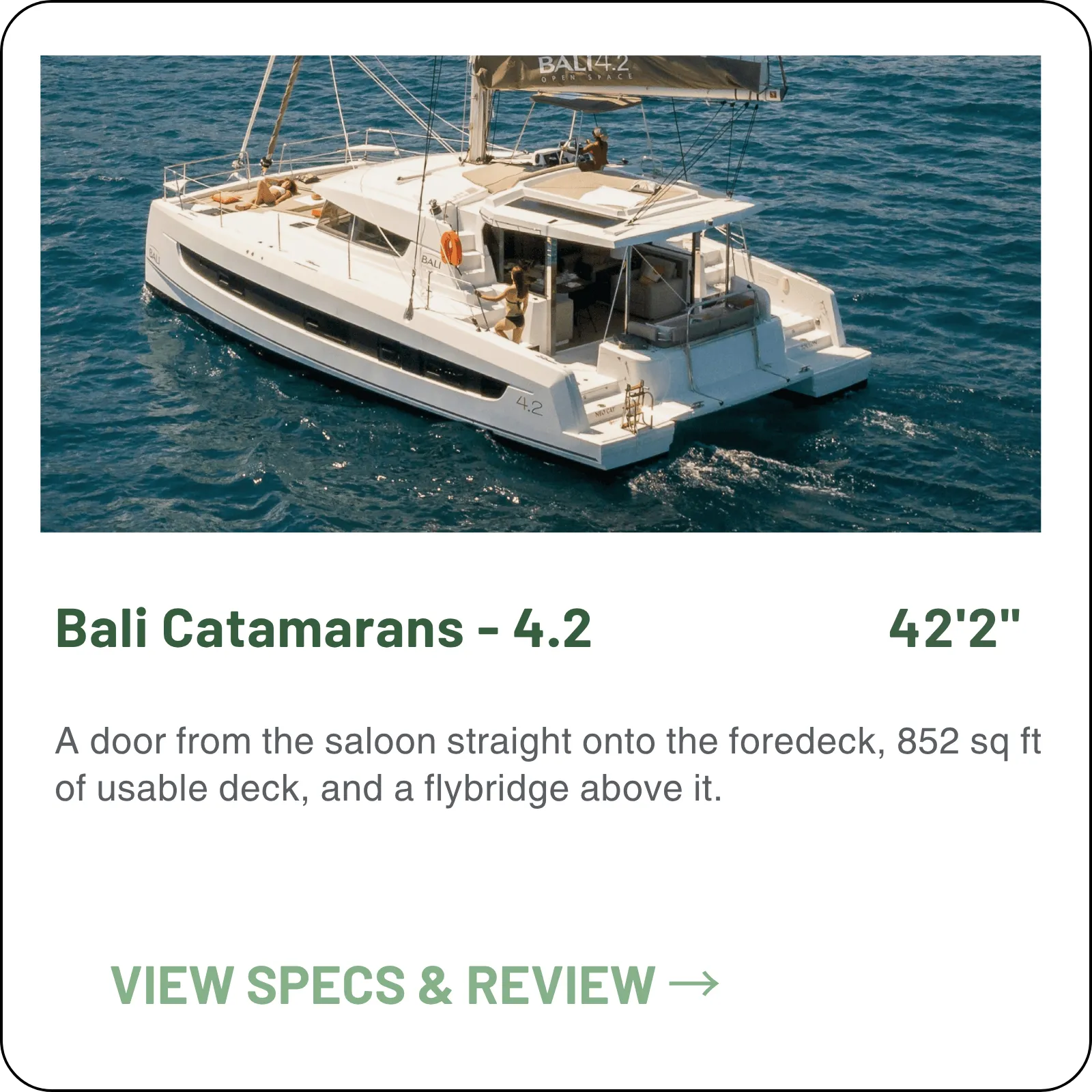
A door from the saloon straight onto the foredeck, 852 sq ft of usable deck, and a flybridge above it.
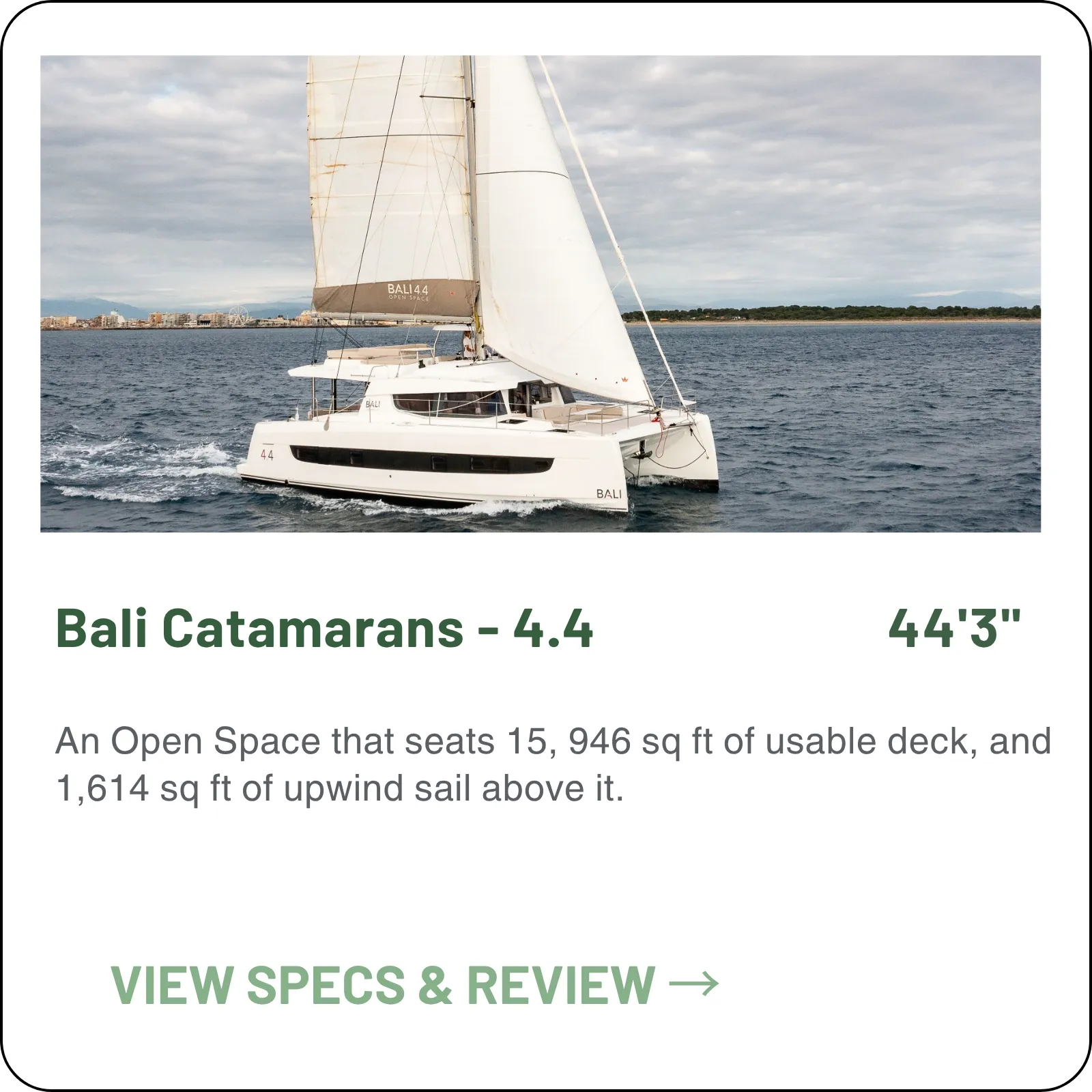
An Open Space that seats 15, 946 sq ft of usable deck, and 1,614 sq ft of upwind sail above it.
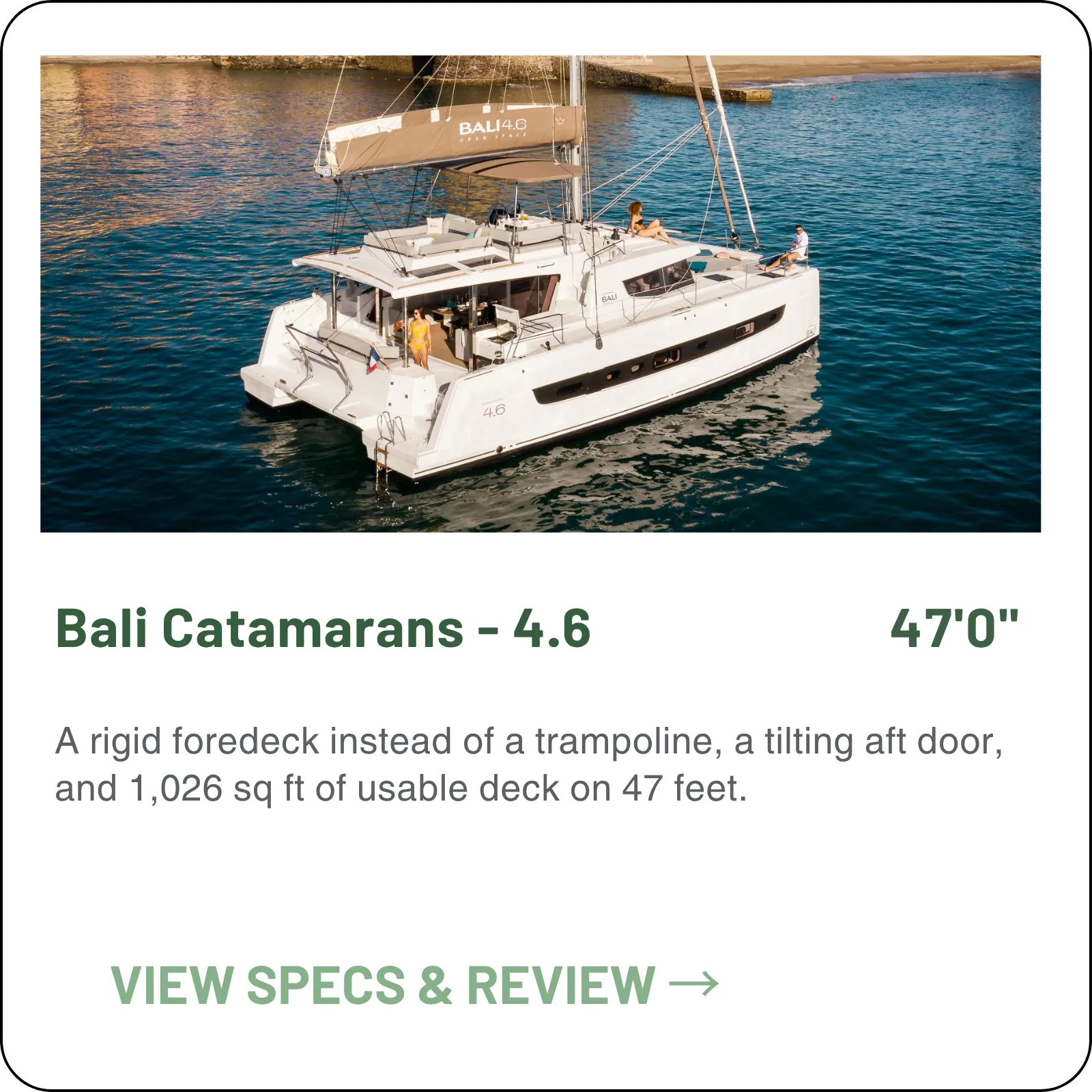
A rigid foredeck instead of a trampoline, a tilting aft door, and 1,026 sq ft of usable deck on 47 feet.
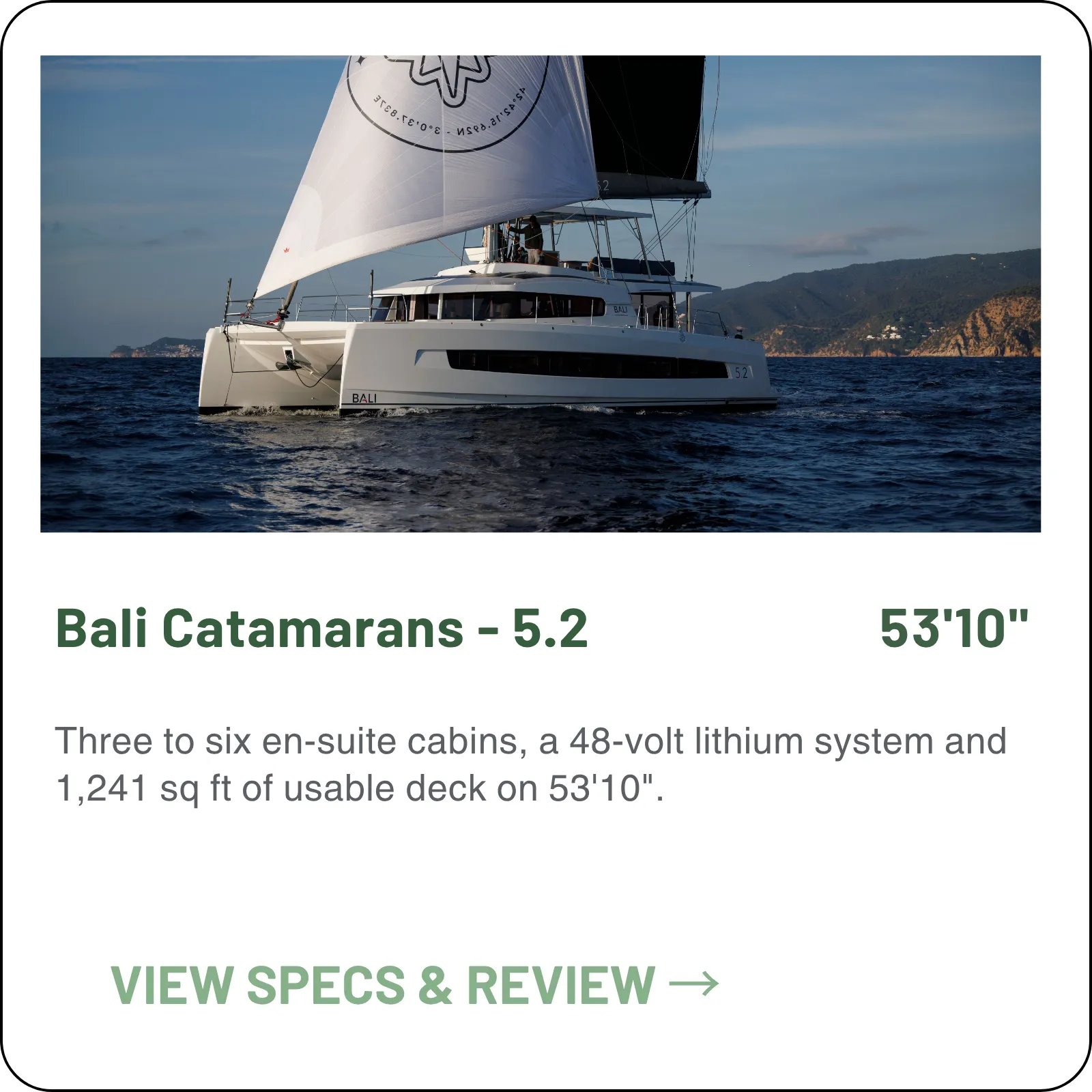
Three to six en-suite cabins, a 48-volt lithium system and 1,241 sq ft of usable deck on 53'10".
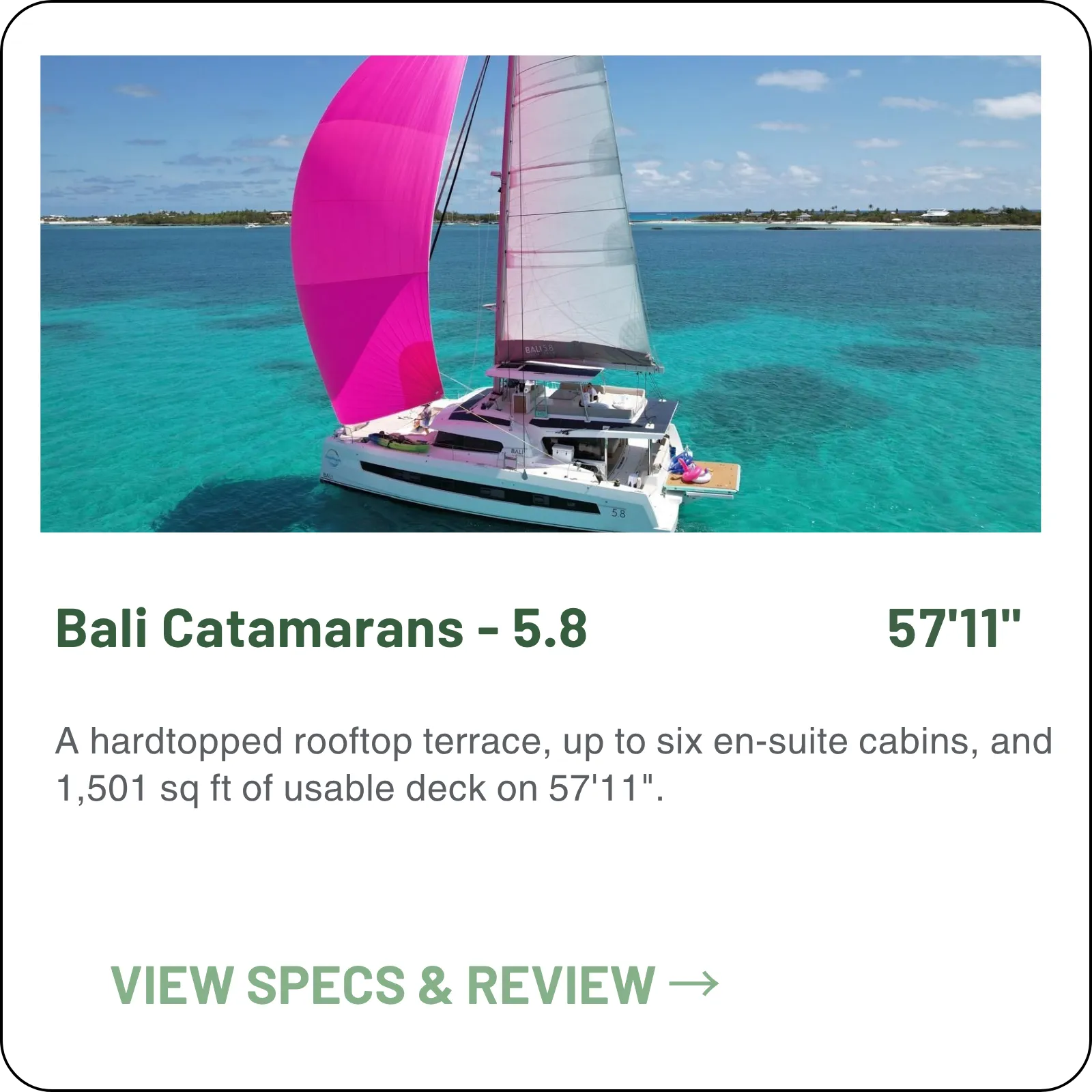
A hardtopped rooftop terrace, up to six en-suite cabins, and 1,501 sq ft of usable deck on 57'11".
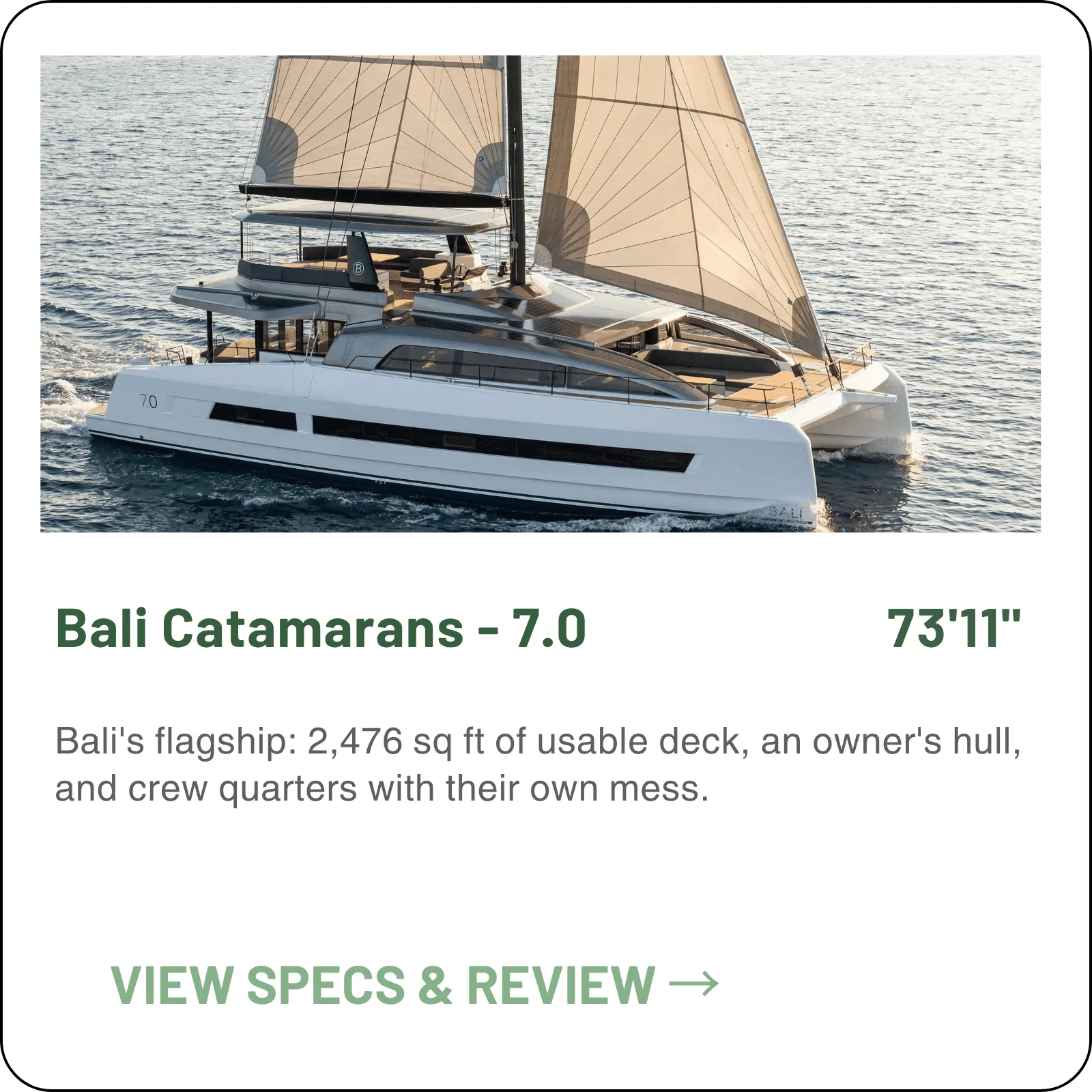
Bali's flagship: 2,476 sq ft of usable deck, an owner's hull, and crew quarters with their own mess.

Don't see the Cruising model you're after — or a brand-new launch? Request specs through Yacht Specs Direct.
The two compact boats are a pair rather than a good-and-better ladder. The Catsmart puts both helms aft at deck level and keeps the layout to two heads across two, three or four cabins - the most straightforward boat in the range and the one a couple can handle with the least ceremony. The Catspace is ten inches longer but arranged differently: it adds a flybridge, and its three- and four-cabin layouts give every cabin its own head.
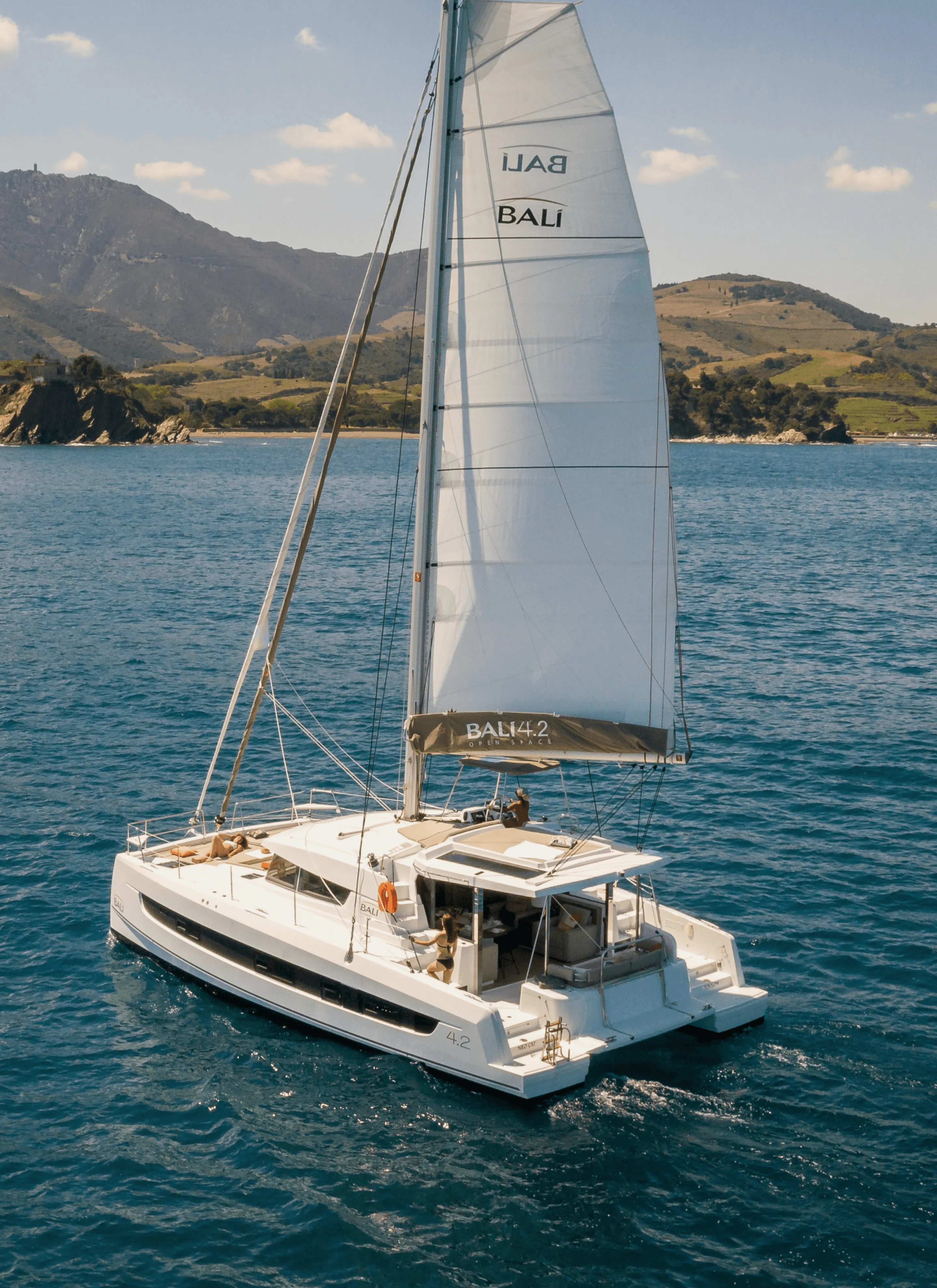
The 4.2 is where the full architecture arrives. It is the first boat in the range with a door from the saloon straight onto the forward cockpit, so the foredeck stops being somewhere you go out and around to reach, and it carries a flybridge above - 852 sq ft of usable deck on a 42'2" hull. The 4.4 and 4.6 keep that arrangement and grow it: 946 sq ft on the 4.4, 1,026 sq ft on the 4.6, and on the 4.6 the option of a fifth cabin.
Above 50 feet the question changes from layout to crew. The 5.2 and 5.8 both offer three to six cabins with a head for each plus crew accommodation, and both are boats you can run privately or put to work in charter season. The 5.2 carries a 48-volt lithium electrical architecture with an optional 4,200 W solar array; the 5.8 adds a rooftop terrace under a wide hardtop that doubles as its solar platform.
The 7.0 is a different proposition again. At 73'11" with 2,476 sq ft of usable deck, a hull that can be given over entirely to the owner and a crew mess separate from the guest areas, it assumes professional help aboard rather than offering it as an option.

The honest fork in this range is at the 4.2.
Below it you are buying a very well-organised compact catamaran. At the 4.2 and above you are buying the idea Bali actually sells - walking from the galley through a door onto your own foredeck. It sounds like a detail until you have lived with it for a week and worked out how much of the day happens up there.
If the budget stretches to a 4.4 or a 4.6, that is where I point most couples. You get the whole architecture, every cabin can have its own head, and it is still a boat two people can dock and sail without hiring anyone. The 5.2 and 5.8 are excellent boats, but the moment you add crew quarters you have changed what owning one feels like, and that is a decision to make deliberately rather than by stretching.
Whatever size you land on, settle beam before you fall for a layout. These are wide boats for their length, and marina and haul-out arrangements are far easier to solve before the deposit than after.
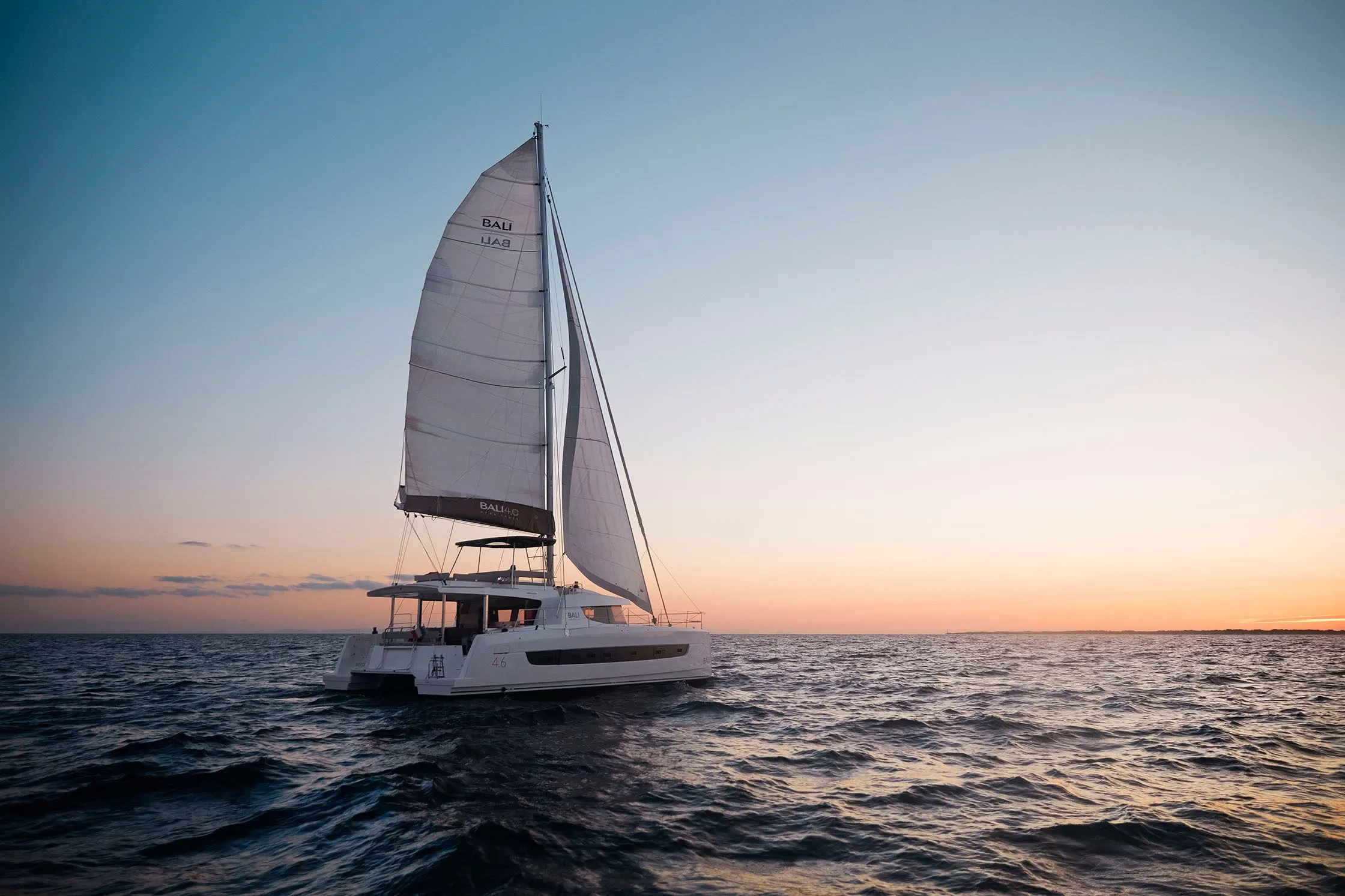
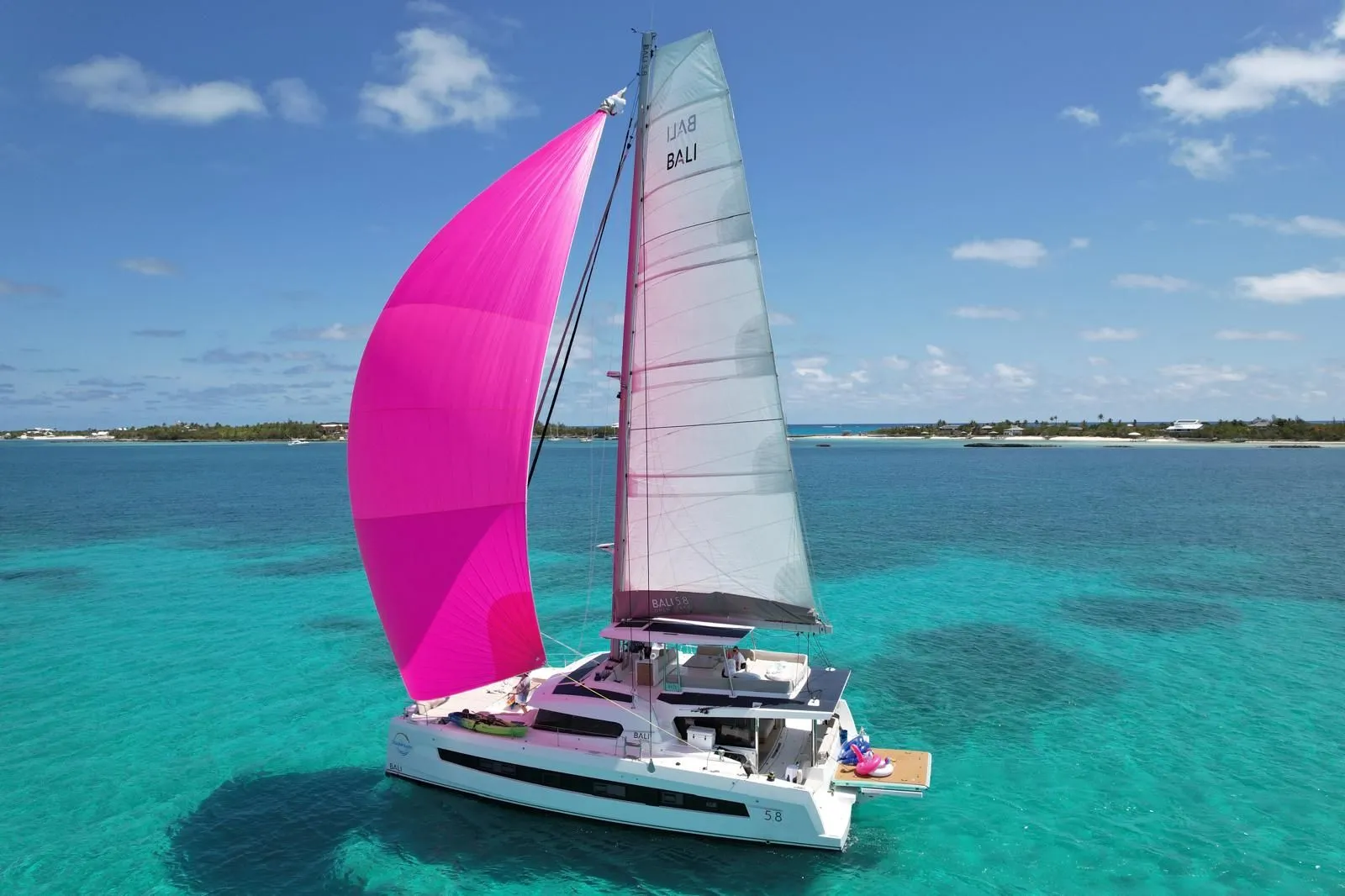
Videos courtesy of Bali Catamarans.
The 4.2. On the Catsmart and Catspace the rigid foredeck is reached from the side decks; from the 4.2 upward the galley and saloon open directly onto the forward cockpit, so the bow dining area becomes a room you walk into.
If that arrangement is the reason you are looking at Bali, the 4.2 is where the range starts to deliver it, and it carries a flybridge above as well.
Two, three or four on the Catsmart, against two heads. Three or four with a head each on the Catspace, 4.2 and 4.4. Up to five cabins on the 4.6.
The 5.2 and 5.8 go to six cabins with a head for every one, both with crew accommodation. The 7.0 runs two, three or four cabins plus crew, laid out for six to eight guests.
The 5.2, the 5.8 and the 7.0. The 5.2 and 5.8 add crew quarters alongside three-, four-, five- or six-cabin guest layouts. The 7.0 goes further, with crew cabins that have their own mess so service happens away from the guest areas.
Below 50 feet the range is arranged for owner-operators, with the accommodation given over entirely to the people using the boat.
710 sq ft on the Catsmart, 757 on the Catspace, 852 on the 4.2, 946 on the 4.4, 1,026 on the 4.6, 1,241 on the 5.2, 1,501 on the 5.8 and 2,476 on the 7.0.
Bali quotes usable surface rather than deck length because the rigid foredeck turns the bow into space you can furnish, and it is the most direct way to compare two models in the range.
Tell us how you plan to use the boat — guests, range, crew or no crew — and we'll give you the straight story on where in the Cruising series you belong, new or brokerage.
Explore All Bali Catamarans ModelsOr reach Tony directly: TS@MintedYachts.com · +1 (404) 805-9819