
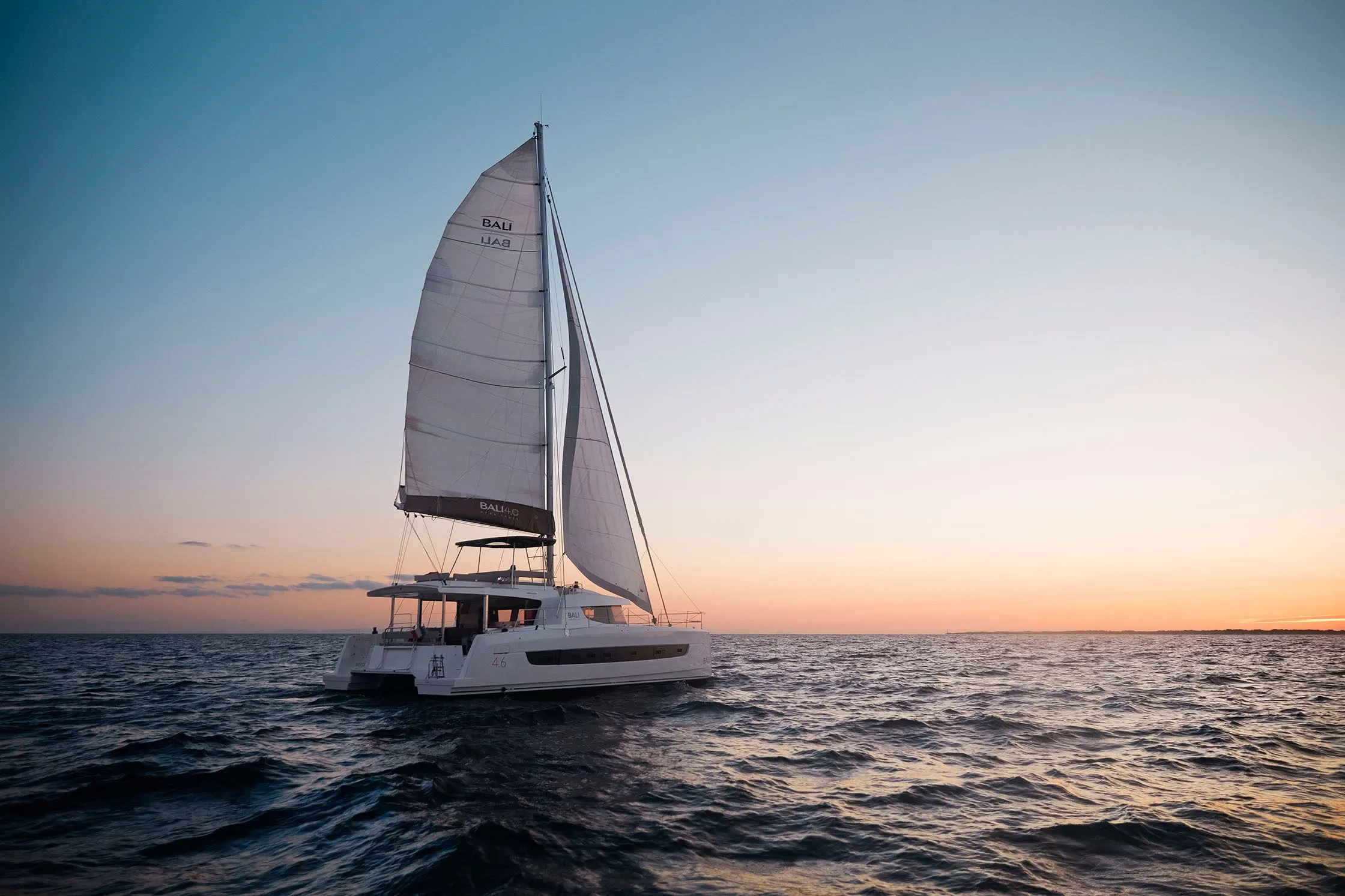
August 29, 2026
The Bali 4.6: One Main Deck, End to End
The Bali 4.6 opens its whole main deck end to end: a tilting aft door that merges saloon and cockpit onto one level, a rigid foredeck lounge…
Read the articleExpert Review, Technical Specifications & Market Analysis
| Feature | Specifications |
|---|---|
| Overall Length | 47'0" |
| Beam | 25'1" |
| Draft | 4'2" |
| Displacement | 30,567 lbs |
| Engines | Twin Diesel (2 x 57 HP) |
| Fuel Capacity | 212 gal |
| Water Capacity | 228 gal |
| Cabins / Heads | 3-5 Cabins / 3-4 Heads |
| Max Speed | - |
| Cruise Speed | - |
Source: Spec & Photos courtesy of Bali Catamarans.
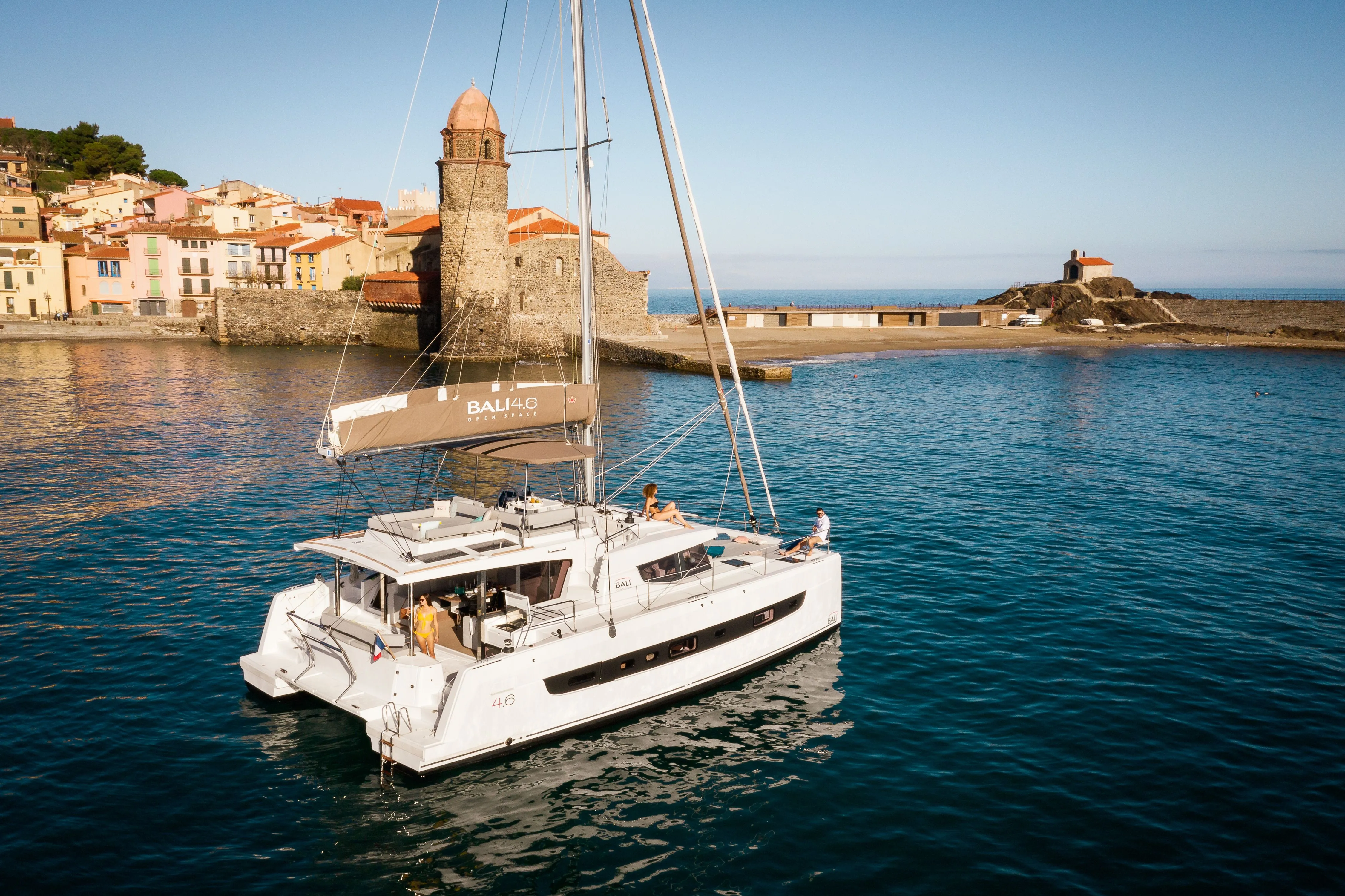
The front of most cruising catamarans is netting you cross carefully and never sit on. The Bali 4.6 puts a solid moulded deck there instead, so the best view on the boat becomes a place you walk out to barefoot with a drink rather than a place you edge across to reach the anchor.
Part of the Bali Catamarans Cruising series — see how owners step up through the lineup.

The 4.6 is the model where this range stops being a clever small-boat idea and simply becomes a well-organized cruising catamaran. Two features do the work. The tilting aft door puts the saloon and cockpit on one level with no threshold between them, which sounds like a detail and is not — it is the difference you notice on the third day, when you have stopped counting steps between the helm and a drink. And the moulded foredeck gives you the best view on the boat as a room instead of as a walkway.
It is also the first boat in the range that offers five cabins, and I would think hard before ordering them. Tankage is 212 gal of fuel and 228 gal of water. On a 47-footer that is enough for a proper trip with the owner's layout and its lockers, and tight once you have filled five cabins with people and their gear. Unless a charter operator has told you in writing that the fifth cabin changes your rate, take three or four.
Two things to settle early. Specify the 57 HP engines if you expect to push 30,567 lbs into a hard trade wind — the money is well spent and you will not regret it at a dock in a crosswind. And answer the beam question before anything else: 25'1" decides which marinas are open to you, and on a boat this size that shapes your season far more than the length on the transom does.
Video courtesy of Bali Catamarans.

Photos courtesy of Bali Catamarans.
The Bali 4.6 is a sailing catamaran of 47'0" (14.33 m) overall on a 25'1" (7.66 m) beam, drawing 4'2" (1.27 m), with a light displacement of 30,567 lbs (13.8 t) and 45,578 lbs (20.6 t) at maximum load. Usable deck area is 1,026 sq ft (95.4 m²). Bali builds her in three cabins with three heads, four cabins with three or four heads, or five cabins with four heads, and rates her CE approval A: 12 / B: 16 / C: 24 / D: 38. Olivier Poncin conceived her, Xavier Faÿ drew the hull and Piaton Berco designed the interior.
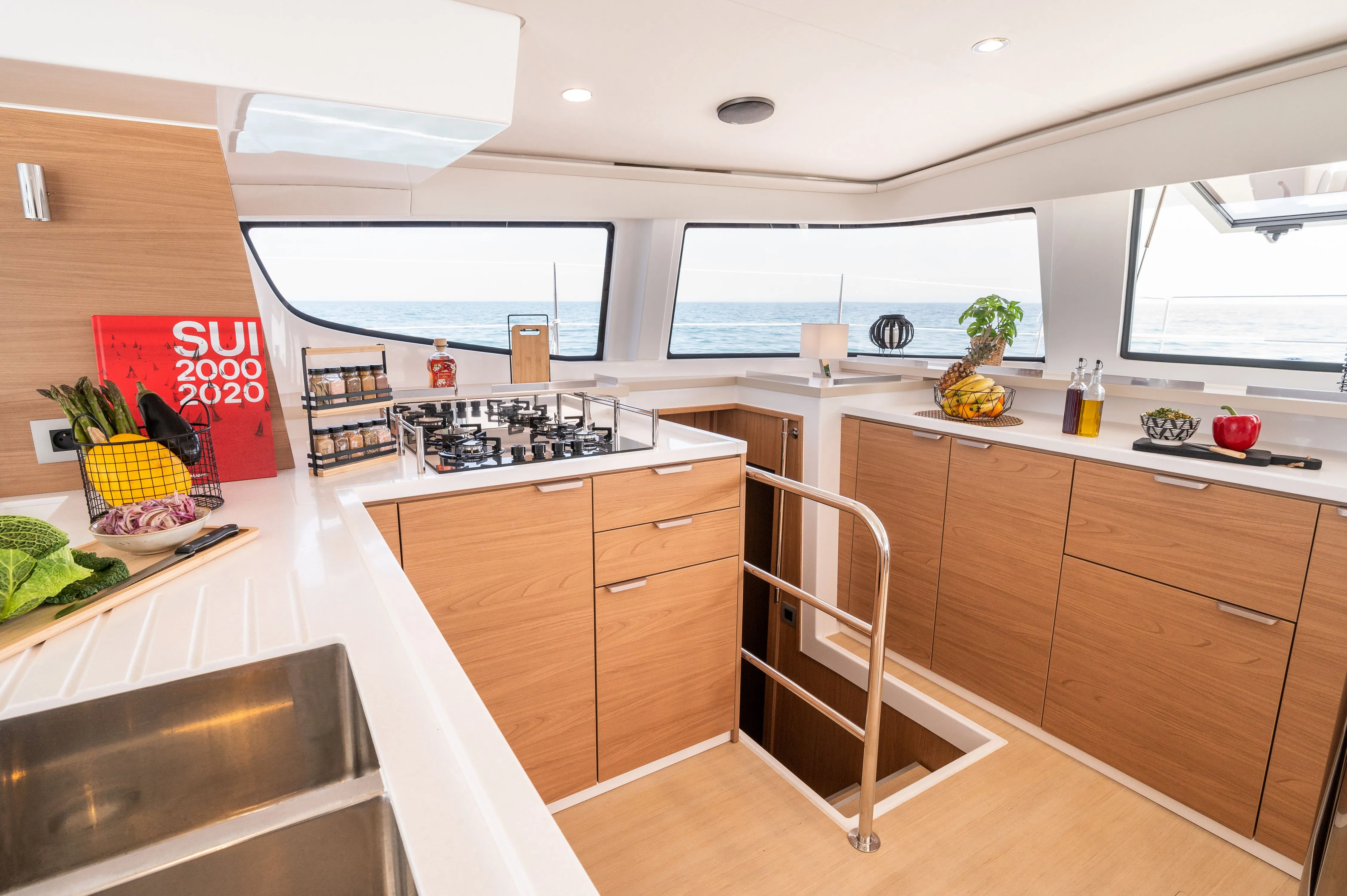
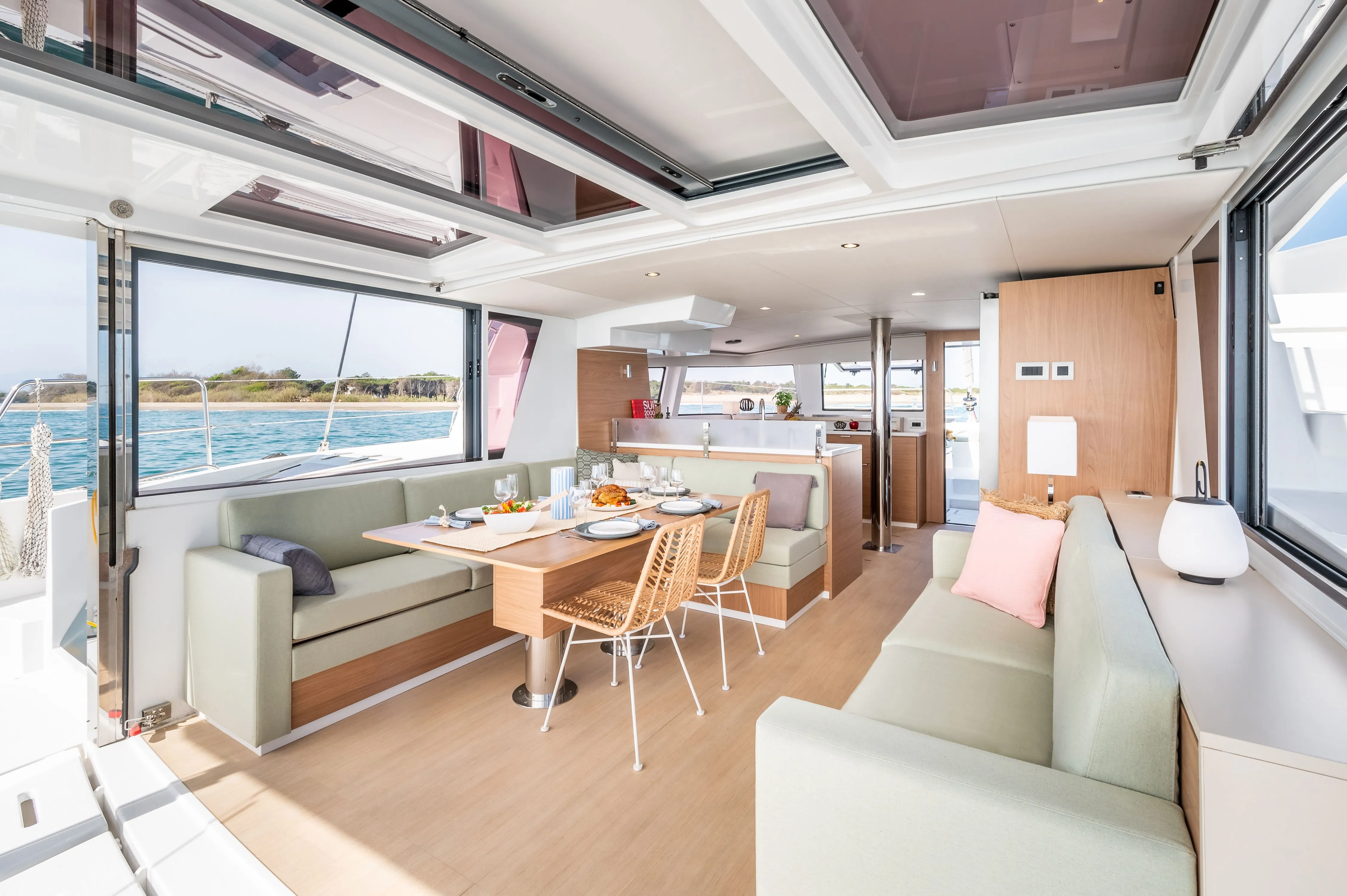
Two features carry the layout. A rigid foredeck replaces the trampoline, turning the bow into a ventilated lounge with a shade sail rather than a walkway; and the tilting aft door folds up so the saloon and cockpit become one room on a single level. Above them, a flybridge carries the helm, seating and sun pads. The main deck holds a U-shaped galley and a saloon table that seats ten. Tankage is 212 gal of fuel and 228 gal of water.
Auxiliary power is twin diesels rated up to 57 HP a side, driving 30,567 lbs (13.8 t) of catamaran. The 4'2" (1.27 m) draft is the number that decides where you can go: it opens the thin water through the Exumas and the Keys that keeps deeper boats out in the roadstead, and it does that on a 25'1" (7.66 m) beam that holds the platform steady at anchor.
Sail area is 1,248 sq ft (116 m²) standard and 1,679 sq ft (156 m²) maximum upwind. The rigid foredeck does structural work as well as social work: where a trampoline lets the two hulls flex against each other, a moulded deck ties them together, which is the yard's argument for reduced hull torsion and less material fatigue over a long life. It also gives you somewhere solid to stand when you are setting a light-air sail at the bow. Get observed fuel burn at your intended cruising rpm in writing at sea trial and work your own passage numbers off 212 gal.
The tilting aft door is the piece everything else follows from. It swings up and out of the way, and the saloon and cockpit stop being two rooms with a threshold between them — one continuous space on one level, with a U-shaped galley, a forward-facing chart table and a saloon table that seats ten. Nobody steps up or down moving from the helm to a drink, which is the difference you notice on the third day rather than the first.
Below, four arrangements: three cabins and three heads in the owner's version, four cabins with three or four heads, or five cabins with four heads for charter work. Forward, the rigid deck is a second living room — well ventilated, integrated into the deck moulding and shaded by a sail when the sun is high — and it stays usable at anchor in conditions that leave a netted foredeck empty. Bali offers a range of upholstery schemes so two 4.6s delivered the same month need not look alike.
In Bali's own range the 4.6 sits between the 44'3" 4.4 and the 53'10" 5.2, and it is where the range starts working for owners with a charter plan: the 4.2 and 4.4 top out at four cabins, while the 4.6 adds a five-cabin, four-head layout on the same rigid-foredeck platform. Cross-brand it lands against the Lagoon 46 Iconic (47'7"), the Fountaine Pajot FP48 (47'4") and the Lagoon 47 (49'1") — the same mid-forties cruising class, where the Lagoons sell circulation and rig options and Bali sells 1,026 sq ft (95.4 m²) of usable deck and a main deck that opens end to end.
Choose the Bali 4.6 if the part of cruising you actually care about is the hours at anchor rather than the hours under way: if a solid, shaded foredeck you can eat breakfast on sounds like something you would use every morning, and if one open main deck matters more to you than a bigger sail plan. Take the three- or four-cabin owner's version unless you are genuinely putting her into charter — the five-cabin layout trades the lockers you want on a long trip for berths you will not fill. Two things to settle before you order: where you will keep 25'1" (7.66 m) of beam, and whether to specify the 57 HP engines, which are worth the money if you plan to push 30,567 lbs into a Caribbean Christmas breeze. If you want a bigger rig and a genoa to trim, look at the Lagoon 47; if you want the same idea with more room and six-cabin flexibility, the 53'10" Bali 5.2 is the next step up.
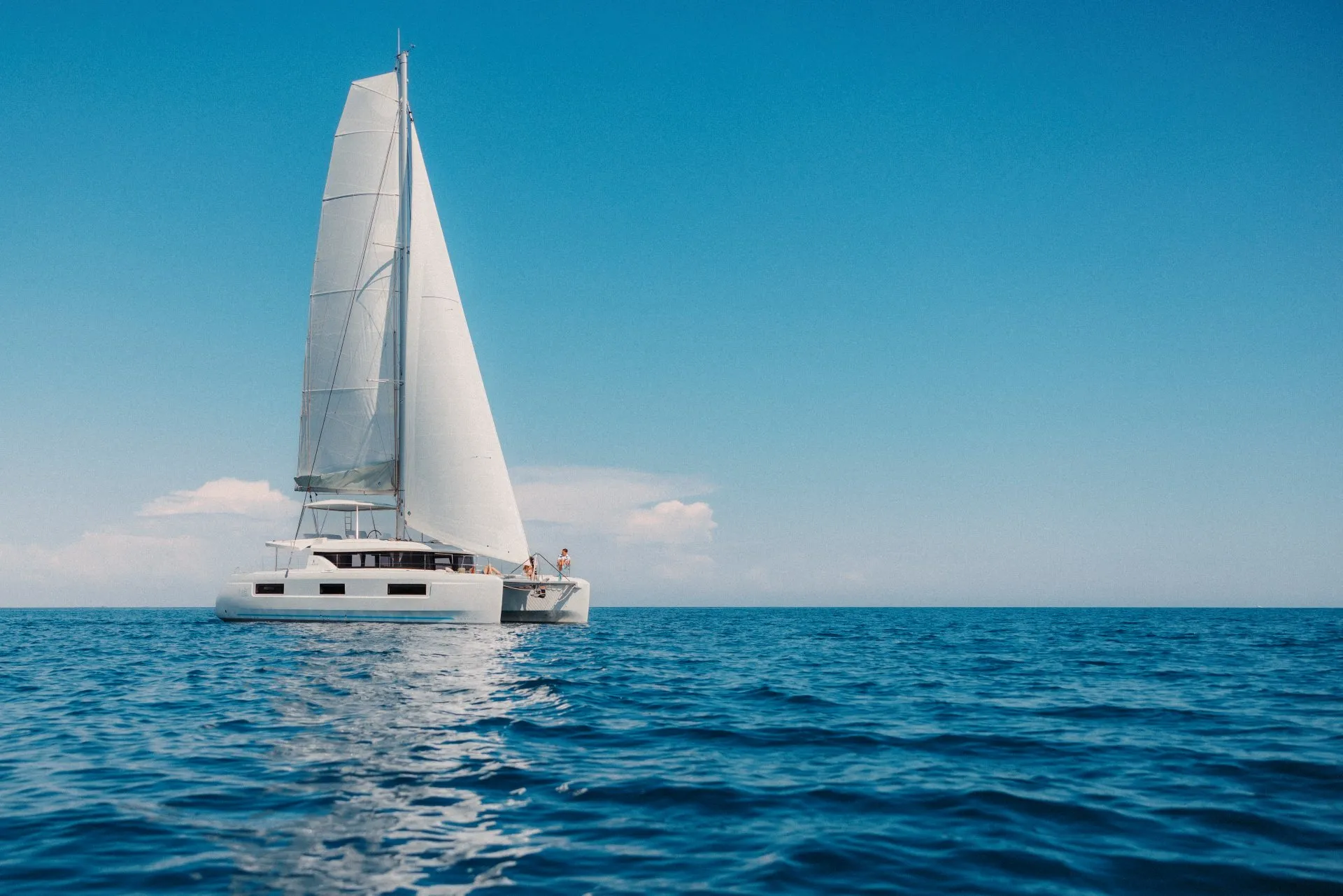
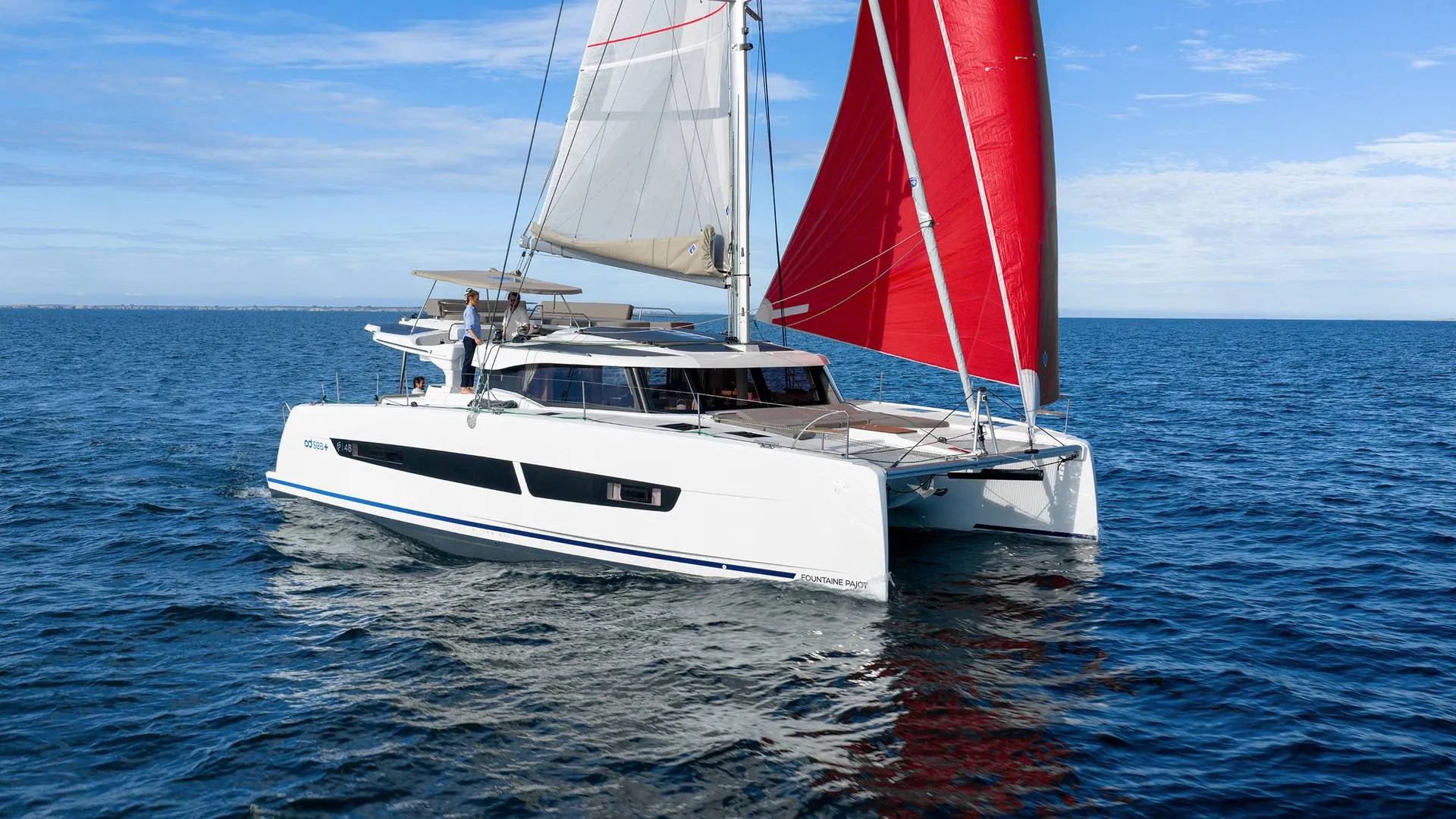
Sitting on. Where a cruising catamaran normally carries netting between the bows, the 4.6 has a solid moulded deck with a shade sail over it, so the best view on the boat becomes a lounge rather than a walkway to the anchor.
It is a large part of why the boat measures 1,026 sq ft (95.4 m²) of usable deck on 47 feet.
Four configurations: three cabins with three heads, four cabins with three heads, four cabins with four heads, or five cabins with four heads.
That fifth cabin is what most separates the 4.6 from the 4.4 for owners planning to charter, and it is available without giving up the owner's arrangement in the other layouts.
It folds up and out of the way, so the saloon and the cockpit become one room on a single level rather than two spaces joined by a threshold.
Combined with the U-shaped galley and a saloon table that seats ten, it is what makes the main deck work as one entertaining space. It is also the feature Bali has built the whole brand around.
47'0" (14.33 m) overall on a 25'1" (7.66 m) beam, drawing 4'2" (1.27 m). Light displacement is 30,567 lbs (13.8 t) and 45,578 lbs (20.6 t) at maximum load.
Tankage is 212 US gallons of fuel and 228 gallons of water, and sail area is 1,248 sq ft standard with 1,679 sq ft maximum upwind.
CE category A for twelve people, B for sixteen, C for twenty-four and D for thirty-eight.
Category A is the offshore rating, so twelve is the number to plan around for passages; the higher figures apply to progressively more sheltered water and are the ones that matter for day charter.