Lagoon 47

Expert Review, Technical Specifications & Market Analysis

The Essentials

FeatureSpecifications
Overall Length49'1" (14.95 m)
Beam26'1" (7.96 m)
Draft4'1" (1.25 m)
Displacement39,690 lbs (18,000 kg)
EnginesTwin Yanmar (2 x 57 HP)
Fuel Capacity227 gal (860 L)
Water Capacity185 gal (700 L)
Cabins / Heads3-5 Cabins
Max Speed -
Cruise Speed -

Source: Spec & Photos courtesy of Lagoon. Specs verified by Tony Smith, USCG 100 Ton Master, on August 18, 2026.

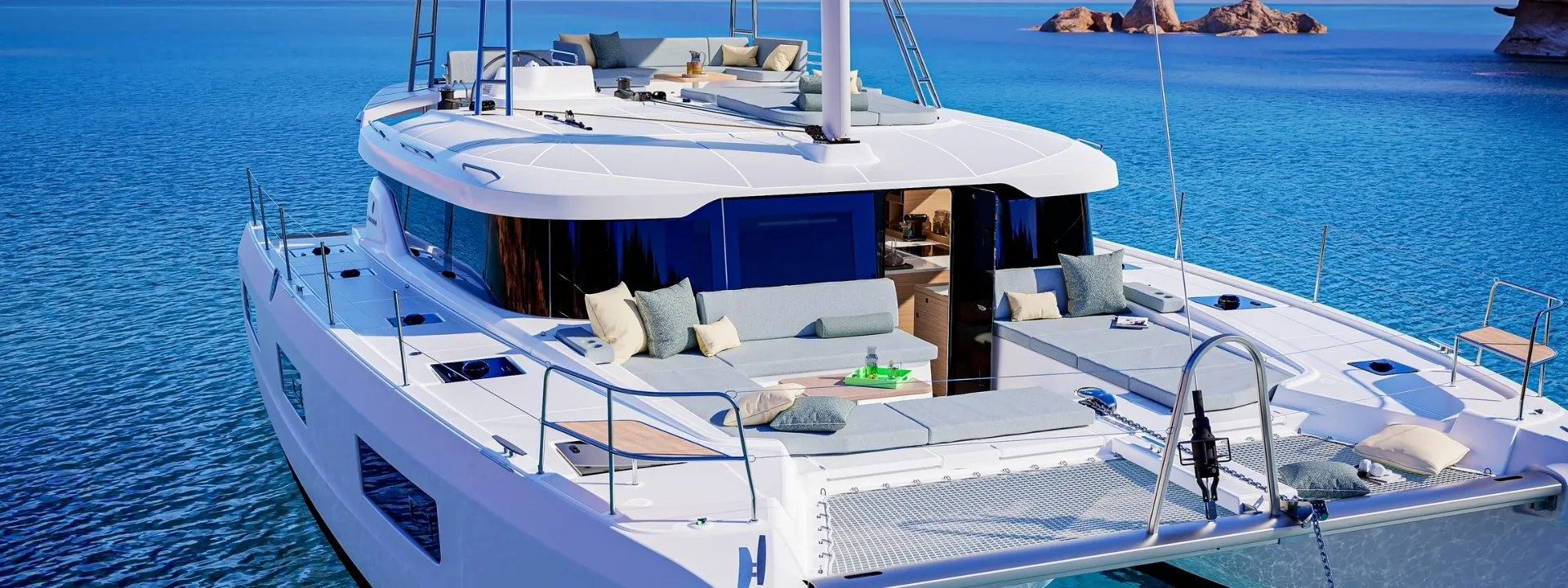
The thing that wears on you aboard is not the sailing — it is stepping outside, walking around and getting wet just to reach the front of your own boat. The Lagoon 47 answers that with a door: a 12 m² forward cockpit that opens straight into the saloon, so the best seat on the boat is one you simply walk into.

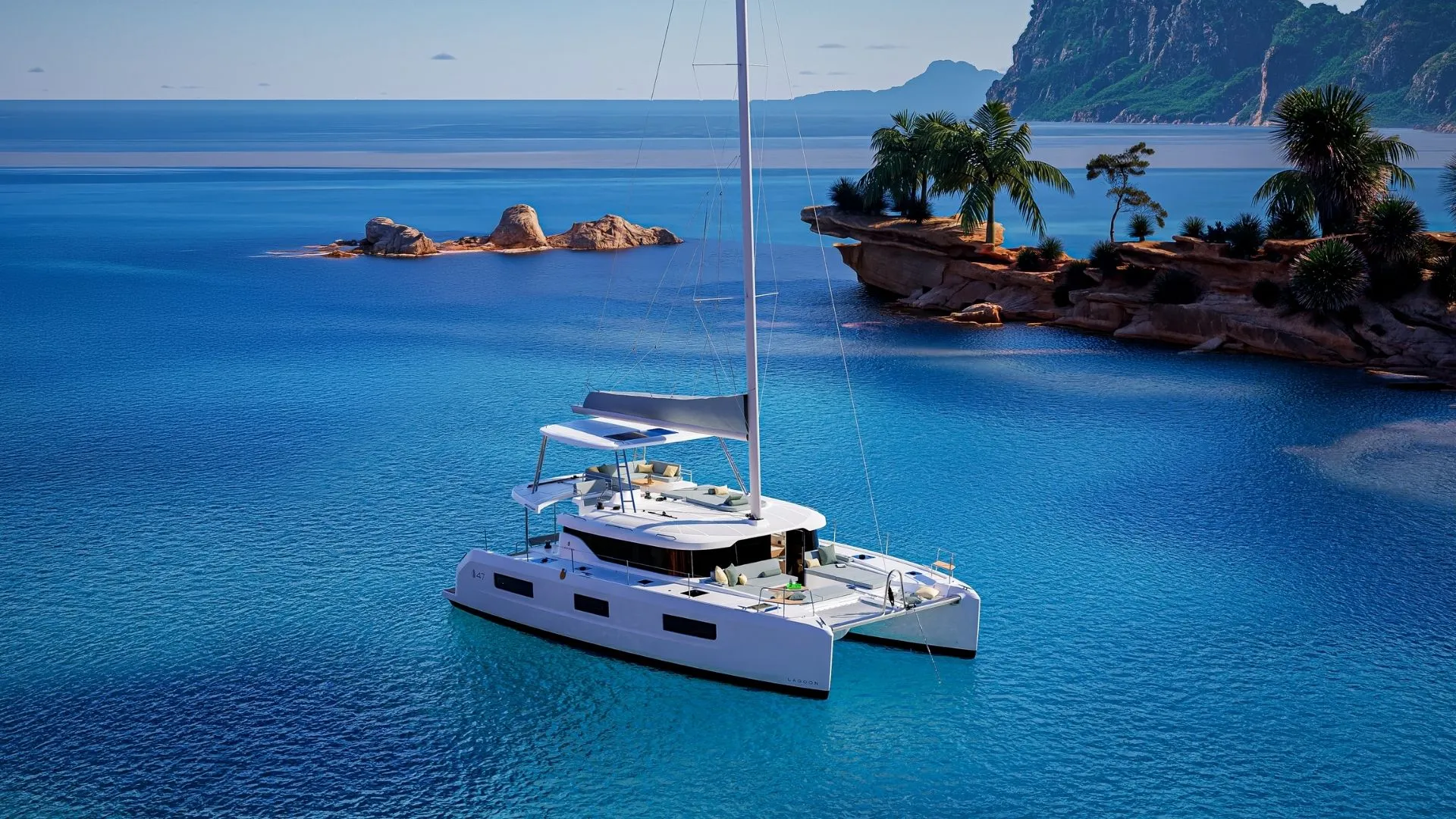
Lagoon 47 exterior

Quick Verdict

  • A door links the forward cockpit directly to the saloon, so the 12 m² foredeck lounge becomes a room you walk into rather than a space you climb out to.
  • The smart room converts between workspace, extra cabin and flexible storage, which is the layout question most owners get wrong on their first catamaran.
  • Drawn by VPLP Design with exterior styling by Patrick le Quément and interiors by Nauta Design.
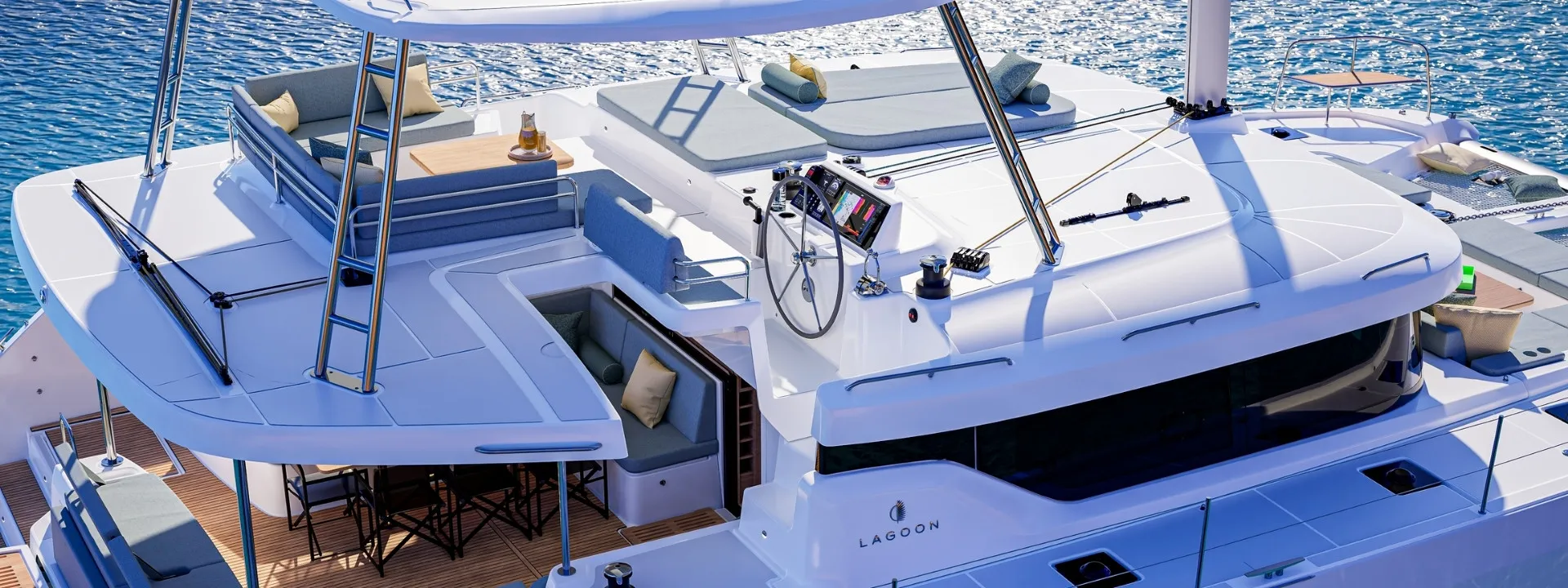
  • Flybridge version adds a bench seat, coffee table and sun loungers; a bimini version is offered for owners who want less structure aloft.
  • Three- and five-cabin layouts, six to thirteen berths, CE approval A: 12 / B: 14 / C: 20 / D: 30.
  • Trade-off: it is a brand-new model, Lagoon still labels the spec sheet preliminary, and 227 gal of fuel is less than the shorter Lagoon 46 Iconic carries.
Tony Smith, Founder of Minted Yachts

Our Take

I have walked clients through a lot of catamarans where the foredeck lounge looked wonderful in the brochure and went unused in practice, because getting to it meant a trip outside and around. Lagoon put a door in. That is the whole story of the 47 for me — one modest structural decision that changes how every day aboard works. The forward cockpit stops being scenery and becomes a room.

The smart room is the second thing I would push a buyer toward, and it is the one most people underestimate at the dealer. Nearly every owner I work with now needs somewhere to work, somewhere to put dive gear, or somewhere to stash a teenager who wants their own door. A configurable space beats a fifth cabin for a private owner almost every time. If you are not chartering the boat, take the three-cabin layout and the smart room and do not look back.

Now the honest part: this is a brand-new model. Lagoon still calls its own numbers preliminary, the official pictures are renders rather than delivered boats, and there are no published speeds — so ignore anyone who quotes you one. The design pedigree is strong, with VPLP on the hull and Nauta inside, and the concept is right. My advice is simple: go and stand in one, walk that forward door twice, and then decide.

Official Lagoon Premiere: Inside the Lagoon 47

Video courtesy of Lagoon.

Lagoon 47 Overview

The Lagoon 47 is a new sailing catamaran of 49'1" (14.95 m) overall on a 26'1" (7.96 m) beam, drawing 4'1" (1.25 m) — a shallow enough footprint to follow the thin water through the Bahamas and the Keys — with a light displacement of 39,690 lbs (18,000 kg). Lagoon offers 3-5 Cabins and six to thirteen berths, and rates her CE approval A: 12 / B: 14 / C: 20 / D: 30. The hull is drawn by VPLP Design, the exterior styling by Patrick le Quément and the interior by Nauta Design.

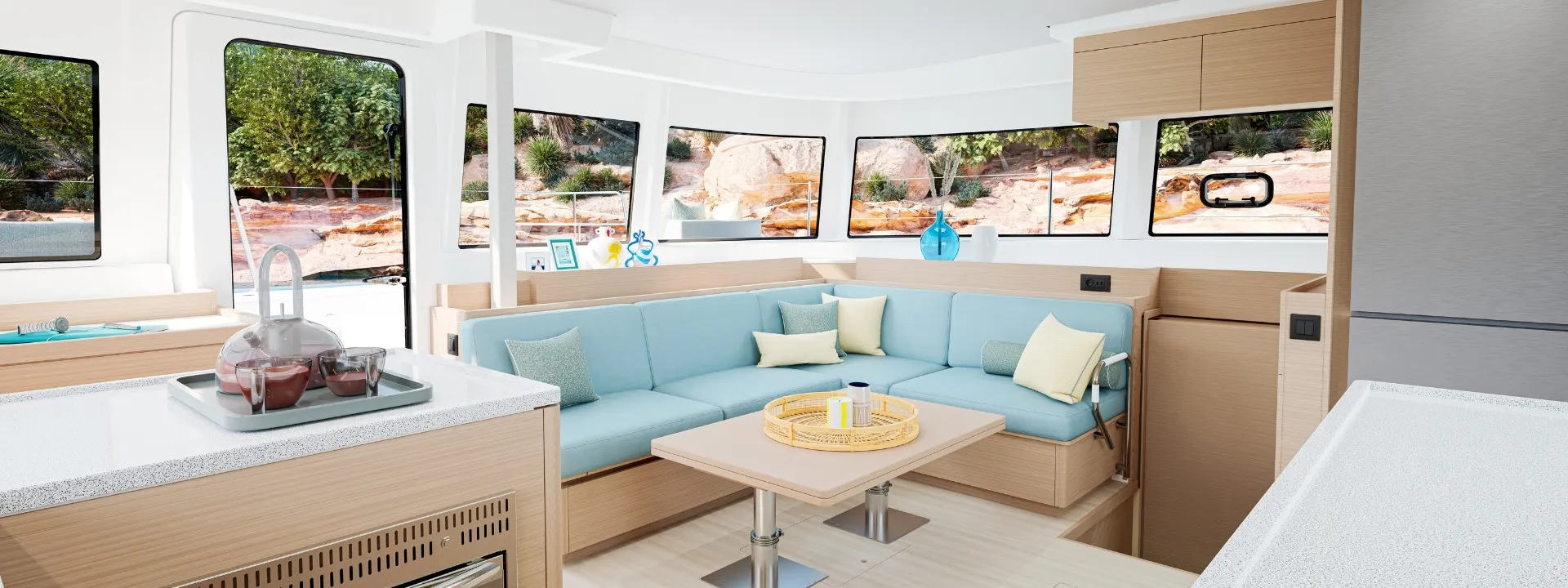
It is a boat organized around long stays rather than long passages, and around how you move through it: the door between the forward cockpit and the saloon, a convertible smart room that becomes a workspace, an extra cabin or storage as your plans change, and a choice between a flybridge version and a bimini version depending on how much structure you want overhead. Tankage is 227 gal (860 L) of fuel and 185 gal (700 L) of water. One honest caveat: this is a brand-new model and Lagoon still labels the specification preliminary data, subject to change.

Performance & Handling

Auxiliary power is Twin Yanmar (2 x 57 HP) diesels, turning a hull drawn by VPLP Design. The shallow 4'1" (1.25 m) draft is the number that matters most for where you can take her: it opens up the sandbanks and back-channel anchorages that keep deeper boats out in the open roadstead, and it does that on a 26'1" (7.96 m) beam that keeps the platform stable at anchor.

Under sail the standard configuration is deliberately undemanding. A 624 sq ft furling mainsail is standard equipment rather than an option, inside a total upwind sail area of 1,377 sq ft, which means shortening sail is a matter of rolling canvas away rather than dropping and flaking it on a boom over your head. That is the single largest reduction in effort a shorthanded crew can be handed, and together with the helm on the flybridge it is what makes a 49-footer credible for a couple. Worth knowing before you compare spec sheets: Lagoon still labels the 47's published data preliminary and subject to change.

Interior & Accommodations

The forward cockpit is the headline. At 12 m² it is a room, not a passage, and the door connecting it directly to the saloon means it stays in use in weather that would leave a conventional foredeck lounge empty. From bow to stern the boat is designed for uninterrupted movement, and that continuity is what buyers notice first when they step aboard.

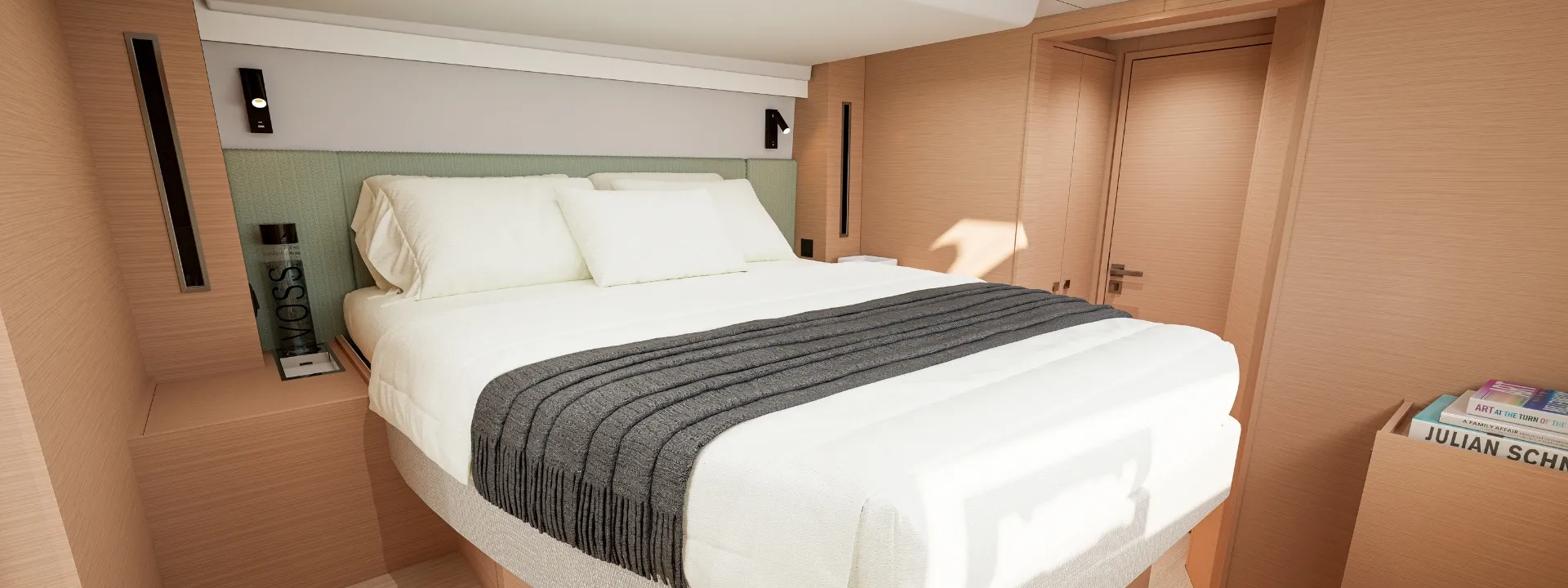
Above, the flybridge is fitted with a large bench seat, a coffee table and sun loungers — a full outdoor living space with an ocean horizon in every direction — while a bimini version is offered for owners who would rather carry less structure aloft. Below, the layout runs from three cabins to five, six to thirteen berths, with the smart room as the flexible piece: workspace, extra cabin or convertible space, chosen to match how you actually sail. Nauta Design provides a range of exclusive interior schemes, so two 47s delivered the same month need not look alike.

Market Position

The 47 slots into the Lagoon range directly above the 47'7" Lagoon 46 Iconic and below the 51'2" Lagoon 51 Iconic, and it is the model that reframes that middle ground: rather than simply adding length, it adds usable rooms — the door-linked forward cockpit and the smart room — inside the same 26'1" beam the 46 Iconic already uses. It remains an owner-operator boat, sized to be run by a couple with no professional crew, and the five-cabin layout keeps it viable for charter fleets. Cross-brand, it lands against the Fountaine Pajot Tanna 47, the Bali 4.8 and the Leopard 46 — the same mid-to-high-forties class, where the Lagoon's argument is circulation and layout flexibility rather than sail-plan ambition.

Who the 47 Is For

Choose the Lagoon 47 if you are buying for how you live aboard rather than how quickly you get there: if the idea of walking from the saloon into a sheltered 12 m² forward cockpit sounds like the thing you would use every single morning, and if a configurable smart room solves a real problem — an office, a dive locker, a teenager who wants their own door — better than a fifth cabin would. Take the three-cabin layout with the smart room unless you are genuinely chartering the boat. But be clear-eyed on the trade-offs: this is a new model whose numbers Lagoon still calls preliminary, its official imagery is renders rather than delivered boats, and it carries 227 gal (860 L) of fuel where the shorter 46 Iconic carries 275 gal (1,040 L). If you want a proven hull with owners you can call before you sign, buy the 46 Iconic; if you need six cabins and a genoa, step up to the 51 Iconic.

Lagoon 47 Articles & Guides

Compare With

Frequently Asked Questions

How many cabins and berths does the Lagoon 47 have?

Three to five cabins, and six to thirteen berths. Lagoon builds the 47 in 3-5 Cabins, and the version most private owners want is the three-cabin boat with the smart room — a configurable space that becomes an office, a workshop, storage or an extra cabin depending on the season and on who is travelling with you.

The five-cabin arrangement exists for charter fleets and for families who genuinely need every door to close. Interiors are by Nauta Design in a range of exclusive schemes, so two 47s delivered the same month need not look alike. One thing to know while you shop: Lagoon still labels the 47's published specification preliminary data, subject to change.

Should I buy the Lagoon 47 or the Lagoon 46 Iconic?

Buy the 47 if the layout is what you are buying, and the 46 Iconic if a proven boat is. The 47's whole case is circulation: a door connecting the forward cockpit directly to the saloon, which turns 12 m² of foredeck into a room rather than a route to the anchor, plus a smart room that adapts as your plans change.

The case for waiting is just as honest. This is a brand-new model, Lagoon still calls its published data preliminary and subject to change, and the official imagery is renderings rather than photographs of delivered boats — so you cannot yet walk one you did not order. The 46 Iconic has hulls in the water and owners you can call before you sign. And if what you actually want is six cabins and a genoa to trim, skip both and look at the 51 Iconic.

What engines does the Lagoon 47 have, and can a couple handle her short-handed?

She carries Twin Yanmar (2 x 57 HP) diesels, and yes — the 47 is laid out to be run by two people. The furling mainsail is standard equipment rather than an option, so shortening sail means rolling canvas away instead of dropping and flaking it on a boom over your head. That is the single biggest reduction in effort a short-handed crew can be handed.

Total upwind sail area is 1,377 sq ft, with 624 sq ft of that in the standard furling main, and the helm sits up on the flybridge with the boat laid out in front of you. A 4'1" (1.25 m) draft and a 26'1" (7.96 m) beam make her forgiving in thin water and settled at anchor. Note that Lagoon publishes no speed figures for the 47, so treat any number you see quoted as somebody's estimate rather than a factory specification.