
August 29, 2026
The Bali 4.2: A Door From the Saloon Onto the Foredeck
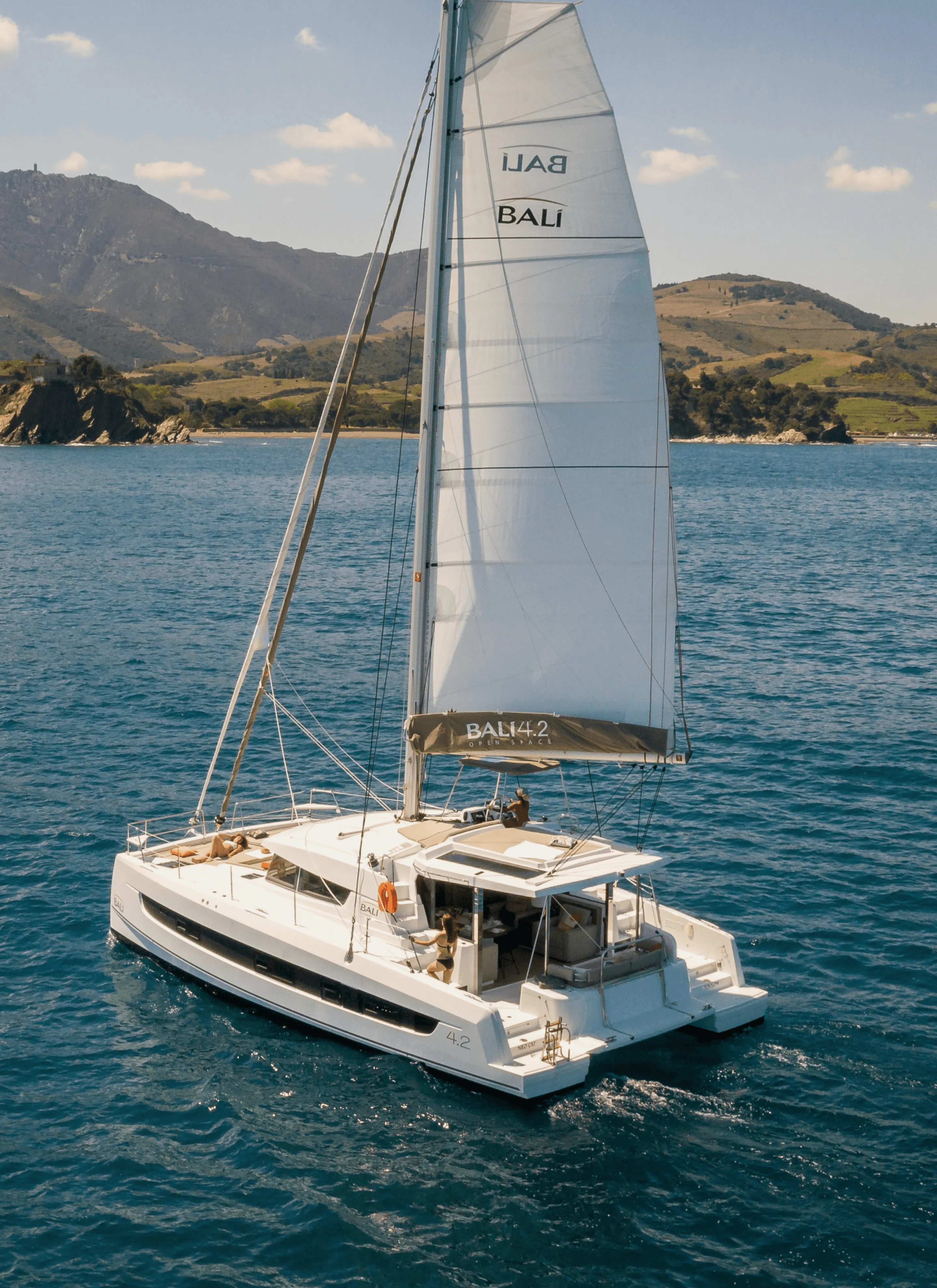
The Bali 4.2 is the smallest boat in the range with a door from the saloon straight onto the foredeck: 852 sq ft of usable deck on 42'2", a …
Read the articleExpert Review, Technical Specifications & Market Analysis
| Feature | Specifications |
|---|---|
| Overall Length | 42'2" |
| Beam | 23'2" |
| Draft | 4'0" |
| Displacement | 25,133 lbs |
| Engines | Twin Diesel (2 x 30 HP) — standard (2 x 45 HP optional) |
| Fuel Capacity | 169 gal |
| Water Capacity | 228 gal |
| Cabins / Heads | 3-4 Cabins / 3-4 Heads |
| Max Speed | - |
| Cruise Speed | - |
Source: Spec & Photos courtesy of Bali Catamarans.
Getting from the saloon to the front of your own boat should not mean going outside and around. On the Bali 4.2 it is a door: the galley and saloon open directly onto the forward cockpit, so the foredeck dining area is a room you walk into. Above it sits a flybridge, and around it 852 sq ft of usable deck on a 42'2" hull.
Part of the Bali Catamarans Cruising series — see how owners step up through the lineup.

The 4.2 is where the Bali idea arrives complete, and the piece that completes it is a door. On the two smaller boats the foredeck is a lounge you reach along the side deck. Here the galley and saloon open straight onto the forward cockpit, and that changes what the space is for. A foredeck you can reach from inside gets used at breakfast, in a squall, and with small children on board. A foredeck you have to walk around to gets used on flat afternoons. That is the whole step up, and I think it is worth taking.
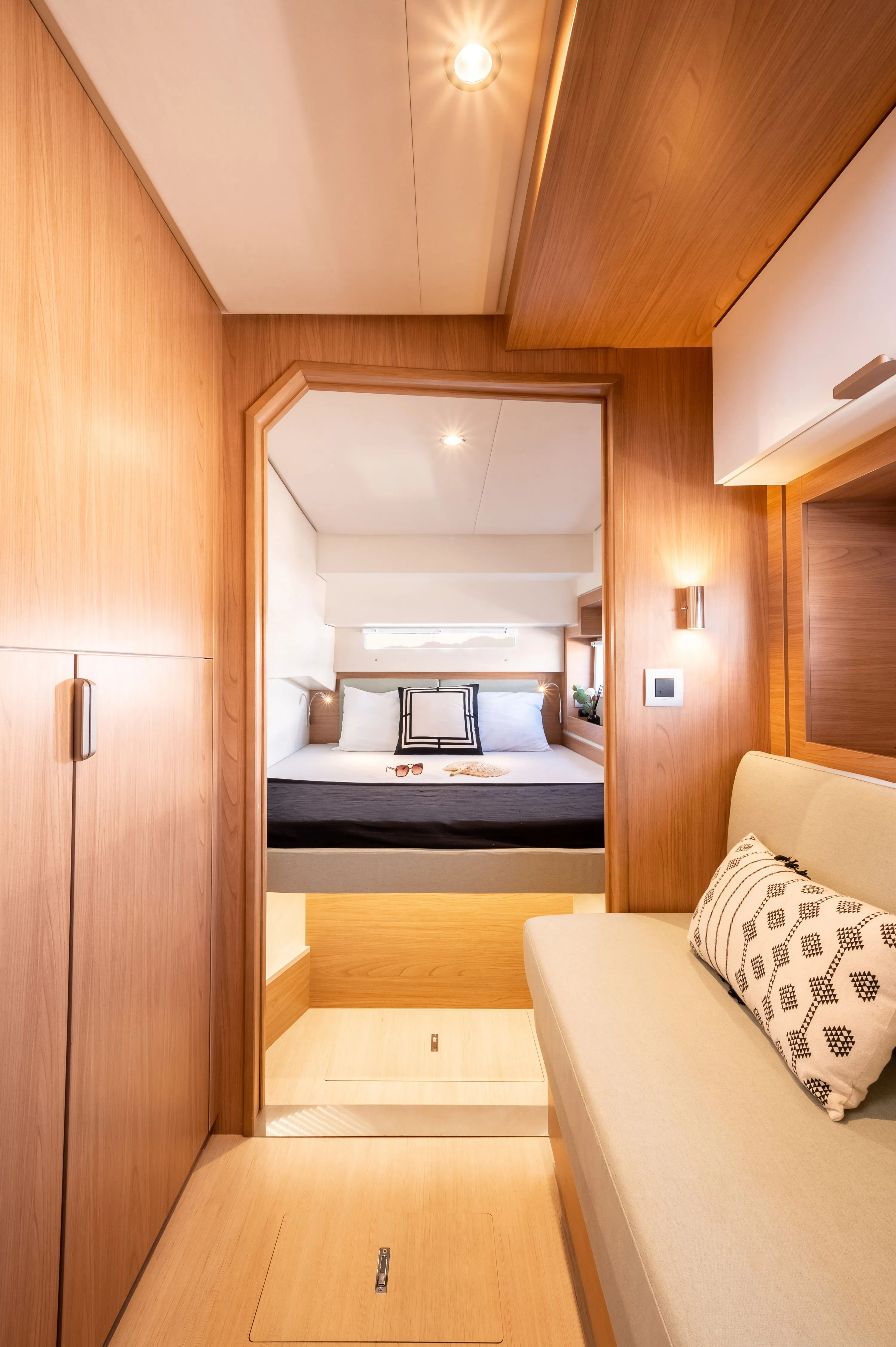
The other thing I would point at is below decks. Every cabin has its own shower room and toilet in both layouts, which means the four-cabin version is a real four-cabin boat rather than a charter compromise you have to talk yourself into. Match the layout to how often you genuinely fill the berths — three cabins gives an owner a proper private end of the boat, and most private owners are happier with it.
Two practical notes. Confirm the foredeck door seals and drains under a hose before you accept the boat; it is the mechanism you will use most and the one worth being fussy about. And be honest about load — 25,133 lbs empty against 36,372 lbs at maximum load sounds like plenty of margin until the tender, the toys and a season's provisions are aboard. Beyond that this is a conventional, accessible boat with nothing exotic to source, which is exactly what you want at this size.
Video courtesy of Bali Catamarans.

Photos courtesy of Bali Catamarans.
The Bali 4.2 is a sailing catamaran of 42'2" (12.86 m) overall on a 23'2" (7.07 m) beam, drawing 4'0" (1.22 m). Hull length is 40'1" and waterline length 40'3". Empty weight is 25,133 lbs, with displacement at maximum load of 36,372 lbs.
She was designed by Olivier Poncin, with naval architecture by Xavier Faÿ and interiors by PIATON BERCO, and she is built by Catana. Usable deck area is 852 sq ft (79.2 m²) across four distinct areas — the rigid forward cockpit, the saloon, the aft deck and the flybridge — linked by a door from the saloon straight onto the foredeck. Tankage is 169 gal of fuel and 228 gal of water, with 336 liters of fridge and freezer. Layouts are three cabins and three heads or four cabins and four heads, every cabin with its own en suite shower room and toilet, and CE certification is A: 10 / B: 12 / C: 24 / D: 28 persons.
Auxiliary power is twin diesels; the numbers that shape how she is used are the 4'0" draft and the 23'2" beam. Four feet is shallow for a 42-foot boat and it is the figure that decides which anchorages are available to you; the beam is what keeps the platform level when everyone moves to one side of it.
Under sail she carries 968 sq ft as standard, rising to 1,259 sq ft of maximum upwind sail area, on a hull drawn by Xavier Faÿ and built by Catana for stiffness through the nacelle. The helm is on the flybridge, which keeps the person steering in sight of the whole boat and in the conversation. At sea trial, work her onto and off a berth in a crosswind from the flybridge helm, confirm the foredeck door seals and drains under a hose before you accept the boat, and ask for observed fuel burn at your intended cruising rpm in writing so you can work your own numbers off the 169 gal tankage.
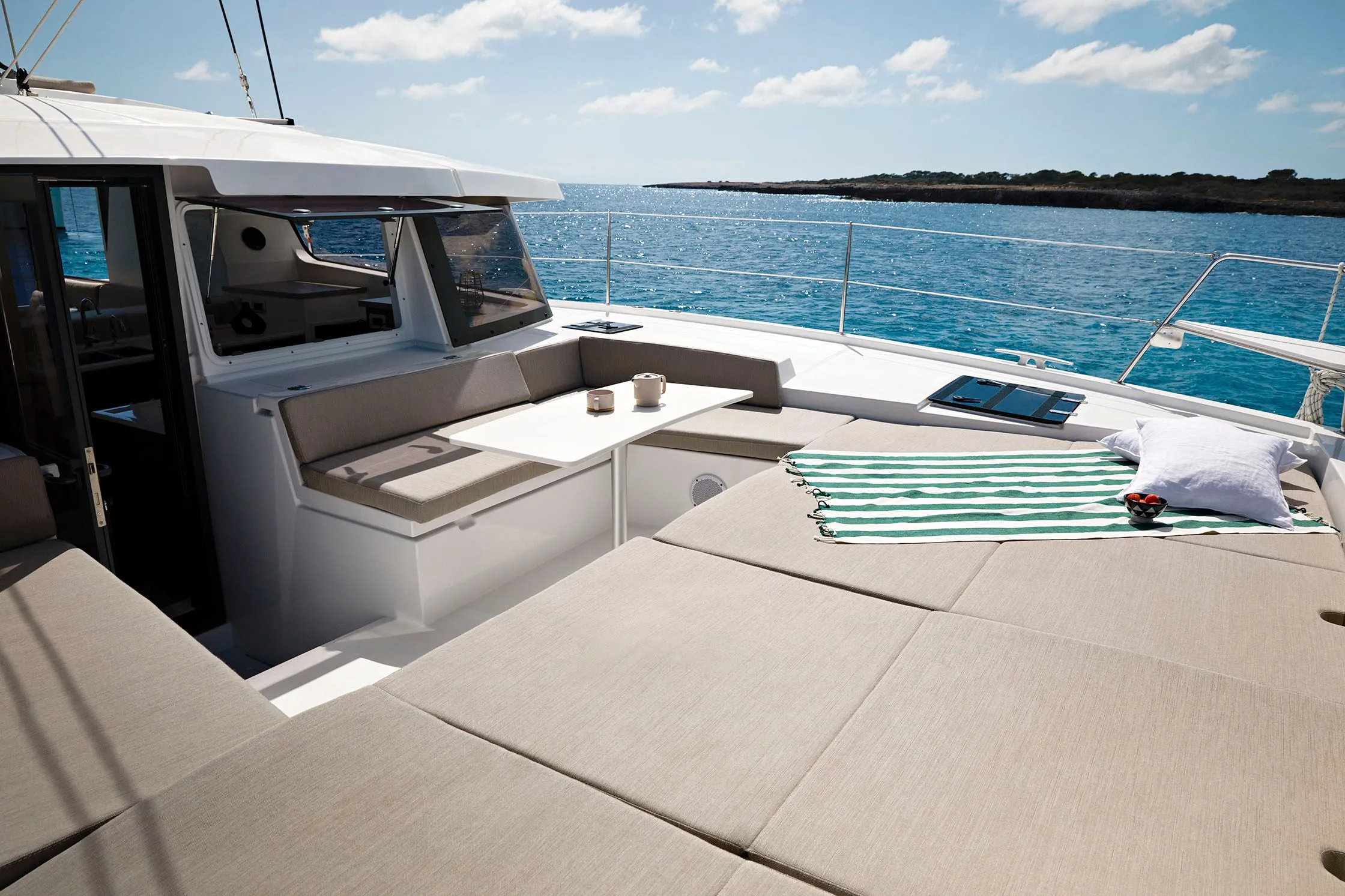
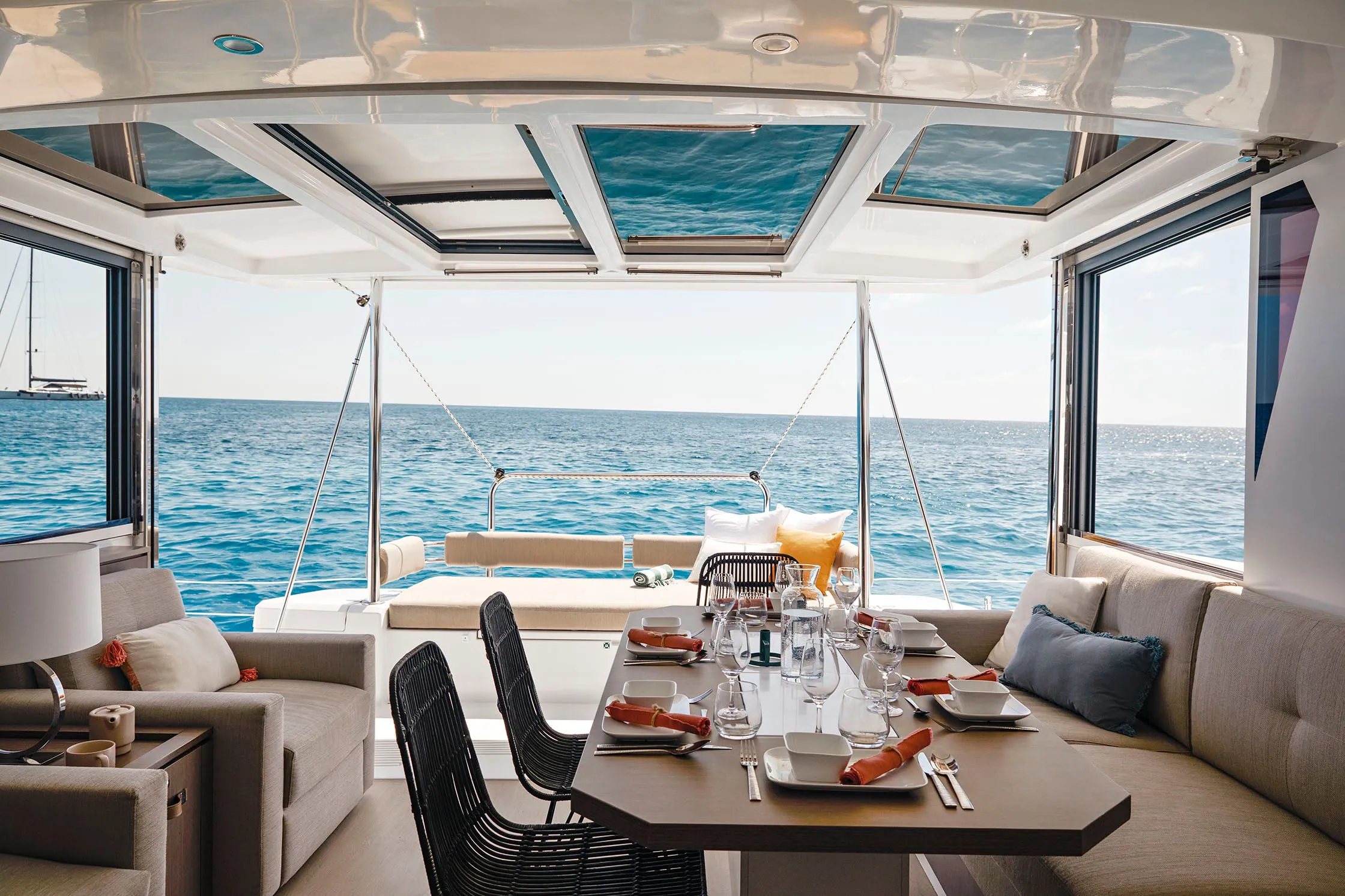
The saloon is light-filled and sits level with a spacious galley, and the two of them open forward onto the forward cockpit dining area through a dedicated access door. That door is what separates the 4.2 from the smaller boats in the range: the foredeck stops being a place you go out to and becomes the next room along, which means it gets used at breakfast and in weather, not only on flat afternoons.
Below, three- and four-cabin versions are offered and every cabin has its own en suite shower room and toilet, so the four-cabin layout carries two couples without anybody sharing. Outside, the flybridge and the rigid-decked forward cockpit both carry sunbathing and lounging areas, and the aft deck takes a plancha grill and turns into an exterior saloon — which in practice is where the evening ends up.
The 4.2 sits above the 40'5" Catspace and below the 44'3" 4.4, and it is the model where the full Bali architecture arrives: rigid foredeck, flybridge, and the saloon-to-foredeck door that the two compact models do without. Going from the Catspace to the 4.2 buys about 95 sq ft more usable deck, a foot and nine inches more beam, and that door.
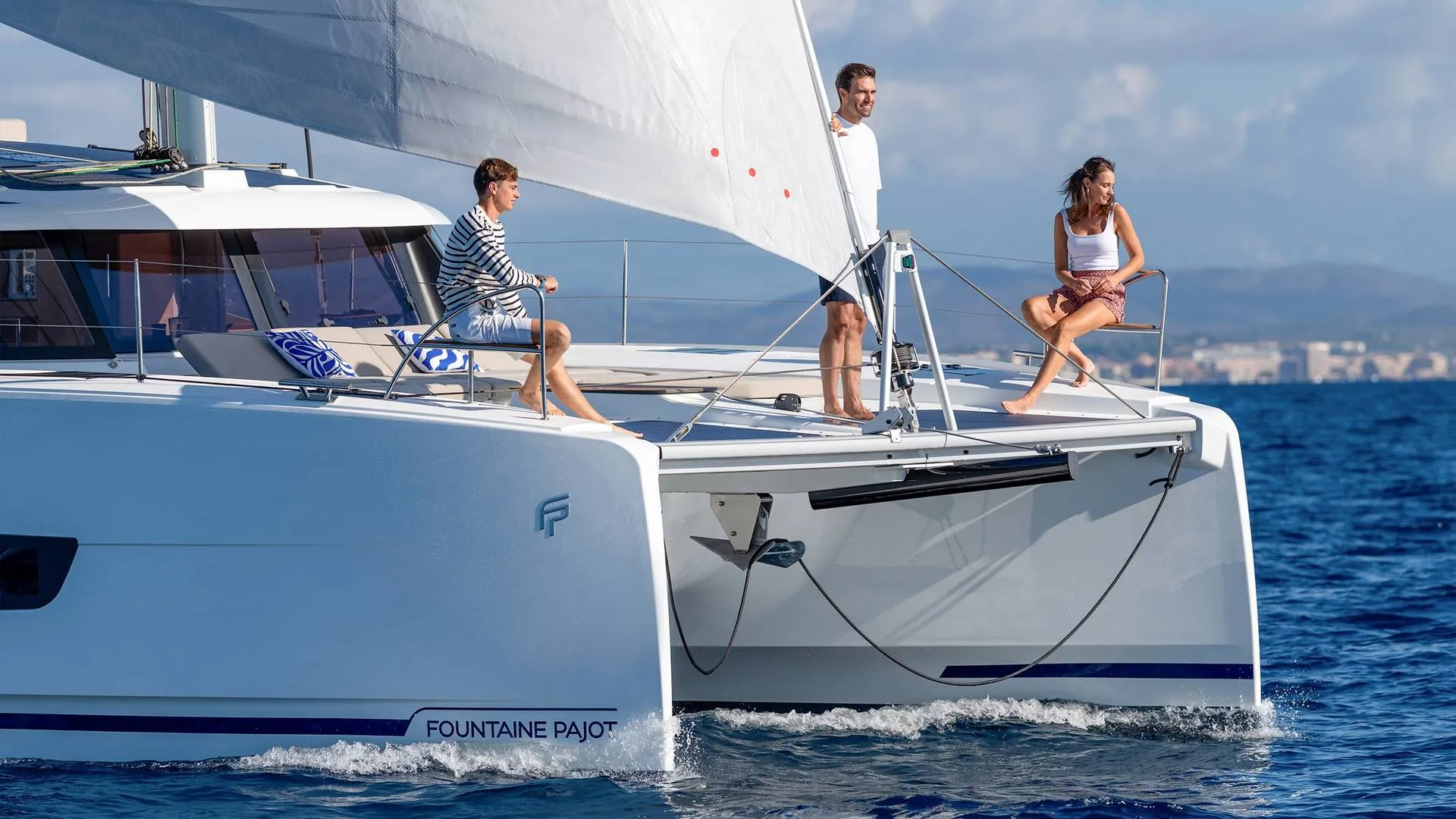
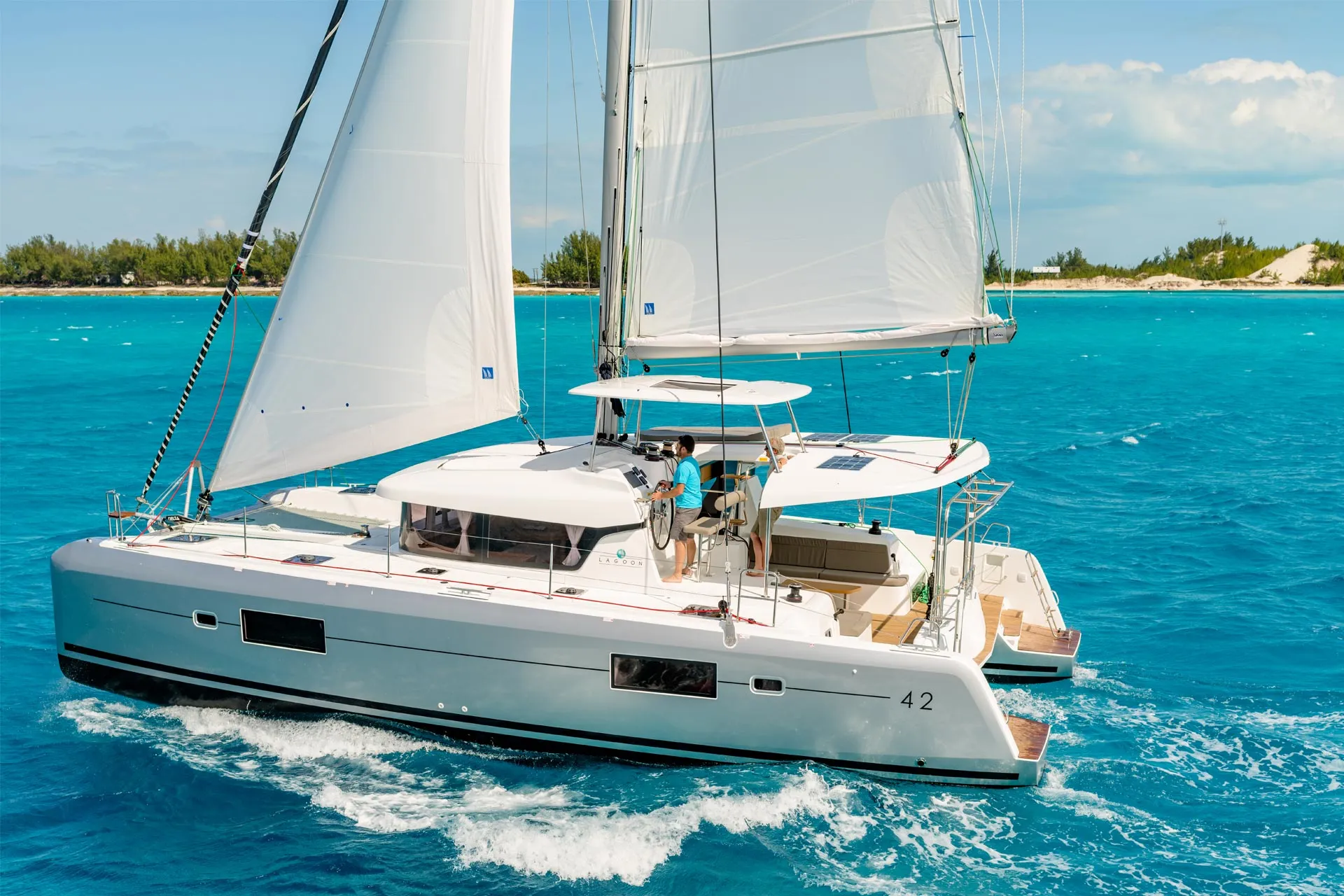
Cross-brand it lands against the Fountaine Pajot FP44 at 43'6" and the Lagoon 42 Millenium — the low-forties cruising class where most first serious catamaran purchases happen. The Bali's argument there is circulation: 852 sq ft of deck arranged so you can walk the whole boat without going around the outside of it.
Choose the Bali 4.2 if you want the brand's full layout argument at the smallest length it is offered. The door onto the foredeck is the reason to step up from the Catspace, and it is worth stepping up for if you cruise in real weather or with young children, because it turns the forward cockpit into a room you can supervise from the galley. Every cabin having its own head makes the four-cabin version genuinely liveable rather than a charter compromise.
Match the layout to the truth about how often you fill the boat: three cabins gives an owner a real private end, four exists for charter and for families who need the berths. Be clear-eyed on load — 25,133 lbs empty against 36,372 lbs at maximum load, on 169 gal of fuel and 228 gal of water. If you want the same architecture with more sail and an owner's cabin sized up, the 44'3" 4.4 is the next step; if the foredeck door is not what you are buying, the Catspace does three outdoor zones for less boat.
169 US gallons of fuel and 228 gallons of water, with 336 litres of fridge and freezer capacity.
For passage planning, get observed consumption at your intended engine settings in writing at sea trial and work your own numbers off the 169 gallons. Light displacement is 25,133 lbs, rising to 36,372 lbs at maximum load.
852 sq ft (79.2 m²), spread across four distinct areas: the rigid forward cockpit, the saloon, the aft deck and the flybridge.
Because the foredeck is a moulded platform rather than netting, all of it counts as space you can furnish and use. That is what the figure is measuring, and it is why it is the number worth comparing between models.
The door. On the 4.2 the galley and saloon open directly onto the forward cockpit, so the foredeck dining area is a room you walk into rather than a deck you go around to reach.
The 4.2 also carries more of everything: 852 sq ft (79.2 m²) of usable deck against the Catspace's 757, 169 gallons of fuel against 106, and a 23'2" beam against 21'5".
Three cabins with three heads, or four cabins with four heads. Every cabin gets its own shower room and toilet in both versions.
CE certification is category A for ten people, B for twelve, C for twenty-four and D for twenty-eight.
4'0" (1.22 m) of draft on a 23'2" (7.07 m) beam, over 42'2" (12.86 m) overall. The draft opens up shallow cruising grounds; the beam is what your marina will ask about.
Settle slip and haul-out arrangements before the deposit. Catamaran beam is much harder to accommodate late than length is.