
August 17, 2026
The Fountaine Pajot FP44: A Floating Island Built for the Long Game
Designed for serious cruisers, the Fountaine Pajot FP44 pairs bluewater autonomy - 159-gal water, 185-gal fuel - with resin-infused construc…
Read the articleExpert Review, Technical Specifications & Market Analysis
| Feature | Specifications |
|---|---|
| Overall Length | 43'6" |
| Beam | 24'5" |
| Draft | 5'2" |
| Displacement | 31,747 lbs |
| Engines | Twin Yanmar 3YM30 (2 x 30 HP) |
| Fuel Capacity | 185 gal |
| Water Capacity | 159 gal |
| Cabins / Heads | 3-4 Cabins / 3-4 Heads |
| Cruise Speed | 7-9 knots (under sail/power) |
Source: Spec & Photos courtesy of Fountaine Pajot.
You want to leave for three weeks without rationing water or checking the forecast twice a day. The FP44 is the range's bluewater-minded mid-forty.
Part of the Fountaine Pajot FP Sailing series — see how owners step up through the lineup.

The FP44 represents Fountaine Pajot's commitment to building catamarans for people who actually sail them offshore. The resin-infused hull is lighter and stiffer than what you'll find on most production cats in this size range, and the twin Yanmar 30 hp engines are reliable workhorses. The optional 57 hp upgrade is worth considering if you cruise areas with strong currents or need more authority in tight quarters. The helm position strikes the right balance between visibility and communication with the crew, and the sail controls are intelligently positioned for short-handed operation. This is not a boat that cuts corners on engineering.
This boat is built for couples or small families planning extended cruising—think six months in the Caribbean or a Pacific crossing, not weekend trips to Catalina. The Maestro version with the customizable owner's suite makes sense for liveaboards who need workspace and storage. The Quatuor version works better for charter operators or families who prioritize equal cabin space over a dedicated master. If you're looking for a day-sailor or a boat to impress at the yacht club, this is the wrong platform. The FP44 rewards people who understand passage-making and value the engineering that makes long-term cruising comfortable rather than just tolerable.
The FP44 benefits from strong support and parts availability. The optional ODSea+ hybrid system, with up to 2,000 watts of solar, cuts generator runtime, which matters if you're anchoring out for weeks at a time. Maintenance is straightforward if you stay on top of it—the Yanmar engines are bulletproof, and the systems are accessible. This is a boat you can own for 10-15 years without regretting the purchase, assuming you actually use it the way it was designed to be used.
Video courtesy of Fountaine Pajot.
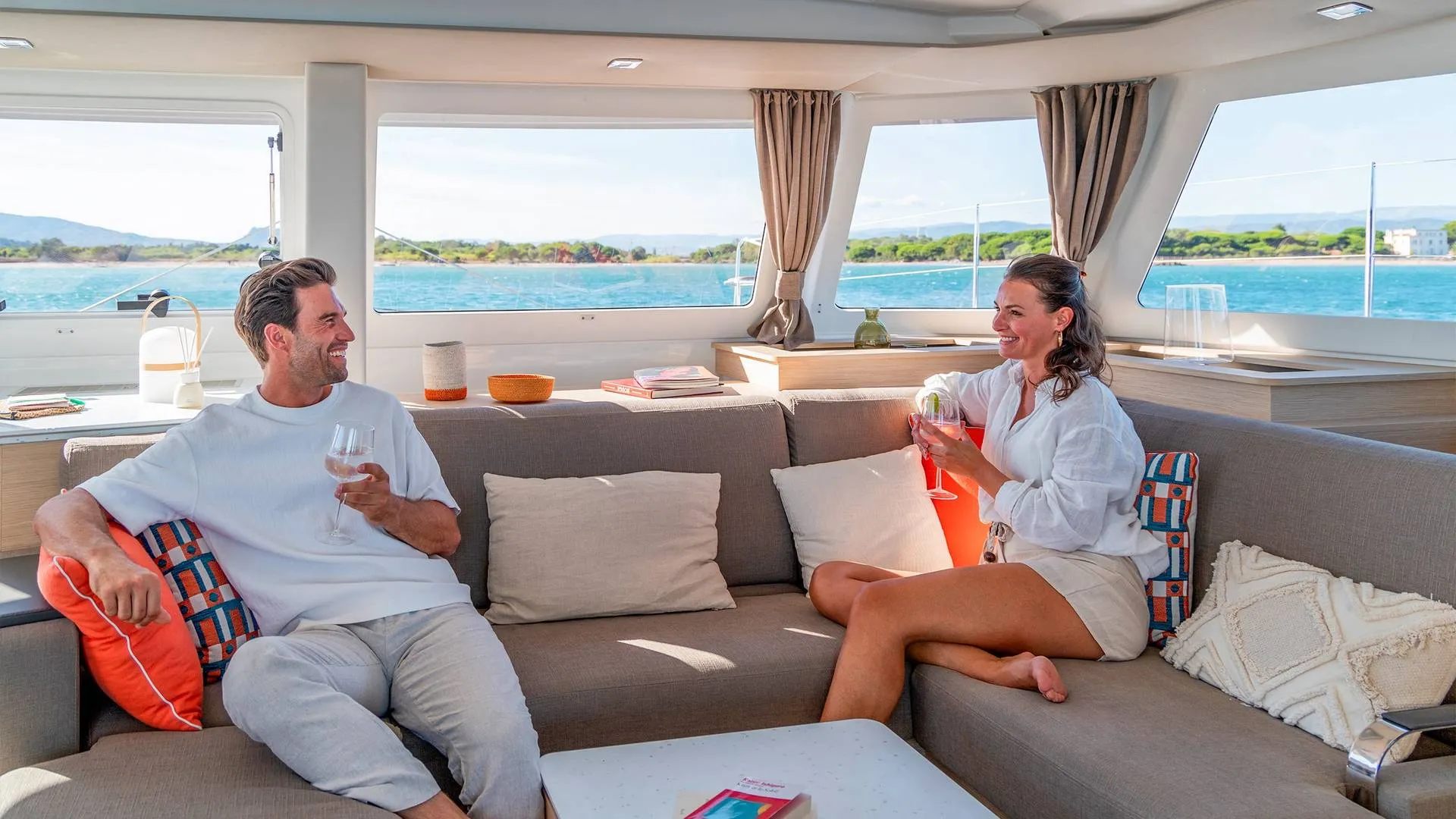
Photos courtesy of Fountaine Pajot.
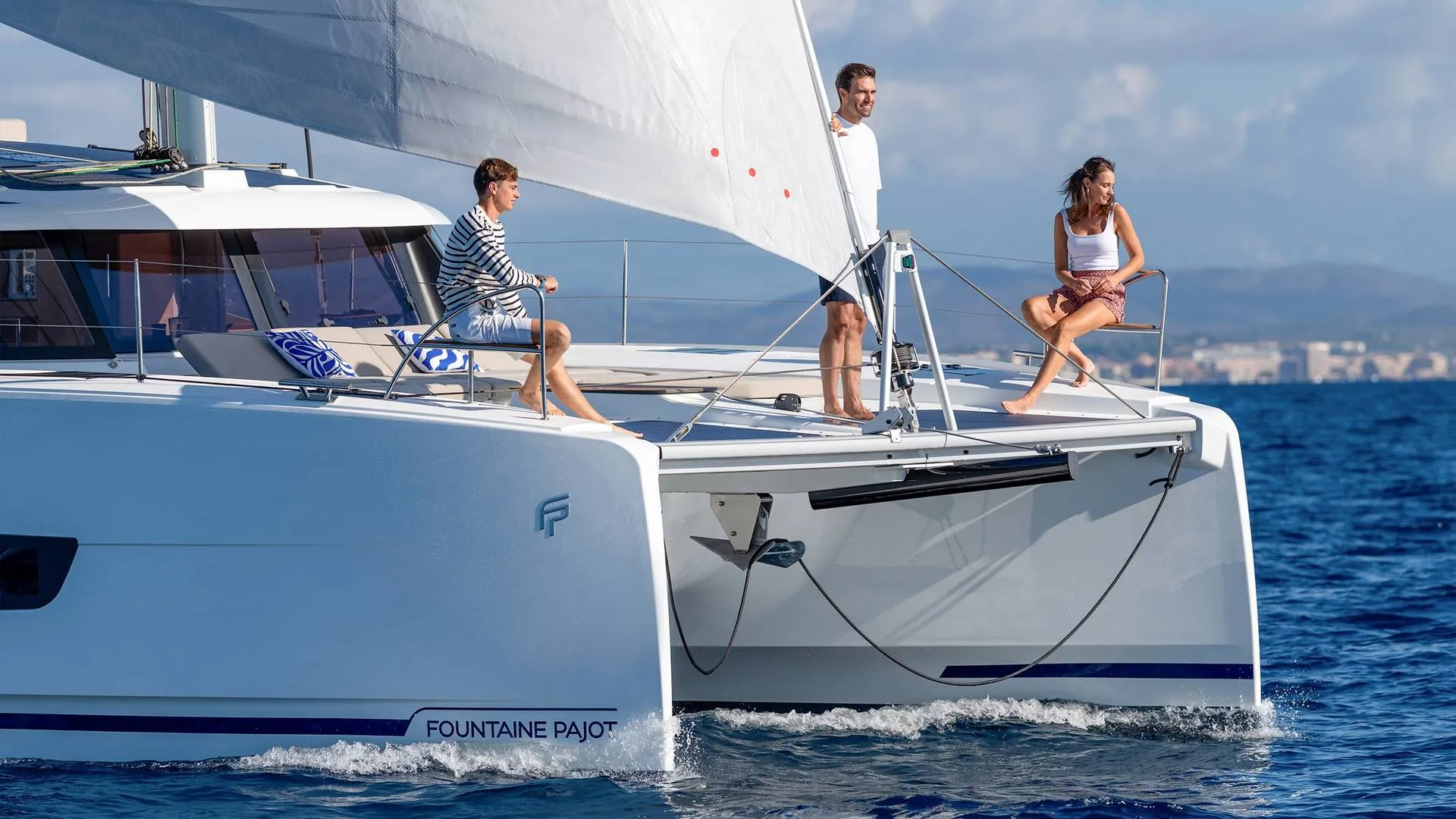
The FP44 is the new generation's mid-forty, successor to the Elba 45. Fountaine Pajot lists 43'6" overall on a 24'5" beam, 5'2" draft and 31,747 lbs unladen.
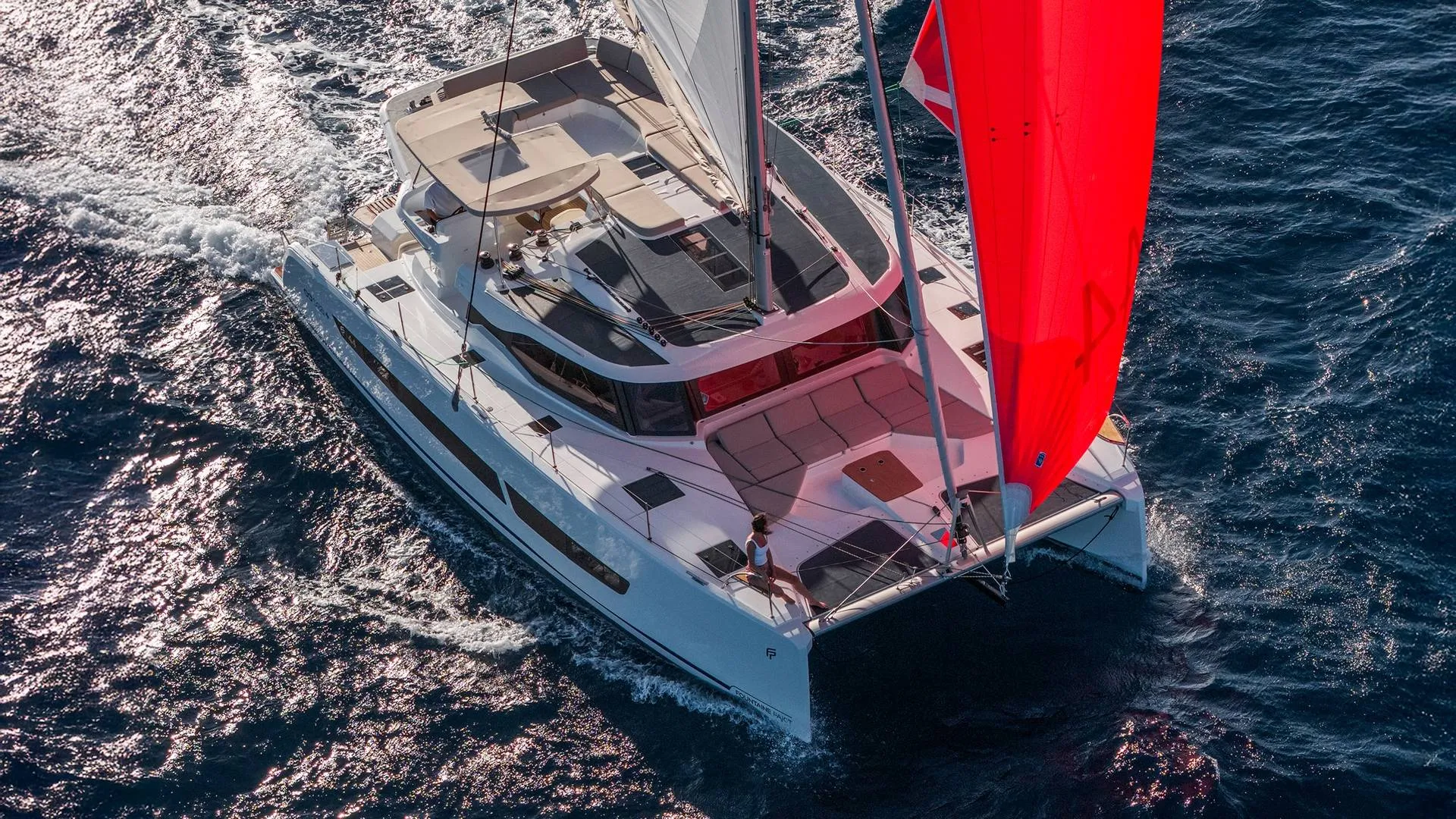
Fuel is 185 gallons against 159 gallons of water — more fuel than the FP41, for longer legs under power. The deck adds what the FP41 lacks: a genuine forward cockpit and a flybridge, giving three separated outdoor living zones.
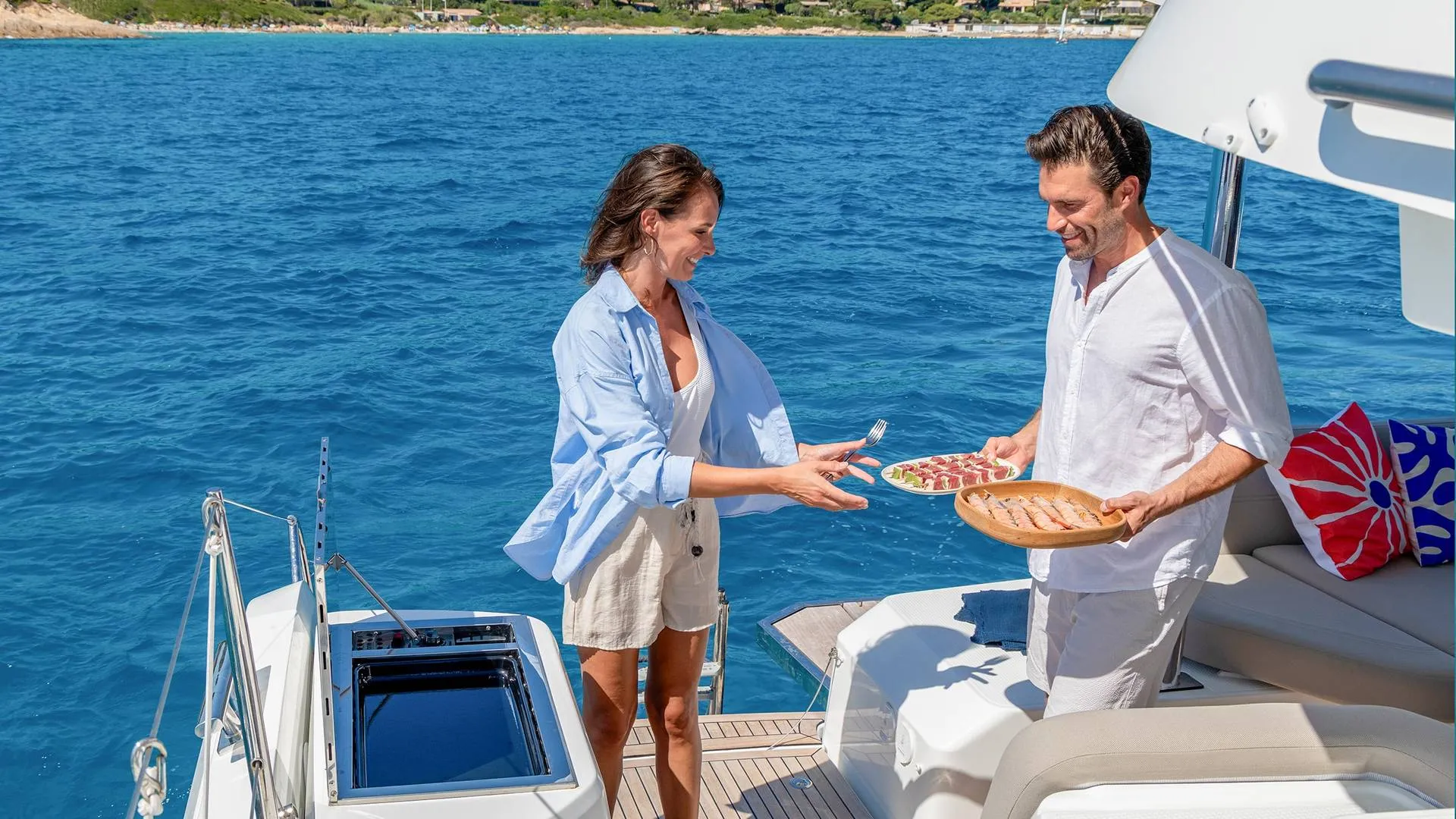
The saloon opens to the aft cockpit through a fully opening window with a serving hatch, so the galley stays in the conversation whether the crowd is inside or out.
The FP44 cruises at 7-9 knots under sail; the double sea trial that logged it against the FP41 found the 44 the quicker of the pair, its test boat carrying the upgraded sail wardrobe.
Standard auxiliary power is twin 30 hp Yanmar 3YM30 diesels, with a 45 hp upgrade offered. Take the upgrade if your cruising grounds involve strong current or long windless motoring legs.
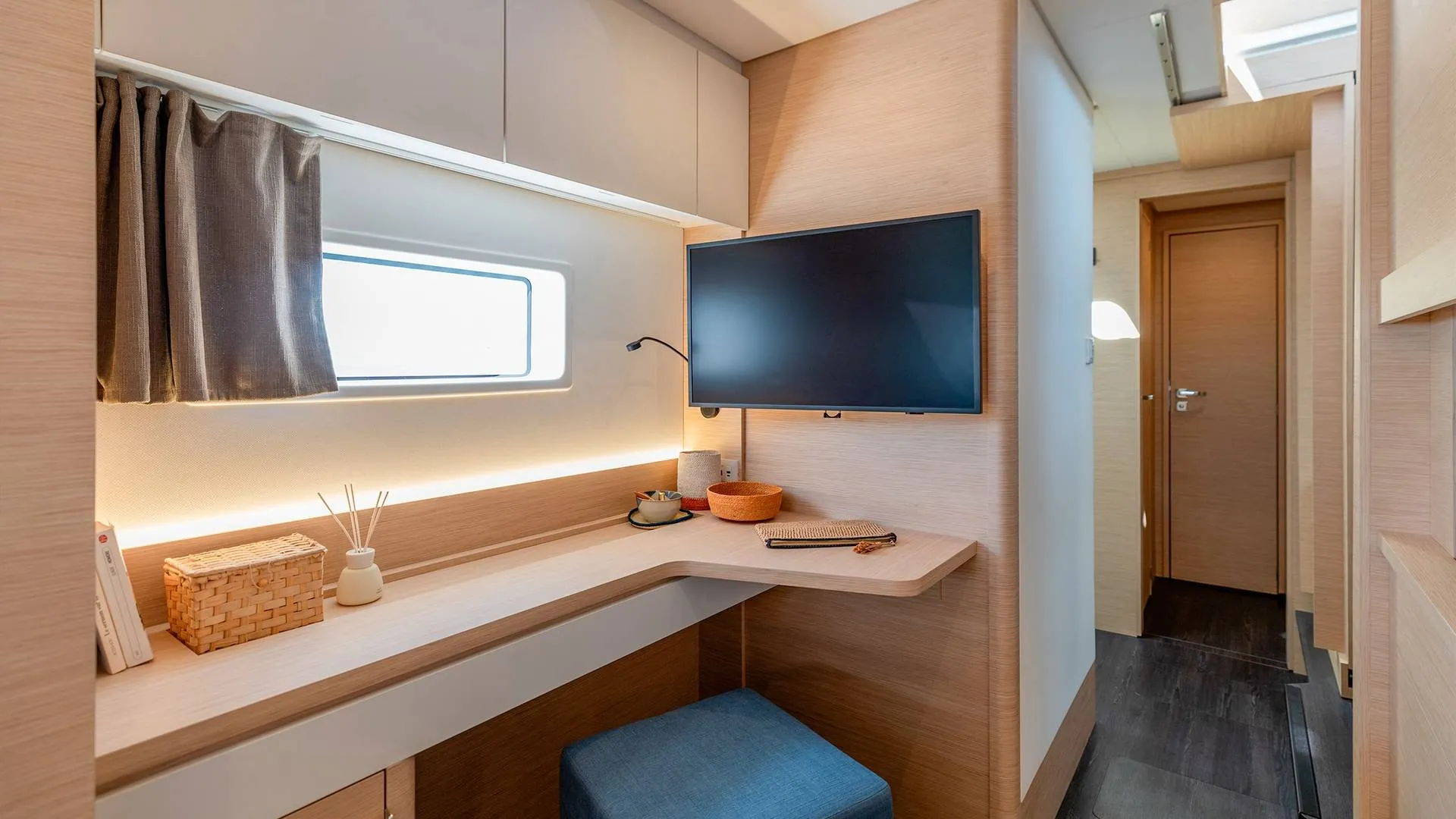
Maestro or Quatuor: the Maestro dedicates a hull to the owner, with options for a workspace in place of the extra berth; the Quatuor carries four equal cabins. The sheet spans 3-4 cabins and 3-4 heads.
Aft berths are set diagonally for easier access, forward cabins pick up usable beam from the hull chines, and the galley lives in the saloon rather than down a hull — the cook stays in company.
The mid-forties are where production catamarans stop being couples' boats and start being family platforms, and the FP44 is Fountaine Pajot's core product in that fight. Its case is range-minded tankage, three outdoor zones and the new generation's construction, not headline speed.
Within the range it sits one step up from the FP41 in fuel, deck plan and load-carrying; the FP48 above it adds cabins and volume for guests who stay longer.
Buy the FP44 if you are an owner-operator couple or small family planning extended cruising — a Caribbean season, a Mediterranean summer, eventually an ocean passage — and you want the smallest boat with a real forward cockpit and flybridge.
Step down to the FP41 if two of you sail alone and budget matters more than the third outdoor zone. Step up to the FP48 or FP51 if guests aboard are the rule rather than the exception.
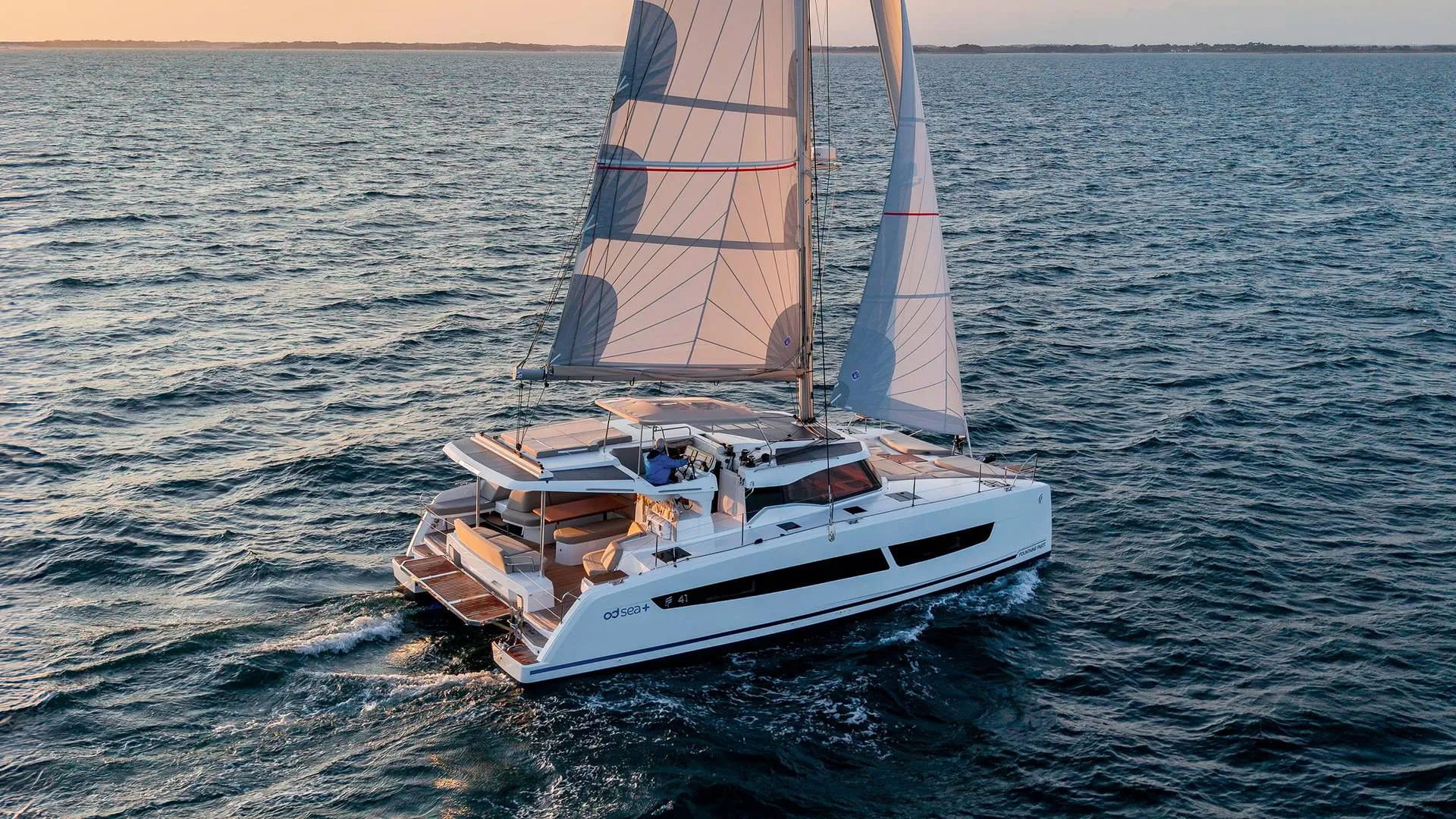
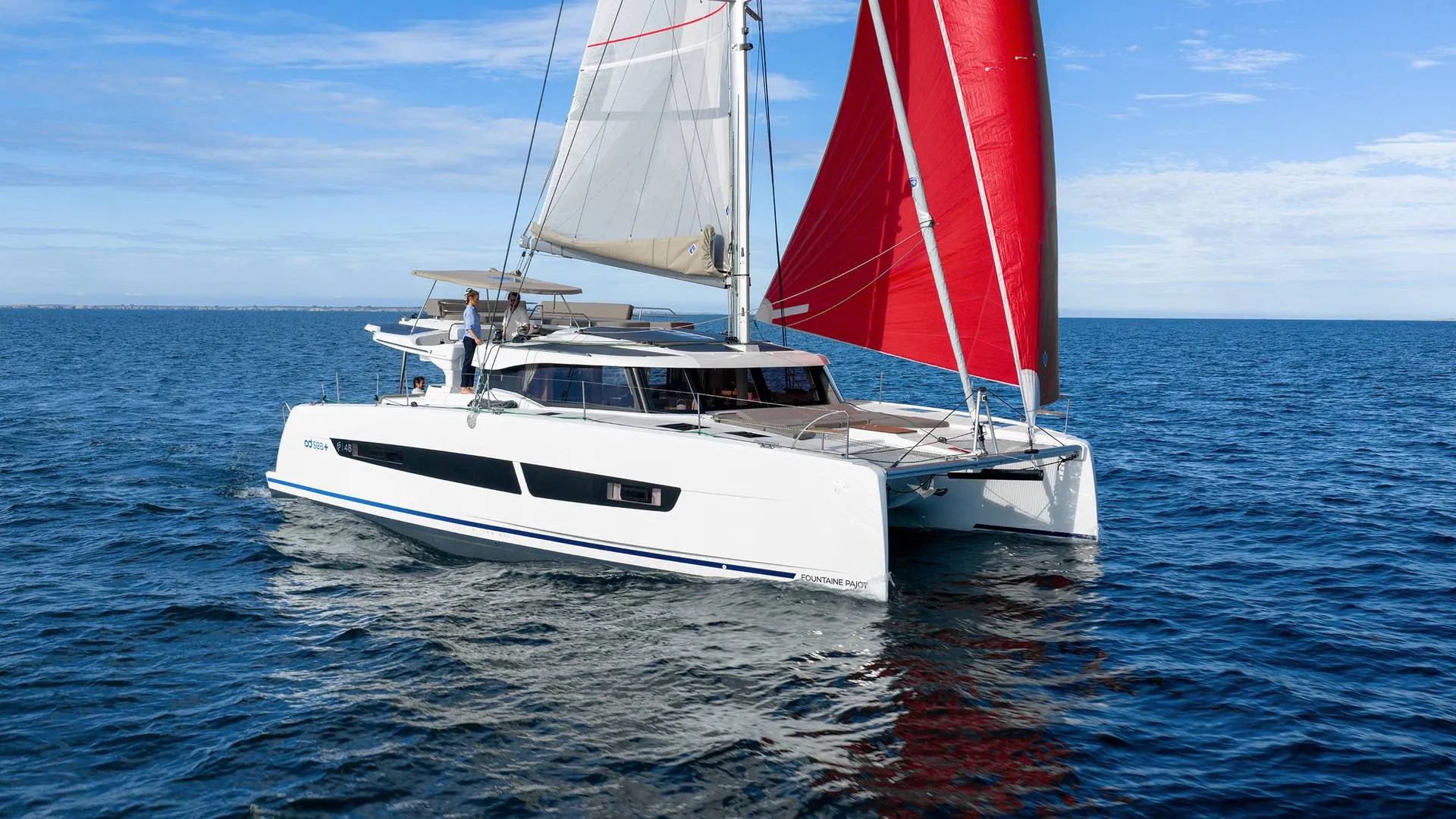
That is the program it is drawn for — a Caribbean season, a Mediterranean summer, eventually an ocean crossing. The 185-gallon fuel load supports longer legs under power, and a double sea trial against the FP41 found the FP44 the quicker of the pair, its test boat carrying the upgraded sail wardrobe. Take the 57 hp engine upgrade if your grounds involve strong current or long windless motoring.
Length, fuel and deck plan. The FP44 runs 43'6" against the FP41's 39'8", doubles the fuel to 185 gallons, and adds what the smaller boat lacks: a genuine forward cockpit and a flybridge, giving three separated outdoor living zones. Standard power steps up to twin 30 hp Yanmars, with a 57 hp upgrade offered.