
August 17, 2026
The Fountaine Pajot FP41: A 40-Footer That Thinks Like a 50
Fountaine Pajot's FP41 packs 50-foot livability into a 40-footer: a full-beam Maestro owner's suite, one continuous saloon-to-cockpit living…
Read the articleExpert Review, Technical Specifications & Market Analysis
| Feature | Specifications |
|---|---|
| Overall Length | 39'8" |
| Beam | 22'8" |
| Draft | 4'5" |
| Displacement | 27,337 lbs |
| Engines | Twin Yanmar 3YM20 (2 x 20 HP) |
| Fuel Capacity | 92 gal |
| Water Capacity | 159 gal |
| Cabins / Heads | 3-4 Cabins / 2-4 Heads |
| Cruise Speed | 7-9 knots (under sail/power) |
Source: Spec & Photos courtesy of Fountaine Pajot.
You want a catamaran two of you can actually sail, with the volume to live aboard for a season. The FP41 is the smallest boat in Fountaine Pajot's new generation.
Part of the Fountaine Pajot FP Sailing series — see how owners step up through the lineup.

Fountaine Pajot built the FP41 for owners who actually sail their boats, not for charter fleets or weekend warriors. The vacuum-infused construction keeps unladen displacement to about 27,000 pounds, which is light for a 40-foot cat with this much interior volume. The optional ODSea+ hybrid is the real story here—twin electric motors, a lithium battery bank, and hydrogeneration that puts charge back in while you sail. That's a genuine operational advantage, not a marketing gimmick. The deeper keels improve upwind performance compared to earlier Fountaine Pajot models, though this is still a cruising cat and it makes no apology for that.
This boat makes sense for the semi-retired couple planning extended cruising in the Bahamas, Caribbean, or Mediterranean. You need to be comfortable with systems and willing to engage with battery management and solar yield. The Maestro layout with the full-beam owner's suite is the right choice for most buyers—the Quatuor four-cabin version sacrifices too much owner comfort for guest capacity you probably don't need. The saloon-to-cockpit integration is excellent, and the mid-height helm station gives you good visibility without requiring a flybridge. It's a thoughtful design that prioritizes function over flash.
The open question is how the hybrid systems age over the next five to seven years — Fountaine Pajot has strong brand equity, and the FP41 fills a real gap in the 40-foot owner-operator market. The hybrid's electrical complexity asks more of you than a conventional diesel setup, and it gives back reduced generator hours in return. You buy this boat because it lets you disappear for three months without needing a crew or a diesel mechanic on call.
Video courtesy of Fountaine Pajot.
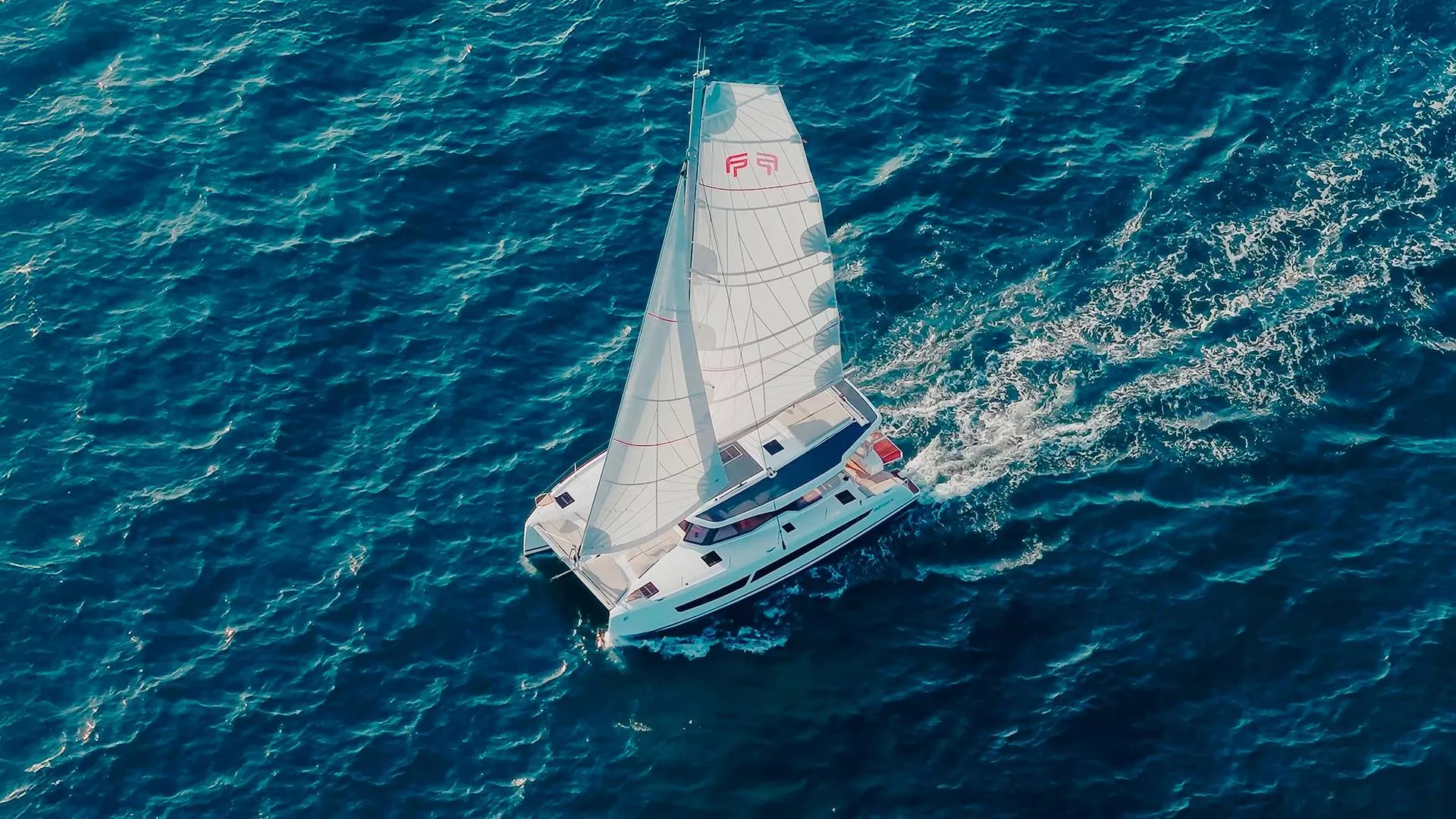
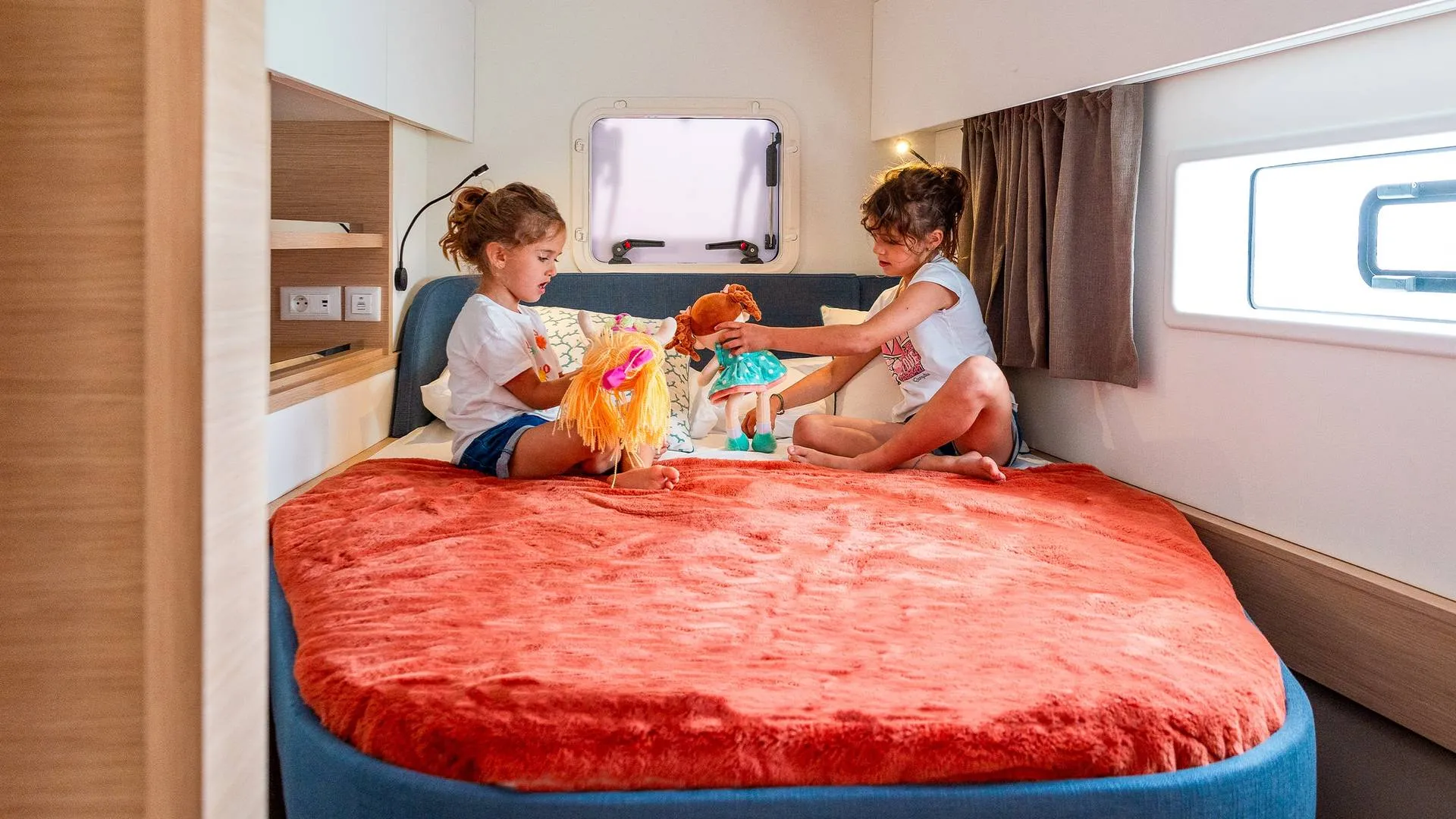
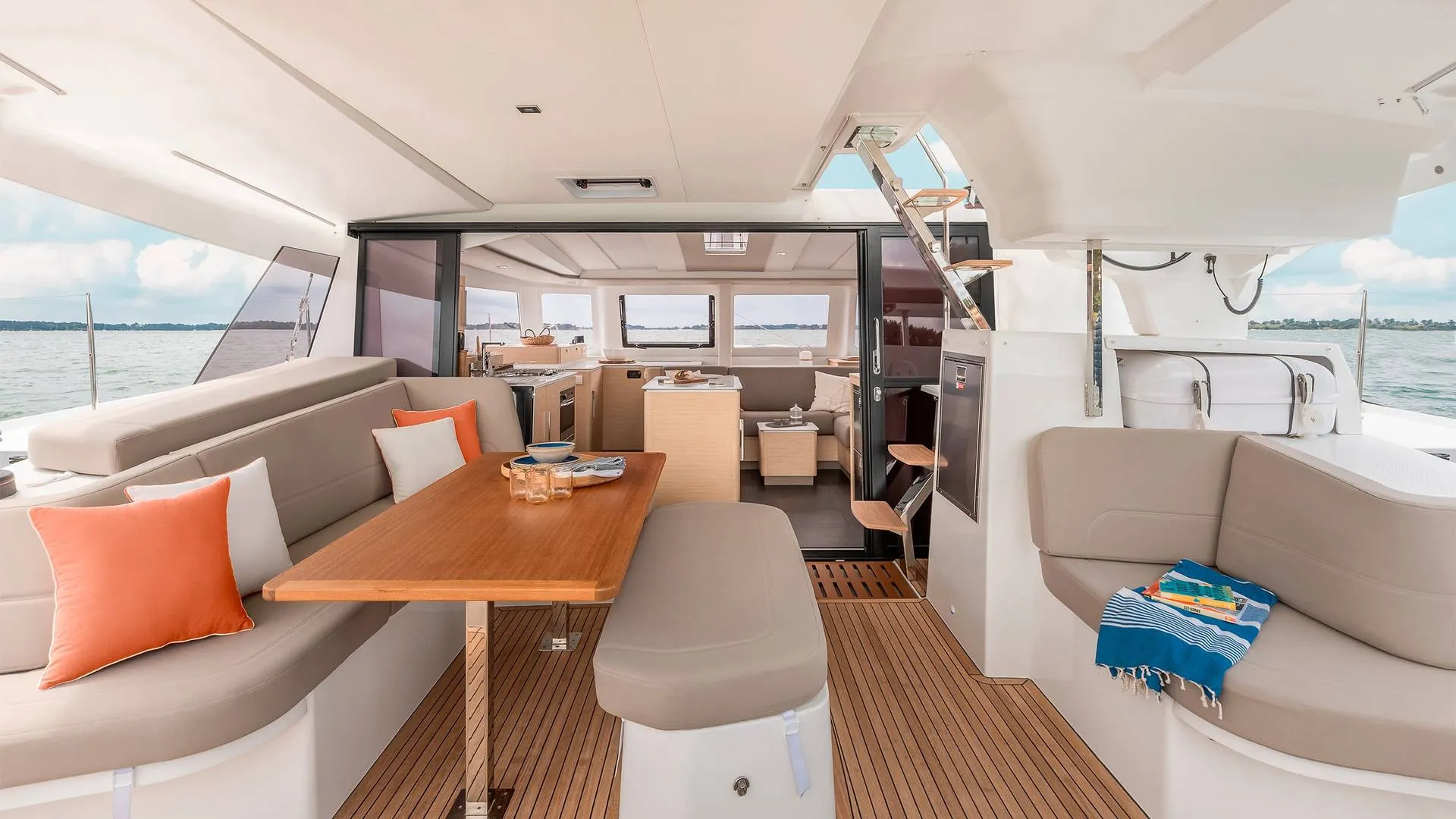
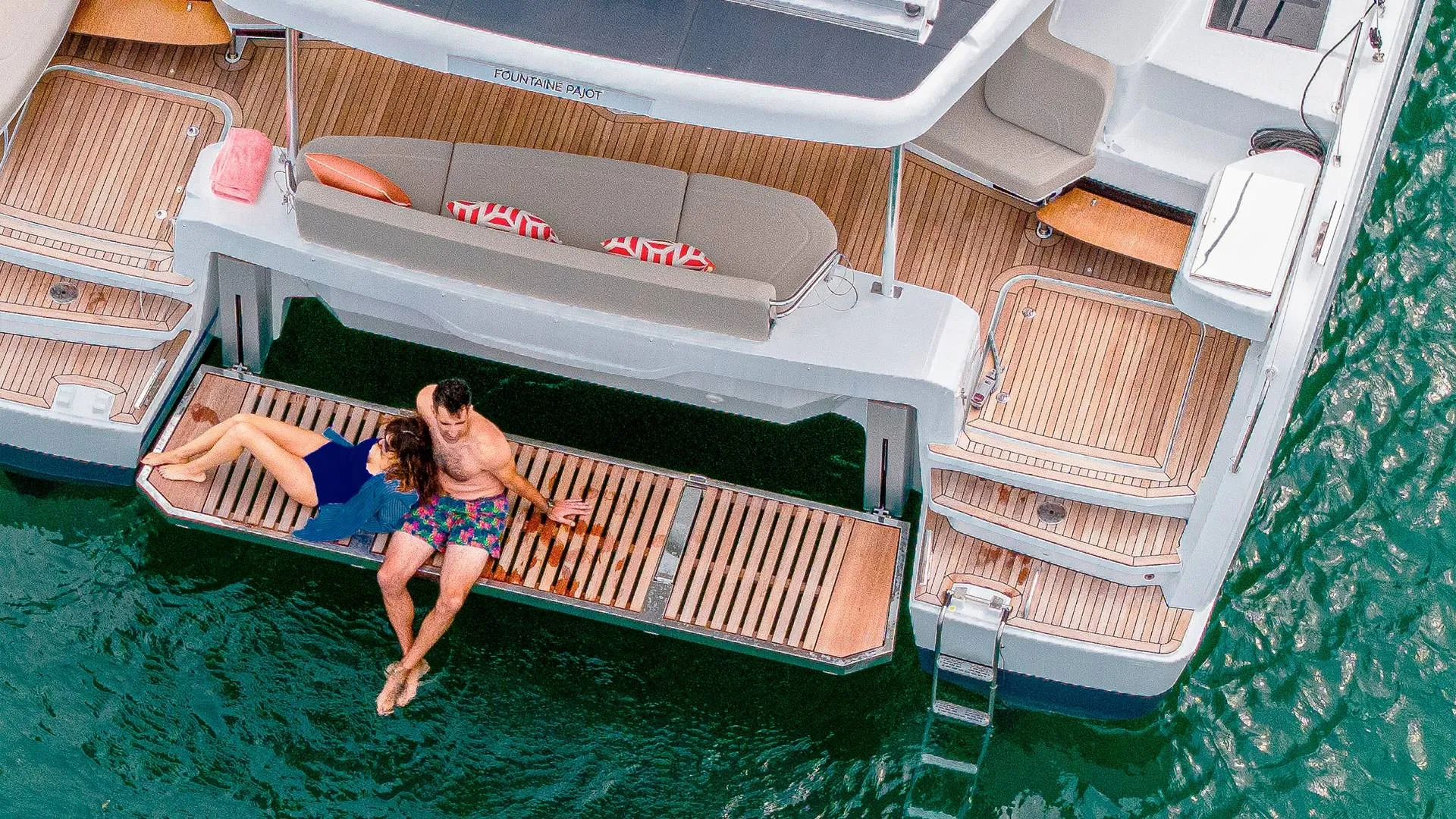
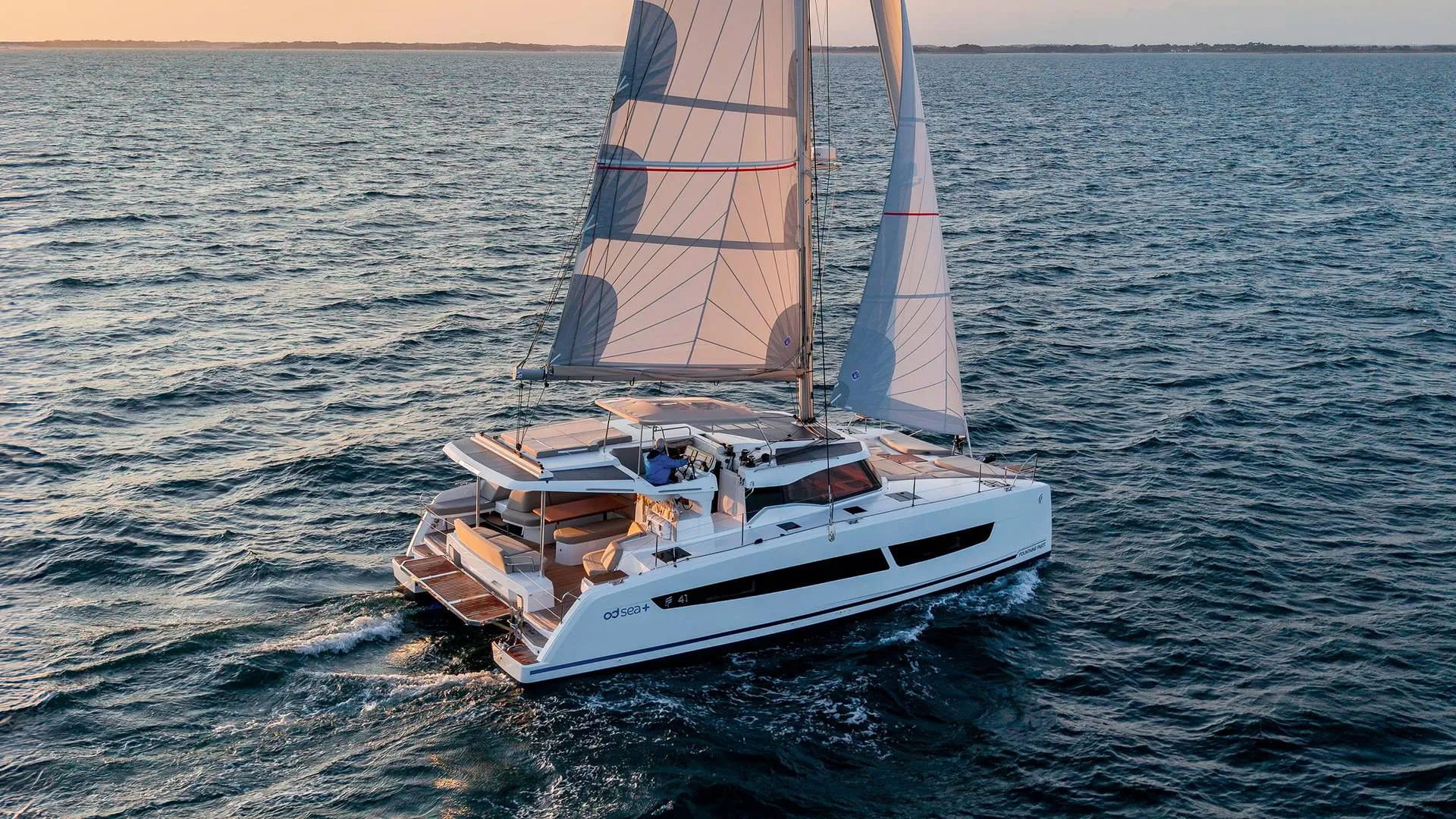
Photos courtesy of Fountaine Pajot.
The FP41 opens Fountaine Pajot's new generation of sailing catamarans. The yard lists 39'8" overall on a 22'8" beam, 4'5" draft and 27,337 lbs unladen — light for the interior volume it carries.
Tankage is 92 gallons of fuel and 159 gallons of water, sized for owner-operated coastal and island cruising rather than months off the grid. A hybrid-electric drive option with solar charging is on the order form for owners who want to cut engine hours at anchor.
On a two-boat sea trial the FP41 held a steady 7-plus knots upwind and averaged near 9 knots reaching — call it a 7-9 knot working cruise under sail.
Auxiliary power is a pair of 20 hp Yanmar 3YM20 diesels — enough to maneuver and motor in a calm, not to punch a head sea. Buyers planning long motoring legs should discuss the engine options when specifying the boat.
Two layout families: the Maestro gives the port hull to a full-beam owner's suite with private head, while the Quatuor carries four cabins with up to four heads for family or charter use. The sheet spans 3-4 cabins and 2-4 heads.
The main deck does the real work — saloon and aft cockpit open into one continuous living space, with a raised helm station that keeps the watchkeeper in the conversation. Chined hulls carry genuine double berths this far down the size range.
The FP41 is the entry point to Fountaine Pajot's sailing range and the smallest of the new FP generation. Forty feet is the most contested segment in production catamarans, and the FP41's pitch is sailing manners plus owner's-suite volume rather than headline speed.
Within the range, the FP44 above it adds a forward cockpit, more fuel and a flybridge for modest extra length.
Buy the FP41 if you are a couple or young family planning real sailing — island seasons, coastal passages, the occasional longer leg — and you want the smallest boat that still gives you a proper owner's cabin. It rewards owners who engage with the boat and its systems.
Step up to the FP44 for more tankage and a forward cockpit, or to the FP48 if guests are a fixture rather than an occasion.
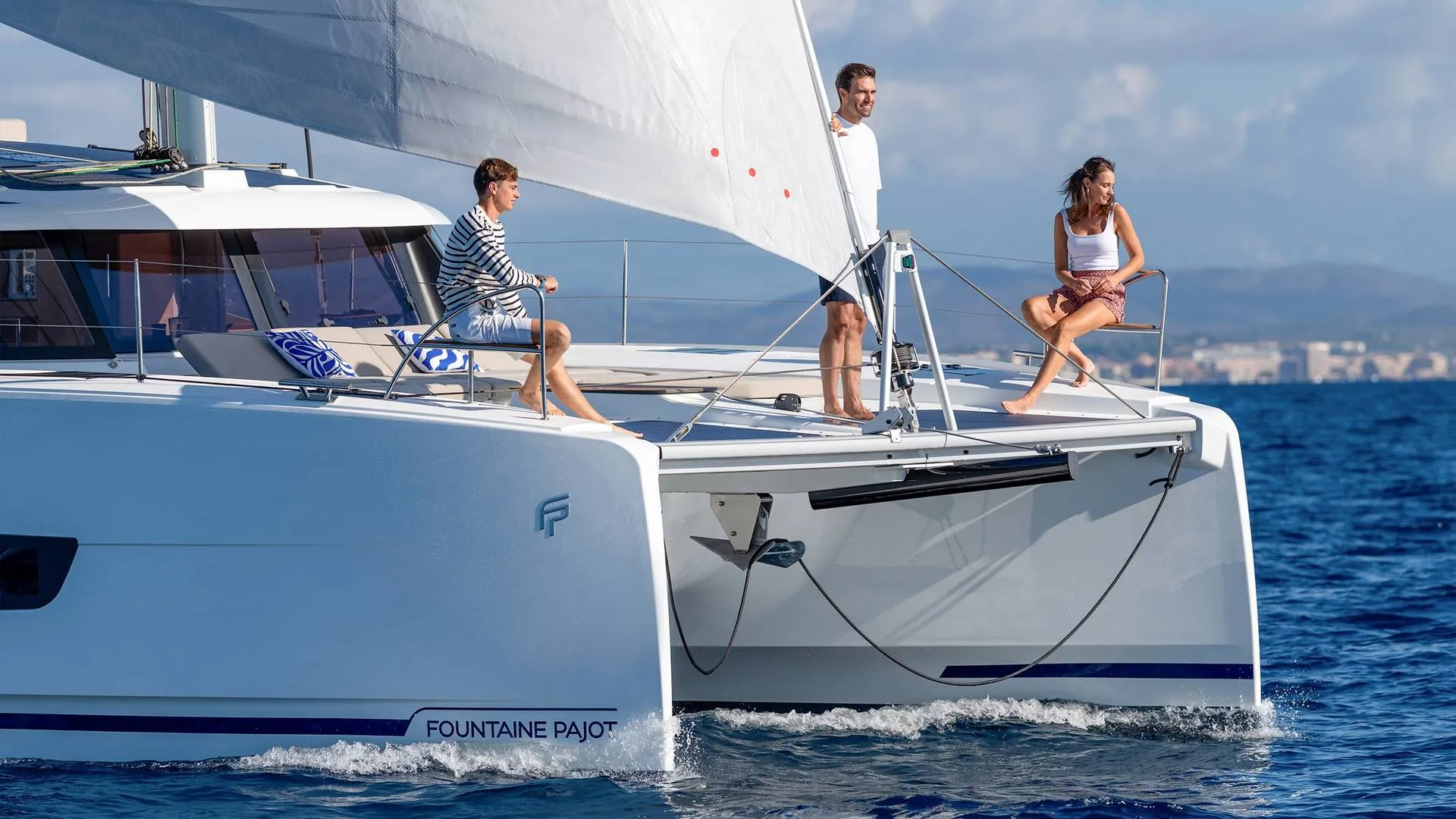
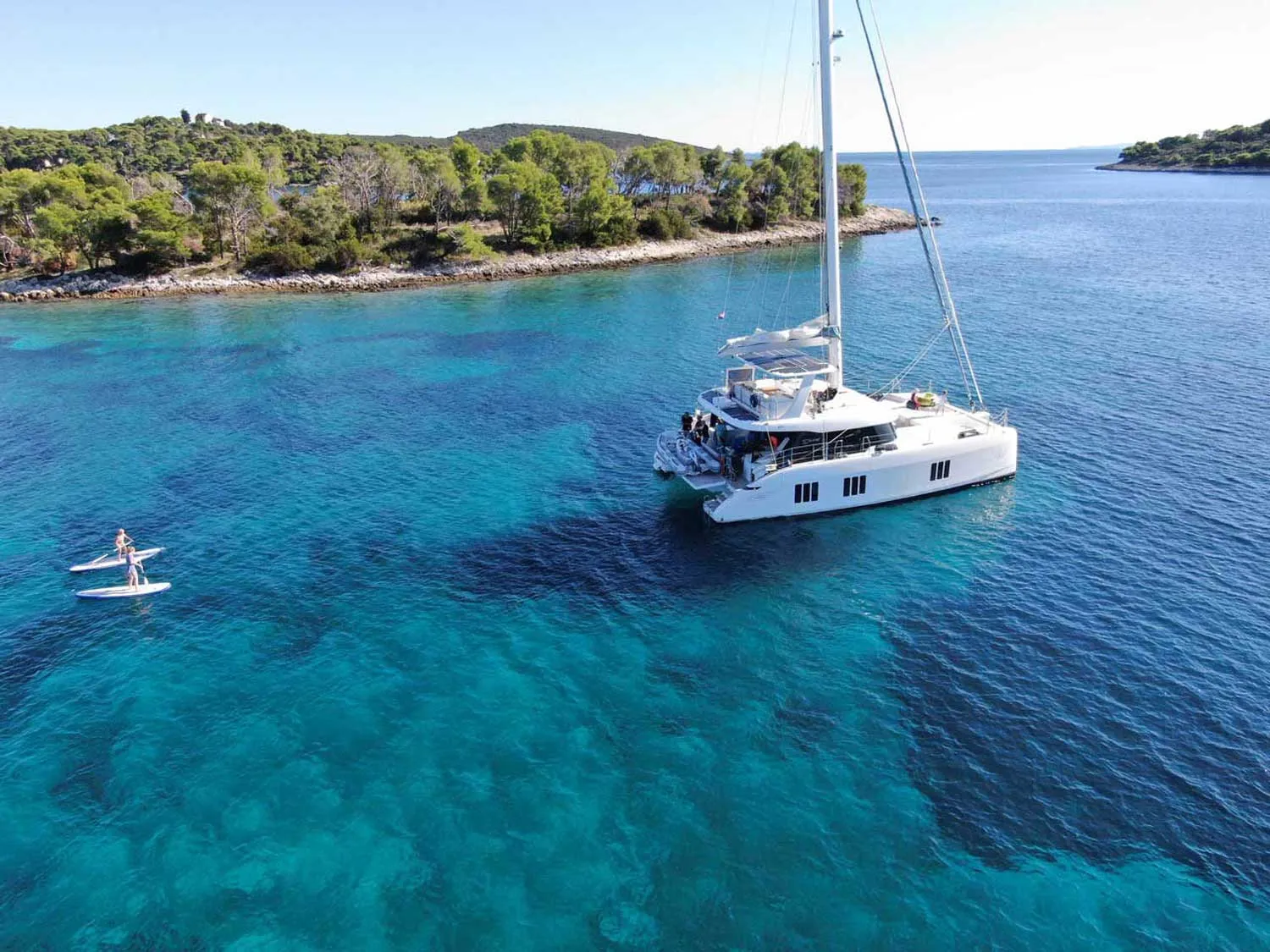
For a couple, yes — a season at a time. The Maestro layout gives the port hull to a full-beam owner's suite with private head, and tankage of 92 gallons of fuel and 159 gallons of water is sized for coastal and island cruising rather than months off the grid. The saloon and aft cockpit open into one continuous living space, with a raised helm that keeps the watchkeeper in the conversation.
Plan on a 7-9 knot cruise under sail: a two-boat sea trial recorded a steady 7-plus knots upwind and averages near 9 knots reaching. Auxiliary power is a pair of 20 hp Yanmar 3YM20 diesels — enough to maneuver and motor in a calm, not to punch a head sea.