
August 17, 2026
The 79-Foot Sailing Catamaran That Redefines Bluewater Freedom
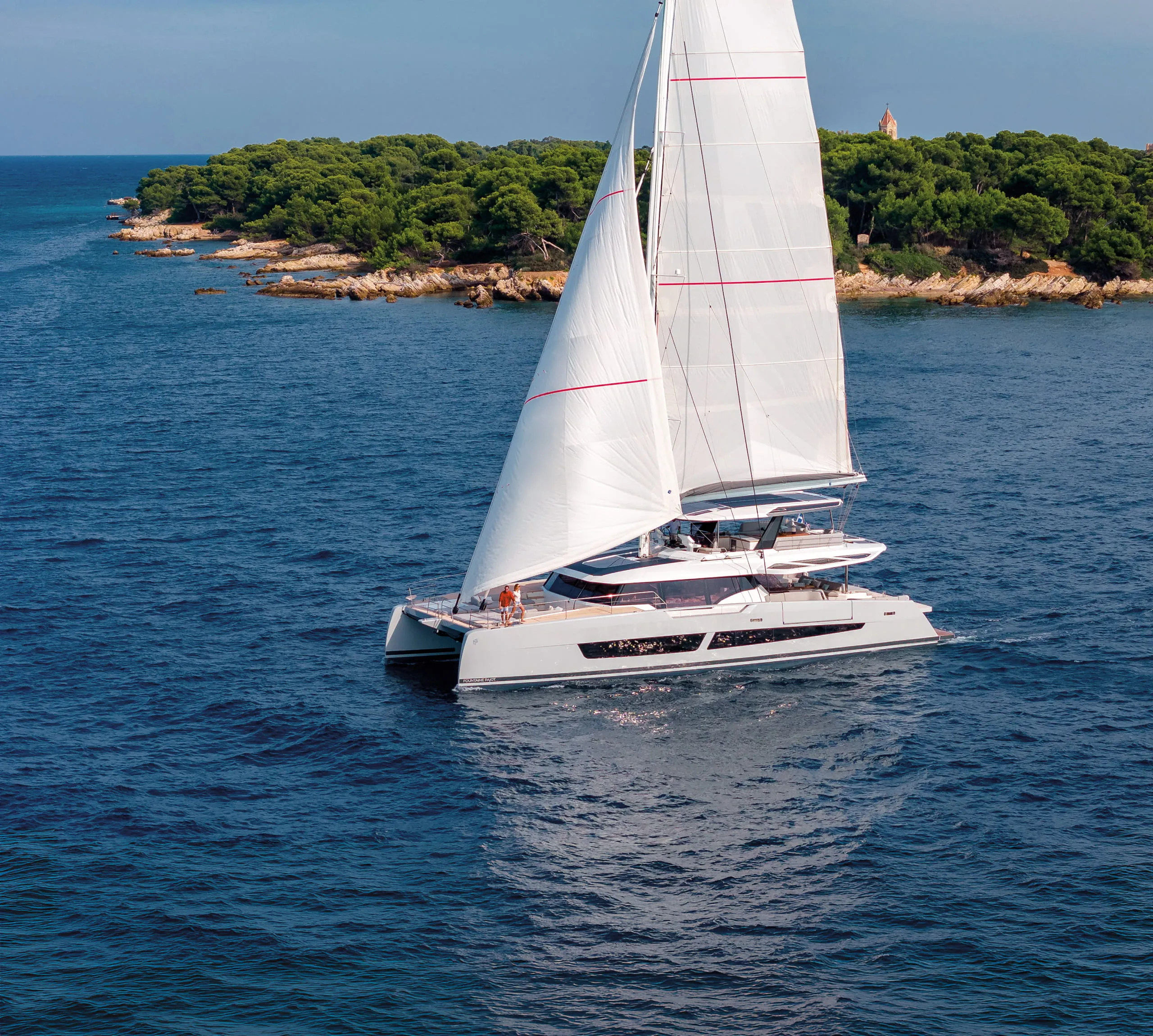
Fountaine Pajot FPY80S redefines bluewater autonomy: 3,864 sq ft of living space, dedicated crew quarters, and high-voltage lithium, solar a…
Read the article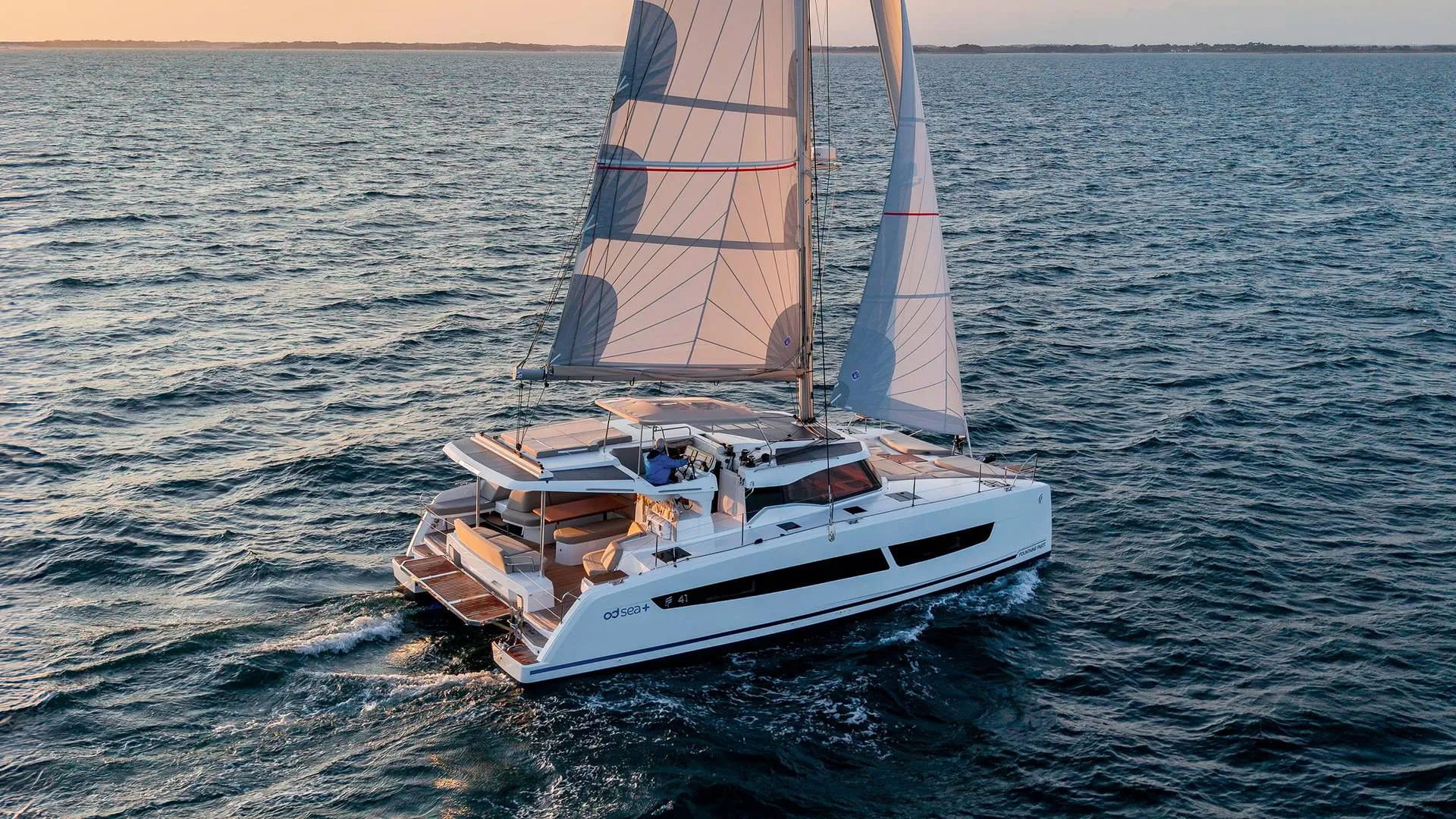
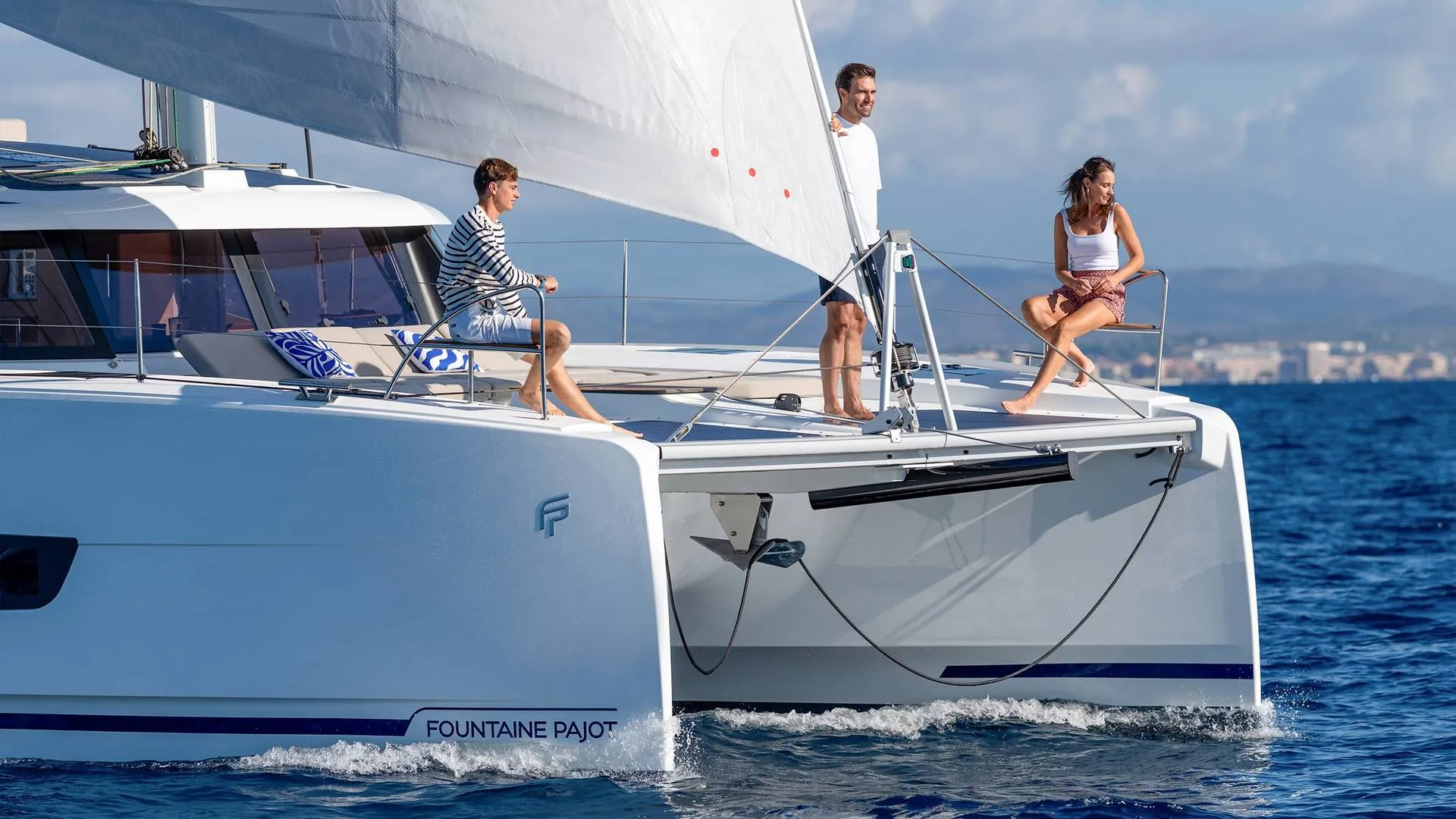
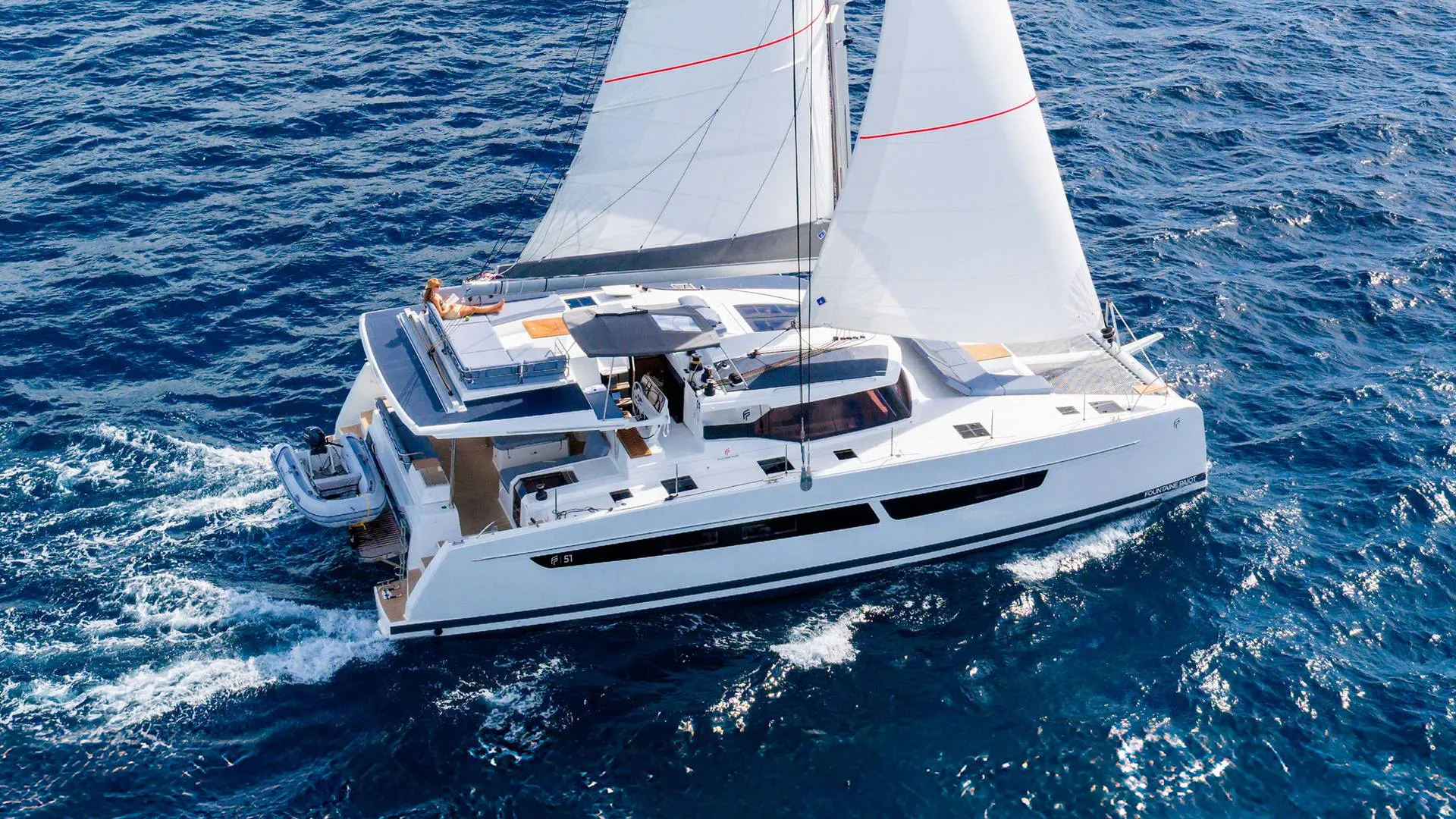
You want catamaran space and stability without commissioning a custom build — and a real resale market waiting when you're done. That's Fountaine Pajot: production sail and power catamarans from 39 to 116 feet, built near La Rochelle since 1976. Here is our expert assessment of the brand.

— Tony Smith
Founder, Minted Yachts
Fountaine Pajot is the volume argument for the cruising catamaran, and I mean that as a compliment. More than 4,000 boats since 1976 buys you the things a custom yard can't sell: a deep used market when it's time to move on, layouts a design office has iterated against the same brief for four decades, and a boat you can step aboard and compare at almost any major show.
The range splits cleanly. The sailing catamarans run 39 to 55 feet under the new FP naming — FP41 through FP55, every one offered with hybrid propulsion, and the yard has put a date on the ambition: hybrid-electric across the whole catamaran fleet by 2030. Above that sits the FPY yacht line, 59 to 120 feet, and here Fountaine Pajot does something genuinely unusual — the same platform is offered as a sailing yacht with an S suffix or as a power yacht without one. If you're weighing sail against power at 70 or 80 feet, comparing like-for-like off one design brief is a real advantage.
Two honest cautions. The naming reset means used listings will show Islas, Astreas, Elbas and Tannas next to FP41s and FP44s for years, and you need to know which generation you're pricing — the model pages here sort that out. And the FPY line is young; its largest hulls are recent announcements rather than proven fleets, so at the top of the range you are buying the yard's reputation, not a long service history. Standard layouts also chase cabin count — if you're an owner-operator, specify the owner's version and take the whole hull for yourself.
Buy a Fountaine Pajot because you want the most proven production platform in cruising catamarans, with the resale market to match.
Deep-dive specs and expert opinions on current Fountaine Pajot models. Don't see the Fountaine Pajot you're looking for? Reach out for new and pre-owned brokerage options.
Photo credit Fountaine Pajot.
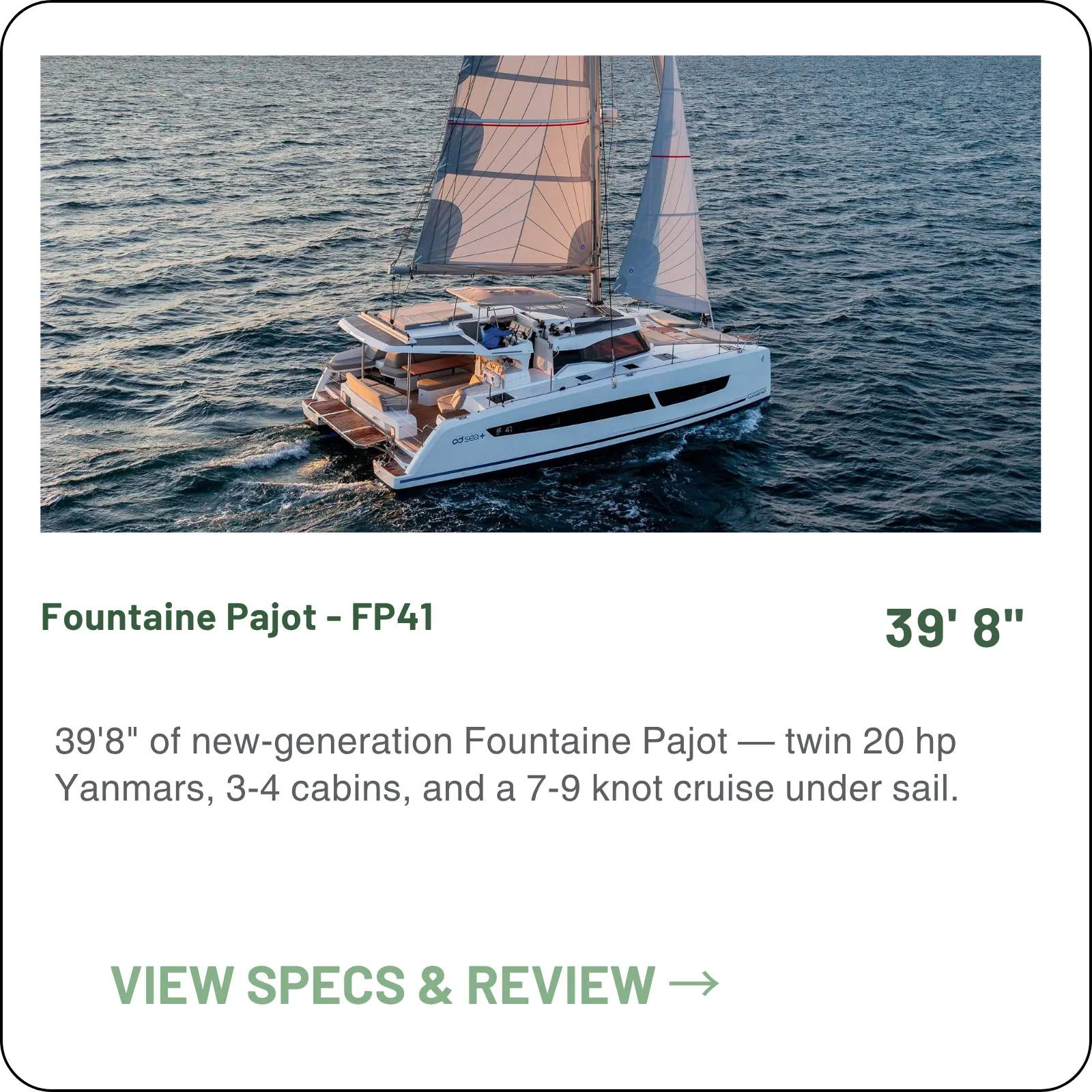
39'8" of new-generation Fountaine Pajot — twin 20 hp Yanmars, 3-4 cabins, and a 7-9 knot cruise under sail.
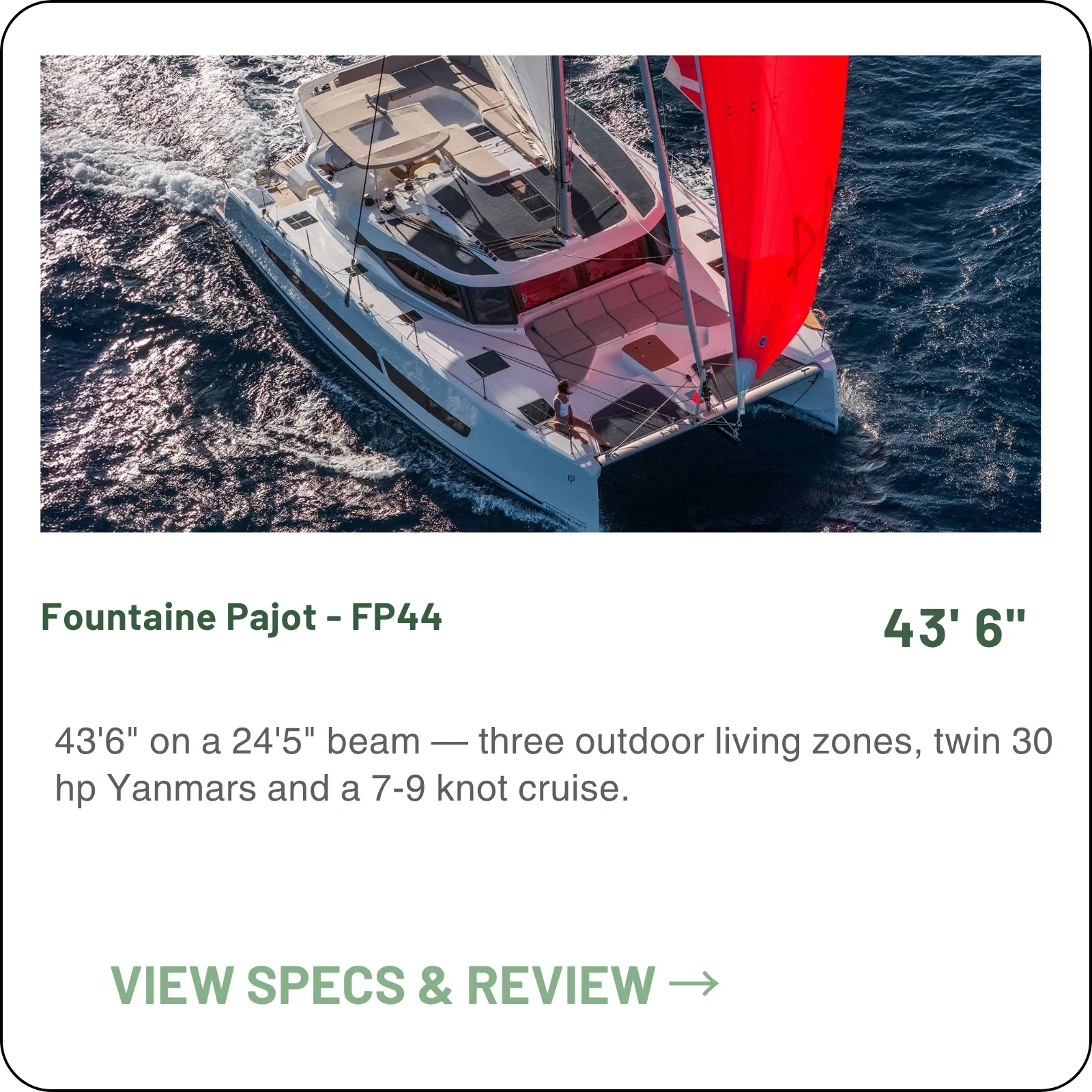
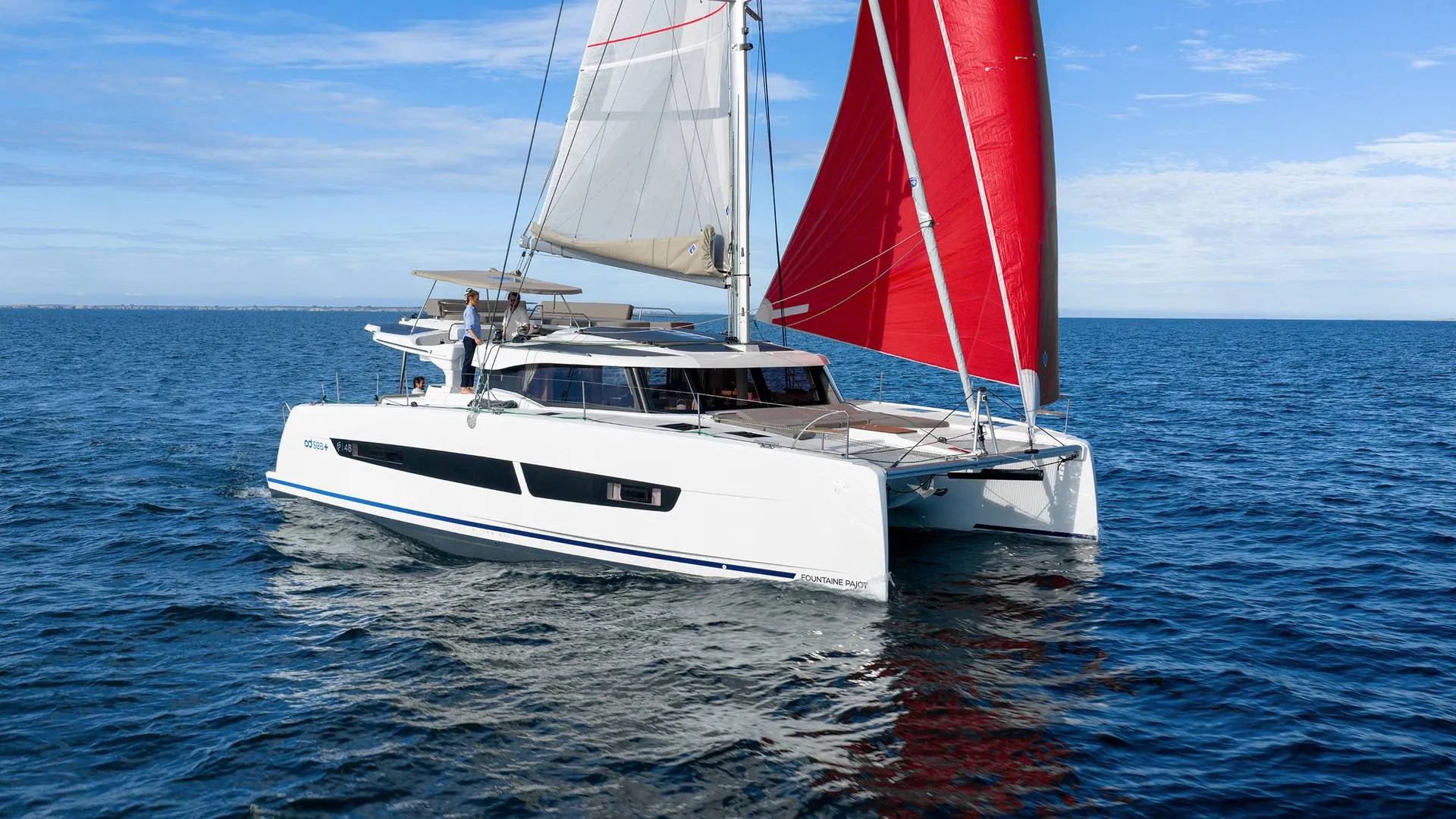
43'6" on a 24'5" beam — three outdoor living zones, twin 30 hp Yanmars and a 7-9 knot cruise.
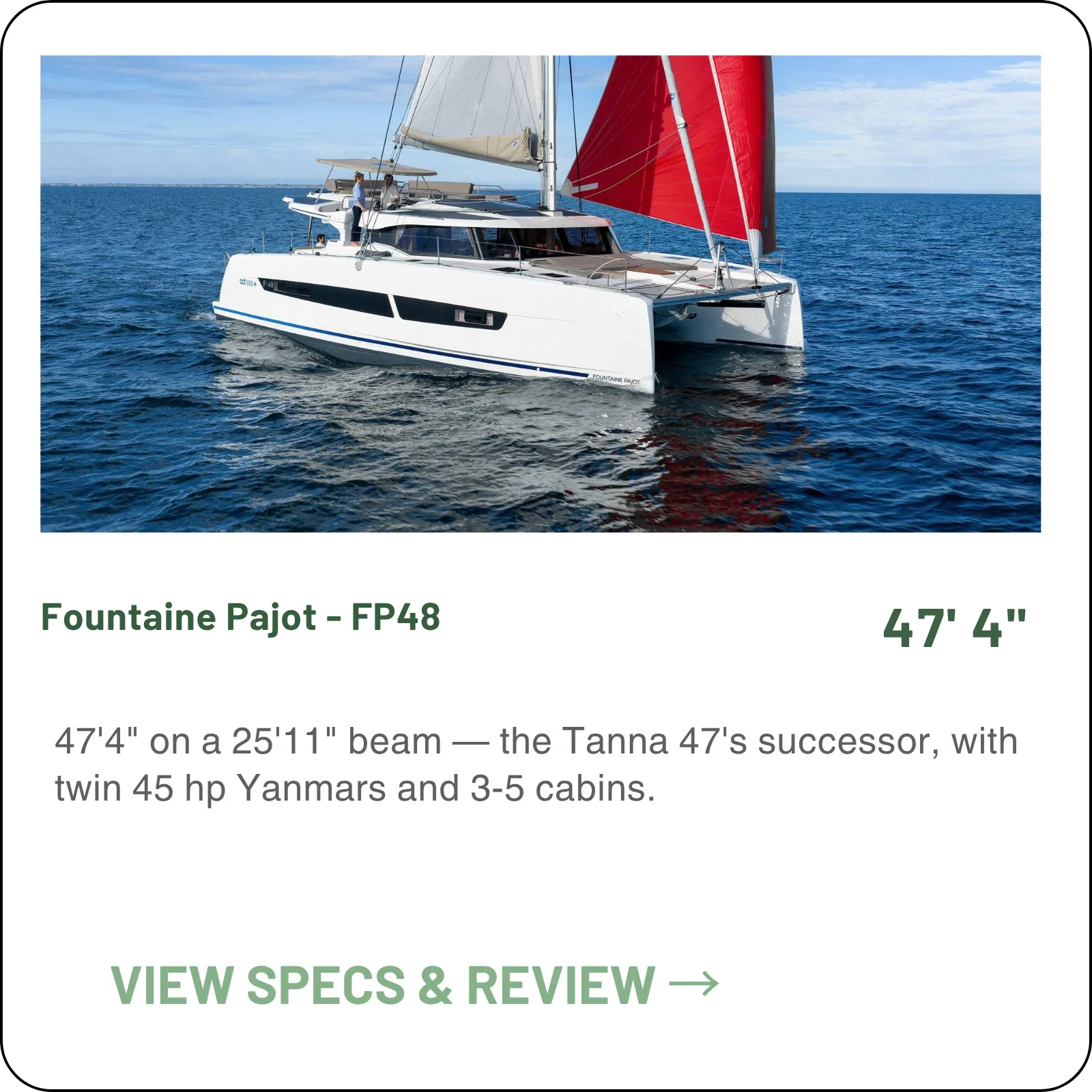
47'4" on a 25'11" beam — the Tanna 47's successor, with twin 45 hp Yanmars and 3-5 cabins.
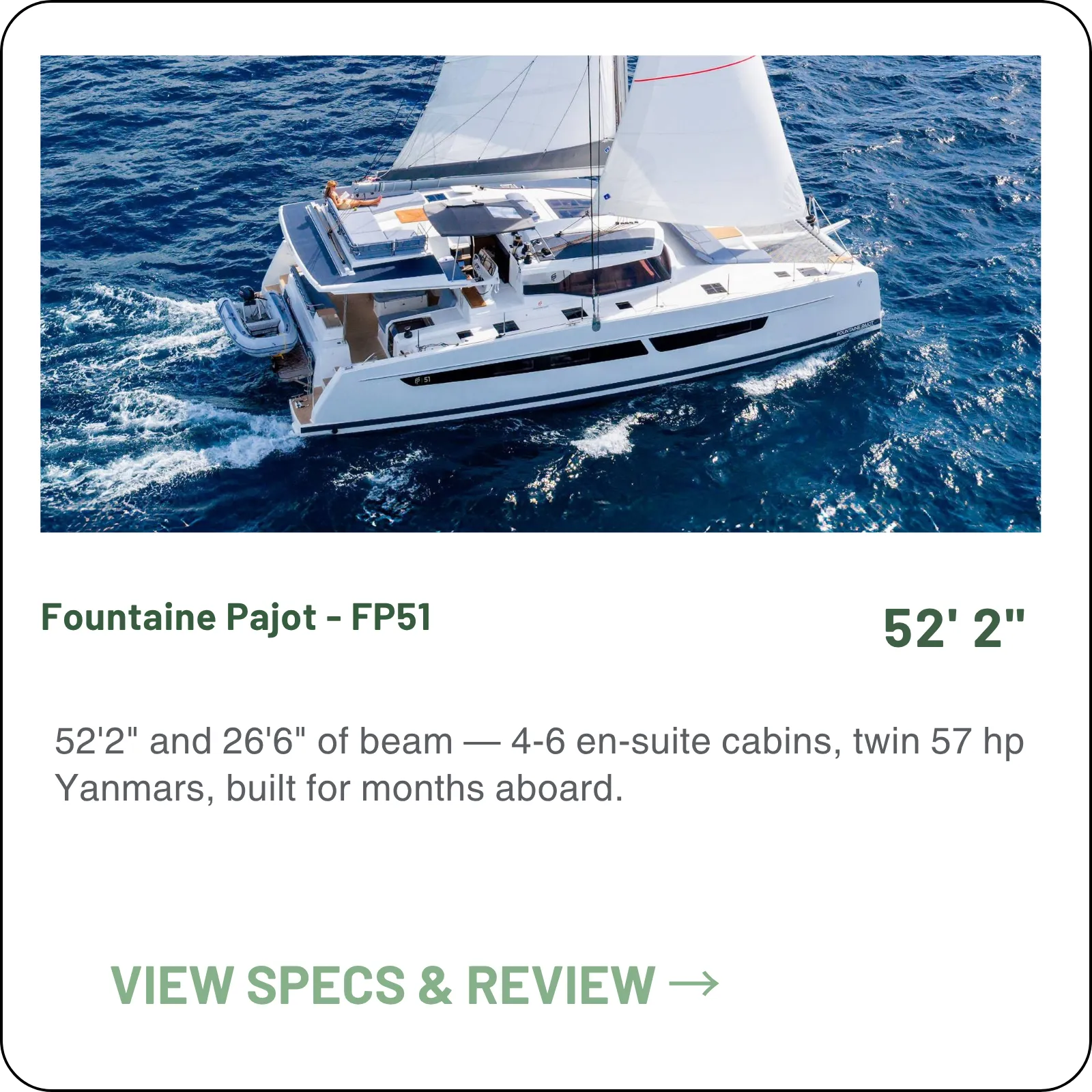
52'2" and 26'6" of beam — 4-6 en-suite cabins, twin 57 hp Yanmars, built for months aboard.
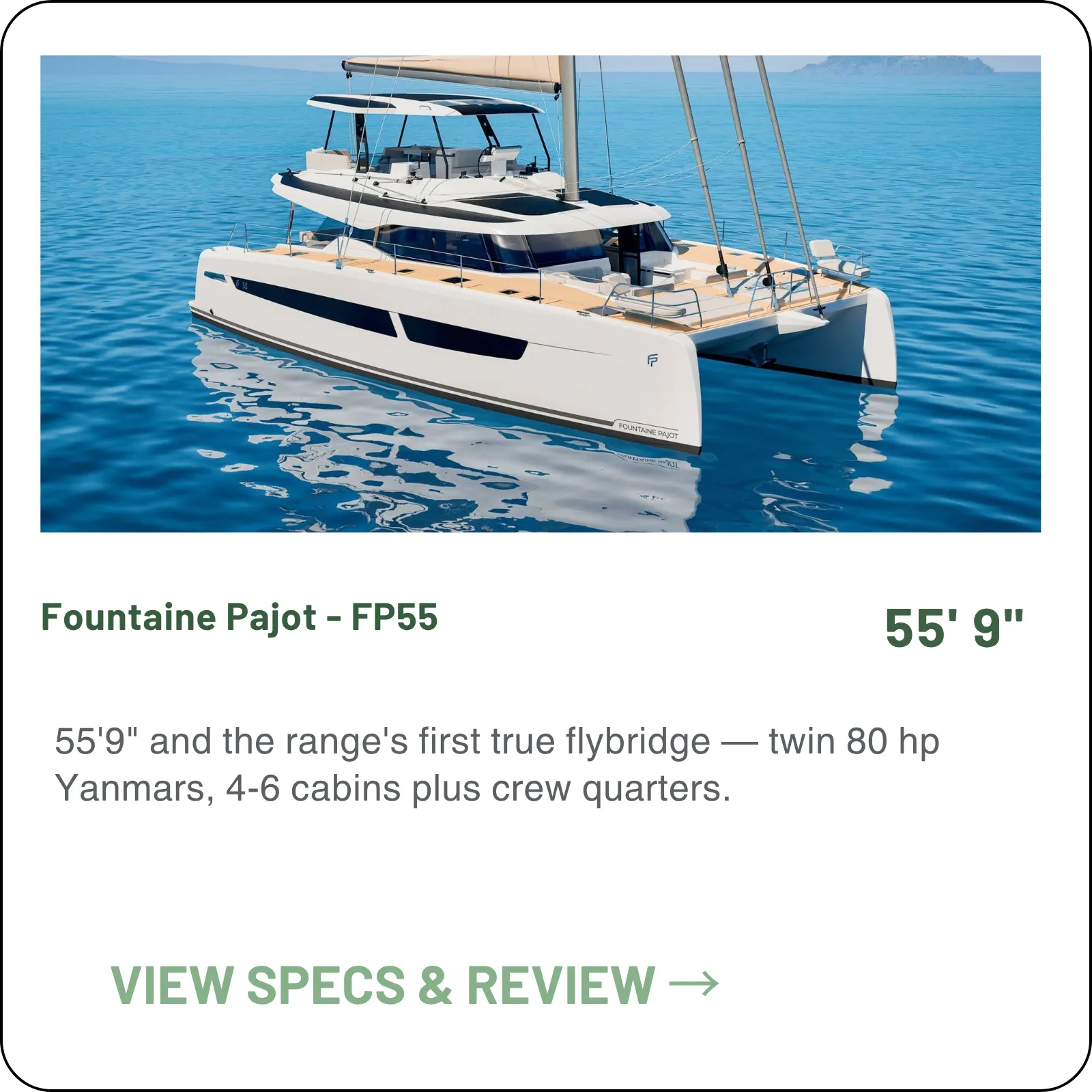
55'9" and the range's first true flybridge — twin 80 hp Yanmars, 4-6 cabins plus crew quarters.
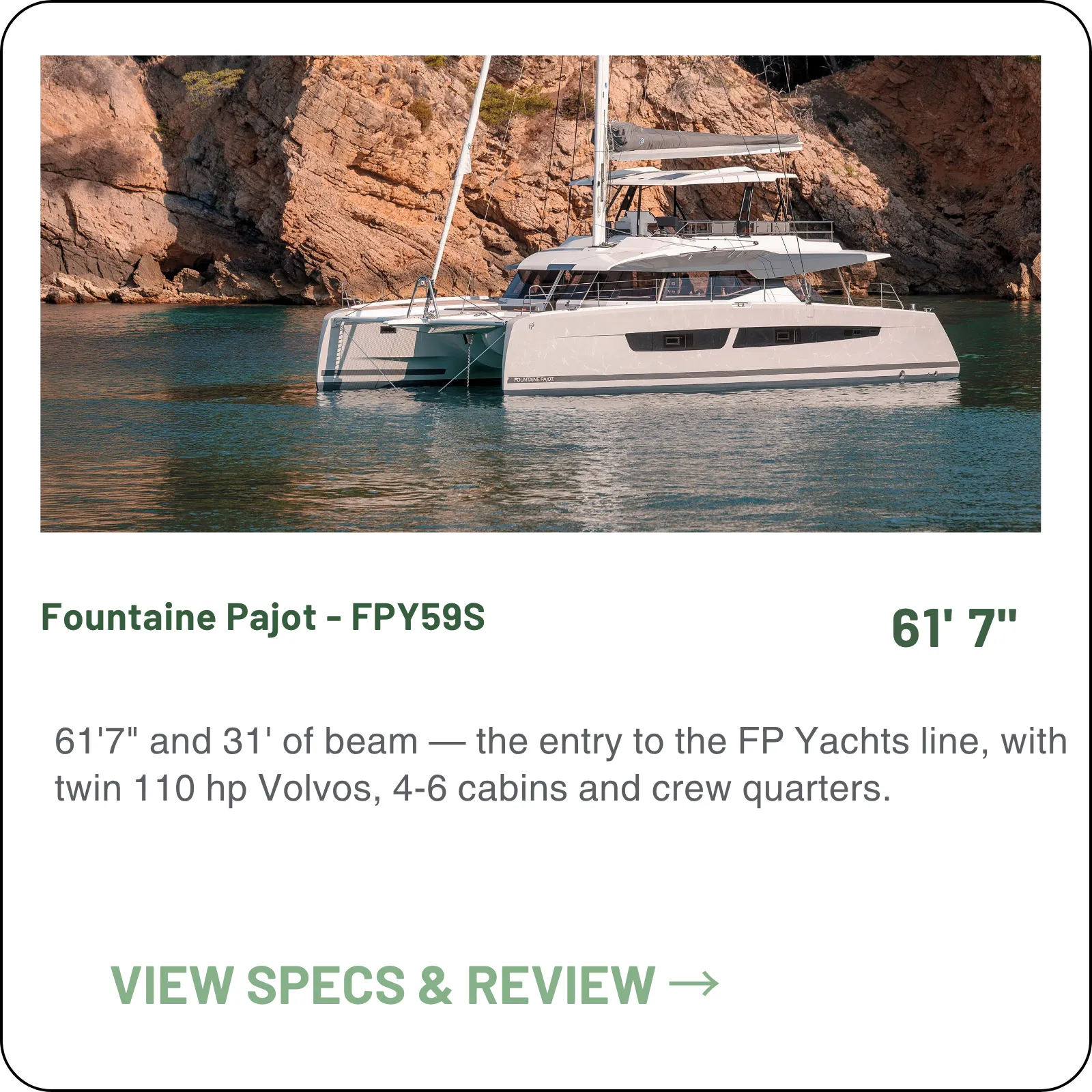
61'7" and 31' of beam — the entry to the FP Yachts line, with twin 110 hp Volvos, 4-6 cabins and crew quarters.
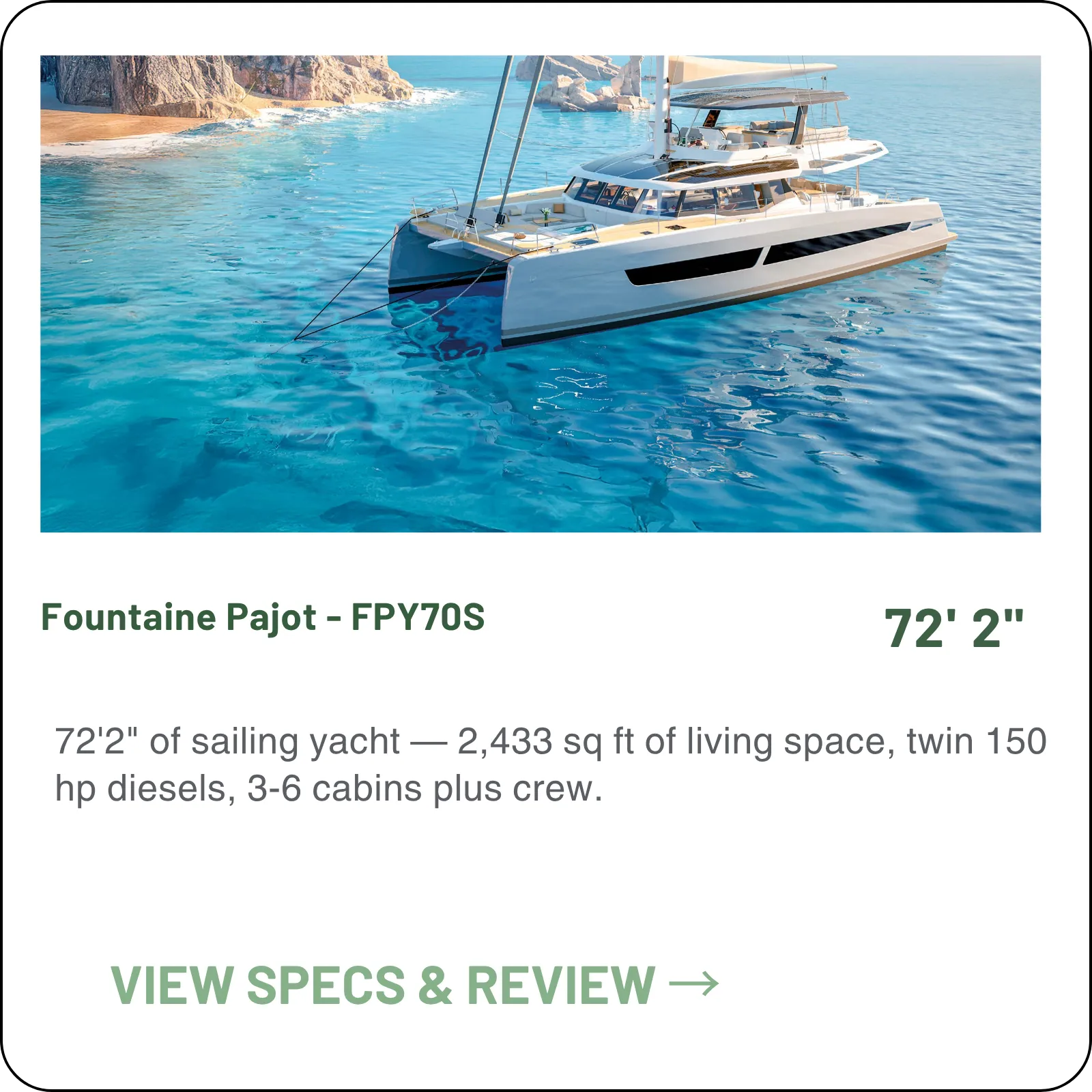
72'2" of sailing yacht — 2,433 sq ft of living space, twin 150 hp diesels, 3-6 cabins plus crew.
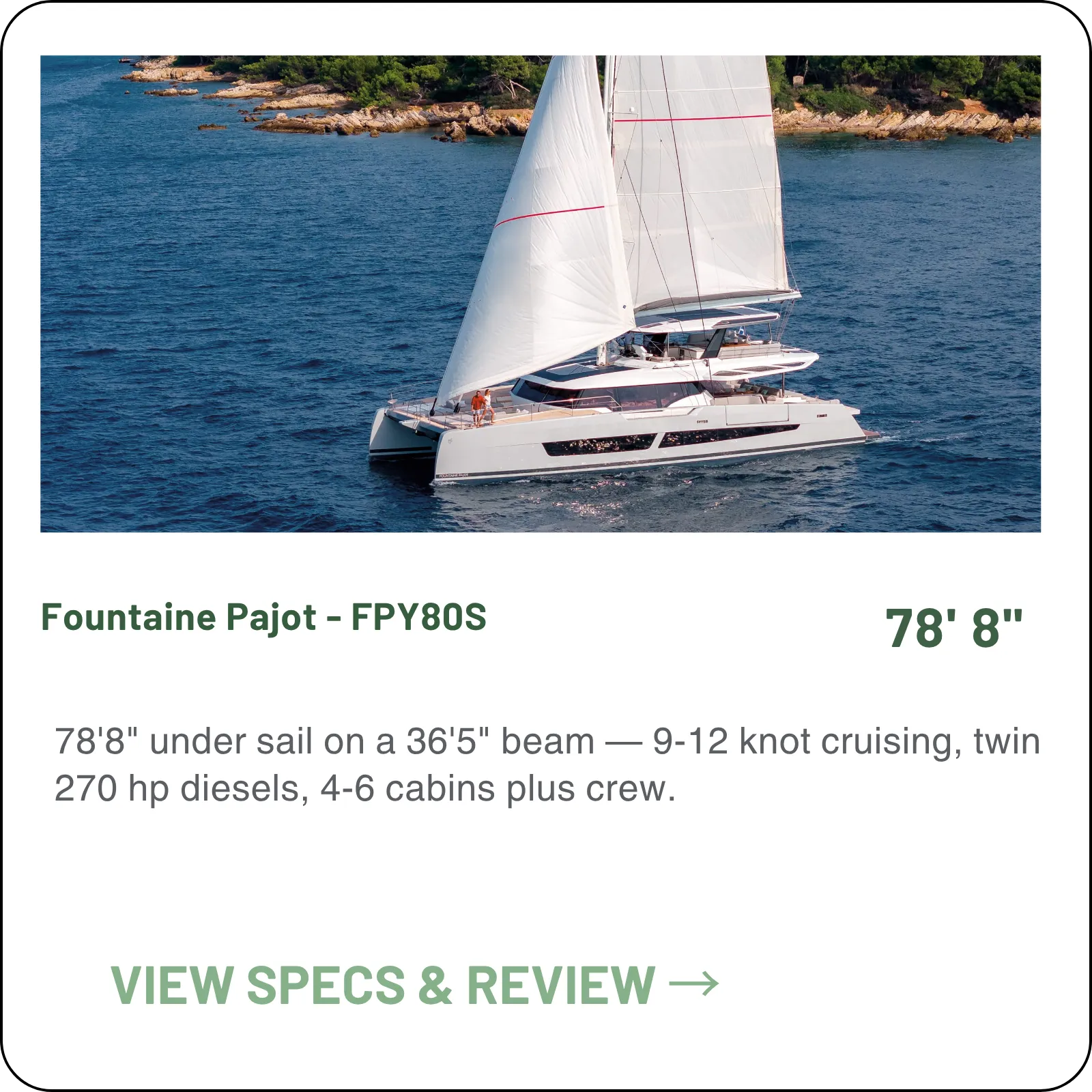
78'8" under sail on a 36'5" beam — 9-12 knot cruising, twin 270 hp diesels, 4-6 cabins plus crew.
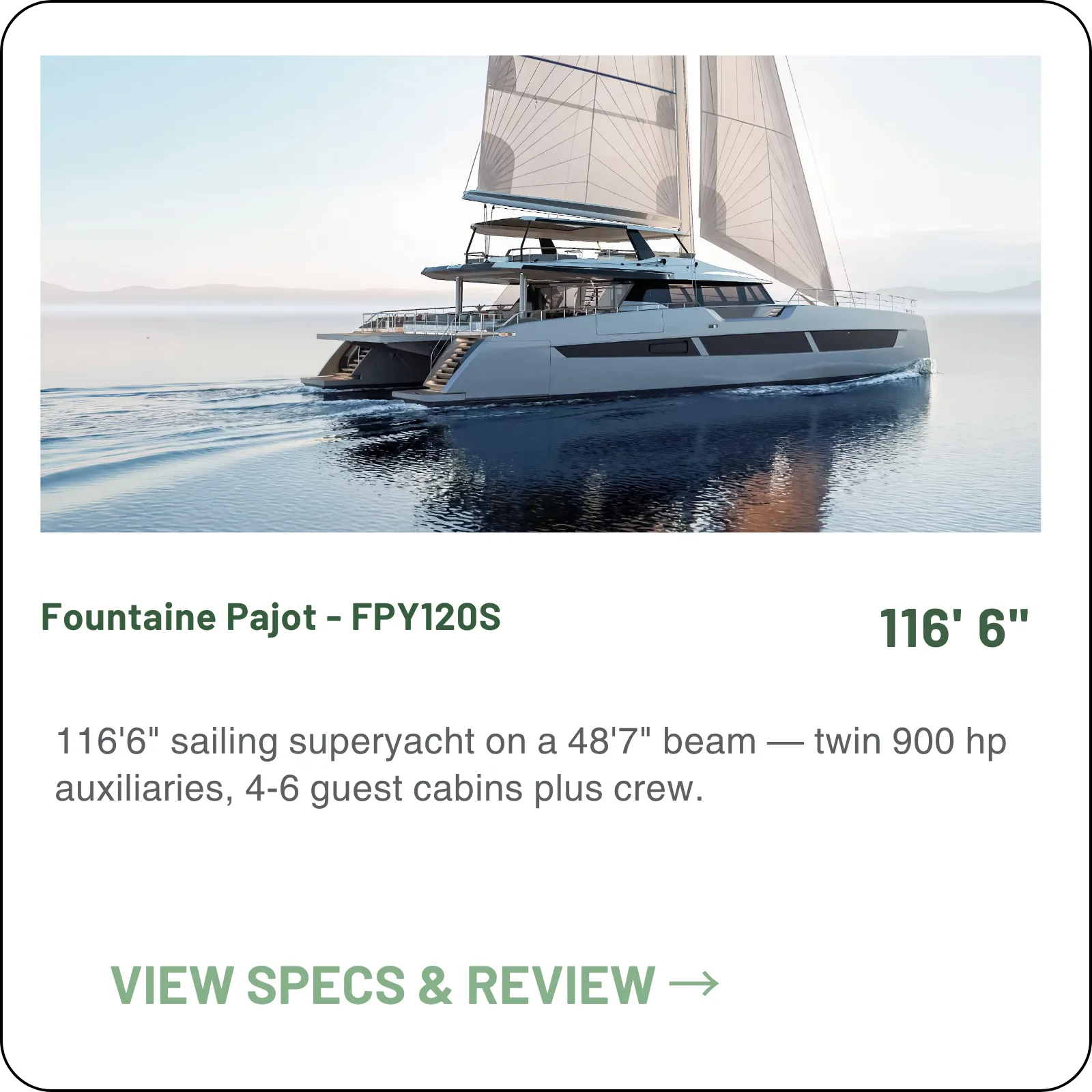
116'6" sailing superyacht on a 48'7" beam — twin 900 hp auxiliaries, 4-6 guest cabins plus crew.
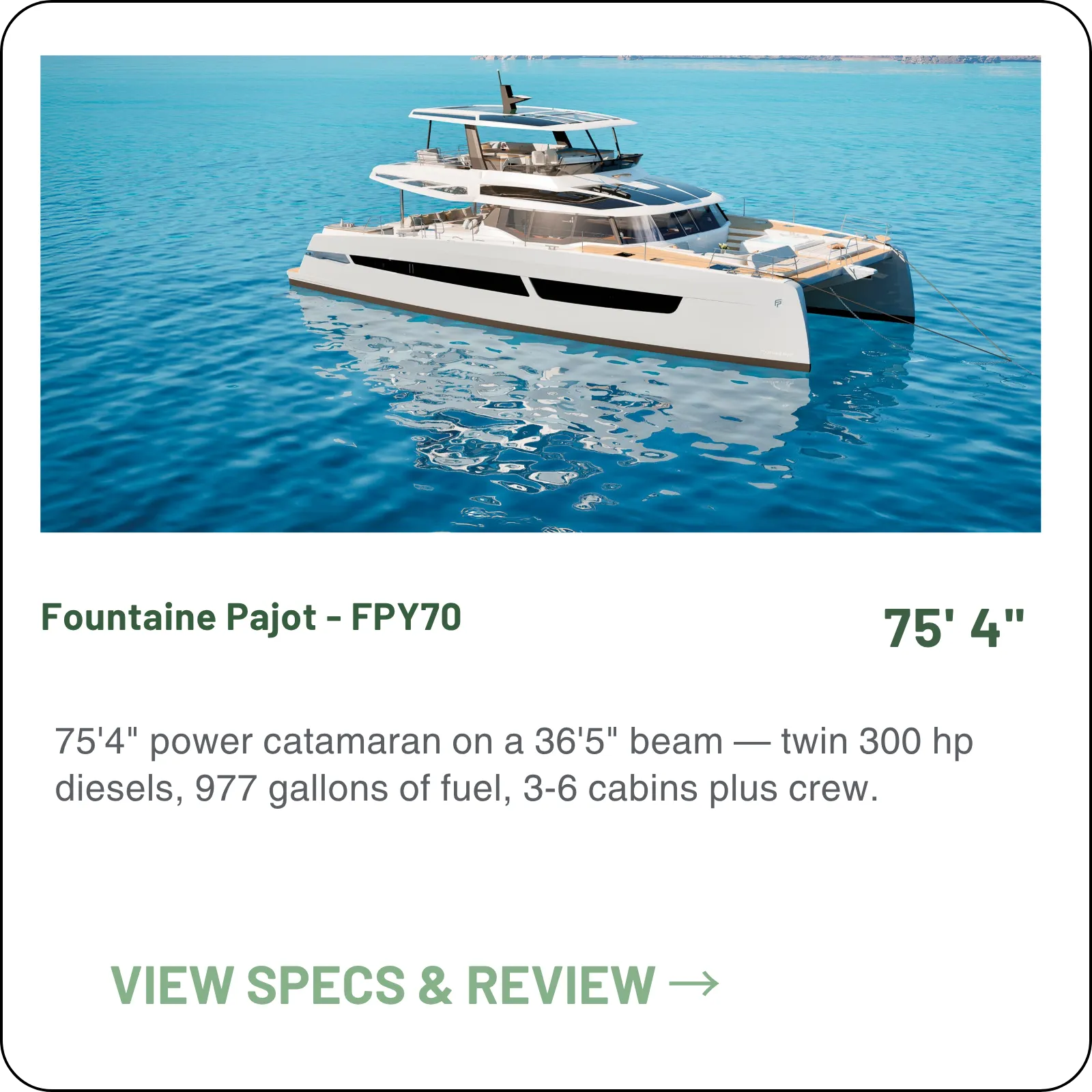
75'4" power catamaran on a 36'5" beam — twin 300 hp diesels, 977 gallons of fuel, 3-6 cabins plus crew.
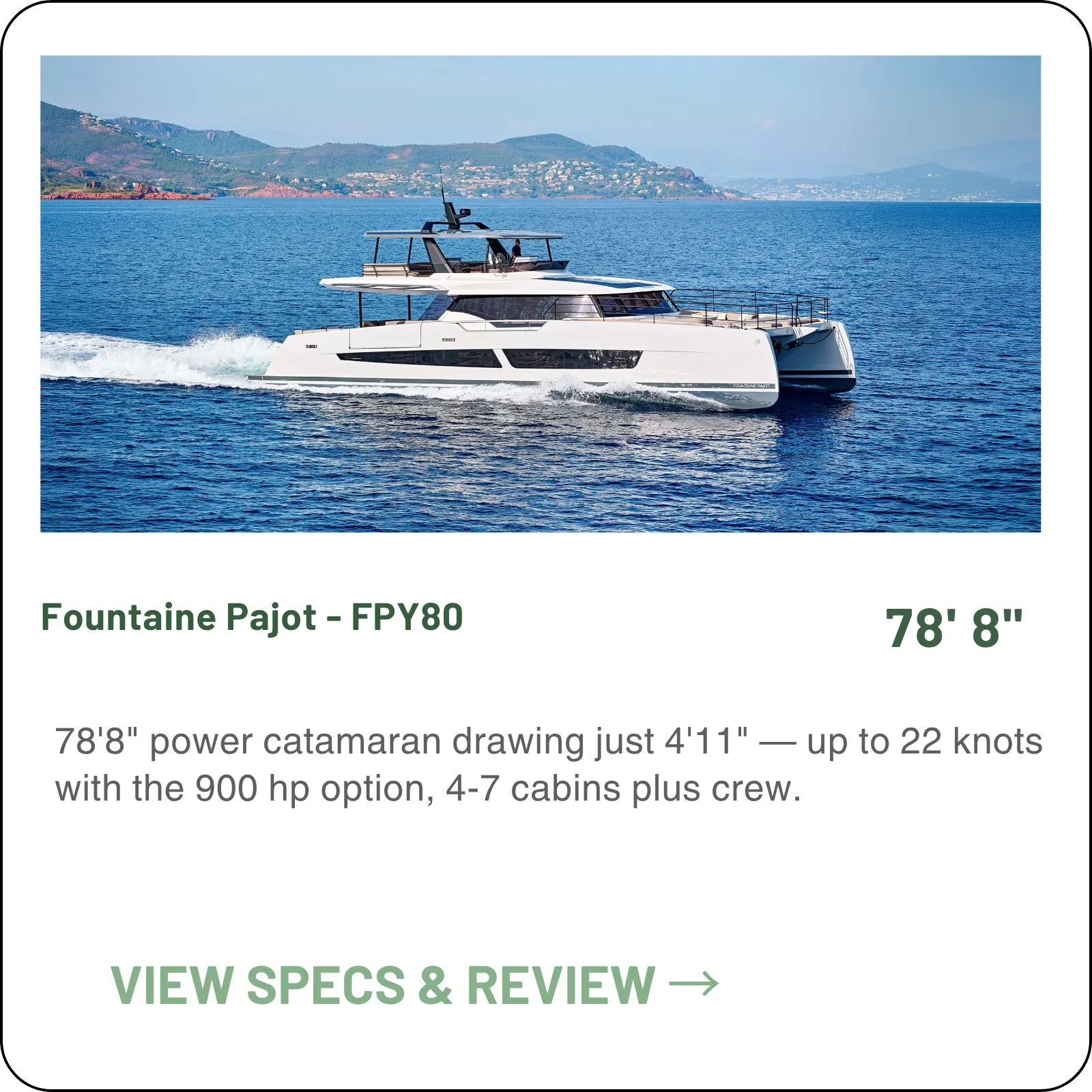
78'8" power catamaran drawing just 4'11" — up to 22 knots with the 900 hp option, 4-7 cabins plus crew.
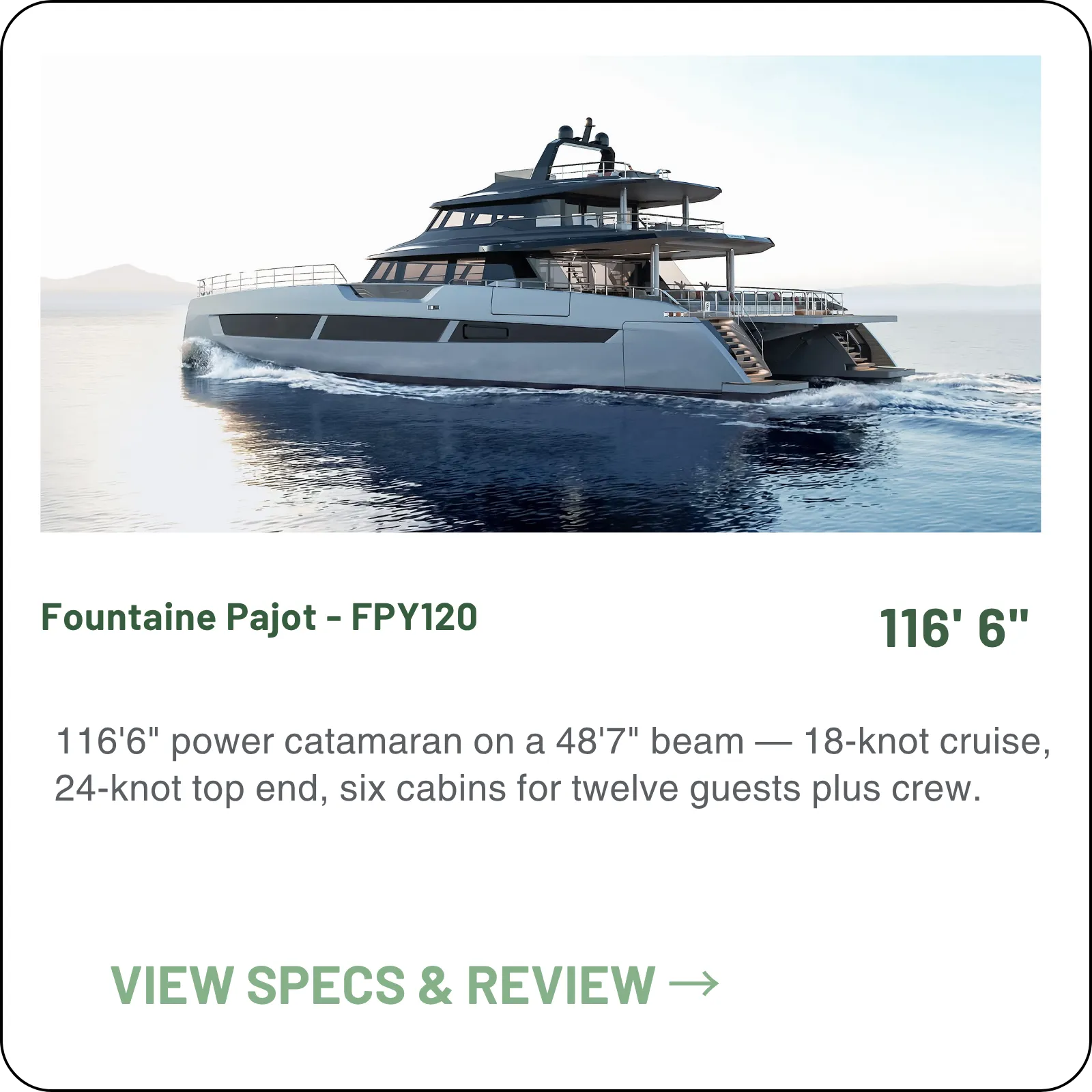
116'6" power catamaran on a 48'7" beam — 18-knot cruise, 24-knot top end, six cabins for twelve guests plus crew.

Request other Brand or Model Information, with our Yacht Specs Direct, offer.
Videos courtesy of Fountaine Pajot.
Maestro gives one hull to a full-beam owner's suite with a private head — the layout most private owners should choose. Quatuor carries four equal cabins for family or charter use. Fountaine Pajot offers both across the FP sailing range, and the larger boats extend the same idea, from owner's versions up to six and seven-cabin charter configurations.
The power line carries the headline numbers — an 18-knot cruise and 24-knot maximum on the FPY120, 13 and 22 knots on the FPY80 — and the FPY59S lists 10 knots under power. The sailing range is about passage averages rather than headline speed: on sea trials the FP41 and FP44 cruised at 7-9 knots under sail, and the FPY80S averaged 12 knots in 20 knots of wind on the yard's own trial. Ask for sea-trial data on the specific hull you are buying.
Beam, stability and draft. A catamaran carries far more usable deck and interior space per foot of length — the FPY80 puts a 36'5" beam on 78'8" and draws just 4'11", clearing shallow cruising grounds that exclude comparable monohulls. Form stability means less roll at anchor, where a cruising boat spends most of its hours.
The FP models — FP41, FP44, FP48, FP51 and FP55 — are the sailing catamarans, 39'8" to 55'9", sized for owner operation. The FPY line is Fountaine Pajot Yachts, 59 to 120 feet, drawn with professional crew in mind and offered in sailing (S suffix) and power versions of the same platforms: FPY59S, FPY70 and FPY70S, FPY80 and FPY80S, and the FPY120 and FPY120S flagships.
A production run of more than 4,000 boats since 1976 gives Fountaine Pajot one of the deepest used markets in cruising catamarans — when it is time to sell, buyers know the brand and comparables exist. One caution at the top of the range: the largest FPY hulls are recent announcements rather than proven fleets, so the resale story there is still being written.
The sailing range through the FP51 is drawn for owner-operators — twin diesels set a full beam apart make close-quarters handling manageable for a couple. The FP55 straddles the line, with crew quarters available but no crew required. From the FPY59S up, the boats assume professional help: dedicated crew accommodation with circulation kept separate from the guest spaces.
Yes. Every model in the new FP sailing generation is offered with hybrid propulsion, and the yard has stated a target of hybrid-electric availability across the whole catamaran fleet by 2030. System specifications vary by model and build — ask the yard for current figures in writing when specifying a build.
They were succeeded by the new FP generation, rolled out from 2025 and named by length: FP41 through FP55. The FP48, for example, replaces the Tanna 47. Several FPY models are renamed proven platforms too — the FPY59S reached the market as the Samana 59 and the FPY80S as the Thira 80 — so used listings will show both generations of names for years, and you need to know which generation you are pricing.
In western France. The yard settled at Aigrefeuille-d'Aunis, near La Rochelle, in 1978, and production now runs across four sites, with Aigrefeuille building the core range and La Rochelle the flagships. More than 4,000 boats have been delivered since the company's founding in 1976.
Every buyer's mission is different. Tell us how you plan to use your vessel, and we'll give you the straight story on which models fit your life—and which don't.
Specific Model Details & Advice