
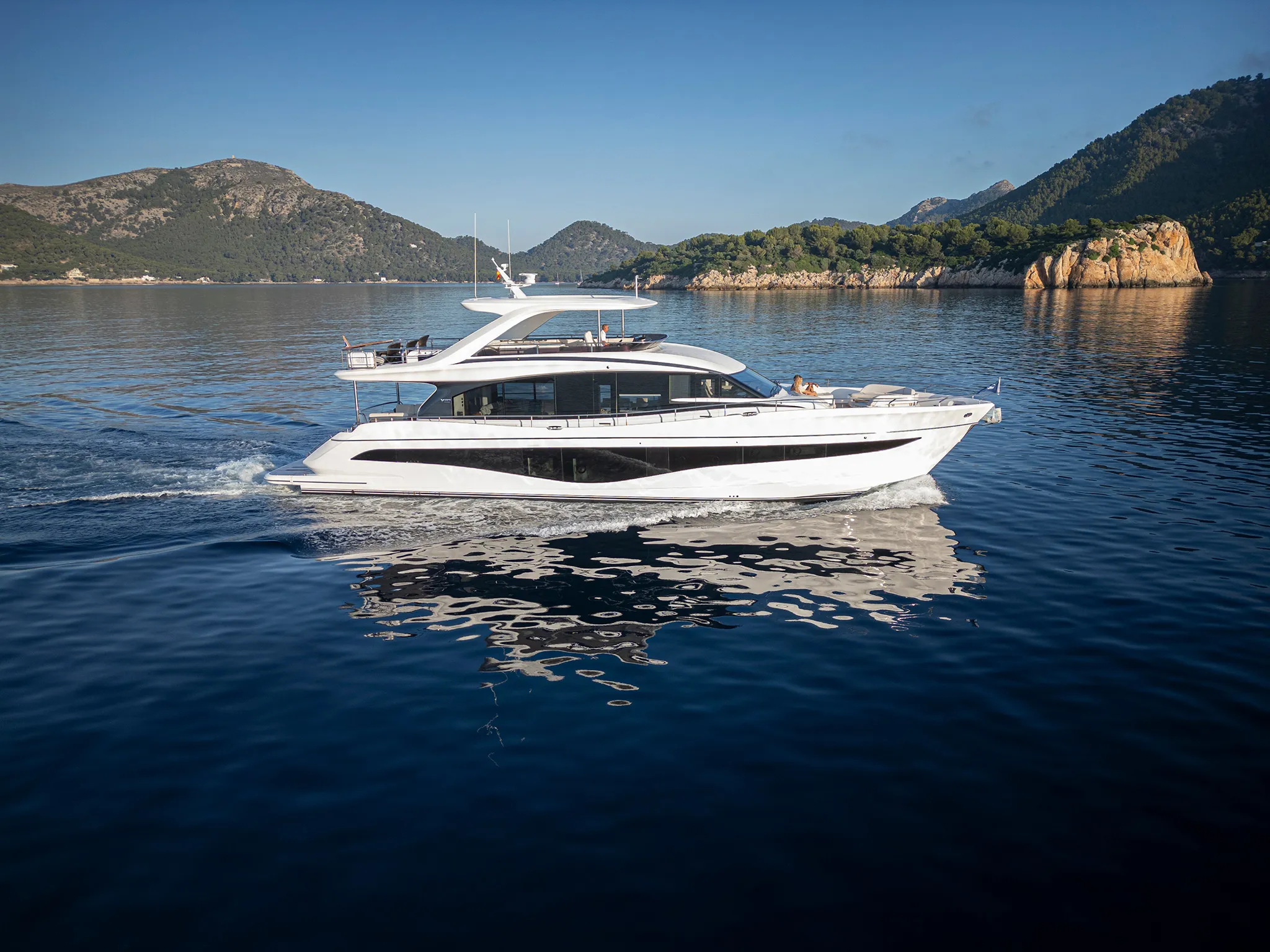
Princess Y8083'8"
View Specs & ReviewUS soil, US dollars — and a customs line you can cross by accident
Yachting in Puerto Rico
A Minted Location · Puerto Rico, Puerto Rico
Puerto Rico is the easiest place in the Caribbean for an American owner to keep a boat, and it is easy for the reasons nobody puts on a brochure: it is the United States. No cruising permit. No clearance fee. No foreign-flag paperwork. US dollars, US phone numbers, US mail, US warranty service, a US Coast Guard presence and a US airport with direct flights to almost anywhere you live.
The infrastructure matches. Safe Harbor Puerto Del Rey at Fajardo publishes "over 1,200 wet slips", wet and transient berths from "32' - 200'", a maximum draft of 15 feet, and — unusually — unrestricted maximum height and unrestricted maximum beam. In San Juan, Club Náutico de San Juan publishes dockage "for 30 to 250 feet vessels" on 120, 240 and 480 volts at 30, 50, 100 and 200 amps, three-phase.
Then there is the line you can cross without noticing. US Customs and Border Protection treats St Thomas, St John and St Croix as foreign ports under US customs law — even though the US Virgin Islands are US territory. Move a boat from Fajardo to Charlotte Amalie and you must report. Move it back and you must report again. CBP states that failure to report typically begins at $5,000 in fines. Forty miles of open water, no passport control, and a reporting obligation in both directions.
So treat Puerto Rico as what it is: the domestic base for a Caribbean programme. Everything about owning here is easy. The one thing that is not easy is the forty-mile hop everyone makes without thinking.
Where to keep a yacht in Puerto Rico
Safe Harbor Puerto Del Rey at Fajardo publishes a full specification, and the number that matters is the draft.
| Capacity | "over 1,200 wet slips, dry stack and world-class amenities" |
| Wet slip LOA | 32′ – 200′ |
| Transient slip LOA | 32′ – 200′ |
| Maximum draft | 15′ |
| Maximum height | Unrestricted |
| Maximum beam | Unrestricted |
| Dry storage | 10′ – 43′ · max beam 14′ · max weight 32,000 lb |
| Fuel | Diesel and 93 octane premium gasoline |
| VHF | 71 |
Fifteen feet of draft with no air-draft and no beam restriction is the headline, and it is what makes Fajardo work as a base rather than a stop.
Lift capacity comes from the office rather than the page. The marina lists a crane and "Hoists & Lifts" without a tonnage, so agree tonnage, length and beam with them on VHF 71 or by telephone before you plan a haul-out around a date.
And read the draft figure for what it is: a slip figure, not a channel figure. Confirm the water into San Juan Bay or the Fajardo approaches with the marina before you commit a deep-draft boat.
Club Náutico de San Juan is the capital's berth and the one that will take a 250-footer.
- dockage "for 30 to 250 feet vessels"
- 120, 240, 480 volts, at 30, 50, 100 and 200 amps, three-phase
- transient: $2.00 per linear foot daily, $19.00 per linear foot monthly
- slip count published as "106 Wet Slips" in the body of its marina page and "117 wet slips" in the header
- fuel: "Premium fuels by PUMA (ultra-low sulfur) In-slip diesel service", priced to market
- VHF 08 — not 16, which catches people
- 24-hour security guard, key access to the docks
- water $25 hook-up fee, ice $4.25 for 20 pounds, energy metered
The Yacht Club Marina & Shipyard at Humacao works by telephone. Slip sizes, length, beam, draft, power, fuel and yard capacity are settled on the call rather than published — ring them before you plan around it.
Marinas
| Name | Where | Max yacht | Slips | Fuel |
|---|---|---|---|---|
| Safe Harbor Puerto Del ReyA full published specification: "over 1,200 wet slips, dry stack and world-class amenities", wet and transient LOA "32' - 200'", maximum draft 15′, and — unusually — maximum height and maximum beam both stated as "Unrestricted". Dry storage 10′–43′ with a 14′ beam and 32,000 lb weight limit. VHF 71. The marina lists a crane and "Hoists & Lifts" without a tonnage, so agree lift tonnage, length and beam with the office before you plan a haul-out around a date. | Fajardo, east coast | 200 ft | 1,200 | Diesel and 93 octane premium gasoline |
| Club Náutico de San JuanThe capital's berth, publishing dockage "for 30 to 250 feet vessels" on 120, 240 and 480 volts at 30, 50, 100 and 200 amps three-phase, with a 24-hour security guard and key access to the docks. Slip count is published as "106 Wet Slips" in the body of its marina page and "117 wet slips" in the header. Hail VHF 08 — not 16. Transient dockage is $2.00 per linear foot daily and $19.00 per linear foot monthly; water carries a $25 hook-up fee, ice is $4.25 for 20 lb, energy is metered. | Miramar, San Juan Bay | 250 ft | — | Premium fuels by PUMA (ultra-low sulfur), in-slip diesel service, priced to market |
| The Yacht Club Marina & Shipyard, HumacaoA marina and shipyard on the east coast that works by telephone: slip count, maximum length, beam, draft, power, fuel, VHF channel and yard capacity are all settled on the call rather than published. Ring them before you plan around it. | Palmas del Mar, Humacao, south-east coast | — | — | — |
Figures are as each facility publishes them on its own site; blank cells mean the facility doesn't state a number. Confirm slip availability and current rates directly — or ask us to make the calls.
Cruising from Puerto Rico
Start with the thing that makes Puerto Rico different: there is no entry regime. No cruising permit, no clearance fee, no anchorage fee, no fishing permit for a US boat, no Q flag, no agent. A US-flagged vessel arriving from the US mainland is arriving domestically. That alone is worth several thousand dollars a year against a Bahamas or Turks & Caicos programme.
⚠️ And then the exception.
US Customs and Border Protection treats St Thomas, St John and St Croix as foreign ports under United States customs law, notwithstanding that the US Virgin Islands are US territory. The consequence, in CBP's own guidance:
- A boat moving from Puerto Rico to the USVI must report on arrival.
- A boat moving from the USVI back to Puerto Rico must report again.
- Reporting is required in both locations, in addition to reporting on arrival from any genuinely foreign destination.
- CBP states that fines for failure to report typically begin at $5,000.
The mechanism is the CBP ROAM app, which CBP implemented specifically for small pleasure boaters in Puerto Rico and the USVI. ROAM satisfies the operator's legal requirement to report for face-to-face inspection with exceptions — CBP states that travellers requiring an I-94, a cruising licence, or who must pay duties, still have to report in person at the nearest CBP facility.
Why this catches people: there is no passport control, no immigration queue, no visible border and no foreign flag on the chart. Fajardo to Charlotte Amalie is a short, ordinary day's run through water that looks continuous. Nothing about the passage feels like an international one, and the reporting obligation applies anyway. Set ROAM up before the season, not on the day.
What you get in exchange is US-standard support. Shore power at published amperages — 480 volts and 200 amps three-phase in San Juan. Ultra-low-sulphur diesel and 93 octane. Dry storage to 43 feet and 32,000 pounds at Fajardo. Direct flights for crew and guests. And a boat that never needs a foreign cruising permit to sit at its own dock.
Haul-out is a telephone call rather than a tariff. Safe Harbor Puerto Del Rey lists a crane and "Hoists & Lifts" without a tonnage, and the Humacao yard settles capacity on the call — agree tonnage, length and beam with the yard directly before you plan a refit here.
- The CBP reporting line — Puerto Rico to the USVI — Between Puerto Rico and St Thomas, St John and St CroixThe most consequential rule in this market and the least visible. US Customs and Border Protection treats St Thomas, St John and St Croix as foreign ports under US customs law even though the USVI is US territory — so a boat running from Puerto Rico to the Virgins must report on arrival, and must report again on returning. CBP states fines for failure to report typically begin at $5,000. The CBP ROAM app satisfies the face-to-face requirement with exceptions: anyone needing an I-94, a cruising licence, or owing duties must still report in person. There is no passport control and no visible border. Set ROAM up before the season.
Service, refit & supplies
Shipyards & refit
| Name | Where | Max yacht | Dockage |
|---|---|---|---|
| Haul-out and yard work in Puerto RicoHaul-out here is arranged on the telephone rather than off a published tariff. Safe Harbor Puerto Del Rey lists a crane and "Hoists & Lifts" on its own page without stating tonnage, length, beam or draft capacity, and the Humacao yard settles its capacity on the call. Agree the lift with the yard directly before you plan a refit around a date. | Fajardo and Humacao | — | — |
On the Puerto Rico calendar
Puerto Rico is a year-round market, and what governs the calendar here is not a season but a set of US federal obligations.
- No cruising permit, no clearance fee, no anchorage fee for a US-flagged vessel arriving domestically. There is no annual entry clock to manage at all.
- The reporting obligation is per movement, not per season. Every departure to and arrival from the US Virgin Islands requires a CBP report. Set up ROAM before the season starts.
- ROAM does not cover everything. CBP states that travellers requiring an I-94, a cruising licence, or who owe duties must still report in person at the nearest CBP facility.
- Club Náutico de San Juan publishes monthly transient dockage at $19.00 per linear foot — the number to budget a season against.
- Safe Harbor Puerto Del Rey publishes its capacity and specification; seasonal and long-term rates come from the office.
Regatta and billfish dates are set by the organising clubs — confirm them directly with the organiser.
Yachts we'd shortlist for Puerto Rico
Reviewed the same way as everything on this site — specifications verified against the builder's own numbers.
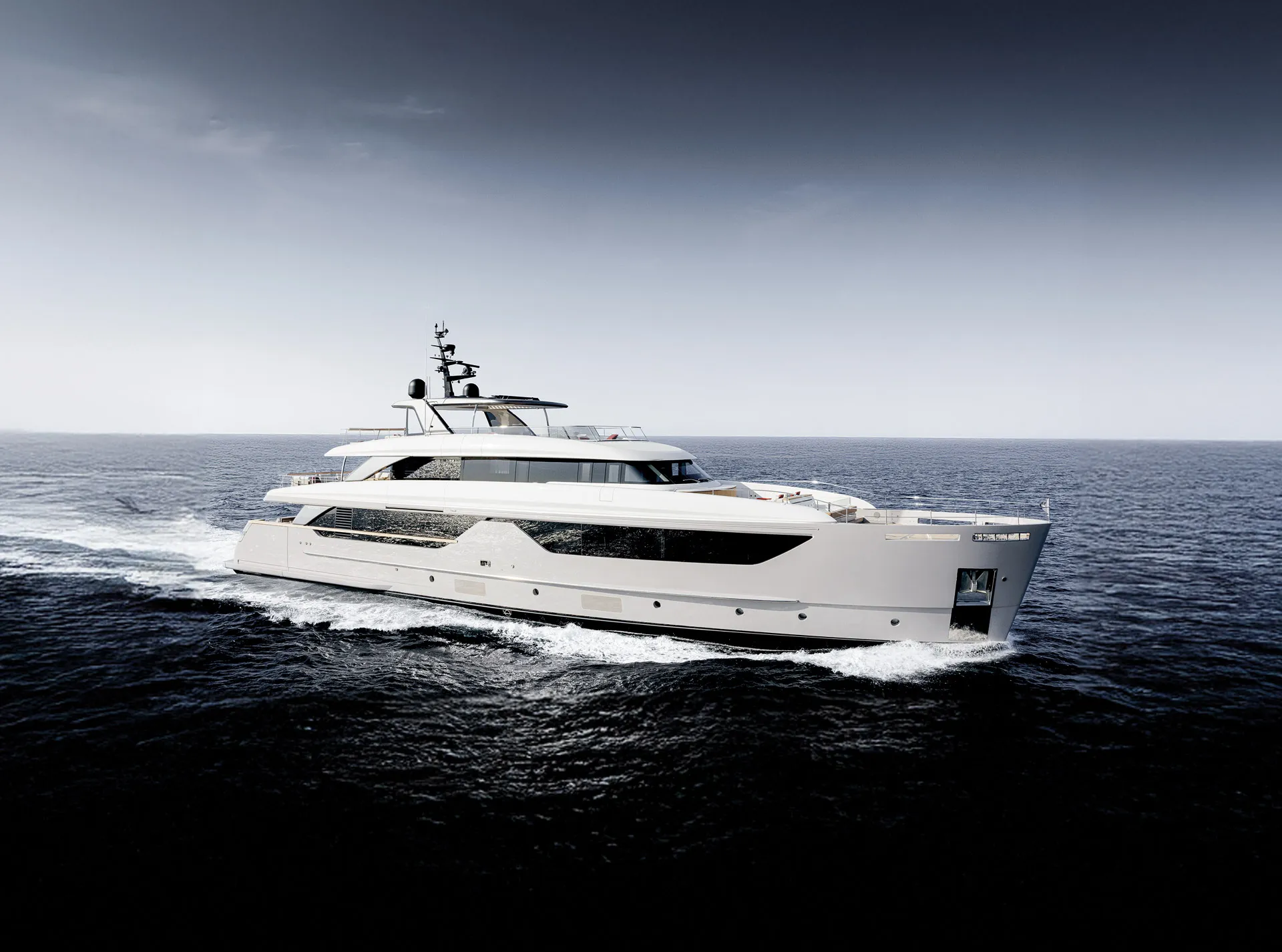
Sanlorenzo SD132133' 6" (40.7 m)
View Specs & Review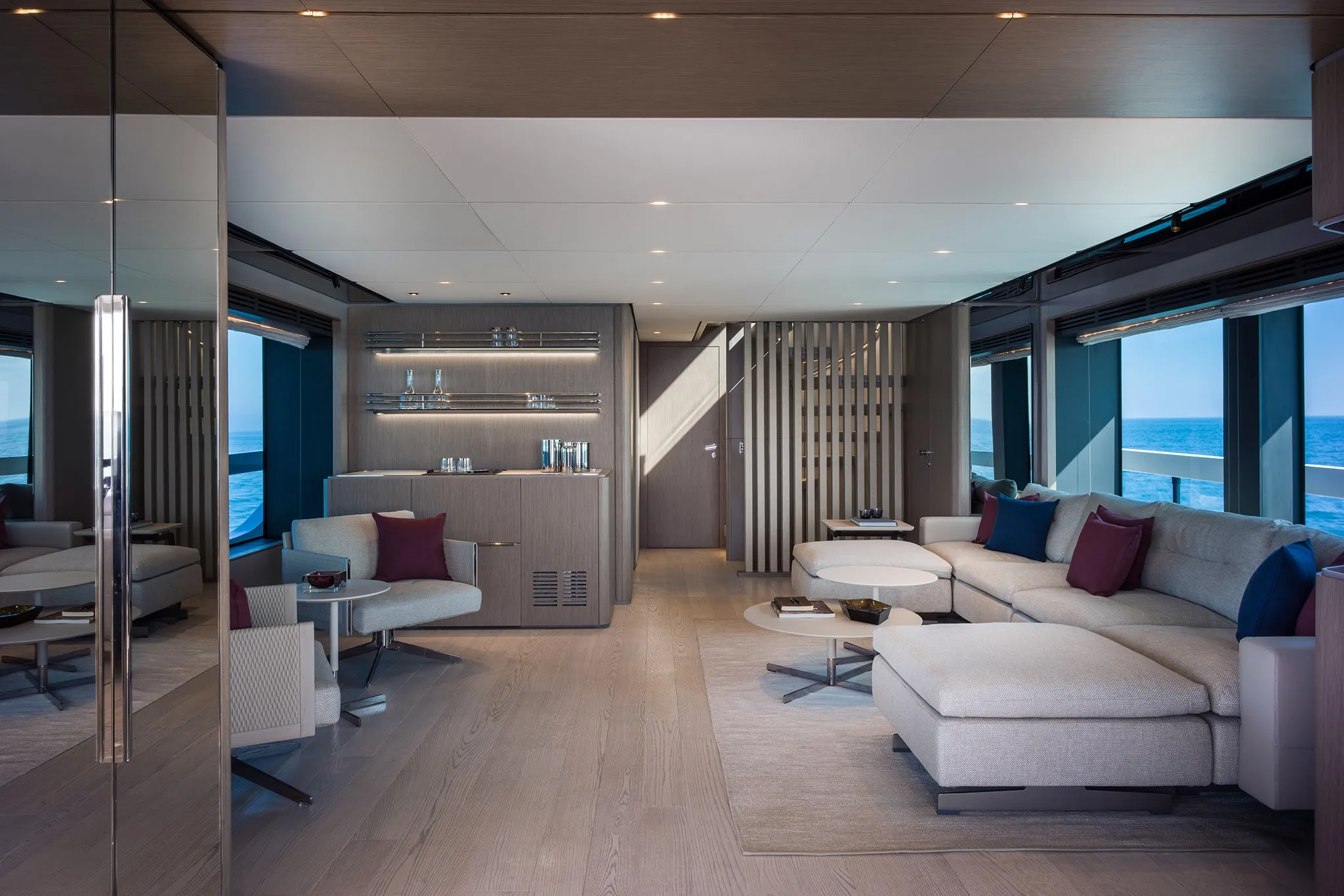
Ferretti Infynito 9088' 5" (26.95 m)
View Specs & ReviewFrequently Asked Questions
Do you need to clear customs going from Puerto Rico to the US Virgin Islands?
Yes, and it surprises almost everyone. US Customs and Border Protection treats St Thomas, St John and St Croix as foreign ports under United States customs law even though the US Virgin Islands are US territory. A boat must report on arrival in the USVI and report again on returning to Puerto Rico — reporting is required in both locations. CBP states that fines for failure to report typically begin at $5,000. The CBP ROAM app satisfies the face-to-face inspection requirement with exceptions: anyone needing an I-94, a cruising licence, or who owes duties must still report in person at the nearest CBP facility. There is no passport control and no visible border, which is exactly why this catches people.
Can a yacht be hauled out in Puerto Rico?
By arrangement rather than off a published tariff — agree it on the telephone before you plan around a date. Safe Harbor Puerto Del Rey lists a crane and hoists and lifts on its own page without stating tonnage, length, beam or draft capacity, and the Yacht Club Marina & Shipyard at Humacao settles its yard capacity on the call. Given how much else in this market is US-standard and openly published, this is the one to confirm directly rather than assume.
Does a US yacht need a cruising permit in Puerto Rico?
No. Puerto Rico is the United States, so a US-flagged vessel arriving from the mainland is arriving domestically — no cruising permit, no clearance fee, no anchorage fee, no Q flag, no agent. That is the market's structural advantage over a foreign-flag programme in the Bahamas or the Turks & Caicos, where permits and clearance fees are an annual cost. The exception is movement to and from the US Virgin Islands, which CBP treats as foreign for customs purposes.
What is the largest yacht that can dock in Puerto Rico?
Club Náutico de San Juan publishes dockage for 30 to 250 feet vessels on 120, 240 and 480 volts at up to 200 amps three-phase, which is the largest published figure in the market. Safe Harbor Puerto Del Rey at Fajardo publishes wet and transient slips from 32 to 200 feet with a maximum draft of 15 feet and — unusually — unrestricted maximum height and unrestricted maximum beam. Read that 15 feet as a slip figure rather than a channel figure, and confirm the approach depth with the marina before committing a deep-draft boat.
Is there dock and dine in Puerto Rico?
Not in the sense of tying up at a restaurant — dining here works from a berth and a car. Old San Juan's waterfront is a cruise berth and a working port, and the Fajardo restaurants sit behind a marina gate. What Puerto Rico offers instead is two large marinas with dining and provisioning on the property: Safe Harbor Puerto Del Rey with over 1,200 wet slips at Fajardo, and Club Náutico de San Juan in the capital. Berth at one and take a car; the dining here is genuinely good and it is inland.
How much is dockage in San Juan?
Club Náutico de San Juan publishes $2.00 per linear foot daily and $19.00 per linear foot monthly for transient vessels, plus a $25 water hook-up fee, metered energy and ice at $4.25 for 20 pounds. Hail the marina on VHF 08 rather than 16, and confirm the current rate when you book.