
August 27, 2026
Galeon 700 SKY: The Longer Boat That Weighs Less, and Why That Matters
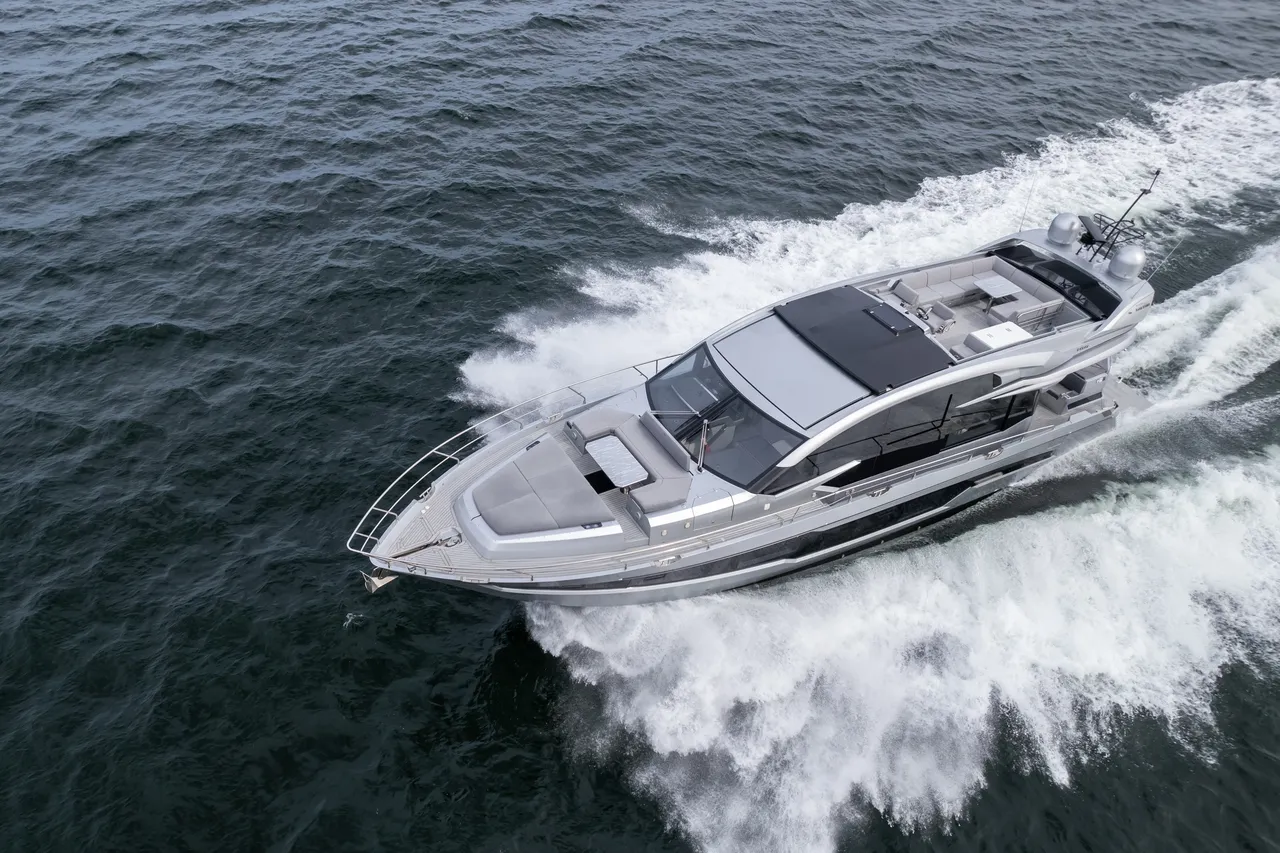
Galeon's 700 SKY is ten inches longer than the 680 FLY it evolved from and about 3,200 lbs lighter in light craft condition, because the top…
Read the articleExpert Review, Technical Specifications & Market Analysis
| Feature | Specifications |
|---|---|
| Overall Length | 72' 10" |
| Beam | 17' 3" |
| Draft | 4' 10" |
| Displacement | 81,791 lbs |
| Engines | 2 x 1,000 hp; up to 2 x 1,300 hp |
| Fuel Capacity | 885 gal |
| Water Capacity | 211 gal |
| Cabins / Heads | 4 Cabins + 1 Crew / 3 Heads |
| Max Speed | 30 knots |
Source: Spec & Photos courtesy of Galeon. Specs verified by Tony Smith, USCG 100 Ton Master, on August 26, 2026.
Ten inches longer than the 680 FLY and 3,200 lbs lighter - the carbon top deck is why, and it is the most interesting number on the boat.
Part of the Galeon SKY series — see how owners step up through the lineup.

The number that made me look twice at the 700 SKY is the weight. It is ten inches longer than the 680 FLY and it comes in about 3,200 lbs lighter in light craft condition. That is not a rounding difference, and it is not marketing - the top deck and its supports are carbon, and carbon is why. What you get back for it is a 15,454 lb load allowance, against 13,669 lbs on the 650 SKY beneath it. On a boat that is going to carry a tender, toys, four cabins' worth of people and everything they bring for two weeks, that number is worth more to you than a knot of top speed.
The decision I would make first is at the back of the boat, because everything else follows from it. Behind the transom you can have a big tender and toy garage or a cabin for two crew. That is not a preference, that is a declaration about how you intend to run the boat. Garage means you are the one launching the dinghy and you want it out of the weather. Crew cabin means somebody else handles the lines, the fuel and the 6 a.m. departure, and you are on the boat as a guest. Both are perfectly good answers. Picking the wrong one costs you for the life of the boat, because you are not converting that space afterwards.
Two things to raise before you sign. First, fuel: this boat carries 885 gallons and the 650 SKY below it carries 991, and the 700 is rated for more power on top of that. If your plan involves long legs between fuel docks, ask for observed burn at your cruising rpm in writing on the day of the trial and do the arithmetic rather than assuming the bigger boat goes further. Second, ask what Beach Mode actually does on this hull, and get the open beam in writing. If the balconies are half the reason you are looking at a Galeon, that is a question to settle before the order, not after.
Video courtesy of Galeon.
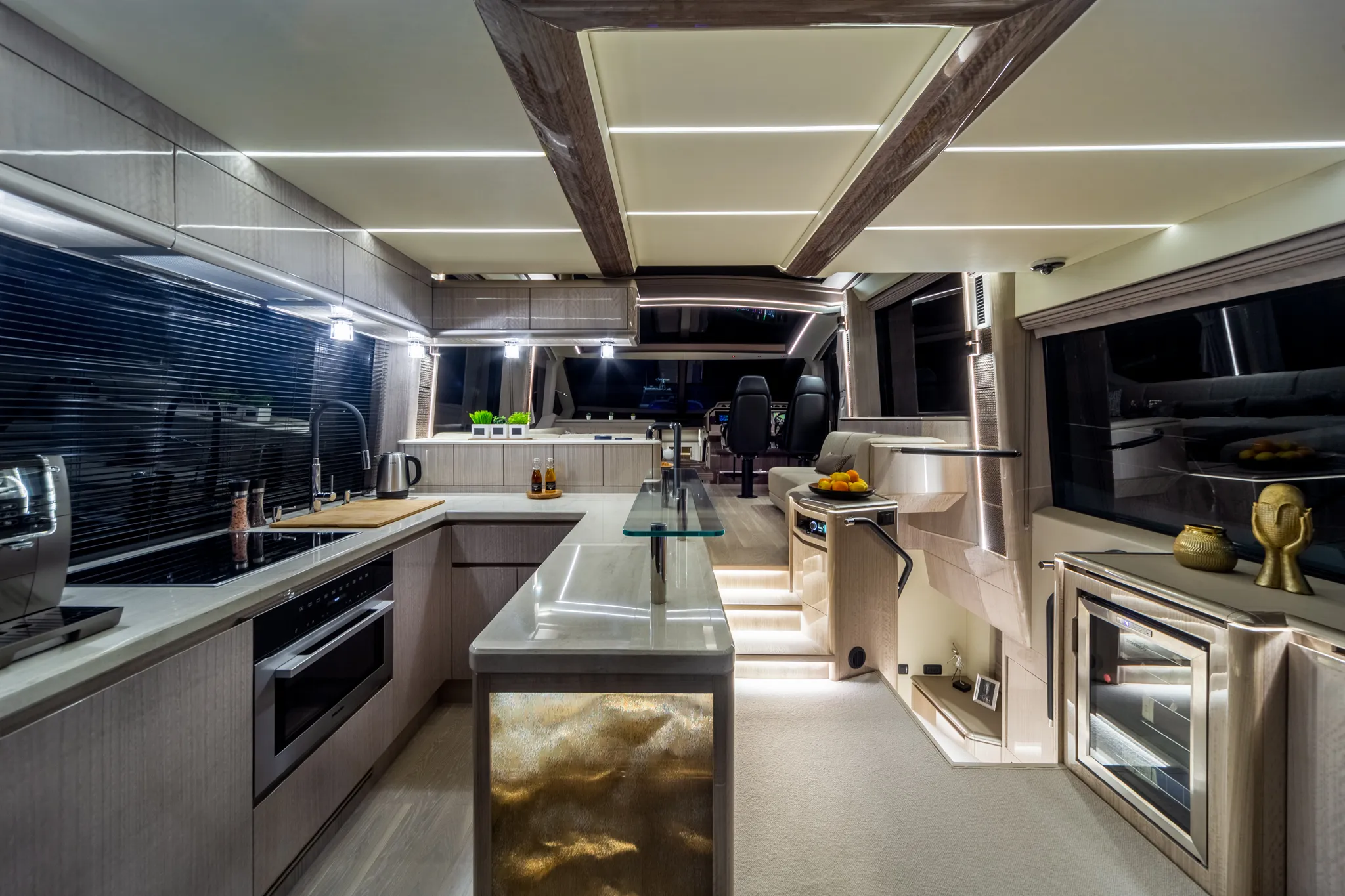
Photos courtesy of Galeon.
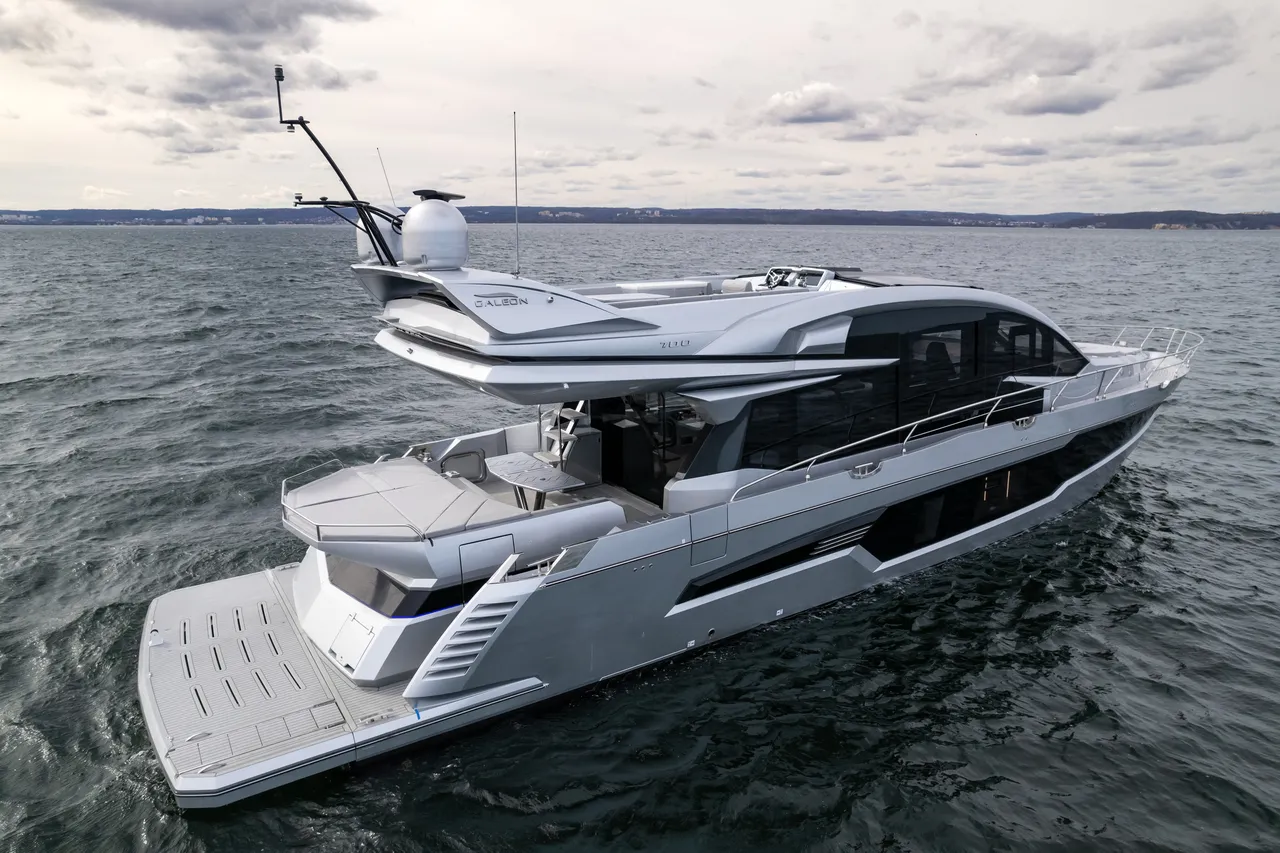
The Galeon 700 SKY sits above the 650 SKY in the Skydeck line and is Galeon's own evolution of the 680 FLY - it keeps that boat's interior thinking and its finish, and replaces the flybridge with a compact top deck under a three-part carbon hardtop, plus a larger sunroof over the saloon. It is not the same boat, though: at 72' 10" length overall on a 66' 2" hull it is ten inches longer than the 680 FLY, and it is lighter, which is the more interesting half of the comparison. Carbon construction cuts weight and allows slimmer supports, so the glass panels that wrap the main deck living area have less structure interrupting them.
The numbers. Beam is 17' 3" and draft is 4' 10" without propellers. Fuel is 885 gallons across two unequal tanks and fresh water is 211 gallons, with 87 gallons of grey and 79 of black. Mass in light craft condition with base engines is 81,791 lbs, with a further 15,454 lbs of rated load, which is 1,785 lbs more than the 650 SKY beneath it carries and a genuinely useful margin on a boat this size. Bridge clearance is 25' 8" and transport height is 29' 11". The hull is CE Category B and rated for sixteen aboard. Power runs from 2 x 1,000 hp to a ceiling of 2 x 1,300 hp and top speed is up to 30 knots.
Accommodation is four cabins with three heads. The full-beam master runs across the boat below deck with large windows, a vanity station and real wardrobe space; the VIP is forward with its own en-suite shower room; and two further guest cabins sit between them, buildable as doubles, as twins, or as a single with a Pullman that folds out of the hull side and conceals a drop-down desk or vanity when it is stowed. Aft, the volume behind the transom is either a large tender and toy garage or a cabin for two crew. You choose one.
Galeon quotes up to 30 knots for the 700 SKY. Ask for observed burn at your normal cruising rpm in writing at sea trial and work your own range off 885 gallons - on a boat this size that single figure is worth more than any brochure paragraph.
Read the fuel number carefully, because it runs against the grain. The 700 SKY carries 885 gallons; the 650 SKY below it carries 991. The larger boat carries 106 gallons less, in two unequal tanks rather than a matched pair, and it is rated for more power - up to 2 x 1,300 hp against the 650's 2 x 1,200 hp. If long legs between fuel docks are part of your plan, that combination deserves a conversation before you compare the two on length alone.
The weight is the other number worth stopping on. Light craft condition is 81,791 lbs, against 85,010 lbs for the 680 FLY - and the 700 is the longer boat. The carbon hardtop and carbon supports are why. Maximum load is 15,454 lbs against the 650 SKY's 13,669 lbs, which is what a lighter structure buys you back in carrying capacity. As always, treat 81,791 lbs as a light craft figure with base engines and nothing aboard, and get a rigged, loaded weight before you size a lift.
Power runs from 2 x 1,000 hp to 2 x 1,300 hp - a 600 hp spread. Drive the specification you intend to order rather than whatever is on the demo boat, and do it loaded. Draft is 4' 10" without propellers and bridge clearance is 25' 8"; both are worth checking against your berth and your route before anything else.
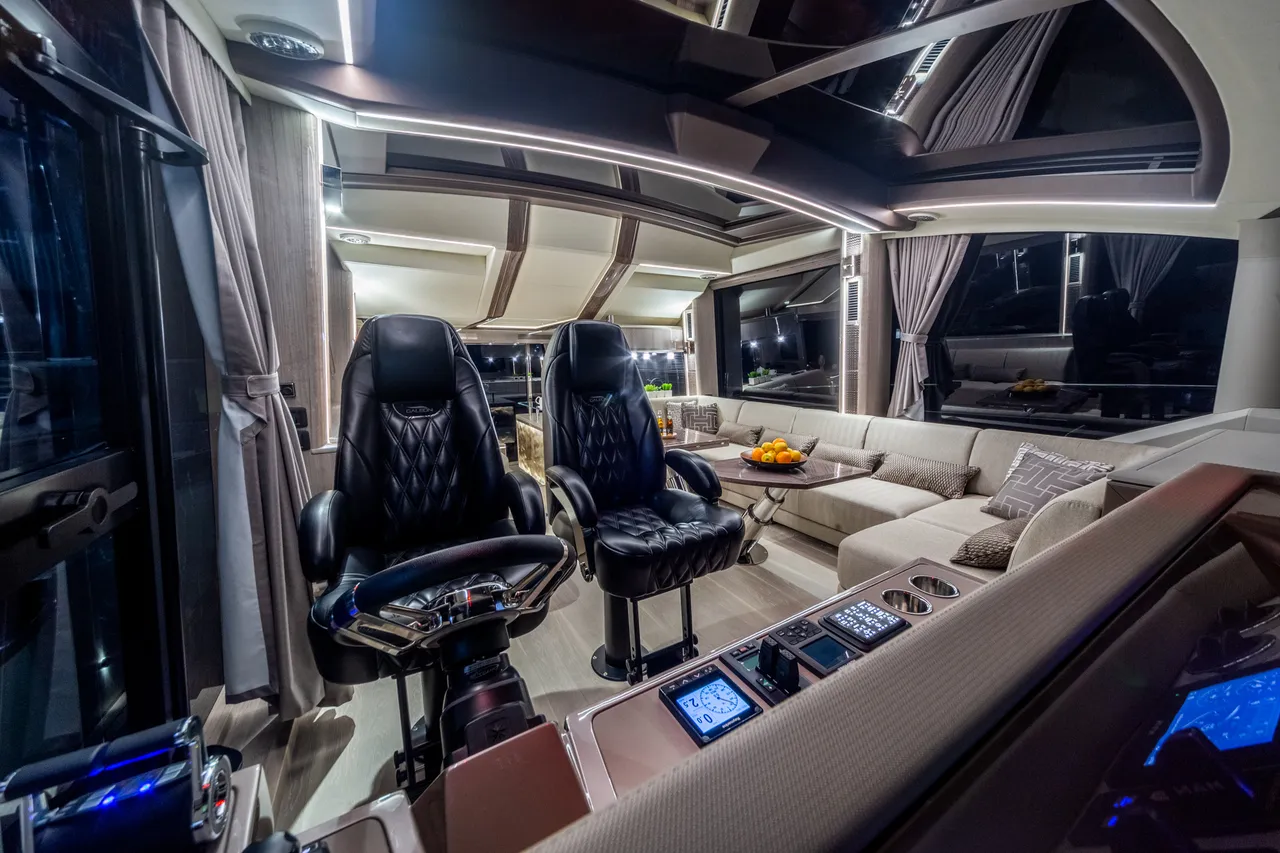
The main deck is built around privacy, which is unusual at this size and is the thing owners notice after a season rather than on a first walkthrough. Guest and master cabins have separate entrances from the main deck, so people are not routed past each other. A foldable door separates the galley from the cockpit and lets it serve both bars. Opposite the galley you can have a second bar or a rest area, working through slide-down windows. The helm carries twin sport seats, followed by the main dining and entertainment area, and a one-piece glass door gets you to the bow quickly.
Below deck the master stateroom spans the full beam with large windows, a vanity station and generous wardrobe space. The VIP is forward with its own en-suite shower room. Two further guest cabins sit between them, and this is where the flexibility is: they can be built as doubles, as twins, or as a single with a Pullman berth that folds out of the hull side. Folded away, that Pullman conceals a drop-down desk or vanity table - so a cabin that sleeps two when the family is aboard becomes an office when it is not.
Aft, the choice is a large tender and toy garage behind the transom, or a cabin for two crew. Same volume, one answer. Watercraft can also live on the hydraulic bathing platform, which is adjustable and doubles as the swimming and boarding space.
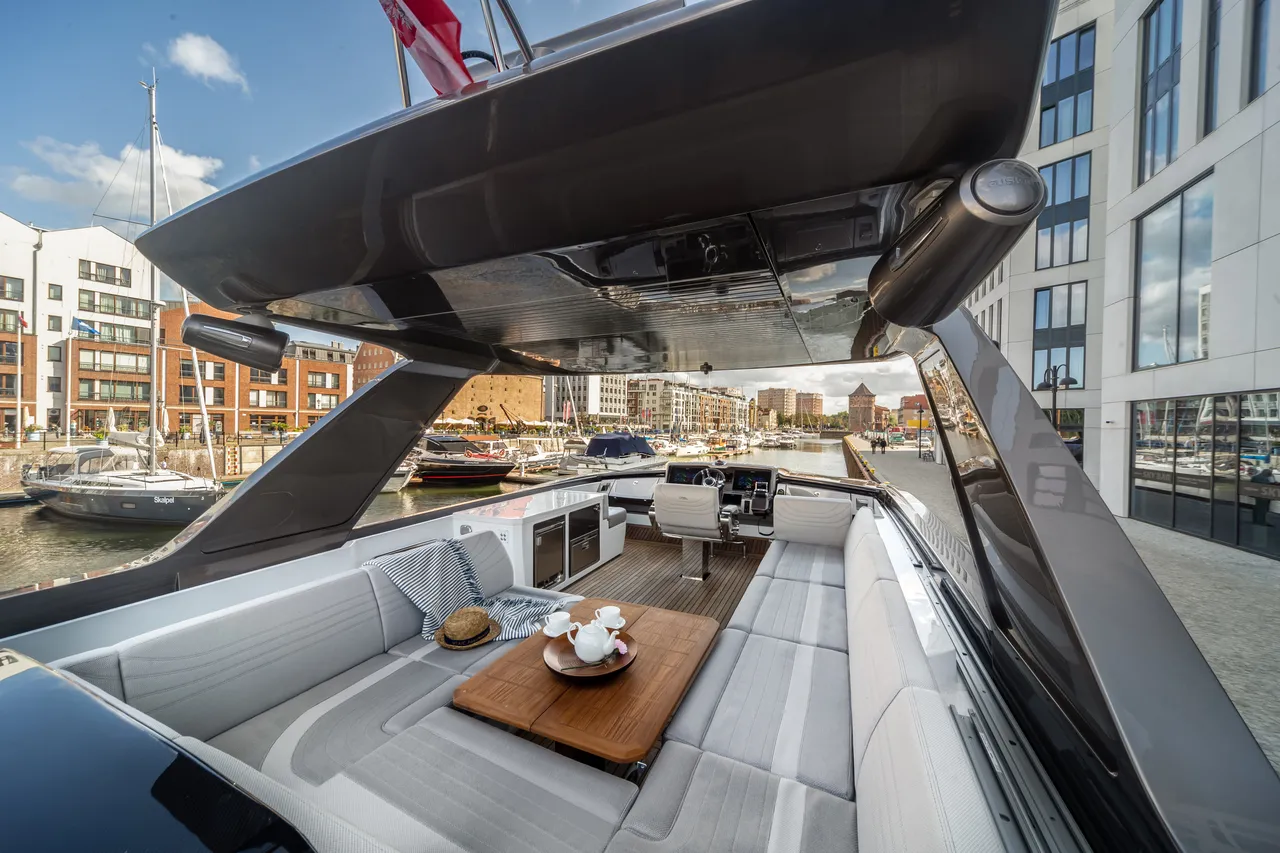
Up top, the Skydeck carries a central helm station, passenger seats and a wet bar, all under a three-part carbon hardtop that closes the deck off for a sportier profile and for shelter. The cockpit below takes either an oversized C-shaped sofa or a smaller L-shaped seat with a sun pad behind it. Forward, the sundeck converts into four separate seating areas with twin pop-up dining tables - which turns the bow into a room rather than a sunpad.
Galeon describes the 700 SKY as an evolution of the 680 FLY, and that is the right word: it keeps the interior thinking and the finish, and it changes the top and the structure. It is not the same boat wearing a different roof. The 700 is 72' 10" against the 680's 72' 0", and it is lighter - 81,791 lbs in light craft condition against 85,010 lbs - because the top deck and its supports are carbon. Both carry four cabins plus crew across three heads. If you are cross-shopping the two, the questions are the top deck, the weight and the layout flexibility, not the size.
Within the Skydeck line the 700 sits above the 650 SKY, and the gaps run in both directions. The 700 is longer, has more power available and carries 15,454 lbs of rated load against the 650's 13,669 lbs. The 650 carries more fuel - 991 gallons against 885 - and opens to a 24' 3" Beach Mode beam at anchor; if the balconies matter to you, get the 700's open beam in writing at the order desk. Compare the two on how you will actually use them, not on length alone.
Against the wider 70-to-75-foot market the 700's case is the combination of carbon weight-saving and a genuinely flexible guest deck. Four cabins that can be doubles, twins or a Pullman single with a concealed desk is a broader range of answers than most builders at this size offer, and the choice between a full toy garage and a two-berth crew cabin lets the same hull suit an owner-operator or a run boat. The Azimut Fly 72 at 74' 5" and Ferretti 720 at 73' 10" are the two closest comparisons.
One thing to settle first, because everything else follows from it: garage or crew. They occupy the same volume behind the transom, and it decides whether this is a boat you run yourself with the toys aboard or a boat somebody runs for you.
The 700 SKY fits the owner who wants flagship volume without a flybridge silhouette. The top deck sits under a three-part carbon hardtop that closes it off completely, so you keep the central helm, the passenger seats and the wet bar up there while the boat reads as a large sport coupe from the dock. Bridge clearance is 25' 8".
It fits a family whose crowd changes. The two guest cabins between the master and the VIP can be built as doubles, as twins, or as a single with a Pullman berth that folds out of the hull side and hides a drop-down desk or vanity when stowed. That is a cabin that sleeps two on a family fortnight and works as an office the rest of the year, which is closer to how most boats this size are actually used.
It fits someone who has decided how the boat will be run. Behind the transom you can have a large tender and toy garage or a cabin for two crew, and that single choice separates an owner-operated boat carrying its toys from a boat with a professional aboard. Sixteen are rated for the day and four cabins with three heads sleep the party.
It fits people who load a boat heavily. Maximum load is 15,454 lbs against the 650 SKY's 13,669 lbs, and the difference exists because the carbon top deck saved weight elsewhere.
It is the wrong boat if fuel range at speed is your first priority. It carries 885 gallons where the 650 SKY below it carries 991, and it is rated for more power. And it is the wrong boat if the fold-down balconies are what you came for without asking first - find out exactly what Beach Mode does on this hull before you assume it does what it does on the model below.
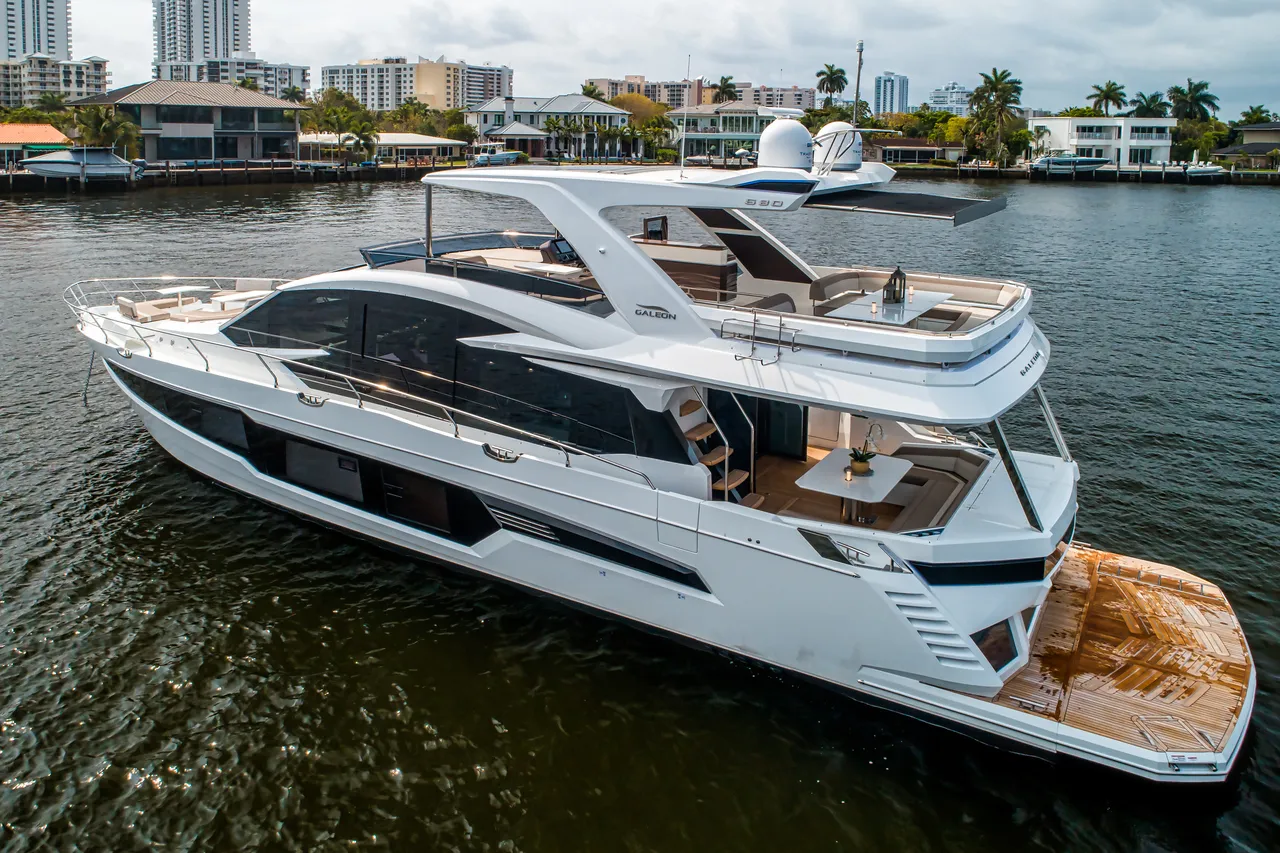
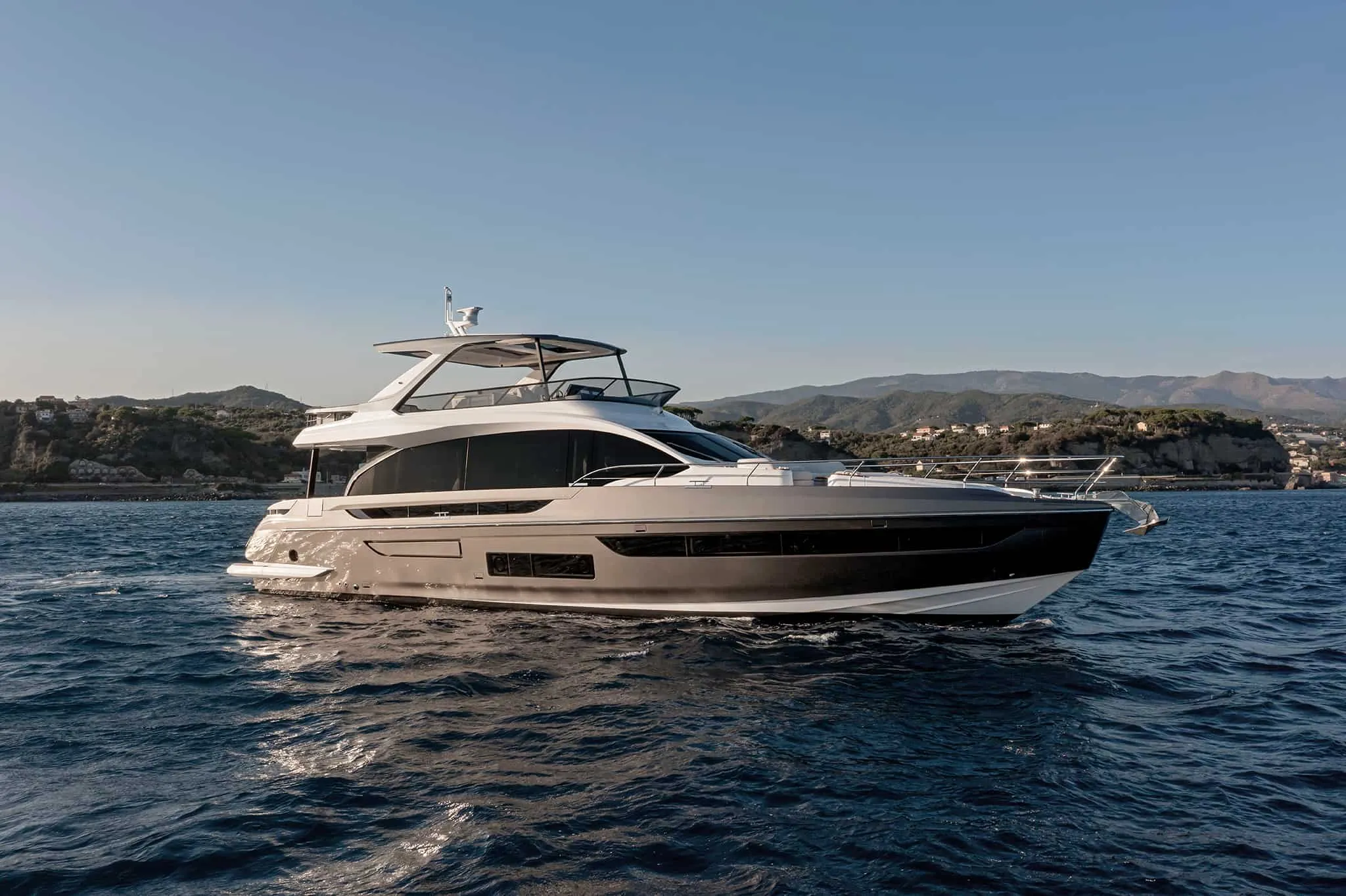
It can, but not at the same time as the tender garage. The volume behind the transom is built one of two ways: as a large tender and toy garage, or as a cabin for two crew.
That choice defines how the boat gets run. A garage means you launch the dinghy yourself and it lives out of the weather. A crew cabin means someone else handles the lines, the fuel and the early departures. It is not convertible later, so it belongs at the top of your build-sheet conversation rather than the bottom.
Guest accommodation is unaffected either way: four cabins and three heads, with a full-beam master below deck, a VIP forward with its own en-suite shower room, and two guest cabins between them. Watercraft can also be carried on the adjustable hydraulic bathing platform.
Both are four cabins plus crew across three heads, and they are within ten inches of each other on length, so this is not a size decision.
Choose the 700 SKY if you want the top deck to close. The three-part carbon hardtop shuts the upper deck off completely, keeping the central helm, passenger seats and wet bar usable in weather that empties an open flybridge - and it gives the boat a sport-coupe profile the rest of the time. The carbon also makes it the lighter boat by about 3,200 lbs, with the larger load allowance at 15,454 lbs.
Choose the 680 FLY if the open flybridge is what you actually want, or if you prefer a model with a longer market history behind it.
One question to ask either way, before you order rather than after: exactly what Beach Mode does on the hull you are buying, and what the beam measures with the balconies down. If the balconies matter to you, get that in writing.
No. Galeon calls the 700 an evolution of the 680 FLY rather than a Skydeck version of it, and the figures back that up: the 700 SKY is 72' 10" long against the 680 FLY's 72' 0", and it is about 3,200 lbs lighter in light craft condition - 81,791 lbs against 85,010. The beam is the same at 17' 3", which is what makes the two easy to confuse.
What carries over is the interior thinking and the finish. What changes is the structure: the flybridge is replaced by a compact top deck under a three-part carbon hardtop, with carbon supports and a larger sunroof over the saloon.
The lighter structure buys back carrying capacity. Maximum load on the 700 SKY is 15,454 lbs, against 13,669 lbs on the 650 SKY beneath it.
885 gallons, in two unequal tanks. That figure is worth reading carefully, because it runs against expectation: the 650 SKY below it in the range carries 991 gallons in a matched pair, so the longer boat carries 106 gallons less - and the 700 is rated for more power on top of that, up to 2 x 1,300 hp against the 650's 2 x 1,200.
If long legs between fuel docks are part of your plan, ask for observed burn at your normal cruising rpm in writing at sea trial and do the arithmetic off 885 gallons yourself. It takes fifteen minutes aboard, and it is the number your cruising plan actually runs on.