
August 27, 2026
Galeon 435 GTI: The Same 45-Footer, With the Outboards Taken Off
Galeon built the same 45-footer twice. The 435 GTO takes three outboards to 51 knots. The 435 GTI takes twin 480 hp inboard diesels to 32, a…
Read the articleExpert Review, Technical Specifications & Market Analysis
| Feature | Specifications |
|---|---|
| Overall Length | 44' 11" |
| Beam | 13' 6" |
| Draft | 3' 10" |
| Displacement | 35,314 lbs |
| Engines | 2 x Inboard Diesel 480 hp |
| Fuel Capacity | 370 gal |
| Water Capacity | 106 gal |
| Cabins / Heads | 2 Cabins / 1 Head |
| Max Speed | 32 knots |
Source: Spec & Photos courtesy of Galeon. Specs verified by Tony Smith, USCG 100 Ton Master, on August 26, 2026.
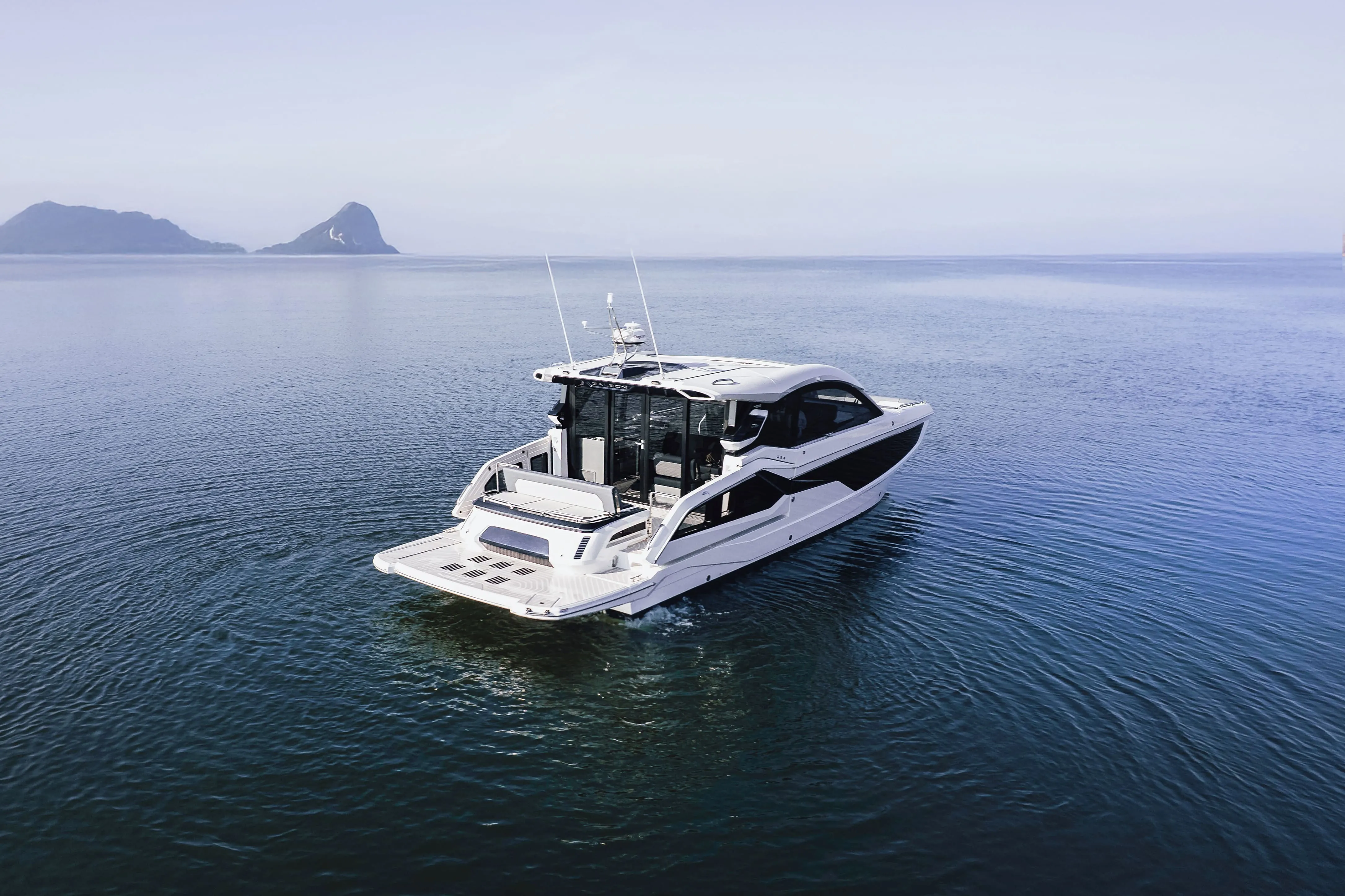
The same 13' 6" footprint as the outboard 435, with the engines taken off the transom: twin 480 hp inboard diesels, a clear aft deck, and a galley below where the weather cannot reach it.
Part of the Galeon GTI series — see how owners step up through the lineup.

Galeon has done something here that I wish more builders would do: they built the same boat twice and let the buyer decide what it is for. The 435 GTO and the 435 GTI are two inches apart in length, share a beam, share a cabin count, and are not remotely the same boat to own. One has three outboards and does fifty-one knots. This one has twin diesels down in the hull and does thirty-two. Most people walk in already convinced they know which side of that they are on, and about a third of them are wrong.
The line that decides it for me is where the galley is. On the GTI it is below deck. That sounds like trivia right up until you have spent a wet Saturday trying to make lunch in a cockpit with the wind coming across it, and then you understand why an inboard layout is worth nineteen knots to some people and worth nothing at all to others. Same with the transom. Take the outboards off and the back of the boat becomes deck - somewhere to sit, somewhere to get in and out of the water, nothing to work around. On a forty-five-footer that is more square footage than it sounds.
What I would hold you to before you sign. Get the fuel burn at your cruise rpm in writing at the sea trial, because thirty-two knots and three hundred and seventy gallons is not a range until somebody measures it. Understand that three foot ten of draft is a fixed number - it does not trim up when the water gets thin, so check it against your home channel at low water rather than at average. And do the two sea trials back to back if you can arrange it. An hour in each of these boats settles this decision permanently, and no spec sheet is going to do it for you.
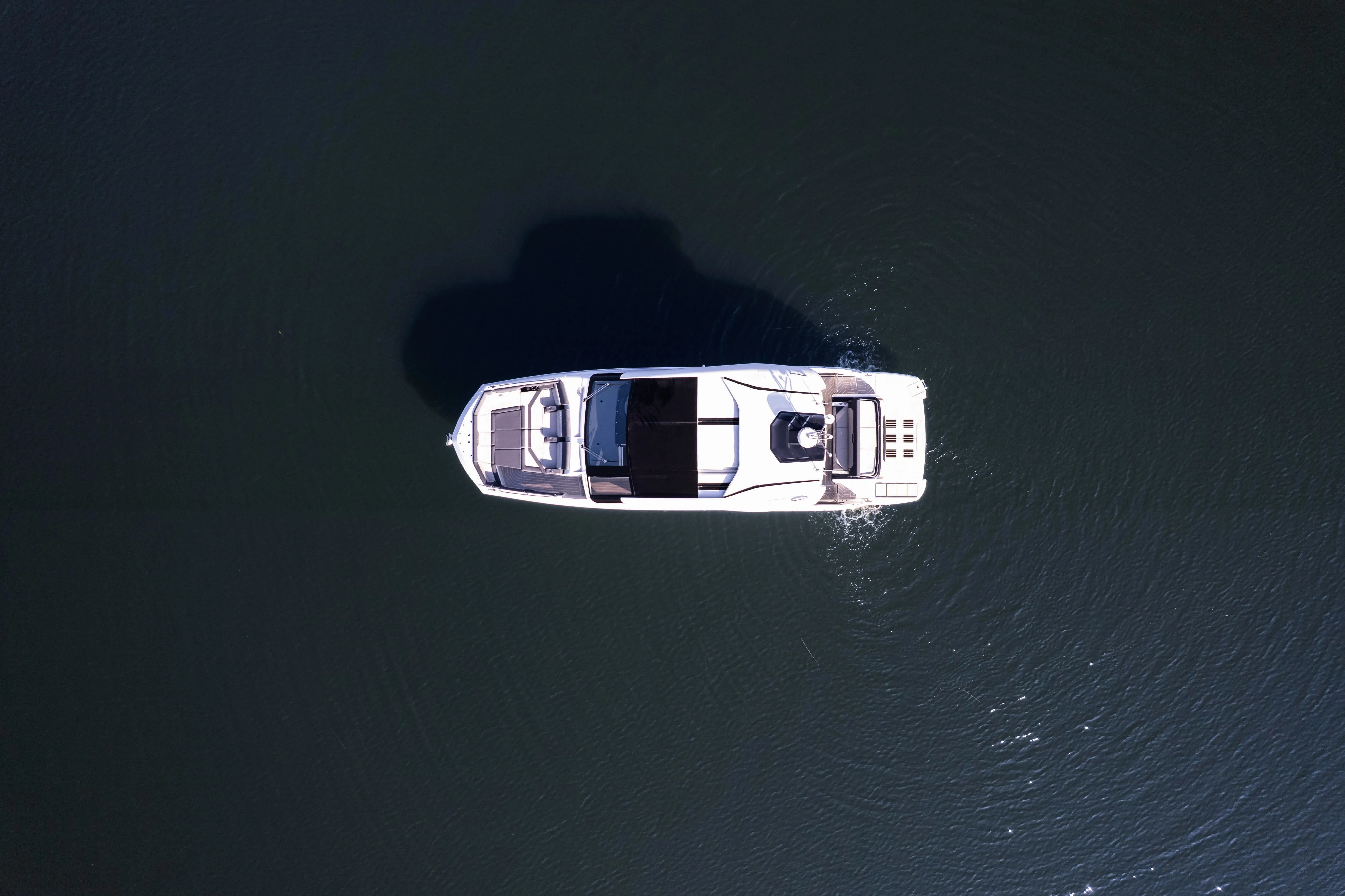
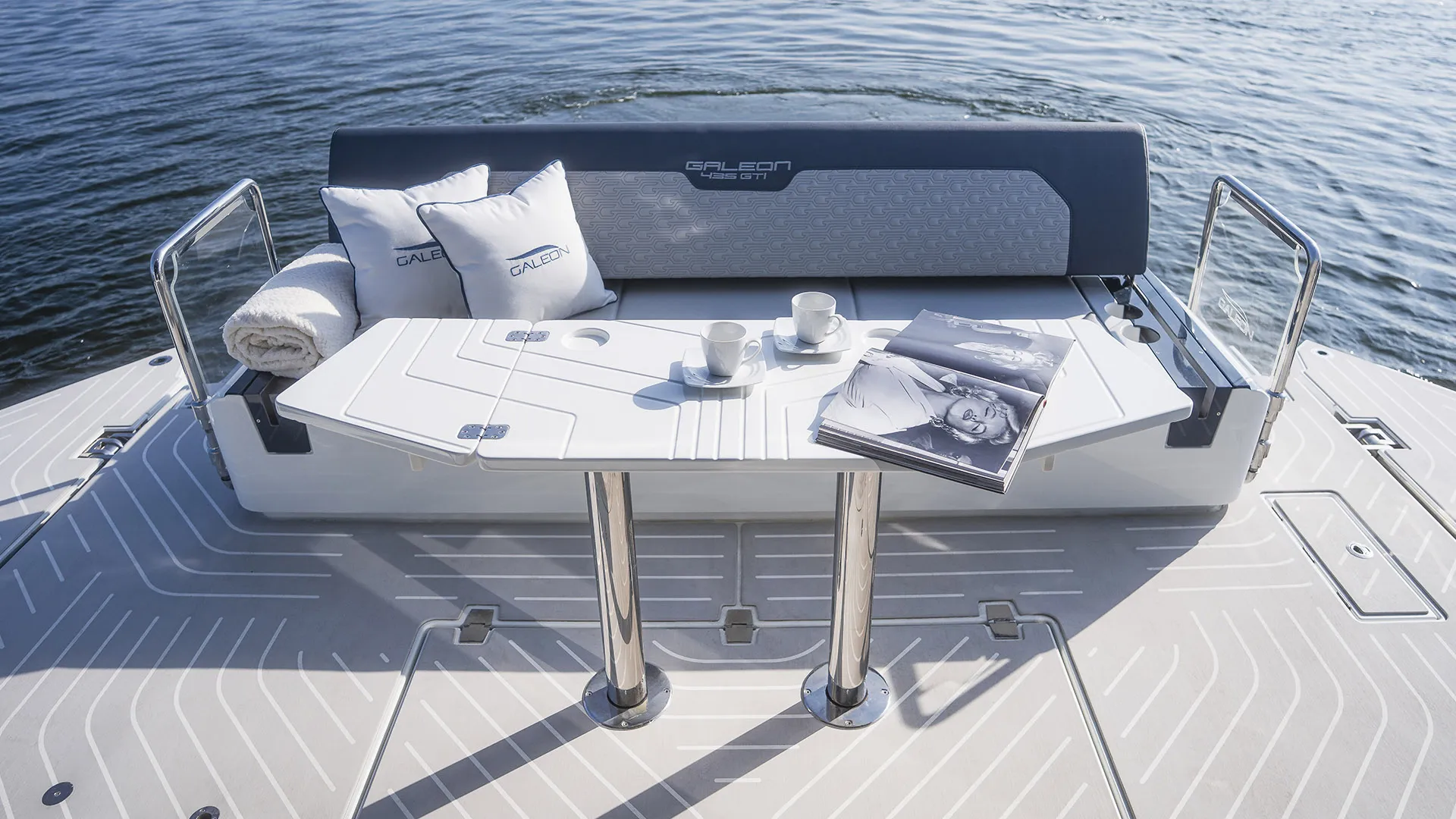
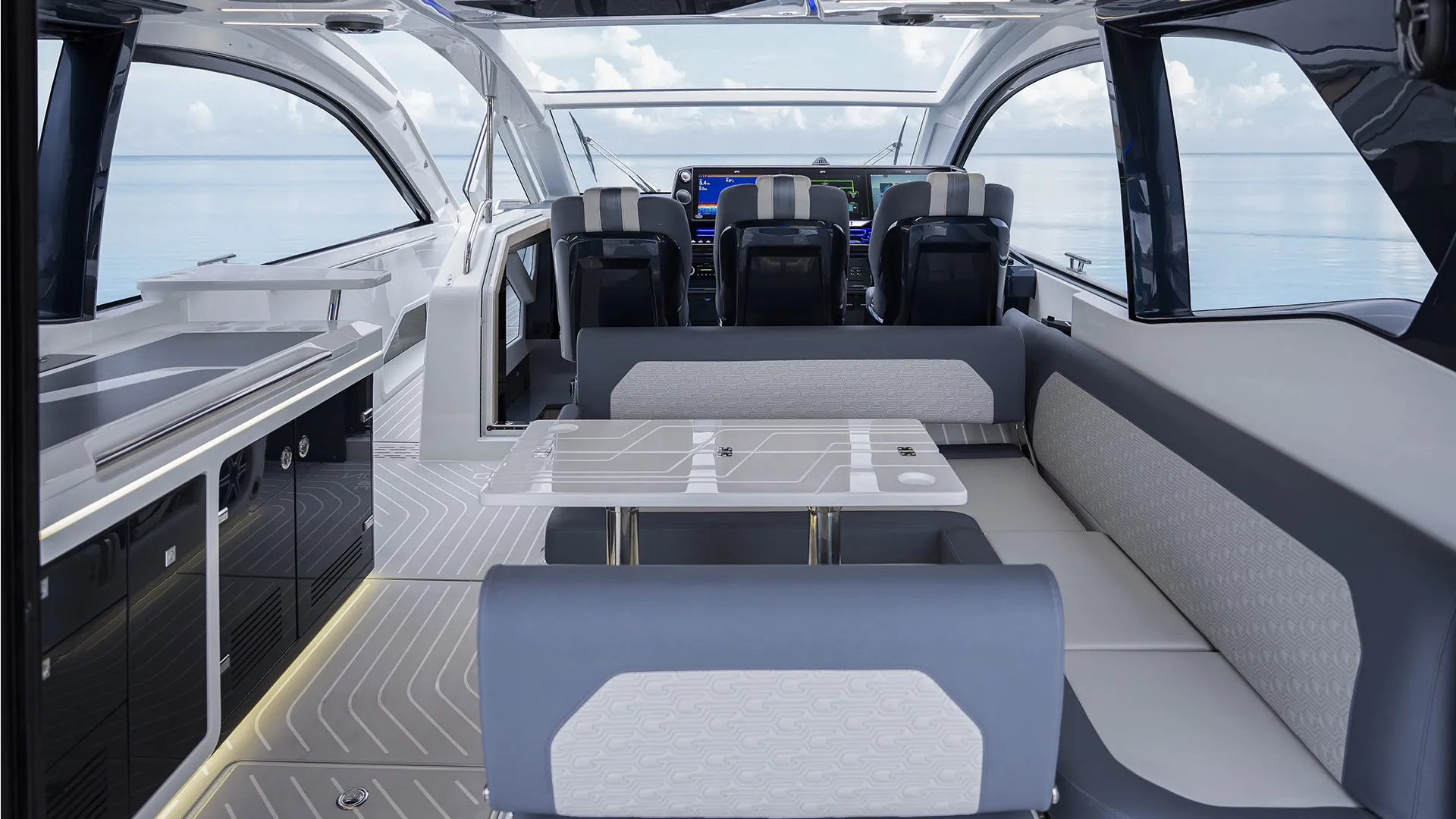
Photos courtesy of Galeon.
The Galeon 435 GTI is the inboard answer to a question the outboard boats in its class do not ask. It is 44' 11" on a 13' 6" beam - almost exactly the footprint of the 435 GTO - but it carries twin inboard diesels at 480 hp a side instead of engines hung on the transom, and everything that follows from that decision is the reason to buy it.
The most obvious consequence is at the back. With no outboards there, the aft deck is deck: usable space for sitting and socialising, direct access to the water, and nothing to work around. The silhouette stays low and sporting in the manner of the GTO class, but the boat behind the helm is a different proposition.
The hull is a deep-V, which is the shape you want when the water stops being flat and you are running inboards rather than trimming outboards through a chop. Top speed is up to 32 knots.
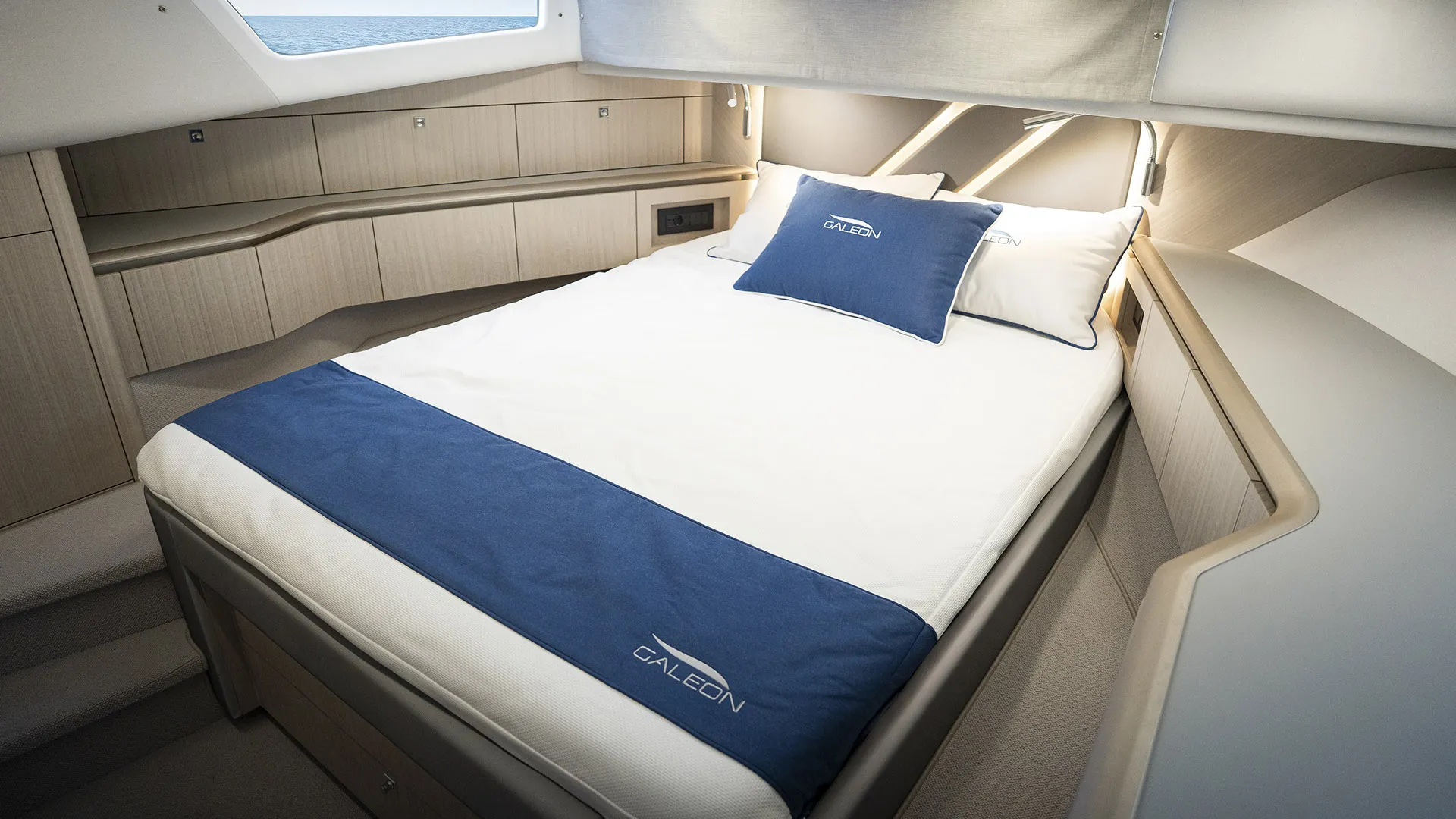
The numbers: 370 US gallons of fuel, 106 gallons of fresh water, 35,314 lbs unladen, draft 3' 10", fourteen people rated. Two cabins and one head. The forward cabin takes a comfortable double bed with a screen and storage worked in around it; the aft cabin can be specified with sliding berths that push together into a double when you need one.
Below deck the galley sits on the lower level rather than in the cockpit, which is the quiet argument of the whole boat - you can cook in it when the weather turns. The main salon runs panoramic windows on both sides. On the main deck the cockpit carries a well-equipped wet bar, with a convertible sunbed aft on the options list.
Up to 32 knots on twin inboard diesels at 480 hp a side. Ask for observed speed and burn at your intended cruise rpm at the sea trial, in writing - that figure is what turns 370 gallons of fuel into a range.
Thirty-two knots is nineteen knots slower than the outboard 435 GTO on the same footprint, and that gap is what the layout asks of you. What you get back is a deep-V hull driven by two engines sitting low and amidships rather than 1,800 hp cantilevered off a transom. The centre of gravity is lower and further forward, the boat carries its weight the way a sport cruiser is meant to, and a deep-V under inboards is a quieter, more settled ride in a head sea than the top-speed comparison suggests.
Draft is 3' 10" and it does not move. That is nine inches more than the outboard boat's trimmed-up figure and seven inches less than its trimmed-down one - and the second comparison is the more useful one, because in a channel at idle the outboard boat is running trimmed down. A fixed number is easier to plan a season around than a moving pair, but it is a floor rather than a range.
The tankage tells the same story from the other side. 370 gallons of fuel against 106 gallons of fresh water, where the outboard boat carries 528 and 79. Less range at speed, more time comfortably at anchor. That is not an accident; it is what the boat is for.
Displacement is 35,314 lbs unladen with base engines and nothing aboard, so get the rigged, loaded figure from the yard before you size a lift.
The galley is below deck, and that single line is the argument for this boat over its outboard twin. A lower-deck galley works when the weather does not - you can cook, wash up and put things away without standing in a cockpit with the wind coming across it, and nothing has to be cleared away before you get under way. On a boat this size that is a cruising decision rather than a styling one.
The forward cabin takes a comfortable double bed with a screen and real storage worked in around it. The aft cabin can be specified with sliding berths that push together into a double when you need one and stay apart when you do not - the arrangement that keeps a two-cabin boat useful for guests, for children, and for couples who do not want the same thing every weekend. One head serves both.
The main salon runs panoramic windows on both sides. With the galley and the sleeping accommodation below and the salon glazed, the lower deck is a genuine second living space rather than somewhere you go only to sleep. That is what an inboard layout buys and an outboard layout mostly does not.
On the main deck the cockpit carries a well-equipped wet bar, with a convertible sunbed aft on the options list. Because there are no engines on the transom the aft end of the boat is usable in a way it is not on the outboard boats in this class: more room to sit, direct access in and out of the water, and no engine wells to work around.
Fresh water is 106 gallons - 27 gallons more than the outboard 435 carries, which is the difference between a weekend and a long weekend for four.
The comparison that matters is inside the brand. The 435 GTO and the 435 GTI are two inches of paperwork apart on length - 44' 9" against 44' 11" - and share a 13' 6" beam, two cabins, one head and a fourteen-person capacity. Everything else diverges. The GTO runs three outboards to 51 knots on 528 gallons of fuel, drawing 3' 1" trimmed up and 4' 5" trimmed down. The GTI runs twin inboard diesels at 480 hp a side to 32 knots on 370 gallons, draws a fixed 3' 10", and carries 106 gallons of fresh water against 79.
Read that as two answers to the same brief rather than a boat and its compromised sibling. The GTO is faster, longer-legged at speed, shallower when you trim up, and easier to service because the machinery sits at eye level. The GTI is quieter, has a clear usable transom, carries more water, and puts the galley below deck where it works in weather. Nineteen knots is a lot to give up. A lower-deck galley and an unobstructed aft deck are a lot to gain. Neither is the reduced version of the other.
Against the wider market the 435 GTI lands in the 43-to-47-foot inboard sport cruiser class, a crowded and well-established European field. Those boats will match it on accommodation and often exceed it on cabin count. What the GTI brings is the GTO silhouette - a genuinely sporting profile rather than a flybridge boat with the top removed - on a deep-V hull, in a size where most of the sporting energy in the market has migrated to outboards.
If you have been shopping outboard boats at 45 feet and keep coming back to the noise, the transom clutter or the cockpit galley, this is the boat to sea-trial before you decide the category is settled.
The 435 GTI fits the owner who has looked at the outboard boats in this class and wanted the back of the boat back. No engines on the transom means the aft deck is living space, water access is direct, and the profile is defined by the hull rather than by three cowlings.
It fits people who cruise rather than sprint. Thirty-two knots is enough for most of what a 45-footer does, 370 gallons of fuel is a real tank, 106 gallons of fresh water is more than the outboard boat carries, and a deep-V hull under twin inboards is a settled ride when the water is not flat.
It fits anyone who actually cooks aboard. The galley is on the lower deck, out of the weather, usable in the rain and not in the way of the party. If your weekends involve real meals rather than a cooler and a grill, that one decision separates this boat from most of its class.
It fits four, flexibly. A double forward, sliding berths aft that push together or stay apart, one head, and panoramic windows in the salon. Fourteen is the rated day capacity.
It is the wrong boat if speed is the point. The outboard 435 GTO on nearly the same hull runs nineteen knots faster, and no amount of admiring the clear transom will close that gap.
It is also the wrong boat if shallow water is your normal. Draft is 3' 10" and it does not trim up. That is easier to plan around than a moving figure, but it is a floor, not a range.
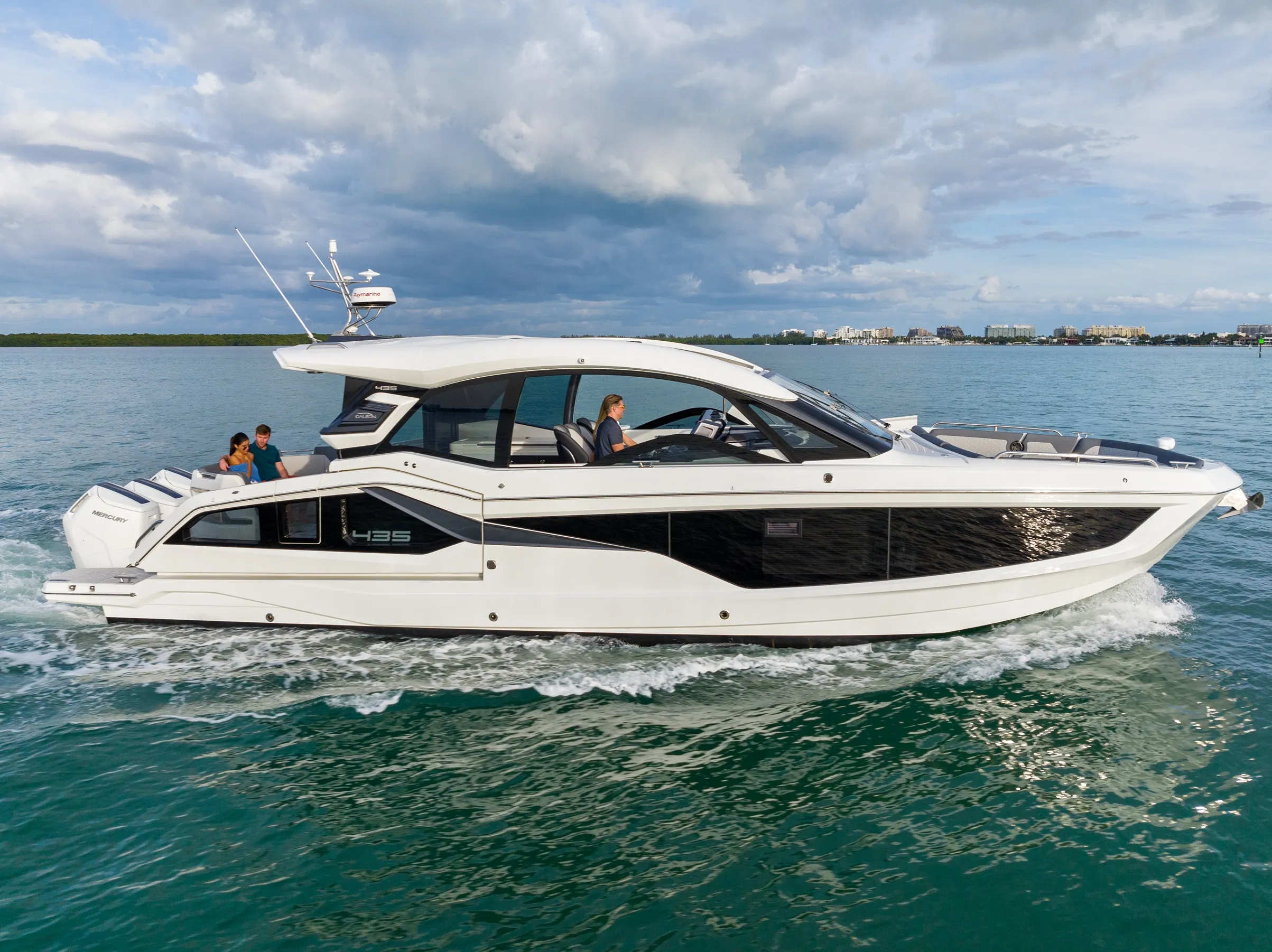
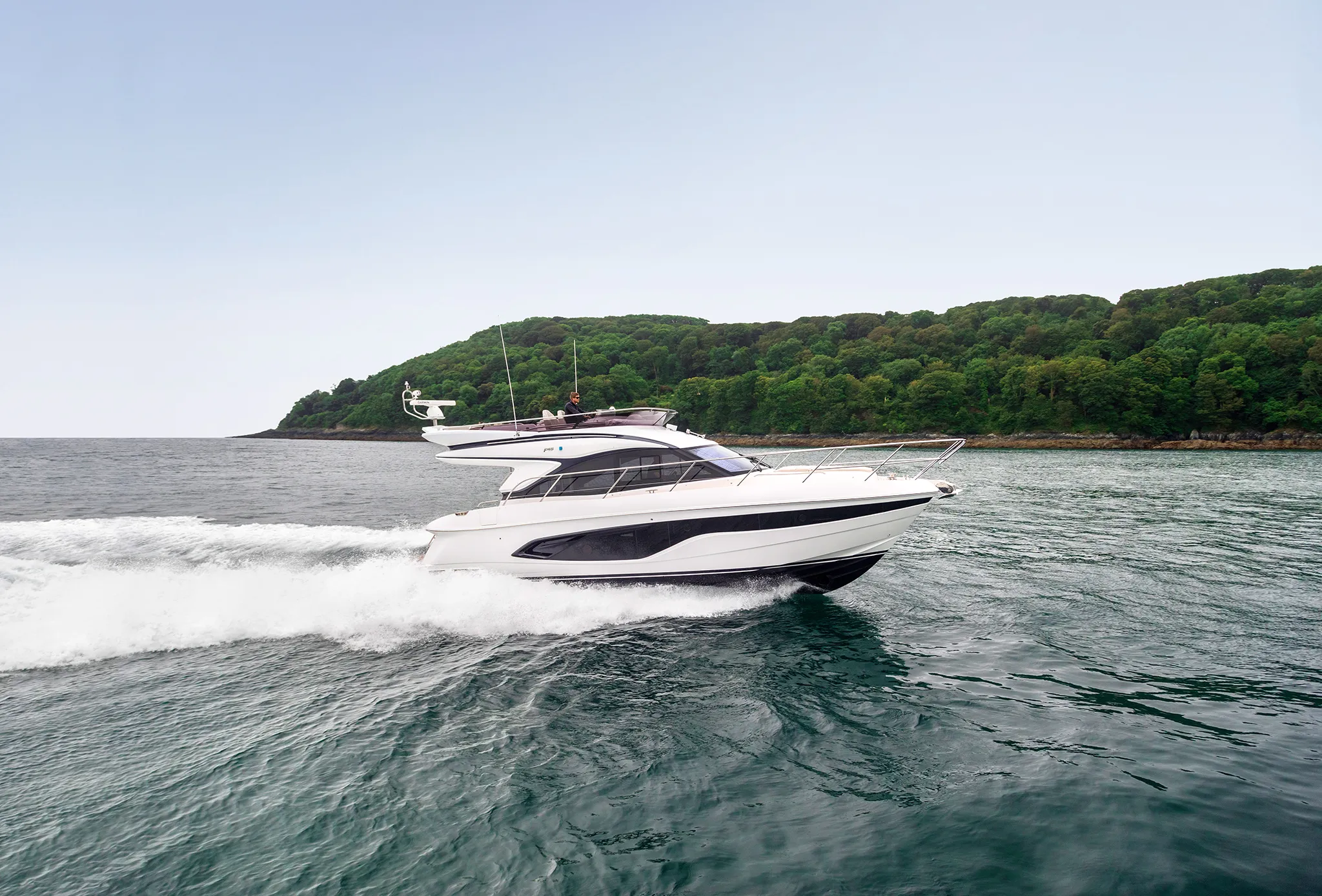
Up to 32 knots on twin inboard diesels at 480 hp a side, and it draws a fixed 3' 10". The draft does not trim up, which makes it easier to plan a season around than a moving pair of numbers - but it is a floor rather than a range, so check it against your own home channel at low water rather than at average.
Worth putting that draft in context. The outboard 435 GTO on the same footprint draws 3' 1" trimmed up and 4' 5" trimmed down, and the second figure is the one that applies when you are idling a channel rather than running trimmed out. On that reading the inboard boat is the shallower of the two where it actually counts.
Ask for observed speed and fuel burn at your intended cruise rpm at the sea trial, in writing - that figure is what turns 370 US gallons of fuel into a range.
Propulsion, and everything that follows from it. The GTI runs twin inboard diesels at 480 hp a side to a top speed of 32 knots; the 435 GTO runs three outboards to 51 knots. They are two inches apart on length - 44' 11" against 44' 9" - and share a 13' 6" beam, two cabins, one head and a fourteen-person capacity.
The consequences are physical. With no engines on the transom, the GTI's aft deck is living space with direct water access rather than a machinery area with a platform attached. Its galley sits on the lower deck where it works in bad weather, rather than in the cockpit. It carries 106 gallons of fresh water against the GTO's 79, and 370 gallons of fuel against 528 - less range at speed, more time at anchor. Draft is a fixed 3' 10" instead of a pair of figures that move with the engine trim. Neither boat is the reduced version of the other.
On the lower deck, not in the cockpit - and that is the quiet argument of the whole boat. A galley below decks works when the weather does not: you can cook, wash up and put everything away without standing in an open cockpit with the wind coming across it, and nothing has to be cleared away before you get under way.
If your weekends run to a cooler and a grill, that is worth nothing to you and you should be looking at the outboard 435 GTO, which puts a wet galley in the cockpit and gives you nineteen more knots. If your weekends involve real meals, some of them in the rain, it is the single feature that separates this boat from most of its class. Alongside it below deck sit the main salon with panoramic windows on both sides, a double cabin forward, and an aft cabin that can take sliding berths converting to a double. Fresh water is 106 gallons.
It depends on which three or four days of your season you are optimising for, and it is genuinely a two-way argument rather than a settled one. Outboards win on top speed, on shallow-water access when you trim up, and on servicing - the machinery sits at eye level on the transom rather than in a compartment under the cockpit sole. That is why so much of the sporting energy at this length has moved to outboards in the last decade.
Inboards win on the things you notice when the boat is not moving. No engines on the transom means the aft deck is usable living space with direct water access. Two engines low and amidships on a deep-V hull make a quieter, more settled ride in a head sea. And on the GTI specifically, the galley moves below deck where it works in weather, while fresh water goes up to 106 gallons.
The fair test is a back-to-back sea trial. Run the GTI and the 435 GTO on the same afternoon if you can arrange it - an hour in each settles the question permanently, and no spec sheet will do it for you.