
August 29, 2026
The Absolute Navetta 70: Choose Your Own Flybridge
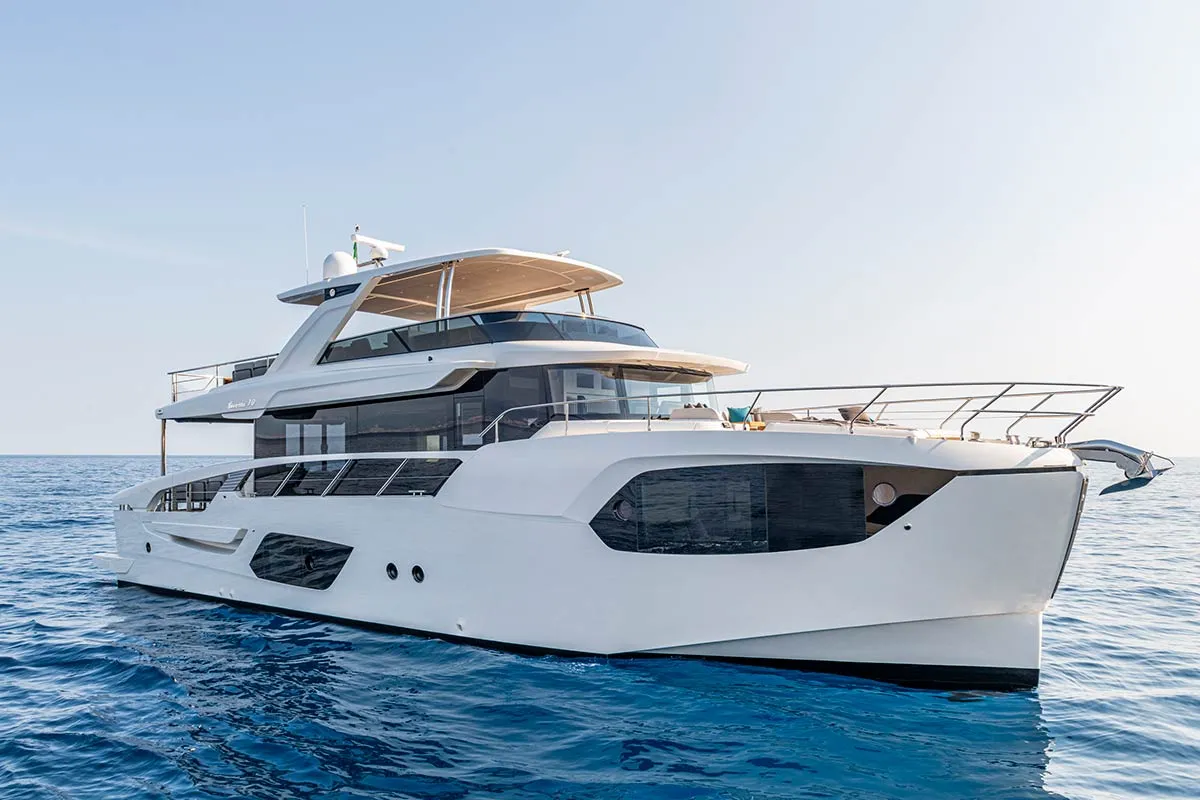
The Navetta 70's upper deck comes in two configurations, A and B, and they are genuinely different decks rather than trim levels. Solar buil…
Read the articleExpert Review, Technical Specifications & Market Analysis
| Feature | Specifications |
|---|---|
| Overall Length | 69' 10" |
| Beam | 18' 6" |
| Draft | - |
| Displacement | - |
| Engines | Twin Volvo Penta D13-IPS1350 (2 x 1,000 HP) |
| Fuel Capacity | 925 gal |
| Water Capacity | 240 gal |
| Cabins / Heads | 4 + Crew / 4 |
| Max Speed | 27.5 knots |
| Cruise Speed | 20 knots |
Source: Spec & Photos courtesy of Absolute.
You want the upper deck laid out your way, not the yard's. The Navetta 70 is offered with two different flybridge configurations, carries solar panels built into the flybridge roof, and puts the crew behind their own door with two berths and a private galley — on 69' 10" and an 18' 6" beam.
Part of the Absolute Navetta series — see how owners step up through the lineup.

Most of what you decide when you order a 70-footer is finish. On the Navetta 70 the first decision is structural: the flybridge comes in two configurations, A and B, and they are genuinely different upper decks rather than trim levels. Work out honestly whether you are a helm-and-run owner or a dine-and-stay owner before you sign, because that is not a change you make afterwards.
The crew arrangement is the part I rate most. Two berths and a private galley of their own, behind their own door. That is the difference between crew who are aboard and crew who are underfoot, and at this size it is what makes a captain-and-mate week work without the guest spaces feeling shared. Add sliding doors, high ceilings, a main level with no steps and 18' 6" of beam — the widest in the Navetta line — and the boat reads considerably larger than the tape says.
One number to check before you assume bigger means further: fuel is 925 gallons here, against 951 on the Navetta 66 and the 70 FLY. Fresh water is 240 on all three. If your pattern involves long legs between fuel stops, plan around the 925. And if the six-panel salon opening appeals, walk the 70 FLY the same afternoon — two boats, almost the same length, two deliberate positions on beam and on how the main deck meets the cockpit.
Video courtesy of Absolute.
Photos courtesy of Absolute.
The Navetta 70 — The Absolute Allure — is the second-largest boat in Absolute's Navetta line. Length overall is 69' 10" on an 18' 6" beam, the widest beam in the Navetta line. Fuel is 925 US gallons and fresh water 240 US gallons, water heater volume included. She is certified CE category B and rated for sixteen people.
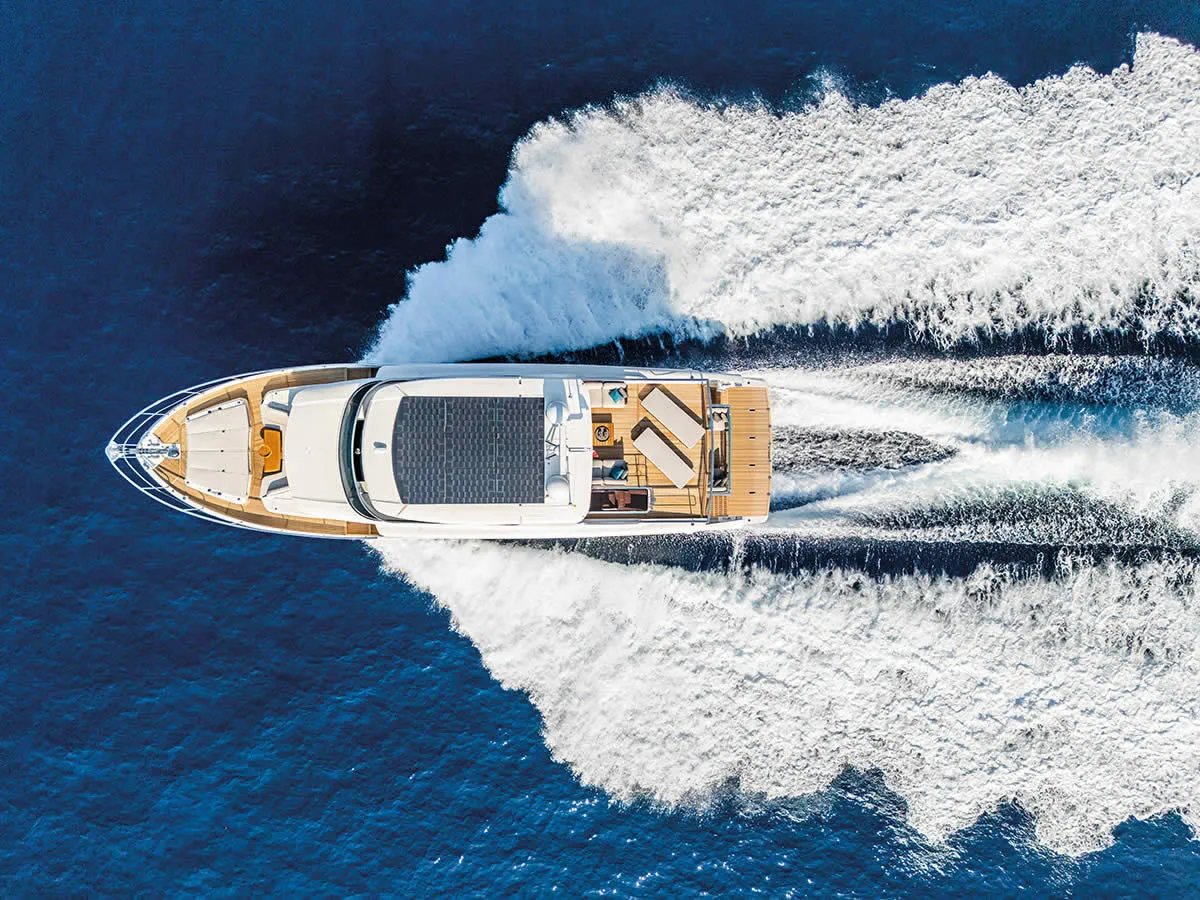
The headline decision on this boat is made before you take delivery: the flybridge comes in two configurations, A and B, and they are genuinely different upper decks rather than trim levels. Work out how you use the fly — helm-and-run, or dine-and-stay — before you sign, because it is not a change you make later.
The hull carries Absolute's side glass railings, and the terrace cockpit aft continues the arrangement the yard uses across the Flybridge and Coupé ranges.
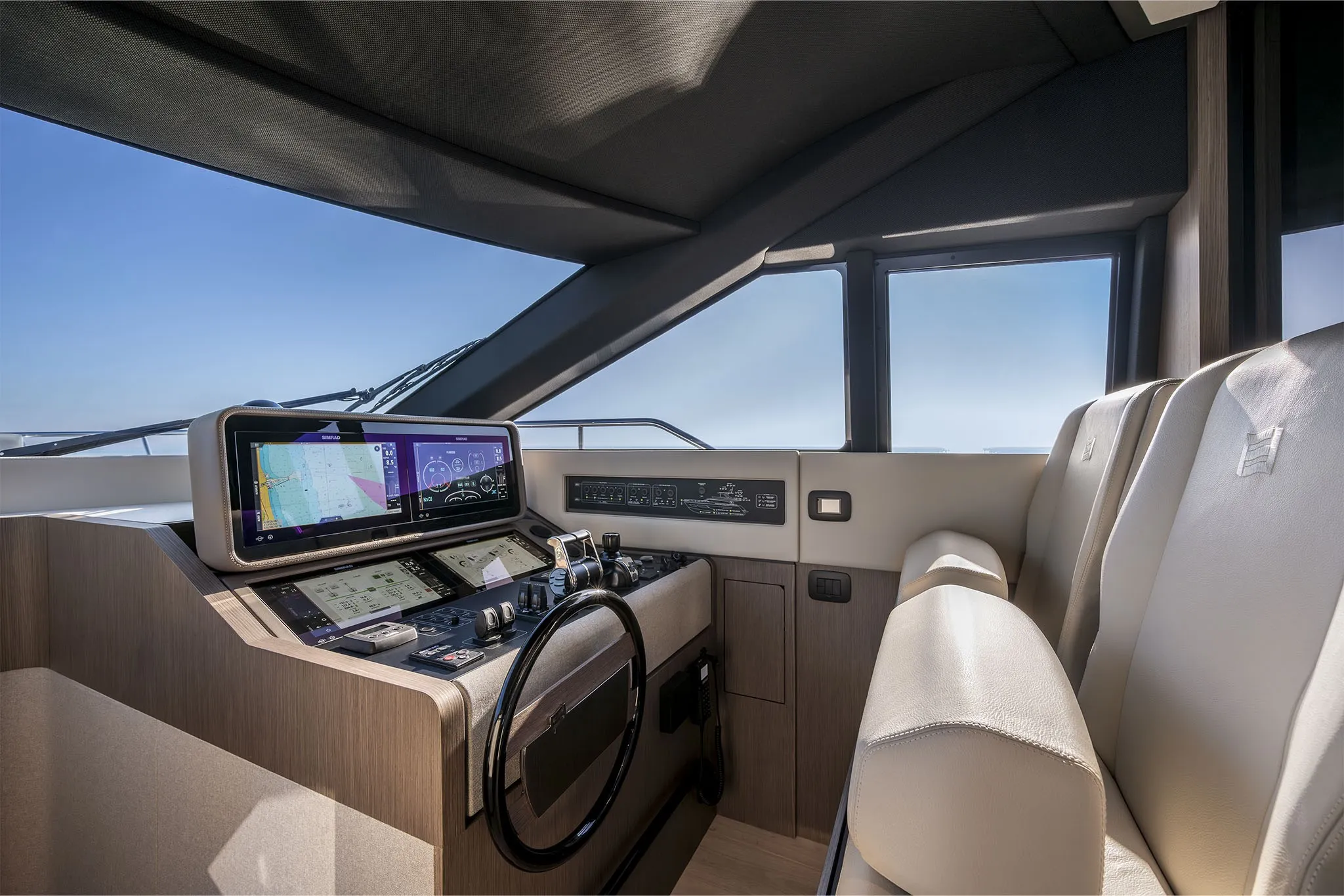
Power is twin Volvo Penta D13-IPS1350 pods rated 735 kW each — the same package Absolute fits to the Navetta 66 and the 70 FLY. IPS is a pod drive, so joystick control comes with the drivetrain, and on a boat of this size that is what keeps it inside an owner-operator's reach.
One number is worth putting side by side with the rest of the range before you commit: fuel capacity here is 925 US gallons, against 951 on the Navetta 66 and the 70 FLY. Fresh water is 240 US gallons on all three. If your cruising pattern involves long legs between fuel stops, plan around the 925 rather than assuming the biggest boat carries the most.
The solar panels integrated into the flybridge roof are part of the energy picture rather than the propulsion one. Absolute fits them to feed onboard systems under way and at anchor, and specifies them as impact- and salt-resistant. At sea trial, log observed burn at your intended rpm and work your own legs off the 925 gallons.
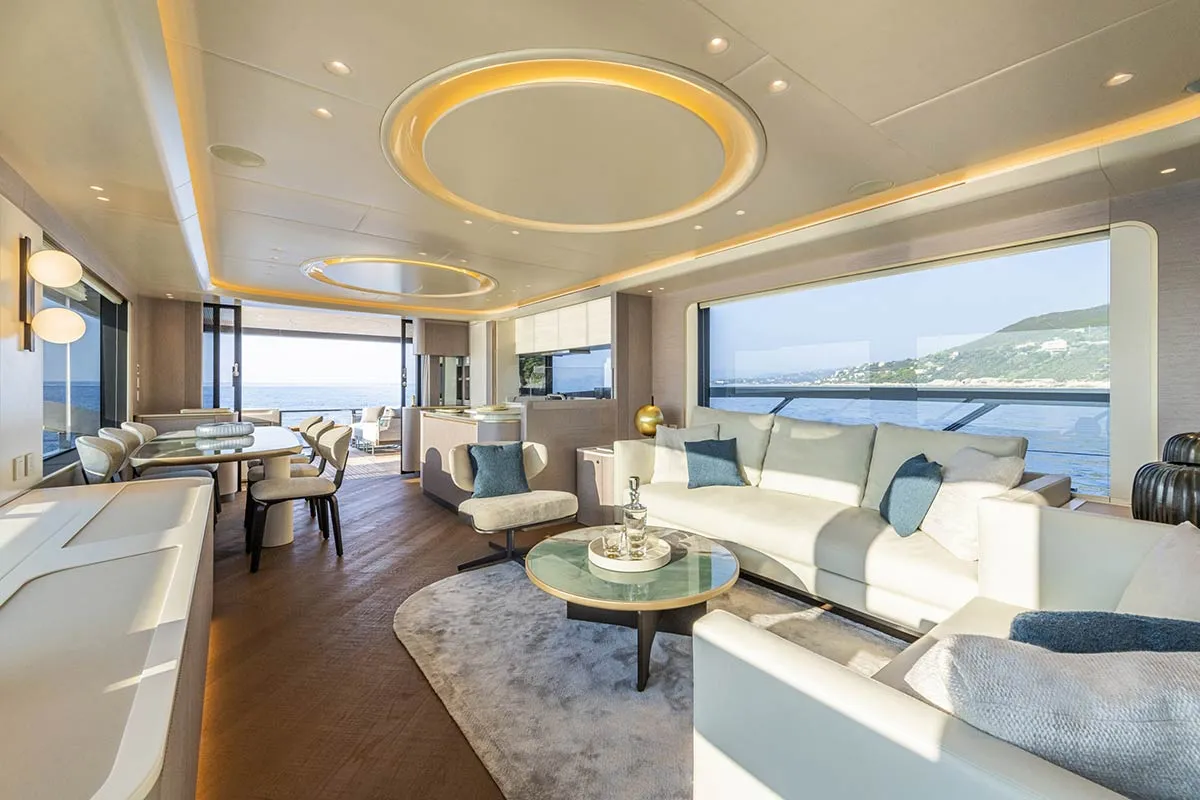
The interior is built around movement. Sliding doors replace swing doors to save the space a door sweeps, ceilings are high, and the main level runs without steps — three decisions that together explain why a 69' 10" boat reads as a larger one. Windows are large enough that the visual connection to the water is continuous from most seats.
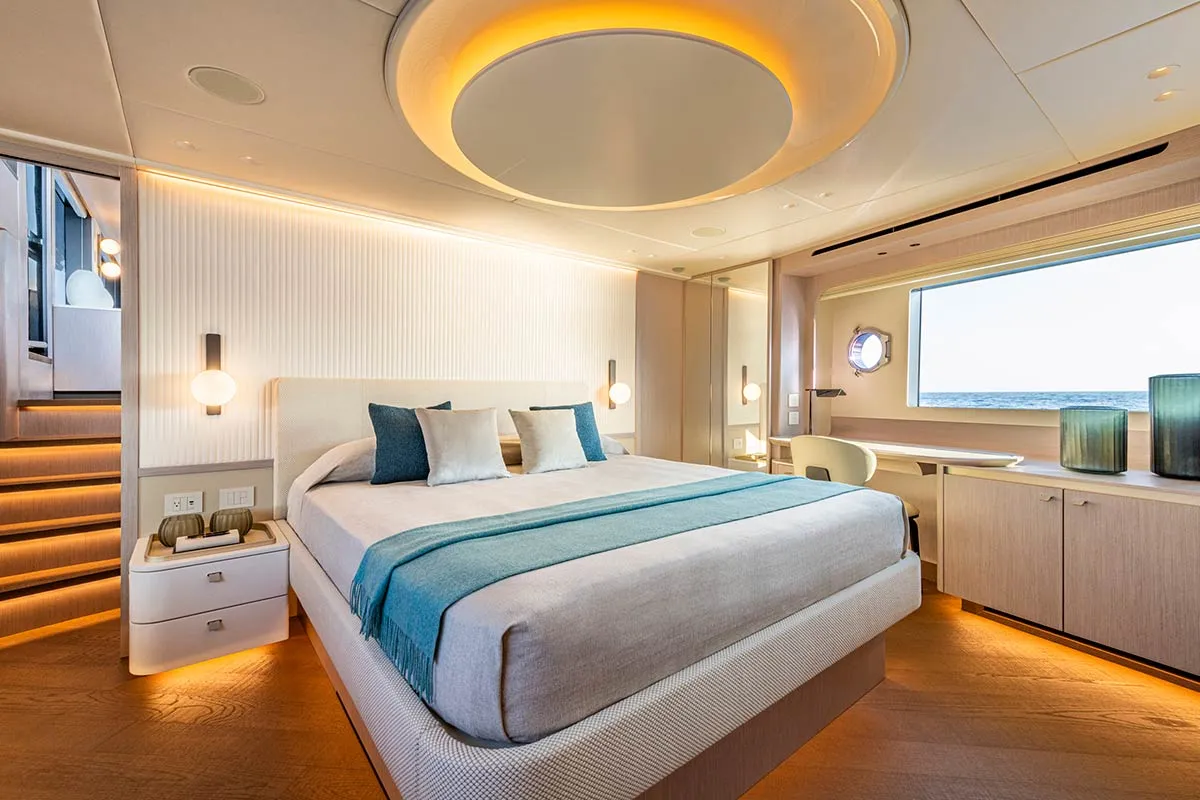
Furnishings are light-toned fine woods with sinuous profiles and bronze-colored detailing, and the lighting uses a circular motif carried through the boat. The galley is generous and the lounge is open, and Absolute's stated intent is the perception of volume beyond the actual dimensions.
The crew arrangement is the practical differentiator. Crew accommodation is separated and properly equipped: two berths and a private galley of its own. That is the difference between crew who are aboard and crew who are underfoot, and on a boat this size it is what makes a captain-and-mate charter week work without the guest spaces feeling shared.
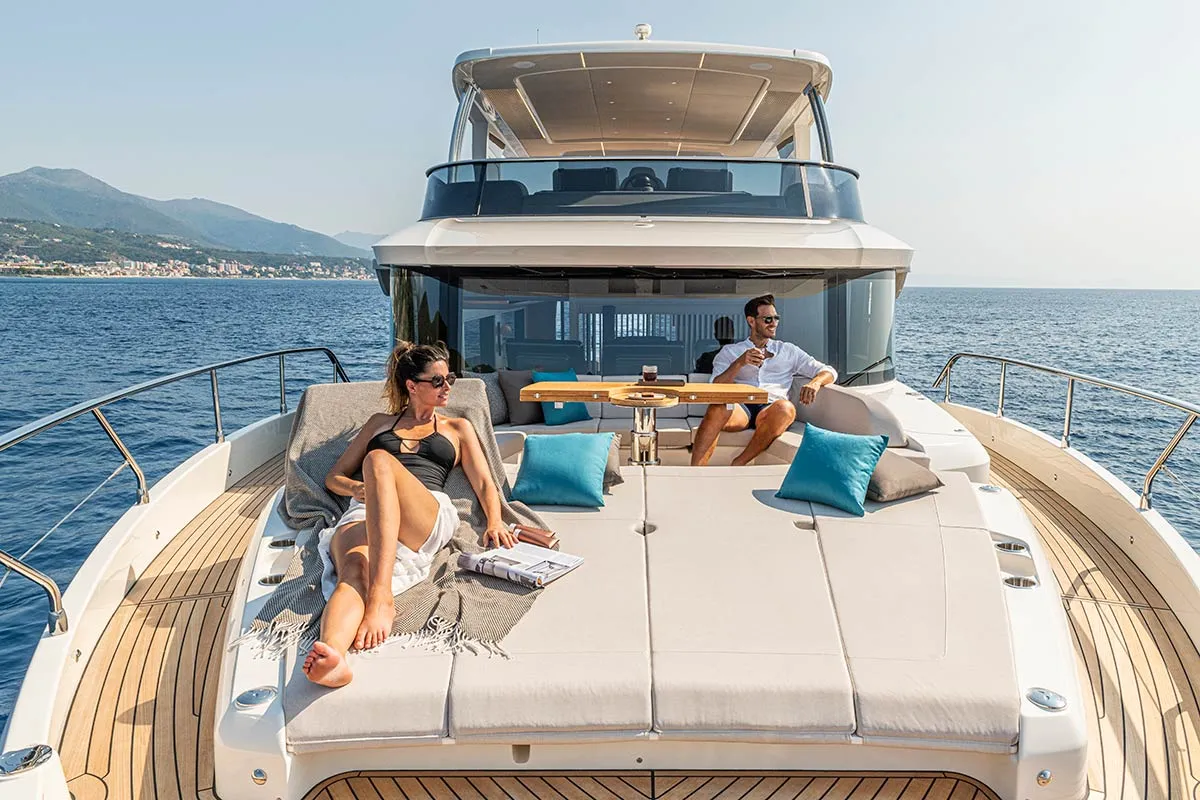
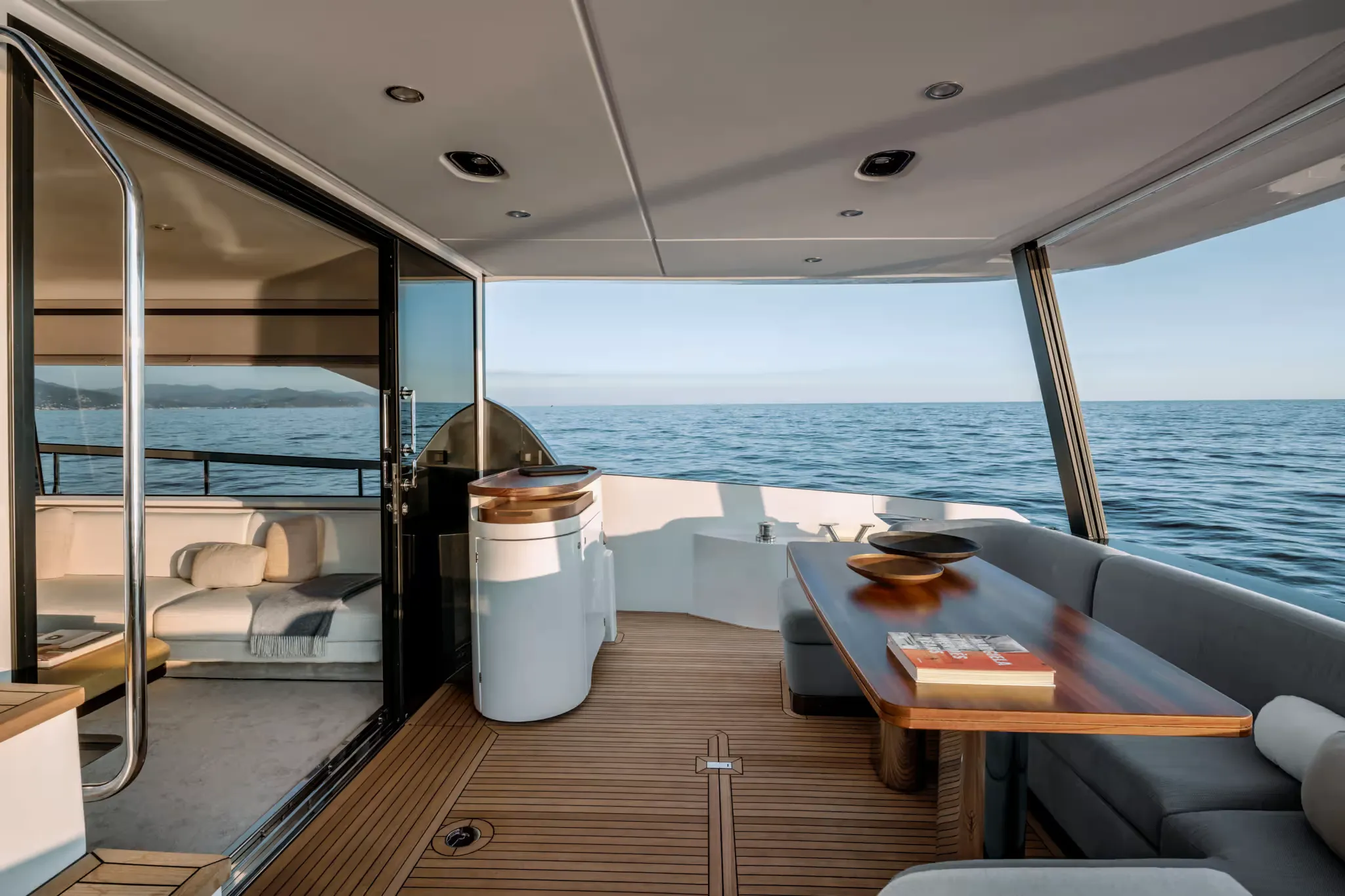
On deck, the flybridge is spacious and redesigned in this generation, available in configurations A and B, and the terrace cockpit aft is set up for sitting rather than transiting.
At 69' 10" the Navetta 70 competes in the most contested stretch of the European flybridge market, and three boats will be on the same shortlist.
The Ferretti 720 is the direct Italian rival on length and positioning, and the comparison usually turns on interior style and drivetrain preference. The Azimut Fly 68 is the other Italian cross-shop most buyers see, a shade shorter and pitched at a sportier owner. The Sunseeker Manhattan 68 is the British alternative, and the one to weigh if you want a configurable interior layout rather than a configurable flybridge.
The Navetta 70's case against all three is the upper deck. Two flybridge configurations, integrated solar in the roof and a separated crew galley are decisions the competition largely does not offer at this size.
This is the Navetta for an owner who has settled into a pattern and wants the boat configured to it. The flybridge choice is real, the crew quarters are genuinely separate, and the roof solar is aimed at the owner who anchors out and does not want the generator running to keep the boat alive.
It suits a family that cruises with a captain and mate on the longer trips and runs the boat themselves in home waters. Sixteen people aboard, CE category B, pods and a joystick.
If the six-panel salon opening appeals, look at the 70 FLY alongside it — the two boats are almost the same length and take deliberately different positions on beam and on how the main deck opens to the cockpit. Walk both in the same afternoon; the choice becomes obvious quickly.
925 US gallons of fuel and 240 US gallons of fresh water, water heater volume included. The boat is certified CE category B for sixteen people. One figure is worth putting beside the rest of the range before you commit: the shorter Navetta 66 carries 951 gallons. If your cruising pattern involves long legs between fuel stops, plan around the 925 rather than assuming the bigger boat carries the most.
Twin Volvo Penta D13-IPS1350 pod drives rated 735 kW a side, the same package Absolute fits to the Navetta 66 and the 70 FLY. IPS is a pod drive, so joystick control comes with the drivetrain, and on a boat of this size that is what keeps it inside an owner-operator's reach.
Four cabins, plus crew accommodation that is properly separated: two berths and a private galley of its own. That is the difference between crew who are aboard and crew who are underfoot, and on a boat this size it is what makes a captain-and-mate week work without the guest spaces feeling shared. The interior is built around movement — sliding doors instead of swing doors, high ceilings, and a main level that runs without steps.
Two genuinely different upper decks rather than trim levels, and the decision is made before you take delivery. Work out how you use the fly — helm-and-run, or dine-and-stay — before you sign, because it is not a change you make later. Solar panels are integrated into the flybridge roof on either configuration, specified as impact- and salt-resistant, and fitted to feed onboard systems under way and at anchor.